7 Days in Egypt: Three Itineraries, and What Each One Leaves Out
Seven days is the shortest trip on which the classic shape of Egypt works, and only just. From Europe it usually means six days on the ground and five useful ones, because the arrival and departure days go to airports. Below are three ways to spend them: the standard Cairo and Nile cruise, a slower land route through Cairo and Luxor with no boat, and a version that trades the far south for a few flat days on the Red Sea. Each is a suggested route built from the things we actually run, not a fixed package with a price, and each section is honest about what it cuts.
Is seven days enough for Egypt?
It depends on what you count. Seven days is long enough to see the two things most people come for — the Pyramids at Giza and the Nile between Luxor and Aswan — without the trip feeling like a forced march. It is not long enough to add the Red Sea, Abu Simbel and the Western Desert on top, and the routes that promise all of it in a week are selling you airports rather than Egypt. The honest version covers one cultural spine done properly, with a day or two of slack, and leaves the rest for a longer return trip.
Start by subtracting the edges. A long-haul flight lands in Cairo on day one, often late, and leaves on day seven, often early. That removes most of two days before you have seen anything, which is why a seven-day booking is really a five or six day trip in practice. Plan the sightseeing around five full days and the week holds together; plan it around seven and you will spend the difference standing in departure halls.
The other constraint is heat and pace, not distance. Egypt is tiring in a way that catches first-timers out: early starts to beat the coaches into the tombs, long middays when the sites are punishing, guides who will fill every hour you hand them. Five well-chosen days with air in them beat seven crammed ones. Every route below is built to do less, better — and to put the hardest city, Cairo, on day one rather than day six.
Route A — Classic Egypt: Cairo and a Nile cruise
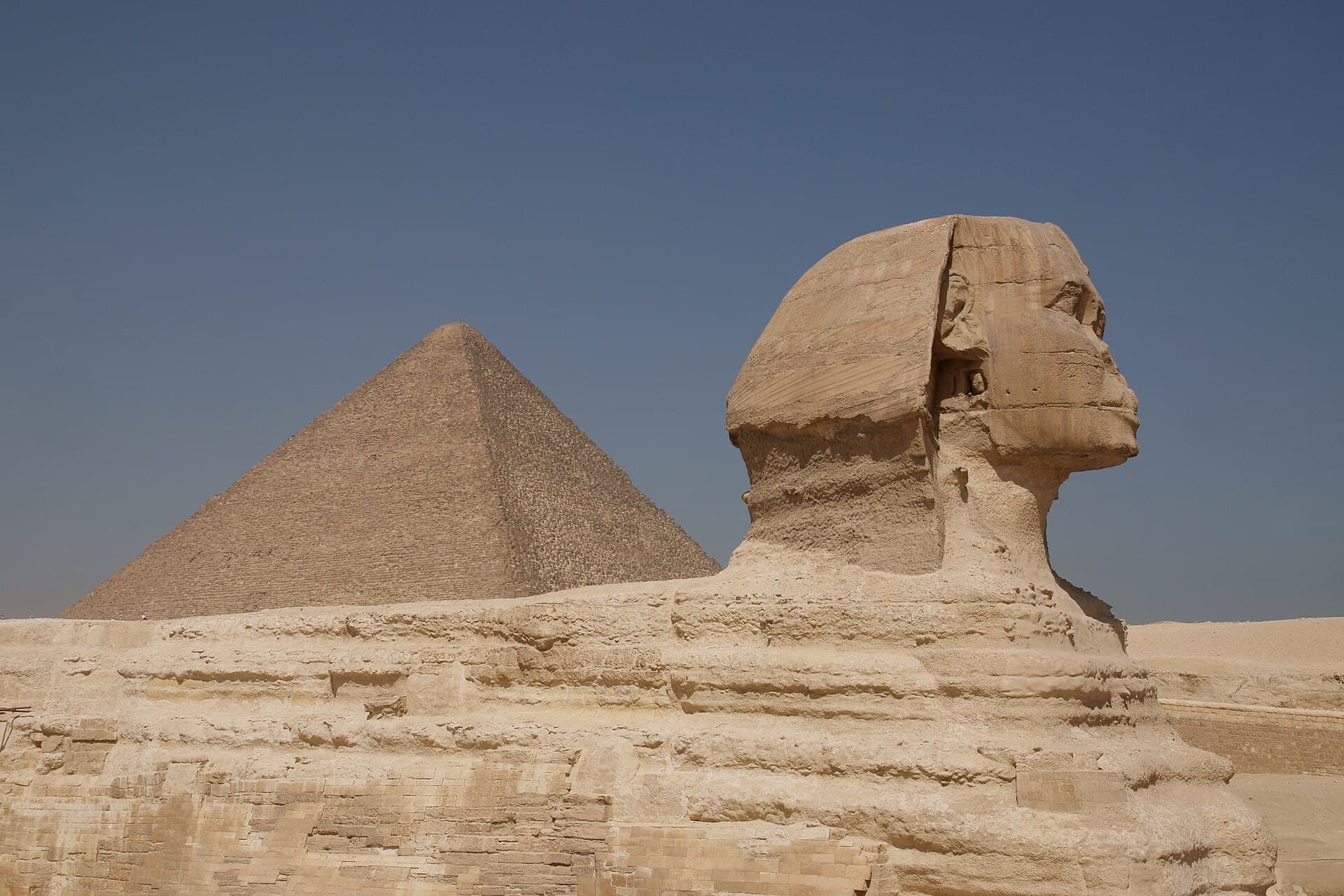
This is the route almost everyone takes first, and the reason seven days works at all. Days one and two are Cairo. You land, transfer to the hotel, and if the flight gets in early there is time for a first walk along the Nile corniche. The next morning is Giza at opening, before the plateau heats up and the coach groups arrive: the three pyramids, the Sphinx below Khafre's causeway, and the viewpoint on the southern rim where all three line up. The afternoon is the Grand Egyptian Museum, a couple of kilometres from the plateau — allow at least three hours, and do not try to pair it with Giza in the same session, because it rewards a slow visit and holds the full Tutankhamun collection together for the first time.
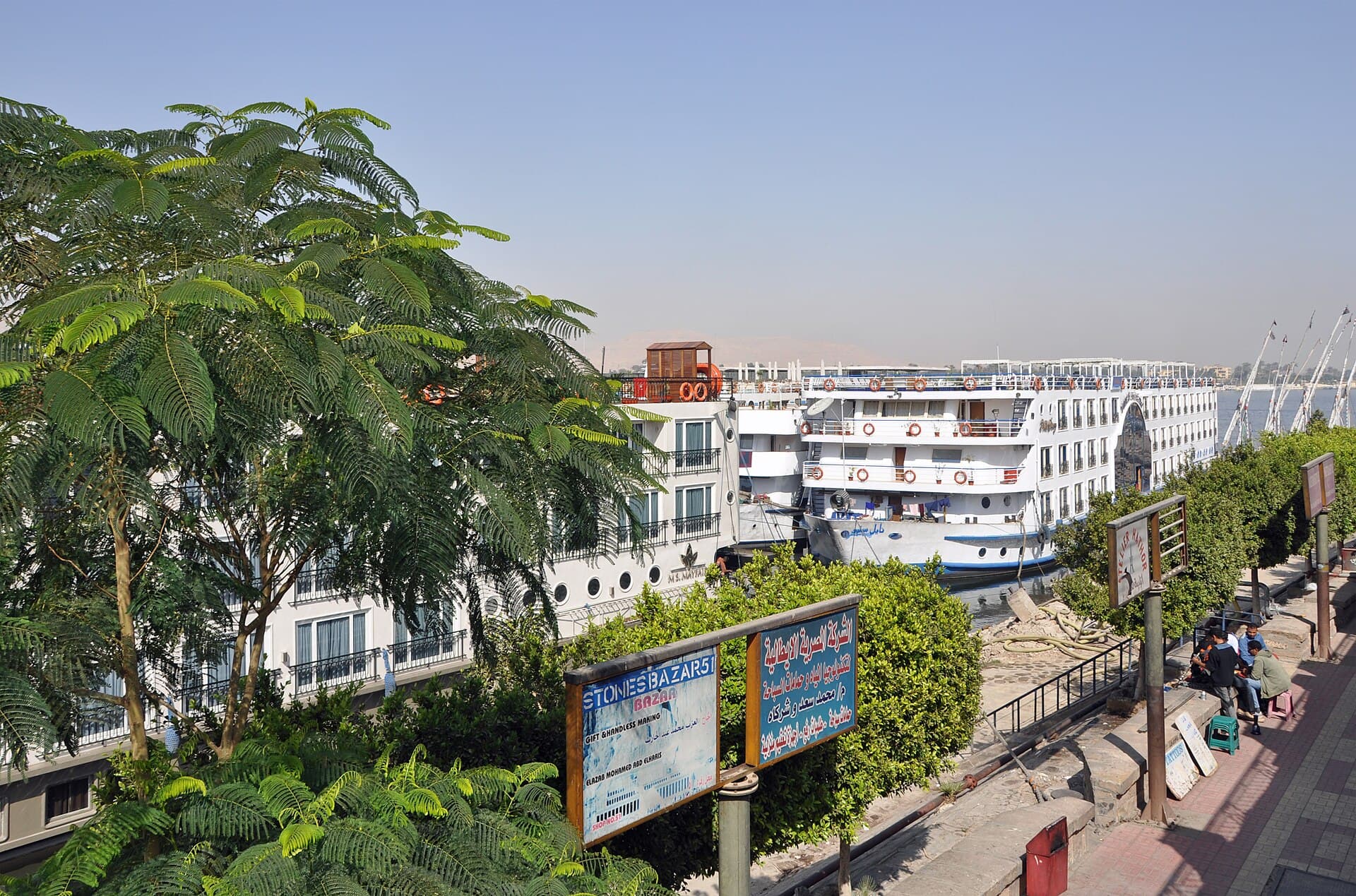
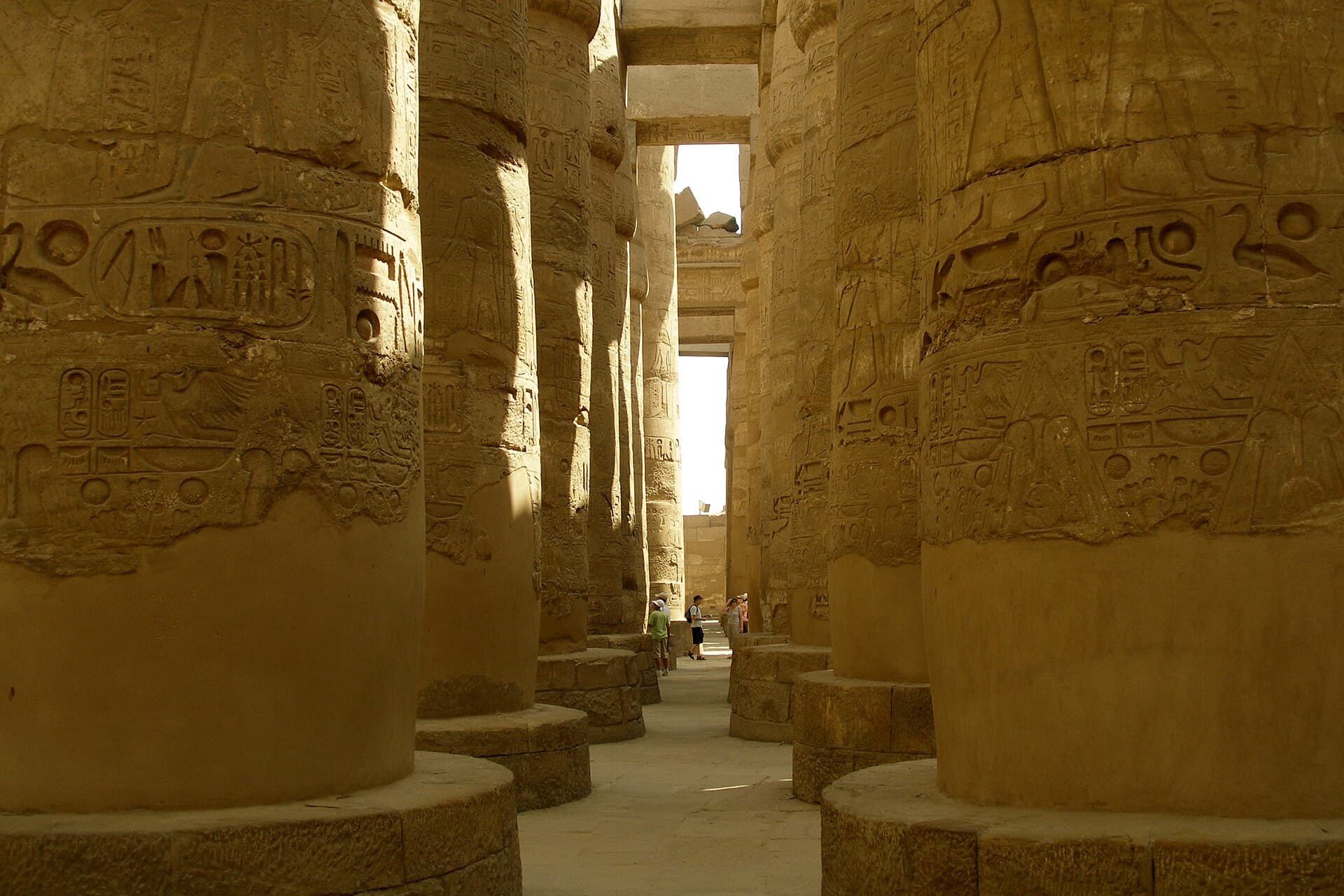
Day three flies you south. The Cairo to Luxor flight is about an hour, against most of a day on the road that shows you very little, so fly unless you take the overnight sleeper train to save a hotel night. You board the cruise before lunch and see Karnak in the late-afternoon light, when the coaches have thinned — it is a walled precinct around thirty pharaohs added to over two thousand years, and ninety minutes barely covers the central axis. You sleep aboard, moored at Luxor.
Day four is the west bank, and it starts early: the Valley of the Kings before the tombs fill with the heat of every group that has walked through, then the terraced temple of Hatshepsut at Deir el-Bahari and the Colossi of Memnon on the way back. The standard tomb ticket covers three from the rotating open set, which is enough — by the fourth you are reading the same scenes under a different name. You are back aboard by early afternoon as the boat casts off and sails upstream.
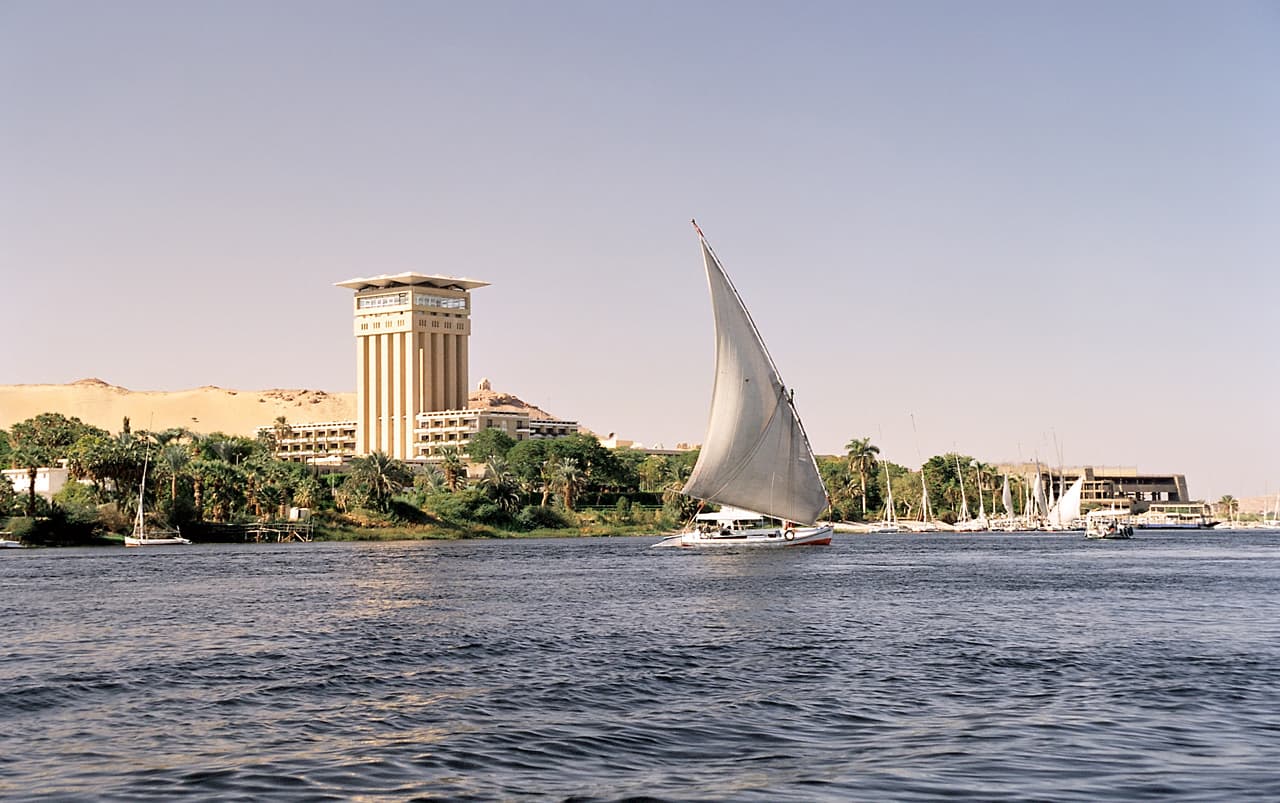
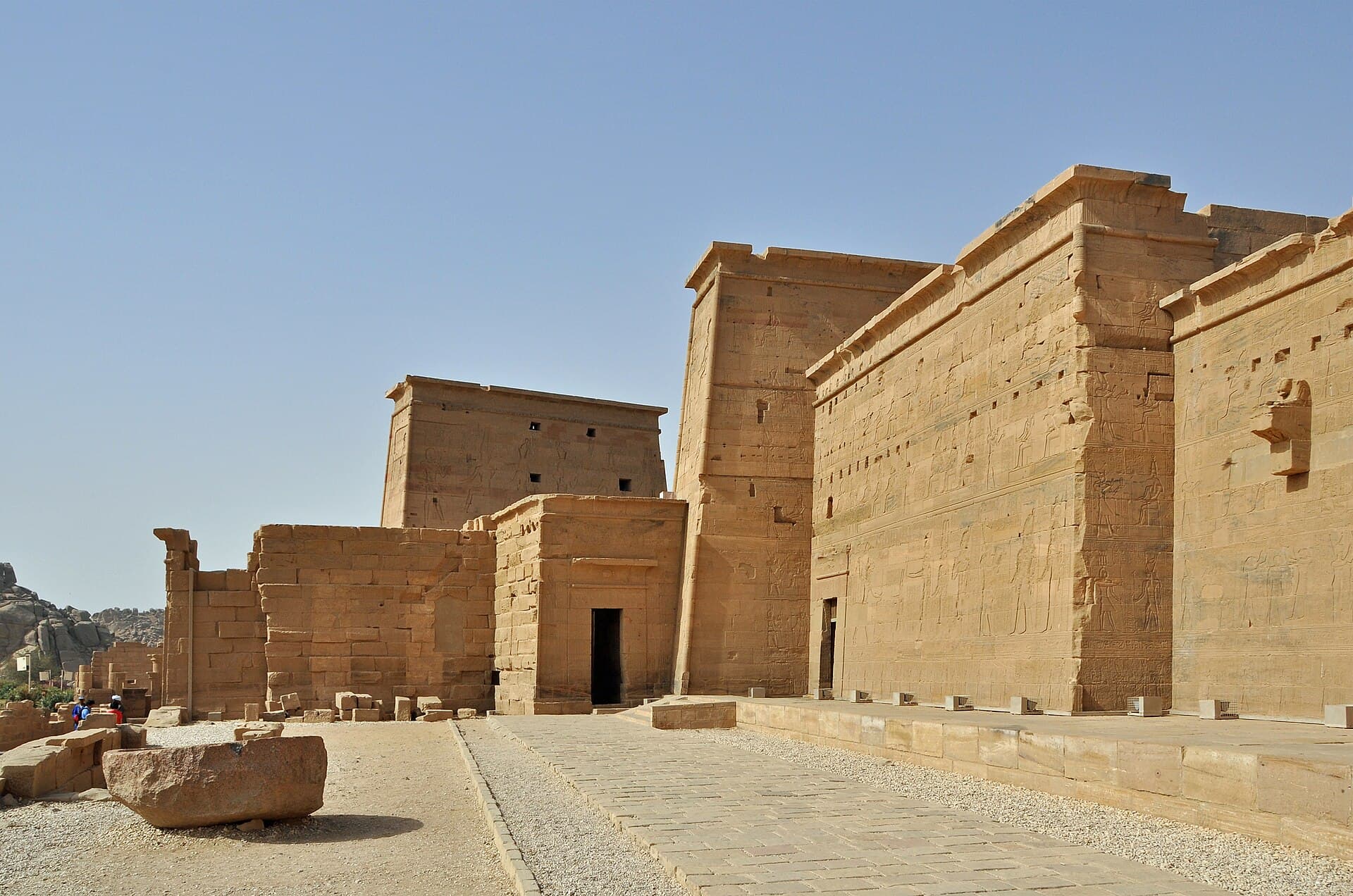
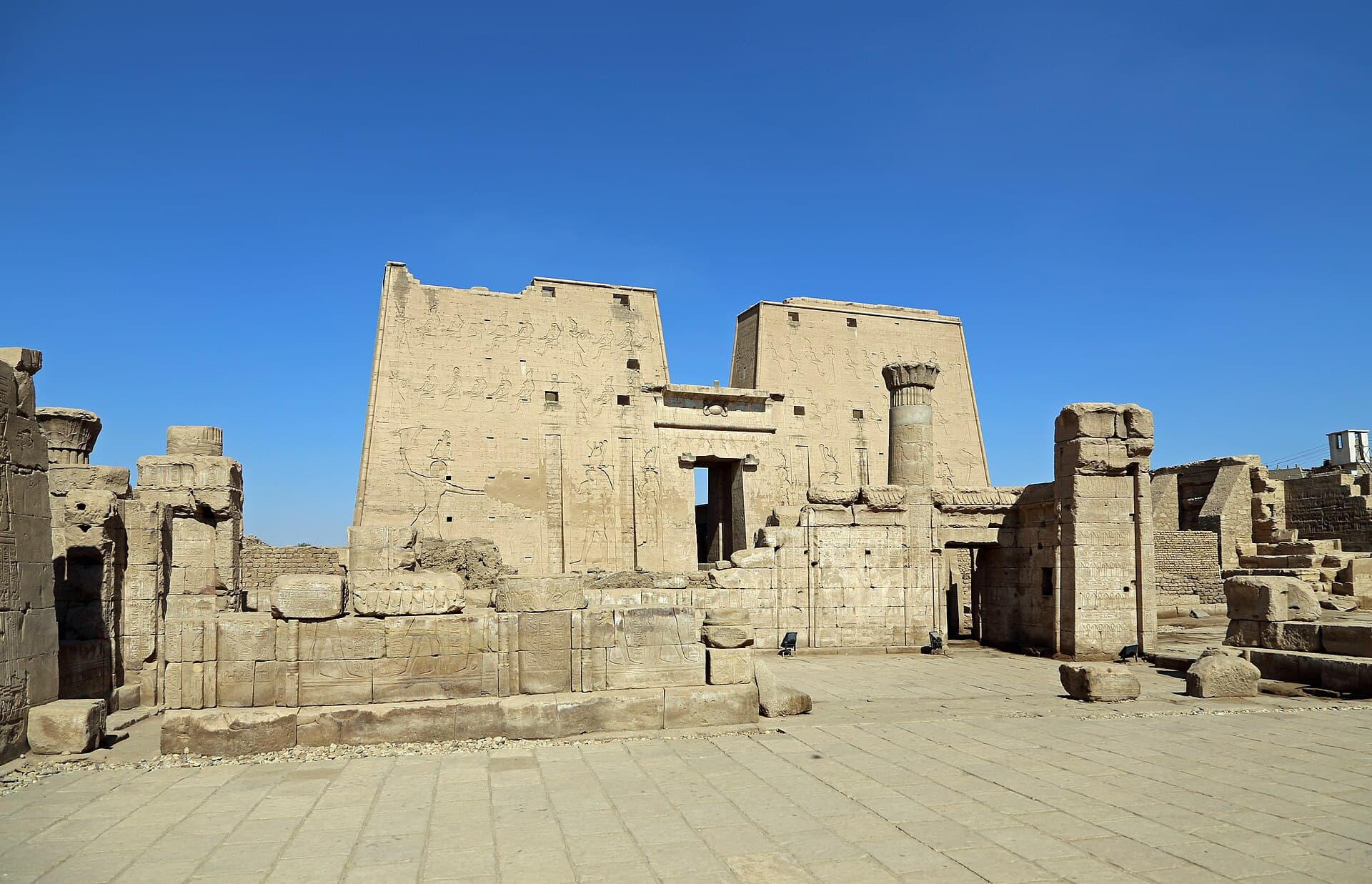
Days five and six are the river and the south. The boat stops at Edfu, where the Temple of Horus is the best-preserved in Egypt, and at Kom Ombo, a double temple right on the bank and best at dusk, with a long quiet afternoon on deck between them. You reach Aswan for Philae Temple on its island — moved block by block to Agilkia when the High Dam threatened to drown it — the granite quarries with their cracked unfinished obelisk, and a felucca out towards Elephantine as the sun drops. Aswan is the calmest city on the route and a better place to wind down than Luxor.
Day seven flies you home, usually back through Cairo. If your schedule allows a very early start you can bolt Abu Simbel onto the Aswan end — roughly three hours each way by road in a dawn convoy, or a 45-minute flight — but on a seven-day trip most people would rather keep the morning slow than spend it in a vehicle. This route suits first-timers and couples who want the headline sights with the least friction: you unpack twice, the boat moves while you sleep, and a guide handles the logistics in the heat.
Route B — Cairo and Luxor at a walking pace, no boat
The cruise is efficient, but it is a poor way to see Luxor and it locks you to a timetable. This route drops the boat and the far south, keeps you on land in two places, and buys back the two things a cruise cannot give you: the hour before the coaches arrive, and the evening. It suits people who dislike the rafted-together cruise moorings, photographers who want first and last light, and anyone who would rather go deep in two cities than skim four.
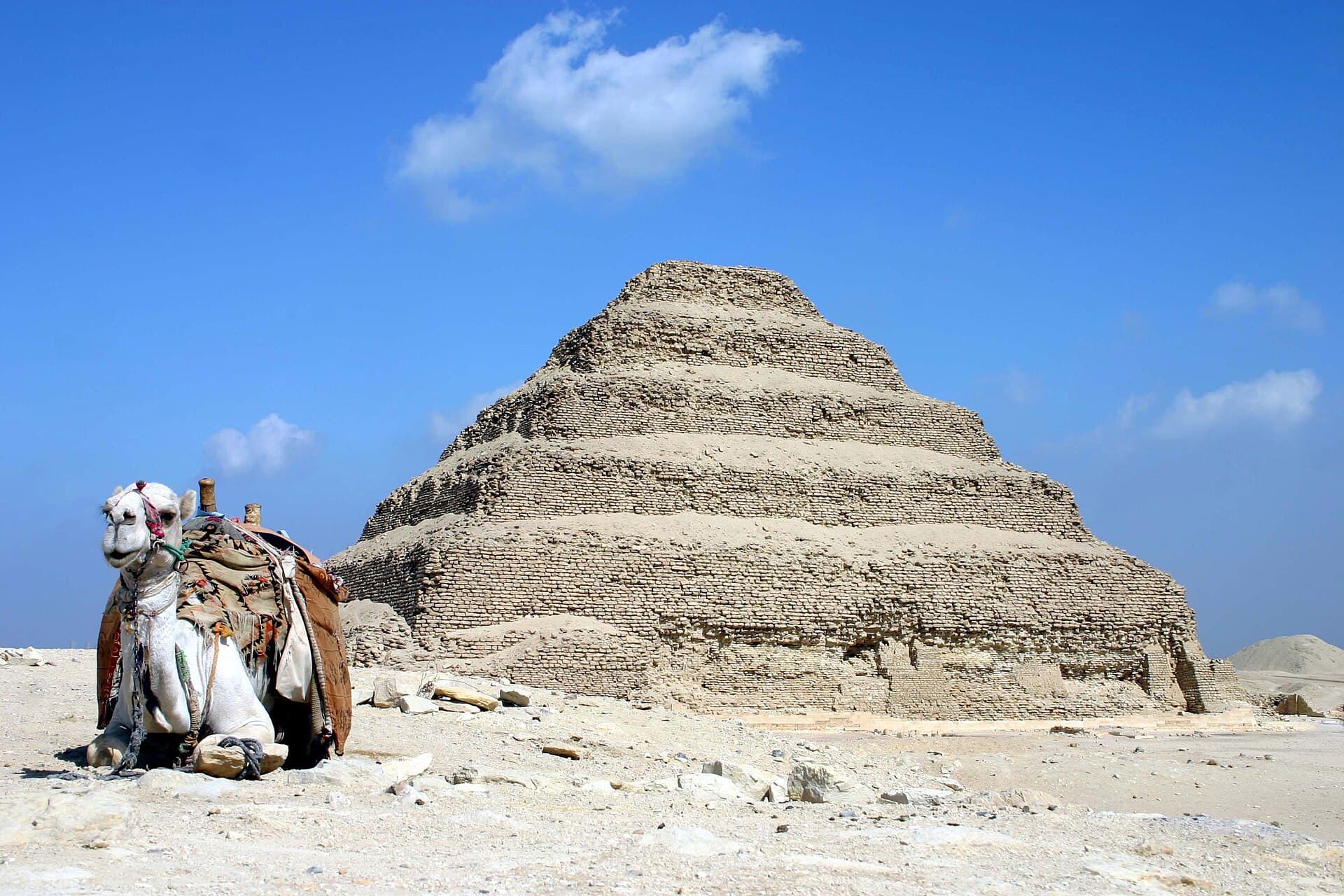
Days one to three are Cairo, unhurried. Day one you land and settle. Day two is Giza at opening and the Grand Egyptian Museum in the afternoon, exactly as in Route A. Day three is the half most itineraries skip: Saqqara, about forty minutes south of Giza, where the Step Pyramid of Djoser is the oldest large stone building anywhere and the painted nobles' tombs around it are better preserved than anything on the Giza plateau. If you have the appetite, Dahshur is another twenty minutes on and usually near-empty, with Sneferu's Bent and Red Pyramids. An evening on foot in Islamic Cairo along al-Muizz street closes the Cairo leg.
Day four flies you to Luxor — the same one-hour hop — and because you are not tied to a boat you can see Luxor Temple that night, which is the one major site that genuinely improves after dark: floodlit columns, the heat gone, the crowd down to a fraction. Day five is the west bank done properly and early: the Valley of the Kings, Hatshepsut and, if you can fit one more, Medinet Habu, which still holds colour on its walls and almost no groups. A sunrise balloon over the west bank is worth the early alarm here — book it for your first Luxor morning, since flights are cancelled for wind often enough that you want a second chance.
Day six is the east bank at your own pace: Karnak given the two or three hours it actually needs rather than the ninety minutes a cruise allows, the small and under-visited Luxor Museum, and a slow afternoon out of the midday sun. Day seven flies you home via Cairo. You see less geography than Route A — no Edfu, Kom Ombo, Philae or Aswan — but you see Luxor the way it is meant to be seen, at the edges of the day, and you are never waiting on a departure horn.
Who it suits: returners who have done the cruise and want depth, photographers, and travellers who find organised boats claustrophobic. It is the least rushed of the three, and the easiest to run slowly in winter when the light is good and the tombs are bearable.
Route C — Pyramids, temples and the Red Sea
This route trades the deep south for a soft landing on the coast. It is the most compressed of the three and the one to be most honest about: fitting the pyramids, a taste of Luxor and the Red Sea into seven days means the temples get a day and a half, not three, and there is no cruise and no Aswan. What you get in return is a proper rest at the end, which after the heat and the early starts earns its place — particularly for families and for couples who want a holiday rather than a study tour.
Days one and two are Cairo, trimmed: land and settle, then Giza at opening and the Grand Egyptian Museum in the afternoon. There is no third Cairo day here, so Saqqara and Islamic Cairo wait for another trip. Day three flies you to Luxor for a single packed but well-ordered day and a half — Luxor Temple lit on the arrival evening, the Valley of the Kings and Hatshepsut early the next morning before the heat, and Karnak in the late afternoon. It is tight, and it is the part of this route that a cruise or Route B does better.
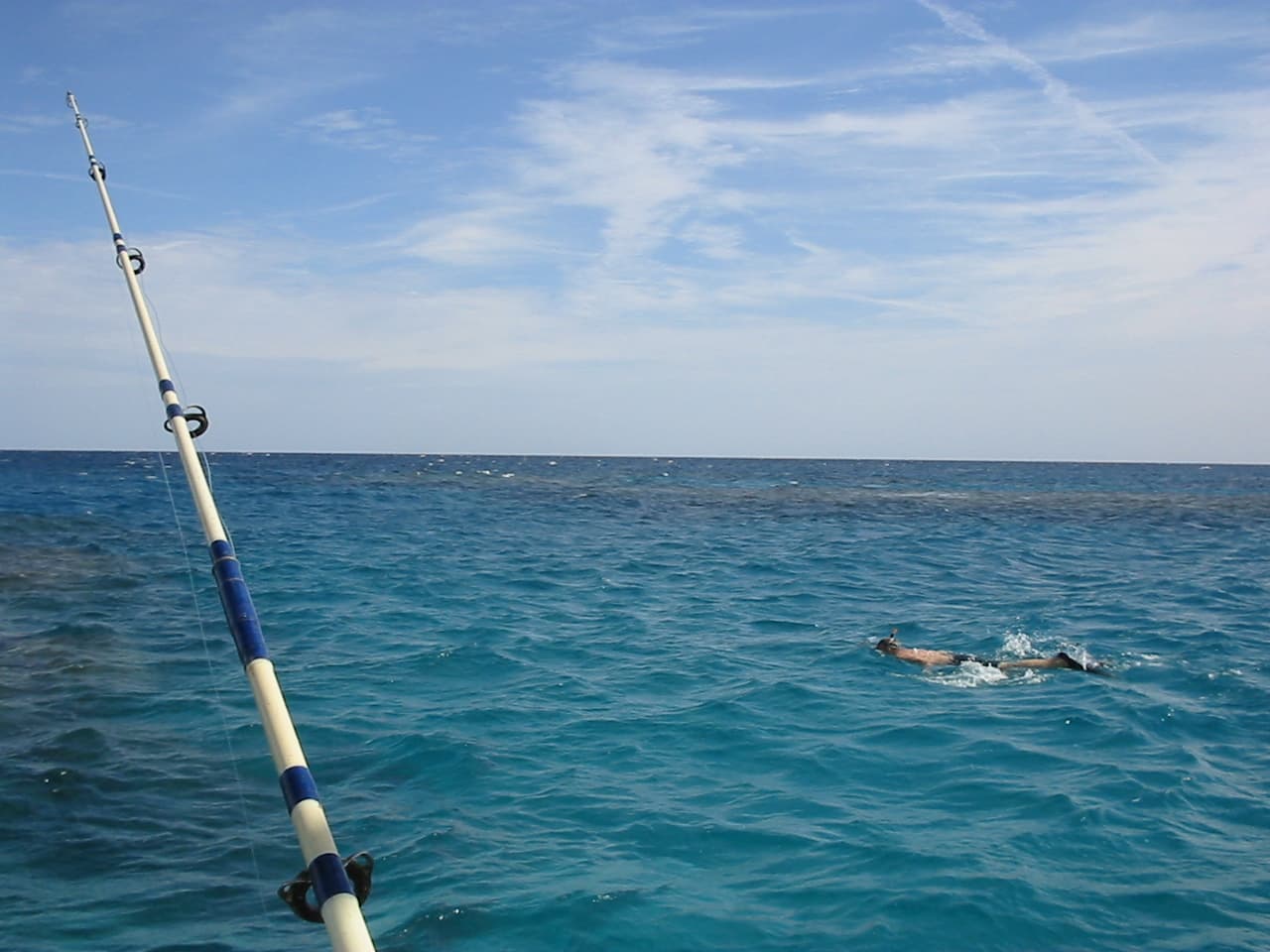
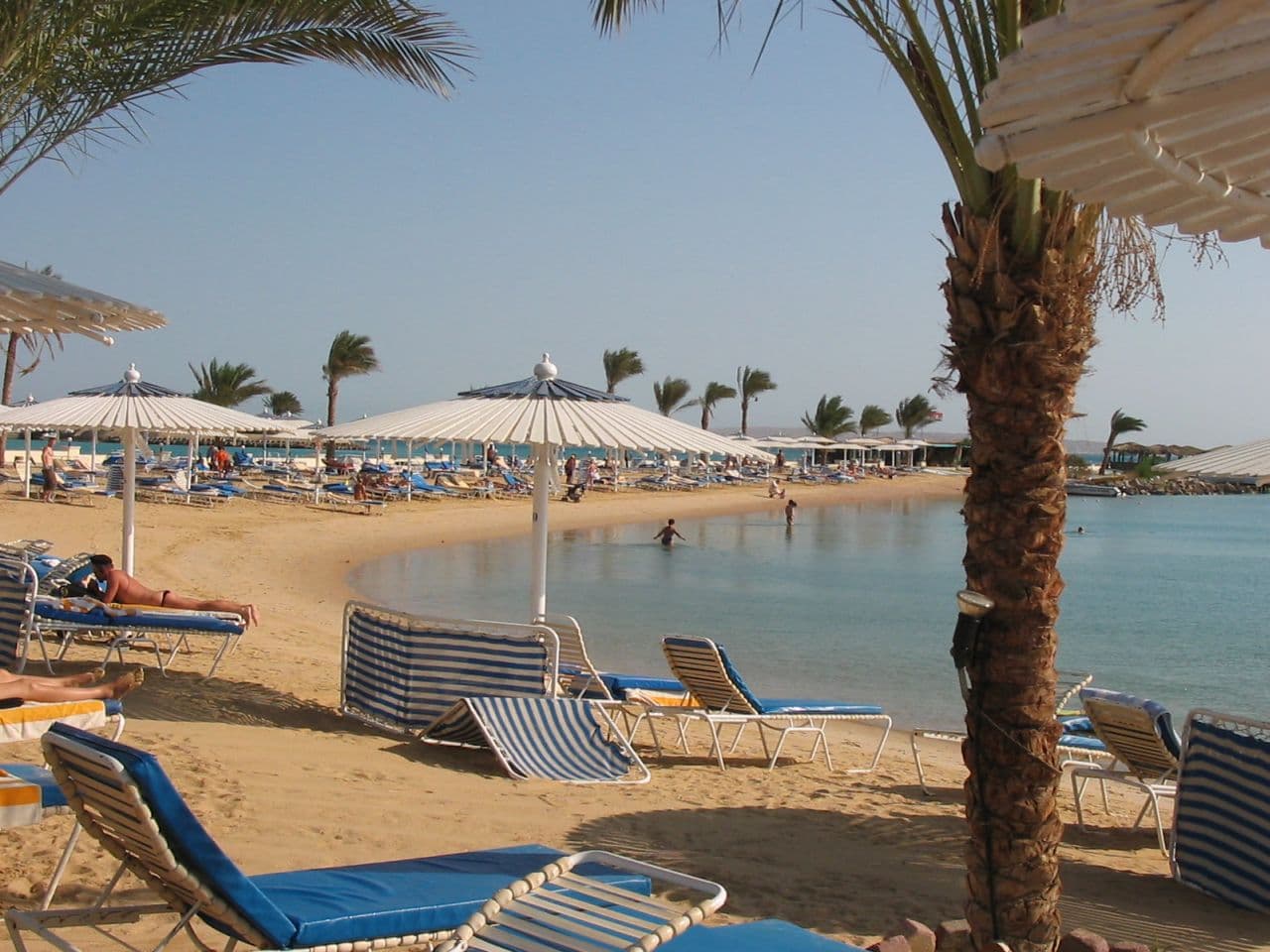
Day five is the transfer to the coast. Hurghada is about 290 kilometres and roughly four hours from Luxor, across the desert on a good, dull road — the same transfer that makes the Nile-and-Red-Sea combination sell so well in Germany and Italy. You arrive in time to do nothing at all, which is the point. Days five to seven are the Red Sea: the reefs here are genuinely world class, visibility runs twenty to thirty metres, and a standard boat trip out to the Giftun islands gives you shallow, bright snorkelling that suits people who have never worn a mask. Or you sit on a beach and read.
Day seven flies you home, and here is the quiet advantage of this route: Hurghada takes far more direct charter flights from Europe than Luxor does, usually cheaper ones, so you fly out from the coast rather than backtracking to Cairo. That saved internal flight is part of why the shape works in a week. Who it suits: families with children who will not sit through six days of temples, couples who want the icons plus a beach, and anyone for whom a relaxed finish matters more than seeing Aswan.
Which route suits you?
If this is your first trip to Egypt and you want the headline sights with the least hassle, take Route A. The cruise does the heavy lifting: it moves you between Luxor and Aswan while you sleep, reaches Edfu and Kom Ombo, which are awkward to get to otherwise, and hands the logistics to a guide in a country where the logistics are the hard part. It is the most complete picture of classic Egypt you can get in a week, and it is the version nearly every fixed group departure is built around.
If you have been before, or you travel slowly, or the idea of a scheduled boat fills you with dread, take Route B. Two cities at a walking pace, with early mornings and lit evenings, is a richer trip than four skimmed from a deck — but you give up the south entirely, so only choose it if Philae and the river between the temples are not what you came for. Photographers and anyone who hates unpacking onto a boat land here naturally.
If you are travelling with children, or you simply want the trip to end horizontally, take Route C — with eyes open. It is the thinnest on temples and the richest on rest, and the Luxor leg is a genuine stretch. It is the wrong choice for a history-first traveller and close to the right one for a family who would mutiny on day five of monuments. Couples split between these three on temperament more than anything: the unhurried take B, the thorough take A, the sun-seekers take C.
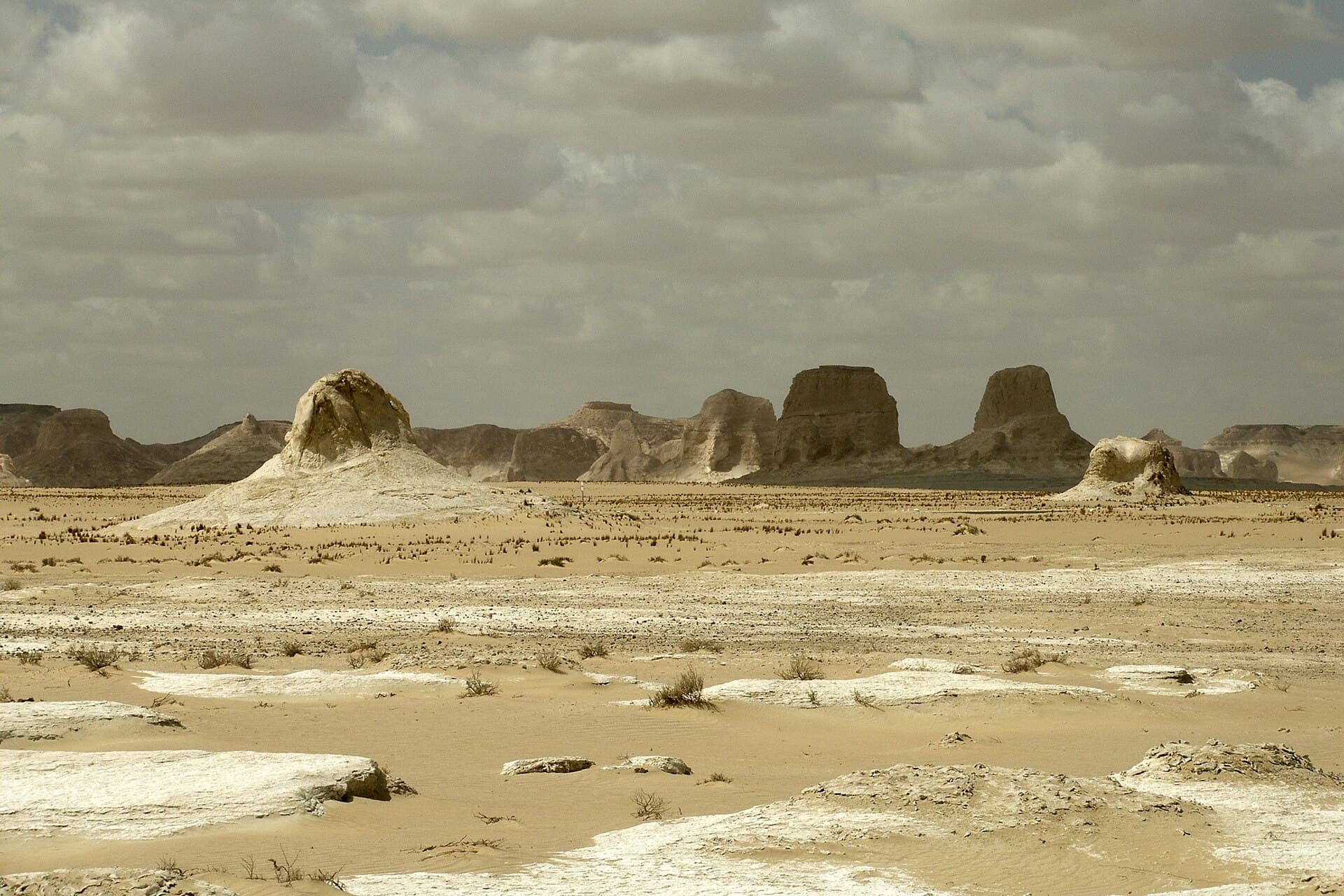
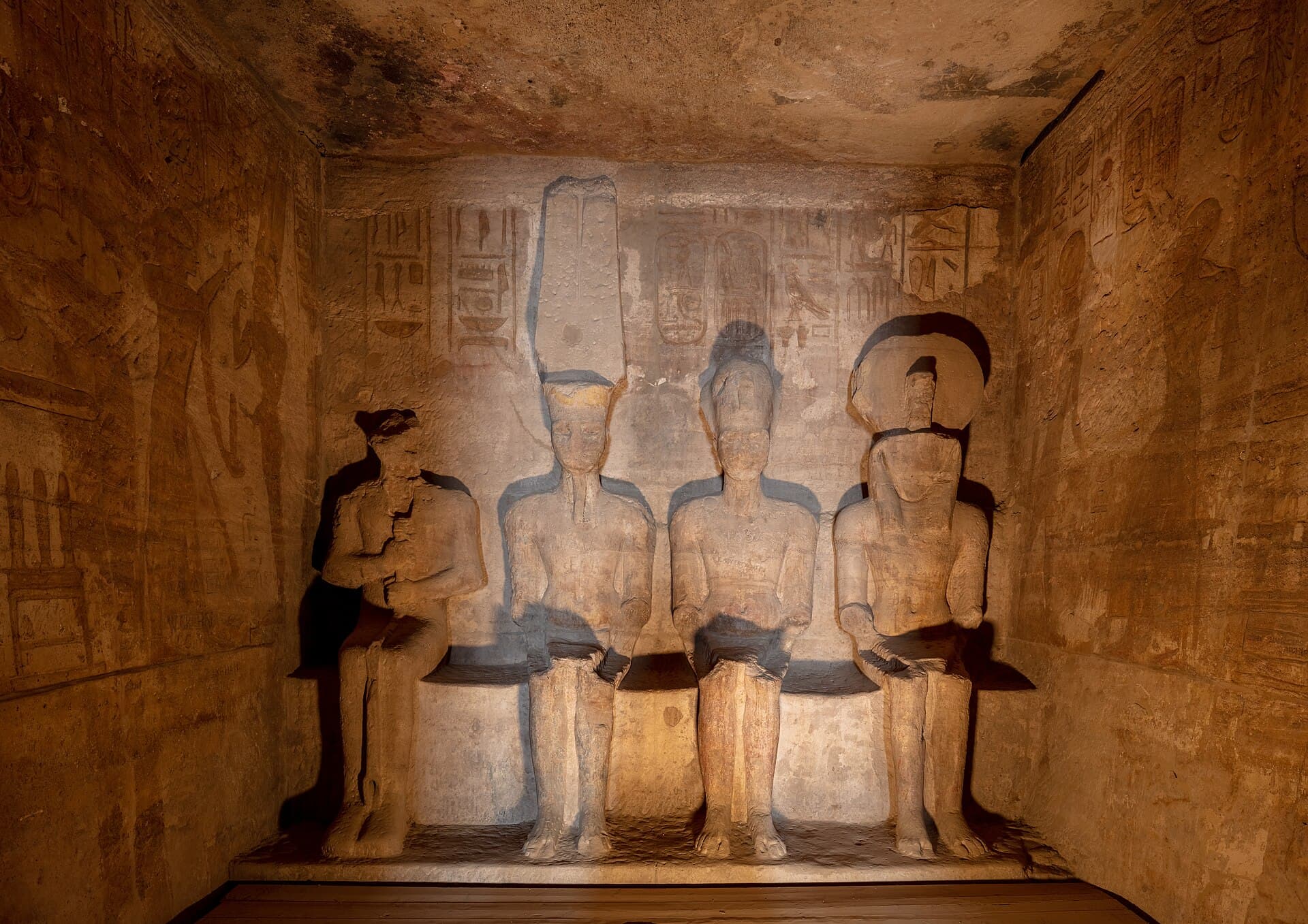
A note that applies to all three: none of them should try to add Abu Simbel as a matter of course. It is a full day for two hours on site, and on a seven-day trip it comes at the cost of the slack that keeps the week pleasant. Save it for a ten-day return, when an overnight at the temples is possible and the day does not hollow out the rest of the trip.
What shapes the price of a seven-day trip
We do not quote a figure here because an honest one depends on choices you have not made yet, and a single headline price usually hides more than it tells. But the drivers are predictable, and knowing them lets you move the cost up or down deliberately rather than being surprised by it. The first and largest is whether the trip is cruise-based or land-based. A Nile cruise bundles four or so nights of accommodation, full board and transport into one floating hotel, which can be efficient; a land route in Cairo and Luxor is priced on separate hotels, drivers and guides, and moves independently of boat availability.
The second is private versus group. A private trip with your own guide and driver costs more per person than joining a fixed group departure, but it removes the compromises of a set timetable and is the better option if anyone in the party has mobility needs — some tombs involve steep steps and uneven floors, and a private route can be built to avoid the worst of them. A guaranteed group departure is usually the cheaper way to do the cruise.
The third is season. Prices climb into the cool, comfortable winter months and spike hard over Christmas and New Year, when the better Nile boats and the good guides book up months ahead. Travel the shoulder — late spring or autumn — and the same route costs less, with the trade-off being heat in the south. The fourth is the category of hotel and boat. Nile star ratings are local ratings and are not equivalent to European hotel stars; on a boat the refurbishment date matters far more than the number of stars, and this is where quality and price swing most.
The last two are smaller but real: domestic flights versus the overnight sleeper train between Cairo and Luxor, where the train saves a flight and a hotel night but costs you comfort and sleep; and any add-on to Abu Simbel, which is markedly more expensive by plane than by the dawn road convoy. Our tailor-made trips start from your dates and budget and are costed only once the route is fixed, so nothing is booked until the shape and the number both suit you.
When to do this trip
The comfortable window for everything south of Cairo is November to March. Luxor summers pass 45C in the Valley of the Kings and Aswan is the hottest of the Nile cities, regularly over 40C in the afternoon with very little shade at the sites, so a cruise or a land trip through the south in July or August is hard work rather than a holiday. Cairo is a little more forgiving but still bakes, with July and August routinely over 38C and heavy smog. For the full month-by-month picture, see our guide on when to go.
Route C changes the calculation slightly, because the Red Sea works year round. April to June and September to November are the most comfortable months on the coast, and even midsummer is bearable there when the sea and the breeze take the edge off — though the temples at the front of that route will still be punishing in high summer. April, October and November are the sweet spot if you want both halves to work: warm enough to swim, not yet brutal in Luxor.
Two practical notes on timing within the week. Flights and cruise departures cluster on certain days, so a seven-day trip sometimes flexes by a day at each end to catch them — worth knowing before you fix annual leave. And the sunrise balloon in Luxor on Route B is weather-dependent and cancelled for wind often enough that you should schedule it for your first morning there, not your last, so a scrub still leaves a second chance.
How to pace seven days
The single most important pacing decision is to fly between Cairo and Luxor rather than drive. The road is roughly 650 kilometres and nine to ten hours and shows you very little; the flight takes about an hour and there are several a day. The overnight sleeper train is the honest alternative — it saves a hotel night and the cost of a flight — but the cabins are basic and sleep is patchy, so take it for the economics, not the comfort.
If you cruise, sail upstream, Luxor to Aswan. The Nile flows north, so south is the slower, more relaxed direction, normally a night longer than coming down, and it ends at Aswan, the calmest point on the whole route and a better place to finish than Luxor, where the selling is relentless. Aswan also has an airport and is the jumping-off point for Abu Simbel, so nothing is retraced. Sailing north is usually cheaper and one night shorter, which is the trade if budget rules.
Build the days around the heat, not the clock. In Luxor that means the west bank and its tombs early, before ten, when the airless chambers hold the warmth of every group before you, and the open-air temples — Karnak, Luxor Temple — in the late afternoon and evening when the light drops and the coaches have gone. The middle of the day is for the boat, the pool or the museum. The commonest mistake first-timers make is arriving from elsewhere at midday and going underground at the hottest hour.
Finally, leave slack. A seven-day trip has no spare days, so protect the ones you have: resist the urge to bolt on Abu Simbel or a second desert excursion, put the long transfers at the start of a day rather than the end, and pair sights by which side of a city they sit on — in Cairo especially, where the constraint is traffic, not distance, and Giza to downtown can take forty-five minutes or twice that. A week that does a little less arrives home as a holiday rather than a recovery.
Common questions
Can you see the pyramids and do a Nile cruise in 7 days?+
Yes — this is exactly what Route A does, and it is the reason seven days works. Two days in Cairo for Giza and the Grand Egyptian Museum, a one-hour flight to Luxor, a three or four night cruise to Aswan, and a flight home. It is the most complete classic trip you can fit into a week without it feeling rushed.
Is 7 days too short for Egypt?+
Not for one cultural spine done well, which is what a week realistically holds. It is too short to add the Red Sea, Abu Simbel and the Western Desert on top of the classic route. From Europe, remember that seven days usually means five or six useful days once the arrival and departure flights are subtracted.
Should I do a Nile cruise or stay on land for a week in Egypt?+
A cruise is the efficient way to reach Edfu and Kom Ombo and to move between Luxor and Aswan while you sleep, which is why Route A is the default. But it is a poor way to see Luxor, because boats moor to a timetable and you miss the early mornings and lit evenings. If you dislike set schedules or have been before, the land-based Route B goes deeper in Cairo and Luxor.
Can I add Abu Simbel to a 7-day Egypt itinerary?+
You can, from the Aswan end of Route A, either by a dawn road convoy of about three hours each way or a 45-minute flight. But it is a full day for roughly two hours on site, and on a seven-day trip it eats the slack that keeps the week pleasant. Most people are better off saving it for a ten-day return when an overnight there is possible.
Do I need to fly between Cairo and Luxor?+
Effectively yes. The road is nine to ten hours and shows you little, while the flight is about an hour with several departures a day. The overnight sleeper train is the one sensible alternative: it saves a hotel night and a flight, but the cabins are basic and you should take it for the cost, not the comfort.
What is the best time of year for a 7-day trip?+
November to March for any route through the south, when Luxor and Aswan are comfortable rather than punishing — summer there passes 45C in the Valley of the Kings. If you take the Red Sea route, April, October and November are the sweet spot, warm enough to swim without the temples being brutal.
Is 7 days enough to include the Red Sea?+
Only at the cost of the cruise and the far south. Route C fits Cairo, a day and a half in Luxor and two or three nights on the coast, flying home from Hurghada to avoid backtracking. It is a real stretch on the temple side and the right choice mainly for families or anyone who wants the trip to end with a rest rather than more monuments.
How many days in Cairo should a week-long trip include?+
Two full days covers Giza and the Grand Egyptian Museum with an evening in Islamic Cairo, which is what Routes A and C allow. A third day, as in Route B, buys Saqqara and Dahshur — the Step Pyramid and the painted tombs around it are quieter and often better than Giza itself, and most people underrate them.
Official sources
Entry rules, opening hours, security advice and exchange rates all move. Check them at the source, not here.
Written and checked by the Nile Trip Guide editorial team · Last reviewed . Entry rules, prices and opening hours change — check anything critical against the official sources linked on this page.
Plan this trip
Tell us your dates and we will price it
A real itinerary with real prices, usually within 24 hours. Nothing is booked and nothing is charged until you say yes.
The route most people take first, at the length it was built for: Giza and the Grand Egyptian Museum, then a flight to Luxor and four nights sailing down to Aswan.
No boat on this one. Giza and the Grand Egyptian Museum, a night in Luxor for both banks, two nights on the Red Sea, then back to Cairo for the Citadel, Coptic Cairo and the Royal Mummies.
Five nights in Cairo either side of a four-night sail from Luxor to Aswan. The Cairo days are private, just your party and a guide; the sightseeing off the boat is shared with a small group.