Egypt currency is simpler than it looks, with one catch: the Egyptian pound is closed in practice, so you get it after you land rather than before. Cards now work in more places than they used to, but cash still runs the day, and small notes matter far more than the total you carry. Rates move, so check yours on the day.
Egypt currency: what is the Egyptian pound?
The currency is the Egyptian pound. Its code is EGP, it is written locally as LE — from the French livre égyptienne — or as E£, and in Arabic it is the gineih. One pound divides into 100 piastres, but piastres have been eaten by inflation and the one-pound coin is about as small as money gets in practice. Notes in general circulation run from five pounds up to two hundred. The ten and twenty exist as both paper and plastic notes with different designs, which catches people out when they count quickly.
Prices you read in older articles are unreliable. The pound has lost a lot of value against sterling and the euro over the past few years, and the country has had high inflation alongside it, so figures from even two or three years ago mean little now. Treat any specific price you find online as a rough shape rather than a number to budget against.
You will meet all of those spellings in a single day. A restaurant menu might print EGP, a shop sign LE, a handwritten market price nothing at all, and the person you are speaking to will say gineih. They are the same thing. The only one worth pausing over is a price written as a bare number in a tourist-facing shop, because that is occasionally a dollar figure rather than a pound figure, and asking which is meant costs you nothing.
One habit removes most of the confusion for the rest of the trip. When you first change money, look properly at the notes: get the 200 and the 100 clear in your head, notice that the plastic ten and twenty do not look like the paper ten and twenty, and check the numerals on the corner rather than the picture. Egyptian notes carry the value in Arabic-Indic numerals on one face and Western numerals on the other, so there is always a side you can read at a glance.
Why can't I buy Egyptian pounds before I fly?
In practice the Egyptian pound is a closed currency. Banks and bureaux outside Egypt rarely stock it, and where one does the spread is punishing. There are also legal limits on how much cash you may carry in or out, set by the central bank and revised from time to time, so check the current figure if you plan to move a large amount. Bring hard currency and change it after you land.
There used to be a reason to look for a street rate. Until the float in 2024 a parallel market paid noticeably more for dollars, and plenty of visitors used it. That gap has since narrowed to the point where the risk is not worth taking. Anyone approaching you now with a special rate is selling you a short-count, not a bargain. Use a bank or a licensed exchange office.
This is less of an inconvenience than it sounds, because the arrivals hall is full of bank counters. They sit before immigration at the main airports, which is also where anyone buying a visa on arrival goes, so most visitors pass them whether they intended to or not. Change a modest amount there to cover the transfer, the first tips and a bottle of water, and leave the rest until you are in town, where the rate is better.
The one thing you cannot do is land with nothing. If you are buying a visa on arrival you need hard currency in your hand at that counter, and card terminals there fail often enough that arriving with only a debit card is a real risk on a bad day. Whatever else you decide about money, put usable notes somewhere you can reach them without opening your main luggage.
Cards or cash: where does each actually work?
Take cash as your default and cards as a convenience. Cairo takes cards far more than it did five years ago: hotels, supermarkets, pharmacies, chain cafés and most mid-range and upper restaurants will run a Visa or Mastercard, and a growing number of major sites sell tickets by card at the window or online in advance. American Express is patchy. Contactless is normal in the capital and much less so outside it.
Cash covers everything else, and everything else is a lot: taxis and tuk-tuks, juice bars and bakeries, market stalls, village shops, boatmen, toilets, and every tip. Outside Cairo — Luxor, Aswan, the oases, the Red Sea towns once you step off hotel grounds — assume cash first and treat a working terminal as luck. Terminals also drop offline for hours when the connection goes, so never run your cash to zero.
Travel money cards do not solve this. The multi-currency cards British and European travellers carry do not hold Egyptian pounds, so a payment converts from your home balance at your provider's rate. That part is usually fine. What is not fine is accepting the terminal's offer to charge you in sterling or euros: that rate is set by the machine's operator and it is always worse. Choose pounds.
The useful way to think about it is that a card protects you from a bad cash week rather than replacing cash. If an ATM in Aswan is empty on a Friday, the card buys your dinner and your pharmacy run until the machines are refilled. It will not buy the felucca, the tip, the taxi or the man who carried your bag, and those are the payments that happen twenty times a day.
One more card detail catches people who booked with an Egyptian operator. Many take a deposit by transfer or card and then the balance on arrival, either in cash or by card at their office, and paying that balance by card frequently carries a surcharge. Paying a balance in cash on arrival is normal practice in Egypt rather than a warning sign, but you need to know which it is before you fly, because it changes the size of the envelope you carry through the airport.
What should I know about ATMs in Egypt?
ATMs are common in cities and tourist areas. Use one attached to a bank branch where you can. Standalone machines in tourist strips, especially those branded by international ATM operators rather than Egyptian banks, charge more and convert worse. Expect a fee from the Egyptian machine on top of your own bank's, and a per-transaction cap lower than you would like, which can mean two withdrawals in a row.
Machines also run dry. Around long public holidays, Eid in particular, and across the Friday–Saturday weekend, popular ATMs empty and are not always refilled quickly. Withdraw before a holiday rather than during it. Use a machine during branch hours where you can: one that swallows a card in the evening leaves you waiting until the branch reopens, and there is nobody outside to open it for you.
Prefer a machine inside a bank branch or a hotel lobby to one on the street, for the ordinary reason that you are not counting money in public. The same machine will also offer to convert the withdrawal into your home currency before it dispenses. Decline it. That is dynamic currency conversion, the rate belongs to the machine's operator rather than to your bank, and it is reliably worse than letting your own card do the conversion.
Treat the whole ATM network as a top-up rather than a plan. The withdrawal caps, the fees stacking on both sides and the holiday droughts all point the same way: carry enough hard currency to be independent of the machines for a few days. A bad ATM week should cost you an inconvenience, not your tipping money on the last morning of a cruise.
Euros, dollars or sterling: what should I bring?
All three change without trouble in Cairo. US dollars are the most widely recognised and the most likely to be taken by a small exchange office in a provincial town. Euros are close behind. Sterling is fine in the cities but there are fewer counters for it and the spread is a little worse, so if you are coming from Britain and already hold euros or dollars, bring those.
Condition matters more than most people expect. Banks and exchange offices refuse foreign notes that are torn, written on, marked or badly creased, and older-series US dollar bills — the small-portrait designs — are often rejected outright or taken at a discount. Ask for new, clean, high-denomination notes when you buy your currency at home. Scottish and Northern Irish banknotes are frequently turned away; bring Bank of England ones.
Bring a mixture of denominations rather than one brick of large notes. A single large bill is efficient at a bank counter and useless everywhere else, and there are moments — a visa sticker, a small exchange office in a town, an operator balance — where having the right hard-currency note to hand saves an argument. A handful of smaller notes alongside the big ones costs nothing and covers those cases.
Pack them as though you will lose one wallet. Split the hard currency between your day bag, your main luggage and the hotel safe, so that a single bad moment is annoying rather than trip-ending, and keep the notes flat and dry. A folded, sweat-marked note that spent a week in a pocket is exactly the kind an exchange office declines.
Where and how to change money, in what order
Change in stages, not all at once. A small amount at the airport covers the transfer and the first day. The bulk is better done at a bank or a licensed exchange office in town, where the rate is noticeably better than the arrivals hall. Hotel front desks are worse again than either — convenient, and you pay for the convenience. There is no prize for arriving at your hotel with a brick of pounds, and changing in stages is also the simplest way to avoid the opposite problem on the last morning.
Take your passport. Banks and exchange offices generally want to see identification before they will change foreign notes, and turning up without it wastes a walk. Keep the receipts you are given, too: converting pounds back at the end is sometimes only possible if you still hold the original exchange receipt, and it costs nothing to keep the slips in the same pocket as the notes.
Check the day's rate from a neutral source before you walk in. The Central Bank of Egypt publishes it, and a phone with data will tell you in ten seconds what a counter is offering against what the market says. You are not going to get the interbank rate anywhere and should not expect to; what you are looking for is whether the spread you are being offered is ordinary or absurd. A difference of a few per cent between the airport and a bank in town is normal. A difference of twenty is a warning.
Why do small notes matter so much?
This is the detail that changes your week. Egypt runs on small cash: a few pounds for the man watching the cars, the porter, the bathroom attendant, the person who fetches a chair. Nobody has change, or nobody admits to it. Hand over a 200 note for a small service and you get either a long negotiation or a shrug, and you lose the difference.
So build a float on purpose. Break big notes where you are already spending — supermarkets, hotel bars, cafés — and ask for fives, tens and twenties. Keep them separate from your main wallet so you are not fanning a thick stack out in the street. Guides and drivers can usually swap notes for you. And you are allowed to decline: a firm la, shukran ends most approaches without any friction.
Do the breaking early and keep doing it. The float does not accumulate by itself, because small notes leave your pocket faster than they arrive in it, and the day you run out is always the day with the most hands in it. A useful habit is to pay for one ordinary thing a day — the water, the coffee, the pharmacy — with a large note specifically to get change back, whether or not you needed to.
Coins are a separate point and a short one: they are close to useless. Hotel porters and housekeeping take small notes rather than coins, and handing over coins reads badly even when the amount is right. If you end up with a pocketful, spend them in a supermarket rather than trying to tip with them.
How does tipping work?
Tipping, baksheesh, is part of how these jobs are paid rather than a bonus on top. Amounts are small, frequency is high. Restaurants normally add a service charge and tax to the bill, and that service charge does not reliably reach the person who served you, so a modest cash tip left on the table is standard. Round taxi fares up. Small notes for porters and housekeeping.
Guides, drivers and boat crew on a multi-day trip are the larger ones, usually handed over at the end rather than daily and worked out per traveller per day. The going range shifts with inflation, so ask your operator what is current when you book instead of trusting a five-year-old blog. Two honest points: the constant tipping tires some visitors out, and you owe nothing to someone who inserted himself into your day uninvited.
For planning purposes, the shape of it is this. A guided day with a private Egyptologist and a driver comes to roughly 15 to 20 euros per person, of which the guide is the larger share at 10 to 15 and the driver a separate 5. A group guide takes less per person, because the whole group is tipping the same person. Each night on a Nile cruise adds 5 to 10 per person into the communal crew box handed over at the end, which is how most boats spread it across the crew you never meet.
Add those up and a ten-day trip with four nights on the river lands at somewhere around 180 to 220 euros per person for everything — guide, driver, crew, porters and the constant small change. That is higher than the single daily figures that circulate online, including ones this site used to publish, and the reason is arithmetic rather than generosity: a page that tells you to budget ten euros a day and then says the guide alone takes ten has not added up its own breakdown.
Two practical consequences follow from the fact that the big tips are paid at the end. That money has to survive the trip intact rather than being spent down on taxis and cold drinks, and it needs to be in Egyptian pounds in usable denominations before the last morning rather than after it. Falling back on a large euro note because you have nothing smaller helps nobody, and it quietly distorts expectations for the travellers behind you.
What are the common scams around change and exchange?
Most of it is small and opportunistic rather than threatening. The standard moves: counting your change quickly and closing a hand around it; handing back a twenty when you gave a two hundred and relying on you not to look; a price that turns out to have been per person, or per photograph. Paper and plastic notes of the same value look different, which makes fast counting easy to get wrong. Count what you are handed, openly, before you walk off.
Keep your exchange receipts, and ignore 'no commission' signs, because the margin sits in the rate rather than a fee. Look up the day's rate from a neutral source before you walk in, and compare what you are offered against it. Airport counters are fine for a first small amount and worse than town for the rest; hotel desks are worse again. And a taxi meter is rarely broken — use a ride-hailing app where one runs.
The other recurring move is the free gift. Something is pressed into your hand — a scarf, a headdress, a small carved thing — and a payment is expected the moment you are holding it. The answer is not to take it in the first place. The same applies to a stranger who tells you a site is closed today, offers a shortcut, or attaches himself to your group at a temple entrance and then presents a bill at the end.
Agree every number out loud before anything starts. That covers taxis without a working meter, camel and carriage rides including the ride back, boatmen, and anyone who offers to carry, guide or photograph. Almost every money argument in Egypt happens because a figure was left vague at the beginning, and almost none of them happen when the figure was said, repeated and understood before the engine started.
Which currency is your trip actually priced in?
This is the part of Egyptian money that affects your bank balance most and gets the least attention. Because the pound has moved sharply in recent years, Egyptian operators almost always quote in dollars or euros and hold that figure, and hotels and boats set their internal rates the same way. Your trip is therefore priced in a hard currency even though it is delivered in a soft one, which is why a move in the pound changes what your spending money buys rather than what the holiday costs.
So ask two questions before you pay a deposit. Which currency is the contract in, and is the balance due in that same currency? A quote given months ahead in Egyptian pounds is an estimate rather than a fixed price, and the difference between those two things is the kind of thing that surfaces on the day you are handing money over.
The same logic applies to the flights and the hotel nights you book yourself. Pay in the currency the seller prices in wherever you can, and decline every offer to convert at the point of sale — on a card terminal, in an airline's checkout, in a hotel bill. The conversion is always being done by whoever is asking, at their rate, and it is never in your favour.
Finally, resist the urge to time the market. Nobody can tell you where the pound will be when you travel, and a trip is not a currency position. Price your holiday in what you are actually paying your operator, keep enough hard currency to cover the spending money, and let the rate be what it is on the day.
What you pay for at the gate, and in what
A guided package settles the large costs before you arrive, but several of the things people most want to see are ticketed separately and at a premium: the inner chamber of the Great Pyramid, the tomb of Seti I, Tutankhamun's tomb, and photography permits in some places. Check which of those sit inside your package and which you buy on the day, and carry enough for the ones you might decide on at the entrance rather than in advance.
Standard entries are increasingly sold by card at the ticket window or online ahead of time, which is a real improvement on how this used to work. It is not universal, it is more true in Cairo than in Upper Egypt, and it is not something to rely on for the extras bought at a kiosk inside a site. Cash remains the thing that always works at a gate.
Then there is the visa, which is a fixed fee bought online in advance or at a bank counter on arrival, and is rarely included in a tour price. If you are taking the arrival route, that fee is hard currency in your hand before you reach immigration. The e-visa route removes the question entirely, along with one of the two queues.
Small site-level payments fill in the rest: a few pounds for the man with the key, the bathroom, the boy with the donkey, the boat across to the west bank. None of them is significant on its own. All of them together are why the small-note float matters more than the total you are carrying.
Money on a Nile cruise and in the Red Sea resorts
A cruise is the one part of the trip where the cash tap is furthest away. You are on the water between Luxor and Aswan, the temple stops are short, and the practical assumption should be that the boat is not where you solve a cash shortage. Draw what you need in Luxor or Aswan before you board, including the crew box you will hand over at the end, rather than discovering the problem on the last evening.
What is not included on board is worth asking about before you sail. Drinks are usually extra, and alcohol carries heavy duty in Egypt, so imported wine on a boat or in a hotel costs roughly what it would at home rather than what local prices might lead you to expect. Optional excursions, spa treatments and anything bought from the boat's shop sit outside the package too.
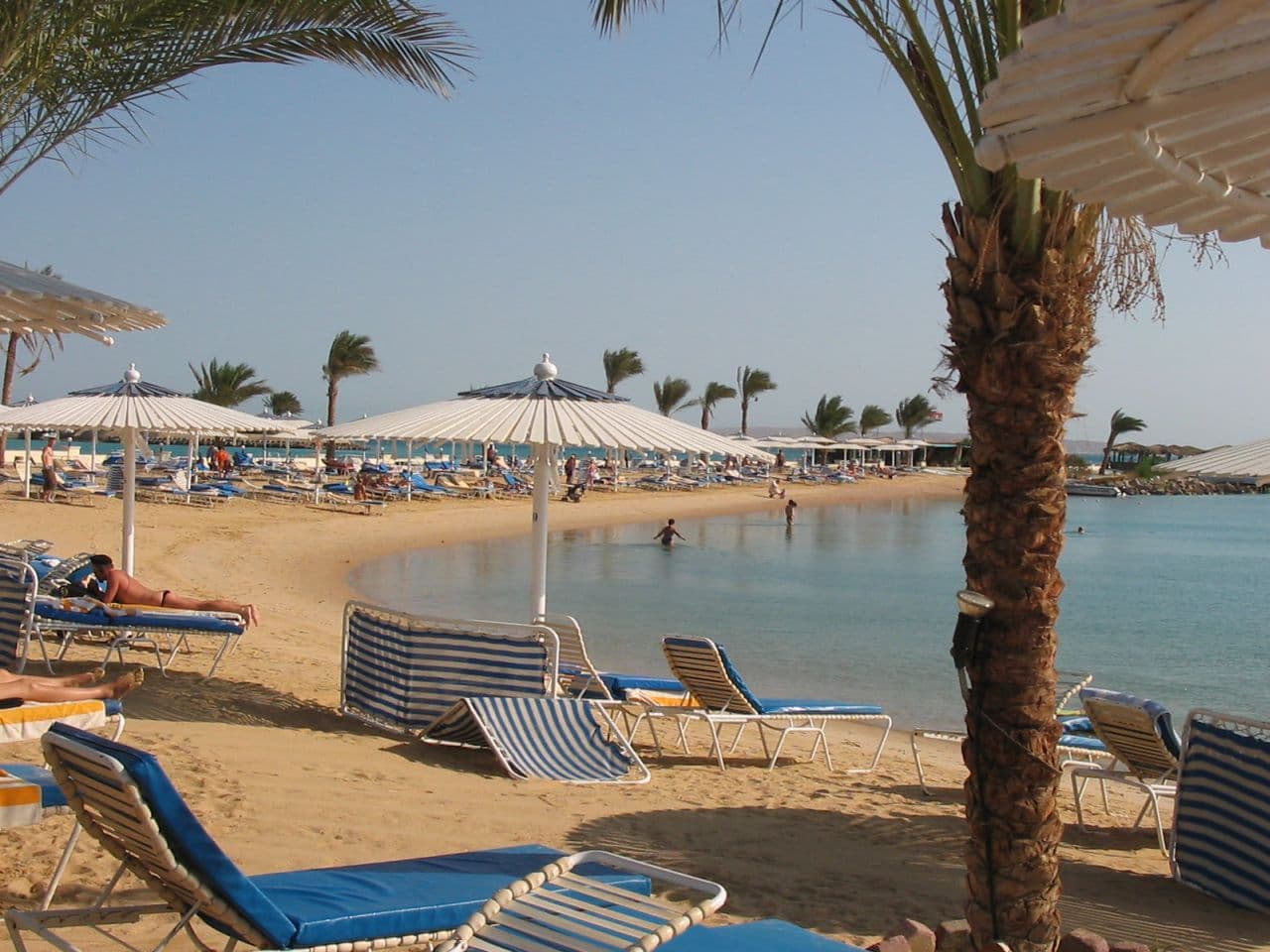
The Red Sea resorts run on a different logic again. Inside the gates of a large hotel in Hurghada or Sharm el-Sheikh, cards work much as they would in Europe and the whole cash question softens. Step outside — into the town, a dive centre, a taxi, a market — and you are back in the cash economy described everywhere else on this page.
The one thing both settings share is the end-of-stay bill. Whatever you sign for on board or on a room account is settled before you leave, so check early in the stay which currency that account is kept in and whether card payment carries a surcharge. That is a five-second question at the start of a trip and an unpleasant surprise at the end of one.
Phones, apps and the small amount of digital money that works
Get a local SIM or an eSIM on arrival. It is not really a money question until you notice how much of Egyptian spending now runs through a phone: ride-hailing apps, maps, looking up the day's exchange rate, calling a driver who cannot find your address. Coverage in the cities and along the valley is good and thins out in the deep desert. Hotel wifi alone leaves you stuck the moment you step outside.
Uber and Careem both operate widely in Cairo, and their value here is that the fare is agreed before you get in and the route is recorded, which removes the negotiation that used to open every journey. It also removes the argument about change, which is the commonest money friction in a street taxi. Carry small notes anyway: a tip is still a tip, and a street cab remains a reasonable fallback when your data gives out.
The Cairo metro is the cheapest way to cross the centre of the city by a wide margin, and it is bought with cash at the station rather than with a card. It does not reach the Giza plateau or most tourist hotels, so it is a supplement rather than a solution, but where both ends of your journey are on the network it costs almost nothing.
Do not expect the domestic payment apps and wallets that Egyptians use to be open to you. They are generally built around local bank accounts and local numbers, and a visitor on a two-week trip is not the customer they were designed for. Your realistic toolkit is a card for the places that take cards, cash for everything else, and a phone for the apps that price a journey rather than pay for it.
Keeping your money safe, and what to do when something goes wrong
Carry roughly a day's worth and leave the rest in the hotel safe. Keep the small-note float separate from your main wallet so you are never counting out a thick stack in the street, and split your hard currency and your cards across more than one place. The realistic risk in Egypt is opportunistic short-changing and petty theft rather than anything more serious, and both are largely defeated by not having everything in one pocket.
Carry two cards from different providers and store them apart. Egypt trips fraud rules on plenty of cards, so tell your bank your dates before you go and make sure the number they hold for you receives messages abroad. If a card is frozen anyway, freezing and unfreezing it in your banking app often clears the block faster than phoning from another country.
Know in advance how you would report a lost card, and have that route available without the card itself: the app, the number saved somewhere other than your wallet, a note of which card is which. The awkward version of this problem is not the theft, it is standing in a hotel lobby trying to remember which bank issued the card that has gone.
If a machine swallows a card, note the bank and the branch and go back during opening hours rather than waiting at the machine. If you are short-changed and notice immediately, say so on the spot and count it out loud; that resolves most of them. If you notice later, let it go — the amounts involved are almost always smaller than the time and temper it would cost to chase.
Prices, haggling and the foreigner rate
Two different things get called the foreigner price and only one of them is negotiable. Antiquities sites have published foreign-visitor pricing, which is fixed, printed and not open to discussion; it is how the ticketing works rather than something happening to you personally. In a market or an unmetered taxi, the first number is an opening position and nothing more.
Haggling is expected in markets and for taxis without a meter, and is not expected in shops with marked prices, hotels or restaurants. Start well below the asking price, stay good-humoured, and be prepared to walk away. If you would be happy at the price, take it rather than grinding for the last few pounds — the sums at stake are usually small, and the difference between a pleasant transaction and a sour one is not.
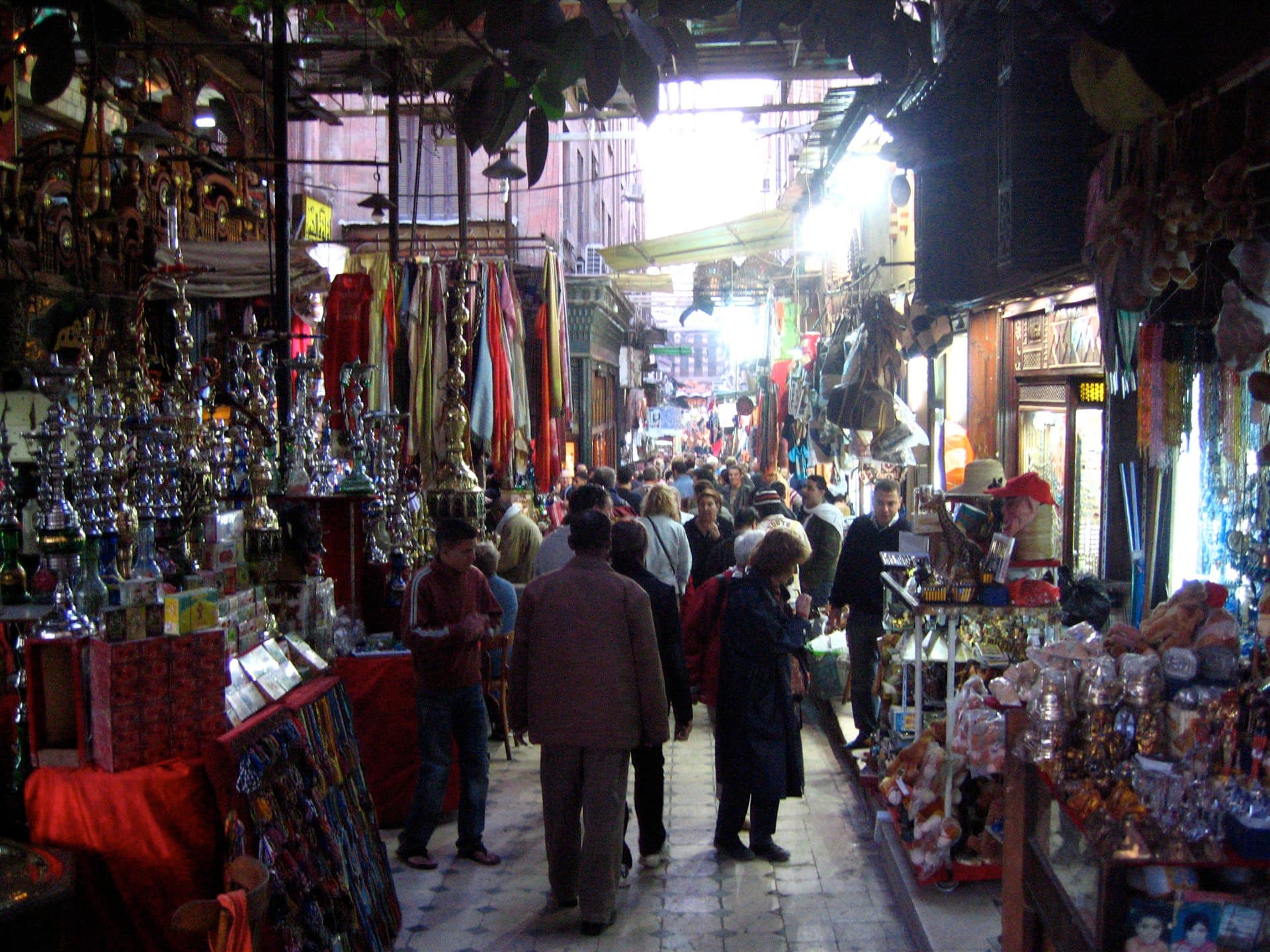
The tea is not a trap. In Khan el-Khalili and countless smaller shops it is offered without obligation, and accepting a glass does not commit you to buying anything. If you genuinely dislike the ritual, the cleanest approach is to buy nothing in the tourist lanes and accept the tea for what it is.
And decide your own limits before you land. The people who find Egypt exhausting on the money front are usually the ones improvising a position at every approach; the ones who enjoy it have already worked out what they will pay for a taxi, what they give a porter, and what they say to the man at the temple gate. A firm, cheerful no is normal behaviour here, not rudeness.
The last few days: leftover pounds and getting out cleanly
Plan the end of the trip backwards from the last morning. You need enough Egyptian pounds for the final tips — the guide, the driver, the porter, the crew box if it has not already gone — plus food and small payments at the airport, and no more than that. Everything above that figure is a problem you are creating for yourself at a departures counter.
Converting pounds back is possible at banks and airport counters, sometimes only if you still hold the original exchange receipt, and the rate going the other way is poor. There are also legal limits on how much cash may be carried out of the country, revised from time to time, which is another reason not to be holding a large sum on the way to the airport.
So spend them down instead. Pay the last hotel extras in cash rather than by card, buy the things you were going to buy anyway in the final days rather than the first, and treat whatever is genuinely left as a tip. That is a better outcome than a double conversion, and it takes ten seconds rather than a queue.
The one thing worth keeping back is a small reserve of hard currency you never changed. It covers a departure fee or an unexpected cost at the airport, it is still money when you get home, and it costs you nothing to have carried it. Changing exactly the right amount is not a skill anyone has; leaving yourself a margin in a currency that travels is the practical substitute.
Common questions
Will my bank block my card in Egypt?+
Often, yes. Egypt trips fraud rules on plenty of cards. Tell your bank your dates before you go, make sure the phone number they hold receives messages abroad, and carry a second card from a different provider stored somewhere else. If a card does get frozen, freezing and unfreezing it in your banking app often clears the block faster than phoning from abroad.
What do I do with leftover Egyptian pounds at the end?+
Spend them down. Converting back is possible at banks and airport counters, sometimes only if you still have the original exchange receipt, and the rate going the other way is poor. Change money in stages during the trip so you are not left with a pile at the end, keep enough for airport tips and food on the last morning, and treat whatever is left as a tip rather than a currency problem.
How much cash do I actually need each day?+
Less than most people expect on a guided trip, where transport, entries and most meals are settled in advance. Day-to-day cash goes on tips, drinks, taxis, small shops and the occasional site or camera fee. Think in small notes rather than a daily total, carry roughly a day's worth, and leave the rest in the hotel safe.
Do foreigners get quoted different prices?+
Yes, and it is normal rather than personal. Antiquities sites have published foreign-visitor pricing, which is fixed and not open to discussion. In markets and taxis the first number is an opening position and nothing more. Agreeing a figure out loud before the ride or the service starts removes almost every argument that would otherwise arrive at the end.
Will the pound be stronger or weaker by the time I travel?+
Nobody honest will tell you. Rates can move with little warning, which is why this page quotes none. Check the live rate a few days before you fly and again when you arrive, and price your trip in the currency you are actually paying in — your operator's euros, dollars or sterling — so a move in the pound changes what your spending money buys, not what the holiday costs.
Can I pay in euros or dollars while I am in Egypt?+
Sometimes, and you should not want to. Tourist-facing hotels, shops and drivers will often take hard currency, but they set the rate themselves and it is worse than a bank's, and you will rarely get change in the same currency. The one place hard currency is genuinely required is the visa counter on arrival. Everywhere else, change your money and pay in pounds.
Is it better to change money at the airport or in town?+
Both, in that order. Change a small amount at an arrivals-hall bank counter to cover the transfer and the first day, then do the bulk at a bank or licensed exchange office in town, where the rate is better. Hotel desks are worse again than either. Take your passport, keep the receipts, and compare counters on how many pounds you are actually handed rather than on a no-commission sign.
Do I need cash the moment I land?+
Yes if you are buying a visa on arrival, because that counter wants hard currency and its card terminals fail often enough to matter. Even with an e-visa in hand you want usable notes for a trolley, a coffee and the first tips, somewhere you can reach without opening your main luggage. Landing with nothing but a debit card is the one version of this that genuinely goes wrong.
Are there limits on how much money I can bring in or out?+
Yes. The central bank sets limits on how much cash may be carried in and out of the country, and revises them from time to time, so check the current figure if you are moving a large amount. For most visitors on a package holiday the limits are well above what they are carrying, but they are a further reason not to be leaving the country holding a thick stack of pounds.
Should I tip in Egyptian pounds or in euros?+
Egyptian pounds, in small denominations, changed early in the trip rather than on day four when you have already run out. Handing over a large euro note because you have nothing smaller helps nobody and it distorts expectations for the travellers behind you. The amounts themselves are not complicated; carrying the right notes is the whole skill.
Official sources
Entry rules, opening hours, security advice and exchange rates all move. Check them at the source, not here.
Central Bank of Egypt ↗The official reference for the Egyptian pound. Rates move; do not rely on a figure in an article.
Written and checked by the Nile Trip Guide editorial team · Last reviewed . Entry rules, prices and opening hours change — check anything critical against the official sources linked on this page.
The route most people take first, at the length it was built for: Giza and the Grand Egyptian Museum, then a flight to Luxor and four nights sailing down to Aswan.
No boat on this one. Giza and the Grand Egyptian Museum, a night in Luxor for both banks, two nights on the Red Sea, then back to Cairo for the Citadel, Coptic Cairo and the Royal Mummies.
Five nights in Cairo either side of a four-night sail from Luxor to Aswan. The Cairo days are private, just your party and a guide; the sightseeing off the boat is shared with a small group.