Getting around Egypt is mostly a question of distance and patience. The sights are strung out along the Nile and across two deserts, and the road from Cairo to Aswan runs the better part of 900 km. This page covers what each option actually feels like, what it costs you in time, and where the standard advice is wrong.
Getting around Egypt: the shape of the country decides your transport
Egypt is long and thin where it matters. Almost everything visitors come for sits on a narrow strip of Nile valley, plus the Red Sea coast and Sinai. Cairo to Luxor is roughly 650 km by road. Luxor to Aswan is about 215 km by road. Cairo to Sharm el-Sheikh is a long haul by road and a short hop by air. Once those numbers are in your head, most decisions answer themselves: fly the long legs, drive or float the short ones, and stop trying to save money on a journey that eats a day of a two-week trip.
It is worth being blunt about what a moving day costs. A two-week trip has fourteen days in it, and every long transfer takes one of them or a good part of one. The question is never simply which option is cheapest, but what the cheaper option takes out of the middle of your holiday. Most of the transport regret we hear about is not about money spent. It is about mornings lost to a road that looked short on a map.
The other thing the geography does is make backtracking expensive. Cairo is the hub for domestic flights, so an itinerary that bounces out to the coast and back to Cairo and out again pays the hub tax twice. Routes that run in one direction down the valley and finish where a flight home is available tend to work better than routes that return to the same city three times.
The routes most trips actually use
The standard shape exists because it minimises transport. Two or three nights in Cairo, a morning flight to Luxor, a cruise upriver to Aswan, and a flight home from the south or back through Cairo. That plan contains one internal flight at the start, a stretch of river that moves you while you sleep, and one flight out. Nothing is repeated and nothing is driven that does not have to be.
The main variation runs the other way and finishes on the coast. A boat that sails north and disembarks at Luxor puts you within about four hours by road of Hurghada, so a trip can cross the desert to the Red Sea and fly home from there with no second internal flight and no return through Cairo. It trades a calm finish in Aswan for a beach one, which is a preference rather than a mistake.
What does not work is the plan that treats Egypt as a set of day trips from one base. Luxor from Hurghada, Abu Simbel from Aswan and back in a morning, Alexandria from Cairo before dawn: each of them is sold, each of them is possible, and each of them spends most of the day in a vehicle for a short time on the ground. Where a night is available instead, take the night. It usually costs little and changes the day entirely.
Domestic flights and which legs are worth flying
Domestic air is the workhorse of Egyptian travel. Cairo is the hub, and the main domestic destinations are Luxor, Aswan, Hurghada and Sharm el-Sheikh, with Marsa Alam and a few smaller fields served less often. Abu Simbel is reached mostly on short flights from Aswan. Frequencies swing hard with season and demand, and routes are added and dropped without much notice, so check current schedules yourself close to the date rather than trusting anything written months earlier, this page included.
The legs worth flying are Cairo to Luxor or Aswan when you want the day rather than the night, Cairo to the Red Sea and Sinai resorts, and Aswan to Abu Simbel if you would rather not do the desert road twice in one day. The legs not worth flying are Luxor to Aswan, where check-in and transfers cost more time than the drive, and anything under about three hours by road.
Two practical warnings. Egyptian domestic flights are retimed often, sometimes by hours, sometimes the day before. Build a buffer before any international connection rather than booking the tightest link that exists. And Cairo airport is large, with terminals far enough apart that a domestic-to-international transfer needs real time, so confirm which terminal each flight uses when you book.
The Cairo to Luxor and Cairo to Aswan routes carry several services a day, which is what makes them plannable: if one is retimed there is usually another. That is not true everywhere. The coastal airports lean heavily on charter and seasonal scheduled traffic, and some routes into Marsa Alam run once a week, which quietly fixes the length of your holiday at seven days whether you wanted that or not. Check the frequency, not just the existence of the route.
One small thing that catches people at check-in: domestic baggage allowances are lower than long-haul ones. A case that flew in from London without comment can be over the limit on the hop to Aswan, and the shopping you do in the south makes it worse on the way back. Weigh it before you leave the hotel rather than at the desk.
The sleeper train to Luxor and Aswan: the honest verdict
The overnight sleeper from Cairo runs down the valley to Luxor and on to Aswan, in two-berth and single cabins with a basin, a door that locks, and a meal brought to you. It saves a hotel night and it saves a travel day. That is the entire case for it, and it is a decent case.
The case against is comfort. The berths are narrow, the ride is noisy, and the track is not smooth, so light sleepers should expect a broken night. The cabins are dated and the bathrooms at the end of the car are basic. The food is edible and no more. Departures and arrivals both tend to run late, which matters if you have a morning start at Karnak.
The verdict: worth it once, if you are curious about it, traveling as a couple, and happy to lose some sleep to gain a day. If you are traveling with small children, have a bad back, or are already short on rest, fly and book a hotel night instead. Nobody who chose the flight has regretted it. Some people who chose the train have.
For scale: Luxor is about an hour from Cairo by air and around ten hours by overnight sleeper, with Aswan further south again. The train leaves in the evening and puts you into the valley in the morning, which is the appeal. Cabins are limited and they sell out in the high season, so this is not a decision to leave until you are standing at Ramses station with a rucksack.
Day trains, and the Cairo to Alexandria line
Egypt has a working daytime rail network as well as the sleeper, and the one line most visitors should care about is Cairo to Alexandria. The fast trains cover roughly 220 km in about two and a half hours. By road the same trip is about three hours each way and considerably less predictable, because it depends on Cairo traffic at one end and the checkpoints in between.
That difference is the whole argument. A train leaves when it leaves and arrives more or less when it says it will, and it removes the two most variable parts of the journey from your day. If Alexandria is on your plan at all, the train is the civilised way to do it, and it makes an overnight there genuinely easy to arrange. The only reason to take a car instead is if you want to stop somewhere along the way.
Day trains also run the length of the valley, and they are cheap. They are slower than the sleeper and slower than flying, and foreign passengers have generally been steered toward the tourist services rather than the local ones. For most visitors on a two-week trip they are a curiosity rather than a plan. If you have time and an interest in seeing the country from a window, they are a real option; if you are working to an itinerary, they are not.
Intercity roads, checkpoints and unpredictable journey times
Egypt's main intercity roads are better than their reputation. The desert road between Cairo and Alexandria is fast divided highway. The road down the Red Sea coast is long, straight and dull. The valley road between Luxor and Aswan is straightforward. Sinai roads are decently paved with long empty stretches. None of that is the hard part.
What you cannot predict is the stopping. Security checkpoints sit on most intercity routes, and foreign passengers are routinely asked for passport details, so keep a passport or a copy within reach. Most checks take a couple of minutes. Occasionally one takes far longer, or a route is closed and traffic is redirected. Cairo's own congestion adds another unknown at either end of the journey.
The working assumption should be that any road journey may take noticeably longer than the map says, and that the variance grows with distance. We pad transfer times rather than promise them. If someone quotes you a precise door-to-door figure for a five-hour drive in Egypt, they are guessing, and the slack comes out of your day rather than theirs.
Two habits make the difference. Keep your passport somewhere you can reach it rather than buried in a suitcase, because at a checkpoint the driver will usually hand over both his details and yours, and a bag that has to be unpacked on the hard shoulder turns a two-minute stop into a ten-minute one. And plan long drives to finish before dark. Rural roads carry unlit obstacles and the last stretches into desert towns are not lit at all, which is why experienced drivers time a long run to arrive in daylight.
Long-distance buses and shared transport
Buses run the intercity routes and they are cheap. Overnight services cross the desert to Siwa, coaches work the Sinai coast road between Sharm el-Sheikh and Dahab, and the Red Sea and valley routes are served as well. If you are travelling long and slowly on a tight budget, they are a legitimate way to move around the country, and plenty of independent travellers use nothing else.
The trade-offs are the ones you would expect. You go when the bus goes rather than when you want to, stops are at stations rather than at your hotel door, and a night bus costs you the same sleep the sleeper train does without the door that locks. Add the transfer at each end and the saving against a shared car with a driver narrows more than the ticket price suggests.
Our honest position is that buses suit long trips and thin budgets, and rarely suit a two-week holiday with a fixed shape. If your plan has four moving days in it and each one has to land on time for something booked at the other end, the flexibility of a private vehicle or the reliability of a flight is worth paying for. If you have five weeks and no fixed dates, take the bus and enjoy it.
Taxis and ride-hailing apps in Cairo
Ride-hailing apps have changed Cairo for the better. Uber and Careem both operate widely, the fare is agreed before you get in, the route is recorded, and you avoid the negotiation that used to open every journey. For most visitors this is the default way to move around the city. It runs on data, so sort out a local SIM or an eSIM when you arrive.
Street taxis still exist and still work. The white cabs have meters and some drivers use them. Older black cabs do not. If you take one, settle the fare before the door closes and carry small notes, because change is a recurring argument. The apps are still easier, and on balance cheaper, but a street cab is a reasonable fallback when your phone or your data gives out.
Two Cairo realities worth knowing. Drivers often cannot find an address by name and will call your hotel or work from the map pin, so have both. And traffic is severe at peak times. A five-kilometer crossing of the city can take an hour, which is why we put Giza and central Cairo on separate days rather than stitching them together.
Outside Cairo, do not assume the same convenience. The apps are at their strongest in the capital, and elsewhere the normal pattern is a driver arranged through your hotel or your operator, agreed in advance for the morning or the day. That is usually the better arrangement anyway in Luxor and Aswan, where you want the same vehicle waiting for you between sites rather than a new negotiation in the heat each time.
Getting around Cairo: distances, traffic windows and pairing
In Cairo the clock matters more than the map. Giza to downtown is roughly 20 km. Early in the morning that is half an hour. At the wrong moment it is most of two hours, in the same car, on the same road. Traffic builds through the late morning and again from the middle of the afternoon, so the useful skill is not finding a shortcut but choosing when to move.
This is why two major sites in a day is a realistic Cairo plan and three is not. The pyramids plateau and the museums are on opposite sides of a city that punishes anyone trying to cross it at the wrong hour. Pair things that sit near each other, put the long crossing at dawn or in the evening, and accept that the third site on the list belongs to another day.
Where you sleep quietly sets your transport bill for the whole stay. A hotel at Giza puts you beside the plateau and the museum but leaves you a drive from everything else along a strip that is mostly hotels. Zamalek is quieter, greener and central for the museums and restaurants. Downtown is cheaper and louder and closer to the medieval quarter. None is wrong, but each one decides which journeys you make twice a day.
The Cairo metro
The metro is the fastest way to cross central Cairo, and it is cheap. Several lines run under and through the city, linking downtown, the main rail station at Ramses and other central districts, with the network still being extended. Trains are frequent, signs include English, and it is entirely usable by visitors who have somewhere it actually goes.
The limits are real. Coverage does not reach the Giza pyramids plateau or most tourist hotels, so the metro is a supplement to taxis rather than a replacement. Cars are packed at rush hour, older stock has little air conditioning, and the crowding is not for everyone. Women-only cars are marked on the platform and widely used. If both your start and your finish are on the network, take it. Otherwise it is a curiosity rather than a solution.
The one sightseeing trip where the metro is unambiguously the right answer is Coptic Cairo. The station sits at the gate of the old quarter, which makes it the easiest of the major sights to reach without a car and spares you a crawl through traffic in both directions. Treat that as the exception that proves the rule: the metro is excellent where it goes, and irrelevant where it does not.
Which Cairo metro lines will a visitor use?
Cairo has three metro lines. Line 1 runs 44 km from Helwan to New El Marg, with 35 stations. Line 2 runs 21.5 km from Shubra El-Kheima to El Mounib, with 20 stations. It passes Ramses, Attaba, Tahrir Square, Dokki, Cairo University and Giza. Line 3 links the east of the city with the west. It meets line 1 at Nasser and line 2 at Attaba.
A handful of stations matter for sightseeing. Sadat sits under Tahrir Square, close to the Egyptian Museum, and is where lines 1 and 2 meet. Al Shohadaa, the other interchange, serves Ramses Square and the main railway station. Mar Girgis is in the middle of Coptic Cairo, by the Hanging Church. Opera is the closest station to Zamalek, and Bab Al Shaaria the closest to Islamic Cairo. Giza station is next to the Giza railway station, and the operator points to buses from there for the pyramids.
On lines 1 and 2, the two middle cars of each train are reserved for women. After 9 pm, one of the two opens to men. Women may ride in any car. Ticket prices are on the operator's website, cairometro.gov.eg, under Tickets & Subscriptions Prices.
Feluccas and river transport
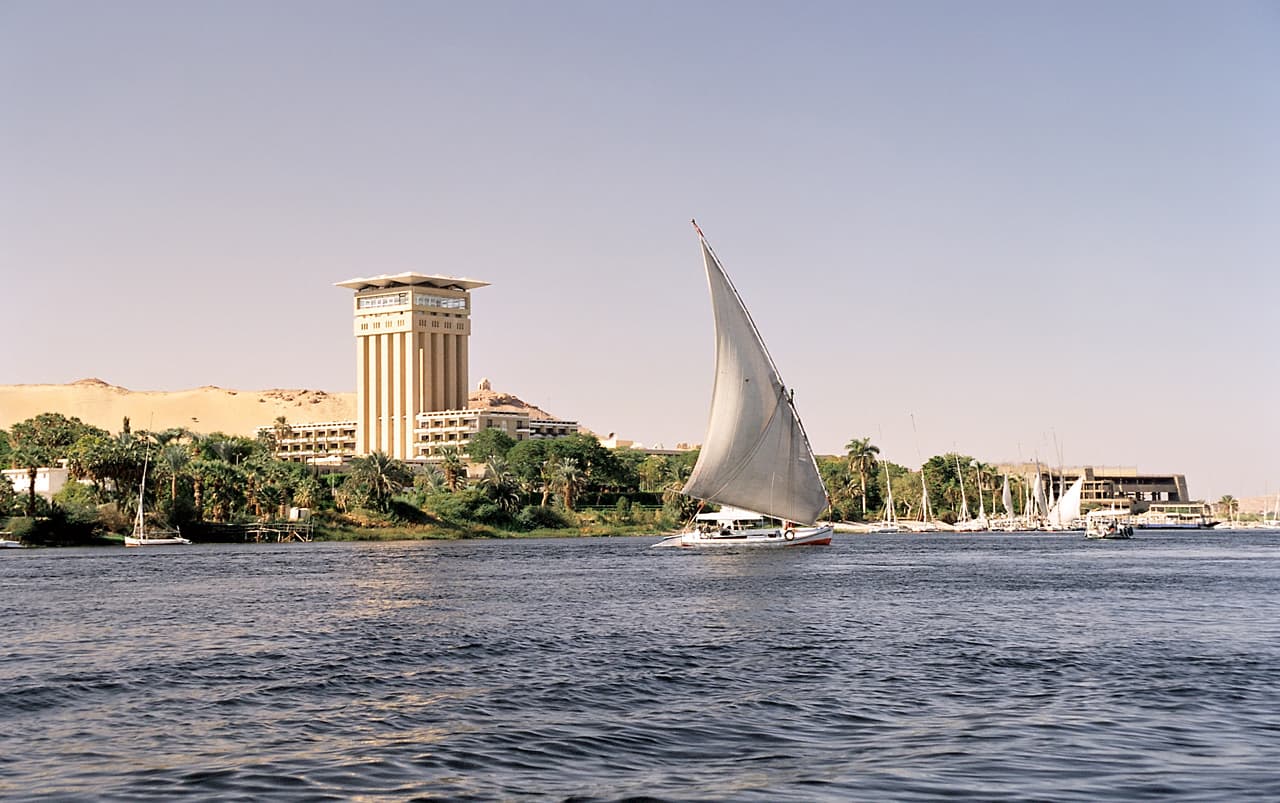
The Nile is a working waterway and a pleasant one. Feluccas, the small lateen-sailed boats, are best around Aswan, where the river is wide, the wind is reliable and the islands are close. An hour or two at sunset is one of the better things you can do in Egypt, and it costs you almost nothing in time.
Treat the felucca as an experience, not as transport. There is no engine, so progress depends on wind, and a multi-day felucca trip north toward Kom Ombo means sleeping on deck with no facilities. Some travelers love that. Most, honestly, do not, and end up under tow behind a motorboat for part of the way.
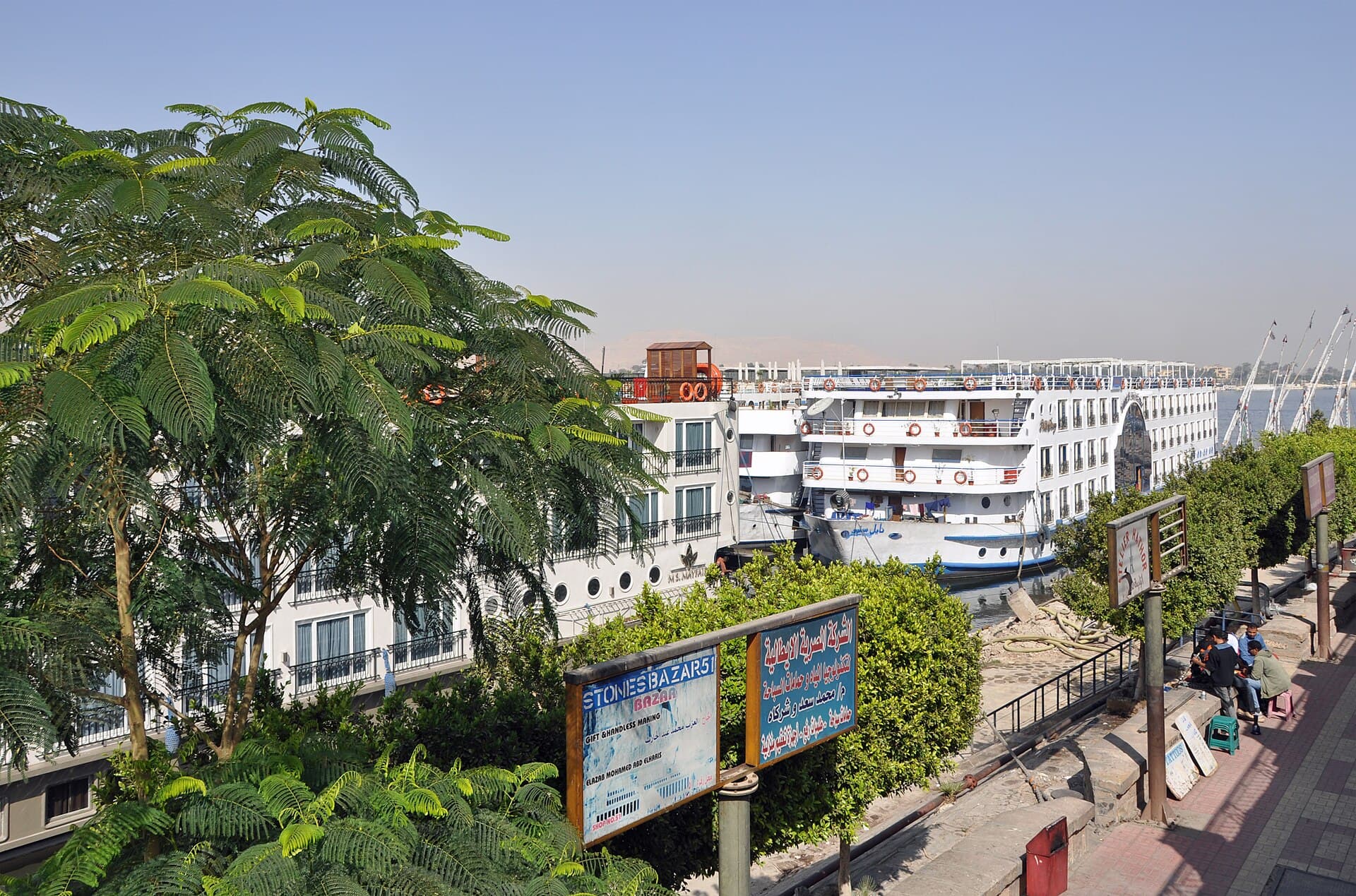
Cruise boats between Luxor and Aswan are a different thing: cabins, fixed itineraries, and temple stops along the way. They move slowly and you see the valley from the water, which is the point. Short motorboat crossings to the Luxor west bank and the Aswan islands are routine, quick and cheap, and they are transport rather than sightseeing.
The public ferries deserve a mention of their own, because they are the cheapest useful transport in the country. At Luxor the local ferry crosses to the west bank in a few minutes for the price of a coffee and lands you close to Luxor Temple on the way back. At Aswan the public boat to Elephantine costs a fraction of a private one and puts you in the Nubian lanes rather than in front of them. Private motorboats do the same crossings on demand for considerably more, and on a hot afternoon with a group that is money reasonably spent.
The Nile cruise as transport, not just as a hotel
It is worth seeing the cruise for what it does mechanically. A boat between Luxor and Aswan carries your luggage, your bed and your dinner along the same axis you were going to travel anyway, and it stops at Esna, Edfu and Kom Ombo, which are otherwise a set of separate drives with a car waiting outside each one. Three or four nights on the water remove several hotel changes, several transfers and several mornings of packing.
That is the reason the classic itinerary is built around it rather than any romance about the river. A land tour of the same stretch is perfectly possible and gives you more control over timing, but it puts you back in a vehicle between every site and back in a lobby at every change. The trade is flexibility against friction, and for most first trips the friction matters more.
The smaller sailing boats, the dahabiyas, work the same axis with a handful of cabins and a slower schedule. They are better company and worse logistics: fewer departures, longer lead times and less room to change your mind. As transport they do the same job. As a holiday they are a different one.
Getting around Luxor: two banks and one river
Luxor is organised by the river. The airport, the museum and nearly every hotel sit on the east bank, along with Karnak and Luxor Temple. The Valley of the Kings, the Colossi, Hatshepsut's terraces and the noble tombs are on the west. That makes the west bank a morning out and back rather than somewhere most people base themselves, and it makes the crossing the one piece of transport you will use repeatedly.
The practical arrangement is a driver for the morning on whichever bank you are working, plus the ferry or a motorboat to get across. Distances on the west bank are short but the ground between sites is open and hot, so walking from one tomb group to the next is not the plan it looks like on a map. Whatever you have arranged should be waiting on the far side rather than found there.
Timing beats everything else in Luxor. The good hours are early, before the coaches arrive, and the evening, when Luxor Temple is worth seeing. A schedule that puts you on the west bank at midday in summer has taken the two best parts of the day away and given you the worst one. In high summer, do the whole west bank early and be back across the river by late morning.
Aswan, and the two ways to reach Abu Simbel
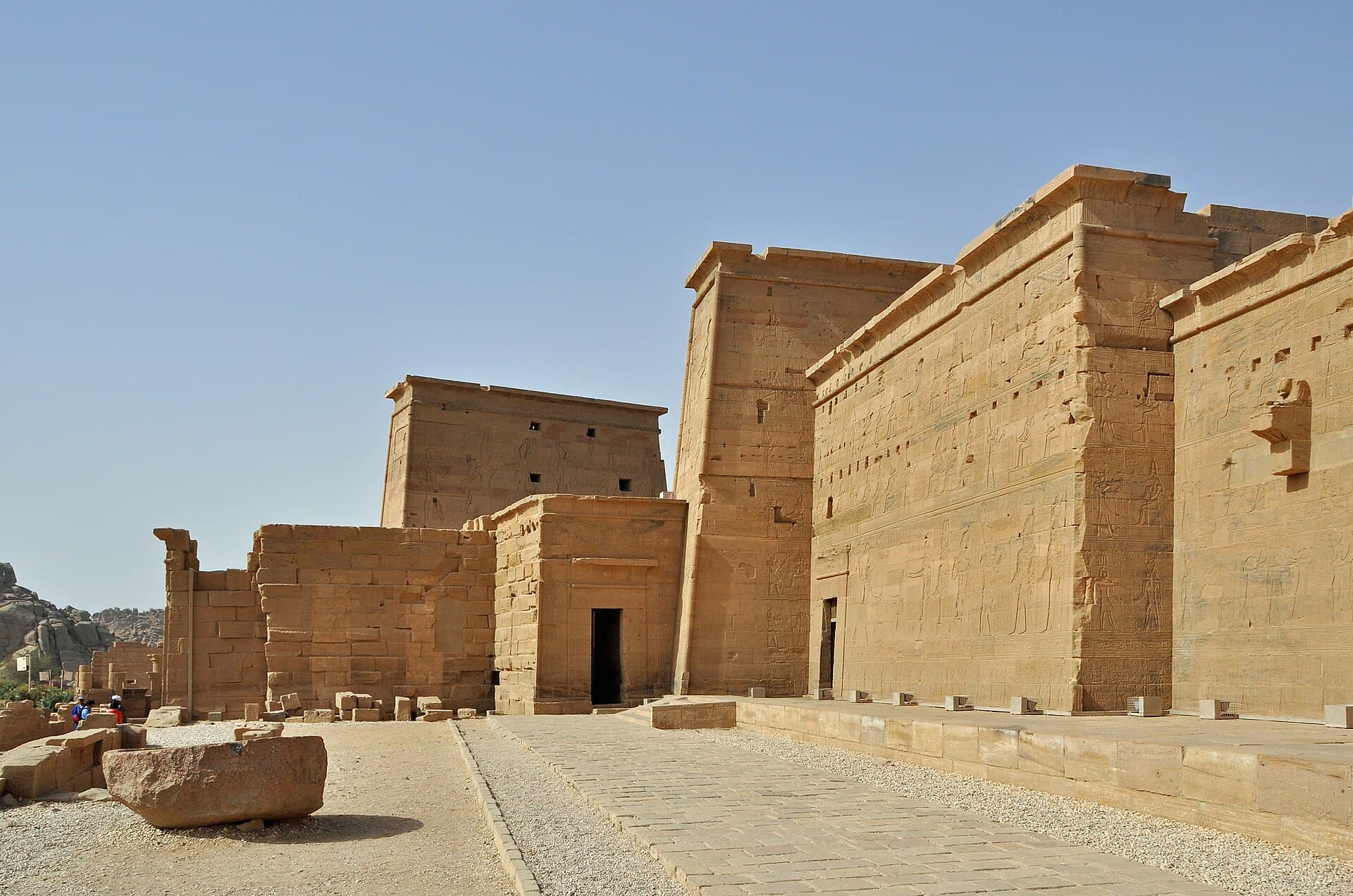
Aswan itself is easy. The town is compact, the islands are a short motorboat ride, and a couple of hours covers Elephantine, the botanical garden on Kitchener's Island and the west bank cliffs. Philae sits on its own island reached by boat, and the High Dam is a short drive with a viewpoint that takes about fifteen minutes to exhaust. None of this requires planning beyond agreeing a boat.
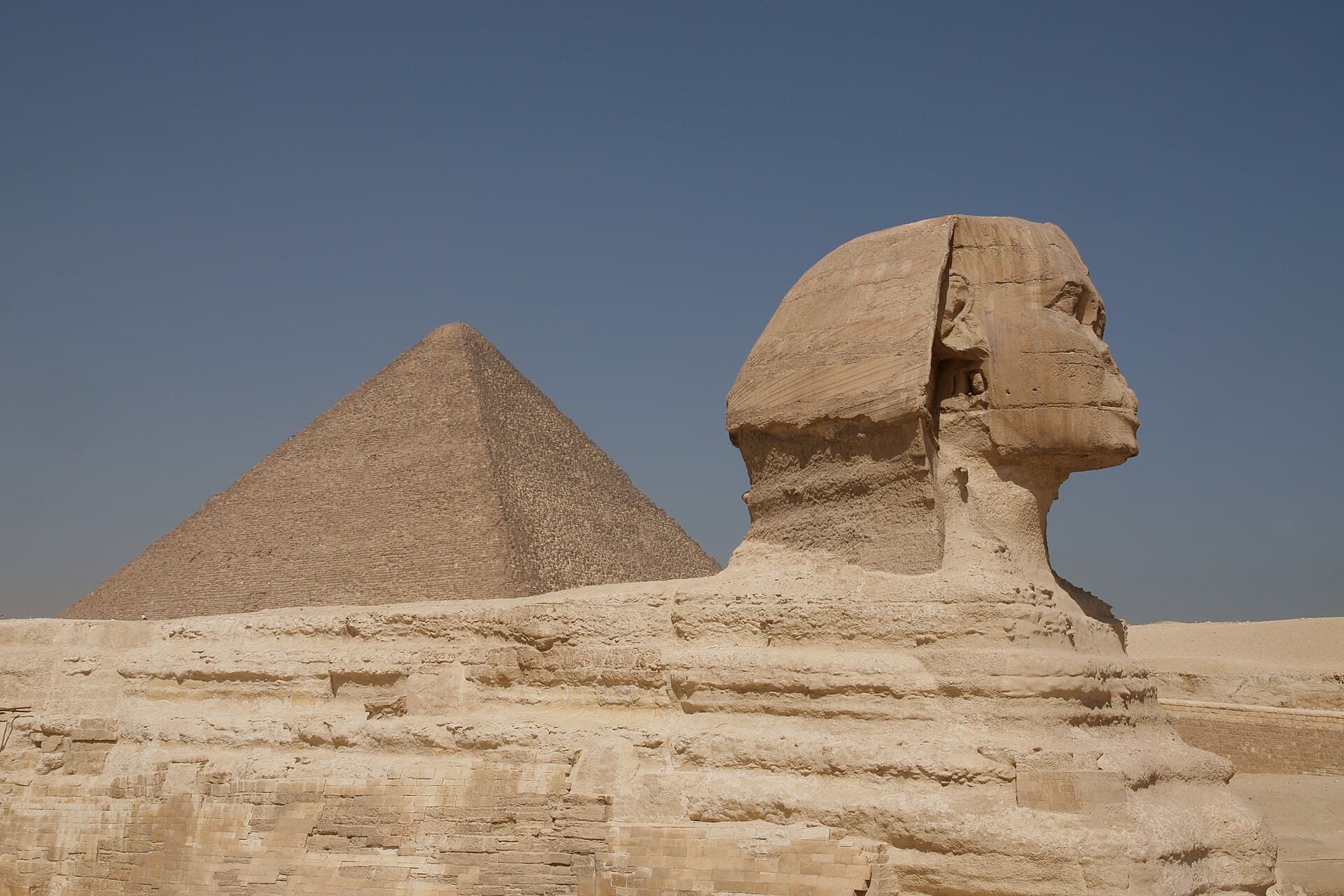
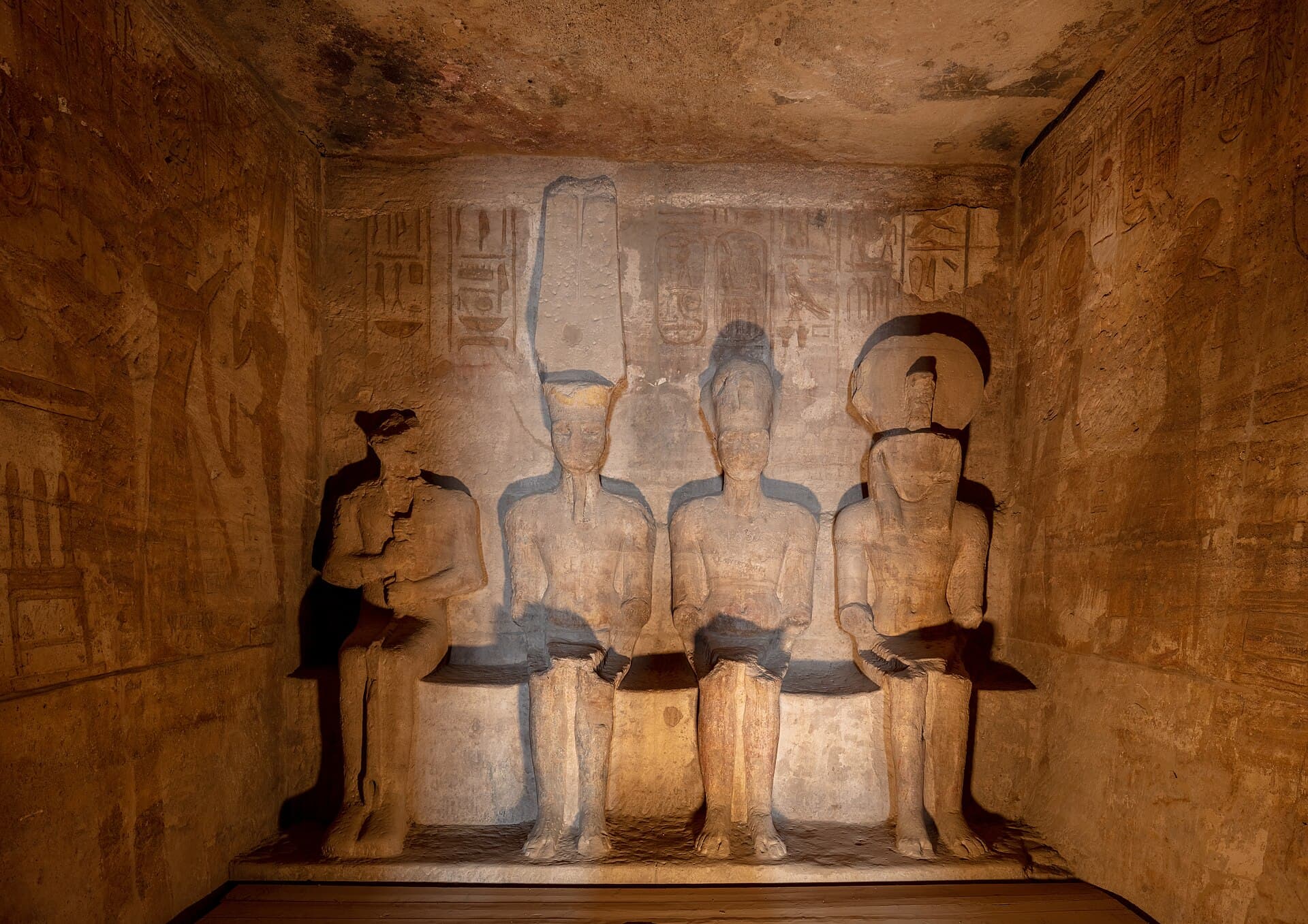
Abu Simbel is the exception, and it is the single biggest transport decision in the south. By road it is roughly three to three and a half hours each way across empty desert, with departures usually around four in the morning. That gets you onto the site before the heat and while the facade is lit from the front, which is the only time it looks like the photographs. It also means the better part of seven hours in a vehicle for about two hours at the temples.
The flight from Aswan takes around forty-five minutes and the airport is minutes from the temples. Flights are normally sold as a return pair, which leaves roughly two hours on the ground: enough, not generous. It costs a good deal more than the road and buys back around five hours of your day, which is the right trade if your days are short. Convoy rules and permitted departure times on the road have changed repeatedly over the years, so confirm the current position locally rather than assuming last year's arrangement holds.
The third option is the one most people do not consider: stay the night. Abu Simbel takes its entire daily load in one block, from the first vehicles arriving from Aswan until they leave again late morning. An overnight puts you there when the site is empty, and it turns the worst day of the trip into one of the better ones.
The Red Sea coast and Sinai: airports, transfers and permits
On the coast the airport you fly into decides a large part of your holiday. Hurghada airport is roughly half an hour from El Gouna and about an hour from Safaga to the south, which makes either an easy first or last stop. Marsa Alam is a different proposition: the airport serves a long strip of coast on both sides of it, hotels sit in their own compounds spaced kilometres apart along a single desert road, and two hotels both described as being in Marsa Alam can be a couple of hours apart. Check the transfer time before you book, not after.
The cross-country connections from the coast are worth knowing in advance. Hurghada is about four hours by road from Luxor, across the desert to Safaga and Qena and then south along the valley. The road is good and the drive is dull. Marsa Alam is four to five hours from Luxor and three to four from Hurghada. Those numbers are why the Nile-plus-Red-Sea combination sells so well, and also why the Luxor day trip from the coast is a poor idea: eight hours in a vehicle for three sites walked through in the heat.
Sinai runs on its own logic. Sharm el-Sheikh has the airport, and Dahab, an hour and a half north on the coast road through empty desert and a checkpoint or two, has no scheduled flights of its own, so almost everyone arrives through Sharm. Private transfers are the usual arrangement and public buses run the same road. Cairo to Sinai by road takes most of a day and crosses the Suez Canal.
There is also an entry rule specific to Sinai. Arrivals at Sharm can, depending on nationality, be given a free Sinai-only entry permit instead of a full Egyptian visa. It runs for about two weeks and covers the eastern Sinai coast, Sharm, Dahab, Nuweiba and Taba, and the inland road to St Catherine. It does not cover the rest of the country, so Cairo, Luxor and Aswan are out, and it is widely reported not to cover Ras Mohammed National Park. These rules have been changed more than once, so treat this as a starting point and confirm the current position with your airline or a consulate before you fly.
Reaching the Western Desert and the oases
The oases are where Egyptian transport stops being a choice between options and becomes a single long drive. Siwa is roughly ten hours by road from Cairo. There are no scheduled passenger flights and no railway. The usual route runs north-west to Alexandria or west along the coast to Marsa Matruh, then turns south for four hours or so across empty desert. The road is a sealed two-lane highway for its whole length, so the drive is dull rather than difficult.
Public buses run overnight to Siwa and are cheap. A private car with a driver costs more and lets you stop where you want, and a driver who knows the road will time the run to reach Siwa before dark, because the final stretch is unlit. Either way you pass military checkpoints, so keep your passport reachable. Once you are there, the town itself is small enough to manage without a vehicle; a 4x4 with a driver is only needed for the things that sit out in the sand.
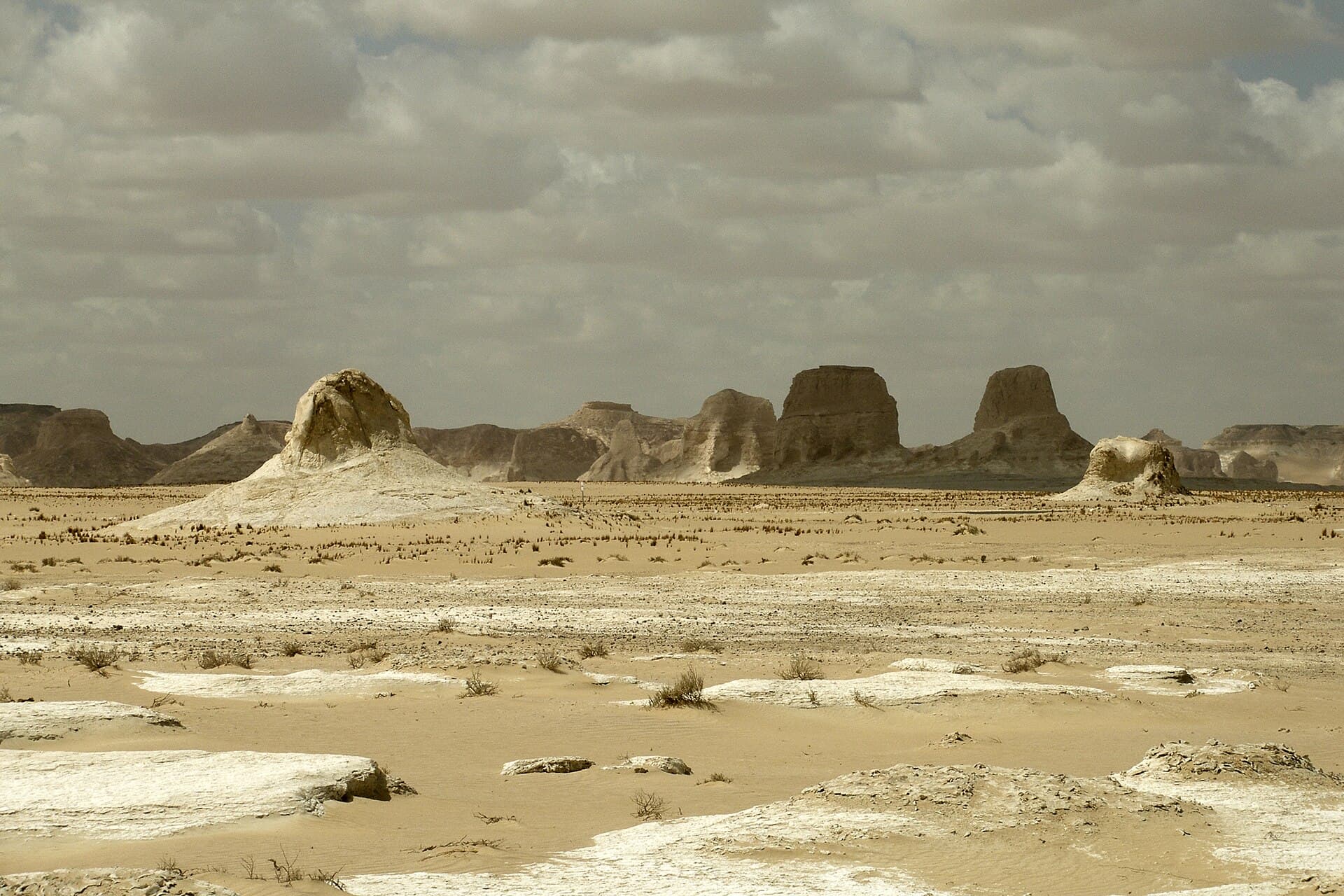
The White Desert works differently again. The road southwest from Cairo to Bawiti, the main town of Bahariya oasis, is about 360 kilometres and four hours in a normal vehicle. You change to a 4x4 there, drive on for another couple of hours, then leave the tarmac, at which point the driver lets air out of the tyres for the sand. Off the road there is no phone signal, no fuel and no one to call, which is why this is done with a local operator rather than improvised.
Two things follow from that. The day-trip version, four hours out and four hours back in the dark for a fast loop, wastes the only part that matters, which is the night among the formations. And access to parts of the Western Desert has been restricted at various times, so confirm the current position when you plan rather than assuming what was open last season is open now.
Renting a car, and why most visitors should skip it
You can rent a car in Egypt. We rarely recommend it. Cairo driving is assertive, lane markings are treated as suggestions, and unlit obstacles at night are common on rural roads. Parking in the city is a problem in its own right. Add checkpoints where a foreign driver attracts more questions, plus the paperwork and liability if anything goes wrong, and the savings disappear.
A car with a driver costs more than self-drive but solves all of it. The driver handles the checkpoints, the parking, the navigation and the arguments, and you look out of the window instead. For a family or a couple doing several legs, the gap in price against taxis and internal flights is smaller than people expect.
The narrow exception is the Red Sea and Sinai coasts, where roads are simple, distances between towns are clear and traffic is thin. If you are a confident driver, staying put in one resort area and want independence for day trips, self-drive there is defensible. In the Nile valley or in Cairo, it is not: take the car and driver.
Convoys and restricted routes
Egypt used to move tourist traffic in mandatory police convoys across much of the south. Most of that has been relaxed, and the Luxor to Aswan road no longer works that way. But convoy or escort requirements still surface on certain desert and Sinai routes, and they can be reimposed at short notice on any route if the security assessment changes.
In practice this means fixed departure windows, a set assembly point, and no flexibility on timing for the day you travel. It also means a route that was open on your last trip may not be open on this one. The Abu Simbel road and some western desert and Sinai stretches are the usual candidates.
This is one of the clearest arguments for using a ground operator rather than improvising. The requirements are checked locally, they change, and no website is current on them, ours included. Ask on the day you travel, not from home three months earlier. Your driver or operator knows on the morning what no website can know in advance.
Paying for transport: cash, cards and small notes
Cash still runs the day in Egypt, and small notes matter far more than the total you carry. The payments that happen twenty times a day are the taxi, the ferry, the man who carried your bag and the tip for a driver who waited three hours in the sun. None of those are card transactions, and none of them are easier if the smallest note in your wallet is a large one.
Cards work better than they used to, but unevenly. Cairo takes cards widely: hotels, supermarkets, pharmacies and most mid-range restaurants will run a card without comment, and contactless is normal in the capital. Outside Cairo, in Luxor, Aswan, the oases and the Red Sea towns once you step off hotel grounds, assume cash first and treat a working terminal as luck. Terminals also drop offline for hours when the connection goes, which is not something you can plan around.
Change money after you land rather than at the airport counter, where the rate is worse: take enough for the transfer, a tip and a bottle of water, and do the rest in town. Use ATMs attached to bank branches during opening hours where you can. And if you have booked with an Egyptian operator, find out before you fly whether the balance is due in cash on arrival, because paying it by card frequently carries a surcharge and it changes how much you need to bring with you.
How we plan transport, and the rules behind it
The rules we work to are simple and they are all about slack. Never connect a domestic arrival straight into a long-haul departure. Pad every road transfer rather than quoting a precise door-to-door time. Put no more than one long moving day next to another. Two major sites in a Cairo day, not three. Where a day trip and an overnight cover the same ground, take the overnight unless there is a real reason not to.
The second principle is to decide what the day is for before deciding how to travel. A morning flight to Luxor costs more than a night on the train and buys you a temple at first light. A night on the train costs a hotel and buys you a slow morning you may not want. Neither is the correct answer in the abstract; they are correct for different days.
The last one is about who checks what. Schedules, convoy requirements, permit rules and which routes are open all change locally and at short notice. That is not a reason to avoid Egypt, and it is not a reason to over-plan either. It is a reason to have someone on the ground who confirms things on the morning you travel, instead of relying on a page written months earlier, this one included.
Common questions
Is it safe to use taxis and ride-hailing apps as a solo female traveler?+
Broadly yes, with the usual precautions. Ride-hailing apps are better than street taxis because the driver and route are recorded and the fare is fixed, which removes the main flashpoint. Sit in the back. Share your trip with someone. On the metro, the women-only cars are marked and heavily used, and most solo women find them more comfortable than the mixed cars at busy times.
How much time should I leave between a domestic flight and an international one?+
More than you think. Egyptian domestic flights are retimed and delayed often enough that a tight connection is a real risk, and Cairo airport's terminals are far enough apart to add transfer time. We would not build an itinerary on less than three to four hours between a domestic arrival and an international departure, and where the international flight is the last of the day, an overnight in Cairo is the safer structure.
Can I just turn up and buy sleeper train tickets in Egypt?+
Sometimes, but it is a poor plan. Sleeper cabins are limited and sell out in high season, particularly around European school holidays. Booking ahead through the operator or an agent is standard, and foreign passengers have usually been steered toward the tourist sleeper services rather than the cheaper local trains. If you want a specific night, secure it in advance rather than arriving at Ramses station hopeful.
Do I need a local SIM card to get around?+
It makes a substantial difference. Ride-hailing apps, live maps, and calling a driver who cannot find your address all depend on data. SIM cards and eSIMs are readily available and coverage in cities and along the valley is good, though it thins out in the deep desert. Sort it on arrival at the airport or in the first town. Hotel wifi alone leaves you stuck the moment you step outside.
Is Egypt manageable for someone with limited mobility?+
Partly, with planning. Airports, better hotels and private vehicles are workable. The sleeper train is not: narrow corridors, steep steps and cramped cabins. Sites are the harder problem, since many temples and tombs involve uneven ground, steps and long walks in heat. A private car and driver becomes close to essential rather than optional. Tell whoever arranges your trip early, because it changes the whole route, not just the transport.
What time of year makes travel hardest?+
High summer, roughly June to August, when southern Egypt gets genuinely dangerous heat and midday travel becomes something to plan around rather than through. Long road journeys are more tiring, sightseeing shifts to early morning, and air-conditioned transport stops being a luxury. Winter is far more comfortable for moving around but busier, so flights and sleeper cabins need booking further ahead.
How do I get from Hurghada to Luxor?+
By road, across the desert to Safaga and Qena and then south along the valley. It takes about four hours each way and the drive is dull rather than difficult. The day trip is sold everywhere and we generally advise against it: eight hours in a vehicle to walk through three major sites in the heat. An overnight in Luxor costs little more and is a completely different experience.
Do ride-hailing apps work outside Cairo?+
Cairo is where they work best, and it is unwise to build a plan around them elsewhere. In Luxor, Aswan and the resort towns the normal arrangement is a driver booked through your hotel or your operator, agreed for the morning or the day. That is usually better anyway, because the same vehicle waits for you between sites instead of having to be found again in the heat.
What should I have with me on a long road journey?+
Your passport or a copy somewhere you can reach without opening a suitcase, because checkpoints routinely ask foreign passengers for details. Small notes for tips, ferries and drinks. Water, more than you think in summer. And a charged phone with offline maps, since coverage along the valley is good but thins to nothing in the deep desert.
Is a Nile cruise transport or a holiday in itself?+
Both, and that is the point of it. The boat moves you from Luxor to Aswan along the axis you were travelling anyway, carries your luggage and your bed, and stops at Esna, Edfu and Kom Ombo on the way, which removes several hotel changes and several transfers. A land tour covers the same ground with more control over timing and far more friction.
Can I reach Siwa or the White Desert without a tour?+
Siwa yes, with patience: overnight public buses run from Cairo, the road is sealed the whole way, and the town is small enough to walk. The White Desert is different. Once you leave the tarmac past Bawiti you need a 4x4, a driver who knows the ground and tyres let down for the sand, and there is no phone signal, no fuel and nobody to call. That part is arranged locally rather than improvised.
Do I need a separate permit for Sinai?+
Possibly the opposite: arrivals at Sharm el-Sheikh can, depending on nationality, be given a free Sinai-only entry permit instead of a full visa. It runs about two weeks and covers the eastern Sinai coast, Sharm, Dahab, Nuweiba, Taba and the inland road to St Catherine. It does not cover Cairo, Luxor or Aswan, and is widely reported not to cover Ras Mohammed. The rules have changed more than once, so confirm before you fly.
Is there an official Cairo metro map?+
Yes. The operator, Cairo Metro, has a Maps section and a journey planner on its website, cairometro.gov.eg. It also offers a free official app in Arabic and English. Check line and station names there before you travel, because the network is still growing.
Official sources
Entry rules, opening hours, security advice and exchange rates all move. Check them at the source, not here.
Egypt e-visa portal ↗The official government application site. Fees and eligibility change here first.
Written and checked by the Nile Trip Guide editorial team · Last reviewed . Entry rules, prices and opening hours change — check anything critical against the official sources linked on this page.
The route most people take first, at the length it was built for: Giza and the Grand Egyptian Museum, then a flight to Luxor and four nights sailing down to Aswan.
No boat on this one. Giza and the Grand Egyptian Museum, a night in Luxor for both banks, two nights on the Red Sea, then back to Cairo for the Citadel, Coptic Cairo and the Royal Mummies.
Five nights in Cairo either side of a four-night sail from Luxor to Aswan. The Cairo days are private, just your party and a guide; the sightseeing off the boat is shared with a small group.