Egypt and Jordan Tours: How to Combine Both in One Trip
Egypt and Jordan tours work because the two countries sit about an hour and a half apart by air and do completely different things. Egypt gives you the Nile, the tombs and the scale of the pharaonic sites, while Jordan gives you Petra, empty desert and a slower pace. Combining them is straightforward; rushing them is not.
How do Egypt and Jordan connect?
Flying is the sensible default. Cairo to Amman is roughly an hour and a half in the air, with several departures a day, and Queen Alia airport is about 45 minutes from central Amman. Allow most of a day door to door once you add airport time at both ends. Direct flights between Sharm el-Sheikh and Amman have run seasonally, so check current schedules rather than planning around them.
The Taba land crossing is the other option, and it is more awkward than it sounds. You leave Egypt at Taba, pass through Eilat in Israel, then enter Jordan at the Wadi Araba crossing near Aqaba. That is two borders in one day, with exit and entry fees, queues you cannot predict, and a record of Israeli entry that can complicate onward travel to some countries. It only makes sense if you are already in southern Sinai.
There is also a ferry between Nuweiba and Aqaba, which avoids Israel entirely. Departure times move around and a crossing can absorb a full day. Border rules and opening hours here change with conditions, so any land plan needs checking close to departure rather than months ahead.
One routing decision saves both money and a day: fly into one country and out of the other. Cairo in and Amman out, or the reverse, is often cheaper than two returns and removes a repositioning flight from the middle of the trip. Booking each country as its own return leaves you backtracking to a city you have already finished with, and that lost morning falls at the point in a fortnight where you have least patience for it.
How long do you need for both countries?
Twelve to sixteen days is the honest range. Under twelve you are spending a large share of the trip in transit and skipping things you flew a long way to see. Ten days is enough for one country done properly, not two.
Sixteen days buys you a Nile stretch that is not compressed, two full days at Petra and a night in Wadi Rum without a dawn drive back to catch a flight. If your leave is fixed at ten days, pick Egypt or Jordan rather than halving both.
Fourteen is where most people land, and it is a fair compromise: eight or nine nights in Egypt, five or six in Jordan, with one whole day surrendered to the connection. Build slack into it. Domestic routes inside Egypt are thinly served, so a delay on the Aswan to Cairo leg has nowhere to go, and an itinerary with no spare hours anywhere is an itinerary that breaks. A free morning in Cairo before the Amman flight is the cheapest insurance on the trip.
How should you split the time between them?
Egypt takes the larger share, usually eight or nine nights against four or five in Jordan. Egypt has more sites, longer distances and an internal flight or overnight train between Cairo and Luxor. Jordan is compact: Amman to Petra is about three hours by road, Petra to Wadi Rum roughly an hour and a half.
A workable shape is three nights in Cairo for Giza, Saqqara and the museums, then four or five on the Nile between Luxor and Aswan. In Jordan, two nights at Petra, one in a Wadi Rum camp, and one at the Dead Sea or back in Amman for Jerash. Order matters less than direction of travel; ending in Amman avoids doubling back.
Two structures work in practice. The simplest is one country as a block, then the other, which is what most trips do. The second splits Cairo: two nights on arrival, the Nile, then the Amman flight, keeping a final Cairo night only if your long-haul departure forces it. The shape to avoid is the one cheap flights tempt people into, alternating short stays in both countries. Every move costs a morning, and a fortnight only has fourteen of them.
What does a fourteen-day Egypt and Jordan itinerary look like?
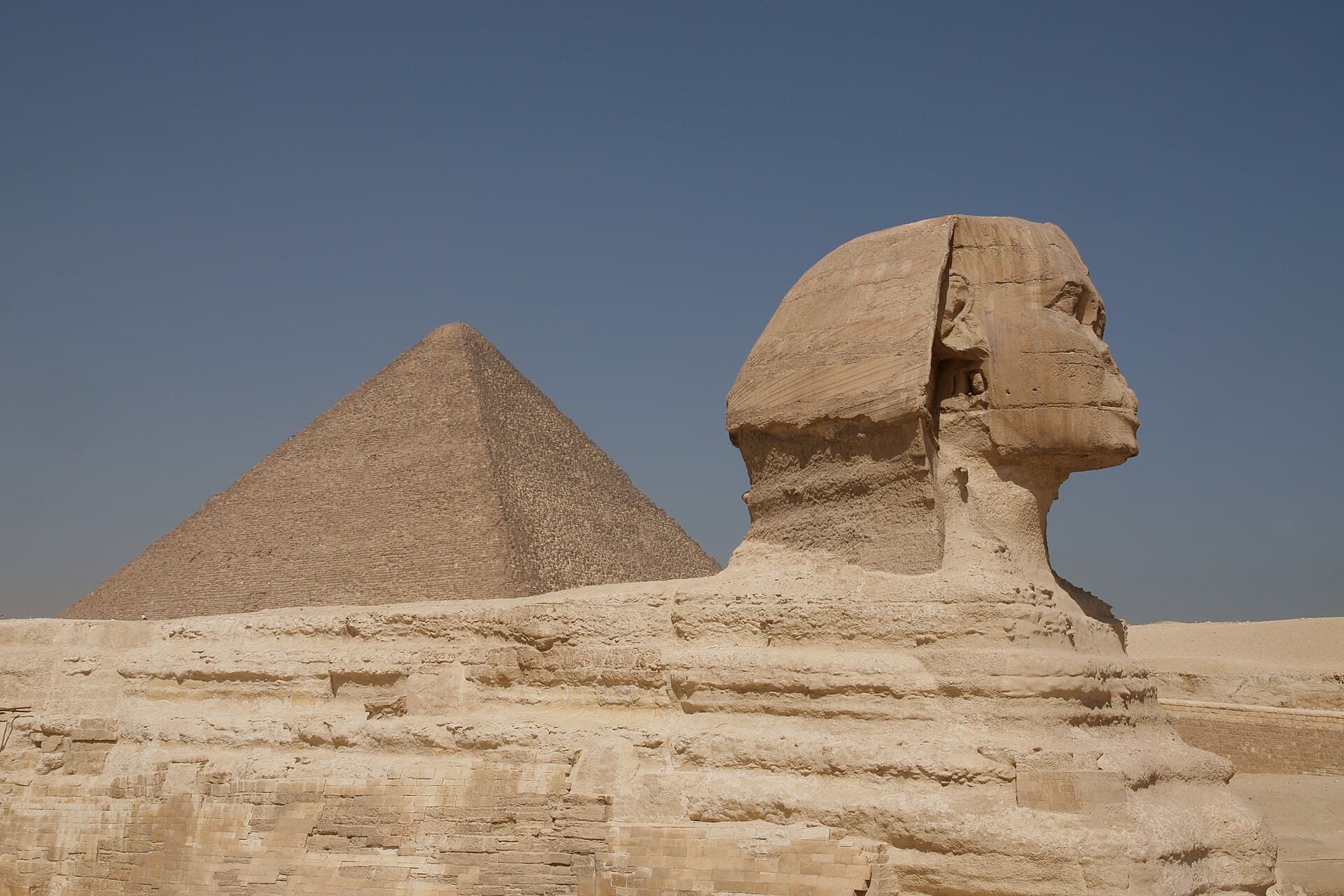
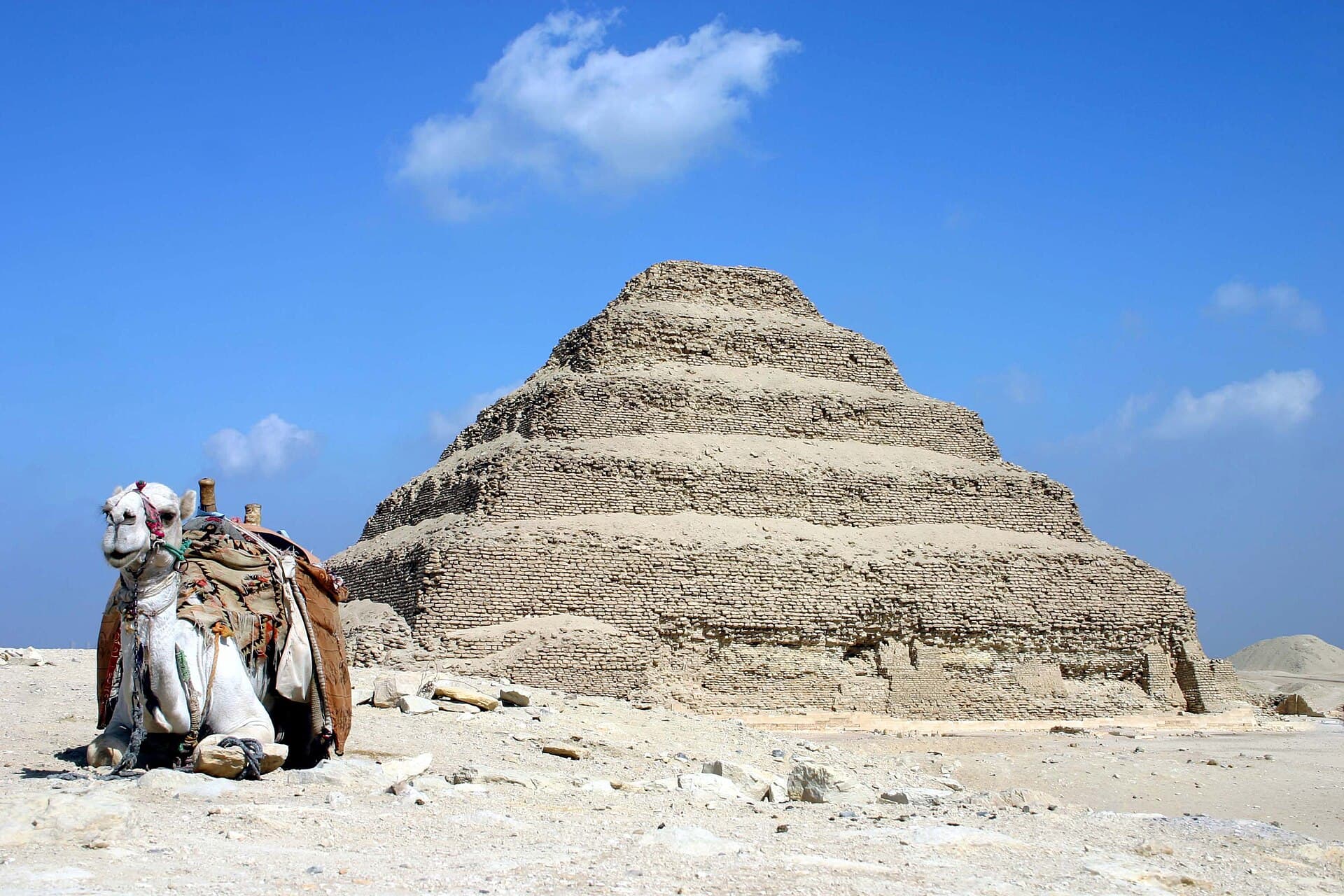
Days one to three, Cairo. Giza and the Sphinx on the first full morning, early, before the coaches arrive, then the Grand Egyptian Museum, which rewards three hours rather than one. Saqqara on the second day, and Islamic Cairo with Khan el-Khalili in an afternoon. Three nights covers the city without feeling like a race, and it puts the hardest, busiest part of the trip at the start while you still have energy for it.
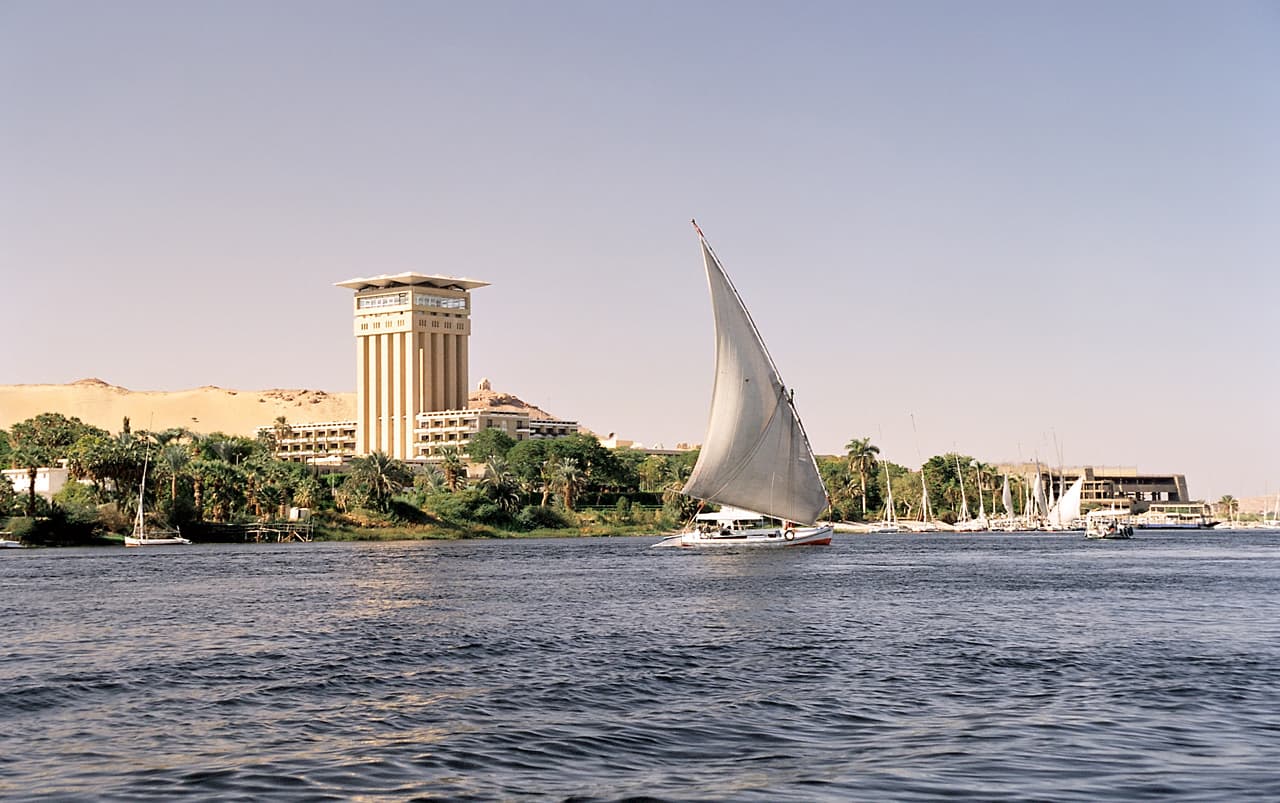
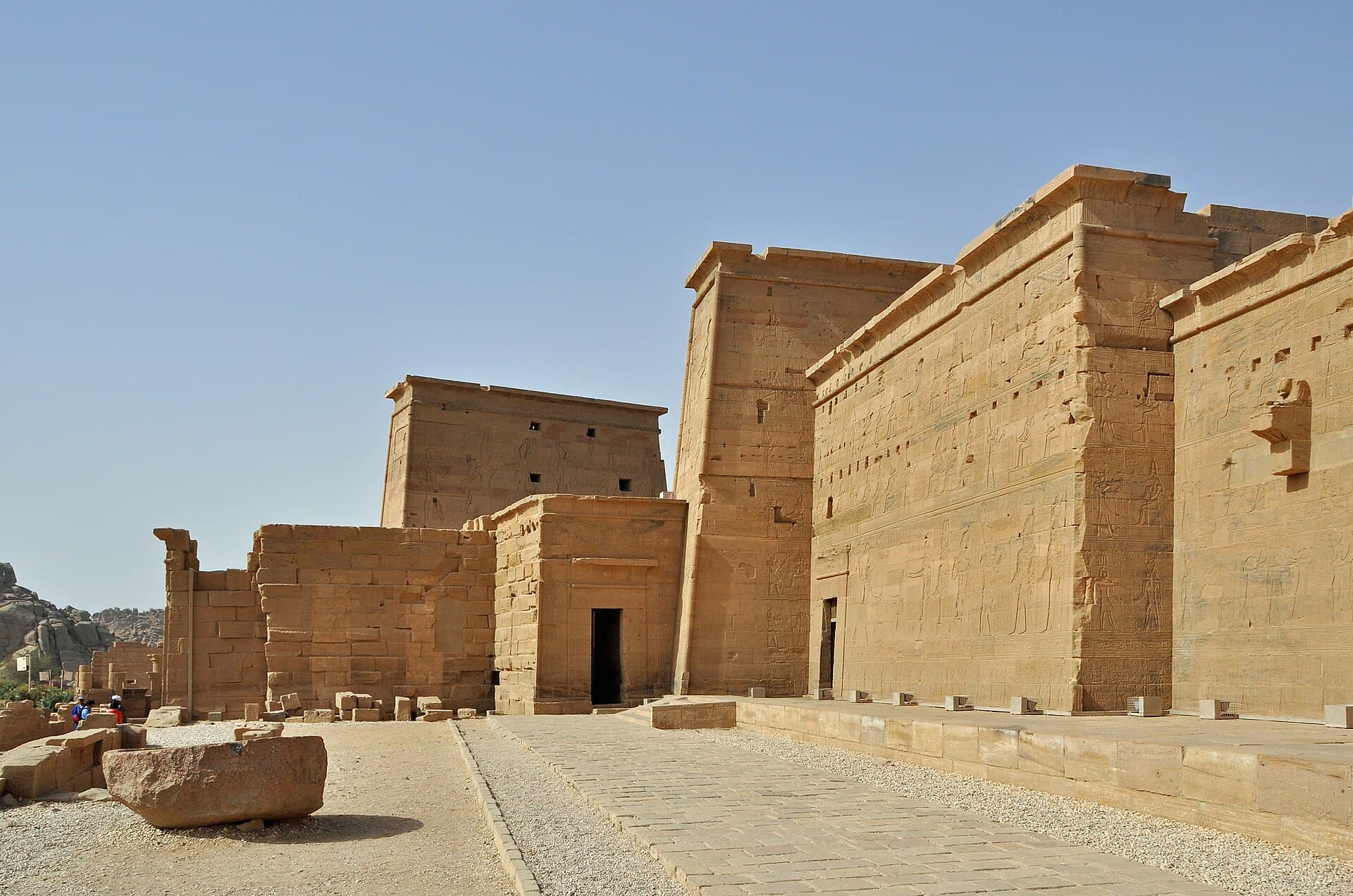
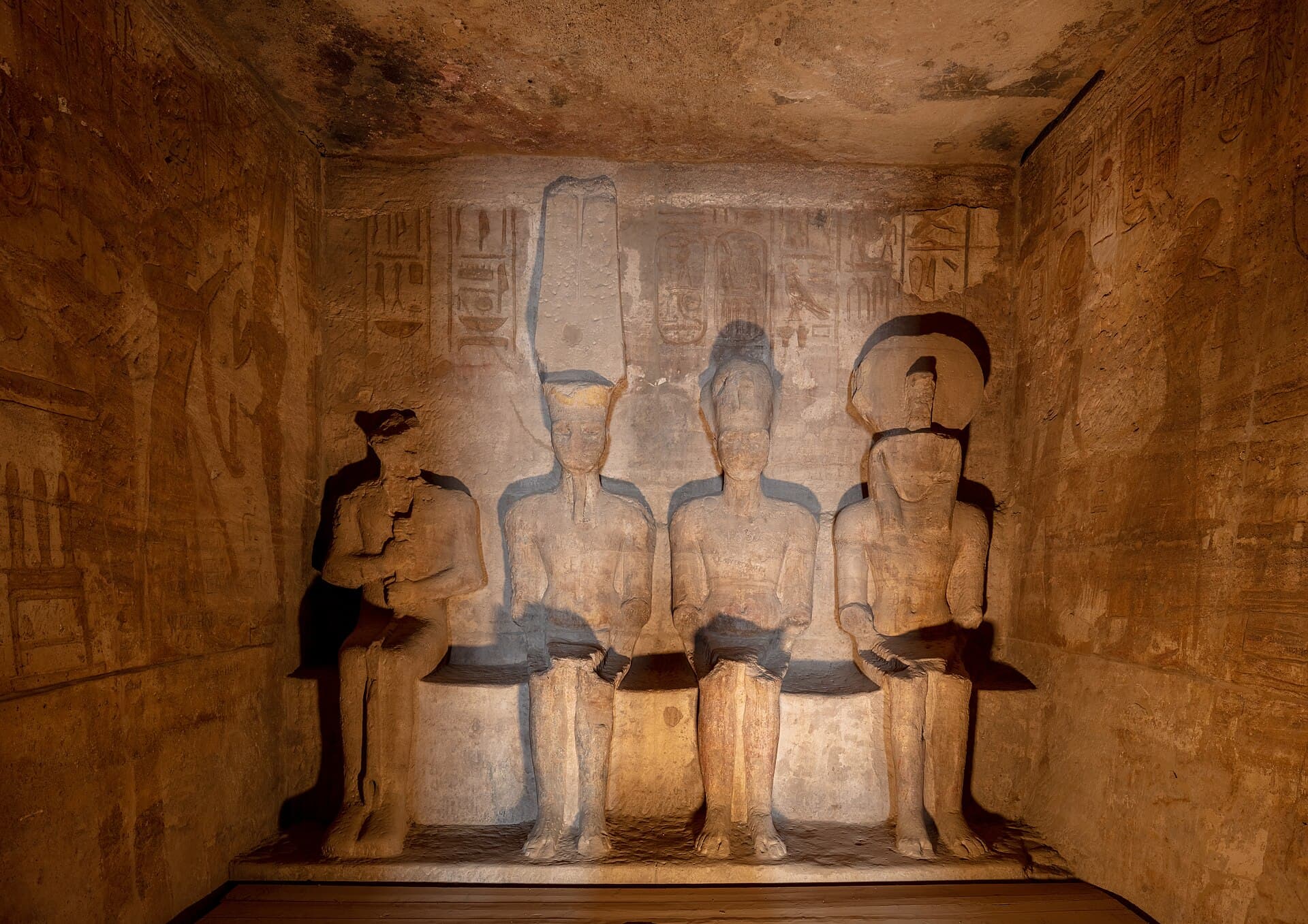
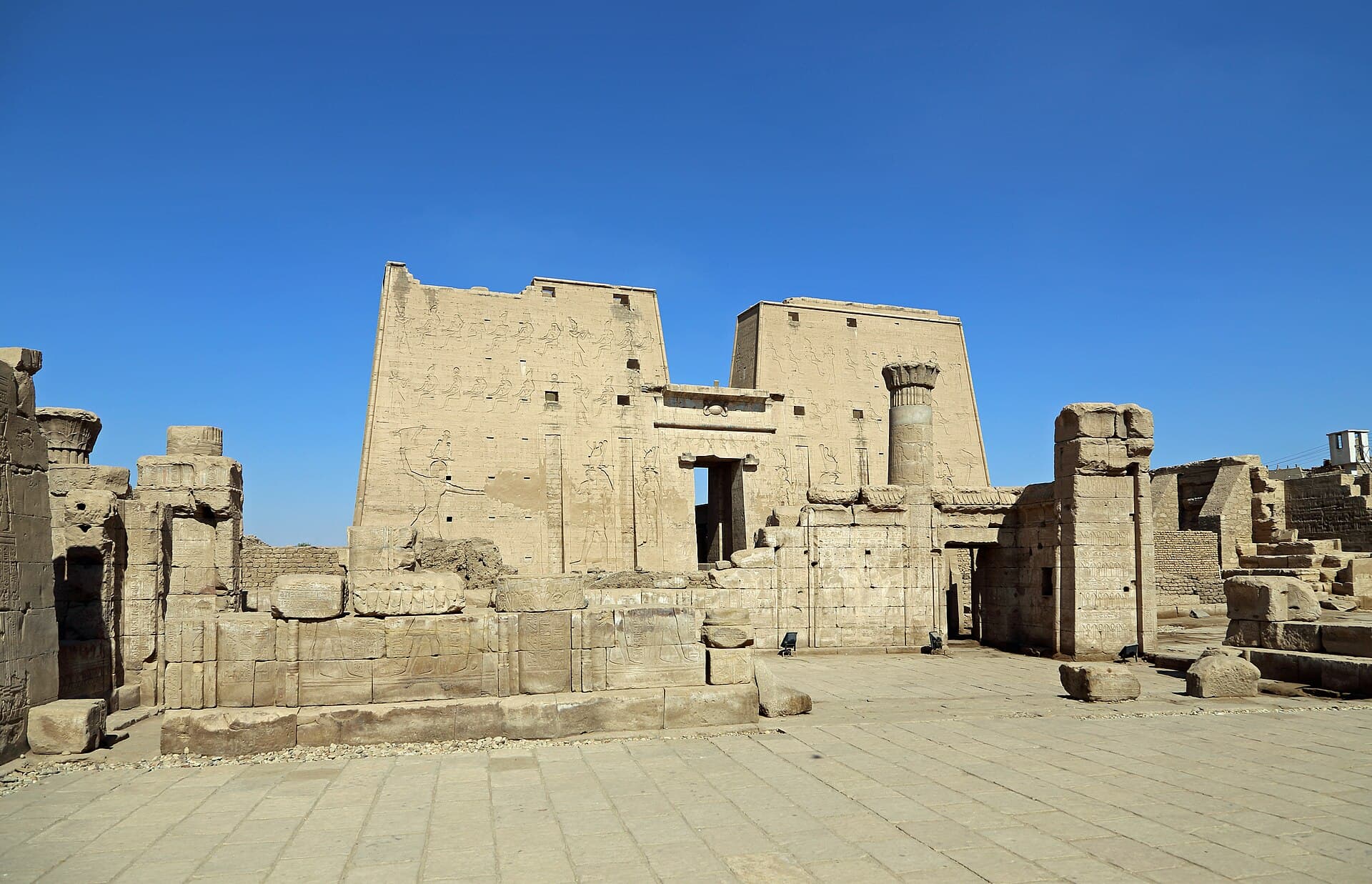
Days four to eight, the Nile. Fly south to Luxor, which takes about an hour against most of a day by road. Karnak and Luxor temple, then the west bank for the Valley of the Kings, the terraced temple of Hatshepsut and the Colossi of Memnon. Four nights on a boat between Luxor and Aswan takes in Edfu, the best-preserved temple in Egypt, and Kom Ombo on the riverbank at dusk, finishing with Philae on its island and a felucca out to Elephantine. Abu Simbel is a very early start from Aswan by road, or a short flight, and it is worth both.
Day nine is the connection and should be treated as such. Fly Aswan to Cairo, then Cairo to Amman. Most of the day goes on it once you add airport time at both ends, and trying to bolt a site onto either end of that day is how people arrive in Jordan already tired. Queen Alia airport is about 45 minutes from central Amman.
Days ten to fourteen, Jordan. Jerash, the Roman city north of Amman, is a half day and the most substantial ancient site in the country after Petra. Then south to Wadi Musa for two nights and two full days at Petra, one night in a Wadi Rum camp, and a last night at the Dead Sea or back in Amman, depending on where you fly home from. The driving legs are short by Egyptian standards, which is what makes the Jordanian half feel slower even though it is busier per day.
What do you actually see on the Egyptian half?
Cairo is the dense part. The Giza plateau and the Sphinx, the Grand Egyptian Museum, the step pyramid at Saqqara, and the medieval streets and the bazaar at Khan el-Khalili. It is also the part first-time visitors find hardest, because the approaches from touts, drivers and self-appointed guides around the major monuments are persistent. That is a fair complaint rather than a myth, and having transfers, tickets and guiding handled removes most of it.
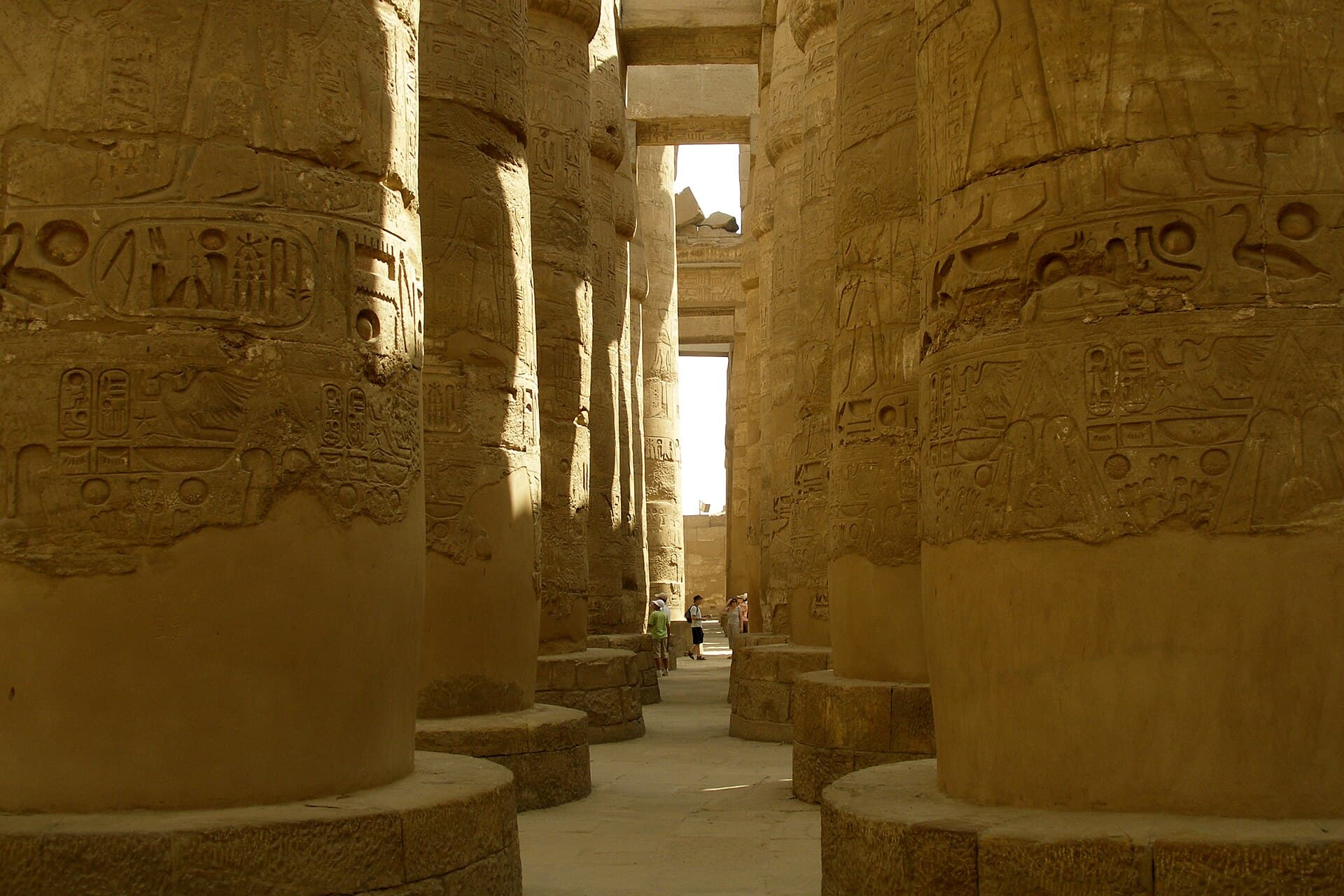
Luxor is where a guide earns the money. Karnak is enormous and absorbs crowds better than any other site in Egypt. The Valley of the Kings is unpleasant in the middle of a hot day and a different place first thing in the morning. What most people remember afterwards is not the scale but the colour still sitting on 3,000-year-old tomb ceilings, and the signage will not tell you what you are looking at. Seti I and Nefertari are ticketed separately and at a premium; Nefertari's painted walls are among the best preserved in Egypt.
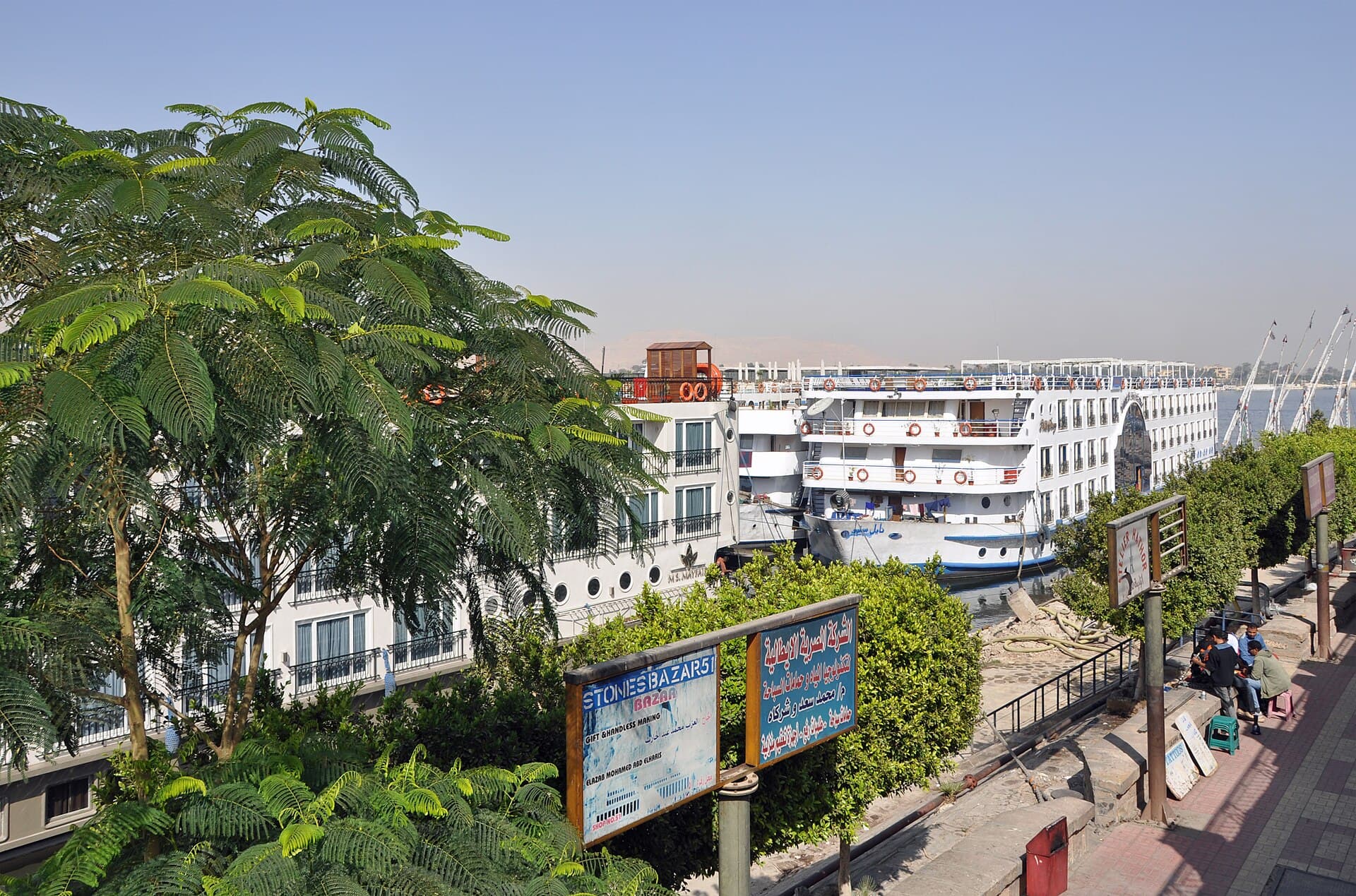
Aswan and the sail between the two are the calm stretch. Philae, the granite quarries, and the river itself, which is the best scenery in the country. Edfu and Kom Ombo are riverbank temples you would otherwise drive to, which is the practical argument for the boat over the road. Onboard programmes are usually thin and the shopping stops are skippable, so choose a boat for its itinerary and its guide rather than its extras. The compensation is that the boat moves while you sleep, which is the one part of this trip where travelling costs you nothing.
What do you actually see on the Jordanian half?
Petra is the reason people come, and it deserves the two days. The Siq alone runs about 1.2 kilometres before the Treasury appears, and beyond it are the tombs, the Roman street and the climb of roughly 800 uneven steps to the Monastery. It is quiet at opening and heaving by mid-morning, so the early start matters here as much as it does in the Valley of the Kings. The site is at its best at either end of the day, which is exactly what a one-day ticket denies you.
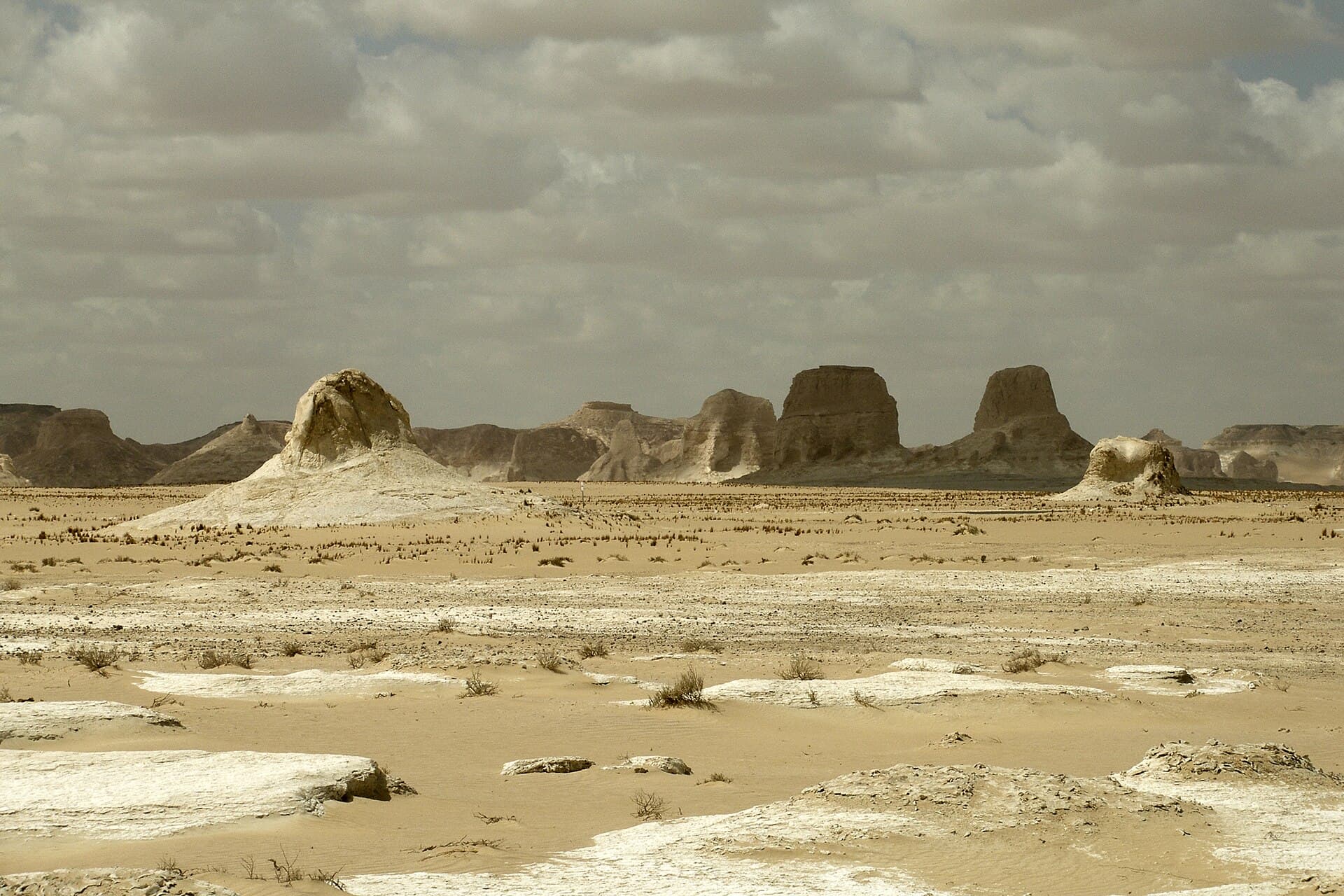
Wadi Rum is the other thing Jordan does that nowhere else on this itinerary does. A night in a desert camp, roughly an hour and a half south of Petra, is the closest the country has to a signature experience after Petra itself. Camp heating varies a great deal, so ask what yours has before booking a winter night out there; clear skies and dry air mean the temperature falls fast once the light goes.
The rest is supporting cast, and worth knowing at its real size. Amman spreads over hills at roughly 800 to 1,000 metres and is a half day. Jerash is a genuine Roman provincial city and a half day too. Madaba and Mount Nebo are short stops on the road south, not destinations, and anyone selling you a full day there is padding. Aqaba is a short strip of Red Sea coast rather than a resort coast. One real advantage of the Jordanian half: the food is better. Mezze, grilled meat, mansaf, good bread and consistently good produce beat the average tourist-restaurant meal in Egypt.
What is not worth the days?
The Dead Sea is the weakest part of most itineraries. The float is genuinely strange and worth doing once, but it is an afternoon at a hotel beach, not a destination. One night is plenty and skipping it costs you little.
A one-day Petra ticket is false economy. The walk in through the Siq, the Treasury, the tombs and the climb to the Monastery do not fit comfortably into one day, and the site is at its best early and late. Two days changes the visit.
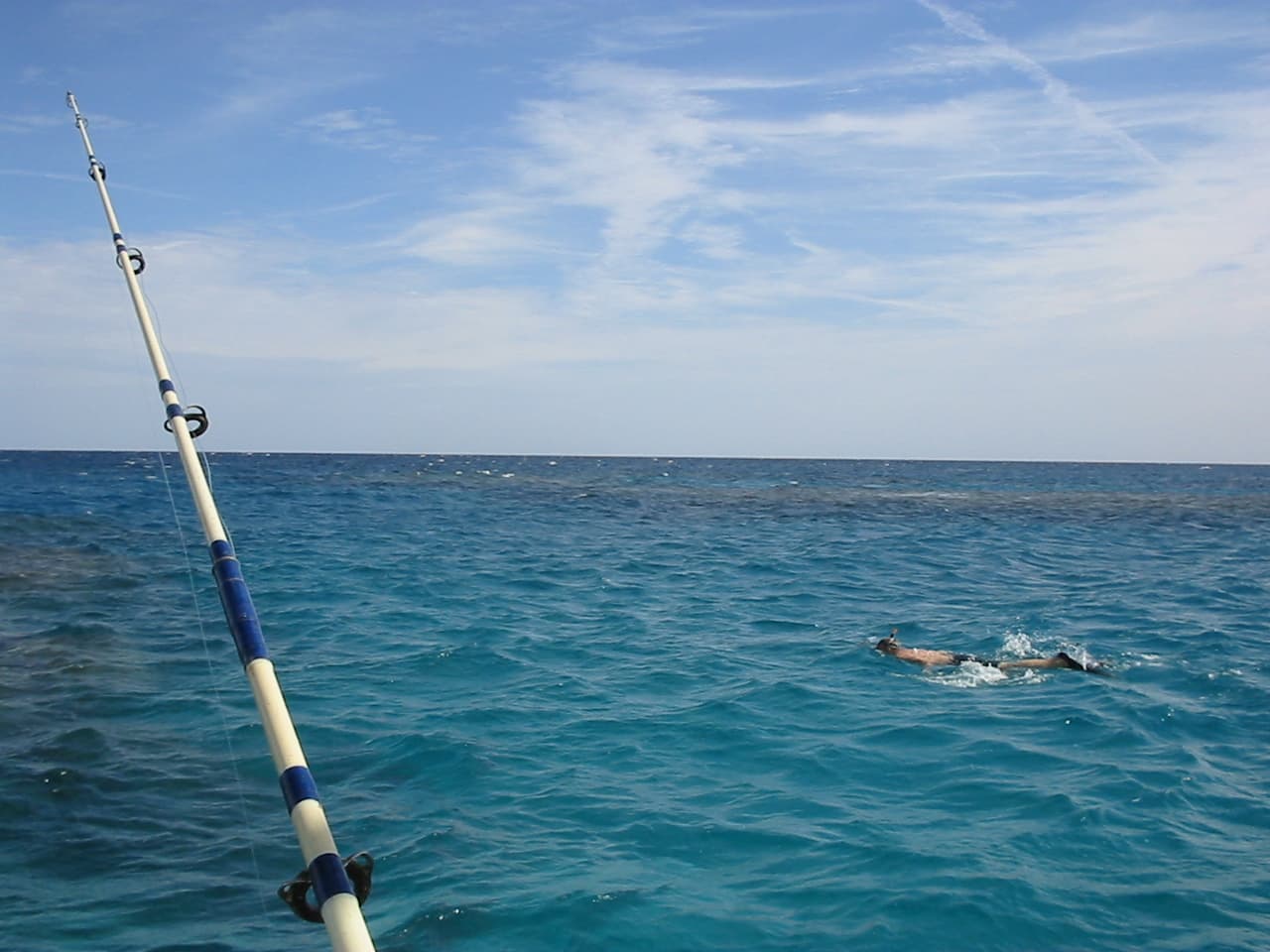
Alexandria as a day trip from Cairo means roughly two and a half to three hours each way by road for a thin return. The train is quicker but still takes most of the day. A Red Sea resort tacked onto the end is only worth it if you dive or snorkel. Otherwise it is beach time you could have at home.
Two more that keep appearing on quotes. Sound and light shows are dated and easy to skip in either country. And if the Red Sea does appeal, put it on the Egyptian side, where the diving is world-standard and cheap, rather than treating Aqaba as a beach stop. Adding coastal days to a two-country fortnight usually costs a travel day at each end for very little.
When is the best time to go?
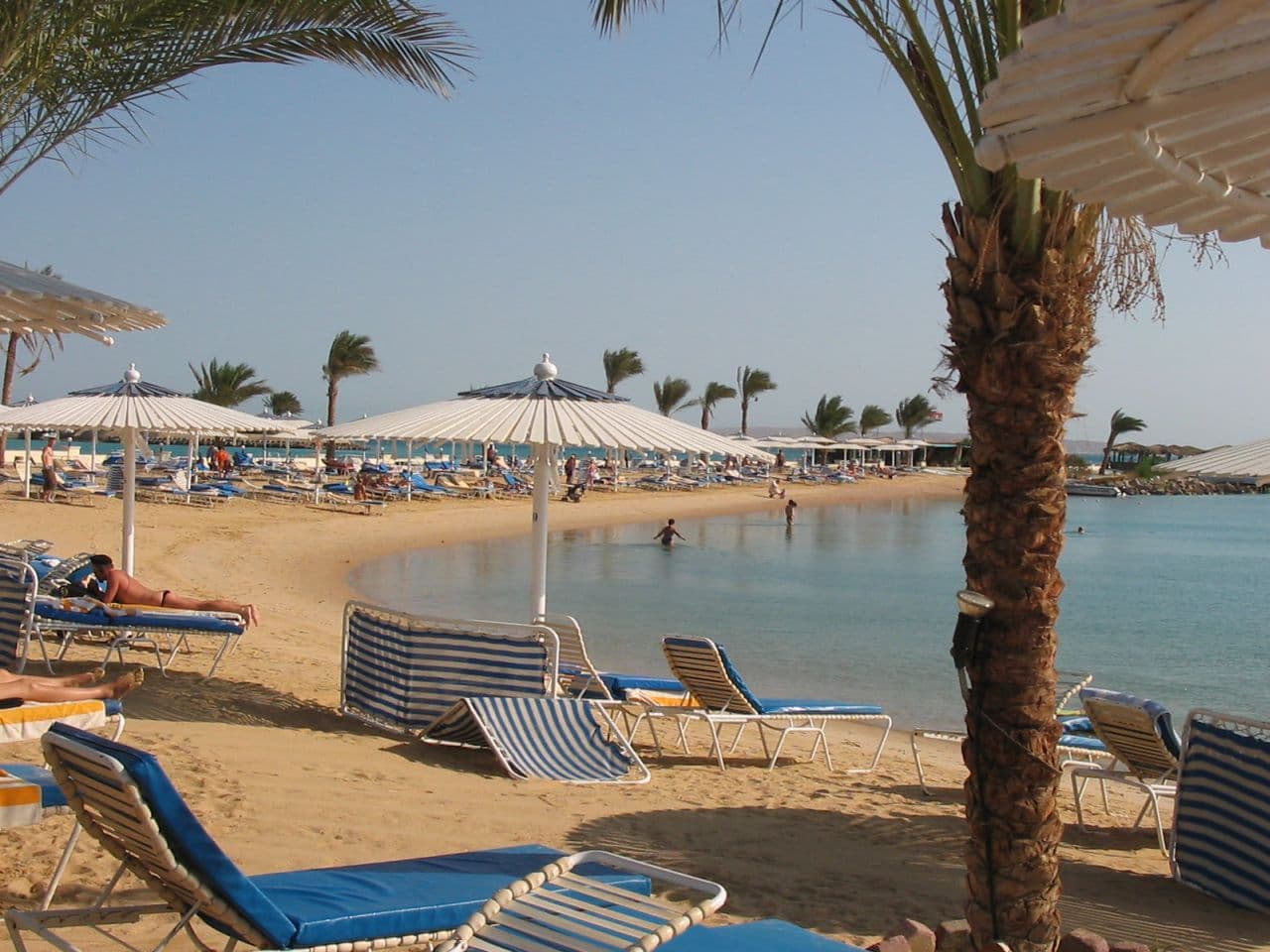
October to April for both. Upper Egypt and Wadi Rum push past 40C in summer, which makes tomb visits and desert walks genuinely unpleasant rather than merely warm. Spring and autumn are the balance point: warm days, manageable sites, and the Nile at its best.
December and January are comfortable for sightseeing but cold after dark. Nights at Petra and in Wadi Rum camps can drop close to freezing, and desert tents are not heated. Pack for that and this is a good time to travel, with thinner crowds.
If you want the four months that suit both countries equally, they are March, April, October and November. In those you can stand in front of the Treasury without a coat and walk Karnak in the middle of the day without hiding from the sun. The cost is company: Petra's main trail, the Valley of the Kings and Abu Simbel are busy from opening time, and the better Nile boats and hotels go early. Late November and very early March are the quieter edges of the same weather.
Altitude is what catches people out. Amman sits on hills at roughly 800 to 1,000 metres and Wadi Musa above Petra is higher still, so Jordan in midwinter is cold and wet where Egypt is merely pleasant. Snow reaches Petra in some Januaries, occasionally enough to shut the site for a day, and heavy rain can send flash floods through the Siq, which closes it while the risk lasts. Two exceptions stay warm: the Dead Sea, several hundred metres below sea level, and Aqaba. Travelling in deep winter, weight the trip towards Egypt and treat Jordan as three or four days rather than a week.
What does an Egypt and Jordan trip cost?
No honest single figure exists, because the price is driven by your choices rather than by the countries. For seven to ten days on the ground in Egypt, quotes generally land somewhere between roughly £1,000 and £3,500 per person before international flights, and the spread comes from season, party size, hotel standard and the boat. Jordan sits on top of that and costs more per day for comparable hotels and food, so a combined trip does not simply scale by the number of nights.
Party size moves the per-person figure more than almost anything else. A private car, driver and guide costs much the same for two people as for four, so four sharing pay noticeably less each, and at six or more a private trip often lands below the equivalent small-group departure. Solo travellers pay a structural penalty at both ends, because hotel and cabin rates assume two people sharing; on some Nile boats the single supplement amounts to the whole second berth, and transport and guiding do not split either.
Season is the next lever. November to February is high season in Egypt and priced accordingly, with Christmas, New Year and Easter carrying a further premium on the better boats and hotels, which fill months ahead. Summer is the cheapest time of year by a wide margin and the hardest, since Luxor and Aswan sit well above 40C and you lose the middle of every day. Jordan's summer rates drop too, and its availability opens up, but Petra at midday in July is not a sightseeing proposition.
Then the costs people forget. Tipping in Egypt is a real budget line, not loose change: roughly 15 to 20 euros per person for a guided day with a private guide and driver, and another 5 to 10 per night on a cruise for the communal crew box, which over a ten-day Egyptian leg comes to something like 180 to 220 euros per person. The Petra ticket is one of the most expensive single-site entry fees anywhere, though the Jordan Pass folds it in. Egypt's premium tickets, including the inner chamber of the Great Pyramid, Seti I and Nefertari, are usually paid at the gate. Ask any operator for a written breakdown of what sits inside the quoted figure and what is paid locally.
Visas, the Jordan Pass and money
The two countries are entirely separate on paper. Egypt is usually an e-visa applied for online or a visa on arrival, depending on your nationality, and it is rarely included in a tour price. Jordan issues a visa on arrival, and the Jordan Pass, bought online before you travel, bundles the Petra ticket with the tourist visa fee. It cannot be bought at the border, and the visa waiver carries a minimum-stay condition, so buy it before you fly and check the current terms against your route, particularly if any part of your journey is overland.
Money behaves differently on each side. The Egyptian pound has moved sharply in recent years, so operators quote in dollars or euros and hold that figure, and hotels and boats set their internal rates the same way. A quote given far ahead in Egyptian pounds is an estimate rather than a fixed price, so ask which currency the contract is in and whether the balance is due in that currency. Card payment often carries a surcharge, and paying a balance in cash on arrival is normal practice in Egypt rather than a warning sign. Carry small notes from the start; sourcing change for tips becomes a daily chore otherwise.
Two calendar items are worth checking before you fix dates. Ramadan moves about eleven days earlier each year, so it drifts through the good season; sites stay open and trips run normally, though restaurant hours change. Christmas and New Year is the busiest and dearest fortnight in both countries, and Petra then is cold as well as crowded. Beyond that, read your own government's current travel advice for both countries before you commit money, and again shortly before you fly, rather than relying on anything written here.
How demanding is this trip, and who should skip it?
It is more physical than a two-country cultural holiday sounds. Early starts are the price of avoiding both the heat and the crowds, tomb interiors are ramped, stepped and worn smooth in patches with fine dust on top, and Petra is several kilometres of uneven ground before you consider the climb to the Monastery. There is horse and donkey transport at Petra, though welfare standards vary and we would not push you towards it. Reasonable fitness and closed shoes with some grip cover most of it.
Who should think again: anyone with limited mobility, anyone with a low tolerance for queues and airports, and anyone whose idea of a holiday involves staying put for a few days. All three get far more out of one country done properly. Younger children often run out of patience somewhere in the second week, though a family of four does fill a private car and guide, which is the point at which the per-person cost really falls.
The friction is also unevenly distributed, and it is worth knowing which half is which. Egypt asks more of you: heavy traffic in Cairo, an internal flight or an overnight train, and persistent selling around the monuments. Jordan is calm by comparison, distances are short, the roads are good, and the pressure at Petra is mild. That is the argument for putting Egypt first and letting Jordan be the quieter second half, rather than finishing with the harder country.
What should you pack for two countries and three climates?
The daytime problem is sun with no shade. There is none at Giza, very little at Karnak and none worth the name at Abu Simbel, and Petra's main trail is open for most of its length. Loose long cotton or linen is cooler in direct sun than shorts and a vest, and pale colours hide the dust. A brimmed hat rather than a cap, ideally one with a cord, because wind on the Nile and in open desert takes ordinary hats off your head. Bring more sunscreen than you think and lip balm with sun protection; dry heat and wind split lips within a couple of days.
The night problem is cold, and nearly everyone underpacks for it. Between roughly November and March a boat's sundeck after dark is genuinely cold, and Luxor can be over 30C at two in the afternoon and jumper weather by nine. Desert nights are worse, in Wadi Rum as much as in Egypt: clear skies and dry air drop the temperature fast once the light goes. If you are sleeping out you want a proper fleece or a light down layer and socks, not a cardigan.
The rest is small and specific. Closed shoes with grip for tombs and the Petra steps, plus one pair of sandals, covers a fortnight; socks you do not mind ruining, because everything ends up the colour of the desert. One large scarf does more work than any other item, covering hair in working mosques, wind in the desert and a cold deck at night. Working mosques also mean shoes off and shoulders and knees covered, so slip-on styles help. And small notes, kept separate, for the tipping you will do every day in Egypt.
How do you choose an Egypt and Jordan tour company?
Send every company on your shortlist the same seven questions, and compare the written answers. A company that answers all seven clearly is a good sign.
1. Who is the ground operator in each country? Ask for the name of the company that runs the Egyptian half and the one that runs the Jordanian half.
2. Who runs the Jordan leg? Some companies run it themselves and others hand you to a partner at the border. Ask who you call if a transfer goes wrong in Jordan.
3. Is your guide in Egypt a licensed Egyptologist? Ask for this in writing for the main sites in Cairo, Luxor and Aswan.
4. How big is the group? Ask for the maximum group size, or confirm in writing that the trip is private.
5. What does the quote include? Ask which entry tickets, internal flights, border fees, visas and tips sit inside the price, and which you pay locally.
6. Are there shopping stops? Ask whether the programme includes papyrus, perfume or alabaster workshops, and ask for them to be dropped if you do not want them.
7. What currency is the quote in? Ask which currency the contract uses and whether the balance is due in that currency.
Trips are built privately rather than sold as fixed departures, so the pace, the hotel standard and the balance between the two countries are set per booking. On the Egyptian side that means a guide and driver through Cairo and the Nile valley, where sites are spread out and distances are long. In Jordan it is mostly short road transfers between Amman, Petra and Wadi Rum.
A few parts need booking well ahead: Nile boat cabins and sleeper train berths in high season, the internal Egyptian flight, and the Jordan Pass, which has to be bought online before you arrive. The rest can be arranged closer in. Itineraries are quoted from an enquiry rather than an online checkout, because the split between the countries, the connection you choose and the length of the Nile leg all change the price.
Private or group is the other decision, and for one or two people a scheduled group is genuinely cheaper. What it costs you is timing, because a coach group rarely reaches the Valley of the Kings or Karnak before the crowds, and in Egypt that is most of the difference between a good morning and a hot, shuffling one. Two questions separate quotes that look alike: which entry tickets, internal flights, border or visa fees and tips sit inside the figure, and whether the programme includes shopping stops at papyrus, perfume or alabaster workshops. Those stops pay commission, and you can ask for them to be dropped.
It is also worth asking who is actually on the ground in each country, and who answers the phone when something goes wrong at seven in the morning. A two-country trip runs across two sets of guides, vehicles and permits, usually one operator handling the Egyptian half directly and working with a counterpart across the border. That answer tells you more about an operator than any itinerary page does.
Common questions
Do we need separate visas for Egypt and Jordan?+
Yes, they are separate countries with separate entry rules. Egypt is usually an e-visa applied for online, or a visa on arrival, depending on nationality. Jordan issues a visa on arrival, and a Jordan Pass bought online before you travel covers the Petra ticket and waives the visa fee on stays of three nights or more. Check the waiver against your route if you are crossing overland.
Is it cheaper to cross by land than to fly?+
Slightly, but not enough to justify it for most people. The Cairo to Amman flight is short and reasonably priced, while the land route costs you border fees, a long transfer day and the risk of queues. Cross by land if you want the Sinai and Aqaba anyway, not to save money.
Can we start in Jordan and finish in Egypt?+
Yes, and flights run both ways daily. Starting in Egypt has one small advantage: the Nile leg involves earlier mornings and more sites, so Jordan works well as the quieter second half. If your international flights are cheaper into Amman, reverse it without worrying about the itinerary.
How much walking does Petra involve?+
More than people expect. The Siq alone is about 1.2 kilometres before you reach the Treasury, and the path up to the Monastery is roughly 800 uneven steps. There is horse and donkey transport, though welfare standards vary and we would not push you towards it. Reasonable fitness and proper shoes matter here.
Should we add Israel or the West Bank as well?+
Only if you have the days and a specific reason. It adds a third set of borders and rules, and access can change quickly with regional conditions. Most people are better served by giving Egypt and Jordan the time they need rather than stretching a fortnight across three countries.
Do we have to fly inside Egypt?+
In practice, yes. The road between Cairo and Luxor takes most of a day and shows you very little, while the flight is about an hour. The overnight sleeper train is the alternative: it is cheaper and saves a hotel night, but it is basic and often late, so treat it as a budget decision rather than a romantic one. On a two-country trip the time saved matters more than usual.
Can we add the Red Sea to a fourteen-day trip?+
Not comfortably. Red Sea nights are among the cheapest accommodation in Egypt and cost little once the guided sightseeing is over, but the transfer eats a day at each end, and on a fortnight split across two countries you do not have those days spare. If diving or snorkelling is the point of the holiday, build a single-country Egypt trip around it instead.
Can we self-drive in Jordan and use a guide in Egypt?+
Yes, and it is a sensible split. Jordan has short distances and good roads, so self-driving between Amman, Petra and Wadi Rum is realistic. Egypt is harder work independently, and its tombs and temples reward a good Egyptologist far more than Jordan's sites do, because there is meaning there you would otherwise walk straight past. Most guideless regret happens in Luxor.
Is this trip suitable for children?+
It depends on their age and your pace. The sites themselves hold up well, but the combination of early starts, heat from April to October and two travel-heavy weeks wears younger children down, usually somewhere in the second week. One practical upside: a family of four fills a private car and guide, which is where the per-person cost falls sharply. Shortening the Jordanian half is easier than shortening the Egyptian one.
How far ahead should we book?+
For winter travel, several months, and earlier still for Christmas and New Year. The constraint is supply rather than price: the better Nile boats, the good guides and the sleeper berths sell out, and what is left late is usually worse rather than cheaper. Buy the Jordan Pass online before you fly, since it cannot be bought at the border. Summer trips can be booked much closer in.
Is a Nile cruise worth including, or should we do Luxor by land?+
For most people the cruise wins, because Edfu and Kom Ombo are riverbank temples and the Luxor to Aswan stretch is the part of Egypt that still looks like the paintings. Doing it by land is cheaper and frees you from a fixed sailing schedule, but you swap the river for a road. Choose land mainly if you actively dislike being on a boat.
Who is the best tour company for Egypt and Jordan?+
The best company for you is the one that answers the seven questions above clearly and in writing. Pay most attention to who runs each half on the ground, what the quote includes and which currency it is in. A plain note: this site sells Egypt trips run by Memphis Tours, our partner in Egypt, so weigh our view with that in mind. Our listed trips cover Egypt only. An Egypt and Jordan trip is quoted from an enquiry.
What should a good Egypt and Jordan tour include?+
Twelve to sixteen days, a flight between Cairo and Amman, and two full days at Petra. In Egypt, look for a licensed Egyptologist at the main sites. Early starts at Giza and the Valley of the Kings matter too. Most trips should include a Nile stretch between Luxor and Aswan. In Jordan, look for a night in a Wadi Rum camp. The quote should list the tickets, flights, transfers and fees it covers, and say what you pay locally.
Official sources
Entry rules, opening hours, security advice and exchange rates all move. Check them at the source, not here.
Written and checked by the Nile Trip Guide editorial team · Last reviewed . Entry rules, prices and opening hours change — check anything critical against the official sources linked on this page.
Plan this trip
Tell us your dates and we will price it
A real itinerary with real prices, usually within 24 hours. Nothing is booked and nothing is charged until you say yes.
The route most people take first, at the length it was built for: Giza and the Grand Egyptian Museum, then a flight to Luxor and four nights sailing down to Aswan.
No boat on this one. Giza and the Grand Egyptian Museum, a night in Luxor for both banks, two nights on the Red Sea, then back to Cairo for the Citadel, Coptic Cairo and the Royal Mummies.
Five nights in Cairo either side of a four-night sail from Luxor to Aswan. The Cairo days are private, just your party and a guide; the sightseeing off the boat is shared with a small group.