Flights to Egypt are not one decision but two: which airport you land at, and whether you take a direct service or connect. Get the first one right and you save a long transfer at the other end. This page covers the main airports, the route patterns from the UK, Europe and North America, and what happens when you land.
Flights to Egypt: which airport is right for your trip
Egypt has a handful of airports that matter to visitors. Cairo (CAI) is the main international gateway. Hurghada (HRG) and Marsa Alam (RMF) serve the Red Sea coast. Sharm el-Sheikh (SSH) serves South Sinai. Luxor (LXR) and Aswan (ASW) put you on the Nile without a transfer, though their international traffic is thin. Alexandria's Borg El Arab (HBE) is a minor option. The right choice follows the shape of your trip, not the fare.
The common mistake is booking the cheapest fare into a Red Sea airport, then finding the pyramids and the Nile temples a long way off. Hurghada to Luxor is a long drive, several hours each way. Reaching Cairo from the coast means a domestic flight or most of a day on the road. If your trip is mainly ancient sites, fly into Cairo. If it is mainly diving and the sea, fly to the coast.
It helps to think about the country's shape before you think about airports at all. Almost everything visitors come for sits on a narrow strip of Nile valley, plus the Red Sea coast and Sinai, and the road from Cairo to Aswan runs the better part of 900 km. Cairo to Luxor is roughly 650 km by road. Sinai sits on the far side of the Gulf of Suez from the Nile entirely. Those distances are what turn a cheap fare into a wasted day, and no amount of clever booking shortens them.
The practical test is simple. Write down the first three things you actually want to see, in the order you want to see them. If two or more of them are ancient sites, Cairo is your airport. If all three are underwater, the coast is. If the list is genuinely split, you are taking a two-centre trip, and the section on matching the airport to the itinerary further down is the one to read.
Cairo for the classic route
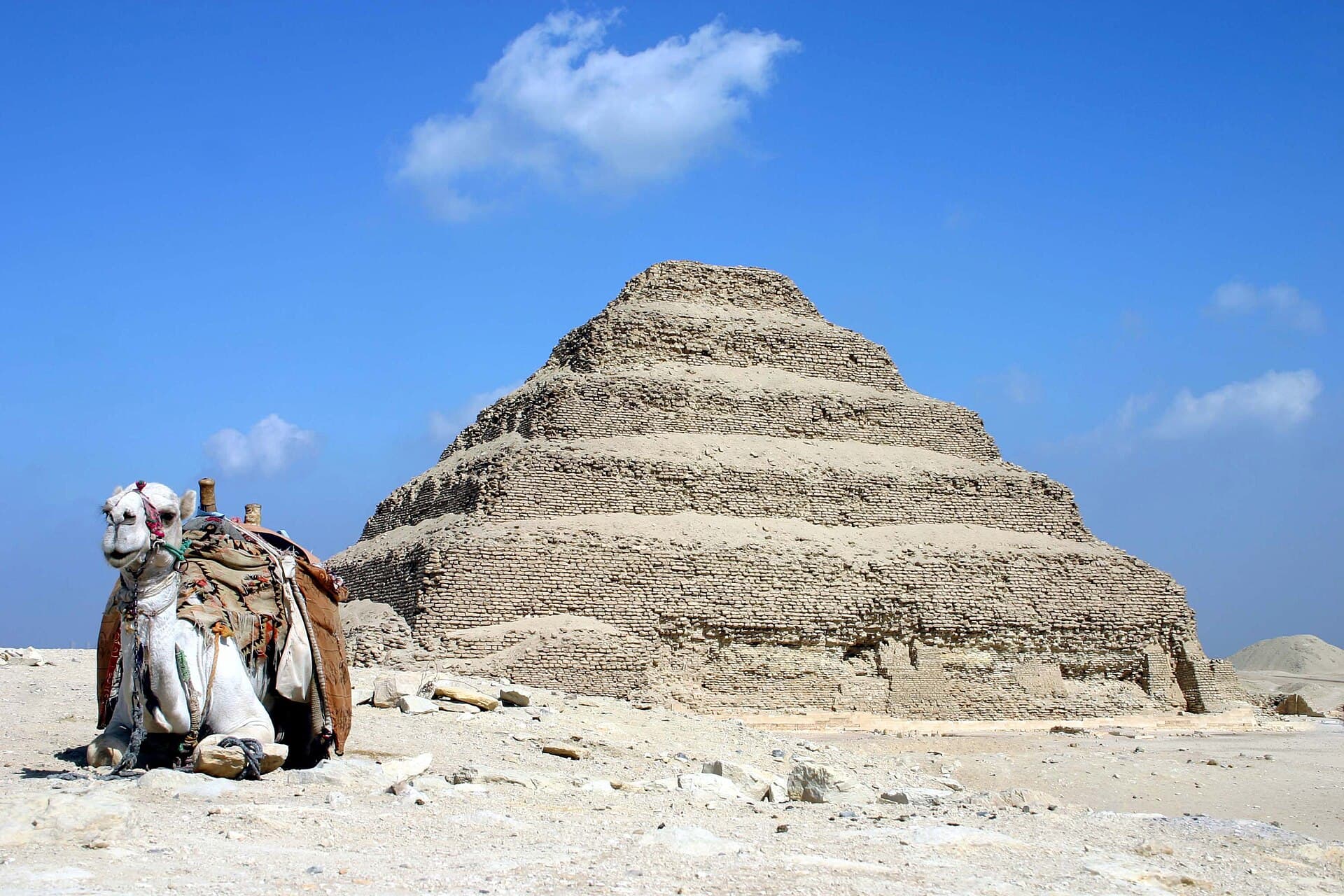
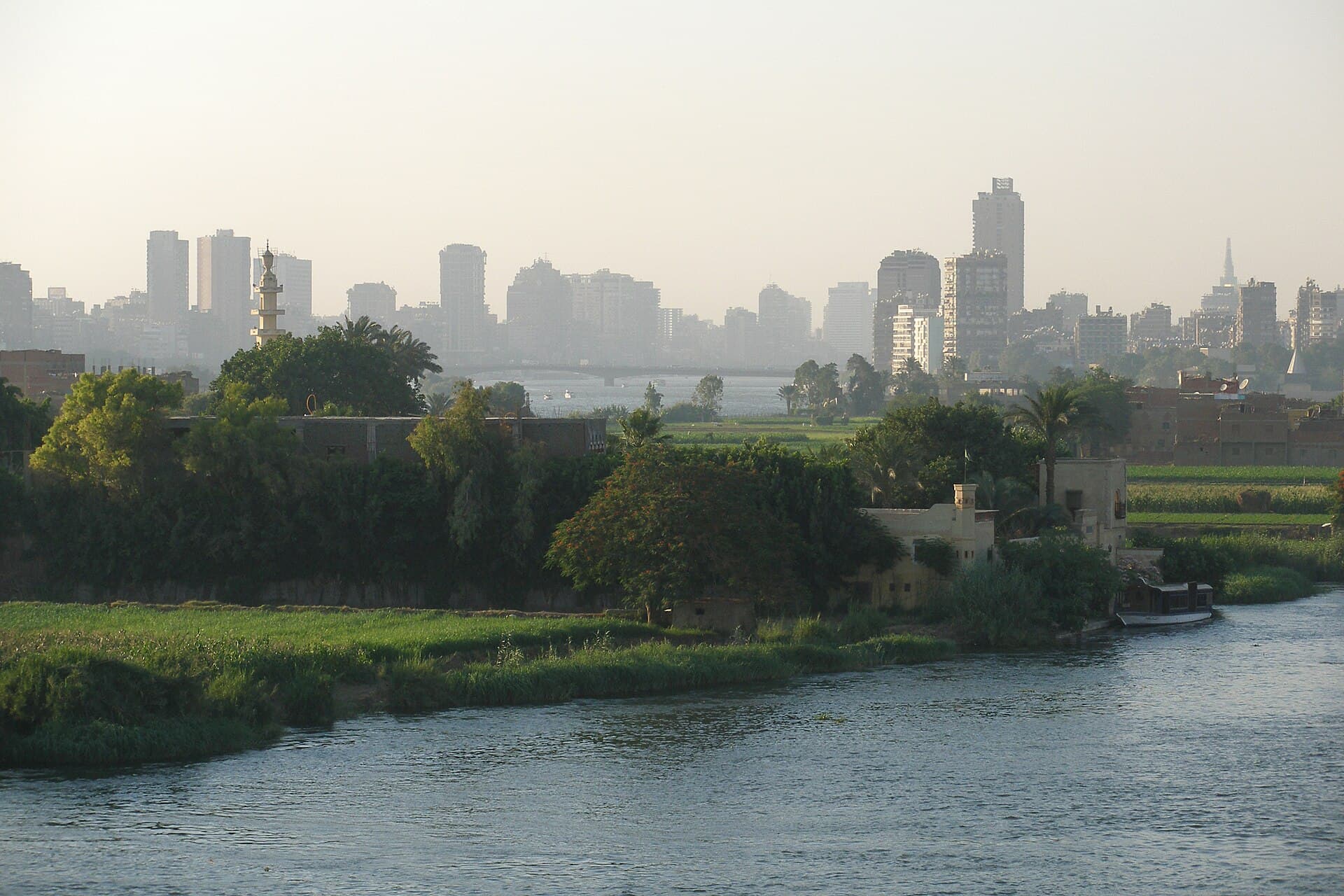
Cairo International is the country's main hub and the right arrival point for the standard trip: the Giza pyramids, the Egyptian Museum, then south to Luxor and Aswan. It has the widest choice of carriers, the most frequent service, and the only serious domestic network. It also has more than one terminal, and moving between them takes time. If your onward domestic flight is on a separate ticket, you clear immigration, collect your bags and check in again. Allow hours, not minutes.
The terminals are far enough apart that a domestic-to-international transfer needs real time rather than a brisk walk, so confirm which terminal each of your flights uses at the point of booking rather than at the airport. This matters most on the way home, when a delayed domestic arrival from Luxor or Aswan has to become an international departure on the same afternoon. Ask the question once at booking and it stops being a problem.
Arrival time is the other thing worth weighing. Cairo takes a lot of overnight traffic, and a fare that lands at three in the morning has quietly charged you a hotel night and the first morning of the trip. On a seven-night itinerary that is a meaningful share of what you paid for. Where the difference between a daytime arrival and a night one is modest, take the daytime one; the value shows up immediately.
Hurghada and Marsa Alam for the Red Sea
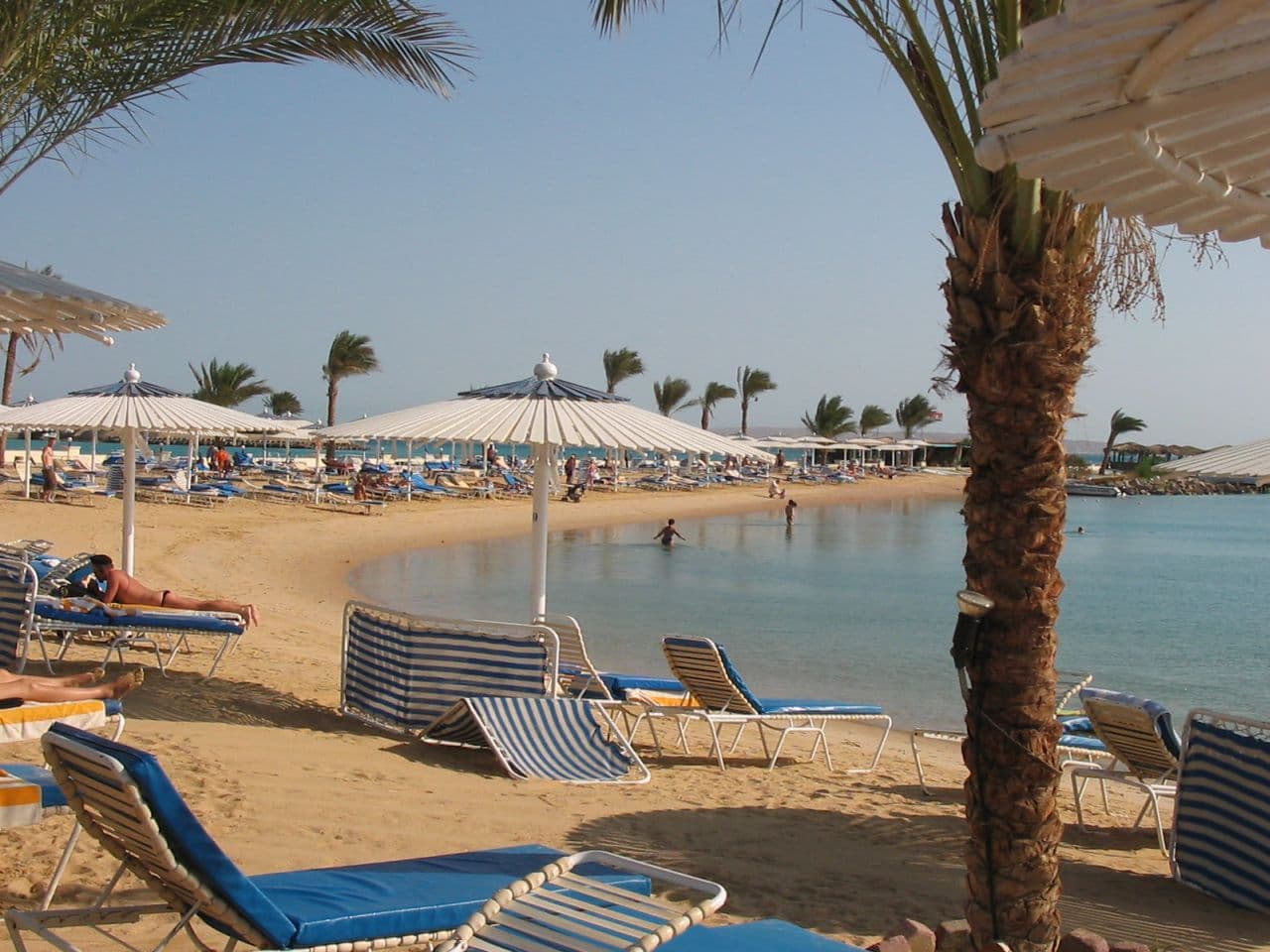
Hurghada is the busiest Red Sea airport and takes heavy seasonal traffic from across Europe, much of it charter. Marsa Alam sits further south, is quieter, and exists mainly to serve the resorts and reefs along that stretch of coast. Both are within a few hours' drive of Luxor, which is how most Red Sea visitors see the Nile temples. Out of season the scheduled options thin out and you may end up connecting through Cairo instead, so check what is actually flying in your month.
Hurghada is the mainland Red Sea airport that combines with the Nile, and that is its whole advantage. Luxor is roughly four hours away by road across the Eastern Desert, which makes a long day trip possible and an overnight extension straightforward. Sinai has no equivalent. If your trip is meant to cover both the temples and a stretch of beach, landing at Hurghada removes most of the friction: one internal flight rather than two, a driver instead of a second airport transfer, and no day lost in transit.
Where you stay changes how the airport feels. El Gouna sits about twenty minutes north of Hurghada and is considerably better looking than the main strip, so the airport serves a quieter holiday than its arrivals hall suggests. Marsa Alam trades choice of flights for quiet and for reefs that have seen less traffic. The trade-off is honest: fewer services in the shoulder months, and a longer road transfer if you then want Luxor.
Sharm el-Sheikh and the Sinai rules
Sharm el-Sheikh serves South Sinai: the reefs off Ras Mohammed, Dahab up the coast, and the desert road to St Catherine. Direct service from several European countries was suspended for years after 2015 and has since resumed, though capacity still moves around by season and by market. Sinai also has its own entry rule. Visitors staying within the South Sinai resort area can often get a free limited entry stamp rather than a full tourist visa, but it does not cover Cairo or the Nile. Confirm the current terms before you book.
The detail people miss is where that limit gets enforced. Not at the airport, but at road checkpoints on the way out of the area, which means the mistake surfaces halfway through a day trip rather than on arrival. Cairo, Luxor, Aswan and the mainland Red Sea coast around Hurghada all sit well outside it, and so does everything on the Nile. Sources describe the permitted area differently, which is reason enough for caution. If any part of the trip might leave the strip, apply for the full visa and stop thinking about it.
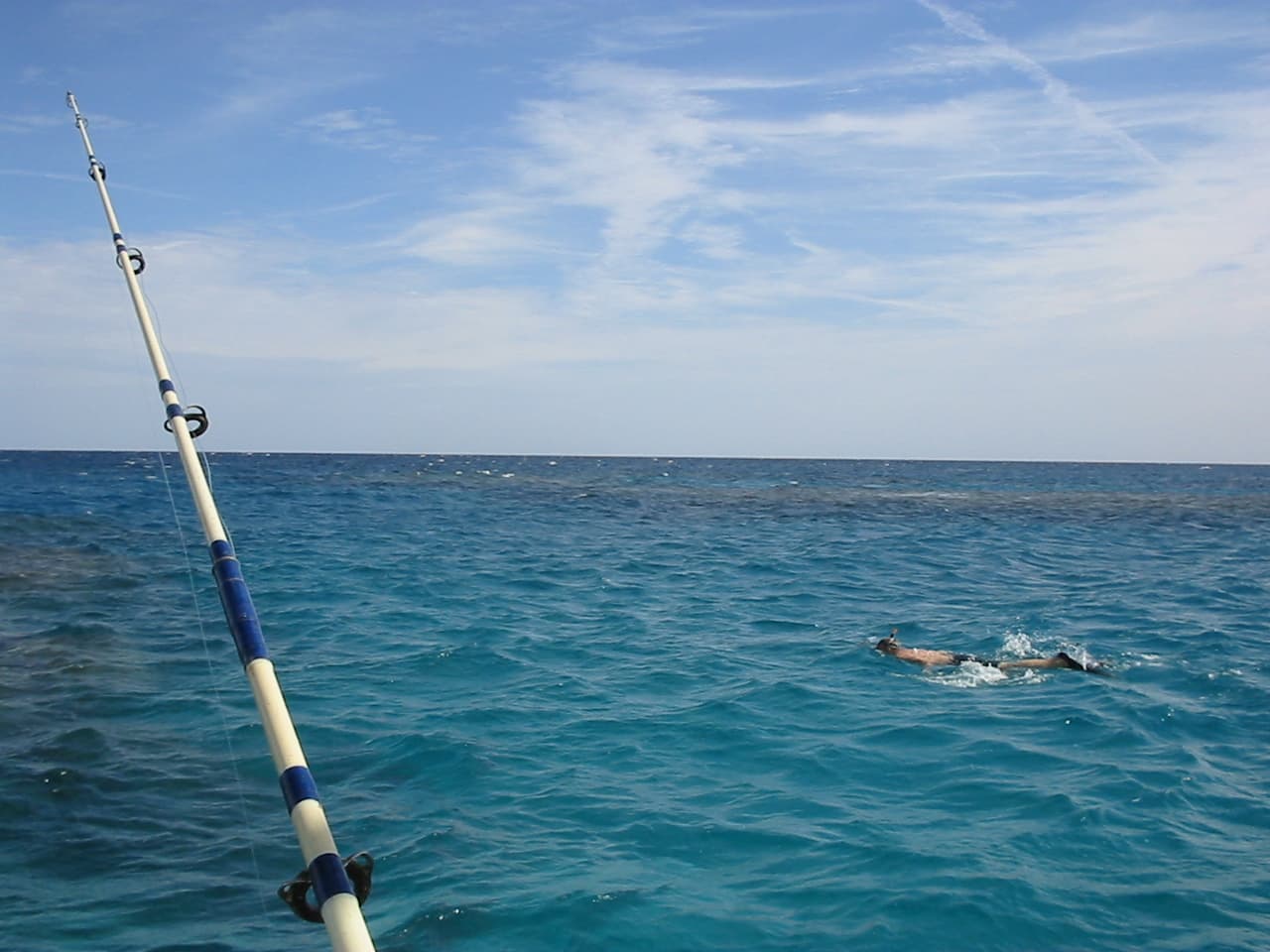
What Sharm buys you is the water. Ras Mohammed National Park sits at the southern tip of the peninsula, where the Gulf of Suez and the Gulf of Aqaba meet the open Red Sea, and the Straits of Tiran add a second cluster of reefs northeast of the town. This is the best diving in Egypt, and divers fly here specifically. What it does not buy you is the Nile. From Sharm the temples mean flying, usually via Cairo, which turns a side trip into a separate leg of the holiday with its own logistics and cost.
Luxor and Aswan: straight to the Nile
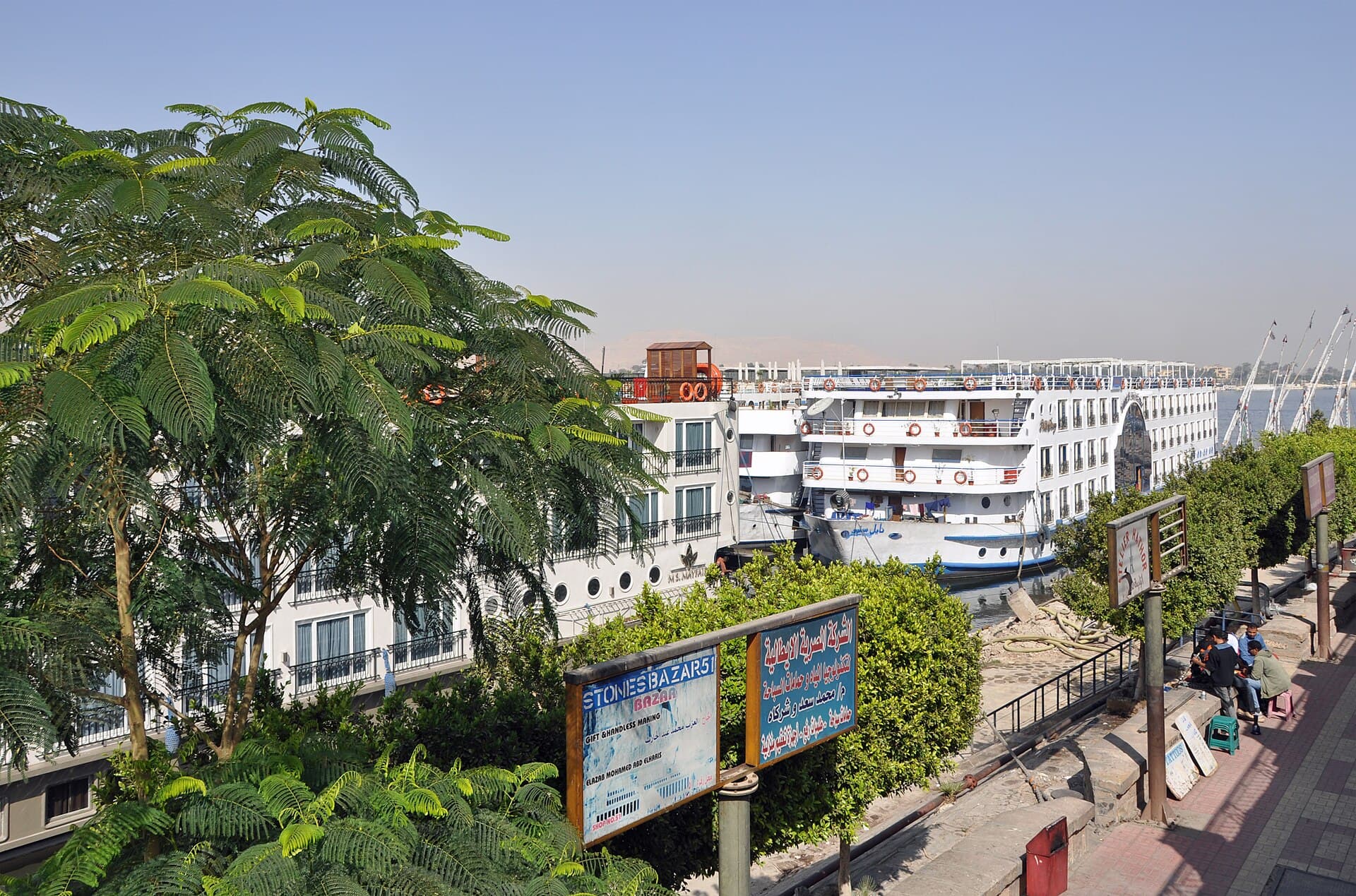
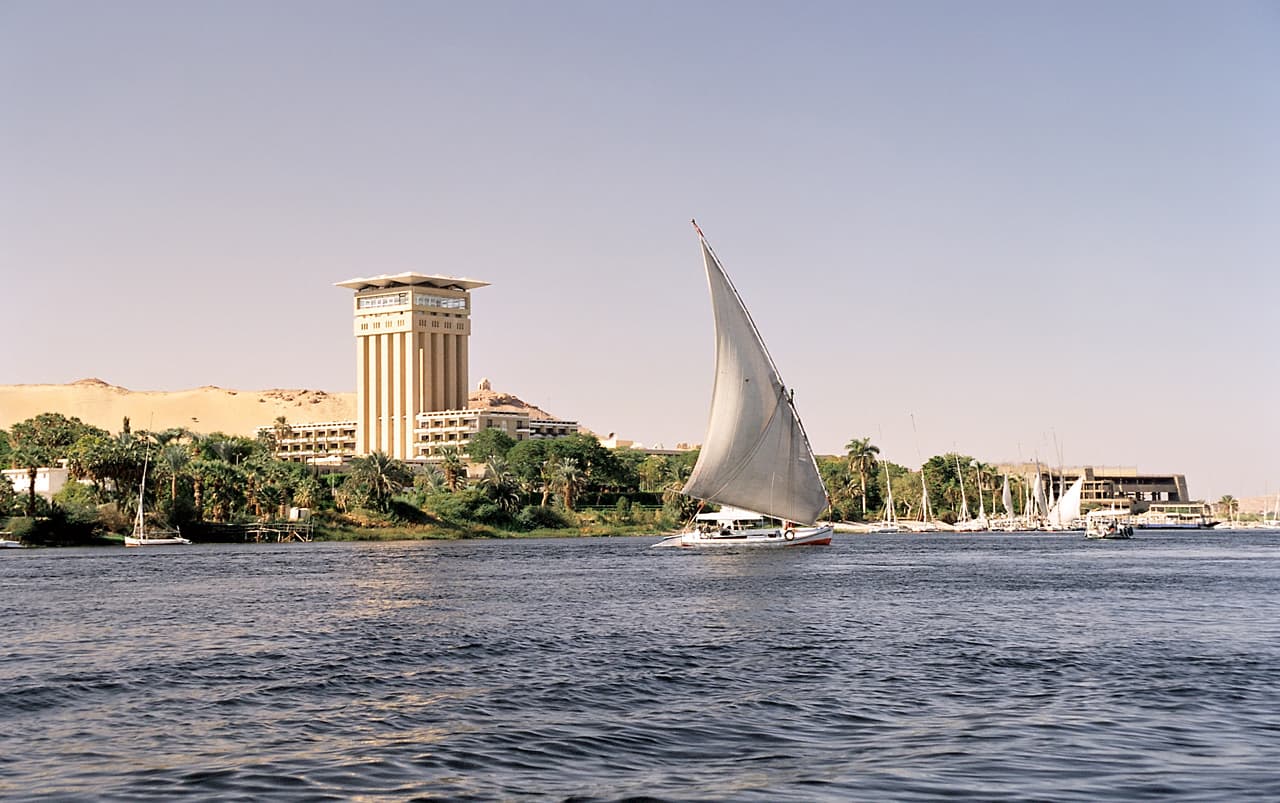
Luxor takes a modest amount of international traffic, mostly seasonal and mostly from Europe, plus domestic services from Cairo. Aswan is largely domestic. Flying straight in saves you a day if the Nile is the whole point of the trip. The trade-off is fragility: these schedules are thin, they get consolidated or dropped at short notice, and a missed connection has few alternatives behind it. If a cruise or a tour starts the next morning, arrive with a day in hand.
Which of the two you want depends on the direction your river travel runs. Cruise itineraries between Luxor and Aswan operate in both directions, so the airport that suits you is whichever end your boat starts from, and that is a question for the operator rather than the search engine. Aswan is also the jumping-off point for Abu Simbel, where the short flights tend to be timed around visiting hours at the temples.
The advice to arrive with a day in hand is not caution for its own sake. Thin routes are the ones that get consolidated when loads drop, and a cancelled Luxor service in a quiet month may have no useful alternative until the following day. A night in Luxor before the cruise costs a fraction of what a missed departure costs, and you get an evening at Luxor Temple out of it.
Matching the airport to the itinerary you have actually booked
Most trips fall into one of four shapes, and each has an obvious answer. The classic first visit, pyramids and Egyptian Museum followed by Luxor and Aswan, flies into Cairo and uses domestic flights or the sleeper train for the long southbound leg. Anything else adds cost and time for no gain.
A pure diving trip flies to Sharm el-Sheikh if the sites are the point, or to Hurghada or Marsa Alam if the trip is as much beach as reef. A beach holiday with the temples attached flies to Hurghada, because the four-hour road link to Luxor is the only version of that combination that is not two trips stitched together. A short trip built entirely around the Nile flies to Luxor or Aswan directly, accepting the thinner schedules in exchange for the day it saves.
The fifth shape is the awkward one: two weeks covering Cairo, the Nile and a proper stretch of sea. That is where an open-jaw ticket earns its money, typically in to Cairo and out of Hurghada, so the trip runs in one direction and never doubles back. Fix that pattern before you price anything, because the ground arrangements are all built around which airport you land at and which one you leave from.
Direct or connecting from the UK, Europe and North America
From London there is non-stop service to Cairo, and the Red Sea airports get seasonal direct flights. From most regional UK airports the pattern reverses: direct service goes to the coast, and Cairo means a connection. From continental Europe, the larger hubs generally hold non-stop Cairo routes through the year, and Red Sea charter capacity is heavy in winter. Frequencies shift between summer and winter timetables, so check the season you are actually traveling in rather than what flew last year.
From North America, non-stop service is limited to a few east coast departures and everything else connects, usually through a European or Gulf hub. Gulf routings add hours in the air but are often cheaper and more generous on baggage. From Canada, expect at least one change. The verdict: compare total door-to-door time, not fare alone. A cheap itinerary that lands in the middle of the night costs you the first day, which is expensive on a short trip.
Choosing between hubs is mostly a question of what you want to be true when something goes wrong. A European hub is a shorter total journey and puts you in a time zone close to Egypt's, but the connection windows are often tight. A Gulf hub is a longer day with a better chance of a same-day alternative if the first leg slips, because the frequencies on those routes are high. Neither is right in the abstract. On a two-week holiday the cheaper Gulf routing is usually defensible; on a five-day trip the hours matter more than the fare.
How much time to leave for a connection
One ticket or two is the question that decides everything else. On a single through-booked ticket the airline owns the connection: if the first leg is late, rebooking you is their problem and their cost. On two separate tickets it is yours, and a missed second flight is simply a wasted fare. That difference is worth more than the saving that usually tempts people into the two-ticket version.
Egyptian domestic flights are retimed often, sometimes by hours and sometimes the day before, which makes the buffer before an international departure the one place not to economise. Build in slack rather than booking the tightest link the search engine will sell you. Where you can, put the international and domestic sectors on the same ticket so the bags are checked through and the responsibility sits with the carrier.
If the two-ticket version is unavoidable, treat the connection as an overnight rather than a transfer. A night in Cairo before a morning flight home removes the entire class of problem, and it is cheaper than the replacement ticket you would otherwise be buying at the airport. The same logic applies in reverse on the way out: land the day before the cruise, not the morning of it.
Charter and scheduled: the difference that matters
Charter flights are seats bought in bulk by tour operators. Most of Egypt's charter traffic goes to the Red Sea airports, it is seasonal, and it often runs at odd hours. Seats are sold with a package or, increasingly, on their own. The catches are real: little flexibility to change, tight baggage rules, and no interline agreements, which means no through-checked bags onto a domestic flight and no protection if a delay breaks your onward connection.
The verdict is simple. For a straight resort holiday on the Red Sea, charter is fine and usually cheaper, and a UK package booking carries ATOL protection that a seat-only fare does not. For anything involving Cairo, the Nile, or a domestic connection, book scheduled. The extra cost buys a ticket that can be rebooked and an airline that is responsible for getting you to the second flight. If you are unsure which trip you are taking, book scheduled.
The odd hours deserve a moment of their own. Charter aircraft are worked hard through the season, which is why departures cluster at the ends of the day, and a two in the morning return is a normal part of the deal rather than a mistake in the booking. On a week by the sea that is an inconvenience. On a trip with an onward domestic sector, it is the thing that breaks the plan, because the connecting flight you need is not running at that hour either.
Domestic flights inside Egypt
The domestic network hubs at Cairo. A Cairo to Luxor or Aswan flight is short and replaces an overnight train or a long day's drive. Flights from Aswan to Abu Simbel tend to be timed around visiting hours at the temples. Sharm and Hurghada connect to Cairo, but rarely to each other or to Luxor with any useful frequency. Domestic baggage allowances are lower than the international ticket you arrived on, and schedules move, so book through where you can and reconfirm.
Not every leg is worth flying. Luxor to Aswan is the clear example: check-in, transfers and waiting cost more time than the drive, and the drive is only about 215 km on a straightforward valley road. The same applies to anything under roughly three hours by road. The legs that do earn a flight are Cairo to Luxor or Aswan when you want the day rather than the night, Cairo to the Red Sea and Sinai resorts, and Aswan to Abu Simbel if you would rather not do the desert road twice in one day.
Routes are added and dropped without much notice, which is the honest caveat on everything written here and anywhere else. Check current schedules yourself close to the date rather than trusting a page written months earlier, this one included. If a domestic sector is load-bearing for the whole trip, such as the flight that gets you to the boat, build a plan B in the form of a spare day rather than a spare booking.
Baggage: the allowance that changes mid-trip
The allowance you arrived on is not the allowance you carry onward. Domestic tickets inside Egypt run lower limits than long-haul international fares, and charter seats to the Red Sea are tighter again. That catches people twice: once at a domestic check-in desk, and once on the way home when duty-free and souvenirs have been added to a bag that was already at the line.
Divers have the sharpest version of this problem, because kit is heavy and the flights that serve the diving are often the ones with the least generous rules. If you are taking your own gear, read the specific allowance on the specific ticket before you pack, and price the excess as part of the trip rather than discovering it at the airport. Renting locally is a real alternative worth costing against the excess charge.
Through-checked bags are the other thing to get straight. On a single ticket your luggage normally goes all the way, and you walk between flights. On separate tickets, and on most charter bookings, it does not: you collect the bags, clear the hall and check in again, which is precisely why the connection buffer above needs to be generous. Ask the question when you book rather than assuming the favourable answer.
When to book, and how prices move through the year
Winter is peak season in Egypt because the weather earns it. Luxor and Aswan hover around 22 to 25C in the day through midwinter, which is what makes six hours on the west bank pleasant rather than punishing. That demand shows up in the fares. Christmas and New Year are the busiest and most expensive fortnight of the year across the whole country, with UK school half-terms close behind, and flights, hotels and Nile boats all climb together.
For December and January, four to six months ahead is not excessive. The shoulder months, October, November, March and April, are the best trade-off on the calendar: still warm, noticeably quieter, and cheaper in the air and on the ground. High summer is cheap for a reason, with Luxor and Aswan above 40C and the middle of the day unusable for sightseeing, although the Red Sea works year-round and summer suits it perfectly well.
There is a sequencing rule underneath all of this. Book the flights first if you are travelling in winter or over a holiday period, when seats sell out before ground arrangements become a problem. Book them second if the dates are flexible and the month is quiet. Either way, fix the arrival airport early, because every transfer, hotel night and cruise embarkation is built around it, and changing it later usually means unpicking the lot.
Open-jaw, multi-city and the routings that save a day
An open-jaw ticket flies you into one airport and home from another, and in Egypt it frequently removes a whole wasted day. In to Cairo and out of Luxor suits the classic pyramids-then-Nile trip, because it means you never retrace the southbound leg. In to Luxor and out of Hurghada suits a Nile-plus-sea itinerary for the same reason. On many routes an open jaw prices close to a straight return, though not always, so compare both versions before you commit.
The saving is not only the fare. It is the domestic sector you no longer buy, the transfer you no longer sit through, and the day that would otherwise have gone on getting back to where you started. On a ten-day trip that is a tenth of the holiday, which is a large return for a search you can run in ten minutes.
Two cautions. Check that the ground arrangements can actually follow the route: a cruise that finishes in Aswan does not help you if your flight home leaves from Luxor the same morning. And read the fare rules on the two halves, because some open-jaw combinations are built from separate tickets behind the scenes, which brings back all the connection problems described above.
What happens when you land at Cairo
Most nationalities can buy a single-entry tourist visa on arrival, from the bank desks before passport control, in cash and in hard currency. An e-visa is available in advance, and some passports need a visa arranged beforehand, so confirm your own case with the Egyptian authorities before you fly. After immigration and baggage, the arrivals hall is busy and persistent: plenty of people will offer to carry your bags or drive you. Ride-hailing apps work, and a pre-booked transfer removes the negotiation entirely.
The visa desks sit in the hall before immigration and are run by banks rather than by the government. The process itself is simple: you buy a sticker, put it in the passport, then join the immigration queue like everyone else. What it costs you is time, and the cost is worse than it sounds, because you queue twice after a long flight and the second queue does not care that you have already stood in the first. With a night landing and tired children that is a poor trade for the ten minutes the online form would have taken.
If you do use the arrival counter, bring cash in a currency it accepts. Card terminals exist and they fail often enough that landing with nothing but a debit card is a genuine risk on a bad day. This is the one part of the arrival route with no fallback, so treat the cash as part of your packing rather than something to sort out later.
For the onward journey, a pre-booked transfer is worth more in Cairo than in most places, because the arrivals hall is crowded and because drivers often cannot find an address by name and will work from a map pin or a phone call to the hotel. Have both the address and the pin. Uber and Careem both operate widely in Cairo, which makes the app version workable too, but it runs on data, so sort out a local SIM or an eSIM before you need it.
The paperwork your airline checks before Egypt does
The first authority to rule on your documents is not Egyptian. It is the check-in agent at your own departure airport, hours before anyone in Cairo has a view on you, and the rule they apply is passport validity. Airlines commonly want six months beyond arrival and they read it from the date printed in the passport rather than the one you half-remember. A marginal passport is therefore a missed flight at home, not an Egyptian problem. Confirm the current requirement and check the date now rather than at the gate.
The e-visa settles the same conversation in your favour, because you land holding a document instead of an intention. Apply on the official Egyptian government portal at visa2egypt.gov.eg, upload a photograph of the passport data page, and the approval comes back by email. Print it. Phones go flat, airport wifi is unreliable, and an approval saved only on a dead phone is the same as no approval at all.
Two failure modes are worth naming. Search results put a ring of lookalike sites around the official portal, complete with official-looking seals; they submit real applications, add a handling charge, keep a copy of your passport scan, and are not faster. If you did not reach the form from a government domain ending in .gov.eg, close the tab. The second is a passport renewed between applying and flying: the approval is tied to the passport number it was issued against, so a new passport strands it. Sequence the renewal before the visa, not after.
Fill the form exactly as the passport is printed, with no shortened first name and no dropped middle name. A name that does not match the passport precisely is one of the recurring reasons people end up at a supervisor's desk instead of walking through. And remember that the approval is not the permission: the entry stamp an immigration officer puts in your passport is what makes the stay legal, and it grants a fixed period. Count your days from the stamp.
From the airport to where you are actually staying
The flight ends at the terminal door; the journey does not. Cairo traffic is severe at peak times, and a five-kilometre crossing of the city can take an hour, so an airport transfer to a hotel near the Giza plateau is a real piece of the day rather than a formality. Plan the first afternoon around that rather than against it.
On the coast, the transfer is longer and simpler. Hurghada to Luxor is roughly four hours across the Eastern Desert, Sharm to Dahab is a run up the Gulf of Aqaba coast, and the roads themselves are decently paved and mostly empty. What you cannot predict is the stopping: security checkpoints sit on most intercity routes, foreign passengers are routinely asked for passport details, and while most checks take a couple of minutes, the occasional one does not.
The working assumption should be that any road journey may take noticeably longer than the map says, and that the variance grows with distance. Anyone quoting a precise door-to-door figure for a five-hour Egyptian drive is guessing, and the slack comes out of your day rather than theirs. Keep a passport or a copy within reach on every transfer, and pad the timings rather than promising them to yourself.
Flying home: the departure side
Egyptian airports screen bags on the way into the terminal building as well as at the gate, so the queue starts outside the door rather than at check-in. That is not a problem if you have allowed for it and a real one if you have not, particularly at Hurghada and Sharm el-Sheikh in the middle of a winter season when several charter departures are being processed at once.
Luxor and Aswan are the opposite kind of airport: small, quiet and quick, but with correspondingly few staff and very little slack if something goes wrong. Reconfirm the domestic sector rather than assuming it, because Egyptian domestic schedules move and the notice is sometimes a day. If that flight is the one feeding your international departure, this is the single reconfirmation worth making.
Leave the last morning free of sightseeing if the flight is before midday. The temptation to squeeze in one more site on the way to the airport is strong and it is where trips go wrong, because Egyptian journey times are variable in a way that a fixed departure slot is not. A slow breakfast is a better end to the holiday than a fast taxi.
Common questions
Can you get to Egypt overland from Jordan or Israel?+
Yes, in outline. From Jordan there is a ferry across the Gulf of Aqaba to Nuweiba, useful if you are combining Petra with Sinai, though departures are known for running late. From Israel the crossing is at Taba, near Eilat. Both routes put you in Sinai rather than mainland Egypt, entry conditions differ from arriving by air, and rules and security advice change. Check your government's advice close to travel.
Is it worth flying into one airport and out of another?+
Often, yes. An open-jaw ticket into Cairo and out of Luxor, or into Luxor and out of Hurghada, removes a backtrack that can cost a whole day. On many routes it prices close to a straight return, though not always, so compare both versions before you commit. It also stops you paying twice for the same domestic sector.
When are fares to Egypt highest?+
Winter is peak season for Egypt, and the Christmas, New Year and Easter weeks are the worst of it, along with UK school half-terms. Fares soften in the shoulder months either side. High summer is cheap for a reason: Luxor and Aswan get extremely hot, and the Red Sea is hot but bearable with water and shade. Book the peak weeks well ahead if the dates are fixed.
Do I need a domestic flight to combine the pyramids with the Red Sea?+
Usually. Cairo to Hurghada is the standard hop and takes a fraction of the driving time. The road between Cairo and the coast is long and dull, and doing it in a day eats one of your holiday days. If your Egypt trip is short, the domestic flight is the better use of the money. On a longer trip the drive is defensible.
Can flights to Egypt be cancelled or suspended at short notice?+
It has happened. Direct service to Sharm el-Sheikh from several countries was suspended for years after 2015, and airlines adjust Egyptian routes for commercial and security reasons more often than for many destinations. Check your government's travel advice before booking and again before flying, and pay attention to whether your ticket allows changes without a penalty.
Should I book the flights before or after the rest of the trip?+
Book the flights first if you are traveling in winter or over a holiday period, when seats to Cairo and the Red Sea sell out before ground arrangements become a problem. Book them second if your dates are flexible and you are traveling in the shoulder months. Either way, fix the arrival airport early, because everything on the ground is built around it.
Which airport should I fly into for a Nile cruise?+
Whichever end your boat starts from, which is a question for the operator rather than the search engine. Cruises between Luxor and Aswan run in both directions, so confirm the embarkation point before you book flights. Many people still route through Cairo and take a domestic flight south, which is the more reliable option because the Cairo schedules are far denser than the direct international services into Luxor.
How much time should I leave between a domestic flight and an international one?+
More than the search engine offers. Egyptian domestic flights are retimed often, sometimes by hours and sometimes the day before, and Cairo's terminals are far enough apart that changing between them is a journey rather than a walk. If the two sectors are on separate tickets, the safest version is an overnight in Cairo, because a missed connection on separate tickets is a wasted fare rather than the airline's problem.
Do I need the visa before I fly, or can I get one at the airport?+
For most nationalities both routes exist, and the e-visa is the better one because it removes a queue at the end of a long flight and settles the question at your own check-in desk. Apply only through the official government portal, and print the approval. Some passports must arrange a visa in advance, so confirm your own case on the official portal before you book anything non-refundable.
Can I fly directly between Hurghada and Luxor?+
Rarely with any useful frequency. Egypt's domestic network hubs at Cairo, so the coastal airports connect well to Cairo and poorly to each other or to the Nile. The road between Hurghada and Luxor takes roughly four hours across the Eastern Desert, which is why almost everyone doing that combination drives it rather than flying.
Is Alexandria's airport useful for visitors?+
For most trips, no. Borg El Arab is a minor option with far less traffic than Cairo, and Alexandria is close enough to the capital by fast divided highway that flying into it rarely saves anything. It only makes sense if Alexandria and the north coast are the actual destination rather than a day trip from Cairo.
Is charter or scheduled better if my trip includes a domestic flight?+
Scheduled, without much argument. Charter tickets have no interline agreements, which means bags are not through-checked onto a domestic sector and nobody is responsible if a delay breaks the connection. Charter is a reasonable choice for a straight Red Sea resort holiday, and a UK package booking carries ATOL protection that a seat-only fare does not. For anything involving Cairo or the Nile, pay for the scheduled ticket.
Official sources
Entry rules, opening hours, security advice and exchange rates all move. Check them at the source, not here.
Egypt e-visa portal ↗The official government application site. Fees and eligibility change here first.
Written and checked by the Nile Trip Guide editorial team · Last reviewed . Entry rules, prices and opening hours change — check anything critical against the official sources linked on this page.
The route most people take first, at the length it was built for: Giza and the Grand Egyptian Museum, then a flight to Luxor and four nights sailing down to Aswan.
No boat on this one. Giza and the Grand Egyptian Museum, a night in Luxor for both banks, two nights on the Red Sea, then back to Cairo for the Citadel, Coptic Cairo and the Royal Mummies.
Five nights in Cairo either side of a four-night sail from Luxor to Aswan. The Cairo days are private, just your party and a guide; the sightseeing off the boat is shared with a small group.