Luxor: the temples, the tombs, and how to see both well
The greatest concentration of ancient monuments anywhere
Ancient Thebes. Karnak and Luxor temples on the east bank, the royal tombs on the west.
Luxor divides neatly in two. The east bank holds the living city and the two great temples — Karnak, which took two thousand years to build, and Luxor Temple, which is best at night when it is lit.
The west bank is the necropolis: the Valley of the Kings, the temple of Hatshepsut cut into the cliff at Deir el-Bahari, and the Colossi of Memnon standing in a field. Go early. By ten in the morning the tombs are hot and full.
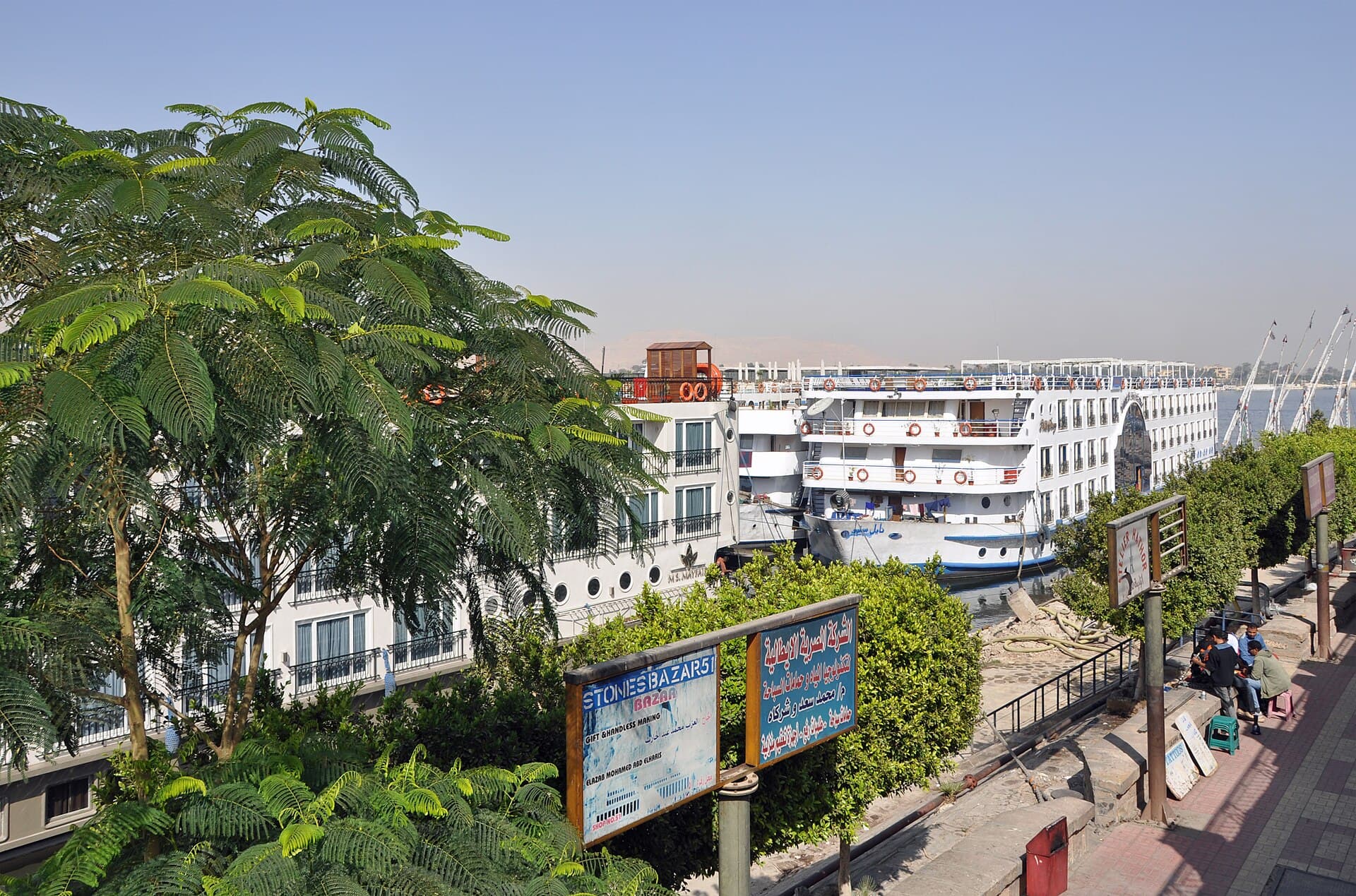
Most Nile cruises board here, which means the city is busiest late afternoon when boats fill and quietest in the middle of the day.
East bank, west bank, and which to do first
The Egyptians built for the living on the east bank, where the sun rises, and buried their dead on the west, where it sets. The split still decides your timetable. The station, the airport, the museum and nearly every hotel are on the east side, so the west bank is a morning out and back rather than somewhere you base yourself.
Do the west bank first, and start before it is light. The tombs are cut into rock with no airflow, and by mid-morning they hold the heat of every group that has walked through. Karnak and Luxor Temple are open to the sky and take low afternoon light far better than noon. Reversing the order is the commonest planning mistake made here.
Karnak takes longer than anyone plans for
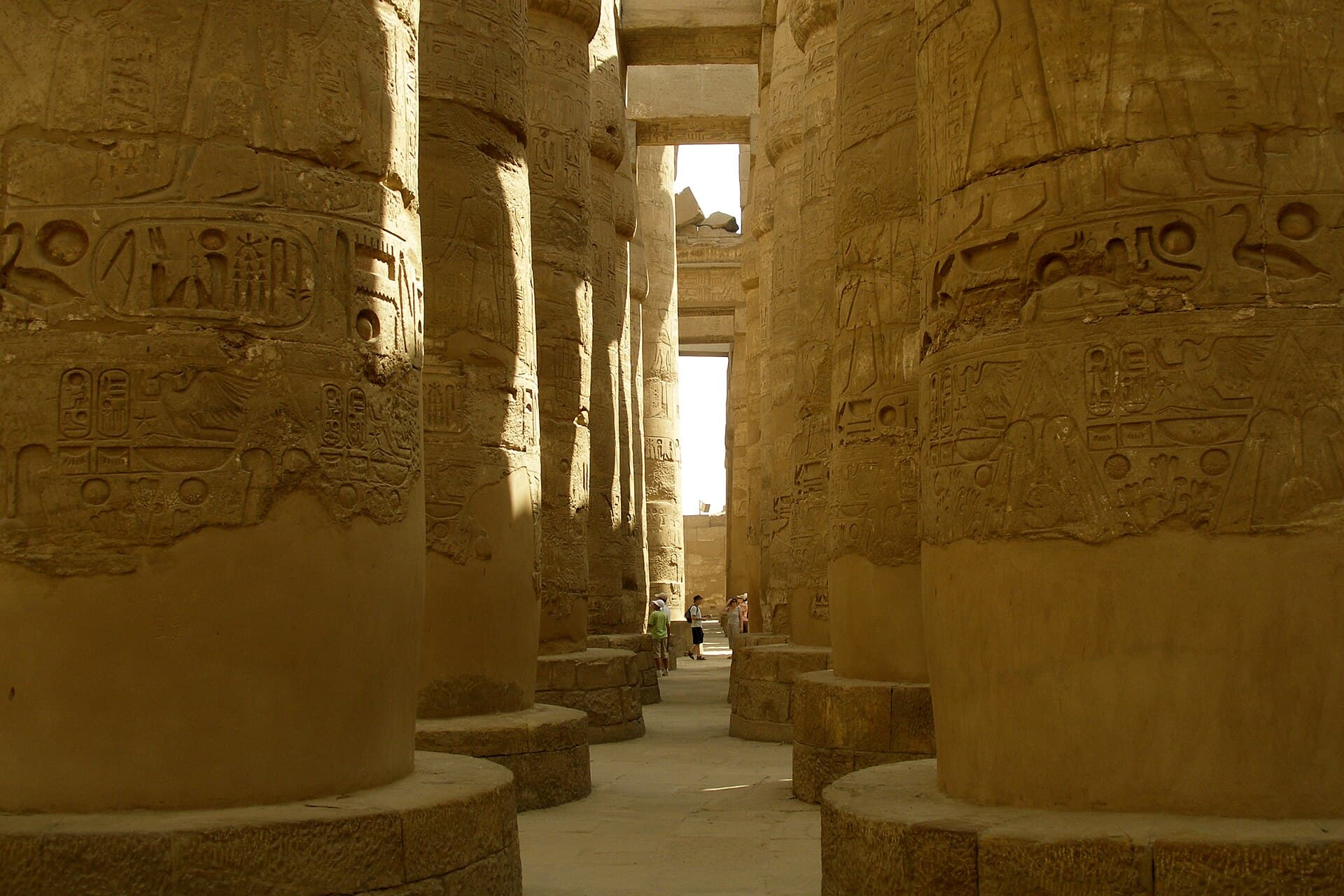
Karnak is not one temple but a walled precinct that around thirty pharaohs added to across two thousand years. The Hypostyle Hall alone, 134 columns with the tallest about twenty metres, absorbs half an hour. Behind it stand obelisks, a sacred lake and a spine of pylons that get older as you walk east, each newer one built in front of the last.
Two hours is the realistic minimum and three is better. Groups working to a cruise timetable tend to get about ninety minutes, which covers the central axis and almost nothing either side of it. Go late in the afternoon if the choice is yours: the light comes in low between the columns and most of the coaches have gone back to the boats.
Luxor Temple is better after dark
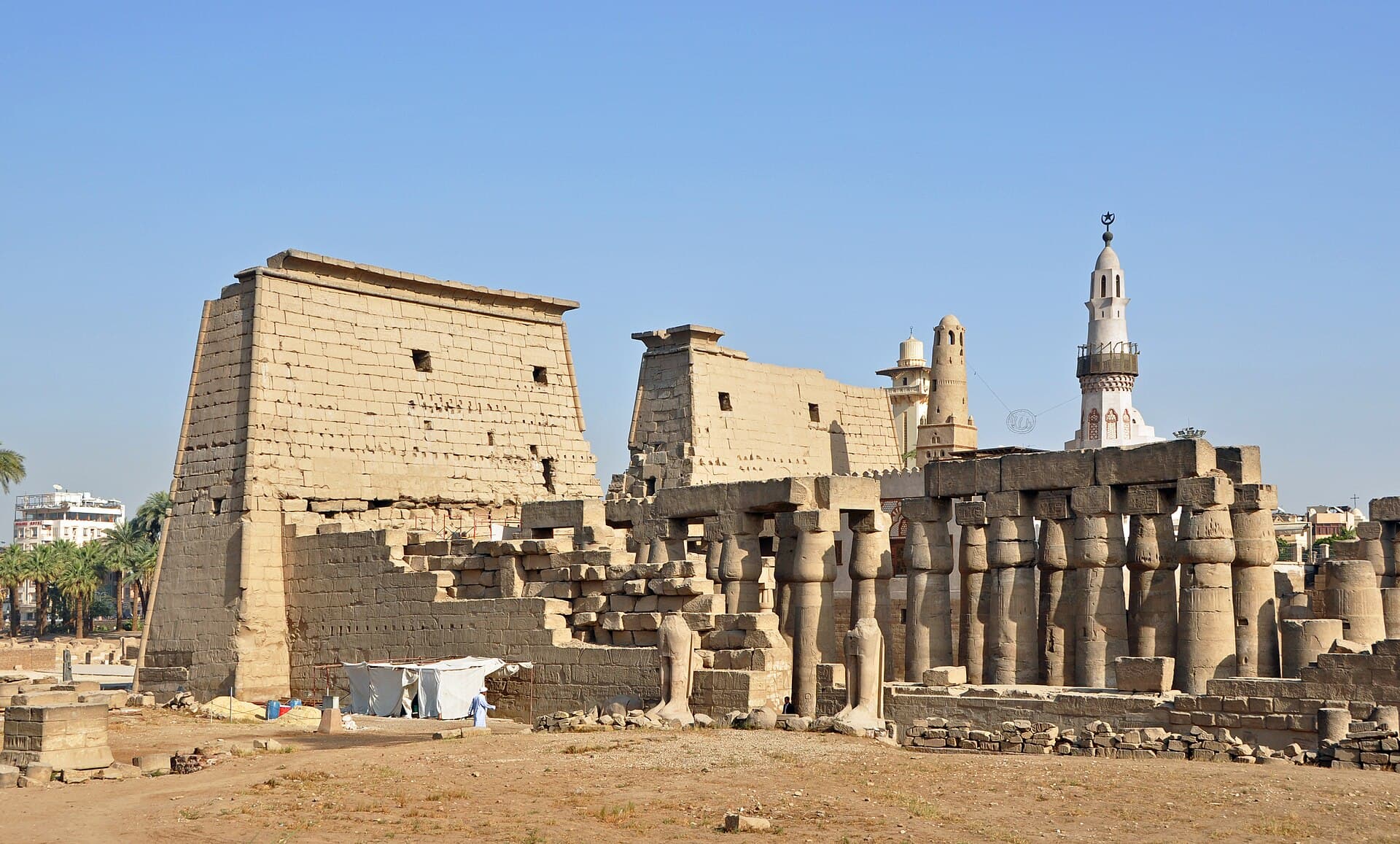
Luxor Temple stands in the middle of town and is the one major site that improves at night. Floodlighting gives the columns a depth that flat midday sun takes away, the heat drops, and the crowd thins to a fraction. It is small enough to see properly in an hour, which makes it the right thing to do on an arrival evening.
Look for the later layers, not only the pharaonic ones. A mosque sits high in the wall of the first courtyard, built when the temple was buried to that depth in silt and rubble and left in place when the fill was dug out beneath it. At the back, a Roman chapel from the fortress period has painted plaster laid straight over Egyptian relief.
The Valley of the Kings: what your ticket covers
The standard ticket admits you to three tombs from the set open that day, and which tombs are open rotates for conservation. Three is enough. They vary less than you expect, and by the fourth you are looking at the same iconography under a different name. Ask at the gate which of the open tombs go deepest and hold the most colour.
Three tombs are sold separately and are not on that ticket: Tutankhamun, Seti I and Ramesses VI. Seti I is the finest in the valley by a distance, and priced to match. Ramesses VI is the better value, with an astronomical ceiling worth the neck ache. Tutankhamun is the smallest, with only the burial chamber painted. The treasures are in the Grand Egyptian Museum outside Cairo, though his mummy is still in the tomb.
Hatshepsut, the Colossi, and the temple most people miss
Hatshepsut's temple at Deir el-Bahari is the west bank's other set piece: three terraces built against a cliff, heavily restored, and striking from the coach park onwards. Inside, it is thinner than the outside promises. Find the Punt expedition reliefs and the birth scenes, and look at the erasures, where her face and name were chiselled out after her death.
The Colossi of Memnon take five minutes and sit on the road in, so see them, but they are two statues in a field rather than a site. They fronted the largest mortuary temple ever built here, which floods and quarrying removed. If you can fit one more temple in, make it Medinet Habu: colour still on the walls, almost no groups.
The balloon flight at sunrise
The balloon is one of the few aerial add-ons in Egypt that earns its price. Pick-up is in the dark, launch is from the west bank at first light, and you are up for something like forty-five minutes as the sun comes up over the east bank behind you. What it shows best is the geography: the hard edge where irrigated green stops and desert begins, with the Theban cliffs standing over the tombs.
Two honest caveats. You drift where the wind goes, so no operator can promise you the Valley of the Kings from above, and the baskets are large and shared. Flights are cancelled for wind often enough that you should book them for your first morning rather than your last. A cancellation usually means a refund, not another attempt.
Crossing between the banks
The bridge is several kilometres south of the centre, so crossing by road takes twenty to thirty minutes each way and quietly removes an hour from a west bank day. The local ferry crosses in a few minutes for the price of a coffee and lands you close to Luxor Temple. Private motorboats do the same crossing on demand for more.
Distances on the west bank are longer than the map suggests. The Valley of the Kings, Deir el-Bahari, Medinet Habu and the Colossi are spread across several kilometres of desert edge with no shade and no useful public transport. You need a car and driver for the morning whichever way you crossed the river.
How many days Luxor needs
Two full days is the working minimum: one west bank morning, one east bank afternoon, and enough slack for what you did not plan. Three is the comfortable number. It buys the Valley of the Queens or Deir el-Medina, an hour in the Luxor Museum, which is small, well arranged and under-visited, and a slower pace in the heat.
One day is possible if you choose ruthlessly: three tombs and Hatshepsut before nine, Karnak at four, nothing else. What does not work is arriving from the coast at midday and going underground at the hottest hour. That is the version of Luxor most people who came away disappointed have had.
Cruise or hotel: how Luxor differs
A Nile cruise is an efficient way to reach Edfu and Kom Ombo, awkward to get to otherwise, but a poor way to see Luxor. Boats moor on the east bank, often rafted several deep, and Luxor is the first stop or the last: one compressed west bank morning, Karnak in a group with a departure time, evenings on board.
Staying in a hotel gives you the two things a boat cannot: the hour before the coaches arrive, and the evening, which is when Luxor Temple is worth seeing. In exchange you arrange your own driver and guide, and deal with the more persistent selling around the temple gates and the ferry landing. The usual compromise is a short cruise with nights on land at either end.
Common questions
How many days do you need in Luxor?+
Two full days covers both banks properly. One day means choosing between the tombs and the temples. Cruise passengers usually get a day and a half, which is tight but workable.
Should you do the east bank or west bank first?+
West bank first and early. The Valley of the Kings is hot and crowded by ten and the tombs have no airflow. Karnak is better late afternoon when the light drops and the coaches have gone.
Is the balloon flight over Luxor worth it?+
Over the west bank at sunrise, yes. It is one of the few places where the aerial view genuinely adds something rather than just being a novelty. Flights lift at first light and are weather-dependent.
Which Valley of the Kings tombs are included?+
The standard ticket covers a rotating selection of three. Tutankhamun and Seti I are ticketed separately, as is Nefertari in the nearby Valley of the Queens. Which tombs are open changes, so confirm on the day.
Best time to visit Luxor
November to March. Summer temperatures in the Valley of the Kings pass 45°C.
Getting to Luxor
An hour's flight from Cairo, or ten hours by overnight sleeper train.
Written and checked by the Nile Trip Guide editorial team · Last reviewed . Entry rules, prices and opening hours change — check anything critical against the official sources linked on this page.
Three nights sailing north from Aswan to Luxor, taking in Philae, Kom Ombo, Edfu, the Valley of the Kings and finally Karnak. Full board on board, and the sightseeing runs as a shared group of about fifteen.
Four nights sailing south from Luxor to Aswan: Karnak and Luxor temples on the first afternoon, the Valley of the Kings, Edfu, Kom Ombo and Philae. Full board throughout, with sightseeing in a shared group of about fifteen.
Giza and the Grand Egyptian Museum, then a flight south for one night in Luxor covering both banks, and a flight back. Five days, two cities, both domestic flights in the price and every day guided privately.
A 7 day Egypt itinerary that takes the river the other way round: Giza and the Grand Egyptian Museum first, then a flight south to Aswan and three nights sailing down to Luxor.