Egypt vs Jordan: which one should you actually go to?
Most people asking about Egypt vs Jordan have time for one trip, not two. The short answer: Jordan is the easier holiday, Egypt is the more extraordinary one, and which matters more depends on how much friction you will tolerate for something you will still be thinking about in ten years. Below is the honest comparison, downsides included.
Egypt
Jordan
Egypt
Jordan
The headline sight
Pyramids, Karnak, the Valley of the Kings — several thousand years older than almost anything else you will see
Petra, carved into rock and approached through a canyon. One extraordinary place rather than many
How long it needs
Ten days to do properly. A week is tight
Five to seven days covers the country comfortably
Ease of travel
Harder. Longer distances, internal flights, more organisation
Much easier. Small country, good roads, self-drive is realistic
Hassle at sites
Persistent around the major monuments. Manageable, but it is there
Noticeably less. Petra has vendors but the pressure is lower
Cost
Cheaper day to day. Guides and drivers are affordable
More expensive, particularly accommodation and the Petra ticket
The Nile factor
A cruise is a genuine reason to go and has no equivalent elsewhere
No river. Wadi Rum desert nights are the closest thing to a signature experience
Beach
Red Sea diving is world-standard and cheap
Aqaba only, and it is a short strip
Best for
Anyone who wants ancient Egypt itself, and divers
First-time Middle East travellers, and anyone who wants an easier trip
The short answer
Jordan is the easier country and Egypt is the more extraordinary one. If you have never travelled in the region and want a straightforward first trip, go to Jordan. If you want the thing itself — the Pyramids, the Nile, four thousand years of it — go to Egypt and accept that it asks more of you. Two weeks does both, and the border at Aqaba makes that genuinely practical.
What do you actually see in each country?
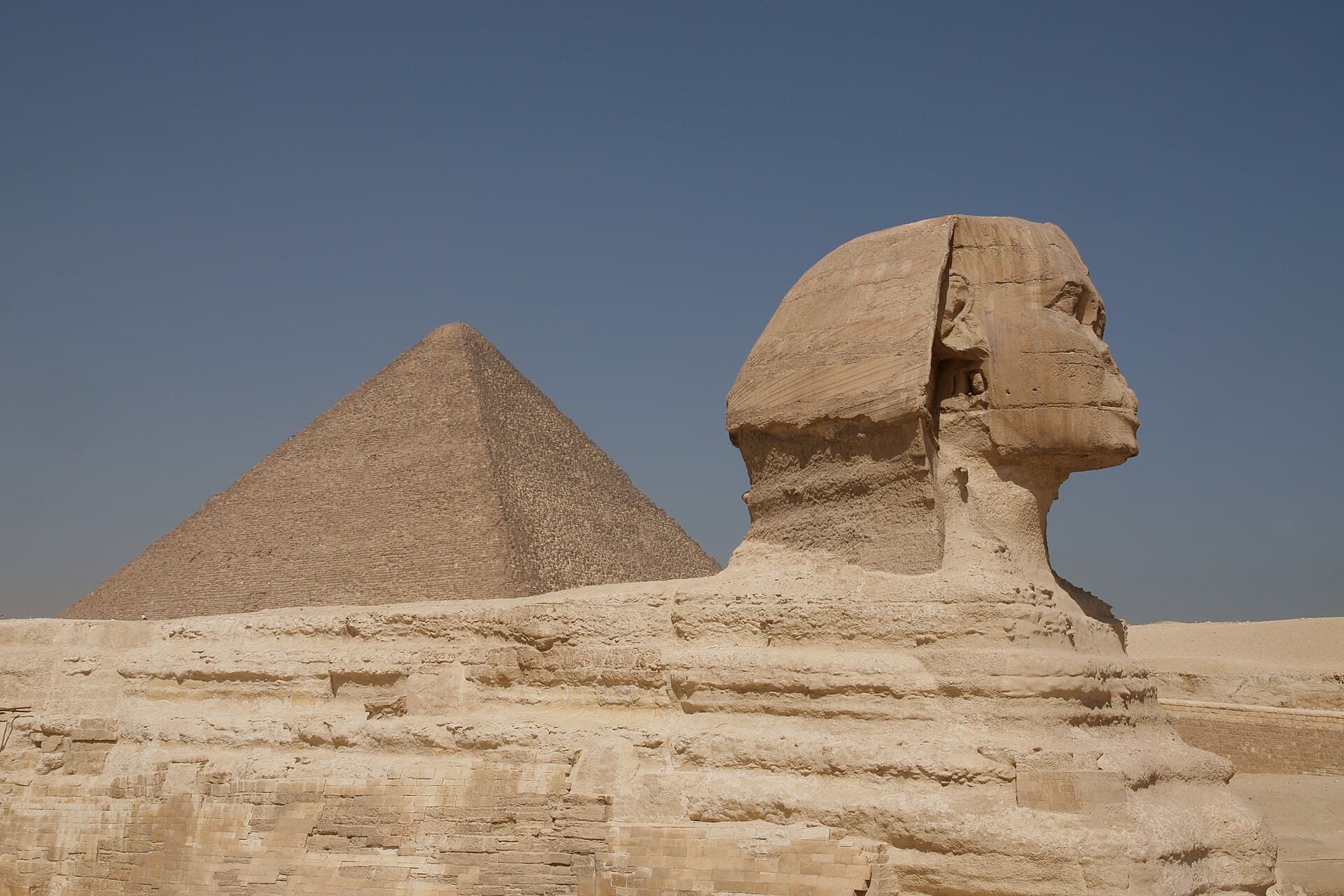
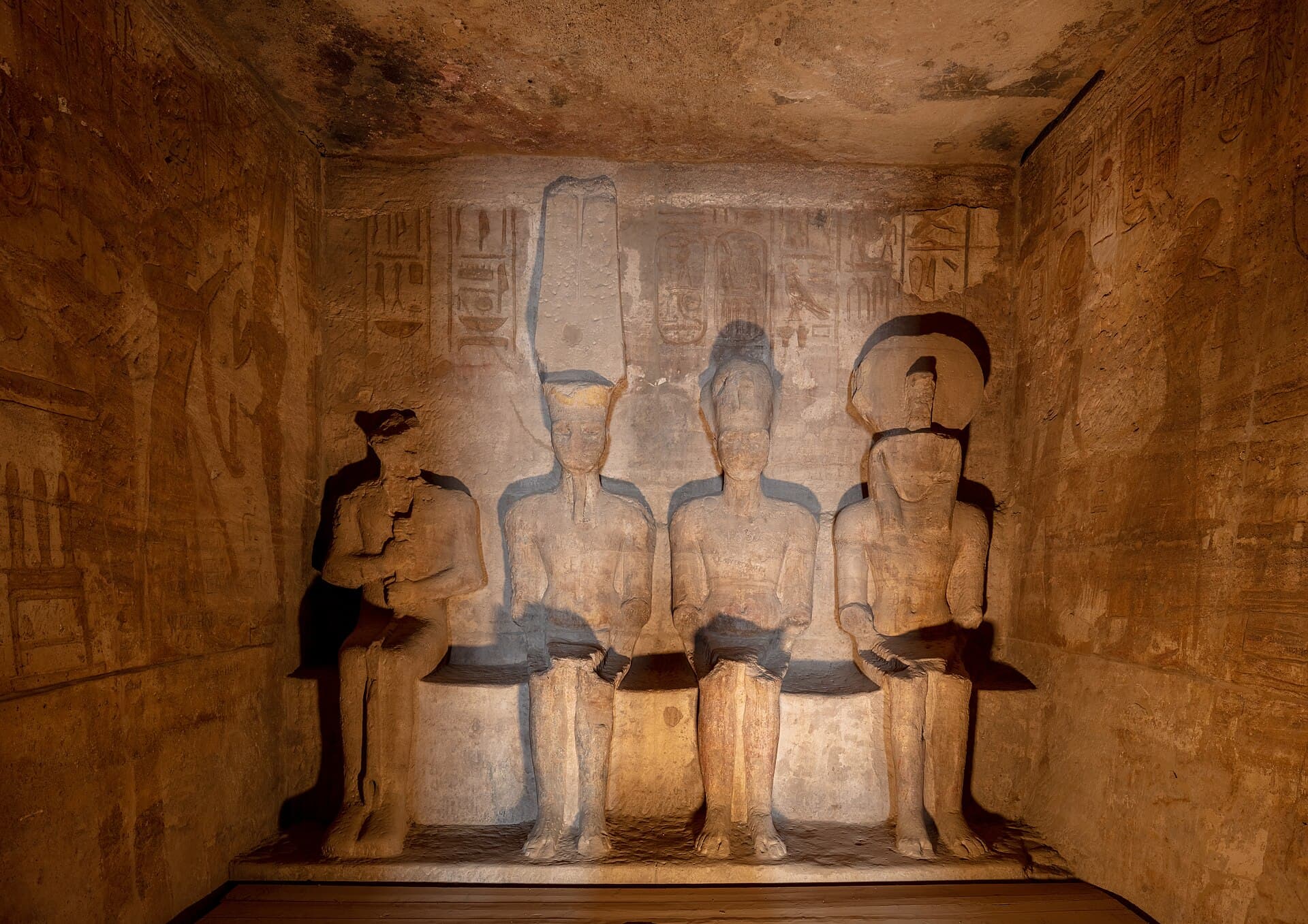
Egypt's headline sights are older and stranger than almost anything else on earth. The Giza pyramids, the temples at Karnak and Abu Simbel, the painted tombs in the Valley of the Kings. The scale is genuinely hard to process. The colour still on 3,000-year-old tomb ceilings is the thing most people remember, not the pyramids.
Jordan's case rests on Petra, and Petra is superb. It is also one site. You can add Wadi Rum's desert, the Dead Sea, the Roman ruins at Jerash and a few crusader castles, and you have a decent week. But Jordan has one great sight, and Egypt has roughly a dozen. Madaba and Mount Nebo are short stops, not destinations. If someone tells you they need a full day, they are padding an itinerary.
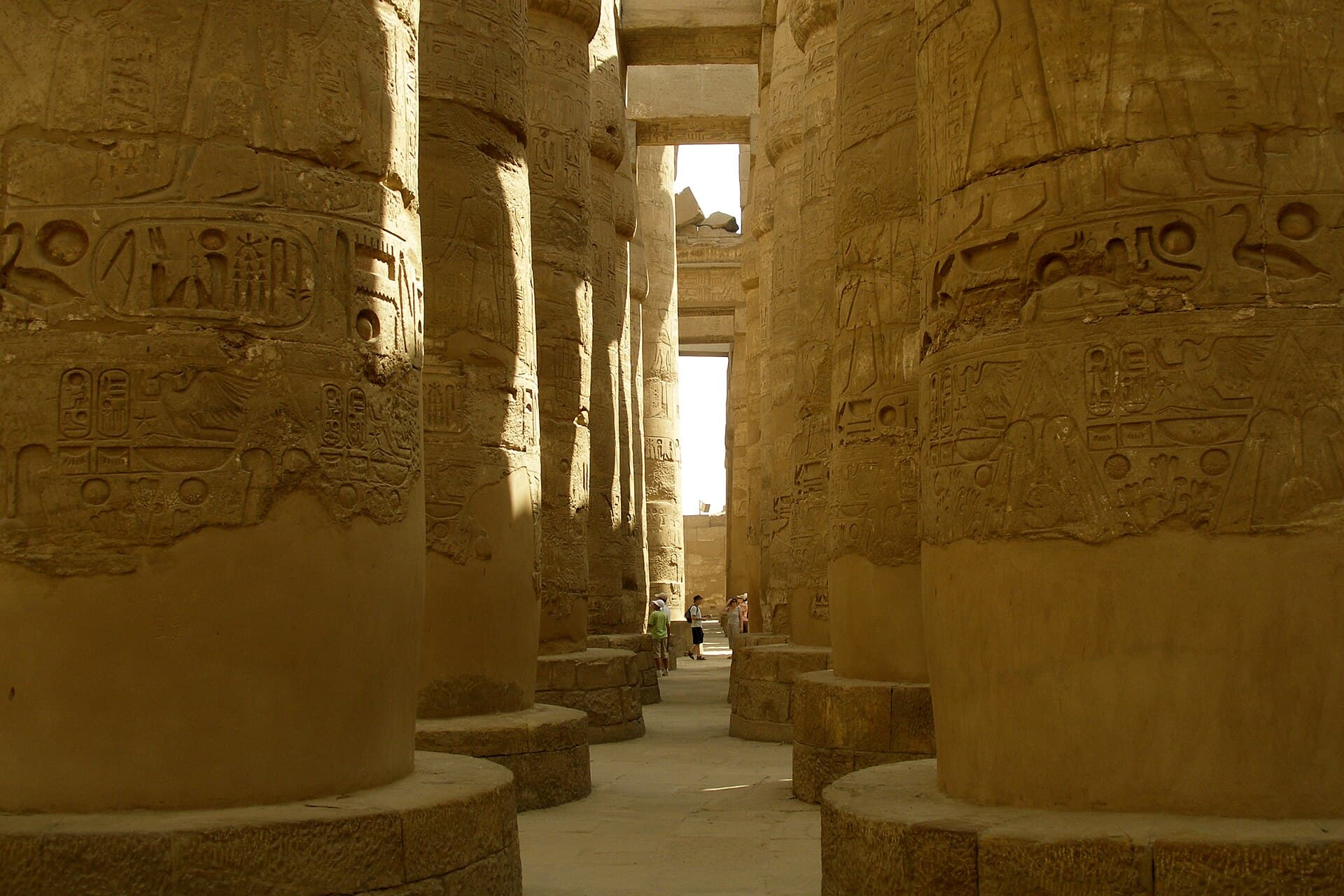
The difference is not only in number but in kind. Egypt's sites are a continuous civilisation laid out along a river: Giza is roughly 4,500 years old, the Hypostyle Hall at Karnak holds one hundred and thirty-four columns in a single room, and the tombs on the Luxor west bank were being cut and painted a thousand years after the pyramids were finished. You are moving through a sequence. Jordan gives you one masterpiece and a set of good, unrelated things around it.
That has a practical consequence for how each trip feels. In Jordan you build towards Petra, see it, and then wind down. In Egypt there is no single climax, which is why people come home talking about the Valley of the Kings or a temple they had never heard of rather than the pyramids they went for. If you want a trip with one unforgettable day, Jordan delivers it more reliably. If you want a fortnight where the ceiling keeps rising, that is Egypt.
Which is cheaper, Egypt or Jordan?
Egypt is significantly cheaper on the ground. Hotels, meals, drivers, guides and domestic flights all cost less, and the gap is wide rather than marginal. Egyptian entry fees have risen sharply in recent years and are no longer trivial, and they change often enough to be worth checking when you plan. Food and accommodation absorb that easily.
Jordan simply costs more day to day, and the Petra ticket is one of the most expensive single-site entry fees anywhere. The Jordan Pass, bought online before you arrive, bundles Petra entry with the tourist visa fee and is worth it for almost anyone staying more than a day. It cannot be bought at the border, and the visa waiver carries a minimum-stay condition, so check the current terms before paying.
What does each trip actually cost, including the parts quotes leave out?
No honest single figure exists for either country, because the price is driven by your choices rather than by the destination. For seven to ten days on the ground in Egypt, quotes generally land somewhere between roughly £1,000 and £3,500 per person before international flights, and the spread comes from season, party size, hotel standard and whether a Nile boat is involved. Jordan sits above that per day for comparable hotels and food, which is the whole of the cost argument in one sentence.
Party size moves the per-person figure more than almost anything else, and it moves it the same way in both countries. A private car, driver and guide costs much the same for two people as for four, so four sharing pay noticeably less each. Solo travellers pay a structural penalty at both ends, because hotel and cabin rates assume two people sharing; on some Nile boats the single supplement amounts to the whole second berth. Jordan softens this slightly, because a hire car and short road transfers replace the driver-and-guide model entirely.
Then the line that catches people out. Tipping in Egypt is a real budget item rather than loose change: roughly 15 to 20 euros per person for a guided day with a private guide and driver, and another 5 to 10 per night on a cruise for the communal crew box. Over a ten-day Egyptian leg that comes to something like 180 to 220 euros per person, which narrows the cost gap with Jordan more than most comparisons admit. Carry small notes from the start, because sourcing change becomes a daily chore otherwise.
The two countries also concentrate their costs differently. Jordan puts most of its entry expense into one ticket, and the Jordan Pass folds that in before you fly. Egypt spreads it across dozens of sites and then adds premium tickets paid at the gate, including the inner chamber of the Great Pyramid, the tomb of Seti I and the tomb of Nefertari. Whichever country you choose, ask any operator for a written breakdown of what sits inside the quoted figure and what you will pay locally. Quotes that look alike rarely contain the same things.
Which is easier and less hassle?
Jordan, clearly, and it is not close. Distances are short, the roads are good, self-driving is realistic, and you can cover the country from Amman in a week without internal flights. Persistent selling exists at Petra but it is mild. Most visitors find Jordan calm.
Egypt asks more of you. Cairo traffic is heavy, Aswan to Cairo is a flight or an overnight train, and the constant approaches from touts, drivers and self-appointed guides at the major sites wear people down. That is the most common complaint from first-time visitors, and it is fair. A ground operator handling transfers, tickets and guiding removes most of it.
Getting around: internal flights in Egypt, a hire car in Jordan
Jordan is small enough to treat as a single loop. Amman to Petra is about three hours by road and Petra to Wadi Rum roughly an hour and a half, so the whole country works from one airport with no internal flights at all. Queen Alia is about 45 minutes from central Amman. This is why self-drive is a genuine option here and barely gets suggested in Egypt.
Egypt does not work that way. The road between Cairo and Luxor takes most of a day and shows you very little, against roughly an hour in the air. The overnight sleeper train is the alternative: cheaper, and it saves a hotel night, but it is basic and often late, so treat it as a budget decision rather than a romantic one. In practice almost everyone flies at least one internal leg.
The planning consequence matters more than the travel time. An Egyptian itinerary is a chain of fixed bookings — an internal flight, a boat with a sailing date, timed entry at busy sites — and a delay anywhere in it has nowhere to go. A Jordanian itinerary is a route you can rearrange over breakfast. That flexibility is worth more than it sounds when the weather turns or somebody wakes up tired.
It also changes how much of your holiday is spent in transit. Every change of base in Egypt costs the better part of a day once you add airport time at both ends, which is why a ten-day Egyptian trip does not contain ten days of sightseeing. Jordan's transfers are short enough to sit inside a morning, so a seven-day Jordanian trip really does give you close to seven days of the country.
How much walking does each country ask of you?
Petra is the more physically demanding single site by a clear margin, and most visitors underestimate it. The Siq alone runs about 1.2 kilometres before the Treasury appears, and beyond it are the tombs, the Roman street and a climb of roughly 800 uneven steps to the Monastery. There is horse and donkey transport on parts of the route, though welfare standards vary and we would not push you towards it. A full day at Petra is several kilometres on uneven ground before you consider any of the climbs.
Egypt spreads its demands differently. No individual site asks for that much walking, but tomb interiors are ramped, stepped and worn smooth in patches with fine dust on top, and the heat does the work that the terrain does at Petra. Shade is the real problem: there is none at Giza, very little at Karnak and none worth the name at Abu Simbel. Doing three sites in a morning in April is harder than the distances suggest.
Put crudely, Jordan asks more of your legs on one particular day and Egypt asks more of your stamina across ten. Closed shoes with some grip cover both, and a brimmed hat matters more in Egypt than any other item of clothing. Reasonable fitness is enough for either country; neither is a trekking holiday.
Timing removes most of the difficulty in both places, and it is the same fix. Petra is quiet at opening and heaving by mid-morning. The Valley of the Kings is unpleasant in the middle of a hot day and a different place first thing. Early starts are not a virtue here, they are the mechanism by which the trip becomes enjoyable, and any itinerary that proposes a nine o'clock departure in the hot half of the year is not doing you a favour.
Crowds, food and how long each needs
Both countries have crowd problems at their best-known sites, and both are manageable with timing. Petra's Siq is quiet at opening and heaving by mid-morning. The Valley of the Kings is unpleasant in the middle of a hot day and far better first thing in the morning. Karnak absorbs crowds better than either because it is enormous.
Jordanian food is better than Egyptian food. Mezze, grilled meat, mansaf, good bread and consistently good produce. Egyptian cooking has real high points, koshari and slow-cooked stews among them, but the average tourist-restaurant meal is duller than in Jordan. If eating well is central to your holiday, that is a point for Jordan.
Jordan works properly in seven to eight days and can be squeezed into five. Egypt needs ten to twelve to cover Cairo, Luxor and Aswan without rushing; eight days is tight but workable if you fly internally. A four-day Cairo stopover is worth doing and will leave you wanting the rest.
The weather does not match, and Jordan sets the calendar
October to April is the season for both, but for different reasons, and the two countries are less alike than the shared months suggest. Egypt's headline sites sit low, along the Nile and the Red Sea. Jordan's sit high: Amman spreads across hills at roughly 800 to 1,000 metres, Petra is at around 1,000 metres, and Wadi Rum is desert at altitude. Same calendar, different clothes.
Egypt can be pinned to numbers, which helps. Typical daytime highs in Luxor run at about 23C in January, 29C in March, 35C in April and 39C in May, before a summer plateau of roughly 41C from June through August, coming back to 34C in October and 28C in November. Cairo sits several degrees below Luxor in every month. The gap between March and May is ten degrees, and it is the difference between a full morning on the west bank and a dawn raid followed by a retreat indoors.
Jordan's winter is the part people get wrong. Rain arrives in multi-day spells rather than showers, nights at Petra fall to freezing or below, snow reaches Petra in some Januaries, and heavy rain can send flash floods through the Siq, which closes the site while the risk lasts. Egypt barely has weather by comparison — Cairo averages only around 20mm of rain a year — so a winter trip that would be merely pleasant in Luxor can lose half a day in Wadi Musa.
This is why Jordan sets the calendar rather than Egypt. Egypt has a usable month in every part of the year: when the Nile valley is too hot, the Red Sea is at its best and the trip shifts from temples to water. Jordan has no equivalent escape valve, because Petra and Wadi Rum are the trip and they are outdoors. March, April, October and November suit both countries equally. If your dates land in deep winter, weight the holiday towards Egypt.
What does a week look like in each country?
A Jordanian week is a complete trip rather than a sample. Half a day at Jerash, the Roman provincial city north of Amman and the most substantial ancient site in the country after Petra, then south to Wadi Musa for two nights and two full days at Petra, a night in a Wadi Rum camp, and a last night at the Dead Sea or back in Amman. Madaba and Mount Nebo are stops on the road south rather than destinations. Nothing important is left out.
An Egyptian week is a selection, and you should know that going in. Three nights in Cairo covers Giza and the Sphinx early, the Grand Egyptian Museum, which rewards three hours rather than one, Saqqara, and Islamic Cairo with Khan el-Khalili in an afternoon. That leaves three or four nights for Luxor and the Nile once you have flown south, which is enough for Karnak, Luxor Temple and the west bank but not for a leisurely sail to Aswan.
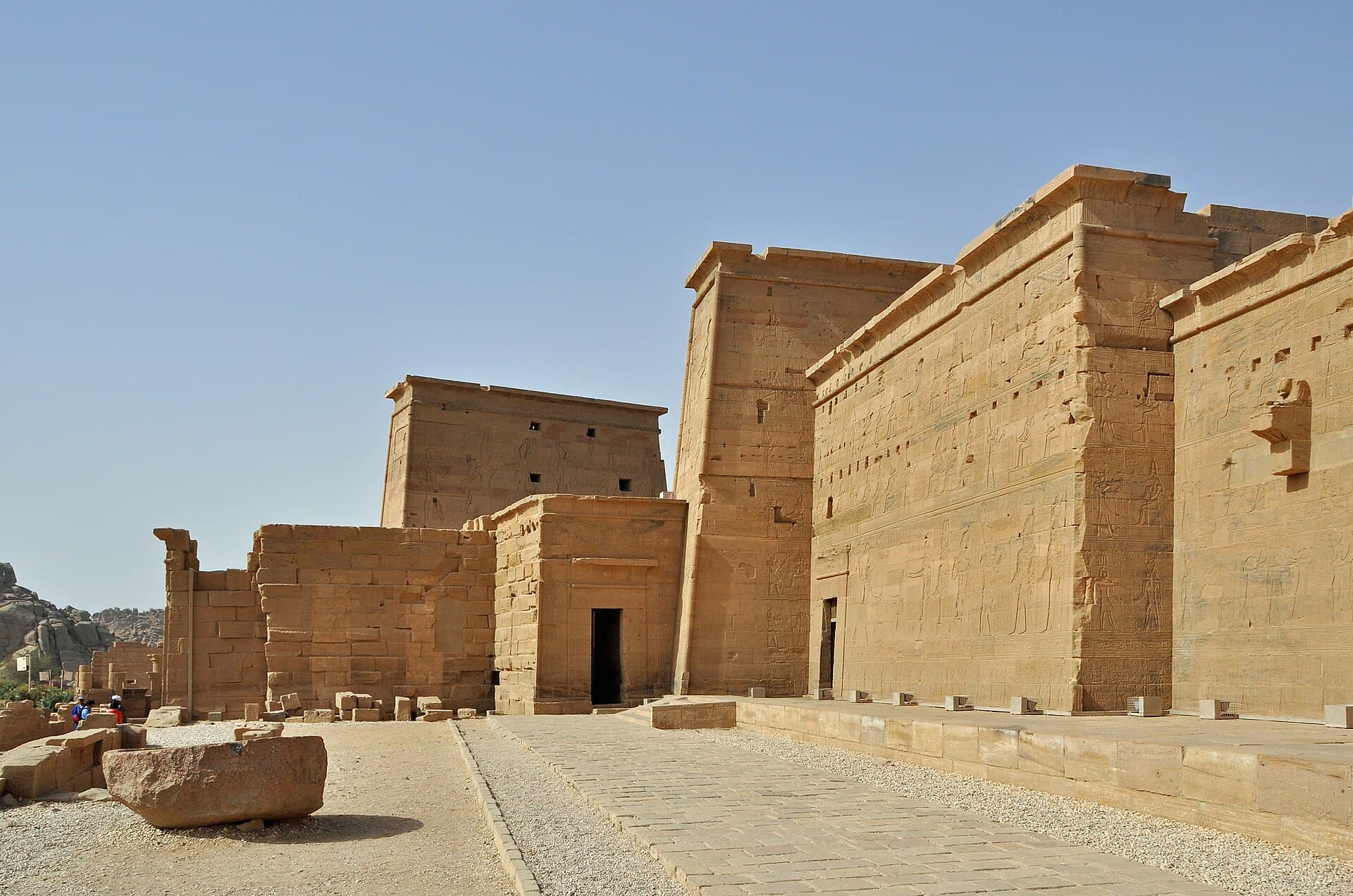
Ten to twelve days is where Egypt stops feeling compressed: Cairo, a proper Nile stretch taking in Edfu and Kom Ombo on the riverbank, Philae on its island at Aswan, and Abu Simbel, which is a very early road start or a short flight and is worth either. A four-day Cairo stopover is a legitimate trip in its own right and will leave you wanting the rest.
The asymmetry is the useful part of this comparison. If your leave is fixed at a week, Jordan gives you a finished holiday and Egypt gives you a good introduction to a country you will have to come back to. If you have a fortnight, the calculation reverses, because Jordan starts repeating itself around day eight and Egypt does not.
Do you need a guide in either country?
Jordan is straightforward independently. Hire a car, book hotels, buy a Jordan Pass before you fly, and the country largely explains itself. Petra rewards a guide but does not require one, because its effect is visual and immediate: you walk through a canyon and a facade appears. Jerash benefits more than Petra does, and a half day there with someone who knows what the stones were for is money well spent.
Egypt is a different proposition. Its sites are dense with meaning you would otherwise walk straight past, the signage will not fill the gap, and what separates a good morning at the Valley of the Kings from a hot and shuffling one is usually the person you are with. Most guideless regret happens in Luxor. A guide also performs a second, unglamorous function in Egypt, which is absorbing the touting, the ticket queues and the transfers before they reach you.
Private or scheduled group is the other decision, and for one or two people a group departure is genuinely cheaper in either country. What it costs you is timing. A coach group rarely reaches Karnak or Petra's Siq before the crowds, and in both countries that is most of the difference between the site at its best and the site at its most ordinary.
Two questions separate quotes that look identical. Which entry tickets, internal flights, visa fees and tips sit inside the figure, and whether the programme includes shopping stops at papyrus, perfume or alabaster workshops. Those stops pay commission rather than serving your itinerary, and you can ask for them to be dropped.
Visas, passes and the paperwork on each side
The two countries are entirely separate on paper, and neither is difficult. Egypt is usually an e-visa applied for online or a visa on arrival, depending on your nationality, and it is rarely included in a tour price. Jordan issues a visa on arrival. Neither country expects you to arrange anything months in advance.
The Jordan Pass is the one piece of admin worth doing before you fly. Bought online, it bundles the Petra ticket with the tourist visa fee and is worth it for almost anyone staying more than a day. It cannot be bought at the border, and the visa waiver applies to stays of three nights or more, so check the current terms against your route before paying, particularly if any part of your journey is overland.
Money behaves differently on each side. The Egyptian pound has moved sharply in recent years, so operators quote in dollars or euros and hold that figure, and hotels and boats set their internal rates the same way. A quote given far ahead in Egyptian pounds is an estimate rather than a fixed price. Card payment often carries a surcharge, and paying a balance in cash on arrival is normal practice in Egypt rather than a warning sign.
Two calendar items are worth checking before you fix dates for either country. Ramadan moves about eleven days earlier each year, so it drifts through the good season; sites stay open and trips run normally, though restaurant hours change. Christmas and New Year is the busiest and dearest fortnight in both, and Petra then is cold as well as crowded. Beyond that, read your own government's current travel advice for whichever country you choose, before you commit money and again shortly before you fly.
Beaches, diving and what happens when the sightseeing stops
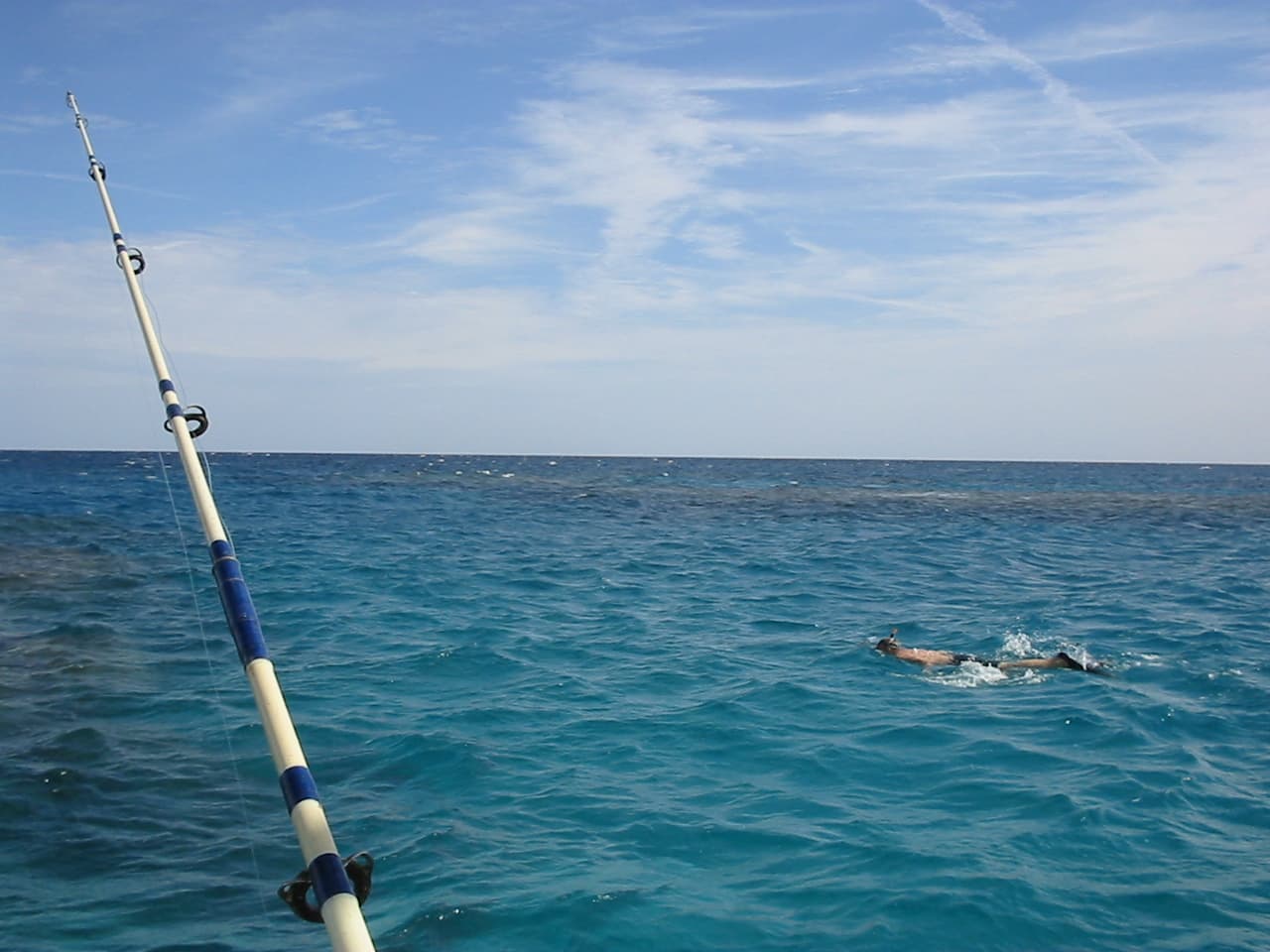
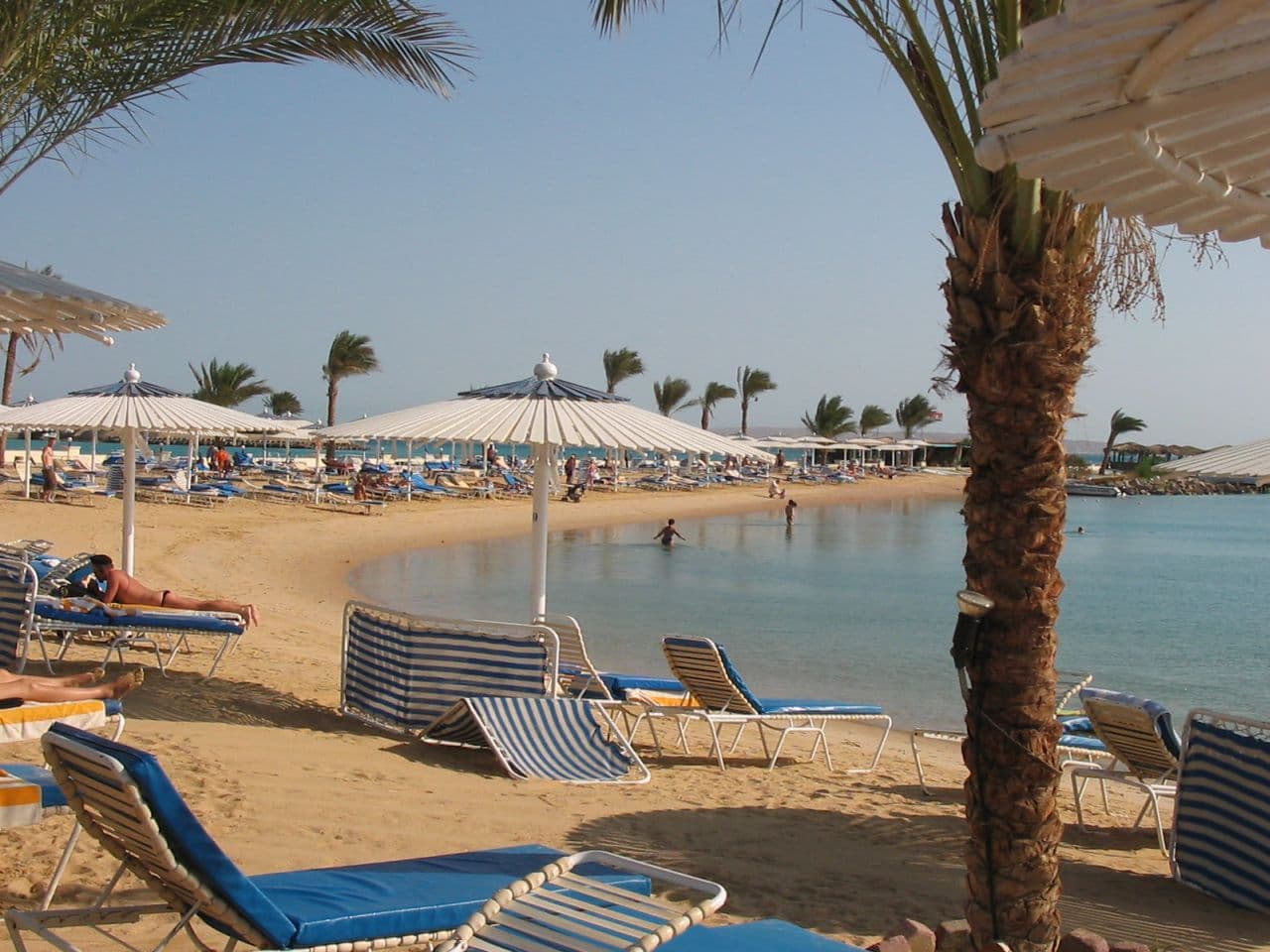
This is the most one-sided category on the page. Egyptian Red Sea diving is world-standard and cheap, and the water works on its own schedule: temperatures around Hurghada sit near 22C in January and February, 25C in April, 30C or above from July to September, and still 28C in October. That makes an Egyptian trip two holidays rather than one, and it is the reason Egypt has a usable month in every part of the year.
Jordan has Aqaba, which is a short strip of Red Sea coast rather than a coastline, and the Dead Sea. The float is genuinely strange and worth doing once, but it is an afternoon at a hotel beach, not a destination. One night there is plenty, and skipping it costs you very little.
So if the holiday is meant to end horizontally, Egypt wins without argument. If diving or snorkelling is the actual point rather than a coda, build a single-country Egypt trip around it rather than bolting a few nights onto anything.
The reverse case is worth stating too. Jordan's equivalent of downtime is Wadi Rum, and a night in a desert camp is the closest the country comes to a signature experience after Petra itself. Camp heating varies a great deal, so ask what yours has before booking a winter night out there. Clear skies and dry air drop the temperature fast once the light goes, and winter nights in the desert are also the clearest of the year.
Which suits families, and which suits older travellers?
Jordan is the easier country for both groups, and for the same reasons. Distances are short, so nobody spends a morning in a vehicle. There are no internal flights to catch. Self-drive means you set the pace and stop when someone has had enough. The sites are fewer, which sounds like a loss until you are travelling with people who do not want a fourth temple in three days.
Heat is the constraint that decides most family trips, and it decides against Egypt in the hot half of the year. A tomb with no airflow at 40C is not a negotiable experience, and from June to September Luxor and Aswan sit above that regularly. Cold in Petra is solved with a coat; heat in the Valley of the Kings is not solved at all. If your dates are fixed to a school summer, that is a strong argument for Jordan.
Egypt has one real financial advantage for families. A party of four fills a private car and guide, and because that cost barely changes between two people and four, the per-person figure falls sharply. A family of four in Egypt often pays less each than a couple does, which is not true of many destinations.
For limited mobility, neither country is easy and both are possible with planning. Petra is several kilometres of uneven ground before any climbing, and the Monastery is out of reach for many. Egyptian tombs are ramped, stepped and dusty, but the sites are visited one at a time with a vehicle between them, which allows a day built around sitting down. Egypt is the more adaptable of the two on that specific point, which reverses the usual ranking.
What is each country genuinely bad at?
Egypt's weaknesses are well known and mostly fixable. The touting around the major monuments is persistent and is the single most common first-time complaint. The average tourist-restaurant meal is dull. Sound and light shows are dated and easy to skip. Alexandria as a day trip from Cairo means roughly two and a half to three hours each way by road for a thin return, and a Red Sea resort tacked onto a short itinerary only earns its days if you dive.
Jordan's weakness is structural rather than fixable: the country has one great sight and a supporting cast, and itineraries pad the gap. A full day at Madaba and Mount Nebo is padding. The Dead Sea is the weakest element of most Jordanian weeks. A one-day Petra ticket is false economy, because the site is at its best early and late and a single day gives you the hot, crowded middle instead.
Both countries share one failure, and it is the visitor's rather than the country's. Arriving at the famous sites mid-morning guarantees the worst version of them, in either place, in any month. Petra's Siq, the Valley of the Kings and Abu Simbel are all busy from opening time, and everything after that is worse. The countries differ in almost every other respect and not at all in this one.
Egypt vs Jordan: which should you choose?
If this is your first trip to the region, you are travelling with children or older parents, you want to drive yourself, or you have a week rather than a fortnight, go to Jordan. It is the lower-friction, higher-comfort trip and Petra will not disappoint you.
If you want the trip that reorganises your sense of how old human civilisation is, go to Egypt and accept the hassle as the price. Egypt is the more remarkable country by some distance. Jordan is the better-run holiday. Given a free choice, the order is Egypt first, Jordan second, because Egypt is the one people regret postponing.
There is a fitness argument for the same order. Egypt is the more demanding fortnight, with the early starts, the heat and the internal travel, while Jordan can be taken at a slower pace whenever you get to it. Doing the harder country while you are more willing to do it is not a dramatic consideration, but it points the same way. The exception is the traveller who has never been to the region at all and wants a gentle introduction, for whom Jordan first is the sensible order.
Neither choice forecloses the other, which is the part worth remembering. Cairo and Amman are about an hour and a half apart by air, so whichever you do first, the second is a short flight away whenever you go back.
Is doing both in one trip worth it?
It works, but only with time. Cairo and Amman are roughly an hour and a half apart by air, so a combined trip is logistically straightforward. What kills it is compression: two weeks split between the two countries leaves about eight days in Egypt and six in Jordan, which is the realistic minimum and leaves no slack for delays.
Anything under twelve days total is better spent in one country. Egypt and Jordan share no land border, since the Gulf of Aqaba lies between them, so travelling overland means either crossing through Israel or taking the Nuweiba to Aqaba ferry. The status, schedules and opening hours of both change, so check your own government's current travel advice before planning any land or sea crossing. Flying between Cairo and Amman avoids the question.
One routing decision saves both money and a day: fly into one country and out of the other. Cairo in and Amman out, or the reverse, is usually cheaper than two returns and removes a repositioning flight from the middle of the trip. Booking each country as its own return leaves you backtracking to a city you have already finished with, and that lost morning falls at exactly the point in a fortnight where you have least patience for it.
If you do combine them, put Egypt first. It is the harder half — the traffic, the internal flight, the selling around the monuments — and Jordan is calm by comparison, with short drives and mild pressure at Petra. Finishing with the easier country is a better shape for a fortnight than finishing with the harder one, and the day you lose to the connection hurts less in the middle than at the end.
Common questions
Is Egypt safe for tourists compared with Jordan?+
Both countries have long-established tourism industries built around their main sites. Advisories differ by region within each country, particularly near some borders, and they are revised as conditions change. Check your own government's current travel advice for both countries before booking, and again before you fly, rather than relying on anything written here.
Do I need a guide, or can I do either country independently?+
Jordan is straightforward independently: hire a car, book hotels, buy a Jordan Pass. Egypt is doable alone but harder work, and its sites reward a good Egyptologist far more than Jordan's do, because the tombs and temples are dense with meaning you would otherwise walk straight past. Most guideless regret happens in Luxor.
When is the best time to visit each?+
October to April for both. Egyptian summers are punishing in Luxor and Aswan, where daytime temperatures above 40C are routine and sightseeing becomes a dawn-only activity. Jordan's summer is hot but survivable, though Wadi Rum and the Dead Sea are extreme. Petra can be wet and cold in January. March and November suit both countries.
Is a Nile cruise worth it, or is it a tourist trap?+
It is worth it, with caveats. Sailing between Luxor and Aswan reaches temples along the river that you would otherwise drive to, and the Nile itself is the best scenery in Egypt. Onboard programmes are usually thin and the shopping stops are skippable. Choose a boat for its itinerary and its guide, not its onboard extras.
Which country is better in winter?+
Egypt, comfortably. December to February gives Cairo in the high teens and Luxor in the mid-twenties, cold only after dark. Jordan in the same months is a different proposition: rain arrives in multi-day spells, nights at Petra drop to freezing, and snow reaches the site in some Januaries. If your dates are fixed to midwinter, weight the trip towards Egypt.
Is Petra really worth two days?+
Yes, and a one-day ticket is false economy. The Siq alone is about 1.2 kilometres before the Treasury appears, and the climb to the Monastery is roughly 800 uneven steps on top of everything else. The site is also at its best early and late, which is precisely what a single day denies you. Two days turns a long march into a visit.
Which country has better food?+
Jordan, without much argument. Mezze, grilled meat, mansaf, good bread and consistently good produce beat the average tourist-restaurant meal in Egypt. Egyptian cooking has genuine high points, koshari and slow-cooked stews among them, but you have to seek them out. If eating well is central to the holiday, that is a real point for Jordan.
How fit do you need to be for each?+
Reasonable fitness covers both, and neither is a trekking holiday. Petra asks the most in a single day: several kilometres on uneven ground, plus the steps to the Monastery. Egypt asks less of your legs and more of your tolerance for heat, since tomb interiors are ramped and dusty and there is almost no shade at Giza, Karnak or Abu Simbel. Closed shoes with grip matter in both.
Which gives better value for money?+
Egypt, though by less than the headline rates suggest. Hotels, meals, guides and internal flights all cost less than in Jordan, and the gap is wide. But tipping in Egypt is a genuine budget line, at roughly 15 to 20 euros per person for a guided day and 5 to 10 a night for the crew box on a cruise, and Egypt's entry fees have risen sharply. Jordan concentrates its cost in the Petra ticket, which the Jordan Pass folds in.
Can I fly between the two countries easily?+
Yes. Cairo and Amman are roughly an hour and a half apart by air, with several departures a day, and Queen Alia airport is about 45 minutes from central Amman. Allow most of a day door to door once you add airport time at both ends. There is no land border between the two countries, so any overland route goes through Israel or takes the Nuweiba to Aqaba ferry, and both need checking close to departure.
If I can only do one now, which should it be?+
Egypt, unless something on this page argues you out of it. It is the more extraordinary country, it asks more of you physically and organisationally, and it is the one people regret postponing. Choose Jordan first if this is your first trip to the region, if you are travelling with children or older parents, or if you have a week rather than a fortnight.
Official sources
Entry rules, opening hours, security advice and exchange rates all move. Check them at the source, not here.
Written and checked by the Nile Trip Guide editorial team · Last reviewed . Entry rules, prices and opening hours change — check anything critical against the official sources linked on this page.
The route most people take first, at the length it was built for: Giza and the Grand Egyptian Museum, then a flight to Luxor and four nights sailing down to Aswan.
No boat on this one. Giza and the Grand Egyptian Museum, a night in Luxor for both banks, two nights on the Red Sea, then back to Cairo for the Citadel, Coptic Cairo and the Royal Mummies.
Five nights in Cairo either side of a four-night sail from Luxor to Aswan. The Cairo days are private, just your party and a guide; the sightseeing off the boat is shared with a small group.