Cairo: what to see, and how long you actually need
The Pyramids, the museum, and twenty million people
Almost every Egypt trip starts in Cairo, and most people give it a day and a half when it deserves two.
Cairo is loud, enormous and much older than the pyramids that sit on its western edge. Giza is technically a separate city, close enough that you can see the pyramids from a rooftop in Dokki on a clear morning.
The Grand Egyptian Museum opened on the Giza plateau and holds the Tutankhamun collection in full for the first time. Allow three hours minimum. The old Egyptian Museum on Tahrir Square still holds a great deal and is quieter.
Islamic Cairo — the medieval quarter around Khan el-Khalili and the Al-Azhar mosque — is a different city again, and worth an evening on foot rather than a rushed hour between transfers.
How Cairo is laid out
Greater Cairo is several cities that grew into each other. The Nile runs through the middle, with the long island of Gezira in it; Zamalek is the district on its northern half. On the west bank is Giza, a separate governorate in law and a continuous suburb in practice, with the pyramid plateau at its far edge where the buildings stop. On the east bank is downtown, laid out in the nineteenth century on a Parisian plan around what is now Tahrir Square, with wide boulevards and decaying belle-époque facades above the shopfronts.
East and south of downtown is Islamic Cairo, the medieval city, still walled in places and dense with mosques from the ninth century onwards. South again, Coptic Cairo sits inside the walls of a Roman fort and holds the oldest churches. Zamalek, on Gezira, is leafy, embassy-heavy and where a lot of the good restaurants are. Heliopolis, north-east and near the airport, is a planned suburb from the 1900s and feels nothing like the rest.
The Pyramids of Giza, and how to visit them well
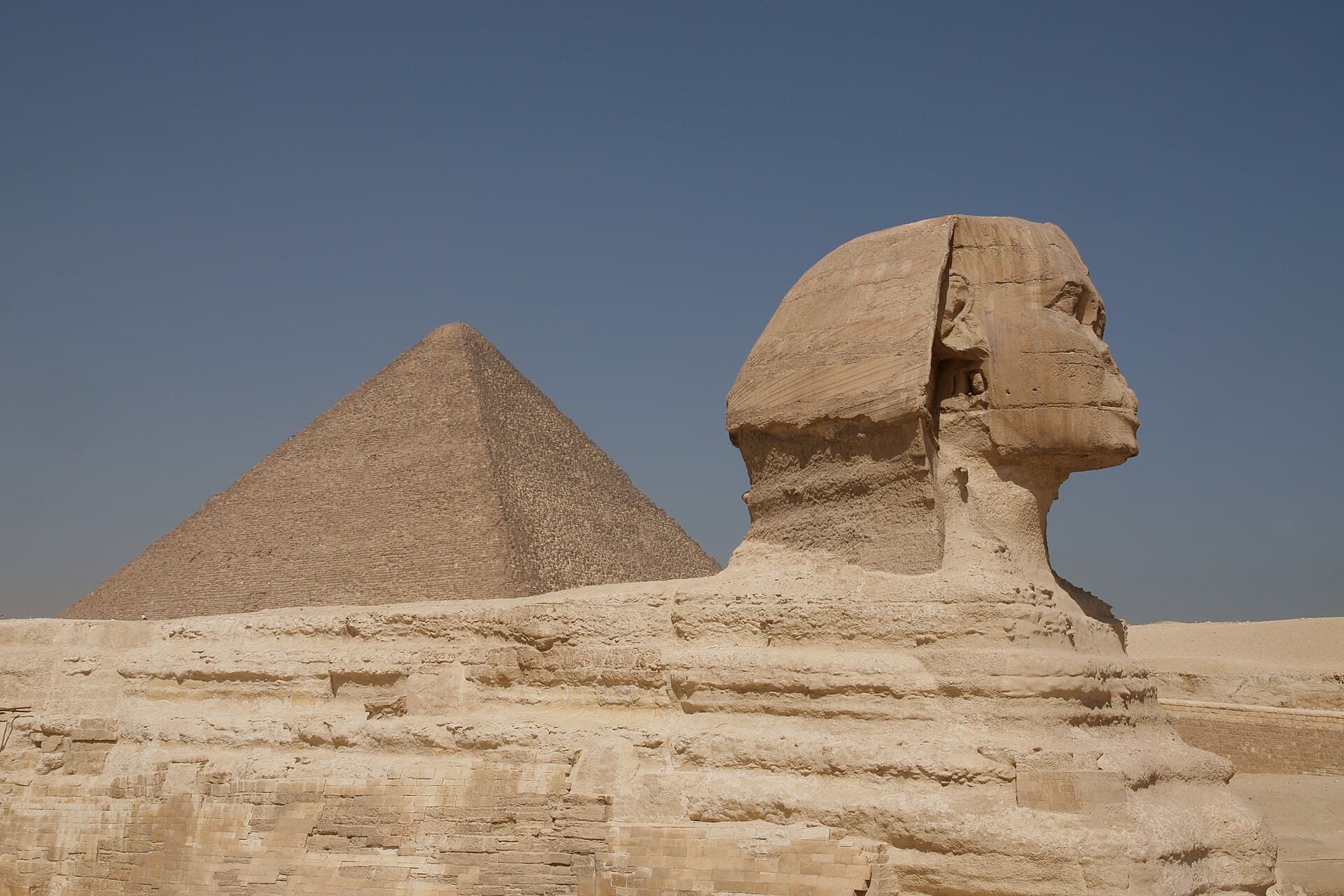
Go at opening. The plateau gets hot, and the coach groups arrive mid-morning. The three main pyramids belong to Khufu, Khafre and Menkaure, and the Sphinx sits below them beside Khafre's valley temple. Khafre's pyramid looks taller because it stands on higher ground and still keeps its cap of casing stone. Half a day covers the site properly, including the viewpoint on the southern rim where all three line up.
Going inside the Great Pyramid costs an extra ticket and divides people: a long stooped climb into the Grand Gallery, then a bare granite chamber with an empty sarcophagus, no decoration and no airflow. Skip it if you are claustrophobic. The camel and horse touts are relentless, the animals are often in poor condition, and an agreed price does not reliably prevent a second demand at the end. The evening sound and light show is dated and easy to drop.
The Grand Egyptian Museum, and how long it needs
The Grand Egyptian Museum sits a couple of kilometres from the plateau and needs three hours as a floor, a full day if you read the labels. The grand staircase is lined with royal statuary and climbs towards a window onto the pyramids. The Tutankhamun galleries hold the whole burial together for the first time. Do not pair it with Giza in the same afternoon. The old museum on Tahrir Square is still open, still cramped, and still worth two hours.
Saqqara and Dahshur, the half most people miss
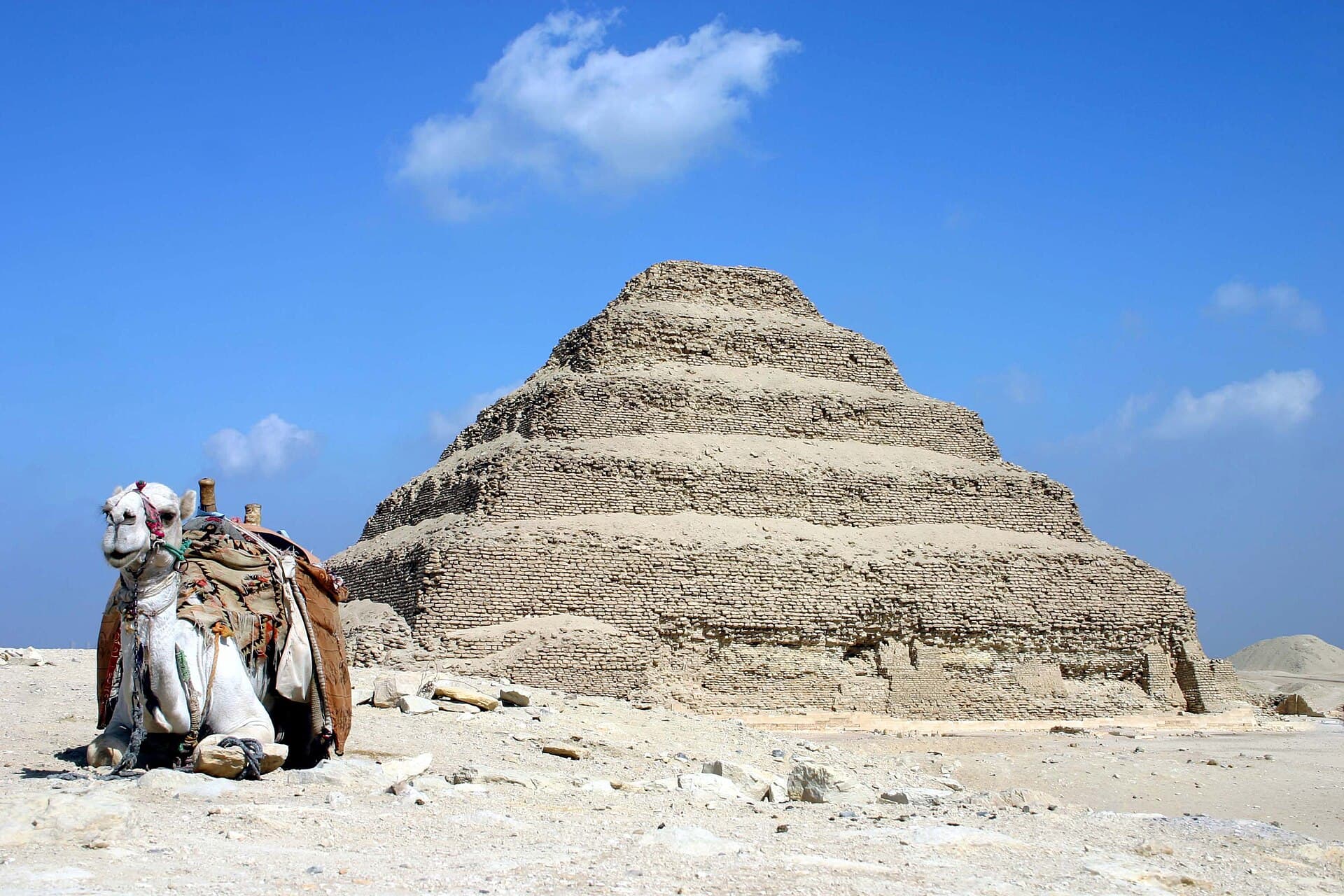
Saqqara is about 40 minutes south of Giza and is the better part of most pyramid days. The Step Pyramid of Djoser is the oldest large stone building anywhere and predates Giza by roughly a century. What makes the site worth the drive is the tombs around it: nobles' mastabas cut with painted reliefs of hunting, farming, butchery and boat-building, close enough to touch and far better preserved than anything on the Giza plateau.
Dahshur is another 20 minutes on and usually near-empty. Sneferu built both pyramids here: the Bent Pyramid, where the angle changes halfway up because the design was failing, and the Red Pyramid, the first successful smooth-sided one. You can go inside the Red Pyramid, down a steep passage into corbelled chambers that smell of ammonia. Memphis, on the same road, takes half an hour and rarely repays more.
Islamic Cairo on foot
The medieval city is the part most itineraries skip and the part that rewards walking. Its spine is al-Muizz street, running between two of the old gates past Fatimid and Mamluk mosques, madrasas and merchants' houses, several with minarets you can climb. South of the main strip, Ibn Tulun is a ninth-century courtyard mosque, almost unchanged and almost empty, and Sultan Hassan below the Citadel is a fourteenth-century hall that muffles the traffic outside. Walk it late afternoon, when the heat has gone and the street is busiest.
Coptic Cairo
Coptic Cairo takes about two hours and is the easiest quarter to reach without a car, because the metro stops at the gate. It sits inside a Roman fortress, and the round towers beside the station are the original walls. The Hanging Church is built over a gatehouse, which is where the name comes from. Around it are the Ben Ezra synagogue, the church of St Sergius, and a Coptic museum that is good and quiet. Go in the morning; these are working churches, and services fill them.
Khan el-Khalili, and how to handle it
The bazaar has traded on the same ground since the fourteenth century. The lanes nearest Al-Azhar are aimed at visitors, selling alabaster, papyrus, brass and cartouches, and prices open at several times what a thing is worth, with bargaining expected. If you dislike haggling, buy nothing there and accept the tea, which is offered without obligation. Walk further in and it turns into a working market: fabric and hardware along the Muski, gold sold by weight in its own alley, and hand-stitched appliqué on the tentmakers' street south of Bab Zuweila. Evenings are best.
Getting around: traffic, not distance
Judge Cairo trips by the hour of departure, not the kilometres. Giza to downtown is roughly 20 km: half an hour early in the morning, most of two hours if you leave at the wrong time. Traffic builds late morning and again from mid-afternoon into the evening, and Friday morning is the one reliably quiet window. Plan two stops a day in the same part of the city rather than four spread across it, and put the long transfers first.
The metro is the exception: cheap, unaffected by the roads, with carriages reserved for women, and stops at downtown, Coptic Cairo and Giza, though not the plateau itself. Above ground, ride-hailing apps work well and remove the fare argument; street taxis will negotiate, usually badly. Walking is fine inside a quarter and grim between them, where the pavements give out and crossing is a matter of nerve.
How many days, and where to base yourself
Two full days is the honest minimum: one for Giza and the Grand Egyptian Museum, one for Islamic and Coptic Cairo. Three lets you add Saqqara and Dahshur without cutting anything, and that is the version most people should take. Four buys the Tahrir museum, a slow afternoon in Zamalek, or a day trip to Alexandria on the fast train. One day means Giza and nothing else.
Where you stay changes the trip more than the hotel standard does. Giza puts you beside the plateau and the museum, with a pyramid view from some rooftops, and leaves a long drive to everything else along a strip that is mostly hotels. Zamalek is quieter, greener and central for the museums and restaurants. Downtown is cheaper, louder and closest to the medieval city. Heliopolis only makes sense for an early flight.
Common questions
How many days do you need in Cairo?+
Two full days is the honest minimum: one for Giza and the Grand Egyptian Museum, one for Islamic Cairo and Saqqara. Three lets you add Dahshur and see the museum without rushing.
Is Cairo safe for tourists?+
The tourist areas see very little crime against visitors and there is a visible security presence at sites and hotels. Traffic is the genuine hazard. Check your own government's current advice before booking.
What is the best area to stay in Cairo?+
Giza puts you next to the Pyramids and the Grand Egyptian Museum but far from the old city. Downtown and Zamalek are better placed for Islamic and Coptic Cairo and for restaurants. Choose by which half of the city you will spend most time in.
How do you get around Cairo?+
Traffic, not distance, is the constraint — Giza to downtown can take 45 minutes or twice that. The metro is clean, cheap and much faster where the lines go your way. Ride-hailing apps work well and remove the fare argument.
Best time to visit Cairo
October to April. July and August regularly pass 38°C with heavy smog.
Getting to Cairo
Cairo International is the main gateway, about 45 minutes from the centre and an hour from Giza in normal traffic.
Written and checked by the Nile Trip Guide editorial team · Last reviewed . Entry rules, prices and opening hours change — check anything critical against the official sources linked on this page.
Five days in Cairo and nowhere else: Giza, the Grand Egyptian Museum, the Egyptian Museum, the Citadel, Coptic Cairo and Khan el-Khalili. Four nights in one hotel, and every sightseeing day run privately.
Giza and the Grand Egyptian Museum, then a flight south for one night in Luxor covering both banks, and a flight back. Five days, two cities, both domestic flights in the price and every day guided privately.
A 7 day Egypt itinerary that takes the river the other way round: Giza and the Grand Egyptian Museum first, then a flight south to Aswan and three nights sailing down to Luxor.
The route most people take first, at the length it was built for: Giza and the Grand Egyptian Museum, then a flight to Luxor and four nights sailing down to Aswan.