The best time to visit Egypt is October to April. Daytime temperatures in Luxor and Aswan then run from the mid-20s Celsius in midwinter to the low 30s at either end of the season, rather than the 40s of high summer, so walking around Karnak at midday is pleasant instead of punishing. The rest covers what each season feels like, and who should ignore this advice.
Why is October to April the best time to visit Egypt?
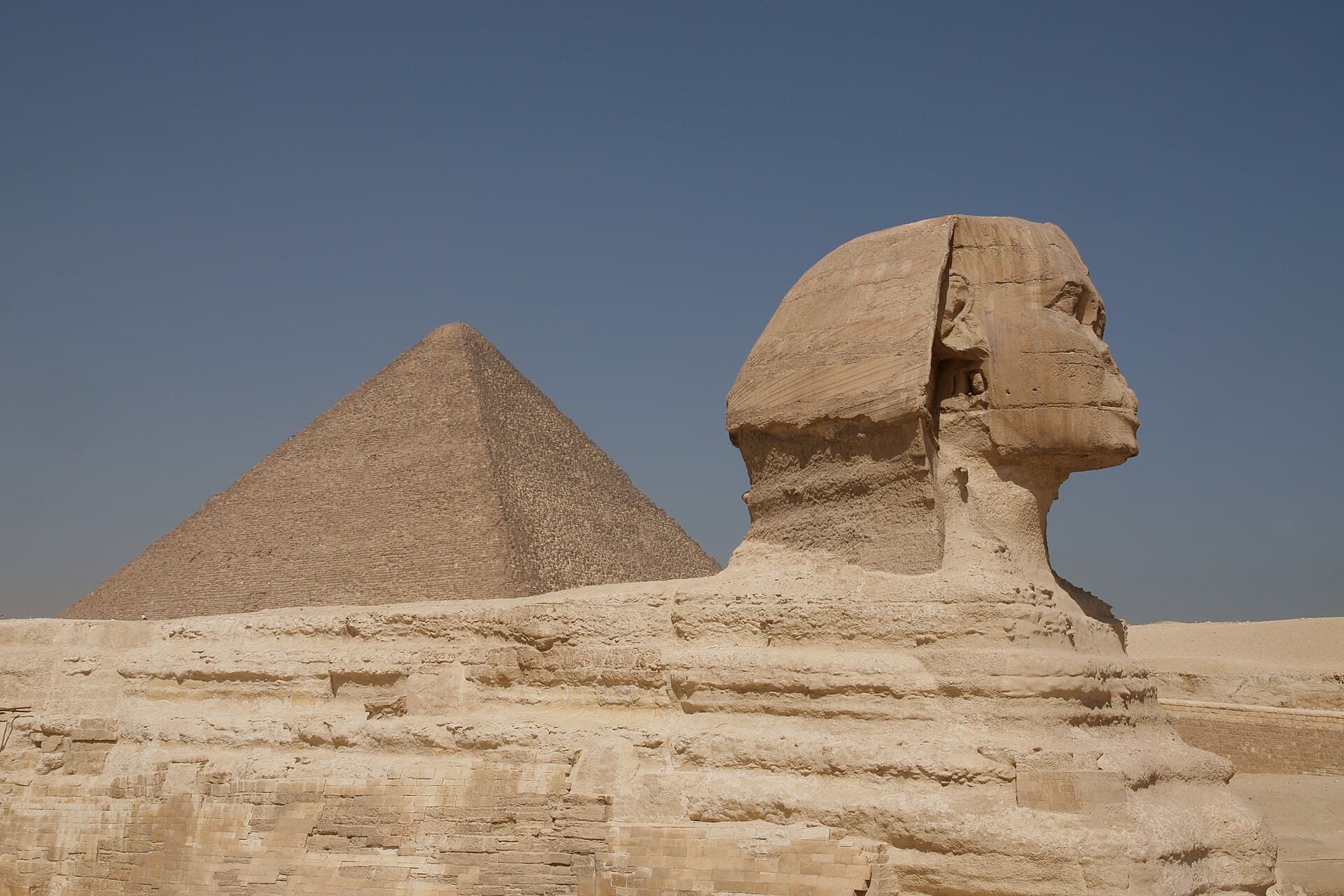
Egypt's main sites are open-air and unshaded. Karnak, the Valley of the Kings, Abu Simbel, the Giza plateau — you are on your feet in direct sun for hours at a time. Temperature is the single biggest factor in whether you enjoy them, and it swamps almost everything else on the calendar.
Between October and April, Upper Egypt sits in the low-to-mid 30s at either end of that window and around 22-25C at midwinter, cooling off properly at night. Cairo is a few degrees cooler throughout. Nile water levels are steady year-round because of the High Dam, so cruising works in any month. Rain is negligible everywhere except the north coast, and even there it is a handful of wet days in winter.
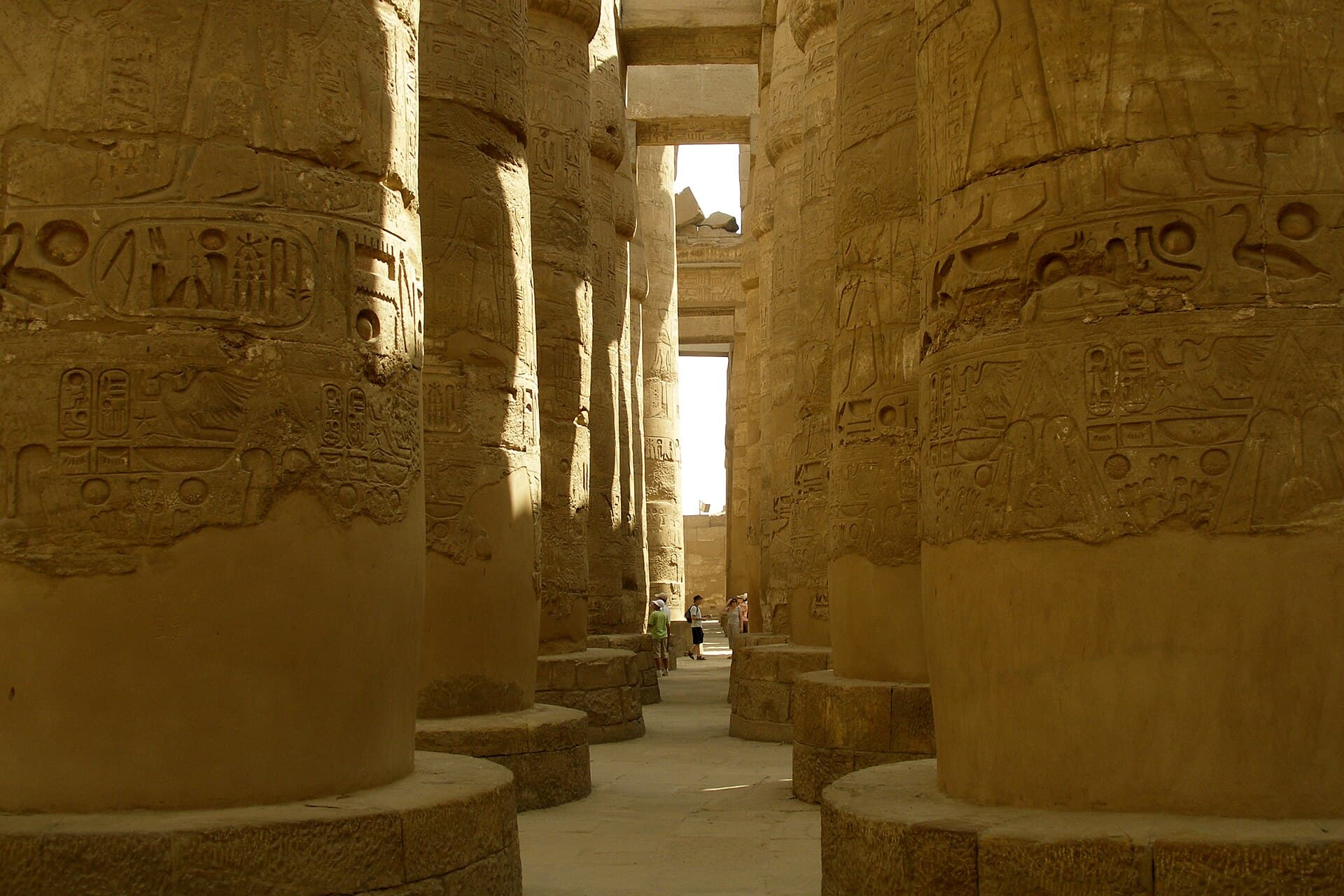
It helps to understand why the heat matters so much more here than the number suggests. The air is dry, which people assume will save them, and it does not save them as much as they hope. What actually decides your day is shade, and there is almost none: no shade worth the name at Giza, very little at Karnak beyond the Hypostyle Hall, and none at all at Abu Simbel. Tomb interiors are worse rather than better, because they have no airflow and hold the day's heat rather than escaping it. The one honourable exception is the Grand Egyptian Museum, which is air-conditioned and therefore indifferent to the month you visit.
Latitude is the other half of it. Egypt is a long country — Cairo to Abu Simbel is roughly the distance from London to Madrid — and the far south is meaningfully hotter than the capital in every month of the year. A trip weighted towards Aswan and Abu Simbel needs a colder date than a trip that stops at Cairo. That is why a single national answer is only ever a starting point, and why the rest of this page splits it apart.
What do the numbers actually look like, month by month?
Typical daytime highs for Luxor run roughly like this: 23C in January, 25C in February, 29C in March, 35C in April, 39C in May, then 41C through June, July and August, easing to 38C in September, 34C in October, 28C in November and 24C in December. Cairo sits several degrees below that all year — around 19C in January and 35C at the height of summer. These are approximations rather than promises, and Aswan generally runs a little warmer than Luxor.
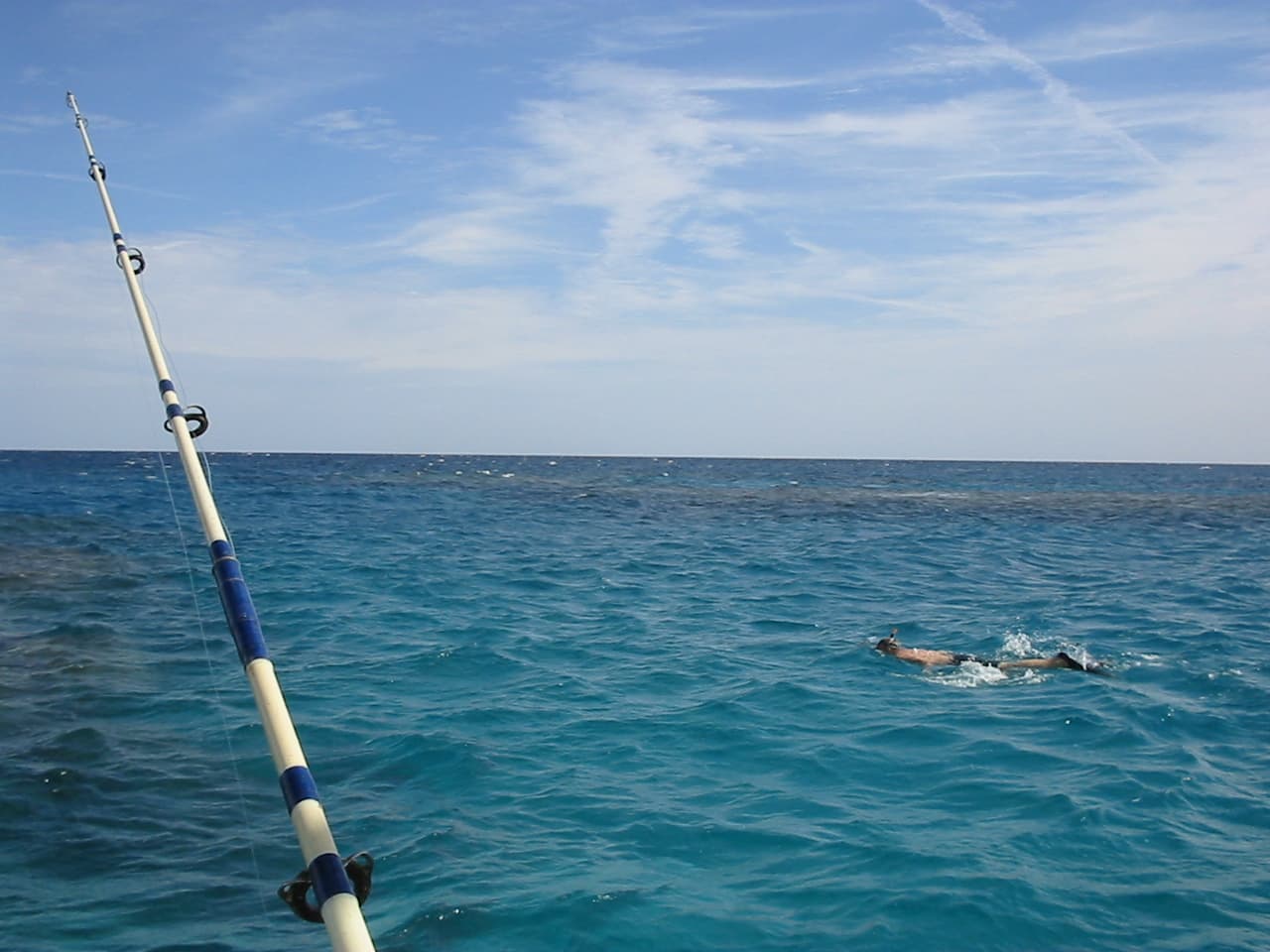
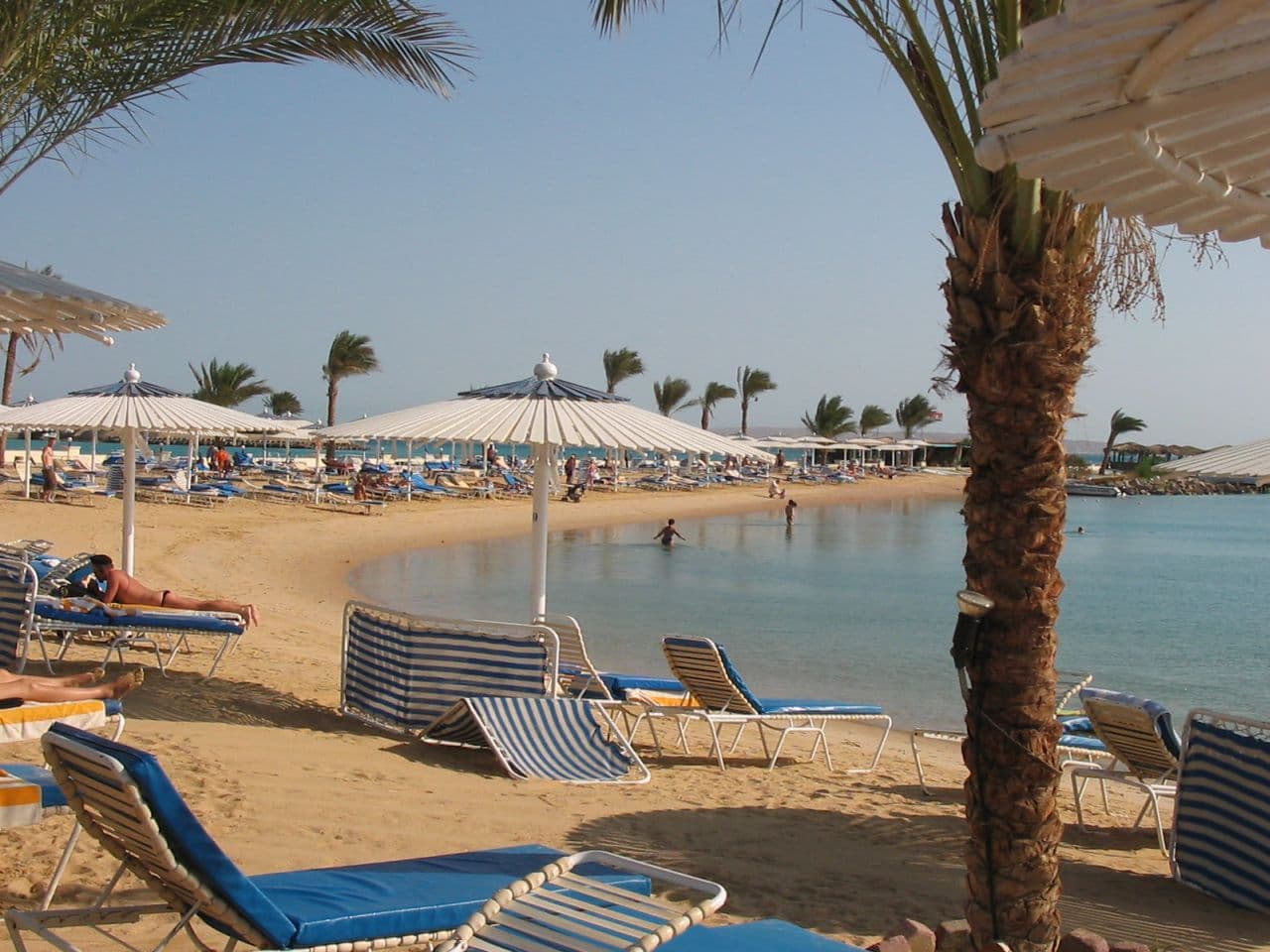
The Red Sea follows a different curve, and it is the curve most people forget. Sea temperatures at Hurghada are around 22C in January and February, 25C by April, 29C in June, and a peak of about 31C in August, falling back through 28C in October and 26C in November. That means the water is at its coldest precisely when the temples are at their best, and at its warmest when Upper Egypt is unusable in the afternoon. Any trip that wants both halves has to pick a compromise month rather than a perfect one.
Read those two lists together and the shape of the year is obvious. November and March are the months where the two curves cross in your favour: Luxor at 28C and 29C, the sea still at 26C and 23C. April and October are the other crossing point, warmer inland but with the sea at 25C and 28C. Everything else is a trade rather than a win.
One caution about published averages, including ours. A daytime high tells you nothing about the spread. Luxor can be over 30C at two in the afternoon and jumper weather by nine in the evening, and Aswan can drop to around 8C after dark in midwinter. The gap between the afternoon and the small hours is the number that changes what you pack, and it is the one nobody quotes.
What is winter like, from December to February?
This is peak season, and the weather earns it. Luxor and Aswan hover around 22-25C in the day, dry and clear, with Cairo a few degrees cooler. You can spend six hours on the west bank and finish the day still wanting more, which is not true in May, let alone July.
The costs are crowds and price. Christmas and New Year are the busiest and most expensive fortnight of the year across Egypt — flights, hotels and Nile boats all climb, and the queues at the popular tombs are real. February is the quiet, sensible version of the same weather, and the better choice if your dates are flexible.
Nights get genuinely cold, and this catches people out. Aswan can drop to around 8C after dark, Cairo lower, and desert nights in the Western Desert or Sinai colder still. Bring a proper jacket rather than the light layer you packed for a country you think of as hot.
Daylight is the underrated constraint in midwinter. These are the shortest days of the year, sites close in the late afternoon rather than at dusk, and the light on the West Bank goes earlier than visitors expect. An itinerary written around a long afternoon at the Valley of the Kings will run out of daylight before it runs out of temples. The answer is to front-load the day: be at the gate when a site opens, take the second site straight afterwards, and treat the late afternoon as museum, market or boat-deck time. It also means the balloon flight, the West Bank and a long lunch do not all fit into one morning, whatever the programme says.
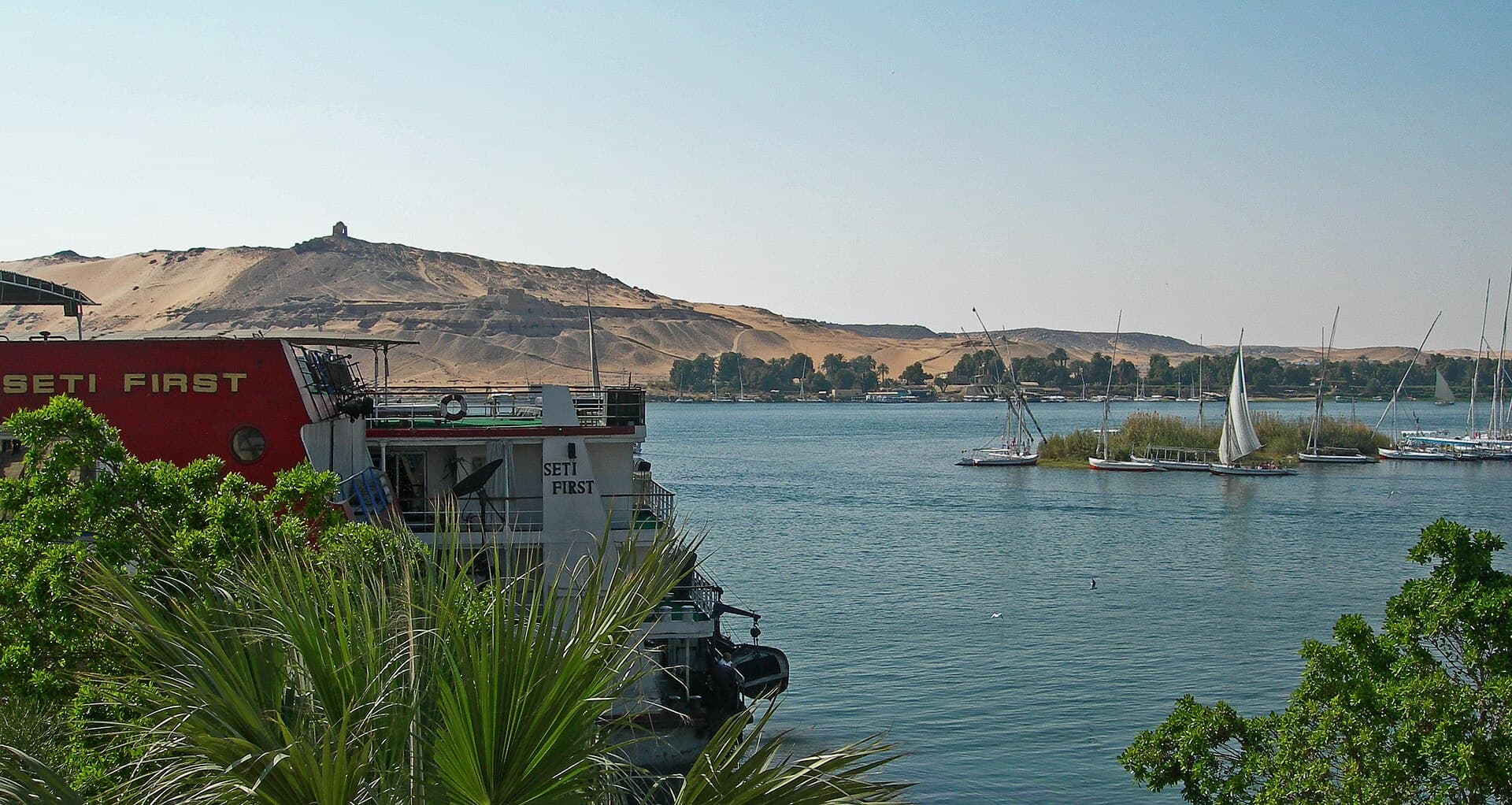
Congestion in winter is as much about boats as about tombs. At the smaller Nile moorings, vessels tie up two, three or four abreast in high season, so a river view can become a view into another boat's lounge, and queues at the Esna lock are at their most tiresome. February has one further wrinkle: European half-term traffic lifts prices for a week or two in the middle of the month, so booking either side of it saves noticeably for identical weather.
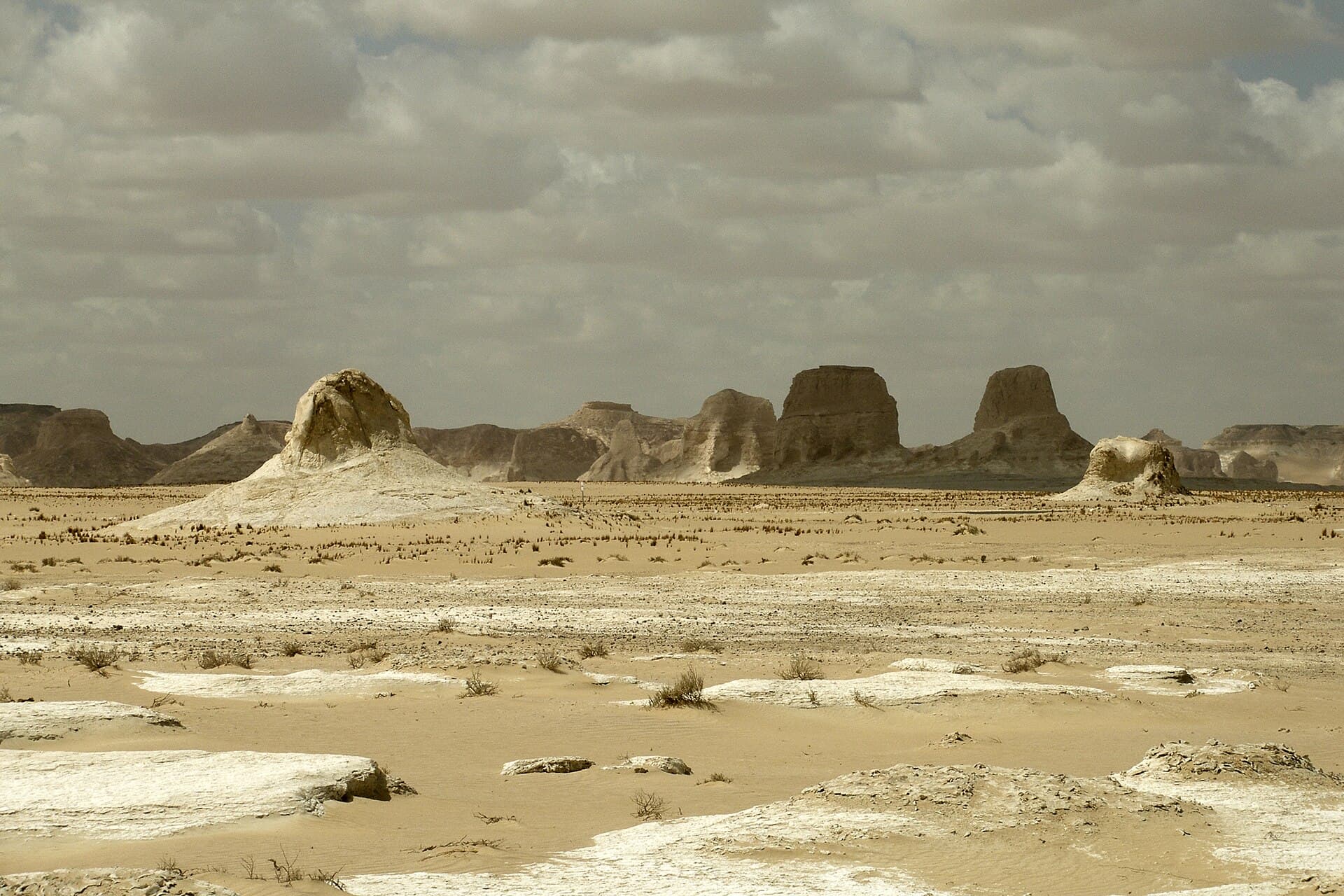
If cold nights are the price, they are also occasionally the point. January in the Western Desert is at its best precisely because the nights are cold and the skies are clear and free of haze, which is what a trip to the White Desert is for. Just take a proper sleeping bag rather than a blanket.
Are the shoulder months better value?
Usually, yes. October, November, March and April are the best trade-off on this calendar. October and April still reach the low-to-mid 30s in Luxor, while November and March sit closer to 30C. The sites are busier than in summer but nowhere near December levels, and prices sit below the winter peak. November is the strongest single month if you want one recommendation, with March its equal.
One risk from March onwards is the khamsin, a hot dusty wind that blows in off the desert for a day or two at a time in spring. It is not frequent enough to plan around, but it can turn a clear day grey and gritty and cut visibility to very little. If it happens, that is the day for the Egyptian Museum rather than the pyramids.
March has a second, quieter argument in its favour. It is the month where nothing has to be worked around: felucca sailing at Aswan is at its best, with warm afternoons, cool evenings and reliable wind, and balloon flights over the Luxor west bank get the calm mornings they need more often than at other times of year. The khamsin is the one thing that can take a day off you, and it usually arrives late in the month rather than early.
October has a pricing quirk rather than a weather one. Rates climb steadily through the month as the season starts, so the first half is usually better value than the second for weather that is essentially identical. The same logic runs in reverse in April: crowds thin noticeably after Easter and prices follow, but Easter moves year to year, so check where it falls before assuming April is quiet. April is also the crossover month for a combined trip, because the sea reaches about 25C while Luxor at 35C is still workable if you start early and stop at midday.
November deserves its reputation but comes with a caveat that follows from the calendar rather than the thermometer. It is comfortable everywhere and the sea is still warm enough to swim at around 26C, but the days are already getting short. On the West Bank that matters more than people expect. Plan to be at the Valley of the Kings early rather than assuming a long afternoon.
What about September and May, the months nobody prices correctly?
September is the most underrated month in the Egyptian calendar, and the reason is a lag rather than a secret. Temperatures start to ease from mid-month while rates are still largely at summer levels, so the market has not repriced the improving weather. Luxor at around 38C is demanding in the first half of the month and noticeably better in the last ten days. Travel late in September and you get close to October conditions at August prices. Crowds build slowly through the month rather than arriving all at once.
May is September's mirror image and the worse of the two, because the trend runs against you rather than with you. Luxor at around 39C means the middle of the day is not usable for sightseeing, the Valley of the Kings becomes a dawn job with a five o'clock alarm, and by mid-month the pattern is fixed rather than occasional. What May does have is the sea. At around 27C the Red Sea is excellent, visibility is reliable, and resorts are at low-season prices, which makes May one of the best value months of the year for a coast-weighted trip and one of the worst for a temple-weighted one.
The practical rule that comes out of this is simple. If your trip is mostly Nile valley, treat the shoulder as October, November, March and April, and treat late September as a bonus if your dates are flexible. If your trip is mostly Red Sea, the shoulder runs the other way, from April through to early June and again in September, when the water is warm and the resorts are not full.
Should you ever go to Egypt in summer?
Some people should. Summer means roughly 40C and above in Luxor and Aswan, sometimes higher, and the middle of the day is not usable for sightseeing. It is dry heat rather than humid, which helps, but not as much as people hope. It works only if you accept the shape of the day: out at sunrise, finished by eleven, resting through the afternoon, out again in the evening.
Do that and there are real advantages. Sites are close to empty at opening time, which is the only point in the year you can stand in a tomb alone. Prices for hotels and Nile boats are at their lowest, and availability is wide open. Summer also suits a Red Sea trip: Hurghada and Marsa Alam are hot, but you are in the water, and the diving is good all year.
It does not work for young children, for anyone who struggles in heat, or for a first trip where you want to see everything. If that is you, move the dates rather than tough it out. Ramadan is worth checking separately: it shifts about eleven days earlier each year, sites stay open but on shorter hours, and some restaurants close during daylight.
August contains the oddest feature of the Egyptian year. European school holidays fill the Red Sea resorts while Luxor and Aswan are as empty as they ever get, so prices on the two halves of the country move in opposite directions at the same time. If you tolerate real heat and are not tied to school terms, that is a serious trade: the Valley of the Kings largely to yourself, at the lowest rates of the year, while the coast is at its busiest.
Treat the heat as a risk rather than a caveat. Heat exhaustion in Upper Egypt in July and August is a practical hazard, not small print. Carry far more water than feels sensible, treat shade as compulsory, and insist on a five o'clock start for the West Bank. A guide who proposes a nine o'clock departure for the Valley of the Kings in June is not doing you a favour.
There is one date coming that overrides all of this. On Monday 2 August 2027 a total solar eclipse crosses Upper Egypt, with totality reaching 6 minutes 23 seconds at maximum and Luxor sitting very close to the centreline. Historical cloud records point to roughly an 80 percent chance of clear skies in early August. That is the one reason we would send someone to the Nile valley in the worst month of the year, and even then the advice is to plan the surrounding days around dawn starts and air conditioning.
Does the month change if you are taking a Nile cruise?
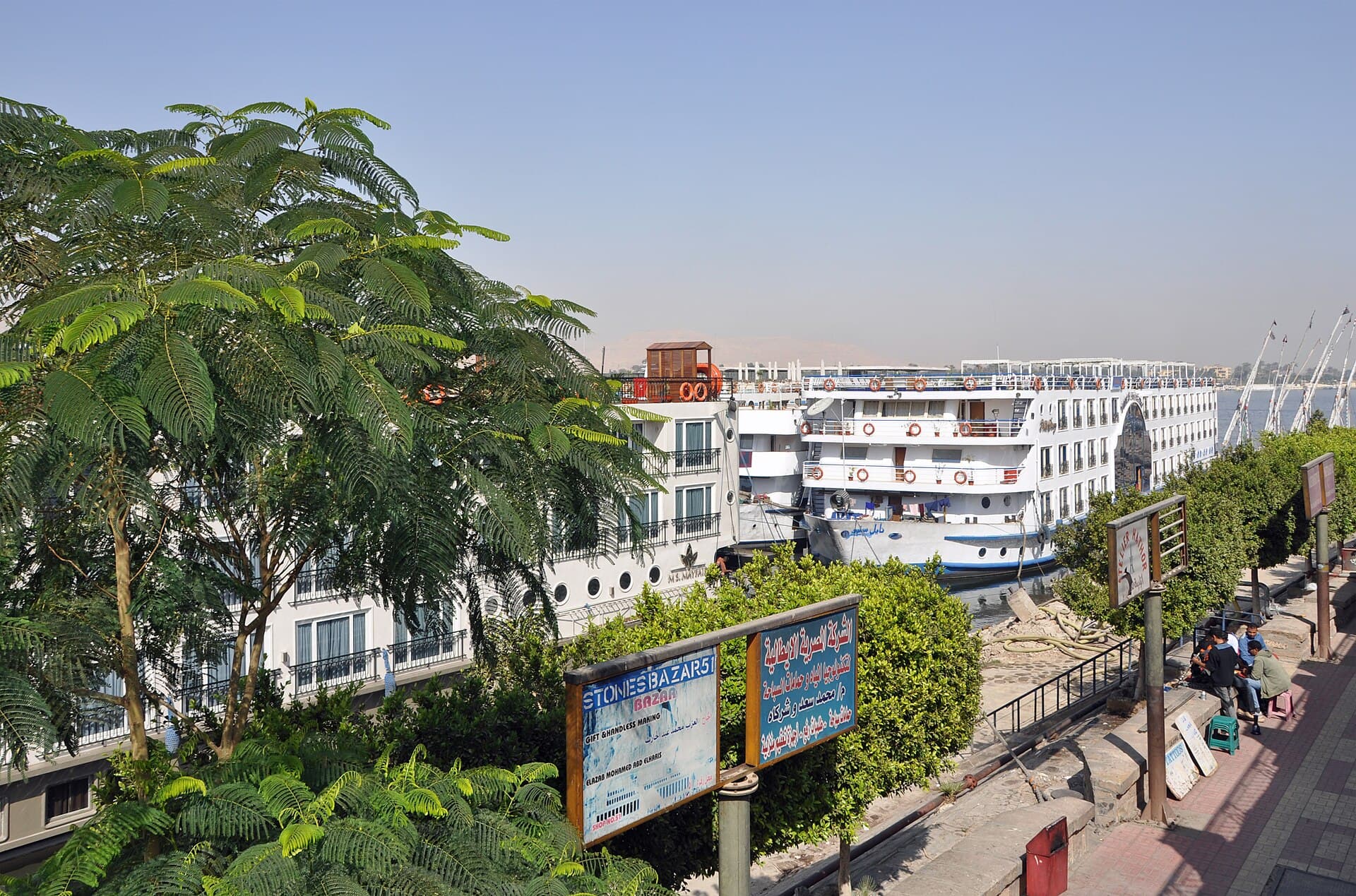
It shifts the balance, though not the answer. Most timing advice describes standing outside in Upper Egypt, and on a boat the hard part of the day is bounded. You are out early at a temple in full sun, then back aboard under an awning or in an air-conditioned cabin. That makes a hot month survivable afloat in a way it is not on a land tour, where the afternoon is a coach and a hotel lobby.
The reverse holds in midwinter. Evenings on deck are the thing people picture when they book, and in December and January they are cool enough for a jacket. It is the most common packing mistake on the river: people pack for a hot country and then spend the best hour of the day indoors because they brought nothing warm.
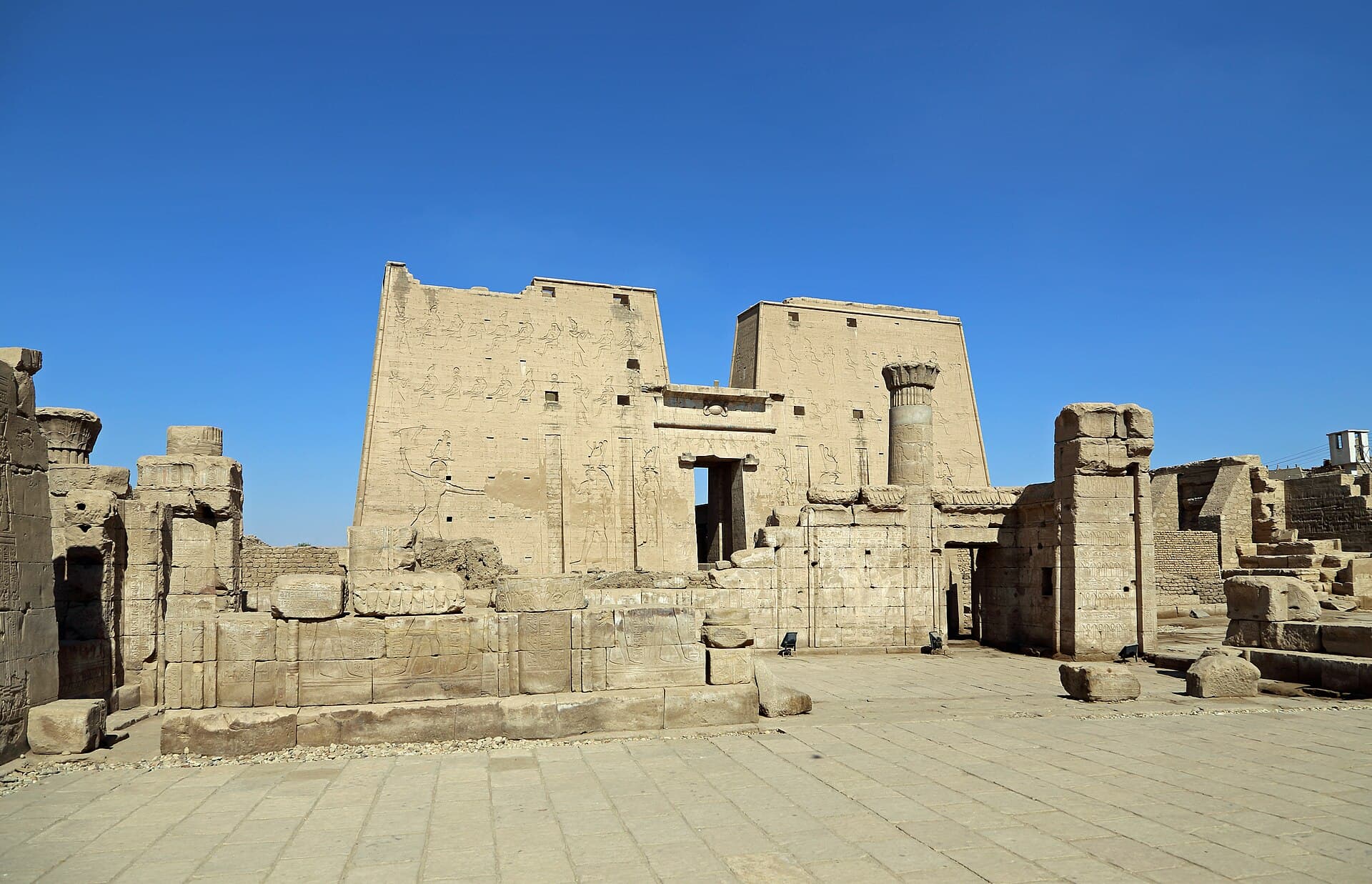
So the cruise answer is October to April, and March or October if you can choose freely, which is close to the country-wide verdict but reached differently. The route itself does not change with the month. Esna, Edfu and Kom Ombo sit where they sit, with the Luxor and Aswan sites at either end, all year. What changes is the time of day you see them, how many other boats are moored alongside, and whether the middle of the day is usable.
Supply is the part of the cruise decision that behaves differently from price. January cabins are usually gone by autumn, and what remains late in the season tends to be worse rather than cheaper. In summer the opposite is true and booking closer in costs you very little choice.
Does the right month change by region?
Yes, though less than you would expect. Upper Egypt — Luxor, Aswan, Abu Simbel — is the hottest part of the country and the part that most needs a winter or shoulder date. Cairo and Alexandria are milder year-round, and Alexandria is the one place that gets meaningfully wet in winter. Cairo's summer problem is as much air quality and traffic as heat.
The Red Sea coast is comfortable from October to May and swimmable in every month, which makes it the one part of Egypt with no real closed season. Sinai and the Western Desert are best from October to April. Desert camping in summer is not sensible at any price, and desert nights in January are cold enough to need a proper sleeping bag rather than a blanket.
Alexandria and the delta behave like the Mediterranean rather than like the rest of Egypt. The coast is humid, gets real winter rain, and can be grey and windy from December to February, which surprises people expecting uniform desert weather. That is one reason a December trip built around Upper Egypt rarely regrets skipping the north coast, and why Alexandria is at its best in the months when Cairo is becoming uncomfortable. In August it is several degrees cooler than Cairo and has a sea breeze.
If diving is the reason for the trip, the seasonal calculation inverts. The Red Sea is at its coldest in February and March, dropping to the low twenties in the north, and a thicker wetsuit with a hood stops being optional. By late summer it is in the high twenties and plenty of people dive in a shorty, and the far south runs slightly warmer throughout. Wind is the variable divers forget: windy spells happen year-round in the north and can cancel boat days at short notice around Sharm and Hurghada, so build a spare day into any trip where the diving is the point.
How does the month change the shape of your day?
This is the practical consequence that most timing pages leave out. In December and January you can reasonably plan a full day of sightseeing, but you are fighting daylight rather than heat, so the constraint is the closing time rather than the thermometer. In June and July you can plan roughly four usable hours, all of them before eleven in the morning, and the afternoon is not negotiable. In March, October and November the day belongs to you, which is the real argument for those months.
Some activities are fixed to dawn regardless of the season. Balloon flights over Luxor go at first light because that is the only part of the day the air behaves: overnight the ground cools, winds are light, and once the sun warms the desert the thermals build. That means an alarm in the small hours in every month. From late autumn to early spring you will be standing in a dark field in genuine cold before the flight, so take a fleece you can shed later; in summer the pre-dawn air is mild and a shirt is enough.
Cancellations follow the same logic. Balloon flights are called off for wind often enough that the single most useful piece of planning advice is to book the flight for your first morning in Luxor rather than your last. In spring the khamsin adds to that risk. Book it late in your stay and a cancellation is the end of it, usually with a refund but no flight.
Opening hours are the other moving part. They shift with the season, they shift again during Ramadan, and they are not reliably published in English. Confirm the day's hours locally rather than trusting a schedule found online, particularly at Karnak, where the evening sound and light show affects how late ordinary ticket holders can stay.
Which dates move, and which ones are fixed?
Egypt runs three calendars at once, and only one of them stays still. The Islamic year moves about eleven days earlier each time, so Ramadan and the two Eid festivals land in a different season every few years. The Coptic Easter cycle moves as well. Only the Western 25 December stays put, and in Egypt it is the date that carries the least weight — an ordinary working day for most of the country, observed mainly in hotels and tourist areas.
Ramadan is the one to check against your own dates. Sites stay open, often on shorter hours, some restaurants close during daylight, alcohol becomes harder to find, and traffic before sunset is bad everywhere. The evenings are genuinely good, and the pastry shops after dark are one of the real pleasures of the season. If you want a frictionless sightseeing trip with no adjustments, pick dates either side of it. The Eid holiday at the end is a peak for domestic travel, so transport and hotels tighten.
Coptic Christmas falls on 7 January and is the public holiday that matters. Banks and government offices close; museums and archaeological sites stay open, and Cairo traffic is noticeably lighter that day. Sham el-Nessim, the spring festival, falls on the Monday after Coptic Easter and fills the parks and riverbanks — a good day to be in a city rather than at a site.
The two fixed dates worth building a trip around are the sun alignments at Abu Simbel, around 22 February and 22 October, when the rising sun reaches the inner sanctuary. Both require accommodation in Aswan booked well ahead and a very early start. Beyond those, the working week runs Sunday to Thursday, Fridays bring more domestic visitors to the sites, and Egyptian school holidays fill them in a way that has nothing to do with the European calendar.
What does the season change about what you pack?
More than people expect, and in both directions. From December to February the days are pleasant and the evenings are cold, so the single most useful item is a proper fleece or light down layer rather than the cardigan most people bring. The boat deck after dark, the desert camp at six in the morning and the balloon field before dawn are all genuinely cold, and nearly everyone packs for the afternoon and then spends the evenings indoors.
From June to September the packing decision is dominated by the heat in Upper Egypt. The lightest cover you can find beats less of it: loose long cotton or linen is cooler in direct sun than shorts and a vest, and it stops you burning through the afternoon. Pale colours hide limestone dust better than dark ones. More sun protection than you think you need is the rule, and a brimmed hat with a cord matters because wind on the Nile takes ordinary hats off your head.
Spring and autumn need a bit of each, which is why one warm layer is worth carrying in every month of the year. If the khamsin arrives in March or April, a large scarf that can cover your face is the item you will be glad of, and it doubles for mosques and for a cold deck at night. There is also the air conditioning problem in summer: coaches, restaurants and hotel lobbies run cold, so you swing between 40C outside and something like a fridge indoors all day.
Which month suits which traveller?
First trip, wanting to see everything: November or March. Comfortable everywhere, the sea still swimmable, no part of the day written off, and prices below the winter peak. October and April are the next best, with a little more heat in Upper Egypt at both ends.
Travelling with young children: stay inside October to April and lean towards the cooler end of it. Summer in the Nile valley is a poor idea with small children and we would rather say so than sell it. If school terms force July or August, weight the trip towards the Red Sea, keep Cairo short and indoor, and treat Luxor as a dawn errand rather than a day out.
Budget is the deciding factor: June to August inland, or the last ten days of September if you want the discount without the full punishment. The saving on hotels and Nile boats is substantial rather than token, and it is real money — but you pay for it in heat and in lost daytime hours.
Diving and the Red Sea: April to June and September to November. The water is warm, the resorts are not at their fullest, and you avoid both the February cold snap in the water and the August crowd. Remember that agencies advise a surface interval before flying, commonly at least twelve hours after a single dive and longer after several days, and that an internal hop to Cairo counts as flying.
Photographers and desert travellers: December to February for clear, haze-free skies and low winter light, accepting the cold nights and the short days. Avoid late March and April if the photographs matter, because the khamsin can flatten visibility for a day or two with no warning.
How far ahead should you book?
For December and January, four to six months ahead is not excessive, particularly for the smaller Nile boats and for the Christmas fortnight. The good boats sell out early and the alternatives are noticeably worse. That is the one part of an Egypt trip where booking late costs you quality, not just money.
For November, March and April, two to three months is usually enough. For summer, a few weeks will do and you will still have a choice. Flights follow European school holidays rather than Egyptian weather, so half-term and Easter dates cost more regardless of what the thermometer in Luxor says.
Trips here are arranged by enquiry rather than bought online, which has one practical benefit for timing. Dates get checked against what is actually available on the ground before anything is committed, and a bad month gets flagged. Name a week in July for a first trip with young children and you will be told so.
Fixed dates are the exception to all of the above. The Abu Simbel alignments around 22 February and 22 October need Aswan accommodation booked well ahead, and the 2 August 2027 eclipse is in a category of its own — rooms in Luxor for that night have been going for years, and anyone starting now is late rather than early. For a date that cannot move, secure the bed first, then the flights, then everything else, and read the cancellation terms before paying anything.
So which month should you actually pick?
March or October if the dates are yours to choose, because nothing in either month has to be worked around. November if you want the safest single answer, comfortable everywhere with the sea still warm enough to swim. February if you want winter conditions without the December bill, avoiding the half-term fortnight in the middle of the month.
The last ten days of September if value matters more than certainty. December and January if the temples are the whole point and you will pay for the best walking weather in the country — book those months early enough to pick the boat, because by autumn the choice has usually gone. June to August only if price is the deciding factor, or if there is a specific reason to be there, and you know what 41C asks of you.
The one thing not worth doing is treating this page as a rule. Egypt has no closed season, only trades, and the right month depends on what you came for. A diver, a photographer, a family tied to school terms and someone chasing an eclipse will all reach different answers from the same table of numbers, and all four can be right.
Common questions
What is the hottest month in Egypt?+
July and August are the hottest, with Luxor and Aswan regularly around 40C and often above. Cairo is a few degrees cooler but feels worse because of the traffic and air quality. If you go then, plan sightseeing for sunrise to late morning and treat the afternoon as rest time.
Does it rain in Egypt?+
Barely, outside Alexandria and the north coast, which get a scattering of wet days between November and February. Cairo averages only about 20mm a year. Luxor and Aswan can go years without meaningful rain. The one weather risk worth respecting is flash flooding in desert wadis after a rare heavy storm.
Is Egypt worth visiting during Ramadan?+
It can be, with adjustments. Sites stay open, often on shorter hours, some restaurants close during daylight, and the evenings are genuinely good. Traffic before sunset is bad everywhere. If you want a straightforward sightseeing trip with no friction, pick other dates. Ramadan moves about eleven days earlier each year, so check your year.
When is the sun festival at Abu Simbel?+
22 February and 22 October, when sunlight reaches the inner sanctuary. It is a genuine phenomenon and a fair reason to fix your dates if it appeals. The honest version: the temple is packed, you queue in the dark, and you see it briefly among a crowd. Most people get more from a quiet ordinary morning.
How much cheaper is Egypt in the low season?+
Hotels and Nile boats discount hardest from June to August, and charge most over Christmas and New Year. The same boat in July and in late December is not a close comparison. International flights follow European school holidays rather than Egyptian weather, so they move less. The saving is real, but you pay for it in heat and lost daytime hours.
What is the single best month to visit Egypt?+
March, with October its near-identical counterpart at the other end of the summer. Luxor sits around 29C in March and 34C in October, warm enough to feel like a holiday and cool enough for a full morning at a temple. November is the safest alternative if those two do not suit, because the sea is still swimmable at around 26C.
How cold does Egypt get at night in winter?+
Colder than almost anyone expects. Aswan can drop to around 8C after dark in midwinter, Cairo lower, and the Western Desert and Sinai colder again, occasionally near freezing. The daytime high tells you nothing about this. A proper fleece or light down layer is the single most useful thing to pack between December and February, and the item people most often leave at home.
Is September a good time to visit Egypt?+
The second half of it is, and it is the best value window in the year. Temperatures ease through the month while rates often still lag the improving weather by two or three weeks, so the last ten days give you close to October conditions at August prices. The first half is still demanding, with Luxor around 38C. If your dates are flexible, push them later.
When is the best time for the Red Sea rather than the Nile?+
April to June and September to November. The water at Hurghada runs from about 25C in April to a peak near 31C in August, and it is at its coldest in February and March, when a thicker wetsuit with a hood stops being optional for divers. Wind can cancel boat days year-round in the north, so build a spare day into a trip where the diving is the point.
Should I plan a trip around the 2027 solar eclipse?+
Only if the eclipse is the reason you are going. On 2 August 2027 totality reaches 6 minutes 23 seconds and Luxor sits very close to the centreline, with roughly an 80 percent historical chance of clear skies. August is also the worst month of the year in the Nile valley. Build everything around the date, plan dawn starts and air-conditioned afternoons either side of it, and book the accommodation first.
Does the Nile still flood, and does that affect when I can cruise?+
No. Water levels on the Nile are steady year-round because of the High Dam, so the cruise route between Luxor and Aswan runs in every month. The stops are fixed too: Esna, Edfu and Kom Ombo, with the Luxor and Aswan sites at either end. What the month changes is the temperature, how many boats are moored alongside you, and whether the middle of the day is usable.
Official sources
Entry rules, opening hours, security advice and exchange rates all move. Check them at the source, not here.
Written and checked by the Nile Trip Guide editorial team · Last reviewed . Entry rules, prices and opening hours change — check anything critical against the official sources linked on this page.
The route most people take first, at the length it was built for: Giza and the Grand Egyptian Museum, then a flight to Luxor and four nights sailing down to Aswan.
No boat on this one. Giza and the Grand Egyptian Museum, a night in Luxor for both banks, two nights on the Red Sea, then back to Cairo for the Citadel, Coptic Cairo and the Royal Mummies.
Five nights in Cairo either side of a four-night sail from Luxor to Aswan. The Cairo days are private, just your party and a guide; the sightseeing off the boat is shared with a small group.