Nubia
Abu Simbel: how to get there, and when the sun reaches the sanctuary
Four colossal Ramesses, moved uphill to escape a lake
Three hours south of Aswan, near the Sudanese border, and worth every minute of the drive.
Ramesses II had two temples cut into the cliff at Abu Simbel in the thirteenth century BC. In the 1960s both were sawn into blocks and reassembled sixty metres higher to save them from Lake Nasser.
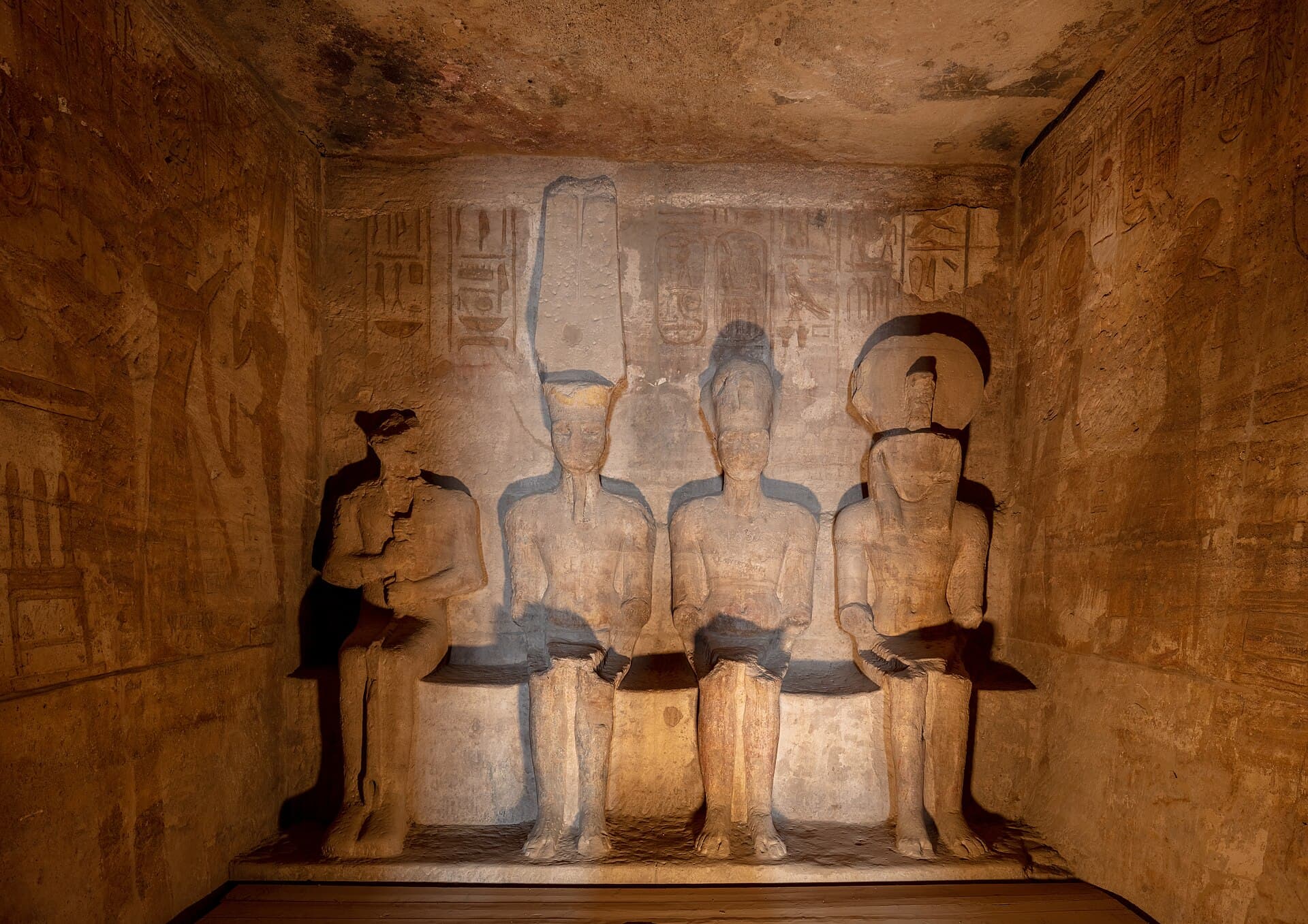
Twice a year, in February and October, the sun reaches the innermost sanctuary and lights three of the four seated statues. It is crowded on those mornings and worth seeing anyway.
Most visitors arrive in a convoy leaving Aswan around 4am, spend two hours, and drive back. Staying overnight is possible and much quieter.
The two temples, and who built them
The larger one is the Great Temple, fronted by four seated statues of Ramesses II, each around twenty metres high. One lost its head and shoulders to an earthquake in antiquity. The pieces still lie at its feet, and nobody put them back during the rescue. Inside, a hall of Osiride pillars leads to reliefs of the Battle of Kadesh, a battle Ramesses fought to a draw and recorded as a victory. The sanctuary at the back holds four seated figures: Amun-Re, Ra-Horakhty, Ptah, and Ramesses himself, promoted into their company.
The second temple, a short walk north, was built for Nefertari and the goddess Hathor. Six standing figures front it, four of the king and two of the queen, all carved to the same height. That equality is the unusual part, since royal wives are normally shown knee-high to their husband. The interior is smaller and quieter, and most visitors give it ten minutes when it deserves more.
Why the temples are not where Ramesses left them
The Aswan High Dam created Lake Nasser and would have drowned Abu Simbel completely. Between 1964 and 1968 a UNESCO-led operation cut both temples into numbered blocks, lifted them roughly sixty metres higher and some two hundred metres back from the water, and reassembled them against an artificial hill. The cliff you look at is concrete and rubble under a skin of sandstone, put back to the original orientation.
Behind the Great Temple there is a door into the dome that supports the hill. Whether it is open varies, but look in if it is: a bare concrete vault, and proof that what you have just walked through is a reconstruction. Some visitors find that deflating. Most find it more impressive rather than less, given what the move took.
The sun alignment in February and October
Twice a year the rising sun runs the full length of the axis and reaches the sanctuary, lighting three of the four seated figures. Ptah, the one of the four tied to darkness and the underworld, stays in shadow. The dates are usually given as around 22 February and 22 October, a day later than before the move, because the rebuilt temple could not be set in exactly its old position. Those mornings bring large crowds and a queue in the dark, and you get a few minutes inside before being moved on. If the alignment is not the reason you came, avoid the dates.
Our Abu Simbel Sun Festival guide, linked at the end of this page, covers the festival mornings in detail.
Driving from Aswan: the convoy and the 4am start
The road runs about 280 kilometres across desert and takes three to three and a half hours each way. Departures are usually around 4am. The police convoy system has been tightened and relaxed repeatedly over the years, so whether you travel in a numbered column depends on the month, though most vehicles still leave at much the same hour. The early start is not only about security. It puts you on site before the heat and while the facade is lit from the front, which is the only time it photographs properly. The drive itself is dull; most people sleep.
Flying in, and arriving by water
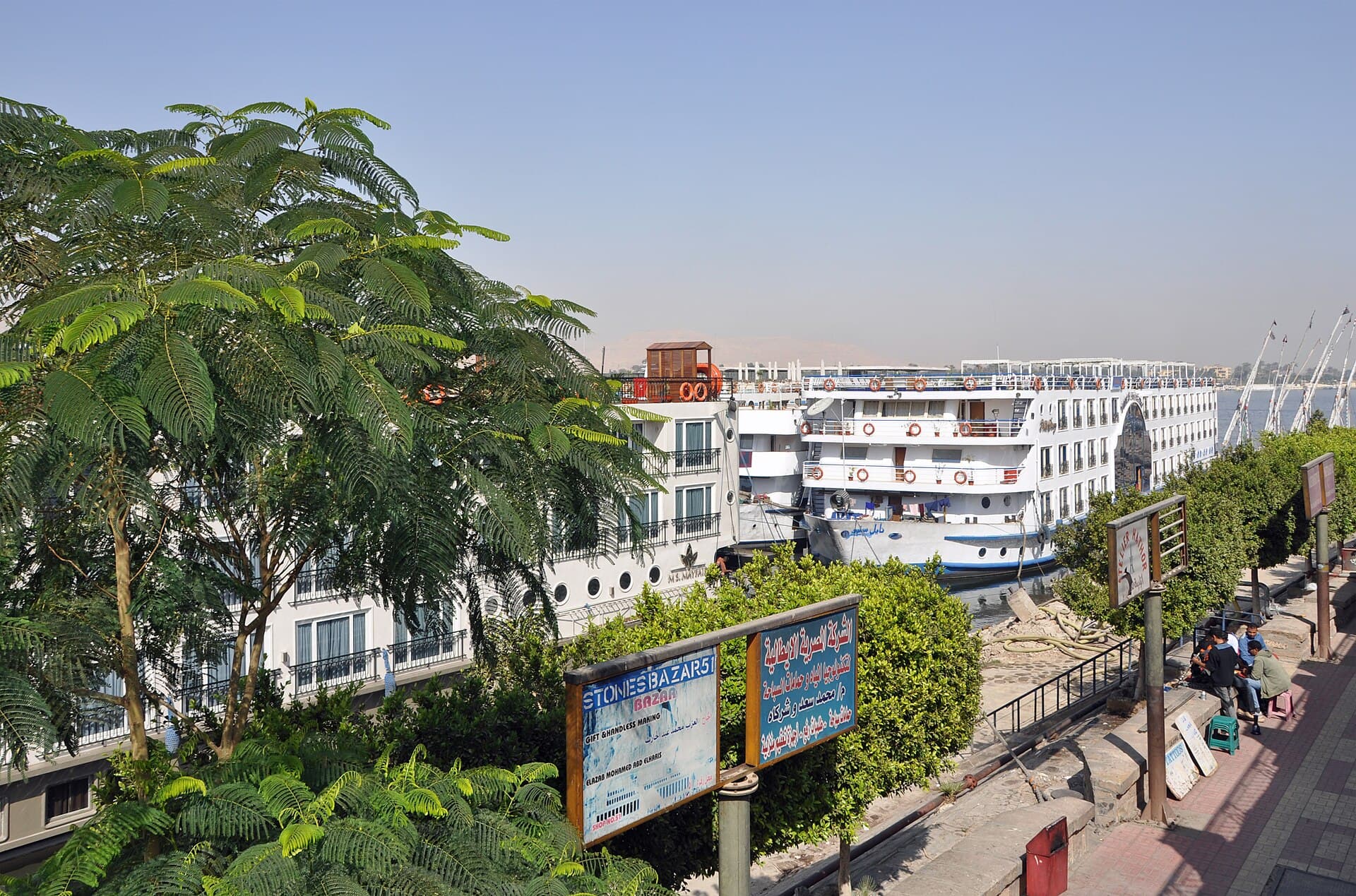
Flights from Aswan take about forty-five minutes, and the airport is minutes from the temples. They are normally sold as a return pair, which leaves roughly two hours on the ground: enough, not generous. Flying costs a good deal more than the road and buys back around five hours of your day, which is the right trade if you are short of time rather than money. Lake Nasser cruises also call here and arrive the way the temples were meant to be approached, from the water. There are few such boats and they run to fixed weekly patterns.
Day trip or overnight
Nearly everyone comes for two hours and leaves. The site takes its entire daily load in one block, from the arrival of the first vehicles from Aswan until they leave again late morning, and is close to empty either side of that. Staying the night is the cheapest way to improve the visit: you get the temples in late afternoon, once the coaches have gone, and again at opening before the first convoy lands.
The honest downside is that the town is small and there is nothing else to do in it. A few hotels, a Nubian settlement resettled when the lake rose, and the water. There is a sound and light show at the temples in the evening, which is a matter of taste. If you need something to fill an afternoon, this is not the place. If you want the temples without a crowd around them, it works.
How long you need on site
Ninety minutes covers it, two hours comfortably. The path from the car park curves round the back of the artificial hill, so the facade arrives all at once. Give the Great Temple forty minutes, including time sitting in front of it to take in the scale, twenty to Nefertari's, and the rest to the lake shore and the dome. The interiors are darker and tighter than photographs suggest, and there is usually a slow shuffle at the sanctuary door. Rules on photography inside have changed more than once, so check on the day.
There is no shade anywhere
Nothing here is covered. The car park, the path, the terrace in front of the colossi and the queue at the entrance are all in full sun, and the stone throws the heat back at you. From June to September the temperature passes forty degrees well before midday and the visit becomes an endurance test. The interiors are the only cool ground, and they are dark and crowded. Take more water than you think you need, a brimmed hat and sunglasses; the glare off pale sandstone is worse than the heat itself.
Is it worth the early start?
Yes, for most people. Abu Simbel is the most impressive thing in Egypt after Giza, and unlike Giza there is no city pressing up against it. Photographs flatten it: the statues were cut out of a cliff rather than assembled, and the whole facade was one piece of rock. It still costs a full day, six or seven hours of it in a vehicle, for two hours on site. With three days in Egypt, small children, or an overnight train behind you, Philae and the Nubian villages will use an Aswan day better.
Common questions
Is Abu Simbel worth the early start?+
Yes. It is the most impressive thing in Egypt after Giza, and the scale does not come across in photographs. The 4am convoy departure is the price of admission.
When does the sun alignment happen?+
Around 22 February and 22 October the rising sun reaches the inner sanctuary and lights three of the four seated statues. Those mornings are crowded and worth seeing anyway.
How long do you need at Abu Simbel?+
Two hours covers both temples properly. Most day trips allow about that before turning round. There is almost no shade, so time of day matters more than time on site.
Can you stay overnight at Abu Simbel?+
Yes, and it is much quieter. Staying means seeing the temples outside the convoy window, either late afternoon or early morning before the day trips arrive.
How do you get from Aswan to the Abu Simbel temples?+
By road or by air. The road takes three to three and a half hours each way, leaving Aswan around 4am. The flight takes about forty-five minutes and buys back around five hours of your day. Fly if time is short; drive if the budget is.
Best time to visit Abu Simbel
October to April. The site has almost no shade.
Getting to Abu Simbel
Three hours by road from Aswan, or a 45-minute flight.
Read next
- Things to do in AswanThe base for Abu Simbel, and what to do with the rest of your days there.
- Aswan, EgyptHow long to stay, and the case for one more night.
- Egypt in FebruaryThe month of the first sun alignment, around 22 February.
- Egypt in OctoberThe second sun alignment falls around 22 October.
- The Abu Simbel Sun FestivalThe February and October sun alignment, on its own page.
- Egypt cruises comparedIncludes the Lake Nasser boats that sail to Abu Simbel.
- Luxor vs AswanWhere to base yourself, with Abu Simbel in the comparison.
Official sources
Entry rules, opening hours, security advice and exchange rates all move. Check them at the source, not here.
- Egyptian Ministry of Tourism and Antiquities ↗The ministry lists which tombs and temples currently open.
- UK FCDO travel advice for Egypt ↗It updates continuously, and most UK travel insurance follows it.
Written and checked by the Nile Trip Guide editorial team · Last reviewed . Entry rules, prices and opening hours change — check anything critical against the official sources linked on this page.