Aswan: the calmest city in Egypt, and what to do with it
Where the Nile gets beautiful and the pace drops
The southern end of most cruises, and the most relaxed city in Egypt.
Aswan sits where the Nile breaks around granite islands and the desert comes right down to the water. It is noticeably calmer than Luxor and far calmer than Cairo.
Philae Temple was moved stone by stone to Agilkia Island when the High Dam flooded its original site — the relocation is as interesting as the temple. A felucca out to Elephantine Island at sunset is the thing most people remember.
Abu Simbel is a three-hour drive south, usually done as a very early day trip or a short flight. It is worth the early start.
Why Aswan feels different from Cairo and Luxor
The difference is geological before it is cultural. North of Aswan the Nile runs through sandstone and, further north, limestone, in a broad floodplain. Here it hits granite, and the rock breaks the river into channels around islands. That is the First Cataract: the reason the ancient Egyptians treated this as their southern frontier, and the reason both dams were built here rather than anywhere else. The same granite is why the water runs clearer here and the light reads harder and cleaner than in Luxor.
Culturally, Aswan is where Egypt meets Nubia. The population is mixed, the music is different, and plenty of people speak Nubian at home alongside Arabic. Nubian food is its own thing rather than a variation on Cairo's. It reads as a border town in the good sense: less hurried, less organised around processing coach groups, and less dependent on a single monument to keep it busy.
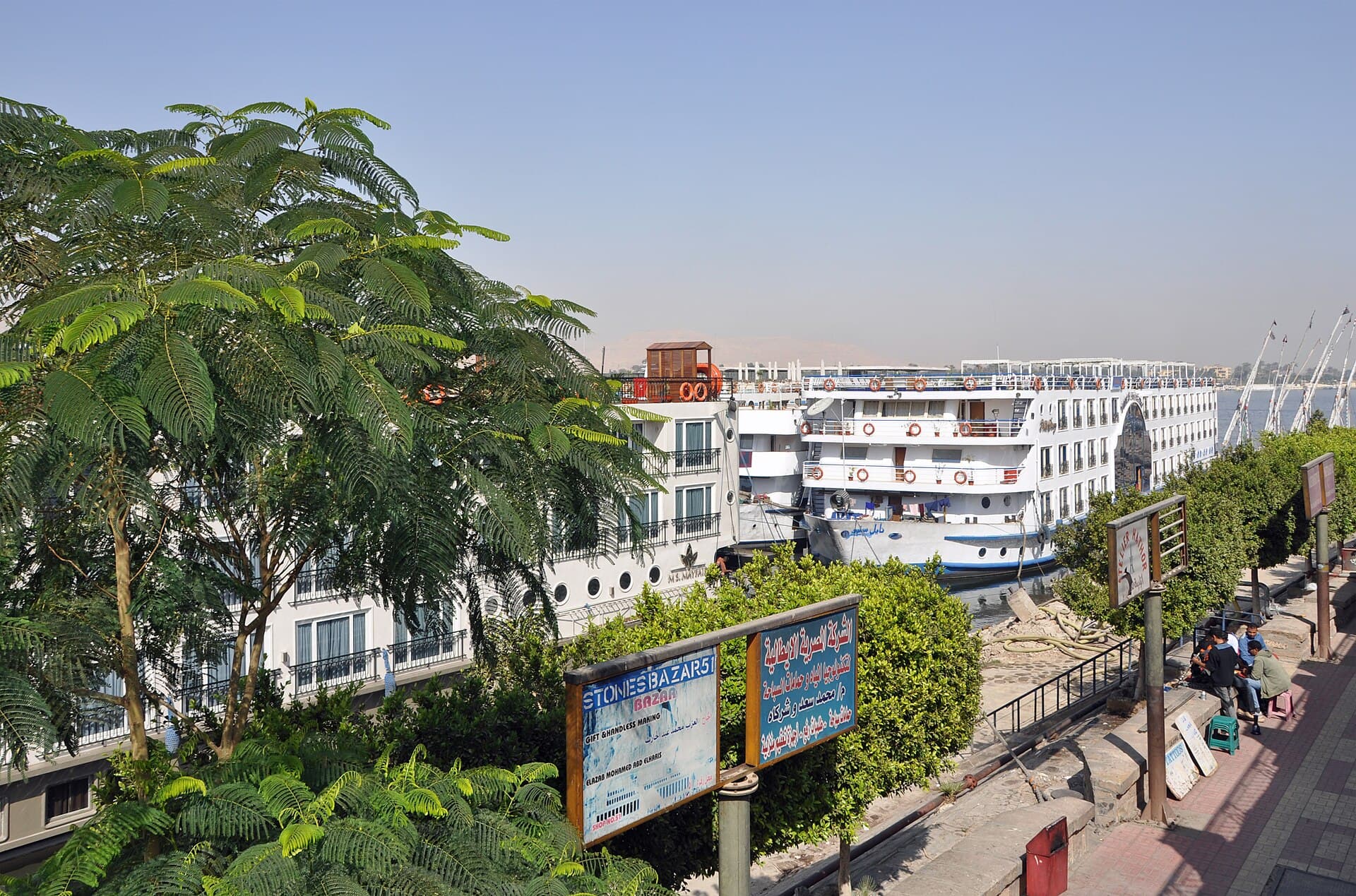
The practical effect is that the hassle is lower. Not zero. The corniche has boatmen and calèche drivers who will work you hard, and the touts around the ferry landings are persistent, especially when a cruise boat has just tied up. But step one street back from the water and it stops, which is a reprieve you rarely get on Luxor's east bank. Prices still need agreeing in advance, every time.
Philae Temple and what the relocation actually means
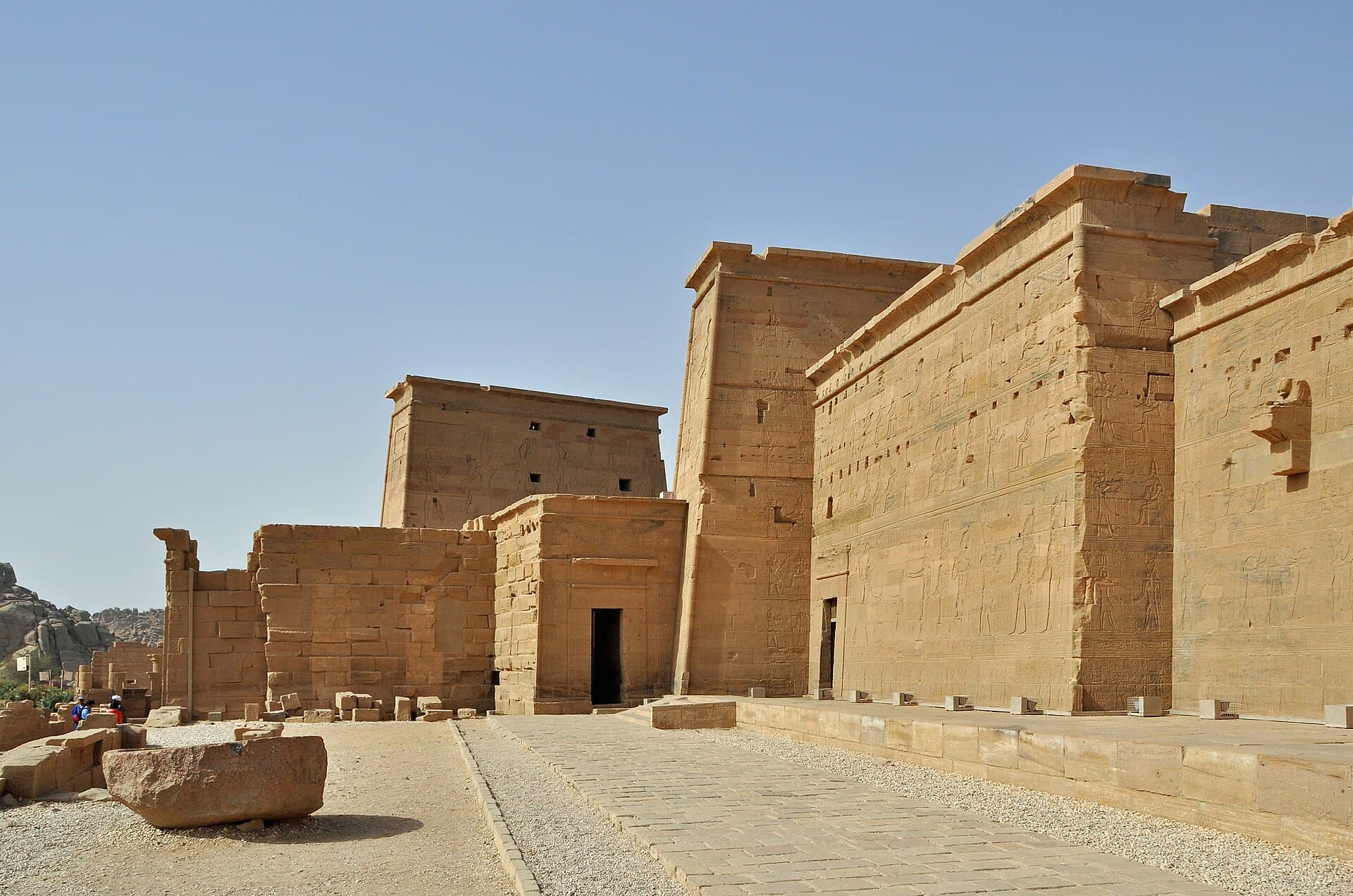
Philae is the temple everyone comes for, and it earns that. It is a late temple, largely Ptolemaic and Roman, dedicated to Isis, with crisp reliefs and a compact island setting reached by motorboat from a jetty between the two dams. The boat is part of it: you cross open water and the colonnades rise straight out of the reservoir. Go early or late, because the island bakes in the middle of the day and the carving reads far better in low light.
The relocation is the part most visitors miss. After the first Aswan dam was completed in 1902 the temple stood partly underwater for much of each year, and visitors rowed between half-submerged columns. The High Dam would have left the island permanently drowned, so a coffer dam was built around it, the water was pumped out, and the buildings were cut into tens of thousands of numbered blocks and rebuilt through the 1970s on Agilkia, a neighbouring island reshaped to match the original.
You can see the evidence if you look. Faint saw lines run through the masonry, and the lower courses of some walls carry a pale band where decades of standing water stripped the colour out of the stone. Knowing that changes the visit: what you are walking through is both an ancient temple and one of the largest salvage jobs ever attempted. The evening sound and light show is well produced, and skippable if time or budget is tight.
The felucca, Elephantine Island and the west bank
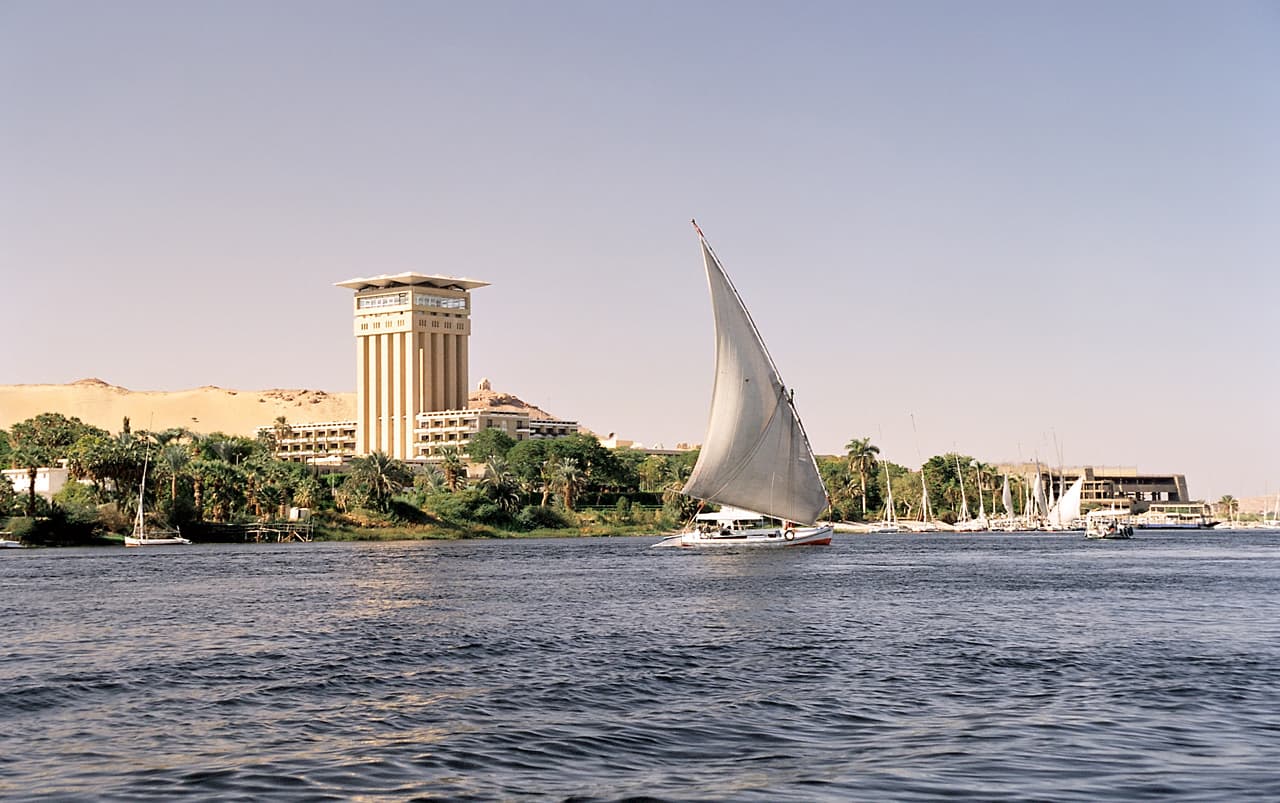
A felucca is a lateen-rigged sailing boat with no engine, and it works here because the prevailing wind blows from the north, against a river flowing north. You sail up and drift back down. Two to three hours covers the islands, the botanical garden on Kitchener's Island, and the west bank cliffs with the Aga Khan mausoleum above them. Late afternoon is the run to take; the light drops and the heat goes with it.
Set expectations. It is slow, sometimes very slow, and if the wind drops you sit. That is the point, but people who want to tick sites off get frustrated. A motorboat does the same circuit in a third of the time and half the pleasure. Agree the duration and the price before you step aboard, and check whether entry to the botanical garden is included, because it usually is not.
Elephantine Island deserves an hour or two on foot. The archaeological site at the southern end has a small museum, a Nilometer cut into the rock for gauging the annual flood, and settlement layers going back thousands of years, because this island, not the east bank, was the main town here for most of antiquity. The rest of it is two Nubian villages, Koti and Siou, with narrow painted lanes. The public ferry across costs a fraction of a private boat.
Visiting Nubian villages without it feeling like a zoo
A village visit is worth it with a Nubian guide and a late-afternoon start. Our Nubian village in Aswan guide covers Gharb Soheil, Elephantine Island and how to go.
The unfinished obelisk and the granite quarries
This is a small site and an easy one to dismiss: a fenced quarry in the middle of modern Aswan with a single enormous obelisk still attached to the bedrock, abandoned partway through cutting when a crack opened along its length. Half an hour covers it, and most itineraries treat it as a filler stop between Philae and lunch. It is worth more attention than that.
It explains everything else you have looked at. The obelisks at Karnak, the granite colossi of Ramesses, the sarcophagi inside the pyramids: the stone came from here and travelled downriver, in some cases the better part of a thousand kilometres. Standing in the trench you can read the method directly, the pitted marks left by pounding the rock with dolerite balls, the channels cut down each side of the shaft, the underside never freed.
Scale is the other reason to go. Finished, it would have stood taller and heavier than any obelisk ever raised, which is why the crack that ruined it is more instructive than a success would have been: it shows the limit the technique ran into. Go early. There is no shade, the granite holds heat, and by late morning the trench is genuinely unpleasant.
The High Dam and what it did to the river
As a sight, the High Dam is dull. It is a broad embankment with a viewpoint, a monument to the Soviet-Egyptian partnership that built it, and a long view over Lake Nasser. Fifteen minutes is enough, and many itineraries include it only because it sits on the road to the Philae jetty. You drive on, stop at the viewing area, look at the lake, and drive off again.
As context, it changed Egypt more than any structure since antiquity. It ended the annual flood, gave year-round irrigation and multiple harvests, supplied much of the country's electricity for decades, and buffered both drought and destructive floods. It also holds back the silt that fertilised the valley for millennia, so farming now leans heavily on manufactured fertiliser, the Delta coast erodes without new sediment, salt has built up in some soils, and the reservoir loses a great deal of water to evaporation.
And it drowned Nubia. The temples got international rescue campaigns and a great deal of attention; the villages got resettlement and very little. If you only want one of the two dams, take the view from the Philae boat instead: the reservoir tells you what the water did, and the temple standing on a rebuilt island tells you what it cost to save one small part of it.
Abu Simbel: day trip or overnight
Abu Simbel sits roughly 280 kilometres south of Aswan, close to the Sudanese border. By road it is about three to three and a half hours each way across empty desert, and the road convoy rules and permitted departure times have changed repeatedly over the years, so confirm the current arrangement close to travel. Flights from Aswan take under an hour, with a ground window built around getting you in and out.
The classic day trip leaves Aswan very early, arrives mid-morning with every other coach, and has you back by mid-afternoon. It works. It is also a long day in a vehicle for an hour or so at the site, at the hottest and busiest point of the morning, with the sun already high on the facade. Flying costs considerably more and buys back most of the road time, which matters if your days are short.
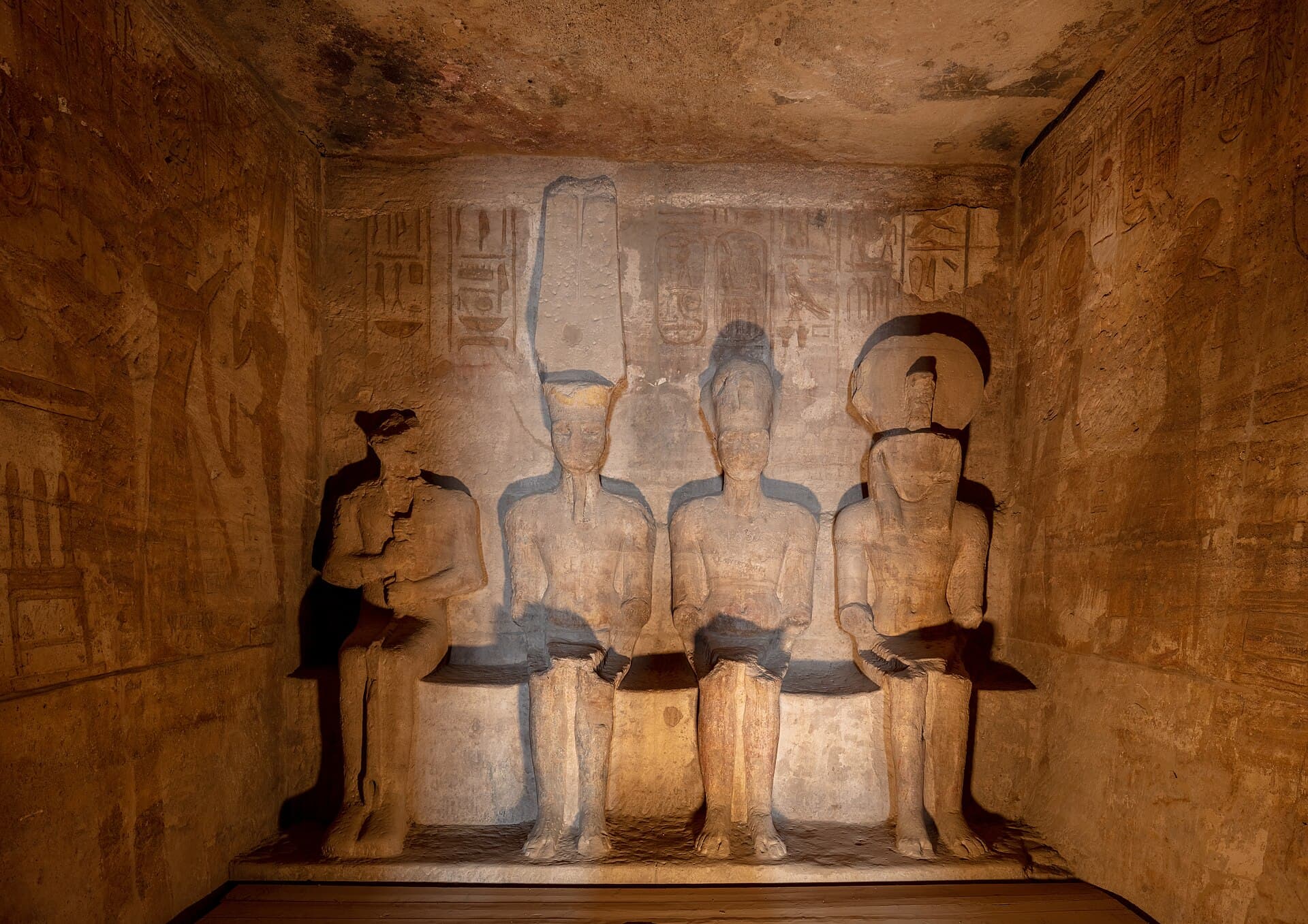
Staying overnight is the better version if you can spare the day. You reach the temples in late afternoon once the coaches have gone, and again first thing before they return, and you see the facade in the low light it was cut for. Abu Simbel was itself sawn apart and rebuilt above the rising lake inside an artificial hill, and the joins run visibly across the statues once you know to look. The twice-yearly sun alignment on the inner sanctuary still happens, in late February and late October.
How many days, and the argument for one more night
Two full days covers Philae, the unfinished obelisk, a felucca afternoon and time on Elephantine, with the middle of each day free for the heat. Three days lets you add Abu Simbel without rushing, or Kom Ombo and Edfu on the road north, or simply a slow day doing nothing on the water. One day gets you Philae and an airport transfer, which is what most cruise passengers end up with.
Here is the practical point. Nile cruises almost all finish in Aswan, and most passengers fly out the morning the boat docks for the last time. Their Aswan is a rushed Philae stop wedged between disembarkation and the airport. Adding a single night after the cruise changes the trip more than almost any other decision on it: an unhurried afternoon on the water, an evening on the corniche, and a morning not spent watching a clock.
The weather makes the same argument. Aswan is one of the hottest and driest inhabited places in the country: summer afternoons run well past 40C, and even winter middays are warm in full sun. The usable hours are early morning and late afternoon, which is exactly what a one-day schedule takes away, because it forces you out at midday. An extra night buys two good windows instead of one bad one.
Common questions
Is Aswan worth staying in, or just passing through?+
Worth staying. It is the most relaxed city in Egypt and the prettiest stretch of the Nile, and two nights is the sweet spot. If your cruise ends here, add a night rather than flying out the same day.
How do you get from Aswan to Abu Simbel?+
About three hours each way by road, usually in a convoy leaving around 4am, or a 45-minute flight. Both make for a long day. Staying overnight at Abu Simbel is possible and far quieter.
What is there to do in Aswan?+
Philae Temple on its island, the unfinished obelisk in the granite quarry, the Nubian villages on Elephantine, and a felucca at sunset — which is the part most people remember.
When is the best time to visit Aswan?+
November to February. Aswan is the hottest of the three Nile cities and summer afternoons regularly pass 40C with very little shade at the sites.
Best time to visit Aswan
November to February. Aswan is the hottest of the Nile cities.
Getting to Aswan
Flights from Cairo take about ninety minutes; most people arrive by cruise from Luxor.
Written and checked by the Nile Trip Guide editorial team · Last reviewed . Entry rules, prices and opening hours change — check anything critical against the official sources linked on this page.
Three nights sailing north from Aswan to Luxor, taking in Philae, Kom Ombo, Edfu, the Valley of the Kings and finally Karnak. Full board on board, and the sightseeing runs as a shared group of about fifteen.
Four nights sailing south from Luxor to Aswan: Karnak and Luxor temples on the first afternoon, the Valley of the Kings, Edfu, Kom Ombo and Philae. Full board throughout, with sightseeing in a shared group of about fifteen.
A 7 day Egypt itinerary that takes the river the other way round: Giza and the Grand Egyptian Museum first, then a flight south to Aswan and three nights sailing down to Luxor.
The route most people take first, at the length it was built for: Giza and the Grand Egyptian Museum, then a flight to Luxor and four nights sailing down to Aswan.