Egypt and Turkey Tours: Istanbul, Cappadocia and the Nile
Egypt and Turkey tours pair two of the strongest history trips in the region, and the flight between them is short. Istanbul and Cappadocia give you Ottoman and Byzantine layers and a landscape carved from volcanic rock; Cairo and the Nile give you pharaonic scale. The awkward part is the calendar, because the two countries peak at different times of year.
How do Egypt and Turkey connect?
Istanbul and Cairo are linked by direct flights, and the hop takes a little over two hours. That single leg is what makes the combination practical. Istanbul has two airports, one on the European side of the city and one on the Asian side, so check which one each of your flights uses. Crossing between them can take a couple of hours in traffic.
Inside each country you fly again. Istanbul to Cappadocia is under two hours to either regional airport, then up to an hour and a half by road to the valley towns, depending on which airport you land at. Cairo to Luxor is about an hour, and Aswan a little longer. None of it is hard, but four internal flights inside a fortnight is a real amount of time.
There is no sensible alternative to flying between the two countries. No practical overland route connects them, and there is no scheduled passenger ferry you could plan a holiday around. Nor is there a useful direct link between Turkey and the Egyptian regional airports: if you want Luxor, Aswan or the Red Sea coast in the same trip, you will route through Cairo. Treat Cairo and Istanbul as the two hinges of the itinerary and build everything else around them.
Which country should you do first?
Do Egypt first if you are travelling in spring, and do it first in autumn too unless the flights argue otherwise. The reason is heat, not sentiment. Egypt in April is already warming towards the point where the middle of the day stops being usable at Luxor and Aswan, so every week you delay the Egyptian half costs you comfort at exactly the sites that have no shade. In autumn the pressure runs the other way, and late September in Upper Egypt is still hot, so the argument for Egypt-first is weaker and a cheaper routing can win.
There is an energy argument as well. The Egyptian half is the demanding one: early starts, long drives, walking in open sun, several hours a day of concentrated information from a guide. Turkey is gentler and more self-directed. Ending in Istanbul, where you can sleep in and walk to things, works better than ending on a 5am start for the Valley of the Kings.
The exception is a long-haul arrival. If your flight home leaves from Istanbul and the inbound also lands there, doing Turkey first can save an awkward night and a repeated transfer. That is a real saving, and it is worth taking. What is not worth doing is reordering the trip to save a modest fare and then discovering you are climbing into unventilated tombs in the second half of April.
Do Ottoman and pharaonic sites go together?
They work together because they ask different things of you. Turkey's headline sites are living cities and layered buildings: a Byzantine church that became a mosque, a palace in the middle of a busy modern city, whole towns cut down into soft rock. You walk them, mostly at your own speed.
Egypt is the opposite. The sites are monumental, spread out and almost all outdoors, and the day is built around driving to them, walking in the sun and driving back. You get far more from them with a licensed Egyptologist beside you. The contrast is the point: two weeks of temples alone gets heavy.
The two halves also differ in how much explanation they need. A mosque or a rock-cut church largely presents itself, and a good audio guide or a decent book will carry you through most of Istanbul. Egyptian temple walls will not. Without someone to read the registers and tell you which pharaoh chiselled out which predecessor, Karnak becomes an enormous quantity of stone with captions you cannot read. Budget guiding accordingly: light in Turkey, properly in Egypt.
When does the weather work for both?
Turkey is at its best from April to June and again in September and October. Cappadocia sits high on a plateau, so winters are cold with snow and freezing nights, and July and August are hot and dry. Istanbul works all year, though winter there is grey and wet more often than the photographs suggest.
Egypt runs on the opposite calendar, roughly October to April. Luxor and Aswan sit in the mid-twenties on a typical midwinter afternoon, which is what you want for open desert sites with no shade, and they push past 40°C through high summer. The overlap between the two countries is narrow: April, and late September through October.
Both shoulder periods have a catch. Spring in Egypt brings the khamsin, hot southerly winds carrying dust that can grey out a day at the pyramids. In Cappadocia, balloon flights are cancelled for wind in any season, so treat one as a chance rather than a fixture. If you travel in spring, do the Egyptian half first, before the heat builds.
If neither shoulder month suits you, the honest answer is to accept an imbalance rather than force a compromise. A midwinter trip gives you Egypt at its best, with Luxor around the mid-twenties and Cairo comfortable for walking, and Cappadocia under snow, which is beautiful, genuinely cold and short on daylight. A June trip inverts it: Istanbul and Cappadocia in full season, and Luxor at around 41°C, where sightseeing means a 5am start and an indoor afternoon. Both are workable trips. Neither is the trip most people imagine when they book two countries at once.
How long do you need?
Fourteen to eighteen days is the honest range. Turkey wants six to eight: three or four nights in Istanbul, three in Cappadocia, and part of a day lost to the flight between them. Egypt wants seven to nine: two or three nights in Cairo, then four or five between Luxor and Aswan.
Under about twelve days you are only choosing which country to short-change, and the better answer is to drop one and come back. Eighteen days buys slack: a second day on foot in a Cappadocia valley, an unhurried stretch on the Nile, and enough margin that a delayed flight costs you a lie-in rather than a site.
Count the dead time honestly when you plan. A fortnight that looks like fourteen sightseeing days is usually closer to eleven once you subtract the arrival day, the departure day, the Istanbul to Cairo hop with its airport transfers either side, and two internal flights. That is not an argument against the trip; it is an argument for putting the slack in deliberately rather than discovering where it went.
A fourteen-day shape that works
The simplest version runs Egypt first, then Turkey, and looks roughly like this. Two or three nights in Cairo to cover Giza and the Grand Egyptian Museum on one day and Saqqara and Dahshur or Islamic Cairo on another. Then the hour-long flight south to Luxor, two nights or a cruise embarkation there, the sail or the drive on to Aswan, and a night in Aswan before flying back to Cairo for the Istanbul leg.
That leaves six or seven nights for Turkey: three or four in Istanbul and three in Cappadocia, with the internal flight between them eating part of a day whichever direction you fly it. Istanbul first and Cappadocia second is the usual order, because it puts the international departure at the end of the Istanbul stay rather than adding a further hop.
Eighteen days improves the same itinerary in three specific places rather than adding a fourth region. It buys a third night in Cairo, so Saqqara and Dahshur stop competing with Islamic Cairo. It buys a night in Aswan after a cruise disembarks, which is the single change that most improves an Egyptian itinerary, because cruise passengers otherwise see Philae wedged between the gangplank and the airport. And it buys a spare day in Cappadocia, which is what you want if the balloon is cancelled for wind on your first morning.
What the Egyptian half actually contains
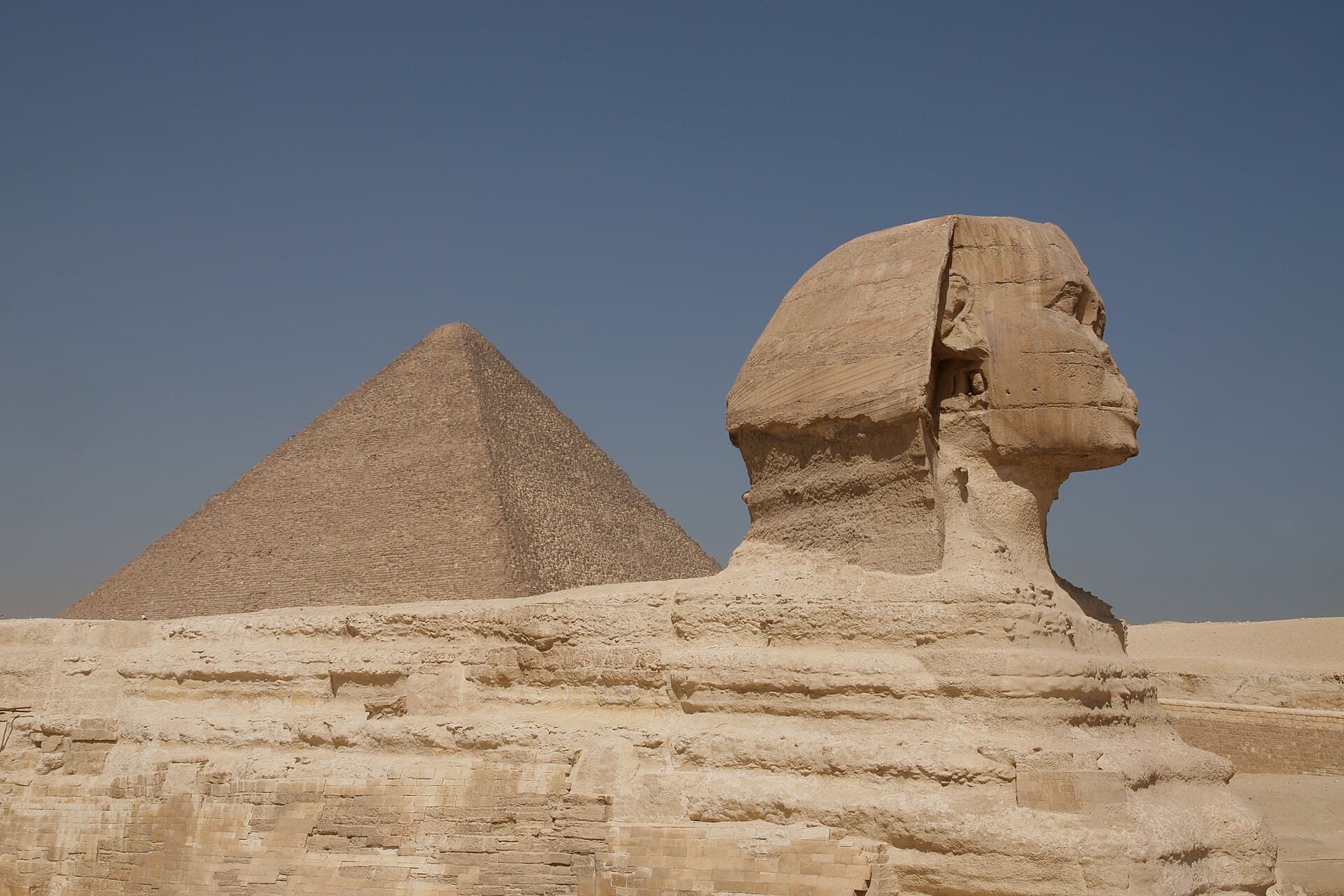
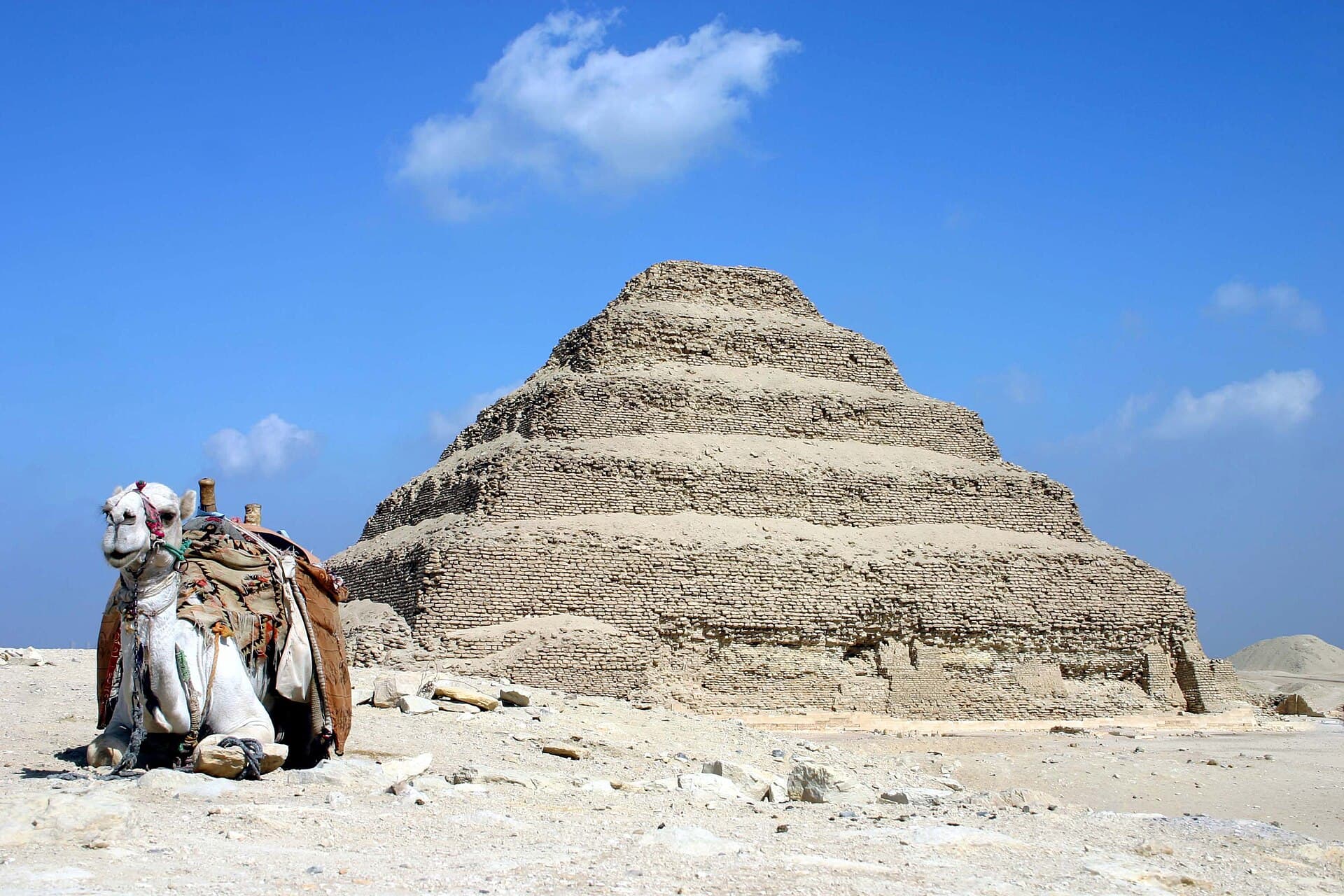
Cairo is the part most people underestimate. Giza is a half-day done properly, going at opening before the coaches and the heat arrive, with the viewpoint on the southern rim where all three pyramids line up. The Grand Egyptian Museum, a couple of kilometres away, needs three hours as a floor and does not belong in the same afternoon as the plateau. Saqqara, about forty minutes south, holds the Step Pyramid of Djoser and, better still, the nobles' mastabas around it, cut with painted reliefs of hunting, farming and boat-building. Dahshur, twenty minutes further, has Sneferu's Bent Pyramid and Red Pyramid and is usually near-empty. Judge Cairo journeys by the hour of departure, not the distance: Giza to downtown is around 20 km and can take half an hour or most of two.
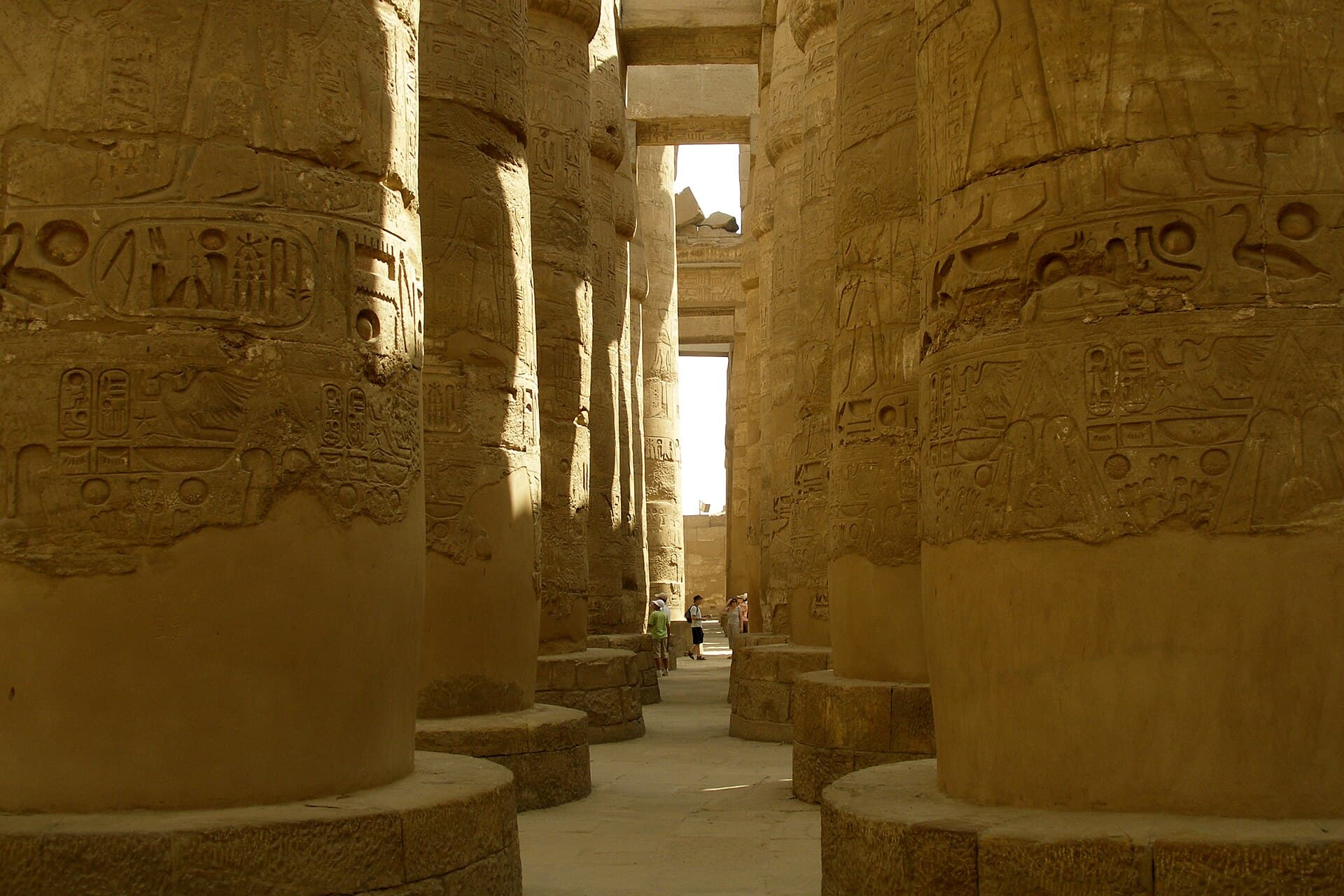
Luxor is the densest concentration of monuments anywhere, and it divides by the river. The west bank is the necropolis and has to be done first and early, because the tombs are cut into rock with no airflow and hold the heat of every group that has walked through. The standard Valley of the Kings ticket admits you to three tombs from a rotating selection, with Tutankhamun, Seti I and Ramesses VI sold separately. Hatshepsut's terraced temple at Deir el-Bahari is the other set piece. The east bank is for the afternoon: Karnak, a walled precinct that some thirty pharaohs added to over two thousand years, where the Hypostyle Hall alone absorbs half an hour, and Luxor Temple, which is genuinely better after dark.
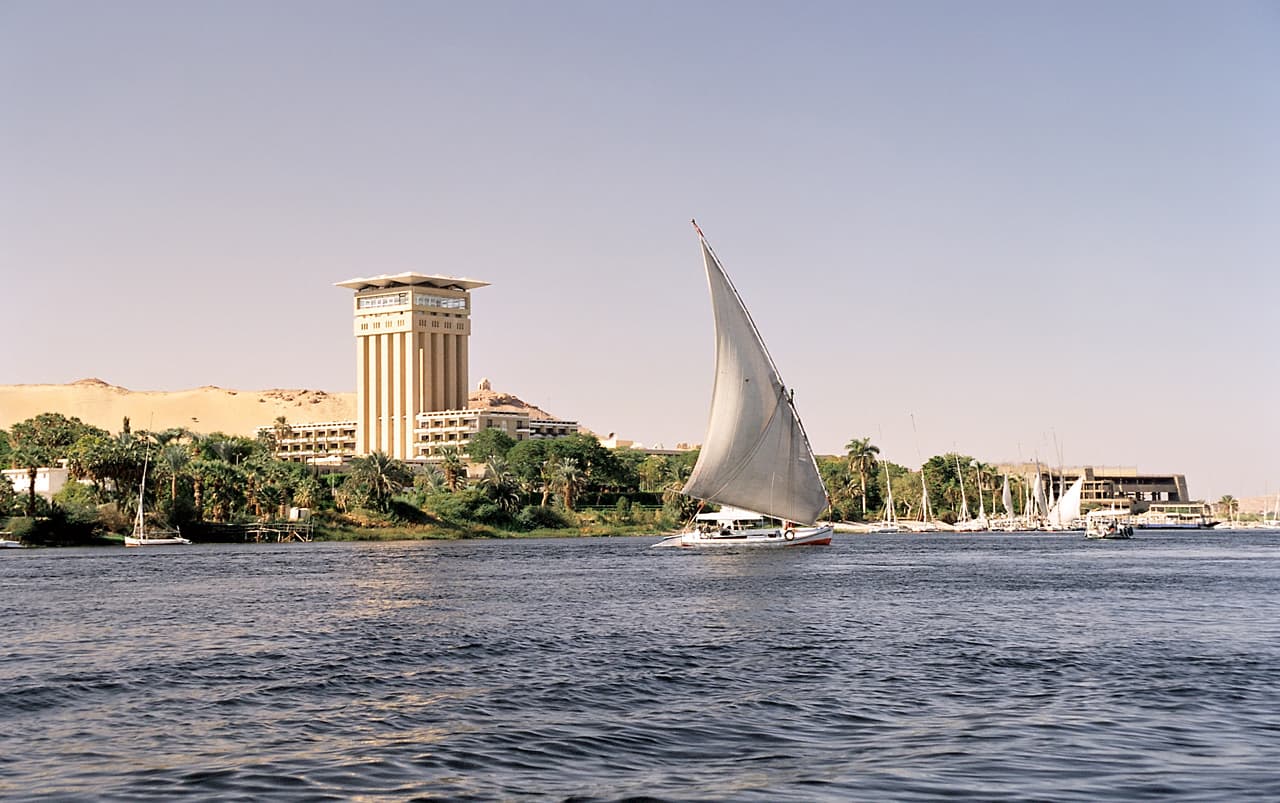
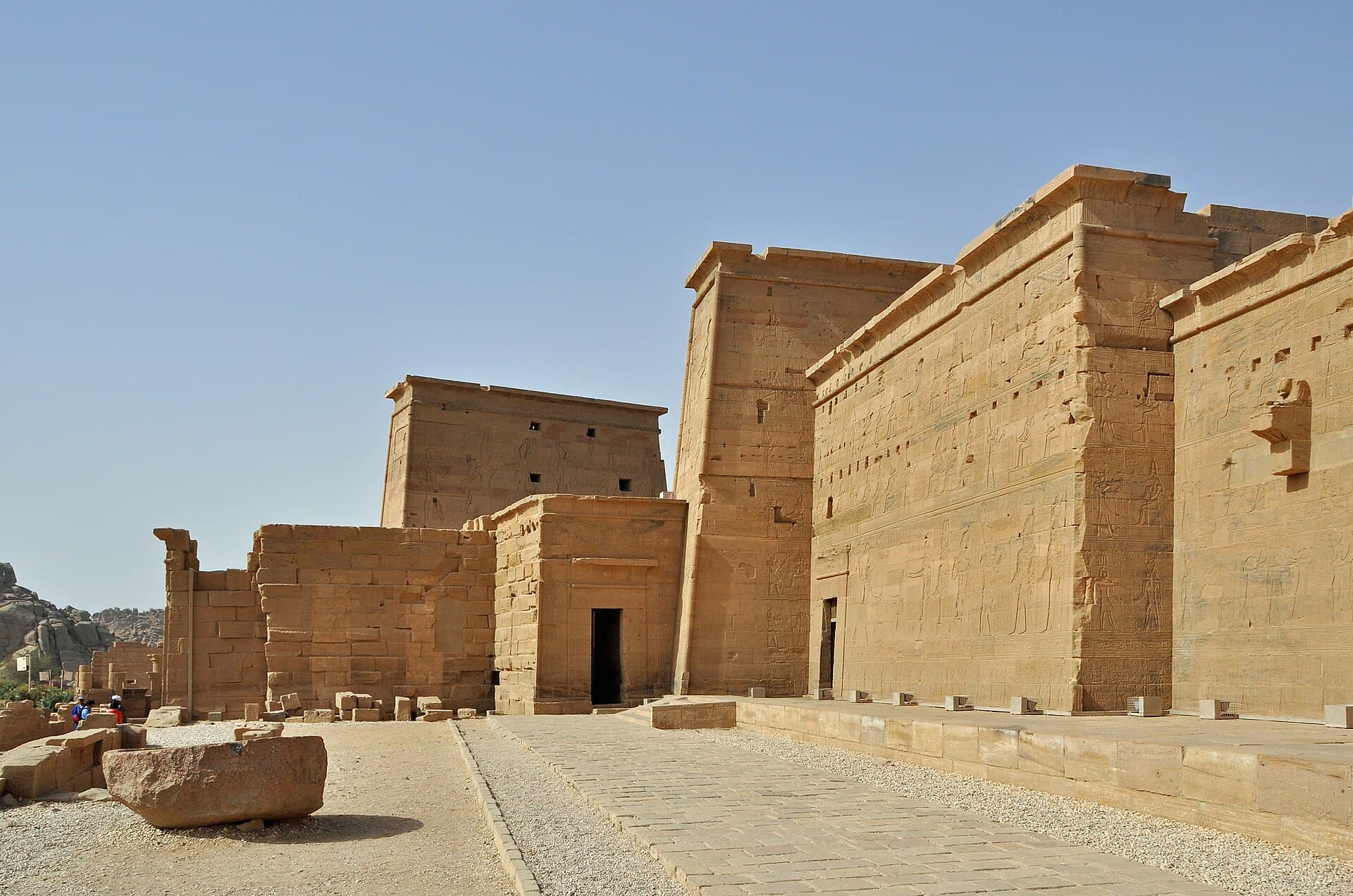
Aswan is the calm end of the trip, and on a two-country itinerary that matters more than it sounds. Philae Temple sits on an island reached by motorboat, rebuilt block by block on Agilkia after the High Dam would have drowned its original site. The unfinished obelisk lies in a granite quarry in the middle of town, abandoned when a crack opened along its length, and explains where the obelisks and colossi you have been looking at came from. A felucca on the late afternoon water is the part most people remember. Abu Simbel is roughly 280 kilometres south, about three to three and a half hours each way by road or under an hour by air.
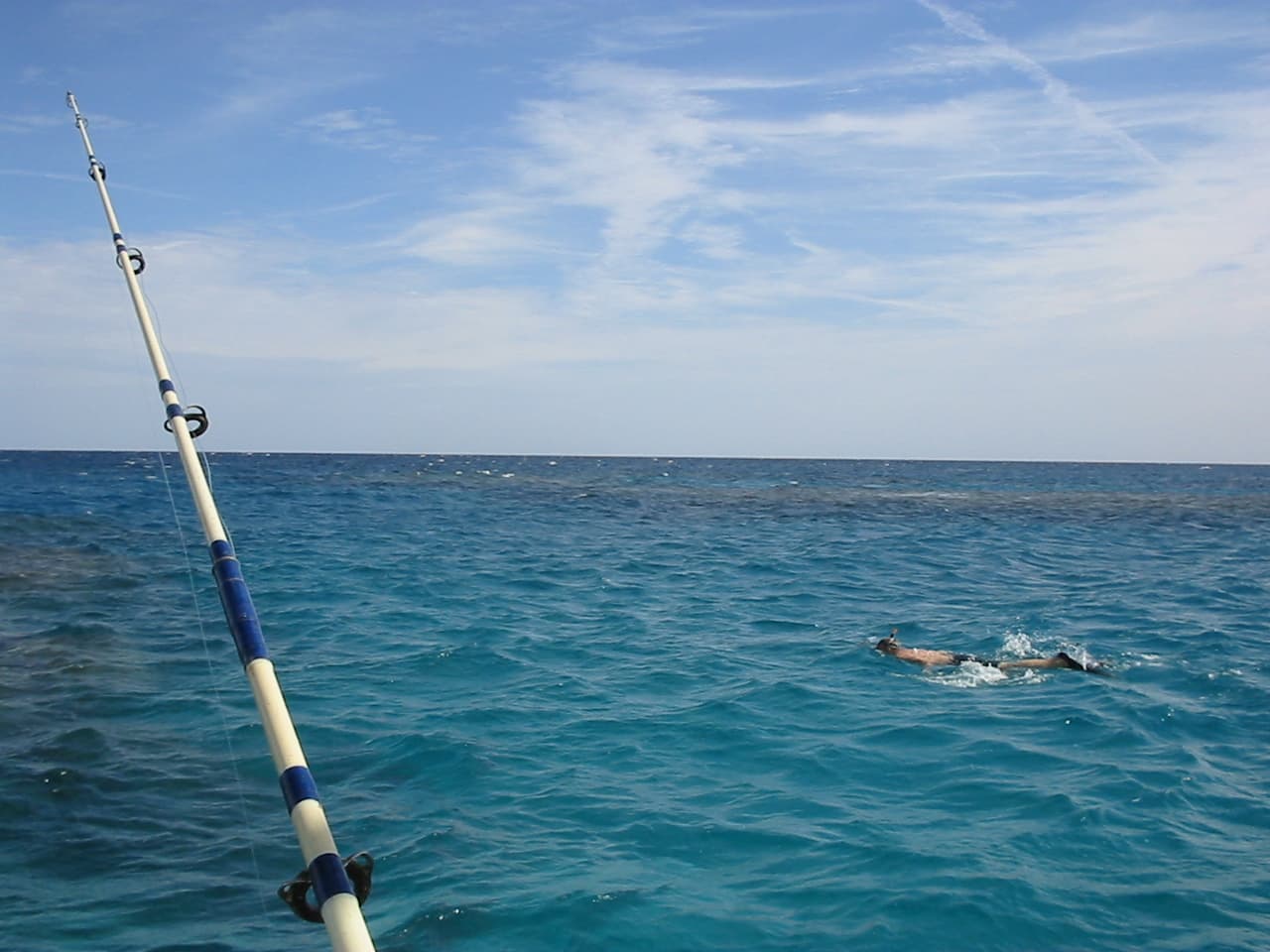
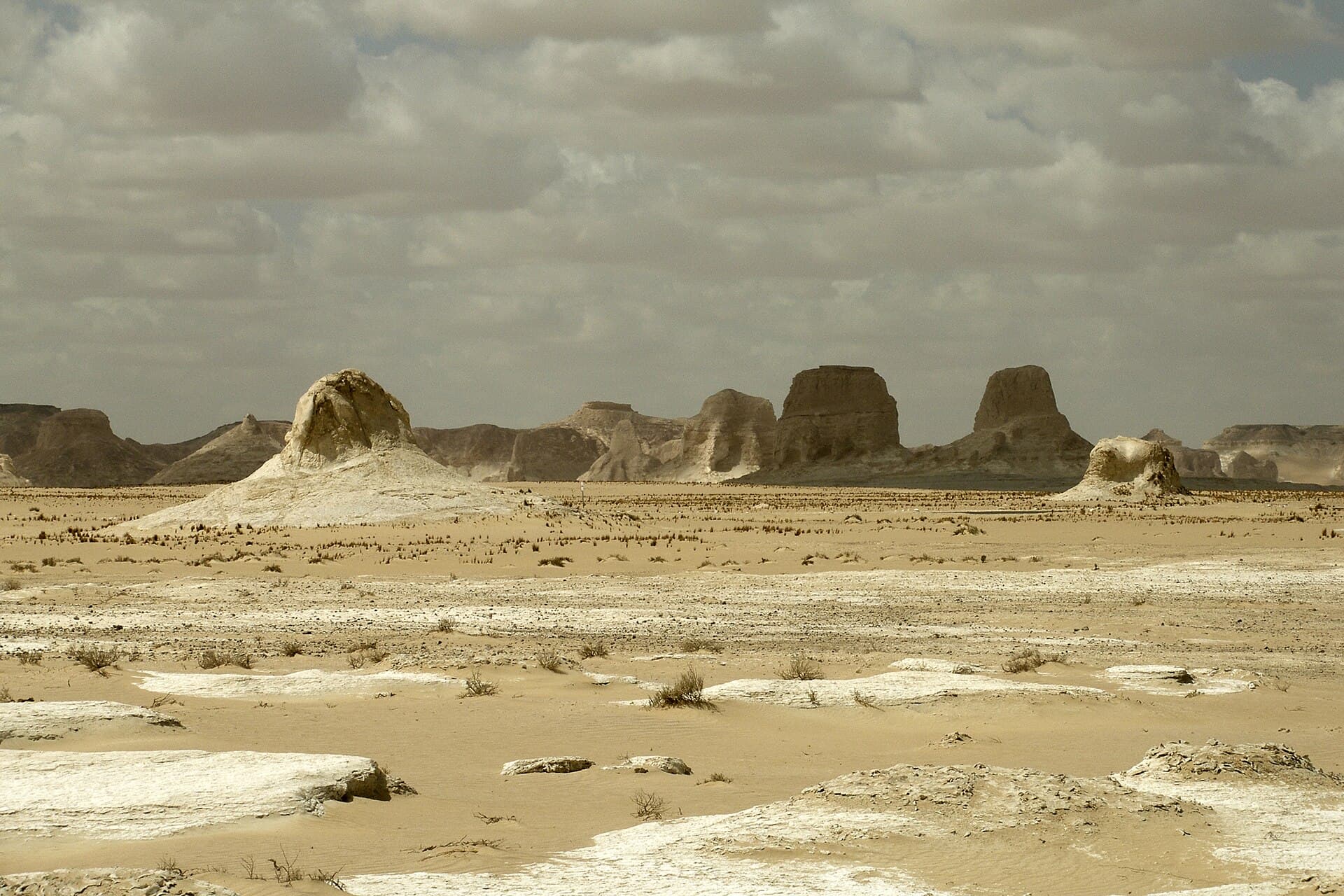
You will not fit all of that into a fortnight that also contains Turkey, and you should not try. The Egyptian half of this trip is Cairo plus the Luxor to Aswan stretch. Abu Simbel, the Red Sea, Alexandria, Dendera and Abydos and the Western Desert are the things that come out. If any of them is the reason you are going, that is a signal to make Egypt a trip of its own rather than half of one.
What the Turkish half actually contains
Istanbul is the only city on this itinerary that sits on two continents, split by the Bosphorus, and the historic core is small enough to walk. Hagia Sophia was built as a Byzantine cathedral in the sixth century, became a mosque after the Ottoman conquest, spent part of the twentieth century as a museum and is in use as a mosque again. Around it are the Blue Mosque, the Topkapi Palace of the Ottoman sultans, the Basilica Cistern beneath the street, and the Grand Bazaar and the Spice Bazaar. Three full days covers that without hurrying; four lets you add a Bosphorus boat and the Asian side.
Cappadocia is a landscape rather than a monument. Volcanic ash laid down over the plateau compacted into soft rock, and erosion left the pinnacles that everyone photographs, which people then cut into churches, houses, dovecotes and whole towns. The Goreme rock-cut churches hold Byzantine frescoes, the underground cities at Derinkuyu and Kaymakli run down several levels, and the valleys around the main villages are walkable in a morning. Three nights is right: one for the balloon or the attempt at it, one for the valleys on foot, one for the underground city and the wider drive.
Practical things that catch people out on the Turkish leg are minor but real. Mosques are working buildings, close to visitors around prayer times and on Friday middays, and women are expected to cover their heads inside, so a scarf saves an argument. The rock-cut sites involve steps, low passages and uneven ground, and the underground cities are narrow and steeply pitched in places, which is worth knowing if anyone in the party is claustrophobic or unsteady. Cappadocia is high, so evenings are colder than the daytime temperature suggests even in the shoulder months.
Nile cruise or hotels, when the trip already has two countries
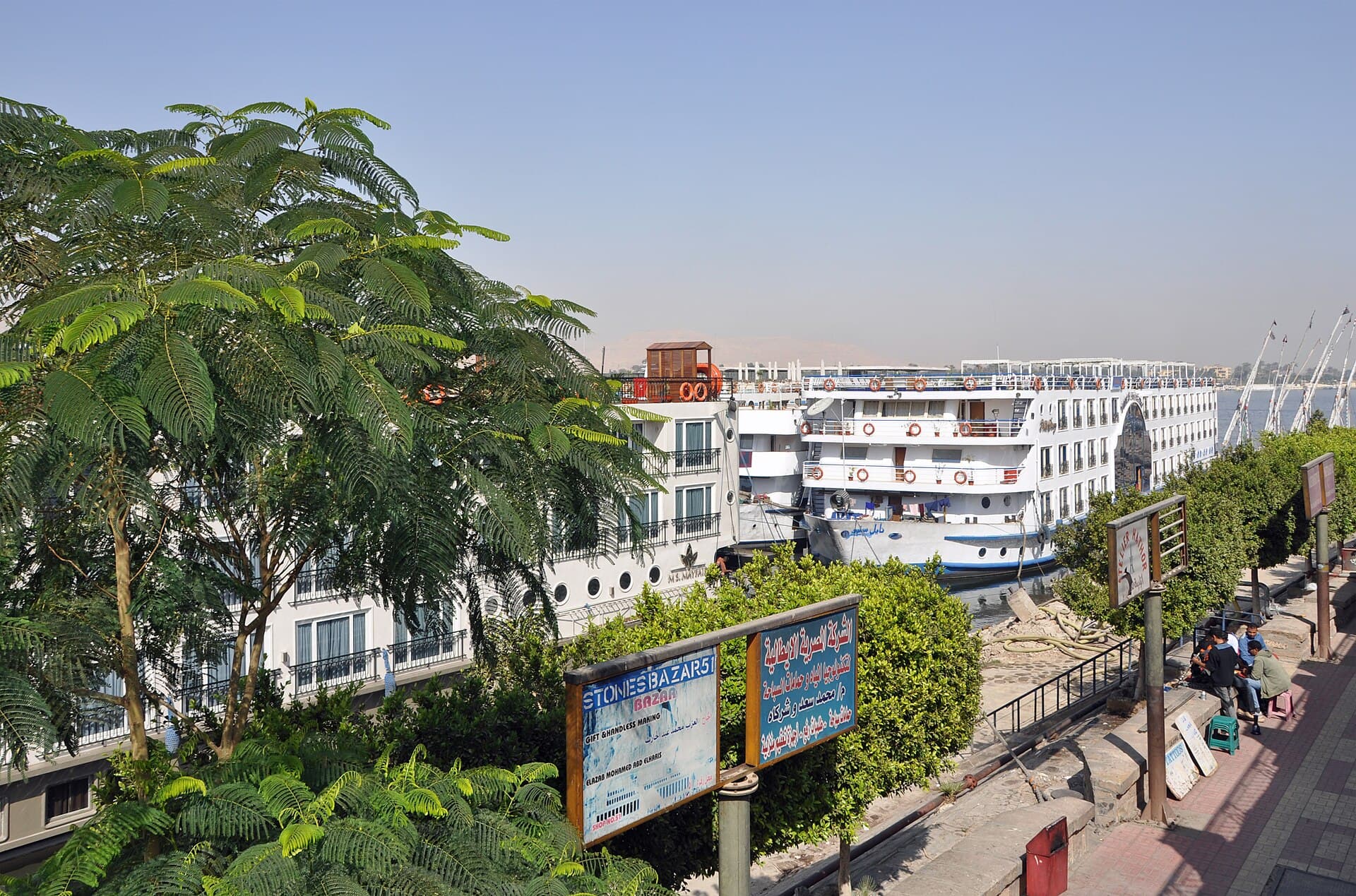
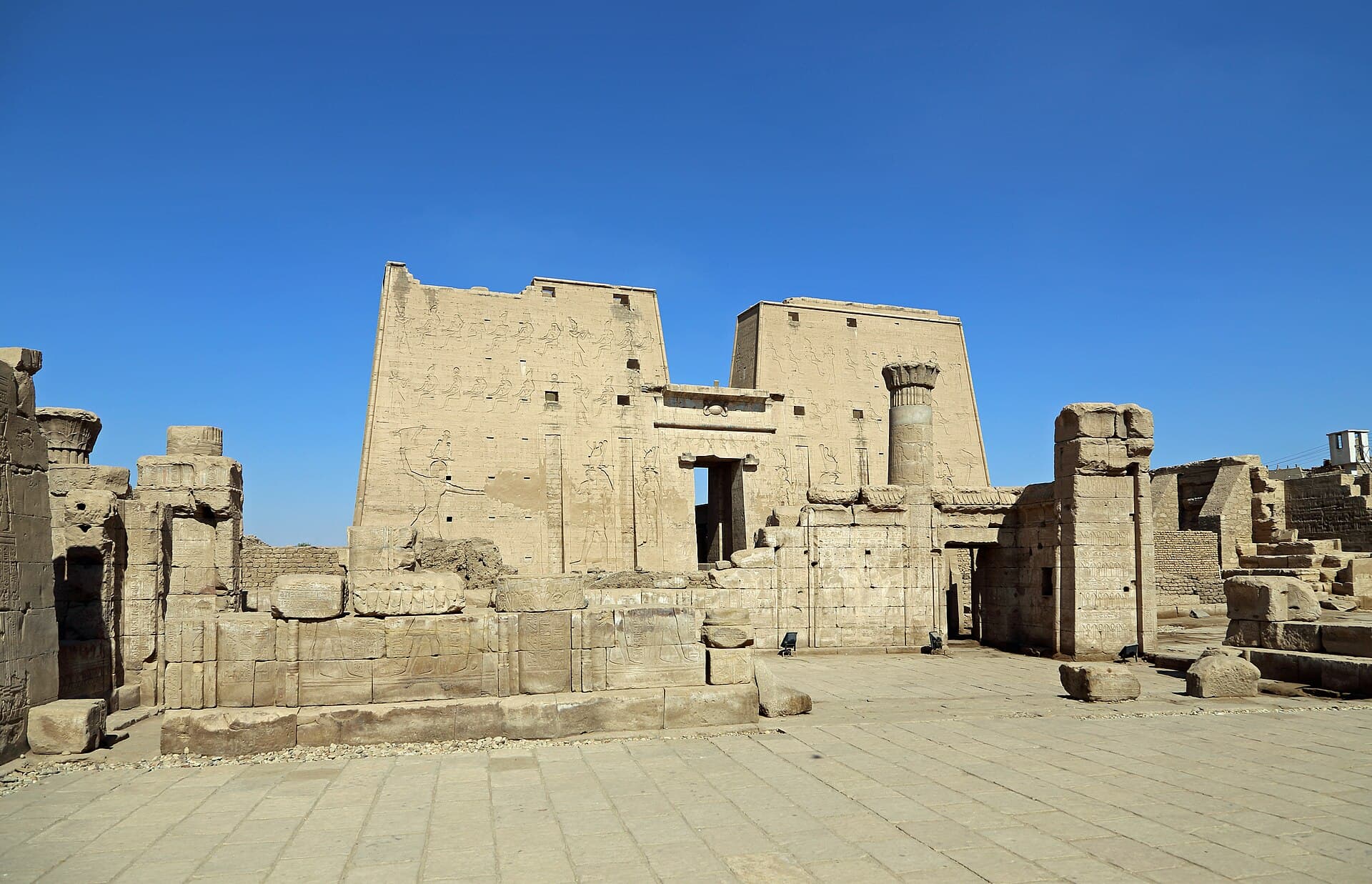
A cruise earns its place if you give it three or four nights. Sailing between Luxor and Aswan removes the long drives, reaches Edfu and Kom Ombo which are awkward to visit otherwise, and the boat doubles as your hotel, which counts for something on a fortnight that already involves four flights and several hotel changes. Doing the same stretch by road means more transfers on a trip that has plenty.
There are trade-offs worth knowing before you book. Boats moor rafted two, three or four deep at the busy quays, so you may walk through another boat's lobby to reach land, and berths are allocated by the port rather than your operator. Meals are included and drinks almost never are. The Esna lock between Luxor and Edfu can queue for a few hours at busy times, which on a three-night sailing is a meaningful share of the trip. And a cruise gives you a compressed Luxor: one west bank morning and Karnak on a group timetable, with the evening spent on board rather than at Luxor Temple under floodlight.
For one or two nights it is not worth the packing. Stay in Luxor and drive out to the sites instead, then move to Aswan by road or short flight. The usual compromise, if the budget allows it, is a short cruise with a night on land at either end, which buys back the Luxor evening at the start and the unhurried Aswan afternoon at the finish.
Two balloon flights, and whether you want both
Both halves of this trip sell a sunrise balloon, and they are not the same experience. Over Cappadocia the balloon is about the landscape immediately below you, pinnacles and valleys at close range, and the sheer number of other balloons in the air is part of the picture. Over the Luxor west bank the flight is about geography at a distance: the hard edge where the irrigated green stops and the desert begins, with the Theban cliffs standing over the tombs and the sun coming up behind the east bank. Roughly forty-five minutes in the air, from a launch site on the west bank.
Both are weather-dependent and both get cancelled for wind, which argues for the same tactic in each country: book the flight for your first available morning rather than your last, so a cancellation leaves a second chance rather than a refund. In Luxor you drift where the wind takes you, so no operator can promise the Valley of the Kings from above, and the baskets are large and shared. If you only want one, take the Cappadocia flight for the landscape and the Luxor flight for the understanding of how the ancient site is laid out. Doing both is not repetitive, but it does mean two pre-dawn alarms in a fortnight that already has several.
Internal flights, luggage and the hours this trip really costs
Count the legs. A standard version of this itinerary flies you into Cairo, Cairo to Luxor, Aswan back to Cairo, Cairo to Istanbul, Istanbul to Cappadocia, Cappadocia back to Istanbul, and home. That is six flights on top of your long-haul arrival, each with a transfer, a check-in and a wait attached. None of them is long. Together they are most of two days.
Domestic baggage allowances are usually tighter than international ones, and they are the ones you will hit, because this trip accumulates purchases. If you are on a Nile cruise, a small bag for the boat days makes life easier, since cabins are not large and you will be moving between a hotel and a boat more than once. Pack for two climates in one case: open desert sun and dust in Upper Egypt, cool evenings on a high plateau in Cappadocia, and modest cover for mosques in both countries.
The other cost is early starts. Egyptian sightseeing runs on getting out before the heat and the coaches, which in practice means leaving at or before dawn several days running. Add a balloon flight in each country and you have a fortnight with four or five alarms set in the dark. That is fine if you know it in advance and build a slow day into each half. It is unpleasant if you assumed a holiday and got a schedule.
Money, tipping and the two-currency problem
Two countries means two currencies and two sets of habits. Both have moved a good deal against major currencies in recent years, so any figure you read in an older guidebook is worth treating as a rough shape rather than a price. Card payment is straightforward in Istanbul and in the better hotels and restaurants in Cairo; it is much less useful at Egyptian sites, in markets, with drivers and on the river, where cash in small notes does the work.
Tipping is a structural part of the Egyptian half, not an optional courtesy. It is expected for small services throughout, and on a Nile cruise it is normally collected once as a crew pot at the end of the sailing, with the guide and driver handled separately. Budget for it deliberately rather than being surprised by it, and carry small denominations, because nobody at a temple gate will have change and the transaction will not go your way.
Bargaining applies in both bazaars and works the same way in each: the opening price is several times the real one, walking away is a legitimate move, and tea is offered without obligation. If you dislike the whole business, buy nothing in the tourist lanes of Khan el-Khalili or the Grand Bazaar and spend your money in the fixed-price shops instead. Neither country requires you to enjoy haggling.
Ramadan, holidays and dates worth planning around
Both countries are majority Muslim, so Ramadan affects both halves of the trip at once. The dates move roughly eleven days earlier each year against the Gregorian calendar, which means it drifts through the shoulder seasons over time. Sites stay open, but hours shift, some restaurants close during daylight, and the cities change rhythm, becoming quiet in the afternoon and busy late. The Eid holiday at the end of it is a genuine peak for domestic travel in both countries, so transport and hotels tighten.
Egypt has dates of its own. Coptic Christmas falls on 7 January and is a public holiday. No official notice says sites close that day. Sham el-Nessim, the spring festival, falls on the Monday after Coptic Easter and fills the parks and riverbanks. Easter itself moves year to year and lifts both crowds and prices in April, which is precisely the month a two-country trip is most likely to use.
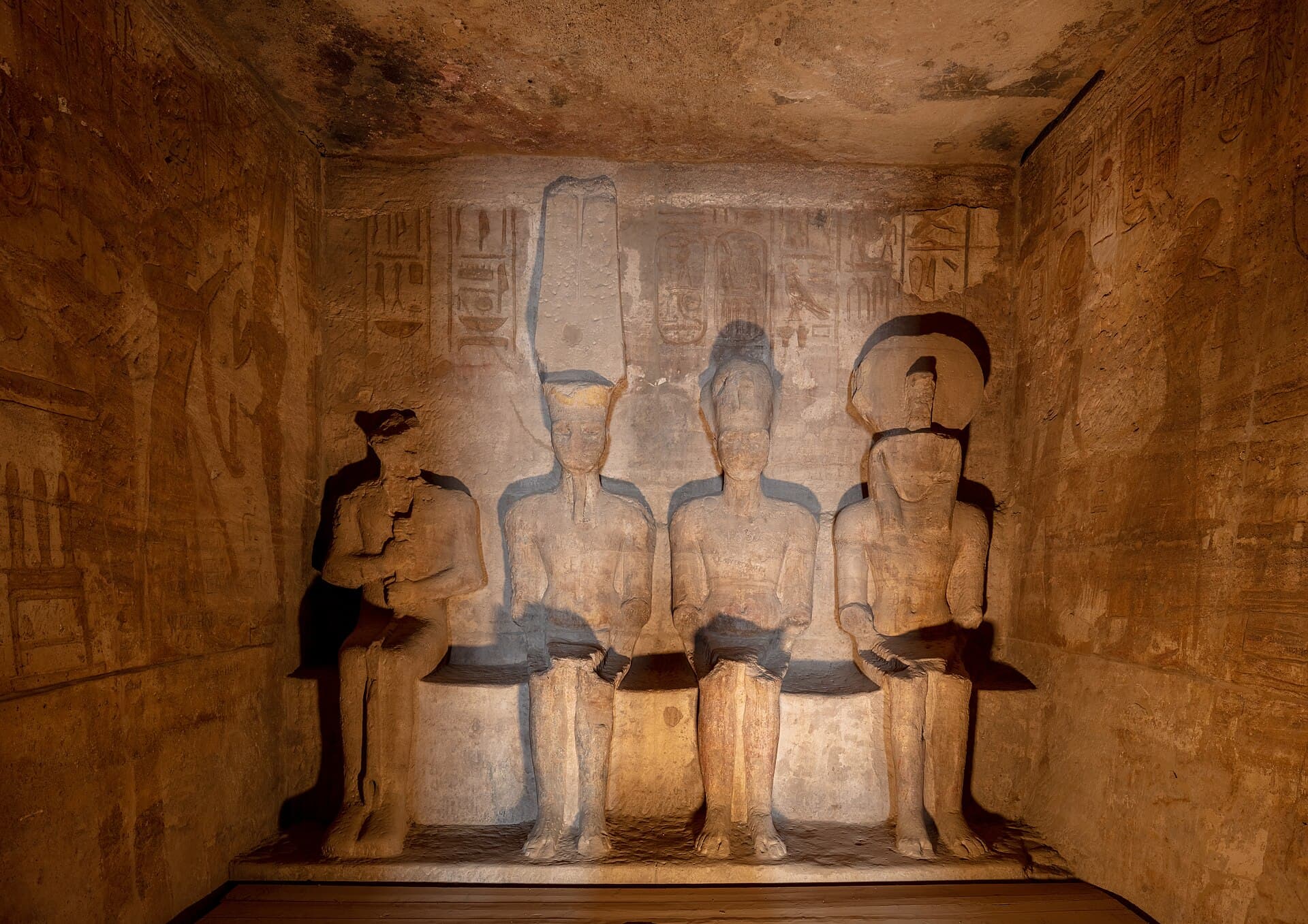
One date is worth planning towards rather than around. The sun alignment at Abu Simbel, when the rising sun reaches the inner sanctuary, happens twice a year, in late February and late October. The October alignment sits inside the autumn window where Egypt and Turkey overlap, so if the timing genuinely matters to you, it is one of the few reasons to build a combined itinerary around a specific week. It requires a very early start from Aswan and it is crowded, and it is still worth seeing.
What is worth skipping?
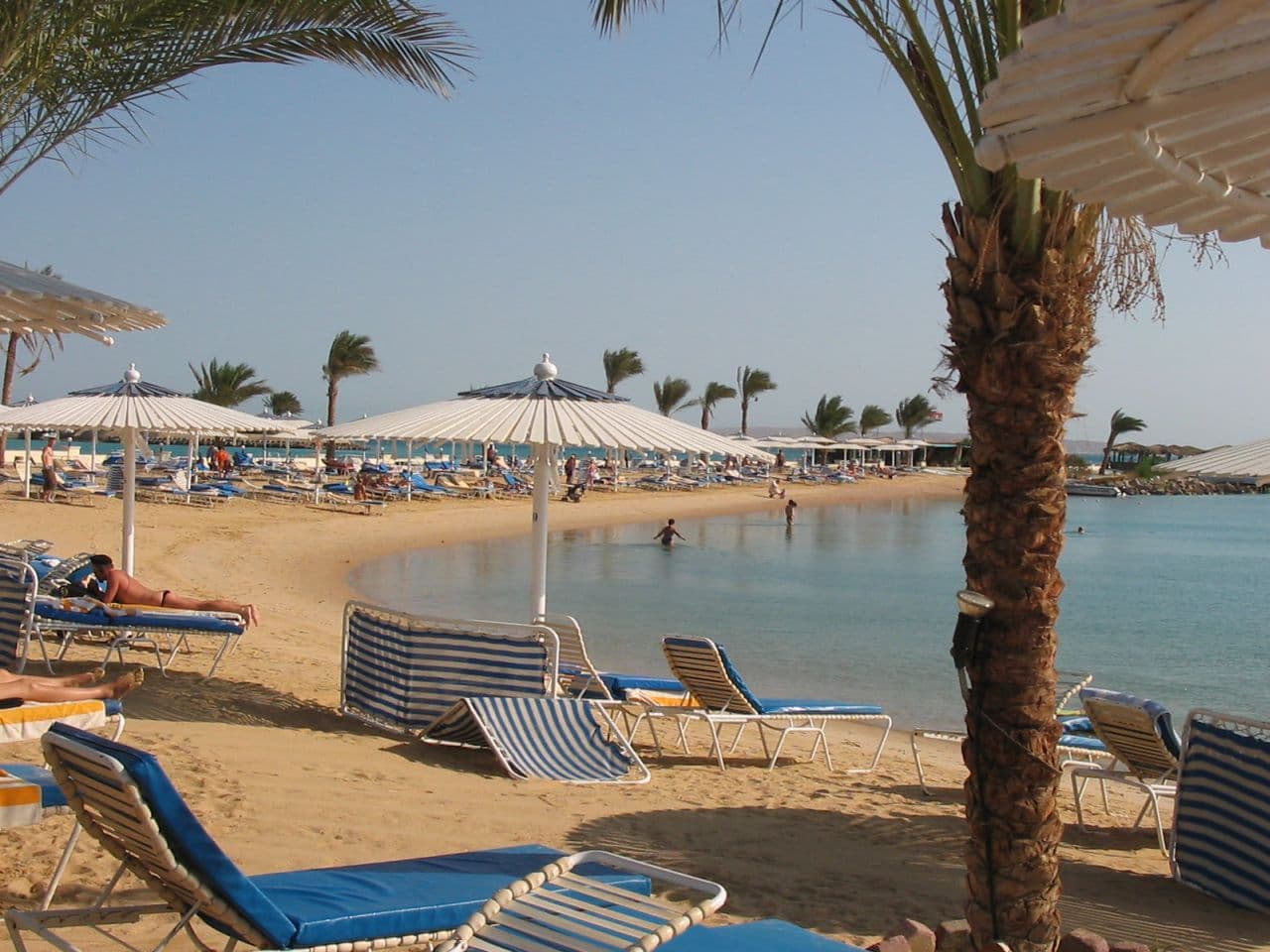
Skip western Turkey on this trip. Ephesus, near the Aegean coast, and Pamukkale, inland behind it, are both worth seeing, but they add flights and days to an itinerary that is already long. Skip the Red Sea resorts too; if you want slower days, take them in Cappadocia. And one night in Cappadocia is not worth the two flights it costs you.
On the Egyptian side, the cuts are Alexandria and the long day trips out of Luxor. Alexandria is about three hours from Cairo each way, so it takes a full day, and most of the ancient city is gone or under water. Dendera and Abydos lie north of Luxor, off the cruise stretch entirely, and are a long day by road. Both are defensible on a dedicated Egypt trip and neither survives contact with a fortnight that also contains Istanbul.
Abu Simbel is the genuinely difficult call, because it is the most impressive single thing in Egypt after Giza and it costs a whole day from Aswan by road, or a good deal more money by air. If your itinerary is at the eighteen-day end, take it. At fourteen days, leaving it out and doing the rest of the trip properly is the better decision, and it is the one we would usually recommend.
Who this combination does not suit
It does not suit a first trip with small children, or anyone with limited mobility who wants an easy fortnight. Egyptian temple approaches are sand and uneven stone, Nile boats are reached by gangplank with stairs rather than lifts between decks, and Cappadocia's underground cities involve low, narrow, steeply pitched passages. None of that rules the trip out, but it needs describing honestly to whoever is booking it, before the deposit rather than after.
It also does not suit anyone whose real interest sits clearly on one side. If what you want is the pharaonic material in depth, the same fortnight spent entirely in Egypt buys Abu Simbel, Dendera and Abydos, the Western Desert or a week on the Red Sea, at a much slower pace. If what you want is Turkey, the days you would spend in Cairo would buy the Aegean coast instead. The combination is for people who want two distinct things and accept that each gets the shorter version.
How are Egypt and Turkey tours arranged?
The two halves are not equally hard to organise. Turkey you can largely book yourself: domestic flights, hotels and guides are simple to arrange online. Egypt is different. Guides there are licensed by the state, cruise cabins and internal flights are often held in blocks months ahead, and the quality of your guide decides how much of the day makes sense.
So a combined trip is usually built around a planned Egyptian section run by a ground operator in Cairo, with the Turkish leg arranged alongside it or left to you. Itineraries are quoted from an enquiry rather than sold at a checkout. On safety, read your own government's current travel advice for both countries, which varies by region, before you fix anything.
Book the constrained parts first and leave the flexible parts late. The constrained parts are the Egyptian ones: the guide, the boat and the internal flights for April or October, which go several months out. Cappadocia's cave hotels tend to be small and sell out early for the same months. Istanbul is the piece that can be fixed last, and the Istanbul to Cairo hop runs often enough that it rarely dictates the shape of the trip. If you are quoting the trip out, ask specifically who is guiding the Egyptian days and whether they are a licensed Egyptologist, because that answer changes the fortnight more than the hotel list does.
Common questions
Do we need visas for both countries?+
They are separate applications. Egypt requires a tourist visa for most visitors, applied for online in advance or, for many nationalities, bought on arrival at the airport. Turkey waives the requirement for many nationalities and runs an e-visa for the rest. Rules change and depend on your passport, so check both against your own nationality.
Is a Nile cruise worth it on a trip this long?+
Yes, if you give it three or four nights. Sailing between Luxor and Aswan removes the long drives and the boat doubles as your hotel, which counts for something on a fortnight with two countries in it. For a single night it is not worth the packing; stay in Luxor and drive out to the sites instead.
Can we add Jordan or Greece as a third country?+
Only with more than three weeks. A third country means another set of flights, another arrival day and another currency, and the usual result is that all three feel thin. With eighteen days, spend them on Egypt and Turkey properly instead of stretching the same time across three.
How far ahead should we book?+
For April or October, several months. The better Egyptologist guides and the smaller Nile boats go first for the shoulder months, and Cappadocia's cave hotels tend to be small, so they sell out early. Istanbul is the flexible part, with rooms usually available at shorter notice.
Which country should we visit first?+
Egypt first in spring, without much argument, because every week you delay it costs you comfort at sites with no shade. In autumn the case is weaker and flight routing can decide it. Ending in Istanbul also suits the energy of the trip, since the Egyptian half is the one with the early starts and the long days on your feet.
Is April or October the better month for both?+
October, on balance. Early to mid-October gives you Turkey still in season and Egypt cooling into its own, without the khamsin winds that can grey out a day at the pyramids in spring. April works and is the classic choice, but it carries the dust risk, Easter crowds in some years, and heat building fast in Upper Egypt through the month.
How many flights does this trip involve?+
Usually six on top of your long-haul arrival: Cairo to Luxor, Aswan to Cairo, Cairo to Istanbul, Istanbul to Cappadocia and back, then home. Each is short, and together they consume most of two days once transfers and check-in are counted. That is the main reason a twelve-day version of this trip does not work.
Can we skip Cappadocia and just do Istanbul?+
Yes, and it is a sensible cut if your fortnight is tight. It removes two internal flights and buys back the better part of two days, which can go to a third night in Cairo or a night in Aswan after the cruise. You lose the landscape half of the Turkish leg, which is the part least like anything in Egypt, so it is a real loss rather than a free saving.
Do the balloon flights in Cappadocia and Luxor duplicate each other?+
No. Cappadocia is about the rock landscape immediately below you; Luxor is about the line where green farmland stops and desert begins, with the Theban cliffs above the tombs. Both are cancelled for wind often enough that you should book each for your first available morning rather than your last.
What should we leave out of the Egyptian half?+
Abu Simbel, the Red Sea, Alexandria, and Dendera and Abydos. All are worth seeing and none of them fits a fortnight that also contains Istanbul and Cappadocia. The Egyptian half of this trip is Cairo plus the Luxor to Aswan stretch. If one of those omissions is the reason you are travelling, make Egypt a trip of its own instead.
Is it a problem that both countries observe Ramadan?+
Not usually, but it changes the rhythm. Sites stay open, hours shift, some restaurants close during daylight and the cities go quiet in the afternoon and busy late. The dates move about eleven days earlier each year, so check where it falls against your travel window. The Eid holiday at the end is a genuine peak for domestic travel in both countries.
Official sources
Entry rules, opening hours, security advice and exchange rates all move. Check them at the source, not here.
Written and checked by the Nile Trip Guide editorial team · Last reviewed . Entry rules, prices and opening hours change — check anything critical against the official sources linked on this page.
Plan this trip
Tell us your dates and we will price it
A real itinerary with real prices, usually within 24 hours. Nothing is booked and nothing is charged until you say yes.
The route most people take first, at the length it was built for: Giza and the Grand Egyptian Museum, then a flight to Luxor and four nights sailing down to Aswan.
No boat on this one. Giza and the Grand Egyptian Museum, a night in Luxor for both banks, two nights on the Red Sea, then back to Cairo for the Citadel, Coptic Cairo and the Royal Mummies.
Five nights in Cairo either side of a four-night sail from Luxor to Aswan. The Cairo days are private, just your party and a guide; the sightseeing off the boat is shared with a small group.