Is Alexandria worth a day trip from Cairo? Day trips are sold and they do work, but you leave before dawn, see three sites at speed and get back after dark. One night is the sensible minimum, and for a lot of first-time visitors the honest answer is to leave Alexandria out of this trip entirely and go to Luxor instead.
The short answer: one night, or nothing
A day trip to Alexandria works in the sense that it is possible and people sell it. It is a long day for what it is. You leave before dawn, you see three sites at speed, and you are back in Cairo after dark. Everything that makes the city likeable — the Corniche at dusk, a slow coffee in an old Greek café, fish laid out on ice at Anfoushi — is the part a day trip cuts.
One night is the sensible minimum. Two if you want an evening on the Corniche and a slow morning downtown. That is not us upselling: it is the difference between visiting three monuments and visiting a city.
But the prior question is whether Alexandria belongs in this trip at all. If you have seven days and you have not seen Luxor or Aswan, go there first. The pharaonic sites are stronger, and Alexandria will still be here. At ten days or more, or on a second trip where the Nile is already done, it earns a night or two comfortably.
What the journey actually costs you
Alexandria is roughly 220 km from Cairo. The fast trains take about two and a half hours and are the civilised option. By road it is about three hours each way, longer if Cairo traffic is having a bad morning. The desert road itself is fast divided highway and not the problem.
The problem is that road times in Egypt are not promises. Security checkpoints sit on most intercity routes and foreign passengers are routinely asked for passport details, so keep a passport or a copy within reach. Most checks take a couple of minutes and occasionally one takes far longer. Cairo's own congestion adds another unknown at either end. The working assumption should be that any road journey may take noticeably longer than the map says.
Put that together and a day trip is five to six hours of travelling before you have looked at anything, with the variance sitting at the end of the day rather than the start. That is why day trips leave in the dark. It is also why the last site on the list is the one that gets cut when the morning runs late.
Train or car, and how the day actually runs
If the day trip is happening anyway, take the train. The fast services cover the roughly 220 km in about two and a half hours and are not at the mercy of Cairo's traffic or of the checkpoints in between, which are the two most variable parts of the journey by car. A train leaves when it leaves and arrives more or less when it says it will. The only real argument for a car is that you want to stop somewhere on the way, and the Cairo to Alexandria desert road gives you no reason to.
Do the arithmetic and the shape of the day is fixed before you start. Five to six hours of travelling comes out of a day that has perhaps fourteen usable hours in it, and lunch, the transfers between sites and the walk in from a station or a car park take more. The sites themselves are not long: an hour at the library unless you like libraries, half an hour on the ramparts at Qaitbay, twenty minutes at Pompey's Pillar. The catacombs are the one that deserves unhurried time, and on a day trip they rarely get it.
That is why a day trip leaves in the dark, and why the last item on the list is the first casualty. Because the uncertainty in a road day sits at the end rather than the start, a slow morning is paid for in the late afternoon, usually with Kom el-Dikka or the Graeco-Roman Museum. If you are booking a private day rather than travelling independently, ask which sites are guaranteed and which are subject to time. An honest operator will tell you; a brochure will not.
What you can realistically see in one day
Three sites, at pace. The catacombs of Kom el Shoqafa are the strongest single site in the city and should be first on any list: a spiral staircase drops you into a second-century AD tomb complex where Egyptian, Greek and Roman carving share the same walls, including Anubis in a Roman soldier's uniform. The lowest level is usually flooded.
The Bibliotheca Alexandrina, opened in 2002 on the Corniche at Shatby, is the obvious second. It is a working library and cultural centre rather than a reconstruction of the ancient library, and the reading room is the point: a huge tilted disc of a building, stepped floors, light through the angled roof. An hour is enough unless you like libraries, in which case take two. Qaitbay Citadel, on the site of the Pharos lighthouse at the tip of the eastern harbour, is fairly bare inside; you go for the position and the view back along the Corniche.
What gets squeezed out is everything with less obvious billing. Pompey's Pillar takes twenty minutes and has nothing to do with Pompey — it was raised for the emperor Diocletian around AD 298. Kom el-Dikka has a small Roman theatre and bath house. The Graeco-Roman Museum, reopened in 2023 after a long closure, holds the best of what has been dug out of the city, and it is the one most day trips never reach.
If you only have one day, do it in this order
The order is not arbitrary, because one site is a good deal better than the rest and one part of the city is compact. Start with the catacombs of Kom el Shoqafa. It is the strongest thing in Alexandria, it is the one that rewards unhurried time, and putting it first is the only way to protect it from a morning that runs late.
Kom el-Dikka and the Graeco-Roman Museum sit close by, and with Pompey's Pillar as a quick add-on that is the Graeco-Roman half-day: the part of the city that most needs someone to explain it, and the part a rushed day cuts first. Do it as one block rather than scattering it across the map, because the driving between sites in a city of this size is not free either.
The library and a stretch of the Corniche fill the middle, and Qaitbay Citadel at the western end of the harbour is the natural finish, with the light behind you and the fishing boats below. Half an hour on the ramparts is enough for most people. What that order does is front-load the part most sold day trips leave until last, which is precisely why the Graeco-Roman Museum is the site day trippers most often never reach: it sits at the end of the list, and by then the morning has already gone.
What Alexandria actually is, and why day trippers leave flat
The disappointment people report after a day trip is rarely about the driving. It is about expecting one city and finding another. Alexandria was founded by Alexander the Great in 331 BC and was Greek from the start. After his death it became the capital of the Ptolemies, the Greek dynasty that ruled Egypt for the best part of three centuries and ended with Cleopatra, the last of the line. The story runs Greek, then Roman, then Byzantine, then Ottoman, then modern. The pharaohs barely feature.
Under the Ptolemies and then Rome it was one of the great cities of the ancient Mediterranean, a port and a centre of learning. That version is essentially gone, and not because of a single catastrophe. Sieges, earthquakes, the loss of status once Rome and later Constantinople mattered more, and the slow silting and rebuilding that buries an old city under a living one did the work between them. The ancient street plan lies beneath the modern grid and, in places, beneath the harbour.
So the city you actually walk is largely a nineteenth- and twentieth-century one, built when Alexandria was a cosmopolitan trading port with large Greek, Italian and other foreign communities. That is where the faded European facades downtown come from, and the old cafés, and the flat kept as a small museum for the Greek-Alexandrian poet Cavafy. It is a working city of roughly five million people, Egypt's second, and it feels like a different country from Cairo. A day sold on ancient Alexandria delivers a modern Mediterranean one instead, and the gap between those two is where most of the complaints come from.
The library, the lighthouse and the city under the harbour
Both of the things everyone has heard of are gone, and it is better to know that before you commit a day to the road. The Library of Alexandria was not burned down in one night. It declined over centuries: fire during Caesar's siege in 48 BC, the loss of royal funding, scholars drifting elsewhere, the general unravelling of the city under Roman rule. By late antiquity it had stopped functioning. Nothing of it survives, and its exact site is not even known.
The Bibliotheca Alexandrina, opened in 2002 near where the ancient royal quarter stood, is a working library and cultural centre, not a reconstruction, and it holds none of the ancient collection, because there is nothing to hold. Read as contemporary civic architecture and a genuine research institution it is impressive, and there are small museums inside, including antiquities and manuscripts. Read as a window onto the ancient library it is a name and little else. Visitors who came for the second thing leave flat, and a day trip gives them no time to be won round by the first.
The lighthouse goes the same way. The Pharos, counted among the Seven Wonders of the ancient world, came down over centuries with earthquakes among the causes, and by the 1470s Sultan Qaitbay was reusing its fallen stone in the fort that now stands on the spot. What is left of the old royal quarter and of the lighthouse lies in shallow water in the eastern harbour, close to shore, and some of it has been raised — a number of the sphinxes and reused blocks around the city came up out of that water rather than out of the ground. You can dive the rest with a certified operator, though the harbour is silted, visibility is often only a metre or two, and whether a dive runs at all depends on the weather that day. None of that fits inside a day trip, and most visitors get more from the pieces that have been lifted and cleaned up than from the seabed.
What the overnight actually buys
Atmosphere, which sounds like a soft argument until you notice it is most of the city's case. The curve of the Corniche at dusk, the old Greek and Italian cafés downtown, the fish at Anfoushi, the poet Cavafy's flat kept as a small museum. Some people find that thin. Others find it the best day of their trip, and none of them found it on a coach at 4pm.
The second night adds a downtown morning without a departure hanging over it. The grid is walkable and the Corniche is a long flat walk, though crossing the Corniche road takes nerve. Taxis are cheap and easy. Hassle is lighter than in Luxor or at the pyramids, because far fewer visitors come — which is itself a reason to slow down here rather than speed up.
Where the nights go in the itinerary matters as much as how many. We usually place Alexandria at the start or end of a trip, either side of the international flights into Cairo, rather than squeezing it between Nile days. Dropped into the middle it costs you two travel days and breaks the run south.
Fish, cafés and the evening you are trading away
Alexandria is where you eat fish, and it does it better than anywhere else in the country. The form is simple and worth knowing before you sit down: you choose your fish by weight from a bed of ice at the front of the restaurant, and it comes back grilled or fried with salads and bread. The seafront around Anfoushi, near the western harbour, is the obvious place for it, with the day's catch laid out to pick from. It is one of the genuine pleasures of the city, and it happens at dinner, which is exactly when a day trip is on the road back to Cairo.
The other thing worth an evening is the old café culture downtown. Alexandria's cosmopolitan century left behind Greek and Italian cafés with the fittings still in place, and an unhurried coffee in one of them is part of what the city is for. It is a slower, more European register than Cairo, and it rewards travellers who sit in it rather than clear a checklist of monuments before dark.
We labour this because it is the whole argument in miniature. The monuments in Alexandria are good without being extraordinary, and a visitor who sees only the monuments is quite reasonable to conclude the place was not worth the drive. The people who come back saying Alexandria was the best part of their trip are almost always describing an evening — the Corniche, a table of fish, a café with the fans going — and none of that is available to anyone with a car waiting at four in the afternoon.
What that day costs you in Cairo
A day is not free, and the honest comparison is not Alexandria against sitting in the hotel. Spent on the coast it is a day not spent in Cairo, and Cairo has more left in it than most itineraries allow. Two full days there is the minimum — one for Giza and the Grand Egyptian Museum, one for Islamic and Coptic Cairo — and three lets you add Saqqara and Dahshur without cutting anything.
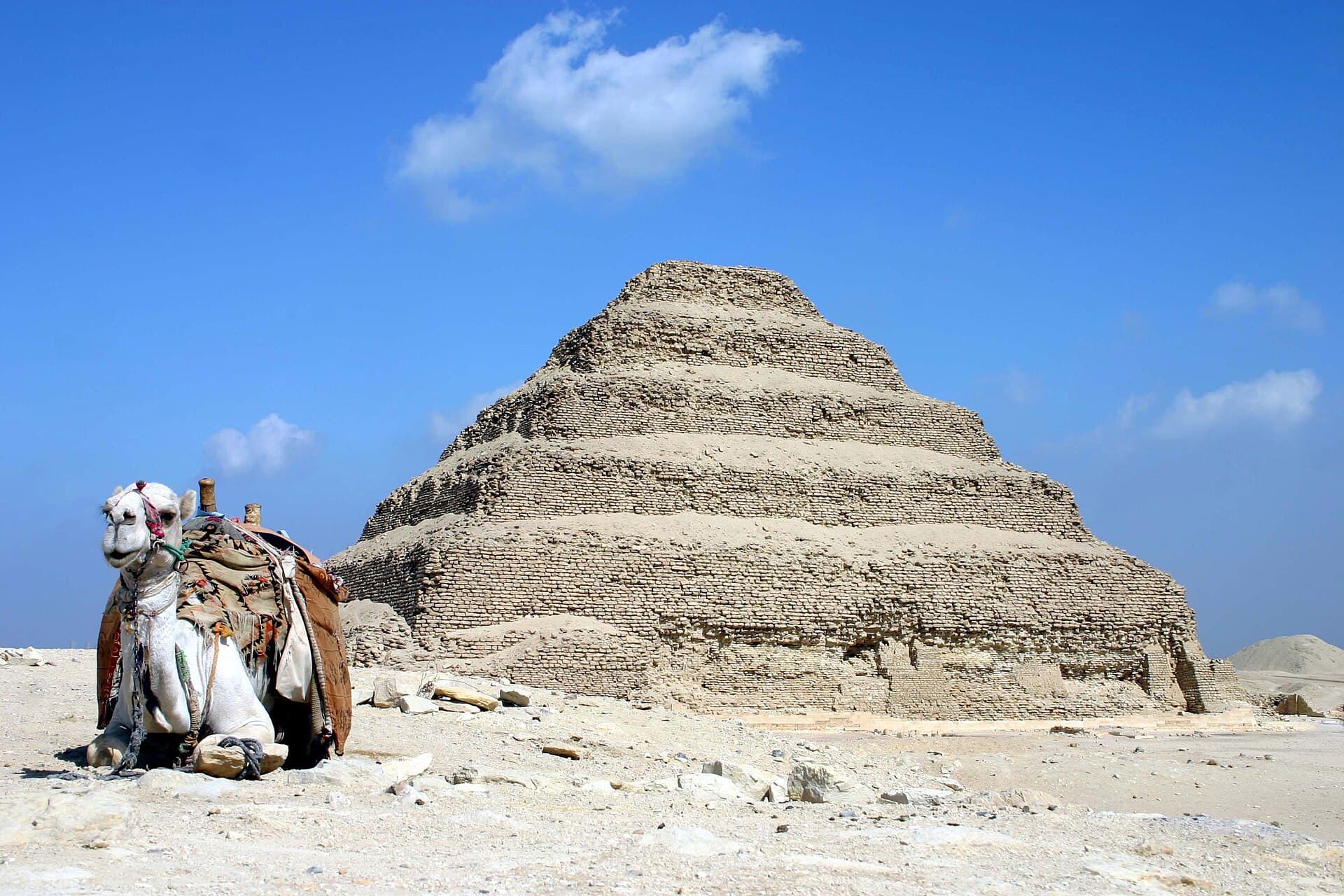
That Saqqara and Dahshur day is the direct competitor, and on a short trip it wins on every measure. It is pyramids older than anything at Luxor, usually near-empty, and about an hour out of the city rather than three. The Grand Egyptian Museum, roughly two kilometres from the plateau and fully open since November 2025, is the other candidate, and most visitors give it less time than the Tutankhamun collection shown together in one place actually deserves. A slow afternoon in a district like Zamalek, or the Tahrir museum, are the quieter options.
Put that way, the choice is six hours of road against a near-empty pyramid field an hour from your hotel, or against a museum most people rush. The Alexandria day return only starts to make sense once the Cairo days are genuinely full, and on a five- or seven-day trip they are not. This is the single calculation most people skip, and it is the one that decides the question.
Where Alexandria fits on trips of different lengths
At five days the usual answer is Cairo plus one leg of the south, and Alexandria does not fit. There is one exception worth naming: the five-day trip that gives up the south entirely and stays in Cairo. One hotel, no internal flights, no four in the morning alarm — Giza and the museum at a walking pace, a full day south to Saqqara, Dahshur and Memphis, and a day out to Alexandria on the fast train. It is not the trip people picture, but it is a better five days than a dash between two cities, and it is the one itinerary where the Alexandria day return genuinely earns its place.
At seven days, no. A week holds Cairo and one leg of the Nile and very little else, and the pharaonic core has to come first. At ten days the second Nile city and some breathing room go in ahead of the coast. At twelve you have room for one real addition on top of the classic route, and an Alexandria overnight is a fair candidate against three or four nights on the Red Sea, Dendera and Abydos out of Luxor, or a night camping in the White Desert. One of those, not three.
At a fortnight Alexandria goes in comfortably, as one night or two at the start or the end, either side of the international flights that land in Cairo anyway. Put at the end it works as a deliberate change of gear: after a week of temples in the heat, a couple of cooler days by the sea with a different history behind them is a mercy rather than a chore. Dropped into the middle it costs two travel days and breaks the run south, which is the last thing a Nile itinerary needs.
Who should skip Alexandria altogether
Anyone on a first trip of about a week who has not yet seen Luxor or Aswan. That is the clearest case and we will keep saying it. The pharaonic sites are stronger and the days are better spent.
Anyone who came for pharaonic Egypt full stop. Alexandria was founded in 331 BC, at the very end of the pharaonic era, and its story is Greek, Roman, Byzantine, Ottoman and modern. You will see reused pharaonic blocks and a few sphinxes brought in from elsewhere, some raised from the harbour, and that is about it. Nor is it a place where you walk among ancient ruins: most of the ancient stone is under the modern streets or under the harbour.
Anyone hoping for a beach day. The city beaches are narrow, busy and hemmed in by Corniche traffic, the sea is not the reason to come, and local women swim clothed, so a swimsuit on a city beach draws attention. And anyone unsteady on stairs should think hard, because the catacombs are the one site with no substitute: a spiral staircase wrapped around an open shaft, then low, damp passages on uneven ground, no lift, not wheelchair accessible, and nothing equivalent to see from the top.
The beaches, and who the seafront is actually for
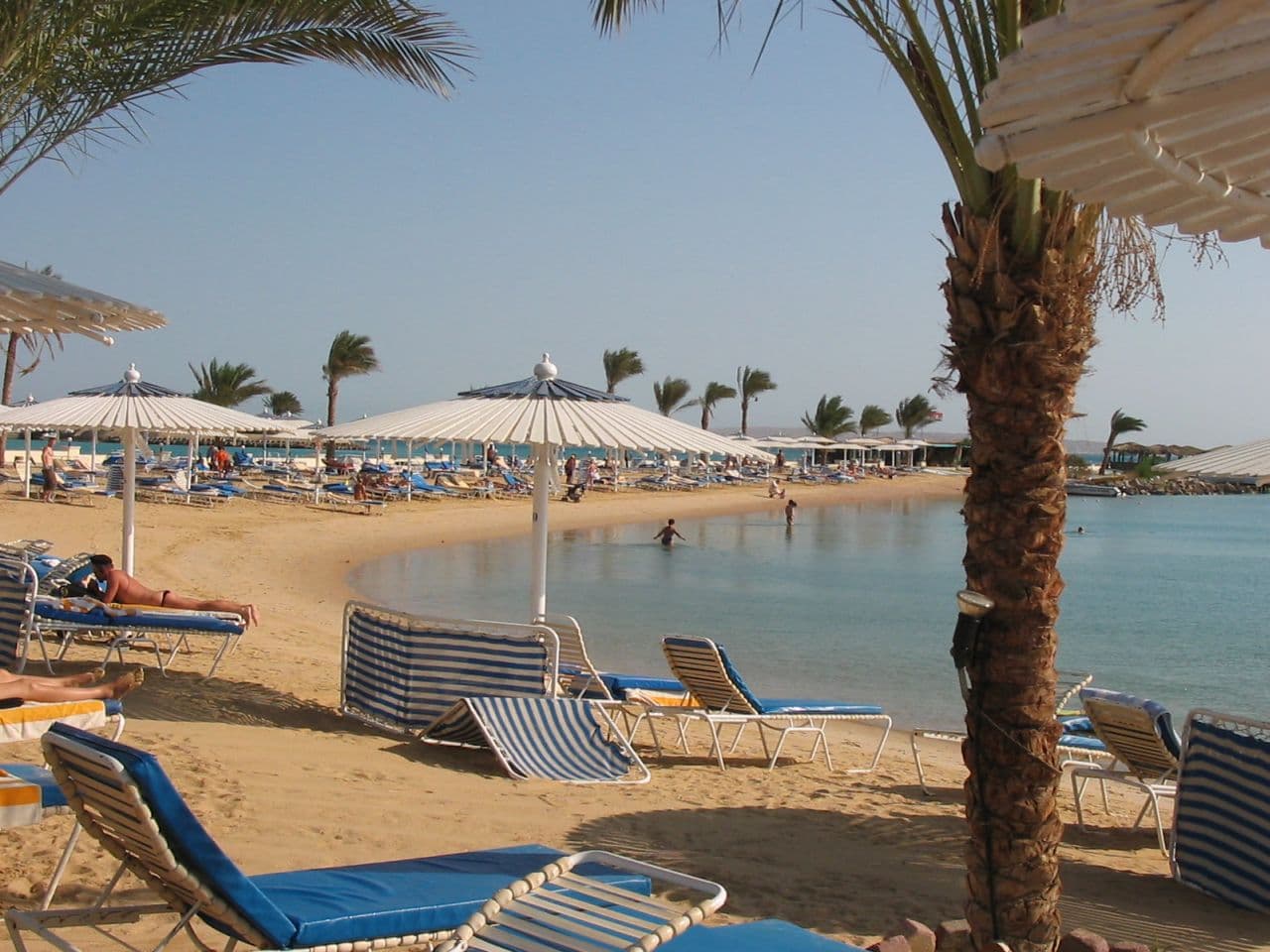
The beach question comes up often enough to answer properly. The city beaches are narrow and busy, cut off from the road by a low wall, and the water near the harbours is not something we would recommend swimming in. The sea here is what makes the city pleasant to be in — the breeze, the light, the long curve of the Corniche — rather than something you get into.
If swimming genuinely matters to you, the quieter stretches run east, towards Montazah and Maamoura, and they are better than anything in the centre. None of that is reachable on a day that already has three sites in it and a train to catch, which is another way of saying the beaches belong to the overnight version or to nobody.
It is also worth understanding who the seafront is for. July and August are the busy months here, when Egyptians themselves fill the beaches, because summer in Alexandria runs at around 30C against Luxor's 40C and in August the city is several degrees cooler than Cairo with a sea breeze behind it. This is where Egypt comes to escape its own heat. The crowd on the sand in August is a domestic holiday crowd rather than a tourist one, which is part of the city's appeal and also the reason a foreign visitor in a swimsuit is the odd thing on that beach rather than the normal one.
The month you go changes the answer
Alexandria runs on a different calendar from the rest of Egypt, which is the part visitors get wrong. Summer here is around 30C rather than the 40C of Luxor, so July and August are the busy months and the seafront fills with Egyptian holidaymakers. That is the opposite of the pattern further south.
Winter is the trap. It is mild but genuinely wet by Egyptian standards — Alexandria gets more rain than almost anywhere else in the country, roughly 200 mm a year, and a grey, blustery week in January is normal. For scale, Cairo averages about 20 mm in a year. A January day trip is the worst version of this whole idea: six hours of travelling for a wet Corniche and three indoor stops.
Spring and autumn are the reliable choice: warm, dry enough, and the sites are quiet. If your Egypt dates fall in those months, Alexandria is worth an overnight. If they fall in January, spend the days elsewhere and come back another year. It is the one part of the country where the season argues against going rather than simply against the hour you set out.
If you go, spend the money on a guide rather than the car
You do not need a guide to walk the Corniche or visit the library. You do need one for the catacombs, Kom el-Dikka and the Graeco-Roman Museum, where the on-site labelling is thin and a guide who knows the Greek and Roman period turns a set of stones into a story. If you pay for only one guided day in Alexandria, spend it on those three.
The reason is that the interest in these sites is historical rather than visual. A single column, a small theatre and a set of rock-cut tombs do not explain themselves, and a visitor left to read the signage will come away thinking Alexandria has very little in it. With someone who can place them, they become the story of a city that was Greek, then Roman, and kept its own gods in the mix throughout, which is the only thing here that Luxor and Aswan cannot show you.
Around that, the city is straightforward. Taxis are cheap and easy, English is widely understood downtown and less so in the western districts, and dress is more conservative than you might expect on a Mediterranean seafront — ordinary travel clothes are fine away from the water.
So, is Alexandria worth a day trip?
Rarely. As a day trip it is a lot of road for three hurried sites and none of the city. As an overnight, on a trip of ten days or more, or as a stop either side of the flights into Cairo, it is a genuine change of register: sea air, Greek and Roman history instead of pharaonic, and a working Egyptian city getting on with its day rather than a tourist strip.
If the only way it fits is as a day trip, and the alternative is another day in Cairo or a night in Luxor, take the alternative. Alexandria rewards the people who slow down in it and punishes everyone else with a very long day.
The one version of the day return we would defend is the Cairo-only trip that never goes south at all, where the fast train makes Alexandria a reasonable fourth or fifth day rather than a raid. Everywhere else, the choice is between doing it properly with a night in it and not doing it on this trip. Both of those are respectable answers. The pre-dawn coach is the one that is not.
Common questions
Can I do Alexandria as a day trip from Cairo by train?+
Yes, and the train is the civilised way to do it: the fast trains take about two and a half hours against roughly three hours each way by road, and they are not affected by Cairo traffic the way a car is. It still makes for a long day. You will get three sites at pace and none of the evening, which is the part most people end up liking best.
How far is Alexandria from Cairo, and how long does it take?+
Roughly 220 km. The fast trains cover it in about two and a half hours; by road it is about three hours each way and considerably less predictable, because it depends on Cairo's congestion at one end and the security checkpoints in between. Budget five to six hours of travelling for a return day, and expect the uncertainty to land at the end of the day rather than the start.
Is one night in Alexandria enough?+
One night is the sensible minimum and it works: it buys you an evening on the Corniche, which is the thing a day trip deletes entirely. Two nights adds a slow morning downtown without a departure hanging over it. Beyond two you are into a city that most visitors have finished with, unless the cafés and the Cavafy flat are your kind of thing.
Should I swap a day at the pyramids for Alexandria?+
No. Alexandria was founded in 331 BC, at the very end of the pharaonic era, and there is barely anything pharaonic to see: some reused blocks and a few sphinxes brought in from elsewhere. If temples and tombs are what you came for, that means Luxor, Aswan and the Giza plateau. Alexandria is a Greek, Roman and modern city, and it is worth seeing as that or not at all.
What should I do with the day instead if I stay in Cairo?+
Saqqara and Dahshur is the strongest answer: pyramids older than anything at Luxor, usually near-empty, and about an hour out of the city rather than three. The Grand Egyptian Museum, about two kilometres from the Giza plateau and fully open since November 2025, is the other, and most visitors give the Tutankhamun collection less time than it deserves. A slow afternoon in Zamalek or the Tahrir museum will also beat six hours of road.
Is the Bibliotheca Alexandrina the ancient Library of Alexandria?+
No, and this is where visitors are most often let down. The ancient library declined over centuries rather than burning in a single night, nothing of it survives, and its exact site is not even known. The Bibliotheca Alexandrina opened in 2002, on the Corniche near where the ancient royal quarter stood, and holds none of the old collection. As modern architecture and a working research institution it is impressive; as a window onto the ancient library it is a name.
Can I see the sunken ruins in the harbour on a day trip?+
Realistically no, and you would not get much from it if you could. Remains of the royal quarter and of the lighthouse lie in shallow water in the eastern harbour and can be dived with a certified operator, but the harbour is silted, visibility is often a metre or two, and whether the dive runs depends on the weather. Most visitors get more from the pieces that have been raised and cleaned up, which is what the Graeco-Roman Museum is for.
Is Alexandria better at the start or the end of an Egypt trip?+
Either, as long as it is not in the middle. We place it beside the international flights that land in Cairo anyway, which costs nothing extra in transfers. Dropped between Nile days it costs two travel days and breaks the run south. At the end it works as a deliberate change of gear after a week of temples in the heat.
Is Alexandria worth visiting in winter?+
It is the weakest season here. Winter is mild but genuinely wet by Egyptian standards — roughly 200 mm of rain a year, more than almost anywhere else in the country, and a grey, blustery week in January is normal. The sites still work, but the Corniche and the downtown walking, which are half the reason to come, do not. Spring and autumn are the reliable months.
Can someone with bad knees see the main sites?+
Partly, and the gap matters. The library, the Corniche and Qaitbay Citadel's position are manageable. The catacombs are not: a spiral staircase wrapped around an open shaft, low and damp passages, uneven ground, no lift, and no wheelchair access. There is no equivalent to see from the top, so anyone who cannot manage the stairs misses the single best site in the city — which is worth weighing before you commit the days.
Official sources
Entry rules, opening hours, security advice and exchange rates all move. Check them at the source, not here.
Written and checked by the Nile Trip Guide editorial team · Last reviewed . Entry rules, prices and opening hours change — check anything critical against the official sources linked on this page.
Plan this trip
Tell us your dates and we will price it
A real itinerary with real prices, usually within 24 hours. Nothing is booked and nothing is charged until you say yes.
The route most people take first, at the length it was built for: Giza and the Grand Egyptian Museum, then a flight to Luxor and four nights sailing down to Aswan.
No boat on this one. Giza and the Grand Egyptian Museum, a night in Luxor for both banks, two nights on the Red Sea, then back to Cairo for the Citadel, Coptic Cairo and the Royal Mummies.
Five nights in Cairo either side of a four-night sail from Luxor to Aswan. The Cairo days are private, just your party and a guide; the sightseeing off the boat is shared with a small group.