Egypt vs Morocco comes down to this. Morocco is the better first trip for most people, and Egypt is the bigger one. Egypt's case is the ancient world — pyramids, Nile temples, painted tombs on a scale nothing else matches — and it asks for more time, more heat and usually a driver. Morocco's case is living cities, mountains and dunes three hours from Europe.
Egypt
Morocco
Egypt
Morocco
What you actually see
Ancient monuments — temples, tombs, pyramids
Living cities. Medinas, souks, riads and food. Very little that is ancient
Signature experience
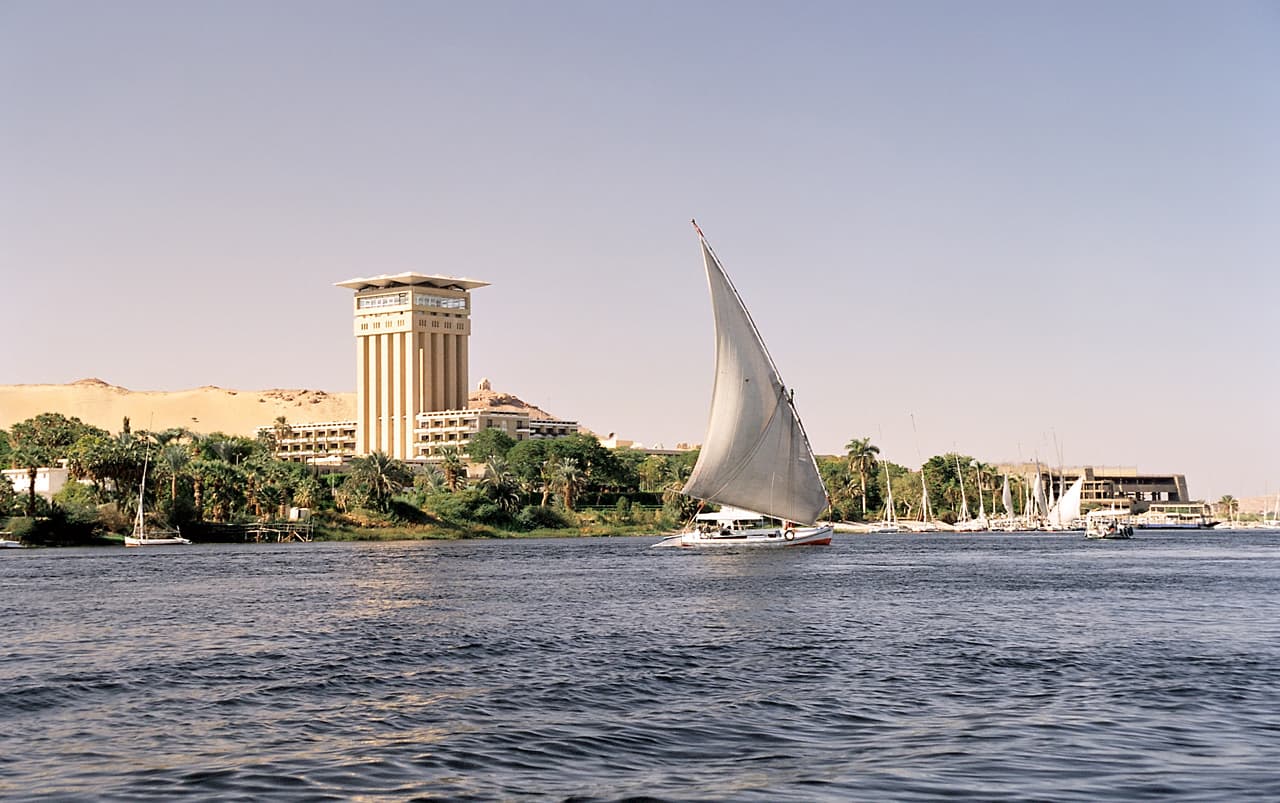
A Nile cruise between Luxor and Aswan
A night in the Sahara, and Marrakech itself
Ease of travel
Longer distances, internal flights, more structure needed
Easier. Good roads and trains, and a much smaller country
Hassle
Concentrated at the monuments, then it stops
More constant in the medinas, and more practised
Food
Decent, but not a reason to go
A genuine reason to go
Cost
Similar. Guides and drivers are cheaper
Similar. Riads offer better value than Egyptian hotels
Season
October to April
March to May and September to November
Best for
Anyone whose interest is the ancient world
Anyone whose interest is the living one, and the food
The short answer
Pick Egypt for the ancient world and Morocco for the present one. They are less interchangeable than the shared label of North Africa suggests: Egypt is a monuments trip with a river running through it, Morocco is a cities-and-landscape trip. Combining them means a flight of several hours because there is no land route worth taking, so treat it as two trips in one holiday rather than a tour.
Ancient sites or living cities?
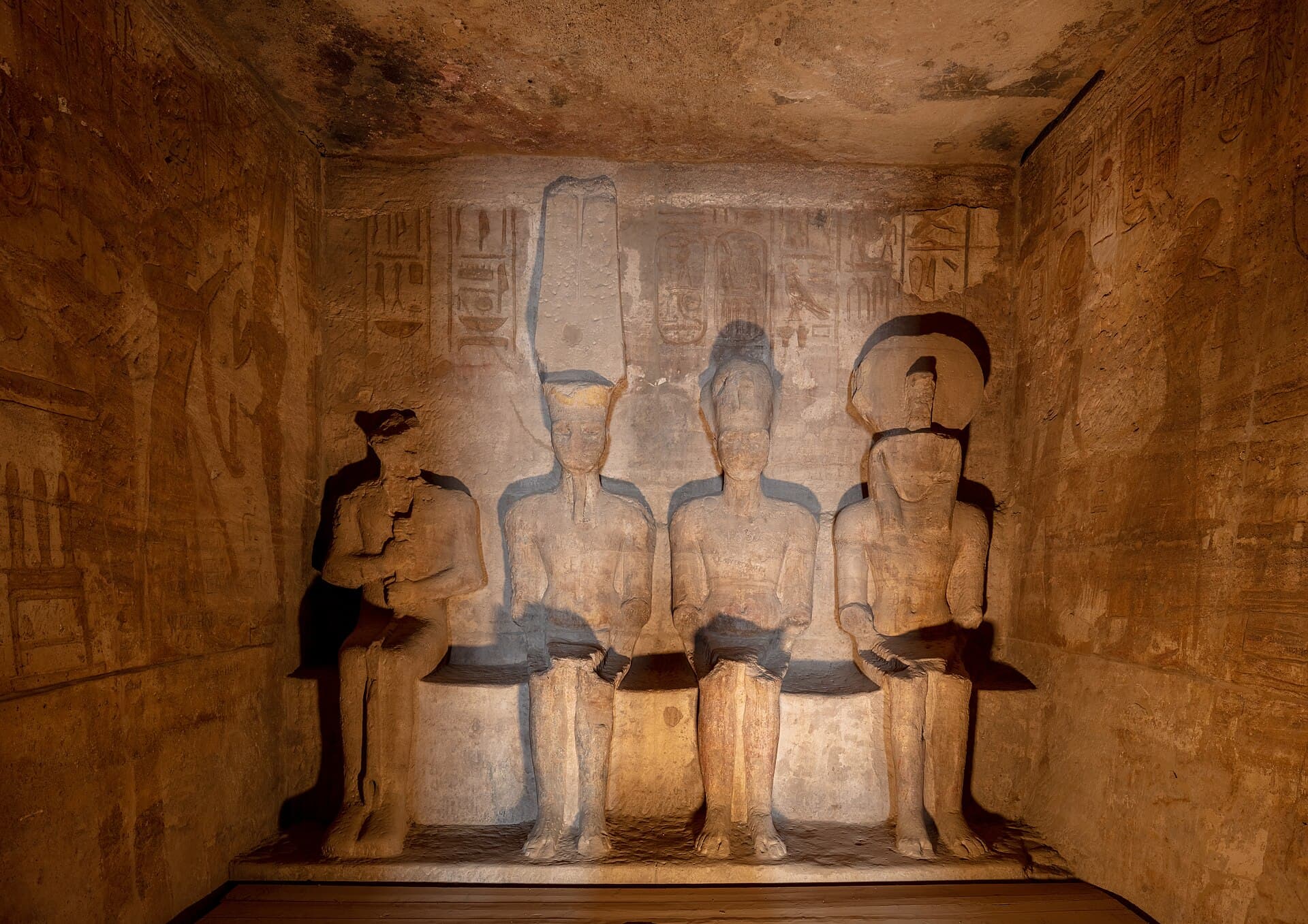
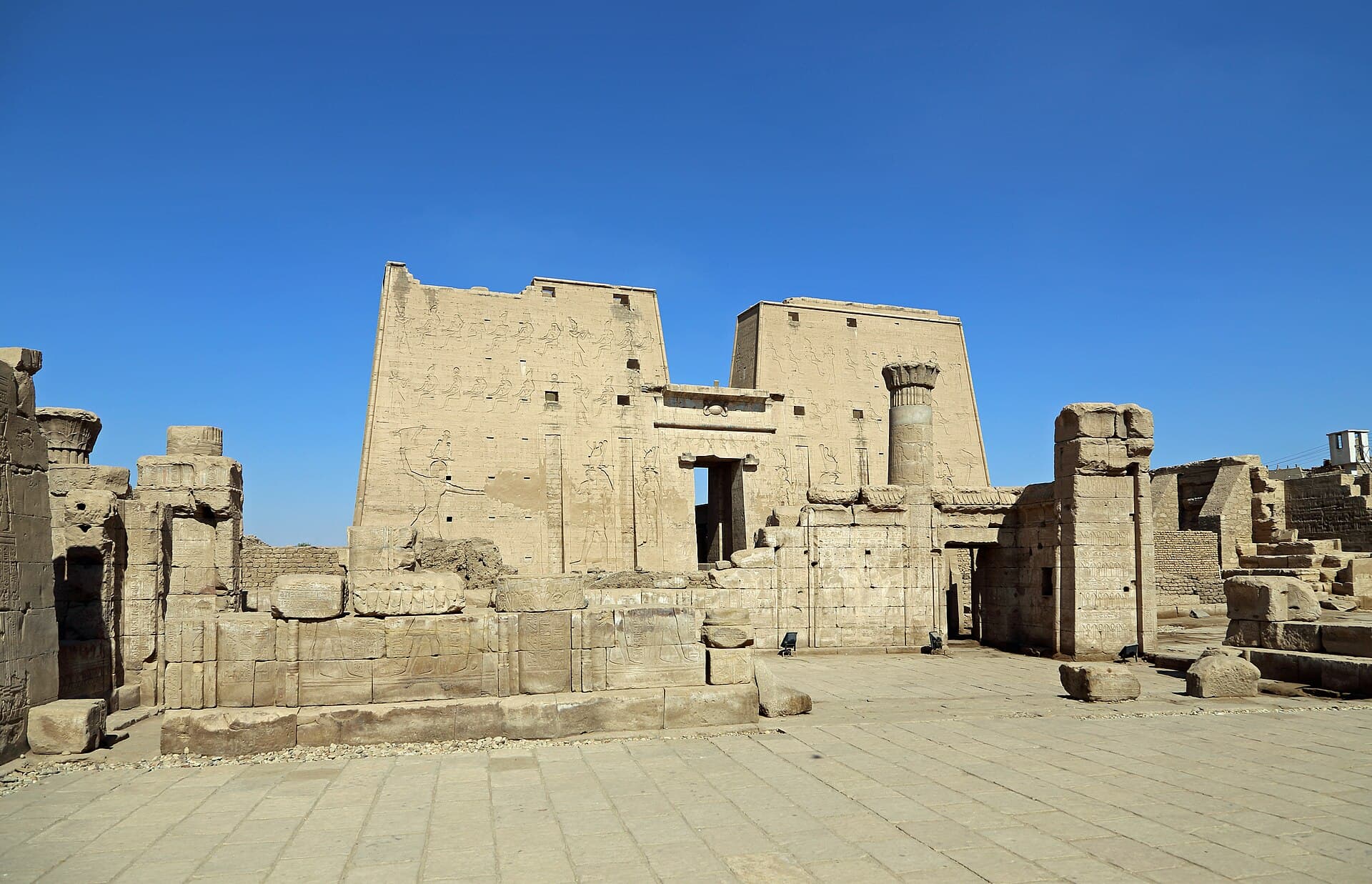
Egypt's advantage is stone. Giza, Saqqara, Karnak, the painted tombs on Luxor's west bank, Abu Simbel: monuments that were already ancient when Rome arrived in North Africa, and sites archaeologists are still opening. Morocco's ancient layer is thin by comparison. Volubilis is a respectable Roman town and worth half a day, but if antiquity is your reason for travelling, Morocco will disappoint you. Its strength lies elsewhere.
Morocco's is the living city. Fes has a medina that still works as a medina, with tanneries, foundries and food markets serving people who live there. Marrakech, Essaouira, Chefchaouen and the High Atlas villages give a week real variety. That difference shapes your days. In Egypt many mornings are site mornings: an early start, a few hours of concentrated looking, then heat and a long afternoon. In Morocco days are shapeless in a good way — walking, eating, sitting. If guided monument days feel like homework, Egypt will feel like work.
It is worth being precise about what Morocco's heritage actually is, because calling it thin invites the wrong conclusion. Morocco's monumental past is medieval and Islamic rather than ancient: the Koutoubia minaret in Marrakech, the merenid madrasas of Fes with their carved cedar and tilework, the Qarawiyyin, which has been running in some form for well over a thousand years and is often described as the oldest continuously operating university anywhere. Add the kasbahs on the road south, of which Ait Benhaddou is the one everyone photographs. That is a serious inheritance. It is simply a thousand years old rather than four thousand, and it is still in use rather than excavated.
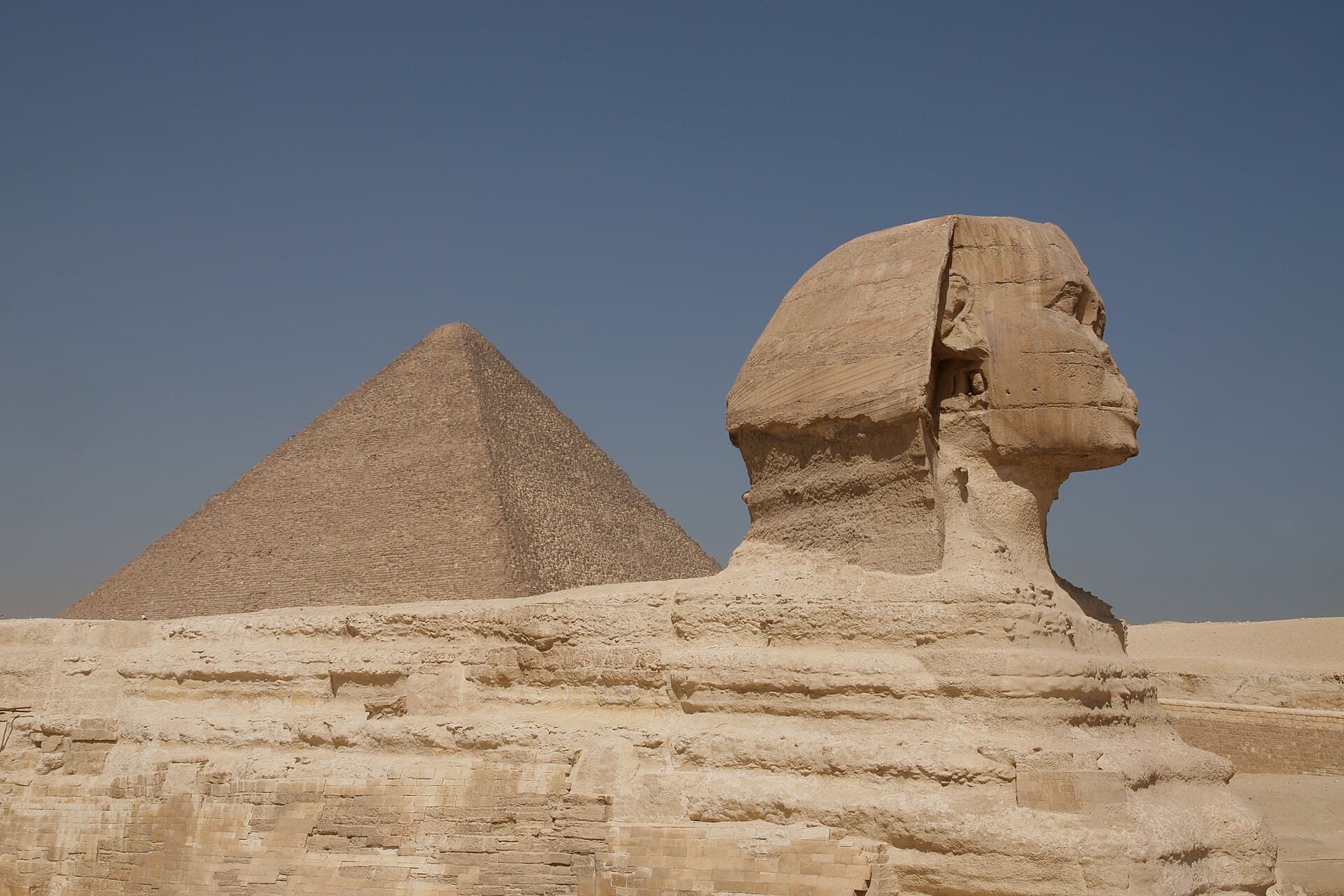
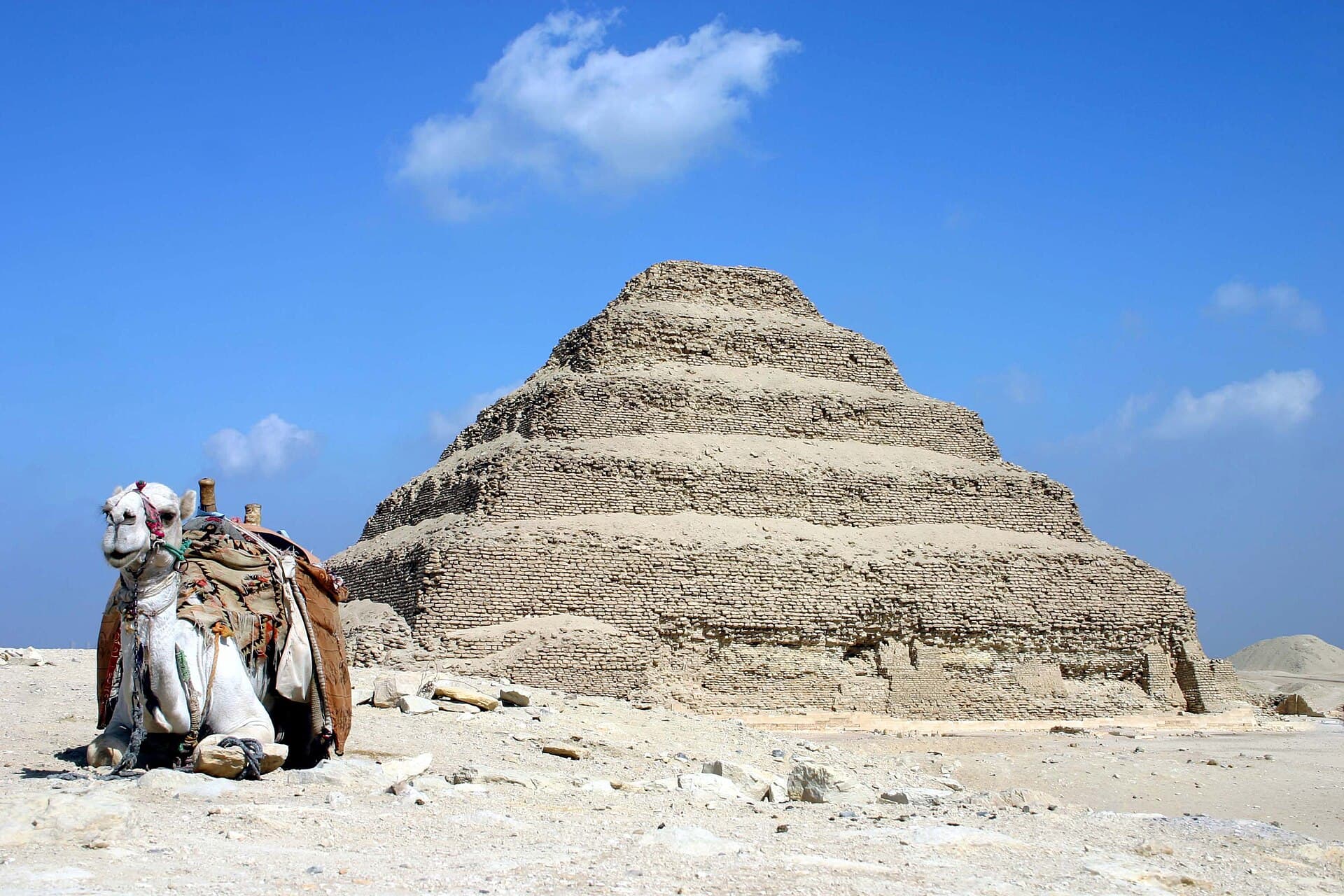
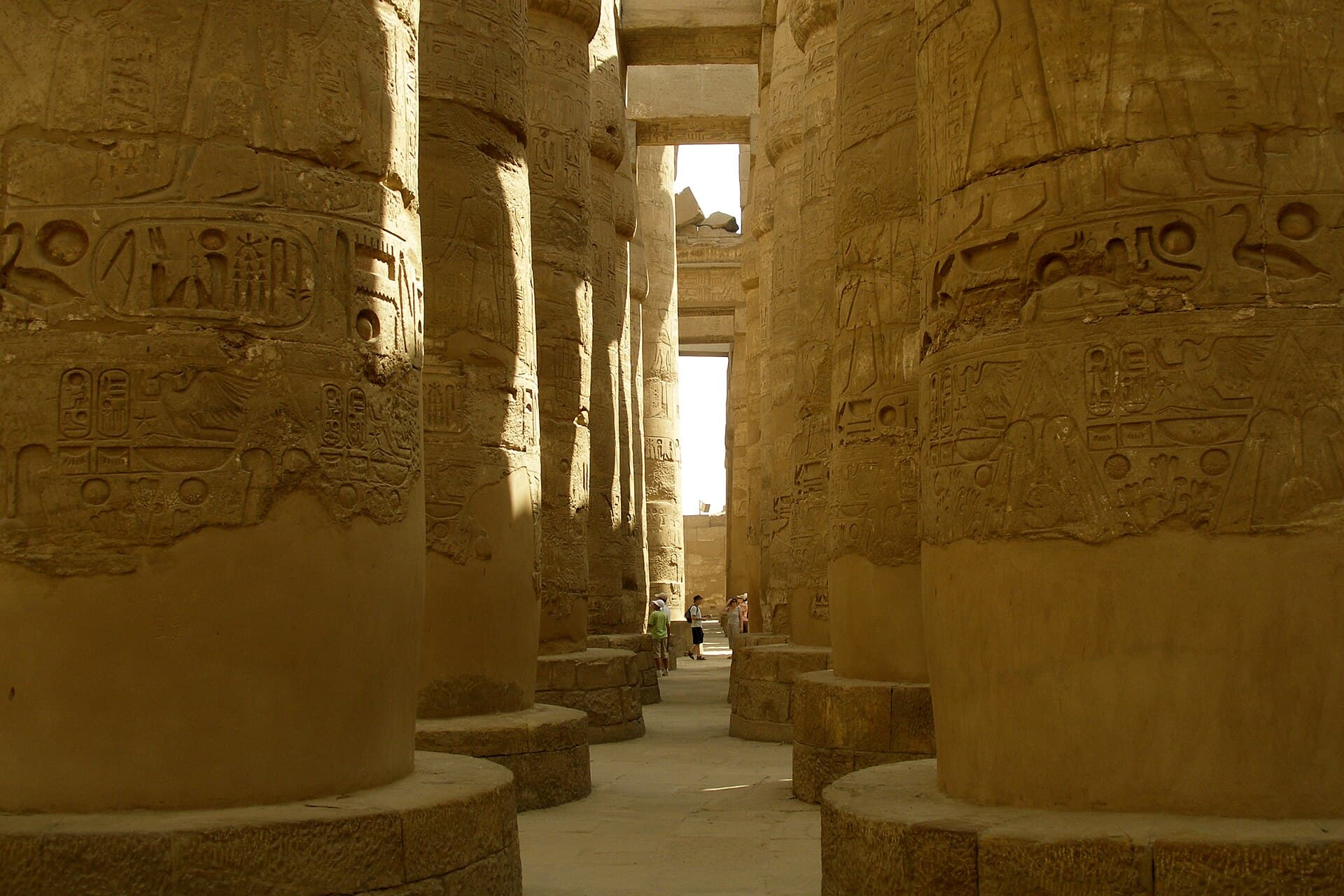
Egypt's sites, by contrast, are a sequence you move through rather than a set of separate buildings. Giza is roughly 4,500 years old. The Hypostyle Hall at Karnak holds one hundred and thirty-four columns in a single room. The tombs on the Luxor west bank were being cut and painted a thousand years after the pyramids were finished, and the Grand Egyptian Museum now gathers the portable half of that story in one place and rewards three hours rather than one. The thing most visitors actually remember is not the scale but the colour still sitting on tomb ceilings after three millennia.
What does a week look like in each country?
A Moroccan week is a finished holiday. Three nights in Marrakech covers the Jemaa el-Fna, the souks, the Koutoubia and a half-day in the Atlas foothills; two nights in Fes gives you the one medina in the country that genuinely needs two days; and the remaining nights go either to Essaouira on the Atlantic or to Chefchaouen in the Rif. Transfers are hours rather than half-days, and the two great cities are different from one another rather than two versions of the same thing. Nothing important is left out.
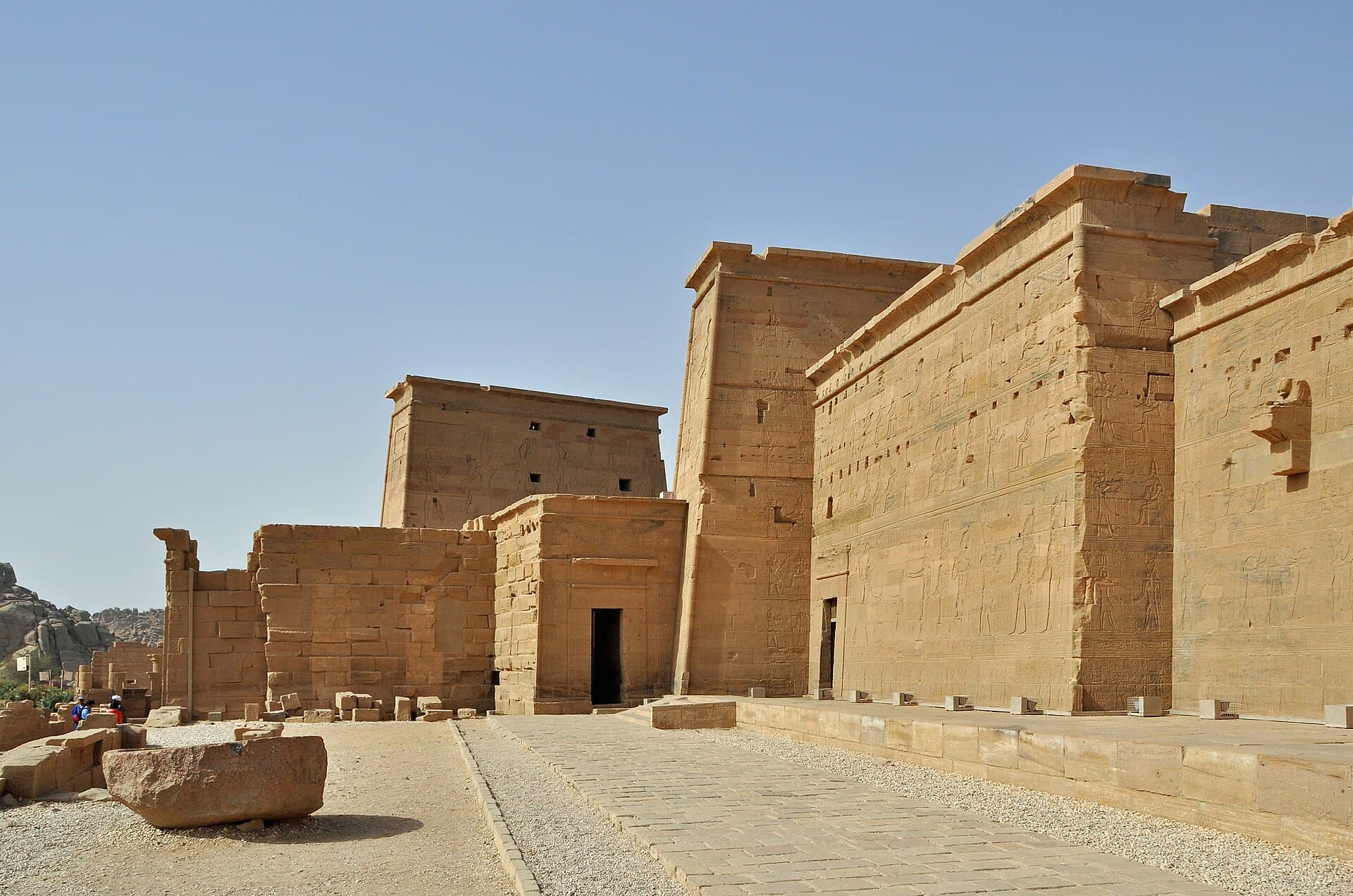
An Egyptian week is a selection, and you should know that going in. Three nights in Cairo takes Giza and the Sphinx early, the Grand Egyptian Museum, Saqqara, and Islamic Cairo with Khan el-Khalili in an afternoon. Fly south and three or four nights covers Karnak, Luxor Temple and the west bank, but not a leisurely sail down to Aswan. Ten to twelve days is where Egypt stops feeling compressed: Cairo, a proper river stretch taking in Edfu and Kom Ombo, Philae on its island at Aswan, and Abu Simbel, which means a very early road convoy or a short flight and is worth either.
That asymmetry is the most practical thing on this page. If your leave is fixed at seven days, Morocco gives you a complete trip and Egypt gives you a good introduction to a country you will have to come back to. At a fortnight the calculation reverses: Morocco starts repeating itself somewhere around day ten unless you add the desert or the mountains properly, and Egypt does not run out of material at all. A four-day Cairo stopover is a legitimate trip in its own right, and it will leave you wanting the rest.
Which country has more hassle?
Both countries have a reputation for hassle. They earn it differently. Egypt's version is frequent, blunt and transactional: someone offers to show you a corner of a tomb, or steers a camel into your path, and expects a tip. Baksheesh is a running cost rather than an insult, and small notes solve most of it. It is rarely aggressive and usually over in seconds, but at Giza and in Luxor it comes at you constantly, and by the fourth day it wears.
Morocco's is more skilled. It starts as conversation, becomes a favour, and ends with an obligation you did not agree to: a walk to a cousin's shop, a tannery viewpoint that turns out to have a price. Unofficial guides in the Fes and Marrakech medinas are the usual form, and policing has reduced the worst of it. Every purchase is a negotiation, which some people enjoy and others find draining. Women travelling without men get street comment in both countries; in Egypt it tends to be more persistent.
The structural difference matters more than the intensity. Egypt's hassle is concentrated at the monuments and stops the moment you are back in the vehicle, which means a private guide and driver absorb most of it on your behalf simply by being there. Morocco's happens where you have chosen to spend your unstructured time, so there is nothing to hide behind: the medina is the attraction and the medina is where it happens. Travellers who hate being sold to often report Egypt as the easier of the two for exactly this reason, which reverses the usual ranking.
Two habits reduce it in both places. Decide before you leave the hotel whether today is a buying day, and say no once, clearly, rather than politely three times — an ambiguous answer reads as the opening of a negotiation in both countries. And carry small notes from the first morning. In Egypt a ten-pound note ends most interactions in seconds; hunting for change on day three, having handed out your only notes on day one, is how a minor irritation becomes the thing you remember.
Where do you eat better?
Morocco eats better, and it is not close. Tagines that have actually been cooked slowly, couscous on Fridays, grilled sardines and fresh fish on the Atlantic coast, good bread, serious pastry, decent produce. The honest caveat is repetition: the tourist menu in Marrakech and Fes is a short loop of tagine, brochettes and pastilla, and ten days of it is dull. Eat where the queues are, order mechoui when you find it, and use the market stalls.
Egyptian food is not a reason to go, and anyone who says otherwise is selling something. What it does well is cheap and filling: koshari, ful medames, ta'meya made with fava beans rather than chickpeas, molokhia, grilled meat from a street counter. In Cairo that is genuinely good. On the tourist circuit — hotel buffets in Luxor, meals included on a Nile boat — it flattens into something beige and safe. Vegetarians manage easily in both countries.
The gap is widest at the middle of the market, which is where most holiday meals happen. Morocco has riad kitchens, a real cafe culture and enough competition in Marrakech and Fes to keep standards up. Egypt's middle is thinner: Cairo has excellent food if you go looking for it, but on the Luxor and Aswan circuit you are largely choosing between a hotel restaurant and a tourist restaurant, and the included half-board on a Nile boat removes the choice altogether. If eating well is central to how you enjoy a holiday, that is a straightforward point for Morocco.
Which is cheaper?
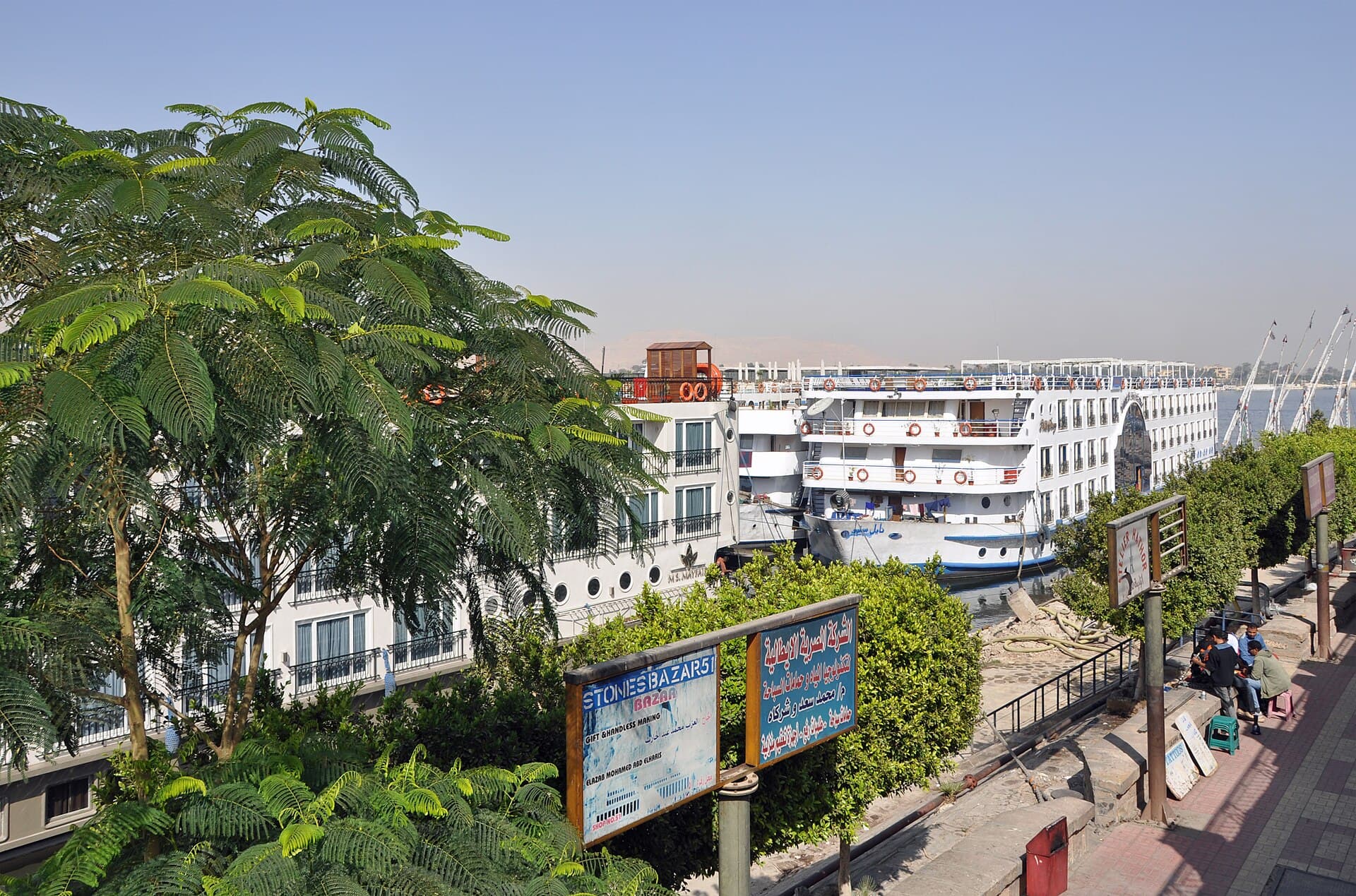
On the ground, Egypt is cheaper. The Egyptian pound has lost a great deal of value in recent years, so meals, taxis, domestic flights and drivers cost little in euros or pounds. Morocco's dirham is managed and stable, and Marrakech riad and restaurant prices sit closer to southern Spain than to a developing-world bargain. The counterweight in Egypt is entry fees. They have risen repeatedly, they are charged per site, and a Luxor day with three or four tickets adds up.
Flights run the other way. Morocco is a three to four hour hop from most of western Europe with budget carriers competing on it. Egypt is closer to five hours, and outside the charter routes to Hurghada and Sharm el-Sheikh the fares are ordinary airline fares. Over a single week the two totals land close together. Egypt only pulls clearly ahead on longer trips, where the ground costs outweigh the fare you paid to get there.
Party size moves the per-person figure more than the destination does, and it moves it further in Egypt. A private car, driver and guide costs much the same for two people as for four, so four sharing pay noticeably less each — a family of four in Egypt often pays less per head than a couple does. Morocco does not reward group size to the same degree, because more of the trip is self-directed and the fixed costs you are splitting are smaller. Solo travellers pay a penalty in both countries, and on a Nile boat the single supplement can amount to the whole second berth.
For a sense of scale on the Egyptian side: for a week to ten days on the ground, quotes commonly land somewhere between roughly £1,000 and £3,500 per person before international flights, and the width of that band is about your choices rather than about Egypt. Whichever country you pick, ask for a written breakdown of what sits inside a quoted figure and what you will pay locally. Two prices that look far apart are often near-identical once the entry tickets, internal flights, tips and optional sites are added back to the cheaper one.
What do you actually pay for on the ground?
Both countries run on cash far more than western Europe does, and neither currency is easy to obtain before you fly. The Egyptian pound is closed in practice, so you change hard currency after you land, and prices quoted in articles more than a year or two old are worthless because the pound has moved sharply. Bring euros or dollars in usable notes and change them there. Morocco's dirham is also restricted, though it is a stable currency rather than a moving target, so a price you read about Morocco is far more likely still to be roughly right.
Cards cover more than they used to and less than you expect. Cairo takes cards widely — hotels, supermarkets, pharmacies, chain cafes, most mid-range restaurants, and a growing number of ticket windows. Outside Cairo, assume cash first and treat a working terminal as luck. Morocco is broadly similar in shape: hotels, riads and better restaurants take cards, and almost nothing inside the old medinas does. In both countries, if a terminal offers to charge you in sterling or euros, decline it and pay in local currency; that conversion rate is set by the machine's operator and it is always worse.
Tipping is where the two genuinely differ. Baksheesh in Egypt is not a bonus for good service, it is part of how people in tourism are paid, and it happens constantly. On a guided day with a private Egyptologist and a driver, budget in the region of 15 to 20 euros per person, with another 5 to 10 per person for each night on the river for the communal crew box. Over a ten-day Egyptian trip that is a real line in the budget rather than loose change. Morocco expects tipping too, but at a lower frequency and a lower stake — which quietly narrows the cost gap the ground prices open up.
Which is easier to travel independently?
Morocco, comfortably. Trains link Tangier, Rabat, Casablanca and Marrakech, including a high-speed stretch in the north, and the long-distance coaches are reliable and bookable in advance. Hiring a car is realistic for the Atlas and the south. French works almost everywhere and English is common in tourist towns. You can land in Marrakech with a rough idea and a first night booked and the rest will sort itself out.
Egypt resists improvisation. The distances are long, the practical links between Cairo, Luxor and Aswan are domestic flights or the sleeper train, and moving around Upper Egypt without a driver burns days you do not have. The sites also need someone who can read what is on the wall; without that, one painted tomb blurs into the next. That is why most Egypt trips are arranged in advance through an operator on the ground rather than assembled online. Doing it yourself is possible and cheaper; you pay the difference in days.
The deeper difference is what each itinerary is made of. An Egyptian trip is a chain of fixed bookings — an internal flight, a boat with a sailing date, a convoy departure for Abu Simbel, timed entry at busy sites — and a delay anywhere in that chain has nowhere to go. A Moroccan trip is a route you can rearrange over breakfast. That flexibility is worth more than it sounds when the weather turns, when a pass in the Atlas closes, or when somebody simply wakes up tired and wants a day doing nothing.
It also changes how much of the holiday is actually spent in the country rather than in transit. Every change of base in Egypt costs the better part of a day once you add airport time at both ends, which is why a ten-day Egyptian trip does not contain ten days of sightseeing. Morocco's transfers mostly fit inside a morning, the exception being the long haul over the Atlas to the dunes. If your leave is short and you resent losing days to movement, that is a real argument and it points one way.
Do you need a guide in either country?
In Egypt, effectively yes. The sites are dense with meaning you would walk straight past, the signage will not fill the gap, and what separates an absorbing morning in the Valley of the Kings from a hot and shuffling one is usually the person you are with. A guide performs a second, less glamorous function as well: absorbing the touting, the ticket queues and the transfers before any of it reaches you. Most regret about travelling guideless in Egypt happens in Luxor, on the west bank, on day four.
In Morocco a guide is optional and often more useful by the half-day than by the week. The Fes medina is the clearest case for one — it is genuinely disorienting, and a licensed guide for a morning saves you both time and the attentions of the unlicensed sort. Marrakech does not need one. The Atlas and the desert come with drivers rather than guides, and the rest of the country explains itself. Many people who do both countries take a private guide and driver throughout Egypt and travel independently in Morocco, which is the correct answer more often than not.
One question is worth asking any Egyptian operator directly before you compare prices: whether the programme includes stops at papyrus, alabaster or perfume shops. Cheap Egypt tours are frequently subsidised by guide commission on those visits, and a programme with none of them costs more at the outset and usually less by the end. The Moroccan equivalent is the guided tour that ends in a carpet showroom. In both countries you can simply ask for those stops to be removed, and a decent operator will remove them.
When should you go, and does the season decide for you?
Egypt can be pinned to numbers, which makes planning easier. Typical daytime highs in Luxor run at about 23C in January, 29C in March, 35C in April and 39C in May, before a summer plateau of roughly 41C from June through August, falling back to 34C in October and 28C in November. Cairo sits several degrees below Luxor in every month. Rain barely exists: Cairo averages only around 20mm a year. The ten-degree gap between March and May is the difference between a full morning on the west bank and a dawn raid followed by a retreat indoors.
Morocco has more weather and more of a spread. March to May and September to November are the comfortable months in the interior; high summer in Marrakech and the dunes is hot, though the Atlantic coast stays mild all year and is the standard escape. Winter reverses everything: it is the pleasant season in the south and the desert by day, while the High Atlas gets snow, passes can close, and desert nights drop close to freezing. Pack a proper warm layer for a winter Moroccan trip even when the Marrakech forecast looks benign.
The practical consequence is that Egypt has a usable month in every part of the year and Morocco has more usable months overall. When the Nile valley is too hot the Red Sea is at its best and an Egyptian trip simply changes shape from temples to water. Morocco has no single escape valve of that kind, but it does not need one, because the coast, the mountains and the cities all peak at different times. If your dates are fixed to a school summer, weight towards Morocco and the Atlantic; if they are fixed to deep winter, weight towards Egypt.
One date affects both and moves. Ramadan runs about eleven days earlier each year, so it drifts steadily through the good season. Sites and transport keep running, but opening hours shift, many restaurants close during daylight, alcohol becomes harder to find, and the atmosphere after sunset is one of the more interesting things you can witness in either country. It is not a reason to cancel. It is a reason to know before you book rather than on arrival. Christmas and New Year is the busiest and dearest fortnight in both.
Which desert is worth your time?
Morocco's Sahara is easier to reach and heavily packaged. Erg Chebbi behind Merzouga and Erg Chigaga beyond M'Hamid are proper dune fields, and the camps run from canvas and a mattress to something close to a hotel. The catch is the driving. Merzouga is most of a day from Marrakech over the Atlas, and the standard two-night loop spends more hours in a minibus than on sand. With ten days it is worth it. With five it is not, and the Agafay stony desert near Marrakech is a poor substitute sold as the real thing.
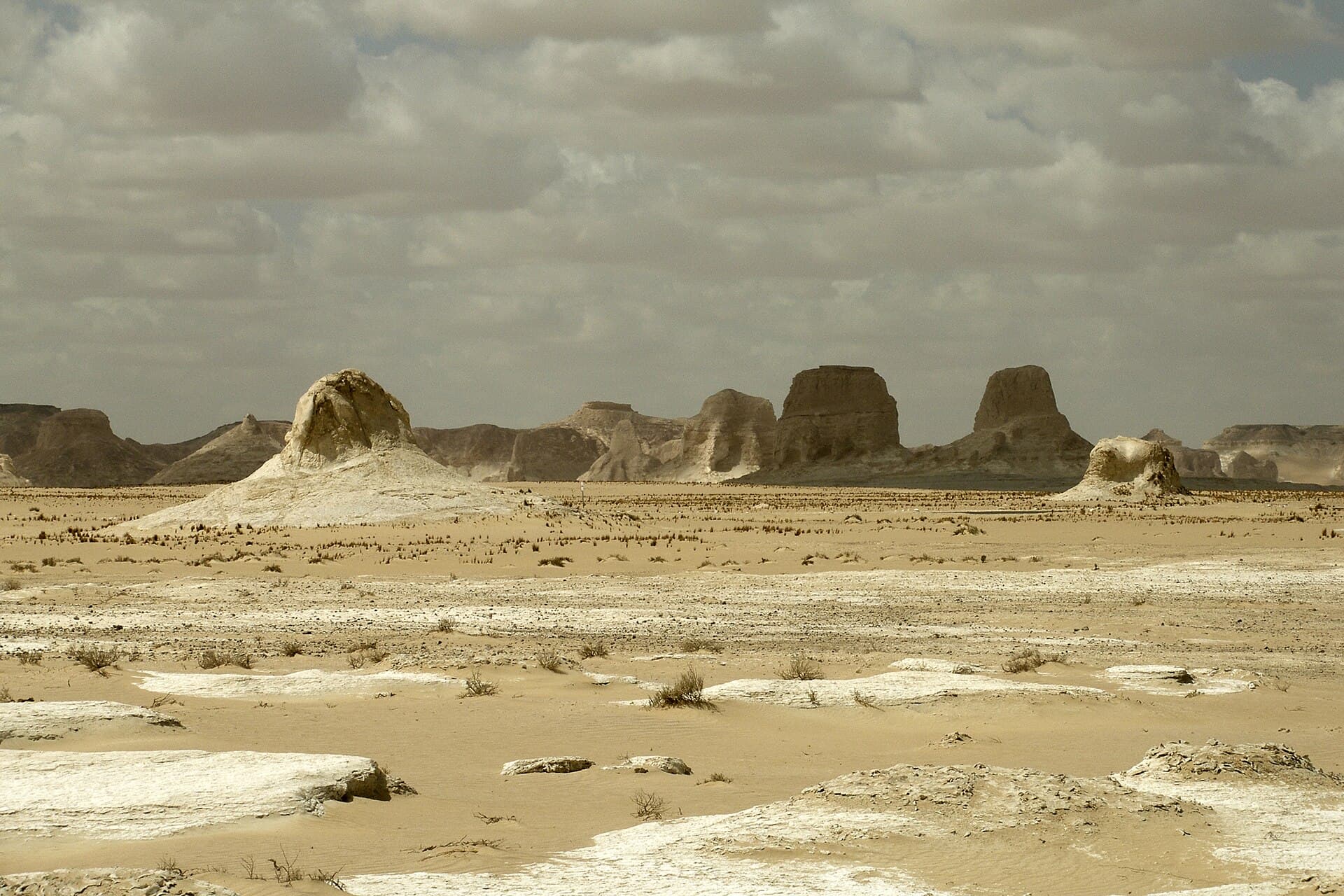
Egypt's deserts are emptier and stranger, and far fewer people go. The White Desert near Farafra is a field of wind-carved chalk you sleep among. Siwa, close to the Libyan border, has salt lakes, springs and its own Berber language. The Great Sand Sea is serious expedition country. All of it needs 4x4s, guides and, in places, permits, and the areas near the western border are subject to travel restrictions that change, so check current advice. Egypt also has the Red Sea, and Morocco has no diving to compare with it.
For one night in a dune camp, Morocco wins on access and Egypt wins on strangeness. A single night at Erg Chebbi gives you the dunes, the silence and the sky, which is what most people came for; the second night mainly adds more of the same at the cost of another long drive. Egypt's western desert is not a bolt-on to a Nile trip at all — it is a separate expedition with its own vehicles, permits and rhythm, and it belongs on a second visit rather than squeezed onto a first. If the desert is genuinely the reason you are travelling, that distinction is the whole decision.
Which has the better coast?
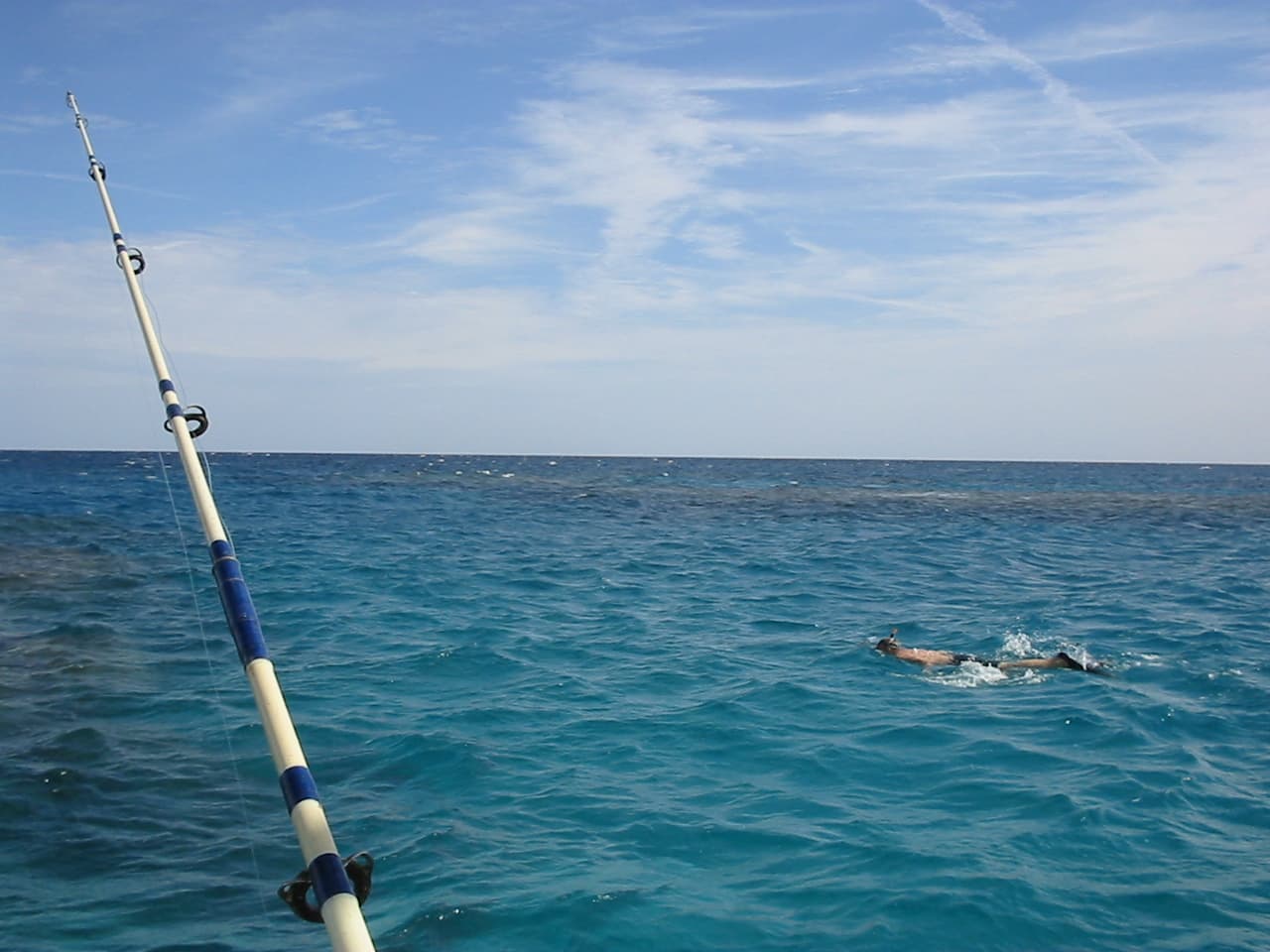
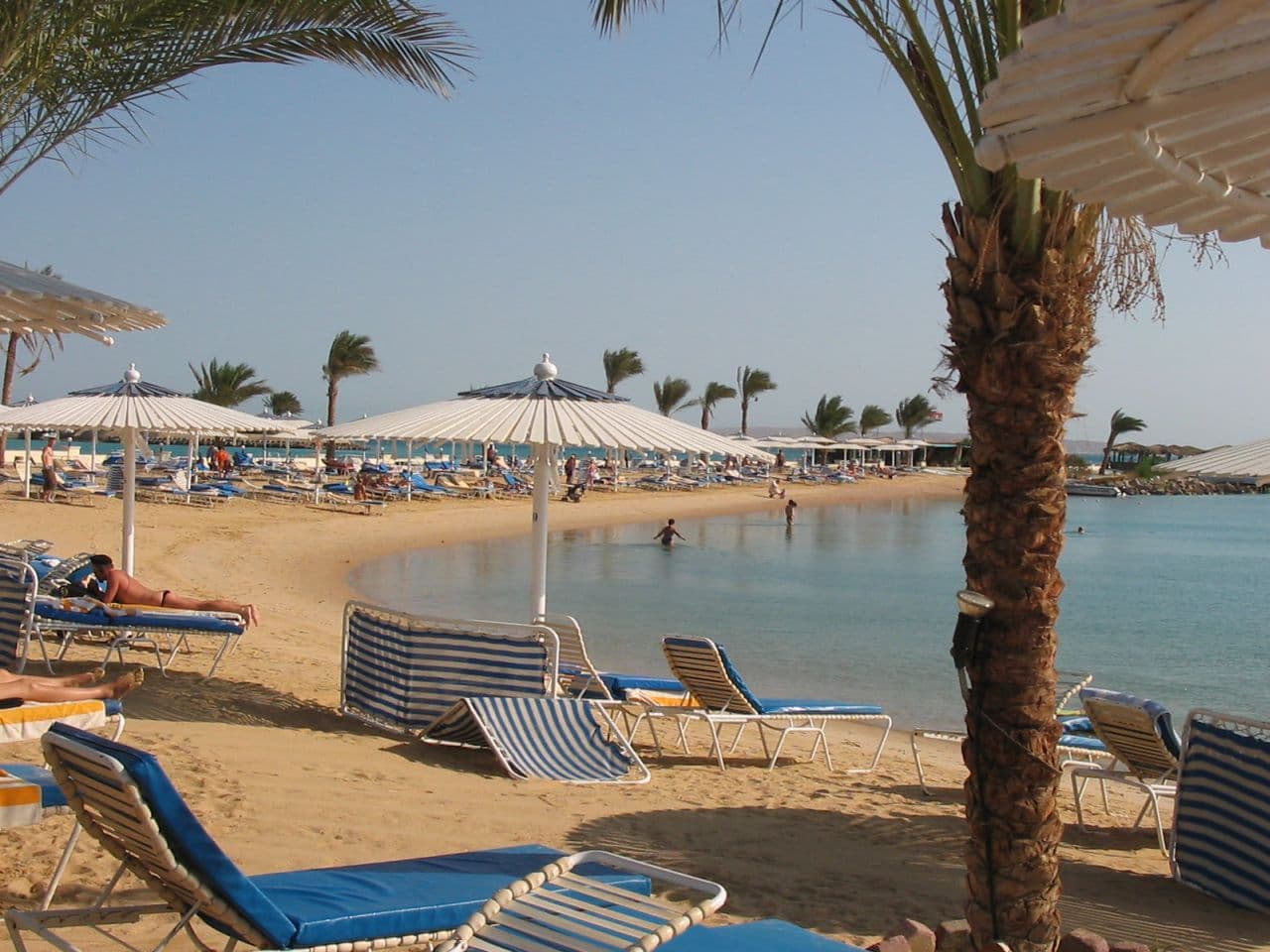
This is the most one-sided category on the page. Egyptian Red Sea diving is world-standard and cheap, and the water cooperates: temperatures around Hurghada sit near 22C in January and February, 25C in April, 30C or above from July to September, and still 28C in October. Add Sharm el-Sheikh, Dahab, Marsa Alam and El Gouna, each with a different character, and Egypt can be a second holiday tacked onto the first. It is also the mechanism by which Egypt stays viable in summer when the temples are not.
Morocco's coast is the Atlantic, and the Atlantic is cold. Essaouira is superb for a couple of days — ramparts, fishing port, grilled sardines, and a wind that made it a surfing and windsurfing town — but it is a place to walk and eat rather than to swim. Agadir is the mainstream beach resort and functions as one. There is nothing in Morocco that competes with the Red Sea underwater, and no serious diving to speak of. If the holiday is meant to end horizontally in warm water, that is Egypt, without argument.
The reverse case is the mountains. Morocco has a genuine range with the highest peaks in North Africa an hour and a half from Marrakech, walkable villages in the foothills, the Todra and Dades gorges on the road south, and multi-day trekking for anyone who wants it. Egypt has nothing equivalent outside Sinai. So the honest framing is not which country has the better coast but which second act you want after the sightseeing: warm water and a reef, or altitude and a walk.
Which suits families, and which suits older travellers?
Morocco is the easier country for both groups, and for the same reasons. The flight is shorter, there are no internal flights to catch, transfers fit inside a morning, and a bad day can end at a riad pool rather than in a coach. The sites are fewer, which sounds like a loss until you are travelling with people who do not want a fourth monument in three days. Children generally take to the souks, the food and the mountains, and a night in a desert camp is the sort of thing they remember for years.
Heat is the constraint that decides most family trips, and in the hot half of the year it decides against Egypt. A tomb with no airflow at 40C is not a negotiable experience, and from June to September Luxor and Aswan sit above that regularly. If your dates are locked to a school summer, that is a strong argument for Morocco or for the Egyptian Red Sea rather than the Nile. Older children do very well in Egypt, because the sites are large, dramatic and easy to grasp, and a good guide can hold a twelve-year-old's attention in a way a museum label cannot.
For limited mobility, neither country is straightforward and both are workable with planning. Egyptian tombs are ramped, stepped, worn smooth in places and dusty, but the sites are visited one at a time with a vehicle between them, which allows a day built around sitting down, and a private driver removes almost all of the walking that is not the site itself. Morocco's medinas are the harder problem, because they are car-free by design: Fes in particular is stairs, slopes and narrow lanes with no way to drive to the door. That reverses the usual ranking, and it is worth knowing before you book a riad deep in the old city.
What is each country genuinely bad at?
Egypt's weaknesses are well known and mostly fixable. The touting around the major monuments is persistent and is the single most common first-time complaint. The average tourist-restaurant meal is dull. Sound and light shows are dated and easy to skip. Alexandria as a day trip from Cairo means roughly two and a half to three hours each way by road for a thin return. The cheapest Nile boats are tired, and the onboard entertainment on any of them is dire.
Morocco's weaknesses are structural and therefore harder to plan around. The tourist menu repeats itself. The medinas are exhausting in a way that a pool cannot entirely fix, and the constant low-level commerce is the price of admission rather than an aberration. The distances to the real dunes are long enough that most short desert trips are mainly driving, and the substitutes sold closer to Marrakech are not the same thing. And if the ancient world is what moves you, Morocco simply does not have it, whatever an itinerary promises.
They share one failure, and it belongs to the visitor rather than the country. Arriving at the famous places mid-morning guarantees the worst version of them, in either country, in any month. The Valley of the Kings, Abu Simbel, the Fes tanneries and the Jemaa el-Fna are all better first thing or late, and everything in between is hotter, busier and more heavily sold to. The two countries differ in almost every respect and not at all in this one.
How safe does each one feel?
Neither country belongs on anyone's list of dangerous places, and both put visible effort into protecting tourism because it is a significant share of each economy. Egypt's version of that effort is conspicuous: armed police at site entrances, scanners in hotel lobbies, checkpoints on the roads, and convoys on some desert routes including the early run to Abu Simbel. Some visitors find it reassuring and some find it unsettling; either way it is the normal texture of an Egyptian trip rather than a sign that something has happened.
Morocco's is quieter and closer to European policing, with tourist police in the main medinas and a serious effort over the past two decades to suppress the unlicensed guides who once made Fes and Marrakech unpleasant. Violent crime against visitors is rare in both countries. Petty theft in crowded medinas and souks is the realistic risk in Morocco, and the realistic risks in Egypt are heat, dehydration, stomach upsets and traffic rather than anything more dramatic. Cairo traffic in particular is heavy and the crossing habits are not yours.
Both countries have regions that carry restrictions, and those change. Egypt's western border areas and parts of Sinai are the usual cases; Morocco has its own. Read your own government's current travel advice for whichever country you choose, before you commit money and again shortly before you fly, and take out insurance that actually covers the activities you have booked — diving, quad bikes and trekking above a certain altitude are all commonly excluded from a basic policy.
Shopping, souks and what you carry home
Morocco wins this outright and it is one of the better reasons to go. Rugs and kilims, leather, ceramics from Fes and Safi, lanterns, argan oil, spices, babouches, and a craft tradition that is still producing rather than reproducing. The catch is that every price is a negotiation and the process is slow by design: mint tea, a conversation, a first price that bears no relation to anything. Some travellers find this the best part of the trip and others find it draining, and it is worth knowing which you are before you commit an afternoon to a carpet.
Egypt's shopping is thinner. Khan el-Khalili in Cairo is an atmospheric bazaar worth an afternoon, and there is decent cotton, spices, and some good work in silver and inlaid wood if you look past the front rows. Most of what is pushed at the monuments is mass-produced, and the alabaster and papyrus workshops built into cheap tour programmes are commission stops rather than craft. Egypt's real souvenir is not an object, and anyone who tells you otherwise is working on a percentage.
Two practical notes apply to both. Anything genuinely antique is a legal problem rather than a bargain, and exporting antiquities from Egypt is a serious offence, so treat any object presented as ancient as either fake or trouble. And decide the shape of your luggage before you buy a rug: shipping is usually available, usually more expensive than the quoted figure, and occasionally the point at which a good negotiation turns into a bad one.
Egypt vs Morocco: which should you visit first?
For a first trip to North Africa, Morocco is the softer landing. Shorter flight, easier logistics, better food, more variety inside a week, and a riad to retreat into when the medina has worn you out. For anyone who has already travelled somewhere demanding, or who wants the ancient world specifically, Egypt is the stronger trip and the one people still describe in detail years later. If your interest in pharaonic Egypt is mild, do not force it. Four days of tombs will not convert you.
Three tiebreakers. Length: under a week favours Morocco, since Egypt's Cairo-and-Nile route needs ten days to stop feeling rushed. Season: Luxor and Aswan in July and August are punishing, so November to March is the sensible Egyptian window, while Morocco works most of the year if you accept cold nights in the mountains. Company: young children do better in Morocco, where a bad day can end at a pool rather than in a coach. If you want both eventually, Morocco first.
There is a counter-argument worth hearing, because it applies to a particular reader. If the ancient world is the actual reason you are considering North Africa at all, doing Morocco first risks spending the trip you had in a place that was never going to answer the question. Egypt is also the more physically demanding of the two, with the early starts, the heat and the internal travel, so doing it while you are more willing to do it is not a dramatic consideration but it points the same way. Neither choice forecloses the other; this is an order-of-play question, not a permanent one.
Can you combine Egypt and Morocco in one trip?
You can, but only by air. There is no land route between them: the Algeria-Morocco border has been closed for decades, and Libya is not a country travellers cross. A direct flight between Casablanca and Cairo takes roughly four and a half hours. Connecting through Europe or the Gulf turns it into a full day of moving. Three weeks makes it work — roughly a week in Morocco, ten days in Egypt, and a day lost in transit. Anything shorter and you should choose one and do it properly.
If you do combine them, put Egypt first. It is the harder half — the early starts, the heat, the long days on your feet, the selling around the monuments — and Morocco is the gentler country, with shorter drives and days you can leave unplanned. Finishing with the easier half is a better shape for a long holiday than finishing with the harder one, and the day you lose to the connection hurts less in the middle of a trip than at the end of it. Roughly 3,700 kilometres separate Cairo from Marrakech, so that day is not negotiable.
Under fourteen days, one country becomes a stopover. That is a fair decision made deliberately — three nights in Marrakech after an Egyptian week is a coherent way to finish — and a poor one made by accident, which is what happens when a fortnight gets split down the middle and the travelling day comes out of one half. If you are close to that line, the better trip is almost always one country done properly and the other kept for next time.
Common questions
How many days do you need in each country?+
Morocco works in five to seven days if you stay north or stick to Marrakech and one other place. Adding the Sahara pushes it to nine or ten. Egypt needs ten days minimum for Cairo, Luxor and Aswan without sprinting, and twelve to fourteen if you want the Red Sea or a desert leg as well.
Do you need a visa for Egypt or Morocco?+
Egypt requires a visa for most Western visitors, bought online as an e-visa before departure or on arrival at the airport, and it is a simple process either way. Morocco admits many nationalities, including British, Irish, EU and American passport holders, without a visa for stays of up to ninety days. Rules vary by passport, so check yours rather than a friend's.
Is a Nile cruise worth doing?+
Mostly yes, with caveats. The boats between Luxor and Aswan solve the transport problem and put you at the temples early, which matters in the heat. The food is usually mediocre, the onboard entertainment is dire, and the cheapest boats are tired. Three or four nights is enough; a week on the same deck is too much. Smaller boats and dahabiyas are quieter and slower.
Which is better for a woman travelling alone?+
Both are manageable, and plenty of women travel alone in each. Morocco is generally the easier of the two: more independent women on the road, easier transport, and a habit of tourism that is decades deeper in the medinas. Egypt involves more staring and more comment, and a private driver removes much of it. Dressing conservatively helps in both, more so outside the resorts.
Can you drink alcohol in either country?+
Yes, in both, but quietly. Egypt has local beer and wine, served in hotels, tourist restaurants and Nile boats, and sold in a small number of licensed shops. Morocco is similar: licensed hotels, some restaurants and the larger supermarkets, though almost nothing inside the old medinas. During Ramadan availability narrows sharply in both, and drinking in public is out.
Is Morocco safer than Egypt?+
In practice the two are comparable, and neither is a risky destination. Violent crime against visitors is rare in both. The realistic risk in Morocco is petty theft in crowded medinas; in Egypt it is heat, stomach upsets and traffic rather than crime. Egypt's security presence is far more visible, with checkpoints and scanners, which some people read as reassurance and others as unease. Check your own government's current advice for both, since regional restrictions change.
Do you need French or Arabic in either country?+
No, though a few words help in both. Morocco runs on Arabic and Amazigh with French used widely in business and cities, and English is common in tourist towns, so French is useful rather than necessary. Egypt's tourism industry works in English and guides are generally fluent. Learning to say please, thank you and no thank you in Arabic is worth the ten minutes it takes in either country.
Which is better in summer?+
Morocco, unless your Egyptian trip is built around the Red Sea. Luxor and Aswan sit around 41C from June through August and sightseeing effectively ends by mid-morning. Marrakech and the Moroccan desert are hot too, but the Atlantic coast stays mild and the High Atlas is cooler with altitude, so the country has somewhere comfortable to be. Egypt's summer answer is the sea rather than the temples.
Official sources
Entry rules, opening hours, security advice and exchange rates all move. Check them at the source, not here.
Written and checked by the Nile Trip Guide editorial team · Last reviewed . Entry rules, prices and opening hours change — check anything critical against the official sources linked on this page.
The route most people take first, at the length it was built for: Giza and the Grand Egyptian Museum, then a flight to Luxor and four nights sailing down to Aswan.
No boat on this one. Giza and the Grand Egyptian Museum, a night in Luxor for both banks, two nights on the Red Sea, then back to Cairo for the Citadel, Coptic Cairo and the Royal Mummies.
Five nights in Cairo either side of a four-night sail from Luxor to Aswan. The Cairo days are private, just your party and a guide; the sightseeing off the boat is shared with a small group.