Egyptian Food: What to Eat, Where to Eat It, and What to Skip
Egyptian food is cheap, filling and built on beans, bread, rice and vegetables. Most of the best of it comes from small shops and street carts rather than restaurants, which is where visitors get nervous. This page covers the dishes worth ordering, where each one is done properly, and how to eat well without losing days to your hotel bathroom.
What Egyptian food do people actually eat every day?
Breakfast is ful medames: fava beans cooked slowly overnight, then mashed with oil, lemon, cumin and whatever the shop adds: tahina, tomato, a boiled egg. It comes with baladi bread, which you use as a spoon. Alongside it, taameya: Egyptian falafel made from split fava beans rather than chickpeas, green in the middle and heavier than the Levantine version.
Koshari is the national dish and the one most visitors end up eating twice. Rice, macaroni, lentils and chickpeas in one bowl, topped with tomato sauce and fried onions, with garlic vinegar and chilli sauce added at the table. It is vegan without anyone having to think about it, and it costs a fraction of what a hotel restaurant charges.
None of this is festival food. Ful and taameya are the working breakfast of the whole country, sold from the same carts to office staff, labourers and schoolchildren, and koshari is the cheap lunch that fills you until evening. The pattern to notice is that the staples lean hard on pulses and starch and go light on meat, which is a matter of cost as much as taste. Meat turns up in smaller quantities than a European plate expects, and vegetables often arrive as a stew or a stuffing rather than a side of greens.
Why is bread at the centre of every meal?
The flatbread you are handed with almost everything is aish baladi: a round wholemeal loaf, baked in a fierce oven until it puffs into a pocket, then flattened as it cools. The word aish means bread. It is torn, not cut, and used as a scoop, a spoon and a plate all at once. Ful, taameya, tahina and the dips all assume a piece of bread in your other hand.
The plain round loaf is subsidised, which is why it costs almost nothing and why it is everywhere. That matters for a visitor in a small, practical way: the bread that comes with a street breakfast is fresh and cheap, but it is also handled a great deal, so take it from a busy place with quick turnover rather than a loaf that has been sitting out. Bakeries sell it straight off the oven floor, warm, and that is when it is best.
There is a second kind worth knowing. Feteer, dealt with below, is a richer layered pastry that stands somewhere between bread and cake. And in the tourist restaurants you will often meet a softer, thinner flatbread closer to the Levantine style, brought as a basket before the meal. It is fine, but it is not the everyday loaf, and it is not the thing a ful cart runs on.
Which dishes take some getting used to?
Molokhia divides people. Jute mallow leaves are chopped fine and cooked into a green soup, finished with garlic and coriander fried in ghee, and served over rice with chicken or rabbit. The texture is thick and slippery, closer to okra than to spinach. Try it once. If it is not for you, that is a common verdict and not a failure of taste.
Mahshi is stuffed vegetables: courgettes, aubergines, peppers and vine leaves, filled with rice, herbs and tomato and served warm or at room temperature. Feteer meshaltet is a layered pastry, folded and baked until it shatters, eaten savoury with cheese or sweet with honey and cream. Both are home cooking more than restaurant cooking, so the best versions turn up at family tables and small bakeries.
The other honest warning is texture rather than heat. Egyptian cooking is not spicy, but several of its signature dishes are soft, starchy or slippery in a way that catches people out: the mucilaginous pull of molokhia, the density of a taameya made with fava beans, the sweet-savoury weight of a good feteer. None of it is difficult once you know what you are eating. It is worth ordering a small portion of the unfamiliar ones first, rather than committing to a full plate of something you may not finish.
What about grilled meat, hawawshi and the street counter?
Meat, when it appears, is mostly grilled and mostly simple. Kofta is spiced minced lamb or beef pressed onto skewers and cooked over charcoal; kebab is chunks of the same meat, grilled the same way; both arrive with bread, salad and tahina rather than as a plated main. Shawarma, shaved off a vertical spit into bread, is the fast version, sold from lit counters in the evening. The good grills are the busy ones, where the meat is turning over quickly and going straight from the fire to the plate.
Hawawshi is the one to seek out: spiced mince baked inside bread until the crust crisps and the fat soaks in, a street-corner meal rather than a restaurant dish. It is cheap, filling and easy to eat standing up, which is how most people take it. Slow-cooked lamb and stews turn up more at home tables and at sit-down places than on the street.
The thing to understand about meat in Egypt is that it is a smaller part of the diet than the grills suggest, and the average tourist-restaurant version is duller than the street version. A mixed grill in a hotel is safe and forgettable. The same meat from a busy charcoal counter, eaten with fresh bread and a squeeze of lemon, is the meal you will remember, and it costs a fraction of the hotel plate.
Where should you eat each dish?
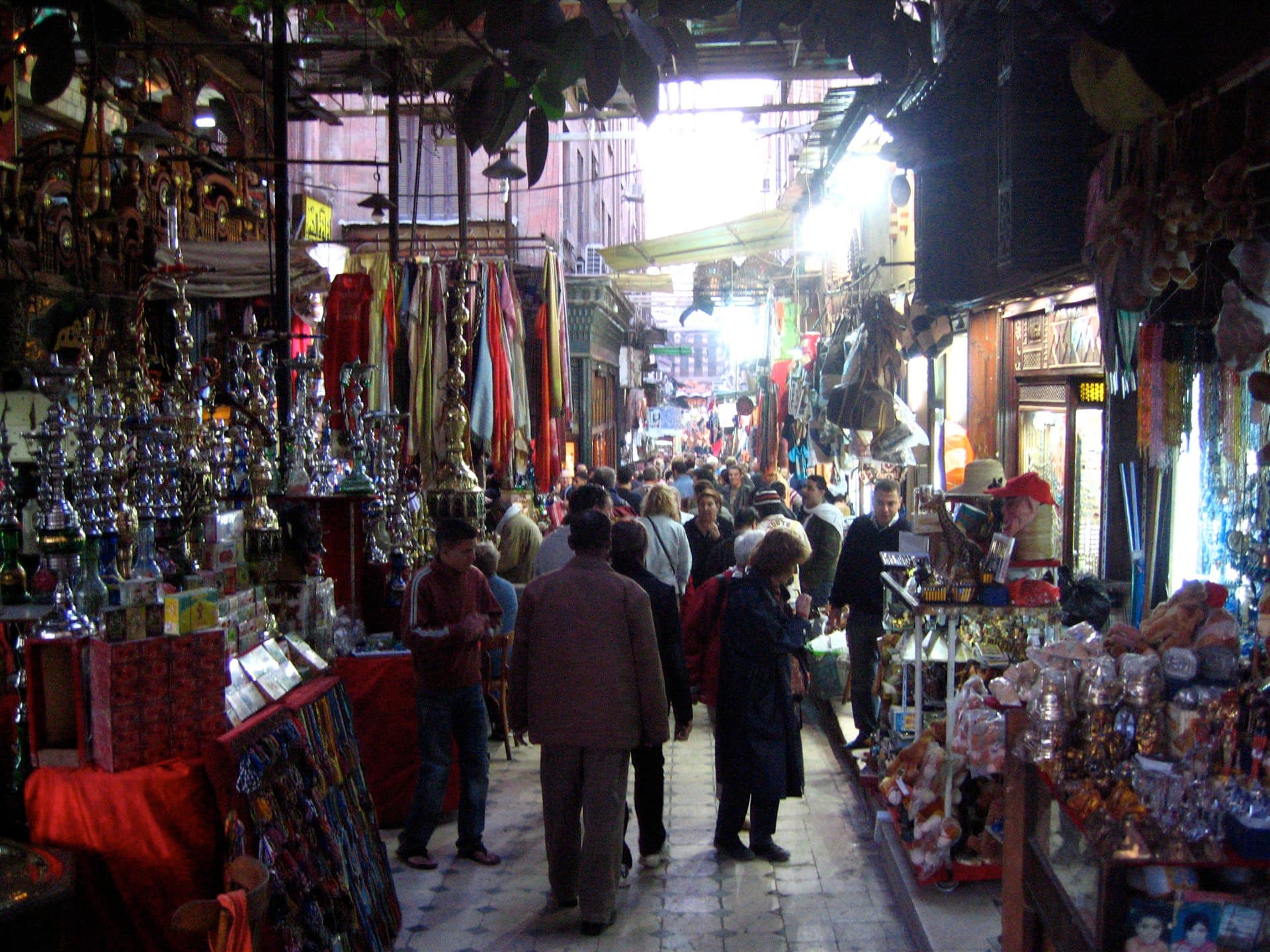
Cairo has the widest range. Downtown koshari shops do one thing all day and do it well. Ful and taameya carts work early mornings and late nights. Hawawshi, spiced mince baked inside bread, is a street-corner meal rather than a restaurant dish. Ordering is mostly a matter of pointing, and the queues move quickly.
Alexandria is where you eat fish: chosen by weight from the ice, then grilled or fried and served with salads and bread. Aswan is the place for Nubian cooking and for fish out of Lake Nasser, the reservoir behind the High Dam just south of the town. Luxor's food is plainer, and the strip nearest the temples is aimed at people who will not come back. Walk two streets away for something better.
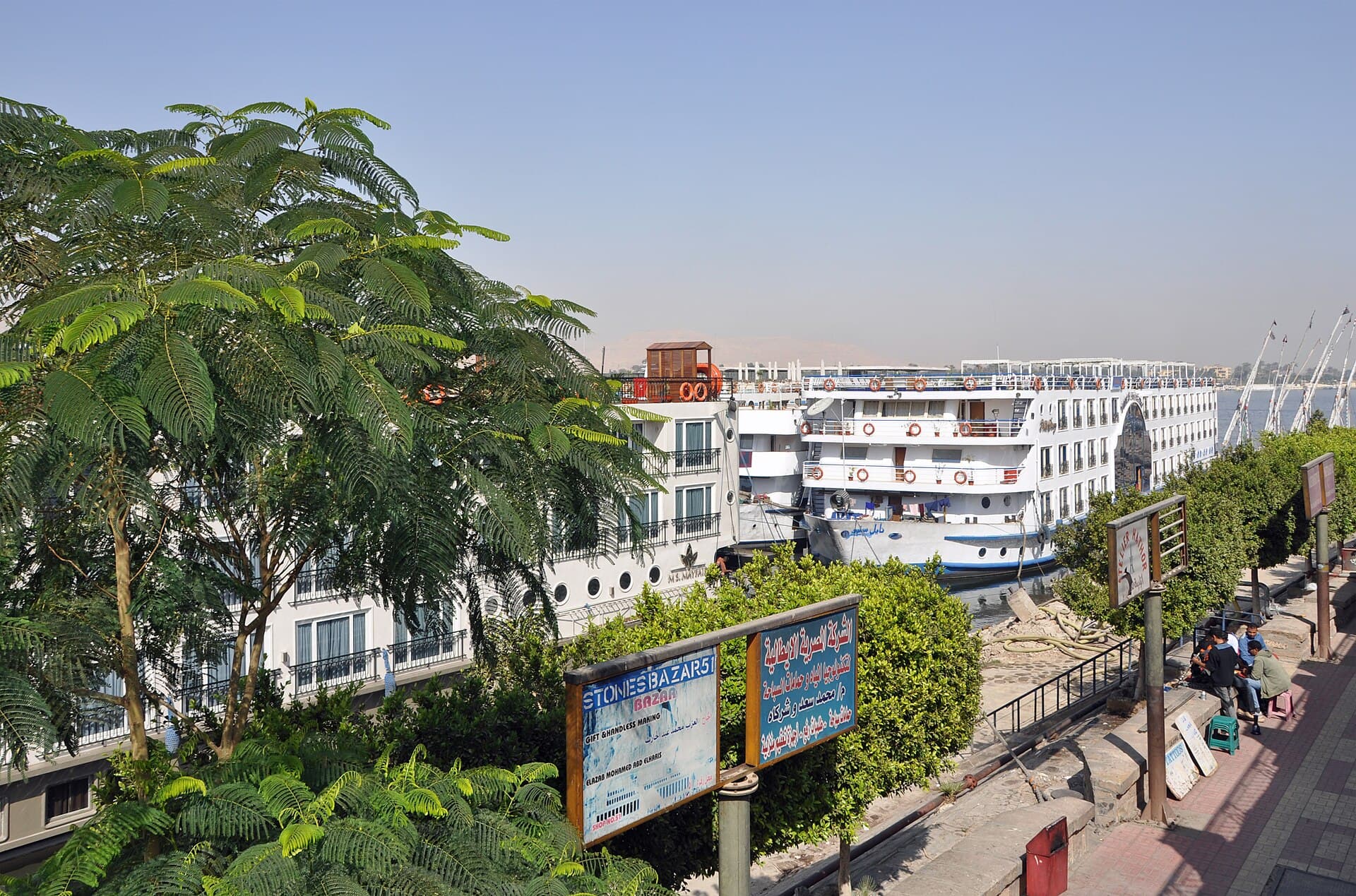
Two things are usually not worth the money. Hotel buffets flatten everything to the same mild standard, and dinner cruises sell the view rather than the cooking. Food on the Nile boats follows the same rule: safe, plentiful, and not the meal you will remember. Eat those meals for convenience, and do your real eating on land.
How does the food change around the country?
Cairo is the melting pot, and the place where every dish on this page is easy to find done well. It has the koshari specialists, the round-the-clock ful and taameya carts, the charcoal grills and the bakeries, and enough competition that the good ones stay good. If you only eat properly in one city, make it this one.
Alexandria turns to the sea. The Mediterranean coast is where fish and seafood are the point rather than an afterthought: you pick what you want by weight off a bed of ice, it is grilled or fried to order, and it comes with bread and a spread of salads. It is a different meal from anything in the interior, and the reason people who like eating make time for the coast.
Aswan is where the food stops being a variation on Cairo's and becomes its own thing. This is the meeting point of Egypt and Nubia, and Nubian cooking has its own character, served more often at a sit-down table than from a cart. The other local speciality is fish from Lake Nasser, the vast reservoir behind the High Dam. Luxor, by contrast, is plainer, and the honest advice there is the same as anywhere on a heavily touristed strip: the places nearest the monuments are aimed at one-time visitors, so walk a couple of streets back to eat better and cheaper.
What should you drink with, and around, a meal?
Tea does most of the work. Sweet black tea, shai, is drunk before and after a meal rather than during it, poured strong into a small glass, often with fresh mint. Karkade, made from dried hibiscus flowers, is the other everyday drink: served hot in winter and iced in summer, deep red and gently tart. Neither is expensive, and both are offered constantly, in shops and homes as much as in cafes.
Coffee is a separate ritual. Egyptian coffee is finely ground, boiled in a small pot and served in a little cup with the grounds settling at the bottom, and you order it by sweetness rather than by size: sada with no sugar, mazbout with a little, ziyada with more. It is drunk slowly, sitting down, usually in an ahwa, the traditional cafe where men gather over coffee, tea and a shisha pipe. Sitting still over one glass for half an hour is one of the cheapest pleasures the country offers.
Then the juices. Fresh juice stands are everywhere and press whatever is in season, mango and guava and orange among them, and a glass costs very little. Sugarcane juice, asab, is pressed to order from a busy stand and is a street drink rather than a restaurant one. In winter you will also see sahlab, a warm, thick milk drink dusted with cinnamon and nuts. Alcohol is a small part of the picture: it is available in hotels and some restaurants, local beer is easy enough to find, but Egyptian wine is expensive and not good, and most everyday local places do not serve it at all.
What are the sweets worth trying?
Egypt has a serious sweet tooth, and the desserts run heavy, milky and soaked in syrup. Umm Ali is the one most associated with the country: torn pastry or bread baked in sweetened milk with nuts and raisins, served warm, somewhere between a bread pudding and a pastry. Roz bel laban is the plainer everyday option, a cold, thick rice pudding, and the one children take to fastest.
The syrup-soaked family is large. Basbousa is a dense semolina cake drenched in syrup and often topped with a nut; kunafa is made from fine shredded pastry, crisp on the outside and soaked underneath, sometimes wrapped around cream or cheese; baklava-style layered pastries turn up in the same shops. All of them are sweeter than a European palate expects, which is the point, and a small piece with coffee goes further than a whole plate.
Some sweets are tied to the calendar. During Ramadan the pastry shops fill with qatayef, small stuffed pancakes folded around nuts or cream, and kunafa is made in far greater quantity than the rest of the year. If you are travelling in the fasting month, the sweet shops after dark are one of the genuine pleasures of the season, and worth a detour even if you do not usually bother with dessert.
How does Ramadan change what and when you eat?
For the month of Ramadan the whole rhythm of eating turns upside down. From dawn to sunset observant Muslims neither eat nor drink, so during daylight many local places close or serve only takeaway, while hotels and tourist restaurants keep going as normal. As a visitor you will not go hungry, but the everyday street food you came for is quieter in the afternoons.
The evening is the opposite. Iftar, the meal that breaks the fast at sunset, turns the entire country into a dinner party: the streets clear in the last minutes before the call, then fill again as families eat, and the mood afterwards is warm and social late into the night. Many neighbourhoods lay out free tables for anyone who needs a meal. Suhoor, a lighter meal before dawn, keeps kitchens and cafes busy in the small hours.
The practical points for a traveller are simple. Ramadan moves about eleven days earlier each year, so check the dates before you book. Plan daytime meals around hotels and tourist restaurants, do your street eating and sweet-shop browsing in the evening, and treat iftar as an experience rather than an inconvenience. It is one of the times the country is most itself, and the food is part of that.
Is street food in Egypt safe to eat?
Mostly, if you use the judgement you would use anywhere. The safer bets are stalls with a queue, food cooked hot in front of you, and shops that sell out and restock. The riskier ones are salads rinsed in tap water, ice from an unknown source, cream cakes standing in the heat, and anything lukewarm that has been sitting since lunch. Cairo summers sit well above 35C in the afternoon, which shortens the safe life of everything.
Fresh juice is a real pleasure and a common cause of trouble, because of the ice and the rinsed fruit. Sugarcane juice from a busy stand is usually fine. Tap water is not for drinking; bottled water is sold everywhere and costs very little.
The single most useful habit is to eat where the turnover is high. A busy cart cooks its stock fast and restocks fast, so nothing sits; a quiet one may be selling you food that has been out for hours. Hot, cooked-to-order, and popular are the three things to look for, in that order. Whole fruit you peel yourself is safe; a cut salad you did not watch being washed is the thing to be wary of. This is ordinary caution, not paranoia, and it is the difference between eating well for a fortnight and losing two days of it.
What if your stomach turns anyway?
Assume it might. A few days of digestive trouble is common on a first trip, and it is usually the change of water and bacteria rather than one bad meal. Pharmacies are everywhere, well stocked, and used to the question; oral rehydration salts and plain fluids do most of the work. See a doctor if there is fever or blood, or if it lasts more than two or three days.
Plan for it rather than around it. Put the hard days where a rough night would not wreck them: an early start at the Valley of the Kings, a long drive, an internal flight. Keep one flexible day in the middle of the trip, and eat lightly for the first day or two while your stomach settles.
Two practical additions. Carry oral rehydration salts with you rather than assuming you will find a pharmacy at the exact moment you need one, and keep drinking, because in the heat the dehydration does more damage than the bug itself. On a summer trip the bigger risk is often the heat rather than the food at all: dehydration and headaches after four hours in the sun catch out more visitors than anything they ate.
Is Egypt easy for vegetarians?
Yes, more than most countries in the region. Koshari, ful, taameya, mahshi, lentil soup, baba ghanoug, tahina and salads are all meat-free by default, and they are everyday food rather than a special menu. Vegans should ask about ghee and stock, which turn up in molokhia and in some rice dishes. Gluten-free is much harder, because bread and pasta are in nearly everything.
The reason it is easy is structural rather than fashionable: the everyday diet leans on pulses, grains and vegetables because that is what is cheap, so a meat-free meal is normal rather than a request the kitchen has to think about. You are not asking for a special version of anything. Koshari alone would carry most vegetarians through a trip, and it is sold on nearly every downtown street.
The care points are worth repeating. Ghee, and sometimes a meat or chicken stock, find their way into dishes that look plainly vegetable, molokhia and some of the rice among them, so a strict vegan should ask rather than assume. And because bread and macaroni are so central, coeliacs have the hardest time of anyone: even koshari, otherwise the perfect fallback, is built on pasta and rice together. Plan around that one carefully.
Common questions
Can I drink the tap water?+
No. Stick to bottled water, which is sold on every corner and costs very little. Brushing your teeth with tap water is fine for most people, though some travellers prefer not to. Ice is the bigger question: it is usually fine in hotels and busy restaurants, and worth skipping from carts and small juice stands.
Is the food spicy?+
Not really. The cooking is warm rather than hot: cumin, coriander, garlic, tomato. Heat is added at the table from shatta, a red chilli sauce, and dukkah, a nut and seed mix, appears with bread. If you want more heat, ask for shatta and add it yourself rather than expecting it in the pan.
What do people drink with a meal?+
Sweet black tea, mostly, before and after rather than during. Karkade, made from hibiscus, is served hot in winter and cold in summer. Fresh lemon and mint is common, and sugarcane juice is a street drink rather than a restaurant one. Alcohol is not part of everyday meals and most local places do not serve it.
Is pork available, and is the food halal?+
Egypt is a majority-Muslim country, so the everyday food is halal and pork is rare in ordinary restaurants. You will find pork mainly in some hotels, on a few international menus, and in shops serving the Christian minority. If it matters to you either way, ask; nobody will find the question odd.
What should I try for dessert?+
Umm Ali is the signature sweet, a warm milk pudding of torn pastry, nuts and raisins. Basbousa is a syrup-soaked semolina cake, kunafa a crisp shredded-pastry sweet, and roz bel laban a cold rice pudding. All run sweet, so a small piece with coffee is usually enough. During Ramadan look for qatayef, small stuffed pancakes.
How much does a meal actually cost?+
Very little, if you eat where Egyptians eat. A bowl of koshari, a ful and taameya breakfast, or a hawawshi from a street counter costs a fraction of a hotel restaurant plate. The expensive meals are the ones built for tourists: hotel buffets, dinner cruises and boat dinners are priced for the setting rather than the cooking. Carry small notes, because most street places are cash only.
Does Ramadan change where and when I can eat?+
Yes. During daylight hours many local places close or serve only takeaway, while hotels and tourist restaurants keep going. Evenings are the opposite: the iftar meal turns the whole country into a dinner party and the streets stay busy until very late. Ramadan moves about eleven days earlier each year, so check the dates for your trip.
How do I order if I do not speak Arabic?+
Point, and use the few words that do the work: shukran for thank you, aiwa for yes, la for no, and the dish name itself. Koshari shops sell by size, so holding up a finger for small or large is enough. Prices are often written in Eastern Arabic numerals, which are worth learning on the flight.
Official sources
Entry rules, opening hours, security advice and exchange rates all move. Check them at the source, not here.
Written and checked by the Nile Trip Guide editorial team · Last reviewed . Entry rules, prices and opening hours change — check anything critical against the official sources linked on this page.
The route most people take first, at the length it was built for: Giza and the Grand Egyptian Museum, then a flight to Luxor and four nights sailing down to Aswan.
No boat on this one. Giza and the Grand Egyptian Museum, a night in Luxor for both banks, two nights on the Red Sea, then back to Cairo for the Citadel, Coptic Cairo and the Royal Mummies.
Five nights in Cairo either side of a four-night sail from Luxor to Aswan. The Cairo days are private, just your party and a guide; the sightseeing off the boat is shared with a small group.