6 Days in Egypt: Two Routes, and What You Can Honestly Fit
Six days is the length where Egypt forces a choice. It is one day past the point at which the country asks you to pick a single region, and one day short of the length at which the classic Cairo-and-a-cruise trip stops feeling rushed. So six days does not buy everything. It buys one of two honest trips, done properly, and most of the skill is in choosing which. Below are the two routes that genuinely work over six days, laid out day by day, with the trade-off each one makes.
Is six days enough for Egypt?
It depends on where you are flying from, because the arrival and departure days rarely count for much. From Europe, six days on paper is closer to four or five useful ones: the day you land goes to the airport and the transfer, and the day you leave goes the same way. From further afield the loss is larger. Plan around the days you will actually be standing in front of something, not the number on the booking.
The headline sights are split. Cairo holds the Pyramids, Saqqara and the Grand Egyptian Museum; the Nile temples sit around 650 kilometres south at Luxor and Aswan, joined to Cairo by a flight of about an hour. Six days is enough to do Cairo and Luxor properly by air, with no cruise at all, and that is the more relaxed of the two trips here. It is also enough, at a push, to pair one full Cairo day with a short three-night cruise, which is tighter and more airport-heavy but does put a Nile sailing in the week.
Be clear about what six days is not. It is not enough for Cairo, a relaxed four-night cruise and a night in Aswan all together, because that is a seven or eight day trip and trying to fold it into six removes the slack that makes the longer version pleasant. It is not enough to add the Red Sea. And it is not enough to reach Abu Simbel without giving up something you came for. If you want the Pyramids and a Nile cruise both, six days can just manage it, but you will feel the seams; if either of those is the whole point, do it well and leave the other for next time.
Route A: Cairo and Luxor, by air
This is the stronger of the two six-day trips, and the one most first-timers should take. It drops the cruise entirely and spends the time on the two places that carry the country, with a single internal flight between them. You unpack twice, you keep early starts to a minimum, and a delayed flight costs you an afternoon rather than a whole leg of the holiday.
Day one is Cairo and a transfer. You are met at the airport and taken to the hotel; if you land early there is time for a first walk along the Nile corniche, and little else, because Cairo traffic swallows the hours either side of the middle of the day. Do not try to see a site on the arrival afternoon. Treat it as a settling day and start properly in the morning.
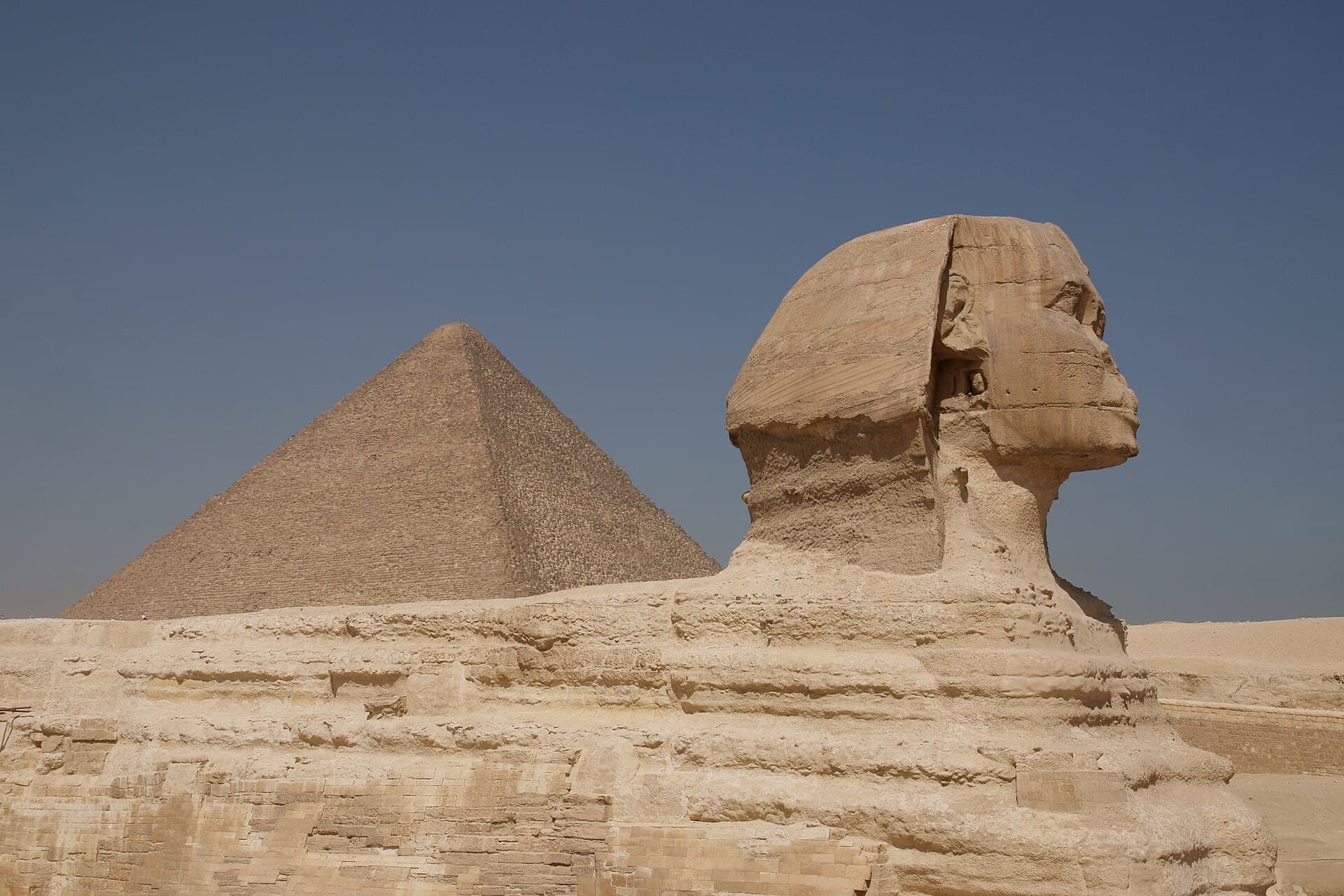
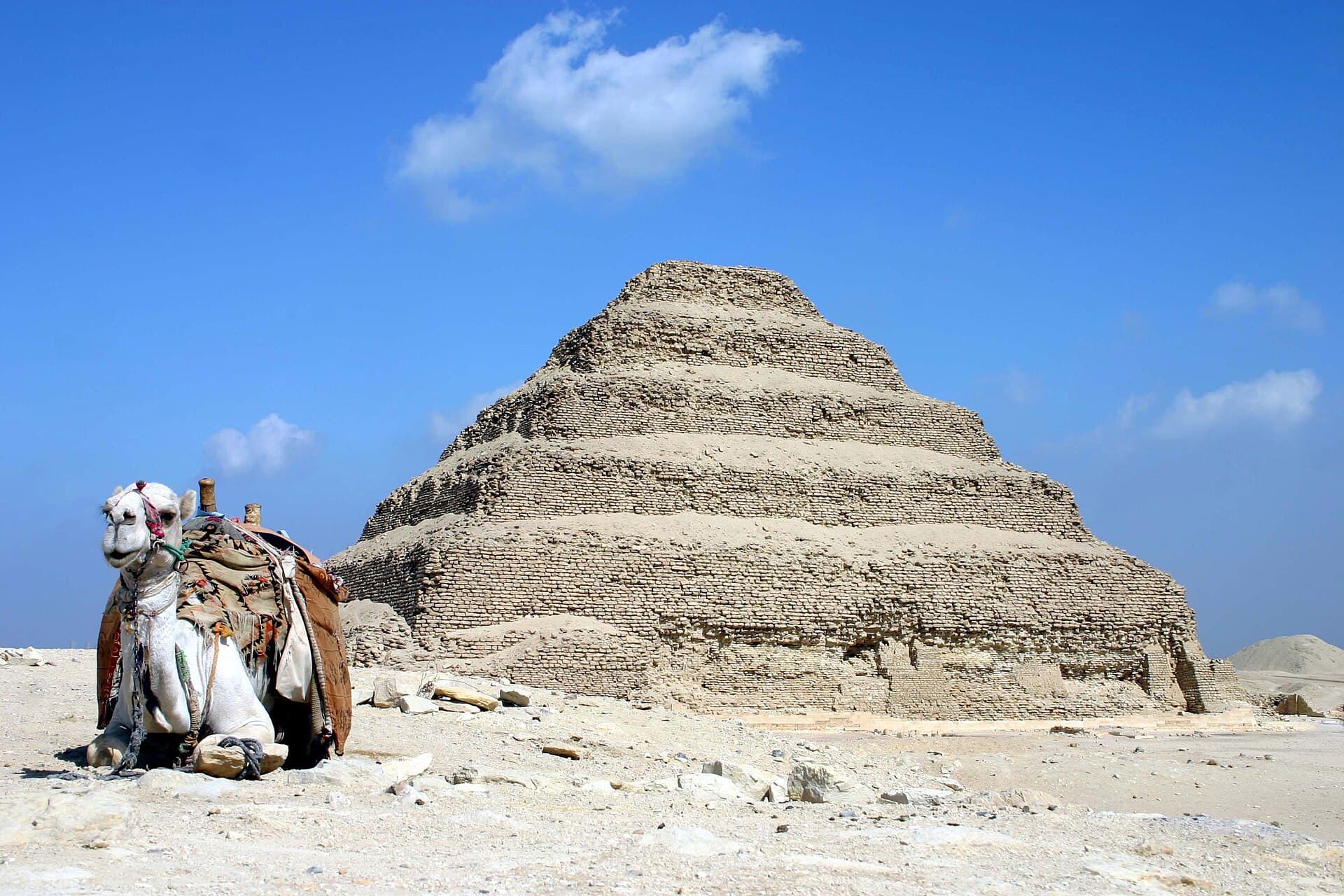
Day two is Giza and Saqqara. Go to the plateau at opening, before the heat builds and the coach groups arrive mid-morning: the three main pyramids, the Sphinx below Khafre, and the viewpoint on the southern rim where all three line up. Then drive about forty minutes south to Saqqara for the Step Pyramid of Djoser, the oldest large stone building anywhere, and the painted mastaba tombs around it, which are quieter than Giza and often better preserved. This is a full day and a satisfying one.
Day three is the Grand Egyptian Museum and the medieval city. Give the museum the morning at least; it needs three hours as a brisk floor and a full day if you read the labels, so it earns its own slot rather than being bolted onto the Giza afternoon. The grand staircase of royal statuary climbs towards a window onto the Pyramids, and the Tutankhamun galleries hold the whole burial together. In the late afternoon, when the heat has gone, walk Islamic Cairo on foot: al-Muizz street between the old gates, and the Khan el-Khalili when it is busiest and best.
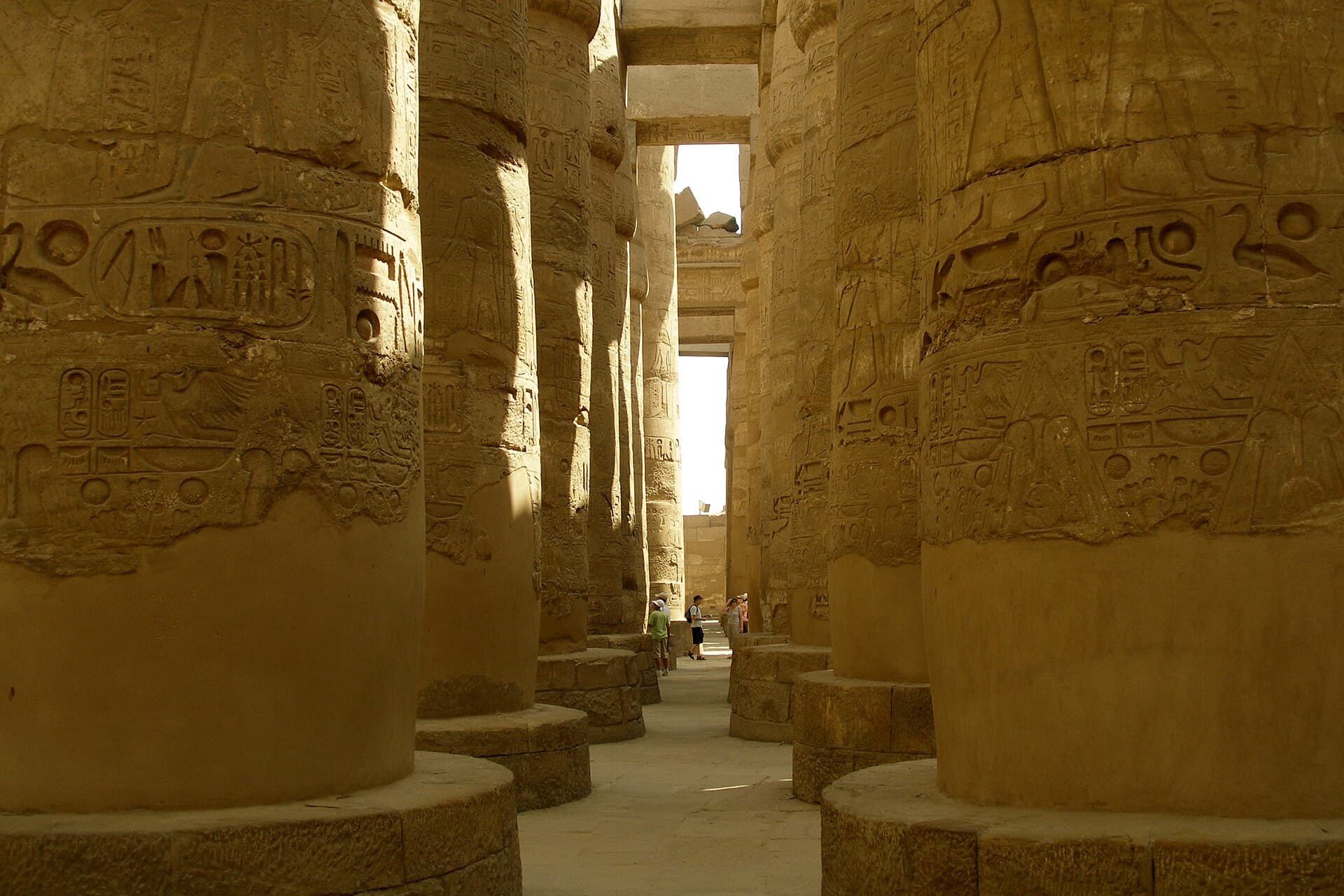
Day four flies you south. A morning flight to Luxor takes about an hour, with several services a day; board, settle into the hotel, and save the sites for when the light drops. Karnak is at its best late in the afternoon, when the low sun comes in between the 134 columns of the Hypostyle Hall and most of the coaches have gone back to the boats. In the evening, Luxor Temple in the middle of town is the one major site that improves after dark, floodlit and thin of crowds, and small enough to see in an hour.
Day five is the west bank, and it starts before it is light. The tombs are cut into rock with no airflow and hold the heat of every group that has walked through by mid-morning, so the Valley of the Kings goes first: the standard ticket admits you to three tombs from the rotating set open that day, and three is enough. Add Hatshepsut's terraced temple at Deir el-Bahari and the Colossi of Memnon on the road in. Rest through the hottest part of the afternoon, and keep the small, well-arranged Luxor Museum in reserve for later.
Day six is the morning you have left. If the budget stretches, the sunrise balloon over the west bank is one of the few aerial add-ons in Egypt that earns its price, launching at first light for around forty-five minutes over the hard edge where the green stops and the desert and the Theban cliffs begin; book it for this morning rather than relying on a single weather window. Then transfer to the airport whenever your flight home leaves.
Who it suits: first-timers who want the two headline places without a cruise timetable, families who would rather not drag children out at four in the morning onto a rafted-together boat, and anyone who wants Luxor at its own pace, which means the hour before the coaches and the evening at the lit temple. It is also the safer choice if you are nervous about a tight connection, because there is only one internal flight to go wrong.
Route B: Cairo and a short Nile cruise
This is the seven-day classic squeezed into six, and it shows. The appeal is obvious: it puts the Pyramids and a Nile sailing in the same week, which is the combination most people picture when they picture Egypt. The cost is Cairo depth and any slack at all, because the only way to fit the cruise is to give Cairo a single day and take the shorter boat. Book it with eyes open and it works; book it expecting the relaxed version and it will disappoint.
Day one is arrival in Cairo and an overnight, as on Route A. Day two is the one Cairo day, and it is necessarily full: Giza and the Sphinx at opening, then the Grand Egyptian Museum in the afternoon. This is the pairing the Cairo guides warn against, because the museum deserves more than the tail of a tired day, but on a six-day cruise trip there is no second morning to give it. What drops out is everything else Cairo holds: Saqqara, Dahshur, the medieval city, the old museum on Tahrir Square.
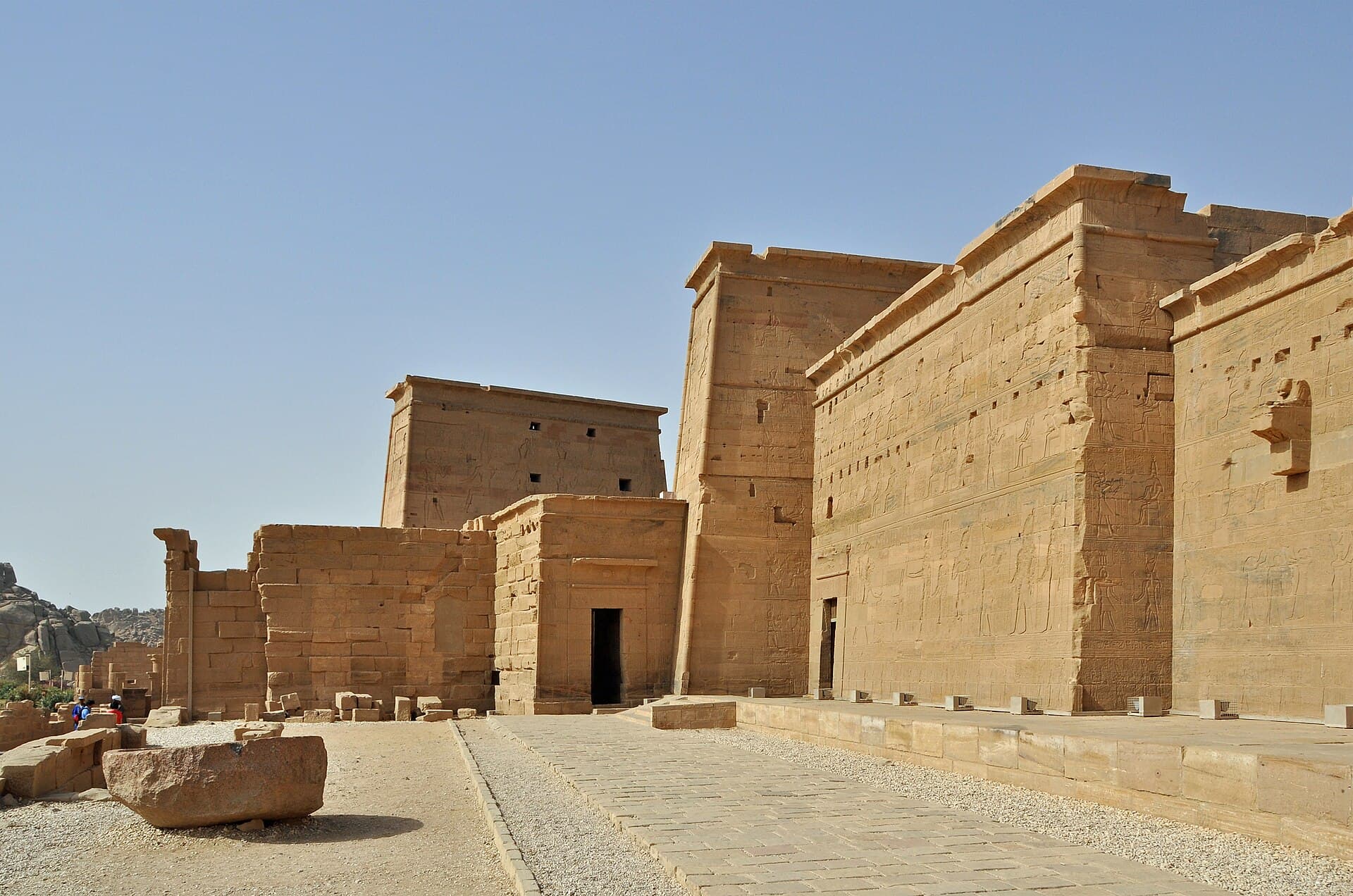
Day three flies you to Aswan and puts you on the water. A morning flight south, then aboard the boat, and Philae Temple on its island in the afternoon, reached by motorboat across open water between the two dams; the carving reads far better in the low light of late afternoon than under a midday sun. If time allows, the unfinished obelisk in its granite quarry explains where half the monuments you have seen were cut.
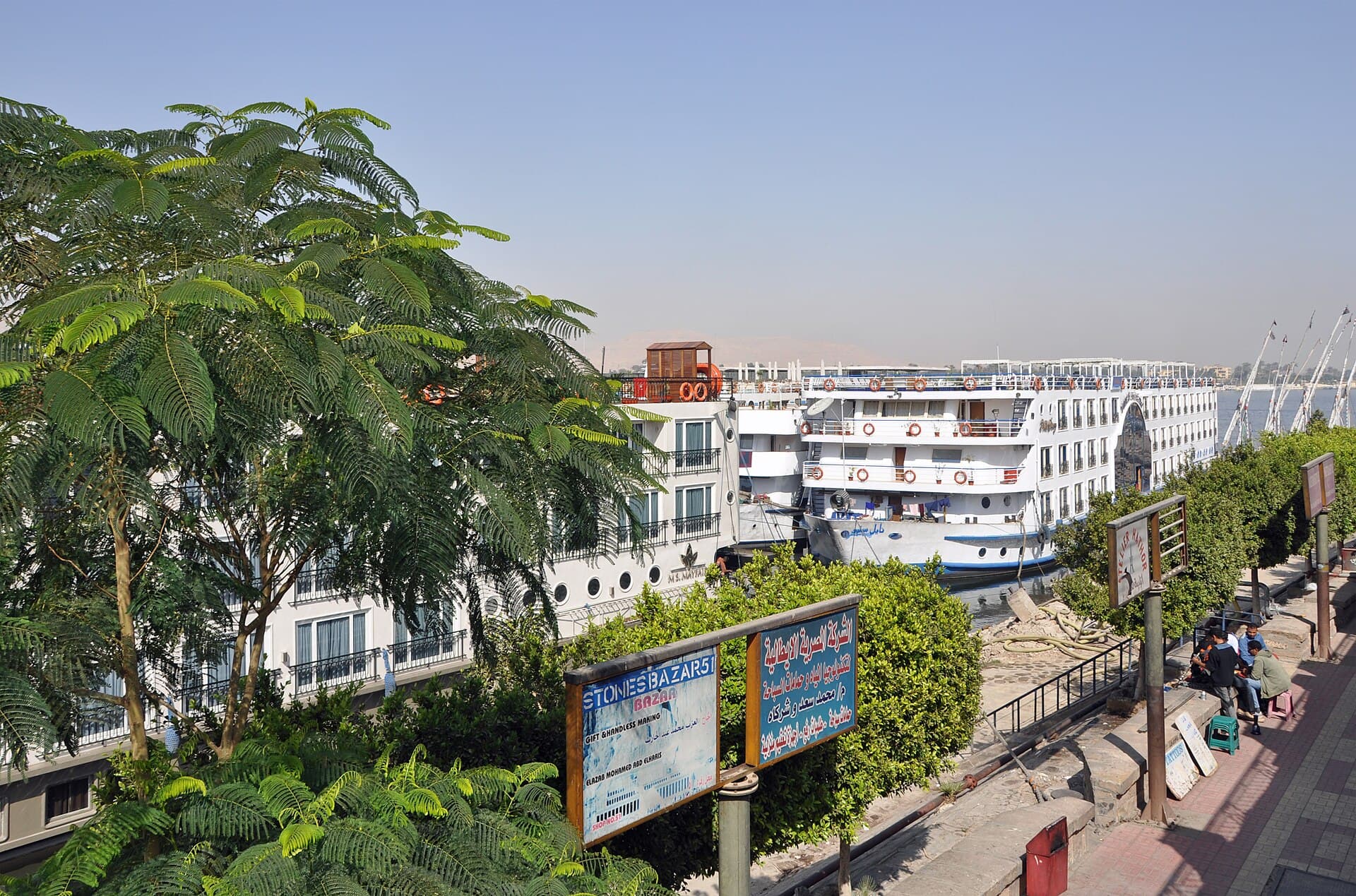
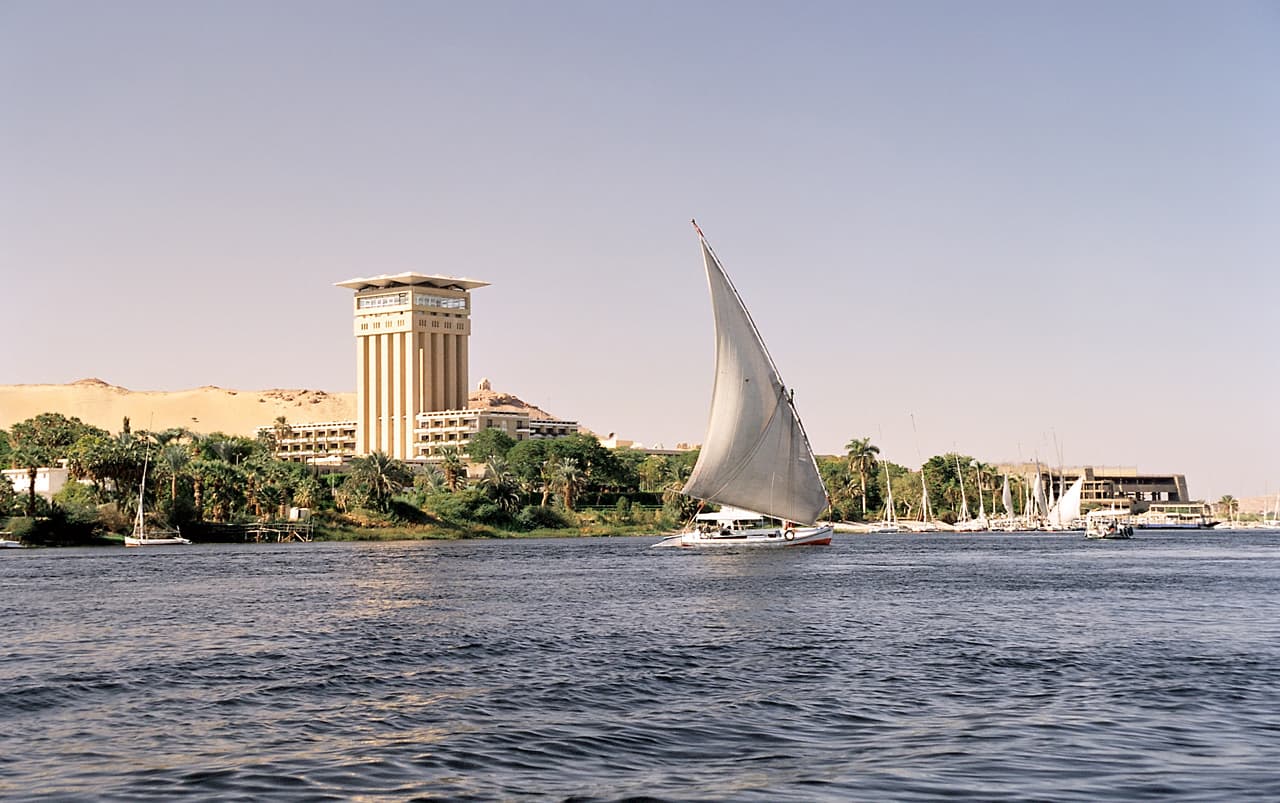
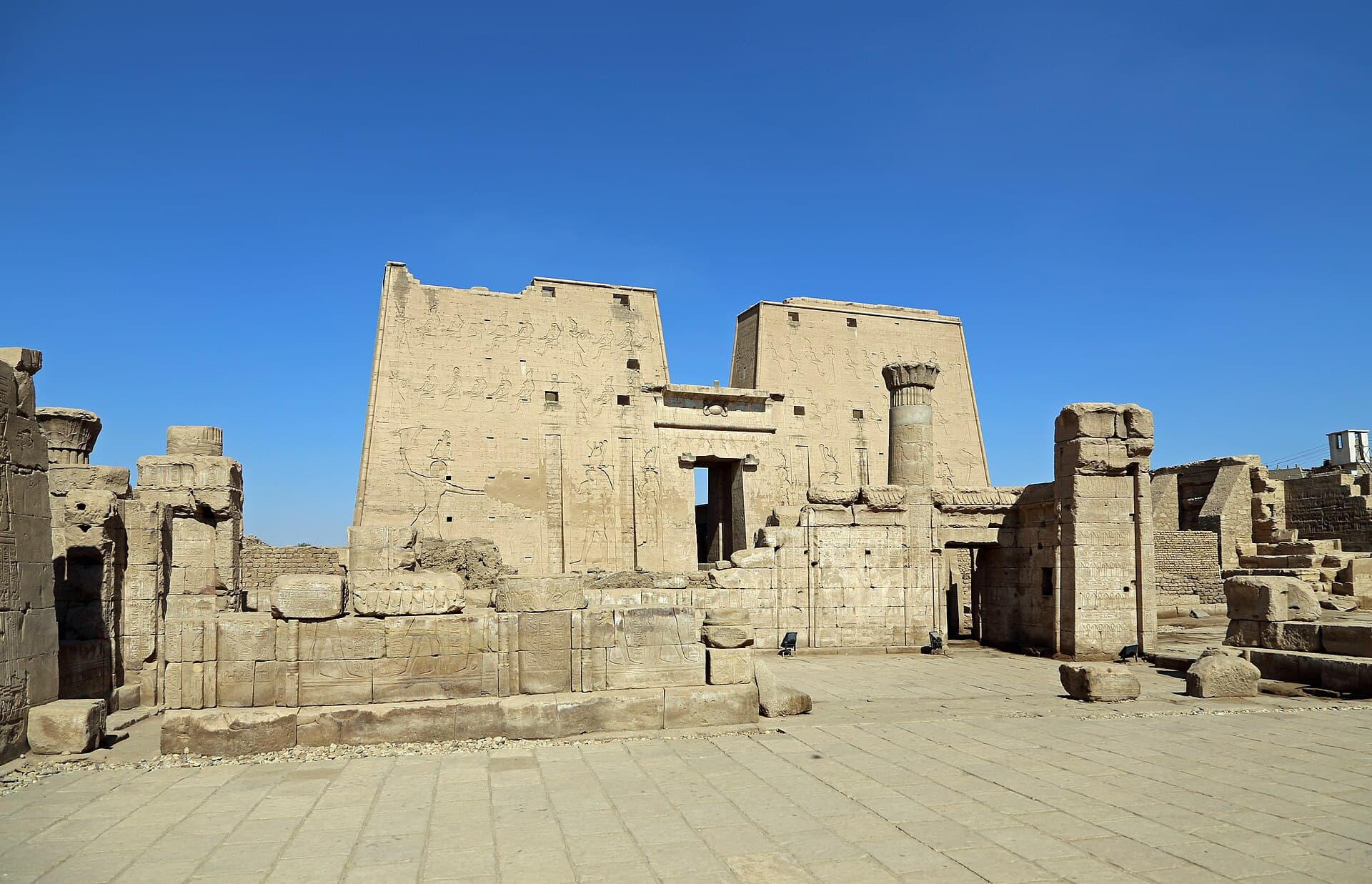
Day four is Kom Ombo and the river itself. The double temple stands right on the bank, best at dusk, and between the stops there are long stretches on deck watching the green edge and the desert behind it go past, which is the part of a cruise you are actually paying for. Day five is Edfu, the best-preserved temple in the country, taken early before the heat, then the sail on towards Luxor through the lock at Esna.
Day six disembarks at Luxor into a compressed morning: Karnak and a quick pass at the west bank, then a flight out. This is the weak point of the route. You meet Luxor, the hottest and busiest of the Nile cities, at the very end of the trip and in a hurry, with a boat departure time deciding how long you get anywhere, and there is no room left for a balloon, for a second tomb you wished you had seen, or for Abu Simbel.
A word on direction. This is the three-night boat, which runs downstream from Aswan to Luxor, the shorter and usually cheaper of the two standard sailings. The more relaxed four-night version goes the other way, upstream from Luxor to Aswan, and finishes in the calm of Aswan rather than the bustle of Luxor; it is the better trip, and it needs a seventh day. On six days, the northbound boat is the one that fits.
Who it suits: travellers for whom a Nile cruise is the non-negotiable part of an Egypt trip, returners who have already done Cairo and want the river this time, and couples more than families, because the early starts and the compressed Luxor morning are harder with young children. If you have never seen the Pyramids and you also want a cruise, be honest that six days serves neither as well as seven would.
Which of the two routes suits you?
Start with whether this is a first trip. If you have never stood in front of the Pyramids, Route A is the one to take: Cairo gets room to breathe, Luxor runs at your pace rather than a cruise director's, and one delayed internal flight will not cost you the Valley of the Kings. A first visit is also the worst time to spend half your days in airports, which is what Route B quietly does with its two internal flights.
Choose Route B only if sailing the Nile is the reason you are going. The river genuinely is the draw of a cruise, more than the temples it calls at, which you could reach by road from Luxor anyway. If a few nights on the water is the memory you want, Route B delivers it, and you accept a thin Cairo as the price. Returners who did the Pyramids on an earlier trip lose very little by compressing Cairo, which makes Route B a better fit for them than for first-timers.
Families with younger children lean to Route A. It has fewer four-in-the-morning starts, no walking through another boat's lounge to reach the bank where boats raft several deep, and a hotel base you settle into rather than a cabin you live out of. Couples and keen first-timers who want the river lean to Route B. Anyone who simply dislikes airports should take Route A for its single flight. What nobody should attempt is a deep Cairo and a proper cruise in the same six days; that is the trip that arrives home having rushed both.
What shapes the price of a six-day trip
The first lever is whether the trip includes a boat at all. Route A is hotels and one internal flight; Route B adds a cruise, and the standard of the boat moves the total more than almost anything else on the trip. Nile star ratings are local and do not map onto European hotel stars, so the question that matters is what year the boat was last refitted, not how many stars it claims. A refurbished five-star is a different holiday from a tired four at a similar headline price.
The second is private versus group. A fixed-date group departure splits a guide and a vehicle across a dozen people and is the cheaper way to travel; a private trip built around your own dates costs more per head but sets its own pace, which on a trip as short as six days can be worth the difference. A tailor-made route is exactly that, built around your dates and budget rather than sold off the peg, and for the touring half, where a guide decides whether the walls mean anything, that flexibility is where the money earns its keep.
The rest are smaller but real. Season moves everything: the same route costs noticeably more over Christmas and New Year than in the quiet heat of summer. The hotel category in Cairo is a straightforward choice of budget. Route B carries two domestic flights against Route A's one. And on the boat, cabin choice matters: an upper deck or a balcony is priced well above a lower-deck cabin on the same sailing. Sightseeing itself, the entrance tickets aside, is a small part of the total. Everything here is a suggested shape rather than a fixed, priced product; the point is to show you where the cost actually sits before you send a request.
When to do this trip
October to April is the season for all of it. Cairo is comfortable across those months; Luxor is at its best from November to March, when summer afternoons in the Valley of the Kings can pass 45C; and Aswan, which Route B reaches, is the hottest of the Nile cities and happiest from November to February. The shoulder months of February and March give the best balance of bearable weather and thinner crowds, and are the ones to aim for if you can choose.
Midsummer is doable rather than pleasant. Prices fall sharply, but sightseeing shrinks to early mornings and nothing much after mid-morning, which makes the already-compressed Route B harder still and is not a fair first impression of the country. December and January are the coolest and the busiest, and Luxor prices peak over Christmas and New Year, when the better boats fill months ahead. Desert nights are genuinely cold in midwinter, which matters less on these two routes than on a trip that camps out.
Whichever month you pick, read it against the trip rather than in the abstract: the full month-by-month picture, including where Ramadan falls in the year you travel, is set out on the when-to-go page, and it is worth a look before you fix dates.
How to pace six days
Fly between Cairo and the south; do not drive. The road to Luxor is roughly 650 kilometres and nine to ten hours, and the sites along it need permissions and a slower pace than a six-day trip can absorb. The flight is about an hour with several services a day. The one alternative worth weighing is the overnight sleeper train, mainly because it saves a hotel night: the cabins are basic and sleep is patchy, so take it for the economics, not the comfort.
On the cruise route, accept the direction the days dictate. The relaxed four-night sailing runs upstream from Luxor to Aswan and ends in the calmest city, but it needs a seventh day; on six you take the three-night northbound boat, which covers the same temples coming down and finishes in Luxor. Do not expect the slower version's long afternoons on deck from the shorter one. If that unhurried river time is what you are after, the honest answer is to add a day.
Build the days around the heat and the traffic rather than fighting them. Early starts, a rest through the worst of the afternoon, and the open-air sites again in the late light is the rhythm that works, in Cairo and on the Nile alike. Two major sites in a day is realistic; four is a fantasy that ends with everyone tired and no one looking at anything. And never connect a domestic arrival straight onto a long-haul departure: on a trip this short there is no spare night to absorb a delay, so make the last internal flight a morning one and leave yourself a margin at the end.
Common questions
Can you see the pyramids and do a Nile cruise in six days?+
Just about. Fly to Aswan, take the three-night boat down to Luxor, and give Cairo a single day for Giza and the Grand Egyptian Museum. It is the seven-day classic compressed, so Saqqara, the medieval city and any slack in Aswan all drop out. If a relaxed cruise matters more to you than ticking both, add a day and make it seven.
Is six days too short for Egypt?+
It is short, not too short, provided you commit to one shape. Six days covers Cairo and Luxor by air well, or Cairo plus a short cruise at a push. What it will not do is Cairo, a four-night cruise and a night in Aswan all together, or any of that plus the Red Sea.
Route A or Route B for a first visit?+
For most first-timers, Route A. Cairo gets room to breathe, Luxor runs at your own pace, and a single delayed flight will not cost you the Valley of the Kings. Choose Route B only if sailing the Nile is the specific reason you are going, and you are happy to give Cairo just one day.
Can you add Abu Simbel in six days?+
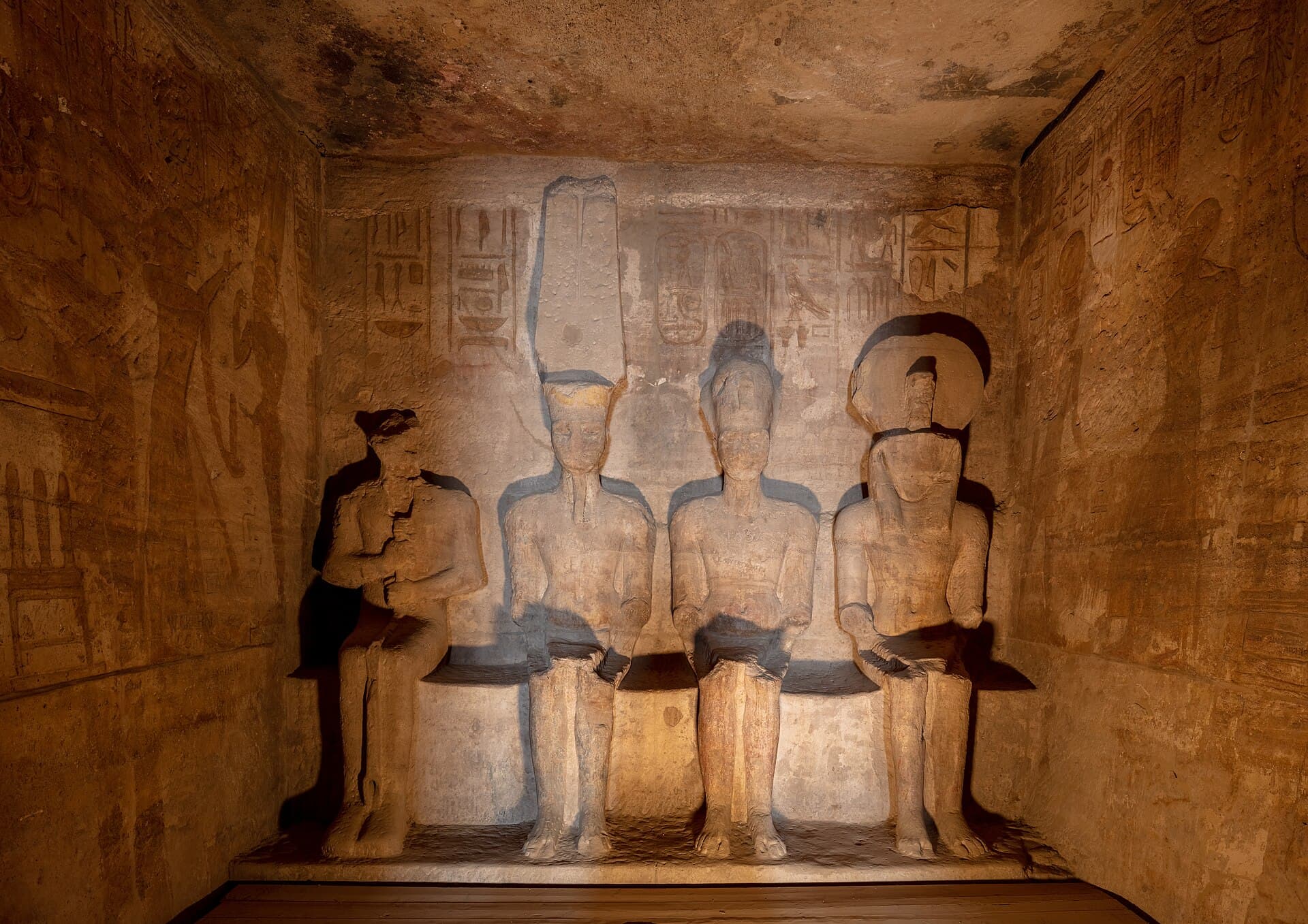
Not without losing something you came for. Abu Simbel is effectively a full day out of Aswan, about three hours each way by road or a short flight, and neither six-day route has a spare day to give it. It belongs on an eight-day trip or longer.
Do you fly or take the train between Cairo and the Nile?+
Fly. The flight is about an hour with several a day; the road is most of a day and shows you little. The overnight sleeper train is the one alternative worth a thought, mainly because it saves a hotel night, but the cabins are basic and sleep on them is patchy.
Is a three-night cruise long enough?+
For the stretch between Luxor and Aswan, yes. The three-night northbound boat calls at the same temples as the four-night upstream one, Edfu and Kom Ombo among them, and gives you the river in between. The extra night on the longer boat buys a slower pace and more time at the Luxor end, not another site.
Should the cruise run upstream or downstream on a six-day trip?+
On six days you take the three-night boat, which runs downstream from Aswan to Luxor. The more relaxed four-night sailing goes upstream from Luxor to Aswan and finishes in the calmest of the three cities, but it needs a seventh day to fit.
Is six days enough for Cairo on its own?+
Comfortably. Three or four days covers Giza, Saqqara, the Grand Egyptian Museum and Islamic Cairo without rushing, which is why a Cairo-only short break suits a shorter window well. Six days lets you pair that with Luxor, which is the shape of Route A.
Official sources
Entry rules, opening hours, security advice and exchange rates all move. Check them at the source, not here.
Written and checked by the Nile Trip Guide editorial team · Last reviewed . Entry rules, prices and opening hours change — check anything critical against the official sources linked on this page.
Plan this trip
Tell us your dates and we will price it
A real itinerary with real prices, usually within 24 hours. Nothing is booked and nothing is charged until you say yes.
The route most people take first, at the length it was built for: Giza and the Grand Egyptian Museum, then a flight to Luxor and four nights sailing down to Aswan.
No boat on this one. Giza and the Grand Egyptian Museum, a night in Luxor for both banks, two nights on the Red Sea, then back to Cairo for the Citadel, Coptic Cairo and the Royal Mummies.
Five nights in Cairo either side of a four-night sail from Luxor to Aswan. The Cairo days are private, just your party and a guide; the sightseeing off the boat is shared with a small group.