Mount Sinai: the night climb, St Catherine's, and who should skip it
Mount Sinai stands inland in the mountains of South Sinai, a long way from anything else on a normal Egypt itinerary. Almost everybody climbs it in the dark. The standard trip leaves around midnight and walks two to three hours up the camel path. It finishes on a long flight of rough stone steps. You reach the summit for sunrise, cold and tired and in a crowd. Some people find it moving. Others find it an uncomfortable night out for a view.
Where Mount Sinai actually is
Mount Sinai sits in the interior of South Sinai, in mountains and desert rather than anywhere near a beach. St Catherine's Monastery stands at its foot, and the usual trips run inland from the coast. From Sharm el-Sheikh that is roughly three hours by road, from Dahab two to three, and from Taba a serious day out with an early start. The drive is through empty country, and most of it happens in the dark.
Jewish, Christian and Islamic tradition all identify this mountain with the one where Moses received the law. Its Arabic name, Jebel Musa, means the mountain of Moses. That identification is traditional rather than settled: other mountains have been proposed, and we are not going to adjudicate it on a travel page. What is not in question is that people have been walking up this one for centuries. The monastery below is among the oldest continuously inhabited in the world.
That matters for what you should expect at the top. You are not arriving somewhere quiet and undiscovered. You are joining a very long queue of people who have done the same walk. Most of them did it in the last few hours.
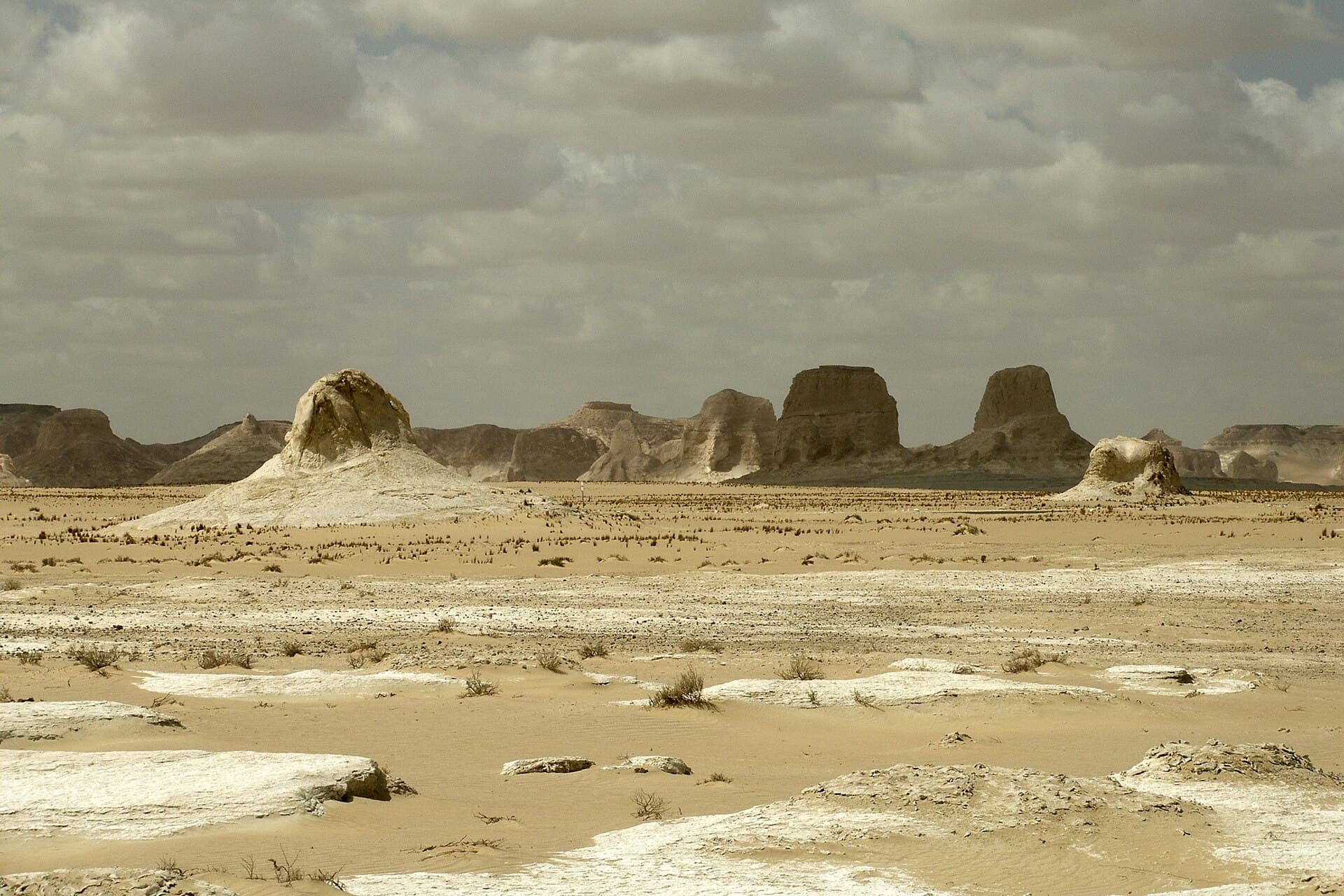
The geography is worth holding in your head before you book anything, because it explains most of the difficulties on this page. This is high granite country in the middle of a peninsula, not a hill behind a resort. The summit is above 2,000 m. The monastery and the small settlement around it sit high as well, which is why the temperature inland bears no resemblance to the temperature on the coast you left at midnight. Nothing about the drive prepares you for that, because you do it asleep.
It is also genuinely remote. There is no town of any size between the coast road and the mountains, no string of places to stop, and very little to buy once you are off the coast. Whatever you need for the night, you are carrying it up with you.
Why this mountain, and what is actually at the top
The pull of the place is religious rather than scenic, and it is shared. The same mountain matters to Jews, Christians and Muslims, and the monastery at its foot has stood at the meeting point of all three for a very long time. That is the reason a working Orthodox community ended up in the middle of a desert peninsula, and the reason it survived when a great many others did not.
The monastery was built in the sixth century, and it has been occupied ever since, which is what people mean when they call it among the oldest continuously inhabited monasteries in the world. Christian tradition places the burning bush of the book of Exodus inside its walls. Take that as tradition, which is how the monastery itself presents it, rather than as something a travel page can verify for you.
The summit itself is small. There is a chapel and a small mosque on it, and a rocky area around them where everybody waits for the light. That is the whole of it. If you are picturing a broad viewpoint with room to spread out, adjust the picture: several hundred people arrive within the same half hour, and they all want the same few metres facing east.
The view, when it comes, is of bare mountains going grey, then pink, then hard brown, in every direction with nothing green in any of them. That is the honest reward and it is a real one. It is also over in about twenty minutes, after which you have a descent to do.
The two ways up, and why almost everyone takes the same one
There are two routes to the summit. The camel path is the long way round: a wide, steadily rising track that zigzags up the flank of the mountain and can be ridden for much of its length. It is the route every organised excursion uses, and unless you have specifically arranged otherwise, it is the one you will be walking.
The other is the stairway, a rough flight of steps cut into the rock and laid by monks over centuries, running more directly up the mountain. It is far steeper, much harder on the legs, and counts of how many steps there are vary between sources, so we are not going to give you a number. It is sometimes described as the pilgrims' route, and it is not what a midnight coach party is put on.
The two come together near the top, in a broad basin below the summit, and from there everyone shares the same final flight of rough stone steps. That last stretch is the part people remember, and the part they were not warned about.
If you are a competent hill walker travelling independently and want the stairway, that is a conversation to have locally with a guide, in daylight, and it is not a good idea in the dark or at the end of a night without sleep. For everyone else the camel path is the sensible route and the question is not which way up but whether to go at all.
What the night climb is actually like
Excursions leave the coast around midnight, so that you climb in the dark and reach the summit for sunrise. The walk up the camel path takes two to three hours. It is a wide, steadily rising track rather than anything technical. A reasonably fit person in decent shoes can do it by torchlight, in a slow stream of other people doing the same thing. Camels are usually offered on the lower stretch.
The last part is different. It finishes on a long flight of rough stone steps. That is the section that hurts, and the reason 'it is only a walk' is the wrong description. The steps are uneven, they come at the end of the ascent, and you meet them again on the way down.
The summit is above 2,000 m and cold before dawn, even in August. Then the sun comes up, and the crowd at the top is large and noisy. The descent is harder on the knees than the climb and happens in daylight, when you have been awake all night. By the time you are back at the monastery gate you are usually too tired to take it in. Worth knowing, before you plan a day around both.
The thing nobody describes properly is the waiting. You do not climb continuously for three hours and arrive at sunrise. You climb, you wait for the group, you climb, and then you sit at the top in the dark and the wind for anything up to an hour before the sky does anything at all. That hour is the coldest part of the night and the point at which people who dressed for a beach holiday stop enjoying themselves. Sitting still on cold rock in a thin fleece at altitude before dawn is a different experience from walking uphill in one.
The walking itself is gentler than its reputation, and the dark makes it easier rather than harder, because you cannot see how much is left. What you can see is a line of torches ahead of you winding up the mountain, which is the genuinely memorable image of the night and the one most people come back talking about. There are simple stalls and shelters along the path selling tea and blankets. Do not plan around them being open or having what you need.
The descent is the whole problem in one word. It takes roughly as long as the climb, sometimes longer, it is on the same rough steps and loose track, your legs are tired, and it is the first time you see the drop beside the path. Coming down is where people fall, where knees give out, and where a group's timings quietly collapse.
Camels, guides and what you are actually hiring
Camels are offered on the lower part of the camel path and they are handled by Bedouin men from the community settled around the monastery, who have run the mountain for generations. Hiring one is normal and it is how a good part of the local economy works. Agree what you are paying before you get on, not afterwards, and expect the price to be a negotiation rather than a posted rate.
What a camel cannot do is the top. The final flight of rough stone steps is on foot for everybody. Riding the lower section saves you the easiest part of the ascent and leaves you the hardest part intact, which is a reasonable trade if you are tired or slow, and no help at all if the steps are what you are worried about.
Riding downhill on a camel on a rough track in daylight is not obviously more comfortable than walking, and plenty of people who ride up choose to walk down. If your knees are the reason you are considering a camel, do not assume the animal solves the descent.
On the guiding: an organised excursion will have someone leading the group, but the size of the group decides how much attention anyone gets. This is a mountain at night with a strung-out line of people on it, and a party of forty has no meaningful supervision on the way down. If you are in any doubt about your own pace, either travel with a small group or arrange a local guide of your own, which is straightforward to do at the monastery end.
Who should not attempt it
Mount Sinai turns people back for three reasons, and general fitness is only one of them. Anyone with bad knees, bad hips or poor balance on uneven ground. The climb is manageable; the descent on rough steps, tired, in daylight, is where people come unstuck. If stairs are already a problem at home, they will be a much larger problem here with nothing to hold on to.
Anyone who cannot lose a full night's sleep and still function. This is not a late night, it is a night gone entirely, and it costs you most of the following day as well. On a short trip with a flight to catch, that is a real price.
Anyone hoping for a quiet spiritual moment on the summit. It is crowded and it is loud. Go for the landscape, the history and the walk itself. If those are not the reason, skip the climb: come in daylight and see the monastery on its own. It is a much less punishing half-day and you will actually be awake for it.
Add a fourth, which is less about you than about where you are in the trip. If this is the last night before a flight home, or the night before a long transfer to Cairo, leave it alone. You will spend the following day in a vehicle or an airport in a state you would not choose, and a holiday that ends with everyone exhausted and short-tempered is a poor piece of planning whatever the sunrise was like.
Anyone travelling with a heart or breathing condition, or on medication where a night without sleep matters, should ask a doctor before booking rather than after arriving. This is not a technical mountain, but it is several hours of sustained effort at altitude, in cold air, in the middle of the night, hours from a hospital. None of those factors is dramatic on its own and together they are worth a conversation.
Divers: keep this off a diving day
This catches people out on every Red Sea trip that includes the mountain. The summit sits high enough that the climb is best treated as an altitude exposure, so it does not belong on the same day as a dive, and most dive centres will tell you to leave a clear day between the two.
The practical consequence is a scheduling one. Put the mountain early in the week on a non-diving day rather than at the end, because the rule about flying after diving is already taking your last day, and stacking an altitude exposure on top of that leaves you with a week that does not fit together.
If you are diving out of Sharm el-Sheikh or Dahab and the mountain matters to you, say so when you book the diving rather than trying to slot it in afterwards. Any competent centre will plan around it. None of them can undo a dive you have already done.
St Catherine's Monastery at the foot of it
The monastery is a working Orthodox community, among the oldest continuously inhabited anywhere, and it holds an important library and icon collection. It is not a museum built for visitors, and it does not run on visitor hours.
It opens to visitors for only a few morning hours, is normally closed on Fridays and Sundays, and closes around Orthodox feasts. Check the date before you commit a day to it. A trip that reaches the gate on the wrong morning has bought a long drive and a car park.
Which brings the awkward part of the standard excursion into focus. The climb ends roughly when the monastery opens, and you are in no state to look at anything by then. Decide which of the two you actually came for. Doing both in one night is possible and is the usual sale; doing both well is not.
What you can see is also less than the collection suggests. The library is one of the most important in the Christian world and it is not a public reading room; what is on show to visitors is a fraction of what is held, and which parts are accessible has varied over the years. Go expecting a small, dense, heavily used compound rather than a gallery, and the visit is a good one. Go expecting a museum of treasures laid out for you and it will feel short.
Dress as you would for any working religious house: covered shoulders and knees for everyone, and long trousers rather than shorts. This is not a formality invented for tourists and it is not negotiated at the door. It is also a reason to think about what you wear on the mountain overnight, since you arrive at the gate in whatever you climbed in.
Treat it as an active monastery throughout. The community lives there, services run on their own schedule and not yours, and parts of the compound are simply not open. Photography rules vary by area and are worth asking about rather than assuming.
The daylight version, which suits more people than admit it
There is a version of this trip that does not involve a night on a mountain: drive inland in the morning, visit the monastery when it opens, look at the mountains, have lunch, drive back. It is a long day out, but it is a day, not a night, and you are conscious for all of it.
For a large share of visitors that is straightforwardly the better trip. You see the thing that is unquestionably worth seeing, in daylight, awake, and you lose one day rather than a night plus the day after it. Nobody sells it that way, because the sunrise climb is the story, but the monastery is the older and more interesting half of the site.
The catch is the same as ever: opening hours are short, and the closed days are Fridays and Sundays and the Orthodox feasts. A daylight trip is entirely dependent on the date being right, so this is the version where checking first genuinely decides whether the day works.
You can also walk part of the camel path in daylight without going to the summit. An hour up and an hour back gives you the landscape, the scale of the place and a view over the monastery, at a cost your knees will forgive. It is not a substitute for the climb and it is not sold as an excursion, but for anyone travelling independently it is a real option.
Getting there, the drives and the checkpoints
From Sharm el-Sheikh the drive inland is roughly three hours each way through empty desert. From Dahab it is two to three. From Taba it is a serious day out with a very early start. From Cairo it is most of a day, crossing the Suez Canal into the peninsula, which is why almost nobody does it that way for a single night.
Checkpoints on Sinai roads are routine. They are undramatic, they are a normal part of travelling here, and they add time that cannot be predicted, which is one reason the midnight departure has slack built into it. Carry your passport with you rather than leaving it at the hotel. Drivers and guides are regularly asked for names and numbers, and a photocopy in the glovebox is not always accepted.
The drive itself is done in the dark on the way up and in bright light on the way back, when you have been awake for over twenty-four hours. That return leg is the part people underestimate. If you get carsick, or if you are the one driving, plan accordingly.
One more practical point about the road: what is open, and which inland routes are currently in use, has changed at various times. Confirm your specific itinerary with an operator close to your dates rather than assuming last year's arrangement still holds.
What the standard excursion includes, and what to ask before booking
The trip sold on every hotel desk in Sharm el-Sheikh and Dahab is broadly the same product: a minibus leaving around midnight, a drive inland, a guided walk up the camel path, sunrise at the summit, a descent, and the monastery when it opens, followed by the drive home. What varies is group size, the quality of the vehicle, and whether the monastery part actually happens.
That last item is the one to pin down. The monastery closes on Fridays and Sundays and around Orthodox feasts, and an excursion sold for one of those mornings delivers you to a gate that will not open. Ask explicitly whether the monastery visit is included on your date, and treat a vague answer as a no.
Ask how large the group is. On a mountain at night, a party of twelve behaves completely differently from a party of forty, and the difference shows on the descent, when the fast and the slow are two hours apart and there is one guide. Ask whether the guide climbs with the group or waits at the bottom, because both arrangements exist.
Ask what the vehicle is and whether it waits. Ask whether blankets are provided at the top or whether that is a purchase on the mountain. Ask what happens if somebody in the group cannot finish the climb, which is a normal event rather than a rude question, and the answer tells you a lot about how the operator runs the night.
None of this needs to be adversarial. The trip is run daily and most operators run it competently. But it is sold as a simple excursion and it is not one, and the questions above are what separate a well-organised night from a long, cold, badly managed one.
Staying inland rather than driving from the coast
There is an alternative to the midnight round trip, and it is worth knowing about: stay inland near the monastery for a night instead of driving from the coast and back in the dark. It turns a brutal single night into an ordinary two-day trip, with a proper evening, a shorter start and a bed to return to afterwards.
The gain is not only comfort. A night inland is the only way to see the interior of South Sinai in daylight at both ends, and the interior is the part of the peninsula that makes the coast worth leaving. It also removes six hours of driving from either side of a sleepless night, which is the single biggest cause of people arriving at the summit too tired to care.
The cost is that it takes two days out of a trip rather than one night, and the accommodation inland is simple by the standards of the coastal resorts. If you are on a week's beach holiday that may not be a trade you want. If the mountain is genuinely the reason you came to Sinai, it is the sensible way to do it, and an operator can arrange it.
Either way, the evening before matters more than people expect. You are attempting a mountain at the hour you would normally be asleep. Whatever sleep you can get before midnight is the difference between a hard night and a miserable one.
How it fits an Egypt trip, and mostly it does not
Sinai is a separate leg of a trip, not a detour within one. It is administratively and practically apart from the Nile valley, with checkpoints on the roads, and Cairo, Luxor and Aswan are all on the mainland. Getting between Sinai and the Nile normally means flying, usually through Cairo, which costs the better part of a day each way.
So if your trip is Cairo plus a Nile cruise, Mount Sinai does not fit, and we are not going to pretend otherwise. Adding it means two flights and two travel days for one night's walking, at the cost of a temple day you would probably rather keep.
Where it does work is on a Red Sea leg. Sharm el-Sheikh and Dahab are the practical bases, and the Nile-then-Red-Sea trip that finishes in Sinai has the climb in reach without rearranging everything else. Taba can do it too, as a long day with an early start. Keep your passport with you either way: checkpoints on Sinai roads are routine and they add time you cannot predict.
It also competes with other things on the same coast, which is the comparison people fail to make. Out of Sharm el-Sheikh the mountain is in direct competition with a Ras Mohammed day and with the boat out to the Thistlegorm wreck, and none of the three combine. Out of Dahab it competes with the Blue Hole, the Canyon and the shore diving you can walk to. On a week's holiday you are choosing between them rather than collecting them, and it is better to make that choice deliberately at home than to be sold all three on a hotel desk.
The other version that works is the overland route towards Israel, where Taba is the crossing. The mountain sits roughly on the way, and it is the thing people most often try to squeeze in. Squeezing it in still costs a night and most of the next day, on a trip that already has a border in it. Possible, but rarely wise.
The other inland trips, and whether one of them suits you better
Mount Sinai is not the only reason to leave the coast, and for some people it is not the best one. Jeep and camel trips run with Bedouin guides into the wadis behind Dahab, Nuweiba and Taba, and the appeal there is the landscape and the silence rather than any single thing you are taken to see. A half-day gets you out of the resort; a full day with lunch cooked over a fire is the version people remember.
The Coloured Canyon, inland from Nuweiba, is the standard set-piece: a narrow sandstone gorge walked on foot, banded in rust, cream and purple where the rock has weathered, with sections tight enough to touch both walls. It involves scrambling and some awkward steps down, so it is not the trip for anyone unsteady on their feet, and it is miserable in the middle of a summer day.
For anyone who wants pharaonic Egypt in Sinai, it exists, and almost nobody sees it. The turquoise mines and the temple of Hathor at Serabit el-Khadim are the genuine article, but they are hours inland towards the west coast of the peninsula and are almost never part of a resort week. That is a proper expedition with a 4x4, arranged in advance, rather than something you book the night before.
Be sceptical of the short desert excursion sold from every resort: a convoy out to a staged Bedouin camp with dinner and a show. It is dusty, brief, and tells you almost nothing about the desert, which lies much further in. If the interior of Sinai is what you want, the St Catherine road and the wadi trips with a Bedouin guide are the ones that deliver it.
The Sinai-only entry stamp, and what it covers
Arriving at Sharm el-Sheikh or Taba, many nationalities can be given a free Sinai-only entry permit instead of a full Egyptian visa. It is short-term, and it covers the eastern Sinai coast — Sharm, Dahab, Nuweiba, Taba — plus the road to St Catherine. The monastery and the mountain sit inside it.
What it does not cover is everything else: Cairo, Luxor, Aswan, the Nile valley and the mainland Red Sea coast. If your trip touches any of those at any point, take the full tourist visa instead, and applying online in advance is simplest. The permit rules have changed more than once. Treat this, and anything else you read, as a starting point rather than the current position.
Two specific traps are worth spelling out. The permit is widely reported not to cover Ras Mohammed National Park or diving trips, so a beach week that includes the park needs the full visa even though everything in it is inside Sinai. And the limit is enforced at road checkpoints rather than at the airport, which means the mistake surfaces halfway through a journey rather than on arrival.
The permit typically runs for about two weeks, which is longer than most people's stay on this coast and shorter than a few. If you are planning anything beyond a fortnight, or a return leg through Cairo, take the full visa and stop thinking about it. The saving on a free stamp is not worth a trip that comes apart at a checkpoint.
When to go
Spring and autumn are when trips into the Sinai mountains are pleasant rather than punishing. Summer is hard. Inland Sinai temperatures are extreme by day, and although the walk is at night, you spend the day either side of it in that heat.
Winter is the opposite problem and the more dangerous of the two, because it is the one people do not plan for. The interior is high, and the nights up there are properly cold rather than fresh. A winter summit before dawn is an unforgiving place to stand around in a light jacket, and it is a long way from anywhere warm.
There is one weather event worth respecting anywhere in the Egyptian desert, and it applies here. Rare heavy storms can send flash floods through wadis, which is why desert excursions are occasionally rerouted or postponed at short notice in winter. It is uncommon. It is also the reason to take a cancellation at face value rather than pushing for the trip to run.
Ramadan moves through the calendar and changes the rhythm of ordinary life inland more than it changes a coastal resort. Christmas, New Year and Easter fill the hotels on the Sinai coast and push prices up, and they coincide with the best weather, which is exactly why they are busy. Orthodox feasts are a separate calendar again and the one that governs whether the monastery opens.
The best single answer, if you want one: March to May or October to November, on a date when the monastery is open, early in a Sinai week rather than at the end of it.
What to take up the mountain
Mount Sinai's summit is cold at dawn in every month of the year, and winter up there is properly cold. That is the single thing people underdress for, having packed for a beach holiday two hours away on the coast. Take a real warm layer, not a light one, and something windproof over it.
Otherwise: a head torch rather than a phone, shoes with grip and closed toes, more water than feels necessary. Take something to sit on at the top while you wait. Nothing about this climb is technical. Everything about it is cold, darkness, and the state of your knees.
Long trousers rather than shorts, for three separate reasons: the cold at the top, the monastery's dress code at the bottom, and the fact that you will be sitting on rock. A hat you can pull down and something for your hands matter more than people expect, because the hour of waiting at the summit is spent stationary in wind.
A phone torch is the classic mistake. It eats the battery you will want for photographs at sunrise, it puts one hand permanently out of action on rough steps, and it is useless if you drop it. A cheap head torch solves all three problems and weighs nothing. Bring spare batteries, and keep the phone warm in an inside pocket, since cold flattens a battery faster than use does.
Take small notes in cash. There are stalls on the path and things to pay for, and nothing up there takes a card. Take any medication you might need with you rather than leaving it in the vehicle, because the vehicle is hours away for the whole night.
What to leave behind: a heavy day pack, anything you are not prepared to carry up and down a mountain in the dark, and walking poles you have not used before. If you already walk with poles, bring them, as the descent is exactly the situation they are for.
Doing it with children, or with a mixed group
Children who walk happily for three hours at home can manage the ascent, and the dark makes it easier rather than harder, because they cannot see how far is left. The descent is the honest question. It is long, it is on rough steps, and it happens when they have been awake all night, which is when small people stop cooperating.
The harder problem in a family or a mixed group is that a group moves at the pace of its slowest member and a mountain at night offers nowhere to wait comfortably. If one person turns back, somebody has to go with them, and that decision is best made before you leave rather than at two in the morning on a dark path.
The workable version for a mixed group is to split it deliberately: the walkers do the climb, everybody else does the monastery in daylight on a different day. That gets each half the trip it actually wants, and it costs less in goodwill than dragging a reluctant group up a mountain and back down it.
What this page does not tell you
No prices, no opening hours, no current permitted routes. Those change, and a travel page repeating last year's figures is worse than useless. The Egyptian Ministry of Tourism and Antiquities publishes what is currently open, and the monastery's own visiting hours have to be confirmed locally close to the date.
Security guidance is a separate question again, and not ours to answer. Government travel advice for Egypt is written region by region, and it treats North Sinai very differently from the South Sinai coast and the St Catherine road. Read your own foreign ministry's current page for the specific places on your itinerary, close to departure, and check what your insurer will and will not cover in Sinai.
The insurance point deserves more than a passing mention. Some policies exclude regions that a government advises against travelling to, and some treat an overnight mountain walk differently from a beach holiday. Both are worth confirming in writing before you book rather than discovering afterwards, and neither is a question a tour desk can answer for you.
What we will say plainly is the part that does not change: the drive is long, the night is cold, the descent is worse than the climb, the summit is crowded, and the monastery opens for a few morning hours on the days it opens at all. Plan around those five facts and the trip works. Ignore them and you have bought an expensive night without sleep.
Common questions
How long does it take to climb Mount Sinai?+
Two to three hours up the camel path, plus a final flight of rough stone steps at the top. Add the descent, which is slower on the knees than the climb. Then add the drive: roughly three hours each way from Sharm el-Sheikh, two to three from Dahab. In practice it consumes the whole night and most of the following day.
Do you have to climb Mount Sinai at night?+
That is how almost every excursion runs it, leaving the coast around midnight to reach the summit for sunrise. The night start also avoids walking in the heat. If a night without sleep is not for you, a daytime visit to St Catherine's Monastery alone is a reasonable half-day and much less punishing than the climb.
How hard is the climb, really?+
The camel path is a wide, steadily rising track rather than anything technical, and a reasonably fit walker manages it. The difficulty is elsewhere: the final flight of rough stone steps, the hour of standing still in the cold at the top, and above all the descent, which takes as long as the climb and is harder on the knees. Judge it on those three rather than on the uphill.
How cold is it at the summit?+
Cold before dawn in every month, including August, and genuinely cold in winter. The summit is above 2,000 m. Most people underdress for it because they are staying on a warm coast two or three hours away. Take a proper warm layer and something windproof rather than the fleece you brought for evenings by the sea.
Can you ride a camel to the top of Mount Sinai?+
Only part of the way. Camels work the lower section of the camel path and are hired from the Bedouin men who run it, with the price agreed before you get on. The final flight of rough stone steps is on foot for everybody. So riding removes the easiest part of the ascent and leaves the hardest part untouched, which does not help if the steps are what worries you.
Can you visit St Catherine's Monastery without doing the climb?+
Yes, and for many people it is the better trip. It opens to visitors for only a few morning hours, and normally closes on Fridays and Sundays and around Orthodox feasts. Check the date first. Going in daylight, awake, gets you far more out of the library, the icons and the setting than arriving at the gate after a night on the mountain.
Can you do Mount Sinai from Cairo or from a Nile cruise?+
Not sensibly. Sinai is a separate leg. Getting there from Cairo, Luxor or Aswan normally means flying via Cairo, and losing the better part of a day each way. Mount Sinai belongs on a Red Sea leg based in Sharm el-Sheikh or Dahab, or as a long day from Taba. If your trip is the Nile corridor, leave it out.
Does the free Sinai entry stamp cover Mount Sinai?+
The Sinai-only permit issued at Sharm el-Sheikh and Taba covers the eastern Sinai coast plus the road to St Catherine. Mount Sinai and the monastery fall inside it. It does not cover Cairo, the Nile valley or the mainland Red Sea coast, and it is widely reported not to cover Ras Mohammed National Park. The terms have changed before, so confirm before you fly.
Can you climb Mount Sinai if you are diving that week?+
Yes, but not on a diving day. The summit is high enough that the climb is treated as an altitude exposure, and dive centres will ask you to leave a clear day between the two. Put the mountain early in the week on a non-diving day, because the end of the week is already taken by the rule about flying after diving.
What should I wear for the Mount Sinai climb?+
Long trousers, closed shoes with grip, a proper warm layer and something windproof over it, plus a hat and something for your hands. The cold comes when you stop moving at the summit rather than while you walk. Long trousers also matter at the monastery afterwards, where covered shoulders and knees are expected of everyone.
Is Mount Sinai suitable for children?+
It depends on the descent rather than the climb. A child who walks for three hours at home will manage the way up, but coming down rough steps after a night without sleep is where families come unstuck. In a mixed group, consider splitting it: the walkers climb, and everyone else visits the monastery in daylight on another day.
Where should you stay to climb Mount Sinai?+
Most people do not stay at all, arriving from Sharm el-Sheikh or Dahab around midnight and driving back the next morning. The gentler alternative is a night inland near the monastery, which removes six hours of driving from either side of a sleepless night and lets you see the interior of Sinai in daylight. Accommodation there is simple, and it takes two days rather than one night.
Official sources
Entry rules, opening hours, security advice and exchange rates all move. Check them at the source, not here.
Written and checked by the Nile Trip Guide editorial team · Last reviewed . Entry rules, prices and opening hours change — check anything critical against the official sources linked on this page.
Plan this trip
Tell us your dates and we will price it
A real itinerary with real prices, usually within 24 hours. Nothing is booked and nothing is charged until you say yes.
The route most people take first, at the length it was built for: Giza and the Grand Egyptian Museum, then a flight to Luxor and four nights sailing down to Aswan.
No boat on this one. Giza and the Grand Egyptian Museum, a night in Luxor for both banks, two nights on the Red Sea, then back to Cairo for the Citadel, Coptic Cairo and the Royal Mummies.
Five nights in Cairo either side of a four-night sail from Luxor to Aswan. The Cairo days are private, just your party and a guide; the sightseeing off the boat is shared with a small group.