What to wear in Egypt comes down to one rule that covers most situations: shoulders and knees covered, in loose clothes, in light colours. Nobody will stop you at the airport for ignoring it, and plenty of visitors do. But the way you dress changes how strangers read you, and in Egypt that has practical consequences all day long.
What to wear in Egypt: the actual dress standard
There is no dress law for visitors, only a social standard, and it is simpler than most guides make it sound. Looseness matters as much as coverage: leggings with a short top cover the leg but read as underwear to many people, while a long loose skirt and a plain T-shirt do not. Egyptians apply the same distinction to each other, which is why a Cairo street shows a wide range of dress and still has a line running through it.
You will see hijab on most Egyptian women in most places, niqab on a minority, and uncovered hair on plenty in wealthier districts. Foreign women get more latitude than Egyptian women, and less than they assume once they leave the hotel. Nobody expects you to look Egyptian. The standard tightens the further you get from tourist infrastructure, and it tightens fastest in older, poorer neighbourhoods rather than in religious ones specifically.
The most useful instruction we can give is to read the room rather than the country. A hotel pool, a dive boat and a resort beach club run on one set of norms; a working market, a mosque, a village and someone's home run on another, and the two can sit half an hour apart on the same morning. When you are genuinely unsure which you are in, dress for the more conservative of the two. Loosening up later costs you nothing. Arriving underdressed at the place that mattered cannot be undone, and it is usually the place you most wanted to be welcome.
How much does it change between Cairo, Upper Egypt and the Red Sea?
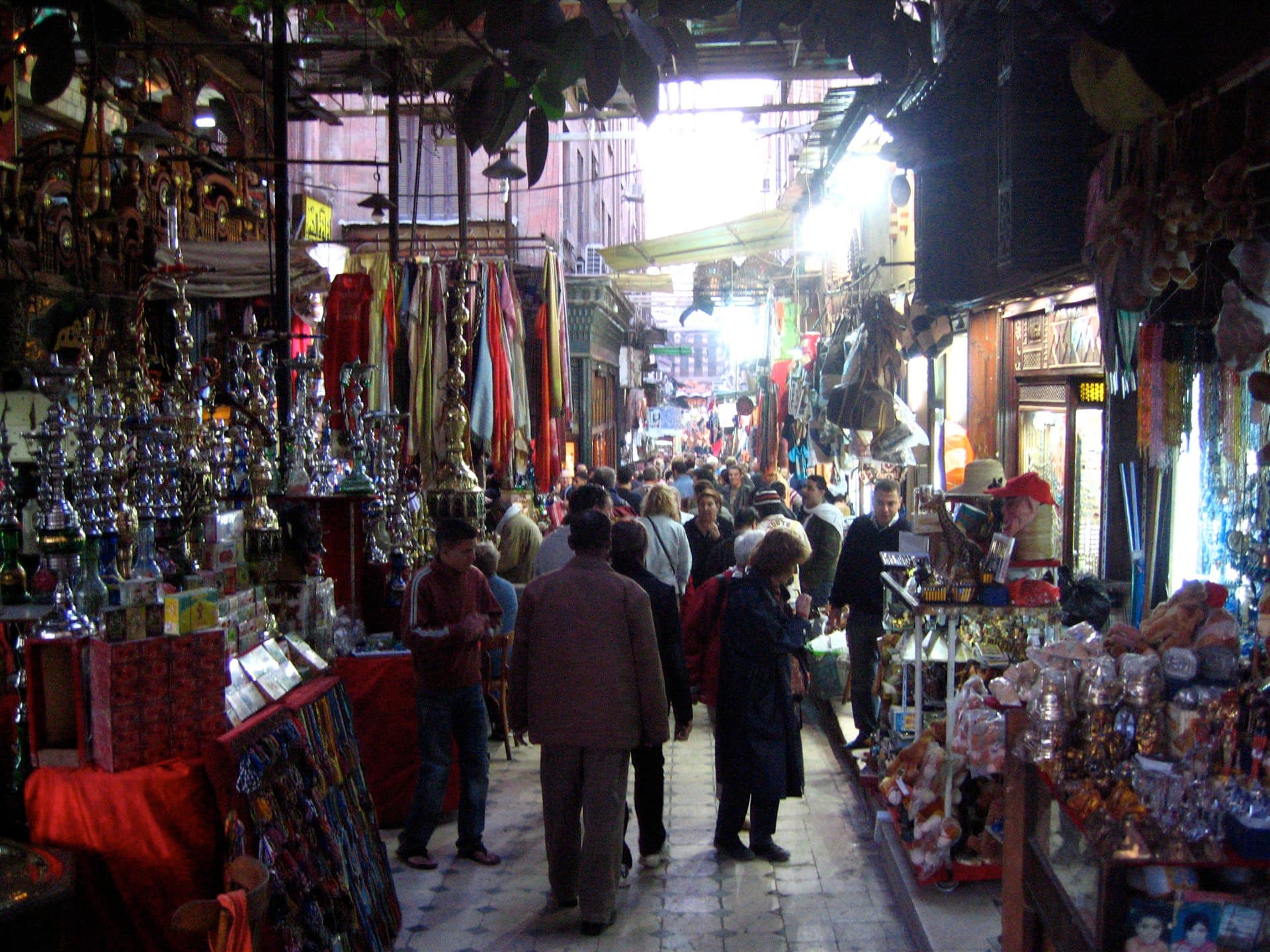
Cairo is not one place. In Zamalek, Maadi, New Cairo and the smarter restaurants, bare shoulders and knee-length dresses pass without comment. Downtown, Sayyida Zeinab, the streets around Khan el-Khalili and the metro at rush hour are a different city, and the same clothes get looked at. The metro has women-only carriages for a reason and they are worth using. None of this is dangerous. It is a question of how much friction you want in a day.
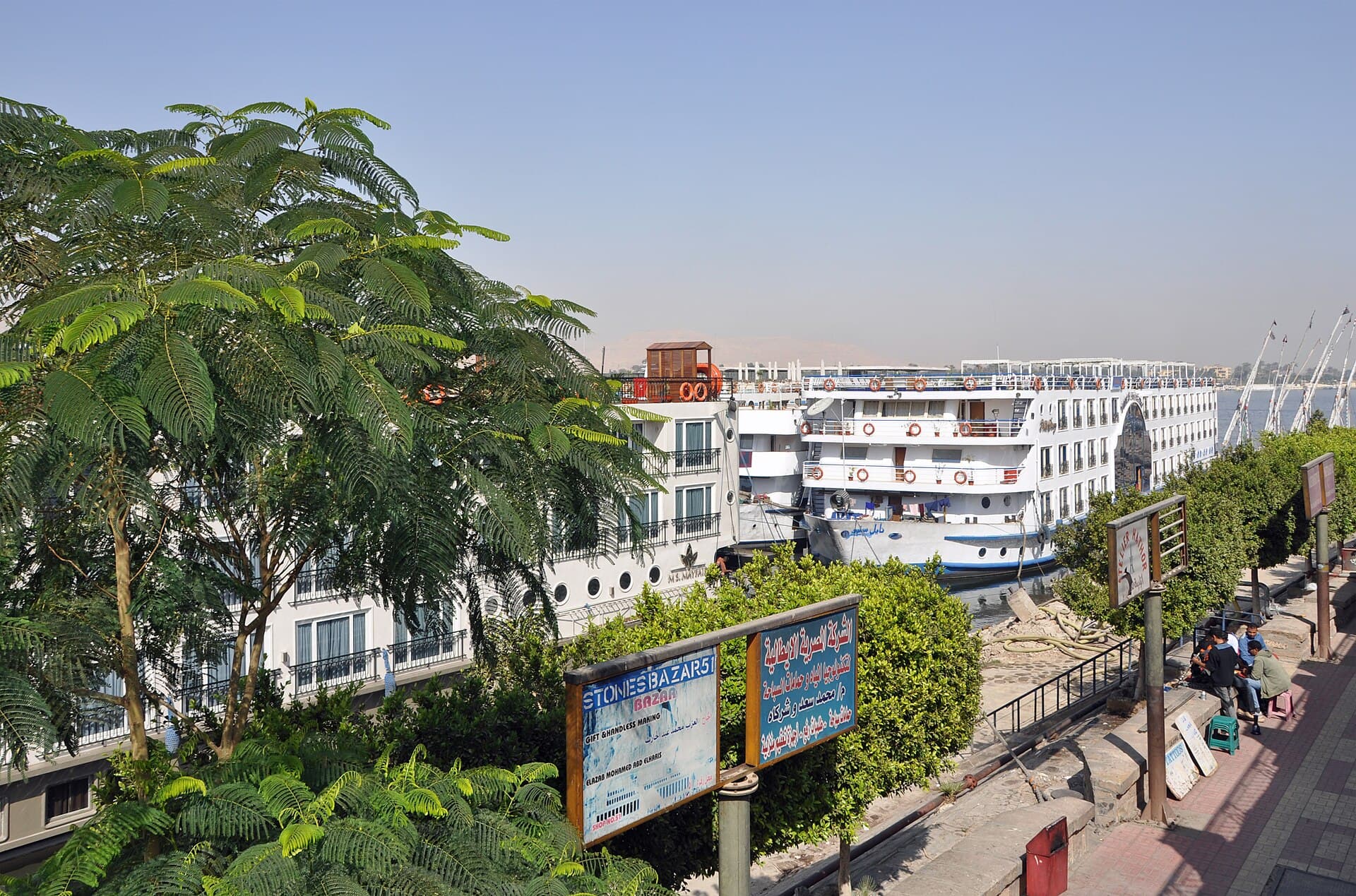
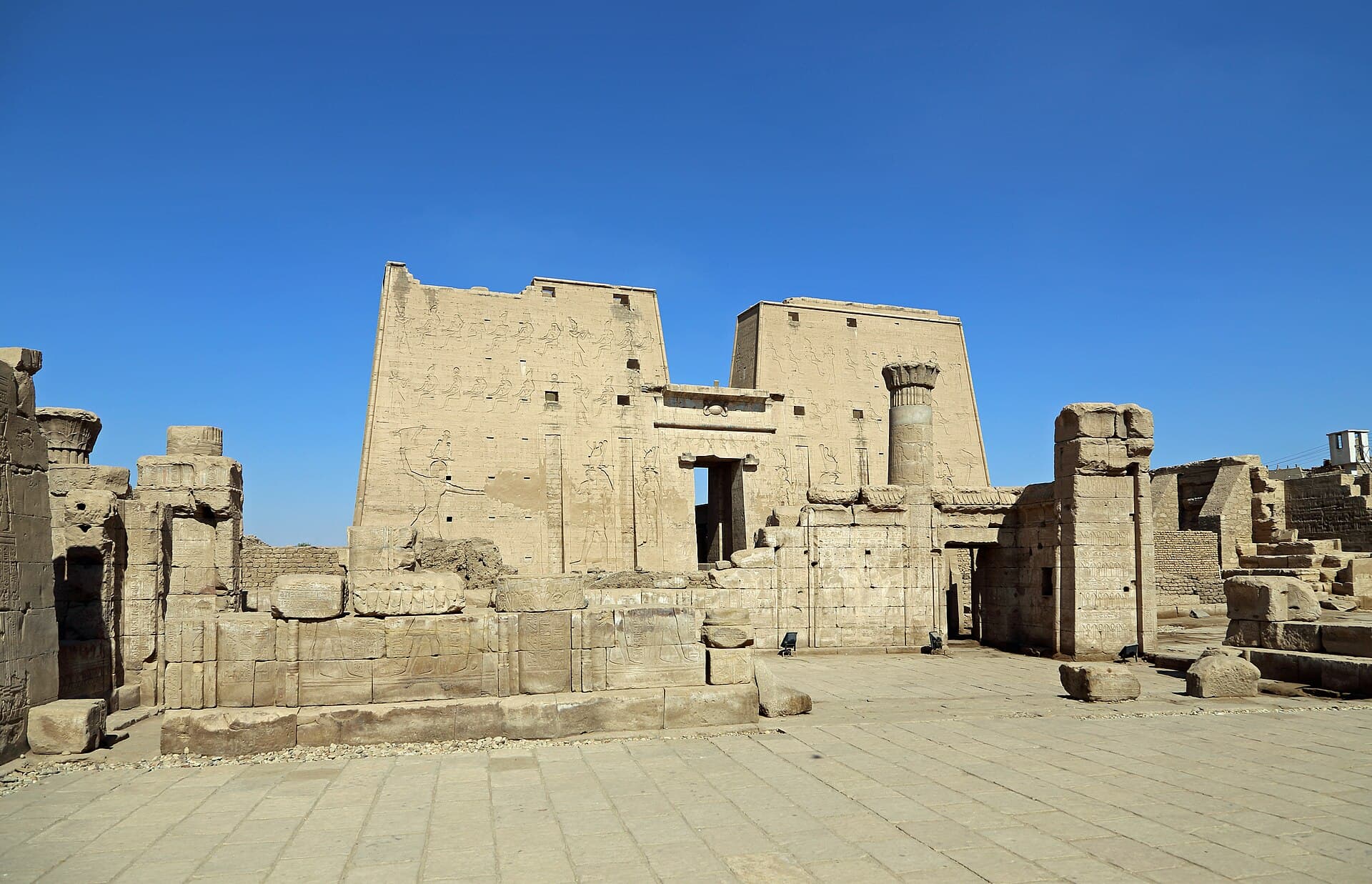
Upper Egypt is more conservative than Cairo, and this catches people out because Luxor and Aswan feel touristic. They are small towns where foreigners are visible. Long trousers and covered shoulders are what foreign women who spend real time there settle on. On the west bank, in the villages, on farms and in anyone's home, it matters more again. On a moored Nile boat you are inside a bubble; step onto the corniche and you are not.
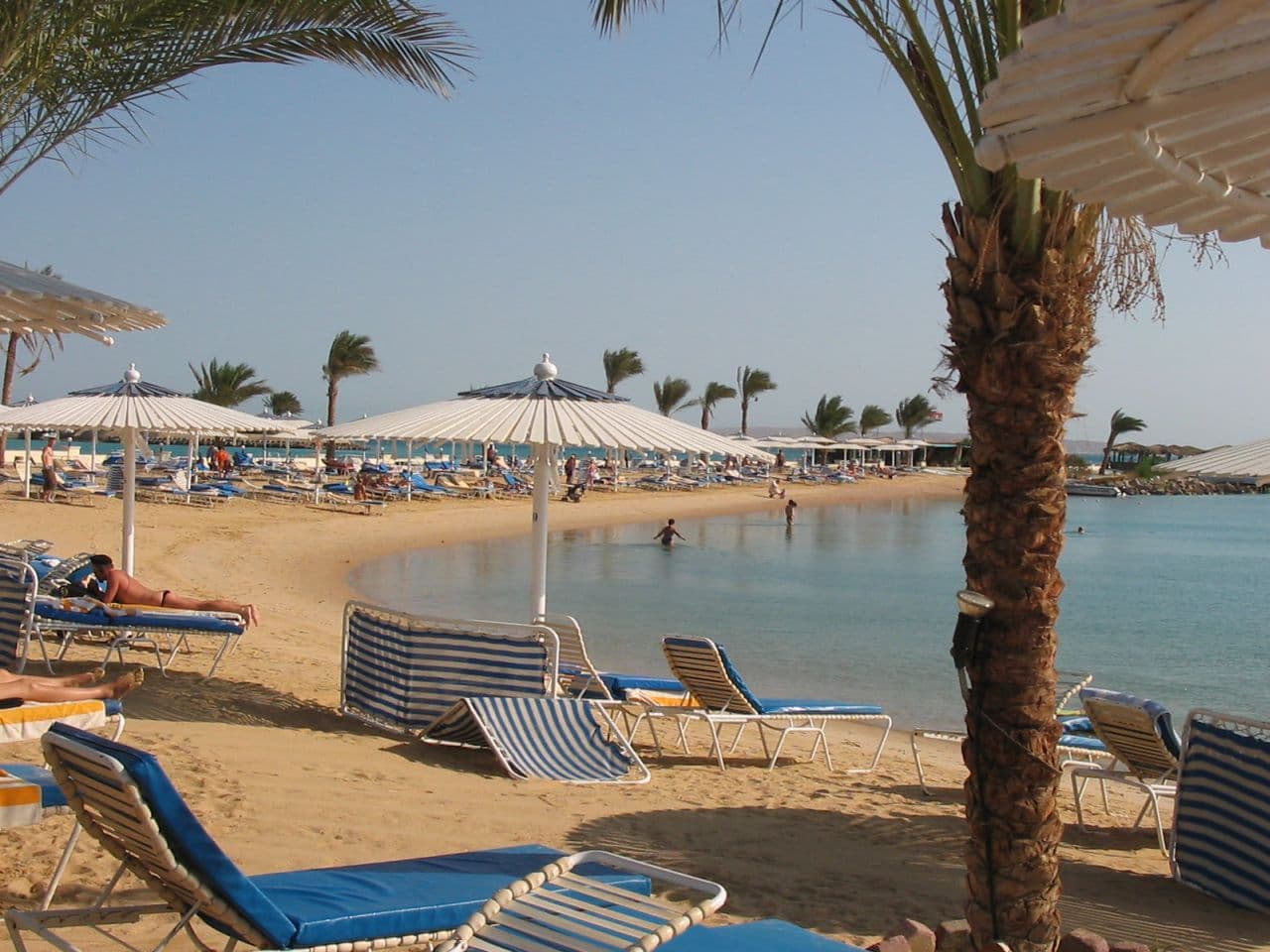
The Red Sea resorts work as enclaves. Swimwear at the pool in Hurghada, Sharm el-Sheikh, El Gouna or Marsa Alam is ordinary and nobody thinks about it. Walk out of the gate in Hurghada or Sharm to a pharmacy, a taxi or a supermarket and you are in a working Egyptian town, where the same outfit is not ordinary at all. El Gouna is purpose-built and stays relaxed throughout. Dahab is looser than Sharm. Hurghada's town centre is not a resort and does not behave like one.
Two other corners of the country sit at the ends of this scale. Alexandria faces the Mediterranean and feels more European in parts, but its corniche and its narrow city beaches are ordinary Egyptian public space, and dress there is closer to Cairo's downtown than to a resort. At the other extreme, Siwa, out near the Libyan border, and the Nubian villages on the far bank at Aswan are markedly more conservative than anywhere on the standard circuit. If your itinerary includes either, pack the long-sleeved end of your wardrobe and use it.
Does what you wear in Egypt change with the season?
The modesty standard does not move at all through the year. The temperature does, and by more than almost anyone expects from a country people file mentally under hot. Cairo averages around 19C in January and about 35C in July. Luxor swings from roughly 23C in January to around 41C in June, July and August. Those are two genuinely different wardrobes wearing the same amount of fabric.
From roughly June to September in the Nile valley, the heat decides the itinerary and the clothing both. The lightest loose cover you can find beats bare skin, because tombs have no airflow and hold the heat, and the middle of the day at Luxor is not usable for sightseeing at all. Guides who know what they are doing will start you at first light and have you indoors by eleven. Dress for five in the morning, not for the postcard: it is cool enough at that hour to want sleeves anyway.
From November to March the days are comfortable and the evenings are not. Cairo mornings in December and January can want a jacket, and the Western Desert at night in January can approach freezing. This is the season people get wrong most often, because Luxor at 28C in November genuinely feels like a hot country until the sun goes down. Spring adds one more variable, the khamsin: a hot southerly wind that carries dust for a day or two at a stretch from late March, greys out visibility and cancels balloon flights at Luxor. It does not change what you wear so much as make you grateful for a scarf over your face and sunglasses that actually seal.
What should women know before packing?
The workable wardrobe is loose trousers or long skirts, tops covering the shoulder and upper arm, and necklines that stay put when you bend into a tomb or climb into a taxi. One large light scarf earns its place several times a day: head covering at a mosque, shoulder cover when a sleeveless dress turns out to be a mistake, sun protection in open desert, and something to sit on when a bus seat is filthy.
Being honest about the limits: covering up reduces street attention, it does not end it. Staring, comments and the occasional approach happen to women dressed head to toe, including Egyptian women. What changes is how often, and the tone of it. Anyone who tells you a long skirt solves harassment in Egypt is overstating what clothing can do. Travelling with someone else, and looking like you know where you are going, do more.
A few details are worth getting right because they are hard to fix once you are there. Dresses and skirts want enough weight or length not to lift in the wind on an open deck or a desert plateau. Trousers with a drawstring or an elastic waist survive two weeks of heat, dust and heavy lunches better than anything fitted. A long shirt worn open over a vest gives you a covering layer you can take on and off all day without changing. And a plain, boring set of clothes is not a compromise here; it is the version that draws the least comment from anyone, in any direction.
What do mosques and churches require?
For mosques, women need hair covered and arms and legs covered; men need long trousers and sleeves. Shoes come off at the door and are left with an attendant who will expect a tip. Socks are worth carrying, because summer courtyards get hot enough to hurt and the carpets are dusty. Larger mosques on the visitor circuit often keep wraps or robes at the door. Enforcement varies by mosque and by whoever is standing there, so you cannot plan around it.
Coptic churches are easier. No head covering is required, shoulders and knees are still the standard, and in the old churches of Coptic Cairo or a desert monastery you will feel the difference if you ignore it. One practical point for everyone: religious sites often come mid-afternoon, after hours of sun, which is exactly when you have stopped caring what you look like. Keep the covering layer in the bag, not at the hotel.
It is worth knowing that some of these buildings are working places of worship rather than monuments. Al-Azhar, founded by the Fatimids in the tenth century and still a centre of teaching, sits across Al-Azhar Street from Khan el-Khalili and asks for exactly the standard above, with prayer times avoided. The mosque of Abu al-Haggag, perched inside Luxor Temple, has its own entrance from the street and is not covered by a temple ticket; non-Muslim visitors are sometimes welcomed outside prayer times, dressed modestly, and sometimes not. Ask at the door and accept the answer. Turning up dressed for the answer you want is the part you control.
Does it matter what men wear?
Men get less latitude than they expect. Adult Egyptian men in cities rarely wear shorts, and shorts on a grown man read as beachwear or as something a boy wears. Nobody will say anything to you. You will simply be identifiable as a tourist from a long way off, which matters mainly because of who that brings over. Vests, open shirts and bare chests belong at the beach and nowhere else.
The practical kit is lightweight long trousers, a shirt with sleeves, and one collared shirt. The collar does real work in Egypt. At a checkpoint, a hotel front desk, a police office or any conversation where someone is deciding how seriously to take you, a collar shifts the answer. Shorts are fine at Red Sea resorts, tolerated at the Pyramids and desert sites, and a poor choice in Islamic Cairo, in Upper Egyptian towns and at every mosque.
There are more checkpoints on an Egyptian itinerary than most visitors anticipate, particularly on long desert road transfers, and you should be carrying your passport for them anyway. None of them are hostile and none of them care about your shirt. What they do involve is a short exchange in which somebody sizes you up, and the same is true of every guard at a temple gate and every hotel manager you ask a favour of. A shirt with a collar and long trousers is not about respectability theatre. It is the cheapest way to shorten those conversations.
What does each part of an Egypt itinerary actually demand?
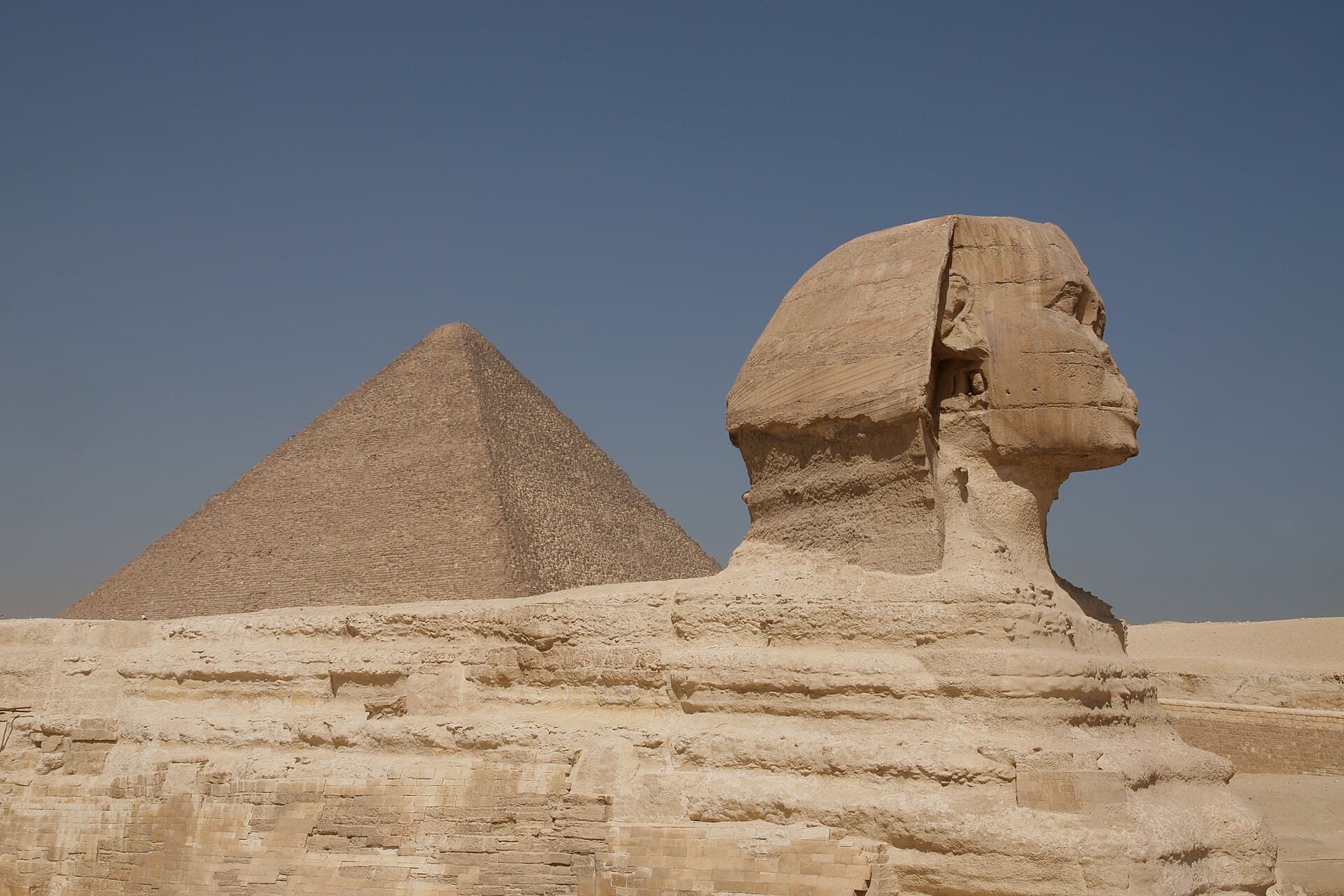
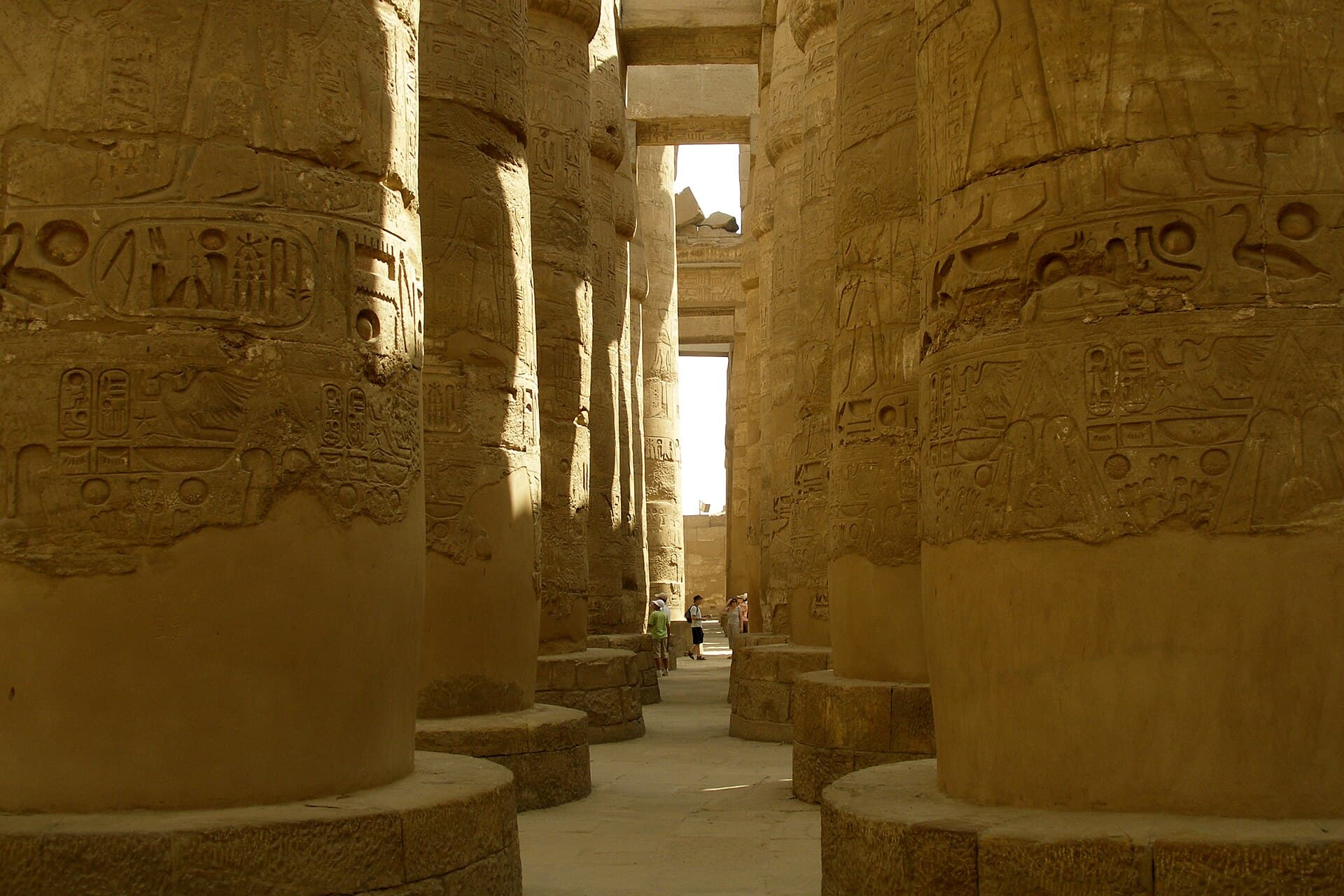
A standard trip puts you in three or four quite different settings inside a fortnight, and the wardrobe problem is really about moving between them. Temple and tomb days are hot, dusty and largely unshaded: loose long cotton or linen, closed shoes with some grip for ramped and worn stone floors, a brimmed hat rather than a cap, and sunglasses that cope with limestone glare all day. There is no shade at Giza, very little at Karnak and none worth the name at Abu Simbel, and dressing for that reality is a comfort decision before it is a cultural one.
Nile cruise days are two wardrobes in one. On the sundeck in the afternoon you are in resort conditions; by nine in the evening, between November and March, the air coming off the water makes the same deck genuinely cold. Cabins and lounges run the air conditioning hard, and coaches and hotel lobbies do the same, so in summer you spend the day swinging between 40C outside and something like a fridge indoors. A light layer you can carry all day solves both ends of that and is the single most forgotten item on the list.
Cities are the setting where dress does the most social work, and where most people spend the least thought. Islamic Cairo, Khan el-Khalili and the older downtown streets are working neighbourhoods, and an outfit that passed at the hotel in Zamalek reads differently there. The evening in the old quarter is the best hour of the day to be in it and also the busiest, and the covering layer you took for a mosque at eleven is exactly what you want at eight. Keep it in the day bag rather than sending it back to the room after the mosque visit.
What should you wear in and around the Red Sea?
Inside the resort grounds, ordinary beach and pool clothing is unremarkable and nobody gives it a second look. The change happens at the gate, and it happens instantly in Hurghada and Sharm el-Sheikh, which are working Egyptian towns wrapped around the resorts rather than extensions of them. A sarong or a loose long shirt is enough to cover the walk to a restaurant, a pharmacy or a taxi, and both dry within the hour. Dahab runs noticeably more relaxed than Sharm, and El Gouna, being purpose-built, stays relaxed end to end, but away from the beach and the dive centres modest dress still saves hassle everywhere on the coast.
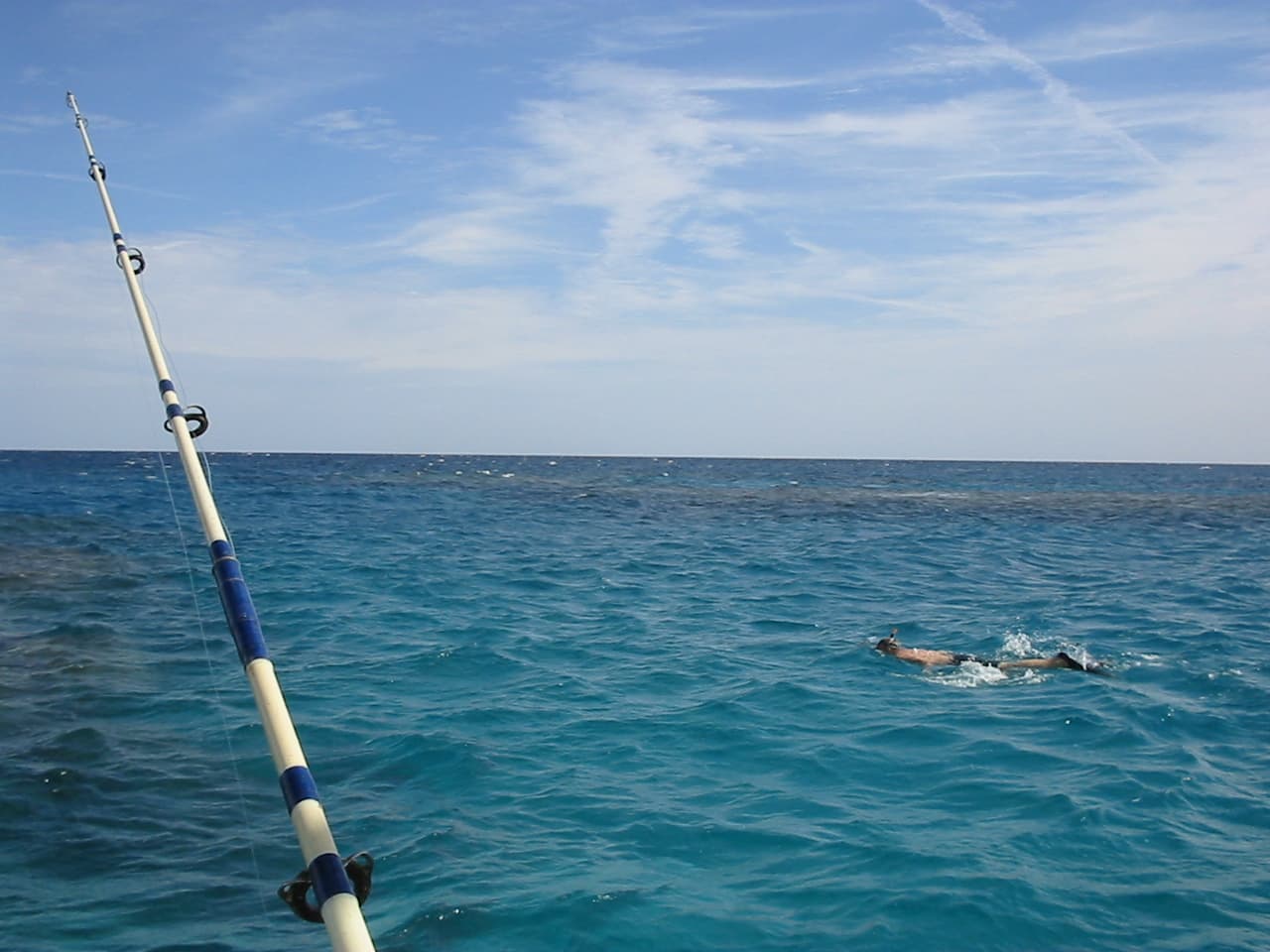
In the water, the clothing decisions are about sun and coral rather than modesty. A rash vest matters more than almost anyone expects: half an hour of snorkelling burns your back straight through the water without you feeling it happen, and it is one of the most common problems we see on the coast. It ruins the two days that follow. Reef shoes earn their place if you enter from a beach rather than a boat ladder, because Red Sea coral is sharp and sea urchins sit in the shallows.
Water temperature decides the rest. The sea off Hurghada runs at around 31C in August and bottoms out near 21C in February, which for most divers means a shortie at one end of the year and a 5 mm wetsuit with a hood at the other. Between roughly November and March the evenings on the coast are cool enough for a jacket, which surprises people who booked a beach holiday. And bare feet on hot metal decking on a dive or cruise boat is a mistake people make exactly once.
Desert nights, pre-dawn starts and the cold nobody packs for
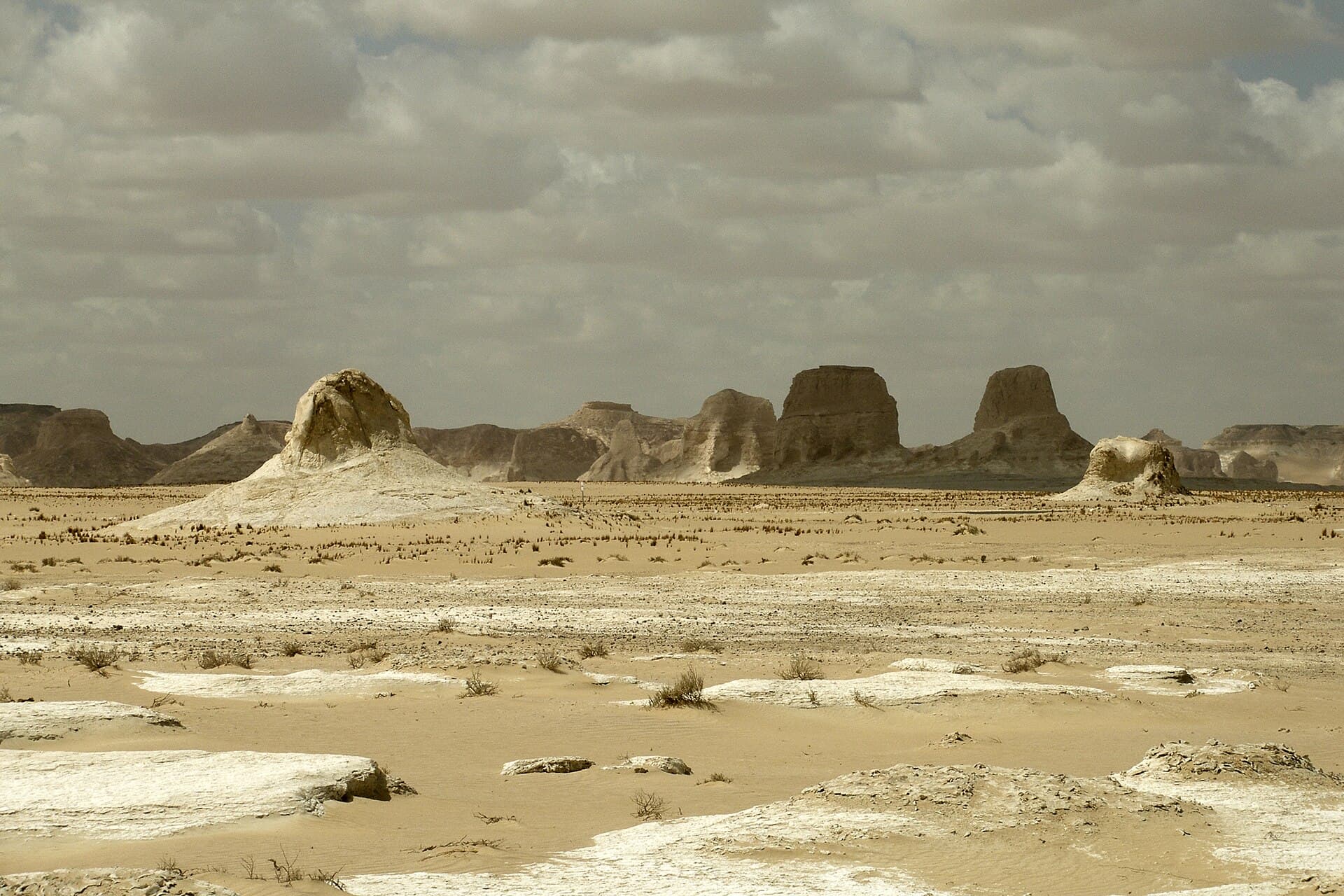
Egypt's worst clothing failures happen in the dark. Clear skies and dry air mean the temperature falls fast as soon as the light goes, and the Western Desert in January can approach freezing. If you are sleeping out in the White Desert or the Sinai interior, you want a proper fleece or a light down layer and socks, not a cardigan. Unheated hotel rooms are common in winter too, and that catches people who assumed the building would handle it.
Pre-dawn excursions are the same problem in miniature. A hot air balloon flight at Luxor starts with a minibus collecting you in the dark, standing around a launch field while the crew inflate the envelopes, and an hour in the air as the sun comes up. It is cold at every stage of that until it very suddenly is not. Dress in layers you can shed into a bag, because by mid-morning you will be at 30C in the same clothes.
The extreme version is Mount Sinai. The standard trip leaves the coast around midnight, walks two to three hours up the camel path, finishes on a long flight of rough stone steps, and deposits you on the summit for sunrise, cold and tired and in a crowd. That is a mountain at night, not a beach excursion: long trousers, proper shoes, a warm layer and a hat you can pull down. People do it in shorts and a hoodie and spend the hour at the top waiting for the sun rather than looking at it.
Which fabrics and colours actually work in the heat?
Egypt is dry heat nearly everywhere except the coast, so covering skin beats exposing it. A loose long-sleeved cotton shirt in Aswan in June is more comfortable than burnt forearms, which is why people who work outdoors here dress that way. Cotton and linen move air and do not smell after a long day the way polyester does. Keep synthetics to one fast-drying layer rather than the whole wardrobe.
On colour, pale is better for heat and worse for dust, and Egypt is dusty everywhere, worst at desert sites and on the west bank. White looks tired by mid-morning. Sand, stone, olive, pale grey and washed blues hide it and still stay cool. Black is the one to avoid in summer. Laundry is easy to get done wherever you stay, so three sets you wash beat seven you carry up stairs.
Two fabrics to think twice about. Heavy denim is slow to dry, holds heat and gets stiff with dust, which makes jeans a poor choice for Upper Egypt in anything but winter. And anything that needs ironing, tucking in or careful handling will lose, because you will be getting in and out of vehicles, sitting on stone and walking through fine grit for ten hours a day. The fabric test that matters is simple: hold it up and see whether light and air pass through it. If they do, it will work in Egypt. If it feels like a wetsuit in your hands, it will feel worse at Karnak.
Does dressing change during Ramadan or Egyptian holidays?
The dress standard itself does not change during Ramadan, but the atmosphere around it tightens, and dressing conservatively costs you nothing at a time when your hosts are fasting through long hot days. Nobody expects visitors to fast, and restaurants in tourist areas stay open. What is poor manners is eating, drinking or smoking conspicuously in the street during daylight, and looking obviously like a holidaymaker while doing it compounds the impression rather than excusing it.
The rhythm of the day shifts as well, which changes when you are out and what you will need. Sites stay open but often on shorter hours, the roads empty in the hour before sunset as everybody races home to eat, and the evenings are the most alive the country looks all year. Khan el-Khalili after dark in Ramadan is worth seeing and is not the time to be browsing in beachwear. Ramadan moves about eleven days earlier each year, so check where it falls against your dates rather than assuming.
Other dates are worth a glance for the same reason. Coptic Christmas falls on 7 January and is a public holiday, and Fridays bring the main midday prayers, which makes a mosque visit around then a poor plan whatever you are wearing. None of this requires a separate wardrobe. It requires the covering layer to be in the bag on the days it is most likely to be needed, which are exactly the days you are most likely to have left it behind.
Does dressing appropriately change how you are treated?
It changes your day measurably. Touts and drivers at the Pyramids, in Khan el-Khalili and along the Luxor corniche work from a fast read: who is new, who has money, who looks unsure. Bare shoulders, bright technical clothing, a new daypack and a lanyard answer all three questions at once. Dressing plainly moves you down their list. It does not take you off it, and nothing will.
The larger change is in ordinary exchanges: the shopkeeper, the guard at a temple gate, the family sharing your train compartment. Covered dress reads as knowing where you are, and people answer that with more directness and less performance. This is not about earning approval. It is about removing one obvious reason for someone to treat you as a category rather than as a person, which over two weeks adds up.
It is worth saying what dressing well does not do, because the internet oversells it in both directions. It will not get you a local price in a market, where the opening number depends on the shape of the conversation far more than on your shirt. It will not make you invisible; you will still be read as foreign from across the street, and that is fine. And it is not a safety measure that substitutes for the ordinary ones. What it buys is a slightly quieter version of every interaction you were going to have anyway, which is a modest and real return on a decision you make once while packing.
What is not worth buying before you go?
Most of the specialist travel wardrobe is not worth the money. Zip-off convertible trousers and multi-pocket safari shirts work, but they announce you from a distance, which is the opposite of useful. Ordinary loose linen trousers and cotton shirts you already own do the same job and look normal. A wide-brimmed hat and proper sunglasses are the exceptions, and both are hard to improvise once you are standing in open sun at Karnak.
Two things are better bought in Egypt than at home: a large light scarf and, if you want one, a galabeya. Both are made for the climate and easy to find in any market. A galabeya in the evening is comfortable and nobody minds a foreigner wearing one. What does not work is buying a full local outfit in the belief it will help you blend in. It will not, and being visibly foreign is not the problem to solve.
The hat is the one purchase worth being fussy about, and the detail is the cord. Wind on the Nile and in open desert takes ordinary hats off heads and occasionally into the water, and a hat you are holding is a hat that is not working. Sunglasses matter more here than in most places because pale limestone throws glare back at you for hours. Beyond those two, the honest answer is that nothing in the outdoor shop will improve your trip more than two loose long-sleeved shirts you already own.
How much of it do you actually need for a fortnight?
Five or six days of clothing covers two weeks, because laundry is cheap wherever you stay and usually comes back the same day. Three sets in rotation is the version that works: one on, one drying, one clean. The constraint people forget is the bag rather than its contents. Internal flights have their own baggage limits, and on Nile boats and at smaller hotels your case goes up narrow stairs in somebody's hands, so a soft bag you can lift yourself beats a large hard case every time.
A workable list looks like this. Two or three pairs of light long trousers or long skirts, three or four loose tops with sleeves, one collared shirt or one smarter dress for evenings, one warm layer, one large scarf, swimwear if the coast or a cruise deck is on the itinerary, closed walking shoes, sandals, and socks you do not mind ruining. Everything ends up the colour of the desert eventually, which is an argument for clothes you already like rather than clothes you bought for the occasion.
Then plan the day bag separately, because that is where the dress standard is actually maintained. Water, small notes for the constant small tips, tissues, hand gel, sunscreen, sunglasses, hat, lip balm, and the scarf or light shirt that turns a hot-weather outfit into a mosque-ready one in ten seconds. People do not fail the dress standard because they packed wrong. They fail it because the thing that would have fixed it was back at the hotel.
Common questions
Can I wear shorts at the Pyramids and other ancient sites?+
Yes. Archaeological sites have no dress code and nobody is turned away for shorts at Giza, Karnak or the Valley of the Kings. It does mark you out to the sellers working those sites, and it leaves your legs exposed to sun for hours with almost no shade. Light long trousers are the more comfortable choice there, not the more respectful one.
Is a headscarf expected day to day?+
No. Foreign women are not expected to cover their hair on the street, in shops, in restaurants or at ancient sites, and doing so tends to read as confusing rather than respectful. Carry a scarf for mosques and for shade, and use it there. Hair is the one part of the standard that applies inside religious buildings only.
What should I wear on a Nile cruise or a felucca?+
On the sundeck, swimwear is normal on most boats, though a one-piece with something to throw on between deck and cabin is the usual compromise, since the crew are Egyptian men at work. Evenings on deck in winter are genuinely cold once the sun drops. Bare feet on hot metal decking is a mistake people make once.
Does any of this change in winter?+
The modesty standard does not; the temperature does. Cairo mornings in December and January can be cold enough for a jacket, desert nights near Bahariya or Abu Simbel drop sharply, and unheated hotel rooms are common. Days can still reach shirt-sleeve warmth in Luxor and Aswan. Layers you can add and shed beat one heavy coat.
What shoes actually work?+
Closed shoes you can walk in for hours, plus sandals for the evening. Site floors are uneven stone, sand and dust, and tomb entrances mean steps, ramps and low ceilings. Anything you can slip off quickly helps at mosques. White trainers stop being white on day one. Take socks even in summer, for hot mosque courtyards.
Can I wear a bikini in Egypt?+
At resort pools and private beaches along the Red Sea, yes, without a second thought. On public beaches in Alexandria, Hurghada town or Port Said you will be the only person doing it, and Egyptian women there usually swim in clothes. Topless sunbathing is not acceptable anywhere in Egypt, resorts included.
Do children have to follow the same dress standard?+
No, and nobody expects them to. Young children in shorts and short sleeves are unremarkable anywhere in Egypt, including in conservative towns, and the practical concern with them is sun and heat rather than modesty. Teenagers sit closer to the adult standard, particularly teenage girls in busy city streets, where the easiest approach is the same loose covering layer everyone else is carrying.
Are jeans a bad idea?+
In summer, yes. Denim is heavy, slow to dry and holds heat, and in Luxor or Aswan between June and September that turns a long site day into an ordeal. In Cairo between November and March they are perfectly comfortable and entirely normal on the street. If you take one pair, take them for the cool months and the evenings rather than for the temples.
Do visible tattoos cause a problem?+
They are not against any rule and nobody will challenge you over them. They do draw looks and comment in conservative areas, and on a woman they add to attention that may already be more than you want. If that is a consideration for you, sleeves and long trousers cover the question without any further thought. At the Red Sea resorts nobody notices either way.
What should I wear for a sunrise balloon flight or a desert night?+
Far more than you expect. A Luxor balloon flight starts with a pre-dawn pickup in the dark and an hour in the air as the sun comes up, and desert nights in the Western Desert can approach freezing in January. Long trousers, closed shoes, a fleece or light down layer and a hat, all of it in layers you can strip off, because by mid-morning you will be back in real heat.
How much laundry will I really need?+
Less than you think. Laundry is cheap and quick wherever you stay, so three sets of clothes in rotation covers a fortnight comfortably. That matters more than the money, because a lighter bag is genuinely easier on internal flights and on the narrow stairs of a Nile boat, where somebody carries your case by hand.
Official sources
Entry rules, opening hours, security advice and exchange rates all move. Check them at the source, not here.
Written and checked by the Nile Trip Guide editorial team · Last reviewed . Entry rules, prices and opening hours change — check anything critical against the official sources linked on this page.
The route most people take first, at the length it was built for: Giza and the Grand Egyptian Museum, then a flight to Luxor and four nights sailing down to Aswan.
No boat on this one. Giza and the Grand Egyptian Museum, a night in Luxor for both banks, two nights on the Red Sea, then back to Cairo for the Citadel, Coptic Cairo and the Royal Mummies.
Five nights in Cairo either side of a four-night sail from Luxor to Aswan. The Cairo days are private, just your party and a guide; the sightseeing off the boat is shared with a small group.