Taba, Egypt sits at the very top of the Gulf of Aqaba, pressed against the Israeli border, and it is two things at once: a busy land crossing and a strip of resorts. It is not a destination in its own right. It works as a way in, a way out, or a quiet few days by the water if you know what you are getting.
What is Taba, Egypt, actually like?
Taba is a small town at the northern tip of the Gulf of Aqaba, in the far east of Sinai. Stand on the beach on a clear day and you can see four countries: Egypt under your feet, Israel at the edge of town, Jordan across the water at Aqaba, and Saudi Arabia beyond it. That geography is the whole story of the place. Taba exists because of the border, and the border is why a settlement that would otherwise be a fishing hamlet has hotels, an airport up the road and a customs terminal.
The town itself is thin. There is the crossing, a handful of shops and cafés, a small harbour, and then the coast road running south towards Nuweiba and Dahab. Most of what people call Taba is not in Taba at all. It is Taba Heights, a purpose-built resort area roughly twenty kilometres down the coast, or one of the scattered hotels along the road between the two. Do not arrive expecting a town centre. There is not one.
What the place does have, and what nobody puts on a brochure, is the landscape. The gulf is narrow here, so the water is a hard blue with mountains on both sides of it, and the Sinai range comes down almost to the road in bare red and brown rock. Sunrise over the Saudi and Jordanian side of the water is the best hour of the day. It is a genuinely beautiful stretch of coast attached to a town with almost nothing in it, and being honest about both halves of that sentence is the only sensible way to plan a trip here.
Why was Taba the last piece of Sinai to come back?
This corner of the map has a specific history that explains the shape of the town. Israel occupied Sinai from 1967 and withdrew under the peace treaty with Egypt, with the handover completed in 1982. Taba was the exception. The two sides disagreed about where exactly the boundary ran at the head of the gulf, and the disputed sliver included hotel development built during the Israeli administration, so a small but valuable piece of coast stayed out of Egyptian hands.
The argument went to international arbitration rather than being settled on the ground. The tribunal found for Egypt in 1988, and the strip was handed over the following year. That sequence is why a settlement of this size has a customs terminal, a resort industry older than Egyptian control of it, and a boundary marker that people still stop to photograph from a safe distance.
For a visitor the history matters in two practical ways. First, it explains why the resorts feel imported rather than grown: they were built to serve a border, not a town. Second, it is a reminder that this is a working international frontier that has been argued over within living memory. Photographing the terminal, the fence or military positions is not welcome and can cause you real trouble. Point the camera at the water and the mountains instead.
How does the Taba border crossing work?
Taba is Egypt's main land crossing with Israel and the usual overland way into Sinai from the north. Eilat is close enough that people cross on foot, walk through, and pick up transport on the other side. That proximity shapes everything here: the hotels, the day-trippers, the way prices get quoted in several currencies, and the fact that the town empties and fills depending on how the wider region is doing.
It also means Taba is sensitive to events far outside it. Crossings close. Hours change. Fees on both sides get revised. Nothing on this page should be treated as current on that front, and no travel website should be your source for it. Check your own government's travel advice for Sinai before you commit, and confirm the crossing's status with your operator or the border authority within a few days of travelling. Conditions in this corner of the map have changed quickly and repeatedly.
One point about how the crossing works in practice, because it surprises people who have only flown between countries. You cross on foot with your own luggage. Tourist vehicles do not normally go through with you, so a driver drops you on one side and a different driver collects you on the other, and any transfer you have booked has to be arranged as two separate legs. Questioning on the Israeli side is routine rather than a sign that something is wrong, and it is worth having your onward hotel details and your operator's contact number where you can reach them.
Treat the crossing as a day, not a formality. The process can take under an hour or it can take several, with no way to predict which you will get, and a plan that puts a border in the morning and a flight in the afternoon is a plan that eventually fails. Build the slack in deliberately, and keep printed copies of your booking and your insurance: paper settles questions at a counter far faster than a phone that has gone flat.
Where to check Taba border hours and fees
Check the official pages below before you travel, and again in the week you cross. The crossing's status and fees were the subject of several official alerts in 2026, and this page cannot keep pace. We state no hours or fees here for that reason. Last checked: 5 October 2026.
The Israeli terminal is called Menachem Begin. It has its own page on the Israel Airports Authority website, iaa.gov.il, under land border crossings. When we checked in October 2026, the site would not open from outside Israel. The notice we saw pointed to the authority's social media accounts instead. If the page will not load for you, ask your operator to confirm the hours.
US Embassy Cairo posts its alerts at eg.usembassy.gov, in the alerts section. Two alerts in 2026 dealt with Taba directly. The one dated 18 March covers the crossing's status and the Egyptian entry options at Taba. The one dated 29 March covers the crossing fees. Look for anything newer before you rely on either (checked October 2026).
OSAC, the US government's Overseas Security Advisory Council, republishes embassy alerts at osac.gov. Its copy of the 18 March Taba update is titled “Security Alert: Egypt, Update on Taba Border Crossing” (checked October 2026).
For safety advice, read the US State Department pages for Egypt and Israel at travel.state.gov. British travellers should read the FCDO pages at gov.uk/foreign-travel-advice.
How does the Sinai-only entry stamp work?
Egypt has long operated a simplified entry at Taba and at Sharm el-Sheikh for visitors staying inside a defined stretch of eastern Sinai. The UK FCDO and the German Foreign Office name four towns: Taba, Nuweiba, Dahab and Sharm el-Sheikh. Planning a Mount Sinai or Saint Catherine trip? Ask your tour operator about a full visa first. The stamp lasts up to 15 days, and it is not a full Egyptian visa. It is free at Sharm el-Sheikh airport. At the Taba land border the FCDO lists a border tax. It is US$20 to stay in Taba, or US$120 to travel further within Sinai (checked October 2026). It is meant for people crossing from Eilat for a few days by the Red Sea.
The catch is what it does not allow. With the Sinai-only permission you cannot travel to Cairo, Luxor or the mainland. For that you need a proper Egyptian visa, arranged in advance or on arrival where eligible. The ferry to Jordan is a separate case. AB Maritime runs a fast ferry from Taba Heights to Aqaba and a slower one from Nuweiba. Coming back into Sinai by ferry? The UK FCDO says you need a visa only for stays over 15 days or travel beyond Sinai. Every year people reach Taba assuming they can pick up a Sinai stamp and then drive to the Pyramids. They cannot. Decide which one you need before you reach the counter, and confirm the current terms locally, because they get adjusted.
The limit is enforced on the road rather than at the counter, which is why the mistake surfaces late. Checkpoints on the Sinai roads are where a permit gets looked at properly, so someone who has been waved through at the border can still be turned back hours into a journey out of the permitted area. It is also widely reported that the permit does not cover Ras Mohammed National Park, which catches divers heading south. If any part of your trip touches the mainland, or if diving matters to you, take the full tourist visa, apply online before you fly, and stop thinking about it.
There is a second visa trap on itineraries that use Taba, and it has nothing to do with the Sinai stamp. If your route leaves Egypt and comes back, which it does if you cross into Israel and then fly home from Cairo, a single-entry visa does not cover the return. You need a multiple-entry visa or a second application, sorted out before you fly rather than improvised at a border post at the end of a long day.
How do you actually get to Taba?
Most people arrive overland from Eilat, and that is the easy route. The Israeli city sits directly beside the crossing, so a short taxi ride puts you at the terminal and you walk through. On the Egyptian side the resorts are a transfer of twenty minutes or so down the coast road, and hotels will arrange the pickup if you tell them when you expect to be through. Since nobody can predict the queue, give them a window rather than a time.
By road from within Egypt, the usual approach is up the coast from Sharm el-Sheikh through Dahab and Nuweiba. It is a long drive rather than a hop, on a good but slow road with routine checkpoints, and it takes most of a morning at best. From Cairo it is a full day: out across the Suez Canal into Sinai and then a long run through empty country. Neither is a journey to attempt on the same day as a flight.
Taba has an international airport inland from the coast, but scheduled traffic there is limited and seasonal and it has gone through long quiet spells. Sharm el-Sheikh is the reliable air gateway for eastern Sinai, and the one almost every visitor actually uses. If you find flights into Taba on your dates, check that they are genuinely operating before you build an itinerary around them, and keep a road plan as a fallback.
Once you are here, there is no local transport worth the name. The resorts run shuttles inside their own grounds, and everything else is a pre-arranged car or a taxi negotiated for the trip or the day. Agree the price before you get in, and if you are moving south to Nuweiba or Dahab, book the driver in advance through your hotel or your operator rather than standing at the roadside hoping. Public buses exist on the coast road but they are sparse, and a missed one here is a long wait in the sun.
Is Taba Heights worth staying at?
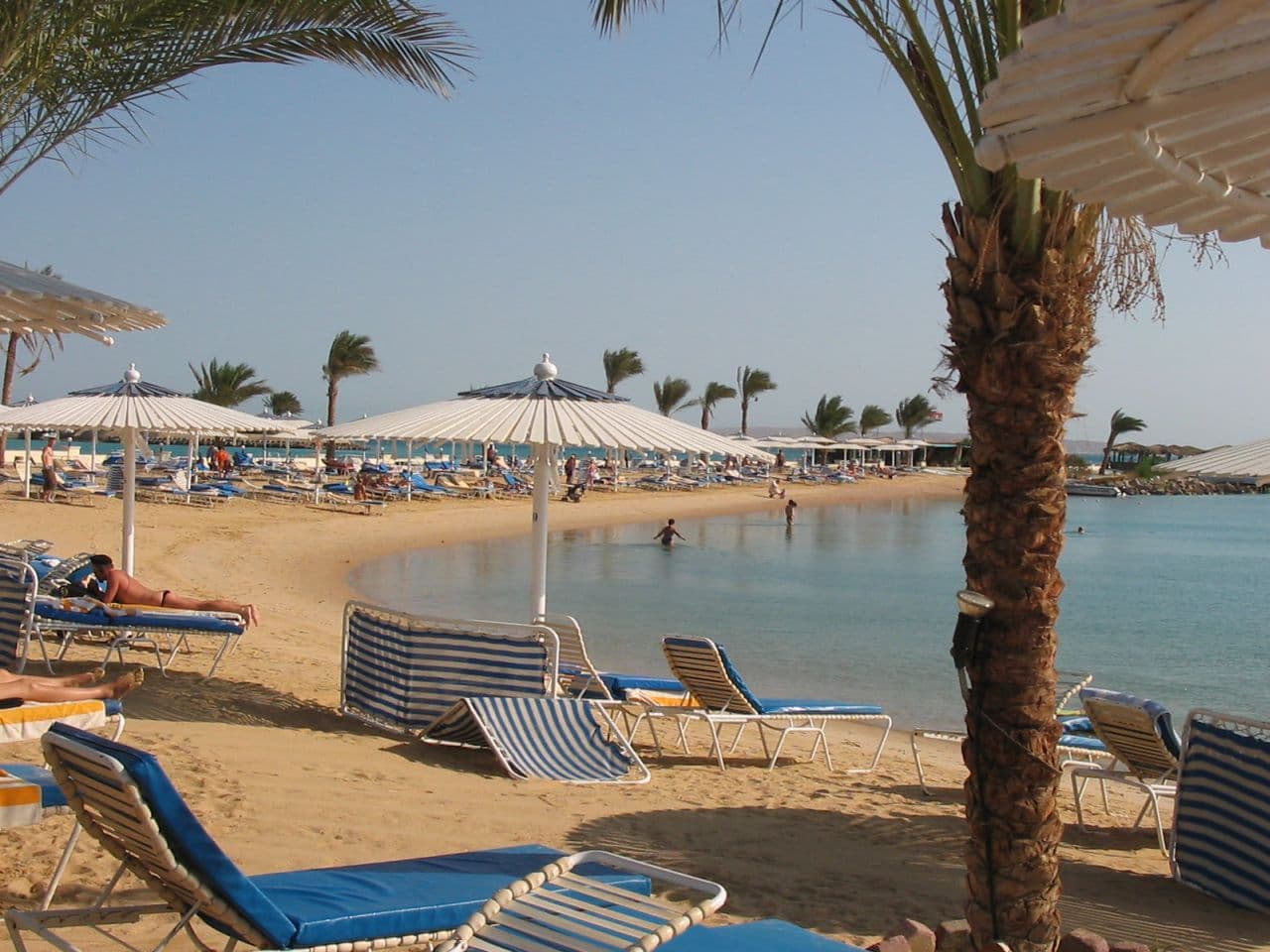
Taba Heights is a self-contained resort development built into the mountains on a bay south of town, with several large hotels, a marina, a golf course and a shuttle running between them. It is well made and comfortable. It is also entirely enclosed. There is no local town attached, no independent restaurant scene, and nothing to walk to. What you get is a good beach, reef access straight from the shore in places, and a strong mountain backdrop.
Be honest with yourself about what that means. If you want a quiet week of swimming, snorkelling and reading, with excursions arranged from the desk, it does the job and does it with far fewer people than Sharm or Hurghada. If you want to wander into a town in the evening, eat somewhere you chose yourself, or feel like you are in Egypt rather than in a resort that happens to be in Egypt, you will be bored within two days. Dahab, a couple of hours south, gives you that instead.
The all-inclusive question is worth settling before you book rather than after. In a resort with no alternative within walking distance, half-board leaves you eating in the same complex anyway but paying twice, so full board or all-inclusive usually makes more sense here than it would somewhere with a town attached. Ask specifically what the board covers: which restaurants, whether the a la carte venues need booking and carry a supplement, and what happens with drinks, because these are the details that decide whether the quoted price is the price.
Occupancy is the other thing to ask about. Visitor numbers on this coast have fluctuated hard with events in the wider region, and a large resort running at low occupancy closes restaurants, drops the entertainment programme and gets very quiet indeed. For some people that is the attraction. For a family expecting a kids' club and a busy pool, it is a disappointment worth heading off with a direct question to the hotel about what will actually be open on your dates.
Where else can you stay along this coast?
Between Taba and Nuweiba the road passes a scattering of hotels and simple beach camps, and they are a different proposition from the resorts. A camp is typically a row of huts or basic rooms on the sand, shared or simple bathrooms, food cooked to order rather than served from a buffet, and cushions under a shade roof facing the water. The cheaper ones have no air conditioning and unreliable power. The appeal is the setting and the quiet, and for the right traveller it is the best thing on this coast.
The best-known spot on this stretch is a narrow inlet a short way south of town, known as the Fjord, where the hills open onto a sheltered pool with reef around its mouth. It is a good swim and an easy snorkel, and there are places to stay and eat above it. It is also no secret, so day visitors come down from the hotels, and a morning there is calmer than an afternoon.
Standards vary enormously between camps that photograph identically, so ask the specific questions before committing several nights: hot water, air conditioning, whether the electricity runs all night, how far it is to the nearest shop, and whether meals are included. Many camps are effectively half or full board because there is nowhere else to eat, which is fine as long as you know it going in.
The practical trade-off is mobility. A camp on the coast road is beautiful and isolated, and without a car you are dependent on whatever transport the owners can arrange. If you want to see the Coloured Canyon, Pharaoh Island and Saint Catherine's from a base like this, agree the excursion arrangements when you book rather than assuming they can be put together on the day.
Pharaoh Island and its fortress
The one genuine historical site here is Pharaoh Island, a rocky islet a few hundred metres offshore and a short way south of Taba. The fortress on it is usually credited to Salah El Din, who took the island in 1170 and had it fortified to control the head of the gulf. Crusaders held a stronghold there before him, and archaeologists still disagree over how much of the standing walls, towers and cisterns is Crusader work and how much is Ayyubid rebuilding. Enough survives to walk around.
You will hear it called the site of Solomon's Red Sea port. That identification is disputed and not generally accepted: scholars usually place Ezion-Geber on the other side of the gulf near Aqaba, and even that is argued over. Access is by boat from the mainland, and it is worth confirming locally whether trips are running before you plan a day around it. The island has been open and closed at various points and services are not guaranteed.
Manage expectations on scale. This is a compact medieval fort, not Karnak, and an hour covers it comfortably. The reef around the island is a fair reason to go on its own, and most boat trips build snorkelling in. If your time in Sinai is limited, though, Pharaoh Island does not compete with Saint Catherine's Monastery or a proper day in the desert. Treat it as a good half-day if you are already staying in Taba, not a reason to come.
Go in the morning if you can. The crossing is short but the gulf picks up wind through the day, and an afternoon boat in a chop is a wetter and less pleasant trip than the same run at nine. Wear shoes you can climb in rather than sandals, because the fort is reached on rough rock and worn steps, and take water and a hat: there is very little shade on the island and the stone holds the heat.
What is the diving and snorkelling like?
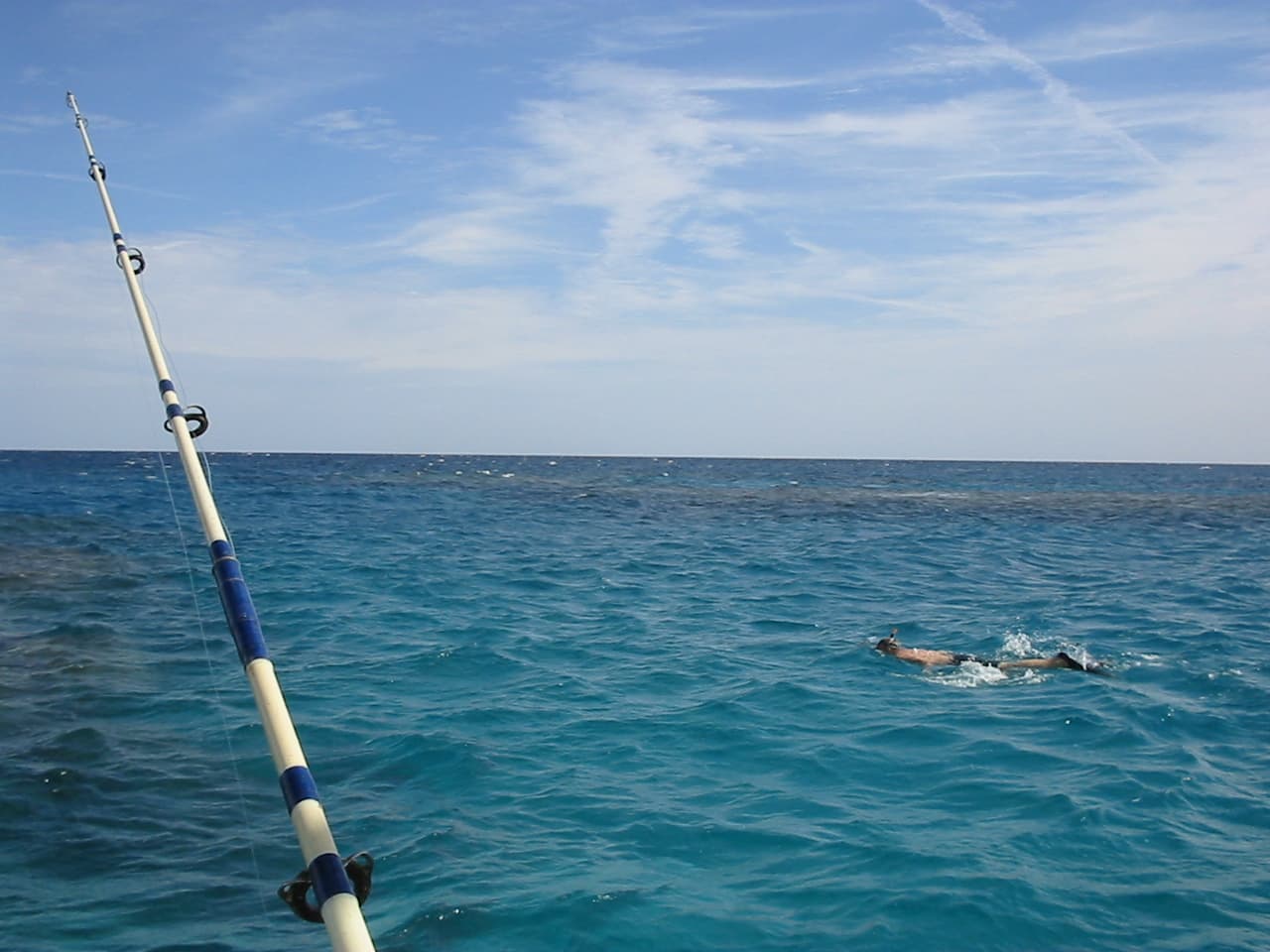
The reefs at the head of the gulf are generally healthy and quiet. Because the water narrows here, the drop-offs come close to shore and you can get onto good coral from the beach at several points between Taba and Nuweiba. Visibility is usually strong, the fish life is typical northern Red Sea, and dive sites are rarely crowded compared with the pressure further south.
It is not the equal of Dahab or Ras Mohammed. There are no famous wrecks, fewer operators, and less choice if the wind is up on a given day. Divers with limited time should go south. But for snorkellers, families, or anyone who values an uncrowded reef over a celebrated one, the water around Taba is a real strength rather than a consolation. The dry red mountains dropping almost to the shoreline make it one of the better-looking stretches of Egyptian coast.
If you do dive here, judge the centre the way you would anywhere: how many divers each guide takes underwater, whether they run a check dive before anything serious, and whether they ask to see your logbook. The ones that never ask are the ones to walk away from. With fewer operators on this stretch than further south there is less competition to keep standards honest, so the questions matter more rather than less. Ask what oxygen they carry to the site and where the nearest recompression chamber is, and note how crisply that second question gets answered.
Snorkellers should think about entry rather than the reef. The shoreline is coral and stone in most places rather than sand, so reef shoes are close to essential and walking in barefoot is a poor idea for you and worse for the coral. Some hotel beaches have a jetty or a cut channel out to the drop-off; ask where it is instead of picking your own way over the reef top. Coral is damaged by standing on it and it does not grow back within a holiday.
One safety point specific to a narrow gulf. Wind funnels down it and can build through the afternoon, and what looks like a flat bay at breakfast can have a surface chop and a push along the shore by three. Swim and snorkel in the morning where you have the choice, stay inside whatever marked area your hotel operates, and take the beach flags seriously rather than treating them as decoration.
What is there to do inland?
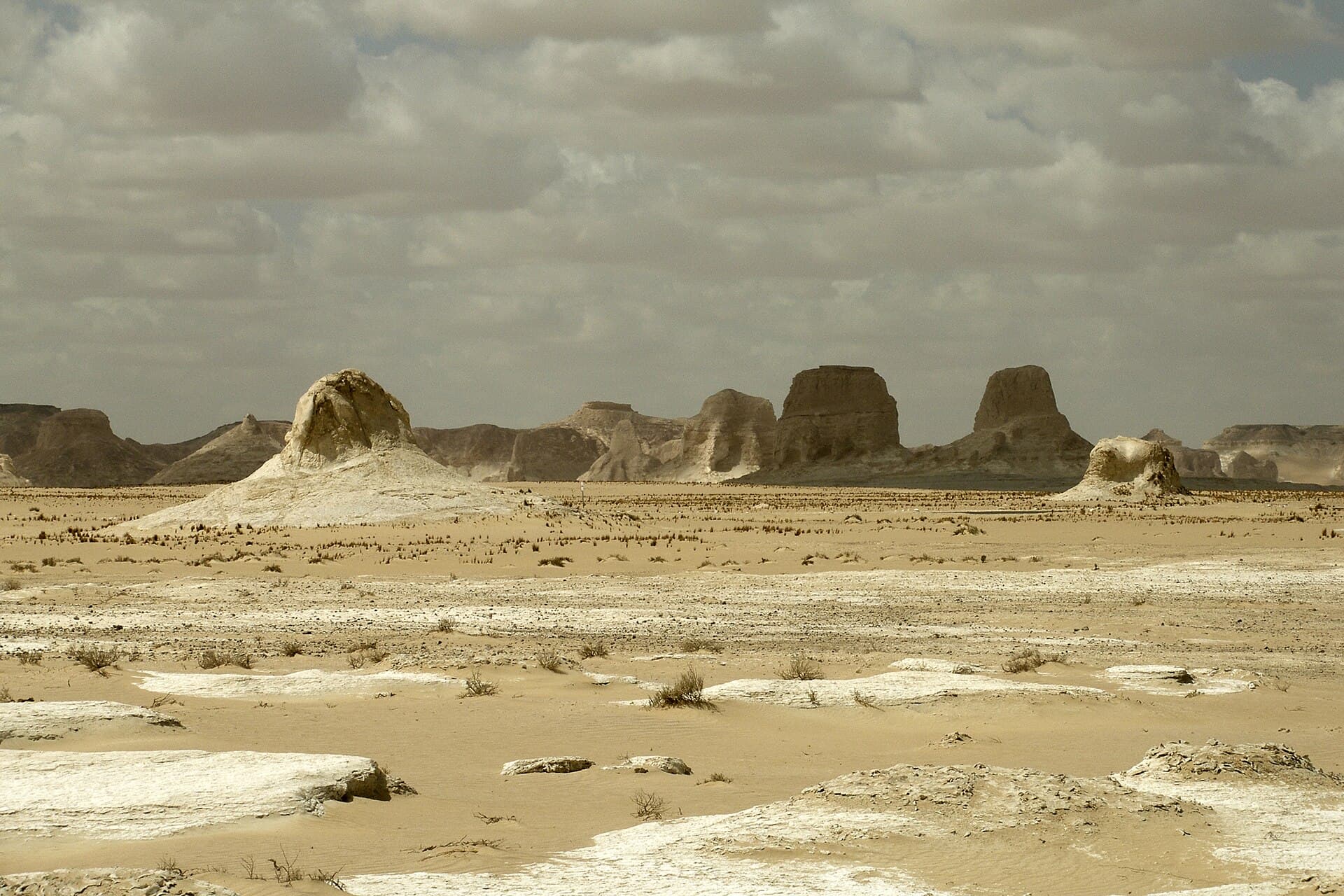
The mountains behind the coast are the other half of this region and, for most visitors, the better half. Jeep and camel trips run with Bedouin guides into the wadis behind Taba and Nuweiba, and the appeal is the landscape and the silence rather than any single thing you are taken to see. A half-day gets you out of the resort and into real country; a full day with lunch cooked over a fire is the version people remember.
The Coloured Canyon, inland from Nuweiba, is the standard set-piece excursion. It is a narrow sandstone gorge walked on foot, banded in rust, cream and purple where the rock has weathered, with sections tight enough to touch both walls. From Taba it is a long half-day or an easy full one. It involves scrambling over rock and some awkward steps down, so it is not the trip for anyone unsteady on their feet, and it is miserable in the middle of a summer day.
Saint Catherine's Monastery is the big one. It is a working Orthodox monastery, among the oldest continuously inhabited in the world, holding an important library and icon collection, and it sits inland in the mountains at the foot of Mount Sinai. Visitor hours are limited to a few morning hours and it is normally closed on Fridays and Sundays, so the trip has to be planned around its opening rather than yours. From Taba it is a serious day out with a very early start.
Mount Sinai itself is climbed overnight: the standard trip leaves around midnight, walks two to three hours up the camel path, then finishes on a long flight of rough stone steps for sunrise at the summit. It is cold at the top even in summer, the descent is harder on knees than the climb, and the crowd at the top can be large. Done from Taba it costs you a night and most of the following day, which on a short stay is a heavy price. Divers should also keep it off a diving day: the summit is high enough that centres treat the climb as an altitude exposure.
Whatever you do inland, dress and pack for a desert rather than a beach. Long sleeves, a hat and real shoes beat swimwear and flip-flops, evenings and early mornings in the mountains are genuinely cold, and there is nowhere to buy water once you are off the coast road. Check before you book that current travel advice supports the specific route inland you are being offered, because guidance on Sinai is written region by region and the road to Saint Catherine is treated separately from other parts of the peninsula.
When should you go?
Late October to April is the comfortable window. Winter days are warm and dry, evenings need a jacket, and the sea stays swimmable for most people although it is cooler than in summer. December and January can bring wind down the gulf that cancels boat trips, and a couple of blown-out days in a week is normal enough to plan around rather than resent.
Summer, June to September, is genuinely hard here. Inland Sinai temperatures are extreme and the coast is not much kinder. If you come then, treat the middle of the day as indoor time and do anything active at first light. Spring and autumn are the balance, with warm water and manageable heat, and they are also when trips inland to the desert and the mountains are pleasant rather than punishing.
Two calendar items are worth checking before you book. Ramadan moves through the year and changes opening hours and the rhythm of ordinary life more than it changes a resort, and it is worth knowing which you are in. Christmas, New Year and Easter fill the hotels on this coast and push prices up, and they coincide with the best weather, which is precisely why they are busy.
Water temperature is the detail that decides whether a winter trip works for you. The northern Red Sea is at its coldest in late winter, and while plenty of people still swim, snorkellers who get cold easily will want a shortie or a rash vest rather than nothing. Divers in this season are in a 5mm suit. In high summer the sea is bath-warm and the problem is the air, not the water.
How many days is Taba worth?
One to three nights if you are using it as a link, which is what most people should do. A night before or after the border crossing takes the pressure off the queues, and two or three nights is enough for the reef, a boat out to Pharaoh Island and one day inland. Used that way Taba is efficient: you break a long journey somewhere pleasant instead of arriving somewhere else exhausted.
Four to seven nights only if a quiet beach week is precisely what you want and you have read the honest description of the resorts above without flinching. A week here works if your plan is swimming, reading, snorkelling from the beach, one desert day and one long day inland. It does not work if you expect the week to fill itself with new things, because after those excursions the list is done and the days repeat.
A short stay has an obvious shape. Arrive, swim, eat at the hotel. The next day take the boat to Pharaoh Island in the morning and the reef in the afternoon. The day after, go inland for the canyon or the desert, and keep Saint Catherine's for a trip with an early start and nothing else in it. Then move on, south to Dahab or north across the border.
The one thing not to do is give Taba a single night wedged between two long drives. Sinai is large and its roads are slow, and a stop that exists only to break a transfer will feel like a hotel corridor with a nice view. Either give the place two or three nights and use them, or drive past it to Dahab and stay properly somewhere with a town attached.
Money, phones and the practical side
Carry cash and treat cards as a convenience. Hotels and the larger restaurants will run a Visa or Mastercard, and almost nothing else will: taxis, small shops, boatmen, tips and the men who carry bags are all cash, and terminals drop offline for hours when the connection goes. There are machines at the resorts and near the crossing, but treat them as a top-up rather than a plan, because they run dry around holidays and the per-transaction caps are lower than you would like.
Because this is a border town, prices get quoted in Egyptian pounds, dollars, euros and shekels, sometimes on the same menu. Change money into pounds and pay in pounds where you can. A bill converted at the desk or by a card terminal is converted at a rate chosen by whoever holds the machine, and it is reliably worse than letting your own bank do it. If a terminal offers to charge you in sterling or euros, decline and choose pounds.
Small notes matter more than the total. Tipping in Egypt is customary and constant rather than occasional, and nobody has change for a large note first thing in the morning. Break notes when you get the chance and keep a working float of small ones for the driver, the guide, the boat crew and the bags.
Alcohol is sold in licensed hotels and restaurants rather than in ordinary shops, and imported drink carries heavy duty in Egypt, so it costs roughly what it would at home rather than what the rest of the menu suggests. Tap water is not for drinking; a refillable bottle and a refill arrangement at your hotel saves both money and a pile of plastic.
Sort out a local SIM or an eSIM early, because maps, messaging a driver and checking a border's status all run through a phone. Coverage is decent around the resorts and the crossing and patchier on the empty stretches of the coast road and inland. Note too that a phone near an international frontier will sometimes latch onto a network across the water and quietly start roaming on a foreign tariff, so check what your handset thinks it is connected to before you make a long call.
Who is Taba for, and who should skip it?
It suits people crossing the border who want a night on either side of it rather than a race to somewhere else. It suits families who want a reliable, quiet resort with reef access straight from the beach and no interest in nightlife. It suits snorkellers who would rather have an uncrowded reef than a famous one, and anyone combining Egypt with Israel or Jordan for whom this corner of the gulf is the natural joint in the itinerary.
It does not suit independent travellers who want a town. There is no real high street, no independent restaurant scene to speak of, and nothing you can walk to from a resort, so the freedom that makes Dahab addictive simply is not on offer here. Divers with limited time should also go south: the reefs are good but the choice of sites and operators is thin, and a windy day leaves fewer options.
Skip it too if your Egypt trip is built around ancient sites. There is nothing pharaonic at Taba. The one historical monument is a medieval fort on an island, and the nearest thing of real weight, Saint Catherine's Monastery, is a long day inland. Anyone whose holiday is a list of things to see will find this coast empty, and that emptiness is either the product or the problem depending on what you came for.
The clearest way to decide is to ask what you want to do at six in the evening. If the answer is sit on a terrace with a view of the mountains and the water and go nowhere, Taba is a good answer. If the answer is walk out and find somewhere to eat that you picked yourself, keep driving south.
What do most visitors get wrong?
The most common mistake is treating Taba as a destination. People book a week expecting an Egyptian holiday and find a resort bay with a border post twenty kilometres away. Taba earns its place as a link in a longer trip: cross from Eilat, spend a night or two, then move south to Dahab, inland to Saint Catherine, or fly onward. Used that way it is convenient. Used as the whole holiday it is thin.
The second mistake is underestimating distances. Sinai is large and the roads are slow. Sharm el-Sheikh is a long drive down the coast, not a morning trip. Saint Catherine's Monastery is a serious day out from Taba with an early start. Checkpoints are routine on Sinai roads and add time you cannot predict, so keep your passport with you and build slack into any plan that ends with a flight.
The third is assuming things stay put. Permitted travel zones, border procedures and what your insurer will cover in Sinai all change, sometimes at short notice. Confirm the specifics with your operator or your embassy close to your departure date rather than relying on anything written in advance, this page included, and keep a copy of your booking and insurance with you for checkpoints.
A fourth, smaller one is dressing for the brochure rather than the place. Inside a resort, swimwear is normal and nobody minds. Outside it, in the town, at the crossing, on the coast road and above all on a trip inland to the monastery, covered shoulders and knees save you awkwardness and, at Saint Catherine's, are the condition of getting in. Pack one set of clothes that works away from a pool and you will use it more than you expect.
How does Taba fit into a wider Egypt trip?
Sinai is a separate leg rather than a detour inside another one, and that is the single planning point that decides everything else. Cairo and the Nile sit on the other side of the country and the Suez Canal, and neither is reachable from Taba on a day trip or a short hop. If your trip is Giza, Luxor, Aswan and a cruise, adding Taba means adding a flight or most of a day's driving, and it has to be planned as its own section of the holiday.
Two shapes work well. The first is the multi-country route: Egypt and Israel, or Egypt, Jordan and Israel, with Taba as the joint where the land crossing happens. The three countries meet around the head of the gulf, which is exactly why this small town matters more than its size suggests. The second is a Sinai coastal week, with Taba as the northern bookend for a night or two and Dahab as the base where you actually stay.
If you want Jordan, be clear about the routes. AB Maritime runs a fast ferry from Taba Heights to Aqaba, taking 45 minutes to an hour. A slower ferry leaves from Nuweiba down the coast. AB Maritime advises checking the schedule 24 hours before you travel. Coming back by ferry? The UK FCDO says you need a visa only for stays in Sinai over 15 days or travel beyond it. The land alternative is to cross north into Israel at Taba and continue to Jordan from there, which means two borders and two sets of formalities in a day that is longer than the map suggests. Either way, a day of the holiday goes on it.
Whichever shape you choose, sequence the fixed things first. Nile cruises run on set departure days, flights between these countries are not frequent, and border days swallow time unpredictably, so build the itinerary around those and let the beach days flex. A trip that ends with a border crossing and a same-day flight home is the version that goes wrong, and it goes wrong for reasons nobody involved can control.
Common questions
Can I visit Taba as a day trip from Eilat?+
Yes, and many people do. The crossing is walkable from the Israeli side and the resorts are a short transfer away. Budget real time for formalities in both directions, as queues vary from minutes to well over an hour with no pattern. Check the crossing's operating hours and current status before you set out, and carry your passport and any fees in cash.
Is there an airport at Taba?+
Taba has an international airport inland from the coast, but scheduled traffic is limited and seasonal, and it has gone through long quiet spells. Most visitors arrive overland from Eilat or by road from Sharm el-Sheikh, which is the more reliable air gateway for eastern Sinai. Check what is actually flying before you build an itinerary around Taba's own airport, and have a road plan as a fallback.
Do I need a driver to travel south from Taba?+
You do not legally need one, but a pre-arranged driver removes most of the friction. Roads through Sinai pass regular checkpoints, public transport is sparse and unreliable, and a driver who knows the route handles the stops without fuss. Arranging transfers before you arrive is worth it, particularly if you are connecting to a flight or a fixed booking further south.
How does Taba compare with Nuweiba and Dahab?+
Nuweiba is the ferry port for Jordan, low-key and run-down in places, with simple beach camps. Dahab is the traveller town: cheap, informal, and the best diving base of the three. Taba is the most polished and the least characterful. If you want a resort with a reliable standard, choose Taba. If you want a place with its own life, keep driving south.
Is Taba safe to visit?+
The eastern Sinai coast is treated differently from the interior in most governments' travel advice, and the guidance has shifted over the years. That is a question to answer with your own foreign ministry's current advice and with your insurer, not with a guidebook. Check both before booking, and check again shortly before you travel, because the position can change quickly.
Can I get to Jordan from Taba?+
Yes, by sea. AB Maritime runs a fast ferry from Taba Heights to Aqaba, which takes 45 minutes to an hour. A slower ferry leaves from Nuweiba down the coast. Coming back into Sinai by ferry? The UK FCDO says you need a visa only for stays over 15 days or travel beyond Sinai. Nuweiba sailings are often reported as unreliable. Many travellers instead cross north into Israel at Taba and continue to Jordan overland from there, which means separate formalities at each border and a longer day than the map suggests.
How long does the border crossing itself take?+
Anywhere from under an hour to several hours, and there is no reliable way to predict which you will get on a given day. You cross on foot with your own luggage, clear exit formalities on one side and entry on the other, and questioning on the Israeli side is routine rather than a warning sign. Treat the crossing as a morning rather than a formality, and never put a flight on the same day without a wide margin.
Is Taba a good choice for families?+
For a quiet resort holiday with young children it works well, because the beaches are sheltered, the reef is close in and the hotels are self-contained. Reef shoes matter here, since the shoreline is coral and stone rather than sand in most places. Older children and teenagers who want something to do beyond the pool will run out of patience faster, and the long drives to the canyon or Saint Catherine's are hard work with small children.
Can I visit Saint Catherine's Monastery and Mount Sinai from Taba?+
Yes, but it is a serious day rather than an excursion. The monastery is inland in the mountains, it opens to visitors for a few morning hours and is normally closed on Fridays and Sundays, so the timing is dictated by its schedule. Mount Sinai is climbed overnight, leaving around midnight and reaching the summit for sunrise, which costs you a night and most of the next day. Check current travel advice for the road inland before you book either.
Is alcohol available in Taba?+
Yes, in licensed hotels and restaurants rather than in ordinary shops. Imported drink carries heavy duty in Egypt, so it costs roughly what it would at home even where the rest of the bill is cheap, which is one reason all-inclusive board changes the arithmetic of a week here. Do not plan on buying alcohol at the border or in the town to take back to your room.
Is the Taba border open?+
Check before you go, because the crossing was the subject of several official alerts in 2026. On 18 March 2026, US Embassy Cairo said the crossing was open and operating normally. That is a dated statement, so look for newer alerts at eg.usembassy.gov. Also check the Israel Airports Authority page for the Menachem Begin terminal. Then confirm with your operator within a few days of crossing (checked October 2026).
Can tourists cross from Egypt to Israel at Taba?+
It is a foot crossing, and day-trippers from Eilat normally cross into Egypt and back. Whether you can cross on a given day depends on the current position on both sides. The 2026 US Embassy Cairo alerts we read dealt with crossing from Israel into Egypt. For the other direction, check the Israel Airports Authority page for the Menachem Begin terminal. Read your own government's advice for Israel, and confirm with your operator before you plan around it (checked October 2026).
Official sources
Entry rules, opening hours, security advice and exchange rates all move. Check them at the source, not here.
Written and checked by the Nile Trip Guide editorial team · Last reviewed . Entry rules, prices and opening hours change — check anything critical against the official sources linked on this page.
The route most people take first, at the length it was built for: Giza and the Grand Egyptian Museum, then a flight to Luxor and four nights sailing down to Aswan.
No boat on this one. Giza and the Grand Egyptian Museum, a night in Luxor for both banks, two nights on the Red Sea, then back to Cairo for the Citadel, Coptic Cairo and the Royal Mummies.
Five nights in Cairo either side of a four-night sail from Luxor to Aswan. The Cairo days are private, just your party and a guide; the sightseeing off the boat is shared with a small group.