Luxor vs Aswan comes down to this. Luxor has the monuments, and Aswan has the river, and a much calmer version of Upper Egypt. They sit about 215 kilometres apart on the Nile, the stretch between them is the reason Nile cruises exist, and most people who ask which to choose end up doing both, so here is the straight answer if you can only pick one.
Luxor
Aswan
Luxor
Aswan
How much there is to see
Far more. Karnak, Luxor Temple, the Valley of the Kings, Hatshepsut
Less, but Philae is among the loveliest settings in Egypt
Days needed
Two full days to do both banks properly
Two nights is the sweet spot, and one is enough at a push
Pace
Busier and more insistent, particularly on the west bank
Noticeably calmer. The most relaxed city on the Nile
Heat
Very hot in summer
Hotter still. The southernmost of the two by some distance
The river itself
Wide and workmanlike through the town
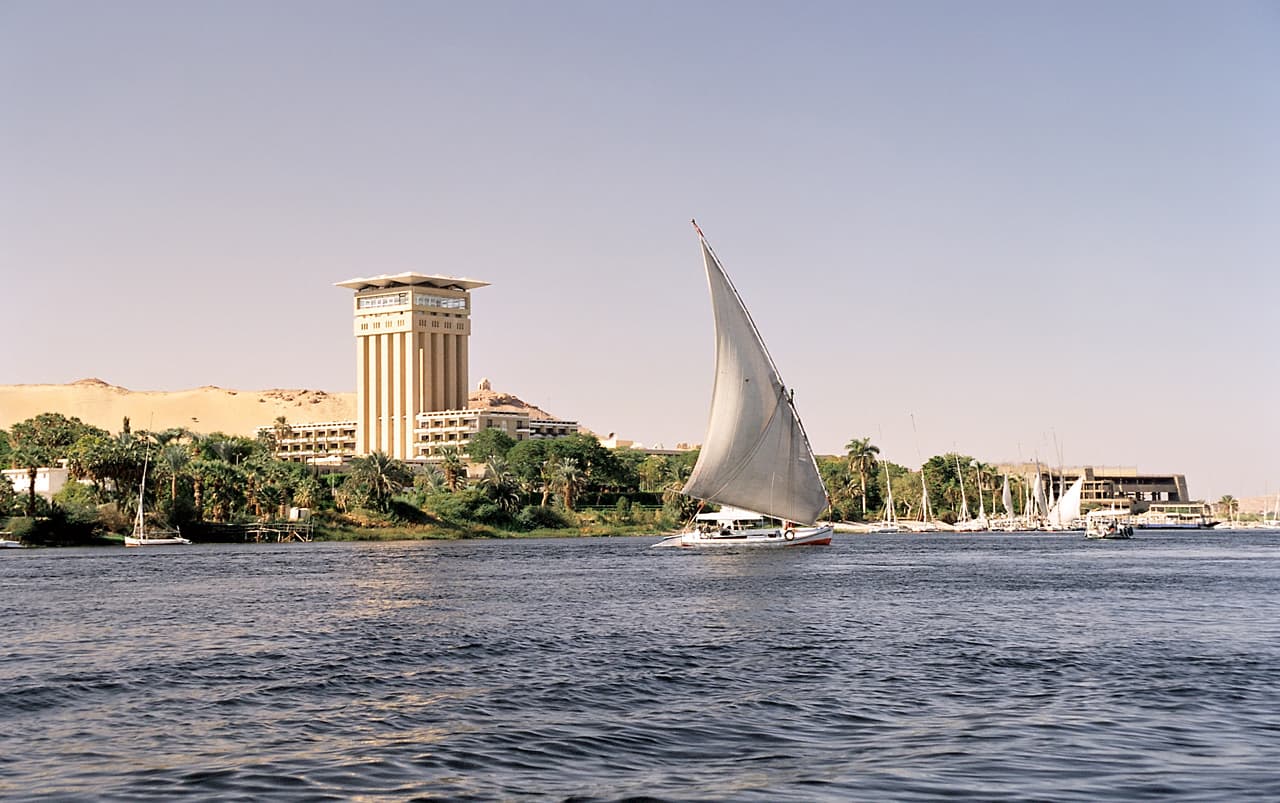
Granite islands, feluccas and the prettiest stretch of the Nile
Abu Simbel
Not practical from here
Three hours by road or a short flight
Best for
Monuments, and anyone with limited days
The river, Nubian culture, and slowing down
Getting there from Cairo
About an hour by air, or roughly ten hours on the sleeper train
Around ninety minutes by air, or a longer run on the same line
Where cruises fit
Almost every boat boards or finishes here
The southern end of the route, and usually the last stop
Day trips within reach
Dendera and Abydos to the north, both underrated
Abu Simbel south, Kom Ombo and Edfu on the road north
Effort required of you
A driver, an early alarm and a firm line with sellers
Much less. Most of what you want is on or beside the water
The short answer
Luxor if you are choosing one, because the concentration of monuments is unmatched anywhere in Egypt. Aswan if you have already seen the temples elsewhere, or if what you want from Egypt is the river rather than the ruins. In practice most people should do both, because the three or four nights sailing between them is the part of the trip they remember.
What there is to see: Luxor wins, and it is not close
Luxor holds the densest concentration of ancient Egyptian monuments anywhere. On the east bank: Karnak, a temple complex built and rebuilt over roughly two thousand years, and Luxor Temple in the middle of town. On the west bank: the Valley of the Kings, the Valley of the Queens, Hatshepsut's terraced mortuary temple at Deir el-Bahari, the Colossi of Memnon, and the workers' village at Deir el-Medina. Any one of these would be the headline attraction of a lesser city. Here they are stacked within a short drive of each other.
Aswan's sites are fewer and smaller in scale. Philae temple, moved stone by stone to Agilkia Island when the High Dam threatened it. The unfinished obelisk, still attached to the bedrock in the granite quarries. Elephantine Island, the Nubian Museum, the Aga Khan Mausoleum on the west bank. Kom Ombo and Edfu sit between the two cities and are usually visited on the way. Aswan is worth seeing. On monuments, it is not a rival to Luxor.
Luxor site by site: what each one actually gives you
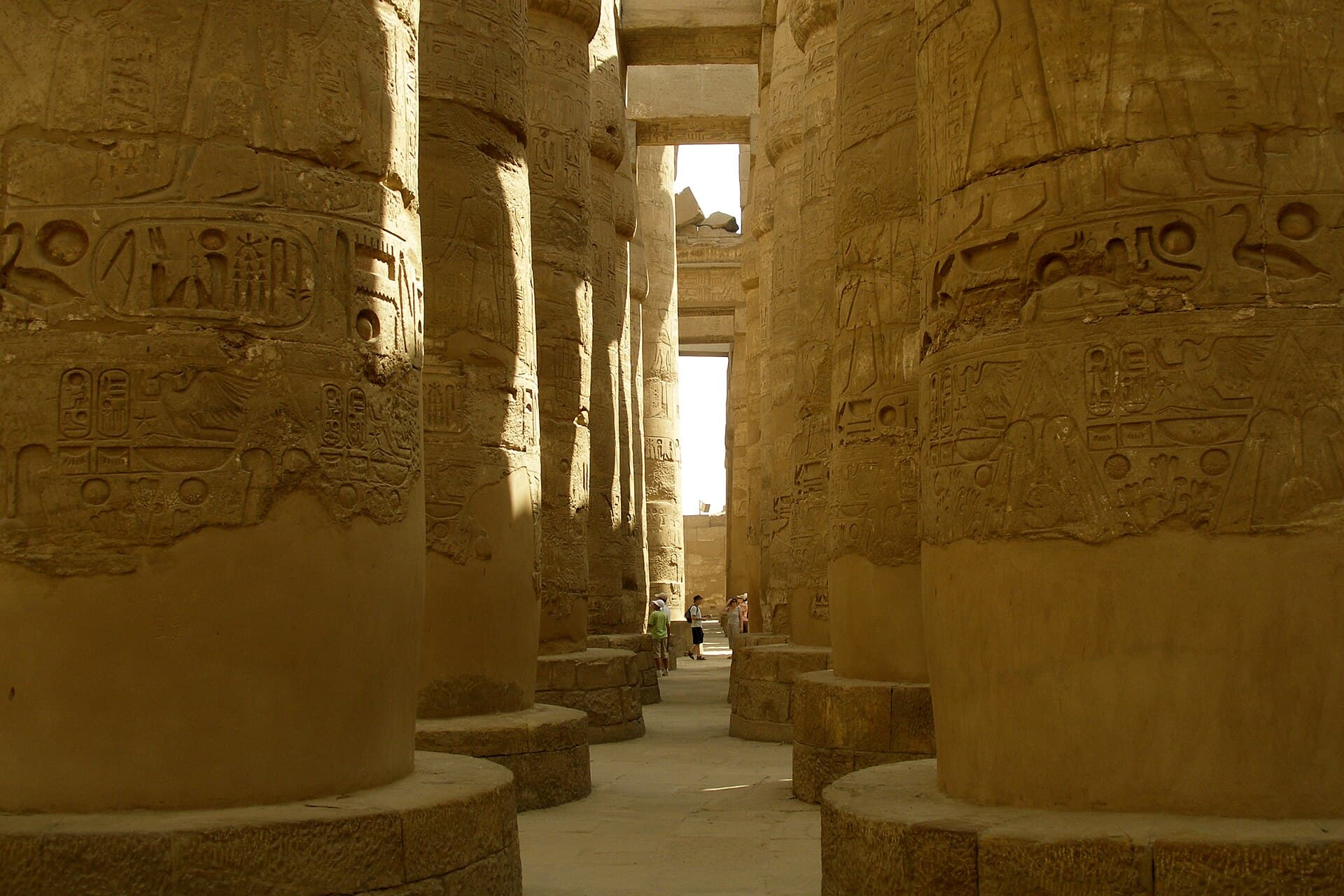
Karnak is not a temple but a walled precinct that around thirty pharaohs added to across two millennia. The Hypostyle Hall alone, 134 columns with the tallest standing about twenty metres, will absorb half an hour on its own, and behind it are obelisks, a sacred lake and a spine of pylons that get older as you walk east, each newer one raised in front of the last. Two hours is the realistic minimum and three is better. Groups working to a cruise departure time usually get about ninety minutes, which covers the central axis and very little either side of it.
Luxor Temple is the one major site that improves after dark. Floodlighting gives the columns a depth that flat midday sun flattens out, the heat drops, and the crowd thins to a fraction of what it was. An hour is enough, which makes it the right thing to do on an arrival evening. Look for the later layers rather than only the pharaonic ones: a mosque sits high in the wall of the first courtyard, built when the temple was buried to that depth in silt and rubble and left in place when the fill was dug out beneath it, and at the back a Roman chapel has painted plaster laid straight over Egyptian relief.
The Valley of the Kings works on a ticket system worth understanding before you arrive. The standard ticket admits you to three tombs from the set open that day, and which tombs are open rotates for conservation. Three is genuinely enough; they vary less than you expect. Tutankhamun, Seti I and Ramesses VI are sold separately. Seti I is the finest in the valley by a distance and priced accordingly, Ramesses VI is the better value with an astronomical ceiling worth the neck ache, and Tutankhamun is the smallest, with only the burial chamber painted.
The rest of the west bank rewards anyone who does not stop at the famous two. Hatshepsut's temple at Deir el-Bahari is striking from the coach park onwards and thinner inside than the exterior promises, though the Punt expedition reliefs and the erasures where her name was chiselled out repay a slow look. The Colossi of Memnon take five minutes and sit on the road in. If you can fit one more temple, make it Medinet Habu, which still holds colour on its walls and has almost no groups. The Luxor Museum on the east bank is small, well arranged and badly under-visited.
Aswan site by site: Philae, the obelisk and the dam
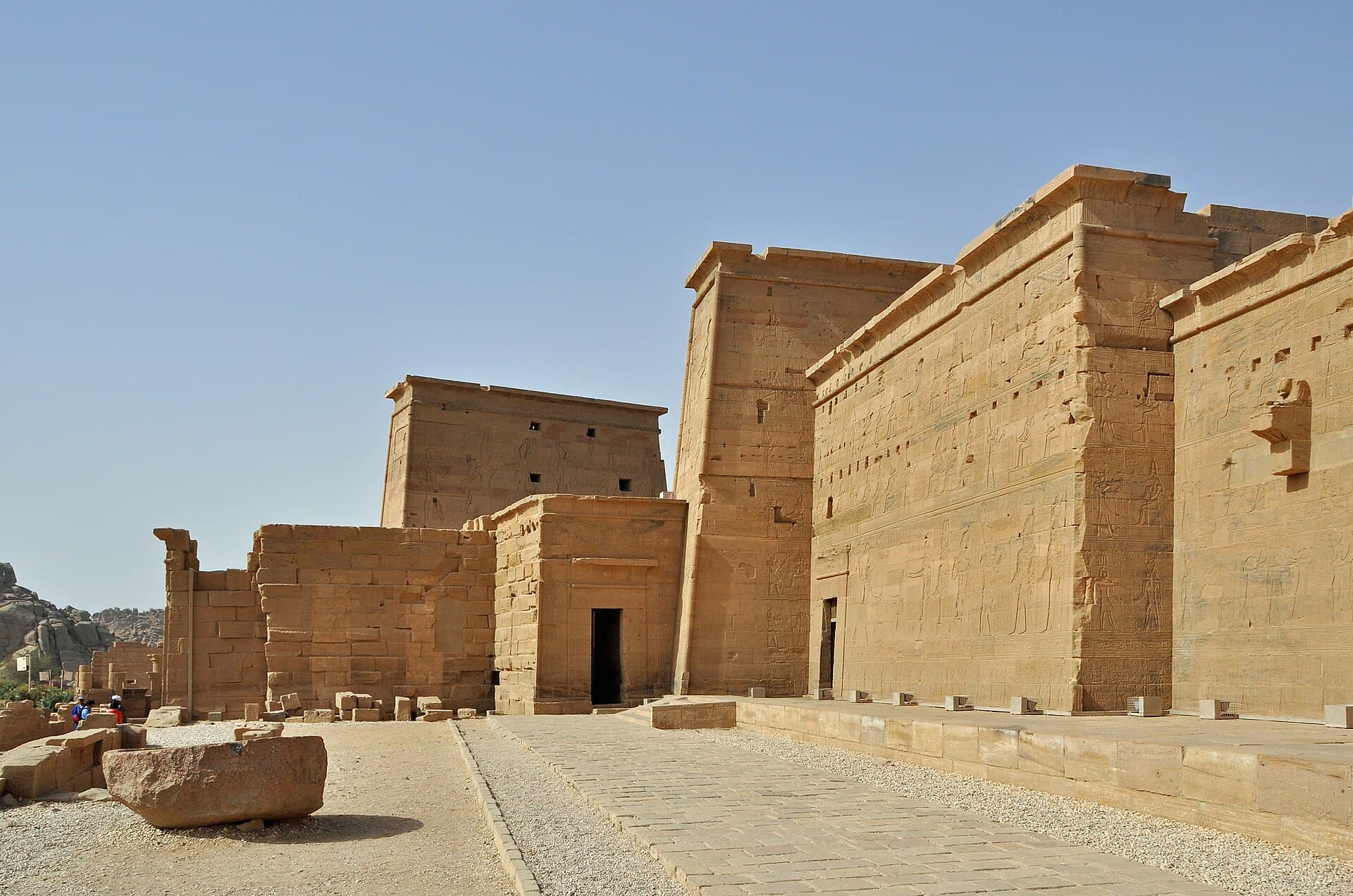
Philae is what people come for and it earns the billing. It is a late temple, largely Ptolemaic and Roman, dedicated to Isis, with crisp reliefs and a compact island setting reached by motorboat from a jetty between the two dams. The crossing is part of it: you come over open water and the colonnades rise straight out of the reservoir. Go early or late, because the island bakes in the middle of the day and the carving reads far better in low light.
The relocation is the part most visitors miss entirely. After the first Aswan dam was finished in 1902 the temple stood partly underwater for much of each year, and visitors rowed between half-submerged columns. The High Dam would have drowned the island permanently, so a coffer dam was built around it, the water was pumped out, and the buildings were cut into tens of thousands of numbered blocks and rebuilt through the 1970s on Agilkia, a neighbouring island reshaped to match the original. The evidence is visible: faint saw lines run through the masonry, and the lower courses of some walls carry a pale band where standing water stripped the colour from the stone.
The unfinished obelisk is the site most itineraries treat as filler between Philae and lunch, and it deserves better. A single enormous obelisk lies still attached to the bedrock, abandoned partway through cutting when a crack opened along its length. Standing in the trench you can read the method directly, the pitted marks left by pounding the rock with dolerite balls, the channels cut down each side of the shaft, the underside never freed. Finished, it would have stood taller and heavier than any obelisk ever raised, which is why the failure teaches more than a success would. Go early. There is no shade and granite holds heat.
The High Dam is dull as a sight and important as context. Fifteen minutes at the viewpoint covers it, and most itineraries include it only because it sits on the road to the Philae jetty. What it did is another matter: it ended the annual flood, gave year-round irrigation and multiple harvests, and supplied much of the country's electricity for decades. It also holds back the silt that fertilised the valley for millennia, so farming now leans on manufactured fertiliser, the Delta coast erodes without new sediment, and the reservoir loses a great deal of water to evaporation. It drowned Nubia as well. The temples got rescue campaigns; the villages got resettlement.
Pace and atmosphere: Aswan is much calmer
Luxor is a working tourist town and behaves like one. Touts at the temple gates, carriage drivers, felucca captains, shop owners who have heard every deflection you can think of. The pressure is persistent rather than aggressive, and it wears people down by about day three. The east bank corniche is busy and the traffic is loud. That is the cost of visiting the greatest open-air site in Egypt: everyone else is there too.
Aswan is quieter. The Nile is narrower and cleaner here, broken by granite boulders and islands, and the west bank is desert rising straight out of the water. Hassle exists at lower volume. People who arrive frayed from Cairo and Luxor tend to relax within a day. If your trip has been intense and you want one place to stop moving, Aswan is it. If you get bored sitting still, that same quality reads as not much to do.
There is a geological reason for the difference, not just a cultural one. North of Aswan the Nile runs through sandstone and then limestone in a broad floodplain. At Aswan it hits granite, and the rock breaks the river into channels around islands. That is the First Cataract, the reason the ancient Egyptians treated this as their southern frontier and the reason both dams were built here rather than anywhere else. It is also why the water runs clearer and the light reads harder and cleaner than it does in Luxor.
Aswan is where Egypt meets Nubia, and that shows in the food, the music and the languages spoken at home alongside Arabic. It reads as a border town in the good sense: less hurried, less organised around processing coach groups, and less dependent on a single monument to stay busy. The hassle is lower rather than absent. The corniche has boatmen and calèche drivers who will work you hard, especially when a cruise boat has just tied up, but step one street back from the water and it stops, which is a reprieve Luxor's east bank rarely gives you.
How many days each place needs
Luxor needs three full days to be done properly, and you can fill four. One day for the west bank tombs and temples, starting early. One for Karnak and Luxor Temple, split between morning and late afternoon. A third for the sites people skip: Medinet Habu, the Ramesseum, Deir el-Medina, or a second run at the Valley of the Kings once the coach groups have gone. Two days is the practical minimum and it will feel rushed.
Aswan needs two days, three if you add Abu Simbel. Philae and the quarries fill a morning. A felucca afternoon and the Nubian villages fill another. The town rewards slowness rather than more hours. Stretching Aswan to four days without a specific reason usually means an afternoon spent looking at the river, which some people want and others resent paying for.
One day in either city is possible and neither version is good. In Luxor it means three tombs and Hatshepsut before nine, Karnak at four and nothing else, which works only if you are ruthless about it. In Aswan it usually means Philae wedged between a disembarkation and an airport transfer, which is the version most cruise passengers get. Both are defensible when the calendar is fixed. Neither is what either city is for.
Heat: both are hot, Aswan is hotter
Aswan sits roughly 200 kilometers further south and runs a few degrees warmer than Luxor year-round. In high summer both are severe, with Aswan among the hottest places in Egypt. The air is very dry, which makes the heat more bearable than the numbers suggest and also makes dehydration easier to miss. From roughly November to February both cities are comfortable by day, and nights in Aswan drop more sharply.
The practical effect is on your timetable, not just your comfort. In Luxor the tombs are unshaded and the west bank has no cover, so serious sightseeing happens before eleven. In Aswan much of what you do involves being on the water, which helps. Between May and September either city punishes an unstructured afternoon, and a summer trip should be built around early starts and a long midday break.
The numbers are worth stating plainly rather than leaving to imagination. Summer temperatures in the Valley of the Kings pass 45C, and Aswan runs well past 40C on summer afternoons with very little shade at any of its sites. Even winter middays are warm in full sun. Prices drop in high summer for entirely sound reasons, and a cheap July trip that ignores the clock is how people come home saying Upper Egypt was unbearable.
The timetable each city forces on you
This is the difference that shapes a trip more than any monument count, and it is the one most people plan around last. Luxor divides across the river. The Egyptians built for the living on the east bank where the sun rises, and buried their dead on the west where it sets, and the split still decides your day. The station, the airport, the museum and nearly all the hotels are on the east side, so the west bank is a morning out and back rather than somewhere you base yourself.
Do the west bank first and start before it is light. The tombs are cut into rock with no airflow and by mid-morning they hold the heat of every group that has walked through. Karnak and Luxor Temple are open to the sky and take low afternoon light far better than noon. Reversing that order is the commonest planning mistake made in Luxor, and it is why the bridge matters: it sits several kilometres south of the centre, so crossing by road removes twenty to thirty minutes in each direction. The local ferry crosses in a few minutes for the price of a coffee, but the west bank sites are spread over several kilometres of desert edge with no shade, so you still need a car and driver for the morning.
Aswan asks much less of you. The sites are fewer and closer, the boat is a pleasure rather than a logistical hurdle, and the usable hours are the same early and late windows without the west bank commute eating one of them. That is precisely what a single rushed day in Aswan takes away, because a one-day schedule forces you out at midday. An extra night buys two good windows instead of one bad one, which is the strongest argument for the second night that anyone will make to you.
The felucca and Nubian culture: Aswan's real advantage
A felucca is a small lateen-rigged sailing boat with no engine. You can hire one in Luxor, but Aswan is where it makes sense: the current is strong, the wind is reliable, and the river is scattered with islands and granite outcrops to sail around. An afternoon crossing to Elephantine or drifting past Kitchener's Island is the single best thing Aswan offers, and it costs little. Agree a price and a duration before you board, because disputes afterwards are common.
Aswan is also the center of Nubian Egypt, a distinct culture with its own languages, food and architecture, much of it displaced when Lake Nasser flooded old Nubia in the 1960s. The painted houses in the west bank villages and at Gharb Soheil are the visible part. Be honest about which version you are getting: some village visits are staged for tour groups and feel like it. A guide with real family ties in the community changes the experience.
The mechanics are worth knowing because they explain why the boat works here and not further north. The prevailing wind blows from the north against a river flowing north, so you sail up and drift back down. Two to three hours covers the islands, the botanical garden on Kitchener's Island and the west bank cliffs with the Aga Khan mausoleum above them. Late afternoon is the run to take. Set expectations, though: it is slow, sometimes very slow, and if the wind drops you sit. A motorboat does the same circuit in a third of the time and half the pleasure.
Elephantine Island deserves an hour or two on foot and almost nobody gives it one. The archaeological site at the southern end has a small museum, a Nilometer cut into the rock for gauging the annual flood, and settlement layers going back thousands of years, because this island rather than the east bank was the main town here for most of antiquity. The rest of it is two Nubian villages, Koti and Siou, with narrow painted lanes. The public ferry across costs a fraction of a private boat, and walking those lanes yourself is a better half-hour than a staged village stop with a caged crocodile at the end of it.
Abu Simbel: Aswan is the base, and the day is long
Abu Simbel sits near the Sudanese border, about 280 kilometers southwest of Aswan, and Aswan is the only sensible base for it. Almost everyone goes by road, historically in a convoy and now more freely, and it is roughly a three to four hour drive each way across empty desert. Departures are usually before dawn so you arrive while it is still cool. Flights from Aswan also exist, but routes and schedules change, so check what is running close to your dates.
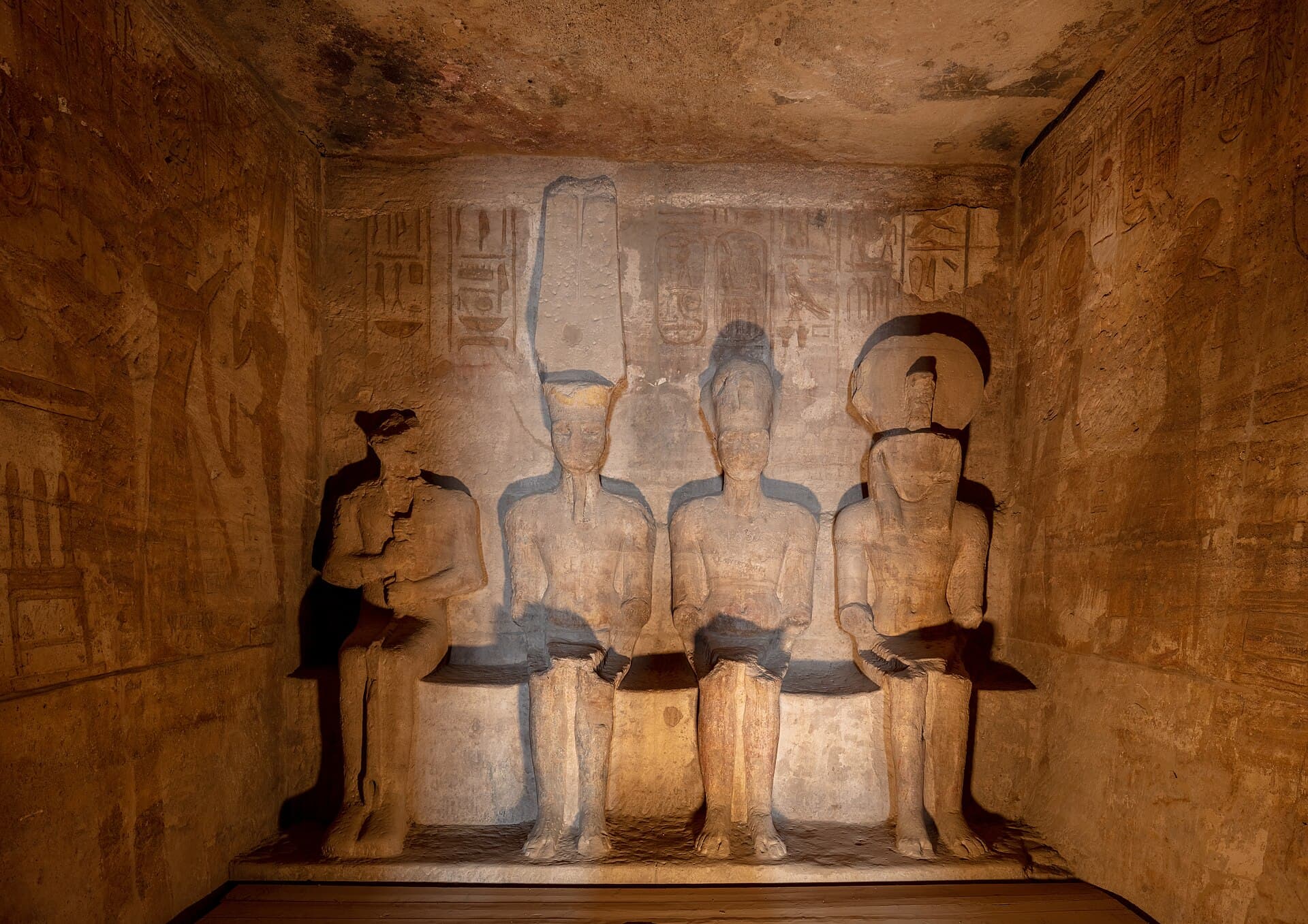
The site justifies the day. Two rock-cut temples of Ramesses II and Nefertari, carved into the cliff face and relocated in the 1960s above the rising waters of Lake Nasser. The relocation is part of the story, not a footnote. What people underestimate is the time cost: a full day gone, most of it in a vehicle, for about two hours at the temples. If Abu Simbel matters to you, budget a separate day in Aswan for it.
There is a better version of the day if you can spare a night. Staying at Abu Simbel puts you at the temples in late afternoon once the coaches have gone, and again first thing before they return, and it shows you the facade in the low light it was cut for. The temples were themselves sawn apart and rebuilt above the rising lake inside an artificial hill, and the joins run visibly across the statues once you know to look. The twice-yearly sun alignment on the inner sanctuary still happens, in late February and late October. Convoy rules and permitted departure times have changed repeatedly over the years, so confirm the current arrangement close to travel rather than trusting an old account of it.
Getting to each city, and getting between them
Luxor is the better connected of the two and by a useful margin. It is about an hour's flight from Cairo or roughly ten hours on the overnight sleeper train, and it sits on the main line with more services and more flexibility for onward travel. Aswan is around ninety minutes from Cairo by air and further down the same railway. Neither is hard to reach. If your itinerary is tight and you want the fewest moving parts, Luxor gives you more ways in and more ways out.
Between the two cities the train is the honest default. It runs the route several times a day, takes roughly three hours, costs very little and follows the river the whole way, so the views are part of the deal rather than a consolation. Flights between Luxor and Aswan exist but the hop is short and schedules change, which makes them a poor thing to build a plan around. Road transfers cover the same distance with stops at Edfu and Kom Ombo, which is how land-based itineraries pick up the two temples a cruise would give you.
Most people travelling this stretch, though, do it by boat on purpose. That is the entire design of a Nile cruise: three or four nights covering about 215 kilometres that a train does in three hours, because the sailing is the point rather than the transfer. Which direction you go depends on your onward travel and the stops are the same either way, though sailing downstream from Aswan to Luxor is usually the shorter itinerary.
Staying in each city: what the base actually feels like
Luxor gives you a wider range of places to stay at every budget, and the choice that matters is which bank you sleep on. The east bank puts you near the station, the temples and the corniche, with everything open in the evening and the noise that comes with that. The west bank is quieter, more rural and closer to the tombs for an early start, at the cost of a river crossing every time you want dinner or a museum. Neither is wrong. The east bank suits shorter stays and the west bank suits longer ones.
Aswan's geography does most of the work for you. The city faces the prettiest stretch of the Nile in Egypt, the islands sit in the middle of it, and a base with the water in front of it turns an ordinary evening into the thing people remember about the place. There is less to walk to and less reason to walk to it, which is either the attraction or the drawback depending on what you came for.
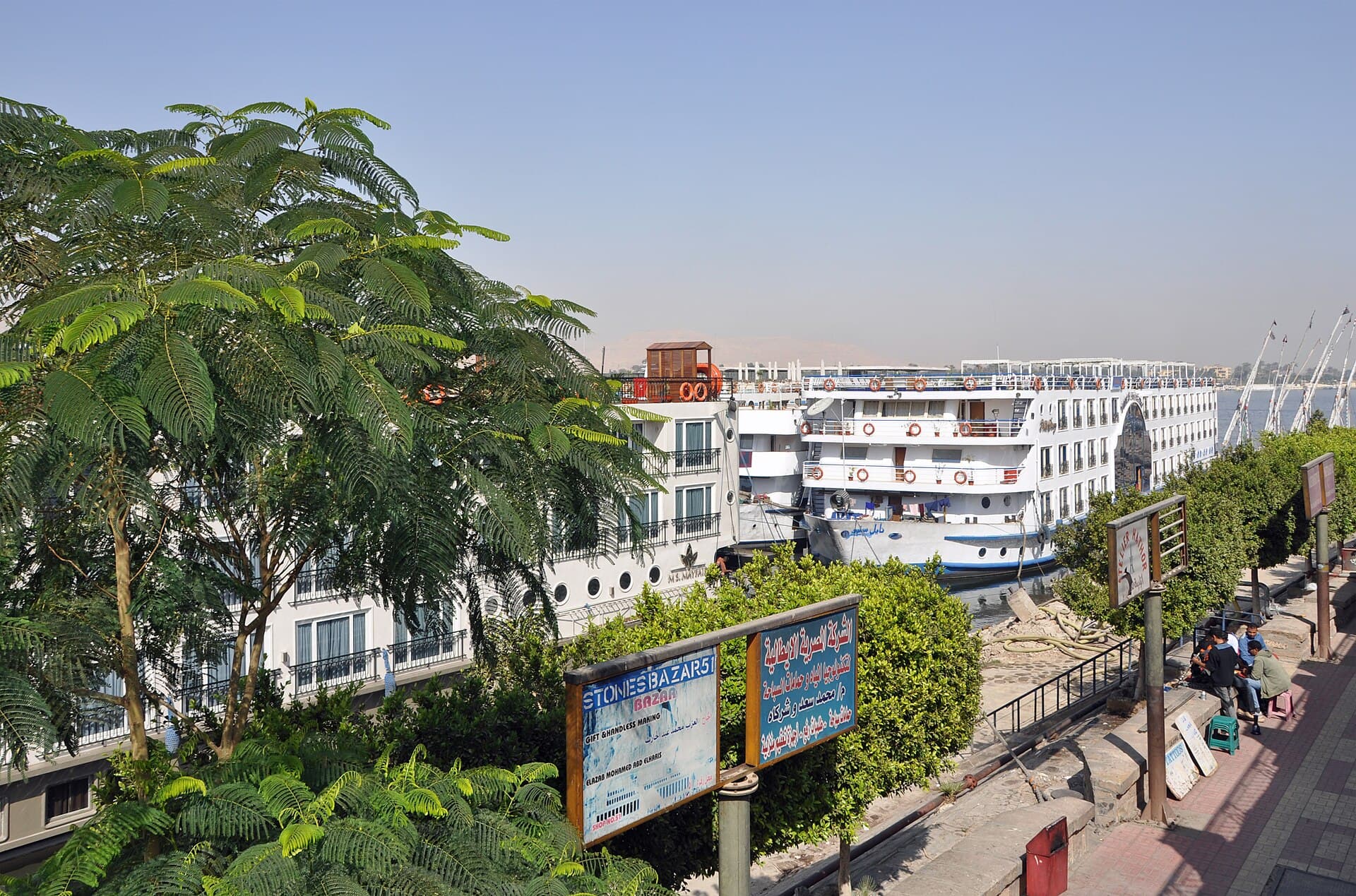
The cruise-or-hotel question falls differently in each city. A boat is an efficient way to reach Edfu and Kom Ombo, which are awkward to get to otherwise, and a poor way to see Luxor: boats moor on the east bank, often rafted several deep, and Luxor is the first stop or the last, which means one compressed west bank morning and Karnak in a group with a departure time. A hotel buys the two things a boat cannot, the hour before the coaches arrive and the evening, which is exactly when Luxor Temple is worth seeing. The usual compromise is a short cruise with nights on land at either end.
Where the cruise fits, and which end to start from
Nearly every Nile cruise boards at Luxor or finishes at Aswan, which quietly decides how much of each city you get. Boarding at Luxor usually means you see it on the boat's schedule rather than your own. Finishing at Aswan usually means Philae in the morning and the airport in the afternoon. Both cities end up compressed, and the compression happens at the edges of the itinerary where nobody notices until they are in it.
The fix is simple and it is the single most useful piece of planning on this page: add a night on land at each end. A night in Luxor before you board buys the west bank before the coach groups and Luxor Temple after dark. A night in Aswan after you dock buys an unhurried afternoon on the water and a morning not spent watching a clock. It changes the trip more than upgrading the boat does, and it costs less.
If you are choosing a direction rather than accepting one, take the practical view. Sailing Luxor to Aswan puts the heaviest sightseeing at the start, while you are fresh, and ends in the calmer city, which is the better emotional shape for a long trip. Sailing Aswan to Luxor is usually the shorter itinerary and suits anyone flying out of Luxor or continuing north to Cairo. The stops between are the same either way.
Day trips: what each city puts within reach
Luxor reaches north. Dendera and Abydos are both day trips from here and both are underrated, which is another way of saying they are quiet in a region where quiet is scarce. Add the west bank sites most itineraries skip, Medinet Habu, the Ramesseum and Deir el-Medina, and Luxor has enough within an hour's drive to fill a fourth and fifth day without repeating itself. That depth is the real argument for basing yourself here rather than the headline monuments, which you will have seen by the end of day two.
Aswan reaches south, and there is essentially one thing in that direction. Abu Simbel is the trip, it takes a full day, and nothing else down there competes. North of the city, Kom Ombo and Edfu sit on the road towards Luxor and are usually picked up in transit rather than as excursions. That leaves Aswan's day-trip list short, which matters if you were planning to fill four days with outings and does not matter at all if you were planning to spend them on the water.
Which traveller suits which city
First trips to Egypt with a fixed number of days belong in Luxor. The depth per day is higher, the links to the rest of the country are better, and a first-time visitor who misses the Valley of the Kings to sit on a felucca will regret the trade even if the felucca was lovely. Returning visitors invert that completely. If you have already walked Karnak and three tombs, another set of painted walls delivers much less than two slow days on the prettiest stretch of the river.
Heat and stamina decide more of these choices than people admit before they arrive. Anyone travelling with someone who fatigues quickly in heat, crowds or persistent selling will have a better week in Aswan, where the sites are fewer and much of the day happens on water with a breeze on it. Luxor asks for early alarms, a car and driver, unshaded walking and a firm line with sellers, four days running. That is a fair price for what it holds and it is not everybody's price.
Photographers and anyone travelling for the landscape rather than the archaeology should weight Aswan heavily. The granite, the islands and the hard clean light are what the Nile looks like at its best, and a felucca puts you in the middle of it at the hour it works. Anyone travelling for the ancient world specifically should weight Luxor just as heavily, because no other place on earth holds this much of it inside a twenty-minute drive.
Common mistakes people make choosing between them
The first is treating the two cities as equivalent and splitting the days evenly. They are not equivalent. Luxor rewards a third day and Aswan rewards a second night, and a symmetrical three-and-three usually means a rushed west bank and an idle afternoon staring at the river. Match the days to what each place actually holds.
The second is arriving in Luxor at midday and going underground at the hottest hour. That is the version of Luxor most people who came away disappointed have had, and it is entirely avoidable with an arrival evening at Luxor Temple and a west bank start before dawn the next morning. The third is booking the balloon for your last morning in Luxor, when flights are cancelled for wind often enough that you want the first morning and a spare day behind it.
The fourth is assuming Abu Simbel can be bolted on to a travel day. It cannot. It is a full day from Aswan and it is not sensible from Luxor at all. The fifth, and the most expensive in hindsight, is flying out of Aswan the morning the cruise docks. You will have paid for the whole journey south and then skipped the place it was heading for.
If you can only pick one, base yourself in Luxor
For a first trip to Egypt with limited time, Luxor is the answer. More to see, more depth per day, better rail and air links to the rest of the country, and a wider range of places to stay at every budget. You can also day-trip north to Dendera and Abydos, both underrated. The trade-off is real: more hassle, more heat exposure while sightseeing, more crowds at the famous tombs, and a louder town at the end of a long trip.
Choose Aswan instead if your priority is the river rather than the ruins, if you have already seen a lot of temples, if you are traveling with someone who fatigues quickly in heat and crowds, or if Abu Simbel is the thing you actually came for. Aswan is the better place to rest and to be near water. It is the weaker choice if you have three days and want to see as much of ancient Egypt as they can hold.
Luxor vs Aswan: do both, because the stretch between them is the point
Luxor for the monuments, Aswan for the river, but the choice is usually a false one, because the roughly 215 kilometres between the two cities is where the Nile does what people came to see it do. Cruise boats run the route in both directions, typically three or four nights, stopping at Edfu and Kom Ombo. The sailing itself, past green banks with desert immediately behind them, is worth more than either endpoint alone.
Set aside six to eight days for Upper Egypt if you can: three in Luxor, two in Aswan, plus the sailing between them, with an extra day if Abu Simbel is on your list. Direction depends on your onward travel, and the stops are the same either way, though sailing downstream from Aswan to Luxor is usually the shorter itinerary. If you genuinely have only three days, take Luxor and come back for the river.
Common questions
Should I fly or take the train between Luxor and Aswan?+
The train runs the route multiple times a day and takes roughly three hours. It is cheap and the views along the river are good. Flights between the two cities exist, but the hop is short and routes and schedules change, so check what is actually running near your travel dates rather than planning around a timetable you found online. Most people covering this stretch do it by cruise boat anyway, which takes several days by design.
Is Aswan safe for independent travelers?+
Aswan is generally calm, and travelers report less hassle there than in Luxor. Normal precautions apply: agree prices before boarding boats or taxis, be firm with persistent sellers, and take the heat seriously. The Abu Simbel road runs through empty desert near the border and is best done with an operator who knows current conditions rather than driven independently in a hire car.
When is the worst time to visit Luxor and Aswan?+
June through August. Daytime heat in both cities makes unstructured sightseeing genuinely risky, and Aswan is hotter. Prices drop for good reason. Late March to May and September to October are workable with early starts and a long break in the middle of the day. November to February is the comfortable window and also the busiest, so those months fill up well in advance.
Can I visit Abu Simbel from Luxor instead of Aswan?+
Not sensibly. Abu Simbel is around 280 kilometers from Aswan and roughly double that from Luxor. Doing it from Luxor means a punishing day or an overnight, and you gain nothing by it. If Abu Simbel is on your list, structure the trip so you are in Aswan, and give it a dedicated day rather than squeezing it into a travel day.
Is a Nile cruise worth it, or should I just visit both cities separately?+
The cruise is worth it if you want the river itself, which is true for most people. Boats vary widely and the cheapest end can be disappointing. A dahabiya, a smaller sailing boat carrying a handful of passengers, is quieter and slower than a standard cruiser. If you dislike fixed schedules and set meals, traveling by train and staying in each city is a legitimate alternative.
How much of Luxor's west bank can I realistically see in one day?+
The Valley of the Kings with three tombs, Hatshepsut's temple, and one more site such as Medinet Habu or the Ramesseum. That is a full morning and early afternoon, and the heat usually ends the day there. Tomb access rotates and some tombs need separate tickets, so confirm what is open on your date locally rather than assuming.
How far apart are Luxor and Aswan?+
About 215 kilometres along the Nile, with Aswan to the south. By train that is roughly three hours and by road a similar run with Edfu and Kom Ombo on the way. By cruise boat it is three or four nights, which sounds absurd until you understand that the sailing is the product rather than the journey. The distance is also why Aswan runs a few degrees hotter than Luxor all year.
Which city is better with children?+
Aswan, in most cases. The sites are fewer, the days are shorter, much of what you do happens on a boat with a breeze on it, and the selling is less relentless. Luxor demands early alarms, unshaded walking and long stretches underground in hot tombs, which is a hard sell for younger children. If the trip includes both, put Luxor first while everyone still has energy for it.
Do I need a guide in Luxor or Aswan?+
In Luxor you need a car and driver for the west bank whatever else you decide, because the sites are spread over several kilometers of desert edge with no shade and no useful public transport. A guide on top of that adds a great deal at Karnak and the tombs, where the carving is meaningless without someone to read it. In Aswan you can do far more independently, using the public ferry and a felucca, though a Nubian guide from the community changes a village visit completely.
My cruise ends in Aswan. Should I add a night before flying out?+
Yes, and it is the highest-value night on the whole itinerary. Most passengers disembark and go straight to the airport, which reduces Aswan to a rushed Philae stop at the hottest, busiest hour. One extra night gives you a felucca in the late afternoon, an evening on the corniche and a morning that is not a countdown. It costs less than most of the upgrades people buy on the boat.
Official sources
Entry rules, opening hours, security advice and exchange rates all move. Check them at the source, not here.
Written and checked by the Nile Trip Guide editorial team · Last reviewed . Entry rules, prices and opening hours change — check anything critical against the official sources linked on this page.
The route most people take first, at the length it was built for: Giza and the Grand Egyptian Museum, then a flight to Luxor and four nights sailing down to Aswan.
No boat on this one. Giza and the Grand Egyptian Museum, a night in Luxor for both banks, two nights on the Red Sea, then back to Cairo for the Citadel, Coptic Cairo and the Royal Mummies.
Five nights in Cairo either side of a four-night sail from Luxor to Aswan. The Cairo days are private, just your party and a guide; the sightseeing off the boat is shared with a small group.