Things to Do in Aswan: Egypt's Slow, Warm City on the Nile
Aswan sits at the southern end of Egypt's Nile valley, about 210 kilometres upriver from Luxor, and it is the one city on this river where the list of things to do is short on purpose. There are perhaps six sights worth naming, one of which takes fifteen minutes and another of which eats an entire day. What Aswan actually gives you is the river, the granite and a pace nowhere else in Egypt manages. This page ranks the sights honestly, says which ones are filler, and is blunt about the Abu Simbel day, which is very early and very long.
Things to do in Aswan, ranked in the order we would actually do them
Philae Temple first, because it is the only site here that would be a headline attraction in any other city, and because the boat crossing to reach it is half of what makes it good. A felucca on the late afternoon river second, which sounds like a soft answer and is not: it is the thing almost everybody remembers about Aswan a year later, and it costs a fraction of anything else on this list. Third, the unfinished obelisk in its quarry, half an hour that explains how every granite object you have seen in Egypt was made.
After those three the list thins quickly, and it is more honest to say so than to pad it. Elephantine Island on foot is worth an hour or two and gets almost no visitors. The botanical garden on Kitchener's Island is a pleasant twenty minutes attached to the felucca you were taking anyway. The High Dam is fifteen minutes on a road you are already driving. A Nubian village visit is genuinely good or faintly grim depending entirely on who takes you. And Abu Simbel, 280 kilometres south, is not really an Aswan sight at all but a full day removed from your trip.
The ranking matters because Aswan is usually given one afternoon, and the wrong afternoon at that. Most people arrive off a cruise, do Philae at the hottest hour with three boats' worth of other passengers, glance at the dam and leave. That version of Aswan is not worth writing about. Two nights, with the middle of each day spent doing nothing, is a different place entirely, and the rest of this page is written for that version.
Philae Temple: the one site in Aswan you should not skip
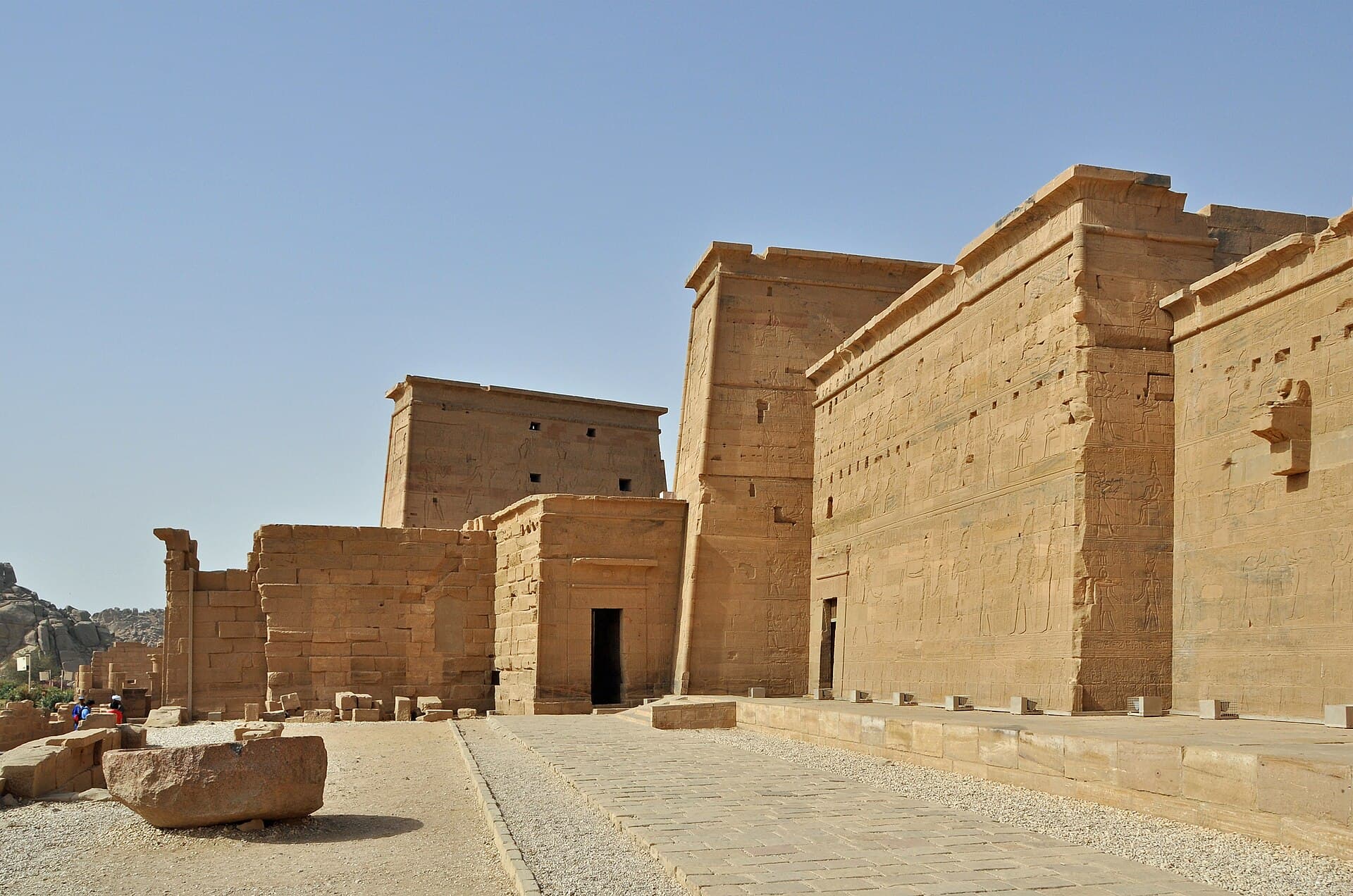
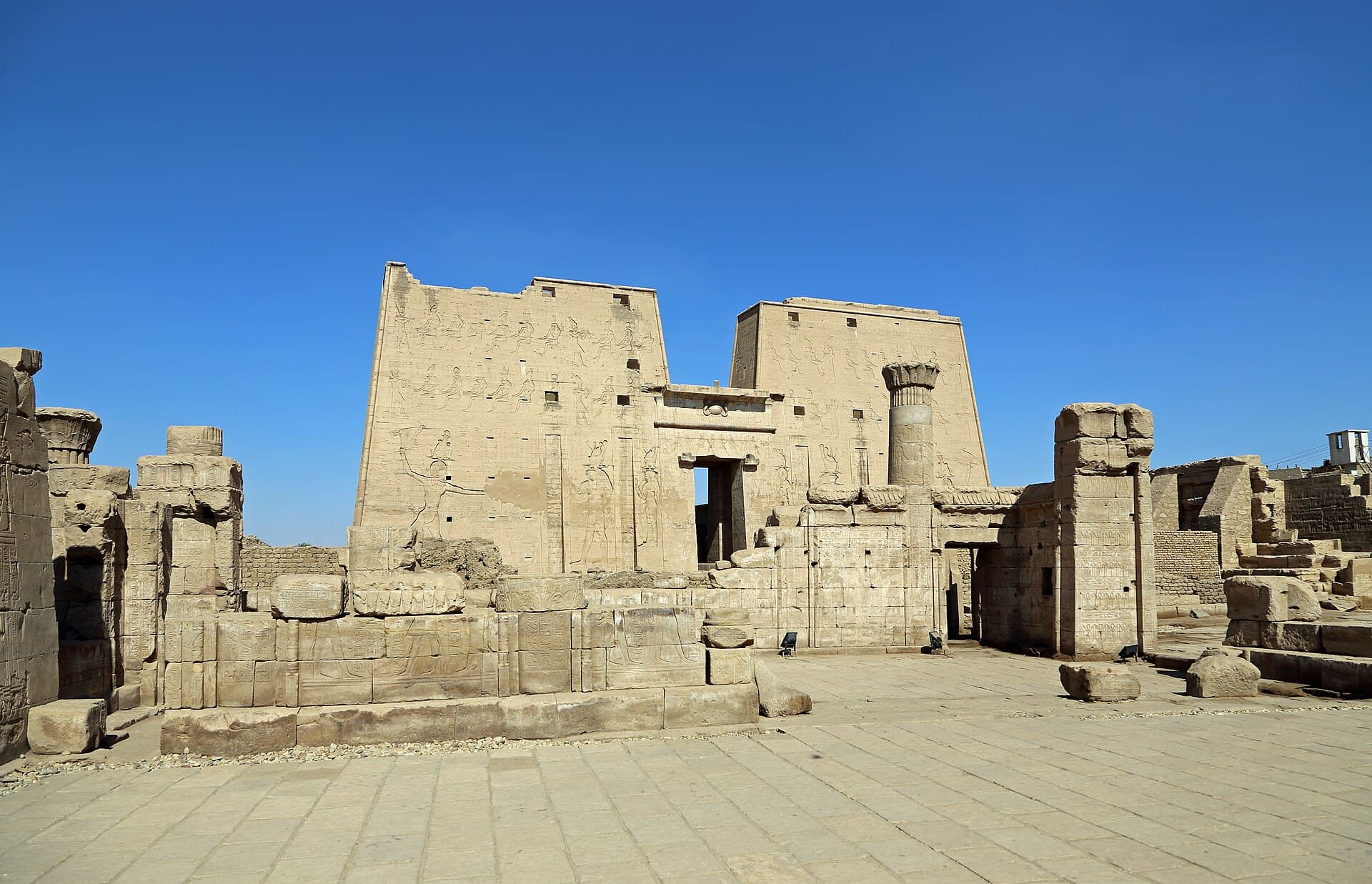
Philae is a compact temple complex on an island upriver of the city, reached by motorboat from a jetty that sits between the two dams. The main building is the temple of Isis: a first pylon, an open forecourt, a second pylon, a hypostyle hall and a dark sanctuary at the back. Around it stand smaller structures, including a birth house for Isis's son Horus and the kiosk named after the emperor Trajan, which was never finished. It is a late temple, largely Ptolemaic and Roman, which is why the carving is crisper than at most pharaonic sites.
The scale is modest by Egyptian standards. Karnak could swallow the whole island several times over. What Philae has instead is coherence and setting, and the two work together. You can take in the entire complex in an hour or two, and every approach to it is across open water, with the colonnades rising straight out of the reservoir as you come in. In a country where most great sites are reached by coach across dust, that is rare enough to be the point.
It is also unusually easy to read. At Karnak you are looking at fifteen hundred years of additions by rival kings and it takes an effort of will to see a plan at all. At Philae the sequence runs in one direction, from the landing to the sanctuary, in more or less the order the builders intended. Anyone who has struggled to hold an Egyptian temple in their head will find this one falls into place quickly, which makes it a good first temple as well as a good last one.
Timing is the whole game. Go early or late. The island bakes in the middle of the day, there is very little shade on it, and the reliefs read far better in low light than under a flat midday sun. The evening sound and light show is well produced and entirely skippable if time or money is tight; nobody has ever put it above the daytime visit.
What the Philae relocation actually means, and where you can see it
The temple does not stand where it was built, and the part most visitors miss is the reason it is still standing at all. After the first Aswan dam was completed in 1902, Philae stood partly underwater for much of each year, and visitors rowed between half-submerged columns. When the High Dam was built the island would have been drowned permanently, so a coffer dam was thrown around it, the water was pumped out, and the buildings were cut into tens of thousands of numbered blocks and rebuilt through the 1970s on Agilkia, a neighbouring island reshaped to match the original.
You can see the evidence without a guide pointing at it, once you know what to look for. Faint saw lines run through the masonry where the blocks were separated. The lower courses of some walls carry a pale band where decades of standing water stripped the colour out of the stone, a tideline on a building that was never meant to meet a tide. Knowing that changes what the hour is about: you are walking through both an ancient temple and one of the largest salvage jobs ever attempted.
It is also the honest counterweight to the dam you will see on the same morning. The reservoir tells you what the water did. The temple standing on a rebuilt island tells you what it cost to save one small part of what the water covered, and how much was not saved.
The unfinished obelisk: half an hour that explains the rest of Egypt
This is a small site and an easy one to dismiss. It is a fenced quarry in the middle of modern Aswan holding a single enormous obelisk, still attached to the bedrock, abandoned partway through cutting when a crack opened along its length. Half an hour covers it, and most itineraries treat it as filler between Philae and lunch. It deserves better than that, and it is the site visitors most often say they were surprised by.
It explains everything else you have already looked at. The obelisks at Karnak, the granite colossi of Ramesses, the sarcophagi inside the pyramids: the stone came from here and travelled downriver, in some cases the better part of a thousand kilometres. Standing in the trench you can read the method directly. The pitted marks left by pounding the rock with dolerite balls. The channels cut down each side of the shaft. The underside never freed, which is where the work stopped.
Scale is the other reason to go. Finished, it would have stood taller and heavier than any obelisk ever raised, which is precisely why the crack that ruined it teaches more than a success would: it shows you the limit the technique ran into. Go early. There is no shade, granite holds heat, and by late morning the trench is genuinely unpleasant rather than merely hot.
A felucca at sunset, and why the boat works here and not at Luxor
A felucca is a small lateen-rigged sailing boat with no engine. You can hire one in Luxor, and it is a lesser thing there. It works at Aswan because the geography is on its side: the prevailing wind blows from the north against a river flowing north, so you sail up and drift back down, and the river here is broken into channels around granite islands rather than running wide and straight. Two to three hours covers the islands, the botanical garden on Kitchener's Island, and the west bank cliffs with the Aga Khan mausoleum above them.
Late afternoon is the run to take. The light drops, the heat goes with it, and the west bank turns the colour the photographs are all taken at. It is the cheapest good thing you can do in Egypt, and the one that most reliably exceeds what people expected of it, because expectations for sitting on a boat are low.
Set expectations anyway. It is slow, sometimes very slow, and if the wind drops you sit. That is the point, and people who want to tick sites off get frustrated by it. A motorboat does the same circuit in a third of the time and half the pleasure, and is the right call only if your afternoon is already spoken for. Agree the duration and the price before you step aboard, every time, and ask specifically whether entry to the botanical garden is included, because it usually is not.
Elephantine Island on foot: the walk almost nobody takes
Elephantine sits in the middle of the river opposite the corniche and deserves an hour or two on foot, which almost no itinerary gives it. The archaeological site at the southern end has a small museum, a Nilometer cut into the rock for gauging the annual flood, and settlement layers going back thousands of years, because this island rather than the east bank was the main town here for most of antiquity. That single fact reorders how the city reads: the modern waterfront is the suburb, and the island is the original.
The rest of the island is two Nubian villages, Koti and Siou, with narrow painted lanes you can walk yourself. The public ferry across costs a fraction of a private boat and runs from the corniche, which makes this the one thing in Aswan you can do entirely under your own steam without negotiating anything. If you have half a morning spare and no fixed plan, spend it here rather than adding a fourth temple.
It is a walk rather than a sight, and worth saying so. There is no ticket queue, no set route and nothing that photographs like Philae. What you get is a lived-in place in the middle of the Nile at a distance of a five-minute ferry ride, which is a better use of an hour than most paid excursions in Upper Egypt.
Kitchener's Island and the botanical garden
The botanical garden occupies the whole of Kitchener's Island, and it is a small pleasure rather than a reason to come to Aswan. It is shaded, which in this city counts for a great deal, and it sits directly on the felucca circuit, so it costs you a landing rather than a separate trip. Twenty minutes to half an hour is the right amount of time, and people who plan a morning around it tend to come away wondering what they were meant to be looking at.
The practical note is the one that catches people out. The garden charges its own entry, and a felucca price quoted for two or three hours on the water does not usually cover it. Ask before you board rather than at the jetty, when you have no leverage and the boatman is waiting. Treat it as an add-on to an afternoon you were already spending on the river, and it is worth the stop.
Nubian villages: how to do this without it feeling like a zoo
The Nubian village trip is sold hard in Aswan and it is the item on this list most likely to make you uncomfortable. The formula is usually identical: motorboat across, a walk through painted lanes, a house visit with hibiscus tea, a crocodile in a tank, photographs, a shop. Some people enjoy it and come away having actually talked to someone. Others find it staged and faintly demeaning. The difference is almost entirely in who takes you, not in which village you go to.
The background is worth carrying with you. Nubians here were displaced repeatedly through the twentieth century, first as the old dam was raised and then, far more severely, by the High Dam, which flooded their homeland and moved tens of thousands of people into villages built for them by the state, many of them well north of Aswan near Kom Ombo. Some of the communities you are taken to absorbed those families. Treating the painted walls as a photo backdrop misses all of that.
What makes it better in practice: go with a Nubian guide from the community rather than a boatman who drops you at a gate, go late in the afternoon when people are actually about rather than mid-morning when the coaches come, ask before photographing anyone, and buy something. Skip the caged crocodiles. If the visit is only going to be half an hour of photographs, we would rather put you on the public ferry to Elephantine to walk the lanes yourself, which costs almost nothing and asks nothing of anybody.
The Aswan High Dam: fifteen minutes, and not a minute more
As a sight the High Dam is dull, and no amount of time on it improves that. It is a broad embankment with a road along the top, a viewing area, a monument to the Soviet-Egyptian partnership that built it, a few souvenir stalls and a long view over Lake Nasser. Fifteen minutes covers it. Most itineraries include it only because it sits on the road between the town and the jetty for Philae, which is exactly the right reason to stop.
As context it is the most consequential structure built in Egypt since antiquity, and thirty minutes with someone who can explain it is worth more than the view. It ended the annual flood, gave year-round irrigation and multiple harvests, supplied much of the country's electricity for decades, and buffered both drought and destructive flooding. It also holds back the silt that fertilised the valley for millennia, so farming now leans heavily on manufactured fertiliser, the Delta coast erodes without new sediment, salt has built up in some soils, and the reservoir loses a great deal of water to evaporation.
Judge it as infrastructure and it is interesting. Judge it as a monument and you will be disappointed, which is what happens to most visitors, because it arrives on the itinerary in the same list as Philae. Drop it without hesitation if anyone is selling it as an excursion of its own, charging a premium for it, or proposing to take an hour off Philae to fit it in. There is nothing to walk through and no access to the machinery.
Abu Simbel from Aswan: very early, very long, and still worth it
Be clear about what this day costs before you book it. Abu Simbel sits roughly 280 kilometres south of Aswan, close to the Sudanese border, and by road it is about three to three and a half hours each way across empty desert. The classic day trip leaves Aswan very early, arrives mid-morning with every other coach, gives you an hour or two at the temples and has you back by mid-afternoon. That is a full day gone, most of it in a vehicle, at the hottest and busiest point of the morning with the sun already high on the facade.
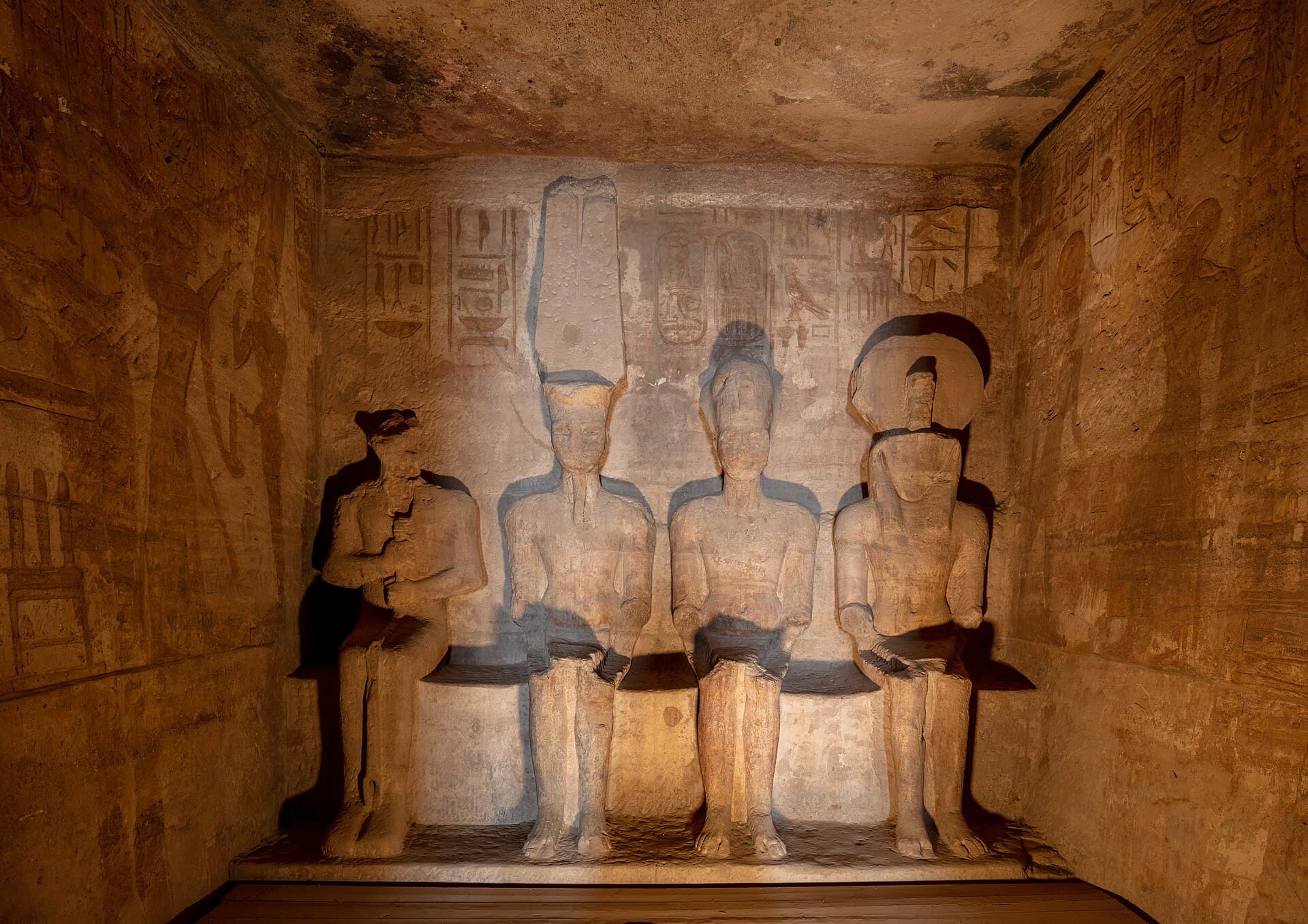
The site justifies it for most people. Two temples of Ramesses II and Nefertari cut into a cliff face, and then, between 1964 and 1968, sawn into numbered blocks, lifted roughly sixty metres higher and some two hundred metres back from the rising water, and reassembled against an artificial hill. The cliff you look at is concrete and rubble under a skin of sandstone, put back to the original orientation. The joins run visibly across the statues once you know to look for them, and that story is half of what you are seeing.
Flying is the other option. Flights from Aswan take under an hour, the airport is minutes from the temples, and they are normally sold as a return pair that leaves you roughly two hours on the ground, which is enough rather than generous. It costs considerably more than the road and buys back most of the day, which is the right trade if you are short of time rather than money. Convoy rules and permitted departure times on the road have changed repeatedly over the years, so confirm the current arrangement close to travel rather than trusting any account of it written in advance, including this one.
Skip it without guilt in three cases: if you have three days in Egypt, if you are travelling with small children, or if you have an overnight train behind you. Philae, the quarry and an afternoon on the water will use an Aswan day better than six or seven hours in a vehicle. Abu Simbel is the most impressive thing in Egypt after Giza, and it is still a full day you are not spending in Aswan.
The better version of Abu Simbel, if you can spare a night
Staying overnight at Abu Simbel is the cheapest way to improve the visit, and hardly anybody does it. The site takes its entire daily load in one block, from the arrival of the first vehicles from Aswan until they leave again late morning, and it is close to empty either side of that. A night there puts you at the temples in the late afternoon once the coaches have gone, and again at opening before the first convoy lands, which is the low light the facade was cut for.
There are two other approaches worth knowing about. Lake Nasser cruises call here and arrive the way the temples were meant to be approached, from the water; there are few such boats and they run to fixed weekly patterns, so they shape a trip rather than slot into one. And the twice-yearly sun alignment on the inner sanctuary still happens, in late February and late October, which concentrates demand on a handful of dates. If that is why you are going, book a long way out and accept that you will share it with a crowd.
The Nubian Museum, Kalabsha and the west bank: what is left when the list runs out
The Nubian Museum is the one place in Aswan that tells the Nubian story indoors rather than through a boat trip, and it is the obvious answer to a hot afternoon with nothing in it. We do not print opening hours or ticket prices here, for the same reason we do not print them anywhere: they change, and a wrong figure on a page is worse than no figure. Check locally on the day.
Kalabsha appears on our fifteen-day itinerary and on almost nobody else's, which is a fair summary of how much attention it gets. It is a temple near the dam that the standard Aswan half-day never reaches, and it is the right choice for a second full day if you have already done Philae and want another temple without leaving the city. If you would rather not look at another temple at all, that is an equally reasonable answer, and Aswan is the one city on the Nile where saying so does not cost you much.
The west bank is a view more than a destination for most visitors. Desert rises straight out of the water, with the Aga Khan mausoleum above the cliffs, and it is the backdrop to every felucca hour you spend here. You can cross to it, and a good many people are entirely content to look at it from the water instead. That is not laziness. It is the most photographed stretch of the Egyptian Nile for a reason, and it looks better from a boat than from the top of it.
What is not worth doing in Aswan
The High Dam sold as its own excursion, with a premium attached. It is a fifteen-minute stop on a road you are already driving and it is not a monument. The same applies to any Aswan half-day that prices the dam and Philae as two separate experiences.
A motorboat circuit sold as a felucca trip. It covers the same water in a third of the time and removes the only thing that made the hour worth having. If someone quotes you a price for a sailing boat and a motorboat turns up, that is the whole product changed, not a detail.
Any village visit that is half an hour of photographs and a shop, and anything involving a crocodile in a tank. Also the Philae sound and light show if your budget or your evening is tight; it is well made and it is not the reason to be here. And be sceptical of a one-day Aswan sold as sufficient. It is not that the day is bad. It is that it forces you out at midday, which is the one part of the day Aswan cannot be enjoyed in.
Two days in Aswan, laid out honestly
Day one, early: the unfinished obelisk while the granite is still cool, then the High Dam for fifteen minutes on the way past, then the boat to Philae and an hour or two on the island. Back to the hotel by late morning. Do nothing at all until about four, which is not a gap in the itinerary but the point of it. Late afternoon: a felucca for two to three hours, out around the islands, past the botanical garden and under the west bank cliffs, back as the light goes. Evening on the corniche.
Day two, early: the public ferry to Elephantine and an hour or two walking Koti and Siou and the archaeological site with its Nilometer. Back for the middle of the day. Late afternoon: a Nubian village with a guide from the community, or the Nubian Museum if the heat has beaten you, or Kalabsha if you want one more temple. That is two full days with nothing rushed, and it covers everything on this page except Abu Simbel.
Add Abu Simbel and you need a third day, not a slot in one of these two. It cannot be bolted onto a travel day or an arrival day, and pairing it with anything else is how people come home saying Aswan was exhausting. Stretching Aswan past three days without a specific reason usually means an afternoon spent looking at the river, which some people want very much and others resent paying for. Know which one you are.
One day in Aswan, which is what most cruise passengers actually get
Nearly every Nile cruise finishes at Aswan, and most passengers fly out the morning the boat docks for the last time. Their Aswan is a rushed Philae stop wedged between disembarkation and an airport transfer, at the hottest, busiest hour, and it is the version this city gets judged on. If that is your itinerary, the day is still worth structuring: take Philae first thing before the other boats empty, treat the dam as the fifteen minutes it is, and skip the quarry rather than doing all three badly.
The better fix is one extra night, and it is the highest-value night on most Egypt itineraries. It buys an unhurried afternoon on the water, an evening on the corniche and a morning that is not a countdown. It costs less than almost any upgrade sold on the boat and it changes the trip more. If you are choosing between a better cabin and an extra night in Aswan, take the night.
When to go: the heat decides your timetable, not your interest
Aswan is one of the hottest and driest inhabited places in Egypt. Summer afternoons run well past 40C with very little shade at any of the sites, and even winter middays are warm in full sun. It sits roughly 200 kilometres south of Luxor and runs a few degrees warmer than it year-round. The air is very dry, which makes the heat more bearable than the numbers suggest and also makes dehydration much easier to miss.
November to February is the comfortable window and also the busiest and most expensive. March, April, October and early November are workable with early starts and a long break in the middle of the day. June to August is severe, and prices drop for entirely sound reasons; a cheap July trip that ignores the clock is how people come home saying Upper Egypt was unbearable.
The practical effect on this page is simple. The usable hours are early morning and late afternoon in every month, and every good thing in Aswan happens in one of them. A one-day schedule takes both away, because it forces you out at midday. An extra night buys you two good windows instead of one bad one, which is the strongest argument anyone will make to you for a second night here.
Getting to Aswan, and getting about once you are there
Aswan is about ninety minutes from Cairo by air, and it sits at the far end of the same railway that serves Luxor, with a sleeper running the route overnight. From Luxor the train is the honest default: it runs several times a day, takes roughly three hours, costs very little and follows the river the whole way, so the views are part of the deal rather than compensation. Road transfers cover the same distance with stops at Edfu and Kom Ombo, which is how land-based itineraries pick up the two temples a cruise would give you.
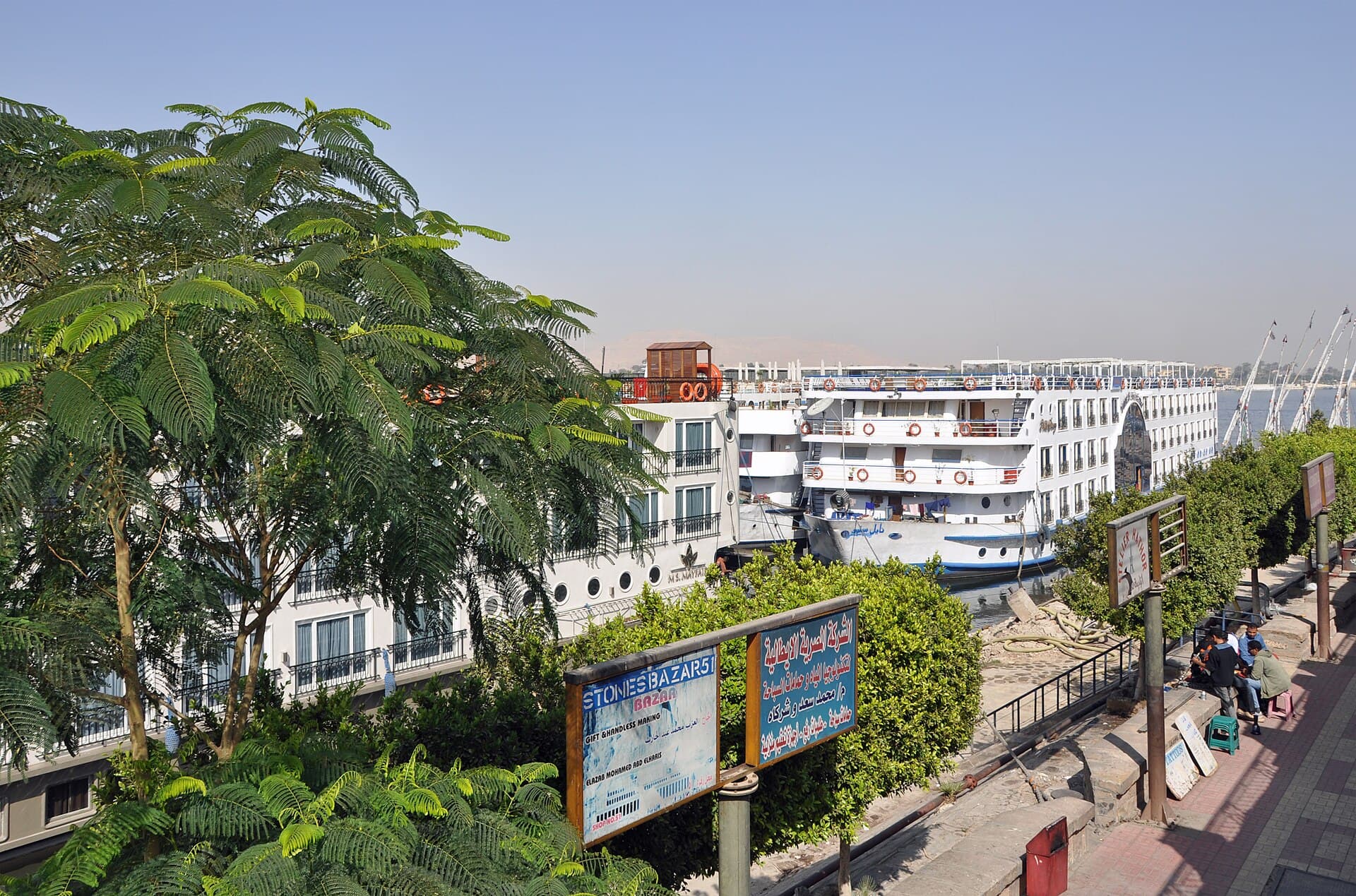
Most people arriving in Aswan, though, come by boat on purpose, because the three or four nights between Luxor and Aswan are the reason Nile cruises exist. Which direction you sail depends on your onward travel and the stops are the same either way, though sailing downstream from Aswan to Luxor is usually the shorter itinerary.
Within the city you need less than you think. The public ferry to Elephantine is the cheapest crossing in Egypt. A felucca or motorboat covers the islands. The Philae jetty, the quarry and the dam are a short drive apart and are normally packaged as one half-day, which is the one thing here genuinely easier to hand to a driver. Everything else is walkable from the corniche, and the hassle is low enough that walking it is pleasant, provided you agree a price before you get into anything that moves.
What our own trips actually give you in Aswan, and what they do not
Most of our sixteen itineraries pass through Aswan as part of a cruise rather than staying in it. The four-day Nile cruise from Aswan to Luxor starts here, meets you at the airport, puts you aboard and then does the unfinished obelisk and Philae that same afternoon; it runs from US$840 per person on the standard plan aboard the MS Radamis II, US$1,425 on the Movenpick Royal Lily and US$2,135 on the Sonesta St. George. Those are land-only prices per person, and domestic flights are excluded on that one. The five-day cruise in the other direction, Luxor to Aswan, is from US$1,095 and reaches the quarry and Philae on its last full day.
Longer trips do it better, because they put a night in an Aswan hotel rather than a few hours off a boat. The thirteen-day Cairo, cruise and Hurghada trip flies you south on day four and gives you the quarries and Philae with an overnight in the city before you board, from US$2,945. The sixteen-day Grand Tour does the same on the same day, from US$3,910. The fifteen-day itinerary goes further than any of them: it disembarks at Aswan with an unscheduled afternoon, then spends a morning at Kalabsha and takes a motorboat out to a Nubian village for lunch with a Nubian family, from US$3,985.
The thing to be straight about is Abu Simbel. It is not in the price on any of these. It appears on the cruise itineraries as an optional tour at your own cost, offered on the day the boat sits at Aswan, and it will add a long early morning to a day that already has a sailing in it. If Abu Simbel is a reason you are coming to Egypt, tell us at the enquiry stage so it is built in as its own day, rather than bought as an add-on the evening before.
Money, prices and agreeing a figure before you step aboard
We do not publish entry prices for the sites on this page. Ticket prices in Egypt are revised often and unevenly, and a figure that is six months stale is worse than no figure at all, because it turns up at a ticket window as an argument. The same goes for opening hours. Check both locally on the day, and treat anyone quoting you exact numbers online, ourselves included, as out of date by default.
What we can be specific about is the negotiation, because it is the same every time. Agree the price and the duration before you board a boat, take a taxi or accept any unrequested help, and be clear about what is included, particularly the botanical garden. Carry small notes. Aswan asks less of you than Luxor does, and the touts around the ferry landings and the corniche are still persistent when a cruise boat has just tied up. Step one street back from the water and it stops, which is a reprieve Luxor's east bank rarely gives you.
Common questions
What are the best things to do in Aswan?+
Philae Temple on its island, a felucca on the river in the late afternoon, and the unfinished obelisk in its granite quarry. After those three, Elephantine Island on foot and a Nubian village visit with a guide from the community. The High Dam is a fifteen-minute stop rather than a sight, and Abu Simbel, 280 kilometres south, is a full separate day.
How many days do you need in Aswan?+
Two nights is the sweet spot and covers everything here except Abu Simbel, with the middle of each day free for the heat. Three days lets you add Abu Simbel without rushing it, or Kalabsha and a Nubian village. One day gets you Philae and an airport transfer, which is what most cruise passengers end up with and is not what the city is for.
Is the Abu Simbel day trip from Aswan worth it?+
For most people, yes, but understand the cost. It is roughly three to three and a half hours by road each way, leaving very early, for an hour or two at the temples in the middle of the morning. Flying takes under an hour and buys back most of the day at a considerably higher price. Skip it if you have only three days in Egypt, small children, or an overnight train behind you.
How much does a felucca cost in Aswan?+
We do not print a figure, because rates vary by boat, season and how the conversation goes, and a stale number would only make your negotiation harder. What matters is the method: agree the price and the duration before you step aboard, confirm it is a sailing boat rather than a motorboat, and ask whether entry to the botanical garden on Kitchener's Island is included, because it usually is not.
Is Philae worth it if I have already seen Karnak and Luxor Temple?+
Yes, and for a reason that has little to do with scale. Karnak dwarfs it. Philae is legible in a way the big Luxor sites are not, running in one direction from the landing to the sanctuary, and the approach across open water is unlike anything else in Egypt. It is also a rescue story as much as a temple, having been cut into numbered blocks and rebuilt on a neighbouring island in the 1970s.
Can you do Aswan independently, without a guide?+
More easily than anywhere else on the Nile. The public ferry to Elephantine, a walk through Koti and Siou, and a felucca afternoon need nobody. A guide earns their fee at Philae, where the reliefs are close to meaningless without someone to read them, and at the High Dam, which is a windy car park without an explanation. A Nubian guide from the community changes a village visit completely.
When is the best time to visit Aswan?+
November to February, which is also the busiest and dearest stretch. Aswan is the hottest of the Nile cities and summer afternoons run well past 40C with very little shade at any of the sites. March, April and October work with early starts and a long midday break. June to August is severe, and the cheap prices in those months reflect that rather than a bargain.
Is the Nubian village visit worth doing, or is it staged?+
It can be either, and who takes you decides it. The standard version is a motorboat across, painted lanes, tea in a house, a crocodile in a tank and a shop, and plenty of people find that faintly demeaning. Going with a Nubian guide from the community, late in the afternoon, changes it into a conversation. If it is only going to be half an hour of photographs, take the public ferry to Elephantine and walk the lanes yourself instead.
Official sources
Entry rules, opening hours, security advice and exchange rates all move. Check them at the source, not here.
Written and checked by the Nile Trip Guide editorial team · Last reviewed . Entry rules, prices and opening hours change — check anything critical against the official sources linked on this page.
Plan this trip
Tell us your dates and we will price it
A real itinerary with real prices, usually within 24 hours. Nothing is booked and nothing is charged until you say yes.
The route most people take first, at the length it was built for: Giza and the Grand Egyptian Museum, then a flight to Luxor and four nights sailing down to Aswan.
No boat on this one. Giza and the Grand Egyptian Museum, a night in Luxor for both banks, two nights on the Red Sea, then back to Cairo for the Citadel, Coptic Cairo and the Royal Mummies.
Five nights in Cairo either side of a four-night sail from Luxor to Aswan. The Cairo days are private, just your party and a guide; the sightseeing off the boat is shared with a small group.