Egypt and Israel Tours: Combining Both in One Trip
Egypt and Israel tours are a sensible pairing on paper. The two countries share a land border, the flight between Cairo and Tel Aviv is short, and the historical thread running through both is genuinely continuous. In practice the trip needs more planning than most people expect, and the border situation has to be checked against current government travel advice before anything is booked. This page also covers Egypt tours from Israel, for travellers adding a few days in Egypt to an Israel trip.
How far is Egypt from Israel?
Very close. The two countries share a land border, and at Taba it runs right beside Eilat. Measured in a straight line between city centres, Cairo is about 425 km from Jerusalem and about 407 km from Tel Aviv. Cairo to Taba is about 359 km, and Taba to Eilat about 9 km.
Those are map distances, and the roads are longer. Sinai is large, its roads are slow, and checkpoints add time nobody can predict.
By air: fly between Cairo and Tel Aviv when flights are running. Schedules change, so check live availability for your dates.
On foot: cross at Taba, next to Eilat. You walk through with your luggage and change drivers on each side.
How do the two countries actually connect?
There are two practical routes. The Taba crossing sits on the east coast of Sinai at the northern end of the Gulf of Aqaba, directly next to Eilat. You cross on foot with your luggage, clear Egyptian exit formalities, walk a short stretch of no-man's-land, then clear Israeli entry. Tourist vehicles do not usually cross with you, so you change drivers on either side. The whole process can take under an hour or several hours, depending on queues and how thoroughly you are questioned.
The other option is flying between Cairo and Tel Aviv. It avoids the long overland drive through Sinai, which is both the part of the journey most travellers find tedious and the part your government's travel advice is likely to comment on specifically. Flights are not frequent and schedules change, so we do not quote timings here. The operator checks live availability against your dates. Rafah, sometimes mentioned in this context, is a crossing between Egypt and Gaza rather than into Israel, and has no place in a tourist itinerary.
It is worth being clear about what the overland route involves before you choose it on principle. Taba is at the far eastern corner of Sinai, and Sinai is large with slow roads. From Cairo that is a full day of driving through empty country. From the Red Sea resorts it is shorter but still a serious run up the coast. Checkpoints on Sinai roads are routine, they add time nobody can predict, and they are the reason a plan that ends with a flight needs slack built into it rather than optimism.
The two routes are not interchangeable, and the choice tends to be made for you by where the rest of your itinerary sits. If your Egyptian half is Cairo and the Nile, flying is the only sensible connection, because Sinai is a separate leg of a trip rather than a detour within one. If you are already on the Sinai coast, at Taba or Dahab, the land crossing stops being a diversion and becomes the obvious way north.
What does the crossing day actually cost you?
A day, effectively, and you should plan it as one rather than hope for better. The mechanics are simple and the timing is not. Your Egyptian driver takes you to the terminal and stops there. You carry your own luggage through Egyptian exit control, walk the gap, and present yourself to Israeli entry on the other side, where a different driver is waiting with your name on a piece of paper. Nothing about this is difficult. It is simply slow in a way you cannot schedule around.
Questioning at the Israeli side is normal and is not a sign that anything is wrong. Expect to be asked where you have been, who arranged the trip, where you are staying and why you came by land rather than by air. Answer plainly, have your onward hotel details and your operator's contact to hand, and do not be surprised if one person in a group is taken aside while the others wait. Building the crossing into a morning, with the first Israeli stop in the afternoon, is the difference between a day that works and one that unravels.
Carry your passport somewhere you can reach it without opening a case, and keep cash in a currency likely to be accepted for any fees charged on either side. Card terminals exist at borders and they fail often enough that arriving with nothing else is a genuine risk. Keep printed copies of your booking and your insurance: they settle questions at checkpoints and at the counter far faster than a phone that has gone flat.
The other cost is the guide. Egyptian guides do not cross with you, so the person who has explained Giza and Karnak for a week hands you over at a terminal and you start again with someone new. Good operators brief the receiving guide properly. It is still a break in the trip, and it is one more argument for taking the flight if your itinerary allows it.
Is the land border open, and how do I check?
Border status and regional conditions change. We are not going to tell you what the situation will be on your travel dates, because nobody can. What we can tell you is where to look: your own foreign ministry or state department publishes current travel advice for both Egypt and Israel, including the Sinai Peninsula and the border crossings specifically. Read it yourself before you commit money, and read it again closer to departure.
This matters practically as well as for safety. Travel insurance often follows government advice, so a policy can be void for a region your ministry advises against. If advice changes after booking, a good operator will rework the route or move you to the flight option. Ask how that is handled before you pay a deposit, not after.
Read the advice carefully rather than skimming the headline colour on the map. Government guidance on Egypt is written region by region, and it treats North Sinai very differently from the South Sinai coast and the road to St Catherine. A page that advises against travel to one part of the peninsula is not necessarily saying anything about the crossing at Taba. Equally, wording can be revised without fanfare, so the version you read six months ago is not evidence of anything today.
How long do you need for both countries?
Twelve to sixteen days is the honest range. Under twelve and you are spending a disproportionate share of the trip in transit and at borders, seeing the headline sites and little else. Sixteen gives room for a Nile cruise between Luxor and Aswan alongside Jerusalem, the Dead Sea and Galilee without daily early starts.
A common shape is roughly a week in Egypt covering Cairo, Giza, Luxor and Aswan, then the crossing or the flight, then five to eight days in Israel. If you only have ten days, pick one country. Splitting it thinner does neither justice, and the cost per day rises because you pay twice for arrival and departure logistics.
The reason Egypt takes the larger share is distance. Cairo to Luxor is roughly 650 kilometres, and Luxor to Aswan about 220 more, so the Egyptian half involves an internal flight of about an hour or an overnight train before you have seen anything. Israel is small by comparison and its road distances are short, which is why five or six days there buys more than the same number in Egypt does.
What does a fourteen-day route look like?
The shape almost every workable version of this trip settles into is three parts: Cairo, the Nile, then Israel. Three nights in Cairo covers Giza and Saqqara on one day, the Grand Egyptian Museum on another and Islamic Cairo on foot on a third. Then the internal flight south to Luxor, both banks there, and the boat down to Aswan over three or four nights. That is the Egyptian half, and it has very little slack in it.
From Aswan you come back north. Whether that means flying Aswan to Cairo and on to Tel Aviv, or flying to Cairo and driving out to Sinai for the Taba crossing, depends on which connection you have chosen and what is actually flying on your dates. Either way, treat the transition as a whole day rather than a morning. It is the single most common place these itineraries fall apart.
The Israeli half then runs on shorter hops. Jerusalem takes three nights at a minimum if the Old City is to be walked rather than driven past, with the Dead Sea and Masada reachable in the same direction from there. Galilee is a separate northern leg and a genuine addition rather than an afternoon. Tel Aviv usually does the work of the last night, because it is where the flight home leaves from.
That comes to fourteen days without anything being rushed and without a single free morning. If you want a day doing nothing, or a second day at Karnak, or a proper stop on the Red Sea, the trip is sixteen days rather than fourteen. Cutting it to twelve means dropping either the Nile cruise or Galilee. It does not mean doing everything faster.
The Egyptian half: what actually fills the days
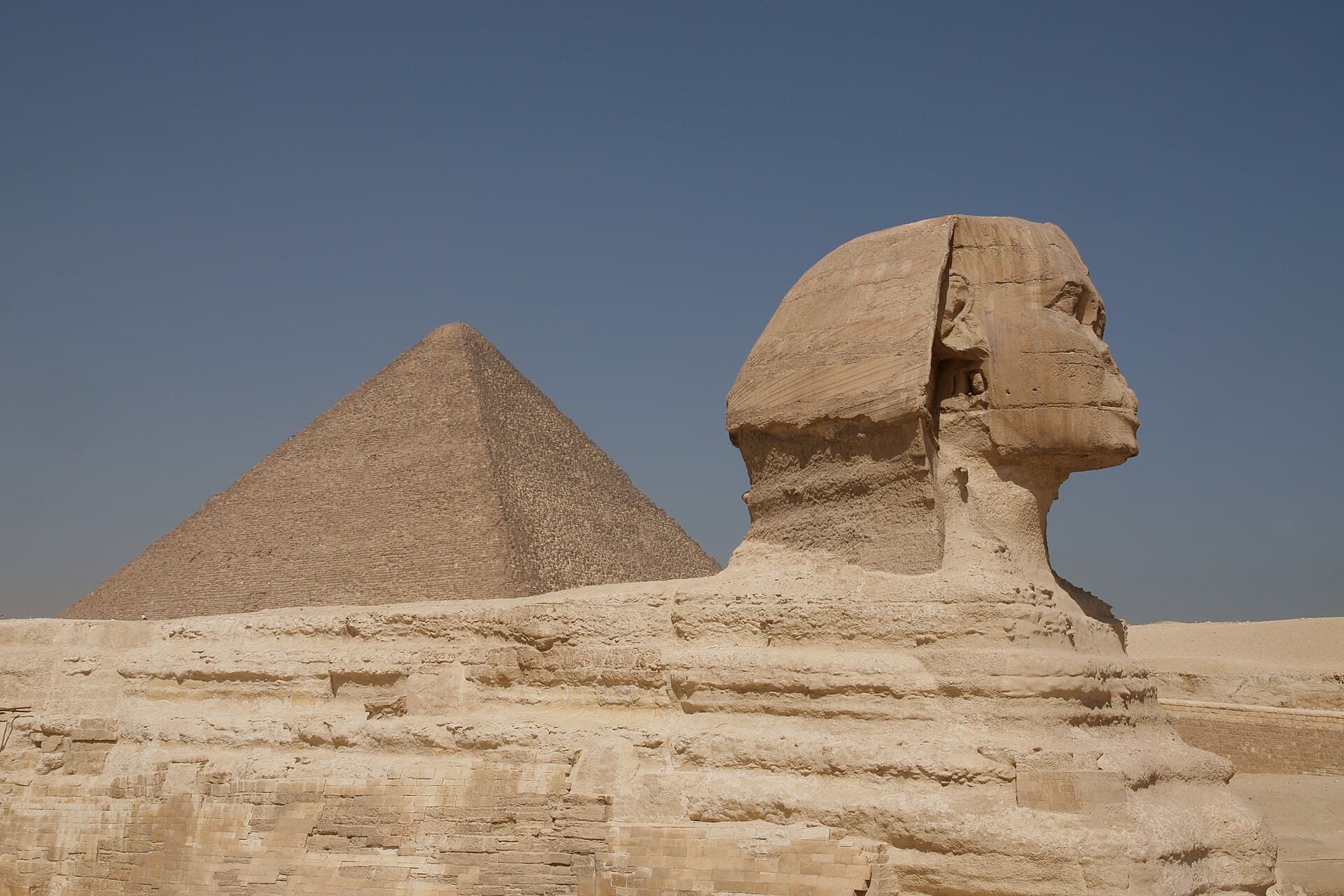
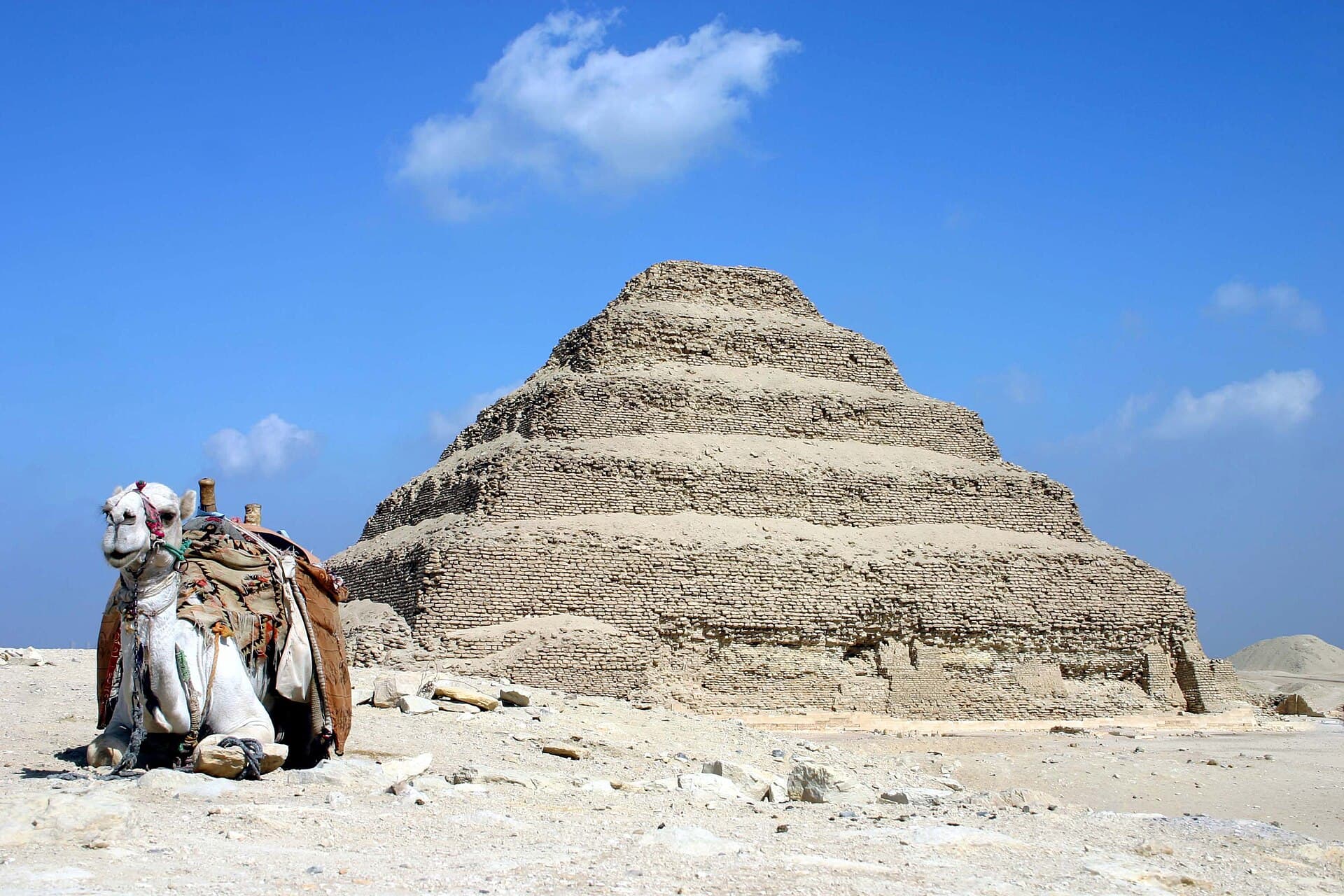
Giza is a half-day done properly, and it should be at opening. The plateau gets hot, the coach groups arrive mid-morning, and the touts are relentless whatever time you turn up. Saqqara, about forty minutes south, is the better part of most pyramid days: the Step Pyramid of Djoser is the oldest large stone building anywhere, and the nobles' mastabas around it carry painted reliefs of hunting, farming and boat-building in far better condition than anything on the Giza plateau.
The Grand Egyptian Museum needs three hours as a floor and a full day if you read the labels, which is why pairing it with Giza in the same afternoon is a mistake people make once. The Tutankhamun galleries hold the whole burial together. The older museum on Tahrir Square is still open, still cramped and still worth two hours if you have them, though on a two-country trip you probably do not.
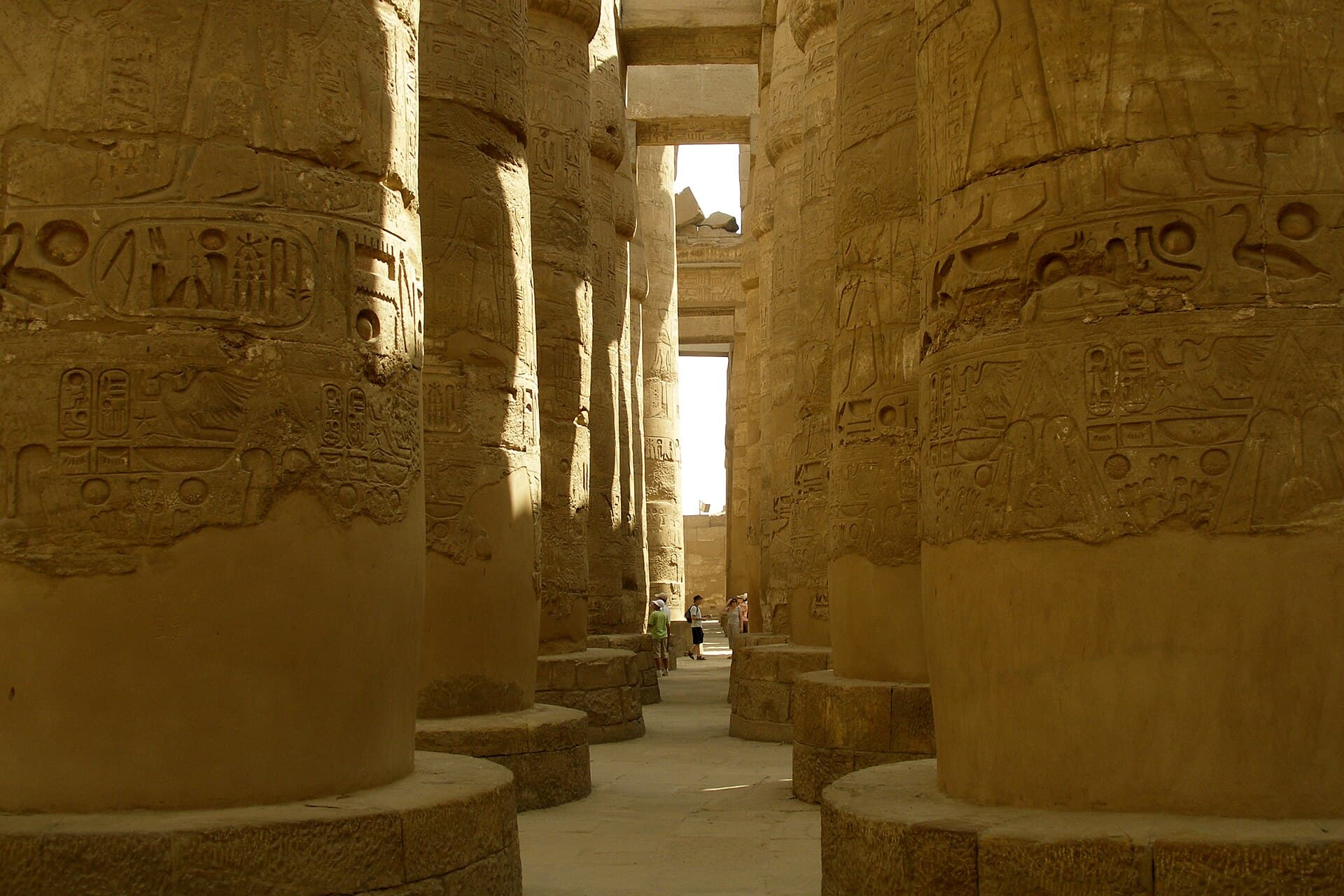
In Luxor the order of your days decides how much you enjoy them. Do the west bank first and start before it is light, because the tombs are cut into rock with no airflow and by mid-morning they hold the heat of every group that has already walked through. Karnak and Luxor Temple are open to the sky and take low afternoon light far better than noon. Karnak needs two hours as a realistic minimum and three is better; cruise timetables tend to allow about ninety minutes, which covers the central axis and almost nothing either side of it.
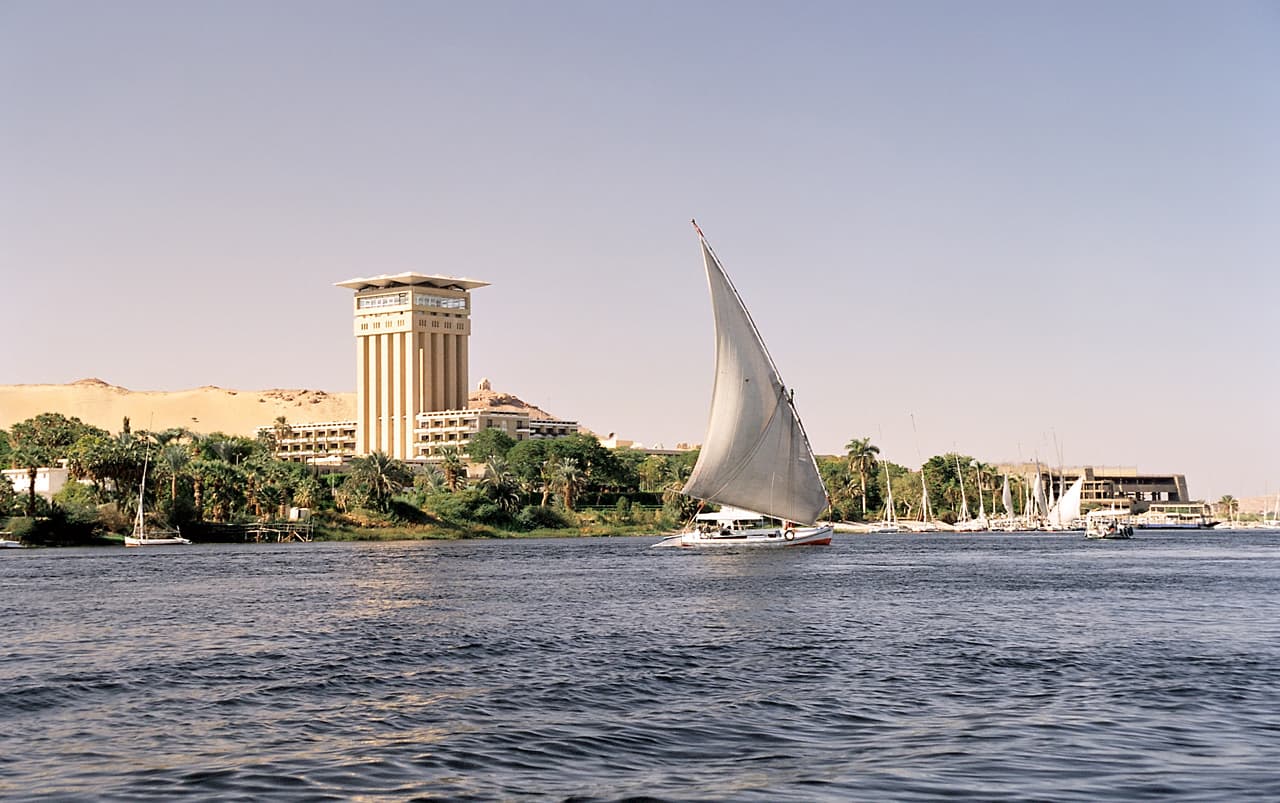
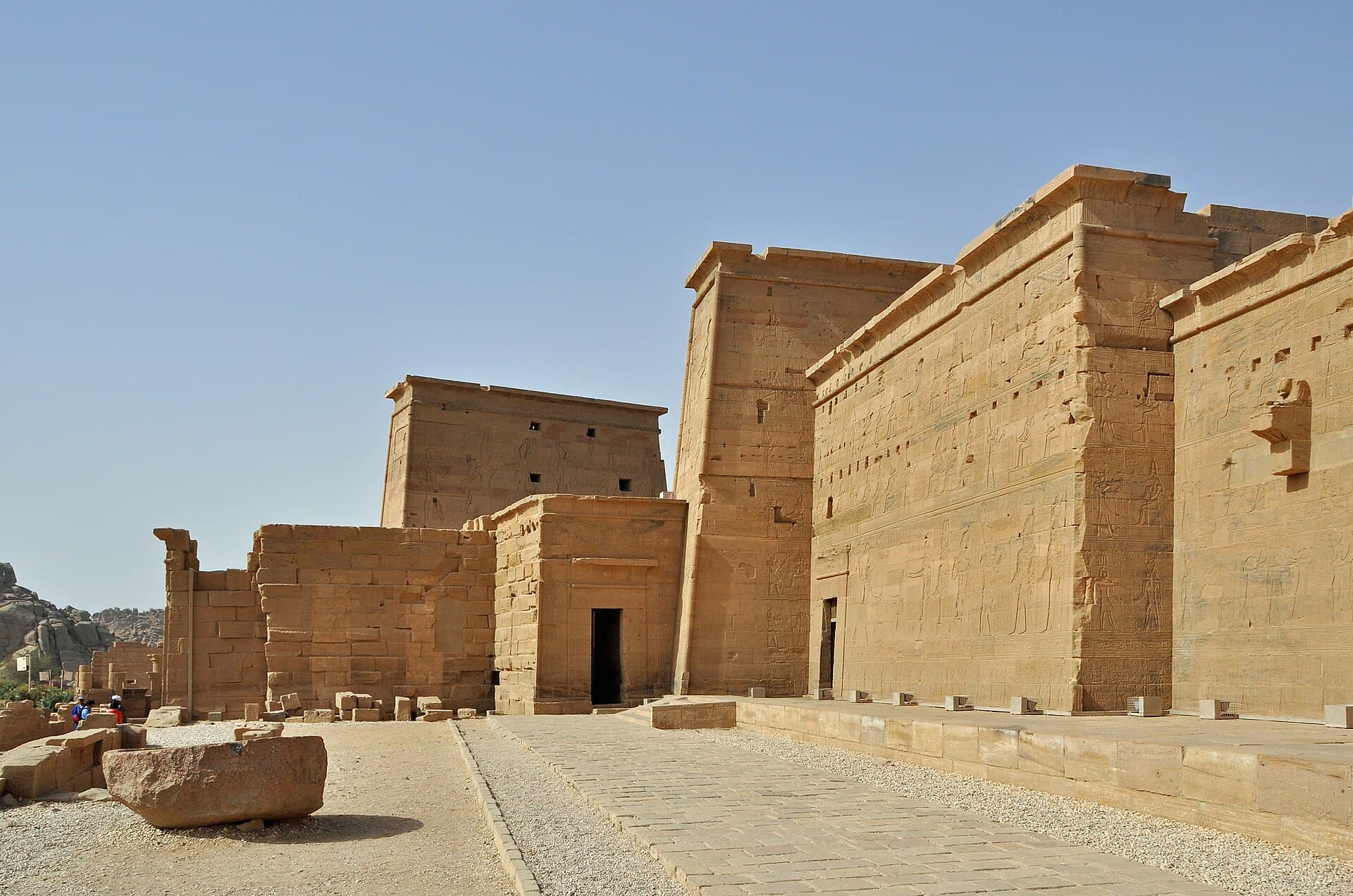
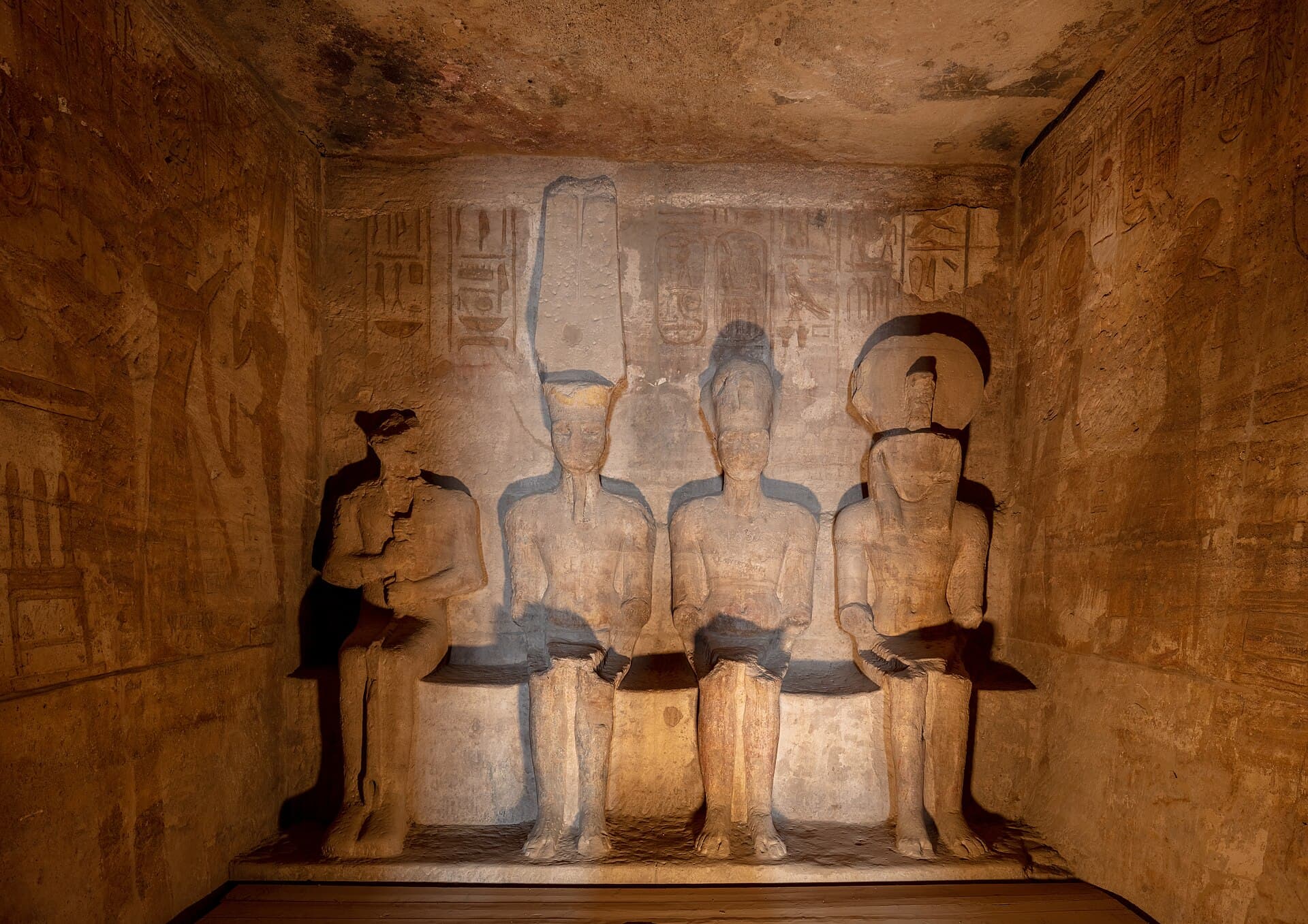
The standard Valley of the Kings ticket admits you to three tombs from the set open that day, and three is enough: by the fourth you are looking at the same iconography under a different name. Seti I, Tutankhamun and Ramesses VI are sold separately. Further south, Philae outside Aswan is the temple most people come for and earns it, and a late-afternoon felucca on the Nile is the one slow thing in an otherwise busy week. Abu Simbel is a further three hours south of Aswan by road, or a short flight, and it is a full day whichever way you do it.
The Israeli half, and the pace it sets
The change of tempo is sharper than people expect. Egypt is long drives, early starts and monumental sites spread across hundreds of kilometres. Israel is short transfers, dense layers of history in small areas, and far more walking in a single day than the Egyptian half demands. Neither is harder than the other. They are simply different, and the second half of the trip is not the rest you might have imagined when you booked it.
Jerusalem is where most of your days go, and the Old City is walked rather than toured from a vehicle. It rewards more than one visit at different hours, which is the argument for three nights rather than two. Masada and the Dead Sea sit in the same direction and are commonly done together, which is sensible: the float is a twenty-minute novelty and does not justify a day of its own. Galilee is genuinely a separate leg to the north.
One practical note that catches people out. Much of the country slows down or stops from Friday afternoon to Saturday evening, and that affects transport, opening hours and where you can eat. It is not an obstacle if you know about it when the itinerary is drafted. It is a wasted day if you find out on the morning it happens, so raise it early with whoever is building the route.
What is worth doing, and what is not?
Worth it: the Giza plateau early in the morning, the Grand Egyptian Museum, Karnak, a Nile cruise if you have three or four days for it, the Old City of Jerusalem on foot, and Masada. These earn their place in the itinerary, and none of them needs to be rushed to fit the rest of the route around it.
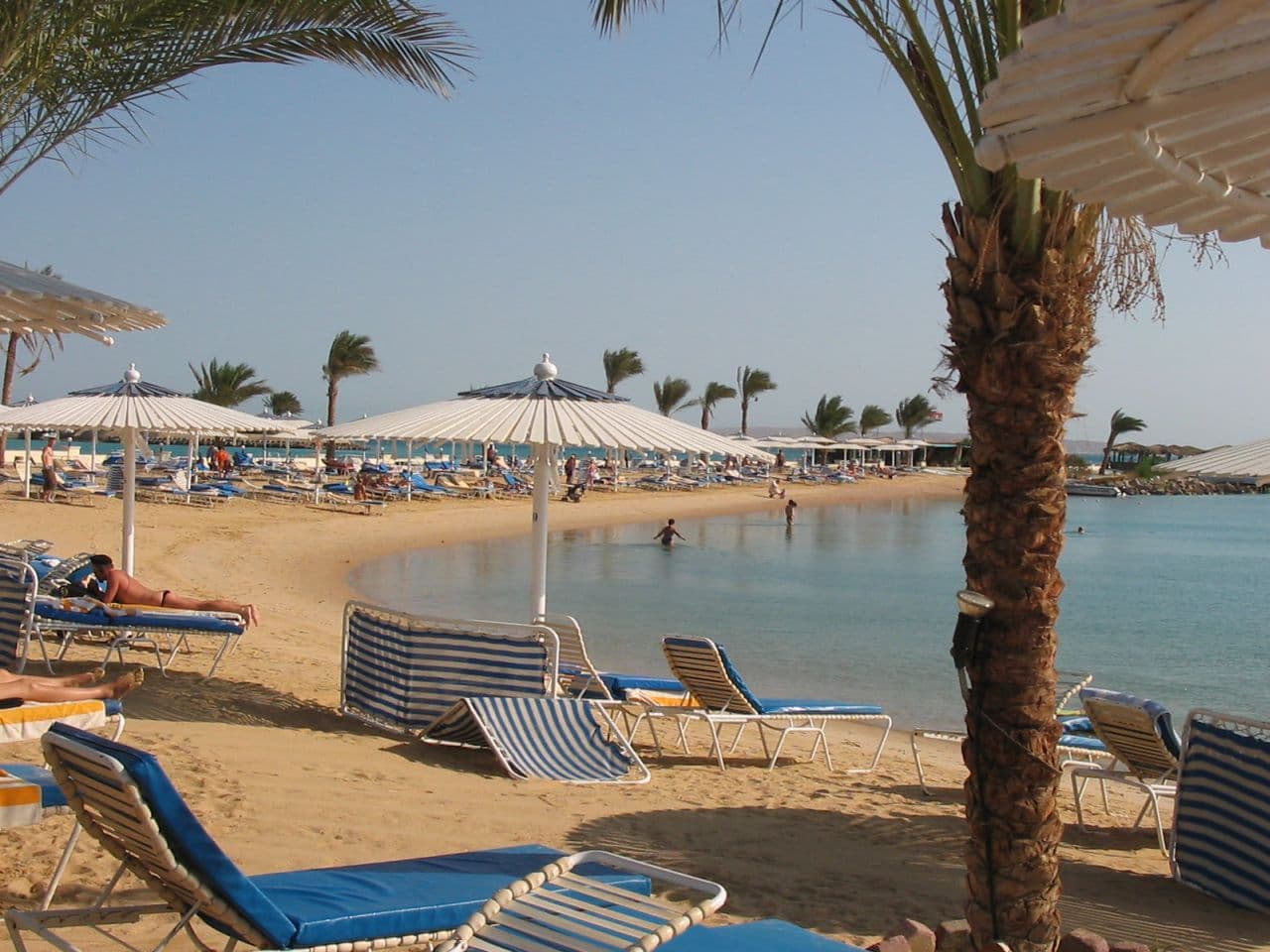
Less so: Sharm el-Sheikh as a stop before the crossing, since it sits well south of Taba and is a detour rather than a waypoint, unless you are diving and want several days there. Floating in the Dead Sea takes about twenty minutes and does not need an overnight. Day trips to Petra from Eilat are long and involve a second border. Go to Jordan properly or leave it out. A desert night near St Catherine's is good, but only if current advice for that part of Sinai supports it.
A few more that get sold and rarely repay the day. Sound and light shows at the Egyptian sites are dated and easy to drop. A Red Sea beach stop tacked onto the end of a two-country itinerary usually costs a travel day for very little unless you dive. Shopping stops on some Nile cruise programmes are sales pitches with a commission attached, and you are entitled to decline them. Ask for the itinerary in writing precisely so you can see what is filling the afternoons.
Mount Sinai deserves a paragraph of its own, because it is the thing people most often try to squeeze in on the way to the border. The standard excursion leaves the coast around midnight, walks two to three hours up the camel path and finishes on a long flight of rough stone steps, reaching the summit for sunrise. It costs you a night and most of the following day. On a trip that already has a border crossing in it, that is a heavy price, and the monastery below opens to visitors for only a few morning hours and is normally closed on Fridays and Sundays.
Which direction should you travel?
Start in Egypt and finish in Israel, unless your flights say otherwise. Nile cruise boats run on set Luxor-to-Aswan patterns with fixed departure days, so the Egyptian leg tends to fix the dates and everything else gets built around it. Putting the fixed part first is simply easier to schedule, and it means the border day or the connecting flight falls in the middle of the trip rather than at the start when you are still finding your feet.
There is a second argument for that order. The Egyptian half is the one with the early mornings, the heat and the long distances. Israel is the calmer, shorter-hop half, and it works better as the second week than as a warm-up. Doing it the other way round is perfectly possible, and if your international fares are materially cheaper into Tel Aviv, do it and do not worry about the itinerary.
Whichever way round, fly into one country and out of the other rather than returning to your arrival airport. An open-jaw booking is frequently no more expensive than a return and saves you a day of backtracking that buys nothing. Say this to whoever books your flights at the start, because it is awkward to retrofit once the ground arrangements are confirmed.
Adding Egypt to a trip you have already booked in Israel
Egypt tours from Israel work best as a short add-on of four or five days. There are two ways in. Fly from Tel Aviv to Cairo when flights are running, or cross on foot at Taba. Flights are not frequent and schedules change, so check live availability before you fix anything else.
Flying is the simpler choice for Cairo and the Nile. Taba is at the far eastern corner of Sinai, and the drive to Cairo takes a full day. If you do cross at Taba, ask for the full Egyptian tourist visa. The free Sinai-only stamp covers the east Sinai coast and St Catherine's. It does not cover Cairo, Luxor or Aswan.
Four of our short tours fit this kind of trip. Prices below are per person on the lowest plan. International flights are excluded on all four.
Cairo Short Break, 5 days, from US$935 per person. Four nights in one Cairo hotel, with Giza, the Grand Egyptian Museum, the Egyptian Museum, the Citadel, Coptic Cairo and Khan el-Khalili. Every sightseeing day is private.
Cairo and Luxor Short Break, 5 days, from US$1,480 per person. Three nights in Cairo and one in Luxor, covering both banks. The return flights between Cairo and Luxor are in the price.
Nile Cruise from Luxor to Aswan, 5 days, from US$1,095 per person. Four nights on board, full board. It starts at Luxor airport, and domestic flights are excluded.
Nile Cruise from Aswan to Luxor, 4 days, from US$840 per person. Three nights on board, full board. It starts at Aswan airport, and domestic flights are excluded.
Visas and entry: the part that strands people
Two countries means two sets of rules, and neither is our call to make for you. For Egypt, most Western nationalities use the e-visa applied for online in advance, or a visa on arrival where eligible, and the official portal is at visa2egypt.gov.eg. Search results put a ring of lookalike sites around it with official-looking seals and government-sounding names; they submit real applications, add a handling charge and keep a copy of your passport scan. If you did not reach the form from a government domain ending in .gov.eg, close the tab and start again.
The trap specific to this itinerary is the single-entry visa. If your route leaves Egypt and comes back, which it does if you cross to Israel and return for a flight home from Cairo, a single entry does not cover you. You need a multiple-entry visa or a second application, arranged before you fly rather than improvised at a border post. Settle this while you still have options, because it is the sort of thing that is discovered at the wrong counter.
The other Egyptian trap is the Sinai-only entry permission. Arriving at Sharm el-Sheikh or Taba, many nationalities can be given a free short-term stamp instead of a full visa. It covers the eastern Sinai coast from Taba down through Nuweiba and Dahab to Sharm, plus the road to St Catherine's Monastery. It does not cover Cairo, Luxor, Aswan, the Nile valley or the mainland Red Sea coast, and the limit is enforced at road checkpoints rather than at the airport, so the mistake surfaces halfway through a journey. If any part of your trip touches the mainland, take the full tourist visa and stop thinking about it.
On the Israeli side, many nationalities are admitted without a prior visa, though electronic pre-authorisation requirements have been introduced and continue to change. Check the current position for your specific passport on the official government pages rather than on a travel site, including this one. Note also that an e-visa is tied to the passport number it was issued against, so a passport renewed between applying and flying strands the approval. If a renewal is anywhere in the next few months, sequence it before the visa rather than after.
Finally, the passport itself. Airlines apply a validity rule at check-in, commonly six months beyond arrival, and they apply it from the date printed in the document rather than the one you half-remember. Blank pages matter more on a trip that crosses a land border than on a straightforward return flight, and a torn laminate or a water-damaged data page can be refused. None of that is rescued by having the right visa.
When should you go?
October to April suits both countries, and within that window the shoulder months are the best of it. Upper Egypt in summer regularly exceeds 40C, which makes the Luxor tombs and the walk round Karnak genuinely unpleasant rather than merely warm. Sinai in June to September is hard in a way beach brochures do not convey, and inland temperatures are worse than the coast.
December and January are comfortable for Egyptian sightseeing and busier at the major sites, with prices to match. They are also the wet months in Jerusalem, and evenings are cold enough to need a proper jacket rather than the layer you packed for the Nile. Nights in the desert drop close to freezing, and the summit of Mount Sinai is cold before dawn in every month of the year, including August.
March and November are the best compromise between weather and crowds on both halves of the trip. The one thing to check against your dates is the religious calendar: Easter and Christmas fill Jerusalem, and Ramadan changes opening hours and the rhythm of the day across Egypt. Neither is a reason to stay away. Both are a reason to know before the itinerary is drafted rather than after.
Who should not book this trip?
Anyone whose dates are immovable and whose tolerance for disruption is low. The whole premise depends on a connection between two countries that can be affected by things nobody on either side controls. If a change of route mid-trip would ruin the holiday for you rather than merely annoy you, one country done properly is the better purchase.
Anyone with limited mobility should think hard about the shape of the days. The Luxor west bank means uneven ground and steps cut into rock, the Old City of Jerusalem is walked on worn stone with stairs and slopes, and a land crossing means carrying your own luggage for a stretch with nowhere to sit. None of it is extreme. All of it accumulates over a fortnight.
Younger children often run out of patience in the second week, and border days are the worst of it: queues, questioning and nothing to look at. If the trip has to include children, the flight connection rather than the land crossing is worth the extra cost on its own. So is a slower itinerary with fewer sites and more afternoons that go nowhere.
What do Egypt and Israel tours cost?
Rates vary widely with season, hotel standard and group size, so any single figure would be misleading. Broadly, Israel runs considerably more expensive per day than Egypt for comparable accommodation and food, which pulls the average up on a combined trip. Egypt is priced in a way that makes a private guide and driver reasonable. In Israel the same arrangement costs noticeably more.
Trips here are arranged by enquiry rather than sold off the shelf, and the ground operator is based in Cairo. The Egyptian half is handled directly. The Israeli half runs through established partners on that side of the border. You get a written itinerary and a firm price for your dates before anything is committed.
Two structural costs are worth naming because they are easy to miss when comparing quotes. The first is the double arrival: you pay for airport transfers, briefings and the logistics of starting a trip twice, once in each country. The second is the internal Egyptian flight, which is a real line item and rises steeply in winter and close to departure, since domestic routes are thinly served and there is little competition to soften the fare.
What should you check before paying a deposit?
Ask who is on the ground in each country, and who you telephone at seven in the morning when something has gone wrong. On a two-country trip that answer tells you more about an operator than any itinerary page does. An operator who says a partner handles Israel is being straight with you; one who implies they run both halves themselves, when nobody does, is not.
Get the inclusions in writing, line by line. Which meals, which entry tickets, the internal flight, any border fees, visas, and tips. Tipping in Egypt is customary and constant, and a quote that excludes it is not wrong but is incomplete. On a trip with two sets of guides and drivers, these extras add up quietly and they are the usual reason a bill feels larger than the quote.
Ask specifically what happens if government travel advice changes after you book. The useful answer describes a mechanism: moving you from the land crossing to the flight, reworking the days within whichever country stays open, or shifting your dates. In practice a reroute is far more likely than a refund, which is why booking terms that allow a date change, and insurance that covers curtailment, matter more here than on a single-country holiday.
Confirm the fixed points early, because they are what constrain everything else. Nile cabins and sleeper berths go in blocks in high season, internal flights get expensive late, and the difference between a good Egyptologist and a poor one decides how much of each day you actually understand. Ask whether your guide is licensed and whether the same one stays with you through the Egyptian leg.
Common questions
Will an Israeli stamp cause problems entering Egypt, or elsewhere later?+
Egypt admits travellers who have been to Israel without difficulty. Israel commonly issues a separate entry slip rather than stamping passports, though Egyptian and Jordanian border stamps can still show the visit. Several countries in the region refuse entry to travellers with evidence of Israeli travel, so check their rules directly if your onward plans include them.
Do we need visas for both countries?+
Most Western nationalities need a visa or e-visa for Egypt, obtained in advance or on arrival depending on your passport. Israel admits many nationalities without a prior visa, though electronic pre-authorisation requirements have been introduced and continue to change. Check both governments' official pages for your specific passport, since requirements differ by nationality and by entry point.
Do we need a multiple-entry Egyptian visa?+
You do if the route leaves Egypt and comes back, which is the case whenever you cross to Israel and then fly home from Cairo. A single-entry visa covers one entry and no more. Arrange the multiple-entry version before you fly rather than trying to resolve it at a border, and confirm the current terms on the official Egyptian portal for your nationality.
What is the best time of year to go?+
October to April suits both countries. Upper Egypt in summer regularly exceeds 40C, which makes Luxor and Aswan genuinely unpleasant in the middle of the day. December and January are cooler and busier at the major sites. March and November are the best compromise between weather and crowds, though prices reflect that.
Is the land crossing cheaper than flying Cairo to Tel Aviv?+
Usually a little, and rarely by enough to justify it. The land route adds border fees, a long transfer day through Sinai and queues nobody can predict, and it requires two drivers because tourist vehicles do not normally cross with you. Cross at Taba if you want the Sinai coast anyway, not to save money on the connection.
Can we fit in Mount Sinai or St Catherine's Monastery on the way?+
Only if your itinerary already has a Sinai leg and you accept the cost. The standard climb leaves the coast around midnight and takes two to three hours up the camel path, finishing on rough stone steps, and it consumes the night and most of the next day. The monastery opens to visitors for a few morning hours and is normally closed on Fridays and Sundays. Both are reachable from Taba or Dahab, and neither is reachable from a Nile cruise.
What happens if the border closes after we have booked?+
A competent operator reroutes rather than cancels, most often by moving you onto the Cairo to Tel Aviv flight or by redistributing days within whichever country remains open. Ask how that is handled before you pay, and check that your insurance covers curtailment and that your booking terms allow a date change. Insurance frequently follows your own government's travel advice, so a policy can be void for a region your ministry advises against.
Can we travel between the two independently instead?+
Yes, and plenty of people do. The advantage of an arranged trip is that the border transfer, the guide handover and any change in border status become somebody else's problem rather than yours. If you are comfortable managing that and your dates are flexible, independent travel works and costs less. If your dates are fixed, the arranged version removes the risk.
Is ten days really not enough for both?+
Not if you want to see either country properly. Ten days leaves roughly four working days per country once arrivals, departures and the connection are taken out, which is not enough for Cairo and the Nile, let alone Jerusalem as well. Spend ten days on Egypt alone, or on Israel alone, and keep the other for another trip. The combination starts to make sense at twelve days and works comfortably at sixteen.
How close is Egypt to Israel?+
They share a land border. At Taba, on the Gulf of Aqaba, the crossing sits beside the Israeli town of Eilat. Measured in a straight line between city centres, Cairo is about 425 km from Jerusalem and about 407 km from Tel Aviv.
Can you drive from Israel to Egypt?+
You cross on foot and change vehicles at the border. The usual crossing for travellers is Taba, beside Eilat. Tourist vehicles do not usually cross, so one driver drops you on the Israeli side and another meets you in Egypt. From Taba to Cairo is a full day's drive through Sinai. Before planning the road route, read the current Egypt advice from the US State Department and the UK FCDO.
Can I take an Egypt tour from Israel?+
Yes. Fly from Tel Aviv to Cairo when flights are running, or cross at Taba, then join a short tour. Our 5-day Cairo Short Break starts from US$935 per person. The 5-day Cairo and Luxor Short Break starts from US$1,480 per person, with both domestic flights included. If you cross at Taba, get the full tourist visa, because the free Sinai-only stamp does not cover Cairo or the Nile valley.
Official sources
Entry rules, opening hours, security advice and exchange rates all move. Check them at the source, not here.
Written and checked by the Nile Trip Guide editorial team · Last reviewed . Entry rules, prices and opening hours change — check anything critical against the official sources linked on this page.
Plan this trip
Tell us your dates and we will price it
A real itinerary with real prices, usually within 24 hours. Nothing is booked and nothing is charged until you say yes.
The route most people take first, at the length it was built for: Giza and the Grand Egyptian Museum, then a flight to Luxor and four nights sailing down to Aswan.
No boat on this one. Giza and the Grand Egyptian Museum, a night in Luxor for both banks, two nights on the Red Sea, then back to Cairo for the Citadel, Coptic Cairo and the Royal Mummies.
Five nights in Cairo either side of a four-night sail from Luxor to Aswan. The Cairo days are private, just your party and a guide; the sightseeing off the boat is shared with a small group.