Most Egypt diving happens on the Red Sea coast, and the appeal is practical rather than exotic. The water stays warm all year. Visibility is usually very good, often better than divers get at home. Reefs frequently begin a short swim from the beach, so you are not committed to a long boat ride. Fish life is dense, even in the shallows.
What makes Egypt diving different from other warm-water destinations?
Most Egypt diving happens on the Red Sea coast, and the appeal is practical rather than exotic. The water stays warm all year. Visibility is usually very good, often better than divers get at home. Reefs frequently begin a short swim from the beach, so you are not committed to a long boat ride. Fish life is dense, even in the shallows.
Coral close to the big resorts has taken a beating in places. House reefs used by hundreds of people a day show it, with broken heads and worn patches. Go further out, or further south, and the picture improves quickly. Reefs along the remoter coast remain in good condition, which is why divers keep coming back.
Two things make the region unusually easy for beginners. Currents are mild at many sheltered sites, and the reef structure is steep, so shallow and deep diving sit close together. A nervous new diver and an experienced one can often use the same site. The step up to demanding offshore diving is then a real step, not a formality.
It is also, bluntly, cheap and convenient for European divers in a way that tropical alternatives are not. Flying times are short, charter routes are dense in winter, and the cost of a tank or a course here sits well below the Indian Ocean or the Caribbean. None of that improves the reef. It does mean you can dive for a week without the trip turning into an expedition, and that convenience is what fills the boats.
Where to base yourself on the Red Sea coast
Sharm el-Sheikh sits at the tip of Sinai, close to Ras Mohammed and the Straits of Tiran. It is known for walls, coral gardens and a decent chance of current. Day boats also run from here to the Thistlegorm, a Second World War cargo ship at Sha'ab Ali in the Strait of Gubal. One entry rule matters. Arrivals at Sharm can be given a free Sinai-only permit, which covers Sharm, Dahab, Nuweiba, Taba and St Catherine, but not Ras Mohammed, Cairo or Luxor. The park itself needs the full visa.
Hurghada is well served by charter flights and has a broad range of operators. It is busy, and the diving directly in front of town reflects that. Its strength is the offshore reefs and wrecks of the Strait of Gubal, reached on long day boats or on northern liveaboard routes. El Gouna, just north, is a calmer resort town with sheltered shallow water.
Be careful with El Gouna specifically, because it is often recommended to divers on the strength of the town rather than the water. Its lagoons are cut channels of seawater over sand and there is no house reef at all, so everything you dive or snorkel there arrives by boat. That is fine if you are diving daily with a centre at the marina and it is a poor bargain if you wanted to swim off the beach onto coral. The bays south of Hurghada differ again: Sahl Hasheesh and Makadi have house reefs, and Safaga, a working port about an hour south, has dependable wind and some of the best reefs on that stretch.
Marsa Alam lies several hours south and feels much quieter. Reefs there are in better shape, the bays hold seagrass, and turtles are common. Dugongs live in a few of those bays, though sightings are luck, not a scheduled attraction, and the scramble of boats when one appears is not pretty. Pick the south if reef quality matters more than nightlife.
The word Marsa Alam covers a town, an airport well north of it and a long stretch of coast either side, so two hotels described the same way can be hours apart. Port Ghalib, the marina development near the airport, is the one place on that coast with an evening to speak of and is a departure point for liveaboards. Keep going south past Wadi el Gemal towards Hamata and Wadi Lahami and the reefs get better and the transfers get longer. A two-hour drive after a late charter flight is a real cost, and people consistently underestimate it.
Dahab is different again: an informal traveller town on the Gulf of Aqaba, with cheap rooms and shore diving you can walk to. Most of it is straightforward. The Blue Hole is not. People have died there repeatedly, usually attempting the deep arch beyond their training or their gas. Memorial plaques line the cliff above. Dive the rim; leave the arch alone.
The sites divers actually name
In Sinai the headline is Ras Mohammed National Park, about 20 km south of Sharm, where the Gulf of Aqaba meets the Gulf of Suez. Shark and Yolanda Reef is the dive people come for: a wall dropping into open blue, with the scattered cargo of a wrecked freighter, bathroom fittings of all things, lying on the sand below. North-east of town, the Straits of Tiran hold four reefs in a channel with genuine current: Gordon, Thomas, Woodhouse and Jackson. The drifting there is very good and it is not where a fresh open water card should be spent.
Off Hurghada the named sites are pinnacles, walls and coral gardens an hour or two out from the marina: Umm Gamar, Careless Reef, Fanadir, Abu Ramada, Shaab El Erg. Visibility on this stretch is routinely twenty to thirty metres, the water is warm year-round and the conditions are forgiving, which is why so many people learn here. The trade-off is volume. The reef tops nearest town have carried day boats since the 1980s and look it, so ask an operator which sites it actually uses and how many divers go in at once.
In the south, Elphinstone is the name on every brochure: a long offshore reef out from the coast north of Marsa Alam town, steep walls down both sides and a plateau at either end, dived as a drift in current with open water below you. It is also the site people most often find themselves out of their depth on, in both senses, and among the first cancelled when the wind gets up. Further south, Fury Shoals is a scattered complex of shallow reefs, coral gardens and swim-throughs that suits ordinary recreational divers well, and Sataya at its southern end is a horseshoe reef where spinner dolphins rest.
Dahab's sites are the ones you reach by pickup truck rather than boat, which is the whole point of the place: the Canyon with its narrow rock fissure, the Islands with a coral maze, Eel Garden with its field of garden eels, and the Lighthouse in town where most training dives happen. The Blue Hole is a submarine sinkhole roughly 100 metres deep, separated from open sea by a shallow reef, and the recreational version of it is a tame dive. Most people enter at the Bells nearby, drop through a short chimney in the reef and swim the wall back into the hole at safe depth. The Arch, the tunnel at around 55 metres that made the site notorious, is a technical dive and not on the menu.
The wrecks, and why the northern coast exists for them
The Strait of Gubal is a narrow shipping approach to the Gulf of Suez with reefs in the wrong places, and it has been collecting ships for a very long time. That is the short explanation for why the northern Red Sea has a wreck reputation that the south does not. If you have come to Egypt for iron rather than coral, you want a base at the northern end of the coast or a liveaboard running that route, and no amount of reef quality further south will substitute.
The Thistlegorm, a Second World War cargo ship lying at Sha'ab Ali, is the one most divers have heard of. Day boats reach it from Sharm and from the Hurghada side, but it is a long crossing, an early start and a deeper dive than the reefs closer to town, with current over the wreck common. Reputable operators will ask what you have logged before they take you, and a centre that does not ask is telling you something about how it runs the rest of its diving.
Abu Nuhas is the other name worth knowing: a reef in the shipping approach that has been catching ships for more than 150 years, with four wrecks along its northern side, most within recreational depth at roughly five to thirty metres. The Giannis D, broken in three with its stern still readable, and the Carnatic, a P&O steamer lost in 1869, now grown over and open enough to swim through, are the two people remember. From Hurghada or El Gouna it is a full day, about two hours each way, and the first trip cancelled when the wind gets up.
Shore diving, day boats and liveaboards
Shore diving is the cheapest and most flexible option, and Dahab and parts of the southern coast do it well. You walk in, dive, walk out. Day boats are the standard everywhere else: two dives, lunch aboard, back by late afternoon. Both work well for a normal holiday, and most visitors never need anything more.
A liveaboard is a boat you sleep on for roughly a week, diving several times a day and moving between sites overnight. It reaches reefs no day boat can, and removes travel time. It also puts you in a small cabin, out of phone signal, with strangers, and nothing to do between dives but eat and sleep. If that sounds bad, it will be.
Routes split roughly north and south. Northern itineraries cover the wrecks around the Strait of Gubal and the Sinai reefs, and suit divers with moderate experience. Southern routes run to the offshore reefs, where currents are stronger, dives deeper and sharks the point. Operators usually set a minimum experience level, and a first liveaboard is no place to argue about it.
There is also a middle option that gets overlooked. A hotel with a proper house reef lets you dive without a boat at all, which is worth more than it sounds on a windy week, and it is the arrangement that works when one of you dives and the other does not: one takes the morning boat, the other swims off the beach, and you meet for lunch. If you are travelling with non-divers, a liveaboard is close to unworkable and a house reef is the obvious answer. Southern liveaboards leave from Port Ghalib and Hamata, which is a large part of why divers fly to Marsa Alam rather than Hurghada.
What a diving week costs, and what sits outside the price
We are not going to quote figures that will be wrong by the time you read them, and any page that does should be treated with suspicion. What is stable is the shape of the bill. Egypt is among the cheaper places in the world to dive and to learn, and the daily items, tanks, guiding and courses, are the part that makes it look cheap. The costs that catch people out are the ones attached to a vehicle, a boat or a border.
Ask what a quoted price actually includes before you compare two centres. Equipment rental is often separate from the dive itself, and full kit hire over a week adds up to real money if you have not brought your own. On shore-diving days in Dahab, ask who carries the tanks, whether the pickup ride to the site is inside the figure, and how many dives that number covers. On boat days, ask whether lunch, nitrox and the second or third dive are included or charged after the fact.
Then there are the fees collected on the day, in cash. Much of this coastline sits inside protected areas, and where a park fee applies it is normally taken on the boat rather than added to what you booked in advance; the Giftun islands off Hurghada work the same way. Carry small notes in Egyptian pounds for it, and hand it over without an argument, because that protection is the reason the better reefs still look the way they do. Tipping the boat crew is customary and real. Specific dive insurance is the last line item and the one people skip, which is a false economy dealt with below.
Turtles, dugongs and dolphins: what you can honestly expect
Several bays along the southern coast have seagrass beds in shallow, sheltered water, and Abu Dabbab and Marsa Mubarak are the two most people are taken to. Green turtles graze there and are seen most days, which is as close to a guarantee as wildlife gets. Dugongs are a different matter entirely. There are very few along the whole coast, they move, and any operator promising you one is selling something they cannot deliver.
Manage your expectations about the conditions as well. These bays are shallow and sandy, and the water in them is often cloudy, nothing like the clarity of the reef walls. Go early, before the hotel groups arrive. Keep your distance, and do not join a fins-first pursuit. Crowding these animals has been a genuine problem here, and a guide who lets you chase one is not a good guide. A dugong harried off its feeding ground simply leaves, which is how a bay stops being worth visiting at all.
Sha'ab Samadai, sold as Dolphin House, is a horseshoe reef where spinner dolphins rest during the day. The lagoon is zoned and you cannot enter the core area where they sleep, which is correct and should not be argued with. Some days you see them from the boundary and some days you do not. The reef itself is pleasant and busy. Sataya, further south, works on the same principle. Treat all of these as a reef dive with a possible bonus rather than a booked encounter, and you will not come home disappointed.
Sharks, and how worried you should be
There are sharks in the Red Sea, and for a good number of divers that is precisely why they came. Reef sharks are an ordinary sight on the southern reefs. Oceanic whitetips are more likely at the exposed offshore sites in autumn, Elphinstone above all, which is one of the reasons southern liveaboard routes exist and one of the reasons operators set minimum experience levels for them.
Incidents are rare, and the standard advice is dull and worth following anyway: never feed fish, stay with your group, and do what the briefing tells you. Most of the risk in Egyptian diving has nothing to do with animals. It sits in depth, current and gas planning, in divers stretching past their training on a site somebody talked up over dinner.
Which is the honest framing for the whole subject. If you want to see sharks, book the sites and the season where they are plausible and accept that you may not. If the idea alarms you, the sheltered bays and shallow coral gardens that make up the great majority of diving here will not put you near one, and nothing is lost.
Snorkelling if you do not dive
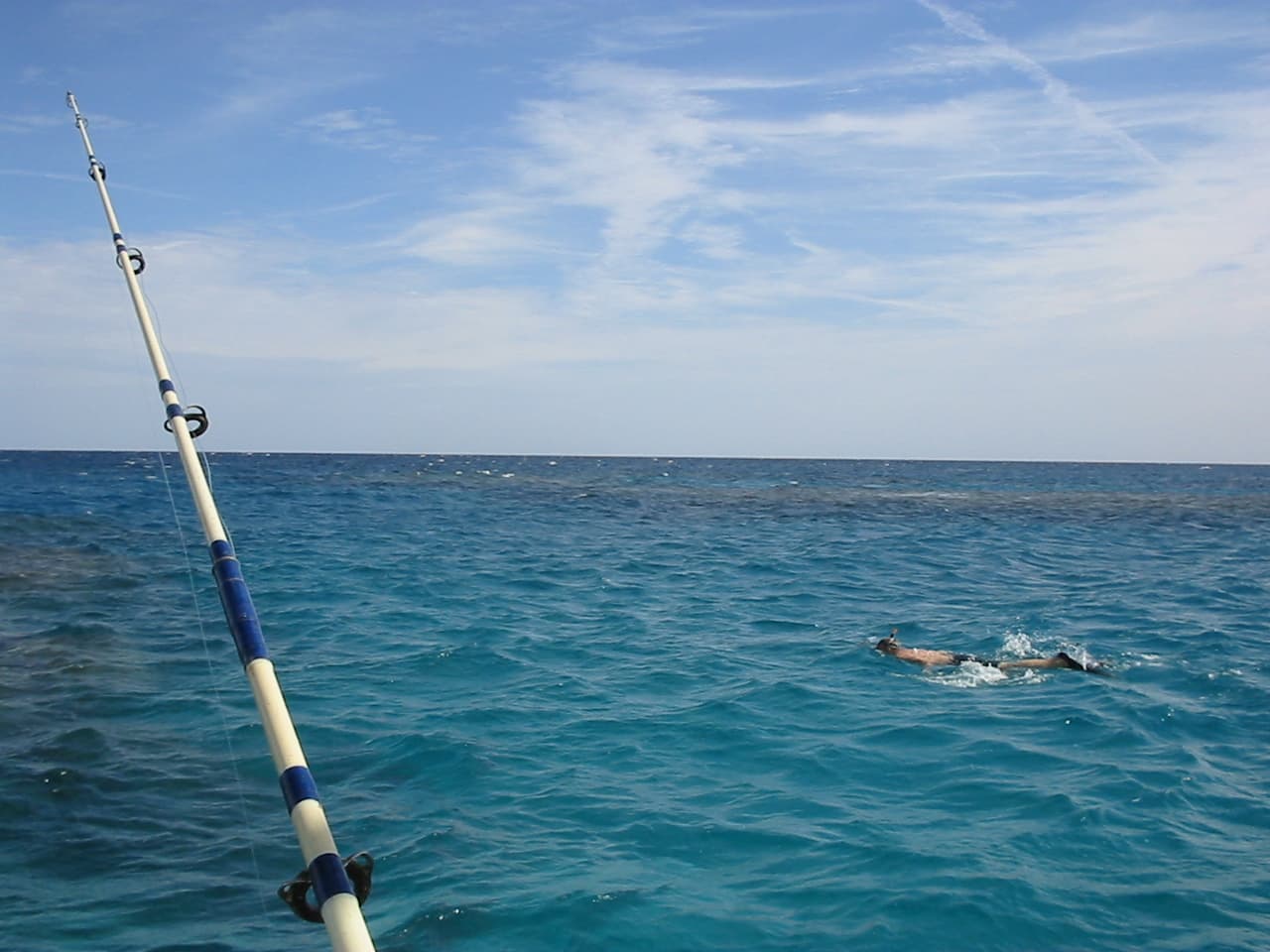
Much of the reef sits within a few metres of the surface, and along parts of this coast you can reach it from the beach. That is the distinctive part, not the depth. Snorkellers see a good share of what divers see at the shallow sites: coral, reef fish, turtles feeding over seagrass. Families with young children, and groups where one person dives and another does not, are well served.
For snorkelling, sheltered bays beat dramatic walls. The lagoons around El Gouna, the bays south of Marsa Alam and the calmer coves near Dahab all work. Ask whether a boat trip actually stops at shallow reef, because some are built around deep sites where a snorkeller floats above blue nothing. If warm water and fish are all you want, skip the course.
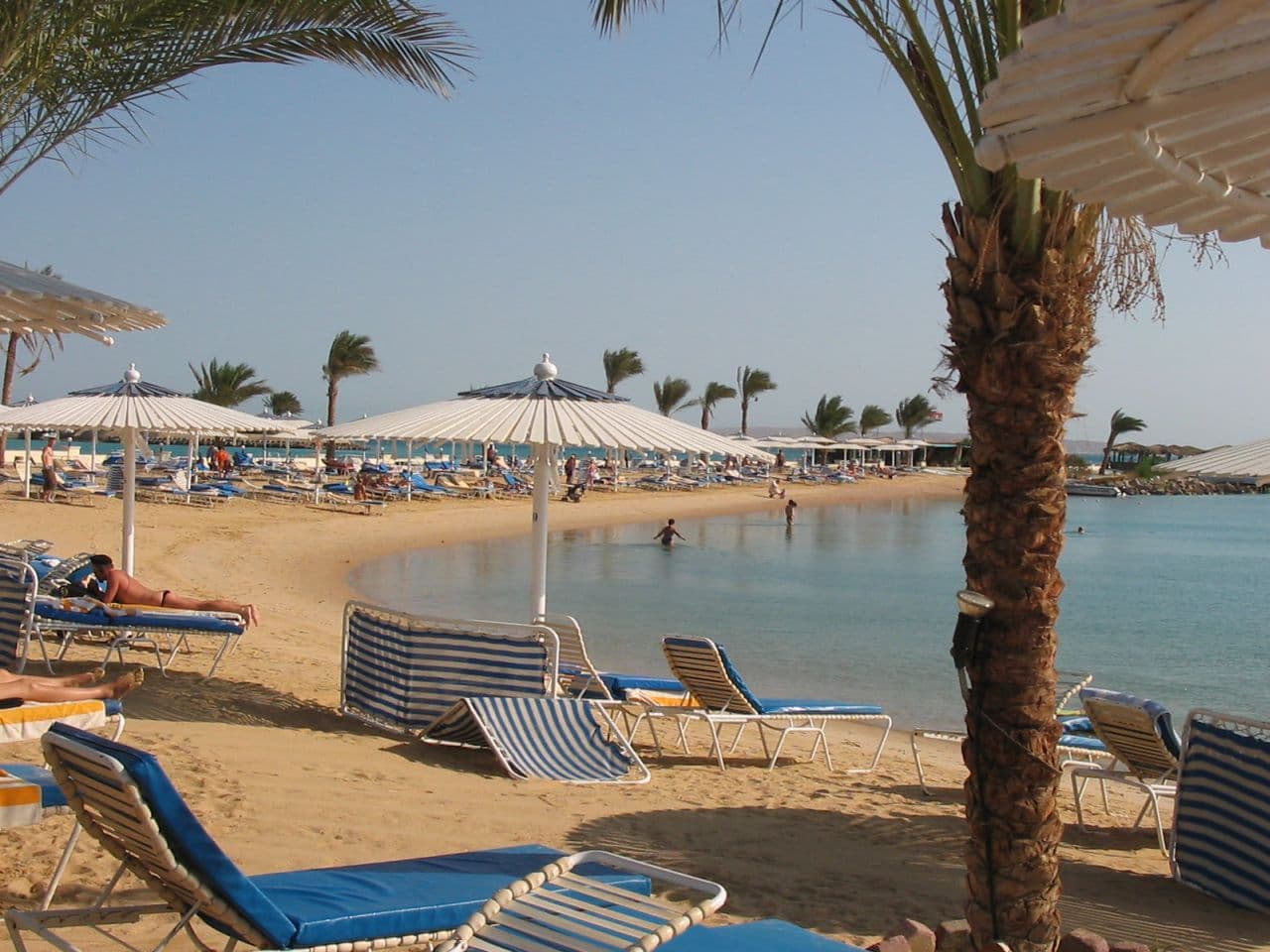
Check what is in front of your particular hotel before you book, because this varies enormously and the photography is no help. Some properties sit on a fringing reef you can swim off. Some have a jetty over the coral shelf so you can drop straight into deeper water, which is not laziness on the hotel's part: walking across the shelf damages the reef and cuts your feet. Some sit on a sandy bay with no coral at all. The dive centre on the property will usually answer that question straight if you email and ask, and one honest reply is worth more than a page of reviews.
When to go, and the trade-off nobody mentions
Water stays comfortable all year, but it does move. At its coldest, usually February and March, it drops to the low twenties Celsius in the north, and a thicker wetsuit with a hood stops being optional. By late summer it is in the high twenties and plenty of people dive in a shorty. The far south runs slightly warmer throughout.
Here is the trade-off. Summer gives the warmest water and the longest days, but inland Egypt in July and August is often above 40C, which makes temple days unpleasant and, for children and older travellers, sometimes unwise. Winter suits Luxor and Aswan, roughly October to April, which is precisely when you want the thicker wetsuit on the coast.
Spring and autumn are the sensible compromise. Wind is the variable people forget: windy spells happen year-round in the north and can cancel boat days at short notice, particularly around Sharm and Hurghada. Build a spare day into any trip where the diving is the point, instead of assuming every booked day runs.
Month by month the pattern is simple enough. December to February give mild days, cool evenings and the thickest wetsuit of the year, with water in the north bottoming out around 21C. March to May warm steadily and are the windiest stretch, when the prevailing northerly blows hardest. June to August are hot enough that anything inland is effectively out and the sea is the only comfortable place to be. September to November hold the warmest water, the calmest run of days and the best odds of the offshore sites running as planned. If you can choose your dates freely, choose autumn.
Currents, visibility and the days that get cancelled
Visibility on this coast is the first thing divers notice and routinely runs to twenty or thirty metres, which is better than most people get at home and better than the average tropical destination. It is not uniform. The seagrass bays are shallow, sandy and often cloudy, and a busy site late in the day is worse than the same site at eight in the morning. Early boats are not just about beating the crowd.
Current is site-specific rather than general. Many sheltered reefs and house reefs have none worth mentioning, which is why the region suits beginners. The channels and offshore pinnacles are a different proposition: the Tiran reefs and Elphinstone are drift dives with real water moving, and they reward experience rather than enthusiasm. The step between those two categories is the thing to understand before you book a week, because a centre that runs the easy sites well may not be the one you want on a drift.
What actually loses you a day is wind. A northerly blow is normal here, hardest in spring, and when it gets up the exposed offshore sites are cancelled, sometimes several days running, while boats stay inside the sheltered reefs or do not go at all. This is where a house reef stops being a luxury and becomes insurance: it turns a blown-out morning into a dive rather than a wait. Plan a week around four or five diving days rather than seven and the weather can take one without ruining the trip.
Learning to dive here, and how to judge a dive centre
This is a reasonable place to learn. An entry-level certification usually takes three to four days: theory, skills in shallow water, then a handful of open water dives. Warm, clear, calm conditions strip out most of what makes learning hard elsewhere. Refreshers for lapsed divers are short and worth doing after a year out of the water.
Judging the dive centre matters more than the agency logo on the door. Ask how many divers each guide takes underwater. Check whether they run a check dive before anything serious, and whether they ask to see your logbook, because the ones that never ask are the ones to avoid. Look at the rental kit and whether the boat carries oxygen.
Insurance is on you. Standard travel policies often exclude diving, or cover it only to a shallow depth limit, and treatment for a serious decompression injury is expensive. Buy specific dive cover. Ask too where the nearest recompression chamber is; in the far south the honest answer can be a long way off, which argues for diving conservatively rather than staying home.
Beyond the first card, Egypt is a sensible place to add training rather than a place to acquire it indiscriminately. A course that makes you better at the diving you already do, buoyancy, navigation, a nitrox qualification for repeated days, is worth the holiday time. A deep speciality bought in a week because a site was talked up over dinner is not. Dahab is also one of the main freediving centres anywhere, and the sheltered, current-free depth at the Blue Hole is close to ideal for it, which is its own reason to go there rather than a reason to push your scuba limits.
Visas, permits and the paperwork that catches divers out
For the mainland coast, Hurghada, El Gouna, Safaga, Marsa Alam and everything south, you need the full Egyptian tourist visa, and applying online before you fly is the simplest route for most nationalities. There is no shortcut and no regional permit, because the Red Sea coast south of Suez is mainland Egypt rather than Sinai. That is the easy half.
Sinai is where it gets fiddly. Arrivals at Sharm el-Sheikh airport can, depending on nationality, be given a free Sinai-only entry permit instead of a full visa. It runs for about two weeks and covers the eastern Sinai coast, Sharm, Dahab, Nuweiba and Taba, plus the road inland to St Catherine. It does not cover the rest of the country, so Cairo, Luxor and Aswan are out, and it is widely reported not to cover Ras Mohammed National Park or diving trips.
For a diver that last clause is the whole point. If Ras Mohammed is part of why you are going, or if you plan to fly on to Cairo, take the full tourist visa and stop worrying about it. The permit rules have been changed more than once over the years, so treat anything you read, this page included, as a starting point and confirm the current position with your airline or a consulate before you book a non-refundable flight. The same applies to your own government's travel advice on Sinai, which differs by country and can affect your insurance.
Diving with children, and with people who do not dive
The Red Sea handles mixed groups better than most diving destinations, which is the practical reason so many families end up here. Shallow, sheltered bays mean a snorkeller gets a genuine version of what the divers are seeing rather than a consolation prize. Turtles grazing over seagrass need a mask, not a tank, and they are the thing a six-year-old remembers for years. Training agencies run junior certifications and supervised first-time scuba sessions, so a child or a curious partner can try breathing underwater once without committing to a course.
The caveats are the shoreline and the heat. A fringing reef with a jetty over it is not a paddling beach, so small children need either a genuinely sandy bay or a protected lagoon, and you have to check which you are getting before booking rather than after. Midsummer air temperatures are hard on young children, and sun coming off water and pale sand burns faster than people expect. Cover up rather than rely on reapplying cream.
If your group splits between divers and non-divers, build the week around that split instead of fighting it. A hotel with a house reef and an on-site centre lets the divers do two tanks in the morning and everybody meet for lunch. A liveaboard does the opposite and traps the non-diver on a boat for a week. Marsa Alam and the Sinai bays suit the mixed group; El Gouna, with no house reef, is the one to think twice about if the snorkeller is not happy to be on a boat every day.
Looking after the reef, and what the rules ask of you
The reason the better parts of this coast still look the way they do is that large stretches of it are protected, boat numbers and entry points at some sites are controlled, and guides are expected to brief you before anyone gets in the water. Take the briefing seriously rather than treating it as a formality to be nodded through. The rules here have tightened over the years, which is a good thing rather than a nuisance.
The individual habits matter more than people assume, because a reef flat in half a metre of water is the easiest thing in the sea to damage, usually with a fin kick you never noticed. Do not stand on coral, do not touch anything, keep your gauges clipped rather than dragging, and go at your own pace instead of chasing a guide's fins. Reef shoes are for getting in and out over stone and coral, not for walking about on the reef itself.
One small swap makes a real difference: a rash vest or an old t-shirt instead of repeated sun cream on your back and shoulders. It is better for you over a week of full days in the sun and better for the water you are floating in. And when the park fee comes round on the boat, pay it. It is the mechanism that keeps the sites that justify the flight worth flying to.
What to take, and what to leave at home
Bring the things that fit badly when rented and are cheap to carry: a mask you know seals, and your own computer if you have one. Exposure protection is the decision that depends on dates. Late summer is shorty weather for most people; February and March in the north mean a 5 mm suit and, for anyone who feels the cold, a hood. Southern water runs a little warmer year-round, which shifts the answer by about one thickness. Ask your centre what its rental stock actually carries before assuming a hood will be available.
The rest of the list is short and unglamorous. Reef shoes, because much of this shoreline is coral and stone rather than sand. A rash vest. A warm layer for evenings, which surprise people on a coast they came to for the heat. Cash in small notes for park fees, tips and the smaller dive centres, since card acceptance thins out quickly away from hotel desks. Your certification card and a logbook you are willing to show, because the centres worth diving with will want to see both.
Fitting diving into a wider Egypt trip
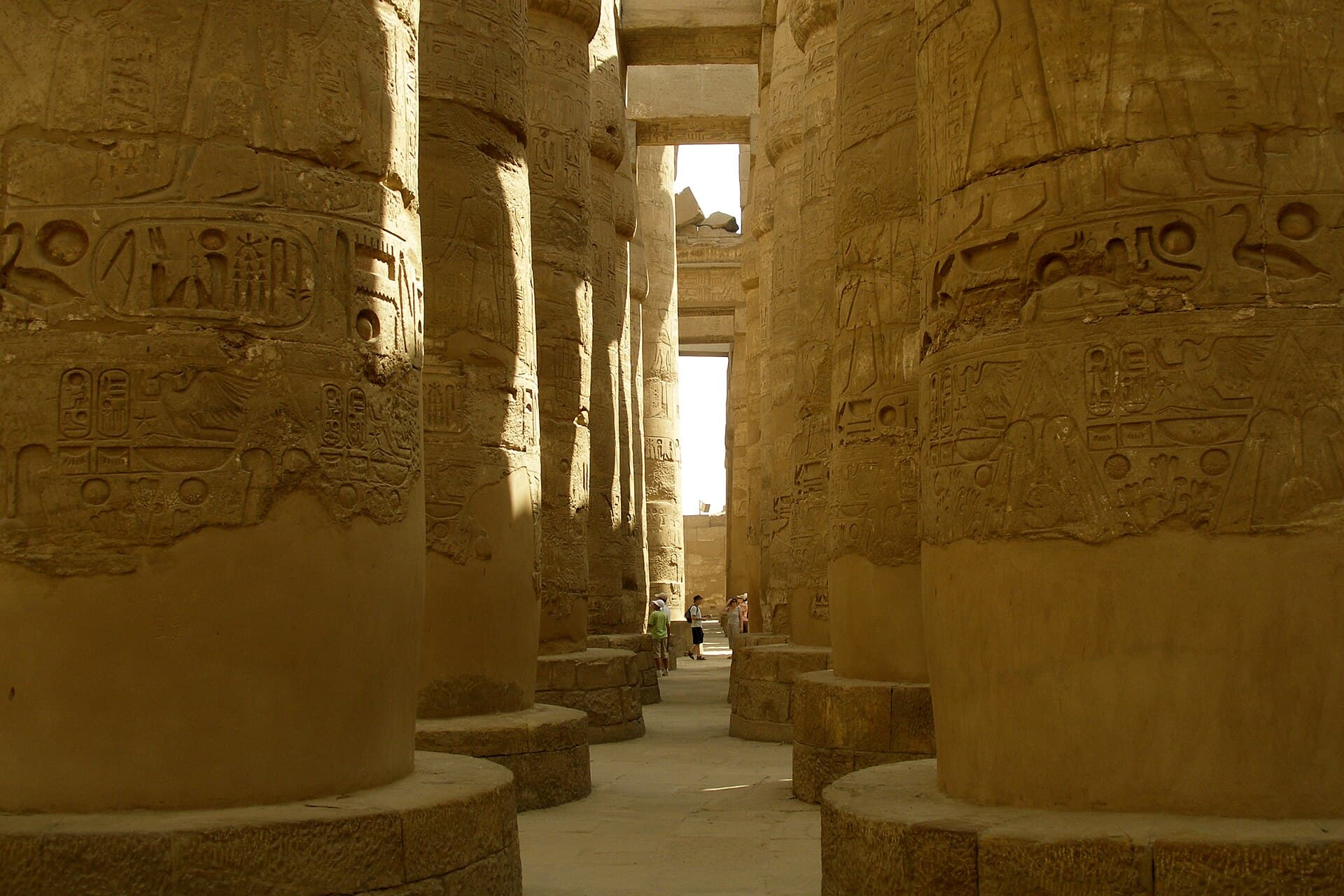
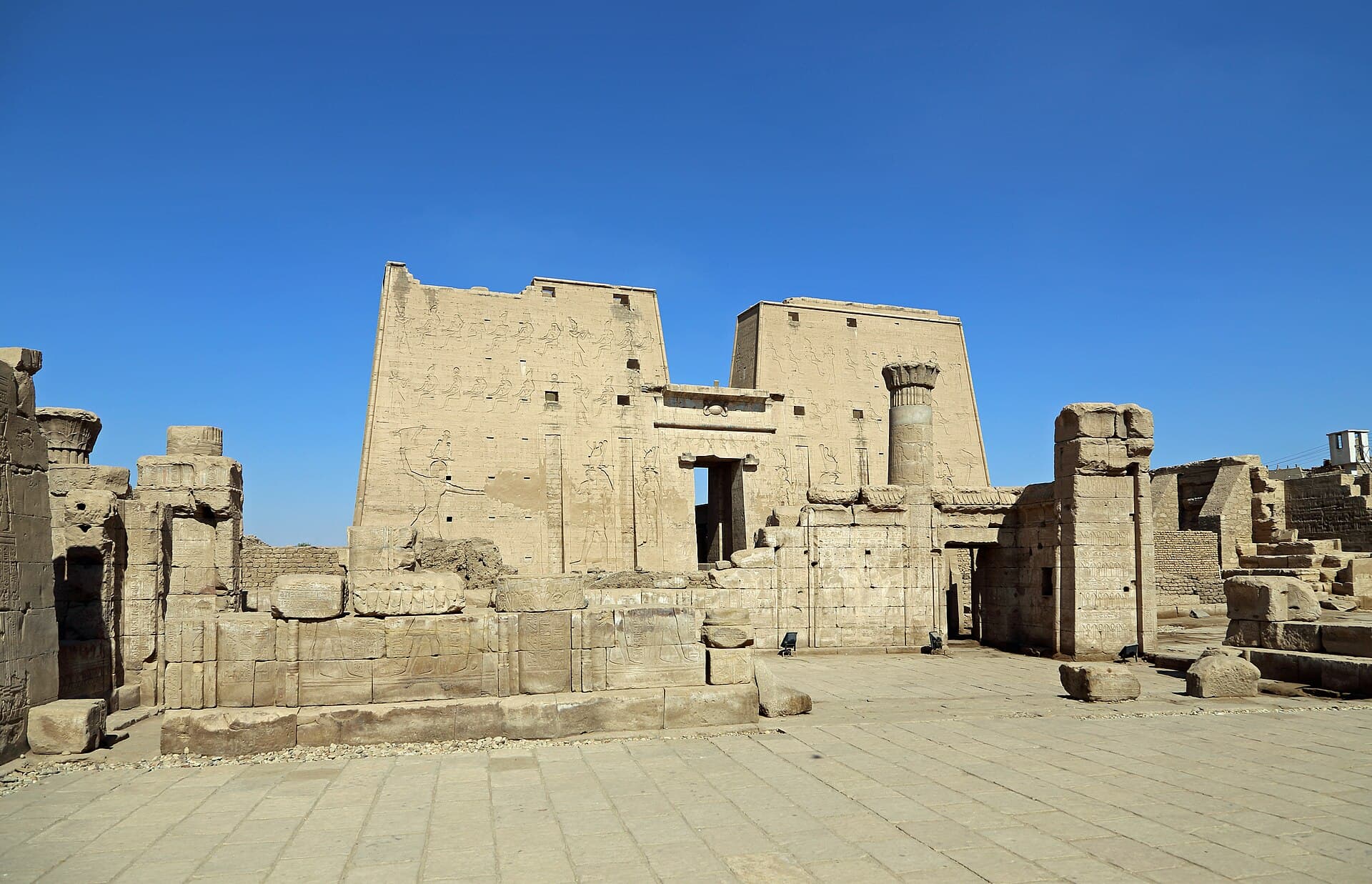
The usual shape is temples first, coast second. Cairo and the Nile valley are hard work: early starts, heat, a lot of walking. Doing that after a week of diving feels like a punishment; doing it first turns the coast into the part where you rest. Most itineraries put Luxor and Aswan at the front.
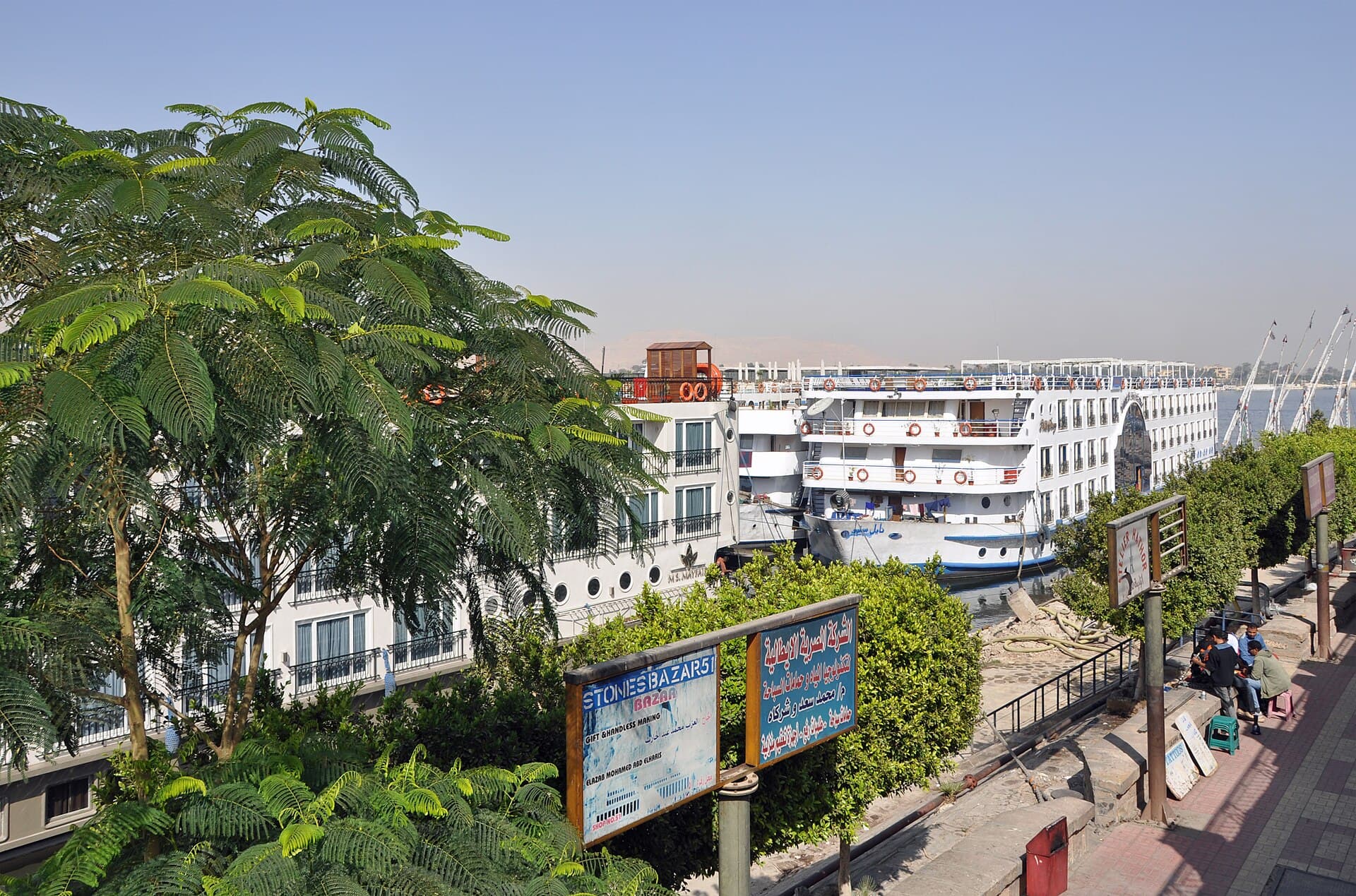
Geography decides which coast makes that easy. Hurghada is roughly four hours by road from Luxor across the desert, so you can finish a Nile cruise, transfer to the sea in a morning and fly home without another internal flight. Sinai is on the wrong side of the Gulf of Suez and effectively means flying via Cairo, which turns a side trip into a separate leg of the holiday. Marsa Alam sits in between: four to five hours from Luxor by road, with its own airport if a charter fits your dates. If the temples and the reef both matter, that transfer time is the single most useful fact in the comparison.
Flying after diving then decides your final day. Training agencies advise a surface interval before you fly, commonly at least twelve hours after a single dive and longer, often around eighteen, after several days of diving. Follow whatever your own agency specifies. In practice your last dive must finish well before departure, and an internal hop to Cairo counts as flying.
So the last day on the coast is not a diving day. Spend it snorkelling, riding along as a passenger, or doing nothing. Plan a week around four or five diving days rather than six and you will not spend the trip watching a clock. Bolting two days of diving onto a short Nile cruise rarely works.
Common questions
Is Egypt a good place to learn to dive?+
Yes, for most people. The water is warm, visibility is usually good and many training sites are sheltered, which takes a lot of the stress out of a first course. An entry-level certification normally runs over three to four days, so it eats a real chunk of a short holiday. If you only want to see reef fish, snorkelling gets you most of the way without the course.
Should I choose Sharm el-Sheikh, Hurghada or Marsa Alam?+
Go to Sharm for walls, current and the Sinai sites people come for, near Ras Mohammed and the Straits of Tiran. Check your entry stamp, because the free Sinai-only permit does not cover Ras Mohammed. Choose Hurghada for charter flight choice and offshore wrecks, accepting the crowds. Head to Marsa Alam for quieter, healthier reefs and turtles, if you do not mind the longer transfer south. Dahab suits budget travellers who want to dive from the shore.
Do I need a liveaboard to dive well in Egypt?+
No. Day boats and shore diving cover excellent sites, and most visitors are perfectly happy without ever sleeping on a boat. A liveaboard makes sense if you want several dives a day, remote offshore reefs and no daily travel. It makes no sense if you are travelling with non-divers, need space and privacy, or are unsure how you handle a week at sea.
Is the Blue Hole in Dahab safe?+
The shallow rim is an ordinary, pleasant dive and thousands of people do it without incident. The deep arch is another matter, and it has killed divers repeatedly, almost always people going past their training, their equipment or their gas planning. Memorial plaques on the cliff above make the point better than we can. Dive the rim and treat the arch as off limits.
Can I combine diving with the temples on one trip?+
Yes, and the order matters. Do Cairo, Luxor and Aswan first, then move to the coast, so the diving falls at the end when you want to slow down. Leave the final day free of diving, because agencies advise a surface interval of at least twelve hours, usually longer, before you fly. Any internal flight home via Cairo counts against that rule.
How many diving days should I plan in a week?+
Four or five, not seven. Wind cancels boats on this coast at short notice, particularly in the north and particularly in spring, and the last day before flying cannot be a diving day at all. A week built around five diving days absorbs one blown-out morning without anybody feeling cheated. A week built around seven guarantees you spend it watching the forecast.
How warm is the water, and what wetsuit do I need?+
Water is comfortable year-round but it moves through the seasons. In the north it bottoms out in the low twenties Celsius around February and March, which means a 5 mm suit and, for most people, a hood. By late summer it reaches the high twenties and plenty of divers use a shorty. The far south runs slightly warmer throughout. Ask your centre what thicknesses it actually stocks before relying on rental.
Are there sharks in the Red Sea, and should that put me off?+
There are, and for many divers it is part of the attraction. Reef sharks are an ordinary sight on the southern reefs, and oceanic whitetips are more likely at the exposed offshore sites in autumn, Elphinstone above all. Incidents are rare. The standard advice is dull and worth following: never feed fish, stay with your group and do exactly what the briefing tells you.
Do I need special dive insurance?+
Yes, and it is the item most people skip. Standard travel policies frequently exclude diving outright, or cover it only to a shallow depth limit that your holiday will exceed without you noticing. Treatment for a serious decompression injury is expensive anywhere. Buy specific dive cover, read the depth clause, and ask your centre where the nearest recompression chamber is and how you would physically get there.
Can I see dugongs or dolphins if I book the right trip?+
You can improve your odds and that is all. Green turtles in the seagrass bays near Marsa Alam are seen most days and are close to reliable. Dugongs are not: there are very few along the whole coast and any operator promising one is selling something they cannot deliver. Spinner dolphins rest in zoned lagoons such as Sha'ab Samadai, where the core area is closed to visitors, so some days you see them from the boundary and some days you do not.
Which sites are wrong for a newly qualified diver?+
The Straits of Tiran reefs and Elphinstone are drift dives in real current, and the Thistlegorm is a deep dive after a long crossing with current common over the wreck. The deep arch at the Blue Hole is a technical dive and not a recreational option at all. None of that rules out a good week: the sheltered bays, coral gardens and house reefs that make up most of the diving here are genuinely excellent and are where the great majority of dives are logged.
How do diving trips here get booked?+
Our Red Sea arrangements run through a ground operator in Egypt, working with dive centres and drivers on the coast, and everything is quoted by enquiry rather than sold through online checkout. Certification levels, how many diving days you want, which sites your group can realistically dive and how the coast attaches to a Cairo or Nile leg all change the shape and the cost of the trip, and none of that fits a fixed price on a page.
Official sources
Entry rules, opening hours, security advice and exchange rates all move. Check them at the source, not here.
Written and checked by the Nile Trip Guide editorial team · Last reviewed . Entry rules, prices and opening hours change — check anything critical against the official sources linked on this page.
Plan this trip
Tell us your dates and we will price it
A real itinerary with real prices, usually within 24 hours. Nothing is booked and nothing is charged until you say yes.
The route most people take first, at the length it was built for: Giza and the Grand Egyptian Museum, then a flight to Luxor and four nights sailing down to Aswan.
No boat on this one. Giza and the Grand Egyptian Museum, a night in Luxor for both banks, two nights on the Red Sea, then back to Cairo for the Citadel, Coptic Cairo and the Royal Mummies.
Five nights in Cairo either side of a four-night sail from Luxor to Aswan. The Cairo days are private, just your party and a guide; the sightseeing off the boat is shared with a small group.