El Gouna: What Egypt's Built Lagoon Town Is Really Like
El Gouna is a privately built resort town on the Red Sea coast, about twenty minutes north of Hurghada, laid out across a network of man-made lagoons and small islands. It is cleaner, quieter and better maintained than the Hurghada strip, and it costs more for that. It is also not an Egyptian town in any ordinary sense, which matters to some visitors more than others.
What exactly is El Gouna?
El Gouna was built, not settled. Development began in the late 1980s on an empty stretch of Red Sea coast, and the lagoons you see are dug channels flooded with seawater, with the islands made from what came out of them. The place is still owned and run largely by the company that created it, which is why the street lighting works, the bins get emptied and the roads are swept.
That private ownership shows within an hour of arriving. There is a hospital, a marina, schools, a satellite campus of a German university, its own water treatment and its own security. Much of the town is residential rather than hotel, with apartments and villas ringing the lagoons and a resident population that lives here year-round. The trade-off is that one company sets the standards, the rules and, to a large degree, the prices.
It is worth understanding what that means in practice, because it explains nearly everything you will notice. A single owner can enforce a building style, keep the roads swept and move a bus route, and it can also decide what gets built next, which businesses get a lease and what a berth or a beach day costs. Nothing here emerged from a market of small competing operators the way a normal seaside town does. The result is unusually consistent, and unusually controlled.
The town has also grown up rather than out. Alongside the hotels there is a working community of Egyptian staff, foreign homeowners, long-stay renters and the students and lecturers attached to the campus, which is why shops, clinics and services exist that a pure resort strip would never support. That gives El Gouna more of a pulse in the low season than Hurghada's outer resorts, and it is the main reason people who dislike hotel compounds tolerate this place.
How is the town laid out?
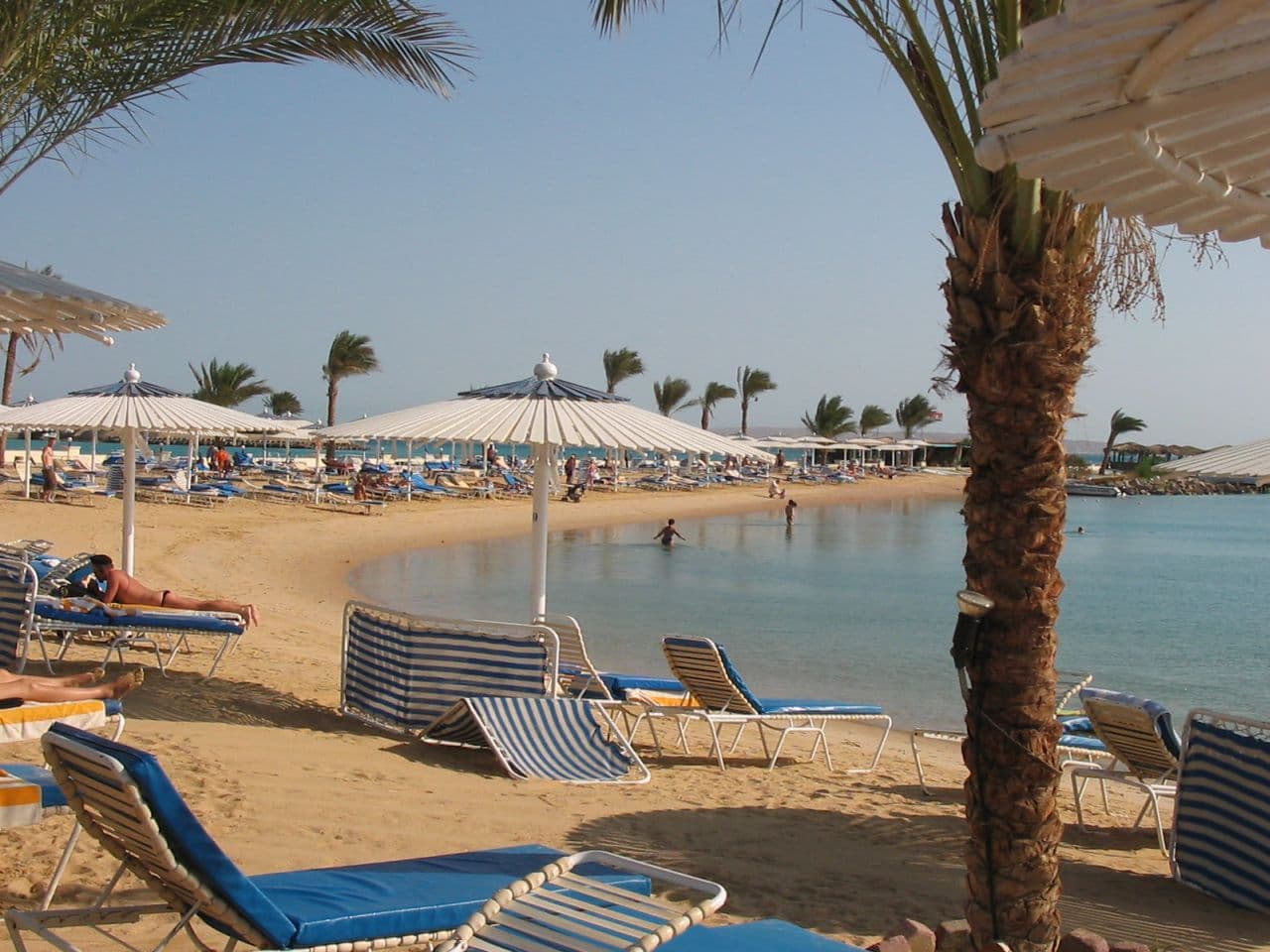
Three areas matter. Downtown sits inland around a square of restaurants and shops, and holds most of the year-round life. Abu Tig Marina, at the southern end, is the yacht harbour with the densest run of bars and restaurants. The northern end has the main open-sea beach and the kite centres. Hotels are scattered over the islands in between, most facing a lagoon rather than the sea.
Distances are short but not walkable in summer heat. Tuk-tuks are the standard way to move around, a bus loops the town, and small boats run between marina points. Where you stay matters more than the star rating. A lagoon-front room means calm, shallow water and no waves, but not sea swimming. Ask which beach a hotel actually uses and whether it runs a shuttle there.
The geography is genuinely confusing on arrival, because water, not road, is the organising principle. Bridges link the islands, dead ends are common, and two hotels a few hundred metres apart across a lagoon can be a ten-minute drive apart by road. Look at a map before you book rather than after, and treat any hotel description that says only that it is in El Gouna as telling you nothing useful.
For a first visit the simplest rule is to pick the area by your evenings. Near the marina you will walk to dinner and hear other people enjoying themselves late. Downtown you will walk to dinner among more residents and fewer boats. Out on the islands you will have quiet, a lagoon and a tuk-tuk fare every time you want anything. None of the three is wrong; being surprised by which one you booked is the thing to avoid.
Where should you stay, and on what board basis?
This is the decision that shapes the week, and it splits three ways: hotel, apartment or villa. Hotels here range from small and plain to genuinely expensive, and because the town is private the gap between them is narrower than in Hurghada, where standards swing wildly from gate to gate. Apartments and villas are rented out privately in large numbers, which is why long stays work so well and why a family group often does better in a rental than in adjoining rooms.
The board basis deserves more thought here than anywhere else on this coast. All-inclusive exists, but the whole point of El Gouna is that there is somewhere to walk to in the evening, and a package that keeps you inside one hotel wastes what you paid the premium for. Bed and breakfast or half board, with dinners in town, is the arrangement that suits the place. If you are travelling with small children who will not be marched to a restaurant every night, that calculation flips and all-inclusive earns its keep.
Then check the water your room actually faces. Lagoon-front is calm, shallow, sheltered and safe for children, and it is not the sea. Sea-front means waves, wind and a proper swim. Several hotels sit on neither and run a shuttle to a beach club, which is fine if the shuttle is frequent and tiresome if it is not. Ask the question in writing before booking, because photographs of turquoise water tell you nothing about which body of water it was.
Two smaller points that come up repeatedly. The marina is lively at night, so a room overlooking it is a poor choice for light sleepers and an excellent one for everyone else. And in a town where the tuk-tuk is the default transport, a hotel with its own beach access and a decent restaurant will cost you less in daily fares and less in daily decisions than a cheaper room somewhere awkward.
Is it worth paying more than Hurghada?
For most people, yes. The difference is not marketing: pavements are finished, planting is watered, boats leave when they say they will, and nobody follows you down the street trying to sell you a camel ride. Hurghada varies enormously from hotel to hotel, and the strip outside the gates can be rough. Expect a clear premium in El Gouna for a comparable standard of room, so compare current rates for both before you book.
Where Hurghada wins is money and choice. It has far more budget hotels, cheap local food and the airport itself. El Gouna's real weakness is under the water: there is no house reef to speak of. The seabed off the beaches is sand, so proper snorkelling or diving means a boat trip of roughly half an hour to an hour. If reef access straight off the beach is the point of your trip, look further south.
The premium also does not stop at the room rate. Eating out, drinking, boat trips, beach club entry and taxis are all priced for a market that has already decided to pay more for order, so the gap over a week is wider than a price comparison of two hotels suggests. Budget for the town, not just for the bed. That is the single most common misjudgement people make about this place.
The honest way to decide is to ask what you are buying. If you want a hotel compound, a pool and a buffet, Hurghada and the bays south of it deliver the same sea for less, and the extra money buys you nothing you will use. If you want to leave the gate in the evening, walk somewhere on a lit pavement, eat somewhere you chose and come back without negotiating a fare, El Gouna is the only place on this stretch of coast that reliably offers it.
What does a week here actually cost to run?
We do not publish prices for Egypt, and any page that does is usually quoting a figure that inflation has already overtaken. The Egyptian pound has moved sharply in recent years, so a number written even two years ago tells you very little. What is stable is the shape of the spending, and in El Gouna that shape is unusual for Egypt: the hotel is rarely the largest variable, and the town is.
Assume restaurant and bar prices closer to a southern European resort than to the rest of Egypt, particularly for imported wine and spirits, which carry heavy duty. Assume boat trips, kite lessons, green fees and beach clubs are priced per person per activity, and that a family of four doing one paid thing a day accumulates faster than anyone expects. Supermarkets, tuk-tuks and simple Egyptian food remain cheap, which is exactly why self-catering in an apartment changes the budget so much.
Carry cash. Hotels, the better restaurants and the supermarkets take cards, but terminals here go offline like everywhere else in Egypt, and tuk-tuks, tips, beach vendors and small shops are cash only. Keep a float of small notes on purpose, because nobody has change for a large one and the difference quietly disappears. If a terminal or a cash machine offers to charge you in euros or sterling rather than Egyptian pounds, decline it: that conversion rate belongs to the machine's operator and it is always worse than your own bank's.
One booking detail worth knowing. Egyptian hotels and operators usually price in euros or dollars and hold that figure even though you spend pounds on the ground, so a movement in the currency changes what your spending money buys rather than what the holiday cost. Ask which currency a balance is due in before you fly, and take enough hard currency to be independent of cash machines for a few days.
What is the kitesurfing actually like?
Good, and the reason a lot of people come. The bay faces the prevailing northerly wind, and the water off the north beach is flat and shoulder-deep over sand for a long way out, which is about as forgiving as learning gets. Wind is most reliable from spring through early autumn, with spring the windiest. Schools and equipment hire cluster in one place, so comparing them is easy.
Two honest caveats. In peak season the launch area gets crowded and lessons are taken days ahead, so arrange them before you arrive. And in midwinter the wind is intermittent, with days that give you nothing at all. If kiting is the only reason for the trip, midwinter is a gamble. The same wind also makes spring beach days cool and gritty if you are not in the water.
For a beginner the standing shallow water is the whole argument. You can stop, stand up, reset and start again without being blown into anything, which is not true of most European spots, and progression is correspondingly quick. Ask a school how many students it puts with one instructor, whether it runs a rescue boat and whether kit hire is included or billed separately, because those three answers separate the good centres from the cheap ones far better than the price does.
Non-kiters should know what the same wind does to their week. On a strong spring day the beach is cool, sand moves, and lying still is unpleasant even when the air temperature says otherwise. The lagoons are sheltered and stay usable, which is one reason families end up on them. If your idea of the holiday is a book and a sunbed, aim for autumn rather than spring.
Swimming, snorkelling and diving from El Gouna
Be clear about the water before you book, because this is where El Gouna disappoints people. The lagoons are calm, shallow and pleasant to swim in, and they are dug channels of seawater over sand, with nothing to look at under the surface. The open-sea beaches are sand too. There is no house reef. Nothing here resembles the Marsa Alam model of walking off the beach onto coral.
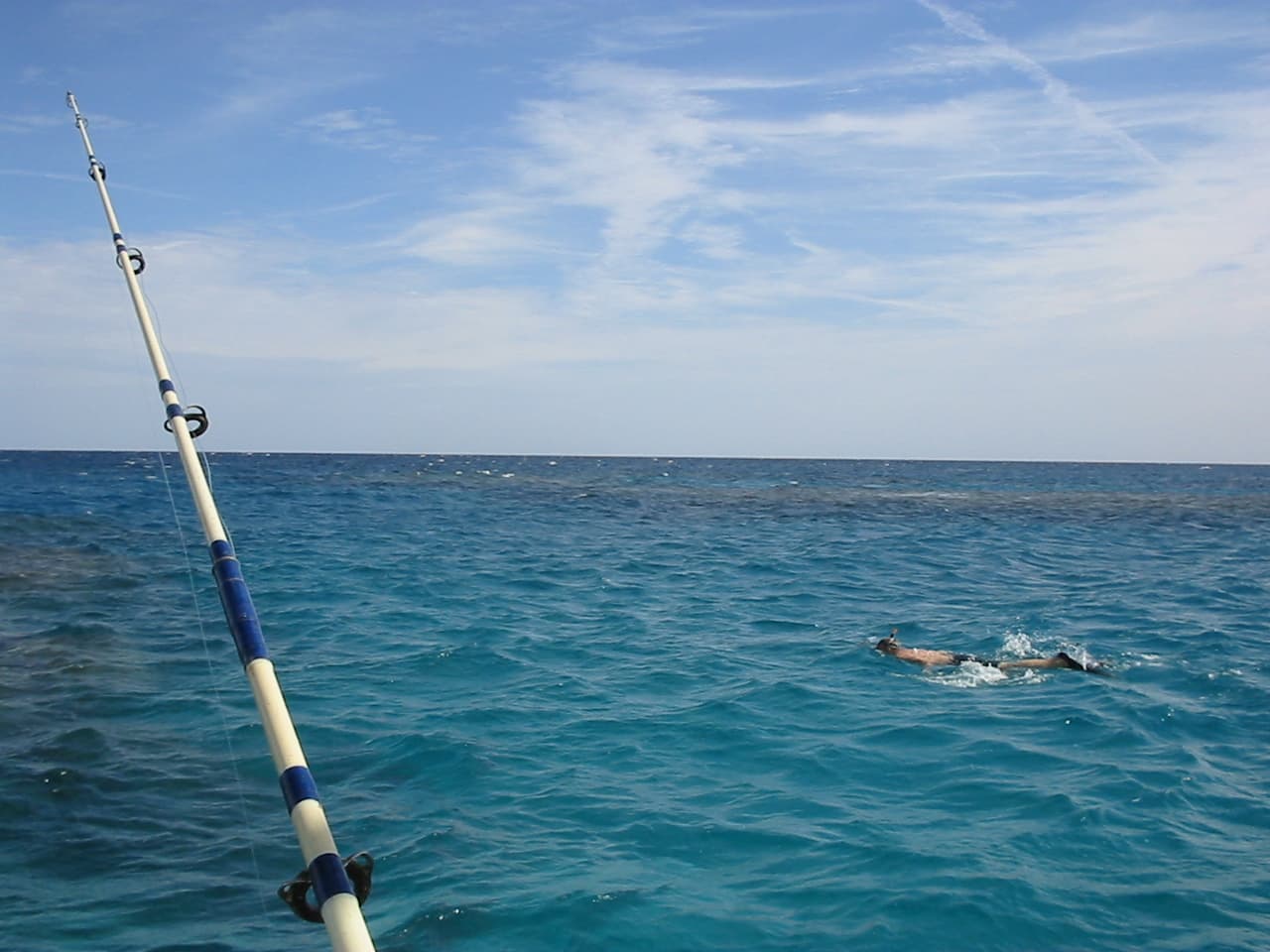
What you have instead is boats. Dive and snorkel boats leave the marina daily for reefs in the Strait of Gubal, roughly half an hour to an hour out depending on the site, and Shaab El Erg is the closest of the well-known ones. The reefs off this part of the coast are the same water that makes Hurghada's diving good: warm year-round, reliably clear, and busy at the sites nearest the harbours. Ask an operator which sites it actually uses and how many divers go in at once.
The famous wrecks are reachable and they are a long day. Abu Nuhas, the reef that has been catching ships in the approach to the Gulf of Suez for more than 150 years, lies north of here with four wrecks along its northern side, most within recreational depth. It is a full day out and the first trip cancelled when the wind gets up, which on this coast happens often enough to matter in a week's planning.
Learning to dive here is straightforward and cheap by European standards, and the conditions are forgiving. Snorkellers should be realistic: you are dependent on boats, so a blown-out day is a day without reef. If reef access is central to your holiday rather than incidental, Marsa Alam or one of the bays with a house reef is the better buy, and we would rather say that than sell you the wrong week.
What else is there to do?
Golf is the other real draw. There is an eighteen-hole desert course laid out among the lagoons, plus shorter practice options, and green fees are modest by European standards. Play early: from May onwards the middle of the day is too hot to enjoy. Tennis, squash, go-karting, wakeboarding and horse riding all exist, though they are facilities rather than reasons to travel.
Dive boats run daily to offshore reefs, and the well-known northern Red Sea wrecks are reachable as a long day out. Inland, half-day desert trips head into the hills behind the coast. One date to check either way: the town hosts a film festival each autumn, which fills the hotels and pushes rates up for about a week. Either work around those dates or expect a busier town.
The town itself supports the kind of low-effort days that resort strips do not. You can cycle or run on roads that are actually surfaced, take a water taxi across the lagoons for the sake of it, spend an afternoon at a beach club, or do nothing at all somewhere with decent coffee. That is a thin list on paper and it is precisely what people who have just finished six days of temples want.
Be sceptical of the standard excursion menu. The quad-bike convoy into the flats behind the coast with a staged Bedouin camp and a show is dusty, brief and tells you almost nothing about the desert; the real thing, the Roman quarries in the Red Sea Mountains, needs a 4x4, a full day and arranging in advance. Snorkelling boats and the Giftun island trip out of Hurghada are sold here too, and the quality of the day depends far more on how many people are on the boat than on the price.
Eating, drinking and how the evenings work
Evenings are the thing El Gouna does that no other resort on this coast does properly. Downtown and Abu Tig Marina both hold a run of restaurants and bars within walking distance of each other, so dinner is a choice rather than whatever the hotel is serving. The range is wide, the standards are decent, and the whole scene is aimed squarely at visitors and residents with money, which is both its strength and its limitation.
Alcohol is served openly across the town, in hotels, the marina and Downtown. Imported wine and spirits are heavily taxed in Egypt and priced accordingly, so a few rounds of imported spirits will outrun the meal. Local beer and Egyptian wine are the sane default, and the difference over a week is substantial.
Egyptian food is available and it is not the cheap street version. You can eat well, but the menus and the prices are written for a visitor market, and the same dishes cost a fraction in Hurghada's Dahar district. If you are self-catering, the supermarkets in town are the single biggest lever on your weekly spend, because breakfast and lunch at apartment prices leaves the budget for dinners out.
During Ramadan the town runs largely as normal for visitors, while much of the staff around you is fasting through daylight. That is a courtesy worth registering rather than a restriction on you. The dates move each year, so check them against your booking, and expect the evenings to be livelier and the afternoons quieter than usual.
Is El Gouna a real Egyptian town?
No, and it is worth being clear about that. The architecture is a well-executed invention: domes, ochre walls and a Mediterranean-Nubian style that exists nowhere else on this coast. Menus and signage are in English. There is no old quarter, no market that is not aimed at visitors, no ordinary street life going on around you. Some people find that restful. Others find it thin after three days.
Organised excursions will not fill that gap. The nearest ordinary Egyptian life is in the back streets of Hurghada, and El Gouna gives you little reason to go there. The honest fix is to treat this as a beach week with reliable standards, and put the country itself in a different part of the same trip: a few days in Cairo, or a stretch on the Nile before or after you come to the coast.
The fairer half of the argument is that the people around you are Egyptian, and that the town is a substantial employer on a coast where the alternative for many is seasonal work in a compound. Staff, drivers, shopkeepers, instructors and medical staff live here or nearby, and the place is not the stage set that the phrase artificial town suggests. What it is not is a town that grew from the country around it, and no amount of good intent changes that.
Manage the expectation rather than the place. People who arrive wanting Egypt and get a lagoon are disappointed by day three; people who arrive wanting a week of calm water and reliable dinners after the temples are pleased. The failure is nearly always in the booking, not in the town.
How does El Gouna work with children?
Better than most of this coast, for a few concrete reasons. The lagoons are shallow, warm and waveless, which removes both the surf and the reef-edge problem that catches families out at Hurghada hotels built over fringing coral. Distances are short, the roads are quiet, and there is a hospital in the town rather than half an hour away. Those things matter more on a family holiday than any amount of kids club marketing.
The practical cautions are ordinary. Tuk-tuks have no seat belts, so for small children a hotel shuttle or a proper car is the better call. The sun is stronger than it feels in a breeze, and a shaded midday is not optional between May and September. Stick to bottled water, including for teeth, and be careful with ice from small stands, which is standard advice for the whole country rather than a comment on this town.
On food, families do well here. Restaurants are used to children, menus are broad and there are supermarkets for the things a toddler will actually eat, which is a genuine advantage over an isolated resort with one buffet. If your children are old enough, this is also a good place for a first kite or wakeboard lesson, for the same reason adults learn here: flat, shallow, forgiving water and centres set up to teach.
Long stays, winters and working from here
A lot of El Gouna's low-season occupancy is people staying for a month or a season rather than a week. Monthly apartment rentals are common, winter days are mild, and the town has enough services, shops and other long-stayers to make that workable in a way that a resort strip does not. This is the market the town has quietly moved into, and it is why the place feels inhabited in February.
The honest caveats are practical. Verify the internet connection for the specific property rather than trusting a listing, because that single detail decides whether remote work is pleasant or miserable. Evenings in December and January are genuinely cool and apartments are built for heat, not cold. And a small town is a small town: the restaurant list you loved in week one is the restaurant list you still have in week six.
Set against that, the economics are favourable. A monthly rate is a different animal from a nightly one, supermarket cooking is cheap, and the daily costs that make a holiday week expensive here are exactly the ones a long stay stops paying. If you can work anywhere and want warm water through a northern winter, this is one of the more sensible places on the Red Sea to do it.
When should you go? The year month by month
Sea temperature does most of the deciding. Along this coast the water sits around 22C in January and February, 23C in March, 25C in April, 27C in May and 29C in June. July reaches about 30C, August about 31C, which is close to bathwater and not to everyone's taste, and September holds near 30C. October is around 28C, November 26C and December back to about 23C. Air temperatures follow the same curve, tempered on the coast by the wind.
October to November and March to April are the most comfortable, and October and March are the two months when a combined Nile and Red Sea trip works at both ends rather than one half carrying the other. May and September are the value months: warm water, long days and rates that have not yet caught up with the conditions. June is excellent on the coast and brutal inland, which matters only if temples are in the plan.
July and August bring European school-holiday traffic, the warmest water of the year and the highest heat. The humidity is low and the breeze helps, but the middle of the day is for shade or water, not for golf. December to February is mild rather than warm: fine for walking, fine for a swim if you do not mind 22C, and cool enough after dark to need a jacket. Christmas and New Year are the most expensive weeks of the Egyptian year.
Wind is the variable that changes plans rather than comfort. The prevailing northerly is strongest in spring, which is what the kite schools want and what cancels the offshore dive boats. Leave slack in a diving week, and if your trip depends on one specific boat day, book it early in the stay so there is room to move it.
Who does El Gouna suit?
Families with small children do well here: shallow lagoon water, short distances and very little traffic. Kitesurfers and golfers have a clear reason to come. So do long-stay visitors and remote workers, who take monthly apartment rentals through the mild winter. It also works as three or four flat days at the end of a Nile trip, when nobody wants to see another temple.
Skip it if the budget is tight, because Hurghada, Makadi Bay and Safaga give you the same sea for less. Skip it if you want a reef off the beach. Skip it if the ancient sites are the point of the holiday, since everything is a long drive away. And skip it if a managed, enclosed town makes you uneasy, because that feeling does not wear off.
It also suits one group the brochures never mention: travellers who have already done Egypt properly. If you have seen Cairo and the Nile on an earlier trip and want warm water without another round of early starts and guides, the case for paying more for a calm, functioning town is much stronger than it is on a first visit, where those days are better spent on the things you came for.
How does it fit with the rest of Egypt?
Hurghada airport is roughly half an hour away by road, which makes El Gouna an easy first or last stop. Luxor is about four hours each way. The day trip is sold everywhere and we generally advise against it: you leave before dawn, see the main sites at the hottest hour and spend eight hours in a vehicle. An overnight in Luxor costs little more and is a completely different experience. Cairo is a short flight rather than a drive.
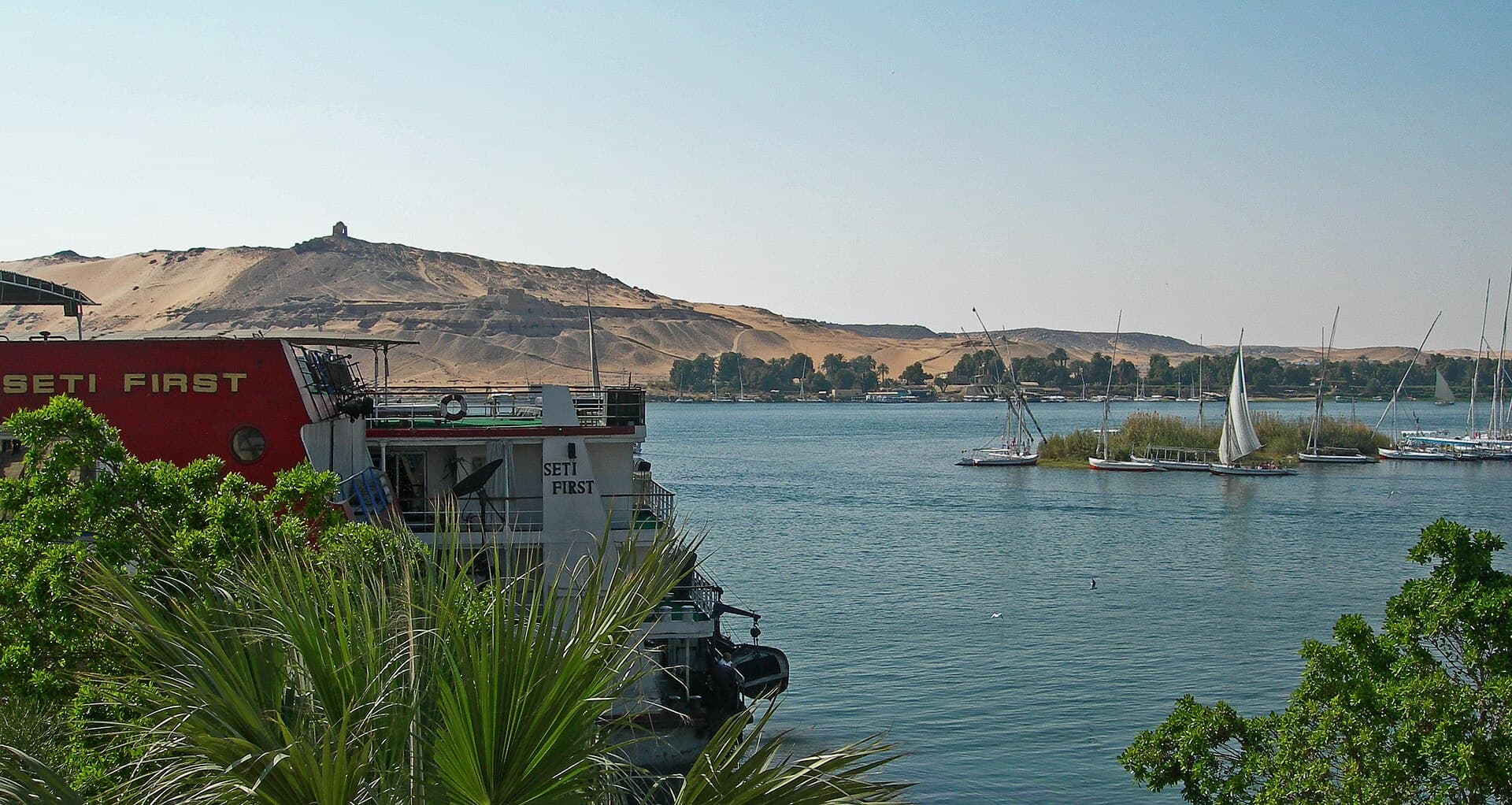
The itinerary that works is the standard one, and it works because of that road. Fly into Cairo for the pyramids and the museum, take the Nile between Luxor and Aswan, then cross the desert to the coast and fly home from Hurghada without another internal flight. Two weeks is the usual length. Do the sightseeing first: nobody wants a pre-dawn start after a week of doing very little, and temples are far harder work than people expect.
Along the coast itself, Hurghada is twenty minutes south and has the airport, the budget hotels and the cheap food. Safaga is about an hour south, a working port with dependable wind and some of the best reefs on this stretch. Marsa Alam is several hours further and is where divers go when the reef matters more than the resort. Sharm el-Sheikh is in Sinai, which means separate entry rules and a flight rather than a drive.
Getting there: flights, transfers and entry
Hurghada takes far more direct and charter flights from Europe than Luxor does, usually cheaper ones, and that is the practical reason this coast fills up. The airport sits on the far side of Hurghada rather than the near side, so the transfer north to El Gouna is around thirty to forty-five minutes on a good road. Arrange the car in advance, particularly for a night arrival.
On entry, most visitors choose between an e-visa applied for in advance on the Egyptian government portal and a visa on arrival bought at a bank counter in the arrivals hall before immigration. The e-visa is the smoother of the two because you land holding a document and join one queue instead of two, and your airline may want to see it at your departure gate. Not every nationality can use either route, so check the official portal at visa2egypt.gov.eg before booking anything non-refundable.
If you do buy on arrival, you need hard currency in your hand at that counter, and card terminals there fail often enough that arriving with only a debit card is a real risk. The same counters change money, so take a modest amount there for the transfer and the first tips, and change the rest in town where the rate is better. Whatever else you decide, do not land with nothing usable.
Common questions
How long is the transfer from Hurghada airport?+
Around thirty minutes, sometimes closer to forty-five, because the airport sits on the far side of Hurghada rather than the near side. It is a good road and the drive is dull rather than difficult. Most hotels will arrange a transfer, and a prearranged car is worth it at night, when airport taxi negotiations are tiresome.
When is the best time of year to go?+
October to November and March to April are the most comfortable, with a warm sea and manageable heat. July and August are very hot, though the humidity is low and the wind helps. December to February brings mild days and genuinely cool evenings, so bring a jacket. Spring is windiest, which is good for kiting and less good for lying still.
Is alcohol available, and what should you wear?+
Alcohol is served openly across the town, in hotels, the marina and Downtown. Beachwear is normal on the beach and around pools, and nobody will comment on it. Away from the water, ordinary clothes are the courteous choice, mainly because the staff and residents around you are Egyptian and the rest of the country is far more conservative.
How many days are worth spending there?+
Three to five for most people, added to a trip that also includes Cairo or the Nile. A full week makes sense if you are kiting, golfing, or travelling with young children who want the same pool every day. Beyond that the town starts to feel small, unless you have settled in for a month or a season.
Is day-to-day spending cheaper than in Europe?+
Partly. Transport, supermarkets and simple Egyptian food stay cheap. Restaurants and bars in the marina are priced for a visitor market and can approach southern European levels, especially for imported wine and spirits. Budget more for eating and drinking here than anywhere else in Egypt, and keep small cash on you for tuk-tuks and tips.
Can you snorkel straight off the beach in El Gouna?+
Not meaningfully. The lagoons and the open-sea beaches are sand, and there is no house reef, which is the single biggest difference between here and the southern Red Sea. Snorkelling and diving mean a boat from the marina, roughly half an hour to an hour out to the reefs. If you want to swim onto coral from your sunbed, look at Marsa Alam or a bay hotel with its own reef instead.
Is El Gouna good for families with young children?+
Yes, and it is one of the better choices on this coast. The lagoons are shallow and waveless, distances are short, traffic is light and there is a hospital in the town. The cautions are ordinary: tuk-tuks have no seat belts, the midday sun between May and September needs shade, and bottled water is the rule for drinking and teeth as it is everywhere in Egypt.
El Gouna or Hurghada: which should you book?+
El Gouna if you want to leave the hotel in the evening and walk to dinner on a lit pavement without being hassled, and you accept paying a clear premium for it. Hurghada if the budget is tight or you want choice, because it has far more hotels, cheaper food and the airport. Neither has good reef off the beach, so on the water the difference is smaller than the price gap suggests.
Is a day trip to Luxor from El Gouna worth it?+
We generally advise against it. Luxor is about four hours each way, so the day means a pre-dawn start, the main sites walked in the hottest hours and eight hours in a vehicle. An overnight costs little more and is a completely different experience. If the temples matter to you at all, give them a night rather than a dash.
Do you need cash, or do cards work?+
Both, with cash as the default. Hotels, supermarkets and the better restaurants take cards, but terminals drop offline and tuk-tuks, tips and small shops are cash only. Keep a float of small notes, because nobody has change for a large one. If a terminal or cash machine offers to bill you in euros or sterling instead of Egyptian pounds, decline it, as that rate is set by the machine's operator and is always worse.
Official sources
Entry rules, opening hours, security advice and exchange rates all move. Check them at the source, not here.
Written and checked by the Nile Trip Guide editorial team · Last reviewed . Entry rules, prices and opening hours change — check anything critical against the official sources linked on this page.
No boat on this one. Giza and the Grand Egyptian Museum, a night in Luxor for both banks, two nights on the Red Sea, then back to Cairo for the Citadel, Coptic Cairo and the Royal Mummies.
Egypt in three parts: two days in Cairo, three nights sailing Aswan to Luxor, then three nights on the Red Sea with nothing scheduled. The temples first, the sea afterwards.
The 10 day Nile-and-Red-Sea route with one more day in Cairo at the end, spent on the Citadel, Coptic Cairo and the Royal Mummies. Two days in Cairo, three nights on the river, three on the sea.