Nile Cruise vs Land Tour in Egypt: An Honest Comparison
Nile cruise vs land tour is the first real decision most people face when planning Egypt's south, and it changes the shape of the whole trip. Both cover the same temples between Luxor and Aswan. What differs is where you sleep, how much you unpack, how the days are paced, and what you give up.
Nile cruise
Land tour
Nile cruise
Land tour
Unpacking
Once, for the whole Luxor to Aswan stretch
Twice at least, and more if you add stops
Edfu and Kom Ombo
Kom Ombo is a walk off the boat; Edfu a short transfer
Both need a road trip out and back from a hotel base
Rooms
Cabins are smaller than an equivalent hotel room
Better rooms for the money, and a proper pool
Flexibility
Fixed. The boat sails when it sails
Yours. Change the order, skip a site, stay longer
Mooring
Boats raft several deep at small stops, so views vary
Not an issue
The river
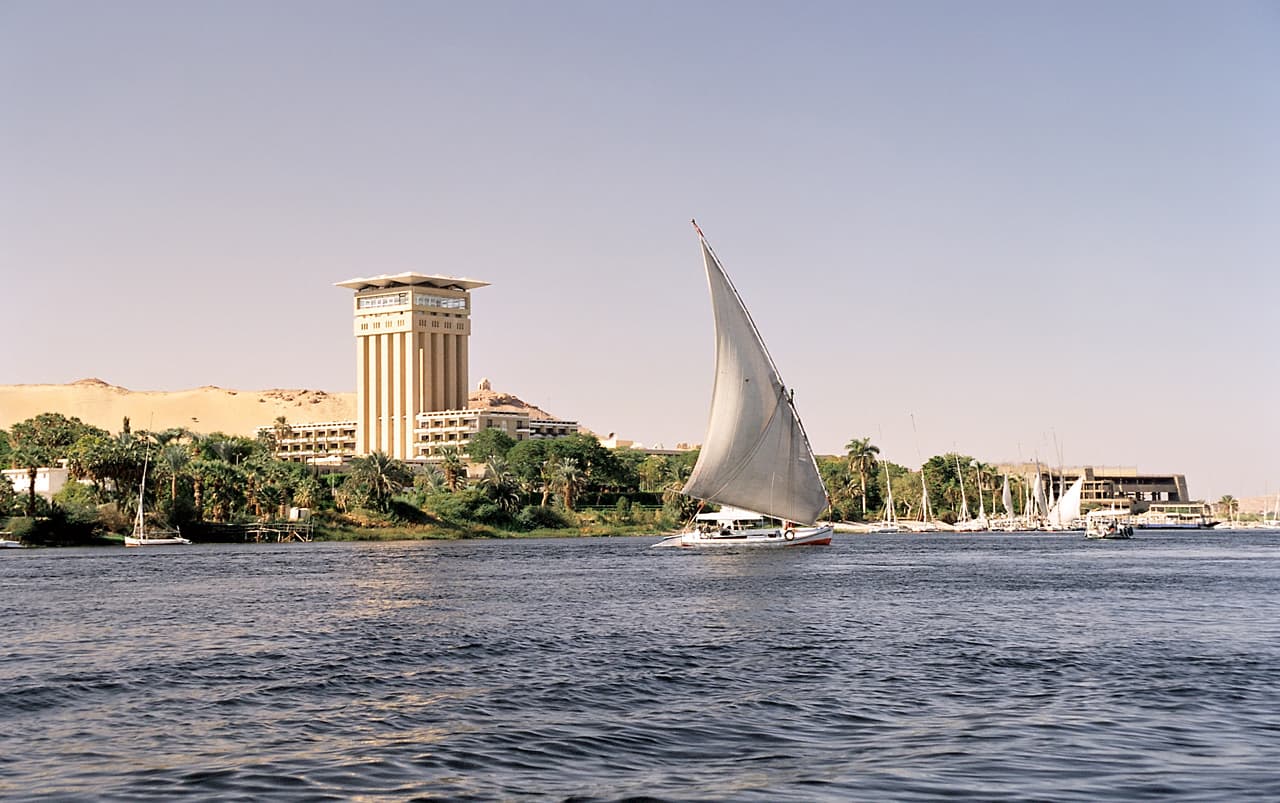
The point of it. Long sailing afternoons on deck
You see the Nile, but you do not travel on it
Best for
First-time visitors, and anyone short on time
Repeat visitors, families wanting a pool, and slower trips
The short answer
For a first trip, cruise. The sailing days between temples are what most people remember, and the riverbank sites are far easier from the water. Stay in hotels if you have been before, if you want better rooms and a pool, or if a fixed schedule would frustrate you. The hybrid is worth knowing about: cruise one leg, then stay a couple of nights in Aswan or Luxor at either end.
What each option actually involves
A Nile cruise means a boat with a few dozen cabins that sails between Luxor and Aswan over three or four nights. The boat is your hotel. It moves while you eat or sleep, and stops at the temples along the way. A land tour means hotels in Luxor and Aswan, with a driver taking you along the road that runs beside the river.
The sightseeing is nearly identical either way. Karnak, Luxor Temple and the west bank with the Valley of the Kings at one end. Philae, the High Dam and the granite quarries at the other. Edfu and Kom Ombo in between. Abu Simbel sits further south and is handled as a separate excursion from Aswan on both kinds of trip. The difference is the container, not the contents.
It is worth being plain about the distance involved, because it is smaller than the marketing implies. Luxor and Aswan sit roughly 215 kilometres apart. That is three to four hours by road, or about three hours on a train that runs several times a day. A cruise takes three or four nights to cover the same ground, which tells you immediately that the boat is not transport in any ordinary sense. It is the holiday, and the temples are what it stops at.
Which sites are actually on the river, and which are not
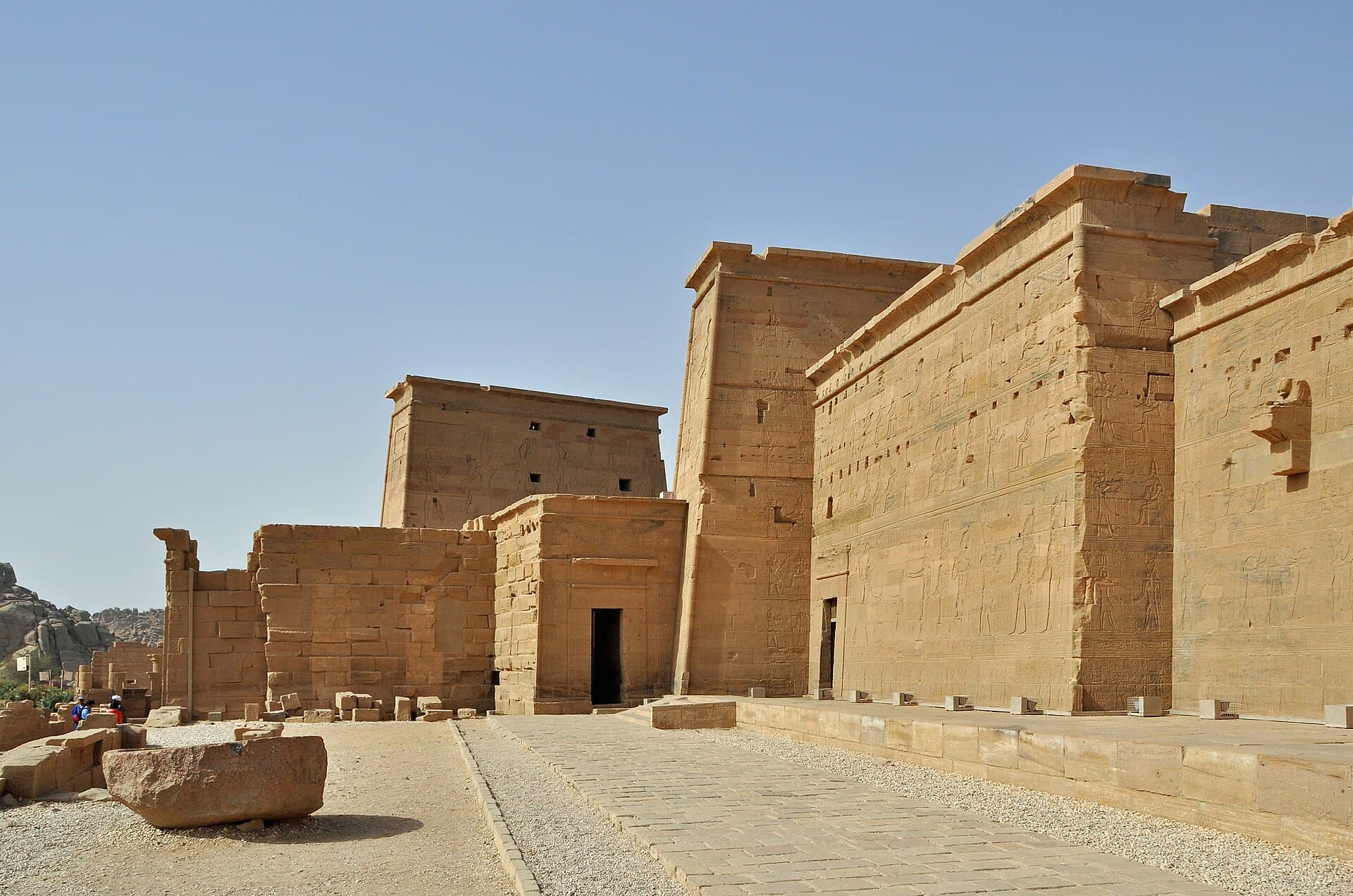
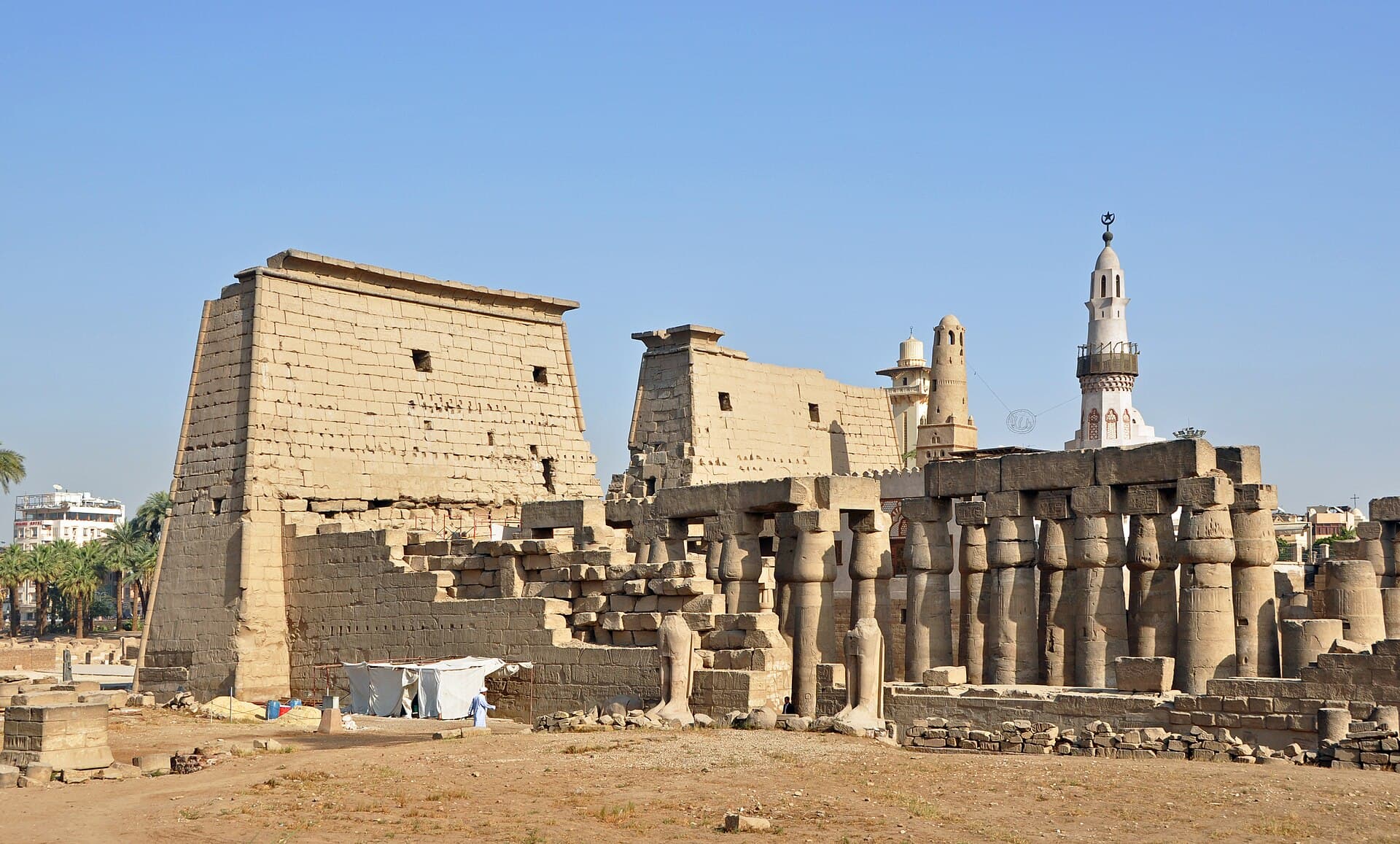
Fewer sites are genuinely riverside than the brochures suggest, and knowing which is which settles most of the argument. Kom Ombo is the only major temple you can step off a boat and walk to, up the steps from the mooring. Edfu sits inland, so you take a horse carriage or a minibus from the water. In Luxor, Karnak and Luxor Temple are a few minutes away by road, and the Valley of the Kings is across on the west bank, which means a coach morning whether you slept on a boat or in a hotel. In Aswan, Philae stands on an island and is reached by motorboat from a jetty outside town.
So the cruise's positional advantage is real but narrow. It covers two temples in the middle of the route that are awkward from anywhere else, and it delivers you to the rest of the sites in exactly the same vehicles a hotel would have sent. Anyone who imagines mooring beneath Karnak and walking up the avenue should adjust the picture now.
What the river does not reach matters just as much. Dendera and Abydos lie north of Luxor and no standard cruise sails there, so they need a road trip from a Luxor base. Abydos alone is about 150 kilometres and roughly three hours' drive each way. Abu Simbel is far south of Aswan, around 280 kilometres, and is a separate excursion on every itinerary, by road across the desert or by air. If an itinerary advertises a cruise that includes Abu Simbel, it means a coach before dawn, not a boat.
Unpacking once versus a better room
The cruise's strongest practical advantage is that you unpack once. No second check-in, no morning where you eat breakfast with your case already out in the corridor, no dead hours in a lobby waiting for a room. Across a week in the south that saves you the better part of a day and a good deal of low-grade irritation.
The trade is the room itself. Cabins on standard boats are small, the bathrooms are smaller, and the windows do not open. You hear the engine at night and the generator when moored. Hotel rooms in Luxor and Aswan are simply better at the same rating: more space, a proper shower, a pool that works in the afternoon heat, and a balcony you can sit on. If where you sleep matters to you, this is not a close contest.
One qualifier on ratings, because it catches people out. Egyptian boat ratings are not comparable with hotel ratings elsewhere: the same five-star label covers boats refitted last season and boats with tired cabins and weak air conditioning. A five-star hotel in Luxor is broadly the thing you expect a five-star hotel to be. A five-star boat is whatever the operator last spent money on, which is why the refit date is a better question than the star count.
Edfu and Kom Ombo are much easier by boat
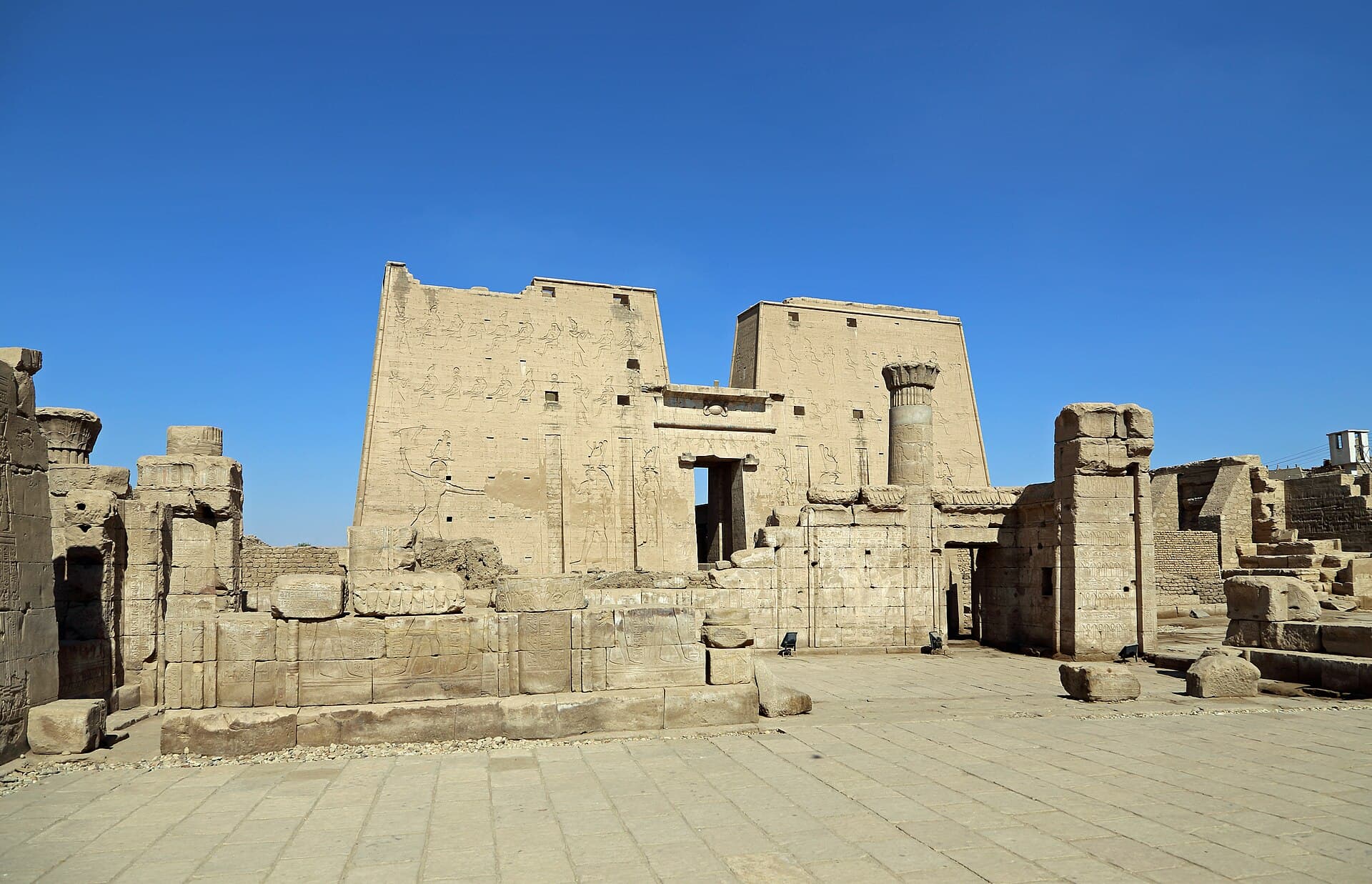
This is the argument that decides it for a lot of people. Edfu and Kom Ombo sit between Luxor and Aswan, and a cruise reaches both without anyone making a special effort. The boat moors, you take a horse carriage the short distance to Edfu temple, you come back for lunch, and Kom Ombo appears on the bank later in the day. It costs you no extra travel time at all.
By road they become a long day. You leave Luxor early, detour into Edfu town, stop again at Kom Ombo, and arrive in Aswan tired, usually having seen both in harsh light. It is entirely doable and plenty of people do it. It is just the weakest day of a land itinerary, and it is the one part of the route the boat genuinely does better.
There is a timing benefit as well as a logistical one. Boats tend to reach Edfu and Kom Ombo either early or late, before or after the road groups have driven up from Luxor and Aswan, so the temples are quieter than a coach itinerary usually manages. Kom Ombo at the end of the afternoon, with the light going and the crocodile museum next door, is one of the better hours on the river. The same temple in the middle of a driving day is a hot car park and a queue.
One thing to settle before you go, whichever way you travel. The Edfu carriage horses are not all well kept, and a minibus is normally available instead if you ask. Operators are used to the request and nobody minds. It is easier to raise it when you book than at the mooring with a child watching.
How a cruise day is shaped, and how a land day is
Cruise nights are counted generously, and that is where most of the disappointment starts. You board around midday and you leave after breakfast, so four nights is closer to three usable days, and part of that is spent tied up in port rather than moving. Three nights is closer to two. Ask how many full days you are buying, not how many nights are printed on the ticket.
Within those days the shape is fixed for you. Sites are usually visited early, while the air is cool, but afternoon and evening visits are normal too: Philae and the High Dam, Luxor Temple late in the day, Kom Ombo when the boat has come up from Edfu after lunch. Between excursions there is deck time, and the deck time is not filler. Buffalo on the bank, children waving from rowing boats, a heron lifting off ahead of the boat: that is the part most people remember a year later.
A land day has no such spine, which is either the attraction or the problem. Nothing happens unless you or your guide arranges it, and nothing stops you rearranging it at breakfast. That suits people who like to plan and frustrates people who booked a holiday partly to stop making decisions. Be honest about which of those you are, because it predicts your satisfaction better than any feature comparison.
A fixed timetable versus setting your own pace
A cruise runs to the sailing schedule, and the sailing schedule is not negotiable. Boats leave and arrive at similar times, so you tend to reach each site alongside everyone else, sometimes in the middle of the day when the tombs are hottest and fullest. You cannot skip a morning and sit by the pool without missing a temple, and you cannot linger where you would like to.
On land you set the clock. Karnak at opening, the Valley of the Kings before the coaches, a long break through the afternoon, Luxor Temple after dark when it is lit and half empty. You can also reach places the standard cruise route misses, Dendera and Abydos in particular, both by road north of Luxor and both worth a morning. For repeat visitors that flexibility is usually worth more than the convenience of the boat.
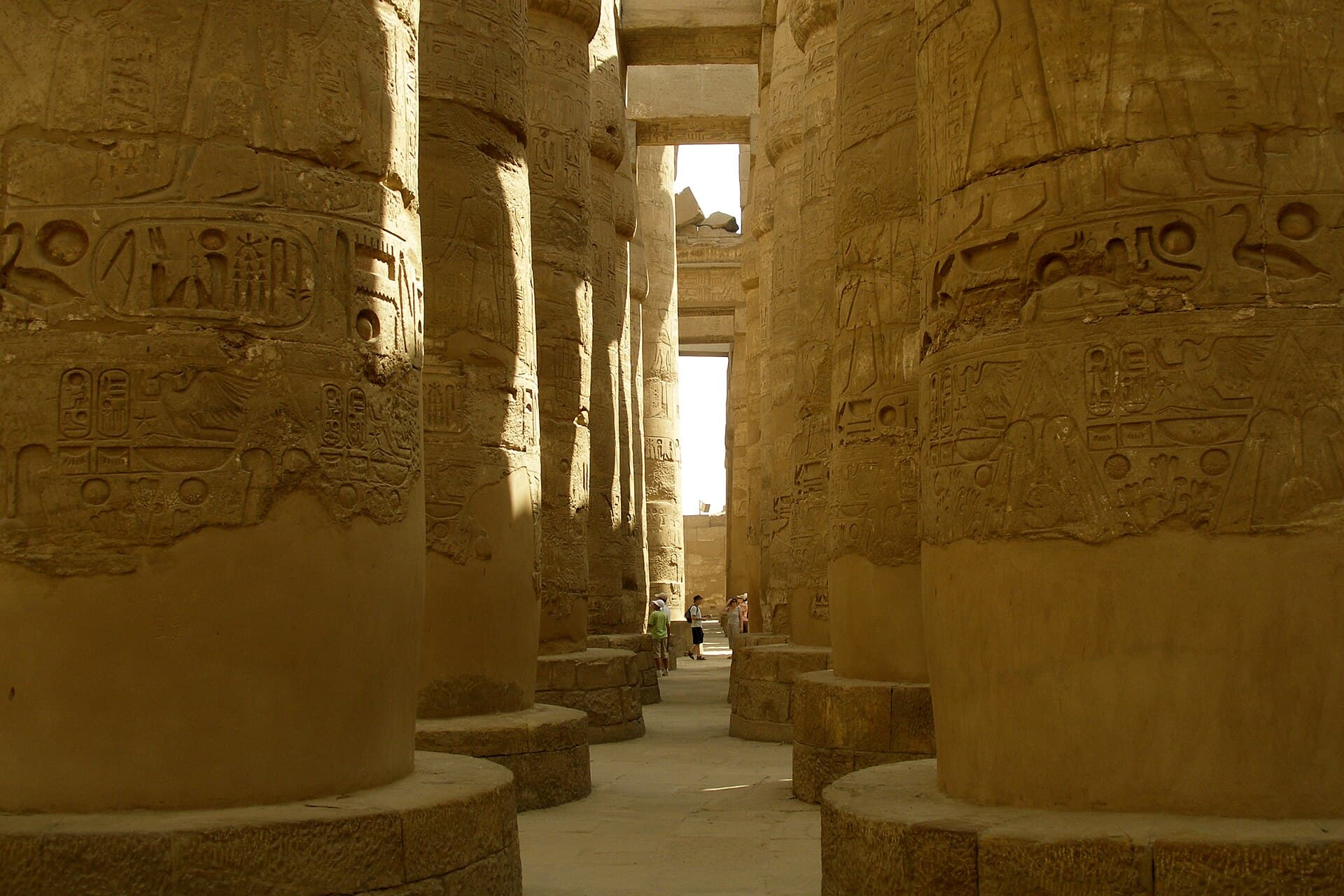
Karnak is the clearest example of what the schedule costs you. It is a complex built and rebuilt over roughly two thousand years, and it deserves half a day. On a cruise it will not get one, because the boat has somewhere to be. The west bank makes the same point at greater length: it rewards two full days, and no cruise itinerary gives you two full days there. If those two facts sting, you have your answer and it is not the boat.
Direction and length: decisions you only get on the boat
A land tour has no direction to choose. A cruise does, and the choice changes the trip more than most people realise. The four-night sailing runs south from Luxor up to Aswan, against the current, so there is more engine time and longer stretches on the water. The three-night sailing runs north from Aswan down to Luxor with the flow, which is quicker and typically 10 to 15 per cent cheaper on the same boat.
The southbound four nights is the better trip for most people. You start with the heavyweight sites, wind down through Edfu and Kom Ombo, and finish in Aswan, which is the calmest of the three cities. It also puts Abu Simbel at the end rather than squeezed into the middle. The northbound three nights front-loads the quiet part and ends with Karnak and the Valley of the Kings when you are already tired of temples, then disembarks you in Luxor at dawn.
There is one itinerary where the cheaper, shorter sailing is also the better one: if you are carrying on to the Red Sea. Luxor is about four hours by road from Hurghada, so finishing there rather than in Aswan saves a backtrack. That is a real scheduling advantage rather than a consolation, and it is worth checking against your flights before you default to the longer boat.
Longer sailings on this stretch usually mean a different kind of boat altogether. A dahabiya is a small sailing craft with a handful of cabins that needs five nights or more to cover the same route, and what the extra nights buy is not more temples. It is sandbank moorings, village walks, the rock-cut tombs at El Kab, the quarries at Gebel el-Silsila, and afternoons with nothing scheduled. If a boat is selling seven motorised nights on the standard route, ask exactly what the extra nights contain before paying for them.
Getting between Luxor and Aswan without a boat
If you choose hotels, the roughly 215 kilometres between the two cities still has to be crossed, and there are three sensible ways to do it. A car with a driver is the usual answer, because it lets you stop at Edfu and Kom Ombo on the way and turns a transfer into a sightseeing day, however long a one. The train runs the route several times a day in about three hours, is cheap, and gives you the river out of the window, but it will not stop at a temple for you. Flying between the two is the one leg not worth flying: check-in and transfers cost more time than the drive.
Two things make road timings less predictable than the map suggests. Security checkpoints sit on most intercity routes and foreign passengers are routinely asked for passport details, so keep a passport or a copy within reach. Most checks take a couple of minutes and the occasional one takes considerably longer. Convoy requirements on the Luxor to Aswan road have largely been relaxed, but they can be reimposed at short notice on any route, and the Abu Simbel road is a standing candidate. Pad the day rather than promising yourself a precise arrival.
Self-driving the valley is the one option we would talk you out of. Driving is assertive, unlit obstacles are common on rural roads at night, and a foreign driver attracts more questions at checkpoints. A car with a driver costs more than a hire car and solves all of it, and for two people doing several legs the gap against taxis and internal flights is smaller than you would expect.
The mooring problem
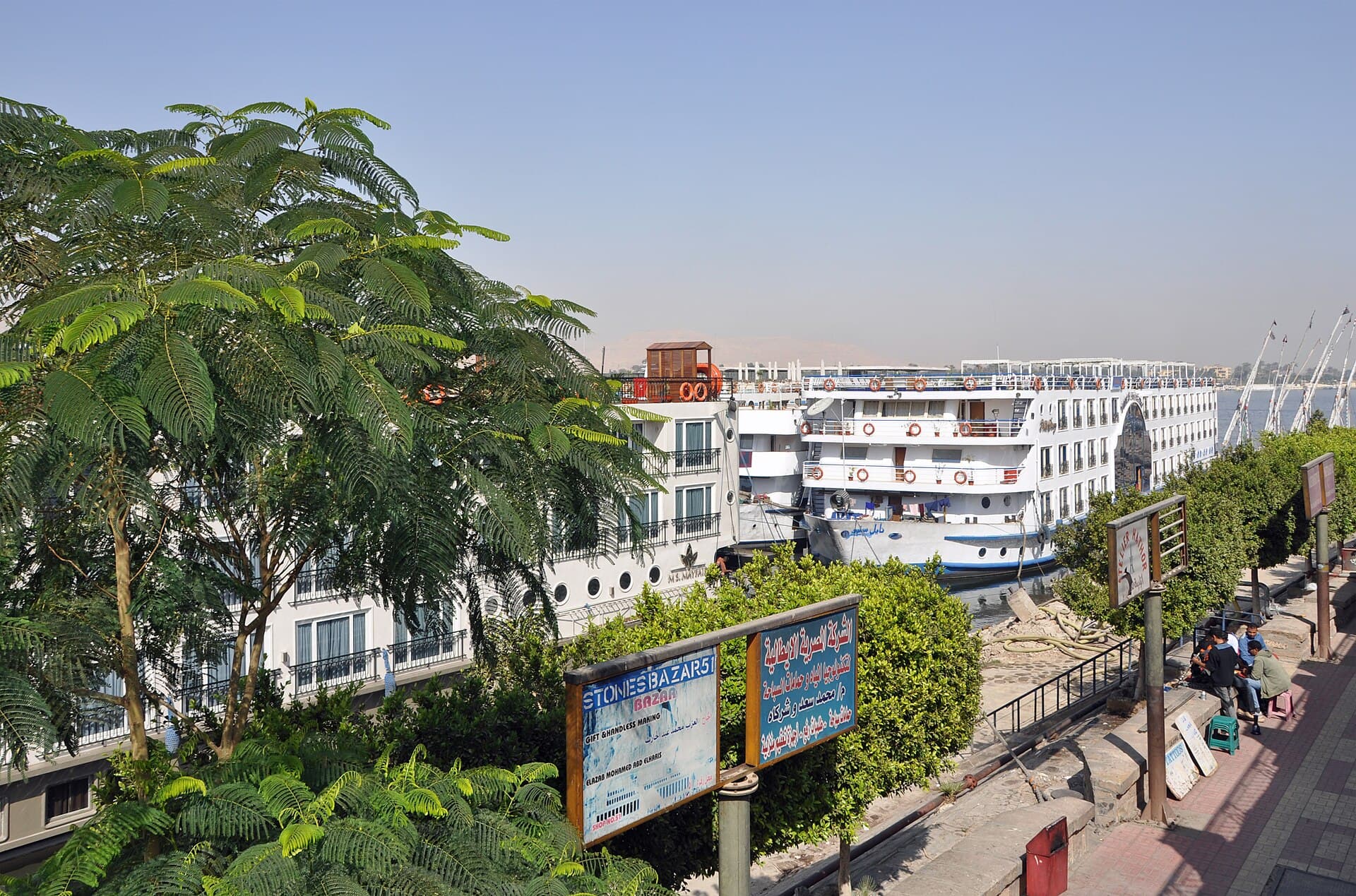
Boats do not each get their own stretch of bank. At busy moorings in Luxor, Edfu and Aswan they raft up two, three or four abreast, and if you are on the outside you cross other boats to reach land. If you are on the inside your window looks into someone else's cabin. Berths are allocated by the port, not by the operator, so nobody can promise you a view.
The Esna lock is the other thing worth knowing. Traffic queues there, and at busy times the wait can run to a few hours. It rarely breaks an itinerary, but it can eat an afternoon. Hotels have no equivalent problem: your room faces where it faces, and the view is the one you saw in the photographs. If a guaranteed view matters to you, that argues for a room rather than a cabin.
Rafting is worst in exactly the months most people want to travel. High season, from December through February, is when the moorings stack up hardest and the lock queues are at their most tiresome, and it is also when the boats worth being on have long since sold out. That is the honest version of the winter cruise: the best walking weather in Egypt, at the highest prices of the year, with the most hulls between your window and the water.
What can go wrong on each, and what it costs you
On a boat, the thing that goes wrong is the sailing. Low water, a long queue at the Esna lock or a mechanical problem occasionally leaves a boat where it is, and the operator then moves the group to the sites by road instead. The itinerary survives; the sailing does not. It is uncommon, but it is worth knowing that the temples are the guaranteed part of the week and the river is not. You have no fallback of your own, because your room is attached to the problem.
On land, the thing that goes wrong is the road. A closed route, a slow checkpoint or heavy traffic at either end can turn a three-hour transfer into something considerably longer, and a driving day that overruns takes the afternoon site with it. The compensation is that you can rebuild the day. Swap the temple you missed to tomorrow morning, or drop it and add an hour on the west bank instead. Nothing sails without you.
Both failures are survivable and neither is common. The difference is who absorbs them. A cruise absorbs disruption on your behalf and gives you no say in the outcome. A land tour hands you the disruption and the remote control at the same time. Which of those you prefer is close to the whole question of this page in miniature.
Cost, honestly
A cruise fare bundles the cabin, all meals, the guiding on board and the transfers between boat and site. A land tour looks cheaper line by line, then you add the guide, the car and driver, the meals you were paying for anyway, and one very long transfer day. Compare like for like and the middle of the market comes out close to level.
The ends of the market differ. At the budget end, land is cheaper, because a simple hotel in Luxor undercuts even a modest boat. At the top end, land wins on value rather than price: the best hotels in Luxor and Aswan are considerably better than the best standard cruise boats, and you are paying for a much better product. A small sailing dahabiya narrows that gap, at a cost of its own.
Two lines are usually missing from the cruise quote and both matter. Drinks are rarely included, and bottled water on board costs far more than it does ashore, which over four nights is not trivial. Entrance fees are sometimes in the price and sometimes not, and the Upper Egypt sites are not cheap. Ask about both explicitly, along with what the optional excursions cost, because an all-inclusive-sounding fare with a long list of extras is how two quotes that looked identical stop being identical.
The hidden cost on the land side is time rather than money. One long transfer day is a day you have paid for and largely spent in a car. If your trip is short, that day is expensive in a way no invoice records, and it is the single strongest argument for the boat on a week-long itinerary.
Season changes the answer more than anything else
Heat hurts you at the sites, not on board, and that asymmetry is the reason season belongs in this decision. A boat gives you shade, air conditioning and a cabin an hour from wherever you are standing. A temple gives you none of those. On a hot month the cruise bounds the hard part of the day: out early into full sun, then back aboard for a long air-conditioned pause. A land tour in the same month means a coach and a hotel lobby, which is a duller version of the same retreat.
The numbers are stark enough to plan around. Luxor runs around 41C from June to August, about 39C in May and 38C in the first half of September, and roughly 35C in April. October is about 34C and March about 29C, which is why those two months are the standard answer when someone can choose freely. December through February sit around 23 to 25C, the best walking weather in the country, at the busiest and most expensive time of year.
Winter flips the argument the other way. Evenings on deck are the thing people picture when they book a cruise, and in December and January they are cool enough for a jacket. Packing only for a hot country is the most common mistake on winter sailings, and it costs people the best hour of the day. A hotel with a terrace and a heater has no such problem.
Two seasonal details worth holding. The khamsin, a hot southerly wind carrying sand, can arrive from late March and flatten visibility for a day or two, which matters more for photographs than for schedules. And the Abu Simbel sun alignment falls around 22 February and 22 October, draws crowds, and is an Aswan excursion rather than a cruise stop, so it needs a hotel night booked well ahead either way.
Who each one suits
Take the boat if this is your first Egypt trip, if you have about a week for the south, if packing and repacking wears you down, or if you are traveling with a group who will not agree on a schedule. It is the low-friction option and it works, because the awkward middle of the route is handled for you rather than negotiated every morning.
Stay on land if you have been before, if you want Dendera or Abydos, if you are traveling with young children who need space and a pool, if you eat restrictively, or if you care about photographing temples in good light. One caution about mobility: boats involve gangplanks, steps between decks and narrow corridors, and lifts are not standard. Anyone with limited mobility is usually better off in hotels with a car.
Travelling with children: the boat usually wins, with caveats
For families the cruise advantage is the dull one again: you unpack once. No hotel changes, no early transfers with a half-asleep toddler, no repacking every second morning. The other benefit is having somewhere to go when they have had enough, because after a long morning out the shaded deck and the air-conditioned cabin are a minute apart. On land the same moment means a drive back to the hotel and a lost afternoon.
The stops divide neatly by age. Kom Ombo is the easiest win on the river, a few steps from the mooring with crocodile carvings and a museum next door. Edfu is a carriage or minibus ride that many children enjoy more than the temple at the end of it. Karnak and the Valley of the Kings are the hardest: enormous, unshaded, dusty, with steep tomb entrances and nothing resembling pushchair access. The standard Valley ticket covers three tombs and two is often plenty with a flagging child.
Three caveats keep this from being a clean win. Not every boat has a pool, and the ones that do are often small and overlooked, so confirm it rather than assuming from a photograph. Railings vary from boat to boat and a small child can be somewhere they should not be in seconds, which is a rule to set on day one rather than a risk to discover. And temple fatigue arrives faster for children than adults, so three or four nights carries less risk than seven: the trip ends before the children do.
Summer is where the family answer changes completely. Upper Egypt at 41C is genuinely not a good idea with young children whatever the discount, and that holds on a boat as much as in a hotel. Roughly October to April is the sensible window, with Christmas, New Year and Easter inside it and busier for that reason.
Mobility, sleep and eating: the three quiet deciders
Mobility is the one genuine disqualifier, and it deserves more than the half sentence it usually gets. Boarding a boat means a gangplank, and at a rafted mooring it means several gangplanks and other boats' lobbies. Decks connect by stairs, corridors are narrow, and lifts are not standard equipment on standard cruisers; dahabiyas have none at all. River steps at the smaller stops are steep and uneven. If steps are a problem, hotels and a car are not a compromise, they are the correct answer.
Sleep is the next one. The Nile is flat and the boats are large relative to it, so seasickness is not the issue. Vibration, engine noise and generator hum are, particularly in cabins towards the stern and on the lower decks. If you sleep lightly, ask for a cabin forward and high up; it makes more difference than the cabin grade does. A hotel room has none of this, and for some travellers that single fact settles the whole comparison.
Eating is the third. Boats serve international buffets three times a day with a few Egyptian dishes, cooked for a room of mixed nationalities. Nothing is bad and little is memorable, and by the third day most people have had enough of it. Special diets are usually manageable, but only if the operator is told well before you board rather than at the first dinner. On land you eat where you choose, which is one of the quieter arguments for hotels and a decisive one if you eat restrictively.
Early starts and optional extras: where the boat gets tight
The sunrise balloon flight over the Luxor west bank is the clearest case of the cruise schedule squeezing something. On a boat it is sold as an optional extra for the morning you are moored at Luxor, and pickup is in the small hours from the mooring. That means doing the balloon and the Valley of the Kings on the same morning, which is a long stretch in the heat with no possibility of an hour's sleep in between.
From a hotel, you are collected from reception, back by mid-morning, and free to sleep before doing anything else. It also lets you follow the one piece of advice that matters most: book the balloon for your first morning in Luxor rather than your last. Cancellations for wind are common, and a first-morning booking leaves you another attempt. On a cruise you usually have exactly one Luxor morning, so a cancellation is the end of it.
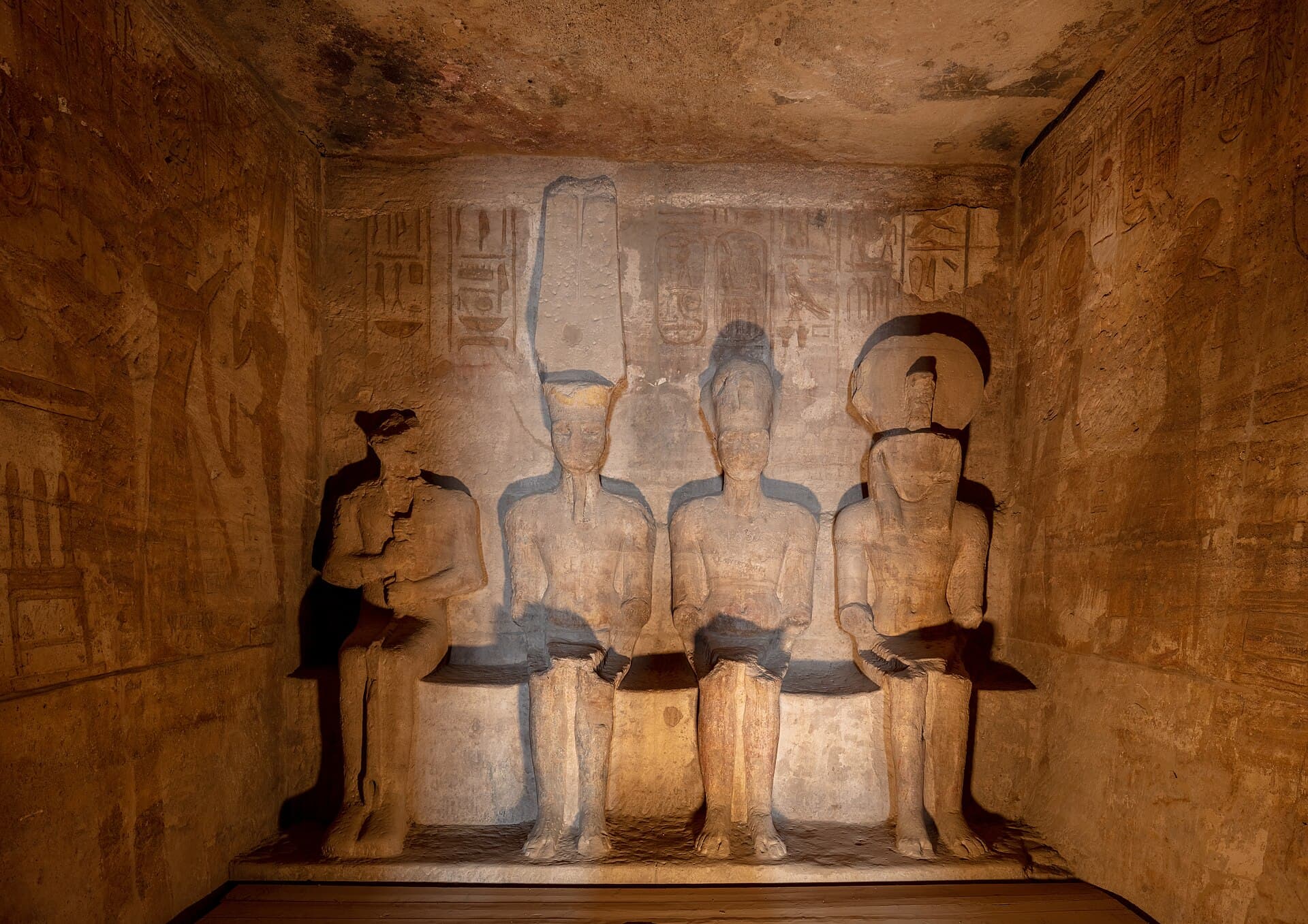
Abu Simbel works the same way. It is a separate excursion from Aswan either way, roughly three to four hours each way by road or a short flight, and the version that does not involve a start against a sailing schedule is the one with a hotel night after the boat. Cruise itineraries treat it as an optional extra with an early departure, which can be tight. Departure arrangements and flight schedules change, so confirm what is running on your dates.
What to ask before you book either one
For a boat, four questions are worth more than the star rating. When was the last refit and what did it cover? How many passengers does the boat carry, and how large are the excursion groups, because a full boat filing through Edfu behind one guide is a different morning from a small one. Which deck is the cabin on, since upper decks are quieter and lower-deck windows sit close to the waterline. And what is not included: drinks, entrance fees, the optional excursions.
For a land trip, ask about the guide and the car before anything else, because they are the product. Is the guide with you throughout or handed over at each city? Is the car yours for the day or shared? How is the Luxor to Aswan transfer built, and does it include Edfu and Kom Ombo or add them as extras? Then ask which bank your Luxor hotel is on, because the west bank is quieter and closer to the tombs while the east bank is closer to Karnak, the corniche and the restaurants.
Ask one question of both: who is arranging this on the ground. We are not the company in Egypt. A local partner handles the guiding and the logistics, and we brief them on who is travelling. That matters more than the brochure, because the guide shapes the week more than the ship or the hotel does, and on both kinds of trip a good one is the difference between a row of columns and a place you understood.
The hybrid: cruise one way, hotels at each end
This is the version people who have done both tend to arrange the second time round. You spend two or three nights in a Luxor hotel and do the west bank properly at your own hours. You then board a boat for the leg to Aswan, which is exactly where the boat earns its place, Edfu and Kom Ombo included. You finish with hotel nights in Aswan for Philae, the Nubian villages and the run down to Abu Simbel.
The catch is logistics. Cruise boats sell fixed three and four night sailings on set days, so your hotel nights have to be arranged around the boat's departure rather than the other way round. It also costs more than either option on its own, because you are paying for hotel nights and a cabin. What you get is the temples the boat does well and the rooms the hotels do well, with only one river transfer.
If the budget only stretches to one extra night, put it in Aswan after the boat rather than anywhere else. Almost every cruise finishes there and most passengers fly out the morning they dock, so their Aswan is a hurried Philae stop wedged between disembarkation and the airport. One hotel night buys an unhurried afternoon on the water, an evening on the corniche, a felucca among the granite islands, and Abu Simbel without a pre-dawn start pressed against a sailing schedule. It is the best single upgrade available to a Nile trip and it costs less than another cruise night.
Nile cruise vs land tour: the verdict
For a first trip of seven to ten days, take the cruise. The boat solves the awkward middle of the route, you unpack once, and the compromises in the cabin matter less than you expect when you are out of it from dawn. If the budget stretches, use the hybrid instead, since it fixes the main weakness of the cruise without giving up the easy version of Edfu and Kom Ombo.
For anyone with more time, a second visit, or firm views about where they sleep and when they get up, stay on land and accept one long driving day. The road version of Luxor to Aswan is the weaker day out, and everything else about a land trip is better. Sailing dates, boat availability and flight schedules change through the year, so check what is actually running on your dates before fixing the rest.
One last framing, because it is the honest one. Judged as a holiday, a standard cruise is ordinary: transport with beds and a buffet, not a destination in itself. Judged as a way of covering Upper Egypt in a week without losing days to transfers, it is very good indeed, and the sailing afternoons are a genuine pleasure. Book it with that expectation, chosen on its refit and its guide rather than its stars, and it is money well spent. Want long days on the west bank, a proper room, or your own timetable, and hotels were always the better trip.
Common questions
Does it matter which direction I sail?+
The Nile flows north, so Aswan to Luxor is the downstream run and it is usually a night shorter than sailing upstream from Luxor to Aswan. The upstream direction therefore tends to give you more time on board for the same route, and it puts Aswan and Abu Simbel at the end, which suits you if you are flying out from there. Sailing days vary by boat, so check yours.
What is the food like on board?+
Buffet, three times a day, broadly international with some Egyptian dishes. It is fine and there is plenty of it, but it repeats, and by the third day most people have had enough of it. Special diets are handled better when flagged well in advance. On land you eat where you choose, which is one of the quieter arguments for hotels.
Is a dahabiya or a felucca a better idea?+
A dahabiya is a small sailing boat with a handful of cabins. Quieter, moors in places the large boats cannot, and much more pleasant. It costs more, sails slowly so needs more nights, and departures are limited. A felucca is a different thing again: open deck, sleeping under blankets, no private bathroom on most. Good fun, not comfortable.
Will I get seasick?+
No. The Nile is flat and the boats are large relative to it. What people do notice is vibration and engine noise, particularly in cabins towards the stern and on the lower decks, plus generator hum while moored. If you sleep lightly, ask for a cabin forward and high up. It makes more difference than the cabin grade does.
How does Abu Simbel fit into either option?+
Abu Simbel is a separate excursion from Aswan on both cruise and land trips, either by road across the desert very early in the morning or by air. Cruise itineraries usually treat it as an optional extra with an early start, which can be tight against sailing times. On a land trip it slots in more easily. Departure arrangements and flight schedules change, so confirm what is running on your dates.
Do I see the same temples on a cruise and a land tour?+
Almost exactly the same list. Karnak, Luxor Temple and the west bank at one end, Philae, the High Dam and the quarries at the other, with Edfu and Kom Ombo in between. What changes is the order, the time of day and how hard the middle two are to reach. The only real difference in coverage runs the other way: Dendera and Abydos, north of Luxor, are off every standard cruise route and need a road trip from a Luxor base.
Is a land tour cheaper than a Nile cruise?+
At the budget end, yes, because a simple hotel in Luxor undercuts even a modest boat. In the middle of the market the two come out close to level once you add the guide, the car and driver, and the meals a cruise fare would have bundled. At the top end land is not cheaper but it is better value, since the best hotels in Luxor and Aswan are considerably better than the best standard cruise boats.
How many days do I need for Upper Egypt either way?+
Six to eight days covers it properly: about three in Luxor, two in Aswan, and the stretch between them, with an extra day if Abu Simbel is on your list. A four-night cruise compresses that into a week including travel, which is why it suits short trips. Two days in Luxor is the practical minimum and it will feel rushed, whichever way you are sleeping.
Which option is better in summer?+
The boat, by a clear margin, though neither is comfortable. Luxor runs around 41C from June to August, so excursions move to first light and the middle of the day is written off either way. On a boat the retreat is a shaded deck and a cabin an hour from wherever you are standing; on land it is a coach and a hotel lobby. Neither is a good idea with young children at that temperature.
Can I visit Dendera and Abydos on a Nile cruise?+
Not on a standard sailing. Both sit north of Luxor and cruise boats work the stretch south of it, so reaching them means a road trip from a Luxor base. Abydos alone is about 150 kilometres from Luxor, roughly three hours each way, and the pair together make a long day. If either is a priority, that argues for hotel nights in Luxor at the start of the trip.
Can I combine either option with the Red Sea?+
Yes, and it is the usual shape of a two-week trip: Cairo, the Nile, then a week on the coast with a direct flight home. Luxor is about four hours by road from Hurghada, so finishing in Luxor rather than Aswan saves you a backtrack. That makes the shorter northbound cruise, or a land itinerary that ends in Luxor, the more convenient choice for this particular plan.
Official sources
Entry rules, opening hours, security advice and exchange rates all move. Check them at the source, not here.
Written and checked by the Nile Trip Guide editorial team · Last reviewed . Entry rules, prices and opening hours change — check anything critical against the official sources linked on this page.
Plan this trip
Tell us your dates and we will price it
A real itinerary with real prices, usually within 24 hours. Nothing is booked and nothing is charged until you say yes.
The route most people take first, at the length it was built for: Giza and the Grand Egyptian Museum, then a flight to Luxor and four nights sailing down to Aswan.
No boat on this one. Giza and the Grand Egyptian Museum, a night in Luxor for both banks, two nights on the Red Sea, then back to Cairo for the Citadel, Coptic Cairo and the Royal Mummies.
Five nights in Cairo either side of a four-night sail from Luxor to Aswan. The Cairo days are private, just your party and a guide; the sightseeing off the boat is shared with a small group.