How much to tip in Egypt is really two questions: what to give each person you meet, and how much to have in your pocket before the day starts. Tipping here is not a bonus for good service. Baksheesh is a structural part of how people in tourism are paid, so budgeting for it properly is the single easiest way to avoid awkwardness on a trip.
What it actually comes to per day
On a guided day with a private Egyptologist and a driver, budget 15 to 20 euros per person. Each night on a cruise adds another 5 to 10 for the crew box. Over a ten-day trip with four nights on the river, that is roughly 180 to 220 euros per person, and it covers everyone: guide, driver, crew, porters and the constant small change.
That is higher than most single figures you will see quoted, including the one this site used to publish. We said 8 to 12 euros per person per day, which our own breakdown refuted — a private guide alone takes 10 to 15, so the guide filled the whole allowance before the driver was paid. The figures below are checked against three independent Egyptian operators and they agree once you notice the trap in the sources: some quote per group and some per person, which is where the factor of two comes from.
The honest caveat is that tipping norms are a range, not a price list. Nobody will count. Aim at the middle of these numbers, carry enough that you are never short, and treat anyone quoting a single precise figure for a whole trip with suspicion.
Note also that the daily figure only applies to the days that actually have a guide and a driver in them. A trip with four guided days, three cruise nights and three days of your own in Cairo does not cost you the full daily rate ten times over. Work through your itinerary day by day, mark which ones are guided, which are on the water and which are independent, and add only what each of them earns. That sounds obvious and it is the step almost nobody takes, which is why the totals people quote each other vary so wildly.
One more reason the numbers move: the going rates shift with inflation, and the Egyptian pound has lost a great deal of value against the euro and sterling over the past few years. Figures published even two or three years ago are unreliable in a way that has nothing to do with anyone being wrong at the time. Ask your operator what is current when you book, and treat any article of unknown age — this one included, if you find it long after it was written — as a shape rather than a price.
Who gets what
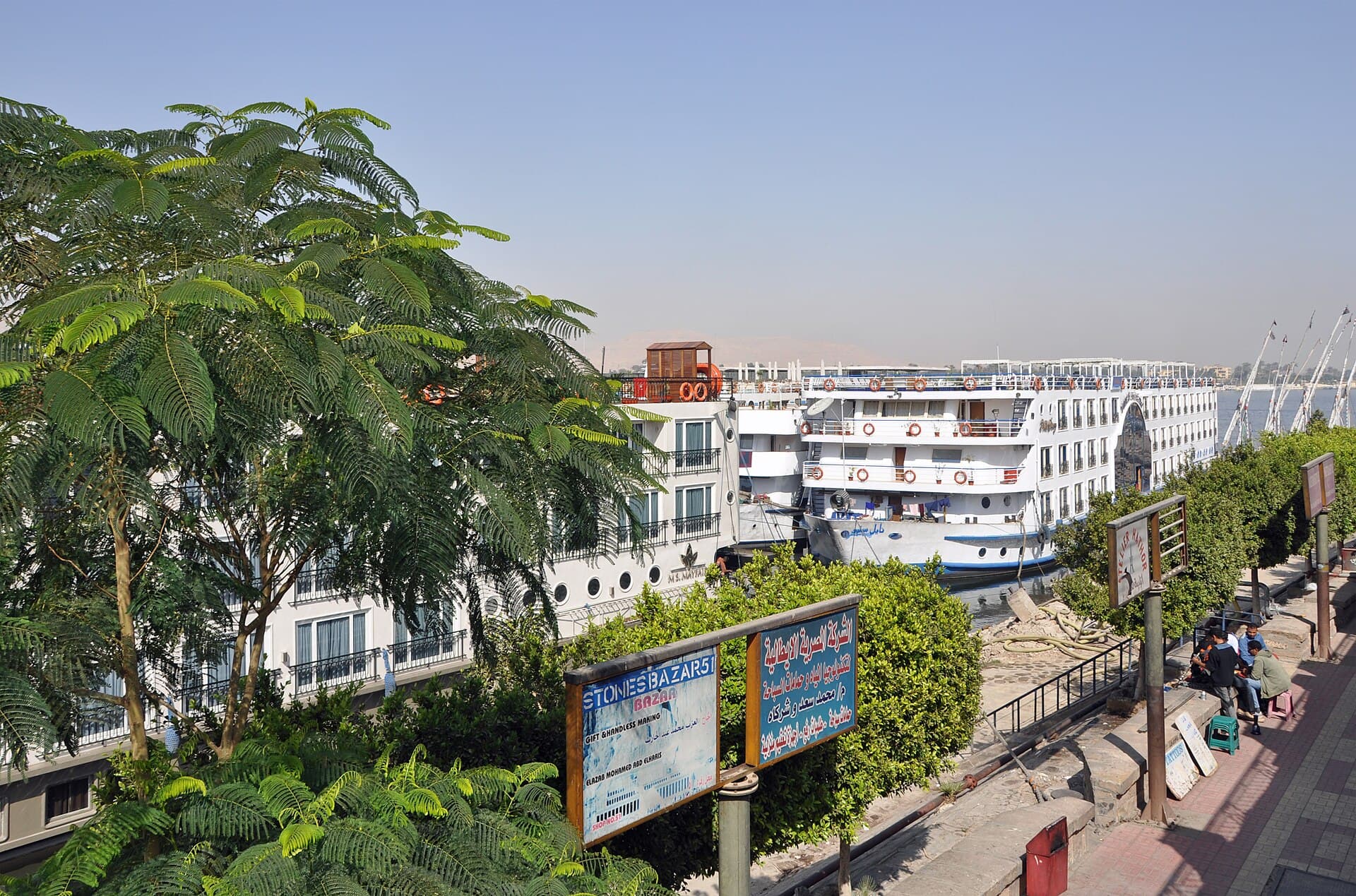
Your Egyptologist guide takes the largest single share. Around 10 to 15 euros per person per day is described as normal for a private guide, and less in a group, which stands to reason: a group guide is being tipped by everyone in the group. Drivers are put at 5 euros per person per day. On a Nile cruise there is usually a communal crew box at the end, at 5 to 10 euros per person per night, and that is the mechanism most boats use rather than chasing individual crew.
Hotel porters and housekeeping take small notes rather than coins. That distinction matters more than the amount does — coins are close to useless here and handing them over reads badly.
Restaurants are the one place where you may already have paid. Service is often added to the bill, so check before you add more. Nobody expects you to tip twice, and reading the bill takes five seconds.
In a group the guide's share is put at 3 to 5 euros per person per day rather than 10 to 15. That is not meanness and it is not a different standard of service: fifteen people paying five euros each is a considerably better day for the guide than two people paying twelve. It is the single largest structural difference between a private trip and a group one on this particular line of the budget, and it is worth knowing before you compare two quotes.
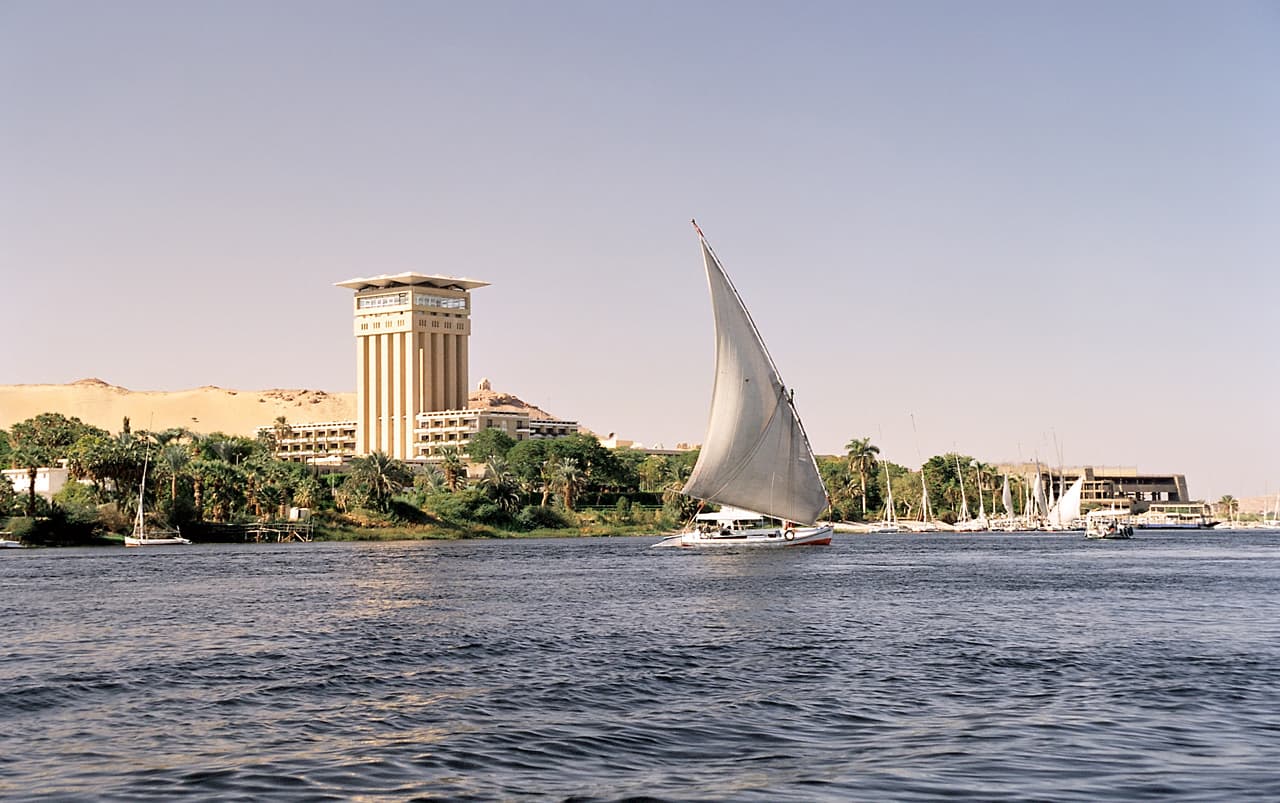
Below the guide and driver sits a tier of small, frequent payments that people find harder to price because the sums are so modest. Roughly 20 to 50 Egyptian pounds covers a porter, a washroom attendant, the man who steadies you as you step onto a felucca, or the person who fetches a chair. None of these is significant on its own. All of them together are why the float of small notes matters more than the total you are carrying.
The driver is normally tipped separately rather than through the guide. It is an easy detail to get wrong, because the guide is the person you have spent the day talking to and the driver is the one who waited outside in the sun for three hours. Handing the whole lot to the guide and assuming it gets divided is not the arrangement, and the driver is the one it costs.
Why the amounts are in euros but the notes are Egyptian
Every figure on this page is quoted in euros and handed over in Egyptian pounds, and that is not a slip. Egyptian tourism prices itself in hard currency because the pound has moved sharply in recent years, so operators, hotels and boats quote in euros or dollars and hold those figures. Tipping norms have followed the same logic, which is why guidance for visitors is written in euros even though nobody in Egypt is paid in them.
What that means in practice is that the euro figure is the unit of account and the pound note is the thing you actually hand over. Work out your budget in euros because that is how the guidance is written and how your operator will talk about it, then change that money and carry it as Egyptian pounds in small denominations. Converting in your head as you go is a nuisance for the first day and second nature after that.
The exchange rate will have moved since anything you read was written, so do not carry a memorised conversion. The Central Bank of Egypt publishes the day's rate and a phone with data will tell you in ten seconds what your euros are worth. Check it once when you change money and you will have a working sense of the notes in your hand for the rest of the trip.
What to carry, and in what currency
Egyptian pounds, in small denominations, and more of them than you think you need. Change money early in the trip rather than on day four when you have already run out. This single piece of preparation removes most of the friction people describe.
Do not fall back on a large euro note because you have nothing smaller. It helps nobody, and it distorts expectations for the travellers behind you — the next person turning up with the right change now looks stingy for no reason. Carrying small notes is not a courtesy, it is the practical requirement of a system where a lot of small payments happen every day.
Getting hold of the pounds takes a little planning, because the Egyptian pound is a closed currency in practice and you cannot sensibly buy it before you fly. You bring euros, dollars or sterling and change them after you land. Banks and exchange offices refuse foreign notes that are torn, marked or badly creased, and older-series dollar bills are often turned away or taken at a discount, so ask for clean new notes when you buy your currency at home.
Change in stages rather than all at once. A small amount at an airport bank counter covers the transfer, the first tips and a bottle of water; the bulk is better done at a bank or licensed exchange office in town, where the rate is noticeably better. Hotel front desks are worse again than either. Take your passport, since counters generally want to see identification, and keep the receipts — converting leftover pounds back at the end is sometimes only possible if you still hold them.
Building the small-note float, and keeping it
The float is the part of this that people underestimate. Notes in general circulation run from five pounds up to two hundred, and a two hundred note is useless for a payment of thirty. Nobody has change, or nobody admits to having it, so handing over a large note for a small service produces either a long negotiation or a shrug in which you lose the difference. The fix is to build a stock of fives, tens and twenties deliberately rather than hoping one accumulates.
Break large notes where you are already spending: supermarkets, hotel bars, pharmacies, cafés. A useful habit is to pay for one ordinary thing a day with a big note specifically to get change back, whether or not you needed to. Guides and drivers will usually swap notes for you if you ask, and they would far rather do that than watch you improvise at the temple gate. Keep the float separate from your main wallet so you are never fanning a thick stack out in the street.
Coins deserve a line of their own, and a short one. The pound divides into a hundred piastres, but inflation has eaten them and the one-pound coin is about as small as money gets in practice. Coins are not what anyone is expecting and offering them reads badly even when the arithmetic is right. If you end up with a pocketful, spend them in a supermarket rather than trying to tip with them.
Watch the notes themselves as well. The ten and the twenty exist as both paper and plastic versions with different designs, which catches people out when they count quickly, and Egyptian notes carry their value in Arabic-Indic numerals on one face and Western numerals on the other. There is always a side you can read at a glance. Count what you are handed, openly, before you walk off — not because you are being cheated, but because a fast count of two similar-looking notes is easy to get wrong on both sides.
Why baksheesh is not a Western tip
In much of Europe a tip rewards good service after the fact. In Egypt baksheesh works more like a small, expected transaction that runs alongside the service itself, and it covers a much wider range of interactions than a restaurant tip does. That is the whole difference, and it explains almost everything that surprises first-time visitors.
It is not a bonus for exceptional service and it is not a judgement on how the day went. It is part of how people in tourism are paid. Once you have accepted that, the arithmetic stops feeling like a moral question and turns into a line in the budget, which is where it belongs.
The practical consequence is that withholding a tip is not the signal you might think it is. In a system where the tip is part of the wage, handing over nothing does not read as feedback on the service; it reads as a visitor who did not understand the arrangement, or did not bring enough money. If you genuinely had a bad day with a guide, the useful thing to do is say so to the operator who employs them. That is a complaint. A missing tip is not.
The word itself covers more ground than any single English equivalent. Baksheesh runs from the tip you give a guide at the end of four days together, through the small notes handed over dozens of times a day, to something closer to charity given to someone who has provided no service at all. They are not the same transaction and it does not help to pretend they are. The guide is a budget line. The rest is small change and your own judgement.
Tipping on a Nile cruise, and why it is handled differently
Most boats run a communal crew box collected at the end of the cruise, and 5 to 10 euros per person per night is the range described. The point of the box is distribution: it covers the cabin steward, the waiters and the deck crew together, and it reaches the kitchen and the engine room, where the people you never meet are working. Tipping only the faces you saw would leave half the boat out, which is precisely what the box exists to prevent.
That does not stop you handing something directly to a cabin steward who has looked after you particularly well, and plenty of people do. It is your own call, and nothing here says you must. What you should not do is treat a direct tip as a substitute for the box. The box is the arrangement; anything on top of it is yours to decide.
The cash logistics are the part worth planning. A cruise is the point in an Egypt trip where the nearest working ATM is furthest away — you are on the water between Luxor and Aswan, the temple stops are short, and the boat is not where you solve a cash shortage. Draw what you need in Luxor or Aswan before you board, crew box included, rather than discovering the problem on the final evening.
Ask early what is not included on board. Drinks are usually extra, and alcohol carries heavy duty in Egypt, so imported wine on a boat costs roughly what it would at home. Optional excursions, spa treatments and the boat's shop sit outside the package too, and whatever you sign for is settled before you leave. Check at the start which currency that account is kept in and whether paying by card carries a surcharge — a five-second question on the first evening and an unpleasant surprise on the last.
Hotels: porters, housekeeping and the front desk
Hotel tipping is low-value and high-frequency, which is exactly the pattern the small-note float is for. A porter who takes bags to the room, a housekeeper who services it, the doorman who finds you a taxi: each of these is a note in the 20 to 50 pound range rather than a considered sum, and each of them happens more often than you expect across a week.
Leave something for housekeeping day by day rather than in one lump at the end. Rooms are not always serviced by the same person across a stay, so a single note on checkout day rewards whoever happens to be on shift. Leaving a note each morning, somewhere unambiguous, is the arrangement that actually reaches the people who did the work.
The front desk is a different matter. Reception staff are salaried in a way porters and housekeepers generally are not, and there is no expectation of a tip for checking you in. Where a concierge has genuinely gone out of their way — chased a lost bag across the city, fixed something that was not their problem — a note is appreciated and is nobody's default.
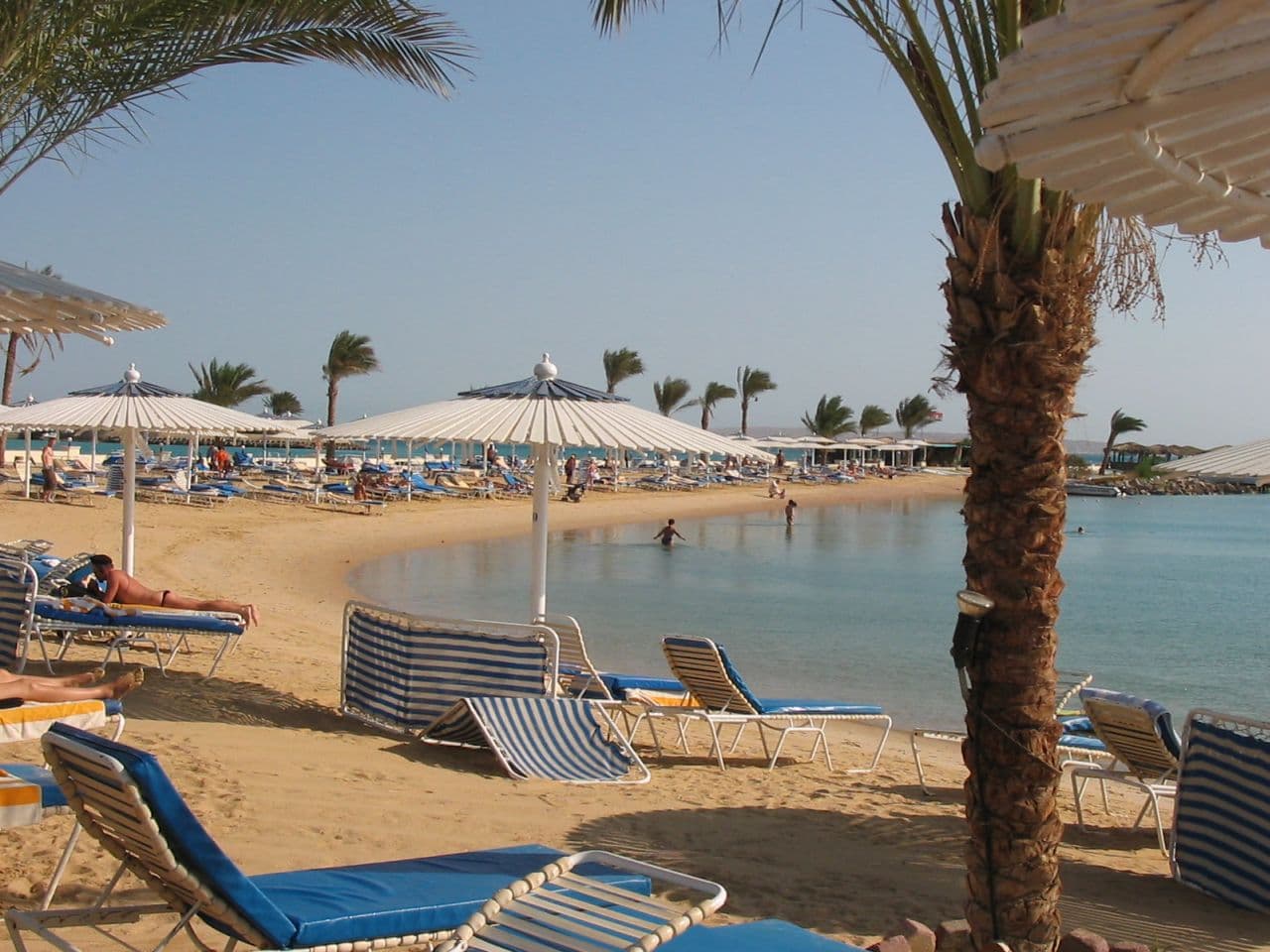
In the Red Sea resorts the whole question softens inside the gates. Cards work much as they would in Europe at a large hotel in Hurghada or Sharm el-Sheikh, and a resort stay simply involves meeting fewer people whose income depends on baksheesh. Step outside into the town, a dive centre, a taxi or a market and you are straight back into the cash economy described everywhere else here.
Restaurants, cafés and the service charge
Read the bill first. Restaurants in Egypt commonly add a service charge and tax to the total, and once that is on there you are not expected to pay a second full tip on top. This is the single easiest place to overspend by accident, and it takes five seconds to check.
The honest complication is that the service charge does not reliably reach the person who served you. That is why leaving a modest cash note on the table — the figure usually given is around ten per cent — is standard practice rather than double payment, and it is why the two pieces of advice you will see on this subject sound as though they contradict each other. They do not. Do not pay a second full tip; do leave something small in cash where the service was good.
Cafés, juice bars, bakeries and street food work differently again: these are small cash transactions where rounding up is the whole of it. Nobody is waiting for a percentage on a cup of tea. The koshari shop and the market stall want notes and want them quickly, and a coin left on the counter is not a tip.
One thing worth watching in a tourist-facing place is a price written as a bare number with no currency marked. That is occasionally a dollar figure rather than a pound figure, and asking which is meant costs you nothing and saves an argument at the end of the meal.
Taxis, drivers and the ones who wait
For a street taxi, round the fare up rather than working out a percentage. The larger risk in a street cab is not the tip at all; it is the fare, because a meter is rarely working and the first number is an opening position. Agree the figure out loud before the engine starts. Almost every money argument in an Egyptian taxi happens because a number was left vague at the beginning.
Ride-hailing apps remove most of that. Uber and Careem both operate widely in Cairo, and their value here is that the price is fixed before you get in and the route is recorded, which also ends the argument about change. Carry small notes anyway: a tip is still a tip, and a street cab remains a reasonable fallback when your data gives out. The Cairo metro, for what it is worth, is bought with cash at the station and involves no tipping at all.
A driver on a guided day is a different relationship and a different figure — 5 euros per person per day, handed over separately from the guide. This is the person who waited outside Karnak for three hours in the heat and drove you to the west bank before sunrise. The daily rate is not a reward for the driving, it is a share of what the day is worth to everyone working on it.
Airport transfers usually sit inside a package, and the driver who meets you at arrivals with a board is generally being paid by your operator. A note in the 20 to 50 pound range for handling bags is normal and nothing more is expected. Where a transfer is long — Luxor to Hurghada, say, or Cairo to the Red Sea coast — it is closer to a driving day than a transfer, and it is fair to treat it that way.
At the sites: the man with the key, the camera and the camel
The monuments are where baksheesh happens most often and in the smallest amounts. Someone unlocks a tomb that was closed, points out a relief in a dark corner, holds a torch, steadies your arm on a step, or watches the car. Twenty to fifty pounds covers each of those, and the only real skill is having the note ready rather than searching a wallet in front of somebody.
Photography is its own category. Some sites sell separate photography permits, which are a ticket rather than a tip, and there are places where cameras are not allowed at all. Photographing people is different again: ask first, accept a refusal without argument, and expect that a small tip may be wanted afterwards, which is reasonable enough. Photographing women without asking is a straightforward way to cause offence.
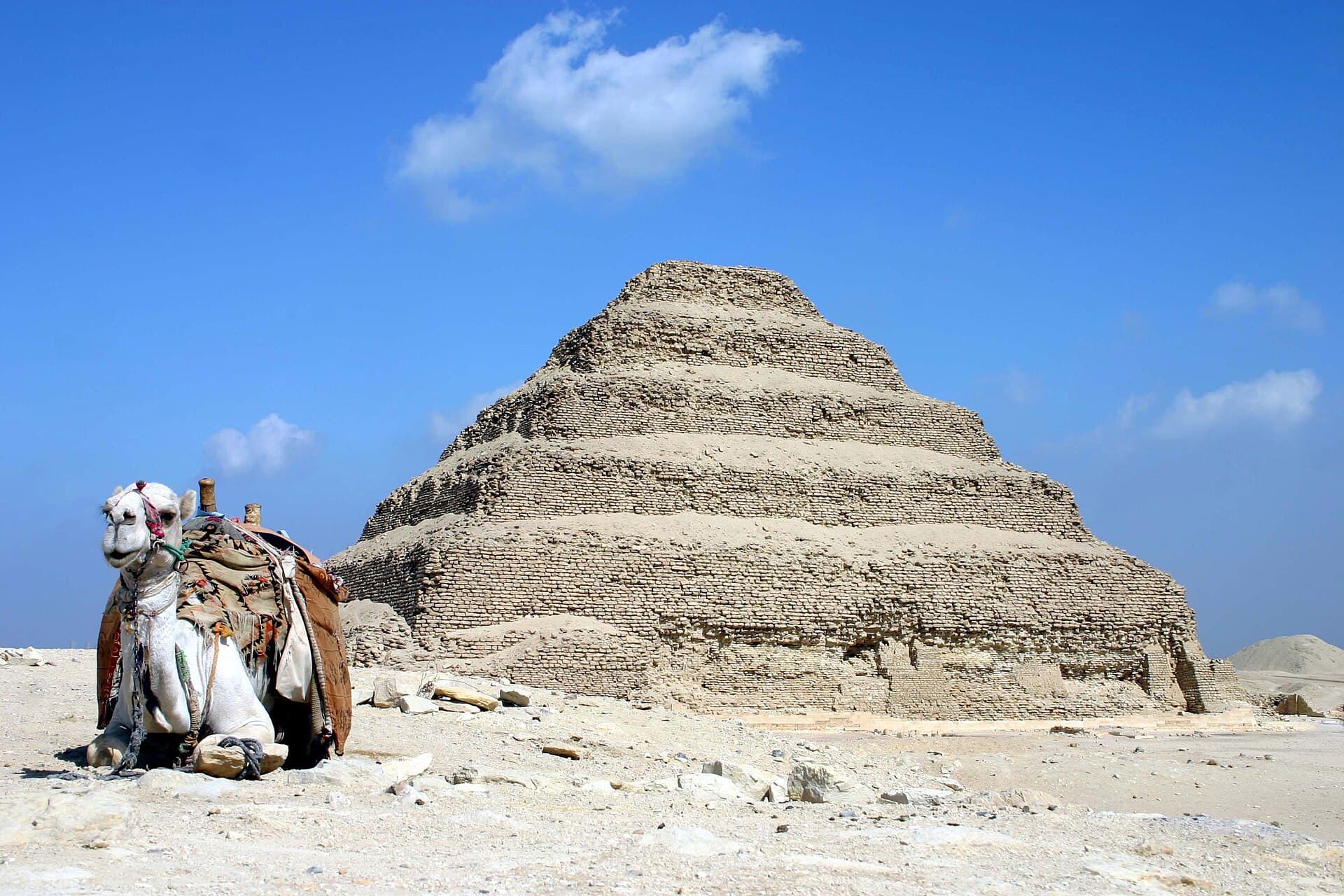
Camel, horse and carriage rides are negotiations rather than tips, and the recurring trap is the return journey. Agree the price for the ride there and back, out loud, before you get on. Once you are up on a camel in the middle of a plateau your bargaining position has changed and everybody involved knows it. The same applies to boatmen and to anyone who offers to carry, guide or photograph.
Ticket prices themselves are not negotiable and are not tips. Antiquities sites have published foreign-visitor pricing that is printed and fixed, and several of the things people most want to see are ticketed separately and at a premium — the inner chamber of the Great Pyramid, the tomb of Seti I, Tutankhamun's tomb. That is how the ticketing works rather than something happening to you personally, and it is worth carrying enough cash to say yes to one of them on the day.
The approaches that are not tips at all
A share of what feels like tipping is simply selling, and recognising it changes how the day goes. The scripts are consistent: a stranger tells you the site is closed today or shut for prayer and offers to help; a friendly man attaches himself to your group inside a monument and presents a bill at the end; something is pressed into your hand — a scarf, a headdress, a small carved thing — and payment is expected the moment you are holding it.
None of this is dangerous and most of it is good-natured, but it is not baksheesh and you do not owe it. You owe nothing to someone who inserted himself into your day uninvited. The answer to the pressed gift is not to take it in the first place; the answer to the self-appointed guide is to decline before he has started rather than after he has finished.
The clean exit is the same every time: a smile, a firm la shukran, and no slowing of your pace. Stopping to argue, explain or apologise keeps the conversation alive, which is exactly what the pitch needs. Walking on while remaining pleasant ends it without anyone losing face, which is the outcome both sides actually prefer.
It is worth separating this in your head from the genuine article, because visitors who conflate the two end up resenting the guide and the porter as well. The man who has driven you for eight hours and the man who materialised at the gate with a story about the entrance being round the other side are not in the same business. Paying the first generously and the second not at all is the correct answer to both.
The part nobody warns you about
It can feel relentless on a first visit. Someone opens a door, points at a view, or steadies you onto a boat, and a hand goes out. By the third day some people find this genuinely wearing, and it helps to know in advance that it is coming rather than deciding mid-trip that you are being taken for a ride.
You are not. It is not a scam and it is rarely aggressive. The practical answer is to carry far more small notes than you think you need, decide your own limit, and stop apologising for it. A polite no is understood, and it is used constantly by Egyptians too. Firmness here is normal behaviour, not rudeness.
A few words of Arabic do more work here than their small effort deserves. Shukran for thank you, min fadlak for please, and la shukran — no thank you — said pleasantly and with a hand to your chest, is the most useful phrase you will learn around the major sites. It softens a refusal in a way that English does not, and it signals that you know how the exchange works, which shortens most of them considerably.
When to hand it over, and how
The large tips are generally settled at the end rather than daily. You hand the guide their share on the last day you have them, the driver theirs when the driving is done, and the crew box goes in on the final evening of the cruise. Day-to-day baksheesh runs continuously in small notes. Knowing which is which stops you doing the one thing that genuinely goes wrong, which is spending the guide's money on taxis and cold drinks over the course of a week.
That has a direct practical consequence. The end-of-trip money has to survive the trip intact, and it has to be in Egyptian pounds in usable denominations before the last morning rather than after it. Set it aside physically — an envelope in the hotel safe is the obvious method — and treat it as already spent. Falling back on a large euro note on the final day because you never separated it out is the classic version of this mistake.
Handing it over is not a ceremony. An envelope or a folded note, given quietly at the end with a word of thanks, is all that is wanted. Doing it in front of the rest of a group is awkward for everybody, and counting it out note by note in public more so. Where a guide has genuinely made the trip, a few sentences to their operator afterwards is worth more to their career than the money is.
Plan the end of the trip backwards from the last morning. Work out what you still owe in tips, add food and small payments at the airport, and aim to be holding roughly that and no more. Everything above it is a problem you have created for yourself at a departures counter, since converting pounds back is possible but poorly rated, sometimes requires the original exchange receipts, and runs into legal limits on how much cash may be taken out of the country. Spending the surplus down in the final days is simply a better outcome.
Couples, families and the per-person trap
Every figure here is per person per day, and that is the detail that catches families out. A family of four sharing one guide and one car pays four shares, not one, because the arithmetic follows the travellers rather than the vehicle. It is the same trap that makes published figures vary so wildly: some sources quote per group and some per person, and the two are separated by a factor of several.
This cuts against the general rule that families travel more cheaply per head in Egypt. On the tour price itself a family of four fills a private car and guide, which is where the per-person cost really falls. On tipping the effect runs the other way, and a family of four on a guided day is handing over four times the daily figure. Neither of those is unfair; they are just different lines in the budget that move in opposite directions.
Two travelling together face the sharpest version of the private-guide arithmetic, since 10 to 15 euros each is the whole of a guide's tip for the day between two people. That is the real cost difference between a private trip and a small group one on this line, and it is worth pricing honestly rather than discovering it on day one. It is also the main argument for asking your operator directly what they consider customary for the size of party you are bringing.
What it comes to across a trip
On the reported range, ten days works out at roughly 100 euros per person. That is the headline figure and it is the one we are least sure of, so treat it as an order of magnitude: this is a hundred-euro line in a trip budget, not a five-euro one and not a five-hundred-euro one.
The shape of your trip moves it. A private guide costs more in tips than a group guide, because in a group the same person is being tipped by everybody. Cruise nights add the crew box on top of the guide and driver you were already paying. A trip that is mostly hotels, taxis and independent days sits at the lower end, because you are simply meeting fewer people whose income depends on it.
Set against the whole cost of an Egypt trip, this is not the line that decides anything. Flights, the ground package and the separately ticketed sites are all larger. What makes tipping worth this much attention is that it is the largest predictable part of your cash spending and the only part you can calculate in advance, which makes it the easiest thing in the entire budget to get right before you leave home.
It is also the line most often left out of a quote entirely. Two operator quotes that look far apart frequently differ on what sits inside the figure — internal flights, entrance tickets, transfers, drinks, tips — rather than on the quality of the trip. Put the inclusion lists side by side before you compare the totals, and add the tipping estimate to both.
A ten-day trip, added up line by line
Take the standard shape: four guided days on land with a private Egyptologist and a driver, four nights on a Nile cruise, and two days of your own in Cairo. The guided days come to 15 to 20 euros per person each, so 60 to 80. The cruise nights add 5 to 10 per person per night into the crew box, so 20 to 40. The independent days cost you small change — taxis rounded up, a porter, a washroom attendant, a few site-level payments — rather than a daily rate.
Add hotel porters and housekeeping across the whole stay, the handful of 20 to 50 pound notes that go out at the temples, and the fact that a cruise day usually has a guide attached to it as well as a crew box, and you arrive at the 180 to 220 euros per person that the operators describe for a ten-day trip with four nights on the river. The arithmetic is not complicated. It is just that almost nobody does it before they fly.
Run the same exercise on your own itinerary rather than adopting this one. Count the guided days, count the cruise nights, count the days where you are on your own with a taxi and a museum ticket, and price each category. The result is a number you can put in a budget and change money against, which is a considerably better position than arriving with a vague sense that tipping will be expensive.
Then carry a margin on top. Not because the estimate is wrong, but because the failure mode in Egypt is never having tipped too little in total — it is standing in front of somebody at four in the afternoon with nothing smaller than a two hundred note. A float that is generous by twenty or thirty euros across a trip removes that entirely, and any surplus gets spent down in the final days anyway.
What to ask your operator before you fly
Ask what they consider customary for the trip you have actually booked, and ask for it per person per day. That one question resolves the per-group and per-person confusion that makes published figures unusable, and an operator is a better source on what their own guides expect than any article can be, this one included. They also know what has happened to the rates since the last time anyone wrote about it.
Ask which staff you will meet. A trip where one guide travels with you throughout is a different tipping structure from one where a local guide meets you in each city, and the second means several end-of-stay tips rather than one. The same applies to drivers on longer routes. Neither arrangement is better, but you cannot budget for the one you were not told about.
Ask whether anything is already included. A few operators build crew tips or a tipping kitty into the package price, and paying twice because nobody mentioned it is a waste. While you are at it, confirm whether the balance of your trip is due in cash on arrival and whether card payment carries a surcharge — that changes the size of the envelope you carry through the airport, and it is normal Egyptian practice rather than a warning sign.
So how much should you actually hand over?
Budget by role. Around 10 to 15 euros per person per day for a private Egyptologist guide and less in a group, 5 euros per person per day for a driver, about 5 euros per person per night into the crew box on a cruise, small notes for porters and housekeeping, and nothing extra in a restaurant where service is already on the bill. Add up the ones you will actually meet.
Then carry it in Egyptian pounds, in small notes, from early in the trip. The mistake that causes awkwardness is almost never the amount. It is arriving at the moment with nothing smaller than a large note and having to improvise in front of someone.
And decide your own limit before you land. The visitors who find Egypt exhausting on this front are almost always the ones improvising a position at every approach; the ones who enjoy it have already worked out what a porter gets, what the guide gets at the end, and what they say to the man at the temple gate. Once that is settled, tipping stops being a running negotiation with yourself and becomes what it should have been all along, which is a line in the budget and a pocket full of small notes.
Common questions
Is tipping in Egypt optional?+
Not really. Baksheesh is a structural part of how people working in tourism are paid rather than a bonus for exceptional service, which makes it closer to a cost of the trip than a discretionary extra. That does not mean every hand held out has to be filled — a polite no is understood and used constantly by Egyptians too — but budgeting nothing for it is not a realistic plan.
How much do I tip a private guide compared with a group guide?+
A private Egyptologist guide is put at around 10 to 15 euros per person per day, and a group guide at 3 to 5. The logic is that a group guide is being tipped by everyone in the group, so each person contributes a smaller share for the same day's work. The guide is the largest single tip on most Egypt trips either way.
Do I tip the Nile cruise crew individually or into a box?+
There is usually a communal crew box at the end of the cruise, at 5 to 10 euros per person per night, and that is the arrangement we can describe. It exists so that crew you never see — kitchen, engine room, housekeeping — get a share. Whether you also hand something directly to a cabin steward who has looked after you is your own call, and nothing here says you must.
Should I tip in euros or Egyptian pounds?+
Egyptian pounds, in small denominations, and change money early rather than late. Handing over a large euro note because you have nothing smaller helps nobody and it distorts expectations for the travellers behind you. Carrying the right notes is the whole skill here; the amounts themselves are not complicated.
Is it rude to say no?+
No. A polite no is understood and Egyptians use it constantly. Decide your own limit before the trip, say no without breaking stride when you have reached it, and do not apologise your way through it. Awkwardness on this subject is almost always self-inflicted by visitors who have not decided in advance what they are willing to hand over.
When do I hand over the tip for a guide or driver?+
At the end, rather than daily. You give the guide their share on the last day you have them, the driver theirs when the driving is finished, and the crew box goes in on the final evening of a cruise. Set that money aside physically at the start of the trip, because the common failure is spending it down on taxis and cold drinks and arriving at the last morning short.
Do I still tip in a restaurant if service is on the bill?+
Check the bill first, because a service charge and tax are commonly added and you are not expected to pay a second full tip on top. The complication is that the service charge does not reliably reach the person who served you, so a modest cash note left on the table — around ten per cent is the figure usually given — is standard practice rather than double payment.
How much should I give a hotel porter or housekeeper?+
Roughly 20 to 50 Egyptian pounds, in notes rather than coins. Coins are close to useless here and handing them over reads badly even when the amount is right. Leave something for housekeeping day by day rather than one sum at the end, since rooms are not always serviced by the same person across a stay.
Do I have to tip someone who just appears and starts helping?+
No. Someone who attaches himself to your group inside a monument, tells you the entrance is round the other side, or presses a small gift into your hand is selling rather than serving, and you owe nothing. Decline early with a firm la shukran and keep walking. That is a separate matter from the guide, driver and crew you booked, who should be paid properly.
Does tipping change in a Red Sea resort?+
It softens considerably. Inside the gates of a large hotel in Hurghada or Sharm el-Sheikh cards work much as they would in Europe, and a resort stay simply involves meeting fewer people whose income depends on baksheesh. Step outside into the town, a taxi, a dive centre or a market and the cash economy described on this page applies as usual.
How much cash should I change for tipping alone?+
Work it out from your own itinerary: 15 to 20 euros per person for each guided day with a private guide and driver, 5 to 10 per person for each cruise night, and small change on independent days. Over ten days with four nights on the river that is roughly 180 to 220 euros per person. Change it early, carry it in small Egyptian notes, and keep the end-of-trip share separate from your spending money.
Official sources
Entry rules, opening hours, security advice and exchange rates all move. Check them at the source, not here.
Written and checked by the Nile Trip Guide editorial team · Last reviewed . Entry rules, prices and opening hours change — check anything critical against the official sources linked on this page.
The route most people take first, at the length it was built for: Giza and the Grand Egyptian Museum, then a flight to Luxor and four nights sailing down to Aswan.
No boat on this one. Giza and the Grand Egyptian Museum, a night in Luxor for both banks, two nights on the Red Sea, then back to Cairo for the Citadel, Coptic Cairo and the Royal Mummies.
Five nights in Cairo either side of a four-night sail from Luxor to Aswan. The Cairo days are private, just your party and a guide; the sightseeing off the boat is shared with a small group.