Luxury itinerary
A Luxury Egypt Tour in Ten Days: Three Routes, Unhurried
Luxury in Egypt is not marble and rose petals. What actually changes your ten days is the guide at your shoulder, the condition of the boat you sleep on, and the hour you reach each site. Ten days is the length at which those things pay off fully — enough to do the classic route slowly, with a private Egyptologist, a sailing boat rather than a floating hotel, and early starts that buy near-silence at places that are miserable at noon. Below are three suggested routes that each spend those ten days that way, an honest look at who each one suits, and the practical decisions that shape what you pay.
Is ten days enough, or too much, for a luxury trip?
For the country most people come to see — Cairo, the Nile between Luxor and Aswan, and the great set pieces at each end — ten days is comfortable rather than merely adequate. The classic route fits inside eight days at a brisk pace. On a luxury trip you are not buying more sights with the extra two days; you are buying the removal of the rush. That is the whole point. A second morning in Cairo instead of ninety minutes, a land night in Aswan so Philae is not wedged between the gangway and the airport, Abu Simbel reached by a short flight rather than a pre-dawn convoy. Time is the expensive part, and ten days is where you have enough of it to spend well.
Too much is the wrong worry. Nobody comes home from Egypt wishing they had seen it faster. What ten days will not do is let you bolt a second region onto the full classic route without trimming the first, and on a luxury trip you should not want to — the temptation to cram is exactly what a private trip exists to resist. The right use of a tenth and eleventh day is slack: a free afternoon on deck, a slow morning, one site where a group itinerary would squeeze in three. Money spent on shade, patience and an excellent guide does more for your week than money spent on thread count, and ten days gives that money room to work.
One honest caveat on the arithmetic. Ten days from Europe or North America usually means nine on the ground and perhaps eight useful ones, because the arrival and departure days go largely to airports and transfers. Read the day-by-day routes below with that in mind. The first and last days are deliberately thin, and the craft of a good luxury itinerary is making sure the days in the middle are not overfilled to compensate — the opposite failing, and the more common one.
Route A — the classic route, slowed to a luxury pace
This is the route almost everyone takes first, run the way ten days and a private budget allow rather than the way a week forces. It is the complete thing — the Pyramids and the Grand Egyptian Museum, the Nile between Luxor and Aswan on a dahabiya rather than a big ship, and Abu Simbel at the end — with a private Egyptologist throughout and land nights at each end of the sail. Nothing on it is unusual. What the money and the days buy is the early starts, the small boat, and the removal of the queue.
Day 1 is arrival in Cairo and little more. A private transfer from the aircraft to a higher-category hotel near the river or within sight of the Giza plateau, and an early night. If you land in the morning there is time for a first walk along the Nile, but the day is really about landing and sleeping off the flight.
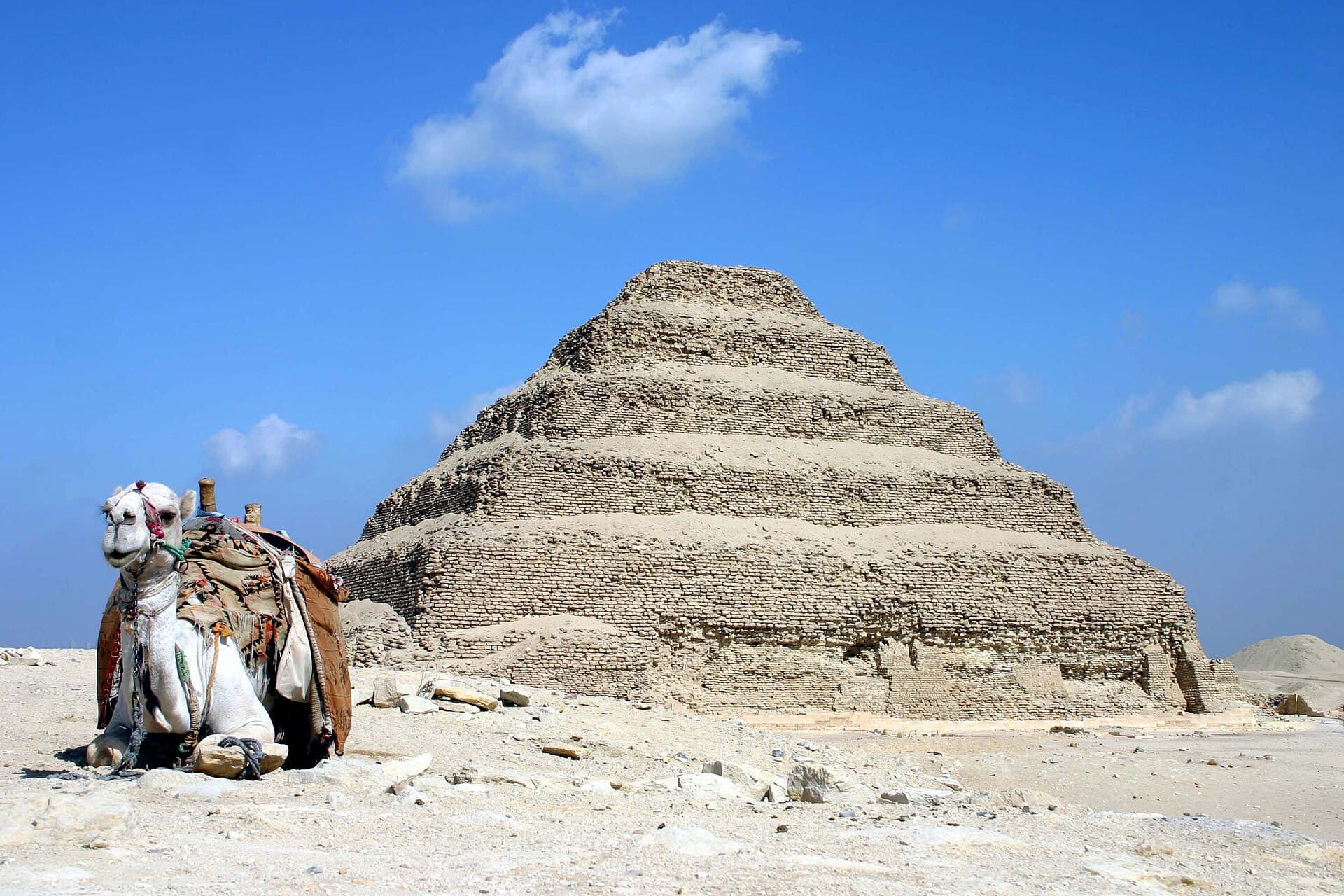
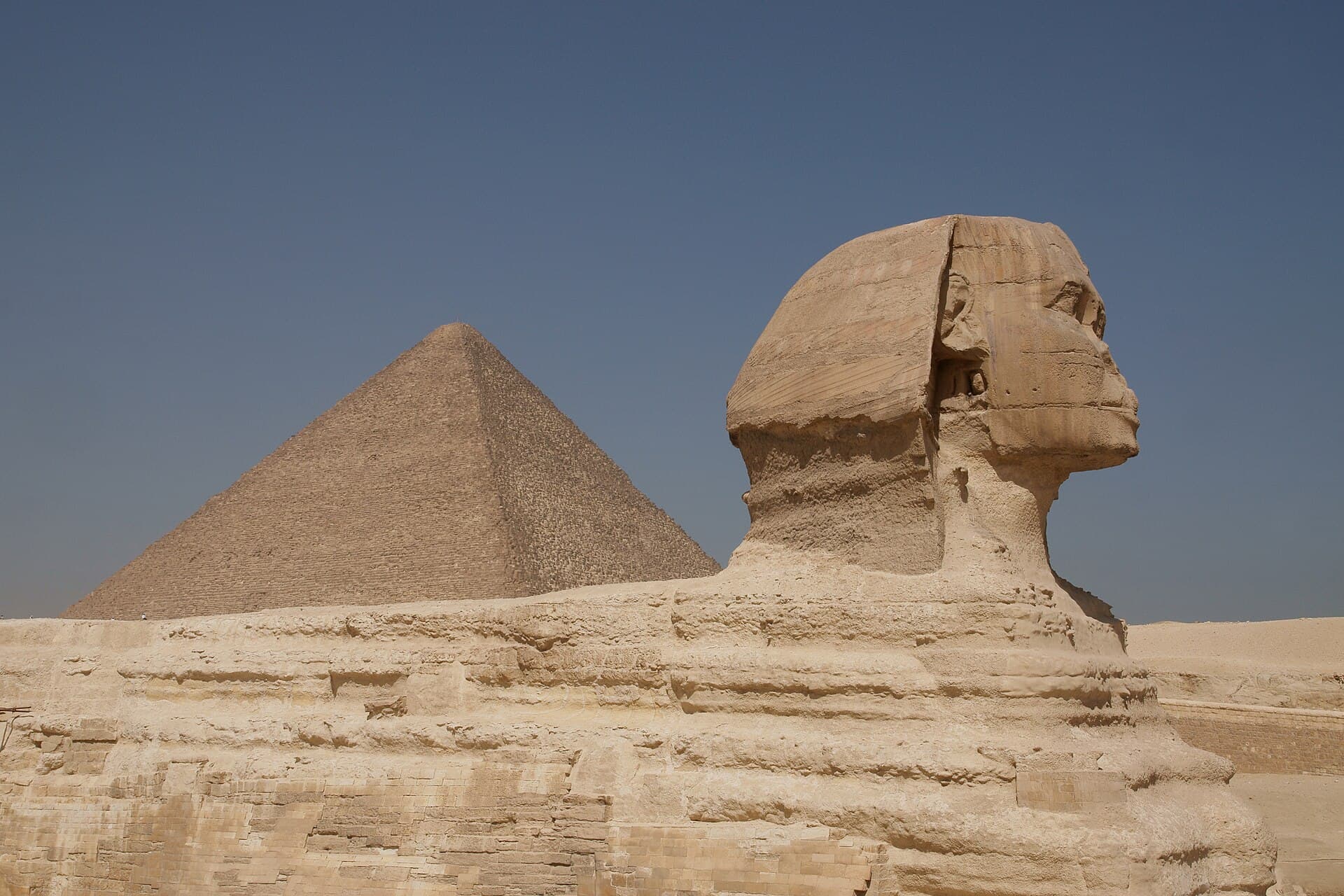
Day 2 is the Giza plateau at opening, before the coach groups arrive in the middle of the morning — the three pyramids of Khufu, Khafre and Menkaure, the Sphinx below them, and the southern viewpoint where all three line up, with a private guide who reads them rather than reciting dates. The afternoon goes south to Saqqara and Dahshur: the Step Pyramid, the oldest large stone building anywhere, the painted nobles' tombs around it that outshine anything on the Giza plateau, and Sneferu's Bent and Red pyramids at Dahshur, usually near-empty. Pairing all of it on the same side of the city is what keeps the day out of Cairo's traffic. Overnight in Cairo or Giza.
Day 3 gives the Grand Egyptian Museum the morning it deserves — three to four hours, more if you read the labels — with the complete Tutankhamun burial held together for the first time. Do not try to pair it with the plateau in one afternoon; on a luxury trip there is no reason to. Late afternoon, once the heat has gone, is the right hour for Islamic Cairo: the medieval mosques along al-Muizz street and the Khan el-Khalili bazaar. Second night in Cairo.
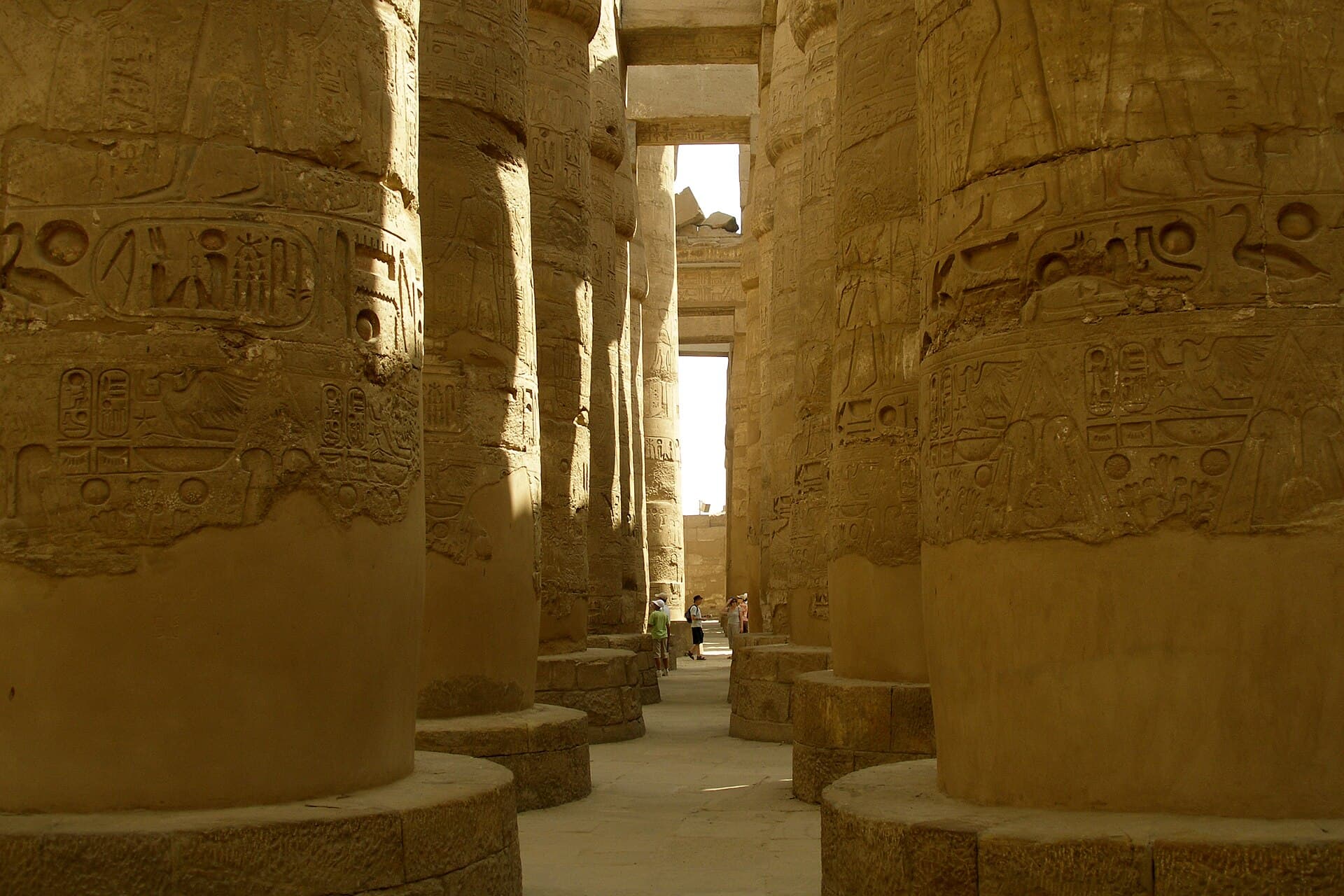
Day 4 is the short flight south to Luxor — about an hour, and not a leg to pay for business class on, which buys almost nothing. Board the dahabiya before lunch, then Karnak in the late-afternoon light once the groups have thinned. It is not one temple but a walled precinct thirty pharaohs added to across two thousand years, and two hours is the realistic minimum. First night aboard.
Day 5 is the west bank, and it starts before it is properly light, because the royal tombs are cut into airless rock and hold the heat of every group that has walked through by mid-morning. The standard Valley of the Kings ticket covers three tombs from a rotating set, which a good guide will choose for you; Hatshepsut's terraced temple at Deir el-Bahari and the Colossi of Memnon complete the morning. Back aboard by early afternoon as the boat slips its mooring and sails south. Second night aboard.
Day 6 is the stretch a dahabiya was built for, and the reason to be on one. The boat lies close to the bank where the big ships cannot go, passes through the lock at Esna — where waits happen, so allow for them — and moors at a sandbank with nothing scheduled. Edfu, among the best-preserved temples in Egypt, is visited early before the heat; the long middle of the day is spent under sail, reading, watching the bank go past. Third night aboard.
Day 7 is Kom Ombo, the double temple that stands right on the riverbank so you arrive at the steps rather than by coach, best seen at dusk. Between the sites lie places the large ships pass without stopping — the quarries at Gebel el-Silsila, a village walk, a swim off a sandbank if the crew judge it sensible. The boat works toward Aswan. Fourth and last night aboard.
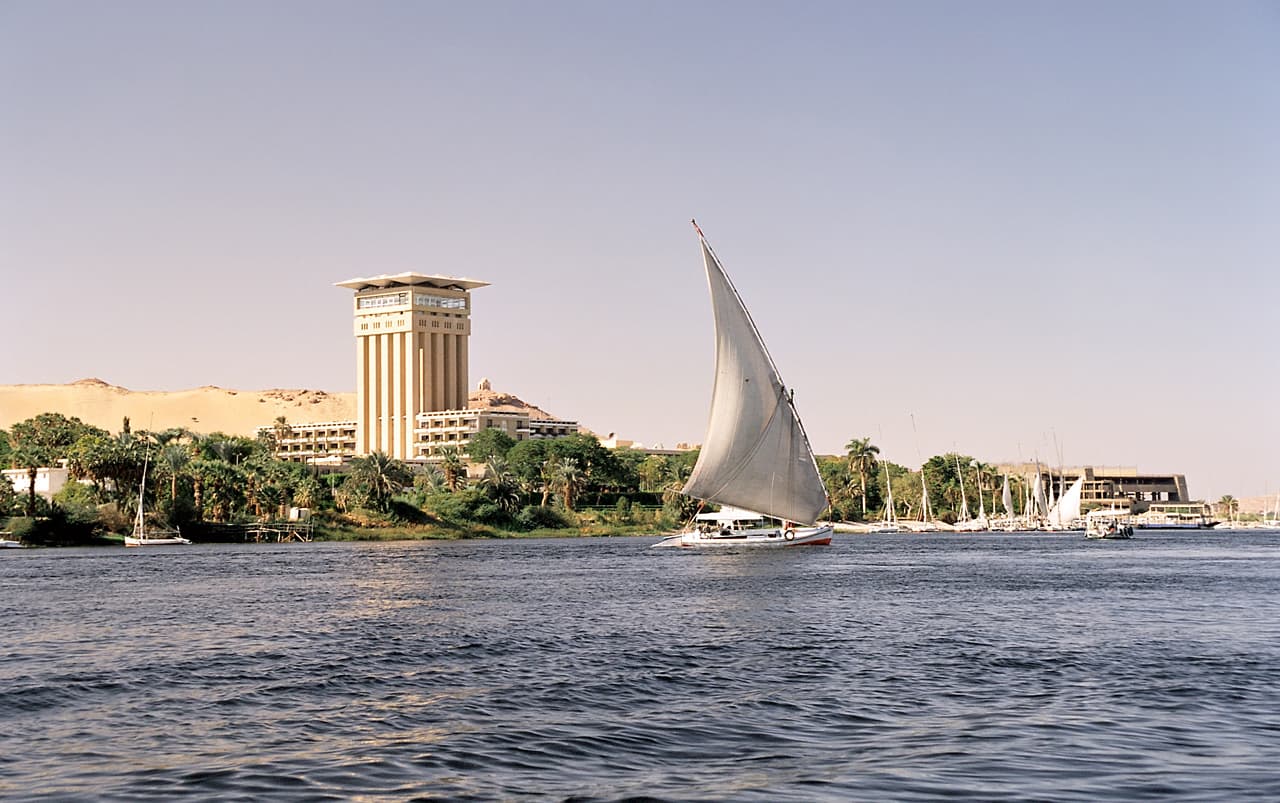
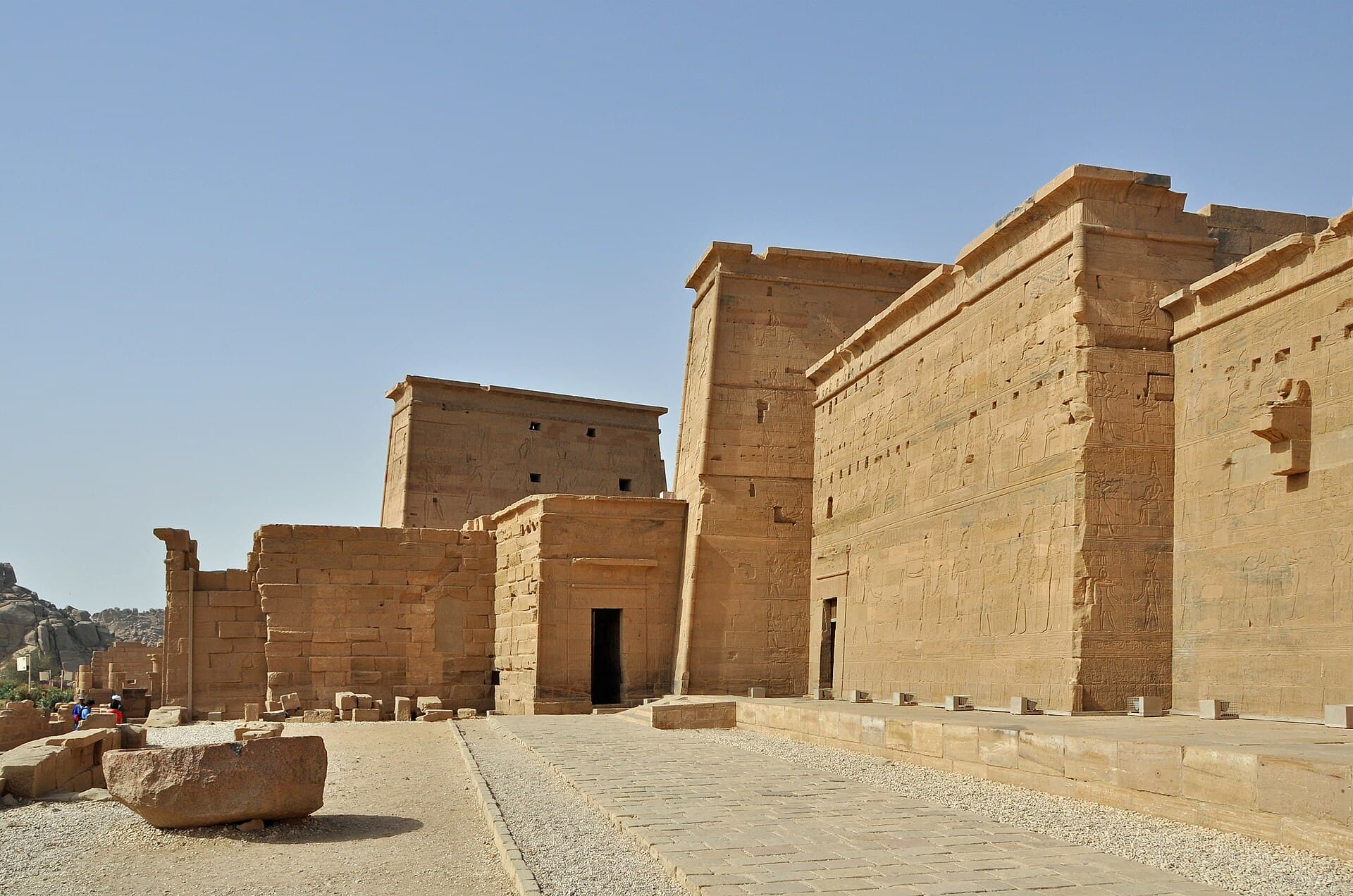
Day 8 you disembark at Aswan and — the single most valuable decision on the trip — move to a land hotel on the river rather than flying straight out as the ship passengers do. Philae Temple on its rebuilt island, reached by motorboat, and the unfinished obelisk in its quarry, which explains how every other obelisk in the country was cut. Late afternoon, a felucca out to Elephantine Island under sail as the heat drops. Land night in Aswan, in the calmest and prettiest of the three cities, where the Nile breaks around granite islands.
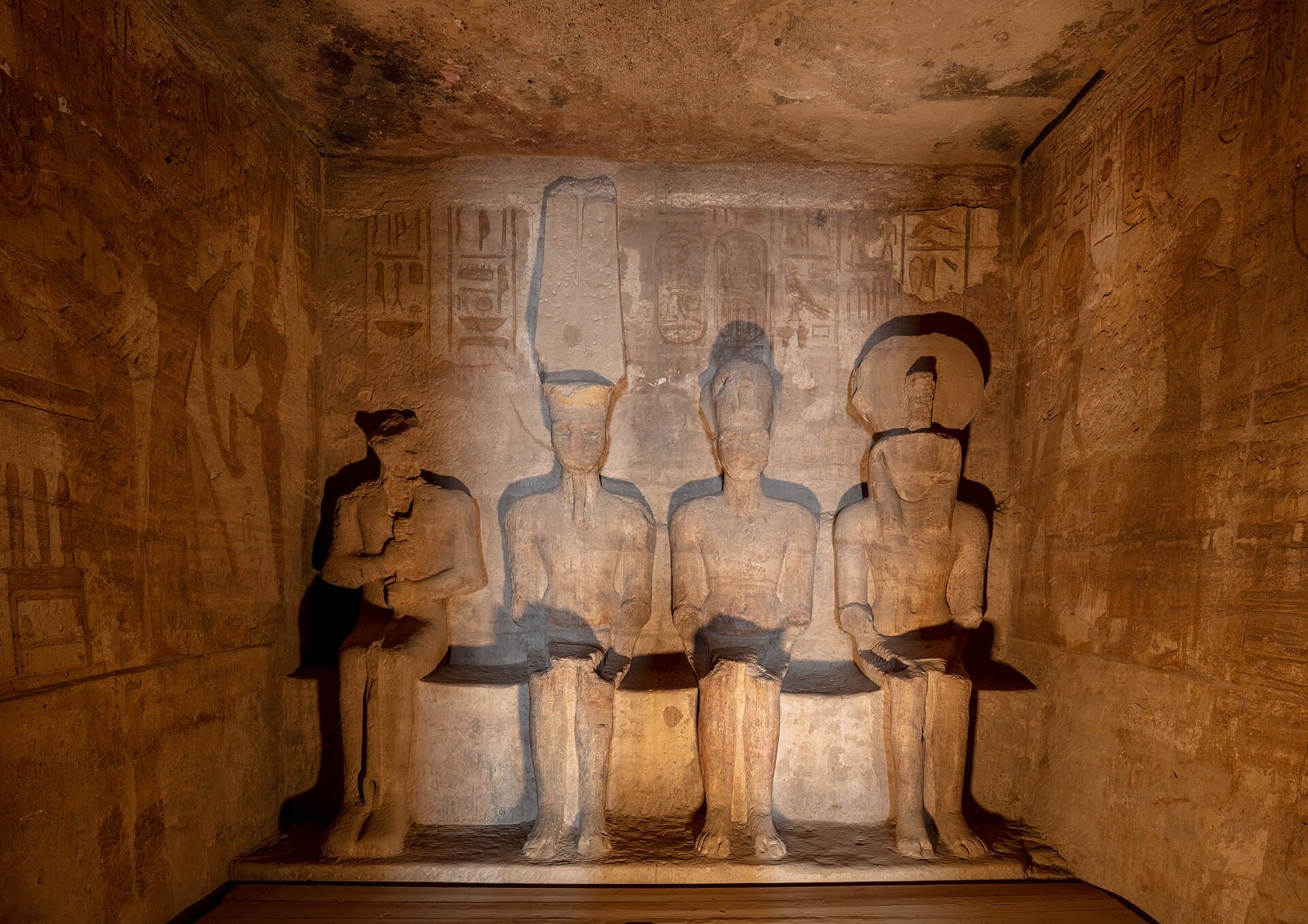
Day 9 is Abu Simbel, roughly 280 kilometres south near the Sudanese border. On a luxury trip you fly — about forty-five minutes each way — rather than take the pre-dawn road convoy, which is exactly the sort of hour a private budget should buy back. The two temples were sawn into blocks and rebuilt sixty metres higher to escape the rising waters of Lake Nasser, and the scale of the four seated colossi does not come across in photographs. Back in Aswan for a second land night, or a late flight begins the journey home.
Day 10 is the flight from Aswan back to Cairo and the connection onward. Build a buffer into this day, and a Cairo night at the end if the long-haul timing is tight; never run a domestic arrival straight into an international departure.
This route suits first-time visitors above all, and honeymooners and couples who want the complete classic trip done properly — the famous things seen at the right hour, a sailing boat for the river rather than a hundred-berth ship, and a guide who stays with them throughout. It is the route to choose when you want no gaps in the story and none of the compression that the shorter versions force.
Route B — river-led, on a dahabiya
This route puts the river first and the checklist second. It keeps Cairo short, gives the dahabiya an extra sailing day, and accepts fewer sites in exchange for more of the thing the Nile is actually for — quiet water, a small crew who learn your name, and long afternoons with nothing scheduled. It is the route for people who are honest about pace, and it is the one that reads most like a rest. It asks you to judge the trip by the mornings on deck rather than by how many temples you got through.
Day 1 is arrival in Cairo and nothing more than a private transfer and a good bed.
Day 2 is the essentials of Cairo in one full private day: the Giza pyramids and the Sphinx at opening, before the crowds, and the Grand Egyptian Museum after. This is the only compressed day on the route, and a private guide makes it bearable by pacing it and skipping what bores you. Overnight in Cairo.
Day 3 is the short flight to Luxor and a land night there rather than an immediate embarkation. Karnak in the late-afternoon light, then Luxor Temple after dark, when it is floodlit, the heat has gone and the crowd has thinned to a fraction of the daytime. A higher-category hotel on the river for the night. Overnight in Luxor.
Day 4 is the west bank early — the Valley of the Kings and Hatshepsut before the heat, and Medinet Habu, which keeps its painted colour and sees almost no groups. You board the dahabiya at Luxor in the afternoon, and from here the pace changes entirely. First night aboard.
Day 5 is a sailing day in the full sense. The boat works south, passes through the Esna lock, and moors where it likes. Esna's temple sits sunk below the level of the modern town, reached down a flight of steps; beyond it the afternoon is a bank mooring, a walk into a village, tea on deck while the sails are trimmed. No temple is scheduled, and that is deliberate. Second night aboard.
Day 6 reaches the places the big ships never stop for: the rock-cut tombs at El Kab on the east bank, then Edfu early before the heat. The long middle of the day is spent under sail again. If the wind fails — and it does — a small tug tows the boat for part of the way, which any honest operator will tell you in advance. Third night aboard.
Day 7 is the quarries at Gebel el-Silsila, where the stone for half the temples in Egypt was cut, and Kom Ombo on its riverbank at dusk. Between them, more of the river and more of the nothing that is the point of it. Fourth night aboard.
Day 8 brings you in to Aswan and off the boat, into a land hotel on the river. Philae Temple by motorboat and the unfinished obelisk fill an unhurried afternoon, and a felucca carries you out among the granite islands at sunset. Land night in Aswan.
Day 9 is an open day at the southern end, which this route can afford because it has not overspent on sites. A Nubian village across the river, a slow morning among the islands, or Abu Simbel by the short flight for those who want it — the route does not force the dawn convoy on you. Second land night in Aswan.
Day 10 is the flight from Aswan to Cairo and the connection home, with a buffer built in and a Cairo night if the timing is tight.
This route suits couples, honeymooners and small groups of friends who would rather have the river than a programme, and who are content to eat with the same few faces each evening. It suits anyone whose best holiday memory is a slow morning spent doing very little. It is the wrong route for families wanting a pool and other children on board, for anyone who judges a trip by the site count, or for travellers who want a gym, a lift or nightly entertainment — a larger ship or a land itinerary serves them better. Chartering the whole boat turns the quiet from a risk into your own to enjoy.
Route C — land-based luxury, no cruise
This is the route for people who have cruised the Nile before, or for whom a floating hotel simply does not appeal. It swaps the slow river for depth in Cairo and a comfortable fixed base in each southern city, with a private Egyptologist throughout and higher-category hotels on the riverfront. You fly between the cities rather than sail between the temples, which buys flexibility and a room to retreat to each afternoon — the strongest argument for it if heat or mobility is a concern. The honest trade is that you miss Edfu and Kom Ombo, which a cruise reaches far more easily than a car, and you miss the long days on deck that are half the point of the river.
Day 1 is arrival in Cairo and a private transfer to the hotel.
Day 2 is Giza at opening and then Saqqara and Dahshur in the afternoon — the same strong start as the classic route, the pyramids and the Sphinx before the coaches, the Step Pyramid and the painted tombs after, and Sneferu's two pyramids at Dahshur, usually empty. Overnight in Cairo or Giza.
Day 3 gives the Grand Egyptian Museum a proper morning and Islamic or Coptic Cairo a late afternoon — the medieval mosques and the bazaar, or the old churches and the synagogue in Coptic Cairo for something quieter. Being land-based, you can take this day as slowly as you like. Second night in Cairo.
Day 4 is the short flight to Luxor and a riverside hotel. Karnak in the afternoon light, and Luxor Temple after dark, floodlit and nearly empty once the day trippers have gone. Overnight in Luxor.
Day 5 is the west bank early — the Valley of the Kings, Hatshepsut's temple, the Colossi of Memnon, and Medinet Habu for its colour and its quiet. Back to the hotel by midday, with the afternoon free for the pool or a rest, which is the kind of slack a fixed base allows and a cruise does not. Second night in Luxor.
Day 6 can begin, for those who want it, with a dawn hot-air balloon over the west bank before the heat builds, the temples and the green valley laid out below. A slow morning follows, then a midday flight to Aswan and Philae Temple in the late afternoon. A higher-category hotel on the river at Aswan. Overnight in Aswan.
Day 7 is Abu Simbel by the short flight, about forty-five minutes each way, with the afternoon back in Aswan for the unfinished obelisk or simply for rest. Flying rather than driving is exactly what a land-based luxury trip should spend on. Second night in Aswan.
Day 8 is Aswan at leisure, which the calmest city on the route rewards: a felucca out to Elephantine Island at sunset, a morning among the granite islands, a Nubian village across the water. A fixed comfortable base for a third night is the quiet luxury of this route. Third night in Aswan.
Day 9 is the flight back to Cairo with the afternoon free for anything the first two days missed, or simply as a buffer against the internal flight slipping. Overnight in Cairo.
Day 10 is the flight home.
This route suits returning visitors who have done the river, travellers who are certain a boat is not for them, and anyone for whom a comfortable room to retreat to each afternoon matters more than the slow days on deck — which includes a good many people with heat or mobility concerns. It is the most flexible of the three and the easiest to pace gently, because nothing is tied to a sailing schedule. Pick it for the comfort and the depth in Cairo, and go in clear-eyed that it trades away two of the river's best temples and the particular pleasure of waking up already moving downstream.
Which route suits you?
If this is your first trip to Egypt, take Route A. It is the complete classic route, it is the one everyone means when they say they went to Egypt, and on a luxury budget it removes every compromise the shorter versions force — the rushed museum, the dawn convoy to Abu Simbel, the hundred-berth ship. A private guide throughout and a dahabiya for the river give you the famous things at the right hour and the quiet water in between. First-timers almost never regret seeing the great sites properly; they regret trying to see too much, and this route is built to stop them.
If the river is the reason you are going — the slowness, the small boat, the empty afternoons — take Route B. It is the one that reads as a rest rather than a campaign, and it is the right answer for couples and honeymooners who would rather watch the bank go past than tick another temple. Be honest with yourself about pace before you choose it. If a slow morning doing very little is your idea of a good day, this was built for you; if you measure a trip by its site count, you will feel the gaps and should take Route A instead.
If you have been to Egypt before, or you know a boat is not for you, take Route C. It shows a returning visitor more of Cairo than the cruise routes allow, it keeps a comfortable fixed base in each city, and it is the gentlest of the three on anyone who needs to escape the afternoon heat or who finds a ship's steps and tenders hard going. It is the most flexible route here. The price of that flexibility is two of the river's best temples and the slow days on deck — a trade worth making only if the boat genuinely does not appeal.
Across all three, the single decision that improves a luxury trip most is refusing to overfill it. The money buys time, and time is wasted if you spend it rushing. A route with slack in it — a free afternoon, a slow morning, a day with one site instead of three — is remembered more fondly than one that fit in an extra temple. Ten days is enough to leave that slack in. Use it, and hold your guide to it.
What shapes the price of a ten-day trip
There is no single figure for ten luxury days in Egypt, and anyone who quotes one without asking questions first is guessing. The total is built from a handful of drivers, and knowing them lets you move it up or down deliberately rather than being surprised by it. We build every route around your dates and what matters most to you, so these are the levers worth understanding before you enquire.
The biggest is the boat and its standard. A Nile boat is not a fixed commodity — they vary far more than their photographs suggest, Nile star ratings are local and do not match European hotel stars, and the refurbishment date matters more than the rating. On the dahabiya routes the question is whether you are chartering the whole boat or booking cabins alongside strangers, and a private charter of a five- or six-cabin boat is the single largest line on the invoice. Route C carries no boat at all and prices differently again: the savings on cabins go into extra hotel nights and more private-guide days.
Next is how much of the trip is genuinely private. A private Egyptologist, driver and vehicle cost more per person than any shared arrangement, and on a luxury trip they are most of what you are paying for. This is where the money earns its keep: the early starts, the pace set by you, the guide chosen for what you care about. It is also the part worth protecting when you are trimming a budget — cut the hotel category before you cut the guide.
Then the hotels, the season and the flights. A riverfront room in a higher category, a Cairo hotel close enough to Giza to be useful, and whether you fly or drive to Abu Simbel all move the total. Season moves everything: the same route costs far more at Christmas, New Year and in the February-to-March window, when the better boats and guides book out months ahead, than it does in the shoulder months. Book the internal flights early. And spend nothing on the things that give little back — a suite you use only while asleep, business class on the hour-long hop to Luxor, elaborate add-ons that cost far more than the pleasure they return. Entrance fees, for all the sites above, are a surprisingly small part of what you pay.
When to do this trip
October to April is the comfortable window for all three routes, and November to February is the pick of it for Upper Egypt, where the summer is genuinely punishing. Luxor tops 45C in the Valley of the Kings in high summer and Aswan is the hottest of the Nile cities, so the cooler months are close to a necessity if you want to enjoy the middle of the day rather than hide from it. December and January are ideal by day, though nights on the river and in the south get genuinely cold — bring a jumper for the deck after dark. Our month-by-month guide at /when-to-go/ sets out the detail.
The dahabiya routes are the more seasonal ones. Small sailing boats run roughly from October to April, and some go into dry dock for maintenance in the hottest months, which is part of why the sailing season is short. In high summer Upper Egypt reaches around 40C and more in the afternoon, and the appeal of a slow boat with open decks and limited air conditioning drops sharply. If Route A or B is your choice, you are tied to the cooler half of the year more firmly than Route C, which a fixed hotel base makes a little more forgiving.
Book the small boats far ahead. A dahabiya may have only five or six cabins, so the good ones for Christmas, New Year and the February-to-March window go many months in advance, and chartering a whole boat for a fixed date needs longer still. Three to six months is sensible for October-to-April travel on any of these routes; the peak weeks need more. One date worth planning around either way: the sun aligns on the inner sanctuary at Abu Simbel around 22 February and 22 October, which draws large crowds — useful to know whether you want to catch it or avoid it.
How to pace ten days
Fly between Cairo and the south rather than driving. The road to Luxor is roughly 650 kilometres and nine or ten hours and shows you very little; the flight is about an hour, with several a day. Spending a whole day of a ten-day trip on the road is the thing to avoid, and it is not a leg to upgrade — the short hop buys nothing in business class. The overnight sleeper train is an honest alternative if you would rather save a hotel night, but take it for the economics, not the comfort.
If your route includes a dahabiya, build slack around the wind. A sailing boat bends to the weather: blow well and you go further, drop away and you stop early somewhere nobody planned, and when the wind fails a small tug tows the boat so the route still works. Sensible operators reorder the sites and leave room in the plan, and the Esna lock can cost a queue on top. Understand that before you book, not on the afternoon the sails go slack. It is the trade for the quiet, and on a ten-day trip there is room to absorb it.
Plan the days around the heat, not against it. The usable hours at most sites are early morning and late afternoon; the middle of the day is for the museum, the boat or the hotel. Two major sites in a day is realistic and four is a fantasy that ends with everyone tired and no one really looking. Do the airless tombs early, save the open, floodlit temples like Luxor for the evening, and hold your private guide to the early starts — the six o'clock departure is the thing a luxury trip is paying for, and it is the first thing a tired morning tempts you to skip.
A few practical guards. Never connect a domestic arrival straight into a long-haul departure — leave a buffer, and a Cairo night at the end if the timing is tight, because internal flights do slip. Domestic baggage allowances are lower than long-haul ones, which catches people out at check-in with a case full of Aswan shopping. Tombs and temples mean steep ramps, uneven stone and few lifts, so tell us about mobility or heat problems at the enquiry stage and the route can be built around them. And decline the papyrus, perfume and alabaster institute stops when you book rather than on the morning; they are shops, and they cost time you have better uses for.
Common questions
What makes a ten-day Egypt trip a luxury trip?+
Three things, mostly, and none of them is marble: a private Egyptologist who stays with you, a better boat judged on its refurbishment date rather than its star rating, and control over timing so you reach Giza and the Valley of the Kings before the coaches. The suite and the airport greeter are the cheap part. The guide, the early starts and the pace set by you are what actually change the week.
Should the river be a dahabiya or a five-star cruise ship?+
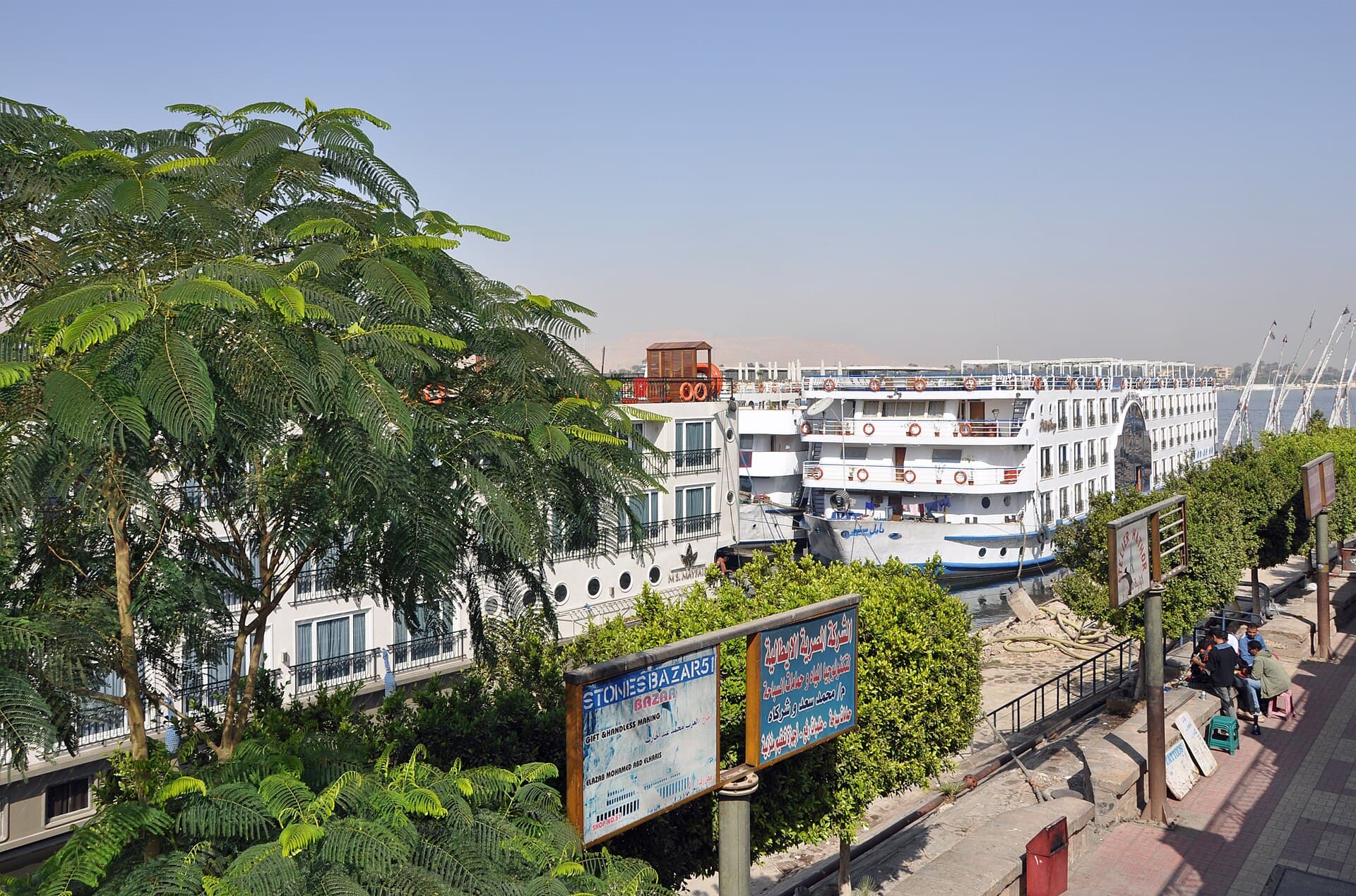
A dahabiya is a small sailing boat of a handful of cabins that moors on banks the big ships cannot use and runs quiet, with meals when you want them. It is the luxury choice for quiet and intimacy, not for facilities — no pool, no gym, no lift, and some stretches are towed when the wind fails. A large five-star ship is more comfortable and more sociable but carries a hundred or more passengers and fixed group timings. Routes A and B use the dahabiya; if you want a pool and a full programme, a ship suits you better.
Is a private Egyptologist really worth it?+
More than anything else on the invoice. Egypt licenses its guides, but the gap between a competent one and an excellent one is enormous. A weak guide recites dates at the entrance and waits by the coach; a strong one reads the walls with you, knows which tomb justifies the extra ticket, and knows when to stop talking. Private also buys pace — you skip what bores you, rest when you need to, and linger in the chamber you like. It is the last thing to cut from a budget.
Can you actually avoid the crowds?+
Partly, and it is the part of luxury hardest to buy off the shelf. Nobody empties Karnak, but you can be inside it at opening before the cruise groups arrive, and the Valley of the Kings is bearable early and grim by ten. Abu Simbel calms in the afternoon once the first flights have gone. It takes your own vehicle and a guide willing to start before dawn, which a group departure cannot offer because it cannot move its schedule. Ask any operator how they plan the mornings before you ask about the hotels.
Should we fly or drive to Abu Simbel?+
Fly, on a luxury trip. It is roughly 280 kilometres south of Aswan near the Sudanese border, about forty-five minutes each way by air against a pre-dawn road convoy of around three hours each way. Buying back that dawn start is exactly what a private budget is for. With a land night in Aswan after the river, Abu Simbel stops being a brutal day and becomes a reasonable one.
How far ahead should we book?+
Three to six months for October-to-April travel, and longer for the peak weeks. The small boats are the constraint: a dahabiya may have only five or six cabins, so the good ones for Christmas, New Year and the February-to-March window go many months ahead, and chartering a whole boat needs more notice still. The better private guides book up early too. Outside the peak weeks a few months is usually enough.
When is the best time of year to travel?+
October to April, with November to February the pick for Upper Egypt and Aswan, which are savage in summer. The dahabiya season is roughly October to April, as some boats dry-dock in the hottest months and open decks are no place to sit through 40C. December and January are lovely by day but genuinely cold on the river after dark, so pack something warm. See /when-to-go/ for the month-by-month detail.
How does pricing work if there is no fixed price online?+
Everything is quoted per trip rather than sold from a shelf, because the cost swings on the boat and whether you charter it, how much of the trip is private, the hotel category, the season, and whether you fly or drive to Abu Simbel. You send us the dates, the number of people and what matters most, and you get a written itinerary and a price for that trip, with the boat and its refurbishment year named. Nothing is booked until you are happy with it.
Official sources
Entry rules, opening hours, security advice and exchange rates all move. Check them at the source, not here.
- Egyptian Ministry of Tourism and Antiquities ↗The ministry lists which tombs and temples currently open.
- UK FCDO travel advice for Egypt ↗It updates continuously, and most UK travel insurance follows it.
Written and checked by the Nile Trip Guide editorial team · Last reviewed . Entry rules, prices and opening hours change — check anything critical against the official sources linked on this page.
Plan this trip
Tell us your dates and we will price it
A real itinerary with real prices, usually within 24 hours. Nothing is booked and nothing is charged until you say yes.
Itineraries to start from