Abydos: the Temple of Seti I and Egypt's Finest Reliefs
Abydos sits roughly three hours' drive north of Luxor, and the Temple of Seti I there is widely reckoned to hold the finest relief carving to survive in Egypt. Most visitors to the Nile Valley never go. The ones who do often rate it above anything else they saw, which makes the long day on the road easier to justify.
What is Abydos?
Abydos is a burial ground and cult centre on the desert edge of Upper Egypt, near the modern town of El Balyana, about 150 kilometres north of Luxor. Egyptians used it for thousands of years, from before the First Dynasty into Roman times. The first kings of a unified Egypt were buried here, and by the Middle Kingdom one of those early tombs was being venerated as the tomb of Osiris, god of the dead. Most of what stands today is far later than that.
Three things on the site are worth your time. The Temple of Seti I, built around 3,300 years ago, is the reason people come. The Osireion sits directly behind it, lower down and deliberately rough. A second temple, built by Ramesses II a few hundred metres away, has lost its roof but keeps remarkable colour on its walls. The First Dynasty royal tombs at Umm el-Qaab lie further out in the desert and, for most visitors, offer little to see.
It helps to hold the layers apart in your head before you arrive, because they are spread across a couple of kilometres of desert and nothing on site will join them up for you. The oldest part is the early royal cemetery and the Osiris enclosure at the northern end. The newest part that matters is the pair of Nineteenth Dynasty temples at the southern end. Between them lie mudbrick enclosures, later cemeteries and a great deal of broken pottery. Almost every visitor sees only the southern end, which is the right decision, but knowing what else is out there stops the temple feeling like a building dropped at random in a field.
Why are the reliefs the best in Egypt?
The carving in Seti's temple is raised relief cut into fine white limestone, and the modelling is unusually confident: fingernails, the line of a calf muscle, the fall of pleated linen. Seti I came to the throne about a generation after the Amarna period, and his workshops were plainly reaching back to older standards. Whatever drove it, the result is widely held to be the best relief cutting that survives anywhere in Egypt at this scale.
Colour is the other reason. The seven chapels at the back of the temple still have their vaulted roofs, so pigment survives on ceilings and walls that would have been bleached out anywhere open to the sky. It is not the original brilliance, but it is far more than you see at Karnak or in most West Bank temples. Look for the change in technique too: work completed under Ramesses II is sunk relief, quicker and coarser, and on some walls the drop in quality happens mid-scene.
The difference between the two techniques is worth understanding before you go, because once you can see it you cannot unsee it, and it explains most of what you will be looking at. Raised relief means cutting the background away so the figure stands proud of the wall. It is slow, unforgiving and beautiful in raking light, and it only makes sense indoors or under a roof. Sunk relief means cutting the outline down into the surface. It is far quicker, it survives weather better, and it reads well in harsh sun. Neither is wrong. But at Abydos the two sit on the same walls, which turns the building into an unintentional exhibit on what happens when a project changes hands.
Who was Seti I, and why is the temple his?
Seti I was the second king of the Nineteenth Dynasty and the father of Ramesses II, and he is far less famous than his son while being much better served by his craftsmen. His reign sat in the aftermath of the Amarna period, when Akhenaten's religious experiment had been dismantled and the old cults were being reassembled. Restoration is the theme running through his building work, and a temple at the burial place of Osiris, honouring seven gods and a long line of royal ancestors, is that theme stated as plainly as stone allows.
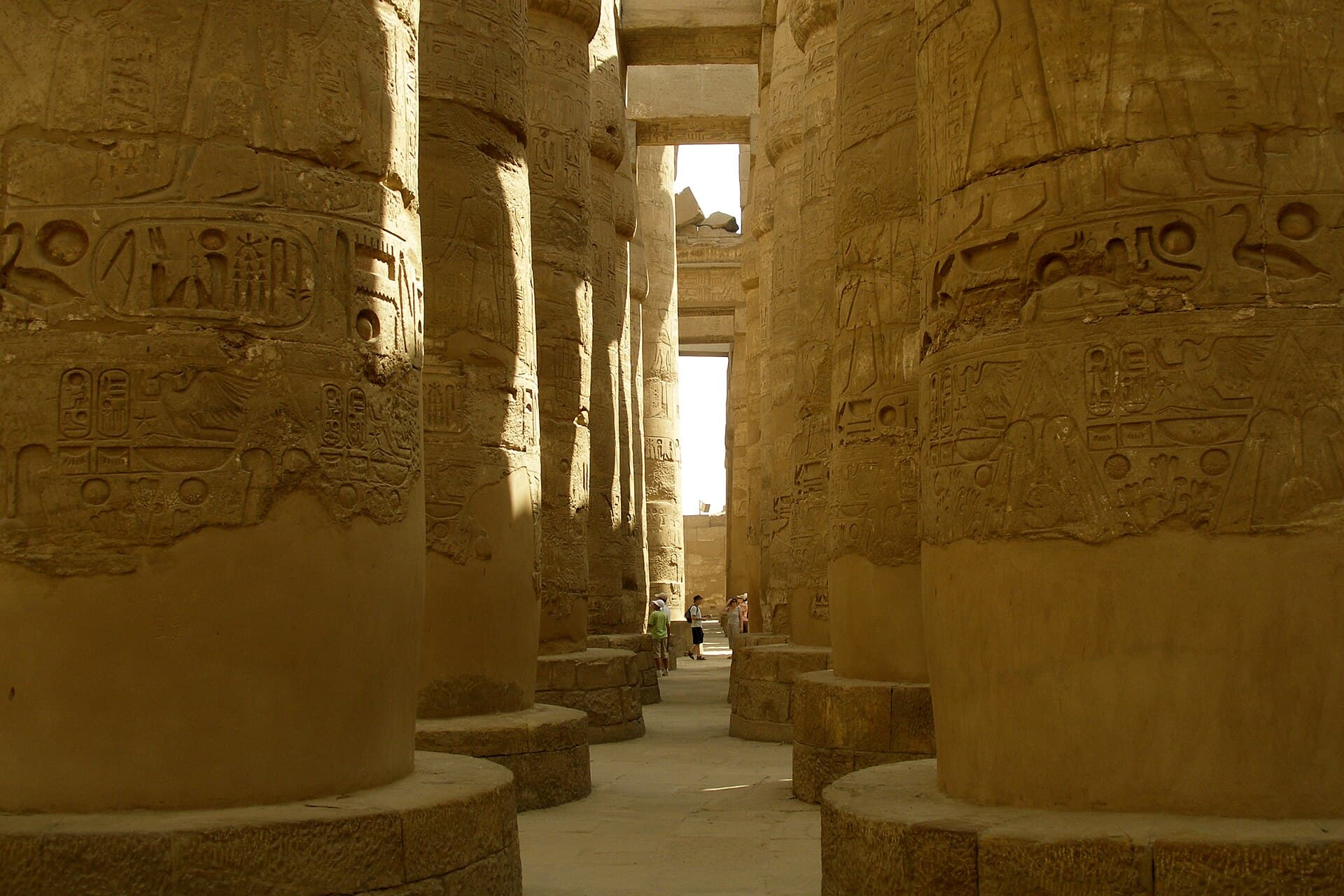
You can see the same hand elsewhere on a standard Egypt trip if you know to look. His tomb in the Valley of the Kings, KV17, is the longest and deepest in the valley and the finest cut, which is why it carries a separate and expensive ticket. At Karnak, the northern half of the Great Hypostyle Hall carries his raised relief and the southern half his son's sunk relief, and the change is legible from the floor. Abydos is where the contrast is sharpest, because here the two hands are in the same rooms rather than at opposite ends of a hall.
This page will not give you a life of the man. Reign lengths, campaign counts and the travels of his mummy are not things we have a source of our own for, and we are not going to print numbers we cannot stand behind. What is useful before a visit is smaller than a biography: he inherited a state putting itself back together, he spent heavily on craftsmanship, and he died with this temple unfinished. Everything you will notice on the walls follows from those three facts.
The seven chapels, and what to look for in them
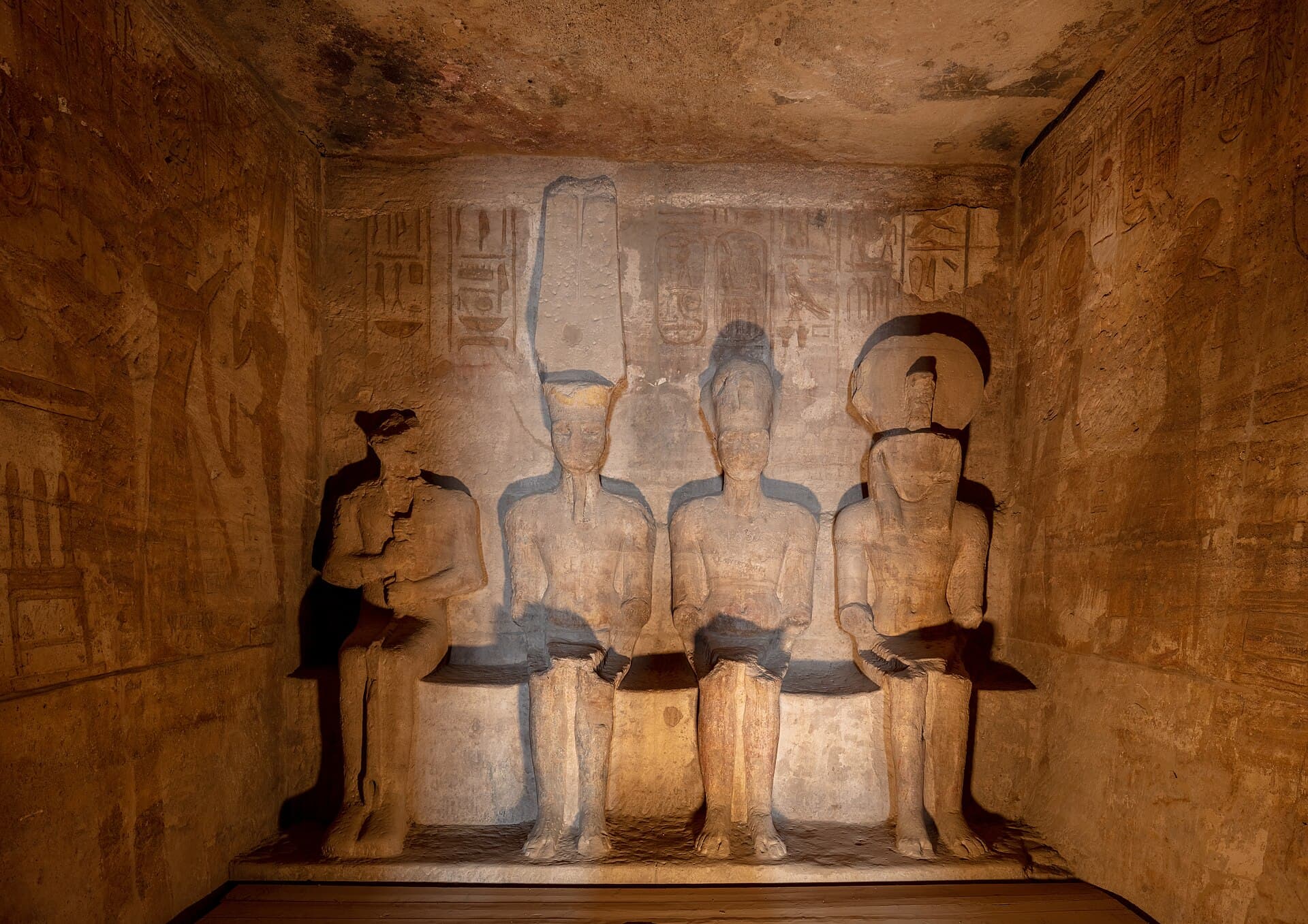
Seven sanctuaries stand side by side at the back of the temple, each keeping its own vaulted stone roof. They are dedicated to Osiris, Isis, Horus, Amun-Re, Ra-Horakhty, Ptah and to Seti I himself. A king taking a chapel in the company of gods is not unusual for the period; his son did something similar in the sanctuary at Abu Simbel. What is unusual here is being able to walk a row of seven and compare the same ritual, carved by the same workshop within a few years, seven times over.
Six of the seven end in a false door: a stone doorway carved on a solid wall, which the god passes through and you do not. The Osiris chapel is the exception. It opens into a further suite of rooms behind, because this is Osiris's ground and the temple is built around him. If those inner rooms are open on your day, go in. If they are not, do not treat it as a failed visit, because access to the rear rooms and the roof areas at Egyptian sites changes without notice.
What the reliefs show, in every chapel, is the daily temple ritual: a priest breaking the seal on the shrine, opening its doors, censing and anointing the god's image, clothing and feeding it, then withdrawing and sweeping away his own footprints behind him. Because the subject barely varies from chapel to chapel, the differences you are left with are differences of cutting. That is precisely what people come to Abydos for, and it is why a hurried walk through the row is such a waste.
Look up. The vaults hold the best-preserved colour in the temple, protected from sun, rain and three thousand years of hands. Deep blues, ochres, the outlines of cartouches and star patterns on the curve of the ceiling. Then look at the lower registers, where the stone has been rubbed to grey by contact. The chapels are dark and there is very little lighting to speak of, so a torch held at a low angle across the wall will show you modelling that flat light hides completely.
Why the temple bends
Nearly every Egyptian temple is a straight line. Pylon, open court, hypostyle hall, sanctuary, all on a single axis running back from the entrance. Seti's temple is an L. Behind the second hypostyle hall the plan turns south into a wing that holds the corridor with the king list, a scene of Seti and the young Ramesses roping a bull, halls associated with Ptah-Sokar and Nefertem, and a stairway heading out towards the back of the site.
Why it bends is not settled. The explanation offered most often is that the builders did not want to cut into or build over what already lay behind the temple, with the Osireion the obvious candidate. Nobody can prove that, and you should be suspicious of any guide who states it as fact. Other explanations involve the slope of the ground and the water table. The honest position is that the plan is unusual and the reason is disputed.
For a visit, though, the consequence is entirely practical. The best material is not on the main axis. A group that walks the straight line to the chapels and back out again has seen perhaps half the temple and none of the wing, which is where the most quoted wall in the building sits. Make sure the turn south is on your route, and make sure it comes after the chapels rather than instead of them.
What does the Abydos King List actually show?
In a side corridor, Seti I and his young son Ramesses stand before 76 cartouches naming earlier kings in order. It is not a history. It is a list of royal ancestors receiving offerings, which is a different thing. Because so few complete king lists survive, Egyptologists have relied on it heavily to reconstruct the sequence of dynasties, and it remains one of the most quoted documents in the field.
What the list leaves out is more interesting than what it includes. Hatshepsut, Akhenaten, Smenkhkare, Tutankhamun and Ay are all missing, as are the Hyksos rulers of the north. The Amarna kings and the female pharaoh were edited out of the official record, and this wall is that editing made permanent. As carving it is competent rather than exceptional. As evidence of how a state manages its own past, it is hard to beat.
It is worth noticing who is doing the offering, because it tells you what the wall is for. The reigning king presents to his predecessors, and by presenting he joins them. The list is a claim of legitimate descent, made in the most public durable medium available, at the place most associated with the dead. Read that way it is less a table of contents for Egyptian history than a piece of state argument, and the omissions are the argument's main move.
One practical warning. This corridor is where guides and visitors spend most of their time, partly because the list is genuinely famous and partly because it photographs well. It is worth ten or fifteen minutes. It is not worth a third of your visit, and the time usually comes out of the chapels, which are the better material by a wide margin.
The Osireion, and why it confuses people
The Osireion lies behind the temple and well below it: a rectangular hall of huge, plain red granite piers and massive blocks, with a central platform designed to be ringed by water. The intent was the primeval mound rising from the waters of chaos, and a symbolic tomb for Osiris. Its bare, joint-heavy masonry looks nothing like the temple in front of it, and that contrast is the point.
It is also usually waterlogged. Groundwater has risen over the centuries and much of the structure now sits in standing water. Access varies: sometimes you can walk down, sometimes you look in from the edge. Do not build the day around getting inside. You will also hear that it is far older than the temple because the masonry looks archaic, a reading its first excavators entertained a century ago. The inscriptions in it are Seti's, and Egyptologists now treat the plain style as a deliberate choice.
The style makes sense once you know what the building is for. A tomb of Osiris should not look like a working temple. It should look like the primeval island: rough, heavy, unfinished, older than architecture. Egyptian builders were entirely capable of dressing granite to a mirror finish when they wanted to, as the Valley Temple at Giza demonstrates a thousand years earlier. Choosing not to is a statement, and a temple whose front half is the most refined carving in Egypt makes that statement louder.
The water is also the site's central conservation problem and not a picturesque detail. Rising groundwater carries salt, salt crystallises inside porous stone, and crystallising salt pushes plaster and carved surfaces off the wall. It is the same mechanism that nearly destroyed Nefertari's tomb in the Valley of the Queens. Drainage schemes have been attempted at Abydos more than once. If you find the lower parts fenced off, assume conservation rather than obstruction.
Why Osiris made Abydos a place of pilgrimage
Osiris explains the whole site. He was murdered, dismembered and restored, and Abydos was held to be where his head was buried. Each year a procession re-enacted the killing, the mourning and the return to life, moving from the old Osiris temple at Kom el-Sultan out to the early royal cemetery. Egyptians who could afford it set up small memorial stelae along that route so they could take part in the festival permanently. Centuries of offering pottery left there gave Umm el-Qaab its Arabic name, mother of pots.
That is a useful thing to hold on to, because it reframes what you are standing in. Abydos was not primarily a tourist monument or a royal vanity project. It was a destination: the place ordinary Egyptians wanted to be associated with after death, in the way that later religions produced their own pilgrimage towns. The stelae along the processional route are the ancient equivalent of a name on a bench, bought by people who would never be buried here but wanted to be present at the festival every year in perpetuity.
It also explains why a king would spend this much on craftsmanship at a site 150 kilometres from his own capital and cemetery. Building at Abydos put Seti I inside the Osiris story rather than merely funding it. The seven chapels, the Osireion behind them and the ancestor list in the wing are three versions of the same idea: a king making himself continuous with the dead and with the gods who govern them.
Kom el-Sultan, Shunet el-Zebib and the older site
The Seti temple is around 3,300 years old, which at Abydos makes it recent. North of it lie the remains of the Osiris temple enclosure at Kom el-Sultan, a religious site rebuilt over and over for a very long time and now largely a low field of mudbrick and rubble. Beyond that, out towards the desert, stand the great mudbrick funerary enclosures of the first two dynasties. The best preserved is Shunet el-Zebib, built for Khasekhemwy, one of the last kings of the Second Dynasty, and it is among the oldest standing mudbrick structures anywhere in the world.
Further out again is Umm el-Qaab, the early royal cemetery, where the tomb identified in the Middle Kingdom as that of Osiris drew the offerings that gave the place its name. What survives there is mostly below ground level and under long-running excavation. There is very little for a non-specialist to look at, and access is frequently closed.
So this is background rather than an itinerary item, and we would rather say that plainly than sell you a walk in the desert you will not enjoy. But the background changes the temple. The building you came for was put up beside a cemetery that was already more than a thousand years old when the first stone was laid, at a spot chosen because the dead were already there. If the custodians will let you look towards the mudbrick enclosures from the temple, take two minutes to do it. It is the cheapest bit of perspective on site.
The Temple of Ramesses II at Abydos
A few hundred metres from his father's temple stands a smaller temple built by Ramesses II. It has lost its roof, which is the first thing you notice, and the walls stand at varying heights rather than to full elevation. What it has kept is colour. Out in the open air, with nothing over it, the surviving reds, yellows and blues on the exterior reliefs read more vividly in sunlight than anything you will see in the covered chapels next door, where the pigment is better preserved but the light is poor.
The subject matter is what you would expect from him: processions of offering bearers, the king before the gods, scenes of royal achievement. The cutting is Ramesside rather than Setian and it is a step down in finesse, exactly as it is on the walls he finished in his father's building. That is not a reason to skip it. Seeing the two within half an hour of each other is the clearest lesson in Egyptian relief carving available anywhere in the country.
Practically, it is quiet, sometimes locked, and occasionally needs a custodian to open it. Small notes for a tip are worth having in your pocket. Half an hour covers it comfortably. Treat it as a bonus rather than a fixture, because nobody will tell you in advance whether it is open, and build your day so that losing it costs you nothing.
What about the helicopter hieroglyphs?
On an architrave in the first hypostyle hall, a group of signs resembles a helicopter, and others nearby have been read as a submarine and an aircraft. The explanation is a palimpsest. An inscription of Seti I was filled with plaster and recarved with a text of Ramesses II. Over three millennia the plaster fell out, and the two sets of signs now sit on top of each other.
Both underlying texts have been read, and both are ordinary royal titles and epithets. The overlap is an accident of recarving, not a record of anything. It is high up and hard to see properly. Thirty seconds is a fair allocation. Some guides spend longer because visitors ask, and that time comes out of the chapels, which is a poor trade.
The recarving itself is the genuinely interesting part, and it gets ignored because the helicopter is more fun. Ramesses II took over his father's unfinished temple, and taking over meant putting his own name and titles where his father's had been. He did the same thing on a large scale across Egypt. The wall is therefore a small piece of evidence about how Egyptian kings handled inheritance in stone, which is a better story than an aircraft and has the advantage of being true.
How to read the offering scenes without a background in this
Most of what covers the walls at Abydos is not narrative. It is transactional. The king offers something to a god, and the god gives something back: life, dominion, years of reign, stability. The same exchange repeats across the building in hundreds of variations. If you are waiting for a story to unfold along the wall the way it does in a medieval fresco cycle, you will wait a long time and leave thinking the temple was repetitive.
The repetition is the function. These scenes were not there to be admired; they were there to make the exchange permanent, so that the ritual continued whether or not a priest was in the room that morning. Read one carefully and you have essentially read them all, which is a liberating thought in a building this dense. It means you can stop trying to consume the walls and start choosing which ones to look at properly.
A workable method takes four steps. Find the king, usually the figure in motion holding something out. Find the god, usually seated or standing still. Identify what is being handed over: a small crouching figure of Maat, jars of wine, loaves, cones of incense, cloth. Then look at the short vertical columns of text above the hands, which name the two parties and the gift. After four or five of these the walls stop being wallpaper, and the difference between a Seti wall and a Ramesses wall becomes obvious rather than something a guide has to point out.
How do you get to Abydos?
Abydos is a long day trip from Luxor, roughly three hours on the road each way. Nearly everyone pairs it with Dendera, which lies on the way back near Qena, about an hour and a half north of Luxor. The order that works is Abydos first thing in the morning, then Dendera in the afternoon on the return, so you reach the harder, more detailed site while you still have the energy for it.
Plan for twelve hours door to door and an early start. There are police checkpoints along the valley road, and the rules on permits and escorts for foreign visitors have changed more than once over the years. A good operator will handle it, but confirm what applies on your dates rather than assuming. Facilities at the site are basic. Take water and food with you. Abydos also works as a stop on a Luxor to Cairo drive if you are heading north anyway.
Carry your passport rather than leaving it at the hotel. Checkpoints along the valley road are routine and drivers and guides are regularly asked for names and numbers, and a passport copy in the glovebox is not always accepted. This is normal and undramatic, but it slows a car that is not carrying documents.
A workable plan for the day
Leave Luxor before first light. Aim to be at Abydos at or close to opening, which means a departure in the dark and breakfast in the car. Getting there early matters less for crowds, which are modest at Abydos on any normal day, than for heat and for the shape of the rest of the day: every half hour lost in the morning comes off Dendera in the afternoon.
At the site, go straight through the ruined outer courts. They are Ramesside, badly damaged, and they will eat twenty minutes you need later. Start in the hypostyle halls, then give the seven chapels ninety minutes. That number sounds excessive until you are in there with a torch and realise you have spent fifteen minutes on one wall. Then take the turn south into the wing for the king list and the bull scene, half an hour. Then out to the Osireion, however much of it is accessible, fifteen minutes. If the Ramesses II temple is open, half an hour more.
That is around three hours on site, which is roughly double what a coach group allows and about right. Then drive south to Dendera, arriving early in the afternoon, and give the Hathor temple ninety minutes to two hours, more if the roof and a crypt are open. You should be back in Luxor in time for dinner, twelve hours or so after you left.
If you are doing Abydos alone and skipping Dendera, the day changes completely. You can leave an hour later, spend four hours at the site without hurrying anything, eat properly in the afternoon and still be back before dark. For people whose interest is specifically in the carving rather than in covering ground, that is the better version of the trip, and almost nobody books it.
Tickets, facilities and what to bring
Tickets are bought at the site rather than in advance, and at times the Ramesses II temple has been ticketed separately from the Seti temple. Egyptian site prices change often enough that any figure you read online should be treated as out of date; check at the window on the day. Bring cash in Egyptian pounds, including small notes, because card facilities at sites like this cannot be relied on and small notes are what you need for tips and for the toilets.
Bring a torch. This is the single most useful item at Abydos and the one most visitors do not have. The chapels are dark, there is little lighting, and a torch held at a shallow angle across a wall reveals modelling that vanishes under flat light. A phone torch works. A proper hand torch works better, and is kinder to whoever is standing next to you.
Bring water and food. There is no proper cafe or shop on site, El Balyana is a plain working town rather than a place set up for visitors, and most operators either pack a lunch or eat near Dendera on the way back. Add sun cover for the open courts, comfortable shoes for uneven ground, and modest clothing that covers shoulders and knees, which is sensible anywhere in Middle Egypt and avoids friction in a town that sees few foreigners.
Is a guide worth it at Abydos?
More than at most sites, yes. There is very little interpretive signage, the iconography is dense, and the interest here lies in distinctions: which hand cut this wall, which king finished that one, why the temple bends, what the offering in this scene actually is. Those are not things a first-time visitor will pick up unaided, and without them the walls flatten into repetition.
There is a caveat, and it is the same one that applies at Dendera. Guides go where the questions go, and at Abydos the questions are overwhelmingly about the helicopter hieroglyphs and the king list. If you let the visit run on demand you will get forty minutes on those two and a walk-through of the chapels. Say at the start what you actually want: time in the seven chapels, the difference between raised and sunk relief, and the wing.
If you are going without a guide, twenty minutes of reading beforehand changes the visit more than anything else you can do. Learn the seven gods of the chapels, learn what the daily ritual consists of, and learn to tell raised relief from sunk relief. That is enough to make the building legible. Abydos punishes arriving cold more than most Egyptian sites, because its rewards are in detail rather than in scale.
When is the best time to go?
November to February is the comfortable window. A twelve-hour round trip in Upper Egypt in June or July is punishing, and standing in the open courts in the middle of a summer day is worse. The chapels are dark whatever the hour, so time of day matters less inside than you might expect, though morning light is better in the open parts of the temple. Fridays and Egyptian public holidays bring more domestic visitors. Opening patterns shift during Ramadan, so check locally before you set out.
October and March sit either side of the good window and are usually fine, with the caveat that both ends can run hot. If your trip falls in high summer and Abydos matters to you, consider dropping Dendera and doing the shorter version: you will be in a vehicle for less of the day and out of the sun during the worst of it. A twelve-hour day in August is the version of this trip people regret.
One more timing note that has nothing to do with weather. Because Abydos costs a full day, it competes with everything else on your Luxor list rather than slotting in beside it. The best day to spend on it is one that would otherwise have been a second pass at something you have already seen. On a short trip that day does not exist, which is the real reason most people skip Abydos rather than any judgement about the site.
Where Abydos fits in a Luxor trip
On a first visit with three or four days in Luxor, do not go. Karnak, a west bank morning, Luxor Temple after dark and a little slack for the heat will fill that time, and every one of those is a stronger use of a day for someone seeing Egypt for the first time. Taking a full day out of a four-day Luxor stay to drive six hours is a trade most people would reverse if they could.
With five days or more, it becomes a good idea, and with a second visit to Egypt it moves near the top of the list alongside Dendera. Once you have done the pyramids and the main Luxor sites, the interesting places sit off the standard line, and Abydos is the clearest example of that: a first-rank monument that sees a fraction of the traffic.
If you are on a Nile cruise, Abydos is not available to you from the boat. It sits north of Luxor, off the sailing stretch entirely, and no standard itinerary goes there whatever the number of nights. The fix is a land day at either end of the cruise rather than a search for a boat that includes it, because there is not one. The same is true of Dendera, which is why the two are almost always done together by road.
The other natural fit is a Luxor to Cairo drive. That road is long, roughly 650 kilometres, and Abydos is the obvious break in it rather than a detour. If you are already making that journey, stopping here converts dead driving time into the best carving in the country, which is about as good a deal as Egyptian logistics offer.
What do most visitors get wrong?
The usual mistake is time. Groups allow well under an hour, spend it in the hypostyle halls and the King List corridor, and leave without looking properly at the seven chapels, which are the reason the temple matters. Give the interior ninety minutes at least. Take a torch. Look up at the ceilings, where the colour is best preserved. If the Ramesses II temple is open, add half an hour for the exterior reliefs.
Be clear about what Abydos is not. It has no scale to speak of, no dramatic setting, and El Balyana is a plain working town. If you have three days in Luxor, the West Bank tombs will give you more. Abydos rewards people who care about carving, religion and detail, and those are the people it sends home happy.
The second common error is arriving with alternative-history expectations and spending the visit hunting for evidence of something that is not there. The helicopter architrave accounts for most of it, and the plain masonry of the Osireion for the rest. Both have ordinary explanations, both are more interesting once you know them, and neither is worth more than a few minutes of a day that cost you six hours in a car.
The third is photographic. People arrive expecting the shot and find that the best material is in dark vaulted rooms where a phone produces grey mush. Abydos is a site for looking rather than for photographing, and visitors who accept that early get far more out of it. If you want the picture that justifies the day, it is more likely to be an exterior wall of the Ramesses II temple in afternoon sun than anything in the chapels.
Common questions
Can you visit Abydos as a day trip from Cairo?+
Not realistically. Abydos is roughly 500 kilometres south of Cairo, and the drive alone runs to about six hours each way. Fly or take the train to Luxor and go from there, or stop at Abydos as a break if you are already driving between Luxor and Cairo.
How long do you need at Abydos itself?+
Three hours is the honest answer for a proper visit: ninety minutes in the seven chapels, half an hour in the wing with the king list, fifteen minutes at the Osireion and half an hour at the Ramesses II temple if it is open. Two hours is a workable minimum. Under an hour, which is what many groups allow, means walking past the best material without registering it.
Is photography allowed inside the Temple of Seti I?+
Generally yes, but the rules on cameras, phones, flash and tripods at Egyptian sites change, and some monuments charge a separate photography fee. Flash is bad for painted surfaces in any case, and the chapels respond better to a steady hand than a burst of light. Confirm the current position at the ticket office on the day.
How does Abydos compare with Dendera?+
They are different eras and different pleasures. Dendera is Ptolemaic and Roman, with cleaned ceilings, Hathor-headed columns and crypts you can climb into; it is the more immediately impressive of the two. Abydos is older and quieter, and its appeal is the quality of the carving. Most people who see both are glad they skipped neither.
Can you do Abydos and Dendera in the same day?+
Yes, and almost everyone does. The two sit on the same road north of Luxor, so the standard trip runs Abydos first thing, Dendera in the afternoon on the way back, and home in the evening. Budget twelve hours door to door. If that sounds like too much, dropping Dendera and giving Abydos a slower morning is the better compromise for anyone who came for the carving.
Do Nile cruises stop at Abydos?+
No. Abydos lies north of Luxor, off the Luxor to Aswan sailing stretch entirely, and no standard cruise itinerary reaches it however many nights you book. If you want to see it, add a land day at either end of the cruise and go by road from Luxor. The same applies to Dendera, though a few itineraries do moor near Qena for that one.
Can you go inside the early royal tombs at Umm el-Qaab?+
Usually not. The First Dynasty tombs lie out in the desert beyond the temples, and what survives is largely below ground and under excavation. There is little to see for a non-specialist even when access is granted. Treat it as background to the site rather than something to plan around, and ask your guide whether anything is currently open.
Is Abydos manageable with limited mobility?+
Better than several Luxor sites, with caveats. There are steps up into the temple and the ground outside is uneven, but the hypostyle halls, the seven chapels and the king list corridor are all on one level once you are inside, so the main reason to come is reachable without stairs. The Osireion is down a slope and often inaccessible to everyone anyway. Confirm the current arrangements with your operator before you commit to the drive.
Why is Seti I's temple the famous one when Ramesses II is the better-known king?+
Because his craftsmen were better. Seti I built in raised relief on fine limestone to a standard nobody matched, in a reign spent restoring the old cults after the Amarna period. Ramesses II inherited the unfinished temple and completed parts of it in sunk relief, which is quicker and coarser. Both hands are on the same walls, and the comparison is not flattering to the more famous name.
Is the road journey to Abydos safe?+
It is a routine trip for Cairo and Luxor operators, run on a main valley road with police checkpoints along the way. The practical risks are ordinary Egyptian driving and a long day in a vehicle, so use a driver you trust rather than the cheapest option. Check your own government's current travel advice for Sohag governorate before you travel.
Official sources
Entry rules, opening hours, security advice and exchange rates all move. Check them at the source, not here.
Written and checked by the Nile Trip Guide editorial team · Last reviewed . Entry rules, prices and opening hours change — check anything critical against the official sources linked on this page.
The route most people take first, at the length it was built for: Giza and the Grand Egyptian Museum, then a flight to Luxor and four nights sailing down to Aswan.
No boat on this one. Giza and the Grand Egyptian Museum, a night in Luxor for both banks, two nights on the Red Sea, then back to Cairo for the Citadel, Coptic Cairo and the Royal Mummies.
Five nights in Cairo either side of a four-night sail from Luxor to Aswan. The Cairo days are private, just your party and a guide; the sightseeing off the boat is shared with a small group.