Solar eclipse 2027: Egypt, and six minutes over Luxor
On Monday 2 August 2027 the Moon passes directly in front of the Sun. The solar eclipse 2027 Egypt will see is total, not partial. Its shadow crosses Upper Egypt. Totality reaches 6 minutes 23 seconds at maximum. That is the longest totality available on easily accessible land until the year 2114. Nothing before then beats it on ground you can reach without an expedition.
What happens on 2 August 2027
On Monday 2 August 2027 the Moon passes directly in front of the Sun. The solar eclipse 2027 Egypt will see is total, not partial. Its shadow crosses Upper Egypt. Totality reaches 6 minutes 23 seconds at maximum. That is the longest totality available on easily accessible land until the year 2114. Nothing before then beats it on ground you can reach without an expedition.
The path of totality crosses ocean and a run of countries: southern Spain, Gibraltar, Morocco, Algeria, Tunisia, Libya, Egypt, Saudi Arabia, Yemen and Somalia. You could stand under it in several of them. Egypt is where the shadow lingers longest. Historical cloud records for this part of Egypt point to roughly an 80 percent chance of clear skies in early August. That is Egypt's own figure. We have not ranked it against the desert interiors further west.
Greatest eclipse falls at roughly 10:06 UTC. In Luxor that works out at around 1pm in the afternoon. We will not publish contact times to the second, and you should distrust any page that does. Whether Egypt observes summer time in August 2027 is not settled, and sources disagree at the minute level. Use the UTC anchor, then confirm local times nearer the date against Egypt's clock offset.
Everything else on this page follows from two fixed points. The date cannot move, and the shadow will fall where orbital mechanics say it falls. Every other variable — where you sleep, how you get there, what the heat does to your day, whether a cloud arrives at the wrong moment — is either something you can plan for or something you have to accept. It is worth being clear at the outset which is which.
Why the solar eclipse 2027 Egypt path favours Luxor
Duration depends on how close you stand to the centre of the shadow's track. Luxor sits very close to that centreline and gets a little over six minutes. The point of maximum duration falls roughly 60 km, about 37 miles, southeast of the city, where totality runs to about 6 minutes 22 seconds. That difference is small enough that most people will not chase it.
Height in the sky matters too. At maximum the Sun will be roughly 82 degrees above the horizon, which is almost straight overhead. You will not need a clear view to the west, or a hill to stand on. A courtyard, a deck or a patch of desert will do, provided nothing large sits directly above you.
Then there is the sky itself. That 80 percent figure is a climatological average drawn from past years, not information about 2027, and nobody can forecast a specific day this far out. Eighty percent also means about one year in five where cloud spoils it. Clear skies are likely here. Nothing guarantees them on the day.
Luxor also has the one thing a desert centreline position does not: a town. Hotels, an airport, hospitals, cold water, air conditioning and people whose job is to move visitors around. For an event that lasts six minutes and requires a full day of surviving the heat either side of it, infrastructure is not a luxury item. It is most of what separates a good eclipse day from a miserable one.
Total or partial: the difference is absolute
A total eclipse and a deep partial eclipse are not the same event at different strengths. They are different events. Until the last sliver of the Sun's bright disc is covered, the Sun stays dangerous to look at, the corona stays invisible, and the sky stays a daytime sky — dimmed and strangely flat, but daylight. At totality all three of those things change at once. Ninety-nine percent covered is not almost totality. It is a different afternoon.
This is why the width of the shadow's track matters more than any other number on this page. Stand inside it and you get the corona. Stand outside it, even not far outside it, and you get a partial eclipse: worth eclipse glasses, worth an hour of your time, and nothing like the thing people cross continents for. Much of Egypt will see the Sun partially covered on 2 August. Only the ground under the track sees totality.
There is no partial credit for being close, and that has a practical consequence when you are choosing where to stay or what to book. Being inside the path is the requirement; everything else is a preference. Ask whoever is arranging your position to say plainly that it lies inside the path of totality, and not merely that it is near Luxor. Those are different claims, and only one of them is the one you are paying for.
It is also why the people who do this repeatedly are so uninterested in compromise. An eclipse chaser who has seen totality will travel a very long way rather than accept a deep partial, and will sound obsessive about it to anyone who has not. They are not exaggerating. They are describing a threshold.
What six minutes of totality is actually like
Partial phases run either side of totality, and for most of that stretch nothing feels dramatic. The change arrives in the final minutes. Light turns thin and metallic. Shadows sharpen. The temperature drops in a way you feel on your skin. Then the last sliver of Sun goes, the corona appears as a pale ring around a black disc, and bright stars come out in a daytime sky.
Six minutes is a long totality. Most are over before people have finished reacting to them. Here you get time to look properly, put the camera down, notice what the horizon is doing and simply stand there. Decide in advance what you want from those minutes, because they still pass quickly.
Eye safety is not a formality. Never look at the partial phases without proper solar filters; eclipse glasses must meet the ISO 12312-2 standard, and sunglasses or a phone screen will not do. During totality itself, and only then, you can look with the naked eye. Look away and get the filters back on before the Sun reappears. The first returning sliver is as dangerous as full sunlight.
The sequence, and what to watch for at each stage
The whole event runs for something over an hour on either side of totality, and the first hour is quiet. The Moon takes a bite out of the Sun's edge and then works slowly across it. Through eclipse glasses you watch a crescent narrow. With the glasses off there is almost nothing to see, because the eye compensates for a surprising amount of lost sunlight before daylight looks wrong.
One thing worth doing in that hour costs nothing. Look at the ground under a tree, a sunshade or anything with small gaps in it. Each gap acts as a pinhole camera and projects the crescent Sun onto the ground, so the shade fills with hundreds of identical crescents. A kitchen colander or a straw hat does the same job. It is the simplest way for a group to watch the partial phases without anyone removing their glasses.
In the last few minutes before totality the pace changes sharply. The light goes thin and colours drain out of the landscape. Shadows become unnaturally crisp, because the Sun has narrowed to a sliver and is behaving more like a point source than a disc. Some people see shadow bands in those final seconds — faint ripples of light and dark running across pale ground or a white sheet. They are unpredictable and easy to miss; put a white cloth on the ground and you may catch them.
At the last moment the remaining sliver breaks into beads of light where sunlight is still shining through valleys on the Moon's edge, and then down to a single brilliant point against the emerging corona. That is the diamond ring. It is the signal that totality is a second away, and it is also the moment to get your eyes behind filters when it happens in reverse at the end.
During totality itself, look at more than the corona. Bright planets and stars appear. The horizon glows all the way around you, because you are standing under a shadow that is only so wide and there is sunlit ground in every direction beyond it. If the Sun is active you may see prominences as small pink flecks at the edge of the black disc. And the corona is not a static ring: it has structure, streamers and asymmetry, and it rewards a second and a third proper look rather than one glance and a scramble for the camera.
Then it runs backwards. The diamond ring returns on the opposite edge, and it is the single most dangerous moment of the day for your eyes, because it arrives while everyone is still staring upward. Glasses back on, camera filters back on, and then an hour of partial phases that almost nobody watches to the end. There is no shame in going indoors for that hour. You have already seen the thing you came for.
August in Luxor: what the heat actually means
Our own month guide is blunt about August. It is the hottest stretch of the year alongside July. The standing advice is to avoid the Nile valley unless you have a specific reason to be there. Luxor regularly passes 40C. Afternoons are the worst of it, and the eclipse falls in the early afternoon.
The eclipse is that specific reason. It is the one thing worth being in Luxor in August for, and we will say so plainly. What you should not do is treat the heat as a detail. Heat exhaustion in Upper Egypt in August is a real risk, not a theoretical one. Standing outside at midday waiting for a shadow is the wrong shape of day.
Plan the rest of the trip around it. Do temples at dawn and be finished by mid-morning. The middle of the day belongs indoors, somewhere air-conditioned, on every day except this one. Carry far more water than feels sensible, and treat shade as compulsory. On eclipse day, arrange shade over your viewing spot: an umbrella, an awning, a canopy you bring with you.
For scale, our month tables put the August average high in Luxor at around 41C and Cairo at around 35C. Averages understate the problem, because an average high is not the temperature of a stone courtyard in direct sun at one in the afternoon, and it says nothing about the days that run several degrees above it. Treat 41C as the number you plan around and assume the day itself could be worse.
The heat also does things to equipment and to plans. Phones in direct sun overheat and shut themselves down, often at exactly the wrong moment. Batteries drain faster. Vehicles without working air conditioning become genuinely unsafe on a long transfer. None of this is exotic — it is simply what a desert afternoon does — but it is the difference between a day that is arranged for the conditions and a day that assumes European summer.
Where to watch from, and the trade-offs
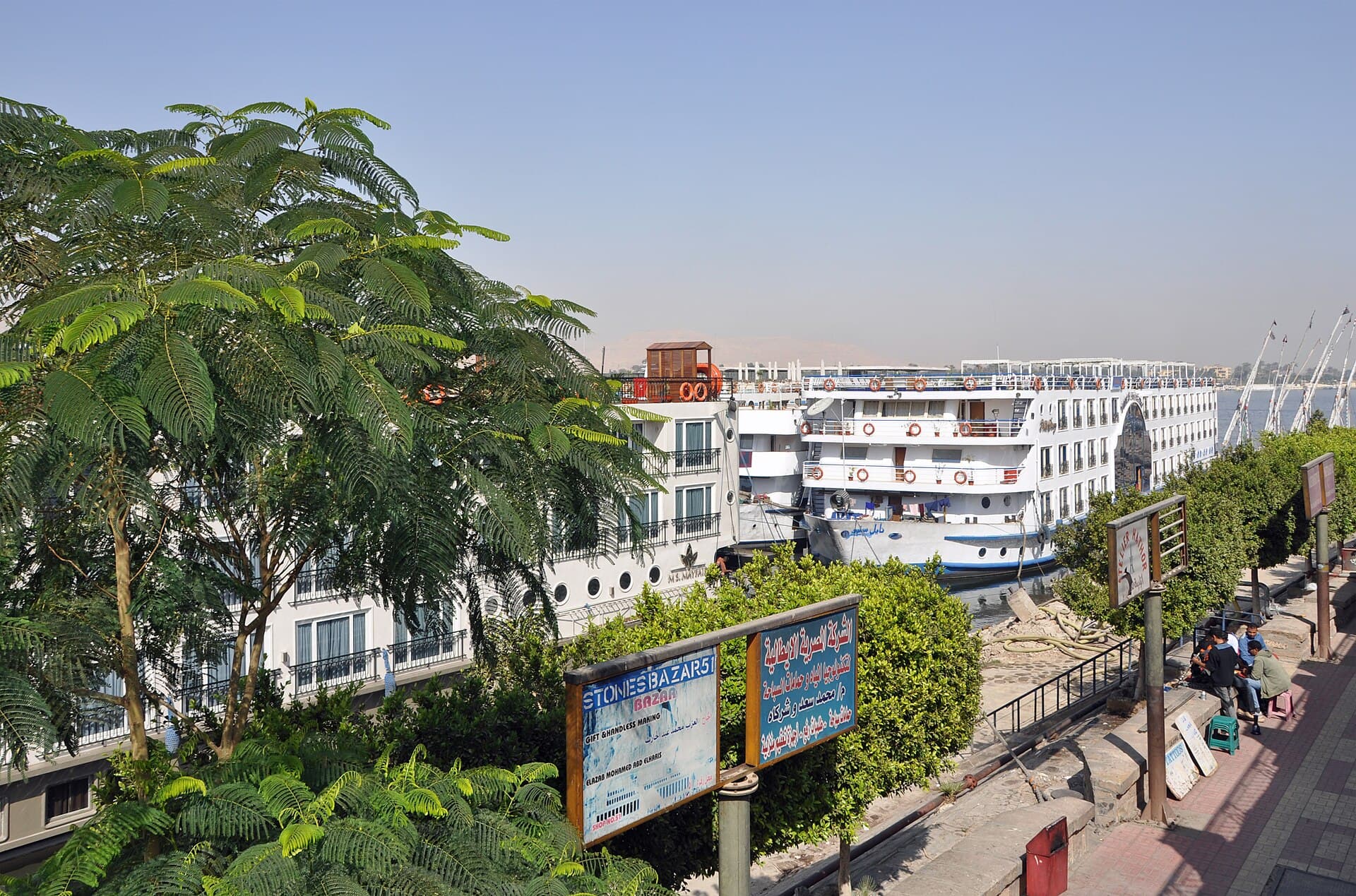
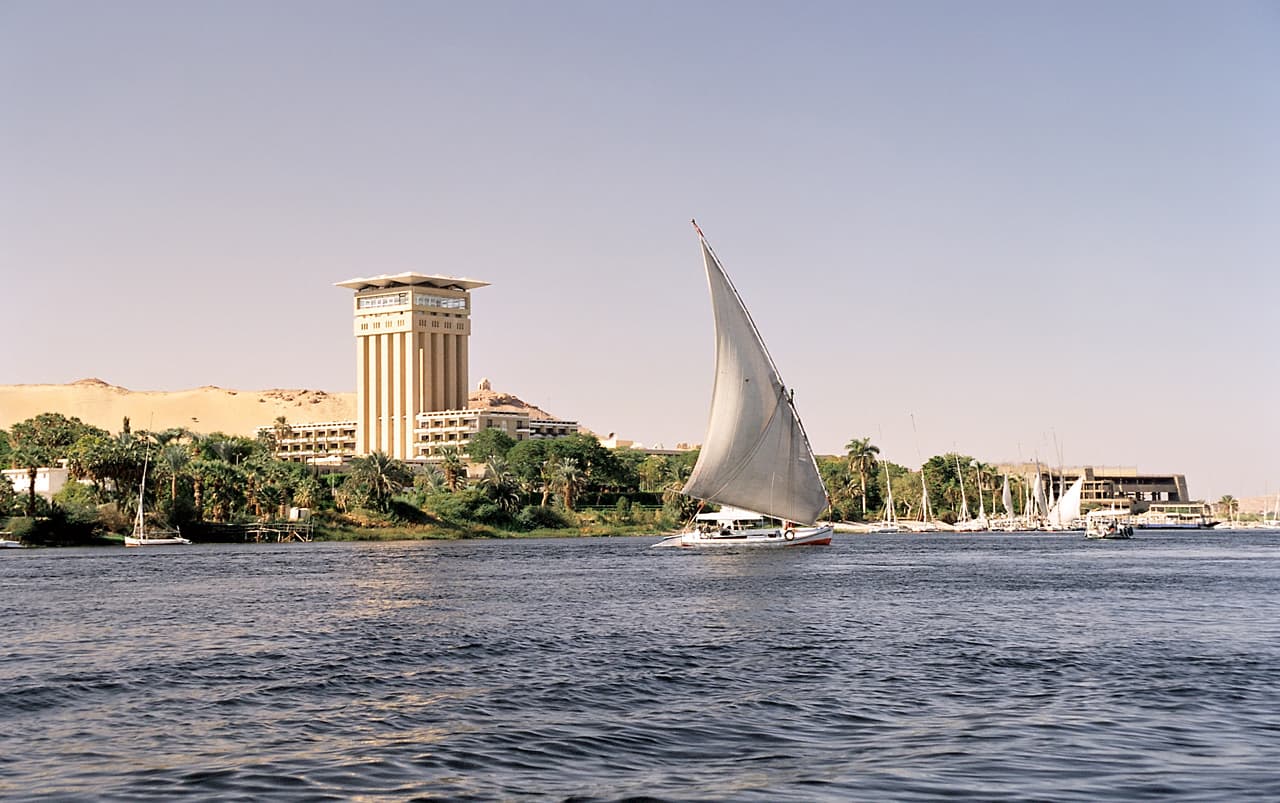
A cruise boat is the option most people picture. You are already on the water, the deck is open to the sky, and you travel nowhere on the morning. Boats moor where they moor, though, and a berth is not a guaranteed centreline position. Ask where the boat will actually be on 2 August, and whether shade and cold water will be available on deck.
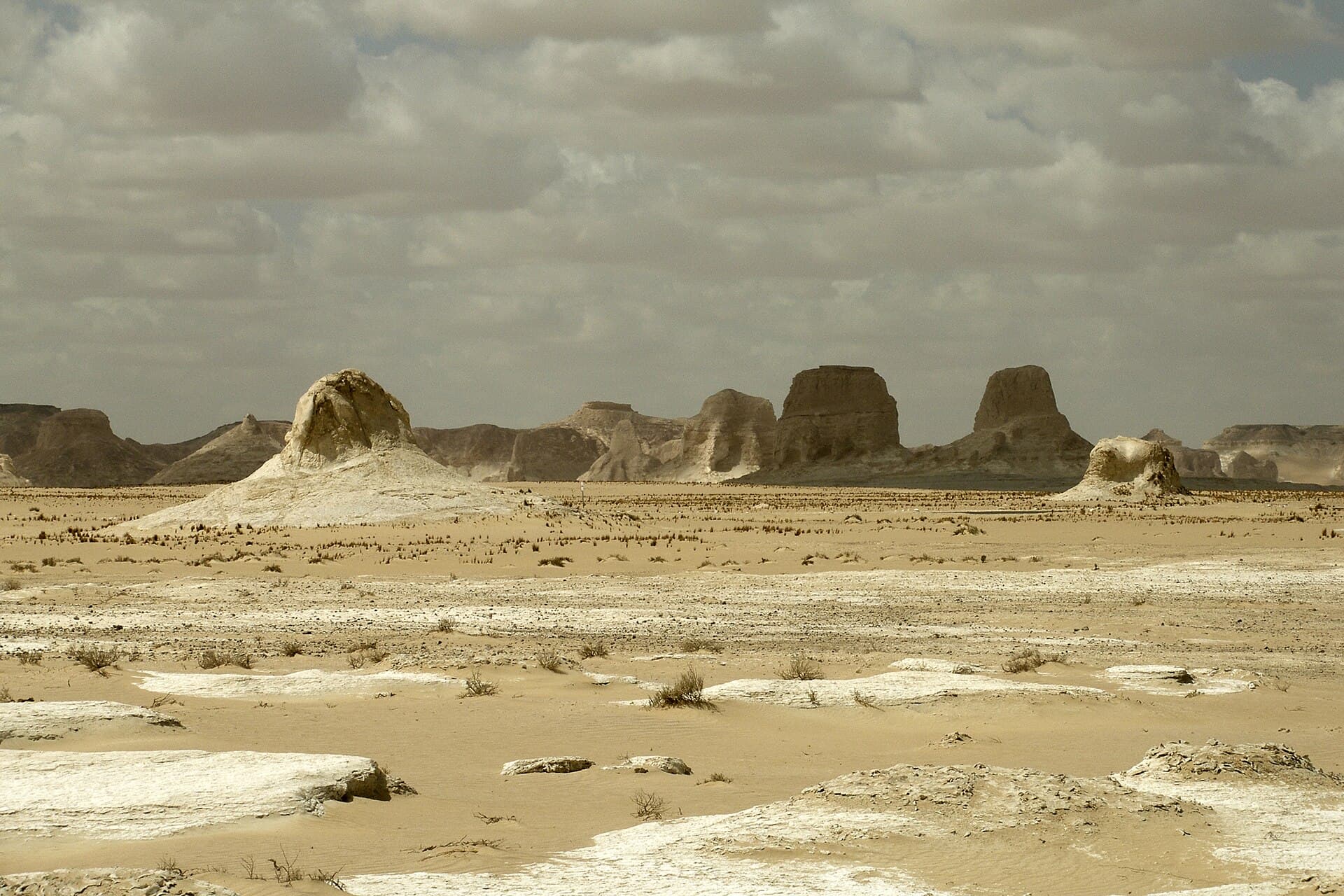
A desert site southeast of Luxor puts you nearer the point of maximum duration and away from crowds. It also means a road journey on the morning, in August, to somewhere with no shade and no facilities unless someone provides them. Anyone selling a desert position should be able to say who supplies water, shade, toilets and a way back if a vehicle fails.
A hotel rooftop is the simplest choice and the easiest to underrate. With the Sun almost overhead, a roof works as well as anywhere, and you are minutes from air conditioning and a cold shower. The variables across all three are the same: how open the sky is above you, how many people share the space, and how far you must travel that morning.
One more consideration applies to all three: what is directly above you, and what is above you an hour before and an hour after. A roof terrace with a pergola, a deck with a sunshade, a courtyard with a mature tree — each of these is a problem at the wrong angle and a blessing at the right one. With the Sun at roughly 82 degrees you need the zenith clear, which is a much easier condition to satisfy than a clear western horizon, but it is not automatic. Go and stand in the spot at the right time of day before eclipse day, and look up.
Whatever you choose, have a plan for shade during the partial phases that does not require you to leave your position. The mistake that spoils eclipse days is not choosing the wrong spot; it is spending ninety minutes in full Upper Egyptian sun before the interesting part starts, and being too cooked to enjoy it when it does.
Getting to Luxor, and which route holds up in August
Luxor has its own airport, and the usual routes in are a domestic flight from Cairo or one of the smaller number of direct services from Europe. Direct capacity into Luxor is thin compared with the Red Sea airports in normal years, and 2 August 2027 will not be a normal week. This is the part of the trip most exposed to price and scarcity, and the part you have least control over.
The road from the Red Sea coast is the alternative most people overlook. Hurghada to Luxor is about 290 kilometres, roughly four hours across the desert to Safaga and Qena and then south along the Nile valley. The road is good and the drive is dull. Hurghada takes far more direct flights from Europe than Luxor, usually cheaper ones, which makes a fly-to-the-coast-and-drive-in plan worth pricing even if it is not the obvious one.
Arriving by river is the third option, and it changes the shape of the whole trip. A Nile cruise between Aswan and Luxor is an efficient way to reach Edfu and Kom Ombo, which are awkward to get to otherwise, and it means you are already in the right part of the country with a deck under your feet. It is a poor way to see Luxor itself, because boats moor on the east bank, often rafted several deep, and the city becomes one compressed morning at the start or end of the itinerary.
Whichever route you take, do not plan to arrive on 1 August. A missed connection, a delayed domestic flight or a vehicle problem on the desert road all become unrecoverable when your target cannot be rescheduled. Arriving two or three days early costs you two or three nights of accommodation you were probably going to spend somewhere anyway, and it removes the single failure mode that would waste the entire trip.
Within Luxor, remember how the two banks work. The bridge is several kilometres south of the centre, so crossing by road takes twenty to thirty minutes each way. The local ferry crosses in a few minutes for the price of a coffee. If your viewing position is on the opposite bank from your bed, that crossing is part of your eclipse-morning plan and needs to be thought about rather than assumed.
Booking reality: you are already late
Serious eclipse travellers book years ahead. Rooms in Luxor for 2 August 2027 have been going a long time, and flights into Egypt around that date will be scarce and expensive. Anyone reading this now is late rather than early. That is not a sales line. It is what the calendar looks like for a fixed date that cannot move.
Lock the bed down first. A confirmed room or cabin in the right place for the night of 1 August is the hard constraint, and everything else can be arranged around it. Flights come second: expensive, but they exist. Guides, drivers and any specific viewing arrangement come third. Booking in that order secures the piece that can genuinely run out.
Read the cancellation terms before paying anything. Eclipse-date bookings are often non-refundable, and a date this fixed gives an operator no reason to be flexible. We are an independent guide, not the company on the ground; a local partner in Egypt runs the trips we describe. Ask them directly what is confirmed, what is provisional, and what happens to your money if plans change.
Two questions are worth asking of any eclipse package before you pay. First: is the accommodation named and confirmed, or is it to be advised? A trip sold against unnamed hotels in a town where every bed is spoken for is a trip that has not been secured yet. Second: what is the viewing position, in words specific enough to be checked — which bank, how far from town, inside the path, with what shade and what facilities?
Expect prices around the date to sit well above the normal August rate, which is ordinarily the lowest of the year inland. That is not necessarily sharp practice. A hotel that fills for one week in its quietest month prices accordingly, and so does an airline. What matters is that you know you are paying an event premium and have decided the event is worth it, rather than discovering the premium at the point of booking and rushing the decision.
Photographing totality, and whether you should bother
The honest answer for most people is: take one wide photograph and then stop. A phone will not produce a good image of the corona. It has neither the reach nor the dynamic range, and its automatic exposure will fight you for the entire six minutes. What a phone can do well is the thing a specialist rig usually misses — the landscape under an eclipsed sky, the faces of the people next to you, the strange colour of the horizon.
If you are going to shoot the Sun properly, the rules are the same as for looking at it. Any lens pointed at the partial phases needs a proper solar filter at the front, not a filter screwed in behind the lens, and the same goes for binoculars and telescopes. Unfiltered optics concentrate sunlight, and they will destroy a camera sensor and an eye with equal efficiency. The filter comes off only for totality, and goes back on before the diamond ring returns.
Practise the whole sequence at home, in the dark, until you can do it without looking. Eclipse day is not the time to learn where a setting lives in a menu. Fix your exposures in advance, use a tripod, and if you want more than one exposure of the corona, set up a bracket and let it run rather than fiddling. Heat and fine dust are hard on equipment in Upper Egypt, so keep gear shaded and bagged until you need it.
Then make the decision that actually matters. Six minutes is long enough to shoot and still look, which is unusual, but only if you have decided in advance which minutes belong to the camera. The common regret after a total eclipse is not a poor photograph. It is having spent the whole of it behind a viewfinder, and remembering the event as a series of settings rather than as something you watched.
What to take with you on the day
Eclipse glasses to the ISO 12312-2 standard, one pair per person and at least one spare. They scratch, they get sat on, and a damaged pair is not safe to use. Buy them from a reputable supplier well in advance rather than from whoever is selling on the corniche on the morning, because you cannot assess a filter by looking at it.
Water in quantities that feel excessive, and something salty to eat with it. Sweat in dry desert air evaporates before you notice it, which is exactly why people in Upper Egypt underestimate how much they are losing. A wide hat, long sleeves in light fabric and high-factor sunscreen are more use than any of them sound, and a small towel soaked in cold water does more for you at midday than any gadget.
Shade you control. An umbrella is the cheapest and most effective piece of eclipse kit you can carry in Egypt, and it does not care whether your hotel roof, your boat deck or your desert field turned out to have any. A folding chair is worth having for the partial hour if your position allows it.
Finally, the small things that get forgotten: a power bank, because heat drains batteries; a shaded place to keep your phone so it does not shut down; a written note of your local contact times rather than a website you may not be able to load; small notes of cash, which are useful everywhere in Egypt; and a white cloth or sheet, both for shadow bands and for putting equipment down on rather than into the dust.
Fitting the eclipse into a wider Egypt trip
Almost nobody flies to Egypt for one afternoon. The sensible shape is to arrive several days early. That also gives you slack if a flight slips. Work with the heat rather than against it. Early starts, indoor middays, and a schedule that does not have you sprinting between sites. Luxor alone will fill a few dawns comfortably.
August does have an upside that the eclipse crowd will not cancel out. Away from the eclipse itself, Upper Egypt is as quiet as it ever gets, and the Valley of the Kings is emptier than in any winter month. Cairo is hot but workable, with air-conditioned museums. The Red Sea is at its warmest, which suits a few recovery days after the temples.
Decide honestly which trip you are taking. If the eclipse is the reason, build everything around 2 August and accept the conditions either side of it. If you mainly want to see Egypt well, October or March will be more comfortable in every respect. Trying to have both at once is how people end up disappointed by the heat and the temples together.
What else to see in Luxor while you are there
Luxor divides neatly in two, and in August the order is not optional. The west bank comes first and it starts before it is light. The royal tombs are cut into rock with no airflow, and by mid-morning they hold the heat of every group that has walked through them. The Valley of the Kings, Hatshepsut's terraces, the Valley of the Queens, Deir el-Medina and the Colossi of Memnon are all a dawn proposition in this month, and you want to be finished and back across the river by the time most visitors are starting.
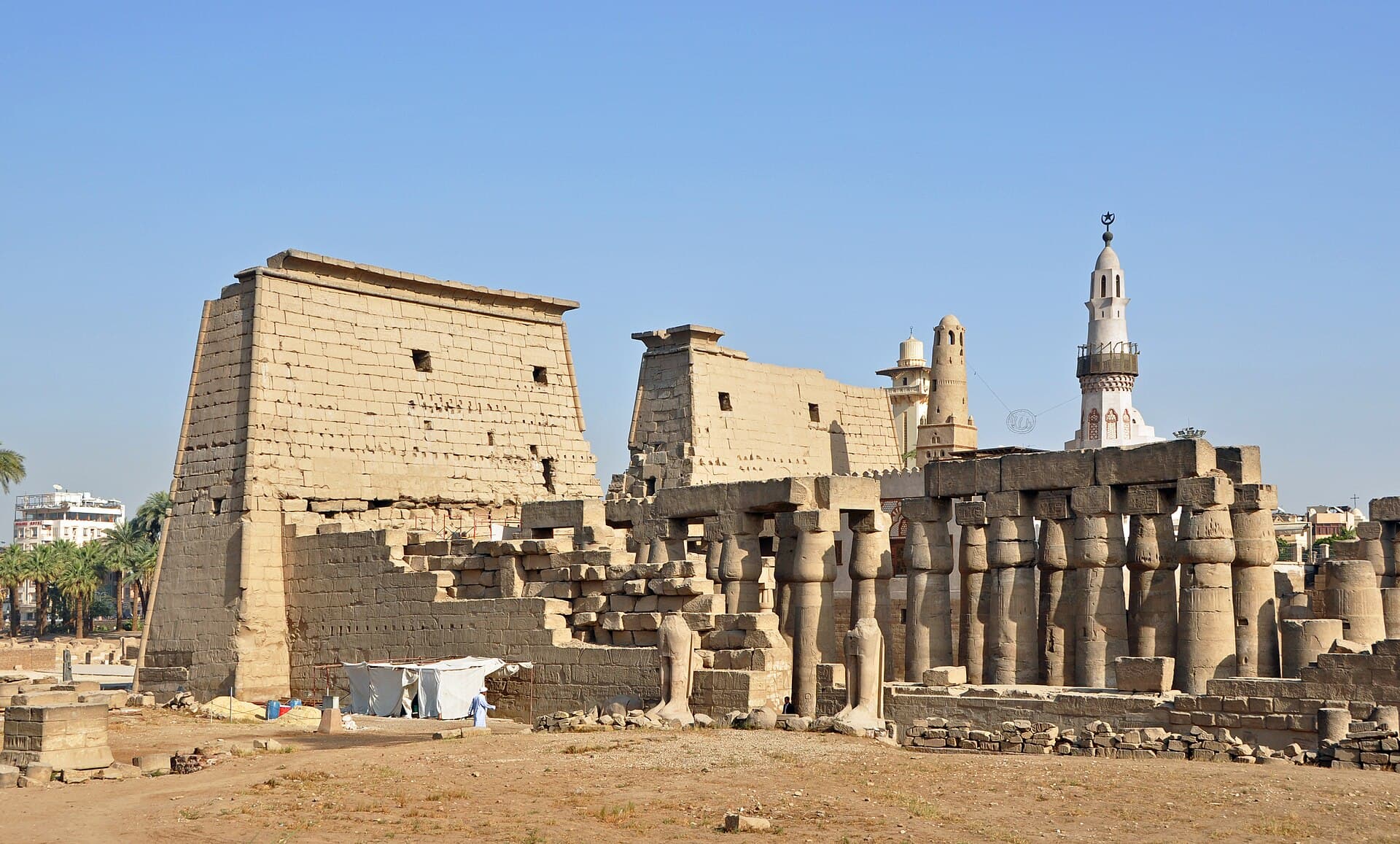
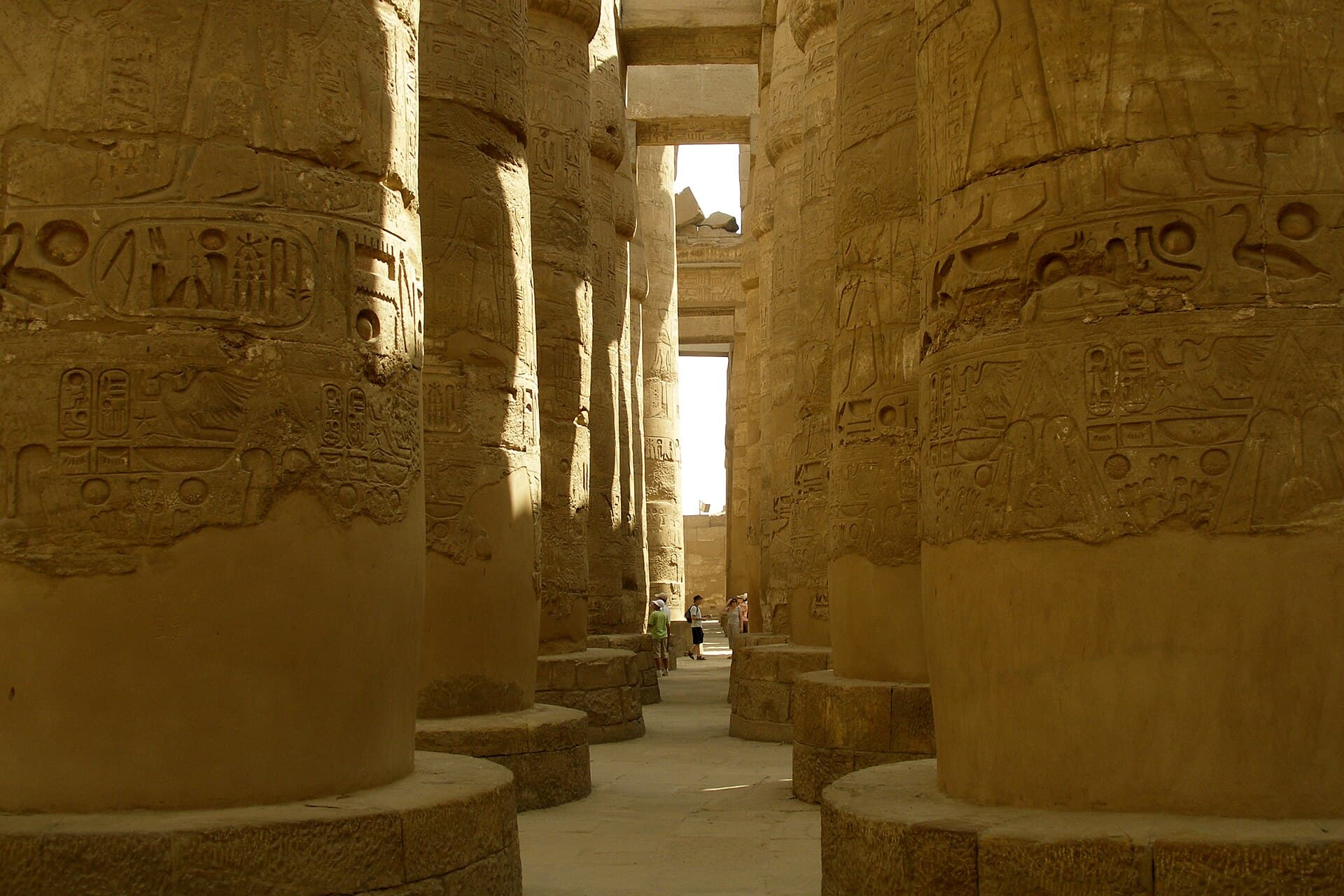
The east bank takes the other end of the day. Karnak, which took two thousand years to build, is open to the sky and reads far better in low afternoon light than at noon. Luxor Temple stands in the middle of town and is the one major site that improves after dark, when floodlighting gives the columns a depth flat midday sun removes and the crowd thins to a fraction. It is small enough to see properly in an hour, which makes it the right thing to do on an arrival evening. Reversing this order — tombs in the afternoon, temples at noon — is the commonest planning mistake made here, and in August it is a punishing one.
Two full days is the working minimum for Luxor and three is the comfortable number. The third day buys the Valley of the Queens or Deir el-Medina, an hour in the Luxor Museum, which is small, well arranged and under-visited, and a pace that does not require you to be efficient in 41C. Since you are arriving early anyway to protect against travel delays, those days are already on your itinerary.
The balloon flight over the west bank is the other dawn activity worth the early alarm. Flights lift at first light, which is the only civilised hour outdoors in August, and the aerial view of the necropolis genuinely adds something rather than being a novelty. It is weather-dependent, and the pilot controls height rather than direction, so nobody can promise you a particular view. Book it for one of your buffer days rather than for the morning of 2 August, when you want nothing in the diary before the eclipse.
Beyond Luxor: the river, Dendera and the coast
Dendera is the obvious addition and the one most people skip and then regret. The Temple of Hathor sits about 60 kilometres north of Luxor near Qena, a little over an hour's drive, and it holds ceiling paintings in better condition than anything at Karnak or Luxor Temple. It works as a half-day if you go early, which in August is the only way to do it. Abydos is further north again, closer to three hours, and pairs with Dendera as a long full day for people who want it badly enough. Permit and convoy arrangements on that road have changed repeatedly over the years, so let a ground operator confirm the current position rather than assuming.
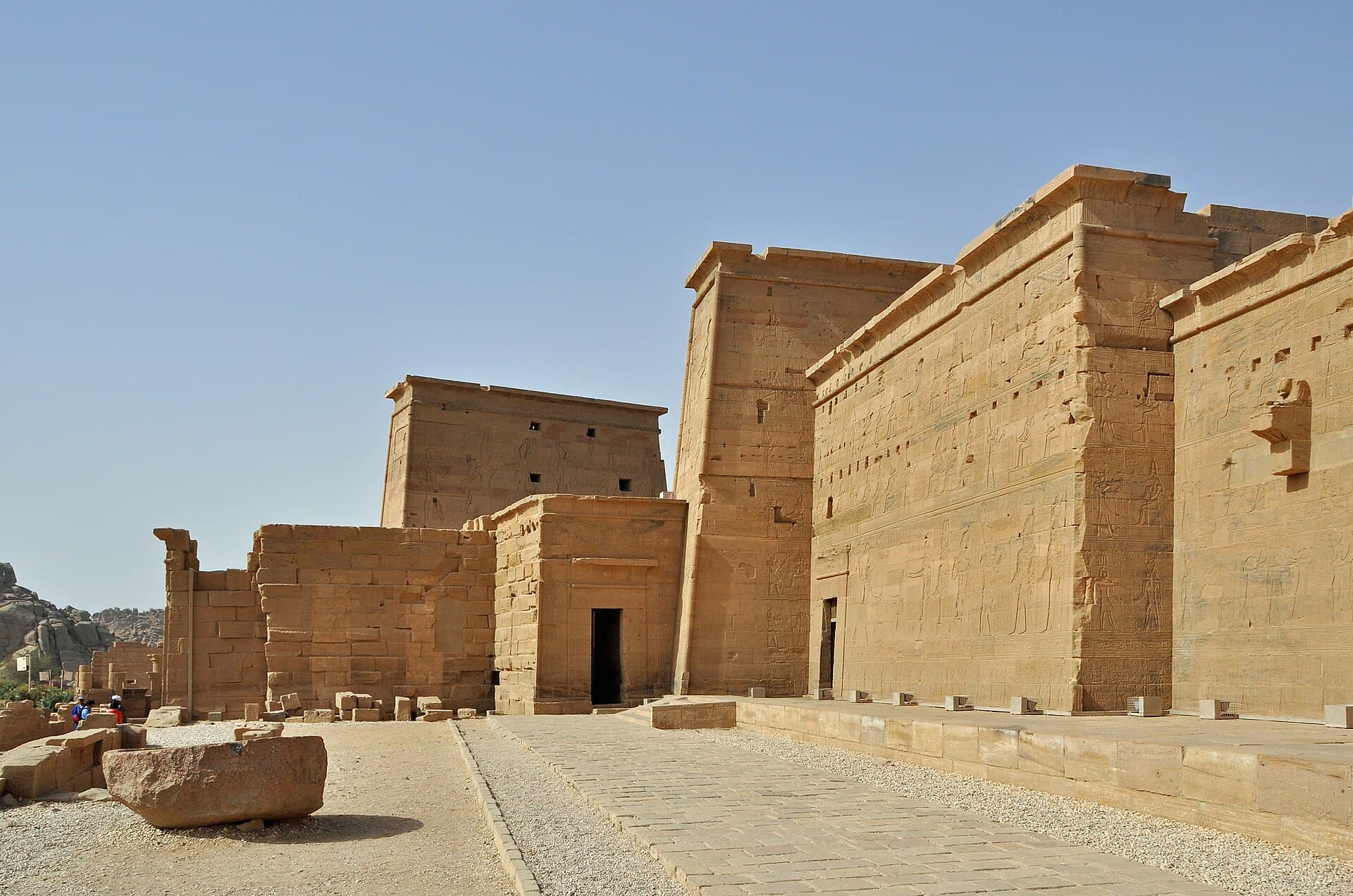
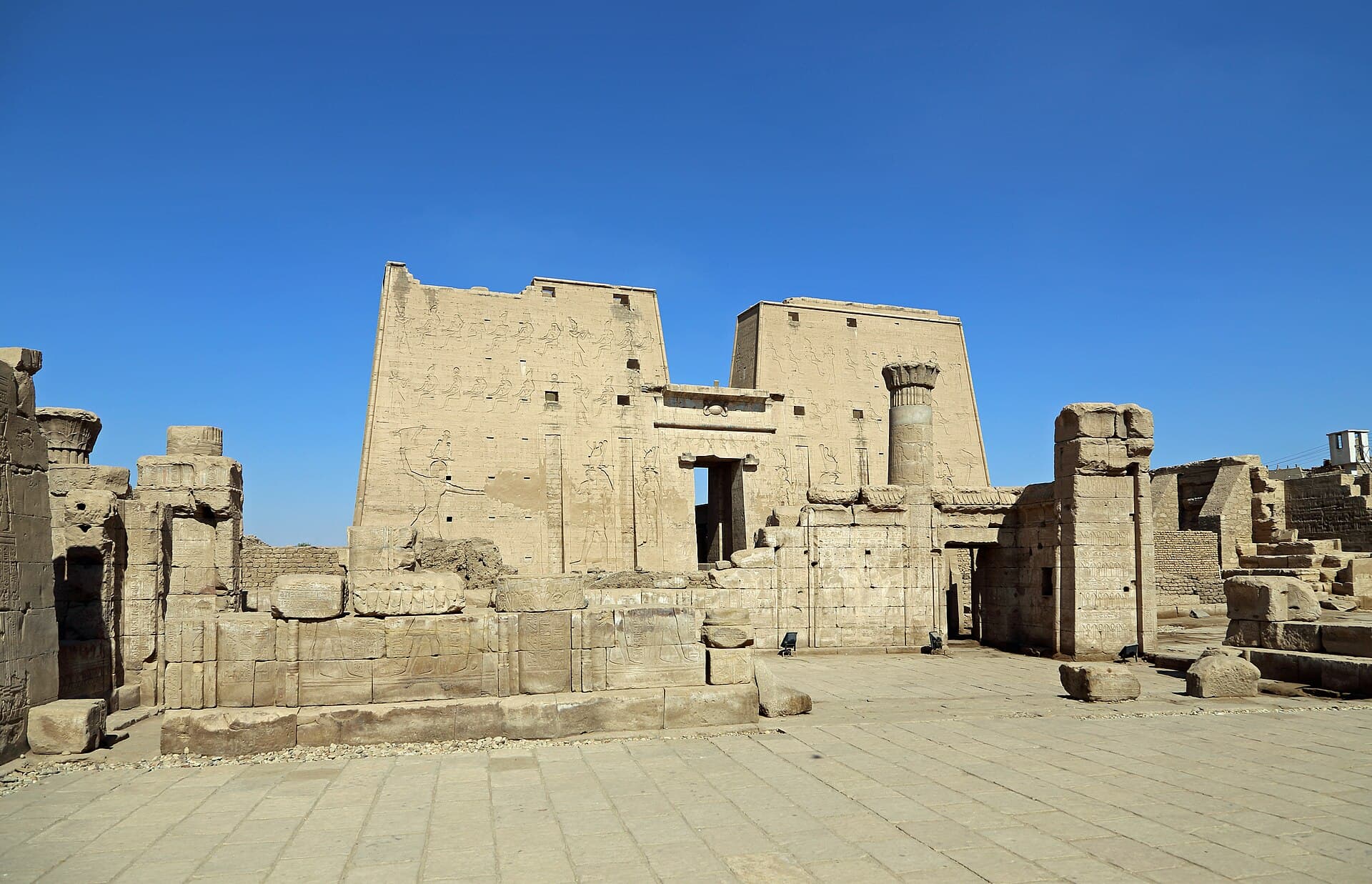
South of Luxor, Edfu and Kom Ombo sit on the river between Luxor and Aswan and are awkward to reach any way other than by boat, which is the strongest argument for putting a few cruise nights into the trip. Aswan itself is calmer than Luxor, the light is harder and cleaner, and Philae is a short boat ride from the shore. A cruise and a few land nights at either end is the usual compromise, and it puts you in the right part of the country in the days before the eclipse.
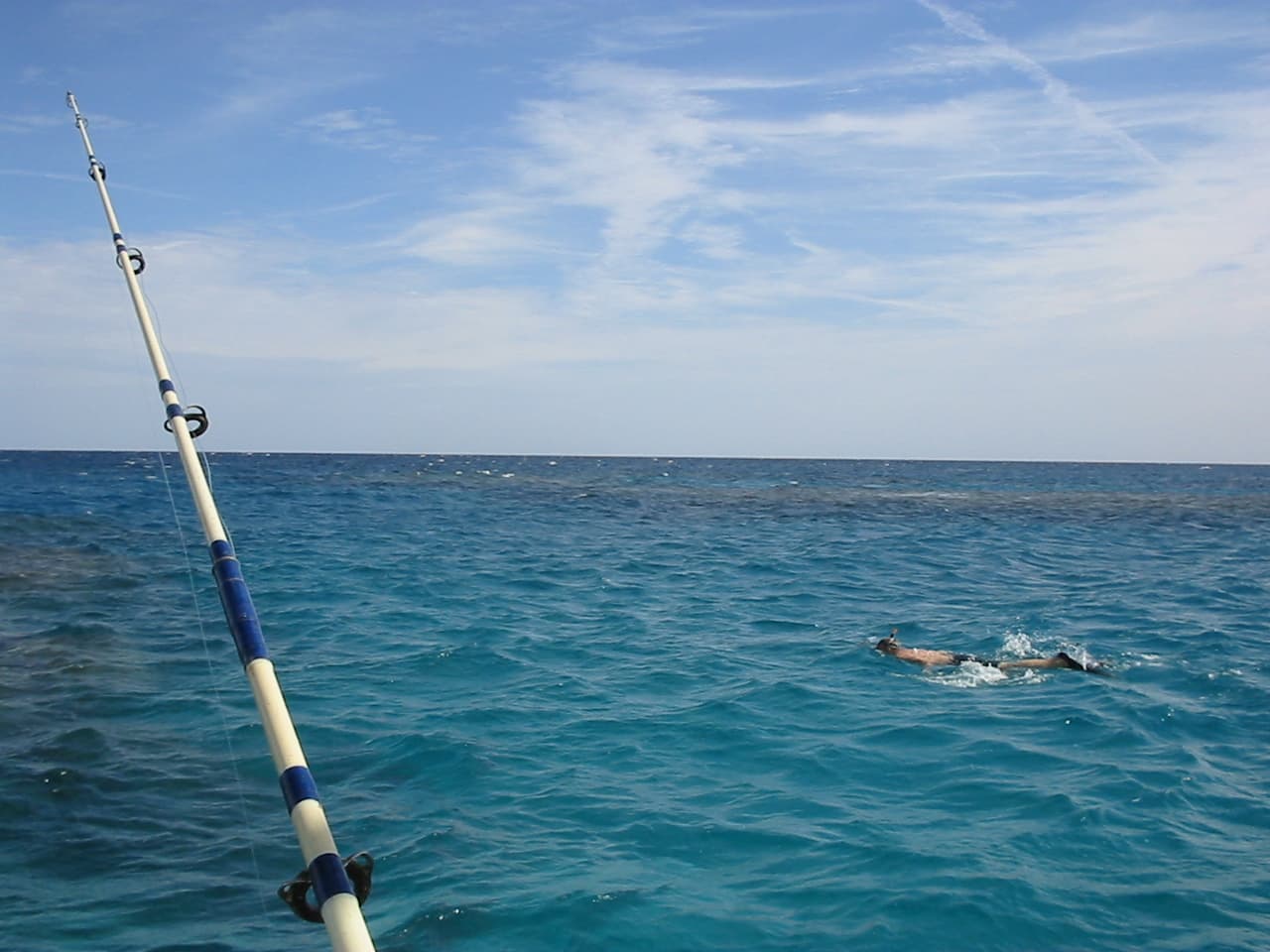
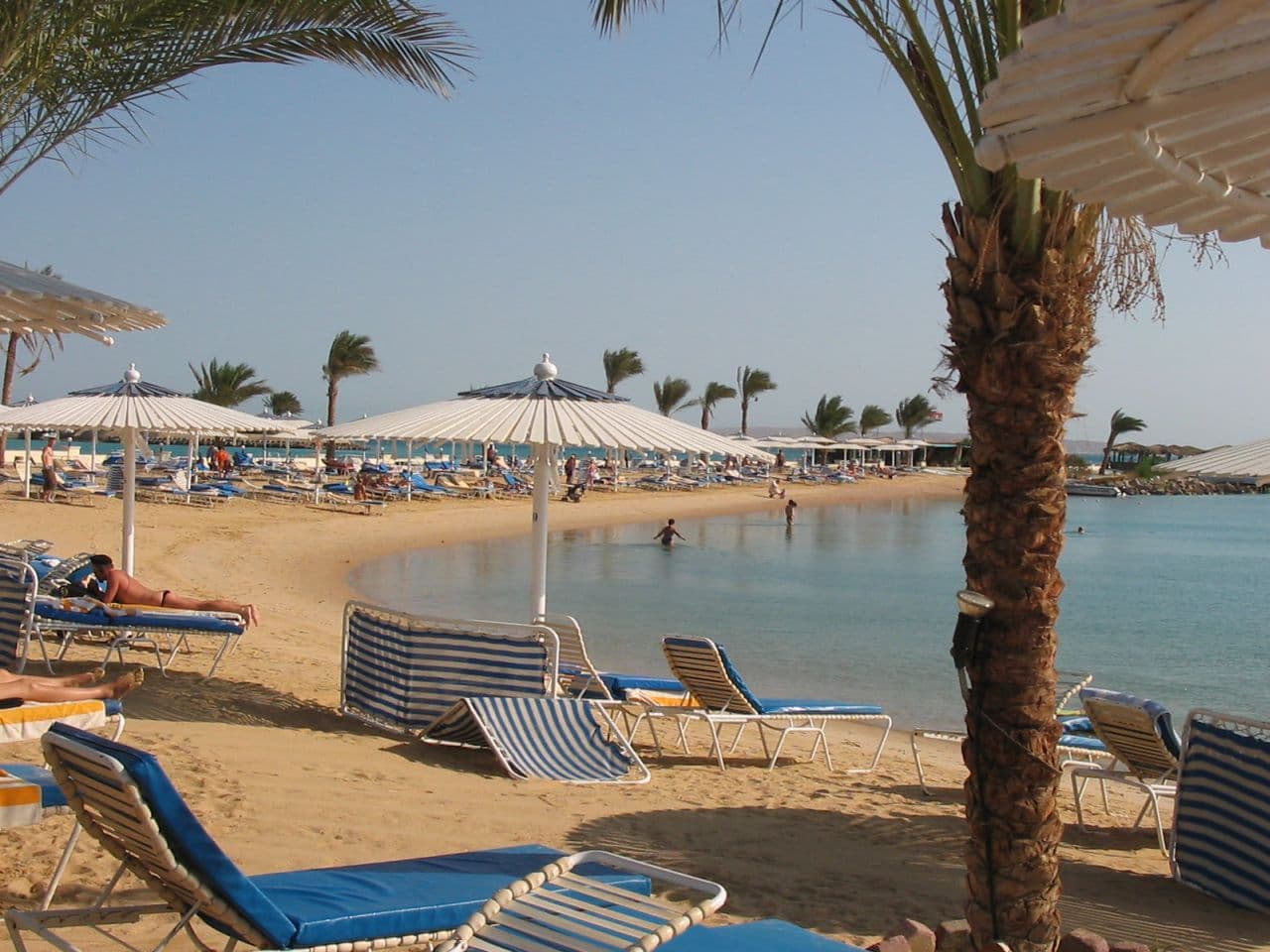
The Red Sea is four hours by road from Luxor and is the natural place to end. In August the sea sits at around 31C, which is close to bathwater and not to everyone's taste for diving, but it is exactly right for flat recovery days after a week of temples and heat. Hurghada also takes more direct European flights than Luxor, so finishing on the coast can solve your flight home as well as your last few days.
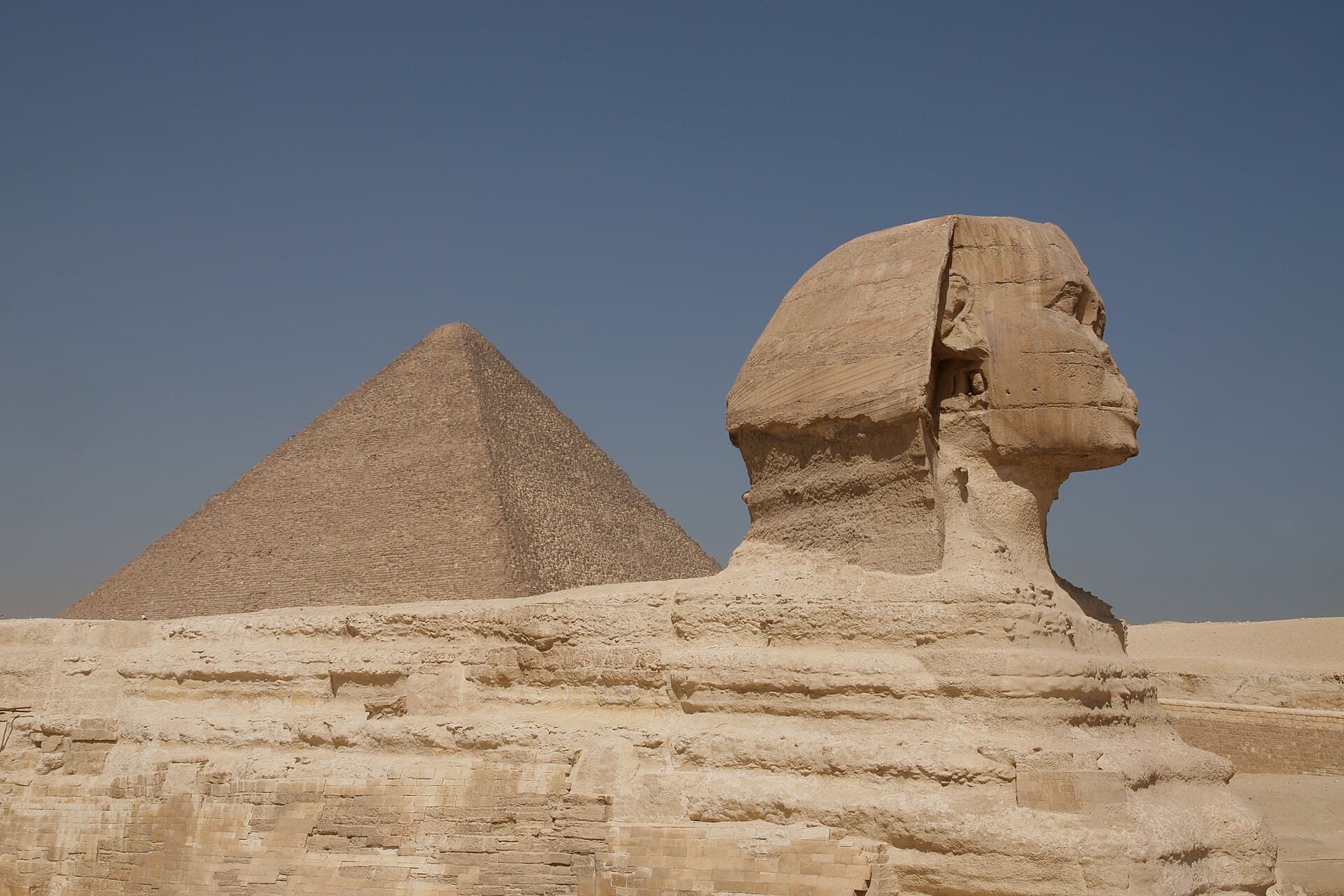
Cairo is hot but workable in August and belongs at one end of the trip rather than in the middle. The Grand Egyptian Museum is air-conditioned and can absorb most of a day at the hour when being outdoors is a bad idea, which makes it a better use of an August afternoon than almost anything else in the country. Giza itself is a dawn visit for the same reason the west bank is.
Who should think twice about this trip
Anyone who does not tolerate heat well should be honest with themselves before booking. This is a trip that involves standing outdoors in Upper Egypt in the early afternoon in August, by design. It can be made much safer with shade, water and a sensible plan, but it cannot be made cool. If 41C is a number that worries you, it should.
The same goes for very young children, for older travellers who struggle in heat, and for anyone with a condition affected by high temperatures or by dehydration. That is a conversation with a doctor rather than with a travel page, and it is worth having before any money is non-refundable rather than after. Egypt in October or March asks none of these questions.
Anyone who needs flexible, refundable arrangements should also think carefully. A fixed astronomical date is the least flexible thing in travel. Operators know it, insurers price around it, and the terms you will be offered reflect that. If your life six months from now is uncertain enough that you would want to move the dates, this is the wrong trip to commit to early — and committing early is the only way to get it.
And if what you actually want is to see Egypt properly, this is not the week to do it. The eclipse justifies the August heat for the eclipse. It does not make the Valley of the Kings pleasant at noon. People who book this trip hoping to get a comprehensive Egypt holiday and a total eclipse in the same fortnight usually come home having enjoyed six minutes of it.
What is still unsettled, and when to check it
Several things about 2 August 2027 cannot be pinned down from here, and it is better to name them than to publish confident answers that later turn out to be wrong. The local clock is the first: whether Egypt observes summer time that August determines your contact times to the hour, and sources disagree at the minute level today. The UTC anchor of roughly 10:06 for greatest eclipse is stable. The local conversion is what you confirm nearer the date.
What happens at the sites on the day is the second unknown. Whether the temples keep normal hours, whether roads near popular viewing areas are managed, whether particular locations are opened or restricted for the occasion — none of that is decided years ahead anywhere, and it will not be decided in Egypt years ahead either. Plan your eclipse day so that it does not depend on any of those answers going your way.
The weather is the third, and it is the one that no amount of planning resolves. A climatological 80 percent tells you the odds, not the day. A meaningful forecast for 2 August 2027 will exist a few days before 2 August 2027 and not before. If the sky looks poor and you have a vehicle and a driver, some people will move; if you are on a boat or a roof, you will not. Decide now which of those you are, so you are not making that decision at breakfast.
A sensible checkpoint schedule looks like this. Secure and confirm the bed as early as you can, because that is the piece that runs out. Confirm flights next. Then leave it alone until the year of the eclipse, when you re-check the local clock offset, reconfirm every booking in writing, and ask your operator what has changed. In the final week, watch the forecast — and accept that by then the only remaining variable is one nobody controls.
Common questions
When exactly is the total solar eclipse in Egypt?+
Monday 2 August 2027. Greatest eclipse falls at roughly 10:06 UTC, which works out at around 1pm in the afternoon in Luxor. Precise contact times depend on whether Egypt is observing summer time that August, which is not settled, and sources disagree at the minute level. Use the UTC anchor and confirm the local clock offset nearer the date.
How long does totality last in Luxor?+
A little over six minutes. Luxor sits very close to the centreline of the path. The point of maximum duration is roughly 60 km, about 37 miles, southeast of the city, where totality runs to about 6 minutes 22 seconds against a maximum of 6 minutes 23 seconds overall. For most visitors, the extra seconds are not worth a road journey in August heat.
Is Luxor too hot in August to be worth it?+
August is the hottest stretch of the year alongside July, and Luxor regularly passes 40C. Our normal advice is to avoid the Nile valley in August unless you have a specific reason. The eclipse is that reason. Plan around the heat: temples at dawn, air conditioning through the middle of the day, far more water than feels sensible, and shade over your viewing spot.
Do I need special glasses to watch it?+
Yes. Never look at the partial phases without proper solar filters, and make sure eclipse glasses meet the ISO 12312-2 standard. Sunglasses, smoked glass and phone screens are useless. Cameras, binoculars and telescopes need filters at the front. During totality itself you can look with the naked eye, but you must look away before the Sun reappears.
Is it already too late to book for the 2027 eclipse?+
Not too late, but you are behind. Serious eclipse travellers booked years ago, so accommodation near Luxor is scarce and expensive and flights will follow. Secure a confirmed bed for the night of 1 August first, then flights, then guides and viewing arrangements. Read the cancellation terms carefully, because eclipse-date bookings are often non-refundable.
Can I watch the eclipse from Cairo or the Pyramids?+
Not the total eclipse. The shadow crosses Upper Egypt, well to the south of Cairo, so the capital lies outside the path of totality and will see the Sun partially covered instead. A deep partial eclipse is worth watching with proper glasses, but it is a different event from totality: no corona, no stars, and the Sun stays unsafe to look at throughout. If totality is the point of the trip, you need to be inside the path.
Is a Nile cruise a good place to watch from?+
It can be, with one question answered first. The deck is open to the sky, you travel nowhere on the morning, and the Sun will be almost overhead, so a boat works well in principle. What a berth does not guarantee is a position inside the path of totality, because boats moor where they moor. Ask where the boat will actually be on 2 August, and whether shade and cold water will be available on deck through the partial phases.
Should I travel to the point of maximum duration?+
Probably not. The extra second or so of totality costs you a road journey on an August morning to somewhere with no shade, no water and no facilities unless somebody provides them. If you do go, the people arranging it should be able to say who supplies water, shade, toilets and a way back if a vehicle fails. For most visitors a hotel roof or a boat deck in Luxor is the better trade.
How many days before the eclipse should I arrive in Luxor?+
Two or three at minimum, and more if you want to see anything properly. The date cannot be moved, so a delayed flight or a missed connection on 1 August is unrecoverable in a way it never normally is. Arriving early also lets you use the dawn hours for the temples and the tombs, and gives you a chance to stand in your viewing spot at the right time of day and check that the sky above it is genuinely clear.
Can I photograph the eclipse with a phone?+
You can photograph the scene, not the corona. Phones lack the reach and the dynamic range for a decent image of the Sun, and their automatic exposure will fight you throughout. What a phone does well is the wider picture: the landscape under an eclipsed sky, the colour of the horizon, the people around you. Any camera pointed at the partial phases still needs a proper solar filter at the front of the lens.
What is the chance of clear skies over Luxor on the day?+
Historical cloud records for this part of Egypt point to roughly an 80 percent chance of clear skies in early August. That is a climatological average from past years, not information about 2027, and it also means about one year in five where cloud spoils it. No forecast for a specific day exists until a few days beforehand. Clear skies are likely here; nothing guarantees them.
Will the temples and sites be open as normal on eclipse day?+
Nobody can say yet, and we would not trust a page that claims to. Opening hours, road management and any special arrangements around popular viewing areas are decided close to the date rather than years ahead. Build your eclipse day so that it does not depend on any of those answers, and ask your operator to confirm what has changed in the weeks beforehand.
Official sources
Entry rules, opening hours, security advice and exchange rates all move. Check them at the source, not here.
Written and checked by the Nile Trip Guide editorial team · Last reviewed . Entry rules, prices and opening hours change — check anything critical against the official sources linked on this page.
Plan this trip
Tell us your dates and we will price it
A real itinerary with real prices, usually within 24 hours. Nothing is booked and nothing is charged until you say yes.
The route most people take first, at the length it was built for: Giza and the Grand Egyptian Museum, then a flight to Luxor and four nights sailing down to Aswan.
No boat on this one. Giza and the Grand Egyptian Museum, a night in Luxor for both banks, two nights on the Red Sea, then back to Cairo for the Citadel, Coptic Cairo and the Royal Mummies.
Five nights in Cairo either side of a four-night sail from Luxor to Aswan. The Cairo days are private, just your party and a guide; the sightseeing off the boat is shared with a small group.