Cairo with kids works, but only if you plan less than you think. The city rewards children with scale. The Pyramids are absurdly large, the desert starts at the end of a street, and camels are exactly as exciting as a six-year-old hopes. What Cairo punishes is ambition. Try to see everything in two days and you end up with a flat child stuck in traffic at four in the afternoon.
Does Cairo with kids actually work?
Cairo with kids works, but only if you plan less than you think. The city rewards children with scale. The Pyramids are absurdly large, the desert starts at the end of a street, and camels are exactly as exciting as a six-year-old hopes. What Cairo punishes is ambition. Try to see everything in two days and you end up with a flat child stuck in traffic at four in the afternoon.
Be honest about the city. It is loud, crowded and dusty. Sellers around the Pyramids are persistent and will not take a first no. Pavements are uneven where they exist at all. None of that makes Cairo unsuitable for children, and plenty of families have a fine time here. It does mean the day needs shape, shade, and someone who knows the quiet corners.
A guide makes the biggest single difference, and not mainly for the history. A good local guide handles tickets, absorbs the sellers, knows which entrance is moving, and reads the moment a child has had enough. We are not the company on the ground in Egypt. A local partner there arranges the guiding, and we brief them on who is travelling.
It also helps to know what children take away from Cairo, which is rarely what the guidebook expects. They remember the size of a single block of stone, the heat coming off the sand, a camel walking past at close range, the noise, and the moment they were allowed to run. They do not remember dynasties. Build the day around the first list and the second takes care of itself.
What works: pyramids, one museum, one hour on the river
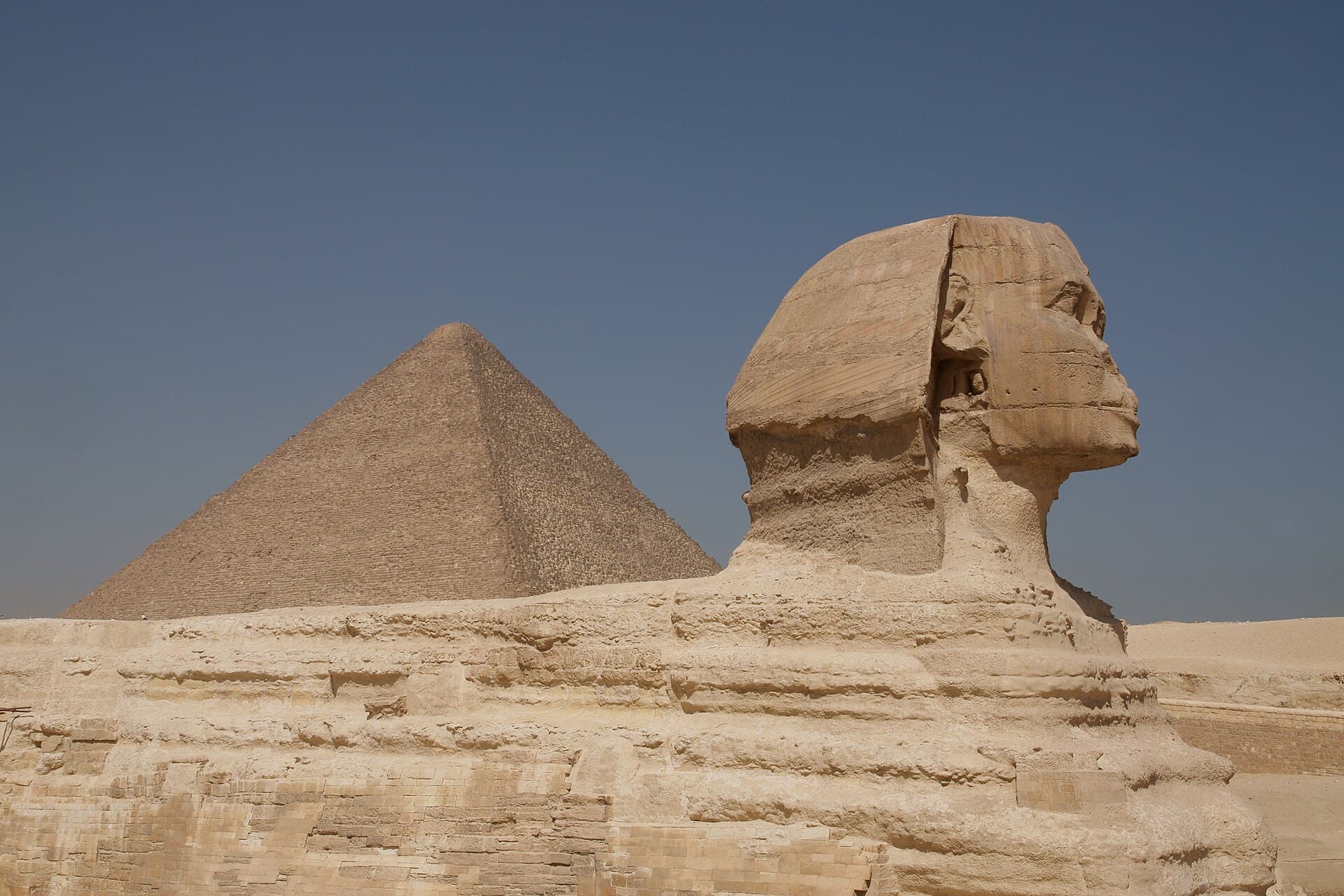
Giza does the work on its own. Children do not need the archaeology. They need the size, the sand and the animals. Go early, walk a little, and spend time at the desert edge where the coaches thin out and there is room to run. The Sphinx takes twenty minutes. Going inside a pyramid is optional, and hot, steep and airless; small children often hate it.
The Grand Egyptian Museum is the one museum most children tolerate. It is big, modern and air-conditioned, the great staircase of statues gives them something to climb towards, and there is space to move without being shushed. Treat it as ninety minutes rather than a morning. Pick two or three areas and leave while everyone is still enjoying it.
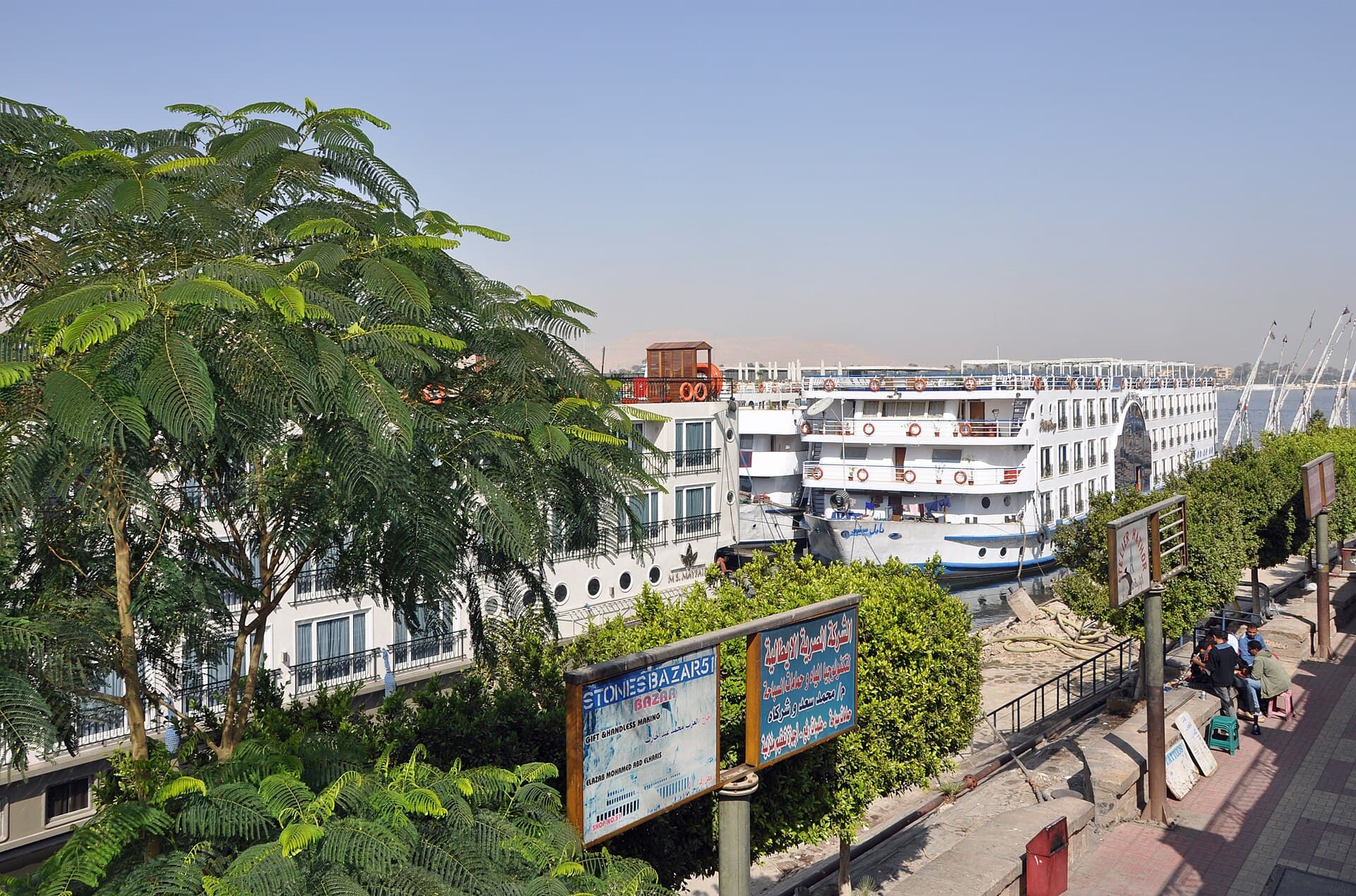
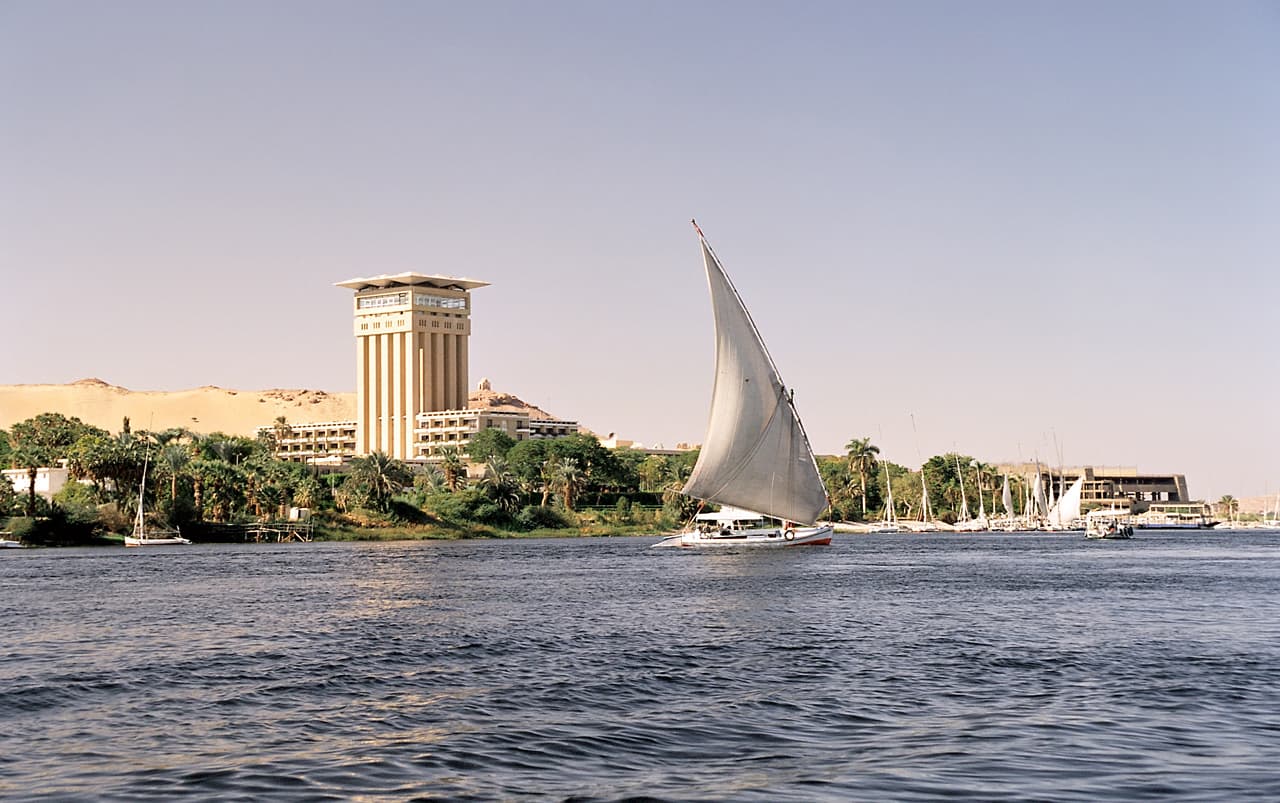
An hour on the water earns its place. A felucca is slow, breezy and quiet, and the noise of the city drops away the moment you push off. No queue, nothing to book far ahead, and it works at any age. Late afternoon is best. If the wind dies you drift, which with children is usually a feature rather than a fault.
There is one more thing at Giza worth knowing about, and most families walk straight past it. Around the pyramids is a field of mastaba tombs built for officials and family members, and their walls carry carved and painted scenes rather than bare stone. They are low, dark, cool and quick, and a child who found the pyramid interior frightening will often be perfectly happy in one of these. Which tombs are open changes without notice, so ask at the gate rather than planning around a particular one.
Two facts do more for a child's interest than any amount of explanation at the site. The Great Pyramid was the tallest building on earth for close to four thousand years, and it is the only one of the seven wonders of the ancient world still standing. Say both in the car on the way, not in the sun at the base, and you will get better questions when you arrive.
How to shape the Giza morning
Arrive at opening. That single decision fixes most of what people complain about: the heat, the coaches, and the sellers, who work hardest once the car parks fill. From May to September the plateau is punishing by late morning, with no shade anywhere and glare coming off the stone, and children feel that long before you do.
Start at the panorama point on the high desert side, reached by the ring road that loops behind the pyramids. All three line up with open sand in front of you and the city behind, and if you walk a couple of hundred metres away from the parked vehicles the crowd thins out fast. This is the part of the morning where a child can move without being told to be careful, so give it longer than a photograph needs.
Then come down to the base. You cannot climb a pyramid, which is worth saying out loud before anyone asks: it is prohibited and enforced, the blocks are large and loose in places, and falls have killed people. What you can do is walk right up and put a hand on the stone, and for most children that is the moment that lands. After that the Sphinx takes twenty minutes, viewed from the terrace reached through Khafre's valley temple, and it is smaller than everyone expects because it sits in a quarried hollow rather than on a plinth.
Allow three to four hours for the plateau and accept that you will not see all of it. The site is well over a kilometre end to end and mostly uphill on sand and broken rock, and people routinely underestimate the walking. Closed shoes, not sandals; the ground is sharp and sandy. Then stop. A Giza morning followed by a hotel pool is a better day than a Giza morning followed by anything else.
Camels, horses and the photograph with a price attached
Children want the camel. That is not a problem in itself, but the transaction around it is the single most common way a good morning turns sour. Never let anyone lift a child onto an animal before the price and the duration have been agreed out loud, and be aware that a fee to get off again is a well-worn trick. If you want the photograph, arrange it through your guide or driver in advance at a fixed rate rather than at the gate.
Look at the animal before you decide. Conditions vary and some of the horses and camels are visibly in poor shape. A child who notices that will remember it for longer than the ride, and walking away costs you nothing, because the plateau is entirely walkable with decent shoes and enough water. Quad bikes are sold hard at the panorama car park and are not something we would put a small child on.
Brief the children before you get out of the car, in plain terms: nothing handed to you is free, a scarf pressed into a hand becomes a price, and the answer to everything is no thank you while walking. A small child who says yes to anything makes the whole family an easy mark. None of this is dangerous, and away from the big monuments it stops entirely.
Traffic decides your day, not opening times
The real constraint in Cairo is not the sites. It is the distance between them. Crossing the city takes far longer than any map suggests, and a hop that looks like twenty minutes can eat well over an hour at the wrong time. Plan two sites a day and treat that as a ceiling. Three is how a good day turns bad.
Some things simply do not work with children. Long museum stretches lose them after an hour. Islamic Cairo in the middle of the day is hot, tight and busy, and the reward is architectural rather than obvious, so go early or in the evening, or skip it. Back-to-back sites are the classic error. Keep the middle of the day free and you get the evening back.
The numbers are worth having. Giza to downtown is roughly 20 km: half an hour early in the morning, most of two hours if you leave at the wrong time. Traffic builds late morning and again from mid-afternoon into the evening, and Friday morning is the one reliably quiet window. The airport is about 45 minutes from the centre and an hour from Giza in normal traffic, which matters when an early flight sits at one end of the trip and a tired child at the other.
The metro is the exception, because it is unaffected by the roads. It is cheap, has carriages reserved for women, and stops at downtown, Coptic Cairo and Giza, though not the plateau itself. For the right leg it will beat a car by a wide margin, and children generally find it more interesting than another hour in traffic. Above ground, ride-hailing apps work well and remove the fare argument that a street taxi will otherwise start.
The museum question, and the one about mummies
The Grand Egyptian Museum sits about two kilometres from the plateau, so it pairs naturally with a Giza morning, and its air conditioning is the point in the middle of the day. Go in with a plan for ninety minutes: the colossal red granite Ramesses II in the atrium, roughly eleven metres of him, then the Grand Staircase on foot rather than by lift, then one gallery you have chosen in advance. The Tutankhamun rooms hold the complete find, and for children the chariots, the beds and the walking sticks usually beat the gold.
Adults should know that three hours is the honest minimum for this museum, and that ninety minutes means you are choosing to see a fraction of it. With children that is the right trade. A forced march to the far end produces tired legs and no memory of anything. Two or three halls, properly looked at, is a better outcome than a lap of the building.
The Khufu solar boat is also here, a cedar vessel of more than forty metres buried beside the Great Pyramid some 4,500 years ago and reassembled from its timbers over years of work. It was moved from the plateau to the museum in 2021, and access arrangements have changed more than once since, so confirm on the day rather than promising it to a child in advance.
Now the question every family runs into: where are the mummies? The royal mummies are not at Giza. They went to the National Museum of Egyptian Civilisation at Fustat in 2021, where they are shown in a dark, quiet hall that many visitors rate above both other museums, and an hour covers it. Decide honestly whether your child wants that or has merely been told they do. Some children find it the best hour of the trip; others find it grim, and there is no shame in skipping it. Either way, set expectations early, because a child promised mummies at the pyramids will come away flat.
The old Egyptian Museum on Tahrir Square is the one to drop. It is crowded, badly lit and densely packed, its labels are old and in places handwritten, and both of its headline draws have left for the other two museums. Adults with a real interest in Egyptology should still give it two hours. Families with two days in Cairo should not.
Where else in Cairo actually works with children
Coptic Cairo is the easiest half-day in the city with children, and it takes about two hours. The metro stops at the gate, which removes the traffic problem entirely, and the quarter sits inside the walls of a Roman fortress, with the original round towers standing beside the station. The Hanging Church is built over a gatehouse, which is where the name comes from. Go in the morning, and remember these are working churches rather than exhibits.
Islamic Cairo is better in the evening, when the heat has gone and the lanes are lit. The stretch of Khan el-Khalili nearest Midan Hussein is the most heavily worked ground in the quarter and the part most visitors judge the whole place on; walk further in and it turns into a working market, with fabric and hardware along the Muski and hand-stitched appliqué on the covered tentmakers' street south of Bab Zuweila. Agree the shopping rules with the children before you go in, because everything in the first few lanes is aimed at exactly that argument. Much of the market shuts around the midday prayer on Fridays.
Two quieter options are worth knowing about when a child needs somewhere that is not a monument. Ibn Tulun, south of the main strip, is a ninth-century courtyard mosque that is almost unchanged and almost empty, which makes it one of the few large open spaces in the old city where nobody is selling anything. Al-Azhar Park is a short taxi ride east of the Khan and looks back over the minarets at sunset, and it is green, which after two days of sand counts for a great deal.
What we would not book is the Giza sound and light show. It is dated, the script is heavy, the seating is basic, and it runs late into the evening of a day that has already been long. The one thing it offers is the monuments lit at night with the crowds gone, and on the plateau from November to February the evenings are genuinely cold. With children, put that evening into dinner and an early night.
Heat, dust, buggies and small stomachs
Roughly October to April is the sensible window. Even then, midday at Giza is exposed with almost no shade, so start at opening and be done by lunch. Summer is genuinely hard with young children: Luxor and Aswan are extreme, and Cairo is not far behind. Hats, sunglasses and a refillable bottle each beat sun cream alone. Expect a bath every night.
Leave the pushchair behind if your child will accept a carrier. Sand, gravel, kerbs and broken paving defeat most wheels, and you end up carrying the child and the buggy. A carrier or a shoulder ride goes everywhere. On food, stick to hot dishes cooked to order, peel fruit yourself, use bottled water including for teeth, and go carefully with ice and raw salads.
Children overheat faster than adults and notice it later. They have less to sweat with, they run instead of walk, and they will not say they are thirsty until they are already miserable. Carry more water than feels sensible, and treat shade as something you plan for rather than something you find. An adult can push through a hot hour with bad grace; a seven-year-old cannot, and the rest of the day pays for it.
Pack the day bag for the sites rather than for the hotel: water, a hat, sunglasses, sunscreen, small notes, tissues and hand gel. Toilets at the sites frequently have neither paper nor soap, and there is usually an attendant expecting a coin. Bring rehydration sachets you already trust from home, because you will want them at three in the morning rather than at a pharmacy counter. Egyptian pharmacies themselves are good, everywhere, cheap, and the staff often speak English, so there is little point carrying a full medicine cabinet. Sunscreen is the exception: choice is limited and it is expensive, so bring what you need.
Feeding children in Cairo
This is easier than most parents expect. Bread, rice, chips, grilled chicken, plain pasta and fruit are everywhere, and hotel buffets are built for exactly this problem. Koshari, the national dish, is rice, macaroni, lentils and chickpeas in one bowl with tomato sauce and fried onions, and it is cheap, filling and about as unthreatening as food gets. A child who eats plain food at home will eat plain food here.
The rules that matter are about water rather than menus. Tap water is not for drinking, bottled water is sold everywhere and costs very little, and it is worth using bottled water for teeth as well with small children. Ice is the bigger question: usually fine in hotels and busy restaurants, worth skipping from carts and small stands. Fresh juice is a real pleasure and a common cause of trouble, because of the ice and the rinsed fruit.
Assume at least one bad day and plan around it rather than hoping. Put the hard mornings where a rough night would not wreck them, and keep one day with nothing booked in the middle of a Cairo stay. Do not fight the food battle abroad either. A week of dull eating harms nobody, and it buys you a calmer child at eight in the morning on the plateau.
Where to stay, and why it matters more with children
Where you stay changes a family trip more than the hotel standard does, because it decides how much of each day is spent in a car. Giza puts you beside the plateau and the Grand Egyptian Museum, with a pyramid view from some rooftops, and leaves a long drive to everything else along a strip that is mostly hotels. Zamalek, on the island in the river, is quieter, greener and central for the museums and restaurants. Downtown is cheaper, louder and closest to the medieval city. Heliopolis only makes sense for an early flight.
With young children the Giza side usually wins, simply because the two things you will certainly do are both there and both best at opening time. If your plan leans towards Coptic and Islamic Cairo, or you want to walk somewhere in the evening, the island or downtown is the better base.
A pool is not a luxury on this trip; it is the second half of the day. Confirm in writing that it is open and heated in the month you are travelling, because Cairo in December and January is cool enough to want a jacket at dawn. Ask the same way about family rooms: what layouts exist for four, whether connecting or triple rooms are available, and what is provided for a small child. Do not assume a facility exists because a photograph showed one.
How many days is enough for Cairo with kids?
Two full days is the honest answer for most families. Three if you want a slow one in the middle. That buys a Giza morning, a museum morning and an hour on the river, with room to lose an afternoon to heat or a meltdown. A fourth day only pays off for Saqqara or a market evening, and Saqqara is another long drive.
Order matters. Cairo first, then the Nile, tends to work best: the big set pieces come while everyone is fresh, and the boat afterwards is calm and contained. Cairo at the end is fine if your flights make it simpler, though tired children and a loud city are a poor mix. Splitting Cairo across both ends wastes a day in transit.
If your children are very small, ask whether this year is the year. A toddler who still naps twice will not enjoy Giza, and you will spend the trip managing rather than looking. Waiting two or three years often turns the same holiday into a much better one. We would rather say that now than sell you a week you regret.
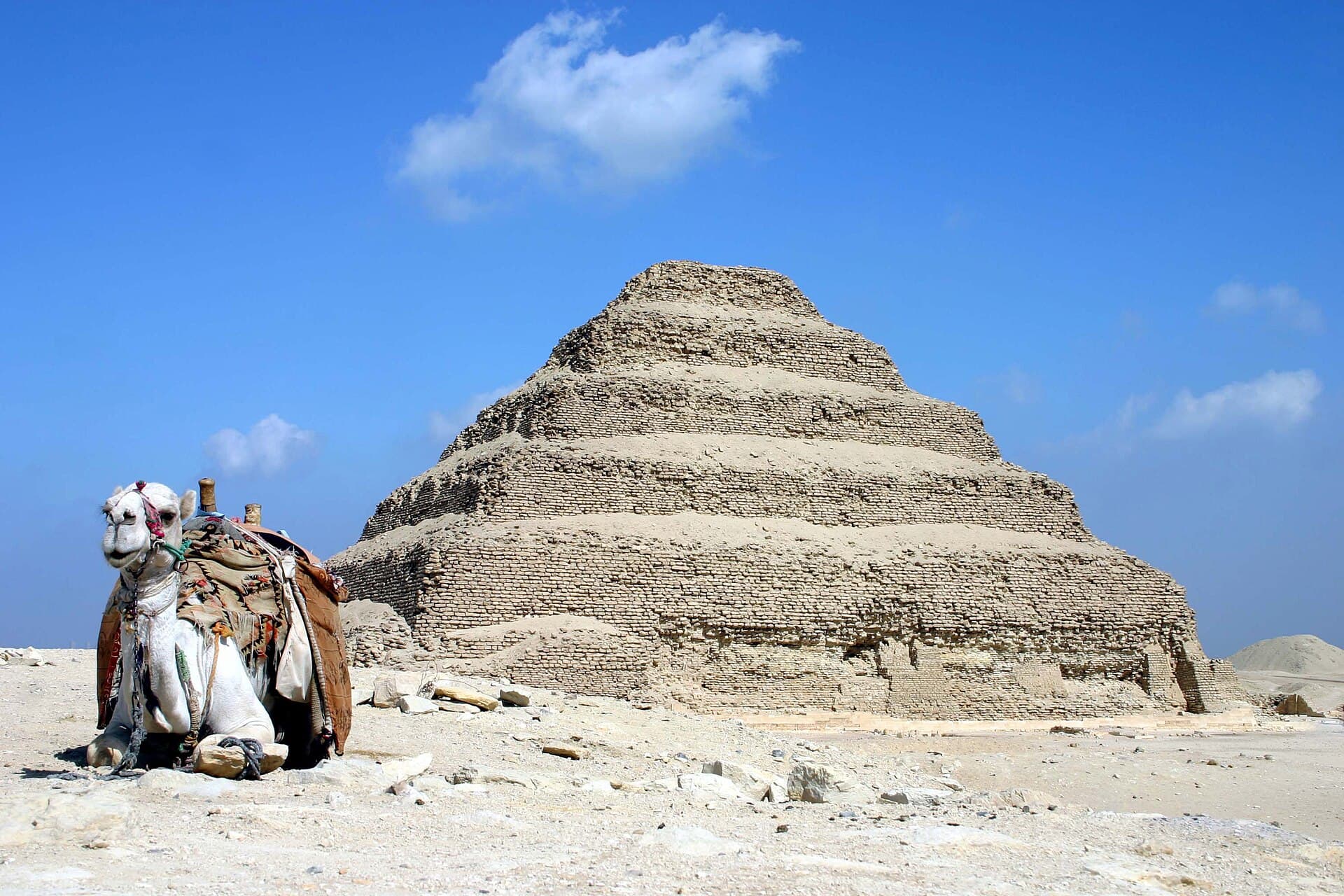
On that fourth day, Saqqara deserves a fair hearing despite the drive. It is about forty minutes south of Giza, it holds the Step Pyramid of Djoser, and the reason to take children there is the mastaba tombs around it: painted reliefs of hunting, farming, butchery and boat-building, close enough to touch and far better preserved than anything on the Giza plateau. It is quieter, the selling is lighter, and it is a genuinely better site for a curious eight-year-old than a second morning at Giza. Dahshur, twenty minutes further, is for adults; the descent into the Red Pyramid is steep and airless and smells of ammonia.
When to go, and which weeks to avoid
November to March is the best of the sensible window. Days are mild, the light on the plateau is better, and mornings can be genuinely chilly at around 10C, which surprises families who packed only for heat. April and October are still fine if you keep the middle of the day free. June to August runs in the high thirties and often touches 40C by midday at Giza, with no shade at all, and that is not a week to take a five-year-old to a desert plateau.
The school holidays are the awkward part. Christmas, New Year and Easter all sit inside the comfortable window and inside the European school holidays, so the sites are fuller and the prices higher in exactly the weeks most families can travel. If you have any flexibility at all, the weeks either side are noticeably easier. Egyptian public holidays fill the sites too, and Friday afternoons at Giza are busy with local families, which is pleasant but crowded.
Two other things move the calendar. During Ramadan some sites shorten their hours and the whole city runs on a different rhythm, with quiet days and very late evenings, so check the dates, which move about eleven days earlier each year. And in spring the Khamsin winds can throw up dust that flattens the light and coats everything, though they pass quickly.
Fitting Cairo into the rest of the trip
Most families with more than a few days should pair Cairo with the south, and the pairing is easier than the map suggests. Luxor is about an hour by air from Cairo and Aswan a little more, so the two great blocks of sights are a short flight apart rather than a long drive. With children, fly. The overnight train sounds romantic and delivers a poor night's sleep in a small cabin followed by a wasted morning, and children arrive wrecked and stay wrecked.
A Nile cruise carries the southern half well, because you unpack once and the hotel travels with you. Three or four nights rather than seven is the number with children: the trip ends before they do. If you have a fortnight, put the extra nights on land rather than afloat, and finish at the Red Sea, where nobody has to be anywhere at eight in the morning.
The shape that works most often is a few days in Cairo, a short flight south, a few nights on the river, then the sea. Ruins first, while everyone is fresh and curious, and water last, when they are tired of being told things. If a week is all you have, cut a site rather than the days that are genuinely for the children.
What to tell the operator before you book
Say the ages when you send your request, not after the itinerary arrives. It should change who is sent. A guide who talks to your children instead of over them changes the whole trip: the bad version recites dynasties at the adults while the seven-year-old kicks a stone, and the good version asks what your daughter thinks the carving is and lets a boring wall become a puzzle.
Ask for the itinerary in writing and read it for two things. Shopping stops at papyrus, perfume or alabaster workshops are sales rooms with a demonstration bolted on the front, and they eat the hours you came for; say plainly that you do not want them. And check which entry tickets are included and which you pay at the gate, because the interiors of the pyramids and the individual tombs are always charged separately.
Car seats are the other thing to settle in advance. They are not standard in Egyptian vehicles, and what turns up may not be what you pictured, so ask before you book and bring your own for a small child if that is your line. Ask for departure times in writing too: with children, the difference between a car at seven and a car at nine is the difference between a good day and a hot one.
Finally, be blunt about pace. An operator quoting against your dates and your children can split a site across two mornings, put the long transfer first, and leave the middle of the day empty. None of that happens if the request says two adults and two children and nothing else. Site hours and ticket prices in Egypt change often, so anything quoted should be confirmed against the season rather than copied from last year.
Common questions
What age do children get something out of Cairo?+
Around five or six is when the Pyramids start to land properly, because children can walk, remember and ask questions. Younger than that and you are mostly managing naps in the heat. Older children, roughly eight upwards, often do best of all, especially if they have met Ancient Egypt at school. Babies are portable and fine. Toddlers are the hardest age by some distance.
Should we go inside a pyramid with children?+
Usually not. The passage is low, steep and airless, the queue is slow, and there is little to see at the end beyond an empty chamber. Confident older children sometimes love it for the sheer strangeness of it. Younger ones often panic halfway and have to be carried out past everyone coming down. The outside is the point, and skipping the inside costs you nothing.
How bad are the sellers at the Pyramids?+
Persistent, and practised at reading tourists. Expect approaches about camel rides, headscarves and photographs, and expect a first refusal to be treated as an opening offer. A firm, friendly no while walking on works better than explaining yourself. This is the part a guide absorbs best. With someone alongside you, most of it stops before it reaches you, and children are not singled out.
Is a pushchair usable in Cairo?+
Only in the hotel and inside the museum. At Giza the ground is sand and loose gravel, and elsewhere the pavements are uneven, high or simply interrupted. A carrier for a small child, or shoulder rides for a bigger one, is far less work. If you must bring a buggy, bring the cheap folding kind you would not mind losing, not the large one with fixed wheels.
Where are the mummies, and should we take the children?+
The royal mummies are at the National Museum of Egyptian Civilisation at Fustat, not at the Grand Egyptian Museum and not in the tombs at Luxor. They are shown in a dark, quiet hall, and an hour covers it. Some children find it the highlight of the trip and others find it grim, so ask yours honestly rather than assuming. What matters most is setting the expectation early: a child promised mummies at the pyramids will be disappointed there.
How long should we give the Grand Egyptian Museum with kids?+
Ninety minutes, with two or three areas chosen before you walk in. Adults should know that three hours is the real minimum for the building, so you are deliberately seeing a fraction of it. Take the Grand Staircase on foot rather than the lift, because the climb past the statuary towards the window onto the pyramids is the best-designed thing there. Leave while everyone is still enjoying it.
Is Cairo safe with children?+
The tourist areas see very little crime against visitors, and there is a visible security presence at the sites and hotels. Traffic is the genuine hazard rather than crime: crossing roads is a matter of nerve and pavements give out without warning, so hold hands more than you would at home. Check your own government's current advice before booking, since the picture can change.
Will our children eat the food?+
Almost certainly. Bread, rice, chips, grilled chicken, plain pasta and fruit are everywhere, hotel buffets are built for fussy eaters, and koshari is cheap, filling and about as unthreatening as a bowl of food gets. Stick to hot dishes cooked to order, peel fruit yourself and use bottled water including for teeth. Do not fight the food battle abroad; a dull week of eating buys you a calmer child at the sites.
Are car seats available in Egypt?+
They are not standard in Egyptian vehicles, and what turns up may not be what you pictured. Ask before you book, and bring your own for a small child if that is your line. It is worth deciding this in advance rather than at the kerb on arrival, because the transfer from the airport is around 45 minutes to the centre and an hour to Giza in normal traffic.
Official sources
Entry rules, opening hours, security advice and exchange rates all move. Check them at the source, not here.
Written and checked by the Nile Trip Guide editorial team · Last reviewed . Entry rules, prices and opening hours change — check anything critical against the official sources linked on this page.
Plan this trip
Tell us your dates and we will price it
A real itinerary with real prices, usually within 24 hours. Nothing is booked and nothing is charged until you say yes.
The route most people take first, at the length it was built for: Giza and the Grand Egyptian Museum, then a flight to Luxor and four nights sailing down to Aswan.
No boat on this one. Giza and the Grand Egyptian Museum, a night in Luxor for both banks, two nights on the Red Sea, then back to Cairo for the Citadel, Coptic Cairo and the Royal Mummies.
Five nights in Cairo either side of a four-night sail from Luxor to Aswan. The Cairo days are private, just your party and a guide; the sightseeing off the boat is shared with a small group.