The best beaches in Egypt are on the Red Sea, and the right one depends on what you want from the water. Marsa Alam has the best reef you can reach straight from the beach. El Gouna has calm, shallow lagoons for small children. Hurghada is the easiest coast to join to a Nile cruise. Sharm el-Sheikh and Dahab, in Sinai, are for reefs and diving. Taba is the quiet one. Alexandria, on the Mediterranean, is a city to visit for its history, with narrow, busy city beaches. Below we compare Egypt's beaches coast by coast: reef or sand, who each suits, and when to go.
Which coast has the best beaches in Egypt?
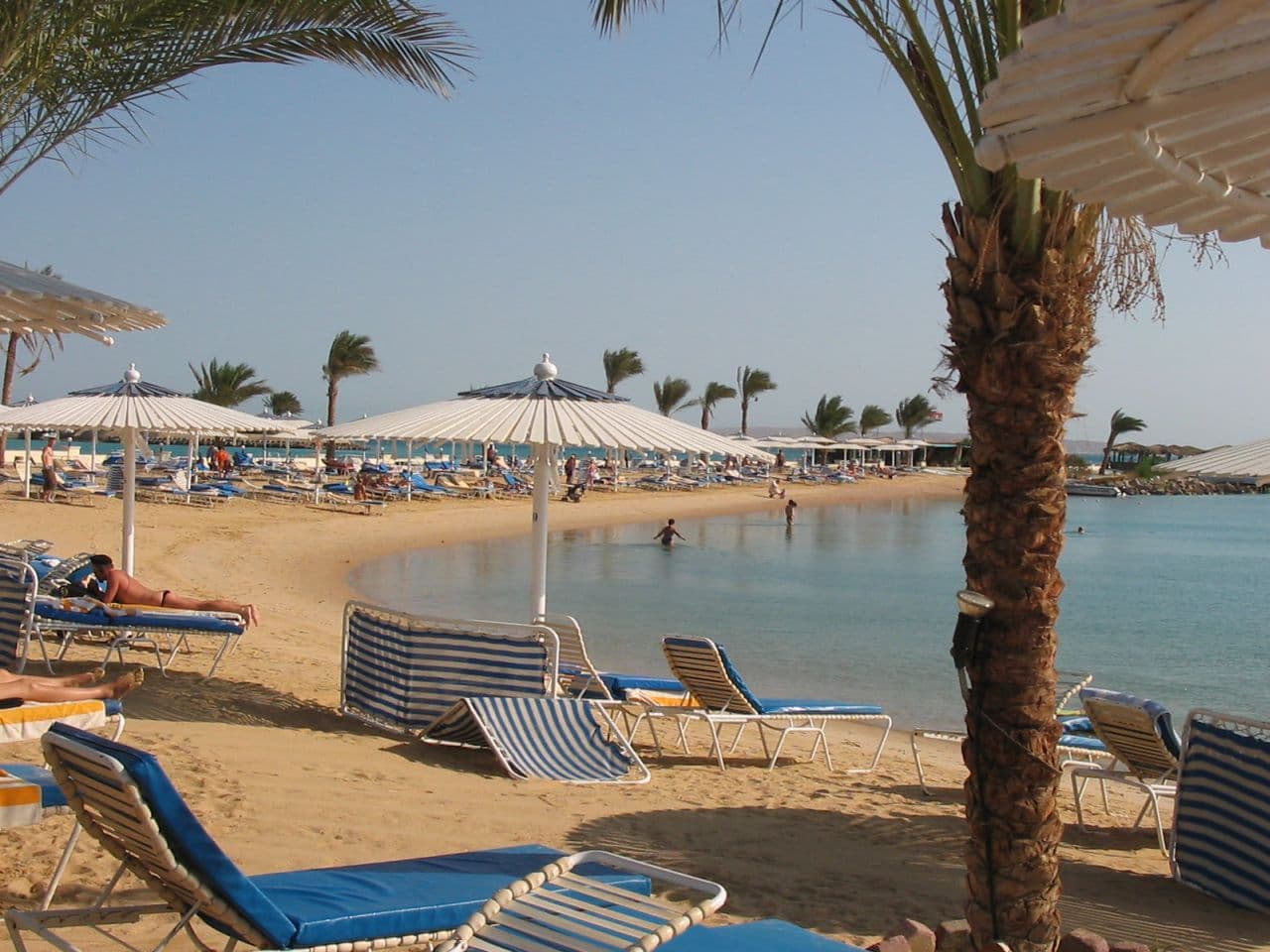
Start with one question: do you want coral or sand? Much of Egypt's Red Sea coast is fringing reef. The coral starts in very shallow water, often right at the shore. That makes the snorkelling excellent and the paddling awkward. Many hotels build a jetty over the reef so you can drop in at the edge. Others have made sandy beaches or lagoons, which are easier with children and have little to see underwater.
For snorkelling off the beach, pick Marsa Alam. For flat, shallow water and toddlers, pick El Gouna. For a beach week after the temples, pick Hurghada. For boat trips to famous reefs, pick Sharm el-Sheikh. For shore diving and a town you can walk, pick Dahab. For a quiet few days with reef from the beach, pick Taba.
Then ask the hotel what lies in front of it: a house reef, a jetty, a channel cut through the reef, or sand. This decides your week more than the star rating does. The dive centre on site will usually give you a straight answer by email. Never walk across the reef top. It damages the coral and cuts your feet.
Hurghada: the easiest beach to pair with the Nile
Hurghada is the Red Sea coast most visitors join to a Nile trip. Luxor is about 290 km away, roughly four hours by road. Hurghada also takes far more direct flights from Europe than Luxor. The town runs about 40 km along the coast. Dahar, the old quarter, has the souk and cheap fish restaurants. Sakkala has the marina. South of that come the large resorts.
The beaches are mixed. Some hotel beaches end at a shallow reef flat with a jetty. The bays south of town, such as Sahl Hasheesh and Makadi, have made sandy beaches and easier swimming. The best snorkelling usually means a boat. The standard day goes to the Giftun islands, about an hour out, with two or three snorkelling stops and time on a beach.
Hurghada suits families on an all-inclusive week, first-time snorkellers and anyone resting after a temple trip. Divers come for the four wrecks at Abu Nuhas, a long day out. If you want reef straight off your sunbed, Marsa Alam is the better choice.
El Gouna: lagoons, sand and kitesurfing
El Gouna is a privately built town about 25 km north of Hurghada. It sits on dug lagoons and small islands. The lagoons are calm and shallow over sand, and the open-sea beaches are sand too. There is no house reef. Snorkelling and diving happen by boat, half an hour to an hour out to the reefs.
That makes El Gouna one of the easiest places in Egypt for small children. The water is warm and waveless, distances are short, and the town has its own hospital. It is also the best base for kitesurfing near Hurghada. Off the north beach the water is flat and shoulder-deep over sand for a long way out.
It suits families, kitesurfers and people who want to walk to a different restaurant each night. It costs more than Hurghada. Choose somewhere else if a reef off the beach is the point of your trip.
Marsa Alam: the best reef you can reach from the beach
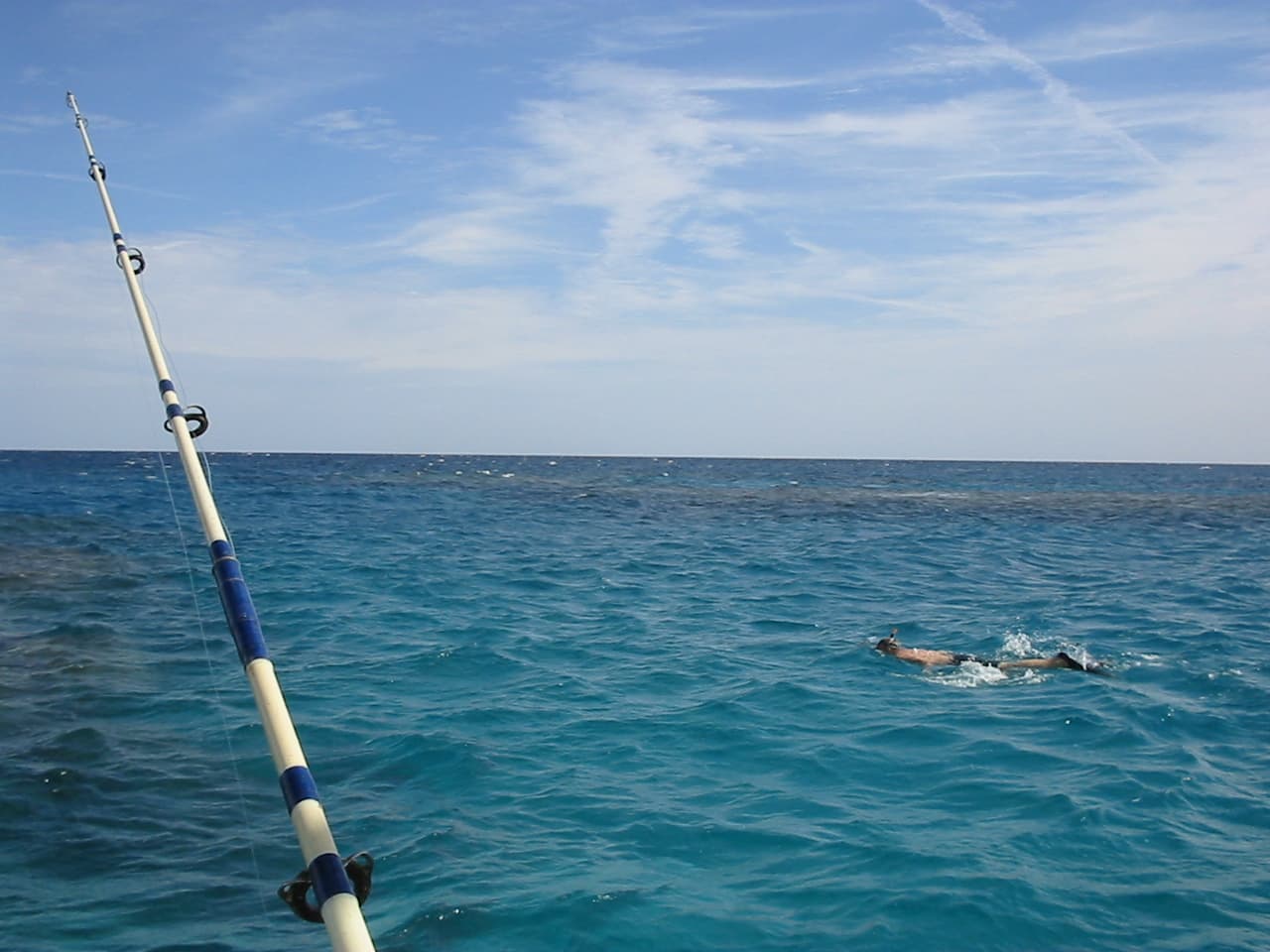
Marsa Alam is the southernmost of Egypt's three main Red Sea resort areas. Along this coast you can often reach the reef straight from the beach, with no boat, licence or guide. Snorkellers see much of what divers see on the shallow sites. Turtles graze over the seagrass in the sheltered bays.
Check what is in front of your hotel before you book. Some hotels sit on a fringing reef you can swim off. Some sit on a sandy bay with no coral at all. Others have a channel through the reef flat or a jetty to the drop-off. With toddlers, you need a genuinely sandy bay or a protected lagoon.
The hotels stand kilometres apart along one desert road, with almost nothing to walk to. The further south you stay, the better the reef and the longer the transfer. A hotel near Hamata can be two hours or more from the airport. Marsa Alam suits divers, keen snorkellers and anyone happy to stay put for a week. A short break loses too much time to flights and transfers.
Sharm el-Sheikh: house reefs, Ras Mohammed and Tiran
Sharm el-Sheikh sits on the southern tip of Sinai. Ras Mohammed National Park is about 20 km south of town. The Straits of Tiran are close by too. Both rank among the best reefs in the Red Sea, and day boats run to both, weather permitting. Tiran has strong current, so it suits experienced divers.
Many Sharm hotels sit on a house reef, reached by a jetty over the coral shelf. Children can snorkel close to shore. The shore itself is often coral and stone, so check that your hotel has a sandy beach if you need one for toddlers.
Sharm suits families who want a resort that runs the day for them. It also suits divers and snorkellers who want boat trips to famous reefs, with a short airport transfer. The Nile is harder to reach. Cairo is about an hour away by air, and the road is roughly 500 km.
Dahab: shore diving and a town you can walk
Dahab is a small town on the Gulf of Aqaba, about 90 minutes north of Sharm by road. Most visitors fly into Sharm. The reef sits close in along most of the coast. You walk in from the beach or step off a low ledge and dive without a boat. The Blue Hole, the Canyon and Eel Garden are all nearby.
The shoreline in town is mostly coral and stone, and there is no wide sandy swimming beach. The lagoon at the south end of town is shallow and flat. Its wind is good for windsurfing and kitesurfing from spring to early autumn.
Dahab suits divers, freedivers, windsurfers and independent travellers who stay a week or more. Hotels are small and all-inclusive barely exists. Families do well if their older children swim confidently from a rocky shore.
Taba: a quiet beach at the top of the Gulf of Aqaba
Taba sits at the northern tip of the Gulf of Aqaba, beside the Israeli border. On a clear day you can see Israel, Jordan and Saudi Arabia from the beach. The reefs here are healthy and quiet, and the drop-offs come close to shore. You can reach good coral from the beach at several points between Taba and Nuweiba.
Entry is over coral and stone in most places. Wind funnels down the narrow gulf and often builds through the afternoon. Swim and snorkel in the morning when you can.
Taba suits families who want a quiet resort with reef from the beach, snorkellers who prefer an empty reef to a famous one, and travellers crossing the border. There is no town centre, and little to walk to from the resorts. Divers short on time should head south to Dahab or Sharm.
Alexandria and the Mediterranean coast
Alexandria is Egypt's second city and its Mediterranean port. Go for its history, the seafront and the fish. The city beaches are narrow and busy, behind a low wall on the Corniche road. We would not swim near the harbours. For a swim, the quieter stretches east towards Montazah and Maamoura are better.
Alexandria runs on a different calendar from the Red Sea. Summer there is around 30C, against 40C in Luxor. July and August are its busy months, when Egyptian holidaymakers fill the beaches. Local women swim clothed, and a swimsuit on a city beach draws attention.
When is the best time for Egypt's beaches?
On the Red Sea, March to May and September to November are the best months. Days run from the high twenties to the low thirties. The water is warm enough without a thick wetsuit. If you can pick freely, pick autumn. It brings warmer water than spring and the calmest run of days.
July and August are very hot on land, around 40C, and the breeze is what makes the coast bearable. Winter is mild, about 20 to 23C by day, with evenings that need a jacket.
Wind matters more than temperature. The prevailing northerly blows hardest in spring, and a strong day cancels the offshore boats. Plan a diving or snorkelling week around four or five days on the water. With a house reef, a windy morning is still a swim.
Taba follows its own pattern. Our Taba guide puts its comfortable window at late October to April. Summer there is very hot, and December and January can bring wind that cancels boat trips. On the Mediterranean, Alexandria is at its best in spring and autumn.
Can you combine a beach week with the Nile?
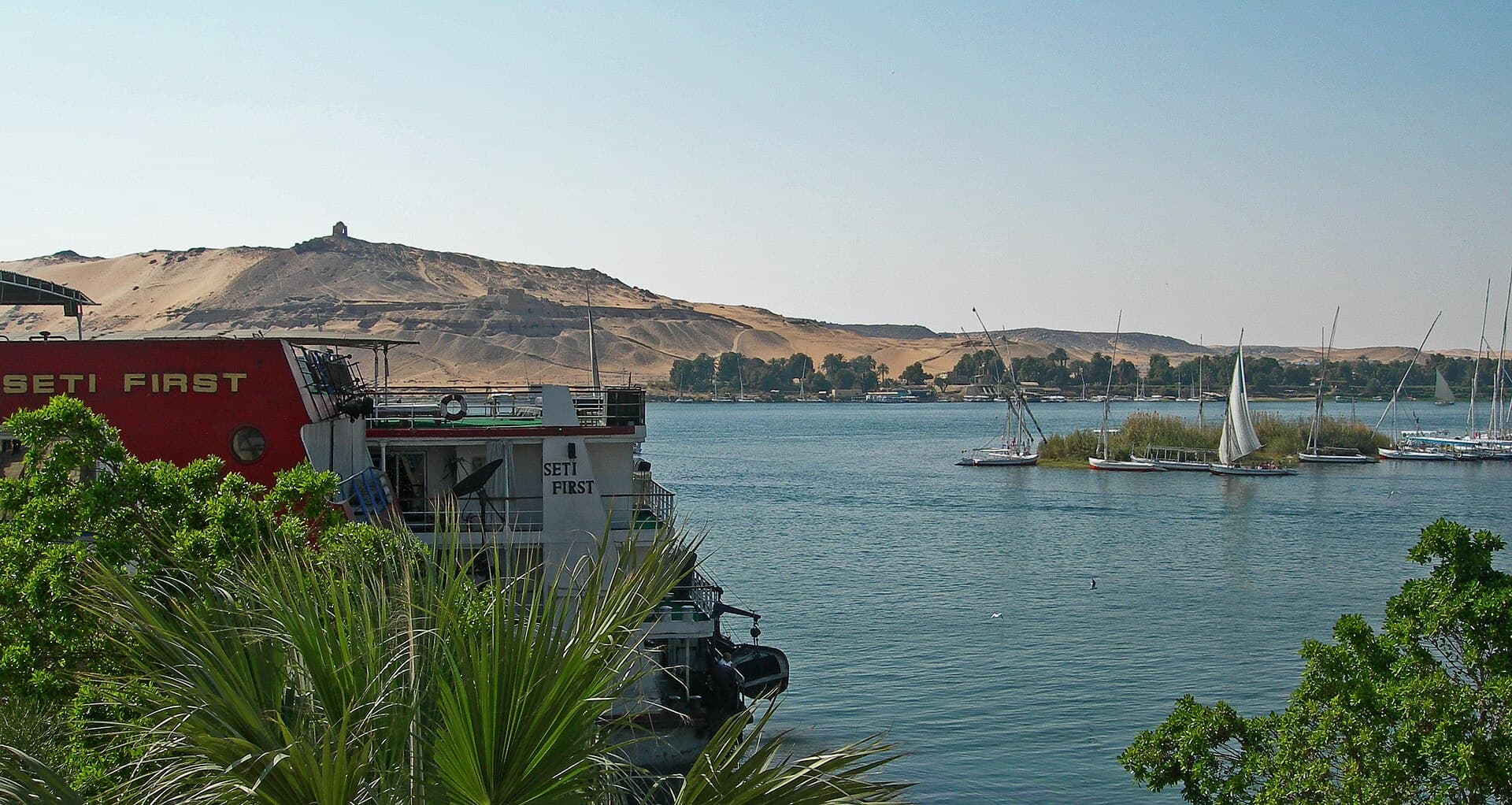
Yes, and Hurghada makes it easiest. You see the temples first and rest afterwards. The drive from Luxor takes about four hours, so a cruise can end in the morning and the beach start that evening.
Marsa Alam works too, with more travel. Luxor is four to five hours away across the desert, via Edfu. Its flights are mostly charter and seasonal, and many routes fly once a week. That can fix your trip at seven or fourteen nights.
Sinai is a separate leg. Sharm, Dahab and Taba sit on the far side of the Suez Canal. Even from Cairo, the road to Sharm is about 500 km and takes most of a day. Flying is nearly always the better call. Give a Sinai beach its own section of the trip, with a flight at each end.
Our tours with beach days at Hurghada
Five of the tours we sell with our partner, Memphis Tours, end with time on the Red Sea. All five stay at Hurghada. None of them goes to El Gouna, Marsa Alam, Sharm, Dahab or Taba. Prices below are from-prices per person in US dollars, without international flights.
Cairo, Luxor and the Red Sea, 8 days, from US$2,040, has two nights at Hurghada and no boat. Nile Cruise and Hurghada, 10 days, from US$2,310, has three nights on the Nile and three on the coast. Cairo, a Nile Cruise and Hurghada comes in two lengths: 11 days from US$2,560, and 13 days from US$2,945. The Grand Tour of Egypt, 16 days, from US$3,910, adds Dendera, Abydos, Saqqara and Dahshur.
On all five, the road transfer from Luxor to Hurghada and the flight from Hurghada back to Cairo are in the price. The Hurghada days are unscheduled, with soft all-inclusive board at the hotel. Excursions there are optional and cost extra.
Common questions
How warm is the Red Sea in winter?+
Warm enough to swim, cool enough for a wetsuit. The water bottoms out at around 21 to 22C in February. Most divers wear a 5 mm wetsuit then, and many add a hood.
Do I need a visa for a beach holiday in Sharm el-Sheikh?+
Not always. The UK FCDO says British visitors flying into Sharm el-Sheikh for under 15 days, staying at resorts in Sharm, Dahab, Nuweiba or Taba, get a free entry stamp instead (checked October 2026). Travel outside those resorts, or a longer stay, needs a full visa. Other passports: check your own government's advice and our Egypt visa guide.
Is it safe to go to the beach in Egypt?+
For official advice on where to travel, read the US State Department and UK FCDO pages for Egypt before you book (checked October 2026). At the beach itself, the sea and the sun are the everyday risks. Take the beach flags seriously, stay inside marked swimming areas, and wear a rash vest on shallow reef.
Can I wear a bikini on the beach in Egypt?+
Yes, at resort pools and private beaches on the Red Sea. On public beaches in Alexandria or Hurghada town, Egyptian women usually swim in clothes, so a bikini stands out. Topless sunbathing is not acceptable anywhere in Egypt, resorts included.
Can you see turtles from the beach in Egypt?+
Yes, most reliably at Marsa Alam. Green turtles graze the seagrass bays at Abu Dabbab and Marsa Mubarak. You can see them most days with a mask and snorkel. Go early, before the hotel groups arrive, and keep your distance. Dugongs are very rare, so ignore any promise of one.
What should I pack for an Egypt beach holiday?+
Reef shoes for everyone, children included. A rash vest, because the sun on a shallow reef burns fast. Your own mask if you have one that fits, because a leaking rental mask can spoil a snorkel. A warm layer for winter evenings.
Can I swap Hurghada for another beach on your tours?+
All five of our Red Sea tours use Hurghada, and none includes another coast. If you want Marsa Alam, El Gouna or Sinai instead, say so when you enquire and we will tell you what is possible.
Official sources
Entry rules, opening hours, security advice and exchange rates all move. Check them at the source, not here.
Written and checked by the Nile Trip Guide editorial team · Last reviewed . Entry rules, prices and opening hours change — check anything critical against the official sources linked on this page.
Plan this trip
Tell us your dates and we will price it
A real itinerary with real prices, usually within 24 hours. Nothing is booked and nothing is charged until you say yes.
No boat on this one. Giza and the Grand Egyptian Museum, a night in Luxor for both banks, two nights on the Red Sea, then back to Cairo for the Citadel, Coptic Cairo and the Royal Mummies.
Egypt in three parts: two days in Cairo, three nights sailing Aswan to Luxor, then three nights on the Red Sea with nothing scheduled. The temples first, the sea afterwards.
The 10 day Nile-and-Red-Sea route with one more day in Cairo at the end, spent on the Citadel, Coptic Cairo and the Royal Mummies. Two days in Cairo, three nights on the river, three on the sea.
Thirteen days that give the ancient sites a week and then stop moving: Cairo, a flight to Aswan, three nights sailing down to Luxor, and three nights on the Red Sea at Hurghada before flying back for a last day in Cairo.
Sixteen days and very little left out: Cairo, a flight to Aswan, three nights sailing down to Luxor, two more days of Luxor on land, three nights on the Red Sea, then back to Cairo for Saqqara and Dahshur.