Red Sea vs Dead Sea: which one to visit, and can you do both?
The Red Sea and the Dead Sea are very different trips. The Red Sea is warm sea water with coral reefs. Egypt's beach resorts at Hurghada, Sharm el-Sheikh and Dahab sit on it. The Dead Sea is a salt lake between Jordan and Israel, at the lowest point on Earth. You float there for 20 minutes, because you cannot sink. Choose the Red Sea for a week of swimming, snorkelling or diving. Treat the Dead Sea as one afternoon on a Jordan or Israel trip. Egypt has no Dead Sea shore, so doing both means crossing a border, usually into Jordan. Facts below are checked October 2026.
Red Sea
Dead Sea
Red Sea
Dead Sea
What it is
A warm sea with coral reefs and wrecks
A salt lake at the lowest land on Earth
Where it is
Egypt's mainland coast and Sinai, plus Jordan at Aqaba
Between Jordan on the east and Israel on the west
In Egypt?
Yes. Hurghada, El Gouna, Marsa Alam, Sharm el-Sheikh and Dahab
No. The nearest Egyptian point, Taba, is about 230 km away
Salt
Sea water. The ocean averages about 3.5%
About 34%, close to ten times the ocean
What you do
Swim, snorkel, dive, beach days
Float for 15 to 20 minutes, mud, float again
Under water
Reefs, walls and wrecks to snorkel and dive
No diving. The water will not let you sink
Time it deserves
A week is the usual stay
An afternoon, one night at most
Best season
April to November, when the water is 25C or more
Winter, when it stays warm while Amman is cold
From Cairo
A short domestic flight, or four hours by road from Luxor to Hurghada
Fly to Amman, about an hour and a half, then drive about an hour
The short answer
The Red Sea is the holiday: a week of warm water and reefs, and easy to add to a Nile trip. The Dead Sea is a half-day experience on a Jordan or Israel trip. If you are going to Jordan anyway, give it one night. If you are not, you lose little by skipping it.
The difference between the Red Sea and the Dead Sea
The Red Sea is the sea on Egypt's east coast. Hurghada, El Gouna and Marsa Alam sit on the mainland shore. At Ras Mohammed, the southern tip of Sinai, it splits into the Gulf of Suez and the Gulf of Aqaba. Dahab faces the Gulf of Aqaba.
The Dead Sea is a salt lake. Its shore is the lowest land on Earth, more than 400 metres below sea level, according to Jordan's tourism board. Jordan lies on its east shore and Israel on its west.
Salt is the real difference. Ocean water is about 3.5% salt, according to NOAA, the US ocean agency. The Dead Sea is about 34%, roughly ten times saltier than the ocean, according to Jordan's tourism board. That density holds you up, so you cannot sink.
Is the Dead Sea in Egypt? Where is the nearest point?
No. Egypt has no Dead Sea shoreline. The closest Egyptian ground is Taba, at the top of the Gulf of Aqaba on the Israeli border. From Taba, the middle of the Dead Sea is about 230 kilometres in a straight line. From Cairo it is about 440. We calculated both from map coordinates. Roads are longer, and every route crosses at least one border.
The mix-up is easy to make. The Gulf of Aqaba, the Red Sea's north-eastern arm, touches Egypt, Israel, Jordan and Saudi Arabia. Many Egypt and Jordan trips pass both seas in the same fortnight.
From Egypt there are two practical ways to reach the Dead Sea. Fly Cairo to Amman, about an hour and a half in the air, then drive about an hour to the Jordanian shore. Or cross at Taba into Israel and reach the west shore, which pairs with Jerusalem and Masada. From Cairo, the Jordan route is the simpler one.
What you do at each
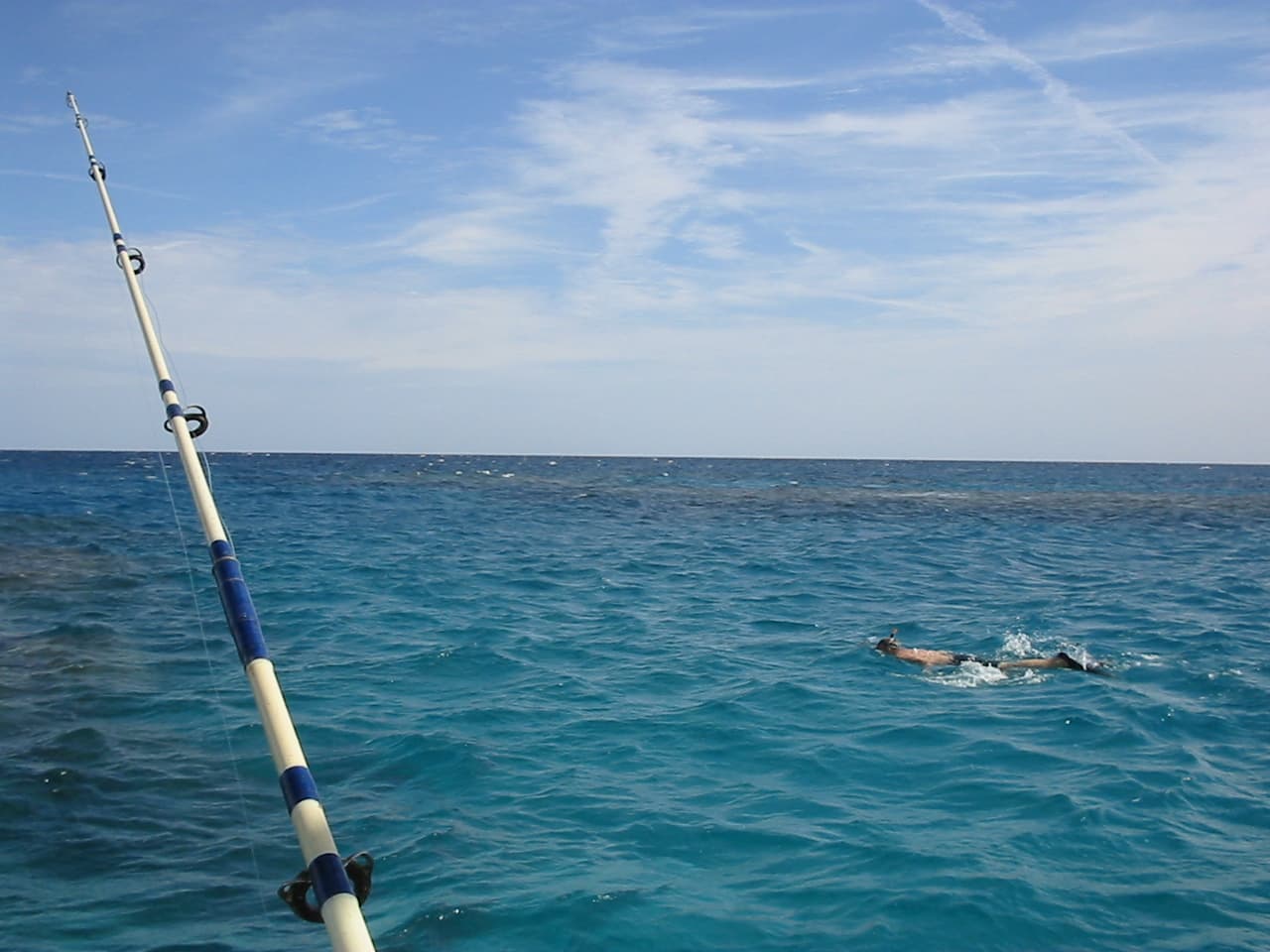
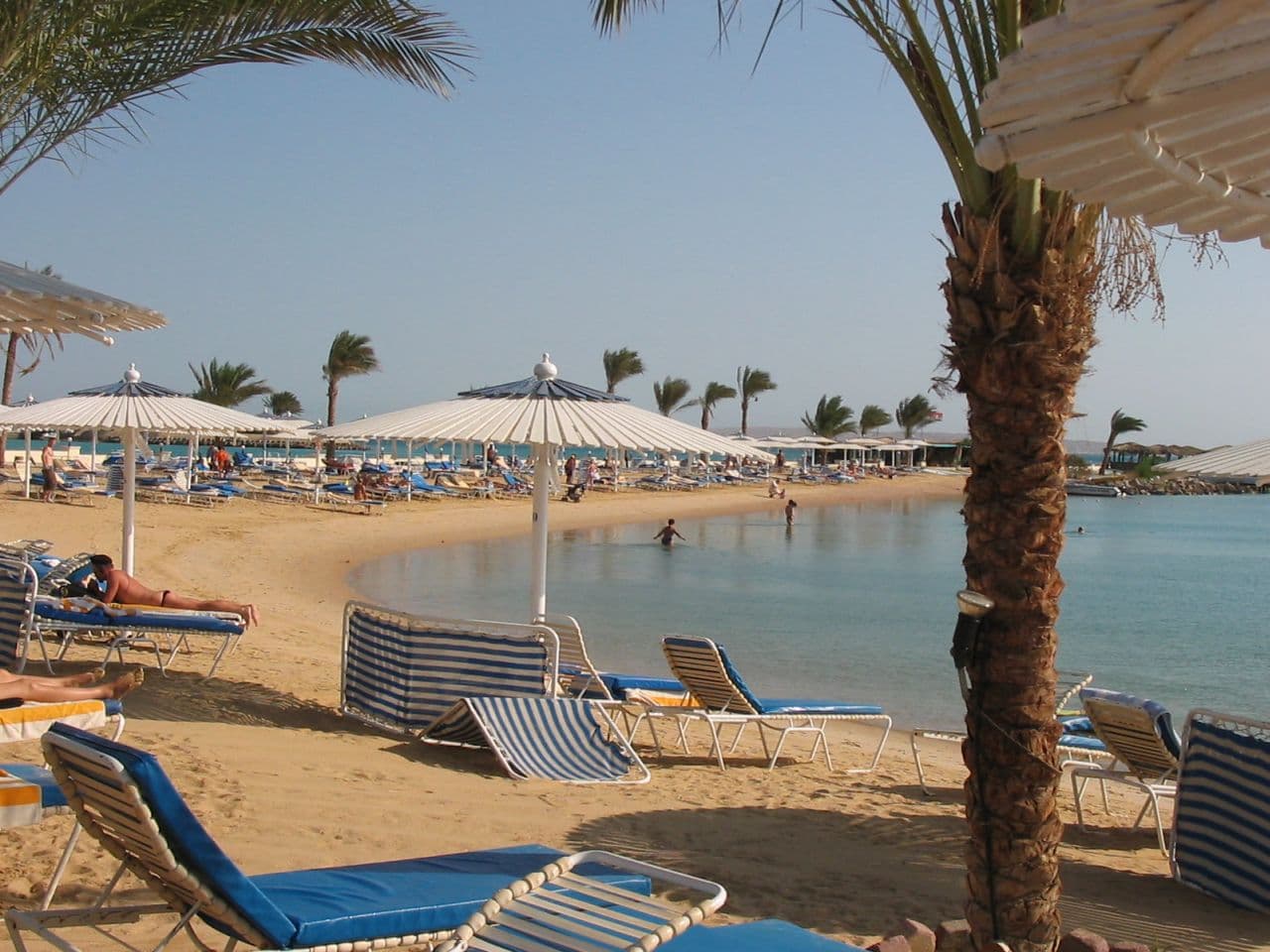
On the Red Sea you swim, snorkel, dive and spend days on the beach. Egypt's coast has two clusters. Hurghada, El Gouna and Marsa Alam are on the mainland, and Hurghada is about four hours by road from Luxor. Sharm el-Sheikh, Dahab and Ras Mohammed are on the Sinai coast. In Sharm many hotels have a jetty out over a house reef. In Hurghada hotel beaches are more often sand, and the good reefs are a boat ride out.
At the Dead Sea you float. You lie back and the water holds you. Normal swimming is awkward, so most people just drift. Jordan's tourism board advises 15 to 20 minutes in the water per session. Between sessions people coat themselves in the black shoreline mud, rinse, and go back in. That is the whole activity.
The float is strange and worth doing once. It is also an afternoon at a hotel beach, so one night is plenty. Our Egypt and Jordan pages say the same: the Dead Sea is the weakest part of most Jordan itineraries. Petra, Wadi Rum and a reef swim at Aqaba are better uses of a scarce day.
Reefs and diving: only the Red Sea has them
You cannot dive in water that will not let you sink, so this part is one-sided. In Egypt the best walls are at Ras Mohammed and the Straits of Tiran, both reached from Sharm el-Sheikh. Hurghada has gentler reefs and the Abu Nuhas wrecks. Dahab has shore diving and the Blue Hole. Marsa Alam, further south, is quieter and has better coral than Hurghada.
Jordan has a short stretch of the same sea at Aqaba. The Aqaba Marine Reserve, declared in 2019, protects reef south of the city with roughly 500 fish species, according to visitjordan.com. That matters for one reason. A Jordan trip can include both seas: Aqaba for the reef, the Dead Sea for the float.
When each one is at its best
The Red Sea is warm for most of the year. Off Hurghada the water is about 22C in January and February and 25C in April. It reaches 27C in May, 29C in June and 31C in August. It holds 28C in October and 26C in November, then falls to 23C in December. These are typical figures from our month-by-month guide.
April, October and November suit a Nile and Red Sea trip best. The water is warm and Luxor is still workable. In January the sea is swimmable but cool, and evenings on the coast can need a jacket.
The Dead Sea is a winter place. It sits several hundred metres below sea level, so it stays warm in December and January while Amman and Petra are cold. In summer it is extreme. November is the month when both seas are pleasant in the same trip.
Can you do both in one trip?
Yes. There are four workable shapes, and the first fits an Egypt holiday best.
Egypt and Jordan. Spend a week or more in Egypt, with the Nile and a few days at Hurghada or Sharm. Then fly Cairo to Amman. A night at the Dead Sea fits between Petra and your flight home. Flying into Cairo and out of Amman saves a repositioning flight.
Jordan alone. Aqaba covers the Red Sea, two hours by road from Petra (visitpetra.jo). The Dead Sea sits further north, near Amman. You swim on a reef one day and float a few days later. This suits a trip built around Petra with no Egypt in it.
Egypt and Israel. Cross at Taba, the Egyptian border town at the top of the Gulf of Aqaba. On the Israeli side the Dead Sea pairs with Jerusalem and Masada. You cross Taba on foot with your own bags, and the wait can run from under an hour to several. Treat the crossing as a day.
Sinai by ferry. A ferry runs from Nuweiba in Sinai to Aqaba in Jordan. Departure times change and the crossing can take a full day, so it suits people already on the Sinai coast. Our Egypt to Jordan page compares every route.
Borders in this region open, close and change their hours with events. Before you plan a crossing, read the US State Department and UK FCDO pages for Egypt, Jordan and Israel. They carry the current advice, including for Sinai and the border areas.
Which one should you choose?
Choose the Red Sea for a beach week, warm water most of the year, snorkelling or diving. It pairs easily with the temples, because many Nile trips end with a road transfer from Luxor to the coast. For families the two main resorts are close. Sharm's calmer layout is slightly easier with small children.
Add the Dead Sea when you are already in Jordan or Israel. It suits a free afternoon, a curious child or anyone who wants to tick off the lowest point on Earth. It is a poor fit for a beach holiday.
The Red Sea has weak spots too. Hurghada's main strip is built-up, and touts work it hard. Sharm is tidy but artificial. If you want a better-looking base, El Gouna and Dahab are the alternatives. Our Hurghada vs Sharm el-Sheikh page covers the choice in detail.
Red Sea trips we sell with Memphis Tours
We sell the trips of Memphis Tours, an Egyptian operator. Five of them include a stay on the Red Sea at Hurghada, then fly back to Cairo. Prices are US dollars per person, land only, at the lowest hotel level.
Cairo, Luxor and the Red Sea, 8 days, from US$2,040, with two nights at Hurghada. Nile Cruise and Hurghada, 10 days, from US$2,310, with three free days on the coast. Cairo, a Nile Cruise and Hurghada comes in two lengths. The 11-day trip is from US$2,560 and the 13-day trip from US$2,945, each with three nights at Hurghada. The Grand Tour of Egypt, 16 days, from US$3,910, has three nights at Hurghada.
Memphis Tours also builds Egypt and Jordan trips, priced on enquiry. If you want the Dead Sea in yours, say so in the form on this page and send your dates.
Common questions
Is the Dead Sea in Egypt?+
No. The Dead Sea lies between Jordan on the east and Israel on the west. Egypt has no Dead Sea shore. Egypt's coast is on the Red Sea and the Mediterranean.
Where is the Dead Sea from Egypt?+
North-east of Sinai. The nearest Egyptian point is Taba, about 230 kilometres from the middle of the Dead Sea in a straight line. Cairo is about 440 kilometres away. The usual route is a flight to Amman.
What is the difference between the Red Sea and the Dead Sea?+
The Red Sea is the sea on Egypt's east coast, with coral reefs and wrecks. The Dead Sea is a salt lake between Jordan and Israel. It is about 34% salt, roughly ten times the ocean. You dive and snorkel in the first and float in the second.
Can you swim in the Dead Sea?+
You float more than you swim. The water is so dense that it holds you up. Jordan's tourism board advises 15 to 20 minutes in the water per session. Most visitors float, cover themselves in mud, rinse and float again.
Can I visit the Dead Sea on a day trip from Egypt?+
Not sensibly. You would fly Cairo to Amman, about an hour and a half. Then you drive about an hour each way and fly back. Plan at least one night in Jordan. It works best as part of an Egypt and Jordan trip.
Is Aqaba on the Red Sea or the Dead Sea?+
The Red Sea. Aqaba is Jordan's port at the top of the Gulf of Aqaba, across the water from Taba in Egypt. It has reefs protected by the Aqaba Marine Reserve. The Dead Sea is further north in Jordan, about an hour from Amman.
Is it safe to travel from Egypt to the Dead Sea?+
Read the US State Department and UK FCDO pages for Egypt, Jordan and Israel before you book. They carry the current advice for each country and its border areas. Flying Cairo to Amman avoids the land crossings altogether.
Official sources
Entry rules, opening hours, security advice and exchange rates all move. Check them at the source, not here.
Written and checked by the Nile Trip Guide editorial team · Last reviewed . Entry rules, prices and opening hours change — check anything critical against the official sources linked on this page.
Plan this trip
Tell us your dates and we will price it
A real itinerary with real prices, usually within 24 hours. Nothing is booked and nothing is charged until you say yes.
The route most people take first, at the length it was built for: Giza and the Grand Egyptian Museum, then a flight to Luxor and four nights sailing down to Aswan.
No boat on this one. Giza and the Grand Egyptian Museum, a night in Luxor for both banks, two nights on the Red Sea, then back to Cairo for the Citadel, Coptic Cairo and the Royal Mummies.
Five nights in Cairo either side of a four-night sail from Luxor to Aswan. The Cairo days are private, just your party and a guide; the sightseeing off the boat is shared with a small group.