Egypt scams: the common tourist scams and how to avoid each one
Egypt scams are almost all small and about money. The usual ones are a free gift that has a price, a stranger who says the site is closed, a ride with no agreed fare, and short change. Three habits stop nearly all of them. Agree every price out loud before anything starts. Take nothing placed in your hand. Count your change before you walk away.
What are the most common scams in Egypt?
Most scams in Egypt are small, quick and about money. They gather where visitors gather: the Giza plateau, Luxor's west bank, the big bazaars, the airports and the taxi ranks. The sums are usually modest. The real cost is time and temper.
You are most likely to meet nine: the free gift, the closed-site story, the unofficial guide and the ride with no agreed price. Then the changing taxi fare, short change, the street exchange rate, the commission shop and the lookalike visa website. Each has a simple counter, set out below.
For current safety advice, read the US State Department and UK FCDO pages on Egypt before you book and again before you fly. Our guides to whether Egypt is safe, and safe for women, cover the wider picture.
The free gift that has a price
Someone presses something into your hand: a scarf, a headdress, a small carved figure. It is a gift until you are holding it. Then payment is expected, and giving it back turns into an argument.
The counter is simple. Do not take it. Keep your hands by your sides and keep walking. If a scarf lands on your head or shoulders, take it off, hand it back and move on without discussion. This happens most around Giza, on Luxor's west bank and in the bazaar lanes aimed at visitors.
The site is closed, and the man who offers to help
A friendly stranger tells you the temple is closed today, or shut for prayer, or that the entrance is round the other side. He offers a shortcut, a better gate or somewhere to wait. Check for yourself at the official ticket window, and buy tickets nowhere else. The story usually ends at a shop, a stable or a request for money.
The unofficial guide works inside the site. A man attaches himself to your group, points out a few reliefs, perhaps holds a torch, and presents a bill at the end. Decline before he starts. Once he has finished, you are arguing over a service already given.
A guard who unlocks a tomb because you asked is different. A small tip for that is normal.
Egypt tourist scams at the pyramids: camels, horses and carriages
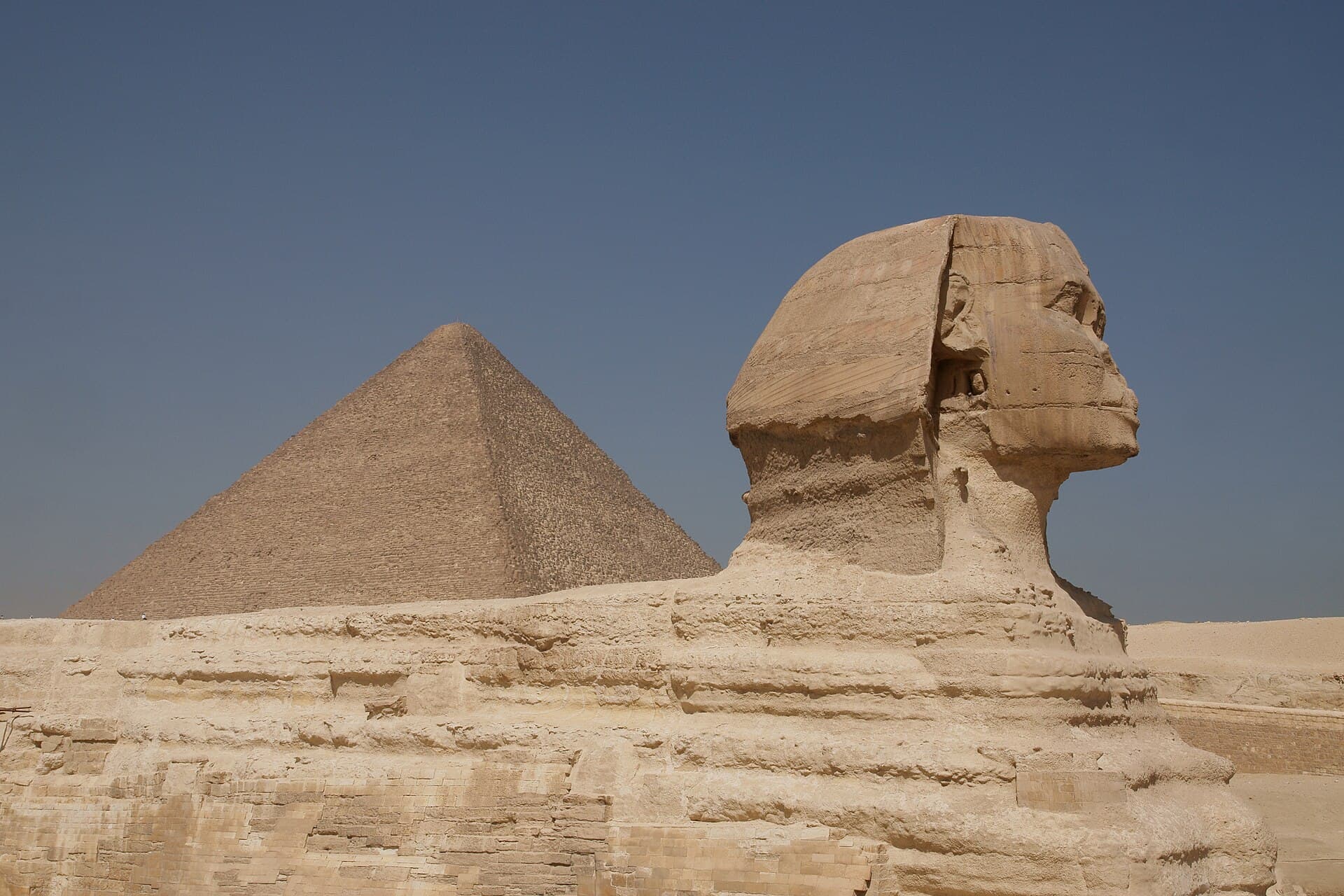
At Giza you will be approached again and again with camel rides, horse rides, souvenirs and offers of guiding. The approaches start in the car park and carry on across the plateau. Some of the men are licensed. Many are not.
Never get on an animal before three things are agreed out loud: the price, how long the ride lasts, and whether that includes the ride back. Ask whether the price is per person or per ride. The best-known trick is a fee to get down again. Once you are on a camel in the middle of the plateau, your bargaining position has gone, and everyone knows it.
We do not quote a fair price for these rides, because we cannot source one from an official tariff. If you want the camel photograph, arrange it through your guide or driver at a fixed rate before the day. Our partner's Cairo tours include a short camel ride at Giza in the price, which takes the negotiation away entirely.
Walking the site is practical with decent shoes and enough water, and it costs nothing. Look at the animal before you agree to anything. Some are in visibly poor condition, and walking away is always allowed. Horse-drawn carriages work by the same rule: agree the price, the route and the return before you climb in.
Cairo scams: taxis and the fare that changes
Taxi fares are the commonest money argument in Cairo. The meter goes unused, or a fare agreed at the kerb becomes a different number at the hotel door. Ride-hailing apps remove most of this, because the price is fixed before you get in.
If you take a street taxi, agree the fare out loud before the car moves, and say it back.
The first ride from the airport is when you are most tired and know the least. Settle it before you land: pre-book a transfer or use an app. Every trip our partner runs for us includes a meet and greet at the airport and private transfers, so the question never comes up.
Short change and the note swap
This is the quiet one. Change is counted fast and a hand closes around it. A twenty comes back where you handed over a two hundred. A price turns out to have been per person, or per photograph. Paper and plastic notes of the same value look different, which makes fast counting easy to get wrong.
Count what you are handed, openly, before you walk off. Say the value of your note as you hand it over. Carry plenty of small notes so you rarely need a large one broken.
Changing money: the special rate and the ATM
Anyone offering you a special rate in the street is selling you a short count. A street changer has no receipt and no comeback if the count is short. Change money at a bank or a licensed exchange office, and keep the receipts.
Ignore no-commission signs, because the margin sits in the rate. Check the day's rate from a neutral source before you walk in and compare the offer against it.
Use ATMs inside a bank branch or a hotel lobby, so you are not counting money in the street. When the machine offers to convert the withdrawal into your home currency, decline. That is dynamic currency conversion, and its rate is worse than your own bank's.
Commission shops: papyrus, perfume and alabaster institutes
Many tour days include a stop at a papyrus institute, a perfume house or an alabaster factory. These are shops with a short demonstration at the front. The guide earns commission on what you buy, and the stop eats an hour you came for. Much of the cheap papyrus sold to visitors is pressed banana leaf.
Ask for the itinerary in writing and look for these stops. If they are there, ask for them to be removed when you book. Saying so on the morning is harder. A headline price well below everyone else's often pays for itself this way.
None of the day plans on our tour pages includes a papyrus, perfume or alabaster stop. Ask for that in writing all the same. If you want papyrus or perfume, buy it in a shop you chose yourself.
Lookalike e-visa websites
This one happens before you fly. Search results for the Egypt e-visa are ringed with lookalike sites, some with official-looking seals and government-sounding names. They buy advertising against the obvious searches, so the first result is often one of them.
They add a handling charge, keep a copy of your passport scan, and are no faster. The official portal is visa2egypt.gov.eg. Type it into the address bar, skip the sponsored results, and check that the domain ends in .gov.eg before you upload anything.
Cheap tour and cruise deals that earn it back later
Some low prices recover the difference after you arrive, through shop stops and extras sold hard once you are on the boat. A trip without them can cost more up front and less in total.
Boat to be confirmed is common on late cruise bookings, and it is how resellers place people. Before you pay, get the boat and hotels named in writing. Get what the price includes, and what happens if the boat changes, in writing too.
Three things that feel like scams and are normal
Tipping is expected in Egypt, for drivers, guides, porters, cruise crews and the guard who unlocks a tomb. Carry small notes and decide your budget before you go. Our tipping guide gives the amounts.
Antiquities sites charge foreign visitors a published price, which is fixed and printed. Several of the best things inside are ticketed separately, such as the inner chamber of the Great Pyramid.
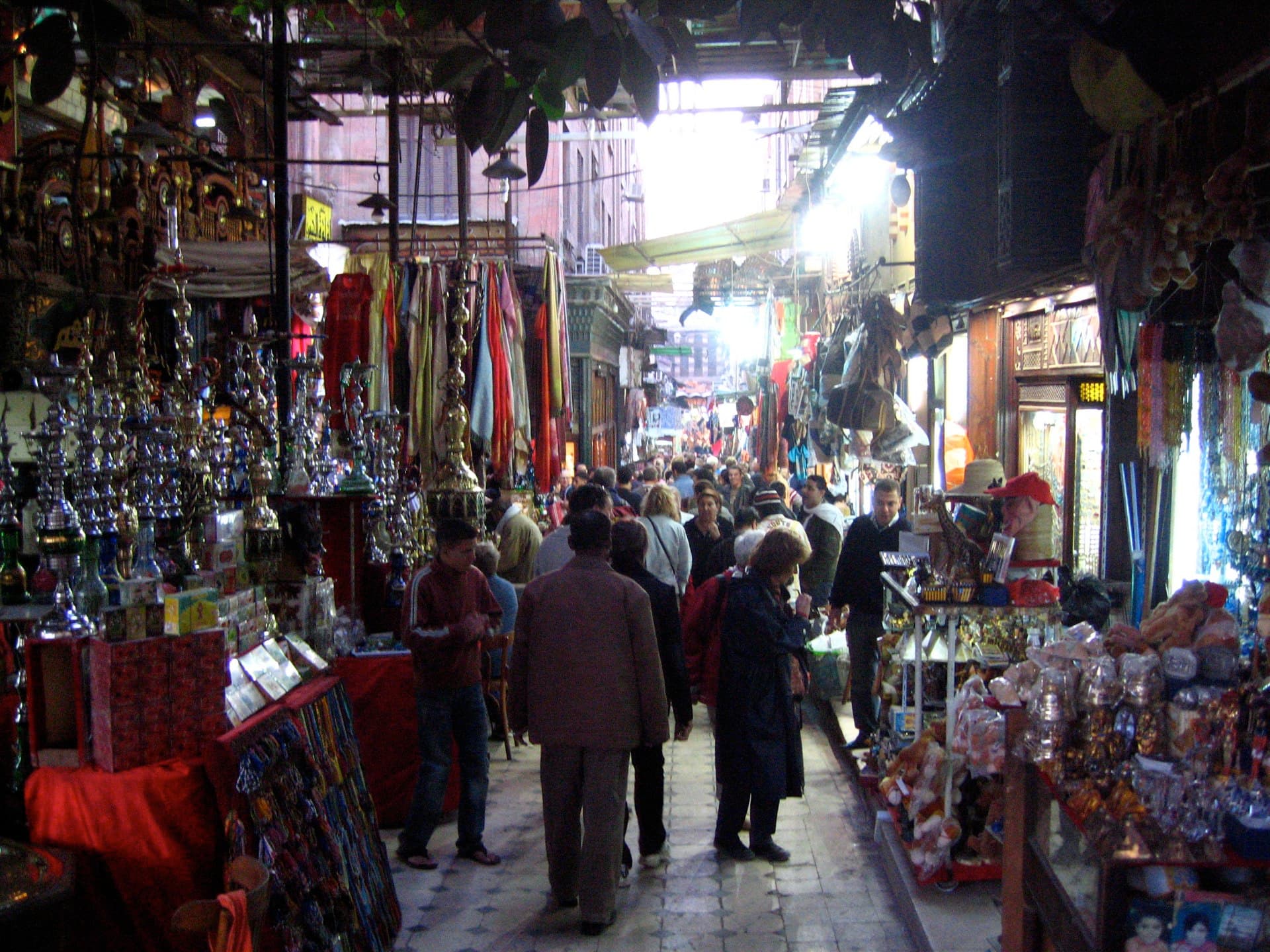
In markets the first price is an opening position. Haggling is expected, and walking away is part of it. The glass of tea offered in a Khan el-Khalili shop comes with no obligation to buy. Pay the driver who worked for eight hours properly, and the man who appeared at the gate with a story nothing at all.
How to say no, and what to do if something goes wrong
A clear no, said without breaking stride, ends most approaches. La shukran means no thank you. Said pleasantly with a hand to your chest, it softens the refusal and shows you know how the exchange works. Firm and friendly works better than apologetic.
For anything more serious than short change, tell your hotel and your operator, and report it to the tourism police at the site. Carry two cards from different providers, kept apart, and know how to freeze each one from your banking app.
Does a guided tour remove the scams?
It removes most of them. A guide is the best buffer against approaches at the big sites. Transfers are booked, and the day's prices are settled before you arrive. If constant selling is your main worry, a guide helps more than anything else on this page.
Guides are also where commission stops come from, so ask about them when you book. If you are comfortable saying no and reading a map, you can see the main sites independently and for less.
Our partner's Cairo Short Break is five days in Cairo from US$935 per person. It includes private sightseeing, an airport meet and greet, and a short camel ride at Giza. Cairo and Luxor in five days starts at US$1,480 per person and adds a night in Luxor with both domestic flights. Flights to Egypt, tipping and extra tickets such as entering a pyramid are not included in either.
Common questions
Are there many scammers in Egypt?+
You will meet a lot of selling, and some of it crosses into small scams, mostly around Giza, Luxor's west bank, the big bazaars and taxis. The amounts are usually small. Agreeing prices first, taking nothing handed to you and counting your change avoids nearly all of it.
What are the main Cairo scams?+
Taxi fares top the list: an unused meter or a fare that changes on arrival. Ride-hailing apps fix the price before you get in. After that come short change, offers of a special exchange rate, and the touts and gift-sellers at Giza.
How do I avoid a camel ride scam at Giza?+
Agree the price, the length of the ride and the return out loud before you get on, and ask whether it is per person. Never mount first and negotiate later. The simpler route is a ride arranged by your guide or driver at a fixed rate, or a tour with the ride included.
How do I know I am on the official Egypt e-visa site?+
The official portal is visa2egypt.gov.eg. Type the address in yourself and skip sponsored results. Check that the domain ends in .gov.eg before you upload your passport.
What should I do if I have been scammed in Egypt?+
For short change you notice at once, say so and count it out loud. Small losses noticed later are rarely worth chasing. For anything bigger, tell your hotel and operator and report it to the tourism police. Freeze any affected card from your banking app.
Official sources
Entry rules, opening hours, security advice and exchange rates all move. Check them at the source, not here.
Written and checked by the Nile Trip Guide editorial team · Last reviewed . Entry rules, prices and opening hours change — check anything critical against the official sources linked on this page.
Plan this trip
Tell us your dates and we will price it
A real itinerary with real prices, usually within 24 hours. Nothing is booked and nothing is charged until you say yes.
The route most people take first, at the length it was built for: Giza and the Grand Egyptian Museum, then a flight to Luxor and four nights sailing down to Aswan.
No boat on this one. Giza and the Grand Egyptian Museum, a night in Luxor for both banks, two nights on the Red Sea, then back to Cairo for the Citadel, Coptic Cairo and the Royal Mummies.
Five nights in Cairo either side of a four-night sail from Luxor to Aswan. The Cairo days are private, just your party and a guide; the sightseeing off the boat is shared with a small group.