
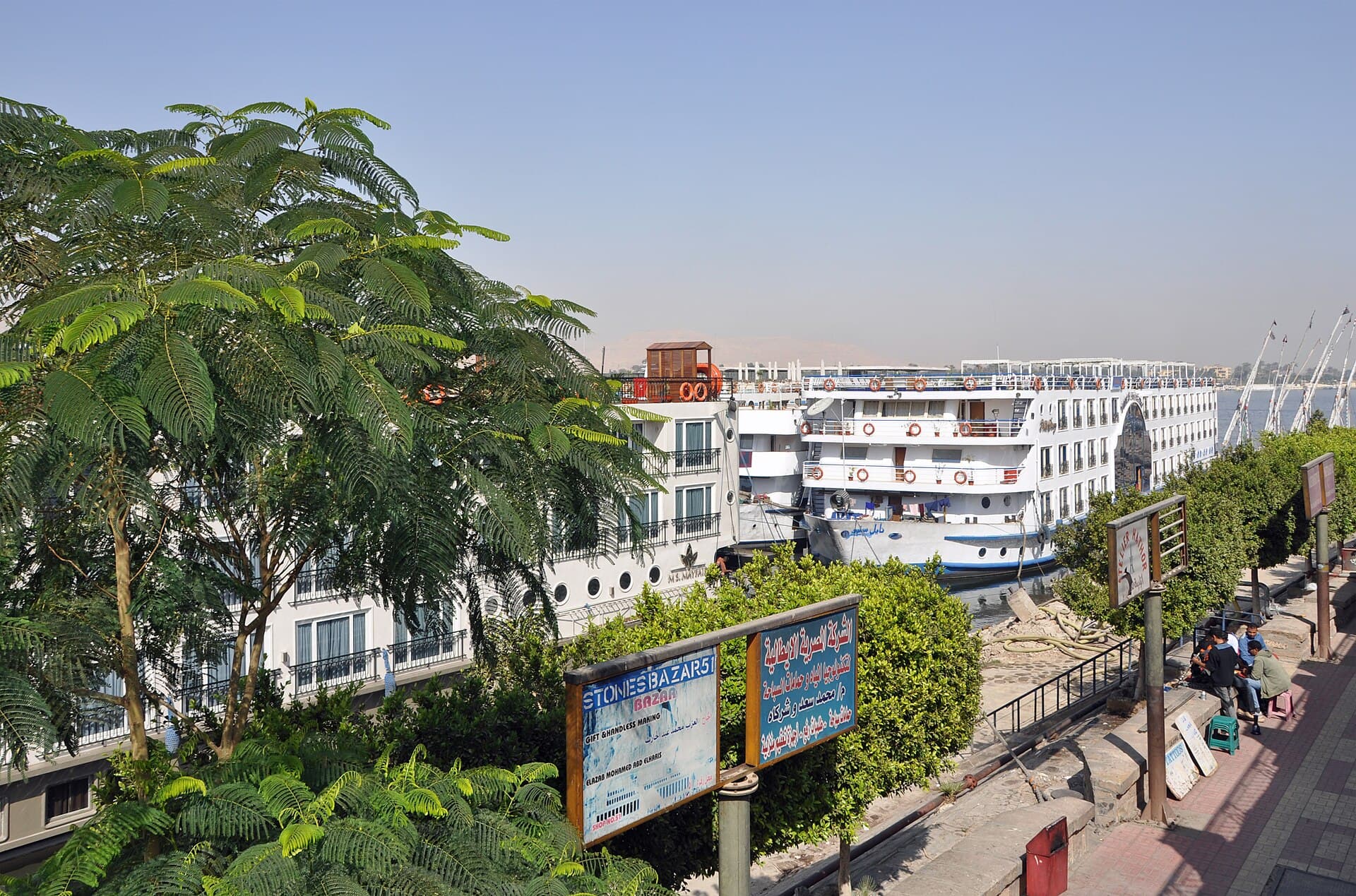
Cruise ship
Movenpick Royal Lily: what to know before you book
The Movenpick Royal Lily is one of the Nile cruise ships run by Movenpick, sailing the Luxor to Aswan stretch like almost every boat on the river. We cannot publish a spec sheet for it, and you should not trust pages that do. What we can tell you is what this class of boat is like to travel on, and who it suits.
Movenpick Royal Lily: what kind of boat this is
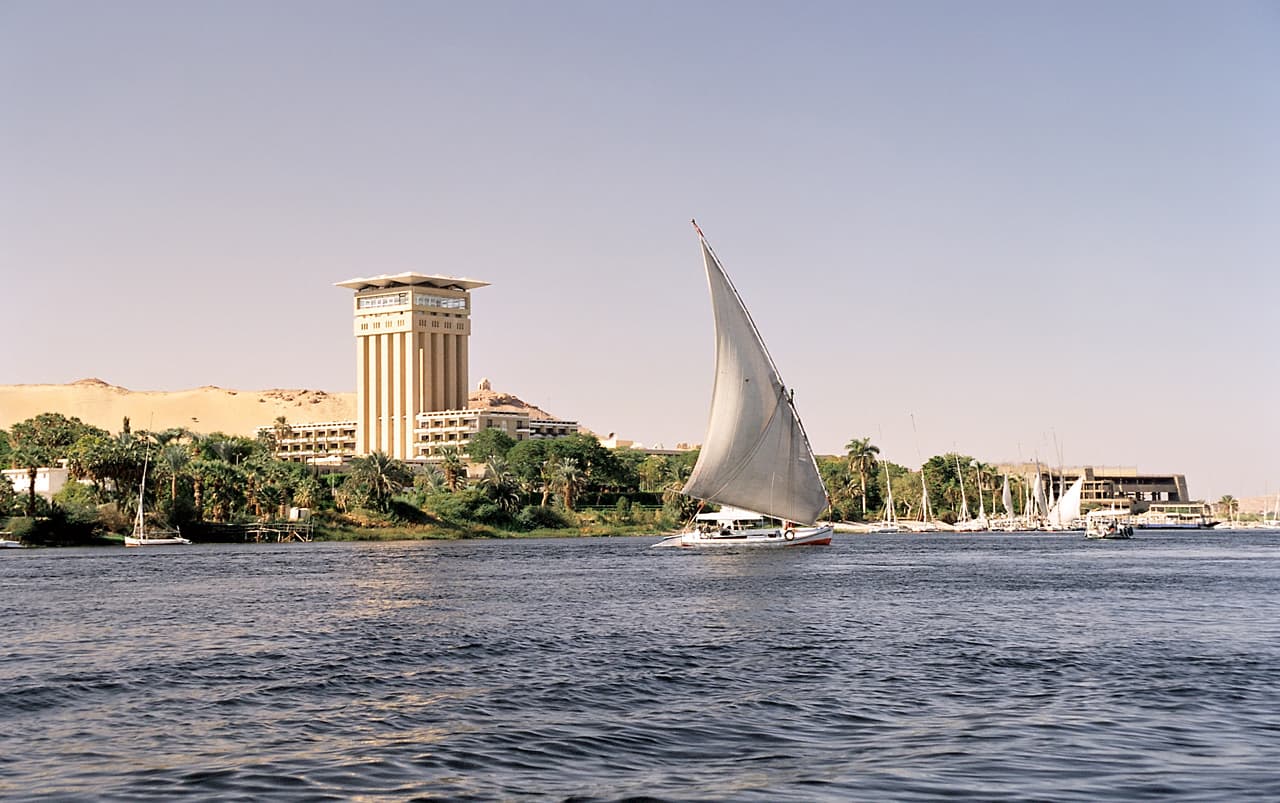
The Royal Lily is a conventional Nile cruise ship rather than a dahabiya sailing boat. Boats of this type are engine-powered floating hotels: cabins off corridors, a dining room, a lounge, an open sun deck. They run to a timetable, moor at the main quays, and carry enough people that you eat, sightsee and travel in groups. Standards vary from boat to boat and from refit to refit, so the type tells you the shape of the trip rather than the state of the cabin.
Large ship, small ship or dahabiya
The three types differ more than the brochures suggest. A large ship gives you the most on board, along with the steadiest schedule: dependable air conditioning, a pool, a lift, a proper kitchen. A small ship offers fewer passengers and a quieter deck, with less on it. A dahabiya is a sailing boat with a handful of cabins that moors at banks the big boats cannot use.
None of them is better in the abstract. Per night, a large ship is usually the cheapest way to travel the river, and the easiest with children or limited mobility. A dahabiya is slower, quieter and considerably more expensive, and there is very little to do on board. If you want a pool and a lift, it will disappoint you.
What the Luxor to Aswan route involves
Every boat covers much the same ground: Luxor, then Esna, Edfu and Kom Ombo, then Aswan, in one direction or the other. The temples are the same whichever boat you book, and so are the crowds. Boats moor in clusters and their passengers reach each site in waves, usually early, because of the heat.
What the boat changes is the hours in between. There is a lot of slow sailing, and on a large ship the afternoons are deck, river and not much else. Some people find that the best part of Egypt. Others are restless by the third day. Be honest with yourself about which you are.
Who this style suits, and who it does not
It suits first-time visitors who want the classic temple run without arranging their own transport, families, and travellers watching the budget. Step-free access and reliable air conditioning are where the larger boats generally score, though confirm both for the vessel you are offered. It suits you less if you dislike fixed group timings and set meal sittings, or if the appeal of the Nile for you is quiet. Moored between two other boats, your window may look straight at another hull.
What to ask before booking any Nile boat
Ask when the boat was last refurbished. Nile boats age quickly in that heat, and the gap between a recently refitted boat and a tired one is wider than the gap between operators. Ask which deck and which side your cabin is on. Lower decks sit nearer the engine and the waterline, and the view depends on where the boat ties up.
Ask whether it moors alongside the quay or rafted between other boats, because rafted means a view of another hull, sometimes all evening. Then ask exactly what the fare covers. Drinks, temple tickets, guiding and tips are often charged separately, and that is where a cheap Nile cruise stops being cheap.
Ratings, and why the details need confirming
Nile boat star ratings are issued locally and do not mean what hotel stars mean in Europe. A five-star boat on the Nile is not a five-star hotel. Treat any rating as a rough band, and judge on recent photographs and the date of the last refurbishment instead.
Specifications, sailing dates and prices for any Nile boat should be confirmed at the point of enquiry. Fleets change hands, boats are refitted, renamed and moved to different routes, sometimes within a season. Anything written about a named vessel has a short shelf life, so the current details are worth having in writing before a deposit is paid.
Trips on the Movenpick Royal Lily
Our partner names this boat on these itineraries. Its documents add that changes may occur, so confirm the boat when you book.
Nile cruise
Classic Egypt
- Cairo, Aswan and a Nile Cruise7 days · 3 nights on board, Aswan to Luxor
- Cairo, Luxor and a Nile Cruise8 days · 4 nights on board, Luxor to Aswan
- A Nile Cruise and Two Days in Cairo9 days · 4 nights on board, Luxor to Aswan
- Cairo and a Nile Cruise10 days · 4 nights on board, Luxor to Aswan
- Cairo, Luxor and a Nile Cruise12 days · 4 nights on board, Luxor to Aswan
- Cairo, Luxor and a Nile Cruise15 days · 4 nights on board, Luxor to Aswan
- The Grand Tour of Egypt16 days · 3 nights on board, Aswan to Luxor
Nile & Red Sea
Common questions
Who operates the Movenpick Royal Lily?+
It sails under the Movenpick name, the hotel group. An operator's name tells you the broad style of the trip rather than the state of the particular cabin you will sleep in, because standards differ between vessels in any fleet and change with each refit. Recent photographs and the date of the last refurbishment are more useful.
Where does the Movenpick Royal Lily sail?+
The Luxor to Aswan stretch, in one direction or the other, like nearly all Nile cruise ships. That takes in the temples at Esna, Edfu and Kom Ombo along the way. How many nights, which direction and which days it departs vary by season and should be confirmed with the operator when you enquire.
Is a large cruise ship better than a dahabiya?+
Neither is better. A large ship gives you more on board, a fixed schedule and a lower nightly cost. A dahabiya gives you fewer people, quieter moorings and a slower pace, for more money and much less to do. Choose by what you want your afternoons to look like.
Is a five-star Nile boat the same as a five-star hotel?+
No. Nile boat ratings are awarded locally and sit below their European hotel equivalents. A five-star boat on the river is comfortable rather than luxurious. The rating also says nothing about when the boat was last refurbished, which matters far more to how the cabin actually feels.
Official sources
Entry rules, opening hours, security advice and exchange rates all move. Check them at the source, not here.
- Egyptian Ministry of Tourism and Antiquities ↗The ministry lists which tombs and temples currently open.
- UK FCDO travel advice for Egypt ↗It updates continuously, and most UK travel insurance follows it.
Written and checked by the Nile Trip Guide editorial team · Last reviewed . Entry rules, prices and opening hours change — check anything critical against the official sources linked on this page.