Egypt vs Greece comes down to one trade-off: Greece is far easier, Egypt is far more extraordinary. Greece asks almost nothing of you — hire a car, find a beach, eat well, sleep. Egypt asks for planning, patience and a driver who knows the roads, and gives back a scale of antiquity nowhere else has.
Egypt
Greece
Egypt
Greece
The ancient sites
Older by roughly two thousand years, and far larger in scale
The Acropolis and Delphi. Fewer sites, easier to reach, better explained on the ground
Ease of travel
Needs planning, usually a guide and internal flights
Straightforward. Ferries, hire cars, English widely spoken
Hassle
Real and persistent at the major monuments
Essentially none
Sea and beaches
Red Sea reefs beat anything in Greece for diving
The islands. Better for swimming, sailing and doing very little
Food
Good but narrower — koshari, ful, grilled meat
One of the reasons people go
Cost
Cheaper on the ground once you have arrived
Dearer, especially in the islands in high season
Season
October to April. Summer inland is punishing
May to October. Winter closes much of the island infrastructure
Best for
Ancient history at a scale nothing else matches
A relaxed holiday that happens to contain antiquity
The short answer
These are not really competing trips. Greece is a holiday with ruins in it; Egypt is an expedition to see the ruins. Greece is easier, better with young children and better for doing nothing. Egypt gives you something you cannot see anywhere else and asks more of you in return. The seasons barely overlap, which is the practical reason most people choose rather than combine — spring and autumn are the only sensible window for both.
What do you actually see in each?
Greece's classical sites are mostly floor plans. At Delphi, Olympia and most of Crete you are looking at foundations, column bases and a good museum, and doing the rest in your head. The Acropolis is the exception, and it is a half-day. What Greece keeps above ground is later work: Byzantine churches, Venetian harbours, hill monasteries and whole island towns that people still live in.
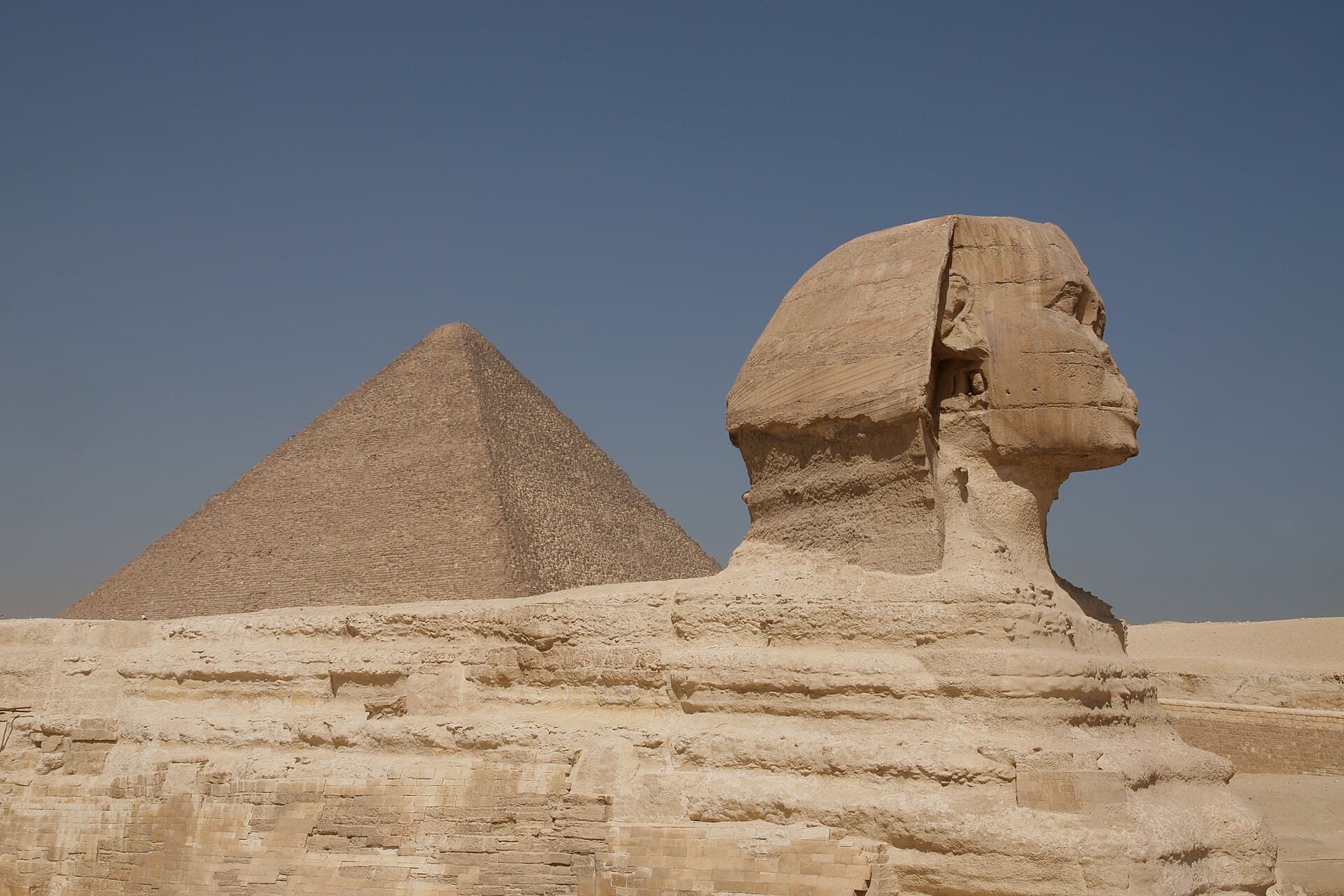
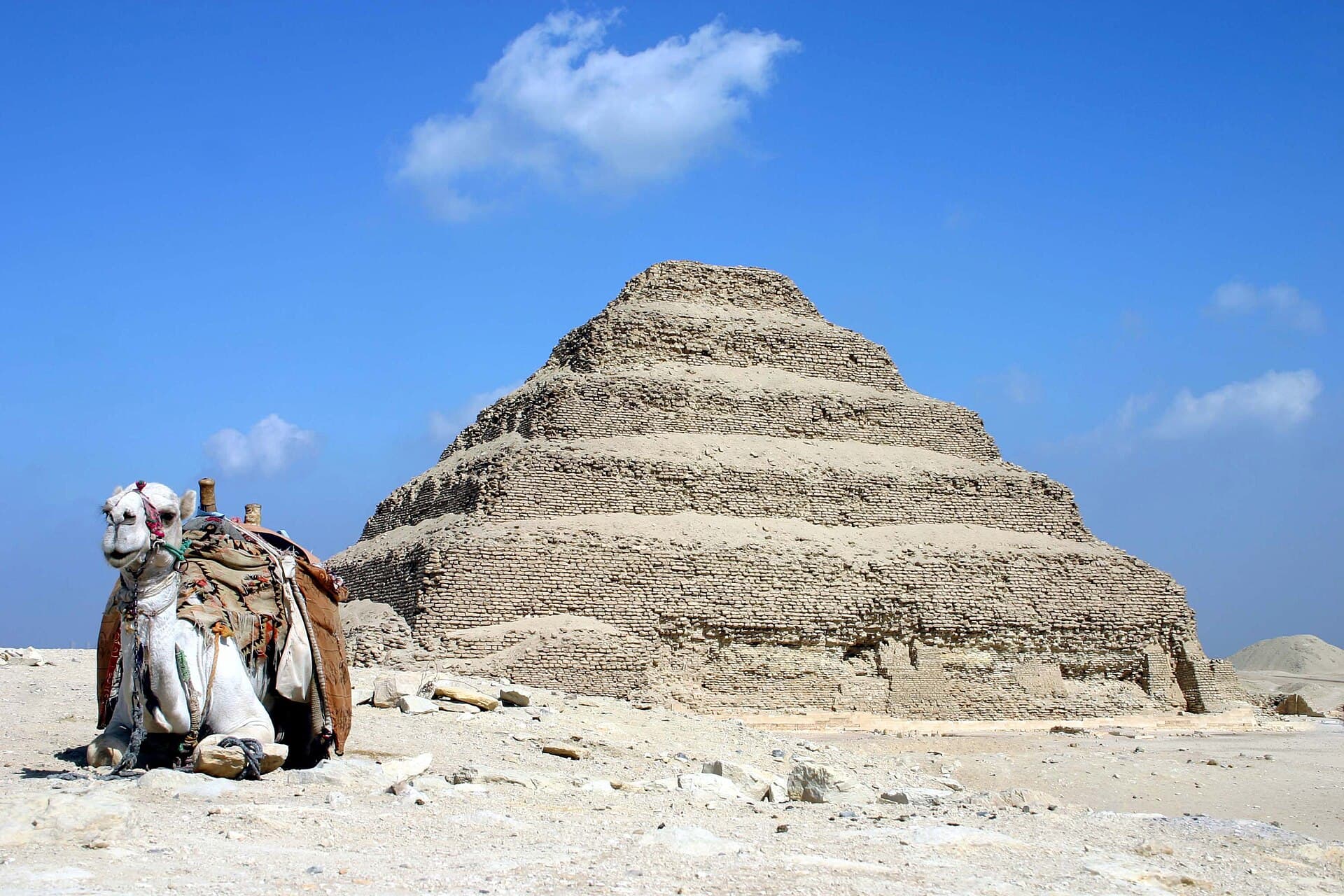
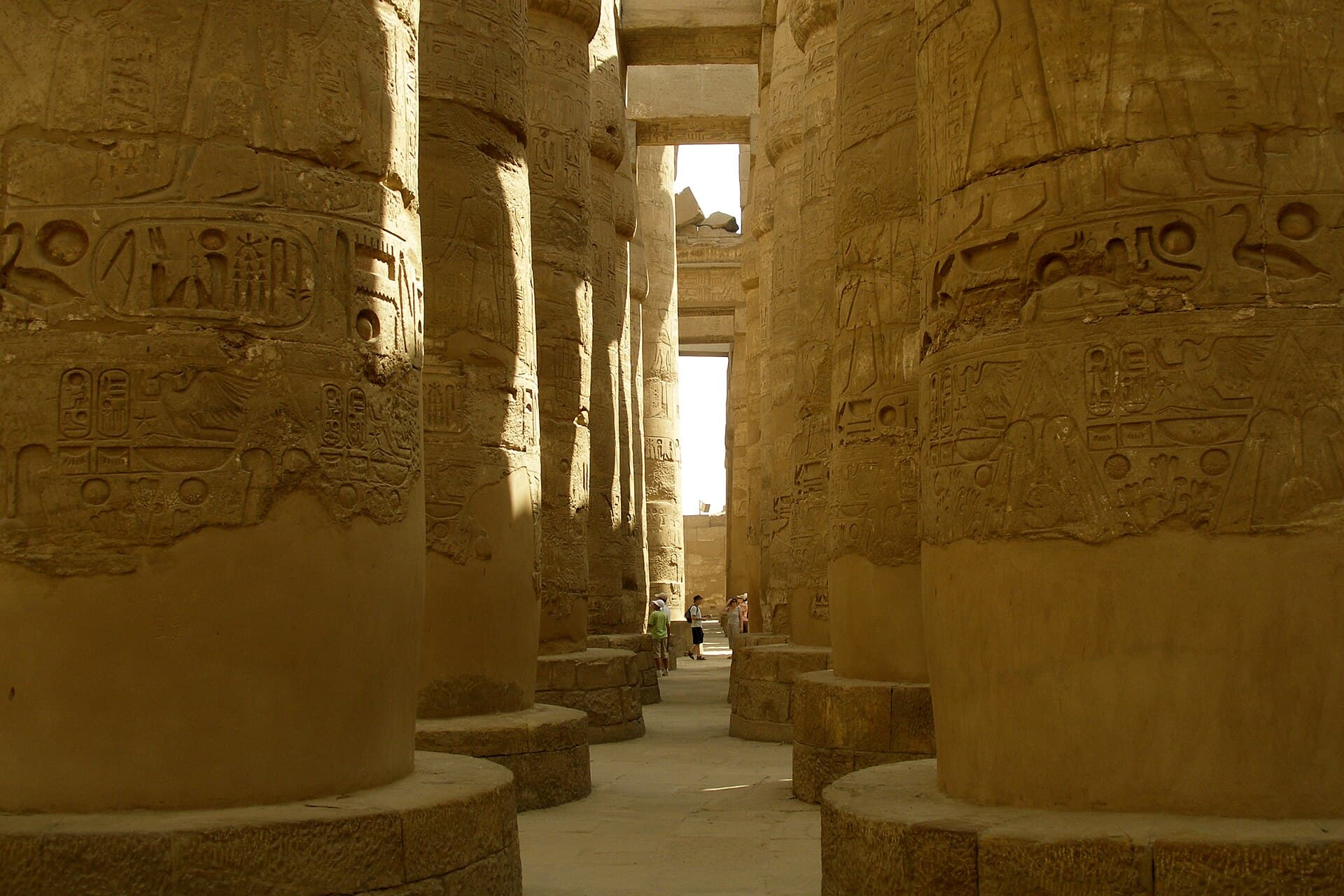
Egypt's are standing, roofed and painted. Karnak still has its columns and part of its ceiling. Tombs in the Valley of the Kings hold their colour after three thousand years, which no photograph prepares you for. The Giza pyramids were already about two thousand years old when the Parthenon was built. If ancient sites are why you travel, Egypt is not a rival to Greece — it is a different order of thing.
The caveat is setting. Giza sits on the edge of Greater Cairo, ring road and suburb directly behind the plateau, so the famous photographs are true from one angle and misleading from every other. Luxor's west bank is better — still farmland and desert — but nowhere in Egypt is as quiet as a small Greek island site.
How old is old? Putting the two in order
Put the dates side by side and the comparison changes shape. The pyramids at Giza are roughly 4,500 years old. The Parthenon went up about two thousand years after them, which means the Athenians who built it stood closer in time to us than to the men who raised the Great Pyramid. Cleopatra, the last name most people attach to ancient Egypt, lived nearer to the invention of the mobile telephone than to the building of Giza. Egypt is not old the way Athens is old. It is old in a way that makes Athens feel recent.
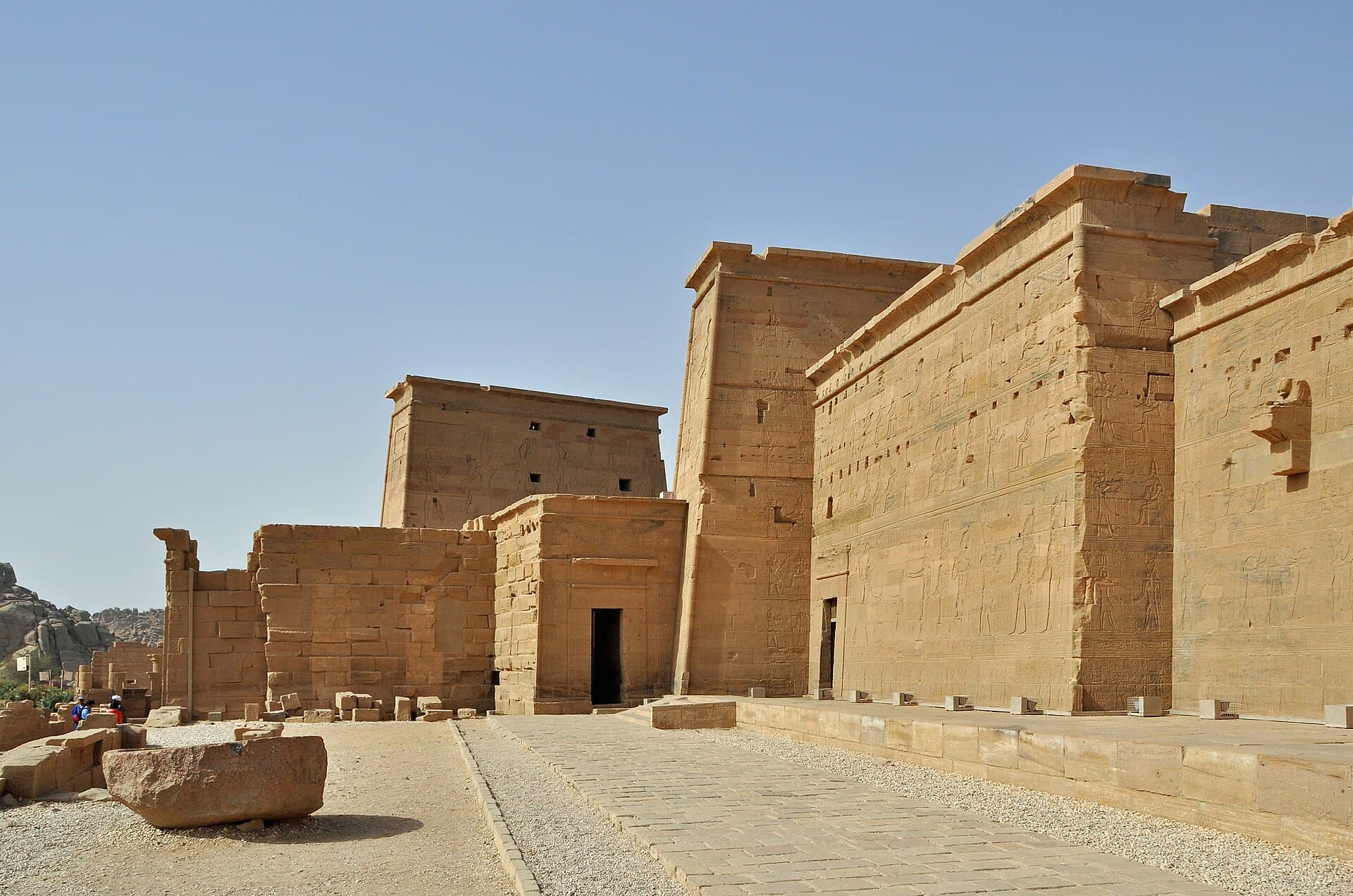
Karnak makes the same point inside a single site. Something in the order of thirty pharaohs added to it across roughly two thousand years, from a modest Middle Kingdom core through to Roman gates and repairs at the very end — a span longer than the gap between us and the Roman empire. Nothing in Greece was built on that timescale, which is why Karnak is not one building but dozens layered over each other, with the joins visible everywhere and almost nothing in its pure original state.
There is a practical consequence in that, and it is the main reason Egypt is usually guided and Greece usually is not. The Greek story is largely one you already know from school, and the sites are laid out for people who know it. The Egyptian dynasties run for three thousand years, walls were recut, royal names chiselled out and replaced, and blocks from demolished buildings reused inside later ones. Without someone who can tell you which century you are standing in, a great deal of it is hot stone in an impressive shape.
It also explains the difference in how the two countries reward a second visit. Greece rewards going back to a different island. Egypt rewards going back to the same temple with more in your head than you had the first time, which is not a sales line so much as an observation about how much is packed into each wall.
Which is easier, and how much hassle is there?
Greece can be self-planned in an evening. You hire a car at the airport, book ferries online, and nobody needs to meet you anywhere. English is spoken everywhere a visitor goes, cards work, and if a plan falls through you improvise. The real friction is ferries: timetables shift with the wind, connections between island groups are poor, and a three-island trip in ten days spends more of itself on boats than people expect.
Egypt is the opposite. Cairo traffic has no rules you can read, tourist vehicles are stopped at road checkpoints, and at Giza and on Luxor's west bank you are approached constantly — camel rides, scarves, photographs, small tips for a door being opened. None of it is dangerous and all of it is wearing. It drops away almost entirely with a driver and guide, which is why Egypt trips are usually quoted privately rather than bought off a website.
Getting around: ferries against internal flights
Start with the distances, because they decide almost everything else. Egypt is long and thin where it matters: Cairo to Luxor is roughly 650 km by road, Luxor to Aswan about 215 km, and the full run down to Aswan the better part of 900 km. Cairo to Abu Simbel is approximately the distance from London to Madrid. Greek distances are trivial by comparison — the longest thing you do is a boat, and most drives are an hour.
So the two countries move you in opposite ways. Greece is a hire car and a ferry schedule you can read yourself. Egypt flies its long legs: Cairo is the hub, with domestic services to Luxor, Aswan, Hurghada and Sharm el-Sheikh, and Luxor sits about an hour from Cairo in the air against around ten hours on the overnight sleeper. The legs not worth flying are the short ones — Luxor to Aswan, where check-in and transfers cost more time than the drive itself.
Two Egyptian details catch people out and have no Greek equivalent. Domestic baggage allowances are lower than the long-haul ticket you arrived on, which tends to be discovered at the check-in desk rather than at the booking stage. And security checkpoints sit on most intercity roads, where foreign passengers are routinely asked for passport details: usually two minutes, occasionally far longer, sometimes a route closed and traffic redirected. Any road time in Egypt should be padded rather than promised, and the variance grows with distance.
The sleeper train between Cairo and Luxor or Aswan is the one romantic option, and it deserves an honest line. It saves a hotel night and a travel day, the cabins have a basin and a door that locks, and a meal is brought to you. Against that: narrow berths, a noisy ride, dated fittings and arrivals that often run late. Worth doing once as a couple who are curious about it. Not worth doing with small children, a bad back, or an early start booked at Karnak the next morning.
The structural point is that a moving day in Egypt costs you a real day, and a moving day in Greece usually costs you a morning. Most of the transport regret people report about Egypt is not about money. It is about a morning lost to a road that looked short on a map.
Which costs more?
Day to day, Egypt is cheaper. Meals, taxis and drivers all cost less than the equivalent in Greece in season, though foreigner entry fees at the major Egyptian sites have risen steeply and are no longer the bargain they once were. And the way most people sensibly travel Egypt — a private guide and car, two or three domestic flights, a boat between Luxor and Aswan — stacks up. A well-run Egypt trip often lands at a similar daily figure to a self-driven Greek island holiday, with the money buying different things.
Season moves the Greek number far more. The same room on a popular island can cost several times more in August than in early June, and flights follow. Egypt's swing is gentler, with Christmas, New Year and February the busiest in Luxor and Aswan. One line people forget: tipping in Egypt is constant and expected, from drivers to tomb guardians. Treat it as a real part of the budget rather than loose change.
The other structural difference is party size. In Greece, four people cost roughly twice what two people cost, because you are buying rooms and ferry seats. In Egypt a private car, driver and guide costs much the same whether two or four people use it, so the per-person figure falls sharply with each extra traveller. At six or more, a private Egypt trip often lands below the equivalent small-group departure. Solo travellers get the reverse of that: hotel and cabin rates assume two sharing, and the single supplement on a boat can amount to the whole second berth.
Money on the ground: cash, cards and tipping
Greece is the euro, cards everywhere, and nothing to think about. Egypt takes a paragraph. The Egyptian pound is closed in practice — banks outside the country rarely stock it, and where one does the spread is punishing — so you bring hard currency and change it after you land. Bank counters sit in the arrivals halls before immigration at the main airports, which is also where anyone buying a visa on arrival goes, so most visitors pass them whether they meant to or not. Change a modest amount there for the transfer and the first tips, and the rest in town, where the rate is better.
Cards work in Cairo far more than they did five years ago: hotels, supermarkets, pharmacies, chain cafes and most mid-range and upper restaurants will take Visa or Mastercard, and a growing number of major sites sell tickets by card at the window. American Express is patchy. Outside the capital — Luxor, Aswan, the oases, the Red Sea towns once you step off hotel grounds — assume cash first and treat a working terminal as luck, because terminals drop offline for hours when the connection goes. Never run your cash to zero.
Then tipping, which is the line Greece simply does not have. In Egypt it is constant and predictable rather than discretionary: the guide, the driver, the boat crew as a group, hotel staff, and small amounts at the sites. Set the money aside at the planning stage, ask your operator what is customary for the length of trip you are taking, and carry small notes from the first morning. Hunting for change otherwise becomes a daily chore.
One last difference worth knowing before you research prices. The Egyptian pound has lost a great deal of value against sterling and the euro in recent years, with high inflation alongside it, so any Egyptian figure you read in an article more than a year or two old is close to meaningless. That is why serious operators quote in dollars or euros and hold that figure, and why you should ask which currency a balance is due in. Greek prices from a couple of seasons ago are still roughly right, which tells you something about the difference in planning effort.
Where do you eat better?
Greece, comfortably. The taverna format — grilled fish, oil, tomatoes, cheese, a jug of local wine — is hard to get wrong, so you can walk into somewhere at random and eat well. Greek wine is decent and cheap. Egypt cannot match that consistency for a visitor, mainly because the food most visitors are served is hotel and cruise buffet, which is dull almost everywhere.
Egyptian food itself is better than its reputation, but you have to be taken to it: koshari, ful and taameya for breakfast, molokhia, slow-cooked lamb, bread straight off the oven floor. It is starchy, meat-heavy and light on vegetables by Mediterranean standards. Alcohol is available but limited, and Egyptian wine is expensive and not good. If eating is a main reason you travel, that settles it.
It is worth being specific about what Egypt does well, because the gap is narrower than the buffets suggest. Koshari — rice, macaroni, lentils and chickpeas under tomato sauce and fried onions, with garlic vinegar added at the table — is the national dish and costs a fraction of a hotel plate. Ful medames, fava beans cooked overnight and mashed with oil, lemon and cumin, is the working breakfast of the whole country. Hawawshi, spiced mince baked inside bread until the crust crisps, is the street food to seek out. Alexandria is where you pick fish by weight off the ice; Aswan is where you eat Nubian cooking and fish from Lake Nasser.
The drinks tell the same story in reverse. Greece gives you wine; Egypt gives you tea, and rather good tea at that. Sweet black shai in a small glass, often with mint, is drunk before and after a meal rather than during it. Karkade, made from dried hibiscus, is served hot in winter and iced in summer. Egyptian coffee is ordered by sweetness rather than size — sada, mazbout, ziyada — and drunk slowly sitting down in an ahwa. Fresh juice stands press whatever is in season for very little. None of that replaces a jug of island wine on a terrace, but it is one of the cheapest pleasures either country offers.
Beaches and sea: which one wins?
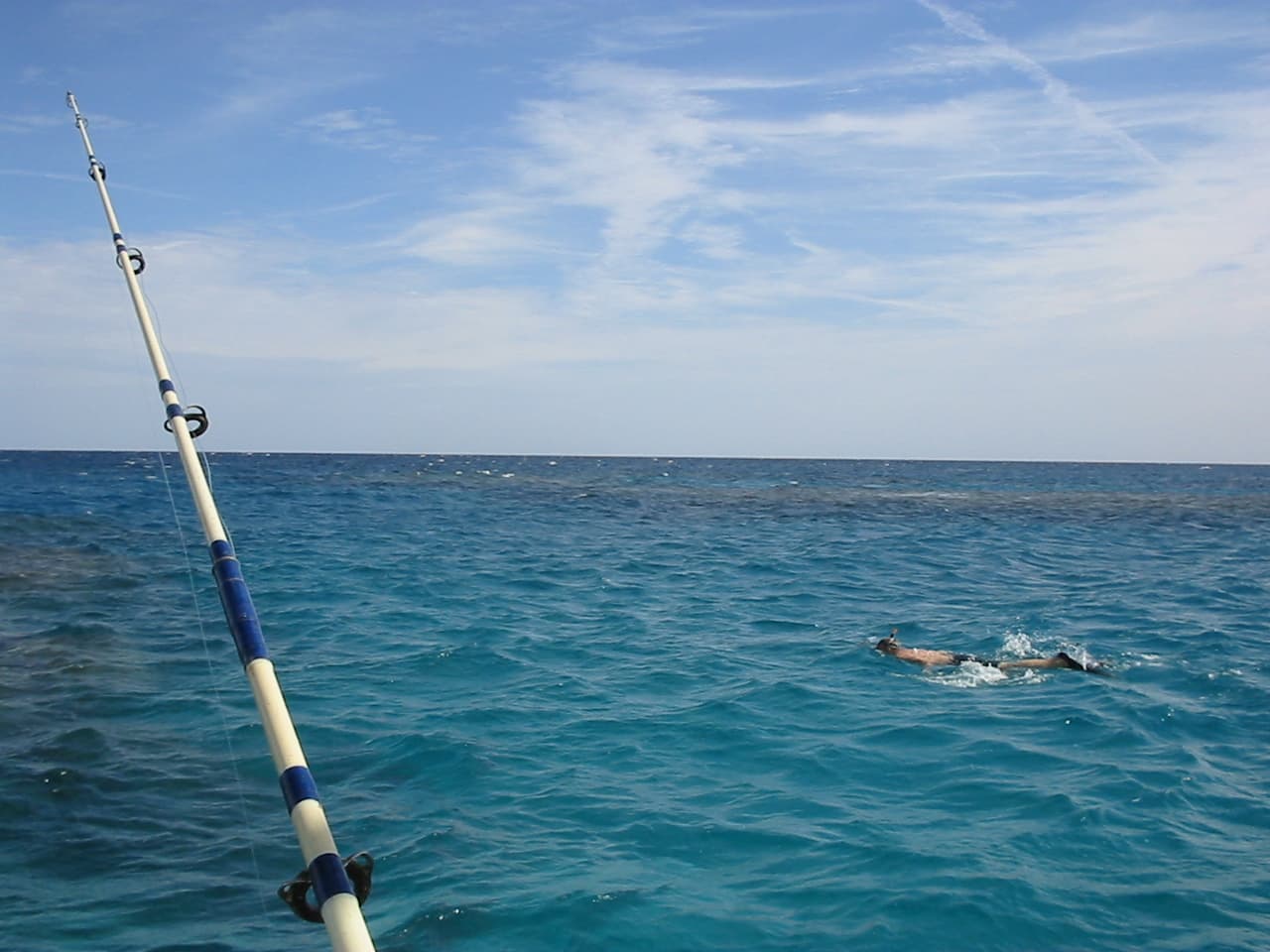
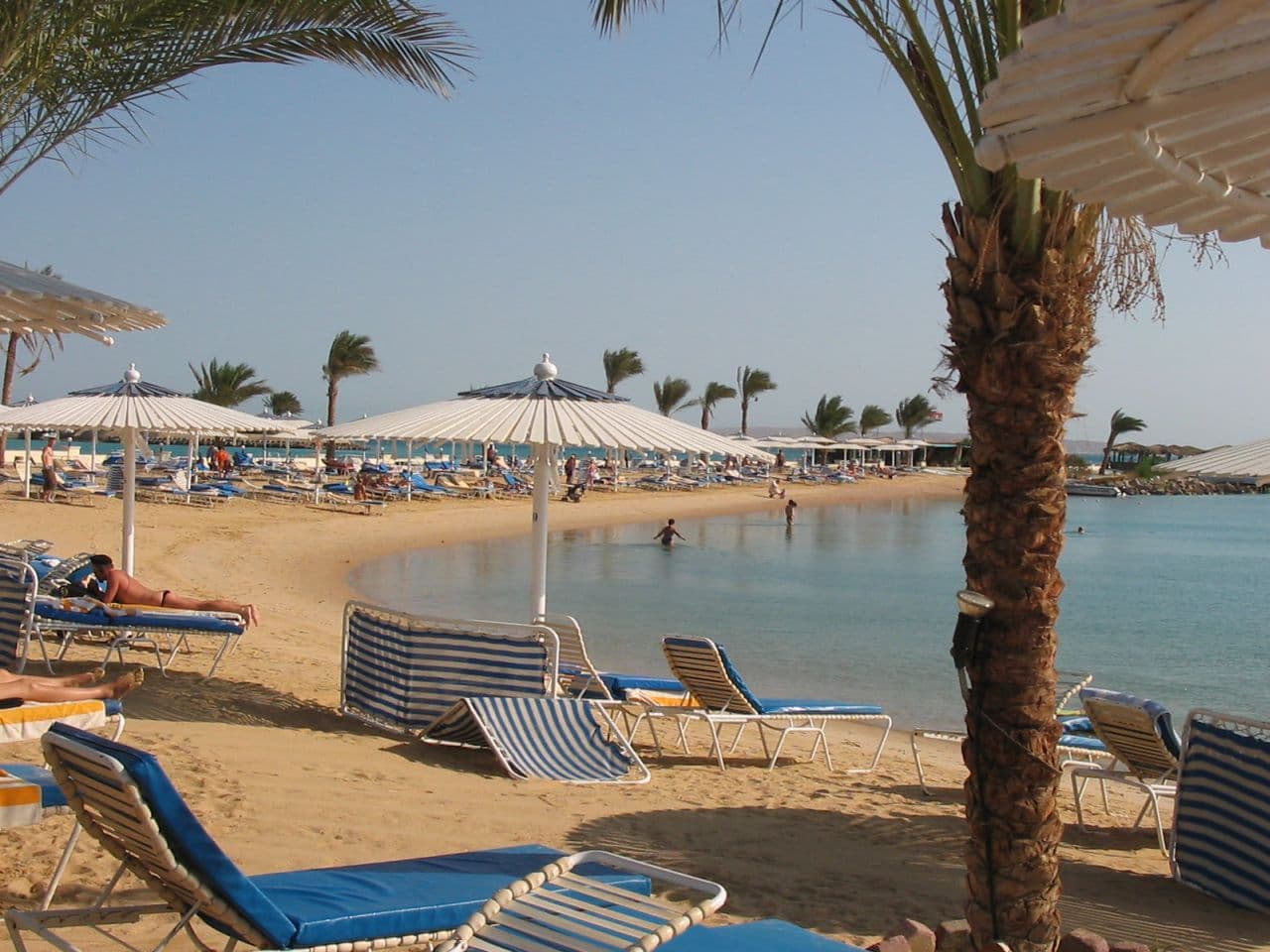
Split the question. Underwater, the Red Sea beats anything in Greece — reef within swimming distance of shore in places, high visibility, and water warm enough to swim in December. Greece has clear water and very little in it. Above water it reverses: Greek beaches come with a village, a headland and somewhere to eat, while the Red Sea coast is mostly purpose-built resort strip with desert behind.
Two warnings. Egypt's Mediterranean coast is not worth building a trip around for a foreign visitor: short season, ordinary sea by Greek standards, resorts built for domestic holidays. And if you want character rather than a pool and a reef, the Red Sea will disappoint you. Go for the diving, or for flat days after the sites, not for the place itself.
Diving: what the Red Sea actually offers
If you dive, this is not a close comparison and it may decide the whole question. The Red Sea holds warm water all year, visibility on the offshore Hurghada sites is routinely twenty to thirty metres, currents at many sheltered sites are mild, and the reef structure is steep enough that a nervous new diver and an experienced one can often use the same site. It is also cheap and convenient for European divers in a way the Indian Ocean and the Caribbean are not.
The names are worth knowing before you pick a coast. Ras Mohammed National Park, about 20 km south of Sharm el-Sheikh, sits where the Gulf of Aqaba meets the Gulf of Suez, and Shark and Yolanda Reef is the dive people come for. The Straits of Tiran hold four reefs in a channel with genuine current, and are not where a fresh open-water card should be spent. The Thistlegorm, a Second World War cargo ship at Sha'ab Ali, is a long day out from either side of the Strait of Gubal. Abu Nuhas, a reef in the shipping approach that has been catching ships for more than 150 years, carries four wrecks along its northern side, most within recreational depth. Further south, Marsa Alam and the coast towards Hamata have the reefs in the best condition and the longest transfers.
Dahab is the cheap, informal end: an easy-going town on the Gulf of Aqaba where you reach most sites by pickup truck rather than boat. One caution belongs here rather than in the small print. The Blue Hole's deep arch, at around 55 metres, has killed people repeatedly, usually attempting it beyond their training or their gas. The recreational version of the site is tame and worth doing. The arch is a technical dive and not on the menu.
Two honest caveats against all that. Coral in front of the big resorts has taken a beating, and house reefs used by hundreds of people a day show it — go further out or further south and the picture improves quickly. And the sea temperature curve runs against the sightseeing calendar: around 22C at Hurghada in January and February, 25C by April, a peak near 31C in August, back through 28C in October. The water is coldest precisely when the temples are at their best. April, October and November are the months where the two curves cross in your favour, which is also, not coincidentally, when a combined Egypt and Greece trip works.
Which works better with children?
Greece, for almost any age. Drives are short, the sea breaks up every day, children are welcome in restaurants at any hour, and self-catering means you are not negotiating menus. A bad day in Greece still ends in the water. Nothing about it demands stamina from a five-year-old, and nothing about it demands much from the parents either.
Egypt with children works, but only if the trip is built for it. Heat, early starts, long transfers and one temple after another wear children out fast. What fixes it: a boat between Luxor and Aswan, so your room travels with you instead of packing between hotels, with a pool to come back to in the afternoon; two sites a day rather than four; and Red Sea days at the end. Roughly seven upwards is when the stories start to land.
How tiring is each trip?
This is the difference people underestimate. Egypt runs on early mornings, because heat and coaches both arrive by mid-morning. A typical day starts around dawn, involves several hours of walking on stone in full sun, and puts you back in a car afterwards. Eight days of Cairo, Luxor and Aswan done properly is closer to a work trip than a holiday, and plenty of people come home needing a rest.
Greece makes no such demand: the plan can change at breakfast and nothing is lost. That is not a criticism of either country, it is the choice you are making. Egypt is worth being tired for, but it should be planned with the tiredness in mind — fewer sites, a slow middle, and something flat at the end rather than a flight home straight off the last temple.
Crowds, mornings and how you actually see the sites
The two countries fail differently when they are busy. A crowded Greek island is an inconvenience: a full ferry, a booked table, a beach with more umbrellas on it. A crowded Egyptian site changes what you see, because the tombs and halls are enclosed, unshaded and entered in single file. Being first at the Valley of the Kings or Karnak is most of the difference between a good morning and a hot, shuffling one.
That is the strongest practical argument for how an Egypt trip is arranged. A coach group rarely reaches the major sites before the crowds; a private car with your own start time usually does. If the budget is fixed and the alternative is not going, take the group departure without guilt. If the trip is a one-off and mornings matter to you, this is the line item worth paying for, and it is worth more than a hotel category.
Midwinter adds a second constraint that surprises people: daylight. December and January are the shortest days of the year, sites close in the late afternoon rather than at dusk, and the light on the west bank goes earlier than visitors expect. The fix is to front-load the day — be at the gate when a site opens, take the second site straight afterwards, and treat the late afternoon as museum, market or boat-deck time. It also means the balloon flight, the west bank and a long lunch do not all fit into one morning, whatever the programme says.
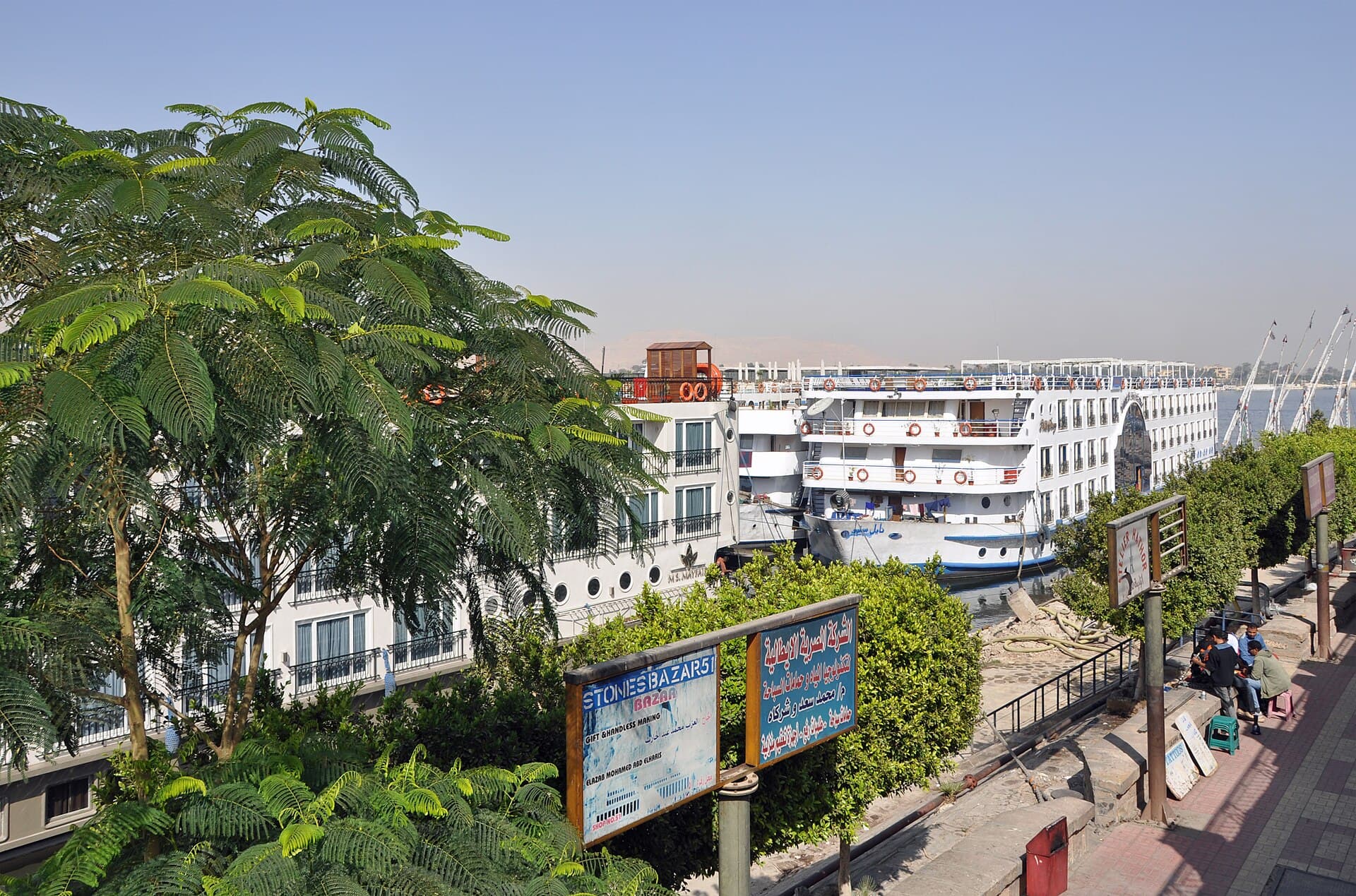
Congestion on the river is about boats as much as tombs. Most large vessels sail the same three or four nights on the same schedule between Luxor and Aswan, so you meet the same thirty boats at each mooring and the same crowd at each temple. At the smaller quays, boats tie up two, three or four abreast, and a river-view cabin can become a view into somebody else's lounge. Ask which deck and which side your cabin is on. Dahabiyas, the small sailing boats carrying a dozen or so passengers, moor on sandbanks and keep no fixed timetable — they cost more and cover less ground, which is the point of them.
Month by month: how the two calendars line up
The most useful table in this comparison is a thermometer. Typical daytime highs at Luxor run roughly 23C in January, 25C in February, 29C in March, 35C in April, 39C in May, then 41C through June, July and August, easing to 38C in September, 34C in October, 28C in November and 24C in December. Cairo sits several degrees below that all year; Aswan generally a little above. Greece runs the opposite shape, with the island season opening around April and winding down in late October.
Read the two calendars together and the answer falls out. December to February is Egypt at its best and Greece at its emptiest, with island ferries thinned and much of the smaller-island infrastructure shut. July and August are Greece at its peak and Luxor at 41C, where the useful part of the day ends by mid-morning and the middle of it is not usable for sightseeing at all. The crossings are late March into May, and late September into October. That is the only window in which a combined trip is not a compromise for one half of it.
Two spoilers to know about. From late March the khamsin blows in off the desert: a hot southerly wind carrying dust that greys out a day at the pyramids and cancels balloon flights at Luxor. It is not frequent enough to plan around, but it is the day you go to a museum instead. In Greece the season winds down in the middle of October rather than at the end, so ferry timetables thin and some island hotels close while you are still there. Early October is the safer half.
There are also two quiet arbitrage months. September is the most underrated in the Egyptian calendar because the temperature eases through it while rates sit at summer levels for two or three weeks afterwards — travel in the last ten days and you get close to October conditions at August prices. February gives the same pleasant weather as the Christmas fortnight without the surcharge, apart from a week or two of European half-term traffic in the middle of it. March is the best month of the year on weather and light, and it is priced accordingly.
The number nobody quotes is the overnight one. A daytime high tells you nothing about the spread: Luxor can be over 30C at two in the afternoon and want a jumper by nine in the evening, Aswan can drop to around 8C after dark in midwinter, and desert nights in the Western Desert or Sinai are colder still. Greece in its own shoulder months does something similar in reverse, with warm sea and cool evenings. Pack for both ends of the day in either country and you will be right more often than the forecast is.
Dress, culture and how you are read day to day
Greece asks nothing of you here beyond covering up to enter a monastery. Egypt has a social standard rather than a law, and it is worth understanding because it quietly changes how strangers treat you all day. The rule that covers most situations: shoulders and knees covered, in loose clothes, in light colours. Looseness matters as much as coverage — leggings with a short top cover the leg and still read as underwear to many people, while a long loose skirt and a plain T-shirt do not. Egyptians apply the same distinction to each other.
Egypt is not one country in this respect either. Zamalek, Maadi, New Cairo and the smarter restaurants pass bare shoulders and knee-length dresses without comment. Downtown, the streets around Khan el-Khalili and the metro at rush hour are a different city, and the same clothes get looked at. Upper Egypt is more conservative than Cairo, and that catches people out because Luxor and Aswan feel touristic: they are small towns where foreigners are visible, and foreign women who spend real time there settle on long trousers and covered shoulders. The Red Sea resorts work as enclaves, where swimwear at the pool is ordinary and the same outfit in Hurghada town centre is not.
None of this is dangerous, and nobody expects you to look Egyptian. It is a question of how much friction you want in a day, which is the theme running through the whole comparison. Read the room rather than the country, and when you genuinely cannot tell which room you are in, dress for the more conservative of the two. Loosening up later costs you nothing; arriving underdressed at the place that mattered cannot be undone.
Museums: how each country explains itself
Both countries now keep their best objects in a purpose-built modern museum, and in both cases it deserves a proper half-day rather than an hour squeezed between other stops. In Athens that is the Acropolis Museum below the rock, which does the work of explaining a site you otherwise walk in forty minutes. It is the single thing that turns the Acropolis from a photograph into a visit.
Egypt's equivalent has changed the arithmetic of a first trip more dramatically. The Grand Egyptian Museum stands on the desert edge at Giza, roughly two kilometres from the pyramids, and is billed as the largest museum in the world built around a single civilisation. It opened fully in November 2025 after more than two decades of construction, and it shows the complete Tutankhamun collection in one place, so the objects and the tomb they came out of can finally be understood in relation to each other. The permanent galleries run across twelve halls, from the predynastic era through to the Graeco-Roman centuries.
Three practical notes follow. Allow three hours as a minimum, and go before the pyramids rather than after, because the order genuinely changes what you make of the plateau. It is air-conditioned, which makes it the one major Egyptian site indifferent to the month you visit and the obvious answer to a khamsin day. And pair your Cairo days by which bank of the Nile you are on: Giza, the Sphinx and the museum sit on one side, the old Islamic city and Khan el-Khalili on the other, and criss-crossing the city costs you an afternoon in traffic.
The wider point is that Greece explains itself more easily than Egypt does. Greek sites are signposted for a story most visitors half-know already, and the museums are a supplement. In Egypt the museum is closer to a prerequisite, and the guide is the other half of it. Budget for both, or accept that a good deal of what you walk past will not mean very much.
The mistakes people make choosing between them
The same handful of errors turn up on both sides. On the Greek one: booking three islands in ten days, which spends the week in ferry queues and hotel changes; a single night on Santorini, which is not worth the boat or the flight it takes to get there; and assuming the shoulder season holds to the end of October when it thins from the middle of the month. Pick one island, stay put, and use day trips if you want to see another.
On the Egyptian side the mistakes cost more. The largest is treating the country as a set of day trips from one base — Luxor from Hurghada, Abu Simbel from Aswan and back in a morning, Alexandria from Cairo before dawn. Each is sold, each is possible, and each spends most of the day in a vehicle for a short time on the ground. Where a night is available instead, take the night. It usually costs little and changes the day entirely.
The second is the suspiciously cheap tour. A quote well below everything else you have seen is usually subsidised on the ground by papyrus, alabaster and perfume stops, which appear on the programme as cultural visits and are sales rooms with a short demonstration bolted on the front. Ask the operator directly whether shop visits are in the itinerary, and ask which company actually runs the trip in Egypt. A programme with no shop stops costs more up front and frequently less in total.
The third is buying the wrong extras. Going inside the Great Pyramid is a hot, crouched climb up a narrow passage to an empty granite room, worth it only if the confined space is itself the draw. The camel ride at Giza is a photograph with a price argument attached. The sound and light shows are dated. The optional extra that does earn its money is a dawn balloon over the Luxor west bank, and it is cancelled for wind often enough that you should leave a spare morning for it.
And the mistake that spans both countries: pairing peak-summer Greece with Upper Egypt in the same fortnight. July and August are made for the islands and punish you at Luxor, where the temples stand open to the sun. If your dates are fixed and they fall in high summer, do Greece properly and leave the temples for a year when you can go in the cool months.
Egypt vs Greece: which wins if you can only pick one?
The seasons barely overlap, which decides the question. Greece works from May to October; in winter, island ferries thin out and much of what you came for is shut. Egypt works from October to April; in summer, Luxor and Aswan go well past 40C with the sites open in the middle of it. The overlap is late April into May, and late September into October. That is the window for doing both.
Logistically it is easy. Athens to Cairo is under three hours, and both are well connected to northern Europe, so combining them is a routing question rather than an expedition. Do Egypt first, while you have energy, then Greece to recover; the reverse order tends to end badly. Ten days is not enough for both — two and a half to three weeks is the honest minimum.
If you do combine them, two details save you a wasted day. There is no scheduled passenger ferry between Greece and Egypt, whatever older guidebooks suggest, so flying is the only sensible link, and there are no reliable direct flights from Athens to the Red Sea airports — Hurghada or Sharm el-Sheikh means connecting through Cairo. Plan a night in Athens either side of the Cairo flight rather than trying to connect from an island on the same day.
The verdict, if you only get one: Greece if you want a holiday, Egypt if you want to see something. For most people in most years that means Greece, because it is the trip that goes to plan and sends you home rested. Choose Egypt in the year you have an appetite for the effort, because there is no European substitute for standing under the roof of Karnak's hypostyle hall, and the effort is simply what it costs.
Common questions
How many days does each country need?+
Egypt needs about ten days to cover Cairo, Luxor and Aswan without rushing, and fourteen if you add Red Sea time or Abu Simbel properly. Greece works at any length: five days on one island is a real holiday. Greece scales down, Egypt does not — a four-day Egypt trip means Cairo only, and Cairo alone is the weakest version of the country.
Can I travel Egypt independently, the way I would in Greece?+
You can, and some people enjoy it. Trains run to Luxor and Aswan, and taxis are cheap. But you will spend a large share of your day negotiating, and you will miss most of what the sites mean without someone explaining them. Independent travel in Greece saves money and adds freedom. In Egypt it mainly adds friction, and the saving is smaller than it looks.
Is Egypt riskier than Greece?+
In everyday terms, no — the common problems in Egypt are stomach upsets, heat and being overcharged, not crime. Greece has less of all of it. The real difference is official advice: parts of Egypt, including North Sinai and areas near the western and southern borders, carry government warnings, while the tourist route does not. Check your own foreign office before booking.
Which is better for a couple's trip or a honeymoon?+
Greece, if the point is rest and time together. Egypt, if you would rather have something to talk about for years. A useful compromise is a week of sites followed by a week on the Red Sea or a Greek island, which gives you both halves in the right order. Doing Egypt alone as a honeymoon works, but plan slow days into it deliberately.
How does solo travel compare, particularly for women?+
Greece is among the easiest places in Europe to travel alone, and attention is minimal. Egypt is safe in the ordinary sense but persistent: comments, staring and constant approaches wear on solo women, more in Cairo and Luxor than on the Red Sea. Most people who travel Egypt solo and enjoy it do so with a guide and driver, which removes nearly all of it.
How far ahead should I book each?+
Greece needs booking early only for August, when islands and ferries fill. Outside that, a few weeks is fine. Egypt needs longer: the good guides and the better boats are limited and go first for the October to April season, and Christmas and February fill months ahead. Allow extra time on top for the back-and-forth of getting a trip quoted.
Is a Nile cruise the Egyptian version of island hopping?+
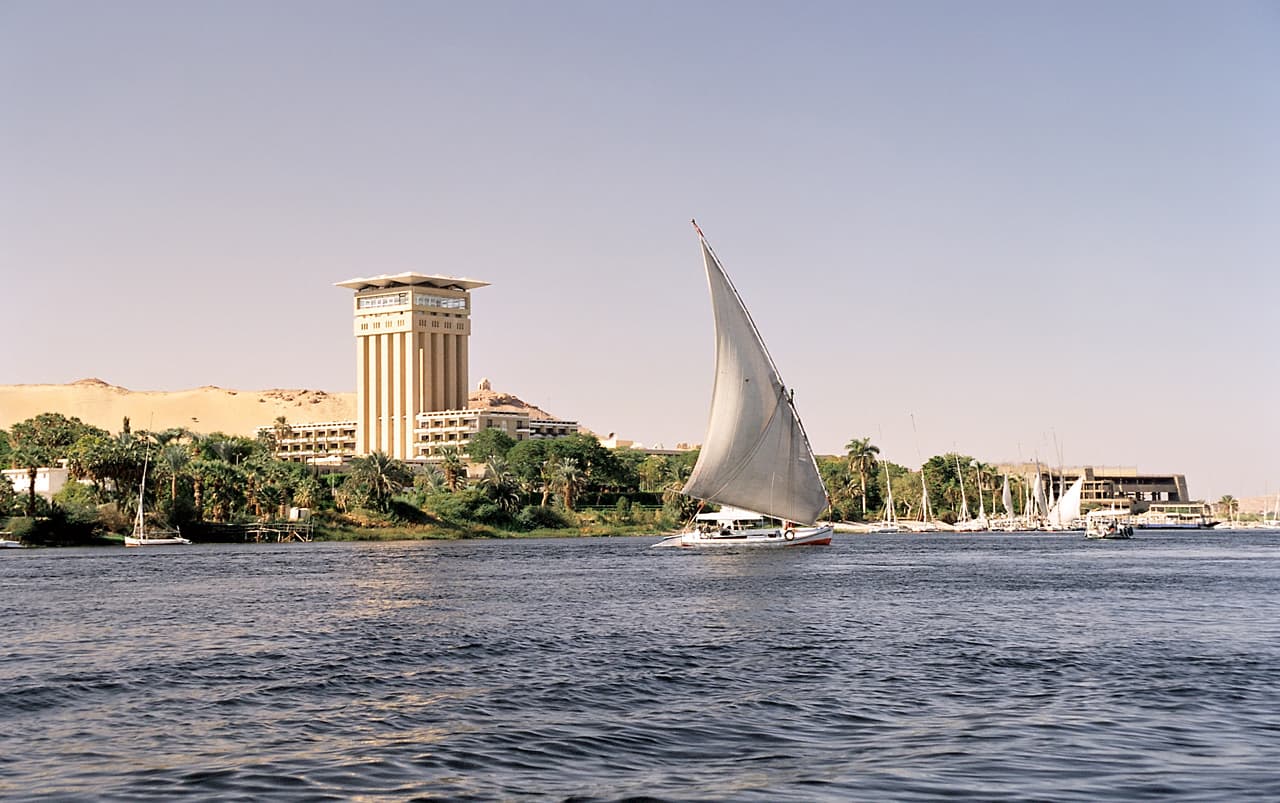
It is closer to the opposite, which is why it works. Island hopping means packing, a boat, a new hotel and a new town every few days. A Nile boat is one room that moves while you sleep, stopping at temples you could otherwise only reach by a long drive. Price it by usable days rather than nights, though: you board around midday and leave after breakfast, so four nights is nearer three usable days.
Do we need a visa for either country?+
Greece is in the Schengen area, so many visitors need only a passport, plus an ETIAS authorisation once that requirement applies. Egypt is separate: most British, Irish, EU, US, Canadian and Australian visitors need a tourist visa, bought online in advance or on arrival at the airport. Rules differ by nationality, so check your own. If you are buying on arrival, bring hard currency for the counter — card terminals there fail often enough to matter.
Will I get ill in Egypt, and is the food safe?+
Stomach upsets are the commonest complaint and they are avoidable rather than inevitable. Eat where there is turnover: a busy koshari shop or a charcoal grill with meat going straight from the fire to the plate is a better bet than a lukewarm hotel buffet. Stick to bottled water, take the unfamiliar dishes in small portions first, and remember that the dull buffet food most visitors eat is the least interesting and not obviously the safest part of the trip.
We have two weeks and cannot decide. What would you actually book?+
If the fortnight falls between May and September, book Greece and stop agonising — Upper Egypt in those months is a test of character rather than a holiday. If it falls between November and March, book Egypt, because Greece will be shut where you want it open. If it falls in late April, May, late September or October, you can have both: roughly eight days in Egypt first, then five to seven in Greece, one island rather than three.
Official sources
Entry rules, opening hours, security advice and exchange rates all move. Check them at the source, not here.
Written and checked by the Nile Trip Guide editorial team · Last reviewed . Entry rules, prices and opening hours change — check anything critical against the official sources linked on this page.
The route most people take first, at the length it was built for: Giza and the Grand Egyptian Museum, then a flight to Luxor and four nights sailing down to Aswan.
No boat on this one. Giza and the Grand Egyptian Museum, a night in Luxor for both banks, two nights on the Red Sea, then back to Cairo for the Citadel, Coptic Cairo and the Royal Mummies.
Five nights in Cairo either side of a four-night sail from Luxor to Aswan. The Cairo days are private, just your party and a guide; the sightseeing off the boat is shared with a small group.