Luxor vs Cairo has a short answer. Cairo is the city you cannot skip. Luxor is where your spare days should go. Cairo has the pyramids and the Grand Egyptian Museum, and Luxor has the densest cluster of temples and tombs in Egypt. The two are about an hour apart by air. On any trip of five days or more, see both, and give Cairo the extra night.
Luxor
Cairo
Luxor
Cairo
Known for
Karnak, Luxor Temple, the Valley of the Kings, Hatshepsut's temple
The Giza pyramids, the Sphinx, the Grand Egyptian Museum, Islamic Cairo
Days needed
Two full days at minimum, three is comfortable
Two full days at minimum, three is better
Size and pace
A small city on the Nile, split into east and west banks
A city of around twenty million, where traffic sets the day
Hassle
Persistent at the temple gates, the ferry landing and the corniche
Heaviest at Giza and in the bazaar, lighter elsewhere
Summer heat
The Valley of the Kings passes 45C
July and August regularly pass 38C, with heavy smog
Getting there
About an hour by air from Cairo, or around ten hours by sleeper train
The main international gateway, so most trips start here
Day trips
Dendera and Abydos; Hurghada is about four hours by road
Saqqara and Dahshur; Alexandria by fast train
Cash or card
Cash for tips, carriages and the ferry
Hotels and larger restaurants take cards; carry cash for tips, taxis and the bazaar
Nights on our tours
None to two hotel nights, plus cruise nights moored there on cruise trips
Three to seven hotel nights
The short answer
Cairo if you can only see one, because the pyramids and the Grand Egyptian Museum are there and you will land there anyway. Luxor for every spare day after that, because no other place in Egypt gives you as much to see per day. With five days or more, do both.
Cairo or Luxor: what each city is for
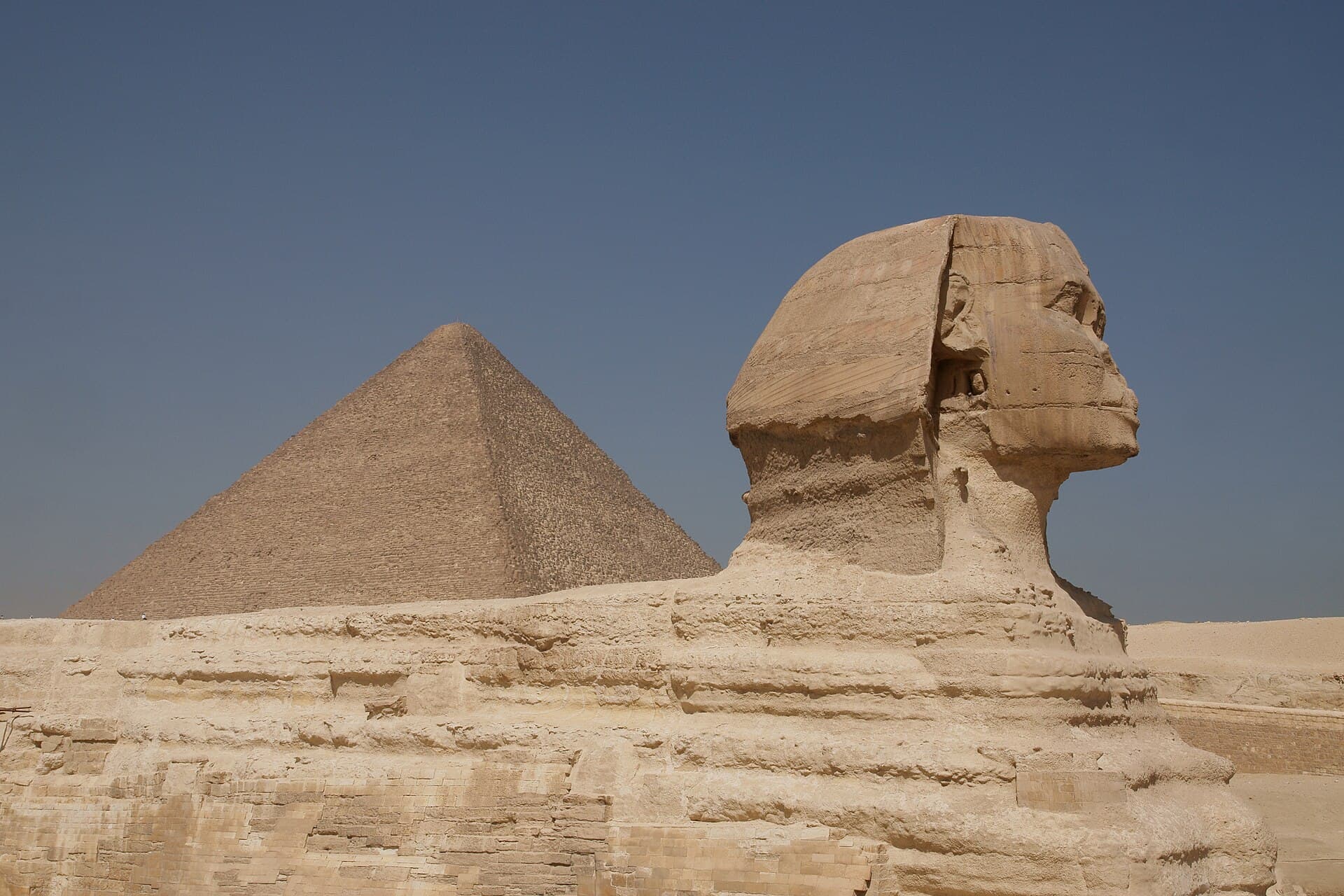
Cairo is the capital and the main way into Egypt. Almost every trip starts at Cairo International, so you will pass through it whatever you decide. Its headline sights are the Giza pyramids and the Sphinx, and the Grand Egyptian Museum, which holds the Tutankhamun collection in full. Saqqara and Dahshur lie to the south. Islamic Cairo, Coptic Cairo and Khan el-Khalili fill the rest of a visit.
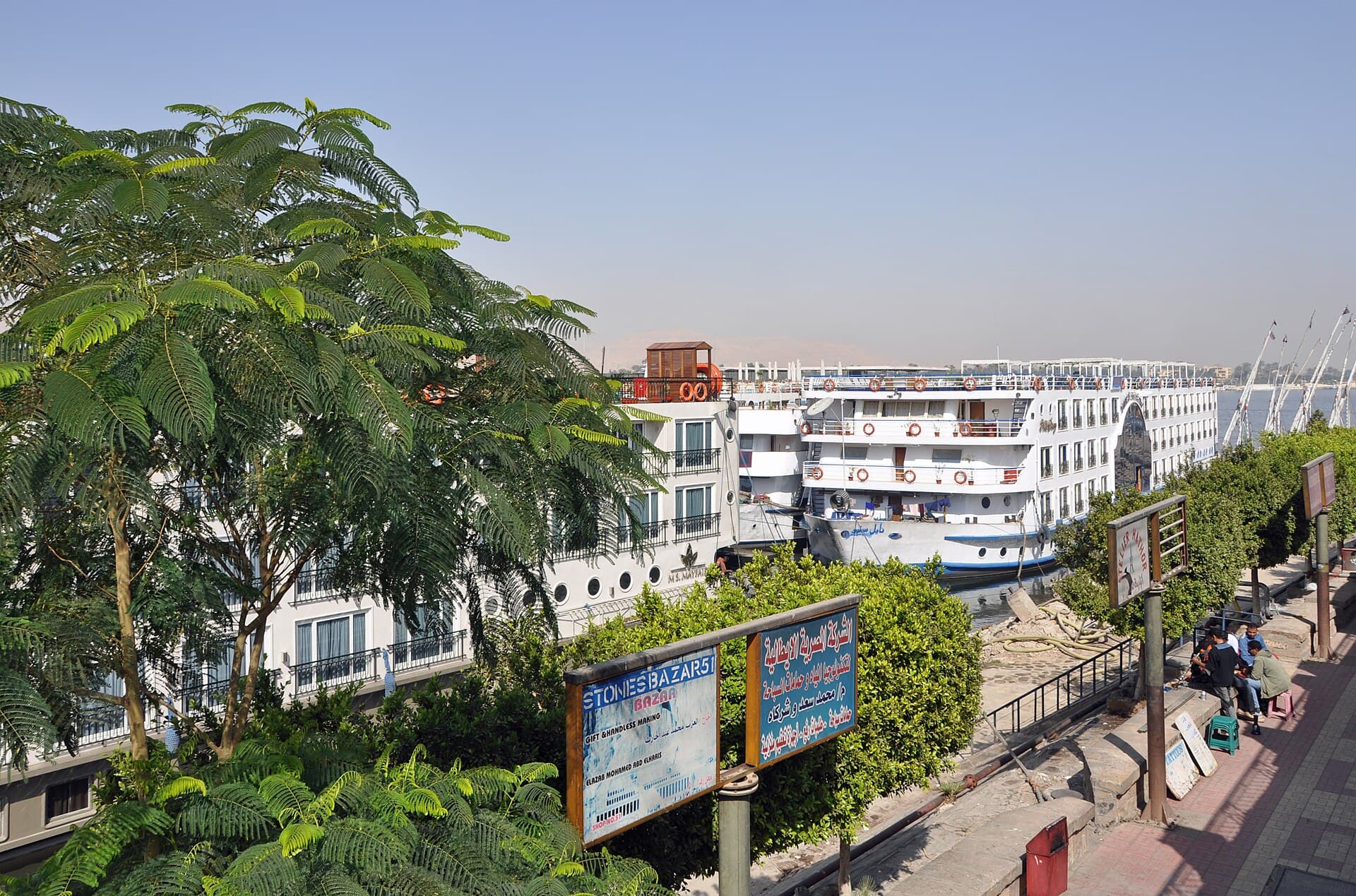
Luxor is ancient Thebes, a much smaller city on the Nile. The east bank holds Karnak and Luxor Temple. The west bank holds the royal tombs and temples. These include the Valley of the Kings, the Valley of the Queens, Hatshepsut's temple and Medinet Habu. All of it sits within a short drive. That density is why Luxor gives you more per day than anywhere else in the country.
The two cities show different ages of ancient Egypt. Cairo has the pyramid builders. Luxor has the later pharaohs, who were buried in painted tombs cut into the rock. A first trip that sees only one of them sees half the story.
What Cairo gives you that Luxor cannot
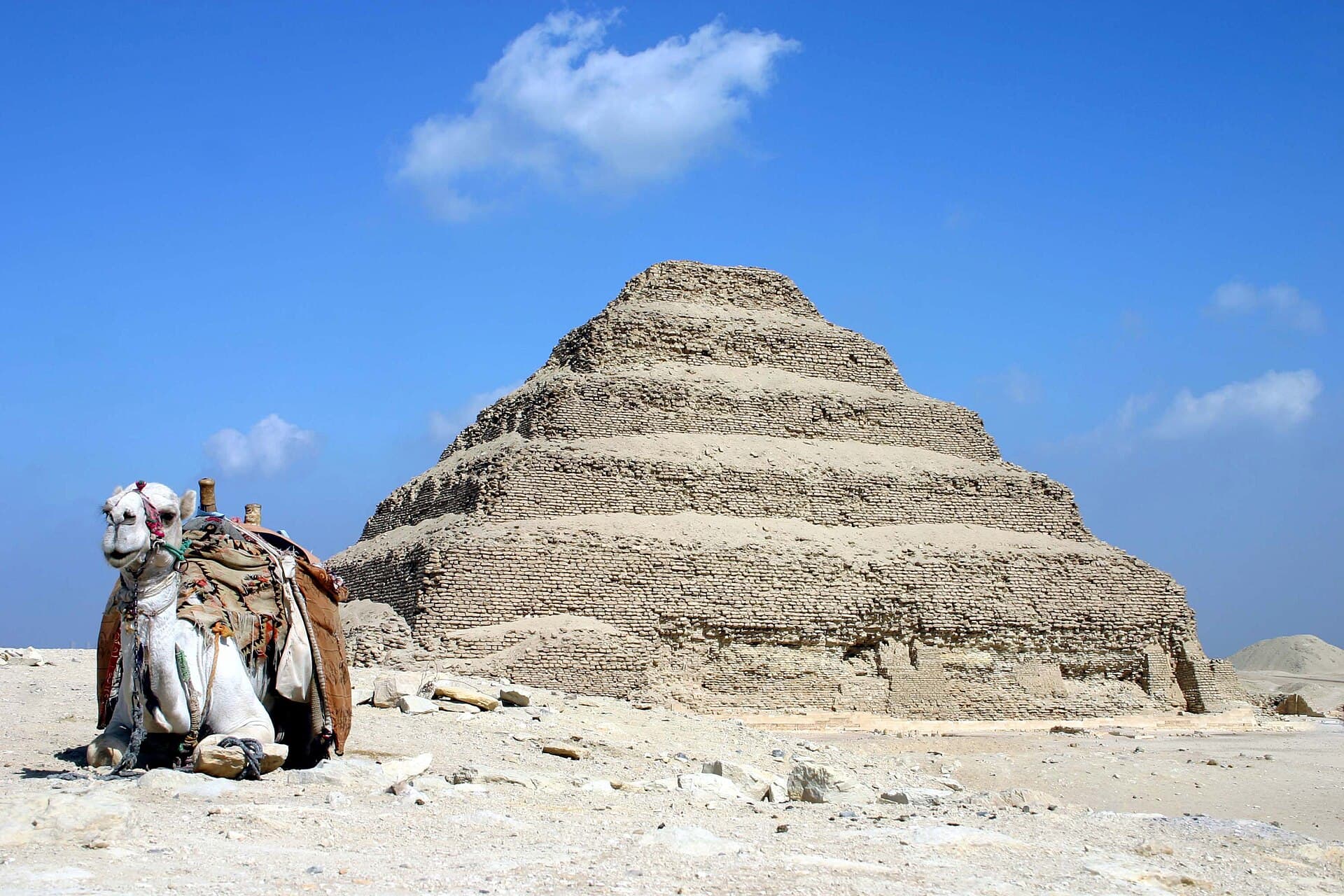
The pyramids are the obvious one. Half a day covers the Giza plateau properly, including the viewpoint on the southern rim where all three line up. Saqqara is about 40 minutes further south. Its Step Pyramid is older than Giza. The nobles' tombs around it hold painted reliefs in better condition than anything on the plateau.
The Grand Egyptian Museum needs three hours at least, and a full day if you read the labels. Paired with Giza, as on our tours, it fills a long day: the pyramids in the morning, the museum in the afternoon. The old museum on Tahrir Square is still open and still worth two hours. Islamic Cairo rewards a late afternoon on foot, along al-Muizz street and past mosques that are centuries old.
Cairo also works as a city. Zamalek has good restaurants. The cost is time. Giza to downtown is about 20 kilometres. Early in the morning that takes half an hour. At the wrong hour it takes most of two hours. Plan two sights a day, in the same part of the city.
What Luxor gives you that Cairo cannot
The Grand Egyptian Museum shows you what came out of Tutankhamun's tomb. Luxor shows you the tomb, and the valley it was cut into. The standard Valley of the Kings ticket admits you to three tombs from those open that day. Tutankhamun, Seti I and Ramesses VI are sold separately. Seti I is the finest in the valley.
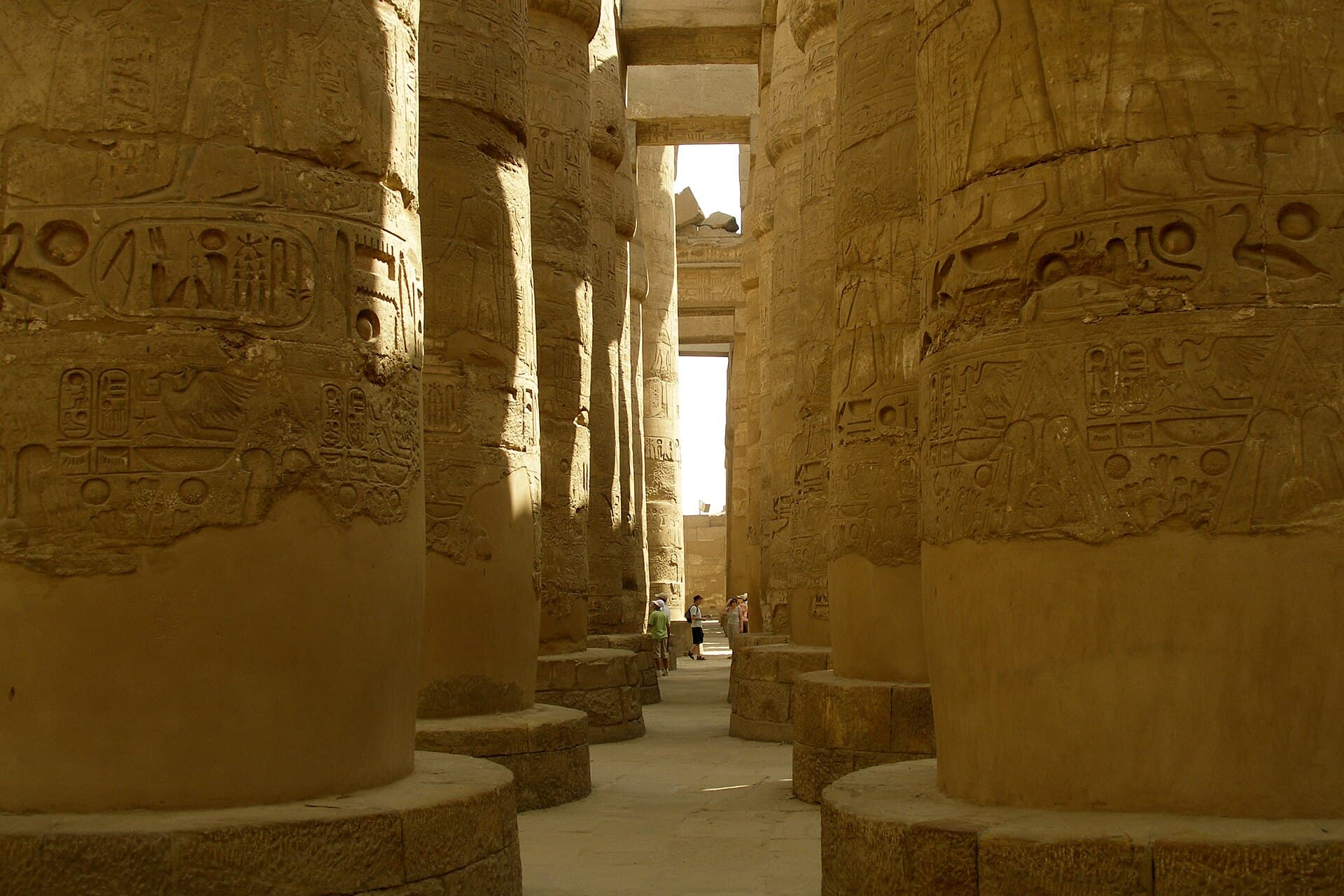
Karnak is a walled precinct that around thirty pharaohs added to over two thousand years. The Hypostyle Hall alone has 134 columns. Two hours is the realistic minimum and three is better. Luxor Temple, in the middle of town, is best after dark, when it is floodlit and the crowds thin. An hour covers it.
Luxor has two more things Cairo lacks. A sunrise balloon flight over the west bank shows the hard line where the green fields stop and the desert begins. And Dendera and Abydos, two temples most itineraries never reach, are a day trip north by road.
Which city is easier to stay in
As a place to stay, yes, for most people. Luxor is small and sits on the river. Nearly every hotel is on the east bank, near the two great temples. Cairo is a city of around twenty million people, and its traffic decides every day you spend there.
The catch in Luxor is the selling. Touts at the temple gates, carriage drivers and felucca captains are persistent, and it wears people down by about day three. Cairo's hassle is concentrated at Giza, where the camel and horse touts are relentless, and in the lanes of the bazaar. Away from those, you are one more person in a huge city.
So Luxor is the easier place to be, and Cairo is the easier place to be left alone. If noise and traffic bother you more than sellers do, you will prefer Luxor.
When Luxor is worth the flight, and when it is not
Luxor is worth it for anyone with an interest in ancient Egypt. Karnak and the west bank tombs have no equal in Cairo. One night covers the headline sites at a hard pace, as on our five-day Cairo and Luxor Short Break. It flies you south and goes straight to the west bank. The east bank follows the next morning, then the flight back to Cairo. It is a hard day and a half, and it works. Two nights is the minimum to see Luxor properly.
It is a poor fit in two cases. With three or four days in total, stay in Cairo: the flights and transfers eat too much of a short trip. Our Cairo Short Break follows the same advice over five days, all of them in Cairo. And in high summer, Luxor is hard going. The west bank has no shade, and the tombs have no airflow. A summer visit only works with starts before dawn and a long break in the middle of the day.
How many days to give each city
Cairo needs two full days at minimum: one for Giza and the Grand Egyptian Museum, one for Islamic and Coptic Cairo. Three days adds Saqqara and Dahshur without cutting anything, and that is the version most people should take. A fourth day buys the Tahrir museum or a day trip to Alexandria. One day in Cairo means Giza and nothing else.
Luxor needs two full days at minimum: one for the west bank, one for the east bank, each started early. Three is comfortable. It adds the Valley of the Queens or Deir el-Medina, and the small, well-arranged Luxor Museum. A fourth day takes in Dendera and Abydos. One day works only if you are ruthless: three tombs and Hatshepsut from opening time, Karnak late in the afternoon, nothing else. Whatever the length, do the west bank first and early, because the tombs hold the heat by mid-morning.
With seven or eight days, add either a Nile cruise to Aswan or two nights on the Red Sea at Hurghada. With ten days or more, take two nights in a Luxor hotel before a cruise, as on our twelve- and fourteen-day trips. That is the version that does Luxor justice.
Cairo vs Luxor on our tours: how the nights split
Every trip we sell that covers both cities gives Cairo more hotel nights than Luxor. Cairo is where you arrive and leave, and its sights are spread across a slow city. These are the trips built around the two:
Cairo and Luxor Short Break, five days: three nights in Cairo and one in Luxor, with both domestic flights included. Giza and the Grand Egyptian Museum, then both banks of Luxor in a day and a half.
Cairo, Luxor and the Red Sea, eight days: four nights in Cairo, one in Luxor and two at Hurghada. You fly to Luxor, see both banks, then drive about four hours to the coast. The last full day is back in Cairo for the Royal Mummies, the Citadel and Coptic Cairo.
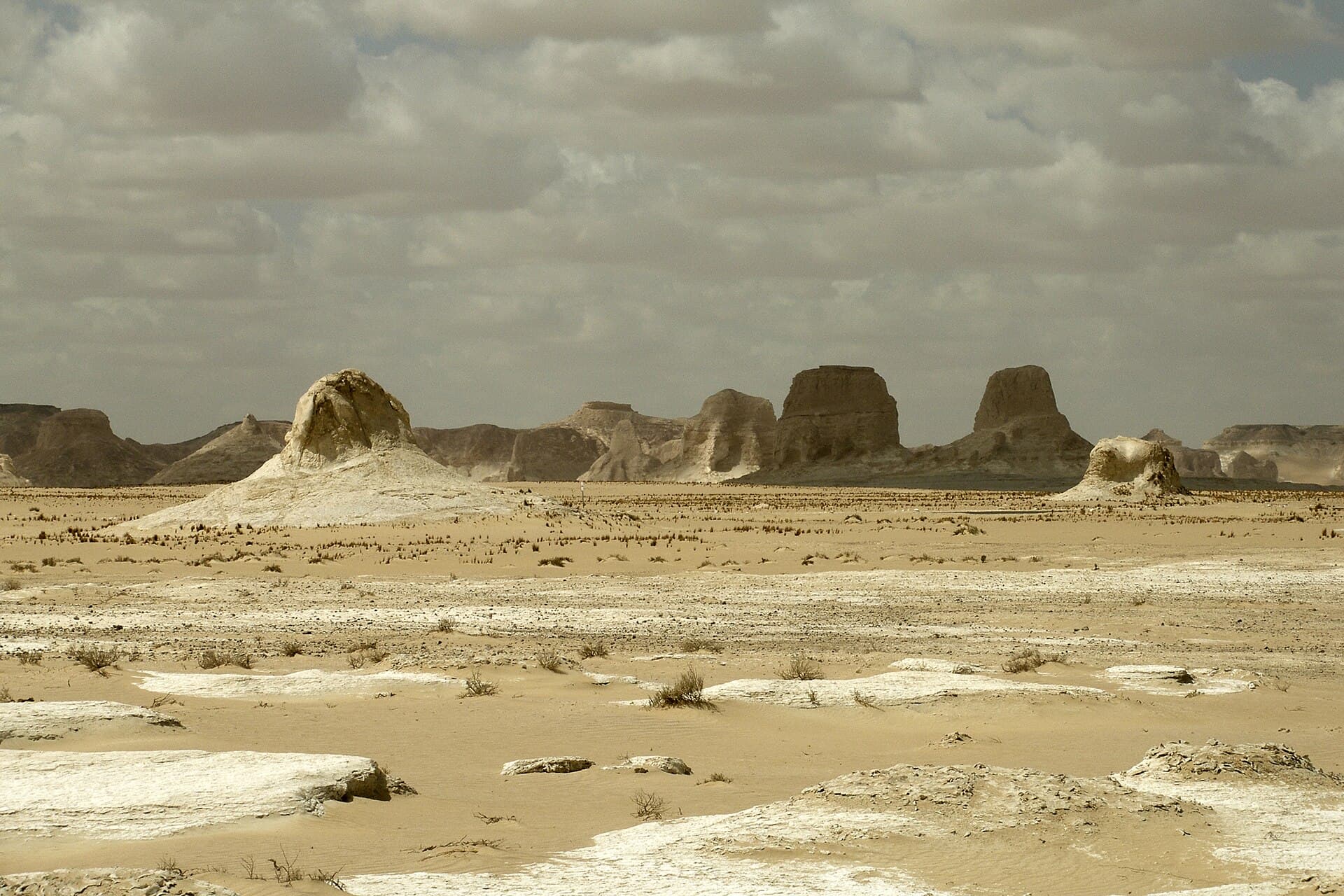
Cairo, Luxor and a Nile Cruise, twelve days: five nights in Cairo, two in a Luxor hotel and four on the boat. The two hotel nights cover the Valley of the Queens, Medinet Habu, the Ramesseum, Dendera and Abydos. The cruise then boards at Luxor for Karnak and the Valley of the Kings before sailing to Aswan. The fourteen-day trip follows the same Luxor plan and adds a night in the White Desert.
The longer trips show the best way to treat Luxor. Two nights on land before the boat cover the sites a cruise schedule leaves out.
Getting from Cairo to Luxor
The flight takes about an hour. Cairo is the hub for domestic flights, and Luxor is one of its main routes. Domestic flights are often retimed, sometimes the day before, so leave a buffer before any international connection.
The overnight sleeper train takes around ten hours. It leaves in the evening and arrives in the morning, which saves a hotel night and a travel day. The berths are narrow, the ride is noisy, and departures and arrivals tend to run late. Cabins sell out in high season. It is worth trying once if you are curious and sleep well. Families with small children, or anyone short on rest, should fly.
Our Cairo and Luxor tours include the domestic flights, so the choice is made for you there. For more on trains, flights and road transfers, see our guide to getting around Egypt.
What is overrated in each city
In Cairo, going inside the Great Pyramid divides people. It costs an extra ticket and means a long stooped climb to a bare granite chamber with no decoration and no airflow. The evening sound and light show at Giza is dated and easy to drop. Memphis takes half an hour and rarely repays more.
In Luxor, the Colossi of Memnon take five minutes. They are two statues in a field, worth a stop on the road in. Tutankhamun's tomb is small, with only the burial chamber painted, and its treasures are in Cairo. Hatshepsut's temple is striking from outside and thinner inside, though the Punt expedition reliefs repay a slow look.
Common questions
Is Luxor nicer than Cairo?+
As a place to stay, yes, for most visitors. Luxor is small, sits on the Nile and has its great temples close to the hotels. Cairo is a city of around twenty million with heavy traffic. Luxor's sellers are more persistent, though, and that wears some people down within a few days.
Is Luxor really worth it?+
Yes, if ancient Egypt is why you are going. The Valley of the Kings, Karnak and the west bank temples have no equal in Cairo. One night covers the headline sites at a hard pace, as on our five-day Cairo and Luxor Short Break. Two nights is the minimum to see Luxor properly. Skip it on a trip of three or four days, where the flights eat too much time.
Cairo or Luxor: which needs more time?+
Both need two full days at minimum and three to be comfortable. Our tours give Cairo more nights, because you arrive and leave there and its sights are slower to reach. Luxor gives you more to see per day once you are there.
Should I fly or take the sleeper train from Cairo to Luxor?+
Fly if your days are short. The flight takes about an hour. The overnight sleeper takes around ten hours and saves a hotel night. Its berths are narrow, the ride is noisy and it often runs late. Our Cairo and Luxor tours include the domestic flights.
Can I see Luxor without a Nile cruise?+
Yes. Our five-day Cairo and Luxor Short Break stays in a Luxor hotel, and so does our eight-day Cairo, Luxor and the Red Sea trip. Each covers both banks in a day and a half. A hotel also gives you the early mornings and the evening at Luxor Temple, which a cruise schedule often cuts short.
Cairo vs Luxor in summer: which is easier?+
Cairo. July and August there regularly pass 38C. In the Valley of the Kings, summer temperatures pass 45C, and the west bank has no shade. A summer Luxor day has to start before dawn and stop by late morning.
Is Cairo or Luxor safer?+
Check the US State Department and UK FCDO travel advice pages for Egypt for current advice. Read them when you book and again before you travel. In practice, traffic is the main hazard in Cairo, and the heat is the main hazard in Luxor.
Official sources
Entry rules, opening hours, security advice and exchange rates all move. Check them at the source, not here.
Written and checked by the Nile Trip Guide editorial team · Last reviewed . Entry rules, prices and opening hours change — check anything critical against the official sources linked on this page.
Plan this trip
Tell us your dates and we will price it
A real itinerary with real prices, usually within 24 hours. Nothing is booked and nothing is charged until you say yes.
The route most people take first, at the length it was built for: Giza and the Grand Egyptian Museum, then a flight to Luxor and four nights sailing down to Aswan.
No boat on this one. Giza and the Grand Egyptian Museum, a night in Luxor for both banks, two nights on the Red Sea, then back to Cairo for the Citadel, Coptic Cairo and the Royal Mummies.
Five nights in Cairo either side of a four-night sail from Luxor to Aswan. The Cairo days are private, just your party and a guide; the sightseeing off the boat is shared with a small group.