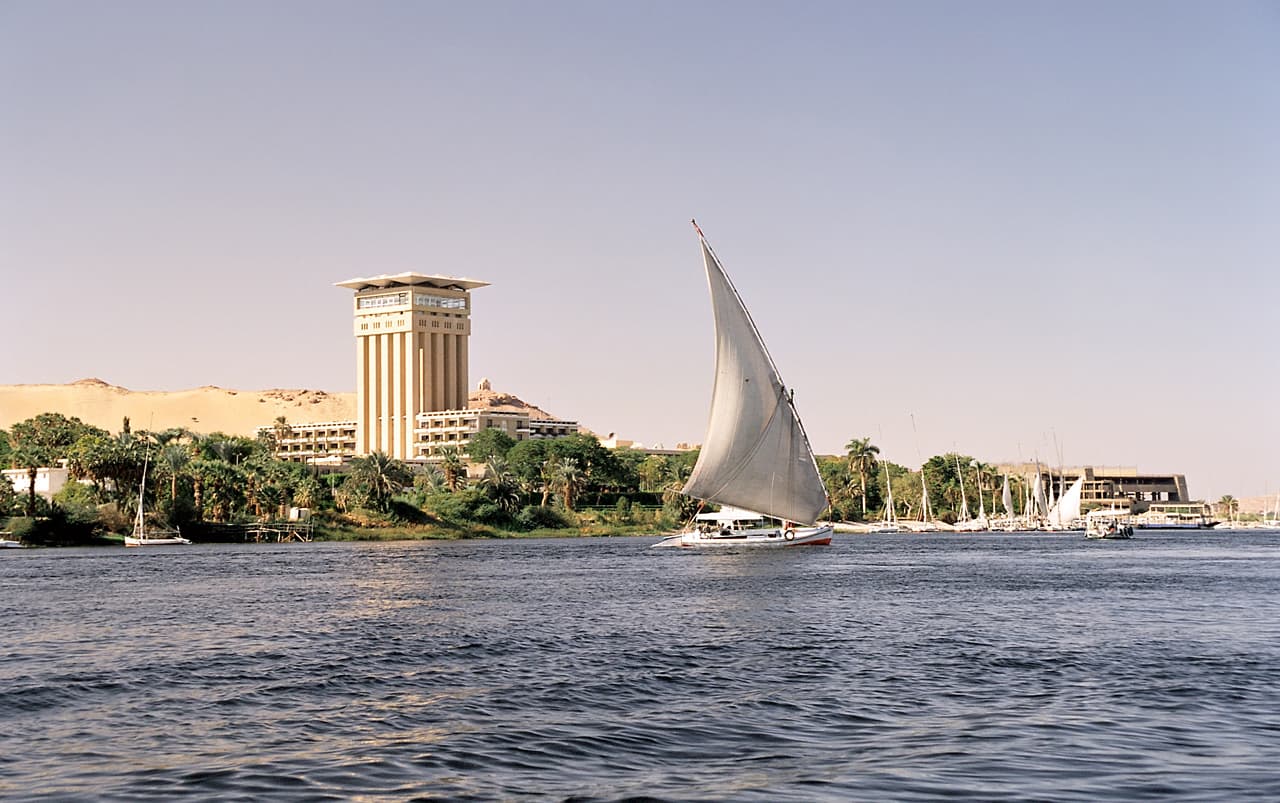
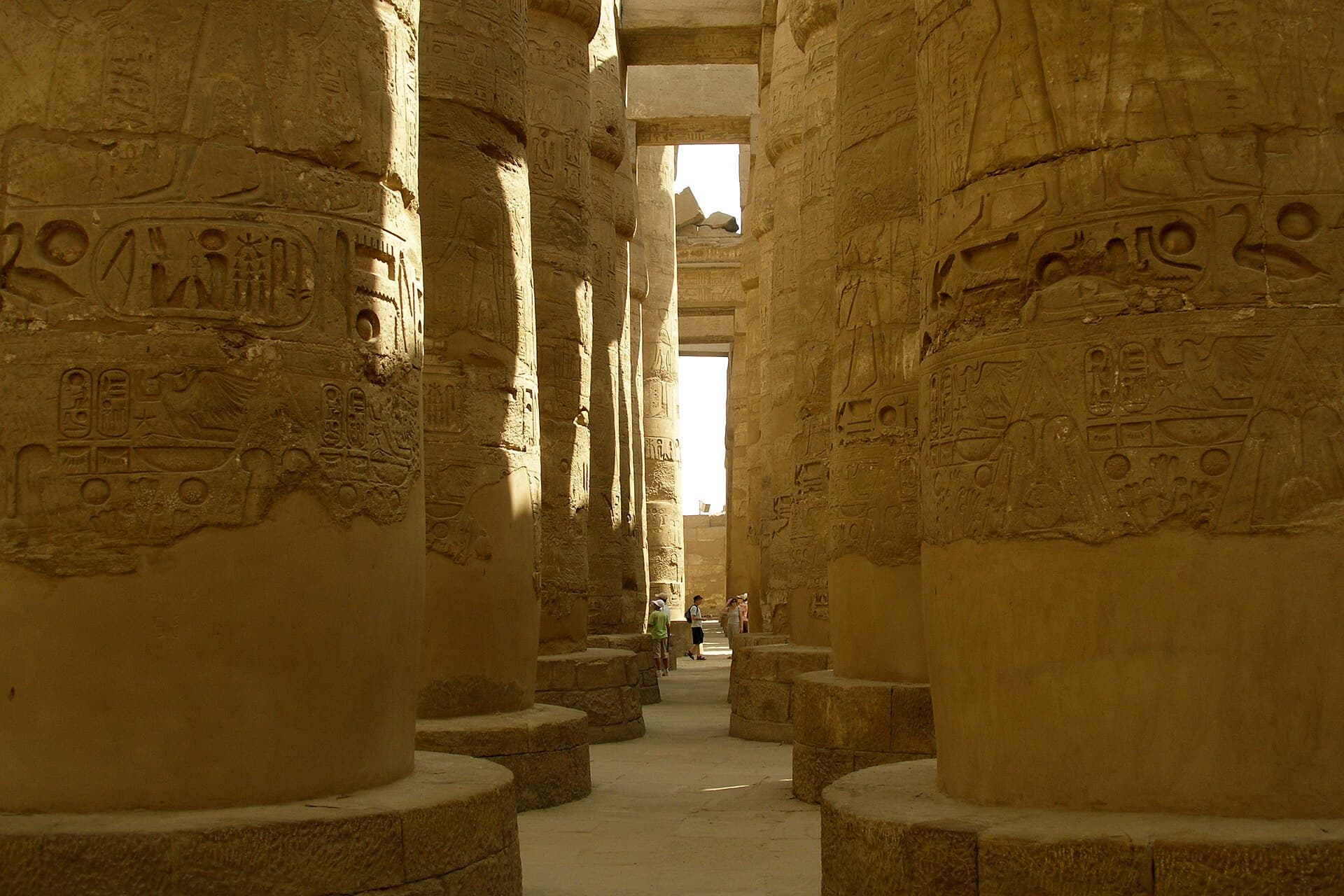
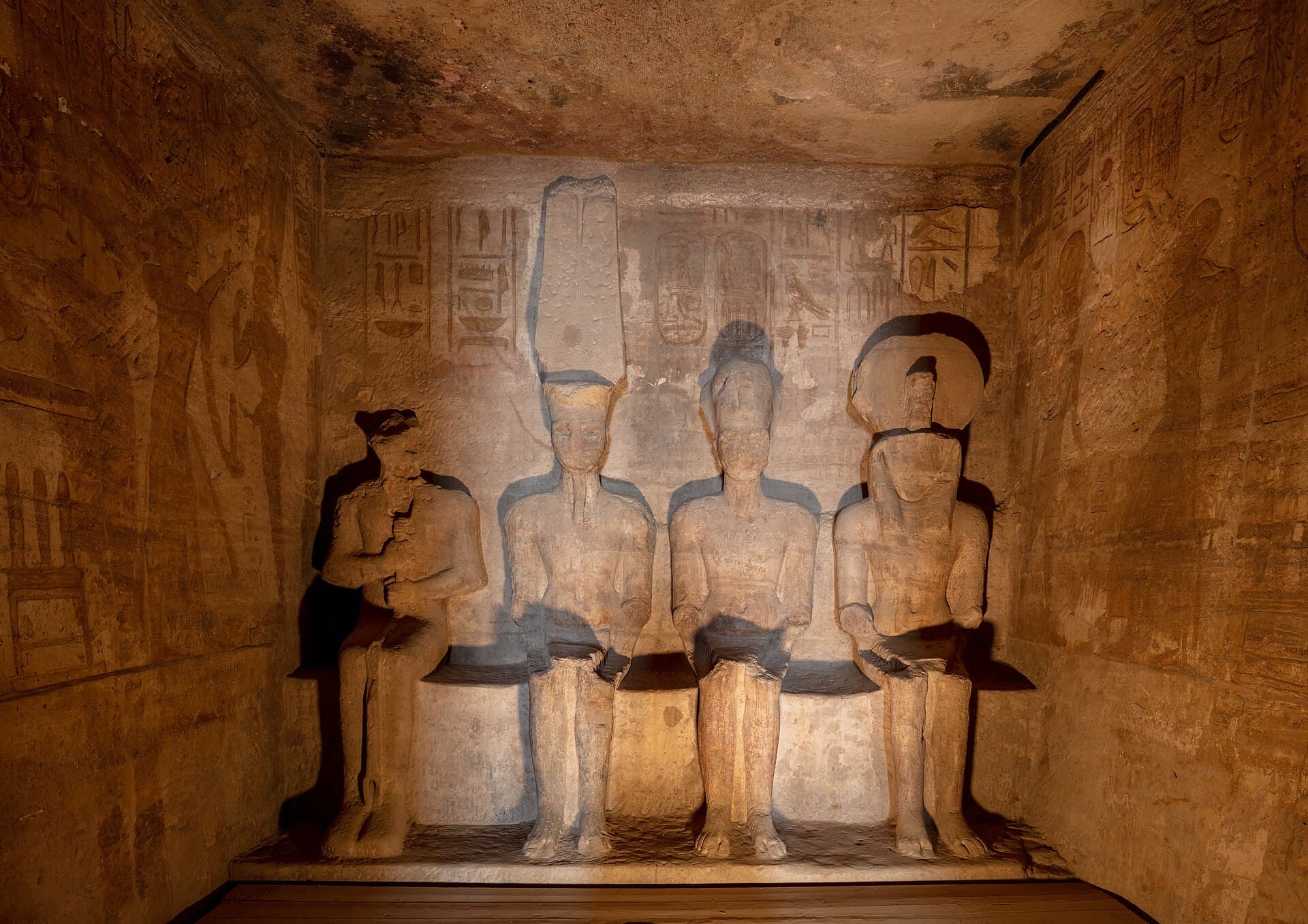
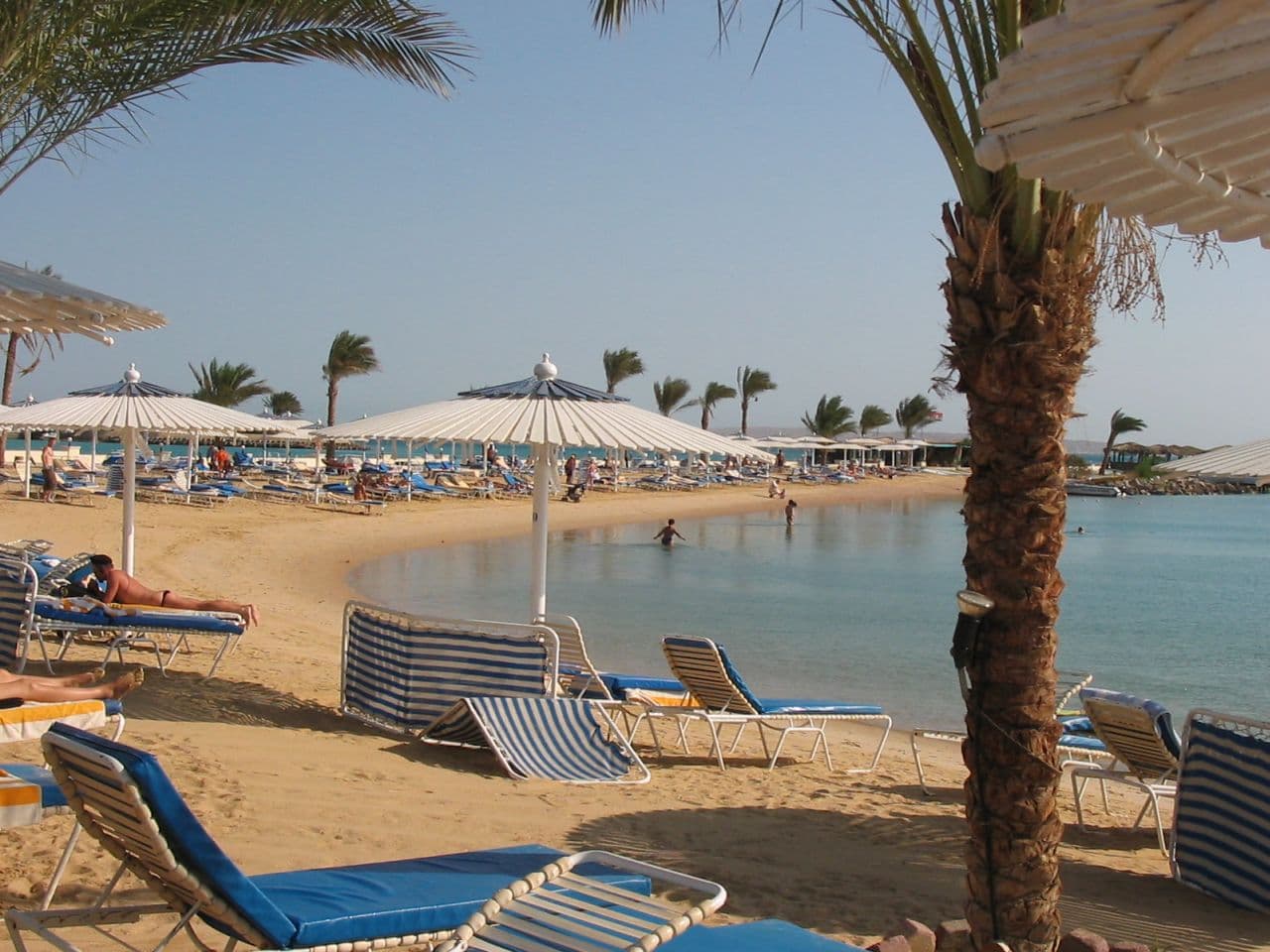
Most Nile cruise deals are one of three things: a cheaper month, a cheaper direction, or a cheaper boat. Everything else that looks like a deal is usually arithmetic — a headline figure with items taken out of it. This page is about telling the two apart, so that when two quotes come back a long way from each other you know whether you are looking at a genuine discount or a shorter inclusion list.
Which months bring genuine Nile cruise deals
Season is the largest honest discount on the river, and it is not subtle. June to August is the bottom of the market. Luxor and Aswan run around 41C, the sun deck is unusable from mid-morning until late afternoon, and excursions move to first light. Boats sell cheap in summer for a reason, and the reason sits on a thermometer rather than in the small print.
September is the more interesting version of the same trade. Temperatures ease through the month, particularly in the last ten days. Rates often still sit at summer levels for two or three weeks after the weather has improved. May works similarly at the front end of the summer. If you want a real saving without a punishing trip, that lag is where it lives.
Winter is where the word deal usually stops meaning anything. December and January are the busiest and most expensive weeks of the year on the river, Christmas and New Year most of all, and the good boats fill months ahead. A cut price in those weeks is worth a hard look at what is being cut.
The shoulder weeks, and where the calendar quietly pays
February is the month most people overlook and the one that most often delivers what they actually wanted. Luxor and Aswan sit at roughly 22 to 25C in the day through midwinter, which is what makes six hours on the west bank pleasant rather than gruelling, and February holds that weather without carrying the Christmas and New Year surcharge. The exception is the middle of the month, where UK school half-terms lift prices for a week or two. Work around that fortnight and February is close to the best value on the calendar.
March is the best month of the year on weather and light, and it is priced like it. That is not a trap, simply a market working properly. October and early November are the same shape at the other end of the season, with the caveat that October can still reach the mid-30s by day, so the saving comes with a genuine heat cost attached rather than being free.
Easter is the peak that catches people out, because it does not look like one on a calendar. It behaves like Christmas in miniature, with school holidays across several European markets landing on the same weeks, and the river fills accordingly. If your dates are flexible by a fortnight either side of it, moving them is worth more than any discount you will be offered inside it.
There is a simple test underneath all of this, and it predicts more than any offer page will. If the month you are looking at is one people choose for the weather, you will pay for it and lateness costs you. If it is a month people avoid, the saving is real and waiting can pay. Nothing else about the pricing of a Nile cruise is as reliable as that.
The direction discount, and what it costs you
The other structural saving is direction. Northbound from Aswan to Luxor is normally three nights, and typically 10 to 15 per cent cheaper than the southbound run on the same boat. The current does the work, so there is less engine time. Two quotes that look different are often just these two products side by side.
It is a real saving, not a trick, but it buys a different week. Northbound front-loads the quiet stretch, finishes with the busiest and hottest sites, and disembarks you in Luxor at dawn. Southbound opens with Karnak and the Valley of the Kings and ends in Aswan with Abu Simbel easy to add. Take the cheaper direction if budget decides or you are carrying on to the Red Sea, and know that you chose it.
A cruise night is not a cruise day
The commonest arithmetic error in comparing cruise prices is treating nights as days. You board around midday and you leave after breakfast, so a four-night sailing gives you closer to three usable days and a three-night sailing closer to two. An offer that undercuts another by a night is not selling you a cheaper week. It is selling you a shorter one, and the difference is a whole day of temples.
Price the boat against usable days rather than against the number on the ticket, and several apparent bargains flatten out immediately. A three-night northbound run at 15 per cent less than a four-night southbound looks like a discount and is mostly a shorter product. Both are perfectly good trips. Only one of them is cheaper in the sense the word normally carries.
The distance behind this helps explain why nobody can sell you more river for the money. Luxor to Aswan is about 215 kilometres, and the regular fleet works that stretch and nothing else. The nights are not buying distance, they are buying the temples on the bank and the hours in between. So when an itinerary is quoted at more nights for a surprisingly small increase, the extra nights are being spent somewhere specific — a slower boat, a second pass over the same water, a night tied up while the vessel waits for its next sailing, or a hotel with the cruise label wrapped around it. All are legitimate. Only one of them is more river.
Why a cheap boat is sometimes cheap for a reason
Nile star ratings are local ratings, measured against other Nile boats rather than against hotels anywhere else. The same five-star label covers a boat refitted last season and a boat with tired cabins and weak air conditioning. So ask one question first: what year was the boat last refurbished, and what did the refit cover? That answer is worth more than the rating and more than the brochure photographs.
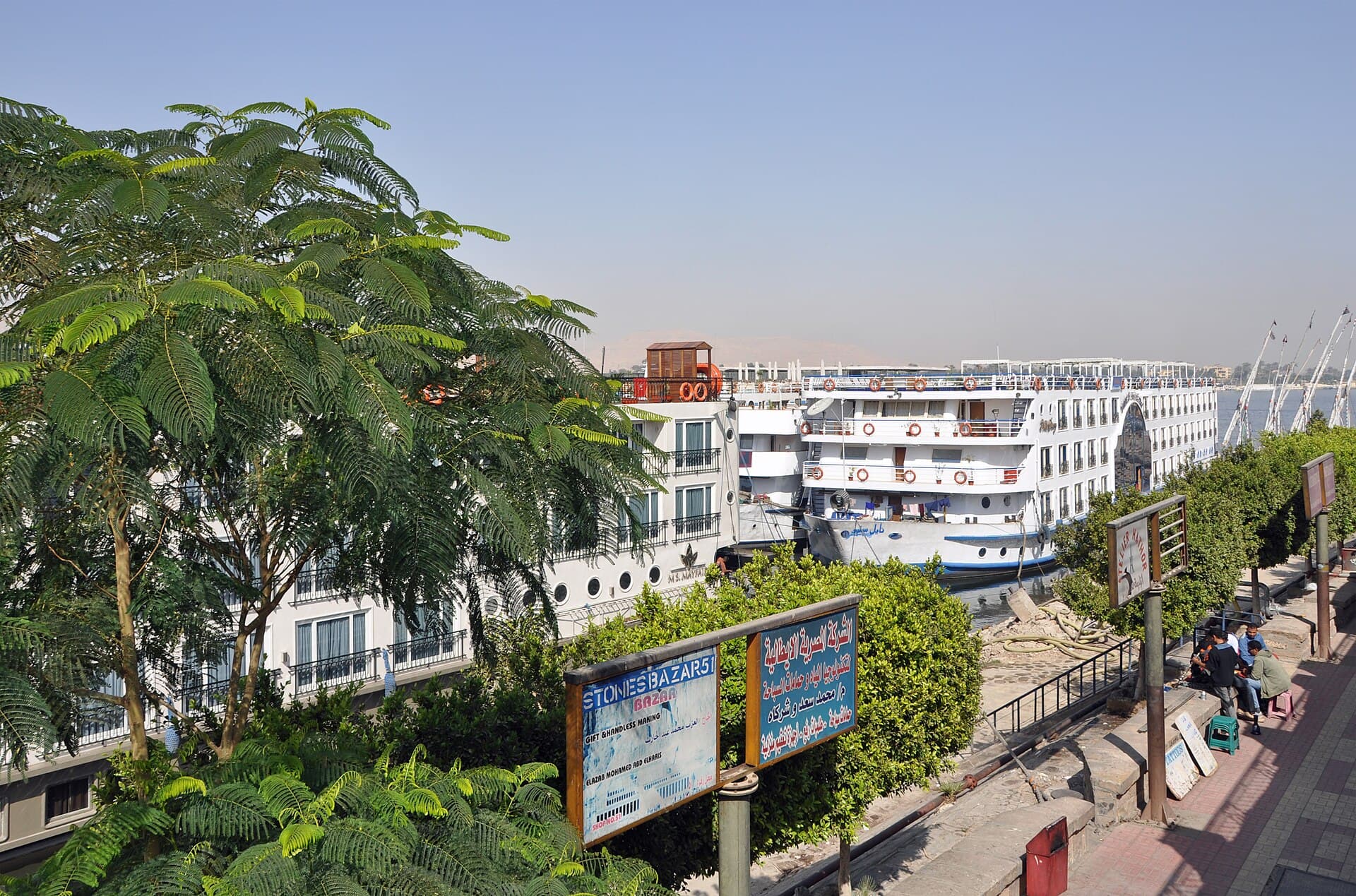
Then ask about the cabin itself. Which deck, which side, and whether the boat will raft up alongside others at the quays, because at the busier stops boats tie up two, three or four abreast and an inside mooring turns a river view into a view of somebody else's corridor. Lower decks near the stern are noticeably louder, and the price difference between decks is usually small — which makes the cheapest cabin category a poor place to economise.
Get the boat named in writing, and ask what happens if it changes. Substitutions do happen, and same category does not mean similar.
Air conditioning is the specification worth being difficult about, because it separates two boats wearing the same star rating more reliably than anything in the brochure. It is also why the refit date is the right question rather than a pedantic one: a cabin refitted last season and a cabin untouched for a decade carry the same label and are not the same room in August. If the whole reason you are looking at a summer sailing is the price, this is the line item that decides whether the trade was worth making.
One more thing the price will not tell you is how many people are aboard and how the excursion groups are split. A full boat filing through Edfu behind one guide is a different morning from a small group, and the guide shapes the week more than the ship does. Ask how many passengers the vessel carries, how many guides are looking after them, and whether the guide travels with the boat throughout or hands you over at each temple.
The cheaper boat that is a different holiday
Three broad kinds of vessel work this stretch, and comparing prices across them is comparing different products. The standard motor cruiser is what most quotes describe: a floating hotel running under engine power to a fixed schedule, carrying enough guests to support a full kitchen and a service team. Most of the Luxor to Aswan fleet is this type, and it varies enormously in condition, which is the whole reason the refit question matters.
Small ships sit in the middle — motor vessels carrying far fewer passengers, with quieter decks and shorter queues at each temple. Dahabiyas are something else again: traditional shallow-draught sailing boats with a handful of cabins, moving at the pace of the wind, mooring at sandbanks and villages the larger boats cannot reach. They cost more per night and they move more slowly, and both of those are the point rather than a flaw. There is also a fourth category, the purpose-built vessel operated by an international river-cruise line rather than an Egyptian hotel group, usually sold inside a packaged tour where the cruise price is not separable from the rest.
The practical consequence for anyone hunting a deal is blunt. Discounts live where there is inventory depth, and a dahabiya with a handful of cabins, frequently taken as a whole boat by one group, has none. If the quiet version of the river is what you want, the honest advice is to budget for it and book it early rather than wait for a price that is not coming. Conversely, if a dahabiya is quoted at standard-cruiser money, that is the quote to interrogate rather than the one to celebrate.
What a headline price leaves out
The fare covers meals on the river. It almost never covers drinks, bottled water included, and on-board prices run several times what you would pay ashore. Everyone tips, and the boat normally collects it once as a crew pot at the end. Nobody treats it as optional, so put it in the budget rather than in your pocket change.
Entrance tickets are sometimes in and sometimes out, so ask which ones by name. The same goes for internal flights, transfers, and whether a guide travels with the boat or meets you at each temple. Abu Simbel, a dawn balloon over the Luxor west bank and the separately ticketed tombs are extras on every itinerary we have seen. So is the visa.
This is why two quotes that look far apart can be near-identical once you add back what the cheaper one leaves out. Compare inclusion lists before you compare totals — it is dull, and it is the whole job.
What tipping actually adds, and why no deal removes it
Tipping is the largest predictable part of your cash spending and the only part you can calculate before you fly, so it belongs in the comparison rather than in the surprise column. On a guided day with a private Egyptologist and a driver, budget 15 to 20 euros per person. Each night on a cruise adds another 5 to 10 for the crew box. Over a ten-day trip with four nights on the river that comes to roughly 180 to 220 euros per person, covering guide, driver, crew, porters and the constant small change.
The breakdown matters because the money does not all move at the same moment. A private Egyptologist takes the largest single share, around 10 to 15 euros per person per day, and less in a group, on the logic that a group guide is tipped by everybody in it. Drivers sit at about 5 euros per person per day. Boats normally collect a communal crew box at the end, which is also how the kitchen and the engine room get a share. Hotel porters and housekeeping take small notes rather than coins.
Two cautions about any figure you read, this page included. Some sources quote per group and some per person, which is where wildly different numbers come from, so treat a single precise total for a whole trip with suspicion. And the going rates move with inflation, so ask your operator what is current when you book rather than trusting an article of unknown age. Guides, drivers and crew are usually settled at the end, which means that share has to survive the trip rather than being spent down on taxis.
The cheap trip that pays for itself on the ground
Some low headline prices earn the difference back after you arrive. Stops at papyrus, alabaster and perfume shops earn the guide commission, and optional extras get sold hard once you are aboard and agreeable. If a price sits well below everything else you have seen, ask directly whether shop visits are in the programme. A trip with none of that costs more up front and frequently less in total.
The other reason identical itineraries come back at very different prices is plainer. Many Egypt trips sold in Europe are run on the ground by a fairly small number of Egyptian operators, and the site you book through may be a reseller adding a margin to the same boats, the same cars and the same pool of guides. That is not dishonest, but it explains the spread, and booking nearer the operator usually costs less for the same product.
The reseller margin is worth understanding rather than simply avoiding, because it buys something. Ask who actually operates the trip in Egypt and get that company named. It tells you whether the person answering the telephone at two in the morning, when a flight has moved or a boat has been swapped, is the one who can rebook you. Sometimes that is worth paying for. You should at least know that it is what you are paying for.
Party size moves the price more than the boat does
A private car, driver and guide costs much the same whether two people or four use it, so the number of people in the party moves the per-person figure more than almost any other decision on this page. Four people sharing pay noticeably less each than a couple doing the identical itinerary. At six or more, a private trip often lands below the equivalent small-group departure. If you are travelling as a family or a group of friends, private is simply the cheaper option, and any quote that does not reflect that is worth questioning.
The mirror image is the solo traveller, and it is the harshest arithmetic in Egyptian travel. Hotel and cabin rates assume two people sharing, so a single supplement is added to the accommodation part of the trip, and on some boats it amounts to the whole second berth. Transport and guiding do not split either. A solo private trip can approach what two people pay between them, and no operator can design that away. The only real lever is a group departure with a share-a-room option, and that has to be arranged early enough for the operator to have somewhere to place you.
Sorting the levers by how much control you actually have over them is more useful than sorting them by size. Season, party size, hotel category and boat standard are yours to decide, and between them they explain most of the spread in the quotes you receive. Tipping, the visa, the standard entrance fees and the cost of getting from Cairo to Luxor are close to fixed. You can choose the cheaper version of each, but you cannot negotiate them out of existence, and time spent trying is time not spent on the decisions that move real money.
Group departure or private: which is the better deal for two
For one or two people a scheduled group departure is genuinely cheaper, and the saving is not marginal. What it costs you is timing. A coach group rarely reaches the Valley of the Kings or Karnak before the crowds, and in Egypt that is most of the difference between a good morning and a hot, shuffling one. The sites do not change with the price of the ticket, but the hour at which you walk into them does, and that hour is the single biggest variable in how the day feels.
The honest verdict for a couple is conditional rather than universal. Pay for private if the trip is a one-off and mornings matter to you. Take the group if the budget is fixed and the alternative is not going at all. The one version that rarely makes sense is paying close to private money for a group product, which is what happens when a deal is priced off a group departure but sold with private-trip language attached to it. Ask plainly which it is.
Does booking late help?
It depends entirely on the season, and getting this backwards is expensive. For winter travel the constraint is supply, not price: the better boats, the better guides and the good weeks sell out, and what is left late is usually worse rather than cheaper. Book several months ahead for October to April, and earlier still for Christmas and New Year.
In summer the reverse holds. Demand is thin, boats are not full, and booking a few weeks out can save money without costing you much choice. If you are flexible on dates and heat-tolerant, that is the one window where waiting pays rather than costs.
It is also worth knowing what late availability is made of, because it is not a random sample of the fleet. The recently refitted boats fill first, so what remains skews towards the other kind. The strongest guides are committed months ahead in high season. Dahabiyas are effectively out at short notice, because there is no depth of inventory behind them to discount. A late winter quote is therefore rarely a discount on the boat you wanted, and far more often a normal price on a boat that is still available for a reason.
The flights are the line no cruise deal touches
Most Nile itineraries need at least one internal flight, usually Cairo to Luxor at the start or Aswan to Cairo at the end. The Egyptian domestic network hubs at Cairo, the routes south are thinly served, and fares rise steeply in winter and close to departure with little competition to soften them. This is routinely the item that makes a cheap cruise expensive, and no operator can negotiate it away. Price the domestic leg at the same moment as the international one rather than afterwards.
One internal leg is not worth its fare at all. Luxor to Aswan is the clear example: check-in, transfers and waiting cost more time than the drive, and the drive is short. The legs that do earn their money are Cairo to Luxor or Aswan when you want the day rather than the night, Cairo to the Red Sea and Sinai resorts, and Aswan to Abu Simbel if you would rather not cover the desert road twice in a day. Domestic baggage allowances are lower than the international ticket you arrived on, which catches people at the check-in desk.
The overnight sleeper train between Cairo and Luxor or Aswan is the legitimate way around a hardened domestic fare. It saves a hotel night and a travel day, runs in two-berth and single cabins with a basin, a door that locks and a meal brought to you, and Luxor is about ten hours from Cairo that way against about an hour by air. The case against is comfort: narrow berths, a noisy ride, dated cabins, and departures and arrivals that both tend to run late. Treat it as a budget decision rather than a romantic one, and never as the thing carrying you to an embarkation the next morning with nothing behind it.
Two flight decisions are worth more than most discounts. An open-jaw ticket — into Cairo and out of Luxor, or into Luxor and out of Hurghada — frequently removes a wasted backtracking day and sometimes a domestic fare with it, and on many routes it prices close to a straight return. And charter against scheduled matters more than the fare gap suggests: charter seats are cheaper, mostly serve the Red Sea airports, and come with tight baggage rules, little flexibility and no interline agreements, which means no through-checked bags onto a domestic flight and no protection if a delay breaks your onward connection. For anything involving Cairo, the Nile or a domestic connection, book scheduled and treat the difference as insurance.
The two things that quietly change the total
Travelling alone is the first. Cabin rates assume two people sharing, so a single supplement is added, and on some boats it amounts to the whole second berth. No operator can design that away. The only real lever is a group departure with a share-a-room option.
Currency is the second. Operators generally quote in dollars or euros and hold that figure, because the Egyptian pound has moved sharply in recent years. Ask which currency the contract is in, whether the balance is due in that currency, and what a card payment adds — a surcharge on the balance is common, and it is easier to ask about now than to argue about at an office in Luxor.
The currency point has a second edge to it. A quote given far ahead in Egyptian pounds is an estimate rather than a fixed price, however firmly it is presented, because the rate underneath it is not being held by anybody. If a deal looks unusually good and is denominated in pounds, check whether you are looking at a price or at a forecast.
Where cutting the budget is a false economy
The cheapest cabin category is the clearest one. It generally sits low and near the stern, where the engine is loudest and the window is close to the waterline, and the price difference between decks is usually small. You save very little and you hear the engine for four nights. If you are going to spend money anywhere above the base price, spend it here first.
The guide is the second. A qualified Egyptologist who travels with you shapes the week more than the vessel does, and the gap between a good one and an indifferent one is the gap between understanding what you are looking at and photographing it. Paying less by accepting whoever meets the group at each temple gate is a saving taken directly out of the reason you came.
Timing is the third, and it hides because it does not appear as a line on any quote. Reaching Karnak or the Valley of the Kings before the coaches is worth more than a better cabin, and it is a function of how the trip is organised rather than of what it costs. Ask whether visits can be timed away from the crush. If the answer is vague, the price is not the thing you should be negotiating.
The fourth is the spare day. On a tight itinerary there is no slack to absorb a missed connection, a cancelled domestic flight or a balloon morning lost to wind. A day in hand at the start, particularly when a cruise sails the next morning, costs a hotel night and protects everything behind it. It is the cheapest insurance on the trip and the first thing people cut.
The extras that sit outside every deal
Abu Simbel is the big one, and it is outside the cruise fare on every itinerary we have seen. It is a separate excursion from Aswan, roughly three hours each way by road or a short flight, and it is worth both the money and the early alarm. Budget for it from the start rather than deciding on the boat, because deciding on the boat is where extras get sold hard and at the worst moment for clear thinking.
The dawn balloon over the Luxor west bank is good value and is cancelled for wind often enough that it needs a spare morning behind it. The separately ticketed sites are the other reliable extra: the inner chamber of the Great Pyramid, the tomb of Seti I, the tomb of Tutankhamun, and photography permits in some places. Standard entries are modest, but these are premium tickets and they are frequently the exact things people most want to see. Check which are in the package and which you pay at the gate. The sound and light shows are dated and easy to skip.
Drinks deserve one more line of their own, because they are the extra that accumulates quietly rather than arriving as a decision. Nothing on the bar list is in the fare, bottled water included, and shipboard prices run several times shore prices. Alcohol carries heavy duty in Egypt generally, so imported wine costs roughly what it would at home. None of this is a scandal. It simply means a fare comparison that ignores drinks is comparing two numbers that do not describe the same week.
The hybrid that often beats a cheap cruise
If the cruise price is the problem, the alternative worth pricing is not a worse boat but fewer nights on a good one. Sail a single leg and spend a couple of nights ashore in Luxor or Aswan at either end. You pay cruise rates only for the nights that buy you sailing and hotel rates for the nights that buy you a room, and hotel rooms are simply better than cabins at the same rating: more space, a proper shower, a pool that works in the afternoon heat, and a balcony.
A full land itinerary is usually cheaper still, and it is worth pricing rather than assuming. The same corridor can be travelled by road, about 215 kilometres on a straightforward valley road, sleeping in hotels at either end. What you give up is one genuinely awkward day. Edfu and Kom Ombo sit between the two cities and a cruise reaches both without extra travel: the boat moors, you take the short ride to Edfu, come back for lunch, and Kom Ombo appears on the bank later. By road they become a long out-and-back that usually lands you at both in harsh light.
So the hybrid is the version that tends to survive a budget squeeze with the least damage. It keeps the day the boat does best, it removes the nights where a cabin is the expensive way to sleep, and it suits repeat visitors, families who want a pool, and anyone who would be irritated by a fixed sailing schedule. It is a different itinerary rather than a discount, which is exactly why it is worth asking for by name instead of waiting for someone to offer it.
What to get in writing before the deposit leaves your account
A deal is only as good as what is confirmed. Get the boat by name and the hotels by name, the cabin deck, the number of nights and the direction, and the answer to what happens if any of them changes. Boat-to-be-confirmed is not automatically a scam — resellers place people where space exists — but you should know what is confirmed, what is provisional, and what happens to your money if the vessel is substituted. The phrase to watch for is the one that does most of the work in a substitution: same category does not mean similar.
Then the money terms. Which currency the contract is in, whether the balance is due in that currency, whether a card payment carries a surcharge, and the cancellation terms in full. These are easy questions to ask while someone wants your business and awkward ones to raise afterwards. A quote that will not commit to names and terms is not a cheaper quote, it is a vaguer one, and vagueness is where the difference between two prices usually turns out to have been hiding.
One small item worth naming because it surprises people at the time: ask whether the horse carriage at Edfu can be swapped for a minibus. It usually can, and some of the carriage horses are in poor condition. It costs nothing to arrange in advance and it is not a conversation anybody enjoys having on the quayside at seven in the morning.
How to compare two quotes in five minutes
Line them up on the same rows. Nights and direction. The boat by name, and the year of its last refit. Cabin deck and side. Which entrance tickets are included, by name. Drinks. Tips. Internal flights and transfers. Whether a guide is with the boat throughout. Whether Abu Simbel is in or out. The currency of the contract and the card surcharge.
If both quotes survive that, the cheaper one is genuinely cheaper. If one of them thins out halfway down the list, you have found your answer without needing to negotiate. We do not publish a headline cruise price on this page, deliberately — the range for a whole trip is set out on our cost page, and a number without an inclusion list attached to it is not information.
Two final sanity checks before you commit. Convert both quotes to a per-usable-day figure rather than a per-night one, since that is where a shorter sailing stops disguising itself as a discount. And add tipping, drinks, the visa and Abu Simbel to both totals, because those land on you whichever quote you accept. Whichever number is lower after that is the deal, and it is frequently not the one that looked cheapest at the top of the page.
Common questions
When are Nile cruises cheapest?+
June to August, when Luxor and Aswan run around 41C and demand collapses. September is the smarter version of the same saving: the weather eases through the month while rates often lag two or three weeks behind it. December, January and the Christmas and New Year weeks are the most expensive of the year.
Is a last-minute Nile cruise deal worth taking?+
In summer, often yes — boats are not full and booking a few weeks out costs you little choice. In winter, rarely. The constraint then is supply rather than price, so what is still available late is generally the boat nobody wanted rather than a bargain on the boat you did.
Why is one boat half the price of another on the same route?+
Usually the refit date, the number of passengers aboard, the cabin deck and the inclusion list, in that order. Every boat covers the same water between Luxor and Aswan and calls at the same temples, so you are not paying for a better itinerary. Ask what year the boat was last refurbished before you compare anything else.
What is not included in a Nile cruise price?+
Drinks almost always, including bottled water, at several times shore prices. Tips, normally collected once as a crew pot. Often some entrance tickets, internal flights and transfers. Always the visa, and in practice Abu Simbel, balloon flights and the separately ticketed tombs. Ask which tickets are in by name rather than in general.
Is the three-night cruise a better deal than the four-night?+
It is cheaper, typically by 10 to 15 per cent on the same boat, because it sails north with the current. It is also a different trip: one fewer night, the quiet stretch first, the busiest sites last and a dawn disembarkation in Luxor. Value depends on whether you wanted the river or only the temples.
Should I book direct with an Egyptian operator?+
It usually costs less for an identical product, because many trips sold in Europe are resold from a small number of Egyptian ground operators. What matters more than the chain is what you get in writing: the boat by name, the inclusion list, the cancellation terms and the currency of the balance.
Is February cheaper than December for a Nile cruise?+
Generally yes, and the weather is much the same: Luxor and Aswan sit at roughly 22 to 25C in the day through midwinter, without the Christmas and New Year surcharge attached. The exception is the middle of the month, where UK school half-terms lift prices for a week or two. Easter behaves like a smaller version of Christmas and catches people who did not think of it as a peak.
Does the cheapest cabin save much money?+
Rarely enough to justify it. The cheapest category usually sits low and near the stern, where the engine is loudest and the window is close to the waterline, and the gap between decks is normally small. It is one of the clearest false economies on the river: you save very little and you hear the engine every night.
Is a group Nile cruise cheaper than a private trip?+
For one or two people, yes, and the saving is real. What it costs you is timing, because a coach group rarely reaches the Valley of the Kings or Karnak before the crowds. From four people upwards the arithmetic shifts, since a private car, driver and guide costs much the same for two as for four, and at six or more private often lands below the group price.
How much should I budget for tips on a Nile cruise?+
Budget 15 to 20 euros per person for a guided day with a private Egyptologist and a driver, and another 5 to 10 per person for each night on the boat, which the crew normally collect once as a communal box at the end. Over a ten-day trip with four nights on the river that is roughly 180 to 220 euros per person. Rates move with inflation, so ask your operator what is current when you book.
Official sources
Entry rules, opening hours, security advice and exchange rates all move. Check them at the source, not here.
Written and checked by the Nile Trip Guide editorial team · Last reviewed . Entry rules, prices and opening hours change — check anything critical against the official sources linked on this page.
Plan this trip
Tell us your dates and we will price it
A real itinerary with real prices, usually within 24 hours. Nothing is booked and nothing is charged until you say yes.
Three nights sailing north from Aswan to Luxor, taking in Philae, Kom Ombo, Edfu, the Valley of the Kings and finally Karnak. Full board on board, and the sightseeing runs as a shared group of about fifteen.
Four nights sailing south from Luxor to Aswan: Karnak and Luxor temples on the first afternoon, the Valley of the Kings, Edfu, Kom Ombo and Philae. Full board throughout, with sightseeing in a shared group of about fifteen.