How many nights on a Nile cruise: three, four or seven
How many nights on a Nile cruise depends less on how much river you want and more on how the nights are counted. Three nights and four nights are the two standard sailings between Luxor and Aswan, and they are not the same trip in different lengths. Seven nights is a different kind of boat altogether. Here is what each one actually buys.
A cruise night is not a day
Start here, because it is where most of the disappointment comes from. Cruise nights are counted generously: you board around midday and you leave after breakfast. Four nights is therefore closer to three usable days, and part of that is spent tied up in port rather than moving. Three nights is closer to two.
That arithmetic matters more than the brochure length. When someone asks how many nights on a Nile cruise they need, the honest translation is how many full days they want between Karnak at one end and Philae at the other, and the answer is one fewer than the number on the ticket.
The second thing the number hides is direction. The standard sailings are four nights from Luxor up to Aswan and three nights from Aswan down to Luxor, and the shorter one exists because the current does the work. They cover the same temples in opposite orders, but they are not mirror images of each other.
How far you actually travel in those nights
The distance settles more of this argument than the itinerary does. Luxor to Aswan is about 215 kilometres, and the train covers it in roughly three hours for very little money. A cruise spends three or four nights on the same ground. The nights are therefore not buying distance. They are buying the temples on the bank and the hours in between, and once you see it that way the question stops being how much Nile you get and becomes how much of your week you are handing to a sailing schedule.
It also explains why the fleet does not go any further. The regular boats work a little over 200 kilometres between Luxor and Aswan and nothing else. Cairo is not on the route, and long-distance sailings from there exist only as occasional charters at high prices, because the barrages and shallow stretches make the run impractical for standard boats. Lake Nasser sits south of the High Dam and is a separate vessel entirely. Adding nights does not extend the map, because there is no more map to extend into.
So when a longer itinerary is quoted, the extra nights are being spent somewhere specific. Either on a slower boat, on a second pass over the same stretch, tied up at one end while the vessel waits for its next sailing, or in a hotel with the cruise label wrapped around it. All four are legitimate. Only one of them is more river.
Three nights: the cheap one, and what it costs you
Three nights is the northbound run, Aswan down to Luxor, and it is typically 10 to 15 per cent cheaper than the southbound sailing on the same boat. The current is with you, so the legs between stops are quicker and you tend to arrive earlier and spend more of the afternoon moored. If price is the deciding factor, this is the one, and it is not a bad trip.
What it costs you is the shape of the week. It front-loads the quiet part — Aswan, Kom Ombo, Edfu — and ends with the heaviest sightseeing in the busiest and hottest place, Luxor, with Karnak and the Valley of the Kings arriving when you are already tired of temples. Then you disembark in Luxor at dawn, which is a blunt way to finish.
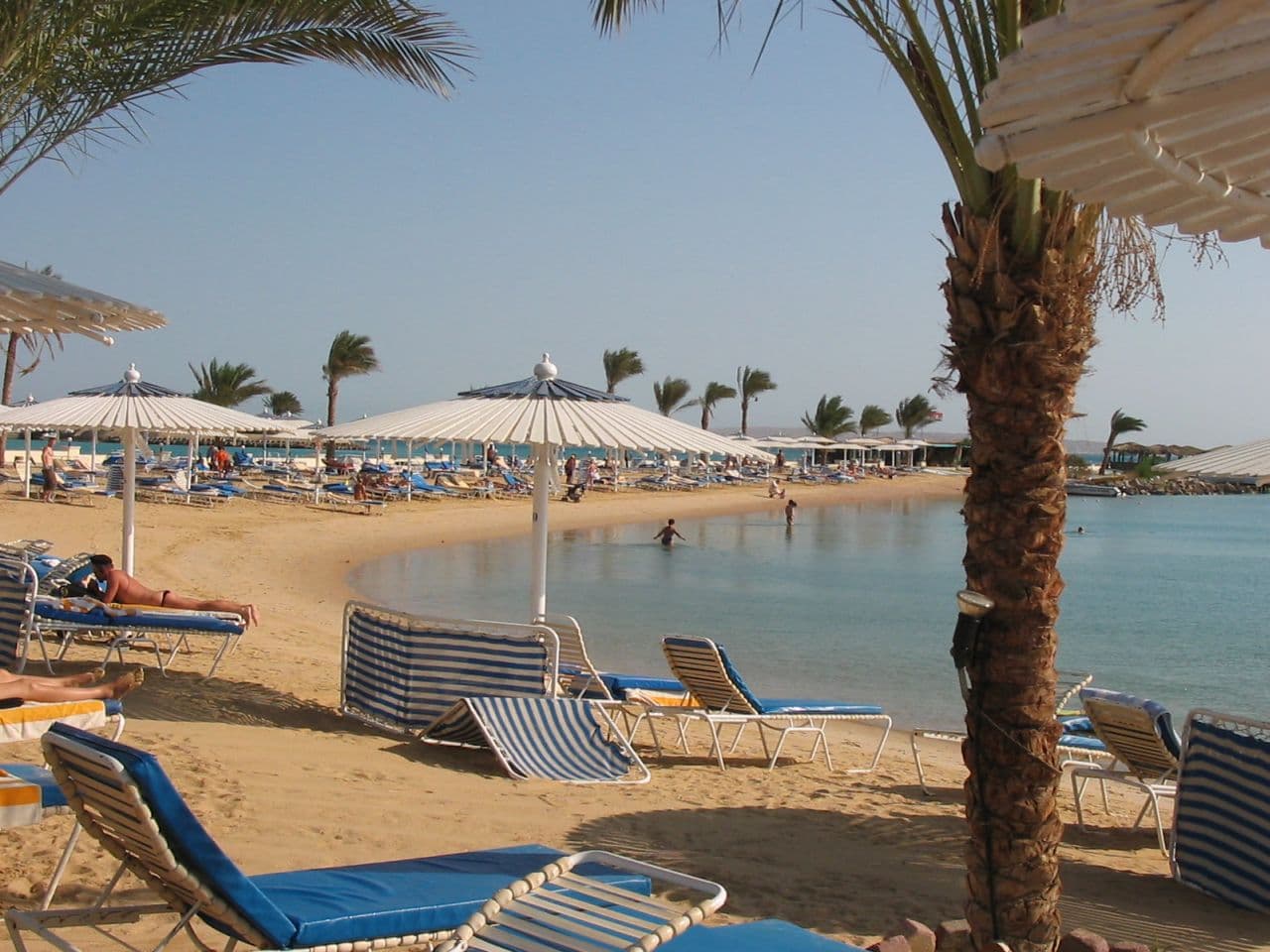
It is also the right choice for one specific plan: heading on to the Red Sea afterwards. Luxor is about four hours by road from Hurghada, so finishing there rather than in Aswan saves you a backtrack. If that is your itinerary, the cheaper sailing is also the more convenient one.
Four nights: the default, and why it earns it
Four nights is the southbound run from Luxor to Aswan, and it is the better trip for most people. You start with the heavyweight sites — Karnak, Luxor Temple, the Valley of the Kings and Hatshepsut on the west bank — then wind down through Edfu and Kom Ombo and finish in Aswan, which is the prettiest and calmest of the three cities. Ending on the quiet note rather than the loud one is worth more than it sounds after a week of stone.
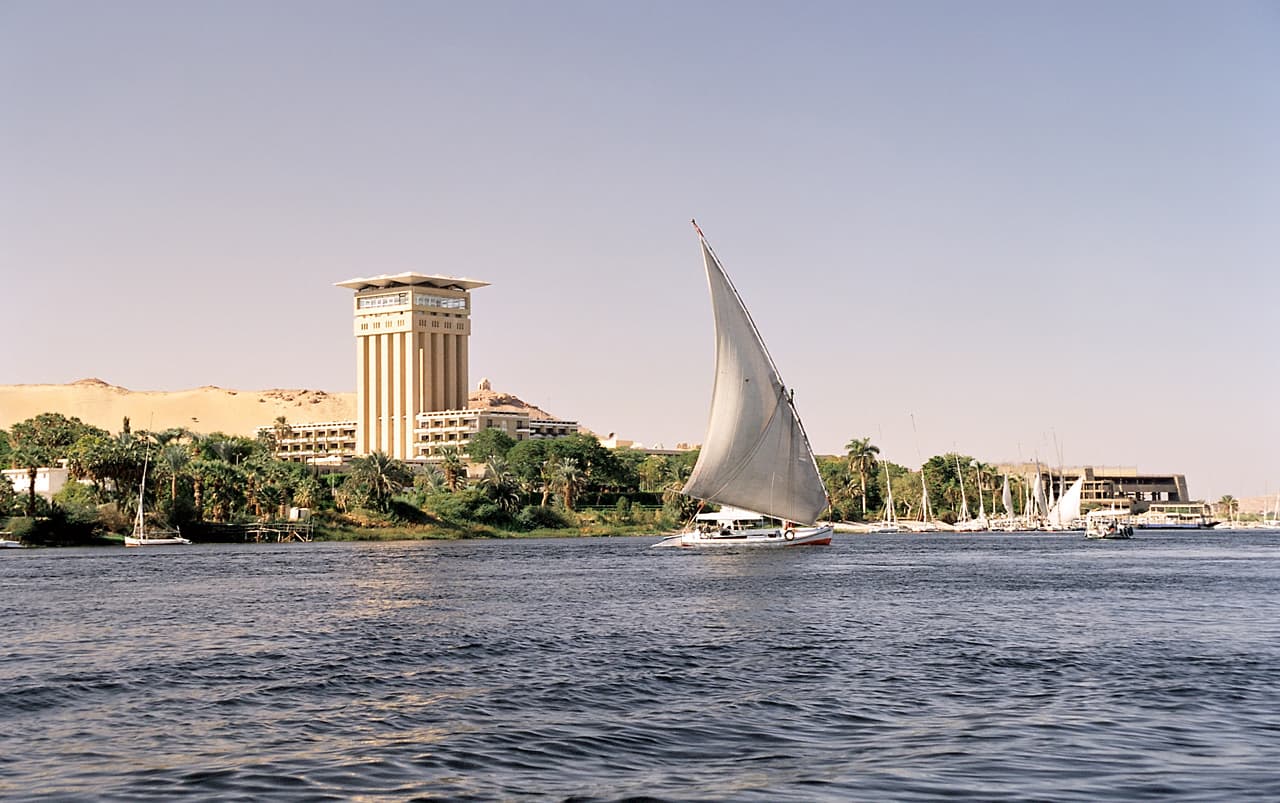
Sailing south is upstream, against the current, so engine time is longer and the stretches between stops are slower. That is a feature rather than a fault: you get longer afternoons on deck watching the bank go past, which is the part most people remember. If the river itself is why you booked a boat, this is the direction that gives you more of it.
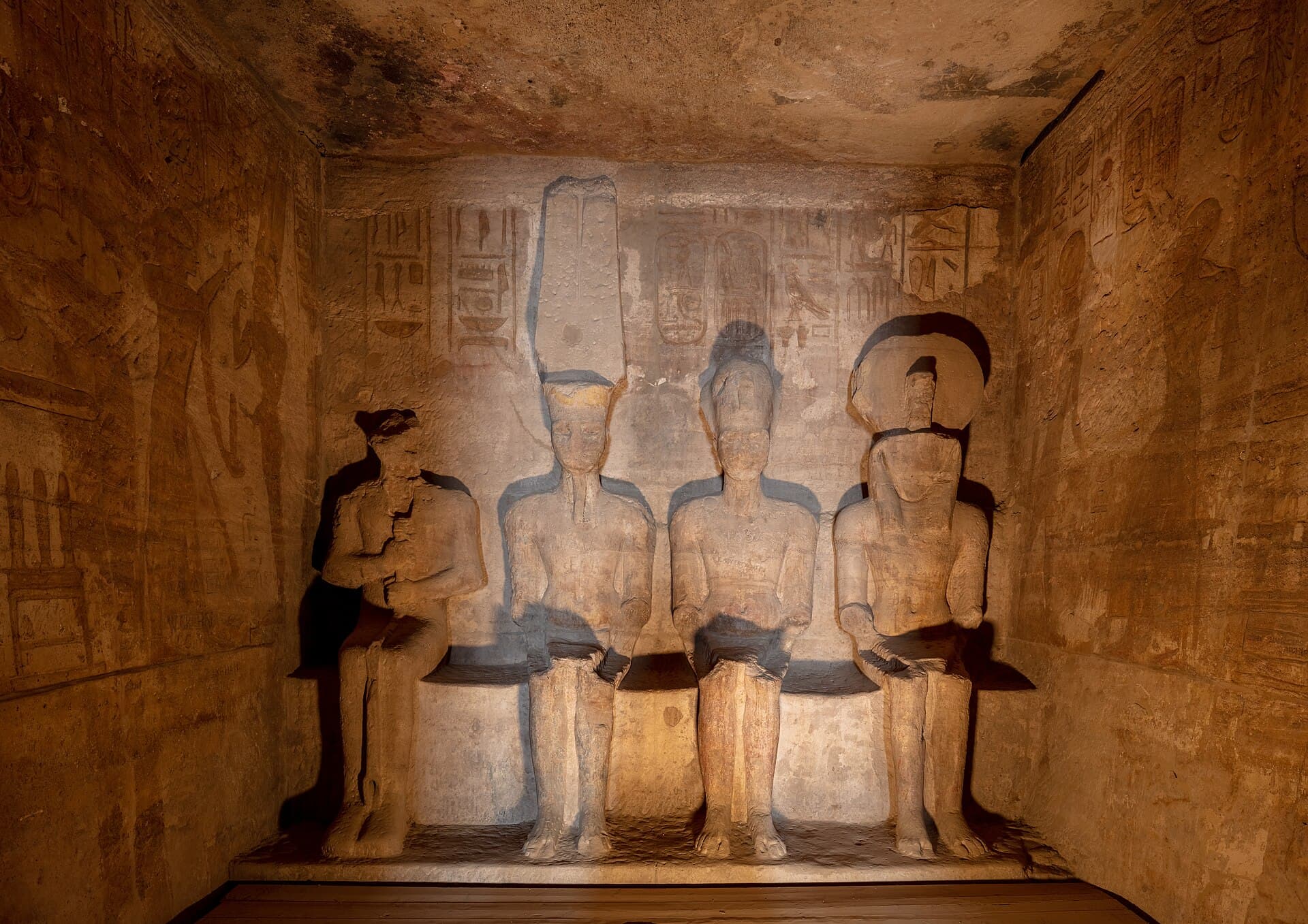
Practically, finishing in Aswan also puts Abu Simbel at the end of the trip rather than squeezed into the middle. Abu Simbel is a separate excursion from Aswan on any itinerary — roughly three hours each way by road, or a short flight — so having it at the end, ideally with a hotel night after the boat, is the version that does not involve a 4am start against a sailing schedule.
What four nights actually contains, in order
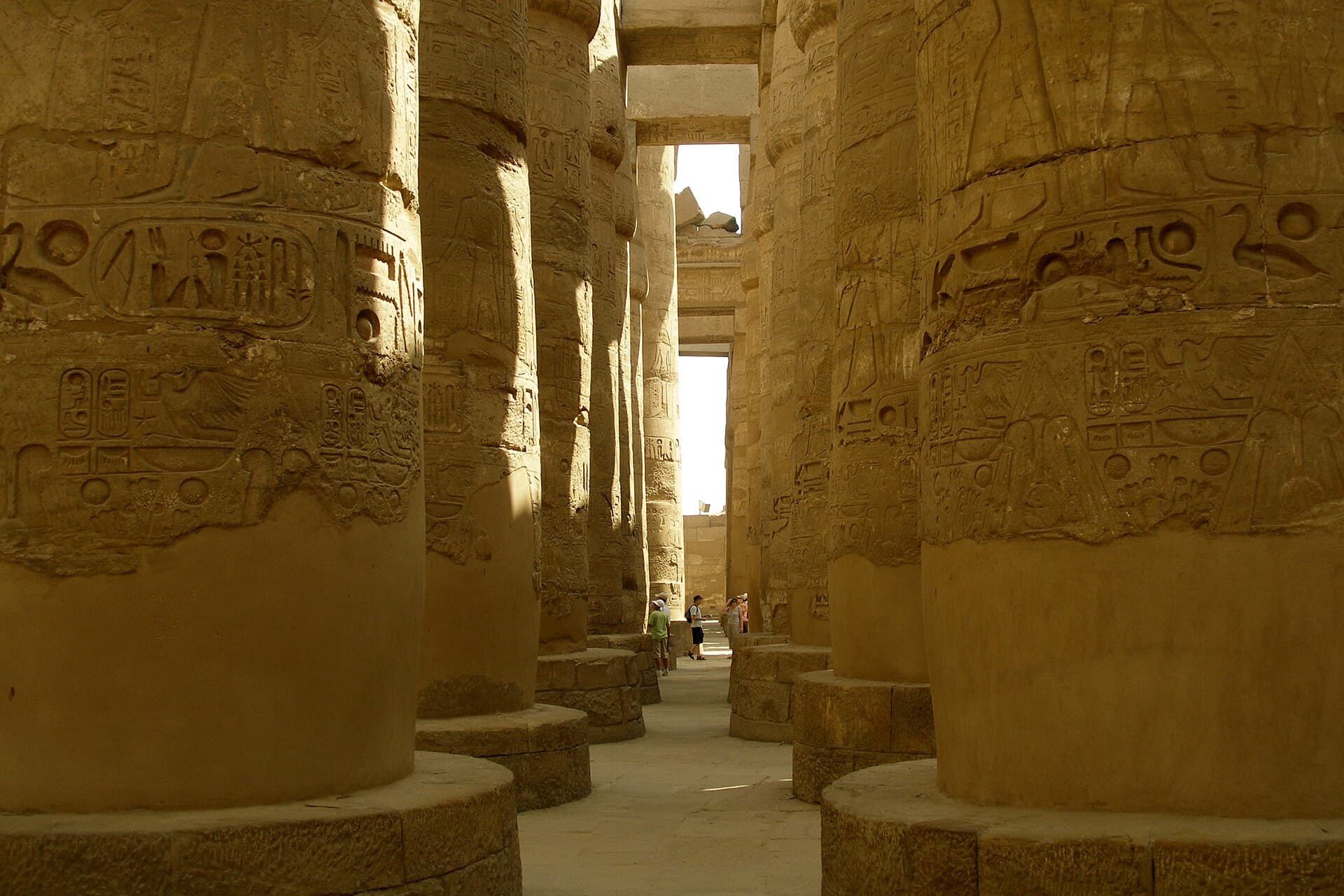
Boats vary and the running order shifts, but the southbound shape is consistent enough to describe. You board at Luxor around the middle of the day, and Luxor is then done on the boat's schedule rather than yours: Karnak and Luxor Temple on the east bank, and the west bank compressed into a single morning covering the Valley of the Kings, where the standard ticket admits you to three tombs from the set open that day, Hatshepsut's terraced temple at Deir el-Bahari, and the Colossi of Memnon on the road in. That is two days of sightseeing pushed into rather less than one.
Then the boat moves, and the middle of the itinerary is the part it does genuinely well. Esna and its lock, then Edfu, reached from the mooring by carriage or minibus and among the better preserved temples in Egypt, then Kom Ombo, which stands right on the bank so you walk from the gangplank to the steps rather than arriving by coach. The stretches between them are the deck time, and the deck time is not filler: buffalo on the bank, children waving from rowing boats, a heron lifting off ahead of the bow. It is the part people describe a year later.
The final night is at Aswan and the final morning is Philae, reached by motorboat from a jetty between the two dams, usually with the High Dam viewpoint attached, where fifteen minutes covers it, and sometimes the unfinished obelisk in the granite quarries. Then you are ashore after breakfast. If that reads thin for Aswan, it is, and it is precisely why the extra night on land is worth more than the extra night afloat.
Three nights, in reverse, and where the squeeze lands
The northbound sailing covers an identical list in the opposite order with one night removed. You board at Aswan around midday, take Philae and the dam, then come down through Kom Ombo and Edfu with the current behind you, through the lock, and into Luxor.
The compression falls in a different place, and it is the worse place. Southbound, the city that gets squeezed is Aswan, which needs two days and has the shorter list. Northbound, it is Luxor, which needs three full days to be done properly and gets a morning. Karnak alone deserves two hours and three is better; a group working to a sailing departure usually gets about ninety minutes, which covers the central axis and very little either side of it.
You then disembark after breakfast into the busiest tourist town in Upper Egypt, commonly with a flight the same day. If Luxor is the reason you came, three nights northbound is the version that gives you least of it. Add a night ashore in Luxor at the end and most of that objection goes away, which is a cheaper fix than upgrading to the four-night boat.
Seven nights: what the extra three actually buy
Longer sailings on this stretch are usually a different kind of boat. A dahabiya is a small sailing craft with a handful of cabins, and it needs more nights to cover the same route because sailing is slower than an engine, so five nights is about the minimum and a week is the comfortable length. What you are buying is not more temples. The temple list between Luxor and Aswan does not get longer.
What it buys is the places the large boats pass without stopping: the rock-cut tombs at El Kab, the quarries at Gebel el-Silsila, sandbanks to swim off, villages to walk into, and afternoons where nothing is scheduled at all. The mooring is different too — a shallow hull can tie up beside a bank or an island rather than rafting three deep against other boats at a fixed quay.
Be honest about whether that suits you. It costs considerably more per night than a motor cruiser, the cabins and bathrooms are smaller, there are stairs rather than lifts, most boats have no pool, and when the wind drops you get towed. If your idea of a good holiday morning is a slow one, this is the version to spend the extra nights on. If you judge a trip by how many sites you got through, it is money badly spent. And if a boat is selling seven motorised nights on the standard route, ask exactly what the extra nights contain before you pay for them.
Five nights, and the other numbers you will be quoted
Three, four and seven are the numbers you will see most, but they are not the only ones on offer. Five and six turn up regularly, and they deserve a direct question rather than a shrug, because on a standard motorised route they are not a longer river. Ask which nights are sailing nights, which are spent moored, and which are ashore in a hotel. A second pass over the same stretch, two nights tied up at Luxor waiting for the next departure, and two hotel nights sold inside the cruise price are three different products with the same number on the front.
On a sailing boat, five means something else entirely. Five nights is roughly the minimum a dahabiya needs to cover Luxor to Aswan at all, because wind is slower than an engine, and a week is where it sits comfortably. Same route, more nights, no extra temples — the extra time goes into the sandbanks and the unscheduled afternoons.
The test is the same whichever number you are quoted. A seven-night itinerary with two hotel nights built into it can be an excellent holiday, and it is the shape a lot of experienced visitors end up arranging. It is simply not seven nights on the river, and knowing which you are buying is the difference between a fair comparison with a four-night sailing and a misleading one.
What each night includes, and what it does not
A cruise fare bundles the cabin, all meals, the guiding on board and the transfers between boat and site. That is genuinely convenient, and it is most of why the format has survived so long: the awkward middle of the route is handled rather than negotiated every morning. It also makes a straight per-night comparison against a hotel misleading in both directions.
Two lines are usually missing from the quote and both grow with the number of nights. Drinks are rarely included, and bottled water on board costs a good deal more than it does ashore, which over four nights is not trivial. Entrance fees are sometimes in the price and sometimes not, and the Upper Egypt sites are not cheap. Optional excursions sit outside the fare on almost every boat, including the balloon over the Luxor west bank and Abu Simbel from Aswan.
Ask about all three explicitly before you compare two quotes, because an all-inclusive-sounding fare with a long list of extras is exactly how two prices that looked identical stop being identical. It also changes the answer to this page's question. If every night adds a bar bill and every site adds a ticket, a fifth night costs more than the headline difference suggests, and a night in a hotel starts to look better value than it did on the brochure.
What a night on board is actually like
Sleep first, because it is the thing people do not think to ask about and then spend four nights with. The Nile is flat and the boats are large relative to it, so seasickness is not the issue. Vibration, engine noise and generator hum are, particularly in cabins towards the stern and on the lower decks. If you sleep lightly, ask for a cabin forward and high up. It makes more difference than the cabin grade does, and considerably more difference than the number of nights.
Then the food. Boats serve international buffets three times a day with a few Egyptian dishes, cooked for a room of mixed nationalities. Nothing is bad and little is memorable, and by the third day most people have had enough of it. That is a genuine argument about length rather than a grumble: by night five you are eating the same buffet for the fifteenth time, and it does not improve because you paid for more of it. Special diets are usually manageable, but only if the operator is told well before you board rather than at the first dinner.
Finally, getting on and off. Boarding means a gangplank, and at a rafted mooring it means several of them, through other boats' lobbies. Decks connect by stairs, corridors are narrow, and lifts are not standard equipment. If steps are a real problem, the answer is not a shorter cruise; it is hotels and a car with a driver, which reach the same temples without any of the gangplanks. Say so at the request stage and you will get a real answer rather than a reassuring one.
The nights that are worth more than an extra cruise night
This is the part the length question usually misses. Almost every cruise finishes in Aswan and most passengers fly out the morning the boat docks for the last time, so their Aswan is a rushed Philae stop wedged between disembarkation and the airport. Adding a single hotel night after the cruise changes the trip more than almost any other decision on it: an unhurried afternoon on the water, an evening on the corniche, and a morning not spent watching a clock.
Luxor makes the same argument at the other end. The west bank rewards two full days and no cruise gives you that, because the boat sails when it sails. A night or two in a Luxor hotel before boarding buys the Valley of the Kings at opening and Luxor Temple after dark, which is when it is lit and half empty.
So if you have one more night in the budget, put it ashore rather than afloat. A fifth night on the boat gives you another buffet and another mooring. A night in Aswan or Luxor gives you hours at the sites at the times of day that actually work.
How many nights ashore at each end
If one night ashore is the cheap fix, here is what more than one buys. Luxor needs three full days to be done properly and you can fill four: one for the west bank, starting early; one for Karnak and Luxor Temple, split between the morning and the late afternoon; a third for the sites almost everyone skips, Medinet Habu, the Ramesseum and Deir el-Medina, or a second run at the Valley of the Kings once the coach groups have gone. Two days is the practical minimum and it will feel rushed. No cruise itinerary gives you two.
Aswan needs two days, three if you add Abu Simbel. Philae and the granite quarries fill a morning. A felucca afternoon among the islands and an hour walking Elephantine fill another. Abu Simbel is the third: roughly three to four hours each way by road, or a short flight, and a full day gone for about two hours at the temples. Stretching Aswan beyond that without a specific reason usually means an afternoon spent looking at the river, which some people want and others resent paying for.
Put those two lists beside a four-night sailing and the arithmetic is plain. The boat gives you Edfu and Kom Ombo, which are awkward to reach any other way, plus one compressed morning each in two cities that between them deserve five days. One night before and one night after is the cheap correction. Two and two is the version people arrange the second time round, and it is the single best-value shape for this part of Egypt.
What can eat a night without warning
The Esna lock. Traffic queues there, and at busy times the wait runs to a few hours. It rarely breaks an itinerary but it can swallow an afternoon, and on a three-night sailing an afternoon is a meaningful share of the trip. Nobody can schedule around it, which is an argument for the longer of the two standard sailings if your days are tight.
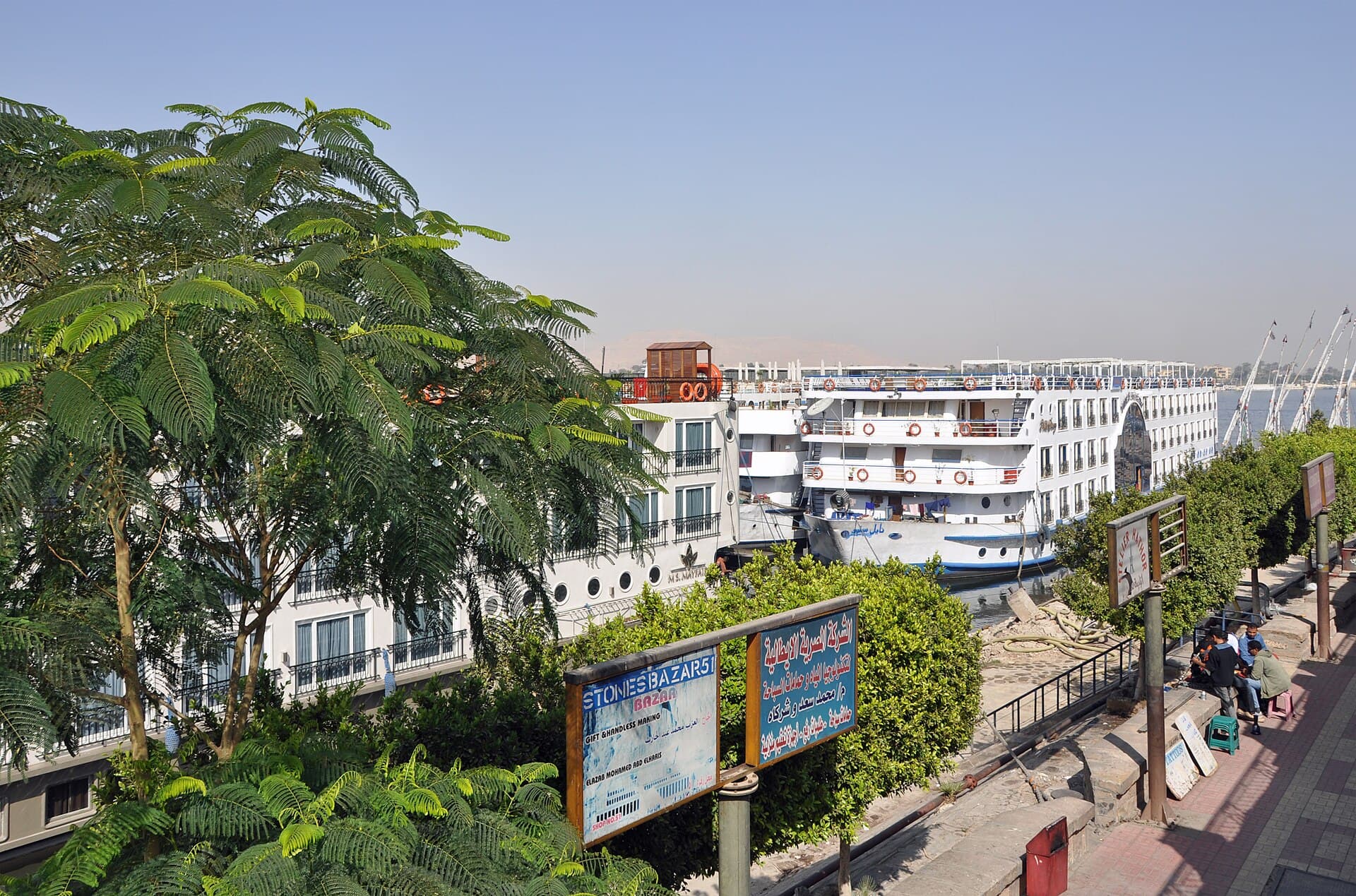
Mooring is the other one. Boats do not each get their own stretch of bank: at Luxor, Edfu, Kom Ombo and Aswan they raft two, three or four deep, and berths are allocated by the port rather than the operator. You may walk through two other boats' lobbies to reach land, and your window may face a hull for an evening. More nights does not fix this. It just gives you more evenings of it.
Occasionally a boat does not sail at all — low water, a lock queue or a mechanical problem — and the operator moves the group to the sites by road instead. The itinerary survives; the sailing does not. Worth knowing that the temples are the guaranteed part of the week and the river is not.
Season changes how many nights you can stand
The same number of nights is a different holiday in July and in February, and the figures are blunt enough to plan around. Luxor runs around 41C from June to August, about 39C in May, roughly 35C in April, 34C in October, around 29C in March, and 23 to 25C from December through February. Boats are cheaper in summer for precisely that reason, and the discount is substantial rather than token.
Afloat, the heat is bounded in a way it never is ashore: out early into full sun, then back aboard behind glass and air conditioning. That makes a summer sailing more survivable than a summer land tour. It also makes the extra nights worth less, because the sun deck is unusable from mid-morning until late afternoon and the deck time is what you were buying. Four nights in July delivers fewer usable hours outdoors than four nights in March does, at the same number on the ticket.
Winter reverses it. December, January and February give the best walking weather in the country. They are also when the moorings stack up hardest, when the queues at the Esna lock are at their most tiresome, and when the boats worth being on sold out months ago. Evenings on deck are cool enough for a jacket, and packing only for a hot country is the standard winter mistake: it costs people the hour they booked the boat for.
Nights with children, which usually means fewer
Shorter, as a rule. Temple fatigue arrives faster for children than for adults, so three or four nights carries less risk than seven: the trip ends before the children do. The family advantage of the boat is the dull one, that you unpack once, and the quieter one, that after a long hot morning the shaded deck and the air-conditioned cabin are a minute away rather than a drive.
The stops divide neatly by age. Kom Ombo is the easiest win on the river, a few steps from the mooring with crocodile carvings and a museum next door. Edfu is a carriage ride many children enjoy more than the temple at the end of it. Karnak and the Valley of the Kings are the hardest: enormous, unshaded, dusty, with steep tomb entrances. The standard Valley ticket covers three tombs, and two is often plenty with a flagging child.
Two things do not change with length. Not every boat has a pool, and the ones that do are often small and overlooked, so confirm it rather than assuming from a photograph. Railings vary from boat to boat and a small child can be somewhere they should not be in seconds, which is a rule to set on day one rather than a risk to discover on day two. And Upper Egypt at 41C is a bad idea with young children whatever the discount, on a boat as much as in a hotel.
The Lake Nasser nights, which are a different cruise
One more set of numbers is sold under the same word, and it sits beside this decision rather than inside it. Lake Nasser boats run between Aswan and Abu Simbel, usually three or four nights, calling at the Nubian temples moved when the reservoir filled: Kalabsha, Wadi es-Sebua, Amada. There are only a handful of boats and the traffic is light. You may pass two others in a day, which is the whole appeal.
Those nights are added to a Nile cruise rather than swapped for one, because the two boats work different water on opposite sides of the High Dam. So it is three or four more nights plus the transfers, on top of whatever you booked between Luxor and Aswan, and it approaches Abu Simbel from the water the way the temples were meant to be seen.
Most first-time visitors do not need it, and we would rather say so. Abu Simbel is a short flight or a long drive from Aswan and the day trip costs a fraction of the cruise. Take the lake boat if the lesser Nubian temples and the emptiness are the draw. Skip it if your time in Egypt is tight, which on a first visit it almost always is.
How the cruise length fits the whole trip
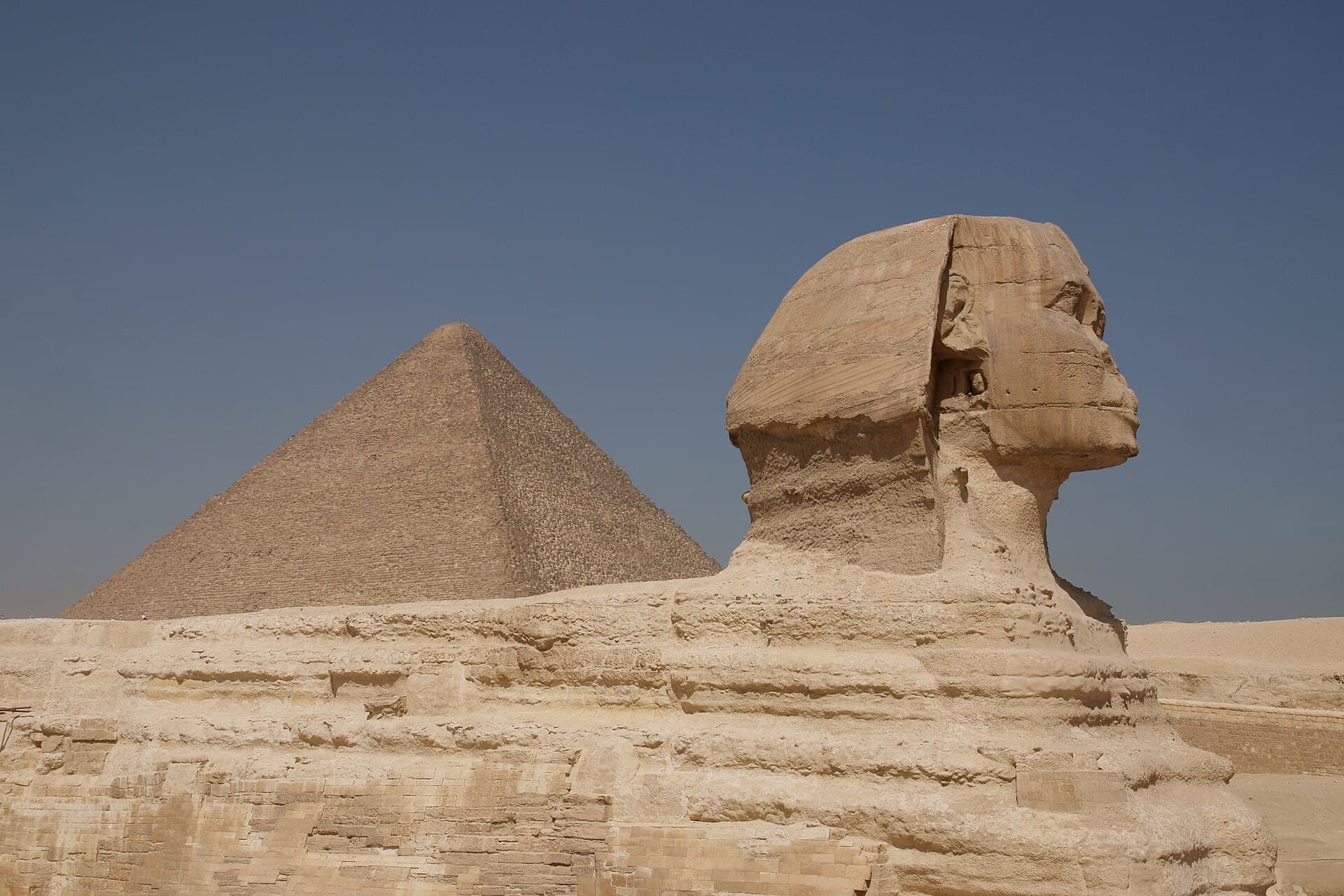
For a first visit, the common shape is eight days: two nights in Cairo for Giza and the Grand Egyptian Museum, a flight south, four nights on the river, and a night at the end to fly home. That is the itinerary most people take and it does not feel rushed, but it leaves no room for Abu Simbel or the Red Sea.
Ten days is the better version of the same trip. It buys Abu Simbel without an argument, a slower Luxor, and a morning that is not spent packing. Two weeks is where the Nile and the Red Sea combination sits: Cairo, a four-night cruise, then a week on the coast at Hurghada or Marsa Alam with a direct flight home.
If the cruise is the whole trip rather than part of one, five days covers the Luxor to Aswan stretch properly — four nights aboard, taking in Karnak, the Valley of the Kings, Edfu, Kom Ombo and Philae. Adding Cairo to that needs at least three more days, and there is no version where you do both in under a week.
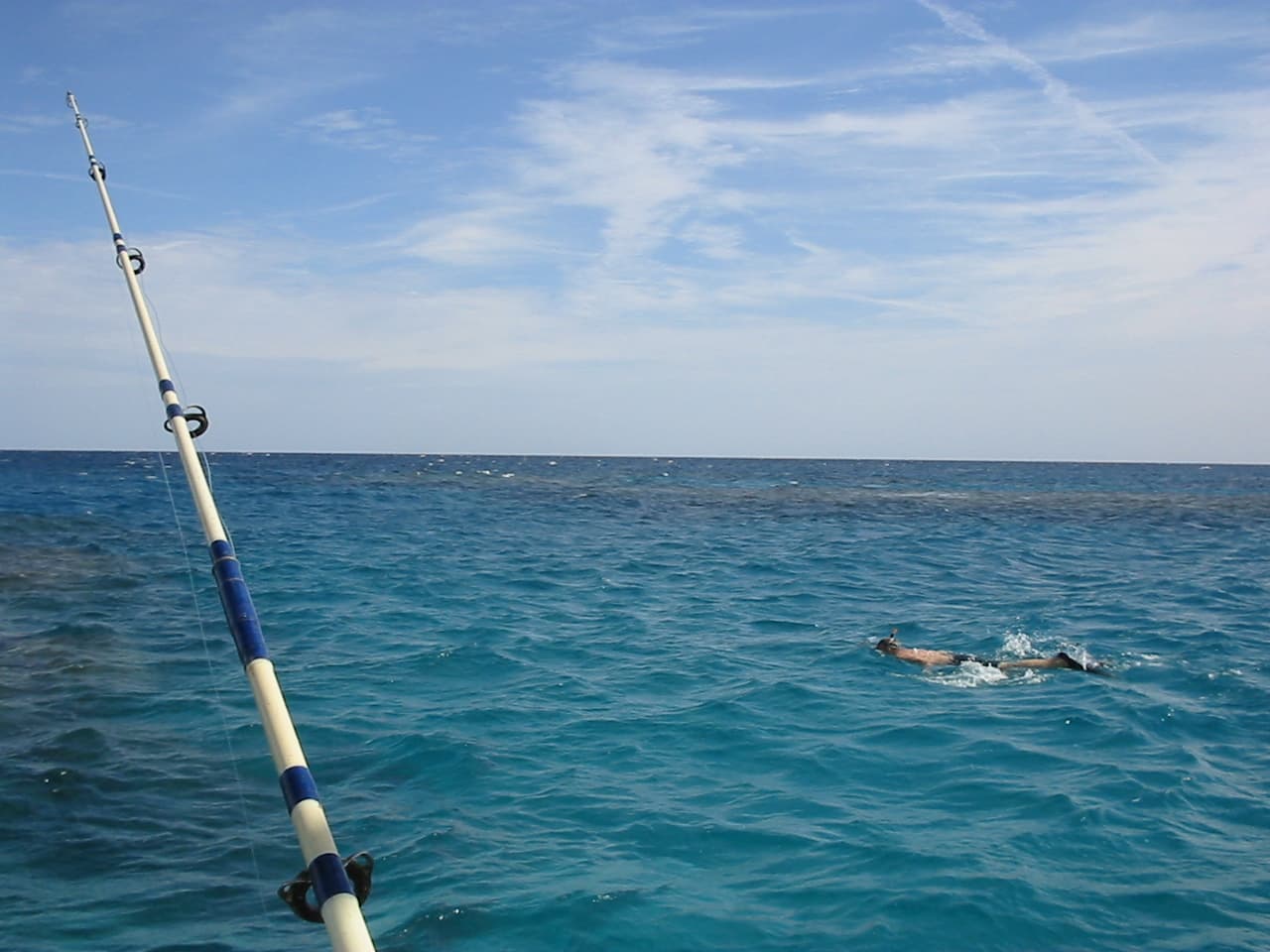
Order matters as much as length once the Red Sea is involved. Do Cairo, Luxor and Aswan first and move to the coast afterwards, so the demanding cultural days fall while you are fresh and the sea is where you stop. Doing the temples after a week of diving feels like a punishment, and the four-hour road transfer from Luxor to Hurghada is the reason that pairing sells so well in the first place.
Nights are the wrong lever if the boat is wrong
Boats vary far more than the photographs suggest, and the gap between a good one and a poor one is wider than the gap between three nights and four. Egyptian boat ratings are not comparable with hotel ratings elsewhere: the same five-star label covers boats refitted last season and boats with tired cabins and weak air conditioning. Ask the date of the last refit and what it covered. That answer is more useful than the star rating and more useful than the length.
Then ask how many passengers the boat carries and how large the excursion groups are. A full boat filing through Edfu behind one guide is a different morning from a small group, and the guide shapes the week more than the ship does. Ask which deck the cabin is on, because upper decks are quieter and lower-deck windows sit close to the waterline. Ask what drinks cost, because they are rarely included.
Season is the other lever worth more than a night. October, November, February and March are the sensible months. June to August runs well past 40C in Upper Egypt, the sun deck is unusable from mid-morning until late afternoon, and boats are cheaper then for a reason. Late December and early January are pleasant but crowded, and the moorings stack up.
Get the boat named in writing, and ask what happens if it changes. Substitutions do occur on the river, and the same category does not mean a similar week when the boats differ this much from one another. Brochure photographs are the oldest thing in the transaction, so ask when the pictures were taken as well as when the vessel was last refitted. If nobody will put a date on either, treat the refusal as the answer.
How early the nights have to be booked
For travel between October and April, two to four months ahead is sensible, and December and January cabins go earlier still — often by autumn, after which what remains is what nobody else wanted. That is a length question as much as a timing one, because the first thing to disappear is the good boat on the popular sailing, not the extra night.
Christmas and New Year are the two dearest weeks in the Egyptian calendar, and the boats worth being on fill months ahead of them. February keeps almost all of January's weather without the Christmas peak, though European half-term traffic lifts prices for a fortnight in the middle of it. October climbs in price through the month for weather that barely changes, so the first half is usually better value than the second.
Book early enough to choose the boat rather than just the week. Faced with four nights on a tired vessel or three on a good one, take the three. The state of the boat and the quality of the guide are felt every hour of the trip; the fourth night is felt once.
So how many nights should you book?
Four, southbound from Luxor to Aswan, if you are choosing on the trip rather than the price. It gives you the most time actually moving on the river, puts the big sites at the start and the calm city at the end, and sets up Abu Simbel properly. Three, northbound, if budget is the deciding factor or you are carrying on to the Red Sea afterwards, accepting that you finish with the busiest sites and disembark at dawn.
Seven only on a small sailing boat, and only if slow days are the point rather than a compromise. And whatever you book, spend the next spare night ashore in Aswan rather than afloat. That is the single change that most improves a Nile trip, and it costs less than another cruise night.
Common questions
How many nights is a typical Nile cruise?+
Three or four. Four nights is the southbound sailing from Luxor to Aswan and three nights is the northbound run back down, and between them they account for nearly all the standard river cruises sold. Anything longer on the standard route is usually either a small sailing dahabiya, a second pass over the same stretch, or hotel nights bundled into the cruise price. Ask which before you compare it on price.
Is three nights on a Nile cruise long enough?+
It covers the route — Aswan, Kom Ombo, Edfu and Luxor — but it is closer to two usable days once you account for boarding around midday and leaving after breakfast. It also ends with the heaviest sightseeing in the hottest, busiest place and disembarks you in Luxor at dawn. Take it if price is the deciding factor or you are heading on to the Red Sea, where finishing in Luxor saves you a four-hour backtrack.
Why is the four-night cruise more expensive than the three-night one?+
Direction. Four nights is the southbound run from Luxor to Aswan, against the current, so there is more engine time and more time on the water. Three nights is the northbound run with the flow, which is quicker and typically 10 to 15 per cent cheaper on the same boat. You are paying for the extra night and the slower, longer sailing legs that come with it.
Are there five-night Nile cruises?+
They exist, and they mean two different things. On a small sailing dahabiya, five nights is roughly the minimum needed to cover Luxor to Aswan, because wind is slower than an engine. On a standard motor boat, a five-night itinerary is usually the normal route with extra nights moored or hotel nights attached at one end. Ask which nights are sailing nights and which are spent tied up.
Is a seven-night Nile cruise worth it?+
On a small sailing dahabiya, yes, if quiet is what you are after: the extra nights buy sandbank moorings, village stops, El Kab and Gebel el-Silsila, and afternoons with nothing scheduled. It does not buy more temples, because the temple list between Luxor and Aswan does not get longer. It costs considerably more per night, the cabins are smaller and there is usually no pool.
Should I add a night in Aswan after the cruise?+
Yes, and it is the best single upgrade available to a Nile trip. Most cruises finish in Aswan and most passengers fly out the same morning, so their Aswan is a hurried Philae stop between disembarkation and the airport. One extra hotel night buys an afternoon on the water, an evening on the corniche, and Abu Simbel without a 4am start pressed against a sailing schedule.
How many nights should I spend in Luxor and Aswan as well as the cruise?+
Luxor needs three full days to be done properly and two is the practical minimum, because the west bank, Karnak and Luxor Temple do not fit into one morning. Aswan needs two days, or three if you are adding Abu Simbel. A cruise gives you roughly one compressed morning in each city, so one hotel night at either end is the cheap correction and two at each is the version experienced visitors arrange.
How far does a Nile cruise actually travel?+
About 215 kilometres, between Luxor and Aswan. The train covers the same distance in roughly three hours, which tells you that the nights are buying the temples on the bank and the hours between them rather than any great distance. The regular fleet does not sail further: Cairo is off the route, and Lake Nasser is a separate boat south of the High Dam.
How many nights do I need for Egypt overall?+
Eight days is the common first-trip shape: two nights in Cairo, a flight south, four nights on the river and a night to fly home. Ten days adds Abu Simbel and a slower Luxor. Two weeks is the Nile-and-Red-Sea version. If the cruise is the whole trip, five days covers the Luxor to Aswan stretch on its own.
Does the number of nights change which temples I see?+
Barely. Three and four night sailings both cover Edfu, Kom Ombo and the Luxor and Aswan sites; the order and the pace change, not the list. Dendera and Abydos, north of Luxor, are not on any standard cruise route and need a road trip. Abu Simbel is a separate excursion from Aswan on every itinerary, by road or by air, however many nights you book.
How many nights on a Nile cruise with children?+
Three or four rather than seven. Temple fatigue arrives faster for children than adults, so a shorter sailing ends before they do, and the boat's real advantage for families is that you unpack once and the shaded deck is a minute from wherever you have been walking. Kom Ombo and the carriage ride at Edfu tend to land best; Karnak and the Valley of the Kings are the hardest. Avoid June to August, when Upper Egypt runs around 41C.
How far in advance should I book a Nile cruise?+
Two to four months for travel between October and April, and earlier for December and January, when cabins on the better boats often go by autumn. Book early enough to choose the boat rather than just the week. Given a choice between four nights on a tired boat and three on a well-kept one, take the three: the boat and the guide are felt every hour, and the fourth night is felt once.
Official sources
Entry rules, opening hours, security advice and exchange rates all move. Check them at the source, not here.
Written and checked by the Nile Trip Guide editorial team · Last reviewed . Entry rules, prices and opening hours change — check anything critical against the official sources linked on this page.
Plan this trip
Tell us your dates and we will price it
A real itinerary with real prices, usually within 24 hours. Nothing is booked and nothing is charged until you say yes.
Three nights sailing north from Aswan to Luxor, taking in Philae, Kom Ombo, Edfu, the Valley of the Kings and finally Karnak. Full board on board, and the sightseeing runs as a shared group of about fifteen.
Four nights sailing south from Luxor to Aswan: Karnak and Luxor temples on the first afternoon, the Valley of the Kings, Edfu, Kom Ombo and Philae. Full board throughout, with sightseeing in a shared group of about fifteen.