Things to Do in Sharm El Sheikh: What Is Actually Worth Doing
Things to do in Sharm el-Sheikh, on the southern tip of Egypt's Sinai peninsula, divide cleanly into two lists. What is in the water is genuinely world class: Ras Mohammed and the Straits of Tiran are among the best reefs in the Red Sea, and both are roughly an hour from the marina. What is on land is thinner than the excursion desk admits. This page ranks both, names the trips we would not book, and explains what it means that Sharm sits on Sinai rather than on the Egyptian mainland.
Ras Mohammed: the one thing in Sharm el-Sheikh nobody argues about
Ras Mohammed National Park sits about 20 km south of town, at the headland where the Gulf of Suez and the Gulf of Aqaba meet. It was declared a national park in 1983, when Sharm was still little more than a dive camp, and that timing is why the reefs survived the building boom that followed. The land inside it is dry, flat and brown. Everything that makes the park famous is below the surface.
The topography is the reason. Most Red Sea reef slopes away gently; here it frequently ends in a vertical wall that drops past recreational depth, with current running along it. Walls plus current concentrate life, so you are not swimming for twenty minutes to find something. The site people come for is Shark and Yolanda, two adjacent pinnacles at the tip usually dived together as a single drift. Do not read anything into the first name. Some divers see reef sharks there and most do not.
Yolanda is named after a freighter that ran aground in 1980. The hull later slid into deep water and is beyond recreational limits, but the cargo stayed on the reef: crates, containers, a BMW, and famously a consignment of bathroom fittings, so you finish the dive swimming over toilets and basins with coral growing on them. It is an odd and genuinely enjoyable end to a dive. It has also become a photograph people collect rather than a wreck they explore, and the honest verdict is that the wall is the better half of the site.
One warning that matters more than the marketing. When the current runs, this is not a beginner site. Be straight with your guide about what you have logged and be willing to accept a different site if conditions do not suit you. Guides who know the park will make that call for you, and the ones who can be pushed into taking you anyway are how people get into trouble here.
The Straits of Tiran, and why they are not for everyone
The second great dive day out of Sharm goes north-east instead, to the mouth of the Gulf of Aqaba, where four reefs sit in a channel: Gordon, Thomas, Woodhouse and Jackson. The current through that channel is real, the diving is done as drifts, and it is emphatically not where a freshly issued open water card should be spent. Experienced divers rate it as highly as Ras Mohammed and some rate it higher.
If you have two diving days, do one of each rather than repeating either. The contrast between a wall at the meeting of two gulfs and a channel of four reefs in moving water is more interesting than a second run down the same wall. If you only have one day, take Ras Mohammed: the boats out to Tiran are among the first shut down when the wind gets up, sometimes for two or three days running, and the park gives you the wall, the fish and the Yolanda cargo in a single outing.
That is a rule of thumb rather than a law. The crew looking at the water on the morning knows more than any page does, and an operator who tells you the tip is off and you are diving somewhere sheltered instead is giving you the answer you want to hear, even when it disappoints you.
What a day boat actually looks like
The shape of the day is standard along this coast and worth knowing before you pay for it. You are collected early, usually before breakfast is properly under way, and driven to a marina in Sharm. The crossing to the sites takes around an hour depending on the vessel. You dive two or three times with long surface intervals between, eat lunch on board, and are back mid to late afternoon. Between entries there is nothing to do but sit on deck in the sun, which is pleasant for the first hour and rather less so by the third.
Two things are settled on the day rather than in advance. The first is money: park fees on this coast are commonly collected on the boat rather than folded into what you paid the agent, so carry small notes in Egyptian pounds and hand them over without an argument, because that fee is the mechanism keeping the reef worth flying to. Tipping the crew is customary and real. The second is the site, which a good skipper picks by looking at the water rather than by reading an itinerary printed last week.
The variable that decides whether you enjoy the day is how many people are on the boat with you. Twenty divers entering one wall in sequence is a different experience from eight, and the queue for the ladder eats the morning. Ask how many divers the boat takes, how many each guide takes underwater, whether there is oxygen on board, and whether snorkellers are on the same trip. These are ordinary questions and any decent operator expects them. Whatever you book, get on the earliest boat available: sites at the tip fill as the morning goes on, and visibility is measurably better at eight o'clock than it is once dozens of fins have stirred sand off the shallows.
Snorkelling, house reefs and the jetties
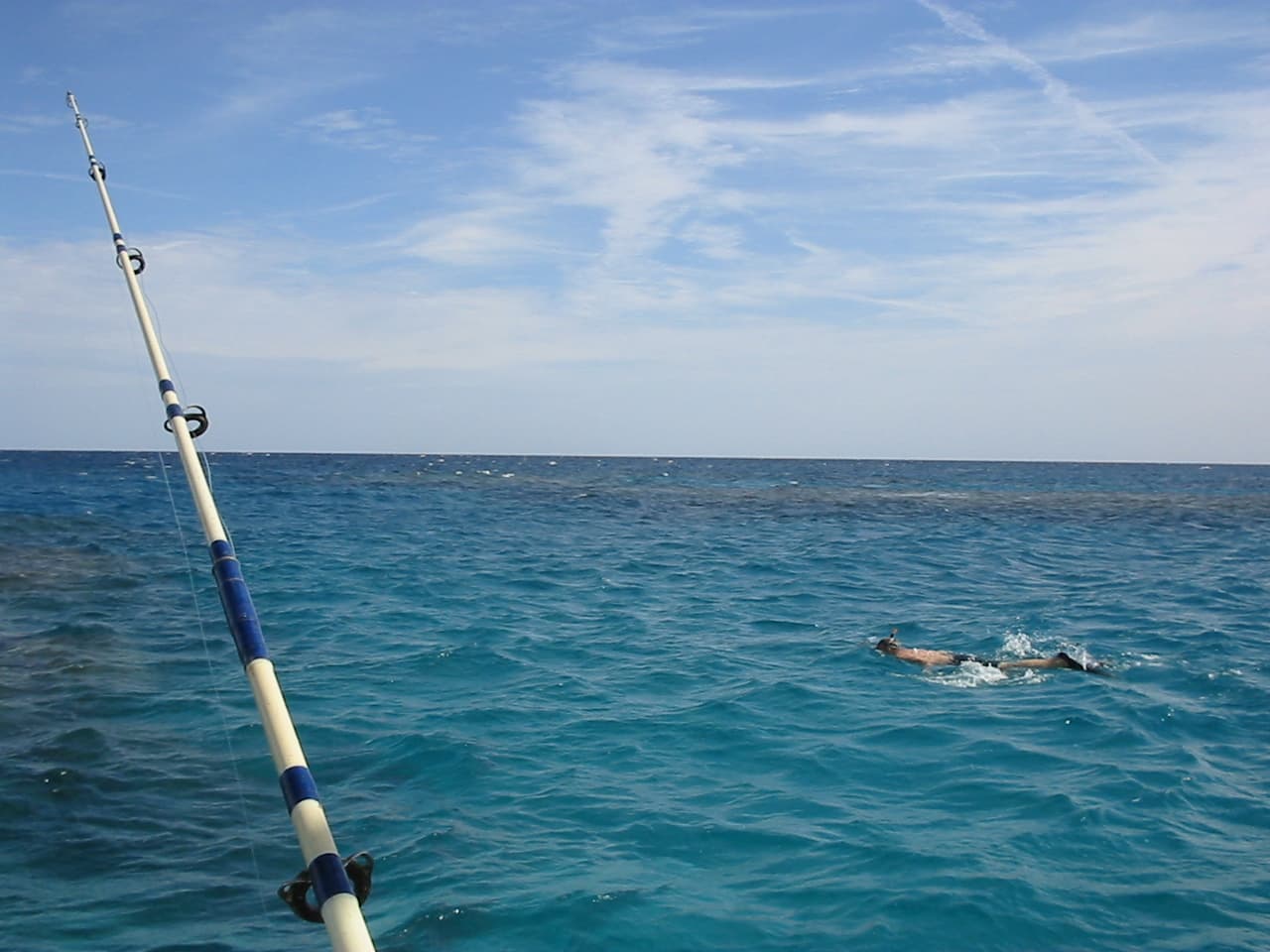
You do not need a certification to get most of the good out of this coast, and Sharm rewards snorkellers more than most dive destinations do. Because the walls start close to the surface, the top few metres hold a great deal of the coral and much of the fish life, and the drop into deep blue is visible from above. That view down the wall is the thing most snorkellers remember afterwards.
In town, many hotels have a house reef reached along a jetty. The jetty is not laziness on the hotel's part: the coral shelf begins in very shallow water, walking out across it damages the reef and cuts your feet, and the walkway carries you over the shelf to a point where you can drop straight in. Reef shoes and a rash vest earn their space in the case, and a long-sleeved top does more for you over a full day than repeated sun cream.
Two cautions. The current that makes the diving good makes snorkelling here harder than in a sheltered bay, so you need to be a confident swimmer and comfortable away from the boat; say so at booking if you are not. And before paying for any snorkelling trip, ask what the stops actually are. Some boats are built around deep dive sites, where a snorkeller floats above blue nothing while the divers enjoy themselves forty metres below. A sheltered bay with coral near the surface beats a famous name you cannot see.
Learning to dive, and how to judge a dive centre
Sharm is a reasonable place to learn. Warm, clear, usually calm water strips out most of what makes a first course hard elsewhere. An entry-level certification normally runs over three to four days: theory, skills in shallow water, then a handful of open-water dives. That is a real chunk of a week's holiday, so decide before you fly whether you want the qualification or simply a taster session. Anyone a year or more out of the water should book a short refresher rather than discovering the problem at twenty-five metres on a wall.
The centre matters far more than the agency logo on the door. Ask how many divers each guide takes underwater. Ask whether they run a check dive before anything demanding, and whether they want to see your logbook, because the ones that never ask are telling you how they run the rest of their diving. Look at the state of the rental kit. None of this is rude to ask and a good operator answers straight.
Insurance is on you, not the dive centre. Standard travel policies often exclude diving outright, or cover it only to a shallow depth limit, and treatment for a serious decompression injury is expensive. Buy specific dive cover and read the depth clause. Sharm is one of the longer-established hubs on this coast and better served for emergency care than the remote far south, but ask your operator where the nearest recompression chamber is anyway, and dive conservatively rather than assume one is close.
The Thistlegorm, and whether the wreck day is worth it
Sharm is a wall-and-reef destination first, but it does reach one famous wreck. Day boats run west across the Strait of Gubal to the Thistlegorm, a Second World War cargo ship lying at Sha'ab Ali. It is an early start, a long crossing, a deeper dive than the reefs near town, and current over the wreck is common. Reputable operators will ask what you have logged before they take you, and the ones that do not ask are the ones to walk away from.
Because the wreck sits out in the Strait of Gubal rather than off the Sinai shore, the trip eats a whole day and the sea state decides whether it runs at all. That is the honest split between the two Egyptian coasts: Sharm sits nearer the best walls, Hurghada sits nearer the wreck fields. Abu Nuhas, the reef that has been catching ships in the approach to the Gulf of Suez for more than 150 years, holds four wrecks within roughly five to thirty metres, including the Giannis D and the Carnatic, a P&O steamer lost in 1869. From Hurghada that is about two hours each way. From Sharm it is not a day trip at all.
If wrecks are the main reason you are coming to the Red Sea, you have chosen the wrong side of the Gulf of Suez, and a week in Hurghada would serve you better. Divers who want both usually stop picking a resort and take a northern liveaboard route, which links the Gubal wrecks with the Sinai reefs over a week and removes the daily boat commute, at the cost of a small cabin and a week with strangers.
Mount Sinai and St Catherine's Monastery: the one real trip inland
This is the excursion that shows you the interior of the peninsula, and it is the only thing on the land list that competes with the water. St Catherine's Monastery stands at the foot of Mount Sinai, roughly three hours inland from Sharm through empty desert. Jewish, Christian and Islamic tradition all identify this mountain with the one where Moses received the law, and its Arabic name, Jebel Musa, means the mountain of Moses. The monastery below was built in the sixth century and has been occupied ever since, which is what people mean when they call it among the oldest continuously inhabited monasteries in the world.
The standard excursion leaves around midnight so that you climb in the dark and reach the top for sunrise. The walk takes two to three hours up the camel path, the wide track that zigzags up the flank, and the last stretch is a long flight of rough stone steps that nobody warns you about. The summit is above 2,000 m and cold before dawn in every month of the year, including August. It is small: a chapel, a small mosque and a rocky area where several hundred people who all arrived within the same half hour wait for the same view east.
It is a hard night, and we would not pretend otherwise. You lose a night's sleep, the summit is crowded, the view is over in about twenty minutes, and by the time the monastery opens you are usually too tired to take it in. The reward is real, bare mountains going grey then pink then hard brown with nothing green in any direction, but it is bought expensively. Take a genuinely warm layer and something windproof, a head torch rather than a phone, long trousers for the cold and for the monastery's dress code, and small notes in cash.
If the walking is not the point for you, go in daylight for the monastery alone and skip the climb. That version suits more people than admit it. Either way, check the date first: the monastery opens to visitors for only a few morning hours, is normally shut on Fridays and Sundays and around Orthodox feasts, and an excursion sold to you for a day it is closed is not a rare occurrence. Divers should also keep this off a diving day, because a night at over 2,000 m does not belong next to a day at depth.
Desert trips behind town, and the real Sinai further in
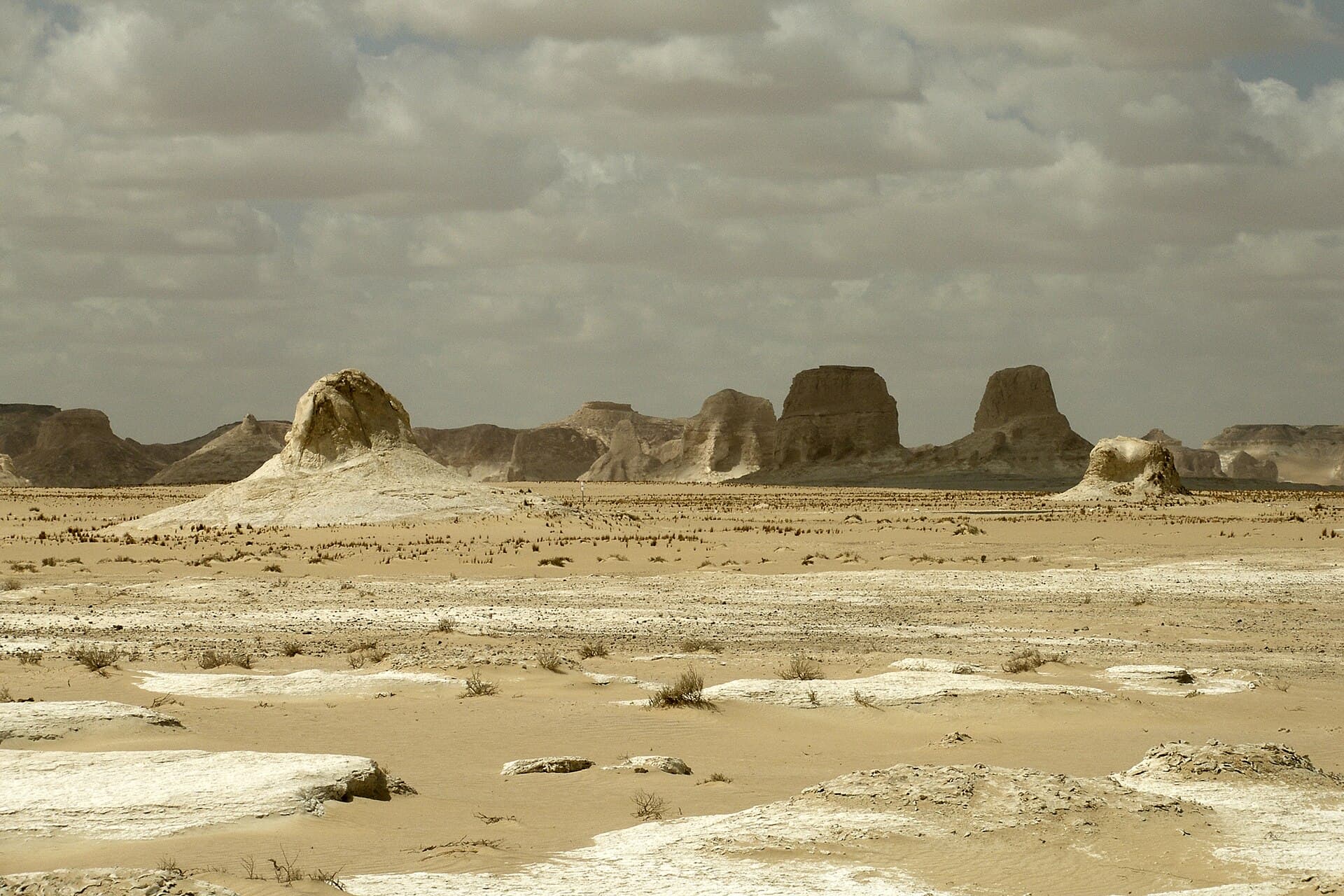
Every excursion desk in Sharm sells a desert evening: a convoy of quad bikes or jeeps into the flats behind town, a staged Bedouin camp, dinner and a show. They are heavily sold because they are easy to run, and they are dusty, brief and tell you very little about the Sinai. If the idea of driving a quad bike in a line appeals on its own terms, book it and enjoy it. If you are booking it to see the desert, you are paying for the wrong thing.
The genuine article is much further in, and it is the same country the St Catherine road crosses: high granite, empty wadis, no town of any size between the coast and the mountains. Sinai does hold pharaonic remains as well, chiefly the turquoise mines and the temple of Hathor at Serabit el-Khadim, but they sit hours inland towards the west coast and are almost never part of a resort week. If that is what you came for, it needs arranging as a proper trip rather than bolting onto a beach holiday.
One weather note that applies to any desert excursion here. Rare heavy storms can send flash floods through wadis, which is why trips inland are occasionally rerouted or postponed at short notice in winter. It is uncommon, and it is a reason to take a cancellation at face value rather than pressing for the trip to run.
Naama Bay, the Old Market and the evenings
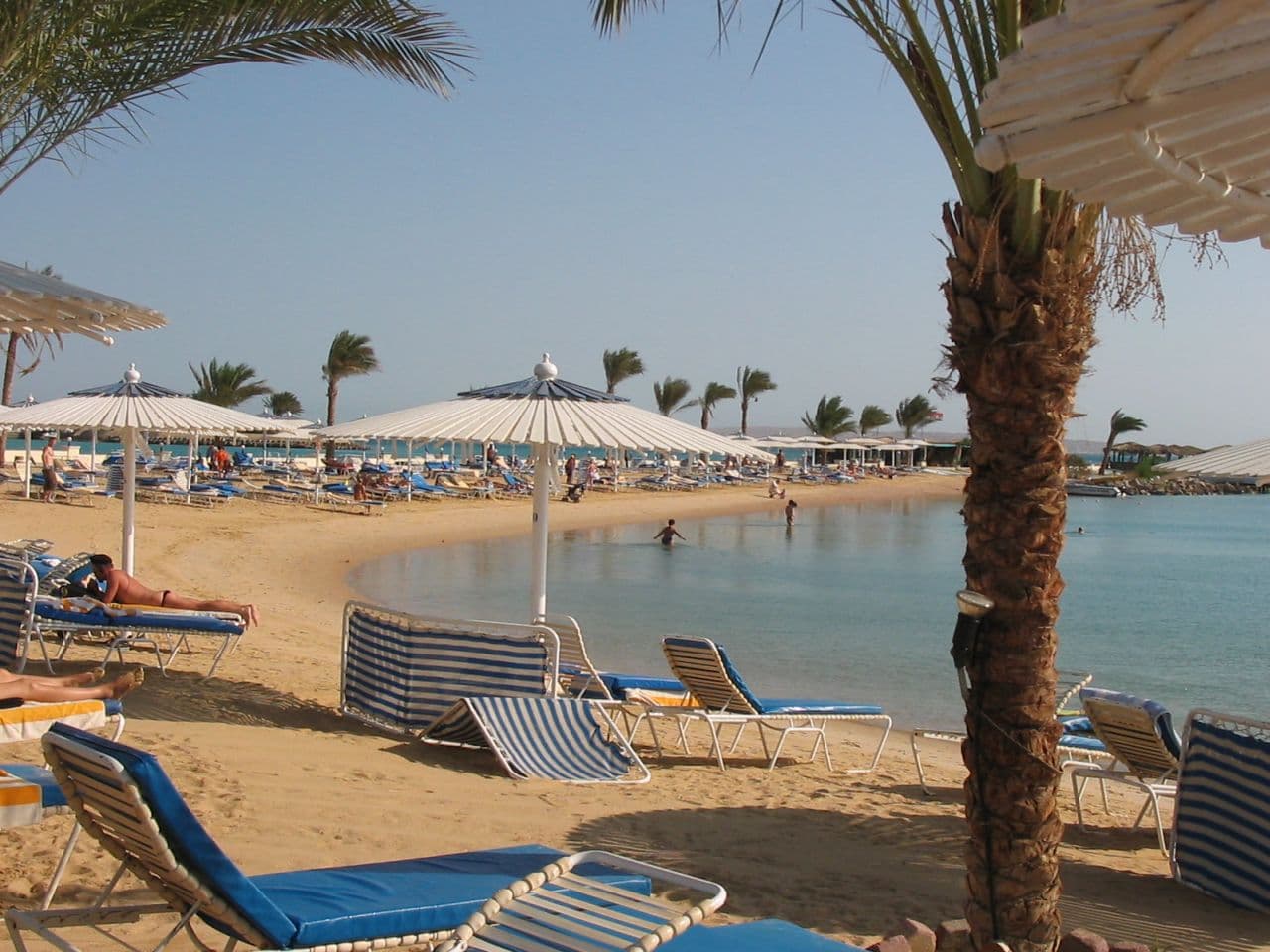
Nothing in Sharm is old. The town was built for tourism from the 1980s onwards and it shows: hotel compounds strung along the coast, Naama Bay as the centre of gravity with its promenade of bars, restaurants and shops, and an Old Market inland that is a market for visitors rather than a historic quarter. The Old Market is good for an hour of browsing lamps, spices and knock-off perfume, and you will be called into shops and restaurants the length of both. It is persistent rather than aggressive and a clear no works.
Alcohol is available in hotels, licensed bars and restaurants in the tourist areas, but not in ordinary shops. Imported brands are expensive and the cheap local spirit brands are best left alone. During Ramadan, which moves through the calendar each year, service outside the hotels is reduced and daytime drinking in public is not on, though the resorts themselves carry on much as normal.
The honest summary is that the evenings here are pleasant and easy rather than memorable. Naama Bay is walkable in a way that much of the Red Sea coast is not, which is a genuine point in its favour, and the town is tidier and more contained than Hurghada. It is also more artificial, and there is less Egypt visible around the edges. If a walkable old quarter or a real night out is high on your list, weigh that before booking a week rather than a few nights.
Dahab: the best day out of Sharm, and possibly the better base
Dahab is about ninety minutes up the coast on the Gulf of Aqaba, and it is the usual choice for a day away from the resort. It grew out of a Bedouin fishing settlement into a divers' town and still feels like one: seafront cafes with cushions on the floor, small hotels, cheap food, and shore diving you reach on foot rather than by boat. As a day trip it is a change of air. As a base it is a different holiday altogether, cheaper and slower, better suited to independent travellers and long-stay divers, with fewer large family hotels and very little laid on.
The Blue Hole is the name everybody knows and the one that needs stating plainly. The sinkhole dived at recreational depth from the entry point known as the Bells is a good dive and a safe one. The Arch, a tunnel through the reef wall at around 55 metres, is a technical dive that has killed people repeatedly, and no reputable operator will take a recreational diver through it. Its reputation is not only for beauty, and it should be treated with respect rather than bravado.
Further north again, Taba sits on the border at the top of the Gulf of Aqaba, and it is a quieter, thinner proposition than either. It is worth knowing it exists if you want the Sinai coast without a resort strip, and it is not worth a day trip from Sharm.
Sharm sits on Sinai, and that is what stands between you and the Nile
This is the single most useful geographical fact on the page, and most people who book a Red Sea week do not think about it until they start planning day trips. Sinai is a peninsula east of the Gulf of Suez, administratively and practically separate from the Nile valley. Sharm is on its southern tip. The temples, the pyramids and the river are all on the other side of the water.
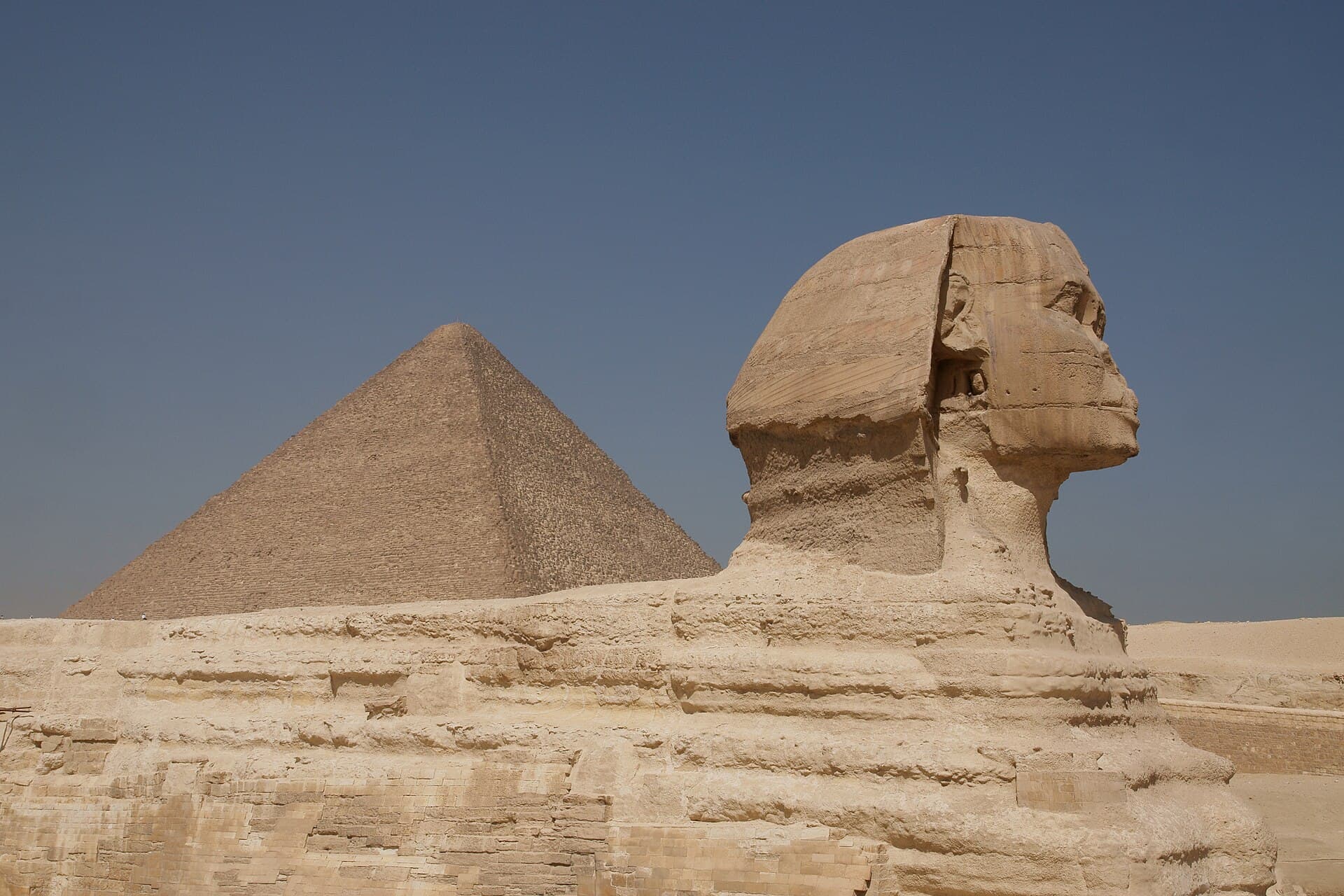
In practice that means the road from Cairo to Sharm is roughly 500 km, takes most of a day and passes through checkpoints, so nearly everybody flies: the internal hop is about an hour on a daily schedule. It also means the Nile sites are not day trips in any meaningful sense. From Hurghada, on the mainland coast, Luxor is roughly four hours by road, about 300 km inland to Safaga and Qena and then south along the valley, which makes a day trip possible and an overnight easy. From Sharm the equivalent is a flight, usually via Cairo, which turns a side trip into a separate leg of the holiday with its own logistics and cost.
None of that is an argument against Sharm. It is an argument for deciding what the holiday is. If this is a diving trip, the Sinai side has the better reefs and the geography does not matter. If you want temples and beach in the same fortnight, Hurghada removes most of the friction, and the usual shape is temples first, coast second, so the tiring half happens while you still have the energy for early starts.
Is the pyramids day trip by air worth it?
It is sold everywhere in Sharm, and it can be done. Fly to Cairo in the morning, see Giza, fly back at night. The question is not whether it is possible but what you get for a day of your holiday, and the answer is a rushed couple of hours at the plateau with the flights and the airport time swallowing the rest.
Giza deserves better than that, and so does the Grand Egyptian Museum a couple of kilometres away, which holds the complete Tutankhamun collection in one place and needs a clear half-day of its own. Pairing them in one afternoon is the mistake most Cairo itineraries already make; doing both from the wrong side of the Gulf of Suez compounds it.
Our advice is straightforward. If Cairo and the ancient sites genuinely matter to you, build them in as their own leg of the trip rather than bolting Giza onto a beach holiday. If they do not, skip the day trip without guilt and spend the money on a second boat day instead.
The Sinai-only entry stamp that catches divers out
This is the most expensive mistake available on this page, and it happens at the airport before anybody gets near the water. Many nationalities arriving at Sharm el-Sheikh can be given a free Sinai-only entry permit instead of a full Egyptian tourist visa. It runs for about two weeks and covers the eastern Sinai coast, Sharm, Dahab, Nuweiba and Taba, plus the road inland to St Catherine. It does not cover the rest of the country, so Cairo, Luxor and Aswan are out.
It is also widely reported not to cover Ras Mohammed National Park or diving trips. Since the park is the best single reason to be here, a free stamp that excludes it defeats the point of choosing Sharm in the first place. If you plan to dive, or to fly on to Cairo or the Nile at any stage, take the full tourist visa, and applying online in advance is the simplest route.
One more practical detail: the limit is enforced at road checkpoints rather than at the airport, which means the mistake surfaces halfway through a journey rather than on arrival. The rules have changed more than once over the years and are applied differently at different times, so treat this page as a starting point rather than a ruling and confirm the current position before you book anything non-refundable.
Things to do in Sharm el-Sheikh with children
Sharm works well for families, and its calmer, more contained layout makes it slightly easier with small children than the sprawl of Hurghada. Large all-inclusive hotels with pools and kids' clubs are the norm, and the shallow house reefs mean children can snorkel close to shore and see a real reef rather than a token one. A boat day where one parent dives in the morning while the other snorkels with the children, everybody eating lunch together on deck, works perfectly well. Confirm the boat takes snorkellers when you book, because not all of them do.
The limits are heat and duration. A day boat is a long day, most of it in strong sun on an open deck with limited shade, and that is hard on young children. The land side of Ras Mohammed is worse, with effectively no shade anywhere in the park. Cover up rather than relying on repeated sun cream, carry more water than seems sensible, and consider a half-day trip instead of a full one.
One caution about the coral shelf that makes this coast special: it also makes it awkward for toddlers, because the reef begins in very shallow water and the shore is frequently coral and stone rather than sand. That is why the jetties exist. If you need a wide sandy swimming beach, check that a specific hotel has one rather than assuming, as it varies enormously along the coast. What Sharm does not offer is much for older teenagers beyond watersports, and a bored fifteen-year-old is your problem to solve rather than the resort's.
When to go, and the wind that decides your week
March to May and October to November are the sensible months: warm rather than punishing on land, water warm enough without a thick suit, and rates below the Christmas and Easter peaks. Autumn holds the warmest water and the calmest run of days, which is why experienced divers pick it when their dates are free.
Summer is brutal ashore, roughly 40C in July and August and sometimes more, though the sea sits around 28C and the diving is at its easiest. Winter days are mild at around 20C with evenings that need a jacket, and the water bottoms out near 21C in February, which means a 5 mm wetsuit and, for anyone who feels the cold, a hood. Anyone picturing a February swim in a shorty should repack.
The variable people forget is wind. A northerly blow is normal here and hardest in spring, and when it gets up the exposed sites are cancelled, sometimes for two or three days running, with the Tiran boats the first to go. Plan a diving week around four or five diving days rather than seven and a lost morning becomes an inconvenience rather than the end of the trip. The land side of Ras Mohammed is the obvious fallback on a blown-out day, since the road does not care about the sea state.
What we would skip
The quad-bike convoy and the staged Bedouin dinner, unless the quad bike itself is the attraction. The day trip to the pyramids by air, for the reasons above. Glass-bottom and semi-submersible boats are fine for someone who genuinely cannot get in the water, and a waste of a morning for anybody who can: a mask and a jetty show you more.
We would also be sceptical about any snorkelling boat sold on the strength of a famous site name without a straight answer about where it stops, and about any dive centre that never asks to see a logbook. On the land side, the Old Market is worth an hour and not an afternoon, and a second desert evening after the first one is simply the same evening again.
The overnight Mount Sinai climb is the one item we would call genuinely divisive rather than bad. For some people it is the memory of the trip. For others it costs a night's sleep and a day of recovery and delivers twenty crowded minutes. Read the section above honestly against your own tolerance for a cold, dark, uphill night, and take the daylight monastery visit instead if the answer is obvious.
How many days Sharm is worth, and what a sensible week looks like
For diving, add at least four nights. That lets you fit two or three days of two-tank diving with a rest day before flying, and the rest day is not optional: the standard advice after several days of repeated diving is to leave roughly 18 hours before boarding a plane, commonly at least twelve after a single dive. Follow whatever your own training agency specifies, and remember that the internal hop to Cairo counts as flying just as the flight home does. For a pure beach stay at the end of a Nile trip, three or four nights is usually enough to justify the transfer.
A workable week looks something like this. Arrive and do nothing. Day boat to Ras Mohammed on the first full day, early, because it is the thing you came for and because a blown-out day later still leaves you having done it. A shore or house-reef day next. Tiran on the third, if the wind allows. St Catherine and Mount Sinai in the middle of the week rather than at either end, so a lost night's sleep has somewhere to recover. Dahab as the day out. Then a final day with no diving in it at all before you fly.
What that shape avoids is the common disappointment here, which is not a bad site but a week arranged so that the weather has only one chance to cooperate. Wind, a closed monastery and a cancelled crossing are all ordinary events on this coast. A plan with slack in it absorbs them; a plan with one booked highlight on the last day does not.
Where our own itineraries meet the Red Sea, and why it is Hurghada
We should be straight about this: our operator's Egypt itineraries reach the Red Sea at Hurghada rather than Sharm, and the reason is the geography described above. Hurghada is on the mainland, four hours by road from Luxor, so the beach days attach to a Nile trip without an extra flight. Sharm cannot do that, and an itinerary that tried would spend a day of your holiday in airports.
The relevant trips, all prices per person, land only, and in US dollars: Cairo, Luxor and the Red Sea over 8 days from US$2,040, with four nights in Cairo, one in Luxor and two at Hurghada; a Nile cruise and Hurghada over 10 days from US$2,310; Cairo, a Nile cruise and Hurghada over 11 days from US$2,560, with three nights on the river and three on the sea; and the 13-day version of the same route from US$2,945. Each runs at three plan levels, and the cheapest trip we sell at all is a four-day Nile cruise from US$840.
If Sharm specifically is what you want, the sensible arrangement is a Sinai week booked in its own right around the diving, not stitched onto the temples. Tell us what you are trying to see and we will say plainly which coast serves it, including when the answer is that you want two separate trips rather than one.
Getting there and getting around
Sharm has its own international airport and it sits close to the resort zone, so transfers are short by Red Sea standards. Direct charter and scheduled flights from the UK take about five and a half hours, and from Cairo the hop is roughly an hour on a daily schedule. Direct service from some markets has been suspended and later restored over the years, and capacity still moves with the season, so check what is actually flying for your dates rather than assuming a nonstop exists.
Within Sharm you will rely on hotel transfers and taxis, because the resorts are strung along the coast rather than clustered in one walkable centre. Naama Bay is the exception and is genuinely walkable. Agree a taxi fare before you get in. The all-inclusive model is designed so that you rarely need to leave the compound, which is real value for families and also, quietly, a decision about what your week will be.
Carry small notes in Egyptian pounds. Park fees, tips, the stalls on the Mount Sinai path and most things away from a hotel desk want cash, and card acceptance thins out fast once you are off the strip.
Common questions
What is the single best thing to do in Sharm el-Sheikh?+
A day boat to Ras Mohammed National Park, about 20 km south of town. The walls at the meeting of the Gulf of Suez and the Gulf of Aqaba are the reason the resort exists, and the Shark and Yolanda drift is the dive people come for. Go on the earliest boat available, because the sites fill through the morning and the visibility is better before the crowd arrives.
Can you do things in Sharm el-Sheikh without diving?+
Yes, and snorkelling is the main one. The reef walls start close to the surface, so the top few metres hold much of the coral and the fish, and many hotels have a house reef reached by a jetty over the coral shelf. Beyond the water there is Mount Sinai and St Catherine's Monastery inland, a day in Dahab up the coast, and Naama Bay in the evenings. That is a short list, and it is fair to say the town is thin once the sea is taken out of it.
Is the overnight Mount Sinai climb worth it?+
It divides people honestly. You leave around midnight, walk two to three hours in the dark, finish on a long flight of rough stone steps, and share a small summit above 2,000 m with several hundred others for about twenty minutes of sunrise. Some people count it as the memory of the trip; others lose a night's sleep and a day to recovery. If the walking is not the point for you, visit the monastery in daylight instead and check its opening days first.
Can you visit the pyramids or Luxor from Sharm el-Sheikh?+
Not easily, because Sharm is on the Sinai peninsula and the ancient sites are across the Gulf of Suez. Giza is sold as a day trip by air and it can be done, but the flights and airport time swallow the day and leave a rushed couple of hours at the plateau. Luxor is effectively a separate leg via Cairo. If temples and beach are both in the plan, Hurghada is four hours by road from Luxor and removes most of that friction.
Do I need a full Egyptian visa for Sharm el-Sheikh?+
Many nationalities can be given a free Sinai-only permit on arrival, valid about two weeks for the eastern Sinai coast and the road to St Catherine. It does not cover the rest of Egypt and is widely reported not to cover Ras Mohammed or diving trips, which is the trap. If you intend to dive or to travel beyond Sinai, take the full tourist visa and apply online in advance. Rules here have changed more than once, so confirm the current position before booking.
When is the best time to visit Sharm el-Sheikh?+
March to May and October to November, with autumn holding the warmest water and the calmest days. July and August run around 40C ashore, which is punishing on land even though the sea reaches roughly 28C. Winter is mild at around 20C by day with cool evenings, and the water bottoms out near 21C in February, so plan on a 5 mm wetsuit rather than a shorty.
How many days should I spend in Sharm el-Sheikh?+
At least four nights if you are diving, so you can fit two or three diving days plus a rest day before flying; the usual guidance is to leave about 18 hours after several days of repeated dives, and an internal flight to Cairo counts. Three or four nights is enough for a beach tail end after a Nile trip. A full week only really earns its place if you are diving most days or you genuinely want to do very little.
Is Sharm el-Sheikh better than Hurghada?+
For diving, yes, and it is not close: Ras Mohammed and Tiran are a rung above anything off Hurghada. For a trip that also includes the temples, no, because Hurghada is four hours by road from Luxor while Sharm is on the wrong side of the Gulf of Suez. Hurghada is also cheaper on average, reaches the Abu Nuhas wrecks more easily, and has more sandy beaches, which matters with toddlers.
Official sources
Entry rules, opening hours, security advice and exchange rates all move. Check them at the source, not here.
Written and checked by the Nile Trip Guide editorial team · Last reviewed . Entry rules, prices and opening hours change — check anything critical against the official sources linked on this page.
Plan this trip
Tell us your dates and we will price it
A real itinerary with real prices, usually within 24 hours. Nothing is booked and nothing is charged until you say yes.
The route most people take first, at the length it was built for: Giza and the Grand Egyptian Museum, then a flight to Luxor and four nights sailing down to Aswan.
No boat on this one. Giza and the Grand Egyptian Museum, a night in Luxor for both banks, two nights on the Red Sea, then back to Cairo for the Citadel, Coptic Cairo and the Royal Mummies.
Five nights in Cairo either side of a four-night sail from Luxor to Aswan. The Cairo days are private, just your party and a guide; the sightseeing off the boat is shared with a small group.