Inside the pyramids: what you see in the Great Pyramid, in order
Yes, you can go inside the pyramids at Giza. The Great Pyramid of Khufu is open to visitors on its own ticket: EGP 1,000 for an adult and EGP 500 for a student. You also need the Giza area ticket. Inside, you climb a low, steep passage into the Grand Gallery, then reach the King's Chamber and Khufu's granite sarcophagus. There are no paintings and no inscriptions. This guide takes you through the route in order, sets out the ticket, and says who should skip it. Prices were checked with the ministry in October 2026.
Can you go inside the pyramids at Giza?
Yes. All three large pyramids at Giza have interiors you can enter, and each one has its own ticket. The Ministry of Tourism and Antiquities lists the Great Pyramid, the Pyramid of Khafre and the Pyramid of Menkaure as outside the general area ticket. The same applies to the Tomb of Meresankh III and the Workers' Cemetery.
Not all three are always open. One pyramid is often closed for conservation while the others stay open. The rotation is not published in a form you can rely on from abroad. Ask at the ticket office on the day and buy what you want there.
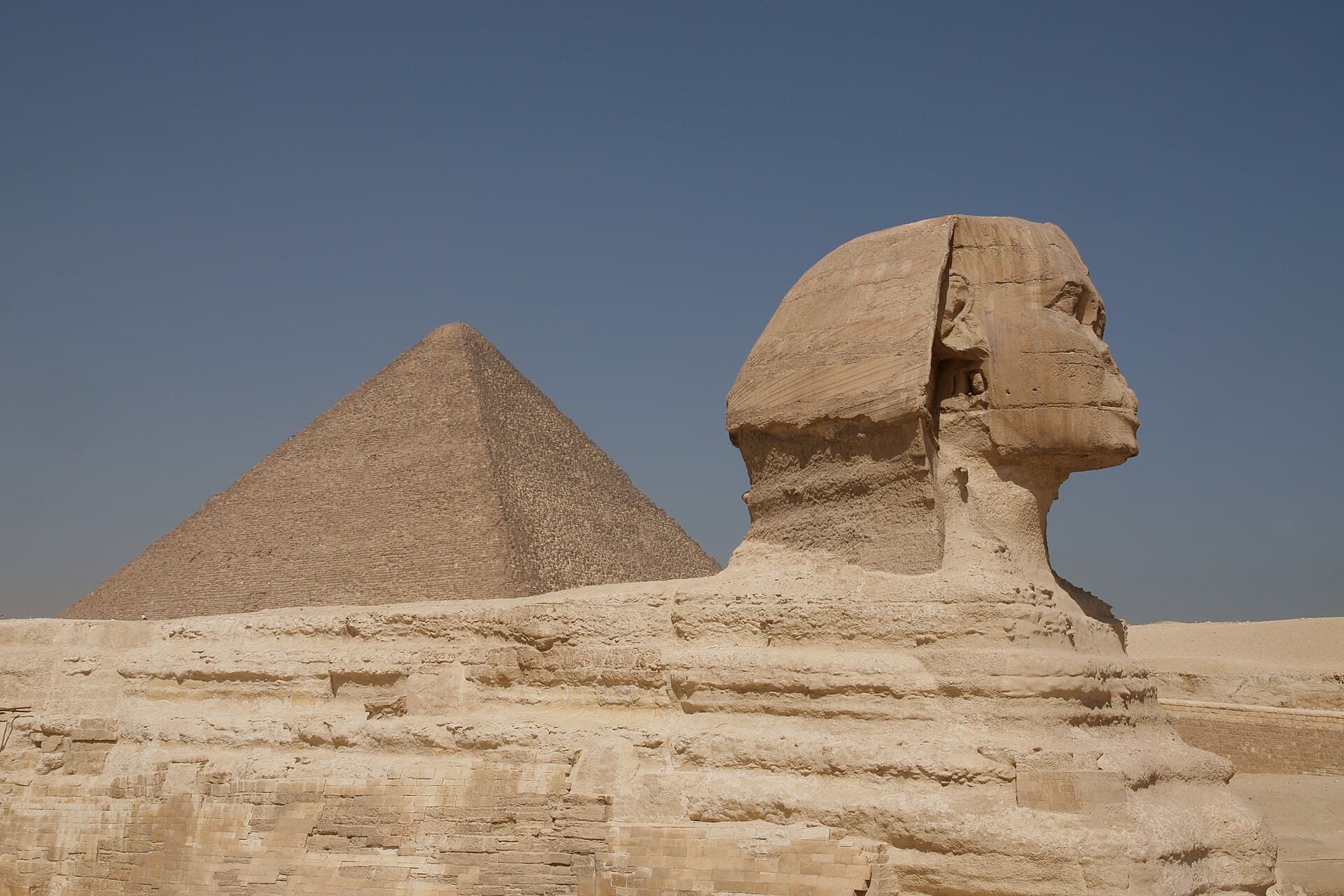
The Great Pyramid is the one most people mean when they ask. It is also the busiest. The other two are shorter, simpler and much quieter inside, and they are covered further down.
Inside the Great Pyramid: what you see, in order
There are no signs or panels underground, and the passages are too narrow to stop and read. So it helps to know the plan before you go in. The ministry describes three chambers: one cut into the bedrock beneath the pyramid, and two high up in the masonry. It calls this a feature that no other pyramid possesses. The visitor route leads to the upper one, the King's Chamber.
1. The ascending passage. This is the section people remember. It is low, steep and awkward, and most adults climb it bent over. It is also the only way back out, so you share it with people coming down.
2. The Grand Gallery. The passage opens into a tall corridor with a corbelled roof. Its walls step inwards, course by course, as they rise. The ministry calls it a masterpiece of ancient engineering and architecture. It is the part of the interior that justifies the ticket. Stop at the bottom and look up before you join the line.
3. The last low passage. At the top of the gallery, a short, low passage leads past granite blocking arrangements. Expect to stoop again here.
4. The King's Chamber. This is a plain granite room with a flat ceiling. At one end stands a lidless stone sarcophagus. The ministry says Khufu was once laid to rest in it. There is nothing else in the room: no paint, no carving, no objects. Then you go back down the way you came.
Below the route, the original descending passage runs down into the bedrock. It ends in an unfinished chamber, the lowest of the three, which was apparently abandoned. The visitor route branches upwards partway down it. Several famous features are out of sight. Above the King's Chamber sit stacked relieving chambers, built to spread the weight of the stone above. The workmen's gang graffiti survives inside them. Narrow shafts run outwards from the King's Chamber and from the so-called Queen's Chamber below it. Their purpose is still disputed. You cannot see any of these from the visitor route.
What is it like inside a pyramid?
Hot, close and crowded. The air inside the Great Pyramid is humid and heavy with other people's breath. Parts of the route are unlit. The passages before and after the Grand Gallery are low, and the floor is steep.
You move in a single line for much of the way. Stopping holds up everyone behind you. If you turn back, you walk down past people who are still climbing. A fair number of visitors find the climb hard to manage.
Leave any idea of treasure outside. The pyramid has no decoration, no inscriptions and nothing on display. What you get is the Grand Gallery and the plain fact of standing inside the only one of the seven ancient wonders still standing.
How much is the ticket to go inside the Great Pyramid?
Going inside needs a separate ticket from the one that gets you onto the Giza plateau. You need both. These are the ministry's prices for foreign visitors, checked October 2026.
Great Pyramid interior: EGP 1,000 for an adult, EGP 500 for a student. Giza Plateau area ticket: EGP 700 for an adult, EGP 350 for a student. Together that comes to EGP 1,700 for an adult and EGP 850 for a student. The ministry's Great Pyramid page states that the area entry ticket is required.
The area ticket does not cover Khafre's or Menkaure's pyramid, the Tomb of Meresankh III or the Workers' Cemetery. Each needs its own ticket, sold at the site. The Grand Egyptian Museum is a separate site with its own admission.
Interior tickets are limited in number. That is the main reason to arrive at opening. Buy at an official window, buy everything you want at the same time, and ignore anyone selling tickets away from it.
We do not print opening times here. The ministry's page for the plateau and its page for the Great Pyramid give different hours. Confirm the times locally before you set out.
Is going inside the Great Pyramid worth it?
For most visitors, honestly, no. You pay EGP 1,000 on top of the area ticket for a hard climb, hot air and a bare room. Our full Giza guide gives the same answer.
The exception is the Grand Gallery. It is a real piece of engineering, and photographs do not convey it. If you know you will regret skipping it, go.
If you simply want to have been inside a pyramid, Khafre's or Menkaure's will do the job. Their interiors are shorter and simpler. The queue is often a fraction of the one at Khufu's entrance.
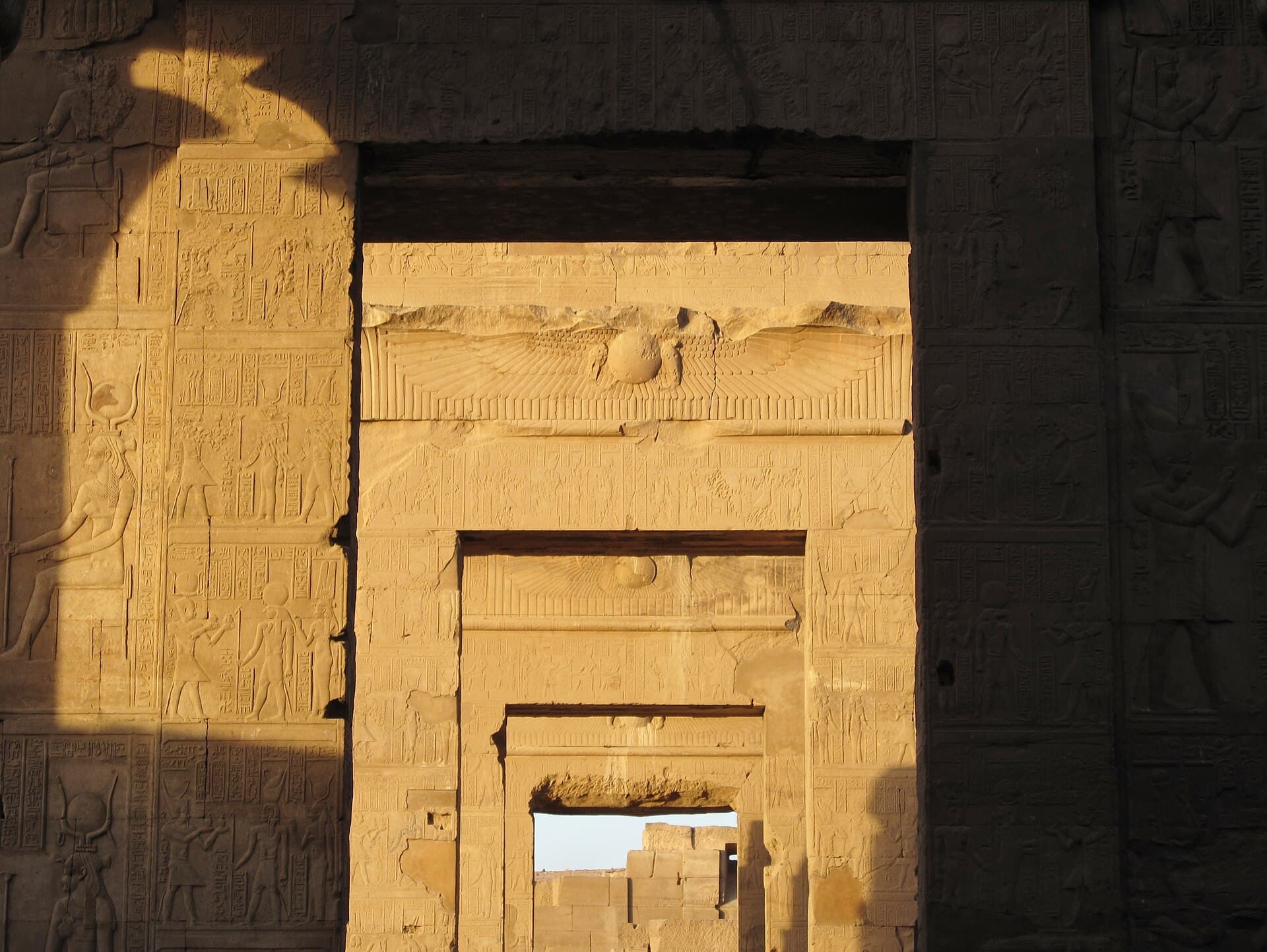
If you want to see decoration, visit a mastaba tomb. These officials' tombs lie in ordered rows east and west of the Great Pyramid. Where one is open, you see carved and painted scenes of farming, offerings and daily work at eye level. Bring a torch, and expect flash photography to be banned.
Who should skip going inside?
Skip the interior if any of these apply to you. You have a real problem with enclosed spaces. You have a heart condition or a breathing difficulty. You have a bad back or bad knees, or you are unsteady on stairs.
The interiors also do not suit visitors with limited mobility or young children. With children, this matters most in high summer.
The reasons are physical. The passages are low, steep and unlit in places. The only way out is back the way you came, past everyone coming down. There is little room to stop and rest.
Children usually get more from the Sphinx and the mastaba scenes, which have faces and animals in them. The bare stone of a pyramid interior means little at close range to a young child.
Other pyramids you can go inside near Cairo
At Giza itself, Khafre's and Menkaure's pyramids are the obvious second choice. Ask at the ticket office which of them is open that day, and buy their tickets there.
The Red Pyramid at Dahshur is the tallest pyramid there. The ministry says it is the third-largest Egyptian pyramid, after Khufu's and Khafre's, and that visitors go in through an entrance on the north side. You climb down into it, and visitors often mention a strong smell of ammonia inside. Dahshur is far quieter than Giza.
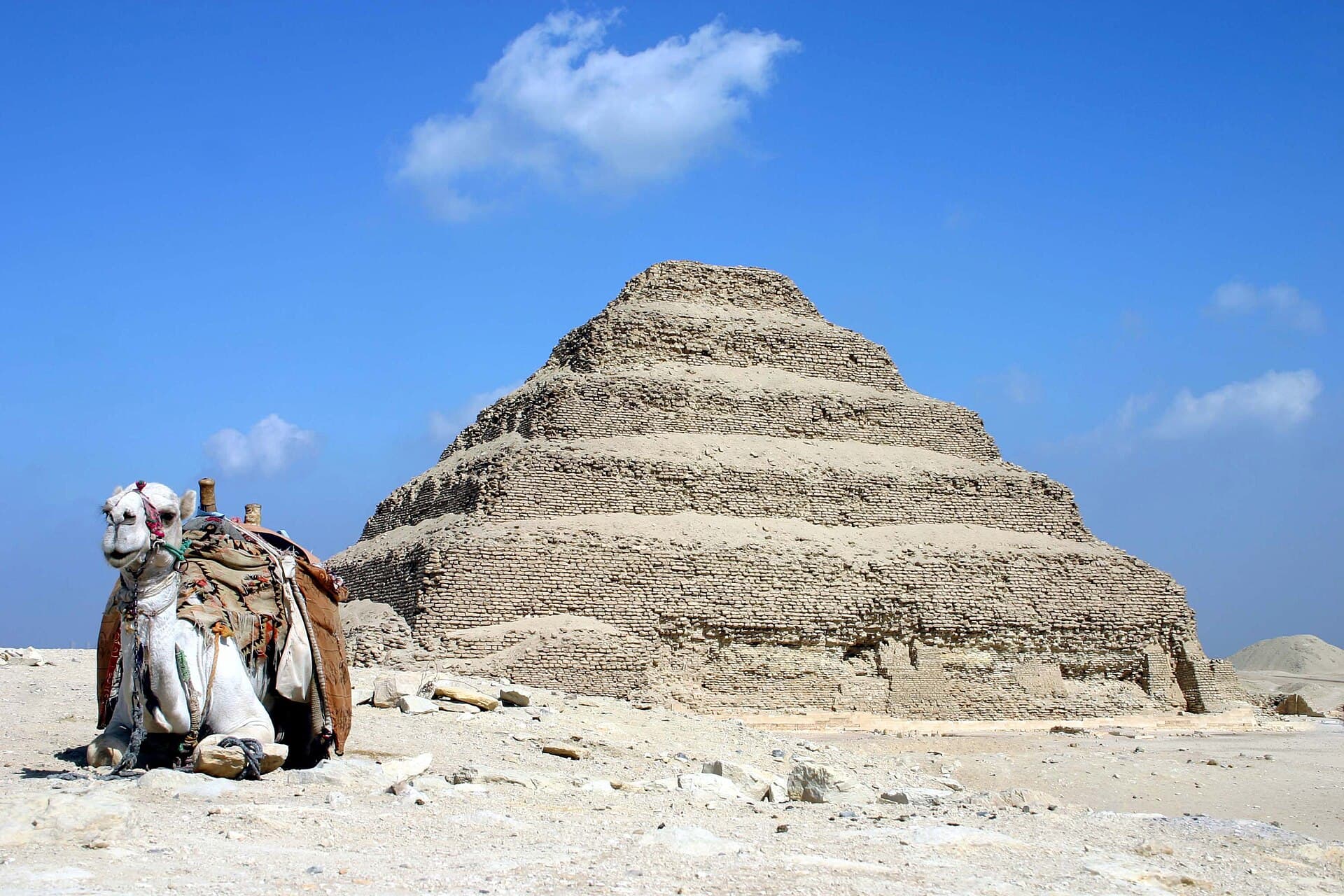
Its neighbour, the Bent Pyramid, also opens from time to time. Visitors use the entrance in its north face. At Saqqara, the interior of Djoser's Step Pyramid has been open on a ticket separate from general entry. Access at both sites changes often, so ask on the day.
Two of our tours visit Dahshur. Cairo, Luxor and a Nile Cruise over 15 days and the Grand Tour of Egypt over 16 days both spend day 14 at Saqqara and Dahshur. That day covers the Step Pyramid, the Red Pyramid and the Bent Pyramid.
When to go in, and what to bring
Go early. Interior tickets are limited, and the coach groups and the heat arrive together in the middle of the day. From May to September the plateau is punishing by late morning.
Wear closed shoes with a good grip; the ground outside is sharp and sandy. Carry water, a hat and small notes. Tips are expected for small services on the site, including from guards who open up tombs.
Fit the interior into a sensible route. Start at the panorama point, then walk down past Menkaure's and Khafre's pyramids to the Great Pyramid. Make your decision about going inside there. Finish downhill at the Valley Temple and the Sphinx.
Allow three to four hours for the plateau, and more if you go into chambers. The touts are part of the morning too. Our guide to common scams in Egypt covers the camel and headscarf tricks.
Which of our tours visit the Great Pyramid?
All 14 of our Cairo tours spend a morning at Giza, with the Pyramids, the Sphinx and a short camel ride. The afternoon goes to the Grand Egyptian Museum. None of the tours includes a ticket to go inside a pyramid. Each one lists it as an extra you buy on the day.
If you plan to go inside, expect a full and tiring day. An early start helps.
Five tours to start with. The Cairo Short Break, 5 days, from US$935, is four nights in Cairo with Giza on day 2. The Cairo and Luxor Short Break, 5 days, from US$1,480, has three nights in Cairo and one in Luxor. Cairo, Aswan and a Nile Cruise, 7 days, from US$1,890, follows Giza with three nights on the Nile.
For Dahshur as well, there are two longer trips. Cairo, Luxor and a Nile Cruise, 15 days, is from US$3,985. The Grand Tour of Egypt, 16 days, is from US$3,910. Both visit Giza on day 2 and the Red Pyramid on day 14.
Common questions
Can you go inside the Sphinx?+
No. The Sphinx is carved from the bedrock of the plateau, and you cannot walk up to it or touch it. You see it from a viewing terrace, which you reach through the Valley Temple of Khafre.
Can you climb the outside of the pyramids?+
No. Climbing any pyramid is prohibited and enforced, and people are detained for trying. Anyone who offers to arrange a climb for a fee is offering to get you arrested. You can walk right up to the base and touch the stone.
Can visitors see the newly found void or corridor in the Great Pyramid?+
No. Imaging work has reported a large, previously unknown void above the Grand Gallery. A short corridor behind the chevron blocks on the north face has been confirmed and examined with a borescope, a thin camera. Neither is open to visitors, and neither contained treasure.
Where is Khufu's boat now?+
At the Grand Egyptian Museum. The ministry says two large ships were found dismantled in pits on the south side of the Great Pyramid. The one that stood in its own museum beside the pyramid has moved to the GEM, so see it there.
How tall is the Great Pyramid?+
It stood 146.5 metres when finished, according to the ministry, and it was the tallest structure in the world for 3,800 years. It is roughly eight metres shorter today. It lost its capstone and the polished casing that once covered it.
Official sources
Entry rules, opening hours, security advice and exchange rates all move. Check them at the source, not here.
Written and checked by the Nile Trip Guide editorial team · Last reviewed . Entry rules, prices and opening hours change — check anything critical against the official sources linked on this page.
Plan this trip
Tell us your dates and we will price it
A real itinerary with real prices, usually within 24 hours. Nothing is booked and nothing is charged until you say yes.
Five days in Cairo and nowhere else: Giza, the Grand Egyptian Museum, the Egyptian Museum, the Citadel, Coptic Cairo and Khan el-Khalili. Four nights in one hotel, and every sightseeing day run privately.
Giza and the Grand Egyptian Museum, then a flight south for one night in Luxor covering both banks, and a flight back. Five days, two cities, both domestic flights in the price and every day guided privately.
A 7 day Egypt itinerary that takes the river the other way round: Giza and the Grand Egyptian Museum first, then a flight south to Aswan and three nights sailing down to Luxor.
Fifteen days of the ancient sites without a beach stop: Cairo, two days of Luxor on land, four nights sailing to Aswan, a Nubian village, then back to Cairo for Alexandria, Saqqara and Dahshur.
Sixteen days and very little left out: Cairo, a flight to Aswan, three nights sailing down to Luxor, two more days of Luxor on land, three nights on the Red Sea, then back to Cairo for Saqqara and Dahshur.