Last minute Nile cruise: what is still available, and what has gone
A last minute Nile cruise is easier to arrange than most people expect and harder than the deal sites imply, and which of those applies to you depends almost entirely on the month. In the quiet months a cabin two or three weeks out is unremarkable. In January, or over Christmas and Easter, what is left late is usually what nobody else wanted. This page is about telling those two situations apart before you spend anything.
How late is too late?
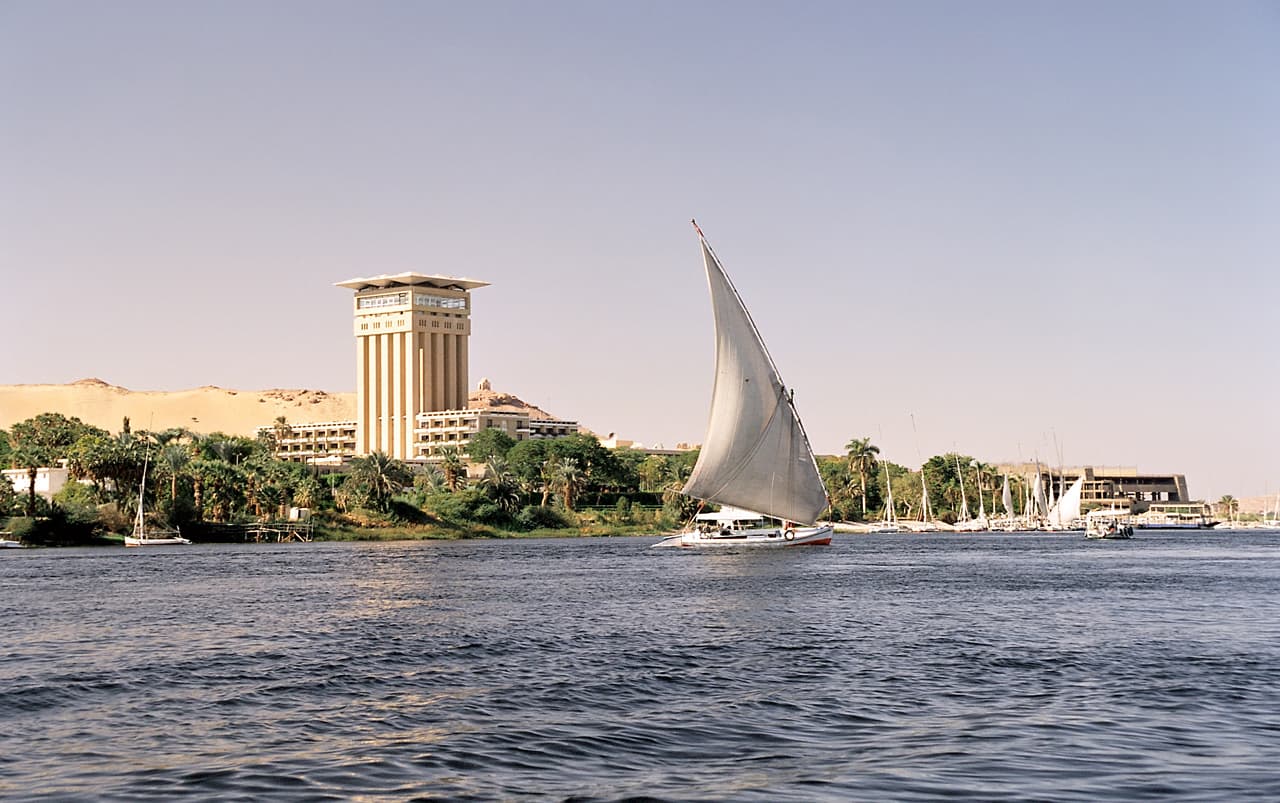
There is no single cut-off, because the boat is rarely the thing that runs out first. The order of constraints is flights, then entry paperwork, then the cabin. On the standard Luxor to Aswan run a lot of boats work the same stretch of river every week, so a bed at short notice is often findable. A seat on a Cairo to Luxor flight at a sensible price, three days out, in January, frequently is not.
The month decides the rest. Winter, roughly November to February, is high season, and our costs page is blunt about what that means for late bookers: the better boats, the better guides and the good Nile weeks sell out months ahead, and what is left late is usually worse rather than cheaper. Christmas, New Year and Easter are worse again, with a premium on top. Booking into those weeks at short notice generally means paying more for less.
Outside them the arithmetic flips. In the shoulder months and through the summer, booking a few weeks out can save money without costing you much choice. June to August in Upper Egypt runs well past 40C, the sun deck is unusable from mid-morning until late afternoon, and there is little shade at the sites. That is why those cabins are available and cheap. It is a real trade rather than a bargain, and heat-tolerant adults get much the better of it than families with young children do.
Month by month: what late means in each season
February and March are the best months to be a late booker, and it is not close. The weather in Upper Egypt is still mild rather than punishing, the Christmas and New Year rush has emptied out of the boats, and Easter has not yet arrived to refill them. If your dates land in that window and you are reading this a fortnight out, you are in the easiest position this page describes. The same is broadly true of October and early November at the other end of the season, with the caveat that October can still reach the mid-30s by day.
December and January are the hard months. Luxor and Aswan sit at roughly 22 to 25C in the day through midwinter, which is exactly what makes six hours on the west bank pleasant instead of gruelling, and the whole country prices accordingly. The recently refitted boats are gone, the strongest guides are committed, and the moorings stack up worst precisely when the weather is at its best. A fortnight out in January is not impossible. It is simply a market where every remaining cabin is remaining for a reason.
Easter behaves like Christmas in miniature and catches people who did not think of it as a peak at all. UK school half-terms sit just behind it on the same curve, which is why a week that looks unremarkable on a calendar can be full on the river.
High summer is the mirror image: wide open, genuinely cheap, and hot in a way that changes the trip rather than merely inconveniencing it. Luxor and Aswan run around 41C in June, every excursion moves to first light, and the middle of the day is lost. A late summer booking is a good deal for two adults who will take the early starts seriously. It is a poor one for anyone who imagined afternoons on the sun deck, and a bad one with small children whatever the discount.
There is a simple test buried in all this. If the month you are looking at is one people choose for the weather, lateness costs you. If it is a month people avoid, lateness pays you. Nothing about a last minute Nile cruise is more predictive than that.
What can genuinely be arranged at short notice
The cabin, most of the year. Standard motor cruisers run the same route with much the same programme, and an operator would rather sail with a discounted cabin filled than an empty one. The three-night northbound and four-night southbound sailings between Luxor and Aswan are the two with real depth behind them, which is exactly why they are the ones that can absorb a late booking.
Ground arrangements come together quickly too. A car and driver, an Egyptologist guide, hotel nights in Luxor or Aswan, transfers and entrance tickets are all put together locally and are not, in an ordinary week, scarce. Abu Simbel from Aswan is a separate excursion on every itinerary anyway, roughly three hours each way by road or a short flight, so adding it late costs you nothing you would not have paid regardless.
The visa is the one part of a late booking that is designed for lateness. Most nationalities can buy a single-entry tourist visa on arrival, at the bank counters in the arrivals hall before passport control, in cash and in hard currency. That is what the counter is for. But not every passport is eligible for it, some nationalities have to apply in advance or go through an Egyptian embassy, and no travel page should be your source on which case you are in. Check your own nationality on the official portal at visa2egypt.gov.eg before you pay for anything non-refundable.
Working backwards from the sailing date
A late booking fails in a particular order, so it helps to build it in the reverse of that order. The sequence is flights, paperwork, cabin, ground. Everything on this page is a consequence of that list, and most of the bad outcomes come from doing it the other way round.
Flights first, because they are the only item with no depth behind them. Fix the arrival airport before anything else: every transfer, hotel night and embarkation is built around it, and changing it later usually means unpicking the whole plan. If the trip needs a Cairo to Luxor or Aswan sector, price that at the same moment as the international one rather than afterwards, because the domestic leg is the piece most likely to move the total.
Paperwork second, and it is a five-minute job that occasionally ends a trip. Check your nationality is eligible, then check the passport itself. Airlines commonly apply a six-month validity rule at check-in and they read it from the date printed in the passport, so a marginal passport is a missed flight at your own departure airport rather than an Egyptian problem. No visa route fixes that, and a fortnight is not always long enough to renew.
Cabin third, once you know which end of the river you are arriving at and on which day. Ground last, because a car, a guide and a hotel night are the parts an Egyptian operator can assemble in an afternoon. If someone wants a deposit for the boat before you have a confirmed flight, that is the wrong order, and the risk of it sits entirely with you.
Build one spare day into the plan if you can spare it at all. On an early booking a spare day is a luxury. On a late one it is the only slack in the entire itinerary, because there is no second flight behind the first and no second cabin behind the cabin.
What has usually already gone
Domestic flights first. The Egyptian domestic network hubs at Cairo, the routes south are thinly served, and fares rise steeply in winter and close to departure with little competition to soften them. This is the single item most likely to make a late Nile trip cost more than an early one, and no operator can negotiate it away.
Then the boats worth wanting. Egyptian boat ratings are not comparable with hotel ratings elsewhere, and the same five-star label covers boats refitted last season and boats with tired cabins and weak air conditioning. The recently refitted ones fill first. Late availability skews towards the other kind, which is the whole reason we say what is left late is usually worse rather than cheaper.
Dahabiyas are effectively out. A dahabiya is a small sailing boat with a handful of cabins, often taken as a whole boat by one group, and it needs five nights or more to cover the route. There is no depth of inventory to discount. If quiet sailing is the point of your trip, the honest answer is that this rarely works at short notice, and moving the dates is a better plan than hunting.
Solo travellers face the hardest version of all this. Cabin rates assume two people sharing, so a single supplement is added and on some boats it amounts to the whole second berth. Booking late gives an operator less room to place you on a group departure with a share-a-room option, which is the only real lever there is.
What actually gets cheaper close in, and what does not
Unsold cabins are the part with give in them, and only in weeks that have not filled. Everything else on the invoice is close to fixed. Guiding and transport have a floor under them, entrance tickets are set by the sites, tipping is a real cost you should budget at the planning stage, and the visa fee does not move. So a late saving, when it exists, is a saving on one line of the quote rather than on the trip.
Two structural discounts are available whenever you book, and late bookers often mistake them for a deal. The three-night northbound sailing from Aswan down to Luxor is typically 10 to 15 per cent cheaper than the four-night southbound run on the same boat, because the current does the work. And summer prices are lower than winter ones by a wide margin. Both are real. Neither is a last-minute offer, and an operator presenting either as one is selling you the calendar.
Be as suspicious of a low late price as of a low early one. Cheap Egypt tours are frequently subsidised on the ground by stops at papyrus, alabaster and perfume shops where the guide earns commission, and by extras sold hard once you have arrived. Ask directly whether shop visits are in the programme. A trip with none of that costs more up front and often less in total.
The flights are the real deadline
Most Nile itineraries need at least one internal flight, usually Cairo to Luxor at the start or Aswan to Cairo at the end. The overnight sleeper train is cheaper and saves a hotel night, and on a late booking it is a legitimate way round an expensive domestic fare, but it is basic and often late. Treat it as a budget decision rather than a romantic one, and not as something to rely on if a boat is sailing the next day.
Flying straight into Luxor saves you a day if the Nile is the whole point of the trip. Luxor takes a modest amount of seasonal international traffic and Aswan is largely domestic, and both schedules are thin, get consolidated or dropped at short notice, and have few alternatives behind them if a connection breaks. Our standing advice is to arrive with a day in hand when a cruise starts the next morning. On a late booking that matters more, not less, because there is no slack anywhere else in the plan to absorb a missed flight.
One practical trick that is worth more than a discount: an open-jaw ticket, in to Cairo and out of Luxor, or in to Luxor and out of Hurghada, removes a backtrack that can cost a whole day. On many routes it prices close to a straight return. When time is the scarce thing, which it is on a trip booked in a hurry, that is the better saving to chase.
One ticket or two is the other question, and on a late booking it is worth more than it usually is. On a single through-booked ticket the airline owns the connection and rebooking you is their cost. On two separate tickets it is yours, the bags are not checked through, and a missed second flight is simply a wasted fare with a boat leaving without you at the end of it. The saving that tempts people into the two-ticket version is almost never worth that exposure when there is no spare day to absorb the failure.
The sleeper train, honestly, as a fallback
When the Cairo to Luxor fare has hardened past what you are willing to pay, the overnight sleeper is the real alternative rather than a consolation. It runs down the valley from Cairo to Luxor and on to Aswan in two-berth and single cabins with a basin, a door that locks and a meal brought to you. Luxor is about an hour from Cairo by air and around ten hours by sleeper, and the train leaves in the evening and puts you into the valley in the morning. That is the entire case for it: it saves a hotel night and a travel day, and it is a decent case.
The case against is comfort, and it should be stated plainly. The berths are narrow, the ride is noisy and the track is not smooth, so light sleepers should expect a broken night. The cabins are dated, the bathrooms at the end of the car are basic, and the food is edible and no more. Departures and arrivals both tend to run late, which is exactly the problem when a boat sails at midday.
So the verdict for a late booker is conditional. Worth it once, as a couple, if you are curious and happy to trade sleep for a day. Not worth it if you are already short on rest, travelling with small children, or relying on it to make an embarkation the next morning with nothing behind it. And the cabins are limited and sell out in high season, so it is not a plan you can leave until you are standing at the station with a rucksack. If the train is load-bearing for your itinerary, book it at the same time as everything else, not after.
How to book a boat quickly without booking a bad one
Ask which boat, by name, and get it in writing. A late booking is where boat-to-be-confirmed appears most often, and it is not automatically a scam: most Egypt trips sold in Europe are run on the ground by a fairly small number of Egyptian operators, and the site you book through is often a reseller placing you where space exists. It does mean you should know what is confirmed, what is provisional, and what happens to your money if the boat changes.
Then ask the three questions that separate a good boat from a poor one, none of which is the star rating. When was the last refit and what did it cover. Which deck is the cabin on, because upper decks are quieter and lower-deck windows sit close to the waterline. How many passengers does the boat carry and how large are the excursion groups, because a full boat filing through Edfu behind one guide is a different morning from a small group. The guide shapes the week more than the ship does.
Finally, compare inclusion lists before you compare totals. Drinks are rarely included and the bill mounts. Entrance fees may or may not be. Ask which currency the contract is in and whether the balance is due in that currency, because operators quote in dollars or euros and hold that figure. Ask, too, whether the horse carriage at Edfu can be swapped for a minibus. It usually can, and some of the carriage horses are in poor condition.
One phrase deserves naming on its own, because it does most of the work in a late substitution. Same category does not mean similar. It is the wording that allows a tired boat to replace a refitted one without anybody breaching anything, and it appears far more often in a booking made a fortnight out than in one made a year out, simply because the operator has less room to place you. Ask what happens if the named boat changes, and get the answer before the deposit leaves your account rather than after.
The cabin, the deck and the side
On a late booking you are choosing from what is left rather than from a deck plan, so it is worth knowing which differences matter and which do not. The deck matters most. Upper decks are quieter, and lower-deck windows sit close to the waterline, which on a busy mooring means a view of water and hull rather than of the valley. The cheapest category on most boats sits low and near the stern, where the engine is loudest, and the price difference between decks is usually small. That is one of the clearest false economies on the river: you save very little and you hear the engine for four nights.
The side of the boat is the question people ask and the one that matters least, because you do not control the mooring. Berths are allocated by the port rather than by the operator, boats raft two, three or four deep at the busy quays, and an inside berth turns any cabin into a view of somebody else's corridor for an evening. Nobody can promise you a river view at any price, early booking included. If an operator does promise one, that tells you something useful about the rest of their answers.
Air conditioning is the one specification worth pressing on, and it is the thing that separates two boats wearing the same star rating more reliably than anything in the brochure. It is also why the refit question is the right question: a cabin refitted last season and a cabin that has not been touched in a decade carry the same label and are not the same room in August. If you are booking late into the summer because it is cheap, this is the item to be difficult about.
Two practical notes that a late booking makes easy to forget. Ask whether the cabin has a window that opens or sealed glass, because on a mild evening in February that is the difference between the river and the air conditioning. And ask where the cabin sits relative to the dining room and the sun deck stairs, since on a small boat the corridor traffic at 6am is a real thing and the cheap cabins are frequently the ones beside it.
What a late quote has to say in writing
Speed is the enemy of detail, and the whole risk of a last minute Nile cruise is that you agree to a total instead of to a trip. A quote that will not commit to the boat, the deck, the hotels and the inclusions is not a cheaper quote. It is a vaguer one, and vagueness on the Nile has a reliable direction of travel.
Get five things on paper. The boat by name, with the answer to what happens if it changes. The sailing dates and direction, which decides whether you finish in Luxor or Aswan and therefore which airport your flight home leaves from. The cabin deck. The full inclusion list, item by item, covering entrance fees, the separately ticketed tombs in the Valley of the Kings, transfers, lunches and dinners on the land days, and whether a guide travels with you throughout or meets you at each site. And the name of the company actually operating the trip in Egypt, so you know whether the person answering the phone is the one who can rebook you at two in the morning.
Then settle the money properly, which takes one more exchange of emails. Ask which currency the balance is due in and whether it is due before you travel or in cash on arrival, because that changes what you have to carry. Ask whether paying by card carries a surcharge, since it frequently does. Read the cancellation terms before the deposit goes, not afterwards, when they become somebody else's document.
Travel insurance is the item late bookers skip most often and the one a hurried trip most needs. It is not included in any Egypt tour price we have seen. A trip with a non-refundable cabin, a thinly served domestic flight and a weather-dependent balloon booking in it has more moving parts than an ordinary holiday, and the cost of covering them is small against the ground package. Buy it at the same moment you pay the deposit, which is the point at which the money first becomes losable.
Three nights or four, when you are taking what is left
Late bookers rarely get to choose the length and the direction freely, so it is worth knowing which of the two standard sailings you would rather be pushed towards. The four-night run goes south from Luxor to Aswan. The three-night run comes north from Aswan down to Luxor, is typically 10 to 15 per cent cheaper on the same boat, and exists at that price because the current does the work.
They are not mirror images. The northbound three-night version front-loads the quiet stretch and finishes with the busiest and hottest sites at Luxor, at the point in the week when you are already tired of temples, and it puts you ashore at dawn. The southbound four-night version builds towards Aswan, which is the calmer city and the better place to end, and it leaves more room for the afternoon the Esna lock will eventually take from you.
The arithmetic is fixed whatever you pay for it. You board around midday and leave after breakfast, so four nights is closer to three usable days and three is closer to two. If a late offer saves you money by dropping a night, it is dropping roughly a third of the usable time rather than a quarter of the price.
Direction also decides where the trip ends, which on a hurried booking is a logistics question rather than a preference. Finishing in Luxor suits you if you are carrying on to the Red Sea, because it removes a backtrack. Finishing in Aswan suits you if Abu Simbel is on the list. Check the boat's finishing point against the airport on your ticket before you agree to anything, because the two arriving in the wrong order is the commonest self-inflicted wound in a late booking.
What booking late does not change
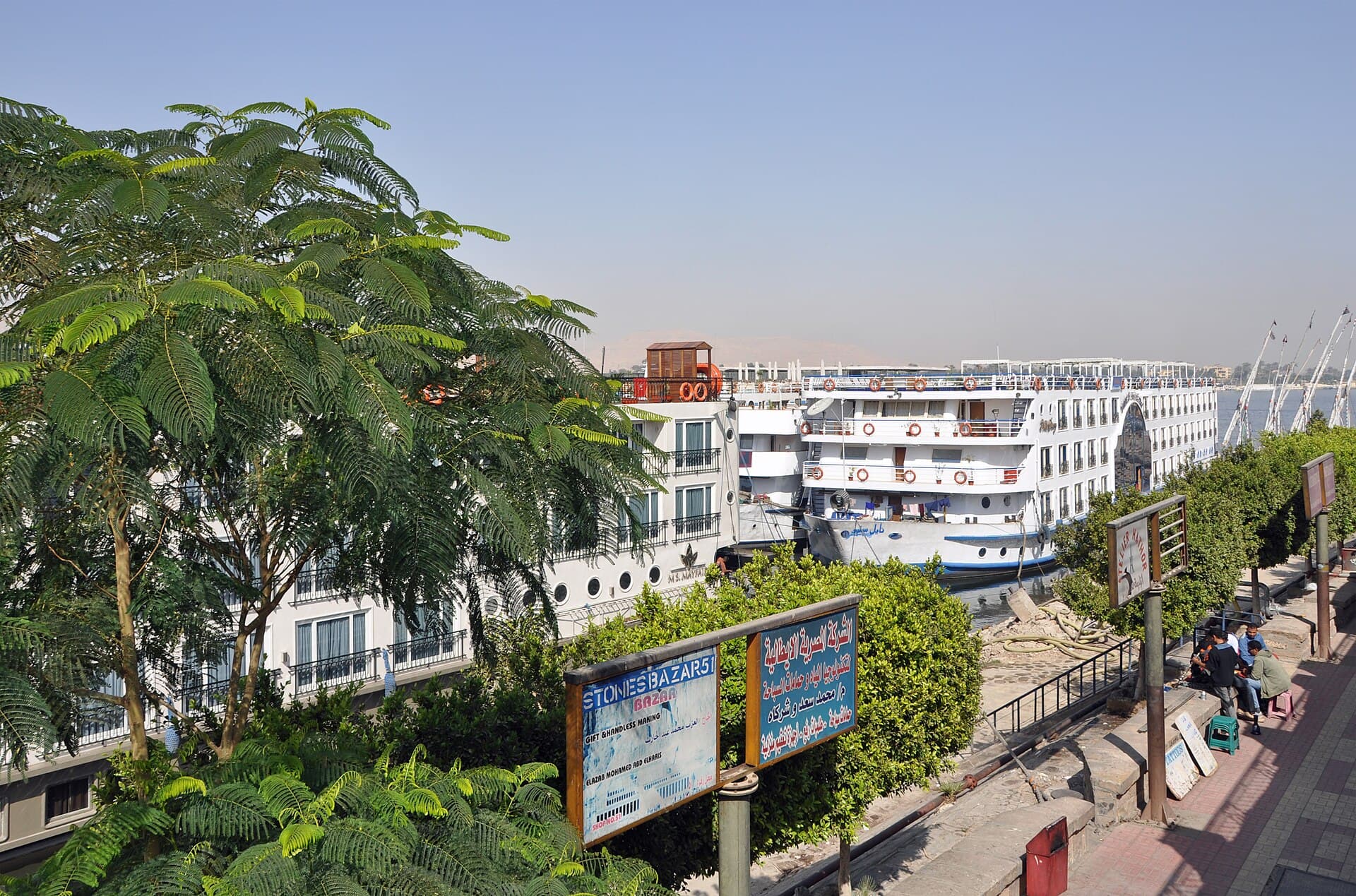
Some disappointments get blamed on the late booking and belong to the river. Boats do not each get their own stretch of bank: at Luxor, Edfu, Kom Ombo and Aswan they raft two, three or four deep, berths are allocated by the port rather than the operator, and your window may face another hull for an evening. That happens to people who booked a year out as well.
The same goes for the Esna lock, where traffic queues and the wait can run to a few hours, and for the occasional week when a boat does not sail at all — low water, a lock queue or a mechanical problem — and the operator moves the group to the sites by road instead. The temples are the guaranteed part of the week. The sailing is not.
And the arithmetic of cruise nights is fixed whatever you pay. You board around midday and leave after breakfast, so four nights is closer to three usable days and three nights is closer to two. A cheap late cabin does not buy you more river. It buys you the same river for less.
It is worth asking one question about the thing that does not change, though, because the answers differ. Ask what the operator actually does when a boat cannot sail. The companies with a plan describe the road alternative and who arranges it. The companies without one offer an apology. On a booking made a fortnight out, with no spare day anywhere in the itinerary, the difference between those two answers is the whole of your remaining margin for error.
The excursions you can still add, and the one you probably cannot
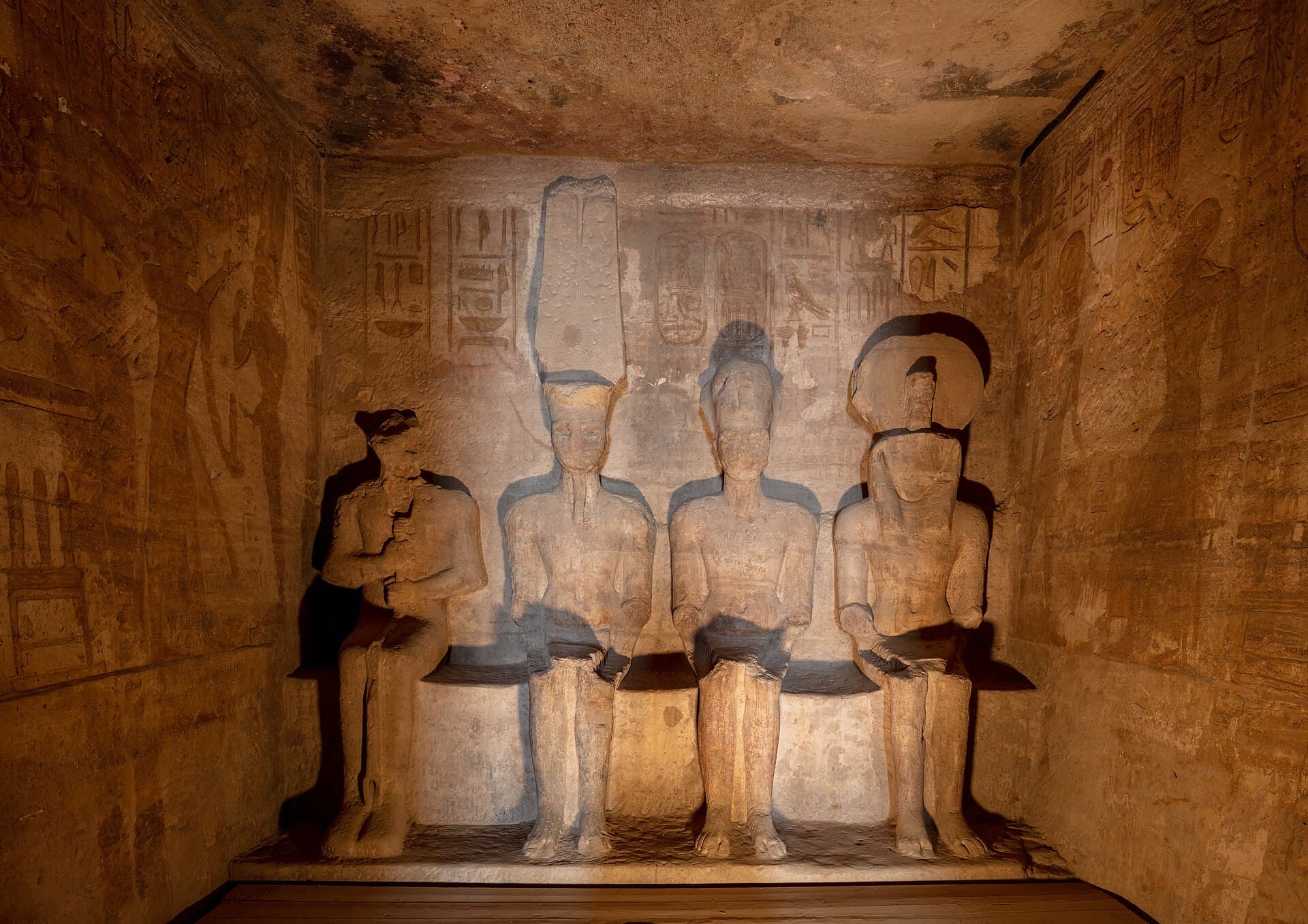
Abu Simbel is the clearest yes. It is not on any boat itinerary between Luxor and Aswan whatever the brochure wording implies, so it was always a separate excursion and adding it late costs you nothing you would not have paid anyway. It is about three hours south of Aswan by road, usually leaving before dawn, or a short flight timed around the temple opening hours. If your cruise finishes in Aswan, a hotel night after the boat turns it from a pre-dawn squeeze against a sailing schedule into an ordinary morning, and that single night is the best small upgrade available to a Nile trip.
The balloon over the Luxor west bank is the one a late booking handles worst, and not for the reason people assume. The problem is not availability. Flights go at first light and are cancelled for wind often enough that you want a spare morning in reserve, and a spare morning is precisely what a hurried itinerary does not contain. A boat moored at Luxor for two consecutive mornings gives you a second chance. A boat that arrives in the evening and sails the next day does not, and no goodwill from an operator can invent a morning your schedule does not have. If the balloon matters, choose the sailing around it rather than the other way round.
Dendera and Abydos are the two great temples no cruise reaches at all. Both lie north of Luxor, off the sailing stretch entirely, and both are a long day by road. Adding them means adding a land day rather than hunting for a boat that goes there, because on a standard schedule none does. Lake Nasser is the same story in the other direction: the Nubian temples moved when the reservoir filled belong to a separate and much smaller fleet running south from Aswan, and that fleet has no more late availability than a dahabiya does.
Booking late with children, or with anyone who struggles on steps
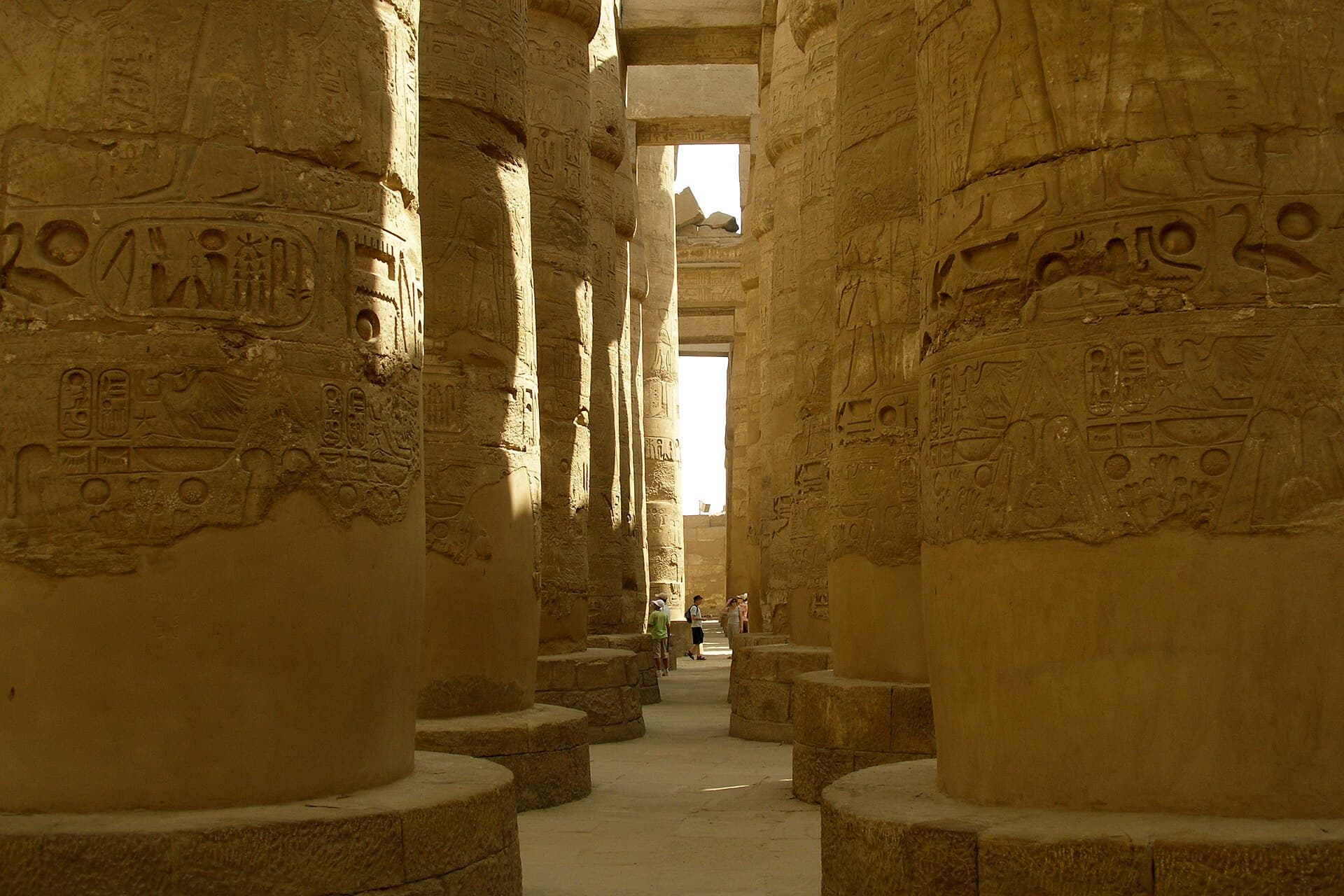
For families the boat usually wins on its dullest merit: you unpack once. No hotel changes, no early transfers with a half-asleep child, and somewhere air-conditioned a minute from the deck at the point where they have had enough. That advantage survives a late booking intact, which is more than can be said for most of the others. The stops divide by age much as they always do. Kom Ombo is the easiest win, a few steps from the mooring. Edfu is a carriage or minibus ride many children enjoy more than the temple at the end of it. Karnak and the Valley of the Kings are the hardest: large, unshaded, dusty and steep.
What lateness does change is your ability to check the things that decide whether a family week works. Not every boat has a pool, and the ones that do are often small and overlooked, so confirm it rather than reading it off a photograph. Railings vary from boat to boat. Cabin configurations for three or four people are the scarcest inventory on any vessel and the first to go, which is a better reason than price to widen your dates. And if the discount that brought you here is a summer one, take the heat seriously: Upper Egypt at 41C is not a good idea with young children whatever the saving, and that holds on a boat as much as ashore.
Mobility is the other case where a late booking removes exactly the checks that matter. Boats are reached by gangplank, decks are connected by stairs rather than lifts, and at a rafted mooring you cross other boats to get ashore, which is not a thing anyone can predict for you on the day. Temple approaches are sand and uneven stone. A few newer boats manage better than the rest, but they are the ones that fill first, so what remains late is rarely the accessible end of the fleet. Raise it before booking and insist on a specific answer rather than a reassuring one. If the answer is vague, hotels in Luxor and Aswan with a car and a guide is the version that works.
Money and paperwork in the final fortnight
Two currency facts shape the last two weeks. The first is that operators quote and hold their prices in dollars or euros, because the Egyptian pound has moved sharply in recent years, so a figure quoted to you in pounds is an estimate rather than a price. The second is that the pound is closed in practice: banks outside Egypt rarely stock it, and where one does the spread is punishing. You cannot arrive with local currency in hand, which is why the visa counter wants hard currency in cash.
That makes the cash a packing item rather than an errand, and on a late booking it is the item most likely to be forgotten in the rush. Carry enough hard currency in notes for the visa if you are buying it on arrival, and keep it somewhere reachable without unpacking. Card terminals in the arrivals hall exist and fail often enough that landing with nothing but a debit card is a real risk on a bad day. Change a modest amount at the bank counter for the transfer and the first tips, and do the rest in town, where the rate is better.
Then budget the tipping properly, because it is the cost that never discounts and the one a late quote never mentions. On a cruise the crew are normally tipped through a communal box at the end rather than individually, at something like 5 to 10 euros per person per night, with the guide and the driver separate again at roughly 10 to 15 and 5 euros per person per day. Across a ten-day trip with four nights on the river that comes to roughly 180 to 220 euros per person and covers everyone: guide, driver, crew, porters and the constant small change. Bring small notes. Hunting for change becomes a daily chore otherwise.
One last paperwork note that no visa route fixes. Fill any online application exactly as the passport is printed, with no shortened first name and no dropped middle name, and do not renew a passport between applying and flying, because the approval is tied to the passport number it was issued against. If a renewal is due, sequence it before the visa, not after. On a fortnight's notice there is no room to do that twice.
When the answer is not a cruise at all
If the boats left in your week look tired, or the only cabins are on a sailing that finishes at the wrong end of the country for your flight home, consider doing it from hotels instead. A hotel in Luxor, a hotel in Aswan, a car between them — three to four hours — and stops at Edfu and Kom Ombo on the way covers the same temples on your own timetable, usually for less. Hotel rooms in two cities are a far deeper pool than cabins on the right boat in the right week, which is exactly why this version survives a late booking better.
It is also the better trip for some people regardless. Luxor's west bank rewards two full days and no cruise gives you that, because the boat sails when it sails. Hotels win in high summer, when a real pool beats a hot deck, and for anyone with limited mobility, since gangplanks, other boats' decks and steep river steps are unavoidable afloat.
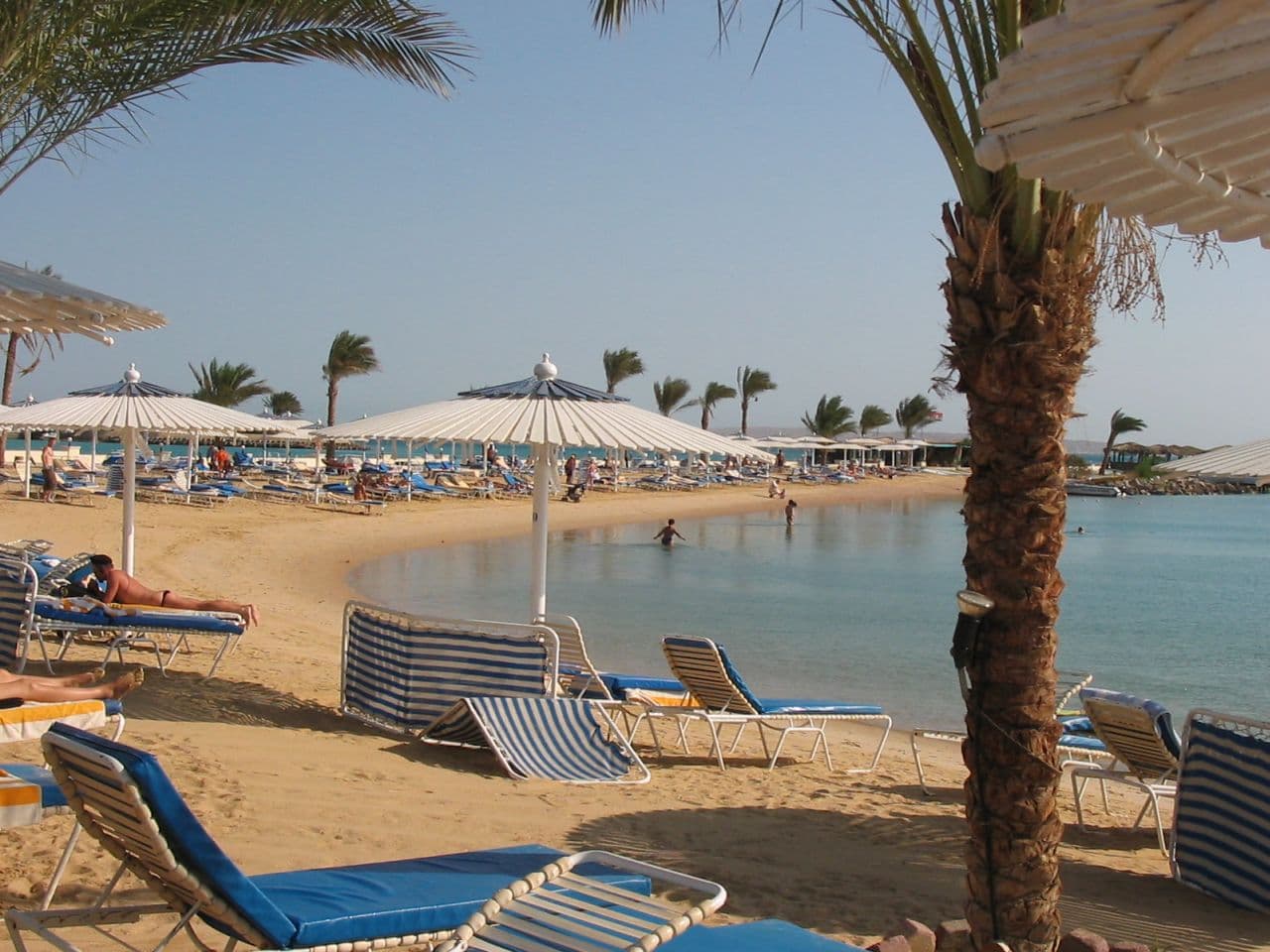
The other honest option is to move. If your dates are flexible and the week you were looking at is peak, shifting to a shoulder month buys you a better boat, a cheaper flight and a quieter site at every stop. October, November, February and March are the sensible months. A last-minute booking into the wrong week is one of the few travel mistakes that costs more and delivers less at the same time.
The version that survives a late booking best
If you are going to do it from hotels, the roughly 215 kilometres between Luxor and Aswan still have to be crossed, and there are three ways to do it. A car with a driver is the usual answer, because it lets you stop at Edfu and Kom Ombo and turns a transfer into a sightseeing day. The train runs the route several times a day in about three hours, is cheap, and gives you the river out of the window, but it will not stop at a temple for you. Flying between the two is the one leg not worth flying: check-in, transfers and waiting cost more time than the drive.
Pad the road day rather than promising yourself an arrival time. Security checkpoints sit on most intercity routes and foreign passengers are routinely asked for passport details, so keep a passport or a copy within reach rather than buried in a suitcase. Most checks take a couple of minutes and the occasional one takes considerably longer. Self-driving the valley is the option we would talk you out of, and a car with a driver costs more than a hire car and solves all of it.
There is also a hybrid, which is what people who have done both tend to arrange the second time round, and it happens to be the arrangement a short notice booking can most often still assemble. Hotel nights in Luxor for the west bank at your own hours, then a boat for the leg to Aswan, which is exactly where a boat earns its place, Edfu and Kom Ombo included, then hotel nights in Aswan for Philae and Abu Simbel. It costs more than either version alone, because you are paying for rooms and a cabin. What it buys is flexibility, and flexibility is the thing a late booking is otherwise short of: if the cabin falls through, the trip still stands.
So: book it?
Outside the peak weeks, yes, and without much anxiety. Sort the flights first, because they are the piece with no depth behind them and the piece that hardens as the date approaches. Then take a cabin on a boat you have asked three questions about. Then arrange the ground, which is the easy part. Most of what makes a Nile cruise good or bad — the boat's condition, the guide, the season, the direction you sail — is still under your control a fortnight out.
Into Christmas, New Year, Easter or the depths of the winter season, be more careful. Late there means paying a premium for whatever is left, and what is left is usually left for a reason. If the dates cannot move and the trip matters, the version we would book is hotels in Luxor and Aswan with a car and a guide, rather than the last cabin on a boat nobody else wanted.
And if you take nothing else from this page, take the order. Flights, paperwork, cabin, ground, with one spare day if you can find it. A last minute Nile cruise that follows that sequence is an ordinary holiday booked in a hurry. One that starts with the cabin is a series of problems waiting for a week that has no room left to absorb them.
Common questions
How late can I book a Nile cruise?+
Later than most people think, if you are travelling outside the peak weeks. A cabin on a standard boat between Luxor and Aswan can often be arranged a couple of weeks out in the shoulder months and in summer. The limit is rarely the boat: it is the Cairo to Luxor or Aswan flight, which is thinly served and rises steeply close to departure, and your entry paperwork. Settle those two first and the cabin usually follows.
Are last minute Nile cruises cheaper?+
Sometimes, in weeks that have not filled, and only on the cabin. Guiding, transport, entrance tickets, tipping and the visa do not discount, so a late saving applies to one line of the quote rather than the trip. In winter the reverse is normal: what is left late is usually worse rather than cheaper. Two genuine discounts exist all year and are not last-minute offers — the three-night northbound sailing runs 10 to 15 per cent below the four-night southbound one, and summer is far cheaper than winter for obvious reasons.
Which months are best for booking a Nile cruise late?+
February and March, with October and early November close behind. Those are the months where mild weather and thin demand overlap, so a late cabin is a genuine saving rather than the leftovers. December and January are the hardest, because the weather is at its best and the good boats went months ago. High summer is wide open and genuinely cheap, but Luxor and Aswan run around 41C in June and the middle of the day is lost.
Can I just turn up in Luxor and find a boat?+
We are not going to tell you what is on the quay this week, because we have no reliable way to know it and neither does any page that claims otherwise. What we can say is what you give up: no way to check when a boat was last refitted, how many passengers it carries or who is guiding, and no recourse if it does not sail. In winter you would also be gambling on a market where the good boats are already full. Book the flights and the bed before you leave home.
Is a last minute dahabiya possible?+
Rarely. A dahabiya carries a handful of cabins, is often taken as a whole boat by one group, and needs five nights or more to sail the route, so there is no spare inventory to release cheaply. If a quiet sailing boat is the reason you want a Nile trip, changing your dates will work far better than searching for a late cabin. If you only want the river and the temples, a standard cruiser at short notice is the realistic version.
What about Christmas and New Year?+
Treat those weeks as closed to late booking in any useful sense. They carry a premium on the better boats and hotels, and the good boats fill months ahead, so a late booking buys the leftovers at the highest price of the year. If the dates are immovable, hotels in Luxor and Aswan with a private car and guide will usually give you a better week than the last available cabin.
Do I still have time to sort the visa?+
Probably, and this is the part of a late booking that is genuinely well catered for. Most nationalities can buy a single-entry tourist visa on arrival at the bank counters before passport control, in cash and in hard currency, and that route exists precisely for bookings made in a hurry. Two caveats. Not every passport is eligible, so check yours on the official portal at visa2egypt.gov.eg. And airlines commonly apply a six-month passport validity rule at check-in, which is a problem no visa route fixes.
Should I book the flights or the cruise first?+
Flights. There are many boats working the Luxor to Aswan stretch and comparatively few useful seats south, and the fares harden as the date approaches while an unsold cabin softens. Fix the arrival airport and the domestic sector, then build the boat and the ground arrangements around them. Doing it the other way round is how people end up holding a cabin they cannot reach in time.
What should I get in writing before paying a deposit?+
Five things: the boat by name and what happens if it changes, the sailing dates and direction, the cabin deck, the full inclusion list item by item, and the name of the company actually operating the trip in Egypt. Then ask which currency the balance is due in, whether it is payable in cash on arrival, and whether a card carries a surcharge. A quote that will not commit to those is not cheaper than one that does. It is vaguer.
Can I still add Abu Simbel or a balloon flight?+
Abu Simbel, yes, easily. It is a separate excursion from Aswan on every itinerary anyway — about three hours each way by road or a short flight — so adding it late changes nothing about the price. The balloon over the Luxor west bank is harder, not because of availability but because flights go at first light and are cancelled for wind often enough that you want a spare morning in reserve. A hurried itinerary rarely has one. If the balloon matters, choose the sailing around it.
Is a last minute Nile cruise a good idea with children?+
It can be, because the boat's main family advantage survives a late booking: you unpack once, and an air-conditioned cabin is a minute from the deck when they have had enough. What lateness costs you is the checking. Family cabin configurations are the scarcest inventory on any boat and go first, not every boat has a pool, and railings vary. Confirm those rather than reading them off a photograph. And avoid high summer with young children whatever the discount.
How much cash should I bring on a late booking?+
Enough hard currency in notes for the visa if you are buying it on arrival, the first transfer and tips, plus your tipping budget for the trip. The Egyptian pound is closed in practice, so you cannot arrive holding it, and card terminals in the arrivals hall fail often enough that cash is the item with no fallback. Budget tipping at roughly 5 to 10 euros per person per night for the crew box, 10 to 15 a day for the guide and about 5 for the driver. Bring small notes.
Do I need travel insurance if I am booking this late?+
More than usual, and it is the item hurried bookers skip. It is not included in any Egypt tour price we have seen. A trip with a non-refundable cabin, a thinly served domestic flight and a weather-dependent balloon booking has more moving parts than an ordinary holiday, and a late booking has no spare day to absorb any of them. Buy it when you pay the deposit, which is the moment the money first becomes losable.
Official sources
Entry rules, opening hours, security advice and exchange rates all move. Check them at the source, not here.
Written and checked by the Nile Trip Guide editorial team · Last reviewed . Entry rules, prices and opening hours change — check anything critical against the official sources linked on this page.
Plan this trip
Tell us your dates and we will price it
A real itinerary with real prices, usually within 24 hours. Nothing is booked and nothing is charged until you say yes.
Three nights sailing north from Aswan to Luxor, taking in Philae, Kom Ombo, Edfu, the Valley of the Kings and finally Karnak. Full board on board, and the sightseeing runs as a shared group of about fifteen.
Four nights sailing south from Luxor to Aswan: Karnak and Luxor temples on the first afternoon, the Valley of the Kings, Edfu, Kom Ombo and Philae. Full board throughout, with sightseeing in a shared group of about fifteen.