Nubian village in Aswan: is it worth visiting, and how to go
Yes, a Nubian village in Aswan is worth visiting, on the right terms. Go with a Nubian guide, arrive late in the afternoon, and stay long enough to eat or talk. The quick version, with painted walls, a caged crocodile and a shop, is the one to skip. Below: Gharb Soheil, the village most tours mean, and Elephantine Island, where you can walk the lanes alone. Then how to fit either into a stay in Aswan.
Gharb Soheil
Elephantine Island
Gharb Soheil
Elephantine Island
Where it is
West bank of the Nile, upstream of the town
In the river, opposite the Aswan corniche
Getting there
Motorboat from the corniche, or by road
The public ferry, for a fraction of a private boat
What you do
Painted lanes, tea or a meal in a family house, shops
Walk the lanes of Koti and Siou, then the ruins and Nilometer
Time needed
Half a day with the boat ride
An hour or two on foot
Best for
A meal, a conversation and a Nubian guide
Wandering on your own, and a tight budget
The short answer
Gharb Soheil if you want to sit down in a Nubian home with a guide, and you can give it a late afternoon. Elephantine if you want to see Nubian village life without a programme, or if the packaged visit sounds uncomfortable. With two days in Aswan, you can do both.
Is the Nubian village in Aswan worth visiting?
It is worth it when the visit is built around people. A good one means a Nubian guide, a house where you sit down for tea or a meal, and time to ask questions. That gives you something no temple can. The Nubians are a living culture, with their own languages, food, music and way of building. They are still at home on this stretch of the Nile.
It is poor value as a photo stop. The usual formula is a motorboat across, a walk through painted lanes, hibiscus tea, a crocodile in a tank, photographs and a shop. Plenty of people find that staged, and some find it faintly demeaning. Which version you get depends almost entirely on who takes you.
Skip it if you only have one day in Aswan. Philae and an afternoon on the river come first. Give the village half a day on your second day. If time is short, an hour on Elephantine Island shows you Nubian lanes for the price of a ferry ticket.
Nubian villages in Egypt: who the Nubians are, and why the villages sit where they do
Nubia is the stretch of the Nile valley from Aswan south into Sudan. Its people have their own languages, spoken at home alongside Arabic, and their own food, music and house style. Aswan has long been where Egypt meets Nubia, and it still feels like a border town.
The dams drowned most of the old Nubian homeland. The British finished the first Aswan dam in 1902 and raised it twice. Each raising pushed the water further south and emptied villages. The High Dam, built between 1960 and 1970, finished the job. Its reservoir, Lake Nasser, runs roughly 500 kilometres south and crosses into Sudan, where it is called Lake Nubia.
Something like 100,000 people were moved in the 1960s, about half in Egypt and half in Sudan. Counts vary between sources. Egyptian Nubians were resettled in planned villages on irrigated land near Kom Ombo, away from the river. Some families had been moved more than once in a single lifetime.
The monuments got a rescue campaign. UNESCO ran it from 1960 to 1980, and temples including Abu Simbel, Philae and Kalabsha were cut up and rebuilt on higher ground. The sites joined the World Heritage List in 1979 as the Nubian Monuments from Abu Simbel to Philae. (Source: Egyptian Ministry of Tourism and Antiquities, checked October 2026.) The villages got resettlement. Carry that history with you on the boat, because nobody on the circuit is likely to mention it.
Gharb Soheil Nubian village: the one most tours mean
Gharb Soheil, also spelt Gharb Suhayl or West Suhail, is a Nubian village on the west bank of the Nile near Aswan. When a hotel desk or a boatman offers you the Nubian village, this is usually the one. In 2024 UN Tourism named it one of its Best Tourism Villages (UN Tourism, checked October 2026).
The draw is the houses, painted in bright colours in the Nubian style. A visit usually means a walk through the lanes, hibiscus tea in a family house, and time in the craft and spice shops. Some houses keep a crocodile in a tank to show visitors. Better visits add a meal and a proper conversation with the family.
The village is well used to visitors, and parts of it are set up for them. That makes timing and company matter. Mid-morning, when the groups arrive, it feels like a stop on a circuit. Late afternoon, when people are about and the heat has eased, it feels like a place where people live.
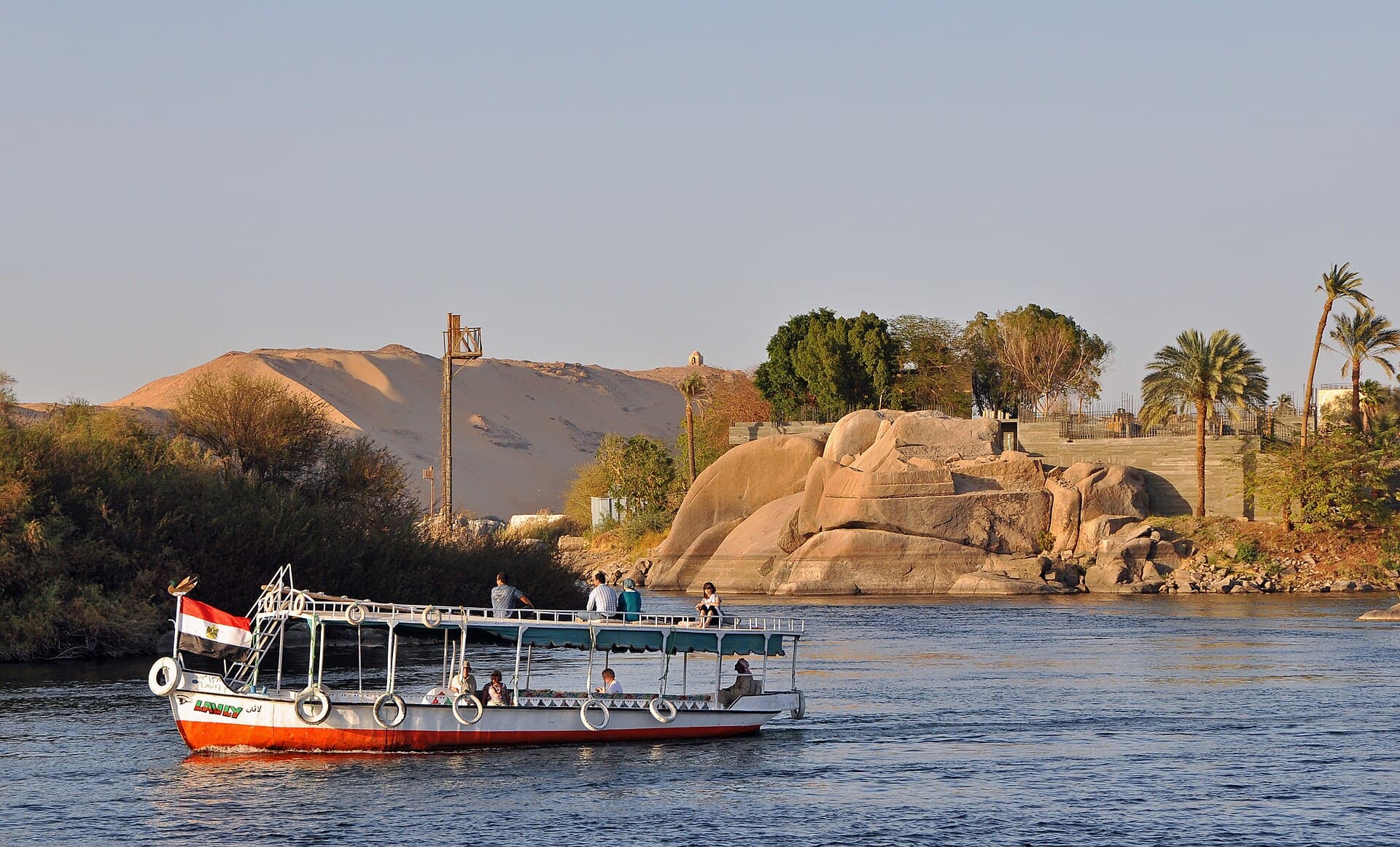
Most visitors arrive by motorboat from the Aswan corniche, and the ride past the granite islands of the First Cataract is part of the trip. The village can also be reached by road.
Elephantine Island: the Nubian village you can walk on your own
Elephantine sits in the river opposite the town. Most of the island is two Nubian villages, Koti and Siou, with narrow painted lanes and daily life going on around you. The public ferry from the corniche costs a fraction of a private boat. Walking the lanes for half an hour asks nothing of anybody.
The southern end of the island is the archaeological site. It has a small museum, a Nilometer cut into the rock to measure the annual flood, and settlement layers going back thousands of years. For most of antiquity this island was the main town at Aswan. An hour or two covers the villages and the ruins together.
Choose Elephantine if you like to wander without a programme, if your budget is tight, or if the packaged village visit sounds uncomfortable. Choose Gharb Soheil if you want a meal in a family home and a guide to talk to.
How to go: three realistic options
With a Nubian guide. This is the version worth paying for. A guide from the community can take you into a home as a guest, explain what you are seeing, and translate. Ask your hotel or operator for a Nubian guide, and ask what the visit includes before you agree.
On a boat trip from the corniche. Boatmen sell the village trip all along the Aswan waterfront. It works, but the boatman usually drops you at a landing and waits. Fix the price, the time ashore and the stops before you board. Disputes afterwards are common, and you have little say once you are on the water.
On an organised tour. Our 15-day Cairo, Luxor and Nile cruise includes lunch with a Nubian family on day 11. The details are in the last section.
A felucca ride in Aswan, and how it fits with a village visit
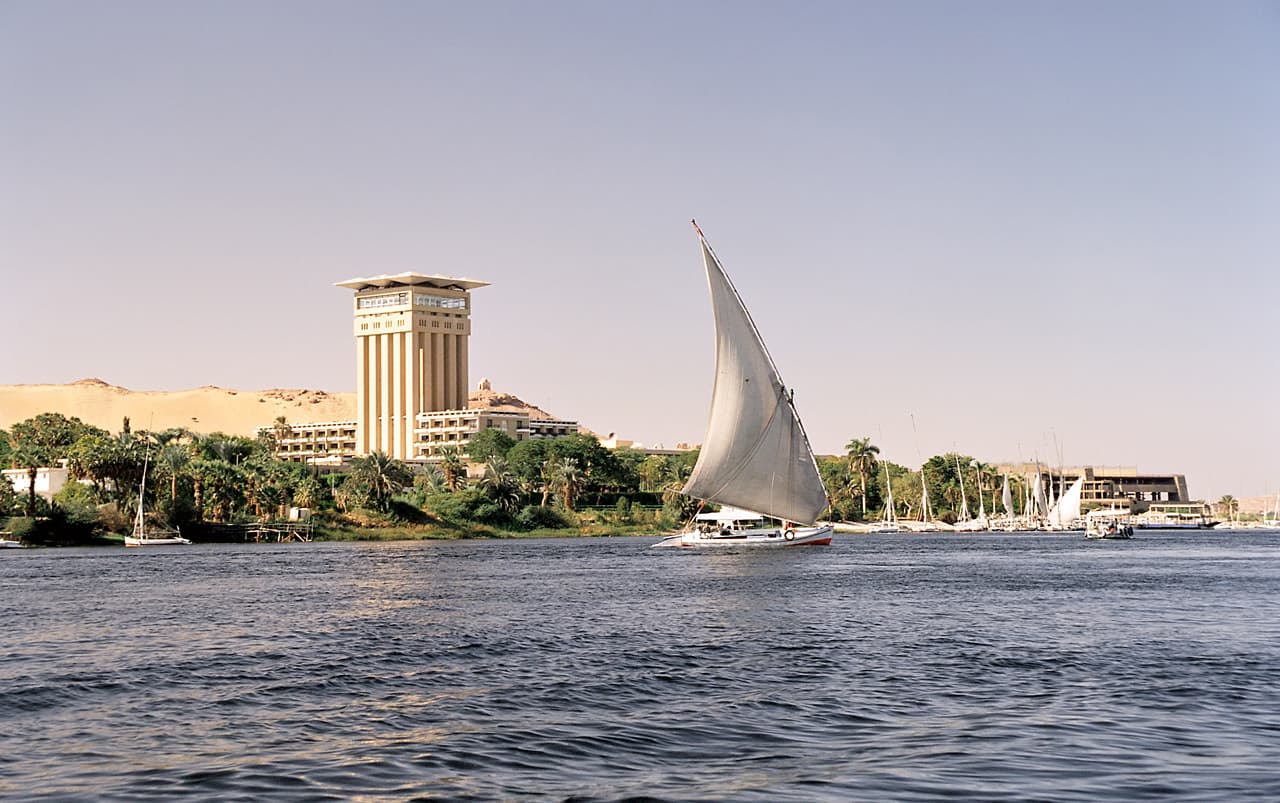
A felucca is a small sailing boat with no engine. Aswan is where it works best. The prevailing wind blows from the north, against a river flowing north, so you sail upstream and drift back down. Allow two to three hours. That takes you round the islands, past the botanical garden on Kitchener's Island, and under the west bank cliffs with the Aga Khan mausoleum above.
Most village trips run by motorboat, so treat the felucca as a separate outing. Both are best in the late afternoon, when the light drops and the heat goes with it. With two days in Aswan, give one late afternoon to each. With one, choose the felucca.
Agree the price and the duration before you step aboard. Check whether entry to the botanical garden is included, because it usually is not. If the wind drops, you sit and wait. That slowness is the point of the trip.
Kalabsha Temple and the Nubia Museum: the context for the visit
Kalabsha Temple stood in Nubia until the lake rose. It was moved to a promontory near the western end of the High Dam, with Beit el-Wali and the Kiosk of Qertassi. On most days it is close to empty, which Philae never is. Reaching it usually means a motorboat from the landing, so most itineraries leave it out.
The Nubia Museum in Aswan (also called the Nubian Museum) covers Nubian history, crafts and archaeology, and includes a reconstruction of a Nubian house. It opened in 1997 (Egyptian Ministry of Tourism and Antiquities, checked October 2026). It also covers the salvage campaign and the resettlement. An hour there before the village gives the painted walls a meaning they do not have on their own.
How to make the visit a good one
Ask before you photograph anyone, and take no for an answer. Buy something made in the village if you liked it. Carry small notes for the boat and for any tips. Skip the caged crocodiles.
Dress as you would anywhere in Upper Egypt: shoulders and knees covered, in loose, light clothes. You are a guest in someone's home, and dress is the first thing people notice.
Aswan is the hottest of the Nile cities. Summer afternoons run well past 40C, and there is little shade in the lanes. Go late in the day, take water, and travel between November and February if you can choose.
For current travel advice for Egypt, read the US State Department and UK FCDO pages before you go. Around Aswan, the everyday problems are heat, sun on the water and arguments over boat prices.
Visiting a Nubian village on one of our tours
One itinerary we sell includes a Nubian village: Cairo, Luxor and a Nile cruise over 15 days. It costs from US$3,985 per person, land only, with international flights not included. Day 11 starts with Kalabsha Temple. A motorboat then takes you to a Nubian village for lunch with a Nubian family, before the included flight from Aswan to Cairo. The itinerary does not say which village, so we will not guess.
Our other Nile cruise itineraries cover Aswan with Philae and the granite quarries, and leave the village out. The cheapest is four days from Aswan to Luxor, from US$840 per person, land only. If a village visit matters to you, say so when you enquire and ask what can be arranged around your dates.
Common questions
Is the Nubian village in Aswan worth visiting?+
Yes, if the visit is built around people. Go with a Nubian guide, arrive late in the afternoon, and stay for tea or a meal in a family house. A half-hour stop for photographs, a caged crocodile and a shop is poor value. In that case, take the public ferry to Elephantine Island and walk the Nubian lanes yourself.
What is Gharb Soheil?+
Gharb Soheil, also spelt Gharb Suhayl or West Suhail, is a Nubian village on the west bank of the Nile near Aswan. It is known for its brightly painted houses, and it is the village most Aswan boat trips visit. UN Tourism named it one of its Best Tourism Villages in 2024 (checked October 2026).
How long does a Nubian village visit take?+
Allow half a day for Gharb Soheil, including the boat ride there and back. Elephantine Island takes an hour or two, including the ferry, the village lanes and the ruins at the southern end.
Can I visit a Nubian village without a tour?+
Yes. Elephantine is the easiest: take the public ferry from the corniche and walk. For Gharb Soheil, hire a motorboat on the corniche or go by road. Agree the price, the time ashore and the stops before you leave, because disputes afterwards are common.
Can I take a felucca ride in Aswan to the Nubian village?+
Most village trips run by motorboat. A felucca ride in Aswan works best as a separate late-afternoon outing around the islands near the town, taking two to three hours. With two days in Aswan, do one each day.
Are the Nubian villages near Aswan the original ones?+
Partly. Most of the old Nubian homeland now lies under Lake Nasser. Many Egyptian Nubians moved in the 1960s went to planned villages near Kom Ombo. The villages on Elephantine and the west bank are Nubian communities near Aswan, and some of them took in displaced families.
Is it safe to visit a Nubian village?+
For current travel advice for Egypt, read the US State Department and UK FCDO pages before you travel. On the ground, the practical issues are heat, sun on the water and boat-price disputes. Go late in the day, carry water, and settle terms before you board.
Which of your tours includes a Nubian village?+
Cairo, Luxor and a Nile cruise over 15 days, from US$3,985 per person, land only. On day 11 you visit Kalabsha Temple, then travel by motorboat to a Nubian village for lunch with a Nubian family. The itinerary does not name the village.
Official sources
Entry rules, opening hours, security advice and exchange rates all move. Check them at the source, not here.
Written and checked by the Nile Trip Guide editorial team · Last reviewed . Entry rules, prices and opening hours change — check anything critical against the official sources linked on this page.
Plan this trip
Tell us your dates and we will price it
A real itinerary with real prices, usually within 24 hours. Nothing is booked and nothing is charged until you say yes.
The route most people take first, at the length it was built for: Giza and the Grand Egyptian Museum, then a flight to Luxor and four nights sailing down to Aswan.
No boat on this one. Giza and the Grand Egyptian Museum, a night in Luxor for both banks, two nights on the Red Sea, then back to Cairo for the Citadel, Coptic Cairo and the Royal Mummies.
Five nights in Cairo either side of a four-night sail from Luxor to Aswan. The Cairo days are private, just your party and a guide; the sightseeing off the boat is shared with a small group.