Red Sea animals: the fish, turtles, dolphins and dugongs you can see
The Red Sea is full of reef fish, and you will see hundreds of them on your first snorkel. About one in eight reef fish species here lives nowhere else, according to a 2016 scientific review. Green turtles are seen most days in the seagrass bays near Marsa Alam. Spinner dolphins rest at Samadai reef. Dugongs live here too but are rare. A few animals sting, so look and never touch.
What animals live in the Red Sea?
Coral reefs run along most of Egypt's Red Sea coast. They hold reef fish in huge numbers, plus turtles, dolphins, rays, sharks and the rare dugong.
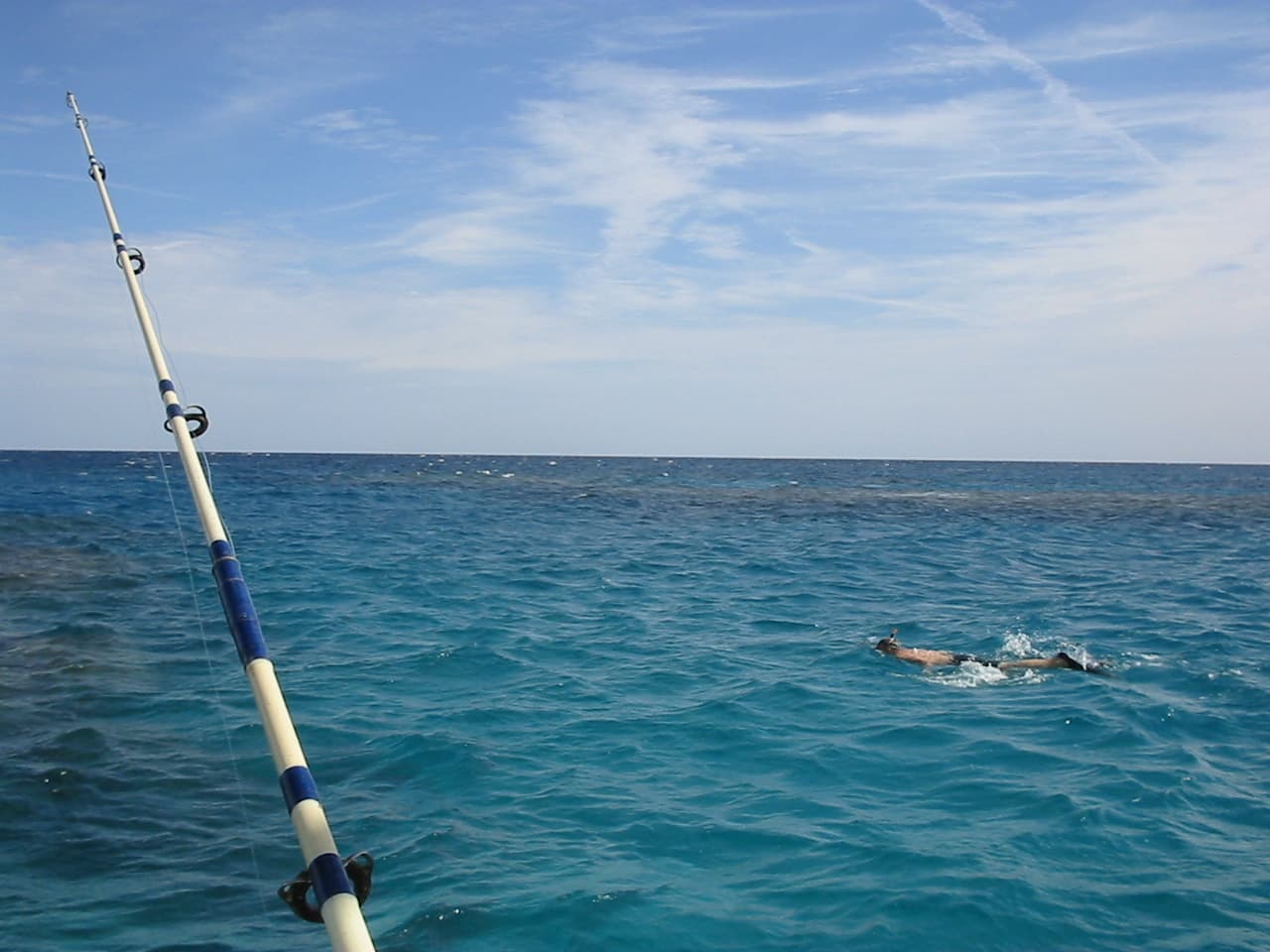
The reefs often start a short swim from the beach. You do not need to dive to see most of this. A mask and snorkel in shallow water is enough for the fish and coral.
The water stays warm all year, from about 22C in January to about 29C in June at Hurghada. That is why the coast works for snorkelling in every season.
Red Sea fish: how many live nowhere else?
A lot of Red Sea fish are found only here. A 2016 review in the Journal of Biogeography found that 12.9% of Red Sea reef fish species are endemic. That means about one in eight lives nowhere else on Earth.
Scientists link this to the sea's shape. It is long, narrow and only joined to the Indian Ocean by a narrow strait in the south.
On a snorkel you will see bright schools over the coral, fish that hide in the branches, and bigger fish patrolling the reef edge. Bring a waterproof fish card if you want to put names to them. Most dive centres sell one.
Where to see turtles in the Red Sea
Green turtles are the easiest big animal to find. They graze on seagrass in shallow, sheltered bays. Abu Dabbab and Marsa Mubarak near Marsa Alam are the two most people visit, and turtles are seen there most days.
Turtles also nest on the coast and islands. HEPCA, the Red Sea conservation group, names Giftun Island off Hurghada as a major green turtle nesting ground.
Give turtles space. Do not touch them, chase them or block their way up to breathe. Signs at Abu Dabbab ask visitors not to touch turtles or dugongs.
Dugongs at Marsa Alam: will you see one?
Dugongs are large, slow sea mammals that eat seagrass. HEPCA says Marsa Abu Dabab, near Marsa Alam, has the majority of dugong sightings in the Red Sea. The bay has one of the largest seagrass beds in the region.
They are rare, and nobody knows exactly how many there are. HEPCA says data on their numbers is minimal. Any trip that promises a dugong is promising something it cannot deliver.
Abu Dabbab has rules to protect them. A line across the bay keeps motorboats out, and you enter only from the shore. Visitor numbers are controlled and two rangers from the Red Sea Protectorate watch the bay.
If you do see one, stay back and stay calm. Crowding drives dugongs off their feeding ground. Go early, before the groups arrive, when the water is quieter.
Dolphins in the Red Sea and the Dolphin House rules
Sha'ab Samadai, sold as Dolphin House, is a horseshoe reef off Marsa Alam. Spinner dolphins rest in its lagoon during the day. HEPCA has managed the site since 2013, under a decision of the Red Sea governor.
The lagoon is zoned, and the core area where the dolphins sleep is closed. Some days you see them from the boundary. Some days you do not.
A dolphin code applies across the Red Sea, and HEPCA says breaking it can bring a fine. Boats keep at least 30 metres away and move slowly. Swimmers wear a life jacket, slip in gently and swim alongside, never from above.
Never chase, touch or feed a dolphin. Let them come to you. The Chamber of Diving and Water Sports reminded its members of this code again in April 2026.
Rays, sharks and other big animals
Rays are a common sight on sandy patches next to the reef. Watch where you put your feet in the shallows and do not try to touch one.
Reef sharks live on the southern reefs, and oceanic species visit the far offshore sites. Most snorkellers never see a shark. Our guide to sharks in the Red Sea covers species, places and the rare incidents.
Whale sharks pass through now and then. In 2018 one was reported several times, including between the Giftun islands off Hurghada and near Port Ghalib. It made the news because it is unusual.
Dangerous Red Sea animals: what not to touch
Most harm on the reef comes from touching things. Keep your hands to yourself and you avoid almost all of it.
Lionfish are easy to spot, with long striped fins. Their spines are venomous. They are slow and do not chase you, so simply keep your distance.
Stonefish and scorpionfish look like rock and sit still on the reef flat. Stepping on one is very painful. Fire coral looks like a pale, mustard-coloured crust and stings on contact. Sea urchins sit in cracks in the shallows.
The fix is simple. Wear reef shoes when you wade in. Get in from a jetty or a boat ladder and float above the reef. If you are stung, get out of the water and tell a lifeguard or your guide straight away.
Reef etiquette: how to protect what you came to see
Never stand or walk on coral. It breaks easily and grows back slowly, and it cuts your feet. Use the jetty or a marked channel.
Do not feed fish, from a boat or from the beach. Feeding changes how fish and bigger predators behave. Do not collect shells or coral, even dead pieces.
Use reef-safe sun cream or cover up with a rash vest. Many of the best reefs are in protected areas, and the park fee you pay on the boat helps keep them that way.
Common questions
What animals live in the Red Sea?+
Hundreds of reef fish species, plus corals, green turtles, spinner dolphins, rays, reef sharks and a small number of dugongs. Whale sharks visit now and then.
Are Red Sea fish unique?+
Many are. A 2016 scientific review found that about 13% of Red Sea reef fish species are endemic, meaning they live nowhere else.
Where can I swim with turtles in Egypt?+
Abu Dabbab and Marsa Mubarak near Marsa Alam. Green turtles graze on the seagrass there and are seen most days. Keep your distance and never touch them.
Can you see dugongs in the Red Sea?+
Sometimes, at Abu Dabbab near Marsa Alam, which has most of the Red Sea's dugong sightings. They are rare, so treat a sighting as luck.
Can you swim with dolphins in the Red Sea?+
At Samadai reef you can snorkel at the edge of the zone where spinner dolphins rest. A code of conduct applies: no chasing, no touching, no feeding.
Which Red Sea animals are dangerous?+
Lionfish, stonefish, scorpionfish, fire coral and sea urchins can all sting or hurt you if touched or stepped on. Wear reef shoes and never touch the reef.
Is it safe to snorkel in the Red Sea?+
For safety advice, read the current pages from the US State Department and the UK Foreign Office. On the reef itself, enter from a jetty, wear reef shoes, ask about currents and stay out when a beach is closed.
What is the best time to see Red Sea marine life?+
Any time of year. The water is about 22C in January and about 29C in June at Hurghada. Spring to autumn is warmest for long snorkels.
Official sources
Entry rules, opening hours, security advice and exchange rates all move. Check them at the source, not here.
Written and checked by the Nile Trip Guide editorial team · Last reviewed . Entry rules, prices and opening hours change — check anything critical against the official sources linked on this page.
Plan this trip
Tell us your dates and we will price it
A real itinerary with real prices, usually within 24 hours. Nothing is booked and nothing is charged until you say yes.
Egypt in three parts: two days in Cairo, three nights sailing Aswan to Luxor, then three nights on the Red Sea with nothing scheduled. The temples first, the sea afterwards.
The 10 day Nile-and-Red-Sea route with one more day in Cairo at the end, spent on the Citadel, Coptic Cairo and the Royal Mummies. Two days in Cairo, three nights on the river, three on the sea.
No boat on this one. Giza and the Grand Egyptian Museum, a night in Luxor for both banks, two nights on the Red Sea, then back to Cairo for the Citadel, Coptic Cairo and the Royal Mummies.