Medinet Habu: the temple of Ramesses III on Luxor's west bank
Medinet Habu is the memorial temple of Ramesses III, on the west bank at Luxor. It is the best-preserved memorial temple on that side of the river. Colour survives on its walls and ceilings. A mud-brick wall encloses the whole complex, and you enter through a great gate between two towers. Foreign adults pay EGP 220 or 230, depending on which ministry website you read, and the gates open at 6am. It sees a fraction of the groups that visit Hatshepsut's temple. This guide covers what to see, when to go, how it fits a west bank day, and the four tours of ours that include it.
What is Medinet Habu?
Medinet Habu is the memorial temple that Ramesses III built for himself in western Thebes, today's Luxor. He reigned from about 1184 to 1153 BC and is the best-known king of the Twentieth Dynasty. The temple had two jobs. Priests held his funeral rites here, and they worshipped the god Amun.
Ramesses III fought long wars against the Libyans and the Sea Peoples. The victories brought Egypt years of prosperity. Late in his reign he fell victim to a plot inside the royal harem. The Ministry of Tourism and Antiquities calls the temple an architectural masterpiece, for its beauty and its state of preservation.
The site is more than one building. A mud-brick wall rings the temple, a palace, storehouses, offices and royal stables. Inside the same area stand an older temple and a group of later tombs. The great temple is the heart of the site. Leave time for the rest.
What to see at Medinet Habu, from the gate inwards
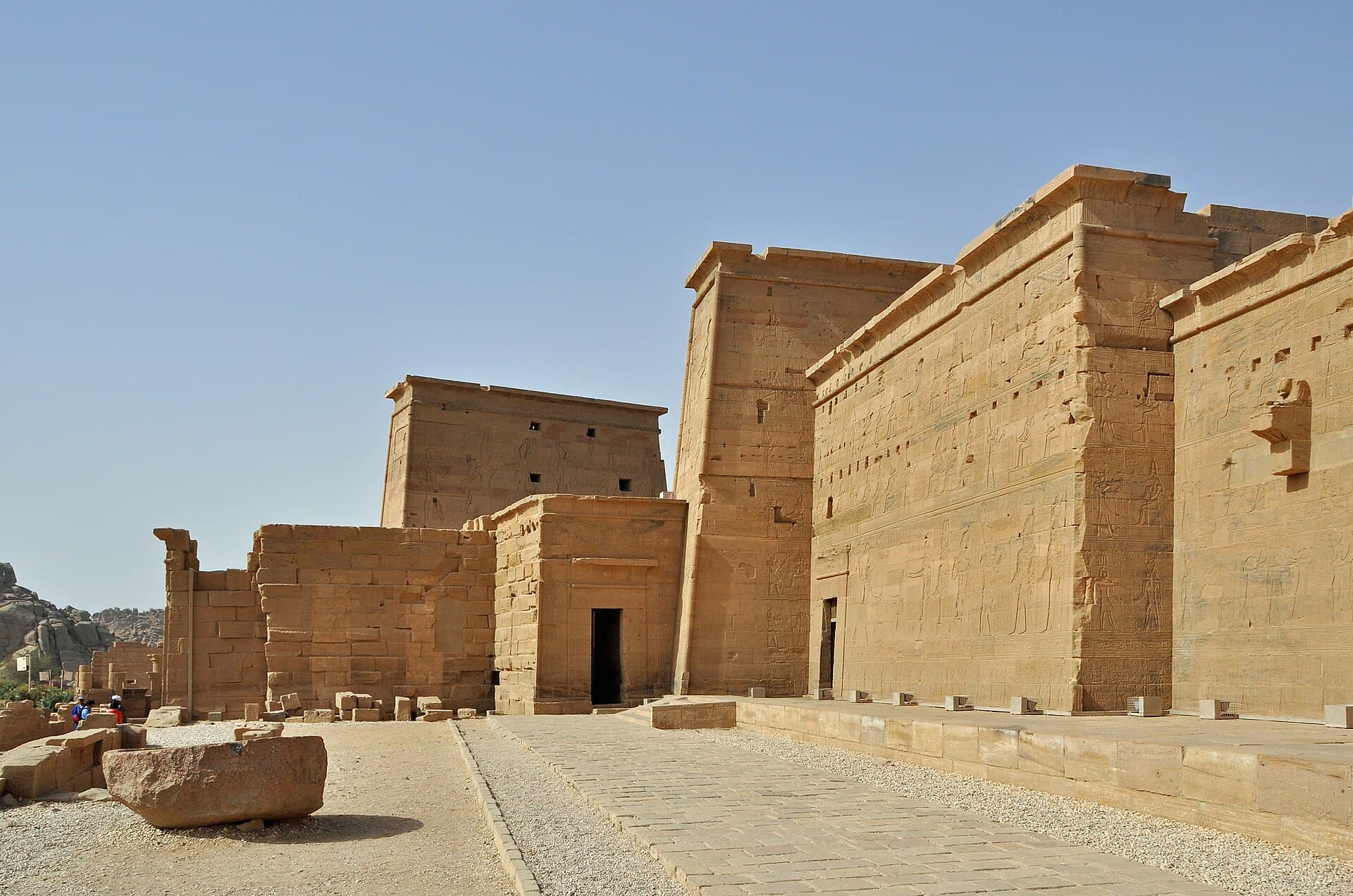
You enter from the east, through the High Gate, also called the Gate of Ramesses III. Two towers with terraces flank it. A matching gate once stood on the west side. It was demolished. The gate sits in the middle of the great mud-brick wall, which also had two guard rooms.
From the gate, the temple unfolds in this order. First comes the first pylon, then the first court. A second pylon leads to the second court. Behind it are three columned halls and a group of chapels. The sanctuary, the Holy of Holies, lies at the back, with a cluster of rooms behind it.
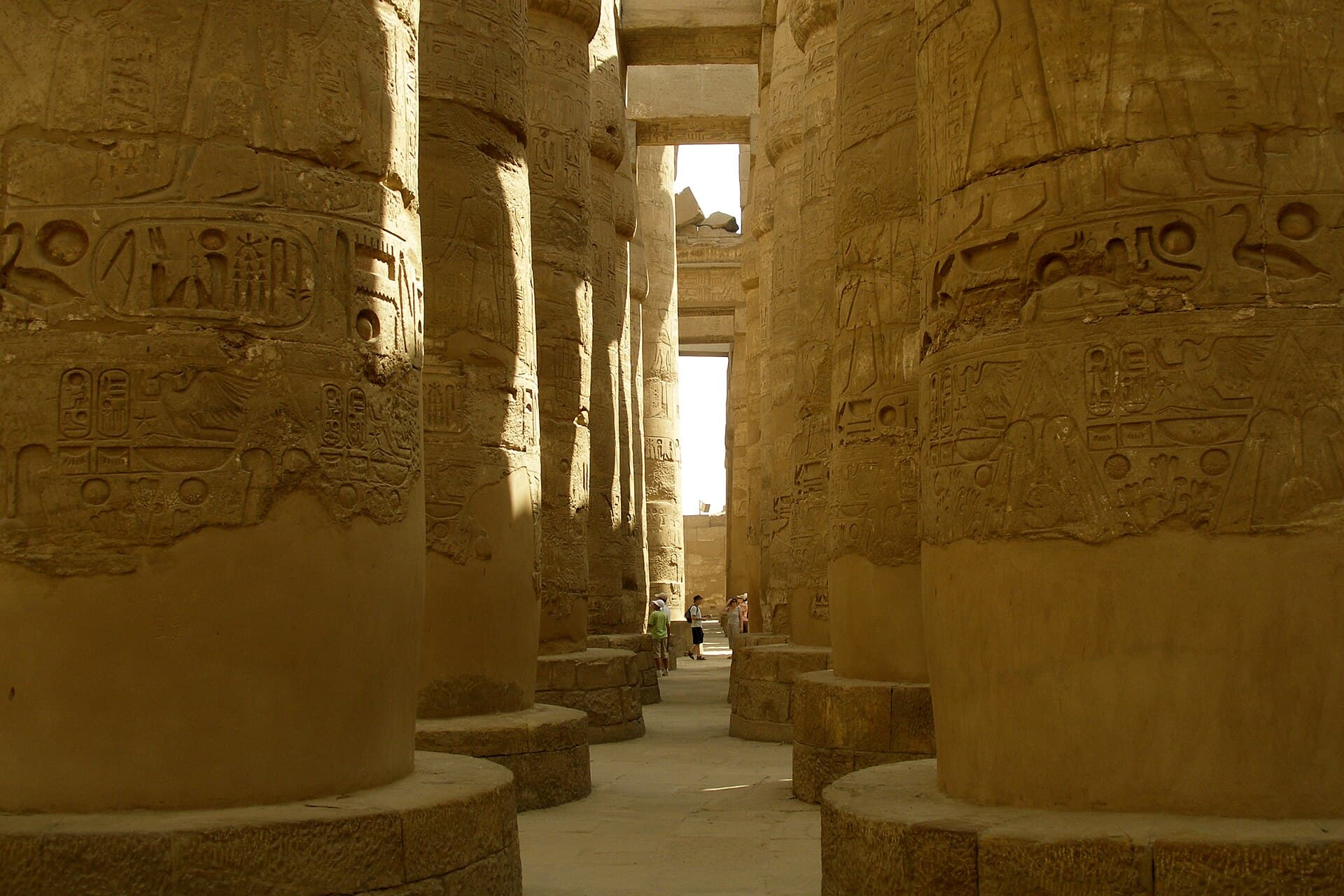
Look closely at the columns. Some are round, with capitals shaped like papyrus. Others carry figures of Ramesses III in the form of Osiris, god of the dead.
Beside the temple are the remains of a royal palace. The ministry also lists storehouses, temple administration buildings and royal stables. Only their remains survive. Walk past them after you leave the temple.
The war reliefs: Libyans, the Sea Peoples and the hunt
The walls tell Ramesses III's story in pictures. Military scenes cover large areas: his campaigns against the Libyans and his battles with the Sea Peoples. Other scenes show the king hunting and on expeditions. Religious scenes show him worshipping the gods, and others show celebrations.
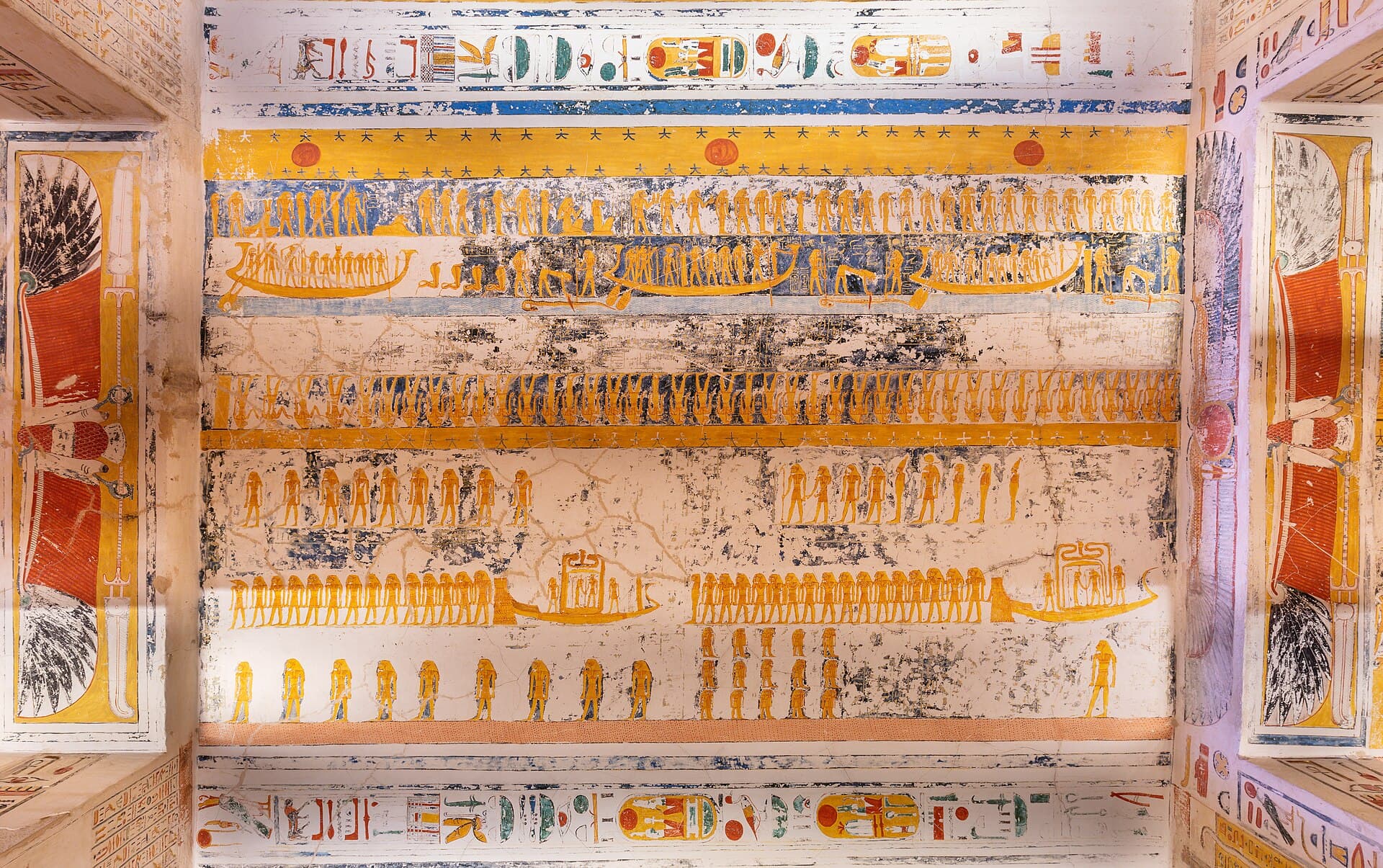
This is the main reason to go. At Medinet Habu, colour survives on the walls and ceilings. A guide helps you read the battle scenes, which are packed with detail. Without one, pick a single wall and follow it end to end.
The older temple, the Divine Wives and the old canal
This ground was sacred long before Ramesses III. Close to his temple stands a smaller one built by Queen Hatshepsut and Thutmose III. It rose on the site of a Twelfth Dynasty temple. That earlier temple was built over tombs that Egyptians linked to the ancestors of the god Amun.
The area also holds the tombs of the Divine Wives of Amun-Ra. They date from the Twenty-fifth and Twenty-sixth Dynasties.
Medinet Habu once had its own link to the Nile. A canal joined it to the river, with a dock, so boats could reach the temple. The huge outer wall also had a practical use. The ministry says local people used the walled area to shelter from Libyan attacks from the west.
Medinet Habu tickets and opening hours
Two ministry websites list the ticket, and they disagree. The monuments site, egymonuments.gov.eg, gives EGP 230 for foreign adults. The ticket booking site, egymonuments.com, gives EGP 220. Both give EGP 110 for foreign students. We checked both in October 2026. Expect one of these two prices at the gate.
Students must show valid ID and be 24 or under, according to the booking site.
The temple opens at 6am every day. The monuments site lists closing at 5pm. The booking site gives the last entry by season: 5pm in summer, and 4pm in winter and during Ramadan. Aim to arrive by mid-afternoon at the latest. The booking site asks visitors to arrive at least an hour before closing.
If you plan to see several sites in Luxor on your own, compare the cost with a Luxor Pass. Our Luxor Pass page sets out the sums site by site.
When to visit and how it fits a west bank day
Heat sets the order on the west bank. Start at the Valley of the Kings when it opens, before the coaches arrive. Go to Hatshepsut's temple second, because its terraces are a sun trap. Finish at Medinet Habu. Its high walls give shade, and the colour on the ceilings rewards a slower pace.
Three sites make a full morning, about four to five hours with transfers. A fourth makes it a long day, and attention fades by then. If Medinet Habu matters to you, make it one of the three. You could also give it its own morning, paired with the Valley of the Queens or the Ramesseum. That is the pairing our longer tours use.
You need a car and driver for the west bank. The sites spread across several kilometres of desert edge, with no shade and no useful public transport between them. The Colossi of Memnon sit on the road in, so most drivers stop there on the way.
From the air, Medinet Habu shows as a walled rectangle with its enclosure intact. A sunrise balloon over the west bank gives you that view.
Is Medinet Habu worth it?
Yes, if you have more than one morning on the west bank. It is the best-value addition there. You get colour, shade and few crowds for less than a third of the Valley of the Kings ticket. Most standard itineraries skip it.
If you have a single west bank morning, the Valley of the Kings comes first. Hatshepsut's temple has the more striking setting against the cliffs. Medinet Habu wins on surviving decoration. Choose it over Hatshepsut if painted reliefs matter more to you than architecture.
It suits travellers who like history told in pictures, and anyone who wants a calmer site after the tombs. It suits families too, because the courts give children space to move. It suits less well if you have already seen several temples that week and feel temple fatigue setting in.
Medinet Habu tours: which of our trips include it
Four of the trips we sell with our partner, Memphis Tours, include Medinet Habu. Each pairs it with the Valley of the Queens and the Ramesseum, with lunch at a local restaurant. An English-speaking guide comes with each tour. Prices are from-prices in US dollars per person, without international flights.
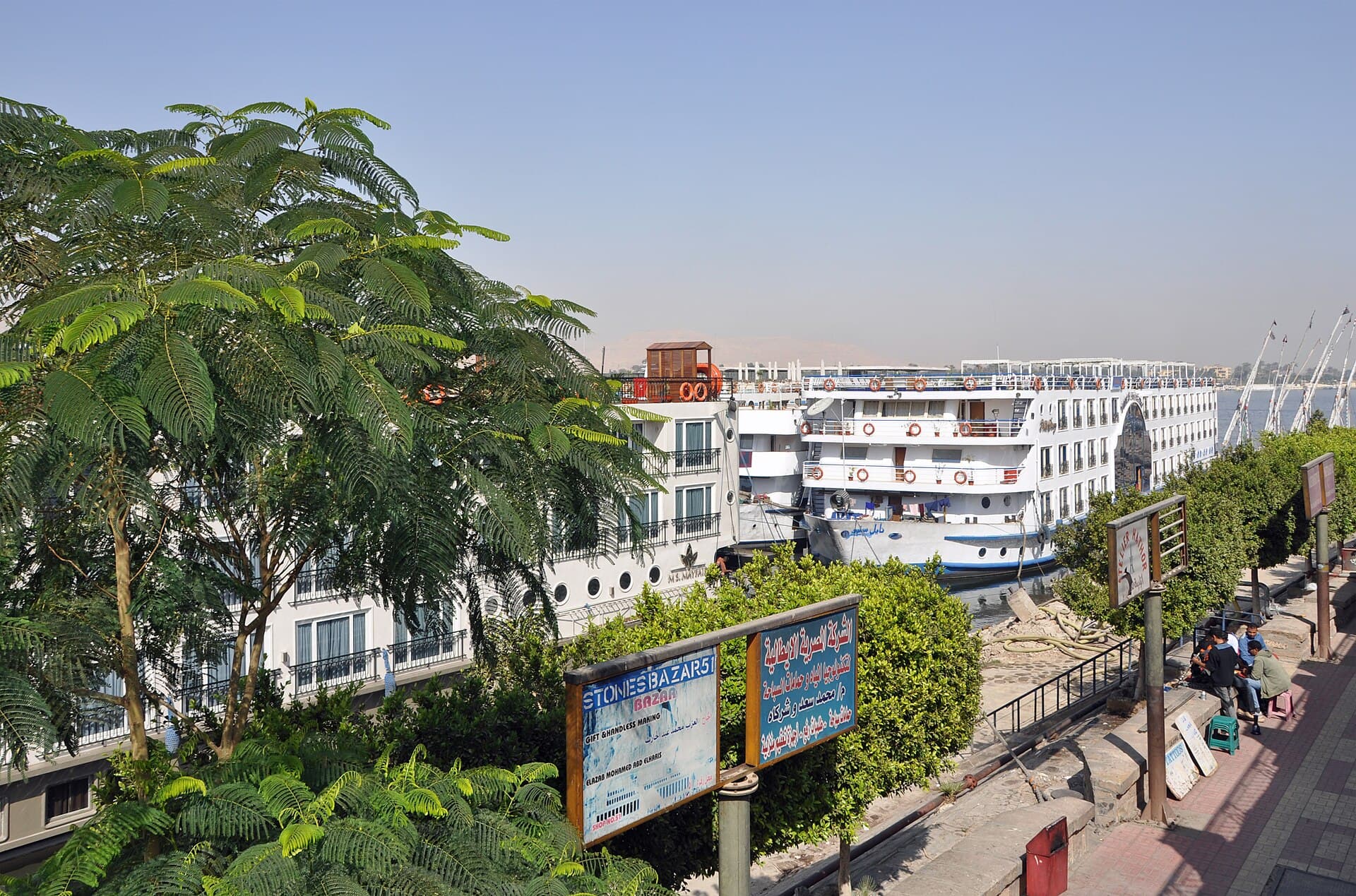
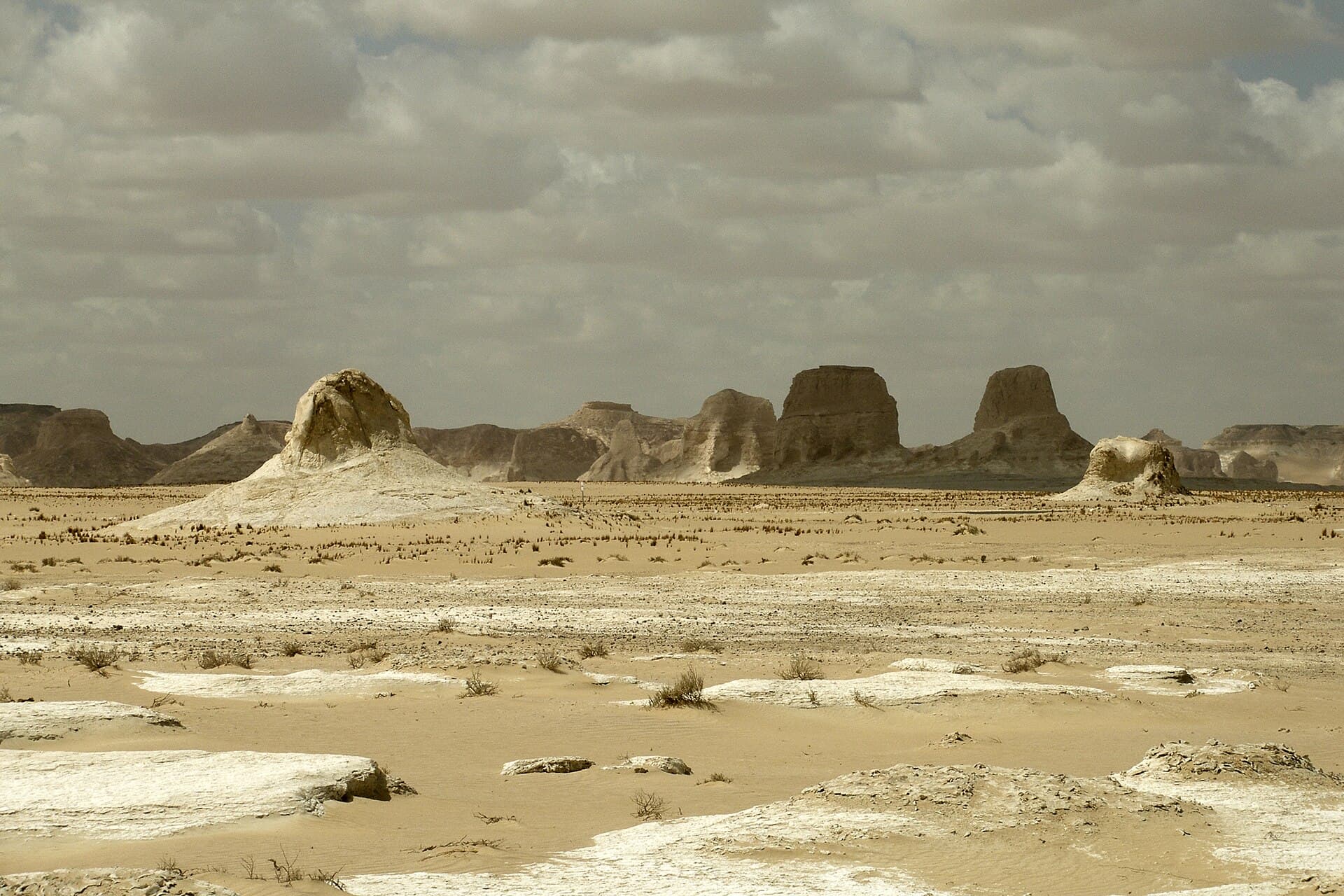
Three trips visit it on day 4, the day you fly from Cairo to Luxor. The flight is included, and you sleep in a Luxor hotel that night. Cairo, Luxor and a Nile Cruise, 12 days, from US$3,160. Cairo, Luxor, a Nile Cruise and the White Desert, 14 days, from US$3,815. Cairo, Luxor and a Nile Cruise, 15 days, from US$3,985. On all three, the next day goes to Dendera and Abydos, and you board the boat on day 6.
The Grand Tour of Egypt, 16 days, from US$3,910, saves it for day 10. That is your last Luxor morning, after the cruise. Then you transfer to Hurghada on the Red Sea.
Every other trip of ours that reaches Luxor covers the Valley of the Kings, Hatshepsut's temple and the Colossi of Memnon. Medinet Habu is left out of those. If you want it on one of those, ask us to add it when you enquire.
Common questions
Is Medinet Habu the same as the Ramesseum?+
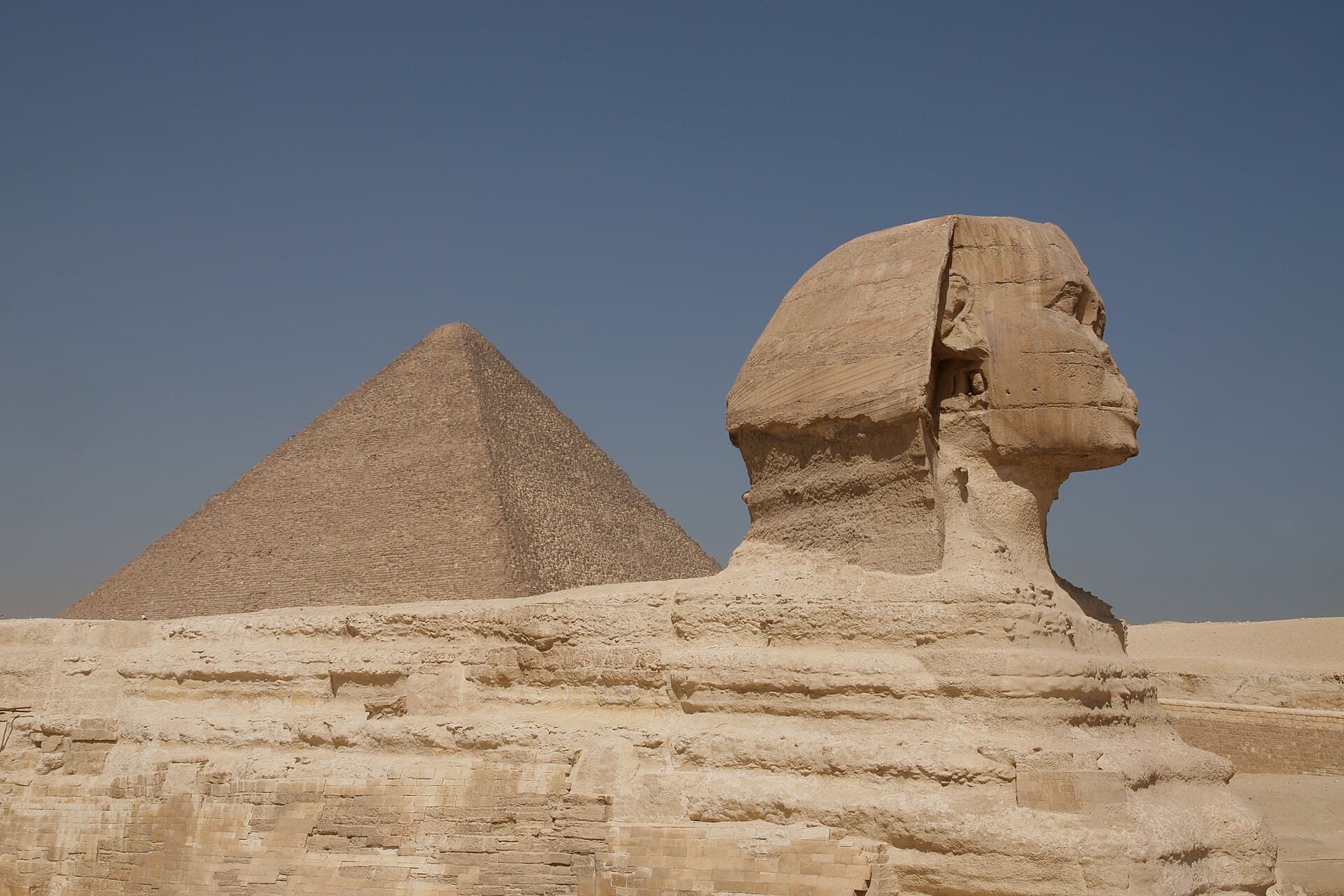
They are two separate temples. The Ramesseum is the memorial temple of Ramesses II. Medinet Habu belongs to Ramesses III, a later king, several generations on. The ministry notes that Medinet Habu was largely inspired by the Ramesseum. Medinet Habu is far better preserved.
Is Medinet Habu covered by the Luxor Pass?+
The ministry says the Luxor Pass covers all archaeological sites in Luxor. It names only two exclusions for the Standard pass: the tombs of Nefertari and Seti I. Medinet Habu is an archaeological site, so the pass should cover it. Confirm at the counter when you buy.
Do I need to book Medinet Habu tickets in advance?+
The ministry's booking site, egymonuments.com, sells Medinet Habu tickets online. Nothing on it says you must book ahead.
Can I take photos inside Medinet Habu?+
Yes. The ministry's booking site says photography with a mobile phone is free. For a large camera or a tripod, ask at the gate on the day, as the site lists no rule for them.
Is Medinet Habu good for children?+
It is one of the better west bank sites for families. The open courts give children space to move, and the high walls give shade. Children under 6 enter free, according to the ministry's booking site. Give older children something to find, such as a battle scene or a king shaped like Osiris.
Do I need a guide at Medinet Habu?+
No. The parts of the temple follow one sequence from the gate to the sanctuary, so it is easy to find your way. A guide adds the most at the war reliefs, where the scenes are crowded and the story is easy to miss. On our tours a guide comes with the day.
Official sources
Entry rules, opening hours, security advice and exchange rates all move. Check them at the source, not here.
Written and checked by the Nile Trip Guide editorial team · Last reviewed . Entry rules, prices and opening hours change — check anything critical against the official sources linked on this page.
Plan this trip
Tell us your dates and we will price it
A real itinerary with real prices, usually within 24 hours. Nothing is booked and nothing is charged until you say yes.
The standard Cairo-and-cruise route with two extra nights in a Luxor hotel before boarding, which is what buys you the Valley of the Queens, Medinet Habu, the Ramesseum, and a day out to Dendera and Abydos.
Fourteen days that add the Western Desert to the usual route: Cairo, two days of Luxor on land, four nights sailing to Aswan, then a drive west to Bahariya and a night out among the white chalk formations.
Fifteen days of the ancient sites without a beach stop: Cairo, two days of Luxor on land, four nights sailing to Aswan, a Nubian village, then back to Cairo for Alexandria, Saqqara and Dahshur.
Sixteen days and very little left out: Cairo, a flight to Aswan, three nights sailing down to Luxor, two more days of Luxor on land, three nights on the Red Sea, then back to Cairo for Saqqara and Dahshur.