Plenty of trips are sold as a Nile cruise from Cairo. Almost none of them put you on a boat in Cairo. The regular fleet works the stretch between Luxor and Aswan, and the Cairo part of the trip happens on land, before a flight south. That is not a swindle — it is the trip most people actually want — but it changes what you should be comparing, and it means a few of the itineraries advertised under this phrase are worth questioning closely.
What a Nile cruise from Cairo actually means
In almost every case the word doing the work is 'from'. It means your holiday starts in Cairo, not that your boat does. The standard shape is two nights in Cairo for Giza and the Grand Egyptian Museum. Then a flight of about an hour to Luxor, three or four nights on the river, and a night at the end to fly home. That is the itinerary most first-time visitors take, and it does not feel rushed.
So when you compare two of these trips, you are mostly comparing the land days at each end and the boat in the middle. The Cairo half is hotels, a guide and traffic. The river half is a different product with its own questions — direction, nights, which boat. Reading them as one thing is how people end up paying for a good Cairo hotel and a tired cabin.
It is worth being blunt about why the phrase exists at all. Cairo is the arrival airport for nearly every visitor, the pyramids are the reason most of them came, and the Nile runs through the middle of the city, so a boat leaving from the capital and heading south is the trip people picture before they have looked at a map. The map is the part that spoils it. Once you know the fleet works a short stretch six hundred kilometres to the south, the phrase stops describing a sailing and starts describing a package, and the package is a perfectly good one.
The three things people mean when they type it
The first and by far the commonest is the package above: Cairo on land, a flight, then a boat between Luxor and Aswan. Nine out of ten requests that use this phrase want this trip and are pleased with it once the geography is explained. Nothing on this page argues against booking it.
The second is the literal version — a vessel that casts off in Cairo and sails the length of the country to Aswan. That exists only as occasional charter work at high prices, for reasons set out below, and it is not comparable with a normal cruise on price or on what it contains. If that is genuinely what you want, it is a specialist request rather than something you book off a page.
The third is an evening out. Dinner boats work the water in central Cairo, and they are a restaurant that moves rather than a journey. They are the reason a very low price sometimes appears under this search term. All three are legitimate products; only the first one is the holiday most people had in mind, and telling them apart before you compare prices saves an expensive misunderstanding.
Why boats do not sail Cairo to Aswan
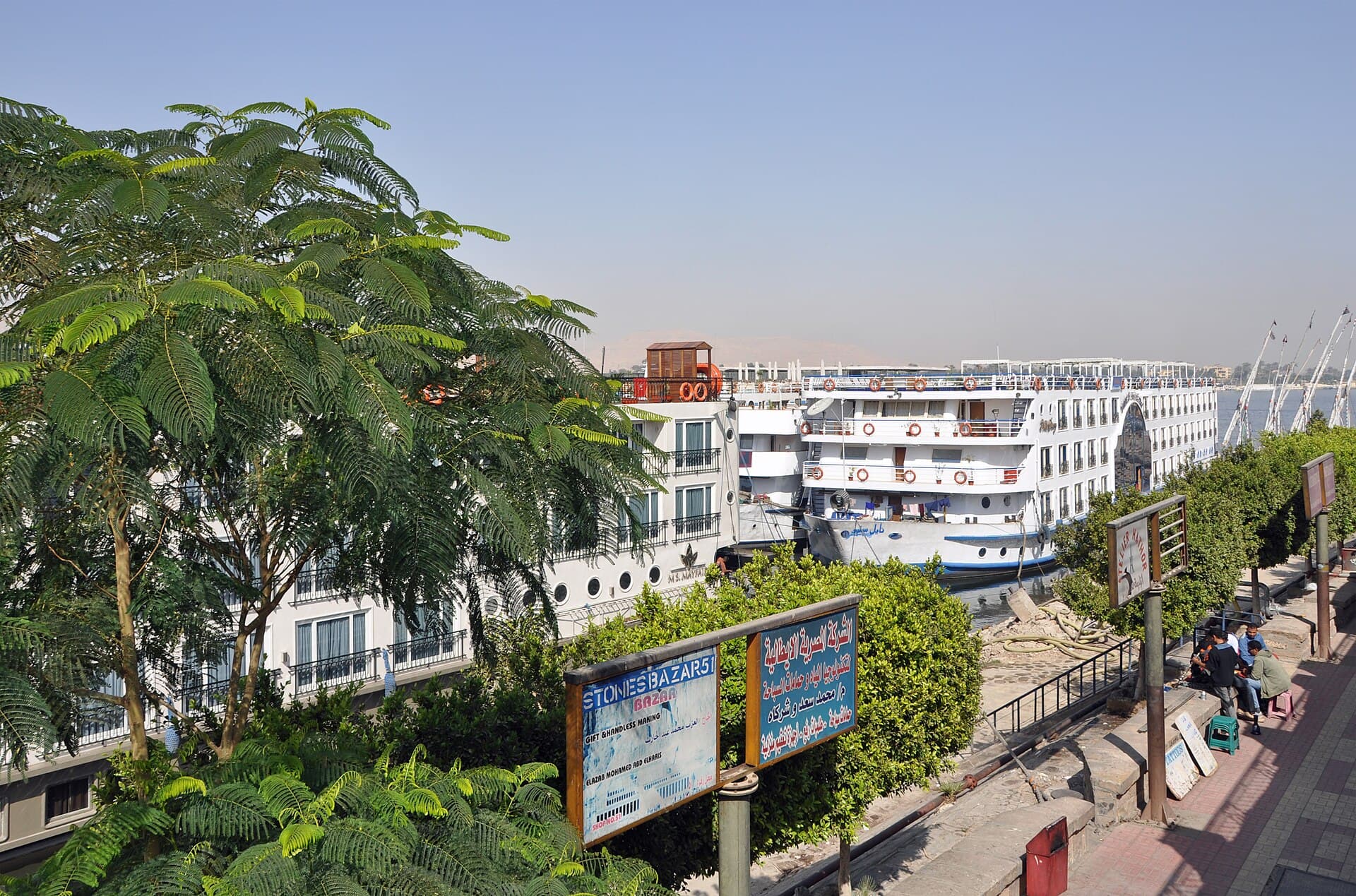
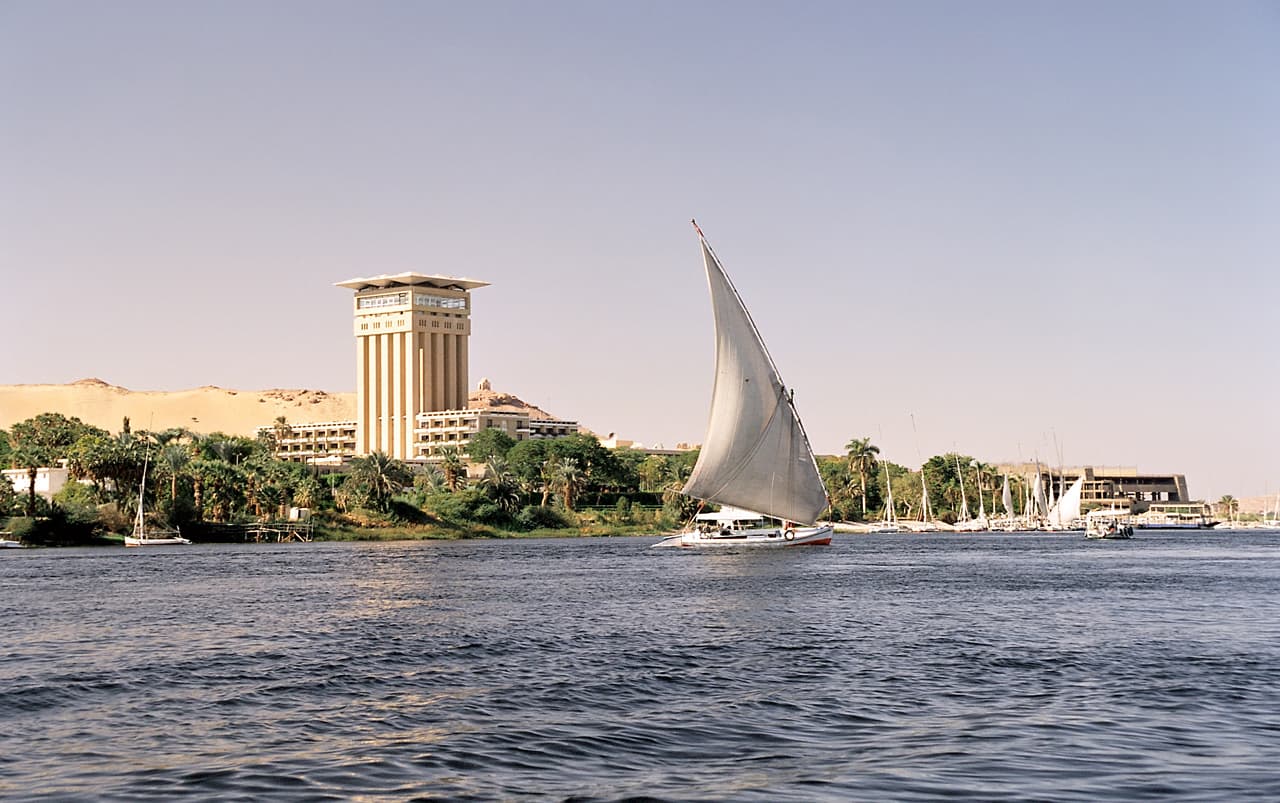
The regular fleet does not run the length of the Egyptian Nile. Long-distance Cairo to Aswan sailings exist only as occasional charters at high prices, because the barrages and shallow stretches make the run impractical for standard boats. Everything else works the Luxor to Aswan section, a little over 200 kilometres. The temples on that stretch are the reason the format exists at all.
This matters commercially rather than romantically. If a company is advertising routine Cairo departures at ordinary cruise prices, ask which boat, on which dates, and where it moors each night. It is the single question that separates a genuine long charter from an itinerary that quietly becomes a flight and a normal Luxor boat once you have paid a deposit.
One other thing is sold under the same word and is not this trip at all. Lake Nasser cruises run south of the High Dam, between Aswan and Abu Simbel, on the reservoir the High Dam created. They are a separate operation with a handful of boats, and they start further from Cairo rather than nearer it.
The boats themselves explain part of the limit. Nile cruisers are flat-bottomed vessels built shallow for a shallow, slow river, and they are designed around a route where the sites are packed into a couple of hundred kilometres and the moorings are already in place. Even on that short stretch the traffic bites: the lock at Esna, between Luxor and Edfu, takes only a few hulls at a time, and when the fleet arrives together the wait runs from an hour to an entire evening. Extend the route by six hundred kilometres of working river and you are adding days of water with no temples on it and no infrastructure to tie up against.
What is on the river north of Luxor, and why you do not sail past it
If the appeal of starting in Cairo is the idea of watching the whole country go by from the deck, this is the part worth knowing. The two great temples between Cairo and Luxor — Dendera and Abydos — are not on any standard cruise route. They are reached by road from Luxor, as a long day out, and that is true however many nights you book on the water.
North of Luxor the river runs through farmland and cities rather than monuments, and almost nobody cruises it. The stretch that is set up for passengers is short, shallow and slow, which is exactly why the flat-bottomed boats work there and nowhere else. A route that skipped it in favour of the run down from Cairo would trade the temples for scenery, which is the wrong way round.
The distances are the argument in plain numbers. Dendera sits about 60 kilometres north of Luxor near Qena, a little over an hour by road. Abydos is roughly 150 kilometres north, about three hours, and the two are done together as a single long day that runs twelve hours door to door: Abydos first thing while you are fresh, Dendera in the afternoon on the way back. A few cruise itineraries do moor near Qena for Dendera, so it is worth checking a specific programme rather than assuming, but plenty of Luxor to Aswan boats never go north at all because Qena is in the opposite direction.
Abydos also makes the clearest case against the long sail. It lies roughly 500 kilometres south of Cairo and about six hours' drive from it, which puts it squarely in the middle of the stretch a Cairo-to-Aswan boat would be crossing, and no boat stops there. The one itinerary in which it fits naturally is a Luxor to Cairo drive of about 650 kilometres, where it is the obvious break rather than a detour. That is a road trip, not a cruise, and it is the honest version of seeing the country between the two.
How you get from Cairo to the boat
Fly, in almost every case. Cairo to Luxor takes about an hour, and it is the option every standard itinerary is built around. The road takes most of a day and shows you very little, which is why nobody sensible drives it.
The overnight sleeper is the real alternative. It runs down the valley from Cairo to Luxor and on to Aswan, in two-berth and single cabins with a basin, a door that locks and a meal brought to you. You save a hotel night, and it costs less than flying. It is also basic and often late, so treat it as a budget decision rather than a romantic one.
Whichever you take, the transfer decides where the cruise part starts, and that is not a detail. Fly into Luxor and you sail south. Fly into Aswan and you sail north. Operators will quote both without always explaining that they are different trips.
Two practical points sit behind that choice. Egyptian domestic flights are retimed often, sometimes by hours and sometimes the day before, and Cairo airport is large enough that a domestic-to-international transfer needs real time — we would not build an itinerary on less than three to four hours between a domestic arrival and an international departure. The sleeper takes around ten hours to Luxor and further again to Aswan, leaving in the evening and putting you in the valley in the morning, which is the whole appeal; cabins are limited and sell out in high season, so it is not a decision to leave until you are standing at Ramses station.
The verdict, if you want one: fly, unless you are curious about the train, travelling as a couple and happy to lose some sleep to gain a day. Nobody who chose the flight has regretted it. Some people who chose the train have.
What the Cairo half should actually contain
Two nights in Cairo is the standard allowance on a cruise package and it is the honest minimum: one morning for Giza and the Sphinx, one for the Grand Egyptian Museum. It works, but it accepts a hard start on both days and leaves no slack for traffic or heat. Three nights is the version most people should take, because it adds Saqqara and Dahshur without cutting anything.
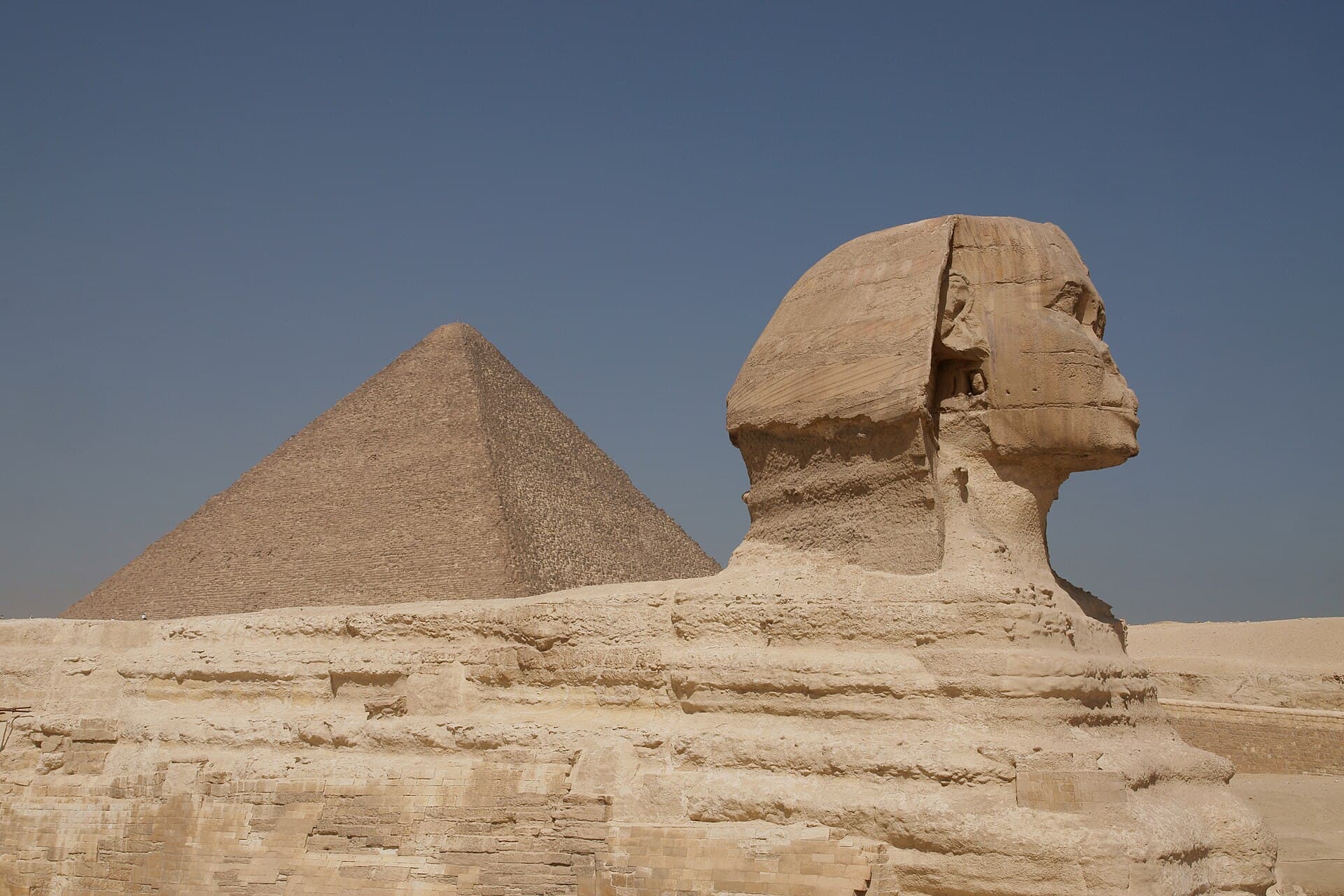
Giza sits on the western edge of the city rather than out in open desert. The plateau holds the three big pyramids, a scatter of much smaller subsidiary pyramids, the Sphinx, several temples and a field of mastaba tombs, and it is well over a kilometre end to end, mostly uphill on sand and broken rock. People routinely underestimate the walking. A focused visit takes about half a day. The Grand Egyptian Museum stands about two kilometres away and opened fully in November 2025; its main draw is the Tutankhamun collection shown together in one place, the Khufu boat has been moved there from its old museum beside the Great Pyramid, and the atrium is dominated by the colossal statue of Ramesses II, about eleven metres of red granite that stood in the traffic of Ramses Square until 2006. Allow three hours, and do not try to pair it with Giza on the same day.
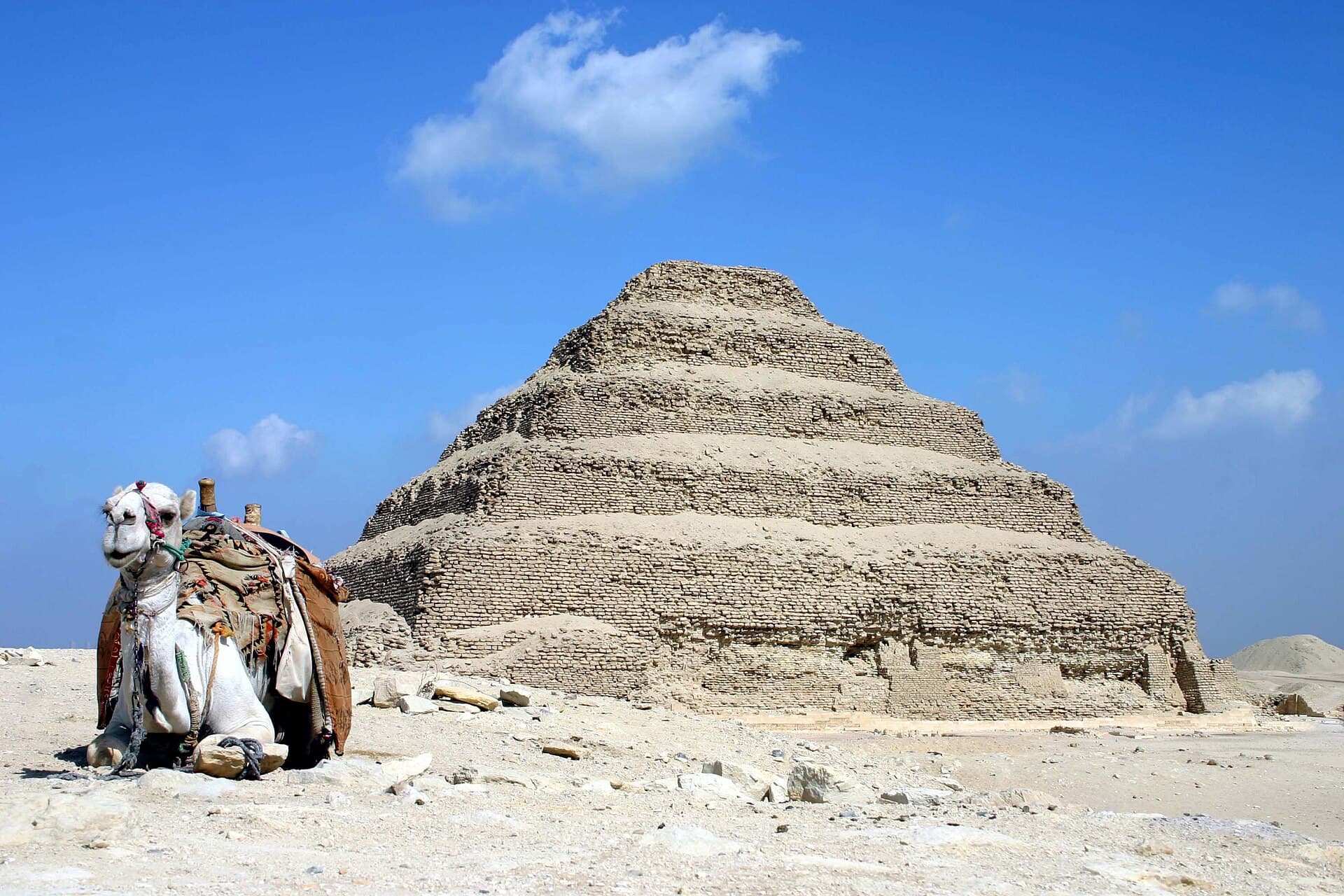
If you have a third day, spend it south rather than in another museum. Saqqara is a necropolis several kilometres long, centred on Djoser's Step Pyramid of around 2650 BC — the point where monumental stone architecture begins — and the reason to go is the painted and carved reliefs in the mastaba tombs of Old Kingdom officials, which are of a quality you will not find inside the Giza pyramids. Dahshur, twenty minutes further south and usually near-empty, holds Sneferu's Bent Pyramid and Red Pyramid. Islamic Cairo, on foot along Al-Muizz Street through Khan el-Khalili, is the other strong half day.
The thing that decides whether a Cairo day works is the hour you leave, not the distance. Giza to downtown is roughly 20 kilometres: half an hour early in the morning, most of two hours at the wrong time. Cairo International is about 45 minutes from the centre and an hour from Giza in normal traffic, which is worth remembering when a package puts an early flight south at the end of the second day.
Which end you board changes the trip and the price
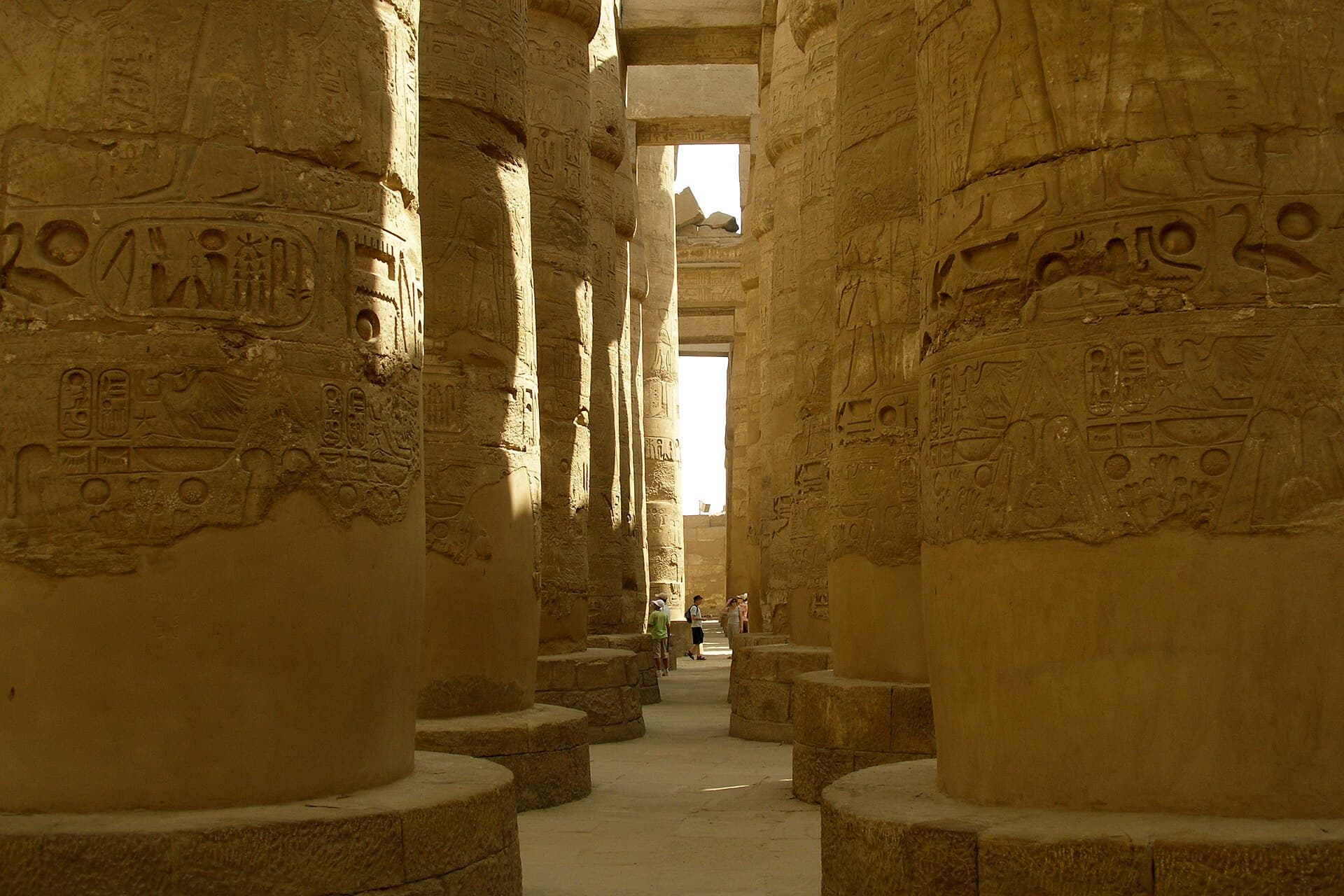
Southbound from Luxor to Aswan is the classic direction and usually runs four nights. You start with the heavyweight sites, Karnak and the Valley of the Kings, then ease through Edfu and Kom Ombo and finish in Aswan, the calmest of the three cities. It also sets up Abu Simbel properly at the end rather than squeezing it in.
Northbound from Aswan to Luxor is normally three nights and typically 10 to 15 per cent cheaper on the same boat, because the current does the work. The trade is that it front-loads the quiet stretch, ends with the busiest and hottest sites, and disembarks you in Luxor at dawn. It is the right choice if budget decides, or if you are carrying on to Hurghada afterwards.
From a Cairo start, either works, and the flights make it a genuinely open choice rather than a default. We have written the direction question up in full separately, because it changes the shape of the week more than most people expect.
The flight times differ slightly and occasionally matter. Luxor is about an hour from Cairo and the better connected of the two, with more services and more ways out; Aswan is around ninety minutes and further down the same railway. If your itinerary is tight, starting the river half at Luxor gives you more room to absorb a retimed flight.
What the river half contains once you are on it
The sailing stretch is about 215 kilometres, which the train covers in roughly three hours. The nights are therefore not buying distance; they are buying the temples on the bank and the hours in between. Boarding is around the middle of the day and disembarkation is after breakfast, so four nights is closer to three usable days and three nights is closer to two.
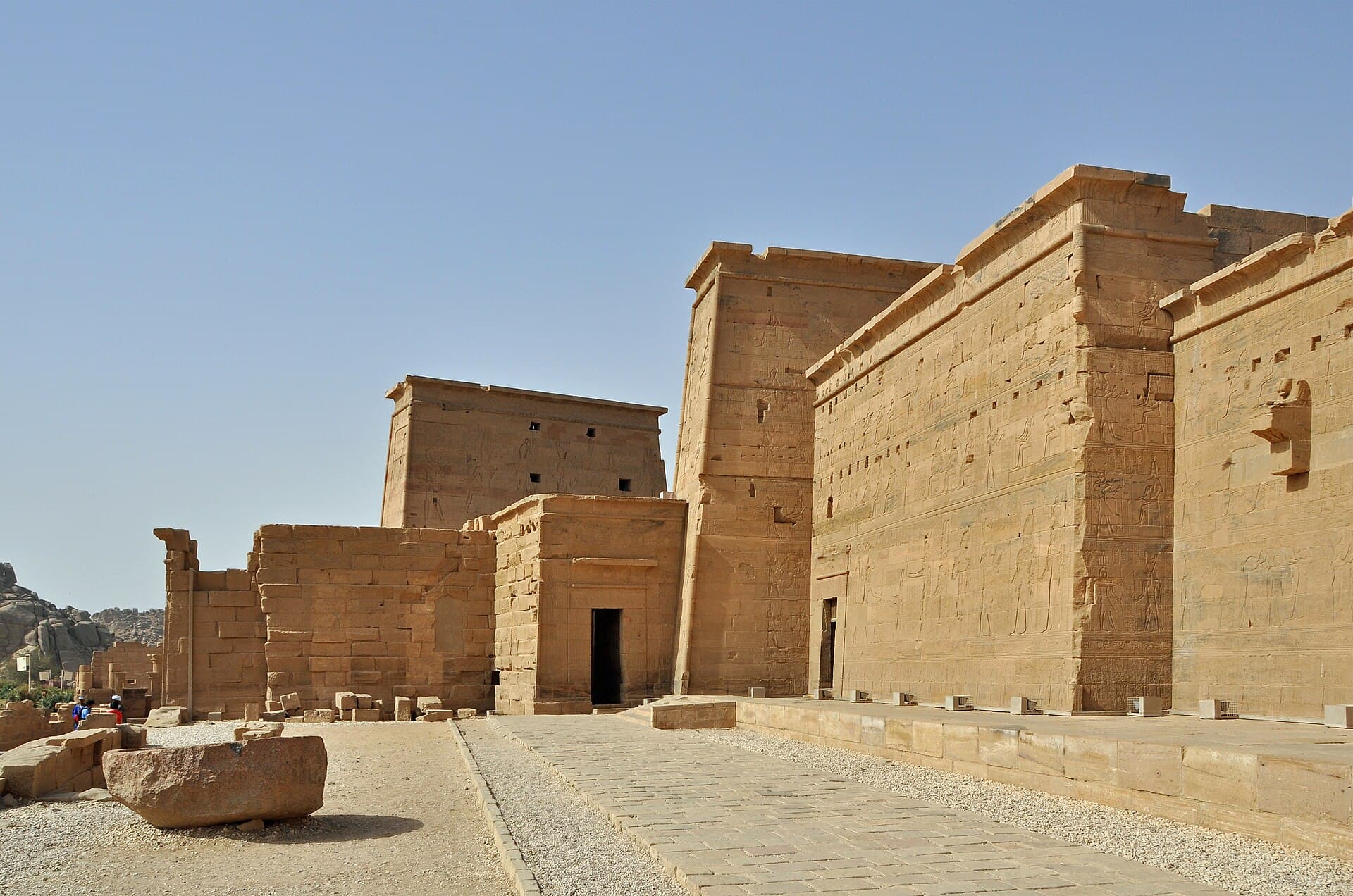
Southbound, the order runs Luxor and Karnak first, with the west bank compressed into a single morning covering the Valley of the Kings — where the standard ticket admits you to three tombs from the set open that day — Hatshepsut's terraced temple at Deir el-Bahari and the Colossi of Memnon on the road in. Then the boat moves. Esna and its lock, then Edfu, reached from the mooring by carriage or minibus and the best-preserved temple in Egypt, then Kom Ombo, which stands right on the bank about 45 kilometres north of Aswan and is doubled down the middle because it was built for two gods at once, Sobek the crocodile god and Haroeris. The final morning is Philae, the island temple of Isis reached by motorboat, usually with the High Dam viewpoint attached.
Northbound covers the identical list in reverse with one night removed, and the compression falls on Luxor, which needs three full days to be done properly and gets a morning. Either way, the stretches between the temples are the deck time, and the deck time is not filler: buffalo on the bank, children waving from rowing boats, a heron lifting off ahead of the bow. It is the part people describe a year later, and it is the part a flight from Cairo does not take away from you.
Eight days, ten days, or two weeks
Eight days is the common first-trip shape and the one most Cairo-plus-cruise packages are cut to: two nights in Cairo, a flight south, four nights on the river, and a night at the end to fly home. It covers Cairo and the Nile without feeling rushed, and it leaves no room for Abu Simbel or the Red Sea.
Ten days is the better version of the same trip. The two extra nights buy Abu Simbel as a proper day rather than an alarm clock, and a slower Luxor or an extra night in Aswan after the boat docks. If the budget stretches to two more nights anywhere, this is where they earn the most.
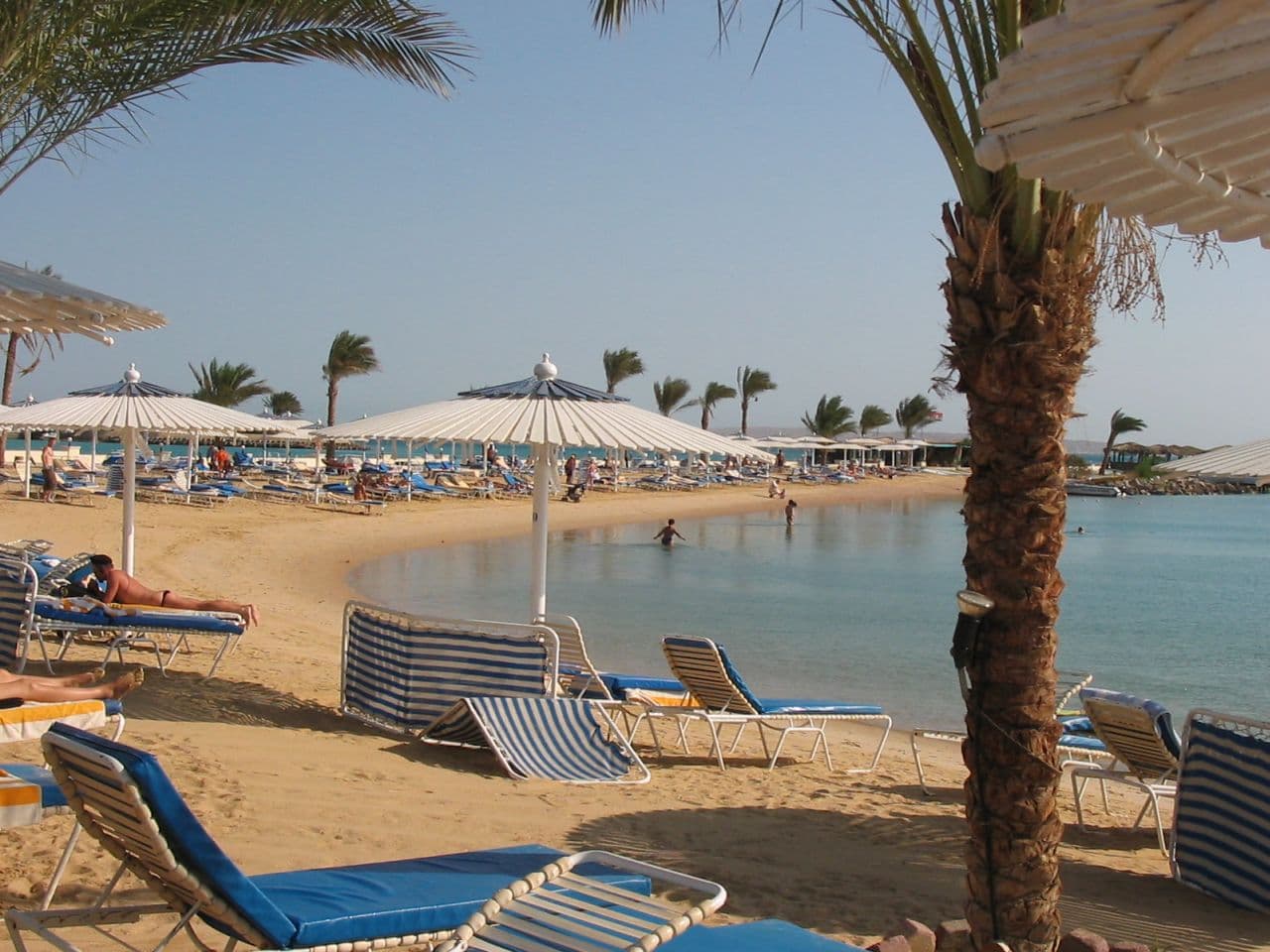
Fourteen days is the Nile-and-Red-Sea shape: Cairo, the cruise, then a week on the coast with a direct flight home. Luxor is about four hours by road from Hurghada, so finishing the cruise in Luxor rather than Aswan saves a backtrack — which makes the shorter, cheaper northbound sailing the more convenient one for this particular plan. Under a week, something has to go, and from a Cairo start it is usually Aswan.
One structural note about routing. Cairo is the hub for domestic flights, so an itinerary that bounces out to the coast and back to Cairo and out again pays the hub tax twice. Trips that run in one direction down the valley and finish where a flight home is available tend to work better than trips that return to the same city three times.
Abu Simbel, and where it fits from a Cairo start
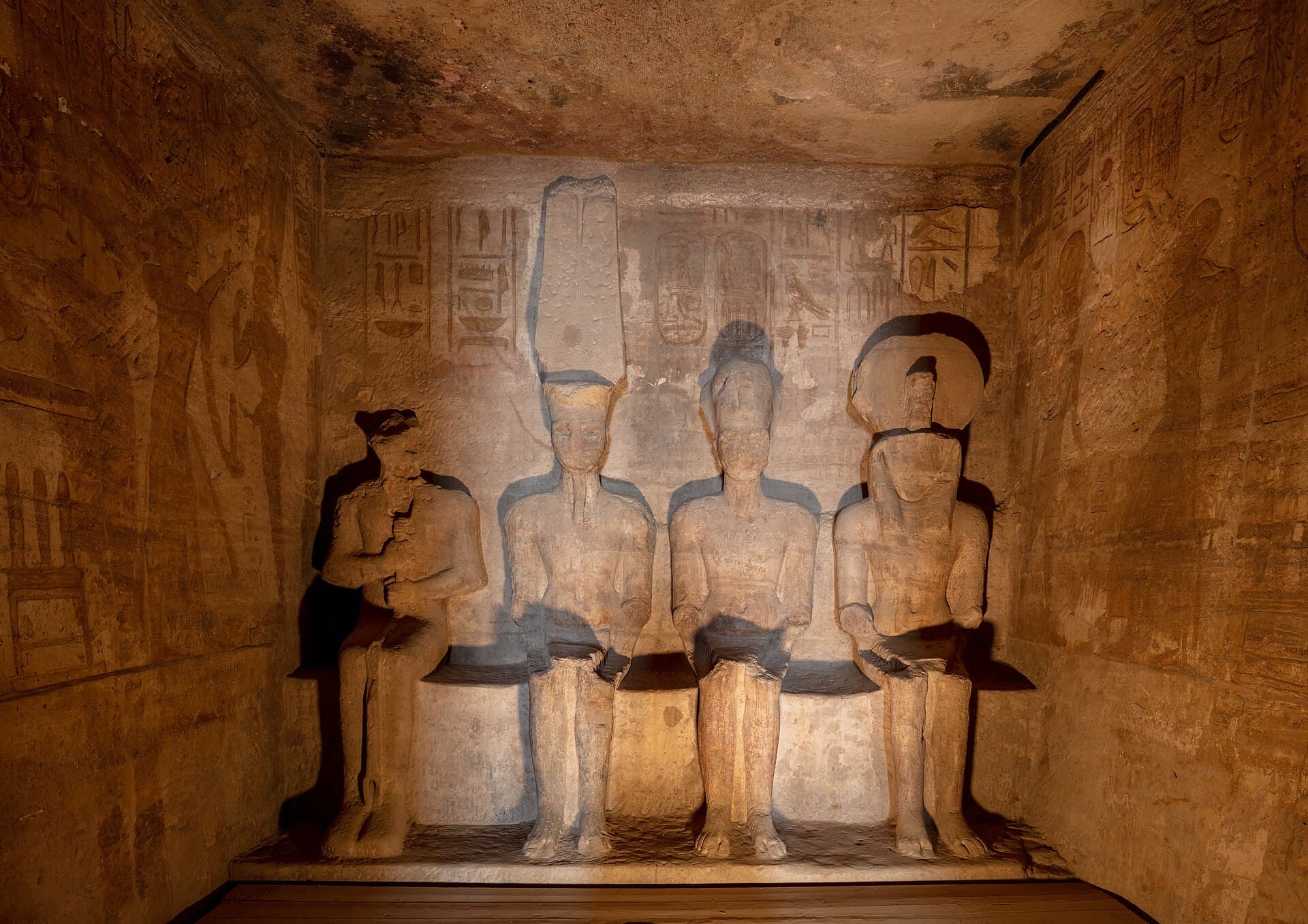
Abu Simbel is a separate excursion from Aswan on every itinerary, not a cruise stop. It is roughly three hours each way by road, usually in an early convoy, or a flight of about 45 minutes. That is why the southbound sailing, which finishes in Aswan, sets it up better than the northbound one: you are already at the right end of the country when the boat docks.
The version that works is a hotel night in Aswan after the cruise, then Abu Simbel the following day. The version that does not is squeezing it against a sailing schedule with a four o'clock start and a flight north the same afternoon. Almost every cruise finishes in Aswan and most passengers fly out the morning the boat docks for the last time, which turns Aswan into a hurried Philae stop between disembarkation and the airport.
The other route to the same temples is a Lake Nasser cruise, three or four nights between Aswan and Abu Simbel, calling at Nubian temples moved when the reservoir filled — Kalabsha, Wadi es-Sebua, Amada. There are only a handful of boats and you may pass two others in a day, which is the whole appeal. Most first-time visitors do not need it: the day trip costs a fraction of the cruise and reaches the same monument. Take the lake boat if the lesser Nubian temples and the emptiness are what you came for.
What is in the price, and what is not
A cruise fare bundles the cabin, all meals aboard, the guiding on board and the transfers between boat and site. That is genuinely convenient and it is most of why the format has survived. It also makes a straight comparison against a hotel misleading in both directions, and it hides three lines that are rarely included.
Drinks are almost never in the fare, including bottled water, and on-board prices run several times what you would pay ashore. Entrance fees are sometimes included and sometimes not, and the Upper Egypt sites are not cheap. Optional excursions sit outside the fare on most boats, including the balloon over the Luxor west bank and Abu Simbel from Aswan. Tipping is expected and is normally collected once as a crew pot at the end.
The Cairo half has its own version of the same problem. Each site charges its own entry, and the interiors of the Giza pyramids, the Serapeum at Saqqara and individual tombs are separate tickets on top. A headline price well below everyone else usually excludes some of these. Ask, in writing, which tickets are paid in advance and which you pay at the gate, and whether the domestic flights between Cairo and the river are inside the quoted price or bolted on afterwards. Two quotes that looked identical stop being identical at exactly that line.
The boat matters more than the city you start from
Boats vary far more than the photographs suggest, and the gap between a good one and a poor one is wider than the gap between three nights and four, or between starting in Cairo and starting in Luxor. Egyptian boat ratings are not comparable with hotel ratings elsewhere: the same five-star label covers boats refitted last season and boats with tired cabins and weak air conditioning.
Ask the date of the last refit and what it covered — that answer is more useful than the star rating. Ask how many passengers the boat carries and how large the excursion groups are, because a full boat filing through Edfu behind one guide is a different morning from a small group, and the guide shapes the week more than the ship does. Ask which deck the cabin is on: upper decks are quieter, lower-deck windows sit close to the waterline, and vibration and generator hum are worse towards the stern.
Get the boat named in writing, and ask what happens if it changes. Substitutions do occur on the river, and the same category does not mean a similar week when the boats differ this much. Ask when the brochure photographs were taken as well as when the vessel was last refitted. If nobody will put a date on either, treat the refusal as the answer. And expect to raft: at the smaller moorings boats tie up several deep, so you may walk through another boat's lounge to reach the bank. That is normal, and worth knowing before you see it.
When to go, and how far ahead to book
October, November, February and March are the sensible months for the river. June to August runs well past 40C in Upper Egypt, the sun deck is unusable from mid-morning until late afternoon, and boats are cheaper then for a reason. Late December and early January are pleasant but crowded and the dearest weeks in the Egyptian calendar, and the moorings stack up.
The Cairo half follows a similar pattern with a narrower penalty. November to March is the sensible window there: days are mild, mornings can be genuinely chilly at around 10C, and the light on the plateau is better. Giza in summer is spoiled by late morning, though the Grand Egyptian Museum is air-conditioned and makes no difference in July or January — summer visitors who take the pyramids at opening and give the afternoon to the museum get the better of both.
For travel between October and April, book two to four months ahead, and earlier for December and January, when cabins on the better boats often go by autumn. Book early enough to choose the boat rather than just the week. Faced with four nights on a tired vessel or three on a good one, take the three: the boat and the guide are felt every hour of the trip, and the fourth night is felt once.
Questions worth asking before you pay a deposit
Where does the boat board, and on which day? This is the question that settles whether you are buying a Cairo departure or a Cairo start, and any honest operator will answer it in one sentence. If the answer is vague, or arrives as a paragraph about the romance of the river, you have learned something.
Then: which boat, named, with the refit date. Are the Cairo-to-Luxor or Aswan-to-Cairo flights inside the price. Which entrance fees are included and which are paid at the gate. Which excursions are optional extras. How many passengers the boat carries. Which hotel in Cairo, named, and in which district, because Giza, Zamalek and downtown are three different trips into the same sites.
Finally, ask what happens when something moves. Domestic flights are retimed, the Esna lock queues, and boats are occasionally substituted. None of that is a scandal; all of it is normal on this route. What separates a good operator from a cheap one is whether they will tell you about it before you book rather than at the quay.
So is there a long itinerary that really does start in Cairo?
Not on this site. Every Nile route we sell flies south and boards at Luxor or Aswan, and we would rather say that plainly than dress a flight up as a sailing. If a long charter down the valley is genuinely what you want, it is a specialist request rather than something you book off a page, and the price is not comparable with a normal cruise.
What we can do from a Cairo start is add the pieces people were really after: Dendera and Abydos by road from Luxor, an extra night in Aswan instead of a dawn flight home, or Abu Simbel as a proper day rather than an alarm clock. Those are the additions that make a Cairo-to-Aswan trip feel like a journey down the country, and none of them requires a boat that does not exist.
If you take one thing from this page, take the comparison. Two trips advertised as a Nile cruise from Cairo can differ by a whole grade of boat, two entrance-fee policies and a night in Aswan, and none of that is visible in the headline. The Cairo part is the easy half to get right. The river part is where the money goes, and it is worth the questions.
Common questions
Can you sail the whole Nile from Cairo to Aswan?+
Not on a normal schedule. Long-distance Cairo to Aswan sailings exist only as occasional charters at high prices, because the barrages and shallow stretches make the run impractical for standard boats. The regular fleet works the Luxor to Aswan section. Anyone advertising routine Cairo departures is worth questioning closely before you pay a deposit.
How do you get from Cairo to the cruise?+
By air in almost every case: Cairo to Luxor is about an hour, and it is what standard itineraries assume. The overnight sleeper train is the alternative, in two-berth and single cabins, and it saves a hotel night — but it is basic and often late. The road takes most of a day and shows you very little.
Should I fly to Luxor or Aswan?+
Luxor if you want the classic southbound sailing, which normally runs four nights, opens with Karnak and the Valley of the Kings and ends in Aswan. Aswan if you want the northbound run, which is normally three nights and typically 10 to 15 per cent cheaper on the same boat but finishes with the busiest, hottest sites and disembarks at dawn.
Do any cruises stop at Dendera or Abydos?+
Not the standard ones. Both lie north of Luxor, off the cruise stretch entirely, and are visited by road from Luxor as a long day out. If they are the reason you wanted to start further north, add a land day rather than looking for a boat that goes there.
How many days do I need for Cairo and a Nile cruise?+
Eight days is the common shape: two nights in Cairo, a flight south, four nights on the river, and a night to fly home. Ten days is the better version of the same trip, because it buys Abu Simbel and a slower Luxor without an argument. Under a week, something has to go, and it is usually Aswan.
Is a dinner boat in Cairo a Nile cruise?+
No. Those are an evening out, not a journey, and our own verdict on them is that they sell the view rather than the cooking. If someone quotes you a very low price for a Nile cruise from Cairo, check you are not being sold dinner and a night on the water.
Are the flights from Cairo included in a Nile cruise package?+
Sometimes, and it is one of the first things to check in writing. The Cairo to Luxor and Aswan to Cairo legs are the part most often quoted separately, and they are not a trivial line in the budget. A headline price well below everyone else has usually left one of them out, along with some of the entrance fees.
How long is the flight from Cairo to Luxor?+
About an hour, and Cairo to Aswan is around ninety minutes. Both are short, but Egyptian domestic flights are retimed often, sometimes by hours and sometimes the day before. Leave three to four hours between a domestic arrival and an international departure, because Cairo airport's terminals are far enough apart to need real time.
Is two nights in Cairo enough before the cruise?+
It is the honest minimum: one morning for Giza and the Sphinx, one for the Grand Egyptian Museum, with a hard start on both days and no slack for traffic or heat. Three nights is the version most people should take, because it adds Saqqara and Dahshur without cutting anything. Giza and the museum on the same day is the most common mistake.
What is not included in the cruise price?+
Drinks are almost never included, bottled water aboard costs several times what it does ashore, and optional excursions such as the Luxor balloon and Abu Simbel sit outside the fare on most boats. Entrance fees are sometimes in and sometimes out. Tipping is expected and usually collected once as a crew pot at the end.
When is the best time to do Cairo and a Nile cruise?+
October, November, February and March are the sensible months on the river, and November to March is the comfortable window in Cairo, where mornings can be chilly at around 10C. June to August runs well past 40C in Upper Egypt and boats are cheaper then for a reason. Late December and early January are pleasant but crowded and the dearest weeks of the year.
How far in advance should I book?+
Two to four months for travel between October and April, and earlier for December and January, when cabins on the better boats often go by autumn. Book early enough to choose the boat rather than just the week. Given four nights on a tired vessel or three on a well-kept one, take the three — the boat and the guide are felt every hour.
Why do cruise boats sometimes wait for hours near Esna?+
Because of the lock at Esna, between Luxor and Edfu. A lock moves boats between two water levels a few hulls at a time, and so many boats work this short stretch that they reach it together and queue. The wait can run from about an hour to a whole evening, and no operator can schedule around it.
Should I add a night in Aswan at the end?+
Yes, and it is the best single upgrade available to this trip. Most cruises finish in Aswan and most passengers fly out the same morning, so their Aswan is a rushed Philae stop between disembarkation and the airport. One hotel night buys an unhurried afternoon on the water, an evening on the corniche, and Abu Simbel without a four o'clock start pressed against a sailing schedule.
Official sources
Entry rules, opening hours, security advice and exchange rates all move. Check them at the source, not here.
Written and checked by the Nile Trip Guide editorial team · Last reviewed . Entry rules, prices and opening hours change — check anything critical against the official sources linked on this page.
Plan this trip
Tell us your dates and we will price it
A real itinerary with real prices, usually within 24 hours. Nothing is booked and nothing is charged until you say yes.
Three nights sailing north from Aswan to Luxor, taking in Philae, Kom Ombo, Edfu, the Valley of the Kings and finally Karnak. Full board on board, and the sightseeing runs as a shared group of about fifteen.
Four nights sailing south from Luxor to Aswan: Karnak and Luxor temples on the first afternoon, the Valley of the Kings, Edfu, Kom Ombo and Philae. Full board throughout, with sightseeing in a shared group of about fifteen.