Egypt budget tours: what the cheapest trips really cost
Egypt budget tours are usually sold with a number attached and no explanation, which is the opposite of useful. This page gives the figures we actually hold. The cheapest real trip on this site is four days on the Nile from Aswan to Luxor at US$840 per person, land only, and the cheapest land trip is five days in Cairo at US$935. Everything above those two numbers is a question of what you add and what you leave out. What follows is what moves the price, what is worth economising on, what is a false economy, and what a week genuinely costs once the tipping and the extras are counted in.
Egypt budget tours: the real starting prices
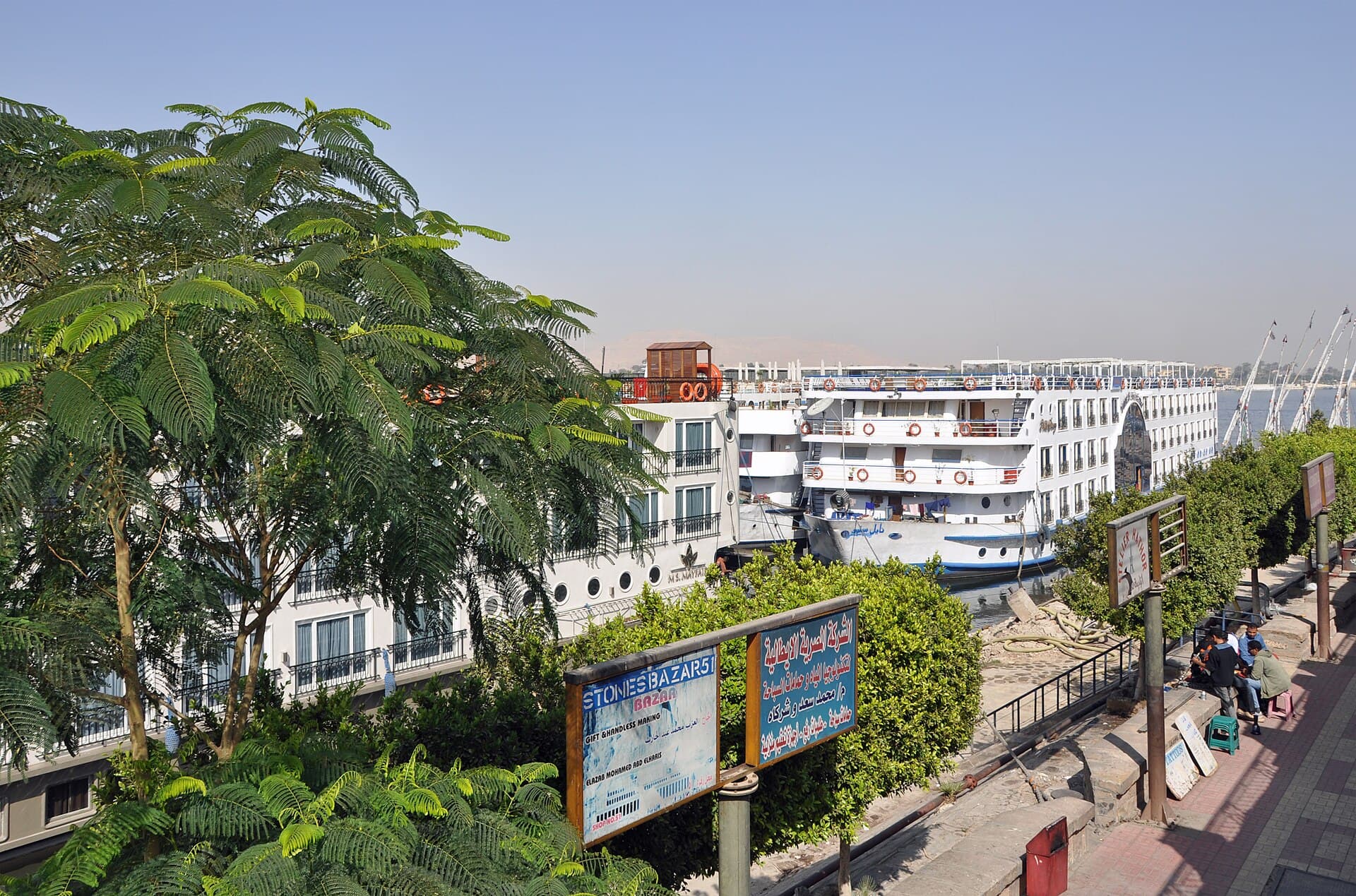
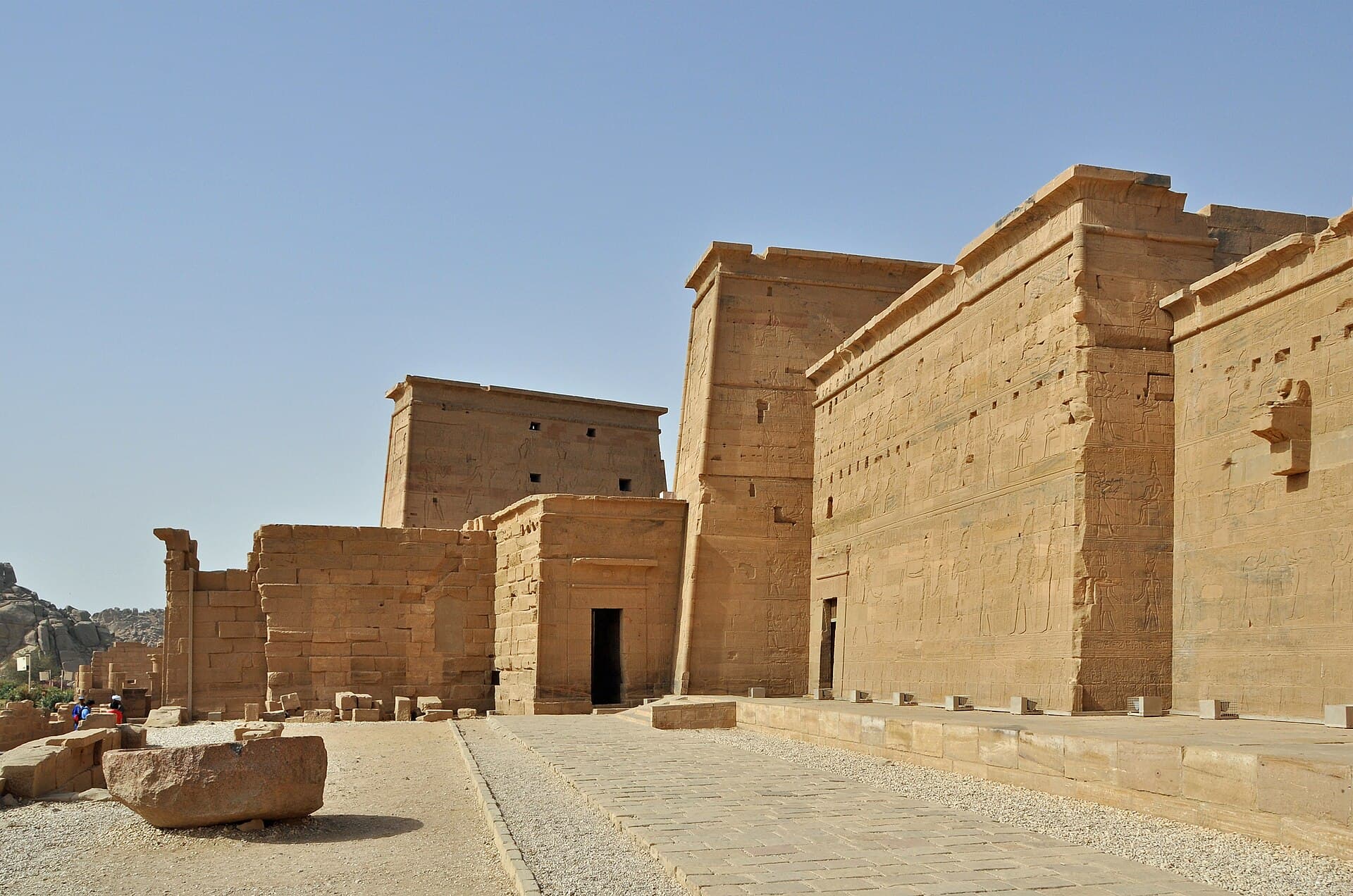
There are two floors, and they belong to two different kinds of trip. The first is US$840 per person for four days on the Nile from Aswan to Luxor: three nights full board aboard the MS Radamis II, with Philae, the Unfinished Obelisk, Kom Ombo, Edfu, the Valley of the Kings, Hatshepsut, the Colossi of Memnon, and Karnak and Luxor temples on the final morning. The second is US$935 per person for five days in Cairo, four nights at the Flamenco Hotel with breakfast, and every sightseeing day run privately. Both prices are per person, land only, and neither includes any flight at all.
Divide those by the nights and the ranking flips. The cruise works out at roughly US$210 a day; the Cairo break at about US$187. The lower headline price belongs to the higher daily rate, because a cruise price is carrying a floating hotel, full board, and a guided excursion every day, while a city break is carrying a bed, a breakfast and three guided days out of five. If your instinct is that a boat must be the expensive option, the numbers say otherwise for a short trip.
Above those two the ladder is short and predictable. Five days Luxor to Aswan starts at US$1,095. Cairo and Luxor in five days, with both domestic flights inside the price, starts at US$1,480. Seven days covering Cairo and a Nile cruise, again with both internal flights included, starts at US$1,890. Below US$840 we hold nothing, and we are not going to invent a figure to fill the gap.
What the US$840 four day Nile cruise actually includes
The inclusions are more generous than the price suggests, and they are worth reading rather than assuming. You are met at Aswan airport by a representative, all transfers are by private air-conditioned vehicle, and the three nights aboard are full board, starting with lunch on the day you embark and ending with breakfast on the day you leave. There is an English-speaking guide on every excursion, bottled water in the vehicle, portage where needed, and all service charges and taxes are inside the figure.
The exclusions are what make it a budget price, and one of them catches almost everybody. International flights are out, which is standard. Domestic flights are also out, which is not: you have to get yourself to Aswan for day one and home from Luxor on day four, and both are separate bookings on top of the US$840. Also outside the price are the Egypt entry visa, extra meals and drinks, optional tours, tipping, and additional entry tickets such as the tomb of Tutankhamun.
The other honest limitation is how the sightseeing runs. On this trip the operator states it plainly: all cruise sightseeing is a shared small group of roughly fifteen people. Your transfers are private, your temple visits are not. That is the trade the price is built on, and no amount of asking at the desk converts it into a private tour. If having your own guide at every wall is the point of the holiday for you, this is not a cheap version of that trip, it is a different one.
The US$935 Cairo short break, and why a city break is the cheapest way in
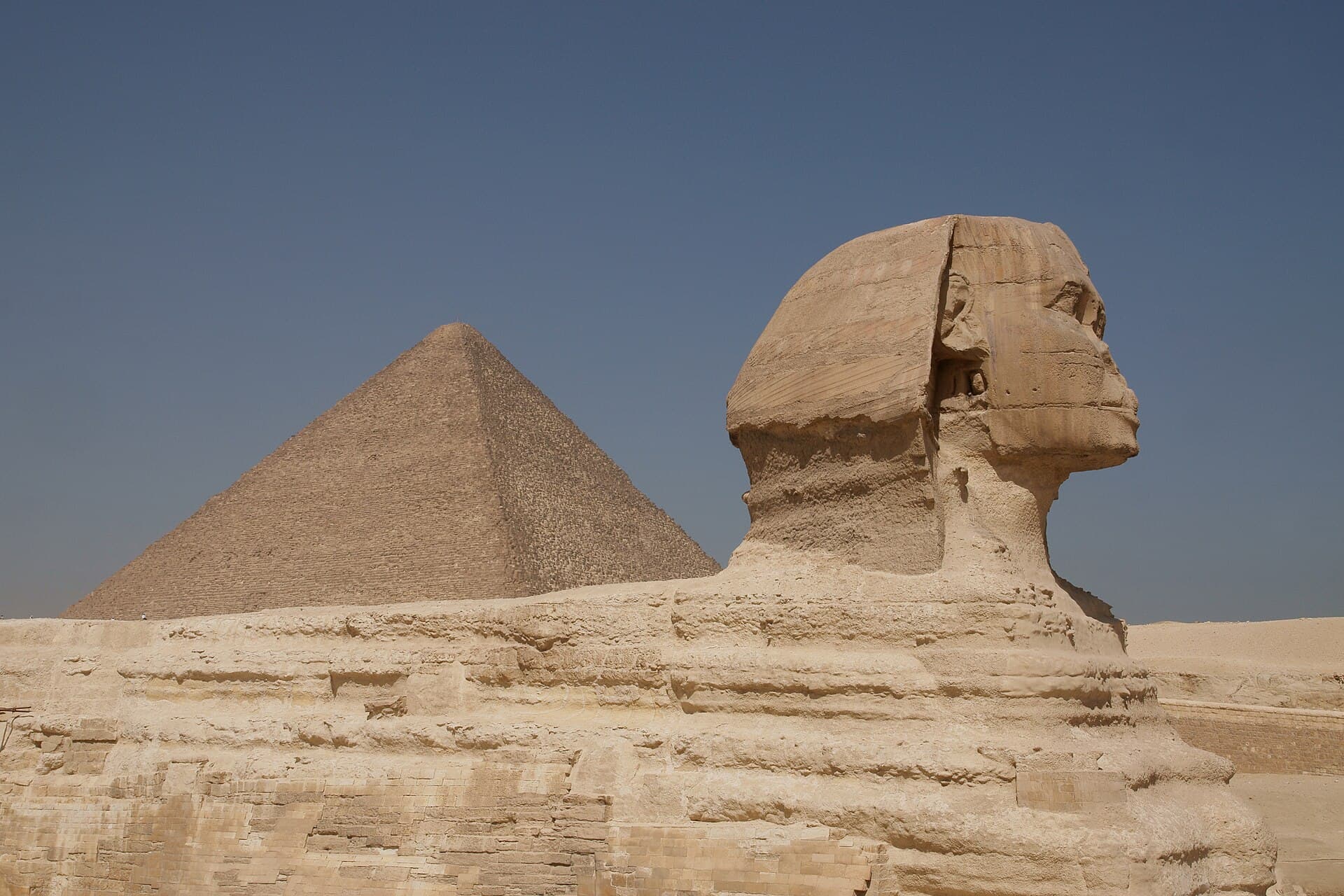
Five days, four nights in one hotel, and no internal transport at all. The programme is Giza and the Grand Egyptian Museum on day two, with a short camel ride included and lunch at a local restaurant; the Egyptian Museum, the Saladin Citadel and Coptic Cairo on day three; the National Museum of Egyptian Civilization, where the mummies hall is the draw, and Khan el-Khalili on day four. Every one of those days is run as a private tour with your own guide, which at US$935 is the surprise on this list.
The saving is structural rather than clever. No domestic flights, no boat, no hotel changes. You unpack once, the vehicle comes to the same door every morning, and nobody is paying for a cabin, a crew or a kitchen on the water. Those three absences are the whole reason a private trip lands below a group cruise.
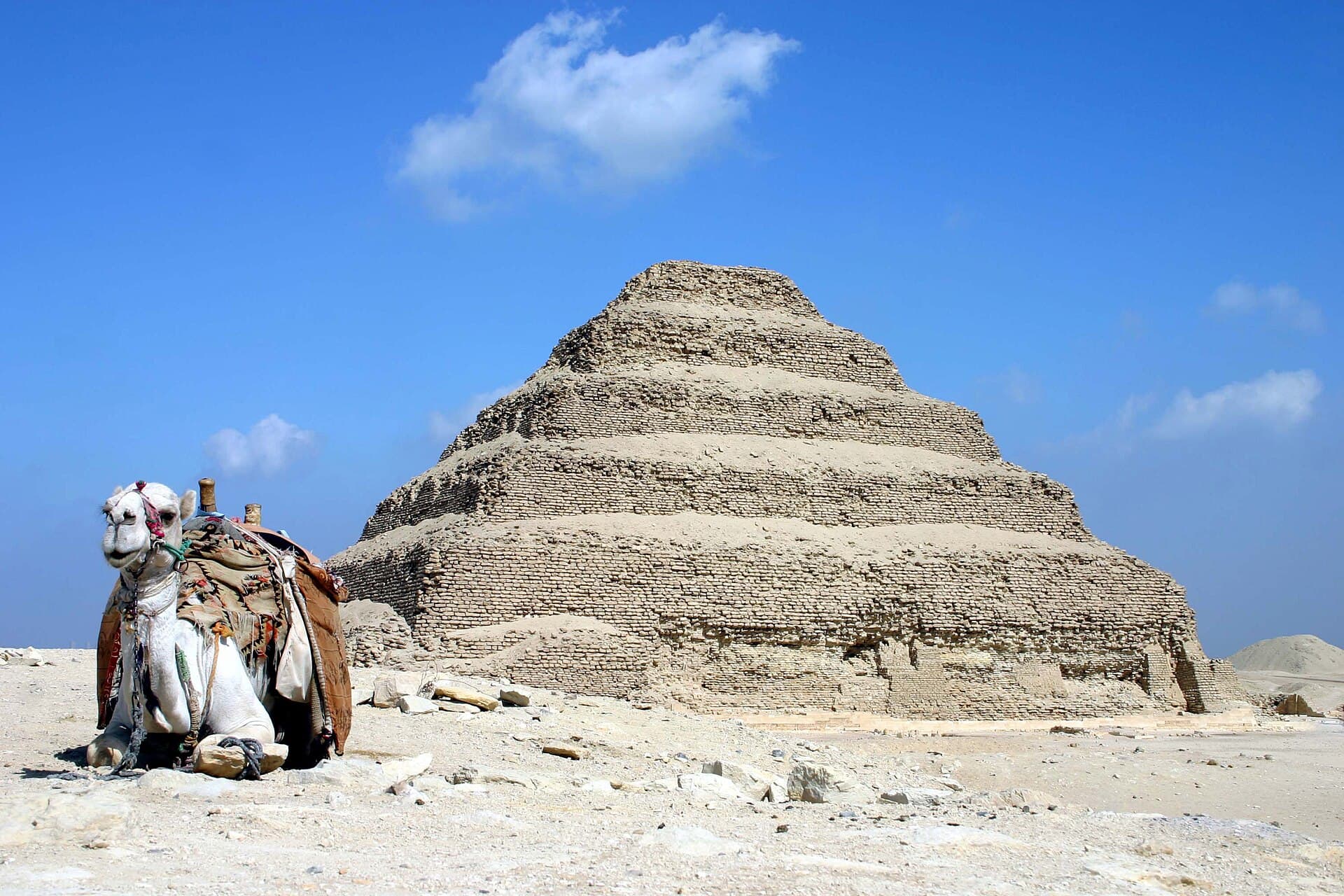
What it leaves out is equally plain. There is no Luxor, no Aswan, no Saqqara, no Dahshur and no Alexandria in it. If the temples of Upper Egypt are the reason you are going to Egypt, this is not the budget version of that holiday. It is a good, cheap, well-run five days in one city, and it should be judged as that.
Why five days on the Nile costs US$1,095 when four days costs US$840
The two cheapest cruises are the same boat at the standard level. Four days Aswan to Luxor puts you aboard the MS Radamis II for three nights at US$840. Five days Luxor to Aswan puts you aboard the same boat for four nights at US$1,095. The difference is one extra night and one extra day of sightseeing, and it costs US$255.
That is the cleanest number on this page, because everything else is held constant: the same standard boat, the same full board, the same shared group of about fifteen on excursions, and the same exclusion list, domestic flights included among the things you pay for separately. When someone asks what a night on the Nile costs, this is the answer we can actually evidence.
The direction matters as well as the length. Northbound, Aswan to Luxor, runs with the current and is the shorter and usually cheaper of the two. It also front-loads the quiet end of the river: you begin at the Unfinished Obelisk and Philae and finish with Karnak on the morning you fly out. Southbound gives you Karnak on the first afternoon and Aswan at the end, which suits anyone planning to stay on there.
The four things that actually move the price
Season, whether the touring is private or a group, the category of the hotel or boat, and whether the domestic flights sit inside the quote or outside it. Those four explain almost all of the spread between the trips on this site, and almost all of the spread between quotes you will receive elsewhere. Everything else is rounding.
Two of them are free choices. Moving the dates and accepting a group cost you nothing except comfort and daylight temperature. Two of them have consequences that are not financial: a standard boat on a long cruise and an itinerary with no internal flights both change what the holiday feels like, not only what it costs.
What does not move the price much is worth naming too, because it is where people spend their planning energy. Haggling over a hotel category in Cairo, shaving a day off the end of a trip, or asking for a different lunch restaurant will not change your total meaningfully. Deciding to travel in May rather than at New Year, or as a pair rather than alone, will.
Category: where paying more buys a lot, and where it buys almost nothing
Look at the same trip across the three levels. The four day cruise runs US$840 on the MS Radamis II, US$1,425 on the Movenpick Royal Lily, and US$2,135 on the Sonesta St. George. That is two and a half times the price for an identical itinerary, identical temples and the same shared-group arrangement on excursions. The five day Luxor to Aswan version behaves the same way: US$1,095, US$1,880, US$2,825.
Now look at Cairo. The five day short break runs US$935 at the Flamenco, US$1,200 at the Steigenberger Hotel El Tahrir, and US$1,420 at the Four Seasons First Residence. Top to bottom that is about one and a half times, not two and a half. The reason is obvious once stated: in Cairo you are buying a bed in a building you leave at eight every morning, while on a boat you are buying the place you eat three meals, spend every evening and watch the river from.
The conclusion for anyone on a budget is not the same in both places. Take the standard hotel in Cairo without hesitation, because the money buys you very little. On a three night cruise the same logic mostly holds. On a long cruise of six or seven nights, where the boat is the holiday rather than the transport, the standard level is the one decision on this page we would tell you to think about twice before making on price alone.
Private or group: the biggest lever, and the one with a real cost
Our two cheapest cruises run their sightseeing as a shared small group of roughly fifteen. The Cairo short break, Cairo and Luxor, and the seven day Cairo and Nile cruise all run their land sightseeing privately. That single difference in how a day is organised is the largest structural gap between a budget Egypt tour and a mid-priced one, larger than the hotel, larger than the boat.
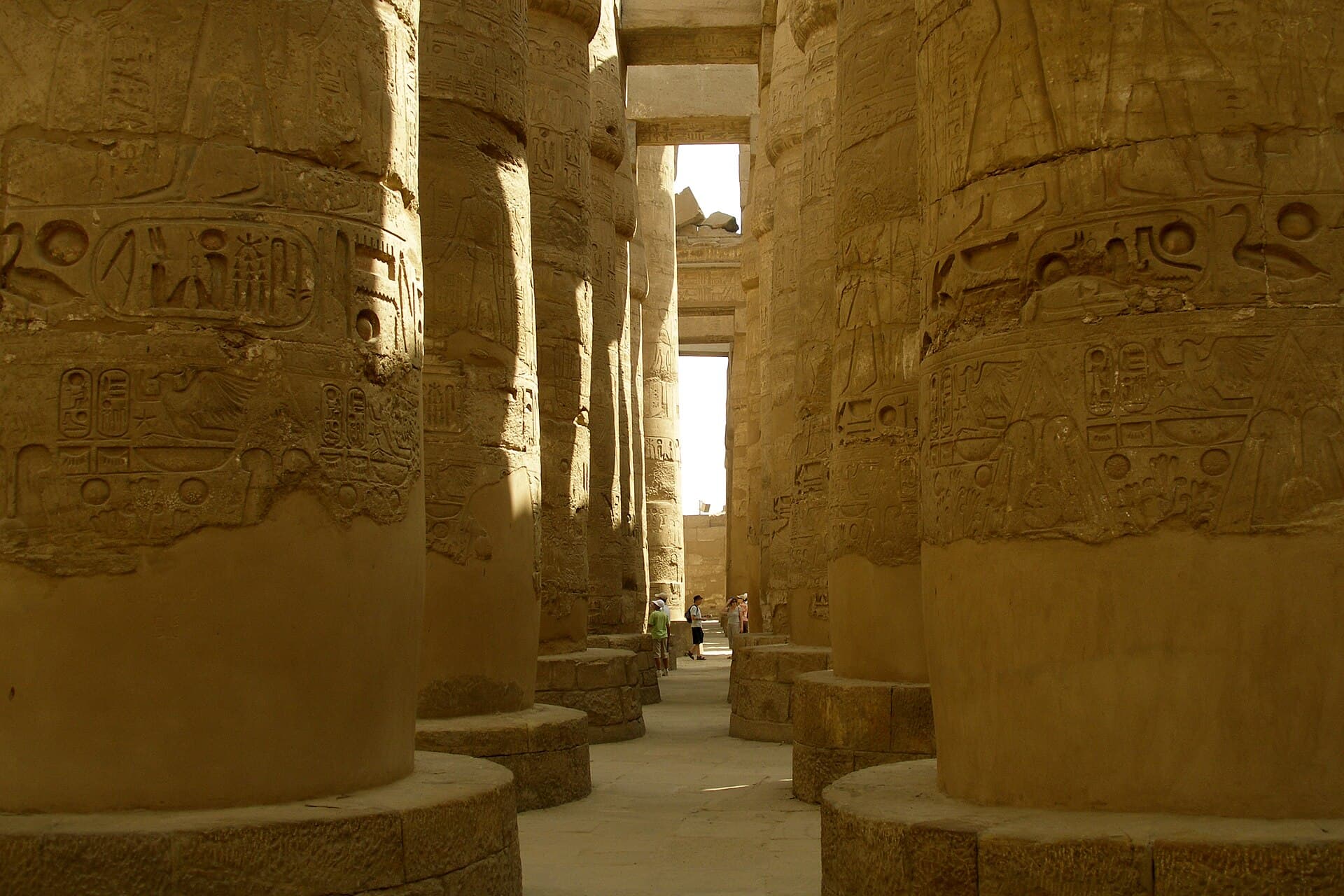
What you give up is pace and standing still. A group moves at the speed of its slowest and its most talkative, and the timetable is set by the boat rather than by you. Karnak is the place this bites: it is a walled precinct that around thirty pharaohs added to across two thousand years, and a group slot covers the central axis and very little either side of it. Two hours is the realistic minimum there and three is better.
What you gain is not only the package price. Tipping scales with the arrangement as well. Our tipping page puts a group guide at roughly 3 to 5 euros per person per day against 10 to 15 for a private guide, for the sound reason that fifteen people paying five is a considerably better day for the guide than two people paying twelve. Over a week that is real money on top of the headline saving, and it is the part of the group calculation almost nobody includes.
Domestic flights: the line that makes cheap quotes look cheaper
Both of our cheapest cruises exclude domestic flights outright. The four day Aswan to Luxor and the five day Luxor to Aswan both leave you to arrange getting to the boat and home from it. That is not a hidden cost, because the operator lists it in black and white among the exclusions, but it is the reason those two prices sit where they do.
Compare the trips that do carry the flights. Cairo and Luxor in five days is US$1,480 and includes Cairo to Luxor on day three and Luxor to Cairo on day four. The seven day Cairo and Nile cruise is US$1,890 and includes Cairo to Aswan and Luxor to Cairo. Those are not more expensive versions of the cheap trips, they are different products with a different amount of Egypt already paid for inside them.
So before you compare US$840 with anything at all, add two internal flights to it. We do not publish a fare, because it moves with the season and with how far ahead you book, and a made-up number here would be worse than none. Ask for it as part of the quote, in writing, and then compare totals rather than headlines.
Season: the cheapest months, and what you pay for them in heat
November to March is the comfortable window in Upper Egypt, and it is priced accordingly. Christmas and Easter are the busiest and dearest weeks of the year, and the good small boats fill months ahead between December and February. If your dates are fixed to a school holiday, the season lever is not available to you and you should stop looking at it.
Summer is genuinely cheap and the reason is genuinely unpleasant. Luxor and Aswan regularly pass 40C, tombs cut into rock hold the heat of every group that has walked through them, and a four-site day in July is not a bargain but an endurance test. A budget saved by going in high summer is partly paid back in sightseeing you decide not to do. That is a real trade, not a scare story, and some people take it happily.
The compromise worth making is the shoulder. Late October and early November, or March into April, give you most of the comfort at less than peak pricing. If the dates are loose rather than fixed, the two mechanics worth understanding are late availability and the way boats discount empty cabins, both of which we cover on the Nile cruise deals and last minute Nile cruise pages rather than repeating here.
Tipping is a real budget line, not loose change
Tipping is excluded from every price on this site and it is expected rather than optional. The operator's own guidance is consistent across the itineraries: allow US$10 to 15 per person per day for your guide, about US$5 per person per day for the driver, handed over separately rather than through the guide, and on a boat a communal crew box at US$5 to 10 per person per night, collected once at the end and split between the cabin stewards, waiters and deck crew.
Run the arithmetic on the cheap trips, because it is the number people miss. On the four day cruise that is roughly US$40 to 60 for the guide, about US$20 for the driver, and US$15 to 30 into the crew box: call it US$75 to 110 per person on a trip whose headline price is US$840. On the seven day Cairo and Nile cruise it comes out at something like US$120 to 170. Neither figure is a disaster, and both are far too large to discover on the last evening.
The practical part is cash. Small notes, because nobody has change and coins read badly. Draw what you need in Cairo, Luxor or Aswan before you board, crew box included, because a cruise is the moment on an Egypt trip when the nearest working ATM is furthest away. Our tipping and cash pages go through the smaller payments, the porters and washroom attendants and the man who steadies you onto a felucca, which individually are trivial and collectively are why the float matters.
The extras nobody quotes: visa, tickets, drinks, optional tours
Every itinerary we list excludes the same handful of things: the Egypt entry visa, extra meals and beverages, optional tours, tipping, and additional entry tickets. None of them is large on its own. Together they are the difference between the price you agreed and the amount that left your account.
Additional entry tickets are the ones that surprise people, because the wording sounds like a technicality. It is not. Going inside one of the pyramids at Giza is a separate ticket bought at the gate, and so is the tomb of Tutankhamun in the Valley of the Kings. We do not publish either amount, because we have not been given a figure we can stand behind and a guessed number is worse than an honest gap. Budget for them as a known unknown and ask on the day.
Drinks are the other reliable leak, particularly on a boat, where the package covers your meals and nothing you drink with them. Alcohol carries heavy duty in Egypt, so imported wine aboard costs roughly what it would at home. The optional tours that recur in our itineraries are the sunrise balloon over the Luxor west bank and Abu Simbel from Aswan. Both sit outside every price we list. Decide about them before you travel rather than on the boat, when the sell is warmer and the comparison is harder.
What is genuinely worth economising on
The hotel category in Cairo, first and without argument: the spread from US$935 to US$1,420 buys a nicer lobby in a city you are barely in. A shared group on a short cruise, second, particularly if your land days are private anyway, because three days of group temples is a tolerable price for a saving that runs into hundreds. And the shoulder season, third, which costs you nothing but a few degrees.
Party size is the lever people forget. Private touring is priced per person, but the fixed cost of a car, a driver and a guide for the day spreads better across four than across two. Travelling as a pair rather than alone, or as a four rather than a pair, is the cheapest structural saving available in Egypt and it requires no compromise at all. Solo travellers should assume the upper end of any band they are quoted.
Then there is the money best not spent at all. Going inside the Great Pyramid is a hot, crouched climb up a narrow passage to an empty granite room, and we would skip it. The sound and light show at Giza is dated and we would not book it. Day trips bought online at a markup before you arrive are almost always dearer than the same thing arranged on the ground. Eat where Egyptians eat: koshari from a busy, high-turnover shop costs a fraction of a hotel plate and is usually the better meal.
What is not worth economising on
The guide. Tombs and temples are close to meaningless without someone reading the walls for you, and the saving from going without is small against what it takes away. A guide also absorbs the constant approaches at the big sites, which at Giza is worth the fee on its own. This is the single line where cutting cost converts the thing you came for into decorated stone.
Cruise nights, second. Three nights is already the short version of the river, and the commonest regret we hear is Aswan treated as a place to board or leave a boat rather than a place to spend two nights. Aswan is where the Nile hits granite and breaks into channels around islands, and it is the most under-rated stop on most itineraries. Cutting it to one afternoon to save a night is a poor trade.
And the very cheap tour with shopping stops built in. Papyrus, alabaster and perfume workshops are not sightseeing; the commission is the real product and the currency you pay in is half a day of a short holiday. If a price sits well below everything else you have seen, ask directly whether shop visits are in the programme. Last on this list, do not economise on tips: the saving is small and it lands squarely on the person in the chain earning least.
A realistic total for a week
Start from a real trip rather than a range. The seven day Cairo and Nile cruise is US$1,890 per person at the standard level, and that figure already contains three nights in a Cairo hotel, three nights aboard, both domestic flights, private sightseeing in Cairo, shared small-group sightseeing on the cruise, all transfers, an English-speaking guide, a short camel ride at Giza, and all service charges and taxes.
Now add the things that are certain. Tipping at roughly US$120 to 170 per person. The entry visa. A handful of additional entry tickets if you want the separately ticketed tombs. Drinks, and any meals outside the ones listed. That puts the realistic ground cost of a week in Egypt a little above US$2,000 per person, and that is the honest shape of it rather than a marketing figure.
International flights sit on top of that and we do not quote them, because they vary more than anything else on the list. If someone offers you a full week in Egypt, flights and all, far below this, one of three things is true: you are flying in high summer, you are in a group from start to finish, or the margin is being made back on the ground. The third is the one to ask about, and a straight question usually gets a straight answer.
Does adding days always add money?
Not proportionally, and occasionally not at all. Our sixteen day grand tour of Egypt starts at US$3,910. Our fifteen day Cairo, Luxor and Nile cruise starts at US$3,985. One more day, seventy-five dollars less. Those are two different programmes rather than the same trip at two lengths, but the comparison still kills the assumption that the longer trip is automatically the dearer one.
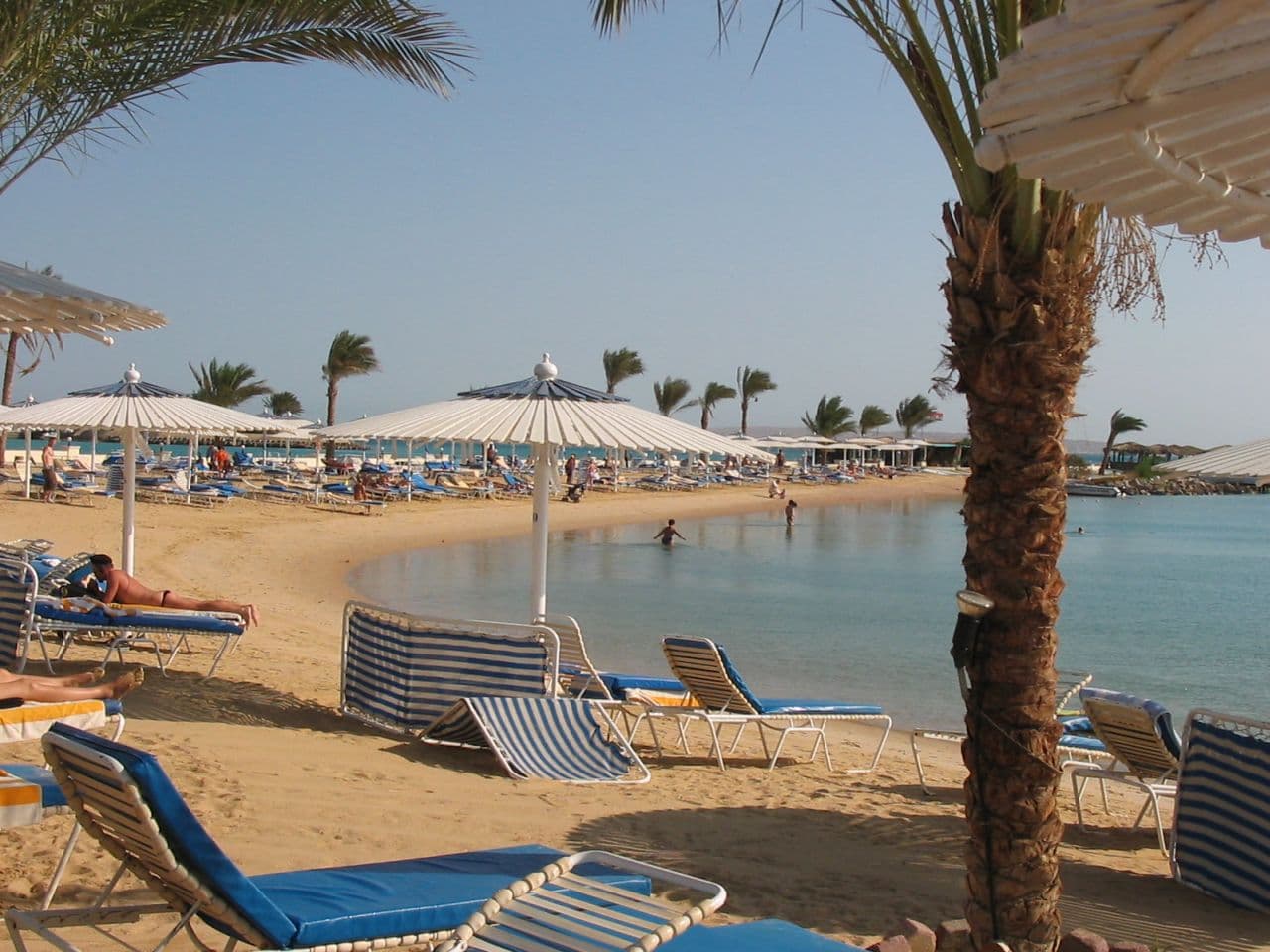
The pattern behind it is that touring days cost more than resting days. Twelve days covering Cairo, Luxor and a Nile cruise starts at US$3,160; thirteen days covering Cairo, a Nile cruise and Hurghada starts at US$2,945. The longer trip is cheaper because its extra days are beach days, with no guide, no vehicle and no entrance tickets attached to them.
If your budget is fixed and your dates are not, that is a useful thing to know. A longer trip with some unguided time in it can cost less than a shorter, denser one, and it is usually the better holiday as well, because the commonest disappointment in Egypt is not a bad site but too many good ones seen too fast in the wrong heat.
Backpacking Egypt independently against a budget package
Independent travel is cheaper on paper and plenty of people do it well. Trains between Cairo, Luxor and Aswan, local transport, cheap hotels, tickets bought at the gate. Nothing about Egypt makes this impossible, and if you enjoy arranging things it can be a good holiday for considerably less than US$840 a head.
Where it stops being cheaper is in the parts a package quietly absorbs. You buy guiding site by site or go without it. Crossing to the Luxor west bank, getting out to Abu Simbel, and moving between a hotel and a boat all have to be arranged individually, each one a negotiation. And the constant approaches at the big sites, which a guide deflects for nothing, become your problem several times an hour.
The honest dividing line is trip length. Under about five days, independent travel is a false economy, because the arranging eats the days you came for and a short trip has none to spare. Over two weeks it saves real money and gives you a better trip, provided the logistics are part of the fun rather than a tax on it. In between, it is a temperament question rather than a financial one.
Why our floor is US$840, and not lower
Because that is the operator's own figure for a real product, and we do not adjust the numbers we are given. Below it, on this kind of trip, something has to give: a boat that is not being maintained, a guide drawn from the commission economy rather than paid properly, or a shopping programme sold to you as sightseeing. A price is a description of what is behind it, and very cheap Egypt is rarely cheap for a reason you would like.
The prices on this site are per person, land only, and quoted in US dollars. Operators quote and hold dollars because the Egyptian pound has moved sharply in recent years, and a figure given far ahead in pounds is an estimate rather than a fixed price. Ask which currency your balance is due in, whether paying by card carries a surcharge, and what the cancellation terms are, before you pay a deposit.
Where this page gives no number, it is because we hold no number. We will not quote a visa fee, a tomb ticket, a balloon flight or an airfare that we have not been given, and we would rather leave an obvious gap than fill it with something plausible. That policy is the reason the figures we do print can be relied on.
How to make a budget trip better without spending more
Sequence the days properly, which costs nothing and changes everything. Put long transfers on mornings with nothing else attached. Do the Luxor west bank before it is light, because tombs have no airflow and hold the heat of every group that has been through. Save Karnak and Luxor Temple for the late afternoon, when low light does far more for open stone than midday does, and see Luxor Temple after dark if you can, when the crowd thins to a fraction.
If you are buying the sunrise balloon, book it for your first morning in Luxor rather than your last. It is weather-dependent and cancelled for wind often enough that a first-morning booking leaves you a second chance, while a last-morning one leaves you nothing. The same logic applies to anything in Egypt that a forecast can take away from you.
And give Aswan two nights rather than an afternoon. An hour or two on a felucca among the islands at sunset is the cheapest good thing you can do in Egypt, with the price agreed on the bank before you step aboard rather than after. It is also the part of a budget trip that people remember longest, which is a reasonable definition of value for money.
Common questions
What is the cheapest Egypt tour you sell?+
Four days on the Nile from Aswan to Luxor at US$840 per person, three nights full board aboard the MS Radamis II. The cheapest land trip is five days in Cairo at US$935 per person, four nights at the Flamenco Hotel with private sightseeing. Both are land only and neither includes any flight.
Is US$840 really the whole price?+
No, and the operator says so plainly. International and domestic flights are both excluded, so getting to Aswan and home from Luxor is on you. The entry visa, extra meals and drinks, optional tours, tipping and additional entry tickets such as the tomb of Tutankhamun also sit outside it. Allow roughly US$75 to 110 per person for tipping alone on that trip.
Is a budget Egypt tour any good, or is it a false economy?+
The US$840 cruise is a real product with real inclusions: private air-conditioned transfers, full board for three nights, an English-speaking guide on every excursion, portage, service charges and taxes. What you give up is the boat category and private sightseeing, since cruise excursions run as a shared group of about fifteen. That is a fair trade rather than a trap.
Is a Nile cruise or a land tour cheaper?+
Per day, the land trip. The Cairo short break works out at about US$187 a day against roughly US$210 a day for the four day cruise, and the Cairo price includes private guiding while the cruise price does not. The cruise also excludes domestic flights, which the five day Cairo and Luxor trip at US$1,480 includes. Compare inclusion lists before totals.
How much should I add for tipping on a budget trip?+
Allow US$10 to 15 per person per day for the guide, about US$5 per person per day for the driver, and US$5 to 10 per person per night into the crew box on a boat. That is roughly US$75 to 110 on the four day cruise and about US$120 to 170 on the seven day trip. Carry it in small notes, drawn before you board.
When is the cheapest time to visit Egypt?+
High summer, and the discount is honest about what it is. Luxor and Aswan regularly pass 40C in July and August, which makes a full sightseeing day genuinely hard rather than merely warm. November to March is the comfortable season and priced for it, with Christmas and Easter the dearest weeks. The shoulder months are the sensible compromise.
Can I find an Egypt tour under US$500?+
Not from us, and we would be sceptical of one. Below our floor of US$840 for four days, something has to give on a guided product: the state of the boat, how the guide is paid, or a shopping programme presented as sightseeing. Independent travel with trains and cheap hotels can be done for less, but it is a different holiday, not a cheaper version of this one.
Do budget Egypt tours include domestic flights?+
Our two cheapest do not. The four day and five day cruises both exclude domestic flights, so add two internal fares before comparing them with anything. The five day Cairo and Luxor trip at US$1,480 includes both legs, and the seven day Cairo and Nile cruise at US$1,890 includes Cairo to Aswan and Luxor to Cairo.
Official sources
Entry rules, opening hours, security advice and exchange rates all move. Check them at the source, not here.
Written and checked by the Nile Trip Guide editorial team · Last reviewed . Entry rules, prices and opening hours change — check anything critical against the official sources linked on this page.
Plan this trip
Tell us your dates and we will price it
A real itinerary with real prices, usually within 24 hours. Nothing is booked and nothing is charged until you say yes.
The route most people take first, at the length it was built for: Giza and the Grand Egyptian Museum, then a flight to Luxor and four nights sailing down to Aswan.
No boat on this one. Giza and the Grand Egyptian Museum, a night in Luxor for both banks, two nights on the Red Sea, then back to Cairo for the Citadel, Coptic Cairo and the Royal Mummies.
Five nights in Cairo either side of a four-night sail from Luxor to Aswan. The Cairo days are private, just your party and a guide; the sightseeing off the boat is shared with a small group.