Top 10 ancient Egypt facts, each one checked against a source
Here are ten ancient Egypt facts that hold up. Paid, fed workers built the pyramids, not slaves. Cleopatra lived closer to our time than to the Great Pyramid. Making a mummy took about 70 days. The Rosetta Stone helped crack hieroglyphs in 1822, and the last ones had been carved in AD 394. Each fact below names its source, and most come with a place you can visit.
How we chose these ten
Ancient Egypt attracts more confident nonsense than almost any other subject. So we set one rule: every fact needs a museum, university or official source, named on this page.
We also wanted facts that change how you see a site when you get there. Where a popular myth gets in the way, the fact below corrects it. Dates before about 700 BC are approximate, as the Metropolitan Museum points out.
1. The pyramid builders: paid workers, not slaves
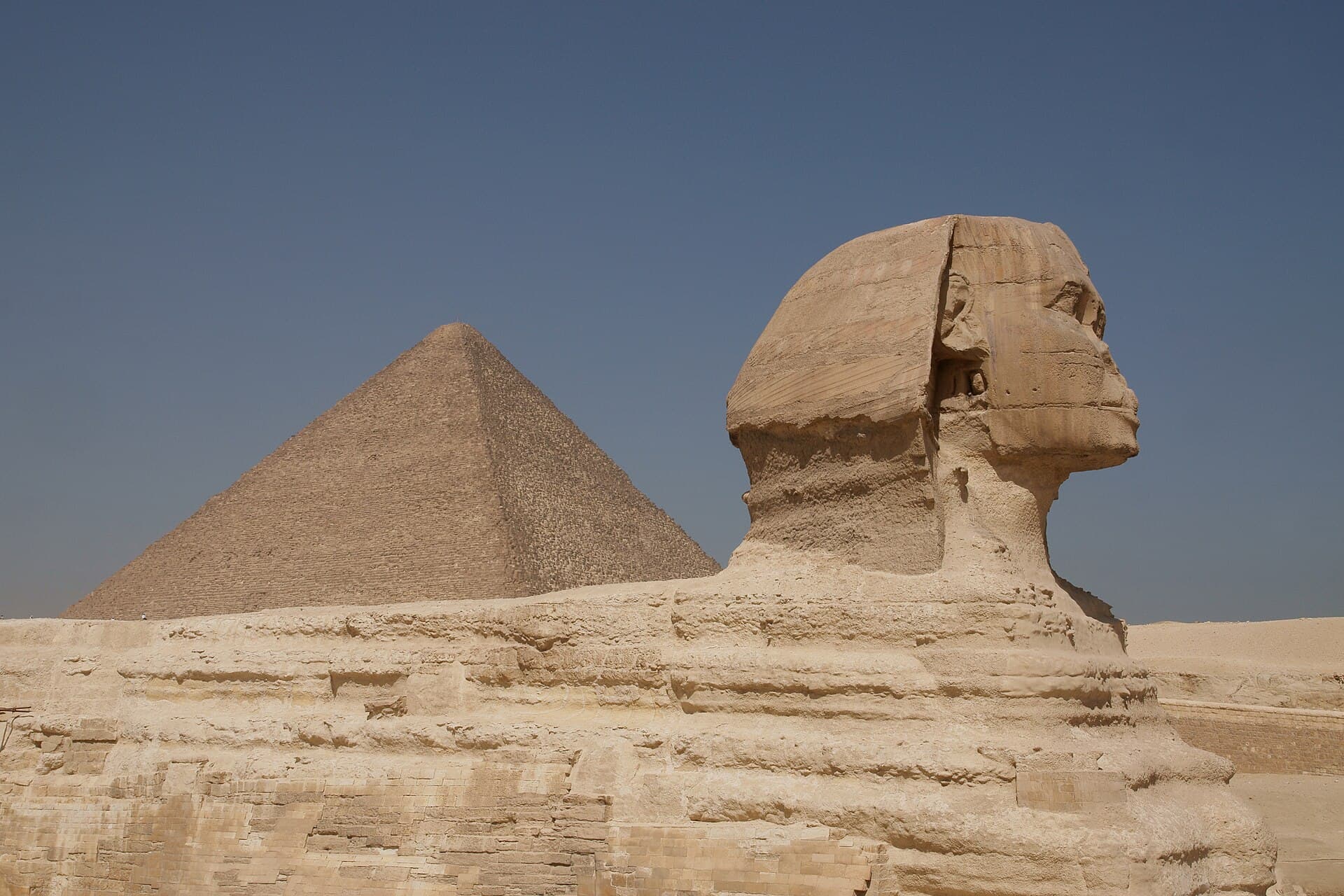
The slave story is the most common thing said out loud at Giza, and it is wrong. Digs south-east of the Sphinx found the builders' town, with bakeries, storage and lodgings for large crews. Bones of young cattle show the crews ate meat as well as bread.
Beside it lies the workers' own cemetery, on the plateau in the shadow of the king's tomb. Some recorded their job titles. Crews even painted their gang names inside the Great Pyramid. The best reading is a skilled core plus seasonal workers who served the state, fed and housed while they worked.
2. Cleopatra lived closer to our time than to the Great Pyramid
Khufu's Great Pyramid went up around 2550 BC. Cleopatra VII died in 30 BC, about 2,500 years later. She died about 2,050 years before today.
So for Cleopatra, the pyramids were already ancient. The temples she knew, such as Dendera, were brand new by comparison.
3. Egypt was ruled by about thirty dynasties
A priest called Manetho, writing in the third century BC, sorted Egypt's kings into thirty dynasties. Historians still use his system today.
The British Museum's Egyptian gallery covers some 3,000 years of history in one long room. That is longer than the time between Julius Caesar and us.
4. The Rosetta Stone cracked hieroglyphs in 1822
The Rosetta Stone is a broken slab carved in 196 BC with one decree in three scripts: hieroglyphs, demotic and Greek. Soldiers found it near Rashid, in the Nile Delta, on 15 July 1799.
Scholars could read the Greek, so it gave them a key. Thomas Young spotted a royal name first. Jean-François Champollion announced how hieroglyphs worked in Paris on 27 September 1822. The stone is in the British Museum in London, in Room 4.
5. The last hieroglyphs were carved in AD 394
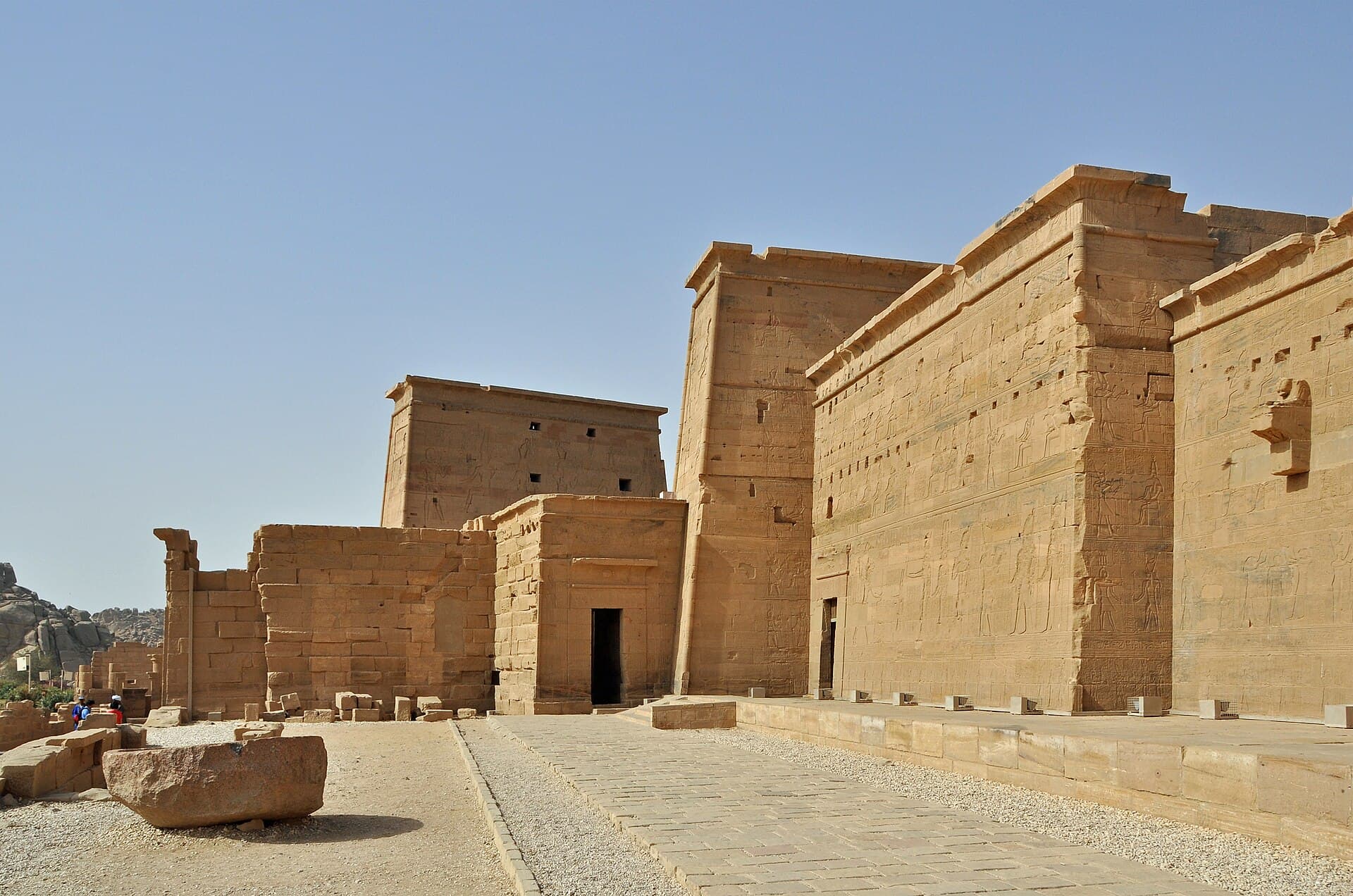
Hieroglyphs lasted far longer than most people think. The last dated inscription anywhere was cut at Philae, the temple of Isis near Aswan, in AD 394.
After that, the knowledge of how to read them died out. Nobody could read them again until Champollion, more than 1,400 years later.
6. Making a mummy took about 70 days
For the grandest burials, the whole process took about 70 days, according to the Greek writer Herodotus. The British Museum and the Smithsonian give the same figure.
About 40 of those days went on drying the body in natron, a natural salt. The rest went on wrapping, amulets and ritual. Cheaper burials were quicker and simpler.
7. Egyptians mummified millions of animals
People did not only mummify people. One cemetery at Saqqara held over four million ibis mummies, offered to the god Thoth. A dog catacomb nearby held about eight million animals, offered to Anubis.
Pilgrims bought these mummies as gifts to the gods. Scans show some wrappings were empty, so some sellers cheated even then. Our page on animals in ancient Egypt covers where to see them.
8. The year followed the Nile flood
The Egyptian year had three seasons of four months: Inundation, Emergence and Harvest. They tracked the river, which flooded each summer and left rich black soil behind.
New Year was probably tied to the return of Sirius, the brightest star, at dawn. It reappeared at about the same time as the first signs of the flood. The Aswan High Dam, built between 1960 and 1970, ended the yearly flood.
9. A woman ruled Egypt as king
Hatshepsut first ruled for her young stepson, Thutmose III. Then she took the full royal titles and ruled as king, from about 1473 to 1458 BC.
Her terraced temple at Deir el-Bahari in Luxor is one of Egypt's most striking buildings. Later kings left her out of the official record. Her name is missing from the king list carved at Abydos.
10. Tutankhamun's tomb was found sealed in 1922
Tutankhamun was a minor king who ruled for about nine years. He is famous because Howard Carter found his tomb in the Valley of the Kings in November 1922, with its seals still in place.
His mummy still lies in the tomb in Luxor. The treasures from it are shown together for the first time at the Grand Egyptian Museum, which opened in full in November 2025.
Common questions
Did slaves build the pyramids?+
No. The builders' town and cemetery at Giza show organised, fed and housed crews, some with job titles on their tombs. Many were seasonal workers serving the state. It was not slavery in the modern sense.
How old is ancient Egypt?+
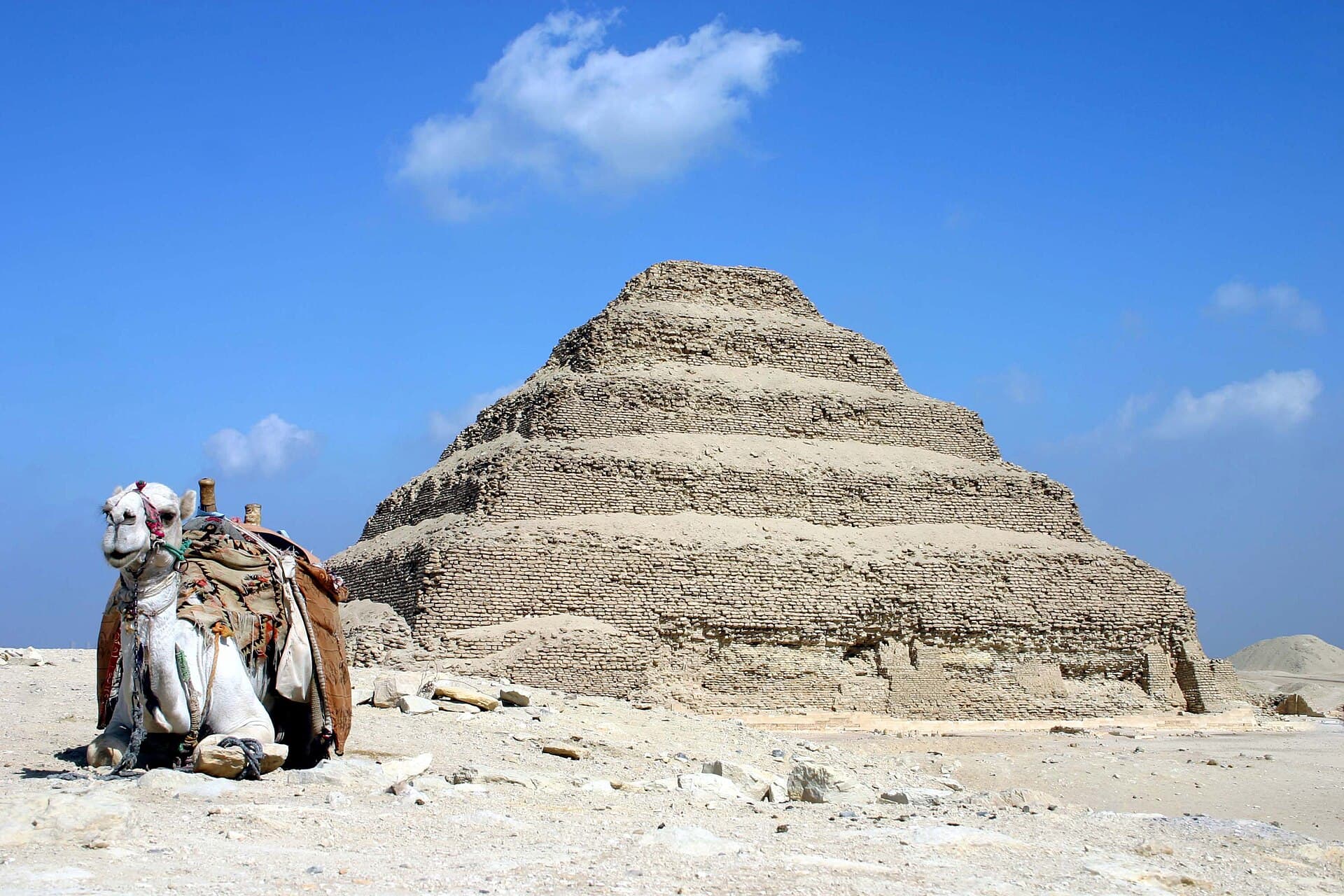
Egypt's kings ruled for about 3,000 years, until Cleopatra VII died in 30 BC. The Step Pyramid at Saqqara dates from around 2650 BC, and writing appears a few centuries before that.
How long did mummification take?+
About 70 days for the most elaborate burials, with around 40 of those spent drying the body in natron salt. Simpler burials took less time.
Where is the Rosetta Stone?+
In the British Museum in London, in Room 4, the Egyptian sculpture gallery. Entry to the museum is free.
Could ordinary Egyptians read hieroglyphs?+
Most could not. The Fitzwilliam Museum notes that most ancient Egyptians could not read, so priests and scribes who could were highly respected.
Can you see real mummies in Egypt?+
Yes. Tutankhamun's mummy lies in his tomb in the Valley of the Kings. The Crocodile Museum at Kom Ombo shows mummified crocodiles. Rules and displays change, so check before you go.
Who was the most famous ancient Egyptian?+
Probably Tutankhamun, Ramesses II or Cleopatra VII. Our list of the ten most famous pharaohs covers each of them, with dates and what they built.
Official sources
Entry rules, opening hours, security advice and exchange rates all move. Check them at the source, not here.
Written and checked by the Nile Trip Guide editorial team · Last reviewed . Entry rules, prices and opening hours change — check anything critical against the official sources linked on this page.
Plan this trip
Tell us your dates and we will price it
A real itinerary with real prices, usually within 24 hours. Nothing is booked and nothing is charged until you say yes.
Five days in Cairo and nowhere else: Giza, the Grand Egyptian Museum, the Egyptian Museum, the Citadel, Coptic Cairo and Khan el-Khalili. Four nights in one hotel, and every sightseeing day run privately.
The route most people take first, at the length it was built for: Giza and the Grand Egyptian Museum, then a flight to Luxor and four nights sailing down to Aswan.