Top 10 famous Egyptian pharaohs, what they built and where to see it
The ten most famous pharaohs are Djoser, Khufu, Hatshepsut, Thutmose III, Amenhotep III, Akhenaten, Tutankhamun, Seti I, Ramesses II and Cleopatra VII. Between them they cover about 2,600 years, from the first stone pyramid to the last queen of Egypt. Almost all of them left something you can still stand in front of. This list gives each ruler's dates, what they built and where to see it.
How we chose these ten
Egypt had well over a hundred kings across about thirty dynasties. We picked the rulers people search for most, and the ones whose buildings you can still visit on a normal trip. That second test is why the list leans towards the pyramid age and the New Kingdom, when Thebes, now Luxor, was the capital.
Dates come from the Metropolitan Museum's list of rulers. Treat every date before about 700 BC as approximate. The Met says the king lists Egyptians kept are broken, so modern dates carry a margin of error. Other museums give slightly different numbers.
1. Djoser: the first stone pyramid
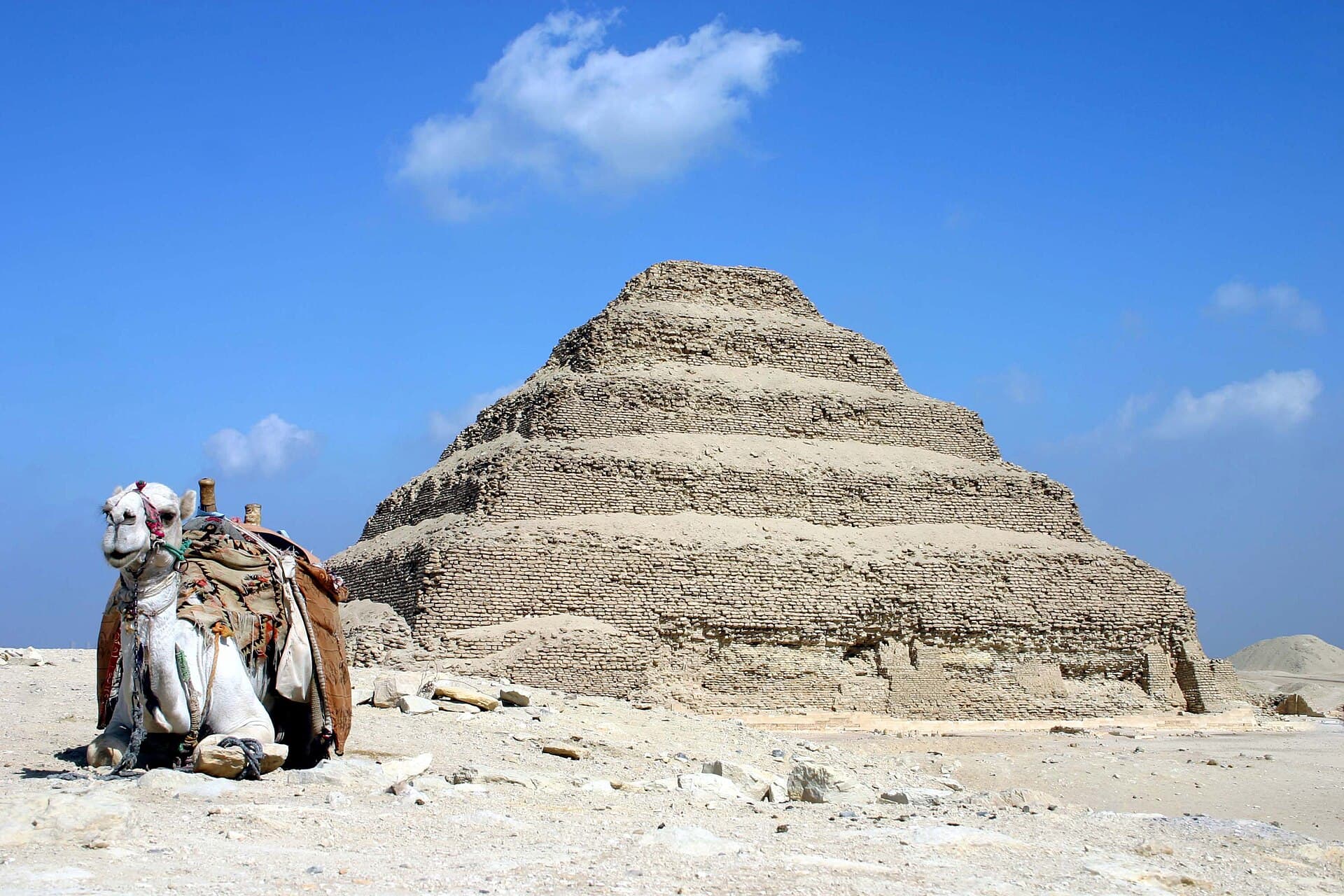
Djoser ruled about 2630 to 2611 BC. His Step Pyramid at Saqqara is generally seen as the earliest large stone building in the world. It is six platforms stacked on each other, and the start of every pyramid that came after.
Its design is credited to Imhotep, his chief official. Imhotep is one of very few ancient Egyptian commoners whose fame outlived his king's. Saqqara is about forty minutes south of Giza.
2. Khufu: the Great Pyramid
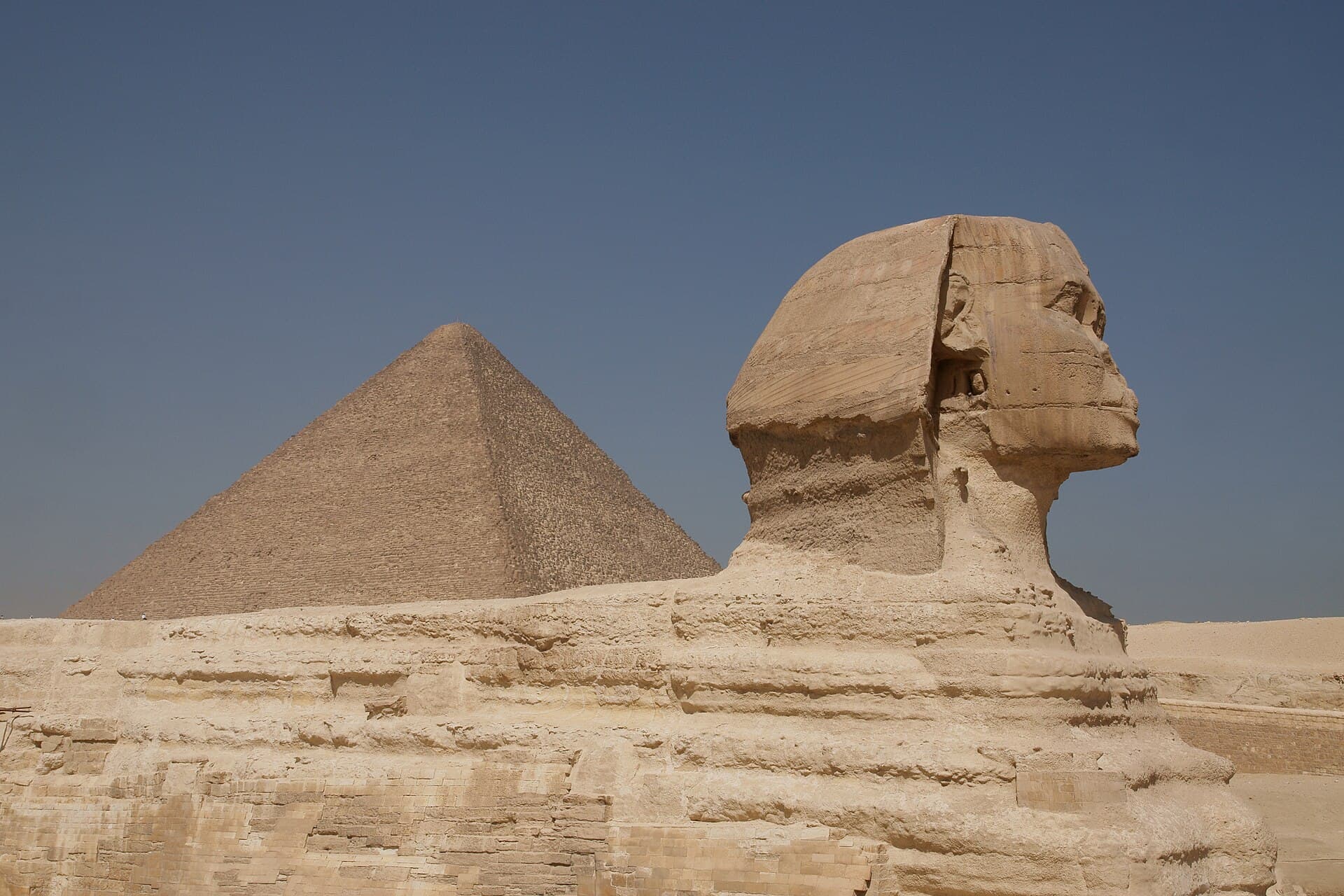
Khufu ruled about 2551 to 2528 BC. He built the Great Pyramid at Giza, about 146 metres tall when finished. It is a few metres shorter today, after losing its top and its smooth outer casing.
You can climb inside to the King's Chamber, where his granite sarcophagus still sits. His cedar boat, over forty metres long and buried beside the pyramid, now stands in the Grand Egyptian Museum. His son Khafre built the second pyramid, and the Sphinx is usually credited to him, though experts still argue about it.
3. Hatshepsut: the woman who ruled as king
Hatshepsut first ruled for her young stepson, Thutmose III, from about 1479 BC. Around 1473 BC she took the full royal titles and ruled as king until about 1458 BC.
Her temple at Deir el-Bahari, on Luxor's west bank, rises in terraces against the cliff. It is one of the most striking buildings in Egypt. Later kings tried to forget her. She is missing from the king list carved at Abydos.
4. Thutmose III: the warrior king
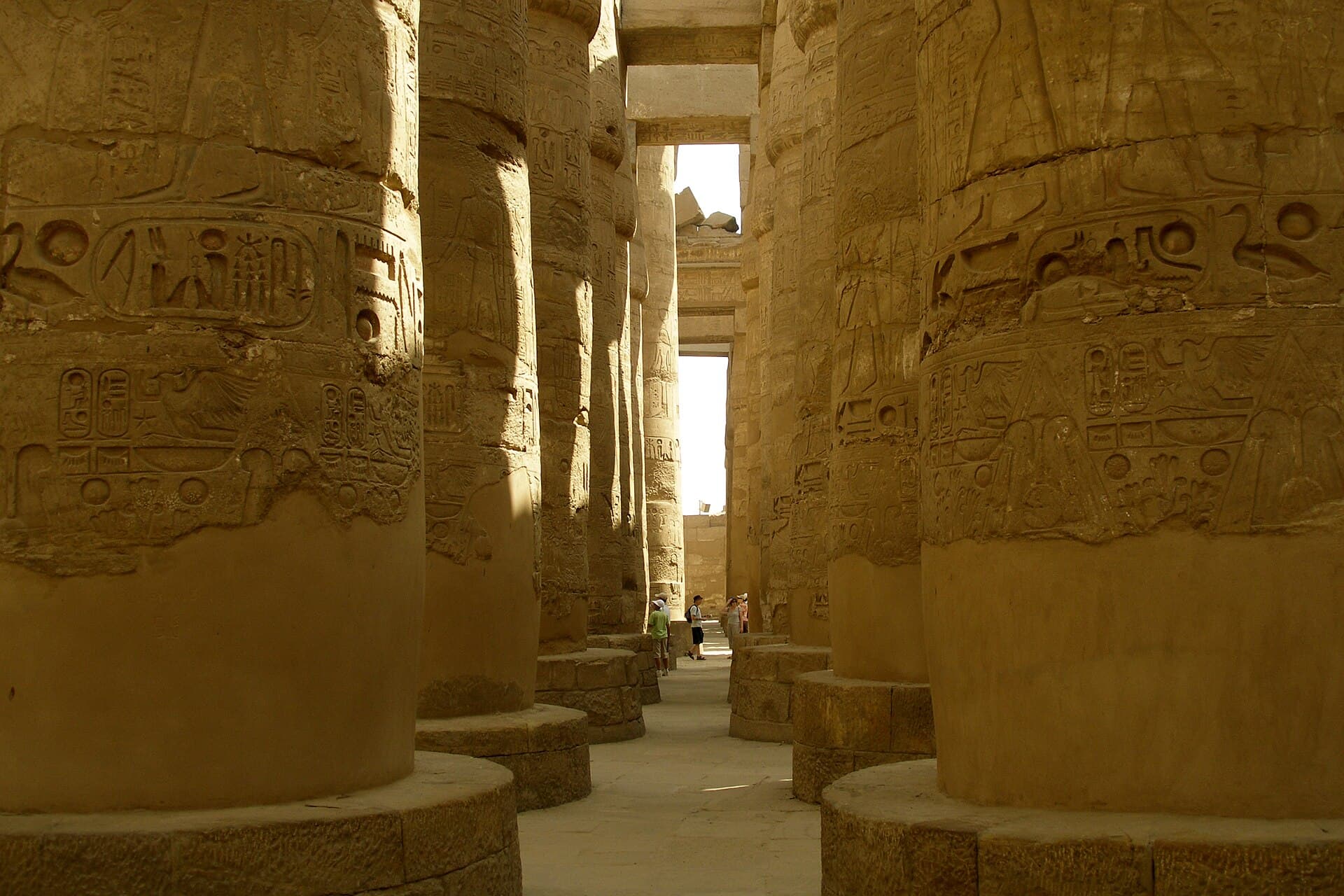
Thutmose III's reign is counted from about 1479 to 1425 BC, including the years Hatshepsut held power. Once he ruled alone, he became one of Egypt's great builders at Karnak.
His Festival Hall stands at the far end of the Karnak main axis. Its columns copy the poles of the tents he used on campaign. Most visitors turn round before they reach it, so it is quiet.
5. Amenhotep III: the builder of Luxor Temple
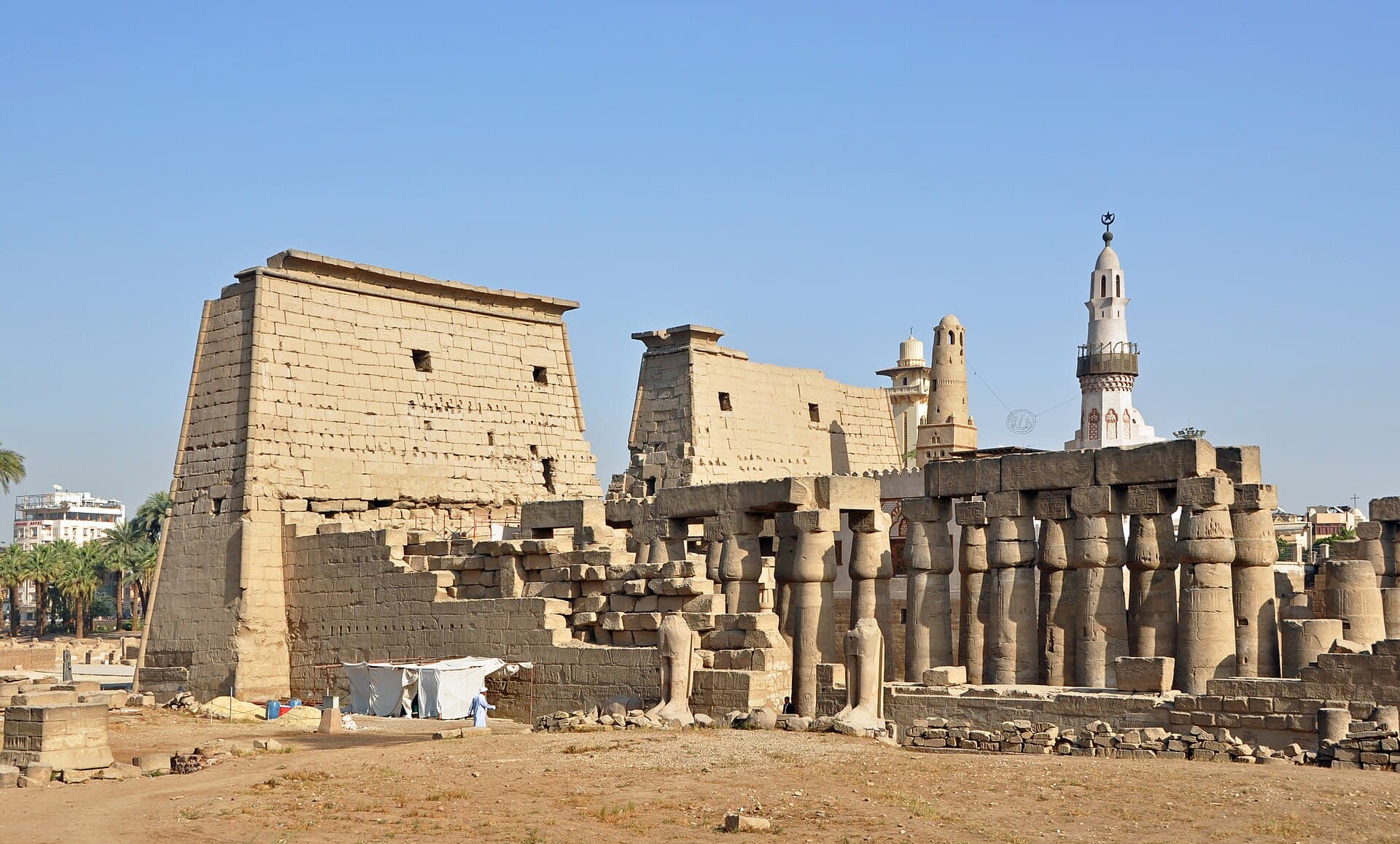
Amenhotep III ruled about 1390 to 1352 BC, at the height of Egypt's wealth. He built the back half of Luxor Temple, with its sun court and great colonnade.
On the west bank, the two Colossi of Memnon are his, each about 18 metres high. They once guarded his huge memorial temple, now almost gone. At Karnak, a granite scarab he raised still stands by the sacred lake.
6. Akhenaten: the king who changed the gods
Akhenaten came to the throne as Amenhotep IV around 1353 BC and changed his name a few years later. He ruled until about 1336 BC. He made the Aten, the sun disc, the main god of Egypt and banned the worship of others.
He built a new capital at Amarna, which was abandoned soon after he died. At Karnak, the name of Amun was cut out of walls in his reign and carved back in later. The best Amarna sculpture is still in the Egyptian Museum on Tahrir Square.
7. Tutankhamun: the boy king and the tomb
Tutankhamun ruled about 1336 to 1327 BC, soon after Akhenaten. His reign lasted only about nine years. He is famous for what was found with him.
Howard Carter found his tomb in the Valley of the Kings in November 1922, still sealed. His mummy still lies in the tomb, on a separate ticket. The full set of his treasures is now shown together at the Grand Egyptian Museum near Giza.
8. Seti I: the finest carving in Egypt
Seti I ruled about 1294 to 1279 BC. He spent his reign restoring the old gods after Akhenaten. His craftsmen carved some of the finest relief in Egypt.
His temple at Abydos holds the Abydos King List, where Seti and his young son Ramesses stand before 76 royal names. His tomb is the longest and deepest in the Valley of the Kings, and the finest. It needs its own ticket.
9. Ramesses II: the great builder
Ramesses II ruled about 1279 to 1213 BC, some 66 years. He built more, and put his name on more, than almost any other king.
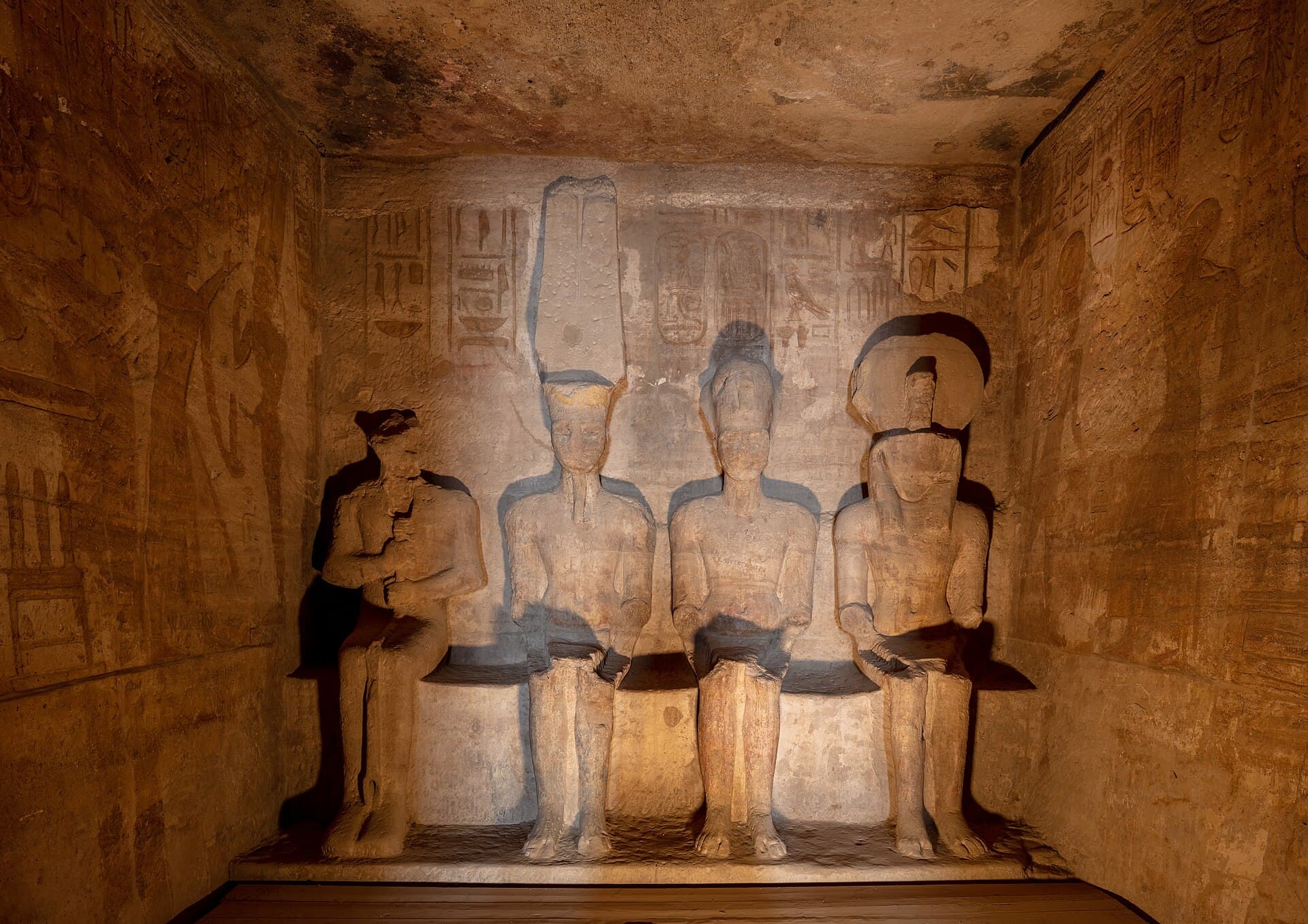
Abu Simbel is his masterpiece: four seated statues of him, each about twenty metres high, cut into a cliff. Between 1964 and 1968 the temples were cut up and moved to escape the waters of Lake Nasser. His cartouches are cut deep into walls at Luxor Temple and Karnak too.
10. Cleopatra VII: the last pharaoh
Cleopatra VII ruled from 51 to 30 BC. She was the last of the Ptolemies, the Greek family that ruled Egypt after Alexander the Great. After her death, Egypt passed to Rome.
She lived closer in time to us than to the building of the Great Pyramid. At Dendera, the back wall of the temple shows her with her son Caesarion, both in full Egyptian dress, making offerings to the gods.
Common questions
Who was the most famous pharaoh?+
Tutankhamun is the best known today, because of his tomb and its gold. Ramesses II was the most famous in his own time. He ruled about 66 years and built Abu Simbel.
Which pharaoh ruled the longest?+
Of the ten on this list, Ramesses II. The Met dates his reign to about 1279 to 1213 BC, some 66 years. Thutmose III comes next, if you count the years Hatshepsut held power.
Who was the last pharaoh of Egypt?+
Cleopatra VII, who ruled from 51 to 30 BC. After her death Egypt became part of the Roman Empire.
Were there female pharaohs?+
Yes. Hatshepsut is the best known. She ruled as king for about 15 years and built her great temple at Deir el-Bahari. Cleopatra VII also ruled in her own name.
How do we know when pharaohs ruled?+
From king lists the Egyptians kept, such as the one carved at Abydos, plus a few recorded star sightings. The lists are broken in places, so early dates are estimates. Museums can differ by a few years.
Where can I see Tutankhamun's treasures?+
At the Grand Egyptian Museum near the Giza pyramids, which shows the whole collection in one place. His tomb and mummy are in the Valley of the Kings in Luxor.
Which pharaoh built the Great Pyramid?+
Khufu, who ruled around 2551 to 2528 BC. His son Khafre built the second pyramid at Giza, and Menkaure the third, much smaller one.
Official sources
Entry rules, opening hours, security advice and exchange rates all move. Check them at the source, not here.
Written and checked by the Nile Trip Guide editorial team · Last reviewed . Entry rules, prices and opening hours change — check anything critical against the official sources linked on this page.
Plan this trip
Tell us your dates and we will price it
A real itinerary with real prices, usually within 24 hours. Nothing is booked and nothing is charged until you say yes.
The route most people take first, at the length it was built for: Giza and the Grand Egyptian Museum, then a flight to Luxor and four nights sailing down to Aswan.
Giza and the Grand Egyptian Museum, then a flight south for one night in Luxor covering both banks, and a flight back. Five days, two cities, both domestic flights in the price and every day guided privately.
Sixteen days and very little left out: Cairo, a flight to Aswan, three nights sailing down to Luxor, two more days of Luxor on land, three nights on the Red Sea, then back to Cairo for Saqqara and Dahshur.