Top 10 Egyptian gods, and the temples where you can still meet them
The ten Egyptian gods most worth knowing are Ra, Amun, Osiris, Isis, Horus, Hathor, Anubis, Thoth, Ptah and Sobek. Each one ruled a part of life, from the sun to the dead, and each has a look you can learn to spot. Better still, most of them still have a home you can visit. Horus has Edfu, Hathor has Dendera, Isis has Philae, Amun has Karnak and Sobek has Kom Ombo. Learn the ten below and the temple walls start to make sense.
How we chose these ten
Ancient Egypt had hundreds of gods. The British Museum's guide for schools lists 35 of the main ones. We kept the ten a traveller meets most often, on temple walls and in museums along the usual route.
Two tests decided it. The god had to matter across the whole of Egypt. And there had to be a place on a normal trip where that god is the star. That is why Sobek beats Bastet here: Kom Ombo is on every Nile cruise.
Sekhmet, Bastet and Khnum just missed out. You will still meet them. Sekhmet's lion-headed statues fill parts of Karnak, and Khnum's temple stands on Elephantine Island in Aswan.
1. Ra: the sun god
Ra was the sun, and the source of light, warmth and growth. Egyptians saw him as the first king, who ruled gods and people. He is usually shown as a man with a falcon's head and a sun disc above it. His main temple stood at Heliopolis, now part of Cairo.
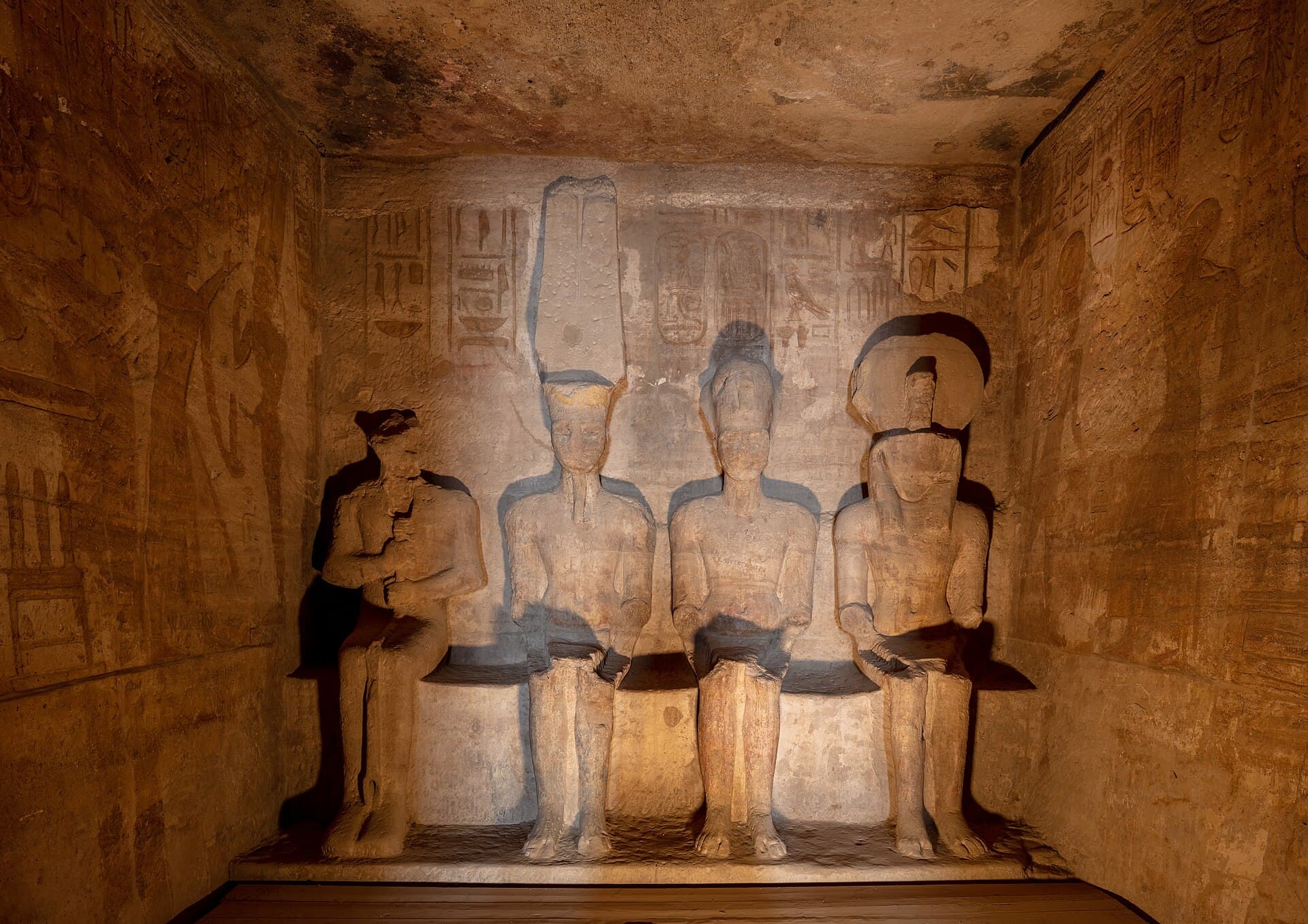
The best place to meet him today is Abu Simbel. As Ra-Horakhty, the rising sun, he sits in the sanctuary with Amun-Re, Ptah and Ramesses II. Twice a year the sunrise reaches the back of the temple and lights him up.
2. Amun: the hidden king of the gods
Amun's name means the hidden one. He wears a crown of two tall feathers, or appears with a ram's head. He rose with the city of Thebes, now Luxor. By the New Kingdom he had merged with Ra as Amun-Ra, king of the gods.
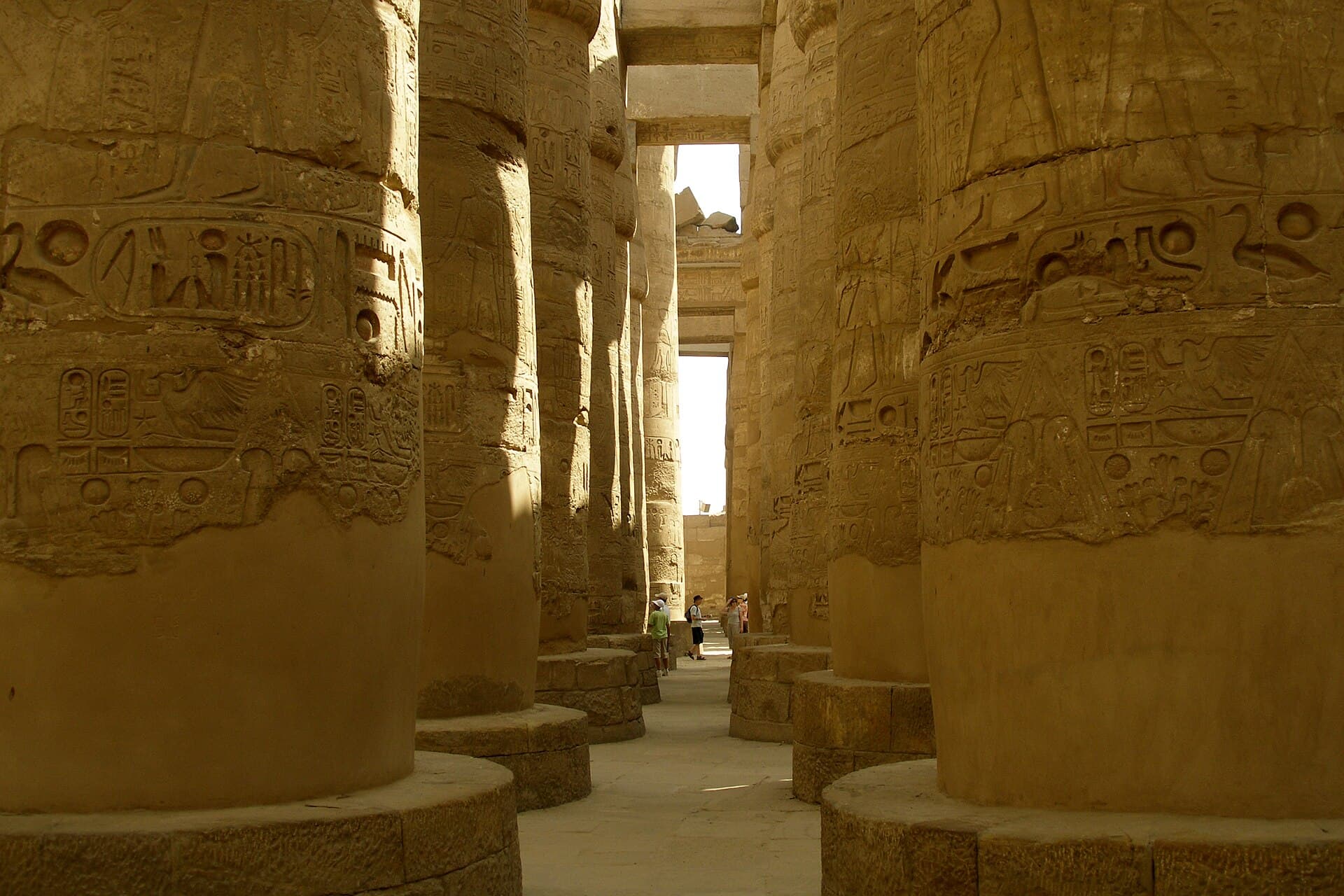
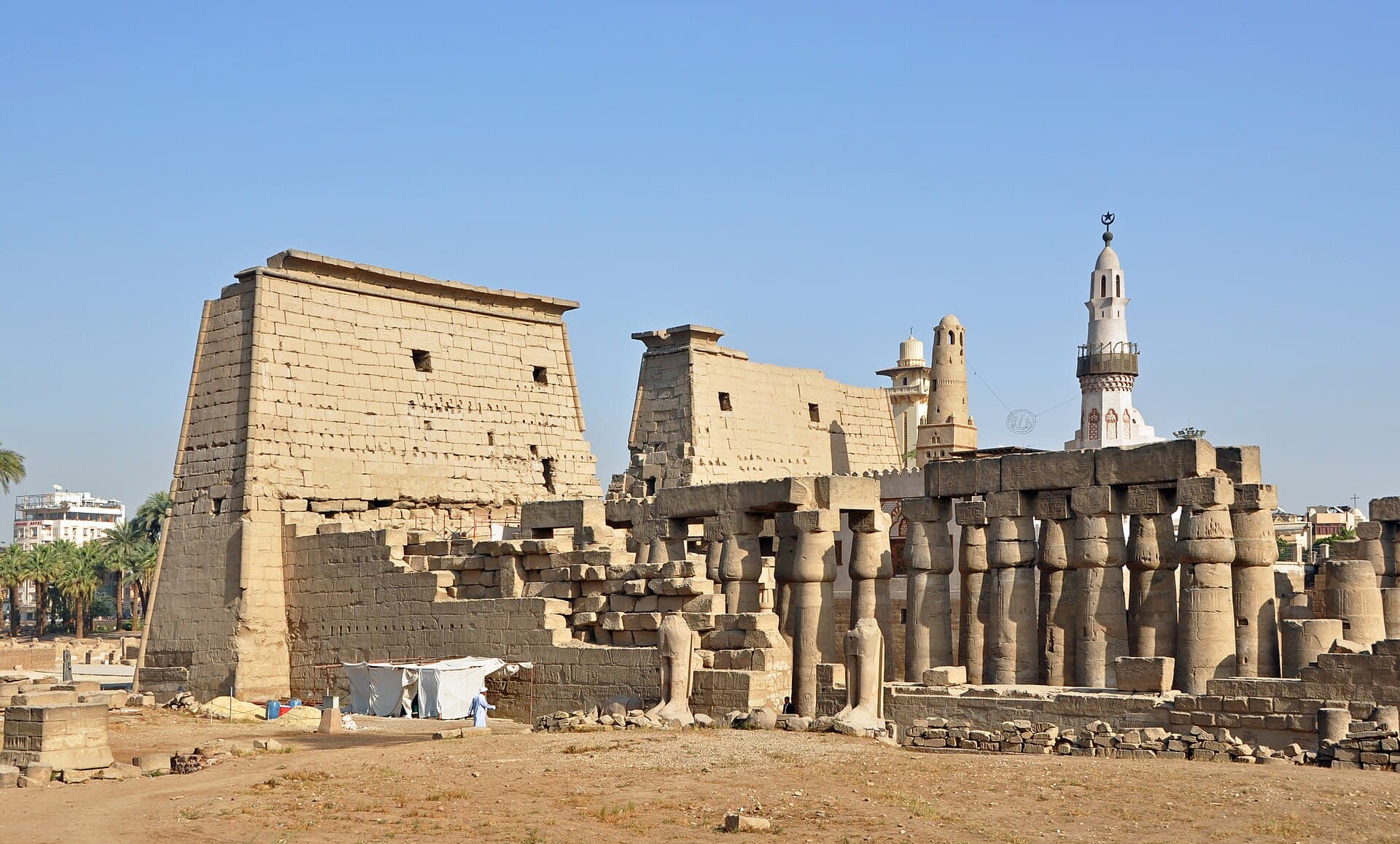
Karnak is his house, and one of the largest temple sites of the ancient world. His wife Mut and son Khonsu have temples there too. Once a year his statue travelled to Luxor Temple for the Opet festival. In the far west, Siwa Oasis keeps the ruins of his famous oracle.
3. Osiris: king of the dead
Osiris judged the dead and ruled the afterlife. You spot him easily: a wrapped mummy with green or black skin, holding a crook and a flail. His brother Seth killed him. His wife Isis brought him back long enough to have a son, Horus.
Abydos was his holy city, and the Temple of Seti I there has a chapel for him. Each year a procession acted out his death and return. At Aswan, boatmen point out Biga island beside Philae, one of the places his body was said to lie.
4. Isis: the great mother and magician
Isis was the goddess of protection, motherhood and magic. Egyptians believed she could heal the sick. She is shown as a woman with a throne sign on her head, or with Hathor's horns and sun disc. In one story the Nile flood was her tears for Osiris.
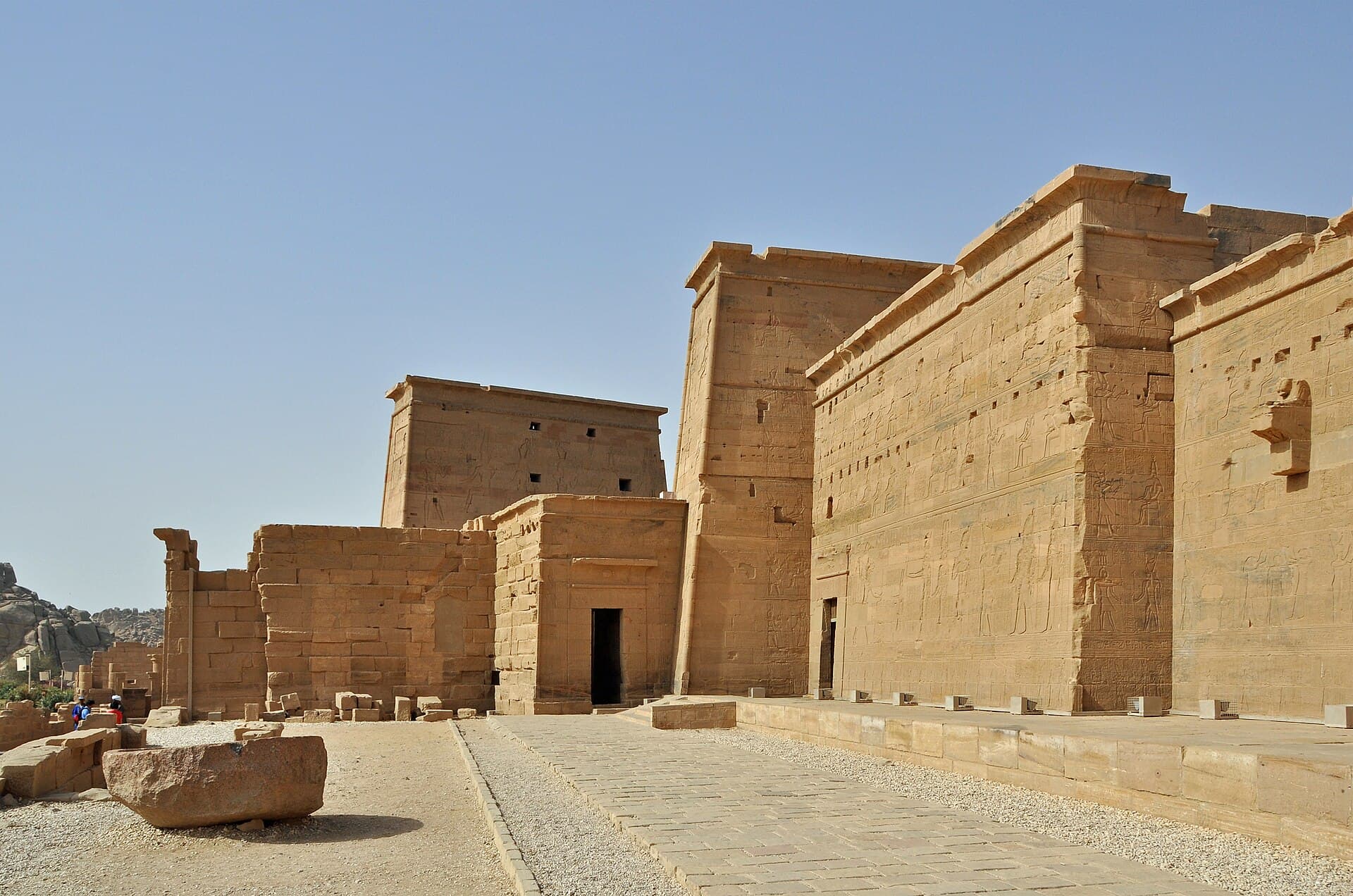
Philae, near Aswan, was her temple. It is late, mostly Ptolemaic and Roman, and you reach it by boat. Her cult lasted so long that the last known hieroglyphic inscription was cut there in AD 394. In the Valley of the Queens, she leads Queen Nefertari by the hand.
5. Horus: the falcon god of kings
Horus was the god of the sky and of kingship. Pharaohs were tied closely to him, and he was their protector. He appears as a falcon or a falcon-headed man. As the son of Osiris and Isis, he beat his uncle Seth to win the throne of Egypt.
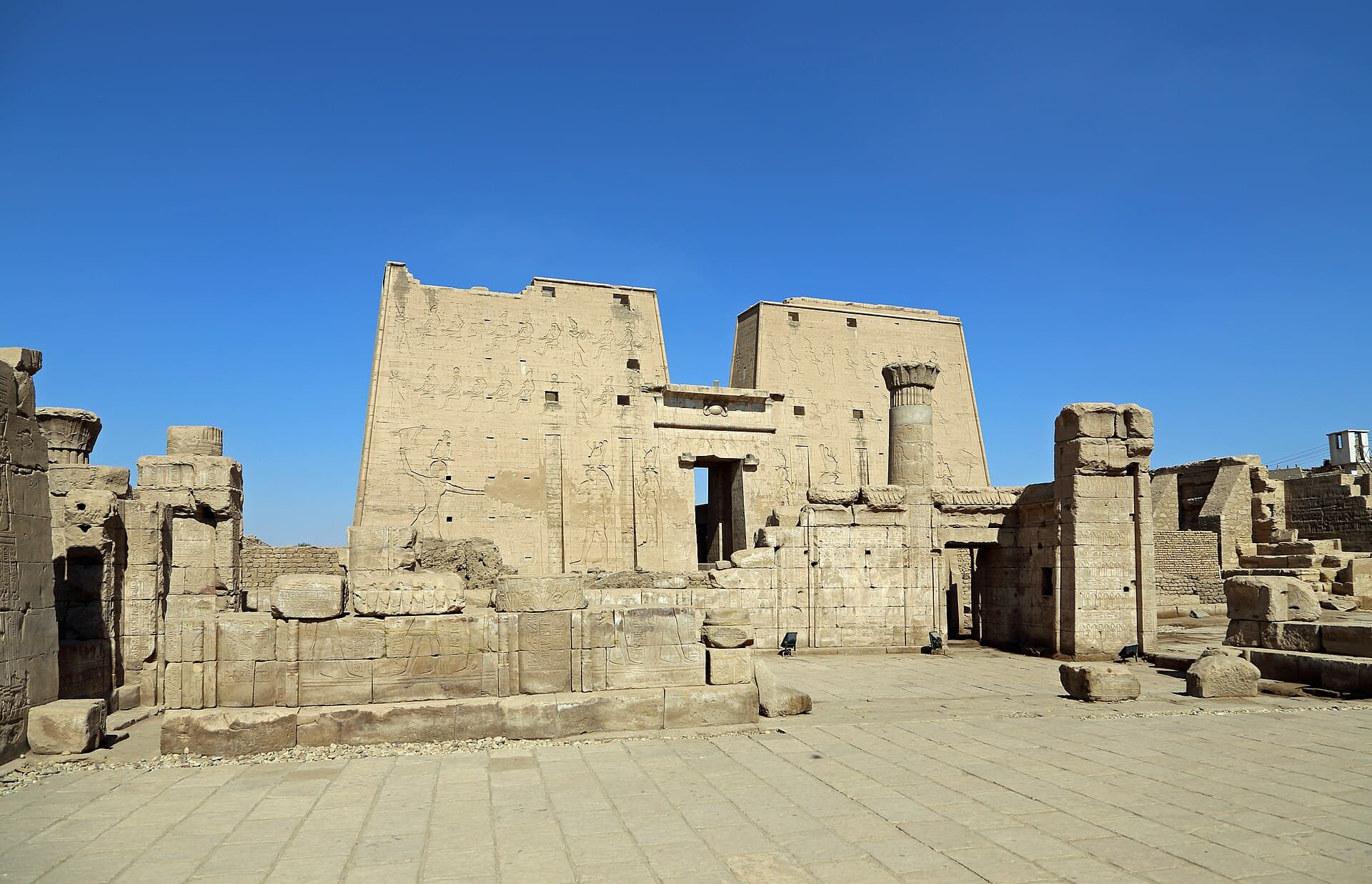
Edfu is his temple, and the most complete in Egypt. Two dark stone falcons in the double crown guard it. Each year the texts say Hathor sailed south from Dendera to visit him. At Kom Ombo, an older form of Horus shares the temple with Sobek.
6. Hathor: goddess of love, joy and music
Hathor stood for love, joy, music and beauty. She can be a cow, a woman with a cow's head, or a woman with cow horns around a sun disc. Egyptian queens were often shown in her headdress.
Dendera, a little over an hour from Luxor, is her temple. Its columns end in Hathor's face, and its blue ceilings show the sky goddess Nut. At the Valley of the Queens, a cave linked to Hathor is one likely reason the site was chosen.
7. Anubis: guardian of the dead
Anubis looked after mummification and guided the dead. He is a black jackal, or a man with a jackal's head. He was the god in charge while a body was prepared for burial.
Hatshepsut's temple in Luxor has a chapel for him, where deep reds and blues survive on the ceiling. At Saqqara, a catacomb next to his temple held about eight million animals, mostly dogs. In Alexandria's catacombs he even wears a Roman soldier's uniform.
8. Thoth: god of writing and wisdom
Thoth was the god of wisdom, writing and the moon. Egyptians said he invented hieroglyphs, so scribes saw him as their patron. He has the head of an ibis, a long-beaked wading bird, or takes the form of a baboon.
Look for the ibis head in tomb and temple scenes. A guide will point him out. His strongest trace is at Saqqara, where pilgrims left over four million mummified ibises as gifts to him.
9. Ptah: the maker god of Memphis
Ptah was the god of craftsmen, builders and artists. In one story he made the world by speaking it into being. He is a wrapped figure in a tight skullcap, holding a sceptre. He was the chief god of Memphis, Egypt's early capital near Cairo.
At Memphis, he was worshipped with the lioness Sekhmet and their son Nefertem. A living bull, the Apis, was kept there as his sign. At Abu Simbel, he sits in the sanctuary, and is the one figure the sunrise never lights.
10. Sobek: the crocodile god of the Nile
Sobek was a Nile god of strength and protection. He has the head of a crocodile, or is simply a crocodile. Temples near the river kept sacred crocodiles in pools.
Kom Ombo, north of Aswan, is split down the middle for two gods. The right half belongs to Sobek, the left to Haroeris, a form of Horus. Next door, the Crocodile Museum shows mummified crocodiles, the longest over four metres.
Common questions
Who is the most powerful Egyptian god?+
Amun-Ra comes closest. In the New Kingdom, Amun joined with the sun god Ra and was called king of the gods. His temple at Karnak in Luxor grew into one of the largest religious sites of the ancient world.
How many gods did the ancient Egyptians have?+
Hundreds. Some were great national gods, others guarded one town, one plant or one animal. The British Museum's guide for schools covers 35 of the main ones.
Why do Egyptian gods have animal heads?+
An animal showed what a god was like. A falcon flies high, so Horus rules the sky. A jackal hangs around cemeteries, so Anubis guards the dead. Our page on animals in ancient Egypt explains more.
Who were Osiris, Isis and Horus?+
A family. Osiris was king until his brother Seth killed him. Isis, his wife, brought him back to life and had their son Horus. Horus grew up, beat Seth and became king. Osiris went on to rule the dead.
Where can I see Egyptian gods in Egypt?+
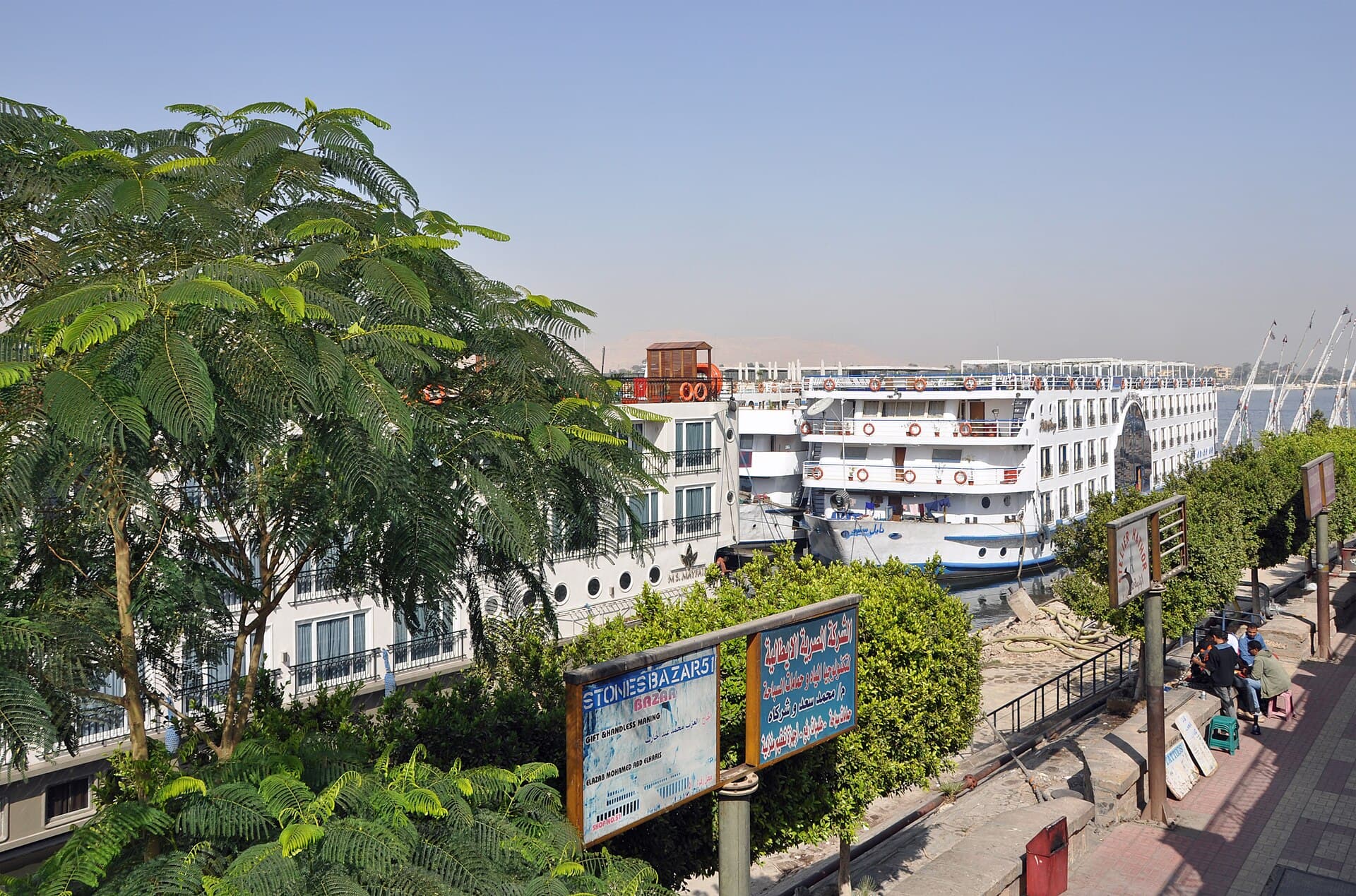
On almost any temple wall. The best single stops are Edfu for Horus, Dendera for Hathor, Philae for Isis, Karnak for Amun and Kom Ombo for Sobek. Edfu, Kom Ombo and Philae are on every Nile cruise our partner runs.
Who is the Egyptian god of death?+
Two gods share the job. Anubis looked after embalming and guided the dead. Osiris ruled the afterlife and judged whether a soul could enter it.
Is Ra the same as Amun?+
They began as two gods. Ra was the sun god of Heliopolis. Amun was the hidden god of Thebes. In the New Kingdom they were joined as Amun-Ra, and the two names were often used together.
Official sources
Entry rules, opening hours, security advice and exchange rates all move. Check them at the source, not here.
Written and checked by the Nile Trip Guide editorial team · Last reviewed . Entry rules, prices and opening hours change — check anything critical against the official sources linked on this page.
Plan this trip
Tell us your dates and we will price it
A real itinerary with real prices, usually within 24 hours. Nothing is booked and nothing is charged until you say yes.
Four nights sailing south from Luxor to Aswan: Karnak and Luxor temples on the first afternoon, the Valley of the Kings, Edfu, Kom Ombo and Philae. Full board throughout, with sightseeing in a shared group of about fifteen.
Giza and the Grand Egyptian Museum, then a flight south for one night in Luxor covering both banks, and a flight back. Five days, two cities, both domestic flights in the price and every day guided privately.
Sixteen days and very little left out: Cairo, a flight to Aswan, three nights sailing down to Luxor, two more days of Luxor on land, three nights on the Red Sea, then back to Cairo for Saqqara and Dahshur.