Top 10 ancient Egyptian inventions and ideas, fact-checked
The ten ancient Egyptian inventions and ideas that hold up best are hieroglyphic writing, papyrus, the 365-day calendar, the 24-hour day, the water clock, large stone buildings, Egyptian blue, written surgery, chemistry in make-up and the Nilometer. Several were among the first of their kind anywhere. Others the Egyptians shared with neighbours, but did early and well. Each entry below says which, and names the source.
How we chose these ten
Lists of Egyptian inventions online often claim too much. Toothpaste, door locks and bowling all turn up, usually with no source. We left out anything we could not tie to a museum, university or peer-reviewed study.
We also say plainly when Egypt was one of several early inventors. Writing is the clearest case. Egypt and Mesopotamia both developed it at about the same time, and experts still debate which came first.
1. Hieroglyphic writing: one of the world's first scripts
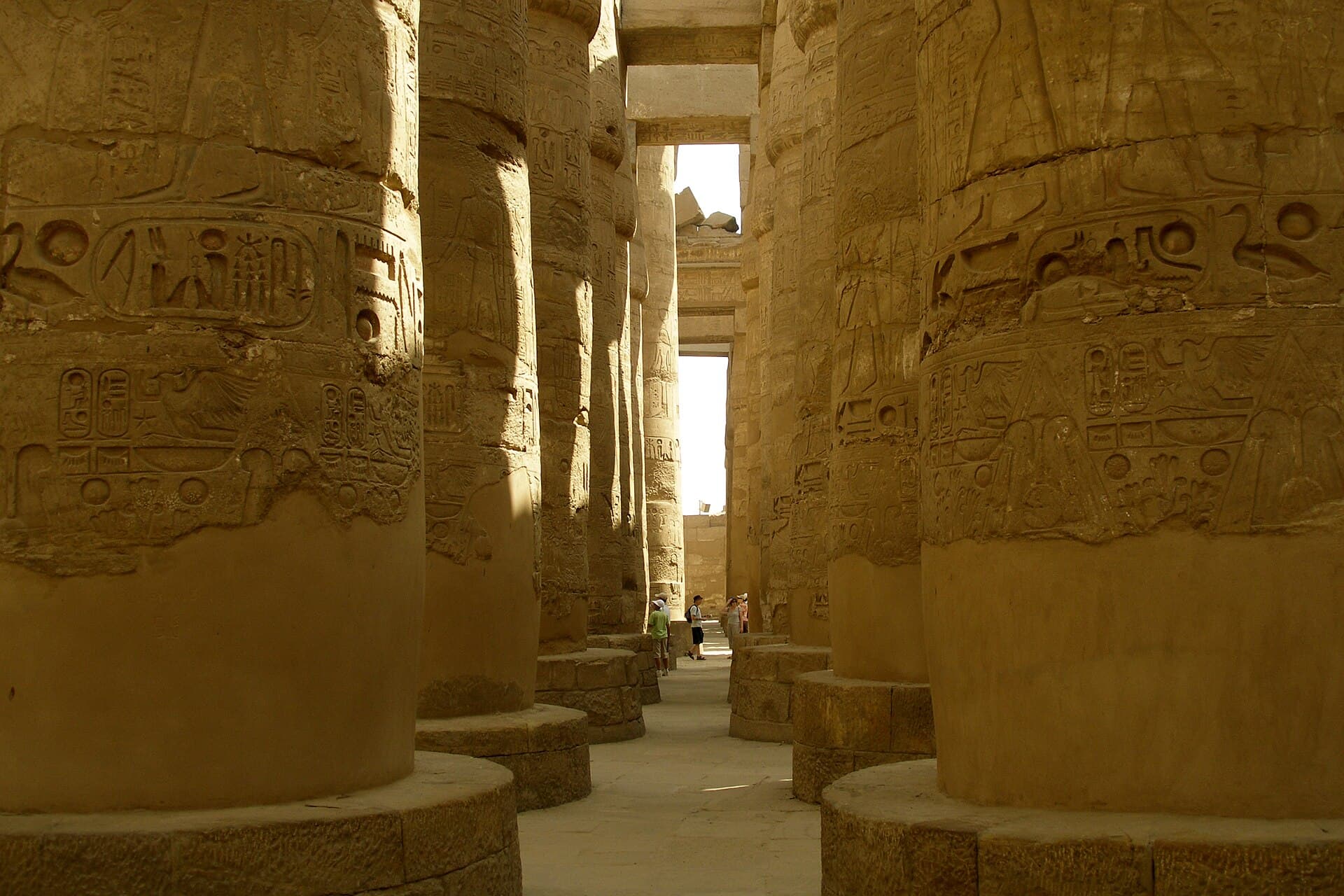
Hieroglyphs are among the oldest writing systems on Earth. In 1988, a German team digging a royal tomb at Abydos found about 150 small bone and ivory labels with signs on them. They date from around 3300 to 3150 BC.
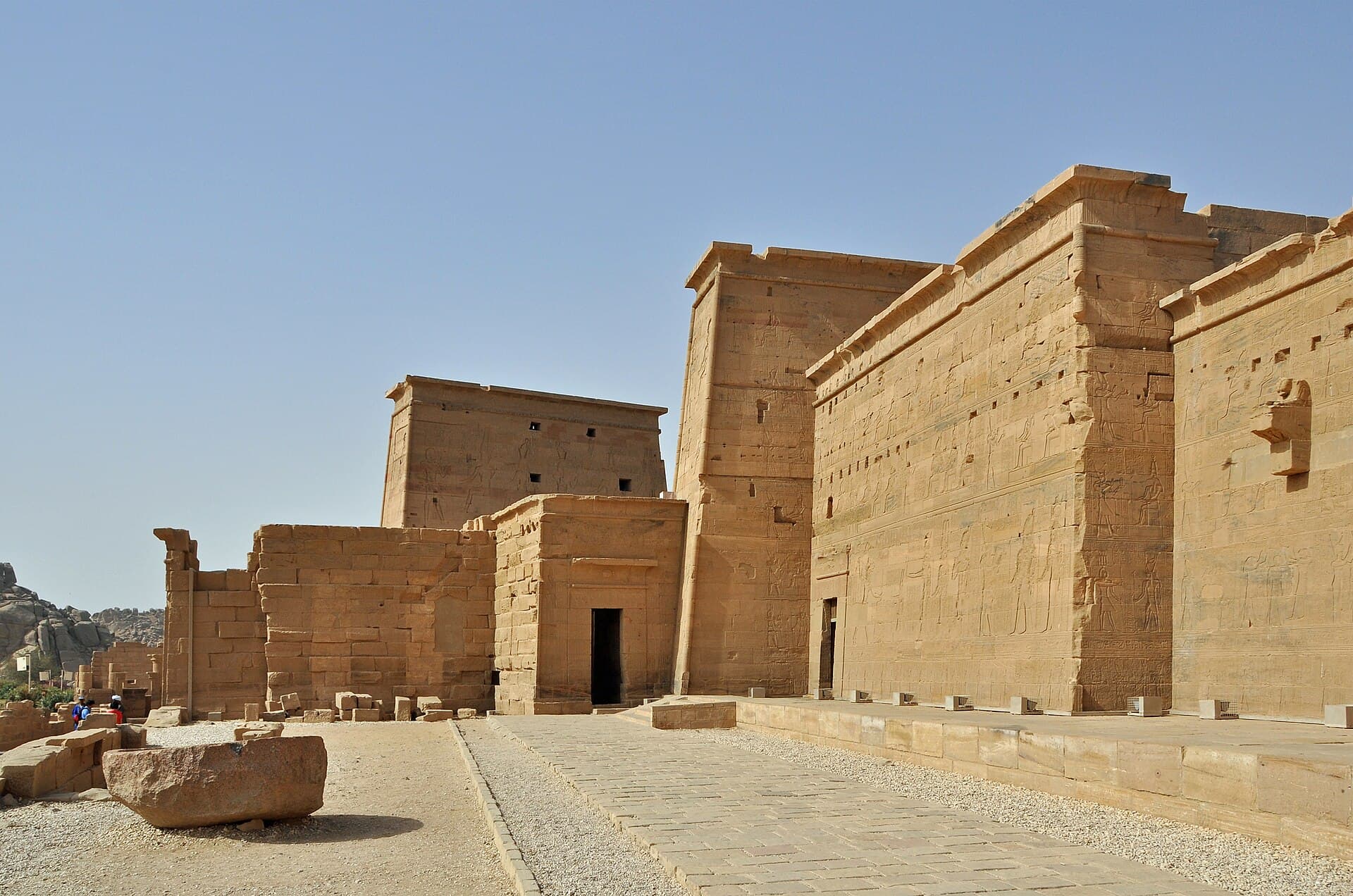
The script then lasted more than 3,000 years. The last dated hieroglyphs were carved at Philae, near Aswan, in AD 394.
2. Papyrus: paper from a river reed
Egyptians made a writing sheet from the papyrus reed that grew in the marshes. They cut the stems into thin strips, laid them in two layers and pressed or beat them flat. Sheets were joined into rolls.
The oldest known roll comes from the tomb of Hemaka at Saqqara, from the First Dynasty. Papyrus became one of Egypt's main exports. It stayed in use until about AD 1087, according to UCL.
3. The 365-day calendar
By about 2450 BC, and maybe centuries earlier, Egypt used a civil calendar of 365 days. It had twelve months of 30 days, plus five extra days at the end of the year.
It had no leap year, so it slipped about a quarter of a day each year. The idea of a fixed 365-day year is still the base of the calendar most of the world uses.
4. The 24-hour day
Egyptians split each day into 24 hours: twelve for daylight and twelve for night. They counted the night hours by watching groups of stars, called decans, cross the sky.
Their hours were not all the same length. Daytime hours stretched in summer and shrank in winter. Still, the count of 24 is the one on your watch.
5. Water clocks and shadow clocks
From the New Kingdom, around 1500 BC, Egyptians measured hours with sundials, shadow clocks and water clocks. A water clock is a stone bowl with a small hole. Marks inside showed the hours as the water ran out.
The earliest surviving one was made for Amenhotep III and found at Karnak. It is now in the National Museum of Egyptian Civilization in Cairo.
6. Building big in stone
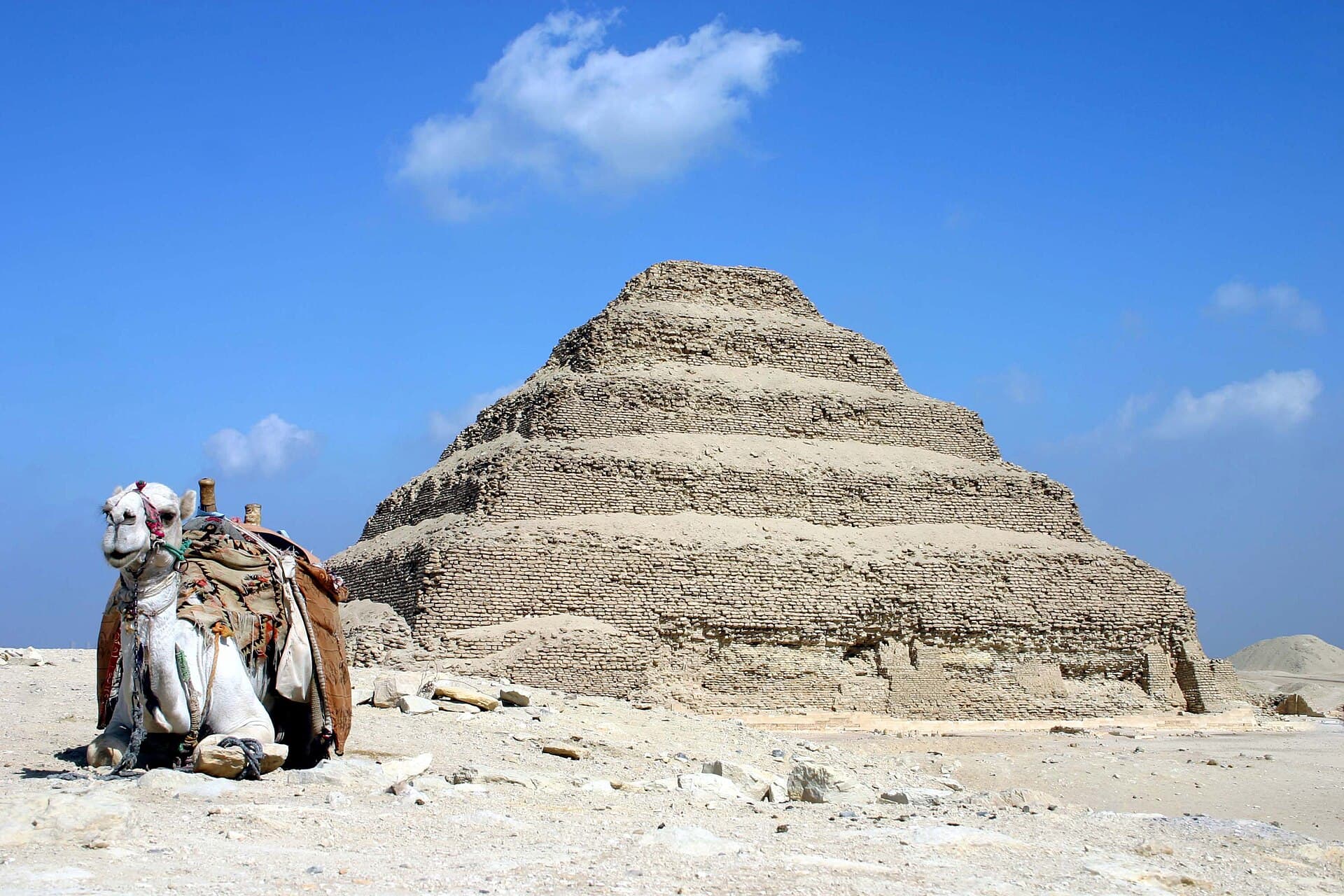
Djoser's Step Pyramid at Saqqara, built around 2650 BC, is generally seen as the earliest large stone building in the world. Its design is credited to Imhotep, the king's chief official.
Within a few generations, builders moved from steps to the smooth sides of the Great Pyramid at Giza. Saqqara is about forty minutes south of Giza and on our partner's Cairo trips.
7. Egyptian blue: the first man-made colour
Egyptian blue is the world's oldest synthetic pigment, according to the Getty. It may have been made as early as 3100 BC. Makers heated a copper and calcium compound with sand and a flux to about 900 degrees Celsius.
The result was ground into a bright blue powder. It spread far beyond Egypt. British Museum scientists have found traces of it on the Parthenon sculptures from Athens.
8. Written surgery: the Edwin Smith Papyrus
The Edwin Smith Papyrus, from about 1600 BC, is one of the oldest surgical texts known. It describes 48 cases, mostly injuries, with an examination, a diagnosis and a treatment for each.
Doctors who study it praise its careful, practical approach. It also contains the first known written word for the brain. The papyrus is in the New York Academy of Medicine.
9. Chemistry in a pot of eye make-up
Egyptians wore dark kohl around their eyes. French scientists tested make-up kept in the Louvre. They found two lead compounds that do not occur naturally in Egypt. The Egyptians had made them on purpose, with wet chemistry.
A 2010 study found these compounds can trigger an immune response in skin cells. The authors were careful. They did not claim the Egyptians knew this, or added them to fight infection.
10. The Nilometer: measuring the flood
Everything in Egypt depended on how high the Nile rose each year. A Nilometer measured the height of the yearly flood, with marks cut into the rock beside the river.
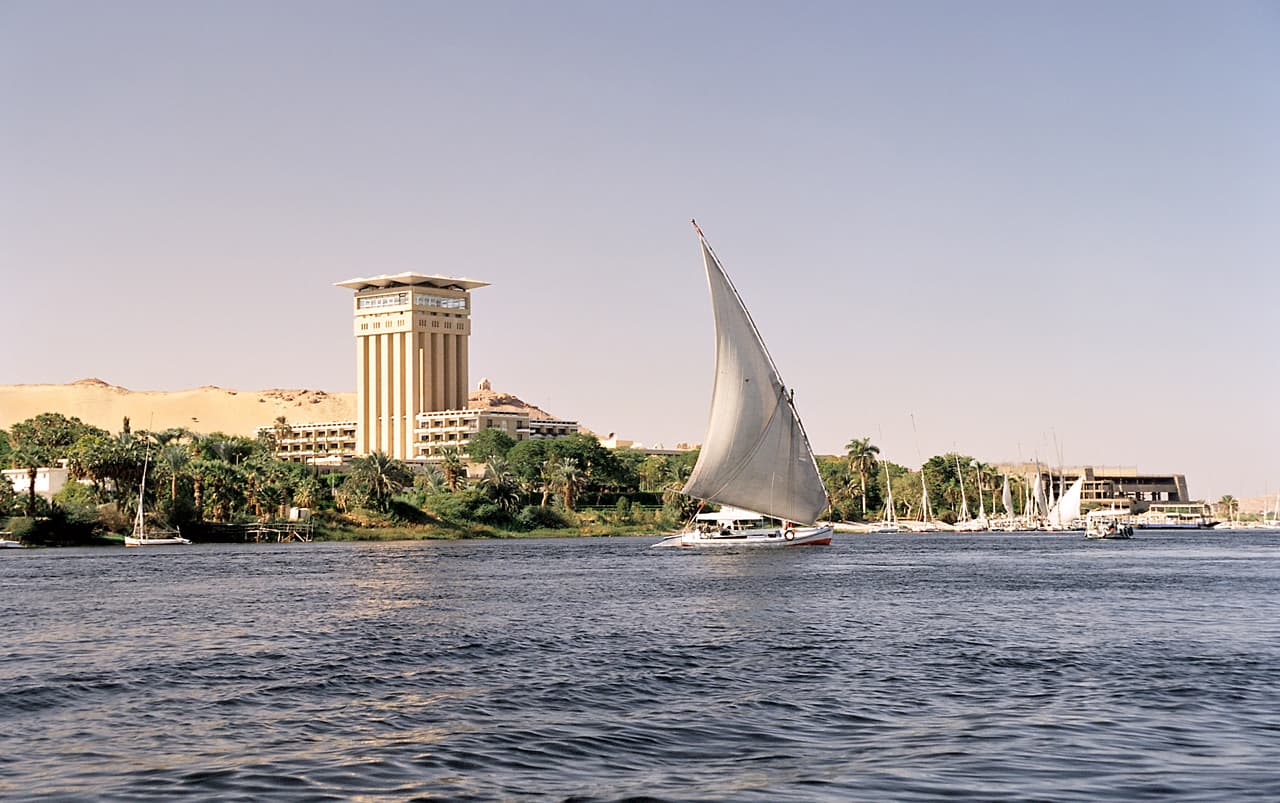
You can see the Nilometer on Elephantine Island in Aswan, on the river side of the ruins. The island was Egypt's southern border post for much of its history. Everything downstream depended on what it measured.
Common questions
What did the ancient Egyptians invent?+
Their strongest claims are papyrus, the 365-day civil calendar, large stone buildings and Egyptian blue, the oldest man-made pigment. They also had one of the earliest writing systems and divided the day into 24 hours.
Did the Egyptians invent writing?+
They were one of the first. Hieroglyphs date back to around 3300 to 3150 BC. Writing appeared in Mesopotamia at about the same time, and experts still debate which came first.
Did the ancient Egyptians invent paper?+
They invented papyrus, a paper-like sheet made from pressed strips of reed. The oldest known roll is from a First Dynasty tomb at Saqqara.
Did ancient Egyptians invent toothpaste?+
Many websites say so. We found no museum or university source we trust for it, so we left it off.
Where can I see Egyptian inventions today?+
Saqqara has the Step Pyramid. The Nilometer is on Elephantine Island in Aswan. The Egyptian Museum and the Grand Egyptian Museum show papyrus, painted objects and tools.
Who was Imhotep?+
King Djoser's chief official, around 2650 BC. He is credited with designing the Step Pyramid at Saqqara. Later Egyptians honoured him as a god of medicine and wisdom.
Official sources
Entry rules, opening hours, security advice and exchange rates all move. Check them at the source, not here.
Written and checked by the Nile Trip Guide editorial team · Last reviewed . Entry rules, prices and opening hours change — check anything critical against the official sources linked on this page.
Plan this trip
Tell us your dates and we will price it
A real itinerary with real prices, usually within 24 hours. Nothing is booked and nothing is charged until you say yes.
Five days in Cairo and nowhere else: Giza, the Grand Egyptian Museum, the Egyptian Museum, the Citadel, Coptic Cairo and Khan el-Khalili. Four nights in one hotel, and every sightseeing day run privately.
Sixteen days and very little left out: Cairo, a flight to Aswan, three nights sailing down to Luxor, two more days of Luxor on land, three nights on the Red Sea, then back to Cairo for Saqqara and Dahshur.